Anticipation. Rumors. Anxiously scanning the horizon, hoping that a brilliant force will leave the masses forever changed. Yes, a new Steven Spielberg movie about close encounters with extraterrestrials is landing — and misses the mark.
“Disclosure Day” is a story of truth and feared consequences. A personality-free cybersecurity expert, Daniel (Josh O’Connor), is on the run with evidence of little gray men arriving on our planet to a rude reception. The aliens are kind. Our species is barbaric. Wittily bruising us with that fact, Spielberg opens with a POV of a wrestler kicking the audience in the face. Welcome to Earth.
Elsewhere in America, a weathergirl named Margaret (Emily Blunt) breezes into her Kansas City studio, babbling up until the minute the news camera turns on, a bravura sequence that channels her restlessness, the station’s tempo and the film’s alarm that this ditz has just this morning been stricken with preternatural powers. (The cinematography and editing are by Janusz Kaminski and Sarah Broshar.) Locally, Margaret is known for announcing hailstorms with a sexy shimmy. Suddenly, she’s fluent in Russian, Korean and telepathy. Although she and her boyfriend, Jackson (Wyatt Russell), are a bad match, she’s giving everyone else life advice like an intergalactic Dear Abby.
When Margaret starts spouting alien-ese — spasms of gutteral clicks — on live TV, she and Jackson rush to the hospital for a brain scan followed by several suspicious men who claim to be with the FBI. Russell’s befuddled Jackson is as useless as a traffic cone but Blunt’s Margaret is a gas before the movie makes her go all glassy-eyed and solemn. Yet, the movie is less inspired by why she was chosen or how she feels about it than in dragging us back in time to the moment when it happened, which isn’t that interesting except for its resemblance to a Disney princess having a psychotic break. The CG animals and aliens look stiff, other than a nifty close-up of an eyeball. (Later, I did like how one alien appears to be wearing sportswear.)
Chasing both Daniel and Margaret around the Midwest is a deep-state company called Wardex that wants to steal back the proof in Daniel’s backpack, a heap of hard drives with footage of 70-plus years of extraterrestrial visitations. It’s a treat to see Spielberg enjoying staging this conspiratorial gossip in different film stocks, from the black-and-white noir of 1947 Roswell to the clinical security-camera look of today. Whatever Wardex does on a day-to-day basis is unclear (we just see video screens and lab equipment). But it acts all-powerful, seeming to know more about outer-space tech than its overseers at the Department of Defense.
The script is by David Koepp of the paranoid thriller “Black Bag” and Spielberg’s 2005 version of “War of the Worlds,” yet, this plot strand about private enterprise isn’t science fiction. Last year, in the unrelated UFO documentary “The Age of Disclosure,” current Secretary of State Marco Rubio admitted that companies have a stronger institutional memory of “exotic materials” than any presidential administration: “The people in government who know where it came from originally — they’re long gone and their successors have no idea that it was there at all.” To add nationalistic insult to injury, the head of Wardex isn’t even American. He’s a Brit played by Colin Firth.
If anything, “Disclosure Day” isn’t paranoid enough. Clutching a mysterious tool the shape of a mouse coffin, Firth’s villain tracks Daniel’s location by mentally transplanting himself into another person’s body, changing the color of their pupils to his own icy blue. His gadget also makes his targets super sweaty. This laborious alien tactic leads to a few fun scenes but frankly feels old-fashioned when the omnipresent surveillance that Spielberg himself warned about nearly 25 years ago in “Minority Report” is now here with recording devices constantly tracking our faces, voices and movements just so we don’t have to dial phones, fetch sandwiches or talk to human drivers. Although his movie urged us against this 24/7 spyware future, we have since embraced the convenience.
I bring this up because “Disclosure Day’s” driving question is how humanity will react to life-altering information. (Not that the plot has much momentum — too many scenes end with the belief that ducking 10 feet out of view makes you invisible, with an antagonist simply giving up.) Daniel insists on total honesty: “People have a right to know the truth,” he says. His girlfriend Jane (Eve Hewson) doubts 8 billion people can handle his alien revelations. A Catholic, she’s alarmed that extraterrestrial intelligence could replace the concept of God, naively claiming that “religion holds society together.” Since when?
There’s some wan comedy in an early scene where these new-ish lovers debate the ethics of secrecy while revealing the skeletons they’ve been hiding from each other. Both have pasts you wouldn’t put on a Tinder profile. The script is glancingly empathetic to Jane’s moral turmoil but like Daniel, the film has made up its mind before the movie started. Narratively and logistically, Daniel’s whistleblowing escape limps along with a lack of suspense. Wardex doesn’t even bother to preemptively discredit Daniel in the public’s eye, which, given the two sentences of backstory we know about his character, would be easy.
Nattering in the background are broadcasts about the impending threat of global war at the hands of the United States, Russia and North Korea. Given that scary possibility, the risk that Daniel’s reveal could tip over the world order doesn’t seem that bad. Honestly, I’m dubious of the film’s certainty that folks even have the bandwidth to care about such news, let alone agree on what they’re seeing. The serious journalism Margaret aspires to do is splintering under our distrust of who controls the megaphones. Last month’s infodump of an Armed Forces report listing 209 sightings of unidentified objects was announced with a presidential tweet that “the people can decide for themselves.” I didn’t bother to click. Did you?
Getting information about these space invaders out leaves no time for taking the marvel of their existence in. Decades after Spielberg unveiled his signature shot — a face amazed at wonders we can’t see — he seems wearied by his awareness that today’s moment of revelation would look like a person staring down at their phone. When lens flares continually beam right at the screen, the whole movie feels like enlightenment under duress.
Where are the aliens from and why are they here? Who knows. “Disclosure Day” speeds around frantically, talking constantly and explaining little. Back in 1977, Spielberg’s “Close Encounters of the Third Kind” was a popcorn masterpiece of withheld information. Its quiet assurance that experts had a handle on flying saucers and a plan to meet them felt comforting. Here, Colman Domingo’s renegade intelligence operative also refuses to tell anyone anything, but all the unspoken beats just feel like plot holes. Mostly, his character builds what looks like a Hollywood set to reveal a truth he already suspects. That’s what Spielberg is doing too, but a film needs a sense of curiosity.
Instead, the wows come from good stagings of ordinary action: a car crash, a gripped crucifix, a hideout crowded with jostling, thrumming musical instruments. There’s a great train-track crossing sequence that’s also a vicious callback to Richard Dreyfuss’ epiphany in “Close Encounters.” Yet, I wanted to see more of the old Spielberg, the one who expressed awe in moments of silence rather than relentless motion.
That Spielberg has come full circle to his lifelong obsession with the sky had me convinced that this might be a secret sequel to “Close Encounters” beyond the droll joke that both Dreyfuss’ Roy and Blunt’s Margaret are shacked up with unsupportive blonds. They do share a universe; you’ll see a glimpse of what could pass for an outtake from Devils Tower, a.k.a. Mashed Potato Mountain, on one of Daniel’s hard drives. Still, I left underwhelmed. I didn’t need Dreyfuss to step off a spaceship gangplank and say, “I’m back.” I just needed “Disclosure Day” to have the same spark of intelligent life.
‘Disclosure Day’
Rated: PG-13, for action/violence, some bloody images and strong language
Longtime on-air anchor Glen Walker is making his way back to broadcast news in Los Angeles.
After being laid off from KTLA in February, alongside other veteran broadcasters like Lu Parker and Mark Kriski, Walker is starting a new chapter with KTTV, L.A.’s local Fox affiliate. He began his new role as a per-diem anchor this week, where he’s set to have an on-air introduction on Wednesday and begin anchoring shows on Thursday evening.
“I didn’t feel like I was done,” said Walker of his career, in a phone interview Wednesday morning. “I’m still healthy. I’m not ready to retire.”
As Fox’s new rotating anchor, he won’t have a regular broadcast time, but will instead float between the KTTV and KCOP channels to fill in as needed.
Over the last few months, Walker has been eager to get back on air, especially with the local primary elections this month and the coming midterms in November. He said he plans to take the new gig “one day at a time,” but he’s most interested in covering politics and the current state of affairs in Los Angeles.
“With the elections and how it’s all related to the fires and the homeless problem, this city — maybe the whole state — has reached a point where [we ask], which direction are we going from here?” Walker said.
“[The stations] will get it figured out because there’s an adjustment period. It used to be just newspapers and radio, then you had television,” Walker said. “Now we’ve got the internet. Technology advances, and you just have to adjust to it.”
“You make a bigger impact than you think,” said Walker, who’s hopeful the same viewers will start to tune in to the local Fox station. “You just go to do your job every day, and you don’t think about it day to day, but then when something like that happens, that’s when you really see where people appreciate you.”
In between jobs, Walker said he spent his time golfing and trying to keep busy around the house and focused on landing a job. As soon as he stepped into Fox’s studio for a practice run, he said he felt an immediate sense of familiarity.
“I was sitting behind the anchor desk, and there was the teleprompter, the camera and that’s it,” Walker said. “It’s all the same at every TV station. It’s just a little bit of a different environment.”
1 of 4 | German officers stand before Oslo’s National Theater in 1940 after taking control of Norway during World War II. On June 10, 1940, Norway surrendered to Germany during World War II, with King Haakon and members of the government fleeing to Britain. File Photo by Willi Ruge/German Federal Archives
On this date in history:
In 1692, Bridget Bishop was found guilty of the practice of witchcraft and hanged in Salem Village in the Massachusetts Bay Colony. She was the first colonist executed during the Salem witch trials.
In 1898, U.S. Marines invaded Cuba in the Spanish-American War.
In 1940, Norway surrendered to Germany during World War II, with King Haakon and members of the government fleeing to Britain. National Unity Party leader Vidkun Quisling led Norwegian fascist forces to assist the Germans, seizing strategic locations.
In 2014, Rep. Eric Cantor, R-Va., the U.S. House Republican leader, was defeated by Tea Party challenger David Brat, a college economics professor, in one of the most stunning primary election upsets in congressional history.
In 2021, the U.S. Senate confirmed Zahid Quraishi to the U.S. District Court in New Jersey, making him the first Muslim federal judge in the United States.
In 2024, Apple introduced its new generative artificial intelligence technology, called Apple Intelligence, at its annual Worldwide Developers Conference in Cupertino, Calif.
PITTSBURGH — Dodgers catcher Will Smith was out of the lineup for a third straight game on Tuesday against the Pirates, the stiffness in his neck still lingering. He’ll probably also be sidelined Wednesday, Dodgers manager Dave Roberts said.
“Now the [injured list] is more of a possibility,” Roberts said, noting that the minimum for positions players is 10 days. “We’re starting to talk about that.”
Teams can backdate IL moves by up to three days. Smith’s neck issue cropped up Saturday, when he was scratched from the Dodgers’ lineup against the Angels. Though Roberts speculated then that Smith could have slept on it awkwardly, he said the cause of the injury is unclear.
Smith played catch Tuesday, Roberts said, which “went OK,” but Smith’s neck bothers him the most while swinging.
“It’s still a day-to-day situation,” Robers said. “But for me, just talking to him, talking to the trainers, I would like him to go through a full day (of work) before he plays. So that would probably take [Wednesday] off the table. And then we’ll kind of go from there.”
In Smith’s absence, 25-year-old Dalton Rushing has started three straight games behind the plate, including his four-hit performance in the series finale against the Angels, and six of the last nine games.
“This year my whole goal was to make sure, if there’s an opportunity [when] Will needs rest … make sure that I can provide just as much as he does with the bat as well as behind the plate,” Rushing said Saturday. “That’s something I’m obviously continuing to work toward. Whatever he needs, I’ll be here. He knows I’ll catch seven days a week. He knows I’ll catch every game if he can’t go back there.”
If the Dodgers were to put Smith on the IL, it’s unclear who would back up Rushing. After releasing Seby Zavala last week, the Dodgers’ triple-A catchers are Eliezer Alfonzo and Chuckie Robinson, both journeymen with only Robinson having some major-league experience.
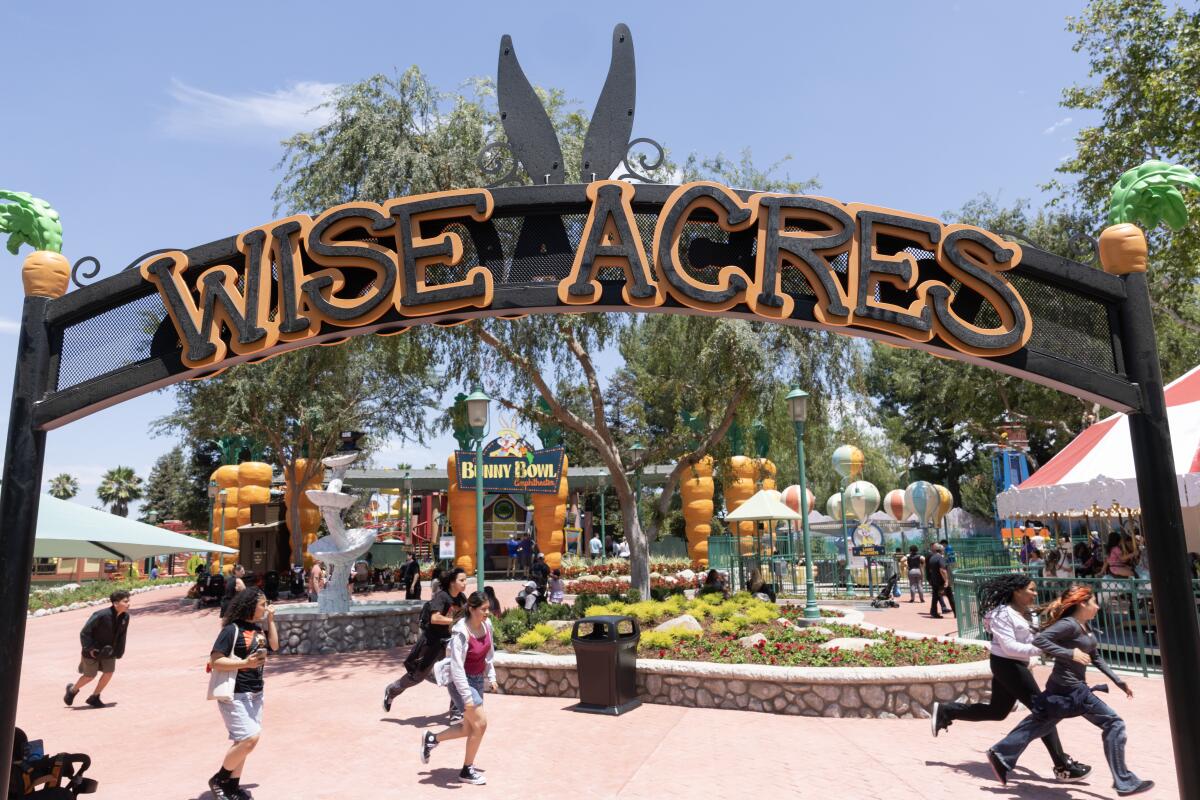
Now open is a revamped, kids-focused area in Looney Tunes Land, a remake of the former Bugs Bunny World and Whistlestop Park. All told, it’s a 5-acre space with nine rides, including two kiddie coasters, as well as still-to-come play areas, a live show and an in-development augmented reality experience.
You’re reading Mr. Todd’s Wild Ride newsletter
Todd Martens’ newsletter delivers news and commentary on the past, present and future of theme parks, right from the theme park capital of the world — Southern California.
By continuing, you agree to our Terms of Service, which include arbitration and a class action waiver. You agree that we and our third-party vendors may collect and use your information, including through cookies, pixels and similar technologies, for the purposes set forth in our Privacy Policy such as personalizing your experience and ads.
I last walked through the area about two summers ago, and it was in a derelict state. I’m happy to report it’s more welcoming, prettier and dotted with plant life and landscaping.
Gone is the vintage Magic Flyer, once Magic Mountain’s oldest coaster (the park’s eldest thrill seeker is now Gold Rusher). Also among the casualties: Tweety’s Escape, a steel swing that placed children in birdcages that had begun to look like mini jails. It was a grim-appearing ride.
The remaining attractions have all received some much-needed TLC. Some even have added mini storylines. What was Whistlestop Train, for instance, is now Taz’s Tasmanian Train Tours. It follows a narrative in which the ride’s titular character has escaped the zoo and is eluding capture, generally causing havoc on the countryside. It’s a calm, slow-moving ride through a small green space, and we see failed attempts to trap Taz, such as an overgrown mice contraption. The ride concludes with a mechanical not-so-hidden Taz, but not before glimpsing a statue of Tasmanian She-Devil in full kiss mode.
A look into the Bugs Bunny-focused area of Magic Mountain’s new Looney Tunes Land.
(Myung J. Chun / Los Angeles Times)
The reimagining comes two years after Six Flags Entertainment Corp. and the Cedar Fair Entertainment Co. completed a merger, which in SoCal brought Magic Mountain and Knott’s Berry Farm under the same ownership. Six Flags’ corporate creative producer Clayton Lawrence says post-merger, the company pinpointed upping the family appeal at Magic Mountain as among its first orders of business.
That meant last summer devoting resources to improving the Hurricane Harbor water park, which Lawrence says specifically attracts families and grandparents. This year, attention was turned to the primary park in Looney Tunes Land.
“We really thought about what this park needs,” Lawrence says. “What will the parents need? How do we slow the guests down a little bit? This park has so many thrills in it — so many coasters — that we wanted to create a place that was nice to take a break from all the action and also develop areas where grandparents and parents could watch little ones burn off energy.”
It’s safe to say that Magic Mountain’s core audience is likely always going to be thrill seekers. And that fan base will be served next year with the planned opening of a new coaster that will overlook the Looney Tunes area.
The kiddie coaster the Road Runner Express at Six Flags Magic Mountain.
(Myung J. Chun / Los Angeles Times)
Magic Mountain attracted 3.3 million visitors in 2024, according to data released by the Themed Entertainment Assn. While Lawrence was not able to break down which percentage of that number included those traveling with children 12 and under, it’s safe to say that a greater family appeal is viewed as one of the ways to boost a SoCal audience.
“There’s a lot of people who grew up coming up here, or their first ride was inside Bugs Bunny World,” Lawrence says. “A lot of families have a daredevil teen who can go on the rides, but they also have a little one. This is about the multi-demo family.”
Looney Tunes Land is broken into four mini areas — Taz-Mania, Road Runner Ridge, Bugs Bunny Play Park and Camp Duck Amok. While there are no major distinctions between the spaces, there are slight differences. Taz’s footprints, for instance, are found in the gravel-colored pavement of Taz-Mania, and in the Daffy Duck locale the flooring looks a bit like rockwork. A small outback-like trail in Taz-Mania will soon be home to an augmented reality game, and a much-needed green space in the Bugs Bunny spot will later this summer be populated with tunnels and little climbing structures.
Asqwer Turki, 13, poses for a picture with Wile E. Coyote at the new Looney Tunes Land at Magic Mountain.
(Myung J. Chun / Los Angeles Times)
There are fun additions to spot on the refreshed rides. The Canyon Cruiser beginner’s coaster, for example, nods to classic Looney Tunes cartoons, specifically prank-filled episodes featuring Daffy Duck, Bugs Bunny and Elmer Fudd. The children’s theater has been remade into Bunny Bowl, and given giant carrots that call the attention of guests.
Such light thematic touches, said Magic Mountain President Brian Oerding, have been missing from parts of the park. They’re vital, he says, in lengthening a guest’s day.
“We’ve learned that softening the hardscape creates a better environment, a better experience, and that means you’re going to want to hang out more,” Oerding says. “Some folks will walk by black asphalt and not think anything about it, but when you look into Looney Tunes Land, and you look at the softness of the pavement and the additional landscaping, we’ve created a happier space. Mom and Dad are happier, and that means they’ll hang out longer.”
Mountain Park President Brian Oerding officially opens the new Looney Tunes Land at Magic Mountain.
(Myung J. Chun / Los Angeles Times)
Looney Tunes Land has also given Magic Mountain some much-needed in-park entertainment, as the area has been lacking a live show for a number of years. “Vacation Mayhem” comes in at just under 15 minutes and features Bugs, Daffy, Porky Pig and Sylvester imagining their perfect getaway spots in song.
Things go wrong, of course, and Bugs even explores some vices by gambling in Las Vegas, which was an odd choice I thought for a kids show, but Looney Tunes did always have a bit of an edge. Nevertheless, the musical numbers, ranging from reworkings of “The Gold Diggers’ Song (We’re in the Money)” to “Hello Muddah, Hello Fadduh (A Letter From Camp)” keep it zipping along.
“If we don’t believe that entertainment and character shows are important, we’re missing it,” Oerding says. “Yes, the rides are cool, but we haven’t done an actual entertainment show in here in a long time.”
And Lawrence says Looney Tunes is essentially a model for the entire park. No, that doesn’t necessarily mean more kiddie rides in the coming years, only that Six Flags is looking at other places where the park can use some beautification.
“This is what we want to do for the rest of the park,” Lawrence says. “Disciplined design. Nice hardscape.”
And here’s hoping for some more plants and an additional fountain or two.
This week in SoCal theme parks
Alexis Rosales of Bell gets drenched by Luke Brodowski, performing as Fluke Mayfield at Knott’s Berry Farm’s Ghost Town Alive! in 2024.
(Allen J. Schaben / Los Angeles Times)
It’s the most wonderful time of the year. Knott’s Berry Farm begins its summer season on Friday, and that means the return of Ghost Town Alive! This interactive live show, now a decade old, is unlike anything at any other SoCal park, and in my mind it’s the best summer entertainment available. This hybrid live-action role-playing game and work of interactive theater enables guests to live out mini-Wild West adventures while interacting with more than two dozen actors. Players follow a loose story centered on the drama in the fictional town of Calico, in the park’s Ghost Town area. It’s silly, it’s wacky and there’s even a daily newspaper. Ghost Town Alive! runs on select days, and I’ll see you there Friday.
World Cup, Lego Style! Carlsbad’s Legoland is celebrating the arrival of the World Cup with a host of limited-time activities and Lego creations. The park, for instance, has built a 30-foot-long re-creation of SoFi Stadium, and elsewhere has created brick versions of a host of soccer stars. There are interactive events as well, such as accuracy challenges and games that have attendees trying to score goals off of Lego minifigures. Legoland’s FIFIA World Cup Experience 2026 launches Thursday and runs through July 19.
Oogie Boogie Bash tickets drop — and a Haunted Mansionstreet parade? The Disneyland Resort’s popular after-hours event Oogie Boogie Bash returns Aug. 18, and tickets for Magic Key passholders go on sale June 16 (the general public sale is June 18). New this year to the Disney California Adventure experience is what the resort is calling “Madame Leota’s Swinging Wake.” Though not a full-scale parade, expect Haunted Mansion characters — the concept art shows floats of the attraction’s “stretching room” portraits — as well as ghostly dancers. But with something new, something must depart. “Madame Leota’s Swinging Wake” is replacing the “Frightfully Fun Parade.” Ticket prices vary by day, starting at $139. October dates, for instance, top off at $199.
“Harry Potter” will hover above Dodger Stadium. A theme park-like drone show is arriving Saturday at Dodger Stadium. More than 1,200 drones will soar over the park as part of a “Harry Potter”-inspired production, which will also feature music, trivia and an appearance from the film’s Bonnie Wright (Ginny Weasley). Expect re-creations of “Potter” iconography such as Hogwarts Castle, magical creatures, the Sorting Hat and more. The hourlong show begins at 9 p.m. and Butterbeer will be on hand. Tickets start at $52.90 for adults.
Tell us your stories. Ask us your questions.
Have a theme park tale to share? Whether it was a good day or less-than-perfect day, I would love to hear about it. Have a question? A tip? A fun photo from the parks to share? Email me at todd.martens@latimes.com. I may feature your note in an upcoming newsletter.
Ride on,
Todd Martens
P.S.
Last week I put out a call for Disneyland fans to share their Carousel of Progress memories. The theater attraction, centered around a rotating auditorium, debuted at the 1964 World’s Fair before making its way to Disneyland in 1967. It was moved to Florida’s Walt Disney World in 1975. The Walt Disney Co. announced recently that the Florida version would be undergoing a top-to-bottom overhaul, but its dedication to technological optimism throughout the decades would remain.
I’m thoroughly enjoying the remembrances. Many cited it as a favorite. “My father was a musician, and it became a family tradition that we’d sit in the back row and sing ‘[There’s] a Great Big Beautiful Tomorrow’ loudly at the top of our lungs from the very beginning of the ride, which I’m sure newcomers thought was weird and probably annoying,” wrote one reader. Another noted, “The mid-60s were exciting years to be a kid, as the future seemed so promising and exciting; the [Carousel of Progress] plugged right into that enthusiasm.”
Many shared similar sentiments. “The animated activities of the characters and their dialogue embraced the ‘Happiest Place on Earth” theme that was prevalent throughout Disneyland in those earlier days,” said one fan. A few, however, called out that the attraction was sponsored by General Electric, making it feel a bit like an advertisement. As one reader summarized: “It was incredibly clunky product placement, even to a kid’s ears.”
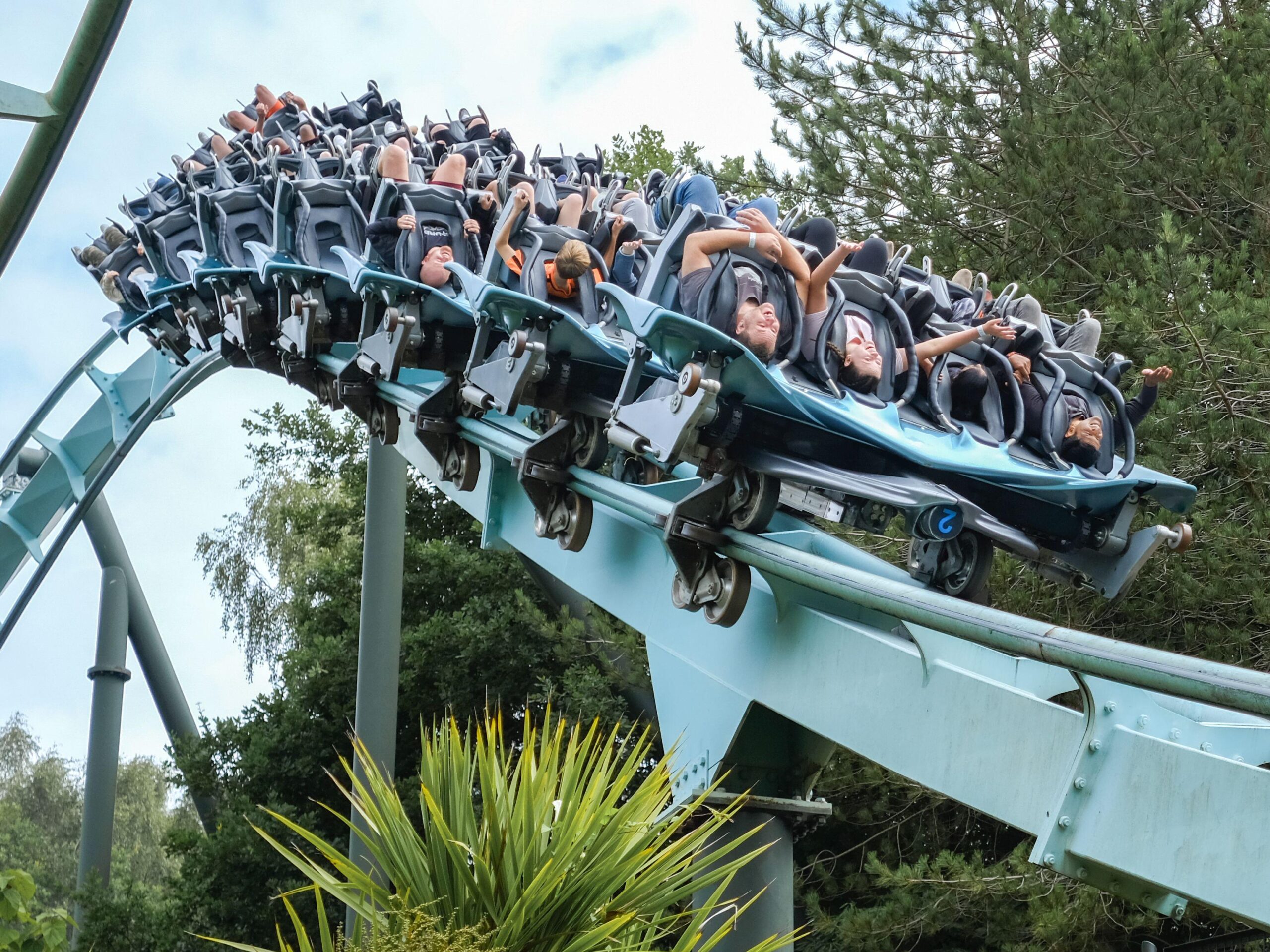
THE UK’s largest theme park with over 40 rides and attractions has launched an annual pass costing less than a Cadbury Fudge bar a day.
Alton Towers in Staffordshire has dropped a new annual pass costing £64 per person – or just 19p per day you visit (several pence less than a Fudge bar).
Sign up for the Travel newsletter
Thank you!
Alton Towers has launched a new annual pass that costs 19p a dayCredit: Alamy
The pass gets you access to the theme park for 339 days of the year.
During that time, passholders can visit as many times as they like.
The theme park is usually open between March and November and hosts a number of seasonal events as well.
Each passholder will be sent their pass digitally and it is ready to use as soon as it lands in their email inbox.
The pass is also only required for visitors who are 90cm and taller.
Once you have your pass and wish to visit the theme park, you’ll need to book online beforehand which can be done via the Passholder Pre-Book Portal.
In addition to all the rollercoasters, Alton Towers recently opened a new attraction – Bluey The Ride: Here Come the Grannies – which is the world’s first Bluey junior coaster.
Travel writer Madalyn Bielfeld recently visited and tried out the park and said: “The rollercoaster whisks you up and down over gentle dips, and around turns amid a fun, interactive setting of Bluey’s back garden.
“It’s filled with fun references to the various episodes – including as the name suggests when the characters dress up as their Grannies.
“The ride is the perfect mix of gentle and exciting and went down a storm on the day of opening.”
A TINY island off the coast of Wexford could make for one of Ireland’s most spectacular summer day trips.
The breathtaking Saltee Islands are just a two-hour drive from Dublin — with a short ferry ride from Kilmore Quay bringing visitors straight to Great Saltee.
Sign up for the Travel newsletter
Thank you!
The Saltee Islands is ideal for a summer day outRazorbills, puffins and gulls can all be spotted at the brilliant bird sanctuary
The islands are famed for their incredible wildlife, with puffin-watching a must for anyone visiting during the summer months.
Day trippers can spend around three-and-a-half hours exploring the stunning island, spotting seabirds, seals and dramatic coastal views.
And with return ferry tickets costing €40 for adults, it could be the perfect seaside escape to kick off the summer.
The islands are located just 5km off Kilmore Quay in Co Wexford — and a 20-minute ferry trip is all it takes to get there.
Fabulous views across the seaCredit: Design Pics RF – GettyA black backed seagull with three chicks spotted on the Saltee Islands
Parking is available at Kilmore Harbour in the free public car park.
However, the little harbour is a busy spot during the summer months.
Visitors are advised to leave plenty of time to get to Kilmore Quay as parking spaces can be limited.
The ferry service picks visitors up at the top of the harbour in Kilmore Quay, beside the boat launching slip.
It brings passengers straight to Great Saltee, as permission to visit Little Saltee cannot be granted due to hazardous landing conditions.
But visitors can only access the island during certain hours each day.
Day trippers are allowed on the island between 11am and 4.30pm, and anyone landing on a boat outside these times will be asked to leave.
The popular Saltee Ferry is a daily service that runs from April to October every year.
A return ticket costs €40 for adults and €20 for children under 12.
Each ferry can carry up to 12 passengers at a time.
Visitors are advised to arrive at the ferry gate ten minutes before the trip.
A smaller transfer boat will meet the ferry just off the shore of the island.
It picks passengers up and brings them on the final part of the journey to Great Saltee.
Once you arrive, you will be given approximately three-and-a-half hours to explore the mesmerising island.
The ferry crew will give you an exact time to be back at the landing area for the return trip to Kilmore Quay.
The ferry trip can be booked in advance online at salteeferry.com.
The Saltee Islands are known as the most famous bird sanctuary in Ireland — and puffin-watching is a must on any trip there.
Puffin season is predominantly between May and June.
There are plenty to spot, so make sure to take lots of pictures.
One visitor said: “The trip of a lifetime. There were hundreds of puffins just a short stroll from the boat. If you sit quietly they’ll wander around you.”
But Discover Ireland chiefs have warned that the puffin population is in a dangerous position, and visitors are advised to keep their distance to avoid disturbing the wonderful birds.
As well as the magnificent puffins, the island is also home to an array of seabirds, from gannets and gulls to Manx shearwaters.
While exploring the picturesque island, you might also come across some friendly sea creatures.
Grey seals are known to breed around the Saltee Islands.
It is one of the very few places in eastern Ireland with a seal population.
Up to 120 animals are present in autumn and up to 20 pups are born annually.
The seals can regularly be spotted resting on the rocks around the island.
The Saltee Islands are among the most ancient islands in Europe.
As long ago as 3,500 to 2,000BC, people were living on the islands.
In December 1943, the Saltees were purchased privately by the late Prince Michael the First.
Since his death in January 1998, the islands have been owned by his five sons and one daughter.
Permission for people to visit the island was granted by the family in recent years — but visitors are asked to respect the island.
When the family is in residence, a flag will be flying at the house — which visitors are asked not to approach.
No one is allowed to stay or camp at the historic spot, but there is no admission fee for a day trip to the island.
But island chiefs have issued a major warning to visitors.
They said: “Please do not approach the nesting birds closer than six metres.
“The footfall is having a devastating effect on the bird population. Should visitors see photographers not obeying the signs, please explain to them that they are killing the birds and to use their lens instead of their feet.
“If things do not improve with the bird population due to the current footfall, we will be forced to close the island to visitors.”
Since its creation more than a century ago, the Los Angeles Bureau of Street Lighting has been in the lamppost business and little else.
But in recent months, the little-known city agency has found itself pulled into a fierce debate over L.A.’s relationship with Flock Safety, a surveillance technology company that has been criticized for supplying data used to enable the Trump administration’s immigration crackdown.
In L.A., Flock operates dozens of automated license plate readers, which allow authorities to scan for vehicles that have been reported stolen or are registered to known fugitives, tracking their movements throughout the city.
The devices are often mounted on municipal light poles, which makes the Bureau of Street Lighting responsible for their installation.
Reports that Flock has shared license plate data with federal authorities, including U.S. Immigration and Customs Enforcement, have prompted dozens of mostly smaller cities across the country to end their relationship with the company. But in L.A. it still has found willing customers, including the LAPD.
Hundreds of emails obtained by The Times through public records requests reveal how LAPD boosters, homeowner associations and elected officials have engaged in a months-long campaign to pressure the Bureau of Street Lighting to speed up installations of the plate readers.
Flock, headquartered in Atlanta, said that it contracts with roughly 5,000 U.S. law enforcement agencies nationwide, and that its technology complies with a California law that limits what information can be shared with federal authorities. A company spokesperson said that Flock’s technology is “built around transparency, accountability, and local control.”
“Our customers own and control their data, which is deleted after 30 days by default,” the spokesperson, MoMo Zhou, said in a statement to The Times. “Our platform includes safeguards like audit trails to help ensure accountability at every step. Every day, Flock supports communities across the country in addressing crime and locating missing people.”
The Bureau of Street Lighting, with 177 employees and a relatively modest budget of $49.4 million, would seem an unlikely player in the broader debate over police surveillance. It is primarily tasked with repairing and fortifying the city’s more than 210,000 streetlamps — a frequent target of copper wire thieves — and maintaining its network of electrical vehicle charging stations.
The push to put up more plate readers has come amid calls for greater transparency around the Los Angeles Police Department’s dealings with Flock. In March, the Police Commission asked the department to report back on what information the company’s scanners collect and share. In recent months, the commission declined to approve donations of Flock cameras.
Members of the Stop LAPD Spying Coalition held a news conference to express opposition to Flock Safety, a license plate reader, ahead of a Los Angeles Board of Police Commissioners meeting on March 3, 2026.
(Genaro Molina / Los Angeles Times)
The commission ordered its inspector general to conduct an audit of the LAPD’s use of license plate reader technology, with the findings expected to be released in the summer.
Recently, Councilmember Ysabel Jurado introduced a motion urging the commission to “refrain from entering into any new Memoranda of Understanding, Contracts, or other Agreements, or implement any pilot programs with Flock Safety or its affiliates.” LAPD officials said last month that the city attorney’s office has been working on drawing up a formal contract with Flock.
Behind the scenes, though, the pressure to work with Flock has been ratcheting up from other council offices and community groups.
When a representative from Councilmember Katy Yaroslavsky’s office emailed the streetlighting bureau urging speed, she received a response that said the installation process shouldn’t be rushed because some city light poles can’t support the weight of a Flock reader, which is normally powered by a solar panel.
“The last thing we need is to have a pole fall onto someone or something if there are high winds,” the bureau’s Clinton Tsurui wrote in the June 4, 2025, email.
In another exchange, Tsurui expressed frustration with a colleague who had offered what he thought was an overly optimistic timetable for installing new plate readers.
He wrote: “smh, promising things we can’t do is going to catch up with us one day.”
The Los Angeles Police Foundation, a nonprofit group that has long bankrolled equipment for the LAPD and offered other support, has criticized delays in installing the Flock devices. Last year, the foundation facilitated the donation of dozens of Flock cameras, most of which ended up in affluent neighborhoods on the city’s Westside and in the San Fernando Valley.
Records show that in May 2025, Dana Katz, the foundation’s executive director, reached out to the mayor’s office with a request to waive permit and rental fees associated with installing the new readers. Katz wrote in an email that the extra expense of around $2,000 per device were “cost prohibitive and detrimental to public safety.”
Katz also pointed out that in some places, there are no city-owned poles on which to mount the devices — but offered a possible solution.
“Flock has its own pole that has been accepted by the County of Los Angeles for these situations, and we would like the City to accept the use of them, too,” she wrote to Robert Clark, the city’s then-deputy mayor of public safety.
A few of L.A.’s historic streetlights stand outside the Bureau of Street Lighting’s office near Virgil Avenue and Santa Monica Boulevard.
(Jason Armond / Los Angeles Times)
Katz wrote Clark again on Aug. 6 to ask why officials were estimating a six-to-12-month wait for approval of new Flock readers on public property in the neighborhoods of Cheviot Hills and Brentwood Park, where there were no existing city poles to mount them. She noted that the county’s engineering department had already approved the company’s poles, and asked Clark whether there was a way for the city to “piggyback on these other entities’ approvals in order to speed this up so that these neighborhoods don’t have to wait so long for help in preventing these home invasions?”
In the following weeks, Katz’s emails took on an increasingly urgent tone. In one of her last messages, email records show, she told an aide she expected more help than the mayor’s office was offering.
“With all due respect, the answers you have provided are completely generic and do not provide any guidance and direction as to how we can expedite this process,” she wrote.
She added: “I’ve said it before, and I will say it again — these delays are harmful to public safety.”
A spokesperson for the mayor’s office told The Times that ultimately neither Clark nor the aide intervened on the Los Angeles Police Foundation’s behalf.
Email records show Flock’s courtship of the bureau dates at least to spring 2024, when the company agreed to donate two of its plate readers to help combat copper thefts.
Tsurui emailed LAPD Capt. Celina Robles to say that the company’s executives had requested an in-person meeting with the bureau and the LAPD “to discuss the benefits of this product and how it can benefit the city moving forward.”
On June 24, 2024, a lobbyist from the D.C. firm Modern Fortis emailed Bureau of Street Lighting Executive Director Miguel Sangalang seeking to “explore a public-private partnership” between Flock and the city. Sangalang took another meeting to discuss Flock a few months later with former City Councilmember Joe Buscaino, who after leaving City Hall had gone to work for Ballard Partners, a powerful Florida-based lobbying firm.
In January 2025, after wildfires devastated Pacific Palisades, Altadena and other areas, Flock stepped in again. The company agreed to donate more than 50 plate readers, free of charge for six months, to the wealthy Palisades area, where residents and law enforcement officials were on high alert about potential theft.
A Flock Safety automated license plate reader in Costa Mesa.
(Courtesy of the city of Costa Mesa)
In the days and weeks that followed, city and police officials continued to pepper the bureau about speeding up the approval process.
On Jan. 21, 2025, records show, Cmdr. Randall “Randy” Goddard of the LAPD’s Information Technology Bureau wrote streetlighting officials to say that the Palisades community “could use a big favor from your department.”
LAPD Chief Jim McDonnell “fully supports this and has been working with the City Attorney’s office to finalize the terms,” Goddard wrote.
The first film by Canadian filmmaker David Cronenberg to be shot partly in the U.S. is, perhaps not surprisingly, a freaky satire of Hollywood. Its take on fame has only grown more accurate in the years since its premiere in 2014. Julianne Moore, Mia Wasikowska and Robert Pattinson star in a demented tale of family, celebrity, ambition, ego and limousines. Funny and perverse, the film captures the uncanny cocktail of mean-spirited malignancy, self-obsessed delusion and just plain obliviousness that runs rampant around town. Presented by the screening series Mezzanine and the local literary magazine the Big One, the evening will be introduced by the film’s screenwriter, Bruce Wagner, a longtime chronicler of Los Angeles.
“Maps to the Stars” is playing June 14 at Brain Dead Studios. Tickets here.
Protesters hold a rally in Seoul, South Korea, 06 June 2026, denouncing ballot paper shortages at some polling stations during the 03 June local elections and demanding a revote. Photo by YONHAP / EPA
June 8 (Asia Today) — A protest blockade outside a vote-counting site in Seoul’s Jamsil area entered its fourth day Monday, as demonstrators demanding a revote over a ballot shortage during the June 3 local elections increasingly raised claims of election fraud.
Until the weekend, protesters had mostly focused on voting rights and calls for a revote. By Monday, however, the atmosphere outside the Olympic Park Handball Gymnasium in Songpa District had shifted, with chants of “election fraud” mixed with demands for a new election.
At about 9 a.m., protesters could be heard chanting “fraudulent election, revote.” South Korean flags were visible throughout the crowd, along with many U.S. flags. Some protesters carried signs reading “Stop the Steal,” a slogan associated with challenges to the 2020 U.S. presidential election results.
One participant who said he had been at the site for four days said the mood began changing Sunday night as the size of the crowd grew and different groups joined the protest.
Police informally estimated that about 1,600 people were gathered near the gymnasium at 11 a.m., down sharply from about 8,000 around midnight. The age makeup also appeared to change. People in their 20s accounted for about 30% of the weekend crowd, while those in their 60s or older made up the largest share Monday morning, at 26.2%.
Tensions also rose among protesters. Some who insisted the crowd should only demand a revote were accused by others of being infiltrators from the Korean University Progressive Union, a left-leaning student group.
A brief scuffle broke out around 10:20 a.m. after six members of South Korea’s under-20 women’s national handball team entered the gymnasium to retrieve equipment stored inside before the World Championship in Shanxi, China, on June 24.
Police asked protesters to allow the athletes to enter. The athletes came out about four minutes later with their equipment, but some protesters tried to inspect the bags, saying ballot papers might be hidden inside. One person even demanded that the athletes remove their socks for inspection.
When another protester tried to stop the inspection, others accused him of being linked to the student group and a brief physical confrontation followed.
Revote seen as unlikely
Legal experts say a revote remains unlikely. Under the Public Official Election Act, a revote would require confirmation of a serious legal violation that could have affected the election result and a court ruling invalidating the election.
Legal observers widely say the ballot shortage may be considered a serious failure in election management, but it would be difficult to treat it immediately as grounds to invalidate the entire election.
The government is also focusing more on determining the facts and punishing those responsible than on discussing a revote.
President Lee Jae Myung expressed regret Sunday over the ballot shortage, saying the people’s right to vote is a constitutional right that must not be restricted or violated for any reason. He ordered a thorough investigation and punishment of those responsible and asked the National Assembly to pursue a parliamentary investigation. He did not comment separately on whether a revote should be held.
A joint investigation team involving prosecutors and police was formed Sunday. The investigation is expected to focus on whether election officials neglected their duties and who should be held responsible for the management failure.
The Seoul Metropolitan Police Agency’s serious crimes unit said Monday it had secured a group chat room used by election workers and was checking the facts with officials and citizens who were unable to vote because of the ballot shortage.
Political discussions on institutional reform are also continuing. Rep. Han Dong-hoon, an independent lawmaker, said Monday he plans to propose revisions to strengthen outside oversight of the National Election Commission and improve management of election commission employees.
Some lawmakers from both ruling and opposition parties have also raised the need for a parliamentary investigation and possible independent counsel probe.
The People Power Party said Monday it will file an election petition, a preliminary step before a lawsuit seeking to invalidate the Seoul mayoral election. The party plans to recruit 63 Seoul residents as joint petitioners by Wednesday and file the petition Thursday.
You can’t own the beach in California. Our shoreline is public — thanks to the Coastal Act and the Coastal Commission — even when everything around it gets expensive and complicated. You can live next to it, monetize it and build a personality around proximity to it, but the wet sand itself belongs to everyone.
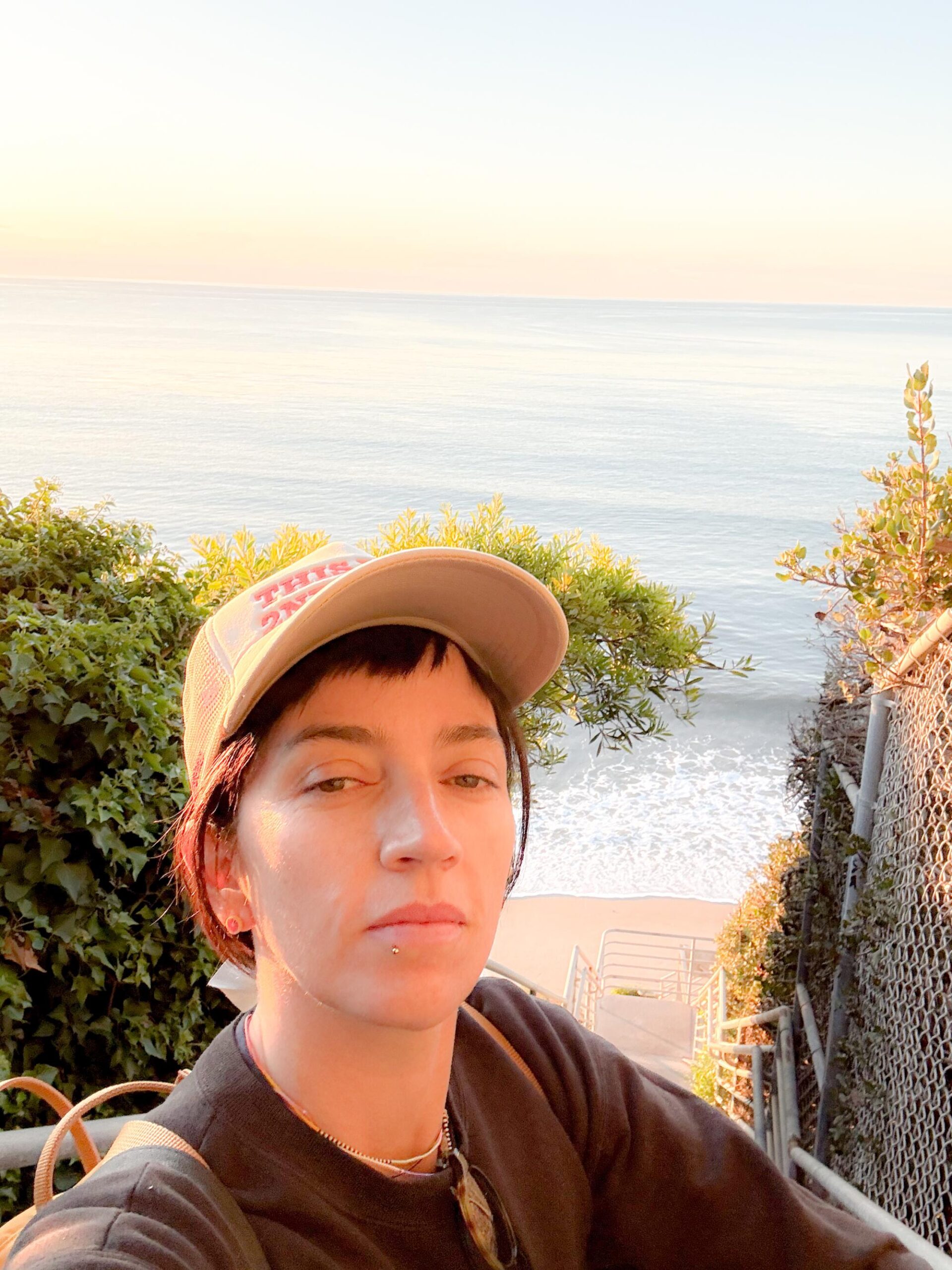
Jackie Snow takes a selfie by the new public stairs at Escondido Beach, also known as Hidden Beach.
(Jackie Snow)
In 2024, my colleague Jaclyn Cosgrove walked 27.4 miles of Washington Boulevard in a single day, from Whittier to the ocean. I read it in awe of the shape of it. One street. One day. A city revealed in a straight line.
And then a thought occurred to me, I could do something like that. What if I walked the entire L.A. shoreline? What would happen if I went to the beach and just kept walking along the crest of its waves? Except the shore does not reward this approach. It closes. It opens. Erosion pushes you onto the road and lets you back when it feels like it.
I set out to walk the 75 miles along the Los Angeles coastline anyway. I started at the mouth of the San Gabriel River and worked north toward the Ventura County line, taking 10 trips from the end of November to the second week of January, mostly waiting on tides and weather to cooperate.
Being a surfer helped. I already knew that wet sand means public access in California, that satellite view tells you things the default map doesn’t, and that tides can make or break an outing. For someone wanting to do a similar journey, the California Coastal Trail website is a valuable resource. You can walk long stretches and return back, but I went point to point, which means figuring out how to get back to your car. I usually Ubered, although public transit exists on some stretches. The slickest option is going with a friend who has a car: leave their car at the end, drive yours to the start, and walk. Their car is waiting at the finish to bring you both back to yours. Beyond that, bring more water than you think you need to especially as most stretches have no fountains, no services and no shade. Pack snacks that will sustain you throughout the journey, wear a hat and put on sunscreen, then reapply it. Even on gray, marine-layer days, you’re exposed for hours with nothing overhead.
If you’re inspired by this mega-trek but want to instead do a micro version, I suggest the 5.7 miles from Malibu Pier to Escondido Beach. You can park at one end and take a picturesque bus back where a tasty lunch at the pier’s Malibu Farm awaits at the finish. One last tip I picked up: be nice. People sometimes will give you water, or offer help, wanting to see you get to your destination too.
1
2
3
1.A red-tailed hawk perched on a coastal access sign along the boardwalk in Long Beach.2.A bench off the Long Beach boardwalk, near the start of the 75-mile walk.3.Birdhouses located near the Long Beach boardwalk.(Jackie Snow)
Alamitos Beach to Port of Long Beach: 4.9 miles
I start at the mouth of the San Gabriel River at Alamitos Park at about 10 a.m. on a busy Sunday at the end of November, walking with a friend. The first stretch is a flat, easy boardwalk. We stop at the Long Beach Museum of Art, which sits on the bluffs overlooking the water, and grab lunch at Claire’s, the museum’s outdoor cafe. From there, we walk toward the mouth of the Los Angeles River, passing through the marina, where boats sit quietly and a pirate ship is inexplicably for sale. We don’t make it up the man-made pier to the Queen Mary. Instead, we turn around just short of it, one river book-ending the other.
Looking back toward the marina near the mouth of the Los Angeles River, one river bookending the other.
(Jackie Snow)
Cabrillo Beach to Portuguese Bend Beach Club: 8.7 miles
I park at Cabrillo Beach, along the Port of Los Angeles, around 6:30 a.m. People are already playing ping-pong. Someone is dancing alone on the sand.
I start along the Cabrillo Beach Walking Path, which you enter at the south end of the beach where the sand ends and the bluffs start. In what feels like two seconds, I’m up on the cliffs, which quits partway and dumps me onto the residential streets of Coastal San Pedro, a neighborhood that looks quintessentially California. The houses are probably a few million dollars each, but they’re tidy bungalows, not the kind of aggressive beachfront wealth that makes you feel like you’ve wandered somewhere you’re not supposed to be.
I pass through Point Fermin Park, home to a lighthouse perched above the water. Down below, the beaches are rocky and loud. The waves are being sucked forcefully back out between the rocks, a sound that feels more industrial than oceanic. There’s more neighborhood walking on West Paseo Del Mar, interrupted by a Little Free Library stop where I add a few books to my bag. I hit the San Pedro hike trails, and the coastline turns dramatic, and suddenly I can’t step two feet off the path without risking a fall, but it’s breathtaking in its beauty.
Cabrillo Beach at the Port of Los Angeles, where the second walk began.
(Jackie Snow)
I hit another closed section, this one bordering Trump National Golf Club in Rancho Palos Verdes. Not wanting to end up on a Secret Service list that bars me from flying, I find another way around, on a surprising trail that curves between holes that’s part of the Ocean Trails Reserve. I climb down to the beach and start picking my way along the rocks toward the Portuguese Bend Beach Club, moving slowly and trying not to break my neck. You can definitely skip this part.
A security guard named Gilbert Blair waves me over and explains to me what I already know: I’m allowed to walk on the wet sand, but everything else is private. When I tell him what I’m doing, he starts offering advice, pointing out places on my Google map he thinks are closed because of last year’s heavy rains. This area is some of the shiftiest parts of all of California, with landslides going back all through the geographical record. In 2024, areas were moving 9 to 12 inches a week, although it has slowed down to 1 to 2 inches a week. He tells me the unstable land actually created a new beach, which the coast almost never does. People came from all over to see it, he says, gesturing toward a new form of sand that locals have called “unreal.”
Blair is nice, but not nice enough to wave me off the wet sand and through Portuguese Bend’s private roads so I can call an Uber. I have to backtrack, spending more time than I’d like carefully navigating the rocks. I briefly consider stopping at the nearby Trump National Golf Club to eat and use the bathroom, but I’m hot, sweaty and not in the mood to test my welcome.
The trail descending toward the rocky beaches below Point Fermin, where waves get sucked back out between the rocks with a sound more industrial than oceanic.
(Jackie Snow)
Terranea Beach to Palos Verdes Estates Shoreline Preserve: 5.4 miles
Based on Blair’s advice, I skip a section that isn’t open to the public and probably not safe. I drive Palos Verdes Drive South, a rutted, uneven road that skirts the area and feels vaguely off-roading. I park at Terranea Resort, which charges a fee, but there is also nearby free public parking. I pick the walk back up at the charming tucked-away Terranea Beach. As I head north, the trail climbs. I can see stretches of shoreline closed off, tantalizingly visible with no way to reach them.
I stop at the Point Vicente Interpretive Center, a modest but free museum perched above the water. Several people are gathered outside with binoculars, scanning the horizon. They tell me humpbacks were spotted farther out earlier, feeding. It’s easier to see them on the far side of Catalina, they explain, but they still watch from here, every day, sunrise to sunset, December through May. This is the Gray Whale Census and Behavior Project, run by the American Cetacean Society. Volunteers have been coming here for 43 years, counting whales as they migrate past the point.
The Point Vicente lighthouse, perched above the water where Gray Whale Census volunteers keep watch.
(Jackie Snow)
Volunteers with the Gray Whale Census and Behavior Project scanning the horizon. They’ve been counting whales here for 43 years.
(Jackie Snow)
After I peel myself away from looking for whales, the tides won’t allow me to climb down to Honeymoon Cove. I stay on the cliffs and admire the impressive houses around me. I continue until I round the Palos Verdes Estates cliffs, on Paseo del Mar, and see the long, flat stretch of built-up beaches unfurling ahead, South Bay-style, Malibu faint in the distance.
I’ve only done about 15 miles of my walk and suddenly I see how much more there is to go. I’m hot. I’m tired. I packed bad snacks. The sheer expanse of it, frankly, stresses me out. I had planned to make it to Rat Beach in Palos Verdes Estates, but I call it early.
The small coves that punctuate the Palos Verdes coastline, visible from the cliffs above.
(Jackie Snow)
Palos Verdes Estates Shoreline Preserve to El Porto Beach: 7.9 miles
I start back at Palos Verdes Estates cliffs. A couple of turns in, I come across my first real surf spot of the walk. I don’t think I’ve ever seen a surf break from this high up. The waves look less like waves and more like pulses of energy moving under the skin of the ocean.
When I finally hit Rat Beach and see how flat the coastline stretches ahead, I feel like dropping to my knees and kissing the ground. After days of cliffs and detours, the openness feels generous.
Hermosa Beach is busy with volleyball nets in use at a level that suggests Olympic aspirations. Forty minutes later, I stop atErcole’s in Manhattan Beach two blocks off the boardwalk and demolish one of its famed burgers. Instead of stopping where I planned, I keep going and end at my familiar surf spot El Porto.
Surfers walking out to the break at El Porto.
(Jackie Snow)
El Porto Beach to Ballona Creek Jetty: 4.8 miles
I’m back at El Porto Beach, this time walking a paved boardwalk through a thick, foggy marine layer with my husband and a friend who’s in town visiting.
Suddenly, my friend realizes he’s dropped his wallet somewhere north of El Segundo. Cue a round of retraced steps and mild panic. An angel named Dr. Gaz finds it, looks up my friend, and bikes it over so we don’t have to retrace any further. The wallet is returned. Our trio survives. We keep walking, stopping at Ballona Creek Jetty.
A dog and his man relaxing on the beach in Marina Del Rey.
(Jackie Snow)
Marina Del Rey to Will Rogers Beach: 7.4 miles
In this classic boardwalk stretch, we eye the muscle men of Muscle Beach, pause for a quiet break atSmall World Books in Venice and walk next to skateboarders (including one dressed as a Santa) in Santa Monica, before ending at Will Rogers State Beach.
The rocks and tide pools just past Malibu Lagoon, where the king tide pulled the water back farther than usual.
(Jackie Snow)
Will Rogers Beach to Malibu Pier: 7.7 miles
I do this stretch with my husband on New Year’s Day, parking at Will Rogers Beach Lot Three and timing it to a king tide. The highs are higher, but the lows are lower too, which is the part we’re interested in.
Even with the king tide low, the beach opens up and pinches closed without warning, and we move between wet sand, rocks we feel like traversing, and the shoulder of the Pacific Coast Highway when we don’t.
Soon enough, we hit the section of burned-out houses that still haunt the beach nearly a year later. I think I can still smell the smoke. It’s the quietest stretch of the whole walk, and the only place the emptiness feels like loss instead of calm.
The Malibu coastline near Escondido Beach.
(Jackie Snow)
When we finally reach the Malibu Pier, it feels like stepping back into civilization. People are on the beach. Nobu is packed. We eat at Malibu Farm and sit indoors, grateful for chairs, shade and food that isn’t trail mix.
Afterward, we take the bus back to the car from a stop near the Pier on the PCH, which turns out to be one of the most beautiful bus rides in existence, with the coastline framed perfectly by wide windows.
Malibu Pier to Escondido Beach: 5.7 miles
We come back the next day for another king tide, despite rain in the forecast. I start on the other side of Malibu Lagoon State Beach, which looks like nothing else on this walk. It’s swampy and green and quietly buzzing, reminding me of Florida, my home turf. Birders are out, rain jackets zipped, binoculars already up.
There are still rocks and little rivers to navigate, but the tide is so low it’s exposing tide pools I didn’t know existed up here. The sand is packed and forgiving, and we cover distance quickly until the rain really starts coming down.
We exit using the new stairs at Escondido Beach, also known as Hidden Beach, which were installed in 2023 after a multidecade battle over access. I take them slowly as I celebrate a mostly triumphant walk.
The Malibu coastline just south of Point Dume.
(Jackie Snow)
Escondido Beach to Zuma Beach: 6.7 miles
I head back to Escondido Beach, a few days later at low tide, though the tide is already coming in. That turns out to be a mistake. My second mistake is coming alone. As I scramble over rocks helpfully labeled with a sign warning not to climb on them, it’s dangerous, I notice my phone has no service. I decide the safest option is to soak my hiking boots instead along the incoming tide.
With my shoes sloshing and Google Maps satellite view looking deeply uncommitted to the stretch just south of Point Dume, I try to exit. Nope. Gated community. Not ready to give up, I keep going.
The surfer south of Point Dume whose companions offered to unlock the gate.
(Jackie Snow)
I spot a woman surfing and stop to take a photo. Her non-surfing companions start chatting with me. When they hear what I’m doing and where I’m trying to go, they offer to unlock the gate. It’s a genuinely kind gesture. But since I’m doing this for you, reader, I ask if there’s an exit farther along. They say there are stairs up ahead, probably reachable. I tell them, in the nicest way possible, that I hope I don’t see them again, and keep going.
My shoes are now collecting water on every step, the bottoms of my pants are wet, and everything underfoot is baseball-sized rocks, which I think is the worst possible rock size for walking. I round the curve. I spot the stairs.
If I had turned off satellite view, the stairs would have been obvious. So much for trying to read the coastline.
I climb out and walk to the tip of Point Dume and look south. I can see the South Bay, where I called it early weeks ago, hot and tired and hating my snacks. I’m still hot. I’m still tired. My snacks are still crummy. But standing here, salty and damp, I realize I don’t want this to walk to end.
The view from the cliffs near Point Dume.
(Jackie Snow)
Zuma Beach to county line: 5.3 miles
Today I timed the hike with a tide going out and my husband joins me so I don’t have a repeat from last time. We park along the PCH at Zuma. The first stretch we go by “Hannah Montana’s View,” a very persistent Google map label. It’s calm until a curve, where a gaggle of adolescent boys, shirtless and shoeless, are trying but failing to climb over the mussel-covered rocks ahead of us. For the second time on this walk, I have to turn around and back-track to the last exit, maybe a quarter mile back.
Luckily, the sighting of a Little Free Library makes the detour feel less like a failure and more like a reward. We cut through a small gated community that turns out to have a door for exactly this purpose, a quiet acknowledgment that people do, in fact, want to walk through here. There is so much rock walking. So much. Eventually we reach Leo Carrillo State Beach, where Los Angeles actually ends and Ventura County begins. Despite the name, County Line Beach is another mile or so away.
Gated Lechuza Point neighborhood has a beach access road that lets walkers get to the shore.
(Jackie Snow)
I watch people walk across the county border without noticing it at all, no fanfare, no announcement, no sense that anything has changed. They keep going. I stop. They are not done walking, but I am.
I haven’t seen every inch of the Los Angeles County coastline. I double-checked my walking distance and I’m still not at 75 miles, more like 65. The number I found online is probably not entirely accurate (the coastline is constantly changing). Maybe it’s closer to 70. But I have seen whale-watch perches, burned-out Malibu lots, crowded boardwalks and magnificent waves. The coastline is both fragile and welcoming — and walkable — if you’re willing to chase the tides.
Tensions have escalated between Iran and Israel while ongoing diplomatic efforts have failed to yield a lasting peace deal.
Published On 8 Jun 20268 Jun 2026
Iran and Israel were on Monday locked in tit-for-tat missile attacks, as the fragile ceasefire that has held in place since April 8 appeared closer to collapse than at any point in the past seven weeks.
These escalating hostilities between Iran and Israel come as the United States-Israel war on Iran enters its 101st day on Monday.
Here is what is happening:
In Iran
Explosions heard in Iran: Iran’s IRNA news agency reported that at least “two powerful explosions” were heard in Tehran and at least three in the city of Isfahan. The broadcaster also reported that explosions were heard in Tabriz. The Israeli military had said it “attacked military targets” in western and central Iran.
Power plant in Mahshahr attacked: A security officer in the southwestern Khuzestan governorate told the Fars news agency that Israeli forces have attacked the Karun Petrochemical Company in the city of Mahshahr. The Israeli army confirmed striking the petrochemical plant. The Mahshahr Petrochemical Special Economic Zone announced that its workers have evacuated the site following the Israeli strike.
Iran denies attacking base in Saudi Arabia: Responding to reports of an explosion at the Al-Kharj airbase in Saudi Arabia, Iran’s IRIB broadcaster cited a military official as saying that “Iran has not fired any shots.”
Red Crescent on standby: The Iranian Red Crescent says it is standing by to respond to any fallout from Israel’s attacks across the country this morning.
In Israel
Security cabinet meeting: Israeli Prime Minister Benjamin Netanyahu will convene a security cabinet meeting at 11am local time (08:00 GMT) amid escalating hostilities with Iran, according to multiple Israeli media reports.
The Israeli military issued a series of alerts starting Sunday over waves of missiles launched from Iran towards Israeli territory.
Iran’s Islamic Revolutionary Guard Corps (IRGC) said on Monday that they launched attacks against Israel’s Nevatim and Tel Nof airbases as a response to attacks on radar sites within Iran, the Fars news agency reported.
Israel’s Channel 12 broadcaster and Ynet News said a missile fired from Yemen was intercepted.
In the US
The US State Department issued a security alert for citizens in Jordan over reports of projectiles in the country’s airspace – presumably missiles fired by Israel towards Iran, or by Iran towards Israel.
Democratic Senator Chris Murphy said Israel’s latest attack on Iran “compounds” the “humiliation” for US President Donald Trump, as it comes after the US president reportedly told Netanyahu not to retaliate to Iran’s missiles fired at northern Israel.
In Lebanon
Explosions were heard in the Lebanese capital Beirut early on Monday, but these were likely rocket interceptions, Al Jazeera’s Zeina Khodr reported from Beirut.
On Sunday, Israel had hit the suburbs of Beirut, in attacks that Iran described as crossing a red line in terms of violating a ceasefire between Lebanon and Israel. Iran then said its decision to hit northern Israel was in response to these attacks near Beirut.
War diplomacy
Israel defends attacks on Iran: The Israeli ambassador to the US, Yechiel Leiter, defended the attacks on Iran, saying “no self-respecting country” would tolerate Iran’s missile launches against Israel.
Canada expresses concern: Canada’s Foreign Ministry has expressed concern about the resumption of conflict between Iran and Israel, saying it jeopardises the ongoing negotiations and “the prospects for peace”.
Saudi-Qatari foreign ministers speak: Saudi Foreign Minister Prince Faisal bin Farhan Al Saud spoke by phone with his Qatari counterpart, Sheikh Mohammed bin Abdulrahman bin Jassim Al Thani, the Saudi Foreign Ministry said.
Qatari-Iranian foreign ministers speak: The Qatari foreign minister, who is also the country’s prime minister, spoke by phone with Iranian Foreign Minister Abbas Araghchi about mediation efforts between Iran and the US, as well as the latest developments in Lebanon, according to a Qatari statement.
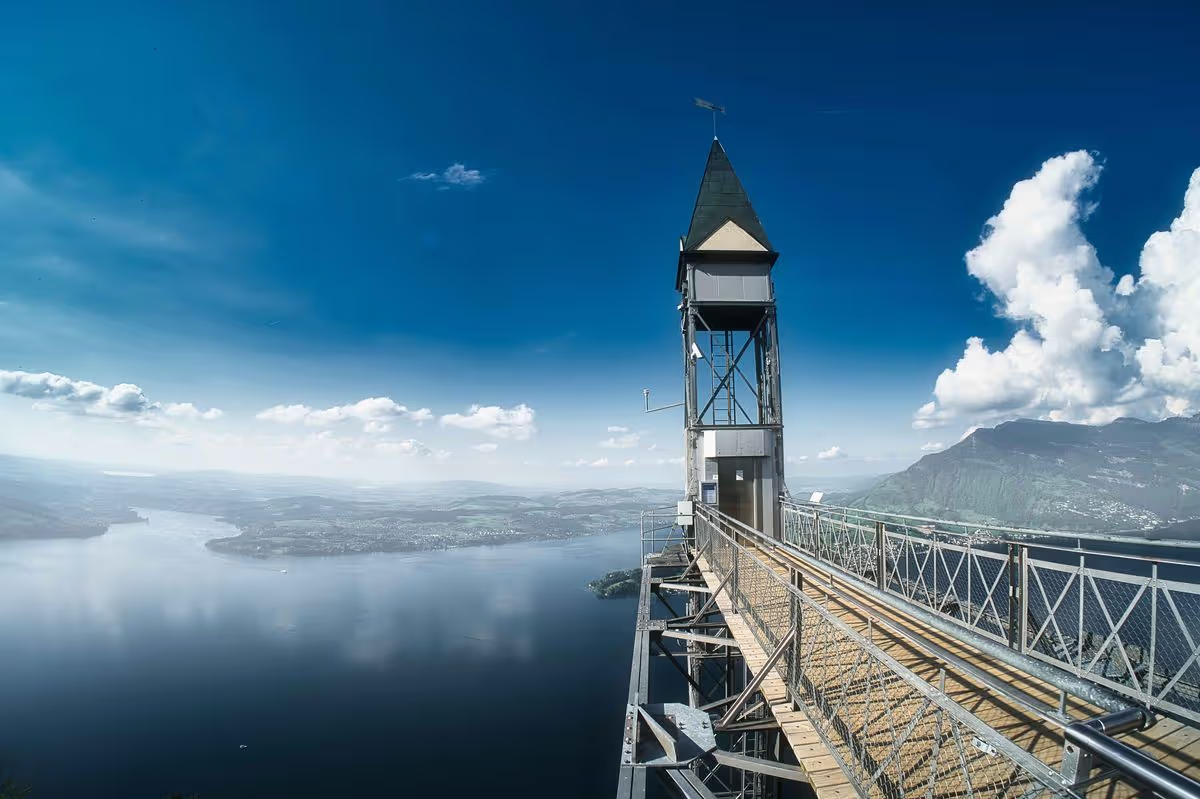
The incredible lift ascends 153 metres (502 feet) in under a minute
Europe’s highest outdoor lift is used by 40,000 people a year
Some of the world’s most jaw-dropping lifts can be found in luxury hotels, including the highest outdoor lift in Europe, nestled in Lucerne, Switzerland. The Bürgenstock Resort is home to the remarkable Hammetschwand lift, offering stunning views of Lake Lucerne.
The Hammetschwand lift was built between 1900 and 1905 by pioneering hotelier Franz Josef Bucher, at a cost of 500,000 Swiss francs (around £470,000). It remains the quickest route up to the viewpoint, climbing 153 metres (502 feet) in under a minute.
Those planning a visit should bear in mind that to reach the foot of the lift, you’ll need to walk the breathtaking Felsenweg cliff path.
It is estimated that over 40,000 people use the Hammetschwand lift annually, and around 200 to 250 riders per day.
On Tripadvisor, one visitor advised choosing “the perfect sunny day to enjoy the view.” They went on to say: “This is a fantastic view, the elevator is just too quick, but still worth a visit.”
Another said: “You do the Burgenstock track to the lift and it is already by itself stunning!!! Nobody talks about it. It’s a hidden gem in Switzerland!
“Then you arrive at that special spit where the lakes of the four cantons connect, and it’s breathtaking. A bit ahead, there’s the lift and the adventure to one of the most beautiful views ever. It’s easy, it’s accessible, it’s unbelievably beautiful. I will do it again.”
Among other remarkable examples is the Hotel Santa Caterina’s lift in Amalfi, Italy, which boasts breathtaking views. Carved into the rugged cliffside, the glass-fronted elevator takes guests down to the exclusive Beach Club and the hotel’s Italian seafood restaurant.
In Greece, the Corfu Holiday Palace features a stunning lift that transports guests down the cliffside to the beach in just moments, treating them to gorgeous views across the bay while providing far easier access to the white sands below.
The Luxor Hotel in Las Vegas, United States, is home to one of the most iconic lifts on the planet. Given the hotel’s striking pyramid shape, the lifts travel between floors at a diagonal 39-degree angle, treating guests to a spectacular outlook over the atrium as they make their way to one of the hotel’s 4,407 rooms.
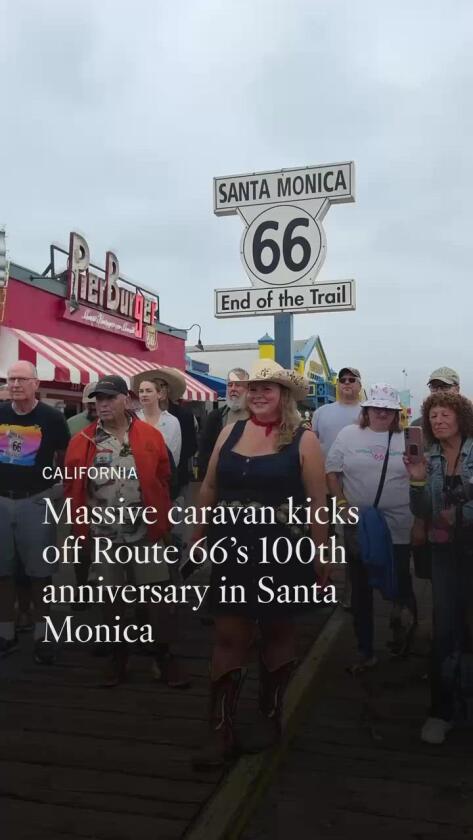
Around 7 a.m. Saturday, in a lot beside the shuttered Santa Monica Civic Auditorium, a strange set of cars and trucks began to gather. Three Model A’s. A couple of ’60 convertibles. A 1964 Chevrolet Impala station wagon. Also, a big bull on trailer wheels.
“Am I in the right place?” asked a man in one of the Model A’s.
“Going to Chicago?” asked a guy in a white Denali.
“I wish I could do the whole thing,” said Joe Hernandez of Pasadena, wistfully standing by.
Share via
This was the starting line for roughly 70 drivers who gathered to celebrate the centennial of Route 66 with a 2,448-mile, 20-day caravan to Chicago. Most had come from outside California to share an adventure with fellow “roadies” and boost awareness of the classic scenery and independent businesses along the eight-state route.
But soaring gas prices and hesitant international travelers have added uncertainty to a trip that was always going to be a logistical challenge. Day 1 alone might terrify an L.A. commuter: From the Pacific to Pasadena by surface streets, including miles on Santa Monica and Colorado boulevards.
“I don’t know how it’s all going to happen,” said Gary Daggett, president of the Old Route 66 Assn. of Texas. But he and his wife, Stephanie, have more than a little Route 66 experience to draw upon.
Mike and Lisa Visket of Prescott, Ariz., pose in Santa Monica at the pier in their Route 66 clothing on June 6, 2026.
“This is our 30th trip over 20 years,” Daggett said. “You can’t see everything. There’s so much…. You start meeting the people, you get hooked on the people.”
Shortly before their 8:30 departure time, organizer Rhys Martin called drivers together.
“Leaving here is going to be a little complicated,” he said.
Martin, who is part of the Route 66 Road Ahead Partnership, is president of the Oklahoma Route 66 Assn., and serves as manager of the National Trust for Historic Preservation’s Preserve Route 66 initiative. For the journey, he is driving a ’64 Chevy Impala station wagon with a GPS unit inside so that armchair travelers can follow his journey on the web.
“It’s going to be impossible to keep everybody together,” he said during preparations. “We’re encouraging people to spread out and support independent businesses rather than all going to one place and demolishing the kitchen.”
William Cooke of Pinon Hills participates in a caravan from Santa Monica Pier to Chicago, celebrating the centennial of Route 66.
In song and literature, the route is celebrated as an east-to-west journey. This caravan, running in the opposite direction, will travel from California through Arizona, New Mexico, Texas, Oklahoma, Kansas and Missouri to Illinois.
From Santa Monica, the Day 1 schedule took drivers to Beverly Hills City Hall, Grand Central Market downtown for lunch, the Chicken Boy statue and Galco’s Soda Pop Stop in Highland Park, then an overnight in Pasadena.
Day 2 takes the group from Pasadena to Barstow. Day 3, from Barstow to Needles. On June 25, the caravan is due to arrive in downtown Chicago.
The loose procession was led by a core group of 15 cars, including representatives of all eight states on the route. Since anyone can join or leave the caravan at any time, the number of vehicles will vary by the hour.
Through the decades, the road has grown from an American artifact into a global symbol of small-town Americana. Many merchants, restaurateurs and hoteliers along 66 now say that their summer customers are mostly travelers from abroad, especially Europe. One of the caravan’s drivers, in a rented pickup truck, was Dries Bessels, co-founder of the Dutch Route 66 Assn.
Brady Wilson of Amarillo, Texas, displays an assortment of Route 66 pins on his cowboy hat. Wilson is part of a caravan of Route 66 enthusiasts who set out from Santa Monica Pier on June 6, 2026, for Chicago.
Though the Model A’s will surely raise eyebrows on the road, the caravan’s most startling element is the fiberglass bull representing the Amarillo-based Big Texan Steak Ranch restaurant, one of the event’s sponsors.
“It’s the same one my dad brought home in ’71. His name is Big Moo,” said Danny Lee, who co-owns the restaurant with his brother, Bobby Lee. “He’s 12 and a half feet high. About 500 pounds. It’s all fiberglass.”
In 21 cities along the drive, the Big Texan team aims to stage nightly steak-eating contests, giving free dinners to anyone who can eat 72 ounces of steak, a baked potato, three shrimp, a side salad and a roll in 60 minutes.
The caravan’s first challenge came at the Santa Monica Pier, where there was no room for the cars due to a construction project, World Cup preparations and a Children’s Hospital fundraiser. Instead, the caravan gathered by the Santa Monica Civic Auditorium. Drivers strolled over the pier for a photo op, then returned to their cars.
“Herding cats,” said George Kulakowski of Huntington Beach, at the wheel of a 1931 Ford Model A Panel Delivery truck.
Participants in a Route 66 centennial caravan pose for a photo before they depart from Santa Monica Pier on June 2, 2026, for Chicago along the historic highway.
Another challenge awaited in West Hollywood, where Santa Monica Boulevard (aka Route 66) was busy with crowds for the city’s WeHo Pride Street Fair. By plans laid ahead of time, most caravan vehicles detoured around the party while select caravan cars followed a police escort through the action.
This way, Martin said, “another community along Route 66 gets to share its identity with the community at large.”
Allison Lehn of Boston participates in a caravan from Santa Monica Pier to Chicago, celebrating the centennial of Route 66.
By 11:15 a.m., Martin’s car had reached Sunset Boulevard in Silver Lake. Meanwhile, assorted other parades and caravans are traveling Route 66 in other states this year; most of them concentrate on short segments.
By 12:45 p.m., caravaners had met the mayor of Beverly Hills and rolled through West Hollywood’s Pride festivities, arriving at Grand Central Market, running slightly ahead of time.
On May 30, an estimated 3,596 classic cars joined a “Capital Cruise” on Route 66 in Tulsa, Okla., becoming a Guinness Book of World Records holder for the largest parade of classic cars, drawing an estimated 100,000 spectators and overwhelming local traffic.
In Arizona, the Williams Historic Route 66 Car Show was set for Friday and Saturday. In Texas, the Amarillo-based Texas Route 66 Festival is running Thursday through June 13.
William Cooke of Pinon Hills, left, and Sarah Jane Woodall of Tecopa, Calif., drive along Wilshire Boulevard in a 1960 Edsel Ranger Convertible as part of a Route 66 centennial caravan.
In those states and beyond, the caravan from Santa Monica will find hotels and motels in every kind of condition, vintage neon, road food, blue states, red states and purple states.
As a package of Times stories described in May, some landmarks date to the highway’s days as a scene of Depression desperation in the 1930s, others to its giddy postwar years in the late 1940s and ‘50s.
Route 66 was created in 1926 as a highway stitching together hundreds of local roads. Nicknamed “the Main Street of America” by its boosters and “the Mother Road” by John Steinbeck in “The Grapes of Wrath,” the highway inspired Bobby Troup’s song “(Get Your Kicks on) Route 66” in 1946.
But economic life along Route 66 has been precarious since the late 1960s, when interstate highways and chain hotels began stealing traffic away from the older, slower road. After Route 66 was decommissioned as a highway in 1985, about 85% of the old route remained in use, often as small-town thoroughfares, country highways and frontage roads alongside Interstate 40.
Efforts to save and rebuild the route as a historic resource began in the late 1980s and gained ground after the 2006 release of the Pixar/Disney animated features “Cars,” which tells the story of the highway’s rise and fall. In small towns such as Tucumcari, N.M., and Seligman, Ariz., the highway remains central to local identity and economy.
A vehicle in the Route 66 caravan is photographed June 6, 2026.
This year’s centennial improvements along the route “are things that are going to go into the future,” Martin said. “The real impact is going to be next year and the years after.”
Demi Vollering claimed victory on a shortened queen stage of the women’s Giro d’Italia on Saturday but admitted it was the “weirdest finish line of my life”.
A summit finish in Sestriere had been scheduled for the eighth and penultimate stage, but organisers reduced the route by 28 kilometres as an unstable slab of ice was threatening to fall on to the route.
Ice had already been cleared from an avalanche shortly before the riders passed through the Italian Alps.
Instead the line was hastily moved to one kilometre below the Colle delle Finestre, where Vollering, of FDJ United–Suez, prevailed in a four-way sprint finish.
The pre-race favourite edged out Isabella Holmgren, Antonia Niedermaier and fellow Dutch rider Anna van der Breggen to claim her second stage win of this year’s race.
“It was strange because the Finestre was suddenly the final climb,” said the 29-year-old Vollering. “It was the weirdest finish line of my life, but I’m very happy to take the win.”
Team SD Worx–Protime rider Van der Breggen retains the pink jersey for the final stage, over 145km around Saluzzo at the foot of the Alps, with Vollering having cut the four-time winner’s lead slightly to 49 seconds.
“We hoped that we could get closer to the maglia rosa today,” said Vollering. “Tomorrow’s stage is not as hard as today’s, but we will make a plan and think about how to try to win the Giro.”
Three tunnels form part of the complex under the city
The tunnel runs right under a European city.
A European city has an extensive network of tunnels beneath it. The Blanka Tunnel Complex is the longest city tunnel in Europe and runs for a total length of 5,502 meters.
The tunnel sits under Prague and is the longest road tunnel in the Czech Republic. It connects the area west of Prague Castle with the Trója district in the North-east of the city.
Three tunnels, consisting of the Bubenečský, Dejvický, and Brusnický, make up the complex, which was designed to relieve heavy traffic from the history city centre. In its first 49 months since opening, it was used by 139 million cars.
Today, it is estimated that 88,000 vehicles use the tunnel every day. The Blanka Tunnel Complex opened on September 19, 2015, but it was a long time coming.
Construction launched in 2006, but it was planned since 1993. The tunnel was due to open in 2011, but the biggest and most expensive project in Prague was delayed by four years.
It cost 43 billion crowns, which is £1.5 billion today and doesn’t include all construction costs. During the construction of the tunnel complex, there were three landfalls.
The incident occurred twice in the Stromovka park, creating a hole measuring 15 to 25 meters. Another landfall happened in the garden area of the Ministry of Culture in Hradčany.
Since opening, the Blanka Tunnel Complex has undergone continuous maintenance. There is 24/7 monitoring by a dedicated control centre that works night shifts to service lights, ventilation systems, cabling and drainage.
Last year, the tunnel marked its 10th anniversary. Prague Daily News said: “It relieved congestion in the city centre, reduced journey times, and took vehicle traffic underground.
“Since its opening, around 780 million vehicles have passed through the tunnel.
“The Dejvický Tunnel has borne the greatest load with more than 271 million vehicles, followed by the Brusnický Tunnel with almost 266 million and the Bubenečský Tunnel with 236 million vehicles.
“Although Blanka has been in regular operation for years, the approval process for part of the project is still not fully concluded.
“A formal decision by the Administrative Court has meant that the relevant section continues to operate only under provisional use.
“Observers, however, expect a final acceptance soon.”
The soap star previously opened up about the “breathtakingly hard” final moments of his life, but explained how she was left so inspired looking after him that she has now trained as a carer.
In a new BBC programme, Natalie Cassidy: Caring Together, the actress shines a light on Britain’s struggling care system, and focusing on topics like autism, first aid, dementia, childhood diabetes, and working in placements in a care home and St John Ambulance after returning to school to get a Level 3 BTEC in health and social care.
Viewers were left in tears by the eye-opening programme, with a clip recently shared on social media.
One person wrote: “Fantastic series showing the very important things that all carers and health care professionals have to deal with day in and day out! Good luck to everyone involved. I hope all the students who were in the series get the jobs they want to do! Well done @natcass1.”
Another said: “Just finished watching this. Loved it. Congratulations @natcass1.”
A third wrote: “I cried every day watching this series. It was so beautifully done with amazing respect and understanding for everyone on the show.”
Someone else added: “This has been a most wonderful programme x I can’t wait to hear if you passed x I’m sure you did x the episode about dementia [was] invaluable as my husband was diagnosed with vascular dementia recently x I’ve kept that episode.”
Another wrote: “Loved this series. @natcass1 was so honest about her own life and the job.”
Speaking in the programme, Natalie remarked how much she had loved her training, saying: “This course has been fantastic. The people I’ve met, the placements I’ve been on. I would like to continue this care journey.
“I feel like I’ve scratched the surface. I’ve loved it. I’ve loved every minute of it.”
“Caring for Dad right up until the end of his life, and losing him, was one of the most painful things I’ve ever had to do,” Natalie previously told the BBC.
“But the people I met have changed my life and are so inspirational. That’s what spurred me on to do this.”
“I’ve only ever had one job, but I’ve always wondered what I would have done if I wasn’t an actress,” she added.
Natalie’s father died in April 2021, and she went on to say that filming elements of Caring Together did make her miss him, adding: “Grief never stops – you don’t grieve for someone and then it’s over. It just changes.
“You change as a person – it shapes who you are, it shapes how you look at the world. You just get better at coping with it.”
Natalie left EastEnders last year after 32 years, saying that it was time to move on and adding: “EastEnders is in my bones so I will never forget where I started my career and I will continue to love the show.”
She later explained she was “ready for a change”, telling Bella Magazine: “I adore EastEnders but you can’t do everything. EastEnders is a factory with 60 cast members and 300 staff.
“They can’t cater for someone who says, ‘By the way, I need two months off to do this, I need another three months off to do this’. It’s not fair.”
Executive producer Chris Clenshaw had also said, at the time of Natalie’s announcement: “Over the last 31 years in EastEnders, Natalie has been involved in some of the show’s most iconic and explosive storylines. Her portrayal of Sonia has made her a firm fan favourite amongst the viewers.”
Natalie Cassidy: Caring Together is available to watch on BBC iPlayer.
WHEN it comes to date nights, one mum doesn’t just stick to dinner instead, she travels around the world.
Oliviyah Stevens and her partner Kyle have been to Italy, Morocco and Majorca after swapping dinner dates for holidays.
Sign up for the Travel newsletter
Thank you!
Oliviyah Stevens and her partner Kyle opt to travel for their datesCredit: Oliviyah StevensThe pair go on day trips to the likes of Majorca – flights are cheaper than a family dinnerCredit: Oliviyah Stevens
Oliviyah is a mum-of-five, with her oldest child being 14 and her youngest being one.
But she doesn’t let childcare come in the way of travelling, or love life, after discovering extreme day trips.
Oliviyah and her partner Kyle also go abroad every few months for what they call ‘date day’.
Oliviyah, who hails from Walthamstow, explained why she’s been swapping dates and family days out for travel.
When it comes to exploring Los Angeles, there are three things that actor and comedian Randall Park loves to do: shop, eat and run. Park, a native Angeleno, grew up on the Westside, attended UCLA, chose a career here and can’t imagine living anywhere else.
“I consider myself a small town person who happened to be born in the big city,” Park says. “I’ve traveled a lot for work, and have gotten a greater appreciation for L.A. There’s a little part of everywhere here. There’s so much good food in L.A., so many fun things to do and really great people here.”
In Sunday Funday, L.A. people give us a play-by-play of their ideal Sunday around town. Find ideas and inspiration on where to go, what to eat and how to enjoy life on the weekends.
The son of Korean immigrants, Park grew up in the South Robertson area, “a part of L.A. that was extremely diverse,” he says. “My friends, growing up and to this day, are all different backgrounds, races and religions. We were like a bunch of punk kids running around the city.”
Park is known for his roles as Agent Jimmy Woo in the Marvel Cinematic Universe, FBI Special Agent Edwin Park in the Netflix series “The Residence” and Taiwanese American patriarch Louis Huang in the ABC sitcom “Fresh Off the Boat.”
Recently, Park, his wife (actor Jae Suh Park) and their 13-year-old daughter Ruby left Studio City, where they had lived for 15 years, to move back to the Westside. When asked what his ideal Sunday would include, Park’s answer was jam-packed. It was so jam-packed that it would be impossible to fit it all in one day. So, take his schedule with a grain of salt. This is his magical Sunday where time bends, L.A. traffic doesn’t exist and bellies are never too full.
This interview has been lightly edited for length and clarity.
9 a.m.: Go for a run before a day of delicious eats
I’d sleep in, then go for a run to the beach and run around Venice. Sometimes my daughter’s up earlier. She’s on the autism spectrum, and really loves art and making stuff. We have a little art room that’s dedicated to her. She’s always painting, drawing, making little sculptures, just always creating.
10 a.m.: Breakfast and then pastries
Rae’s in Santa Monica is a very old-school diner, and we really love it there. They do these biscuits and gravy that are really good. They’re probably not that good for you, but I just ran, so it’s OK. There’s also a great bakery-cafe that we like to go to called Röckenwagner. So breakfast at Rae’s, then a coffee and pastry at Röckenwagner. We’ll be eating all day, which is why I ran in the morning.
11 a.m.: Stroll the farmers’ market
Next, we’d hit up the farmers’ market in Mar Vista. We’ll get fruits and vegetables for later in the week. There’s a hummus stand that I really love. There’s always a band playing, so we just soak it all in. It’s a really nice walk.
Noon: Shopping, with more eating along the way
Then I’d go shopping, and would either drag my family with me, or I’d go alone while they did their thing. First, there’s a small shop called General Quarters on La Brea. I know the owner there, Blair Lucio, and they always carry the coolest stuff. They specialize in California heritage-style clothing for men. Another store I love is Sid Mashburn in the Brentwood Country Mart. They do suits and really cool menswear. I discovered it in Atlanta when I was working on a job and loved it so much that every time I’d be in Atlanta, I’d go to it. Then I discovered they had one in L.A.
Or, I’d go to Sawtelle Boulevard. That whole street is fun with so many great stores. The Giant Robot store there has a lot of pop culture, Japanese and Asian pop culture, a lot of art, graphic novels. There’s also a great record store called We Share Records. It’s mostly vinyl and a lot of it is from Japan. They’ll even have American artists, but the Japanese editions of their records, so it’s really cool to see the Japanese versions of a Whitney Houston album. The last thing I bought there was a Hall & Oates record from Japan.
For lunch, I’ve been really into a place calledSun Nong Dan on Sawtelle. They have a few locations, but the newer one in Sawtelle is the only one that I go to since I’m on the Westside. I usually get either the Galbi-tang, which is a short rib soup, or the Tta Roh Guk Bap, which is a brisket and dried cabbage soup, or the Dduk Mandu Guk, which is a rice cake and dumpling soup. Very much Korean comfort food. Plus, they’re open 24 hours, which sometimes comes in handy.
If not there, I’d go to El Tepeyac Cafe in Boyle Heights, which is one of my all-time favorites as a kid that my dad would take me to. It’s very homestyle Mexican food, and I would get their Hollenbeck burrito, which is pretty epic.
6 p.m.: Baseball or dinner out
If there’s a Dodgers game, I’d go to the game. Growing up in L.A., there’s a lot of nostalgia with the Dodgers for me. I’ve always been a fan. My wife and I will go to the games and eat Dodger Dogs and nachos.
If not, we’d go to Musso & Frank Grill to get a shrimp cocktail and steak dinner. It’s very Old Hollywood, and you can feel the history in there. A lot of the leather booths have a story. I love when L.A. preserves its landmarks. Getting a sense of the history of the city through these restaurants is really fun.
For something more low-key, there’s this restaurant in Koreatown called Kobawoo House. They specialize in bosam, which are wraps with [fillings like] pork. They also specialize in Korean seafood pancakes that are so good.
If we’re going to go fancy, which we don’t often do, there’s a restaurant called Kato at the Row, near downtown. It’s a Michelin-starred Taiwanese omakase-style restaurant that’s so good. You don’t order. They just give you courses, and you can pair it with wine or just order cocktails. I usually just order an Old Fashioned, which is really good there. The food is just out of this world.
8 p.m.: A little night jazz
After dinner, we’d drive down to South Pasadena where there’s a bar and grill called the Barkley. My childhood friend Richie Glaser has a jazz band [the Richard Glaser Quartet] and they play at the Barkley every Sunday night. We’d get a cocktail, listen to the band and hang out.
9:30 p.m.: Winding down for bedtime
We’d come home, relax and watch TV, probably old episodes of “The Dick Van Dyke Show.” My daughter would go to bed before us, and would be asleep before we officially go to sleep. The end of the day is very low-key and quiet. Every Sunday is different, but my ideal Sunday would be one of food, family, friends and frolicking throughout the city.
Before the Diamondbacks’ Ketel Marte delivered the walk-off blow to the Dodgers — a towering home run off reliever Tanner Scott, punctuated by a bat flip — Roberts had to choose whether to send Shohei Ohtani to the plate as a pinch-hitter.
In a 3-2 loss, Ohtani, who didn’t start after two-way duties the day before, remained in the dugout.
“It has to be the right spot,” Roberts said.
The defensive picture complicated the calculus.
If Scott had thrown a scoreless inning and sent the game into the 10th, Roberts planned to have Ohtani pinch hit for Miguel Rojas, the third batter due up.
In the ninth, however, unless Ohtani replaced designated hitter Will Smith (who ended up hitting a two-out double), Roberts would have had to put in a defensive replacement for the bottom half of the inning.
“I didn’t want to go two innings trying to figure out how to play defense with Shohei then being out of the game,” Roberts said.
Roberts already had been forced to use the rest of his bench.
Third baseman Max Muncy exited in the fifth inning after a collision at first base, and Santiago Espinal replaced him. When rookie left fielder Ryan Ward walked in the seventh inning, the speedier and more defensively sound Alex Call replaced him on the bases. And in the eighth, the right-handed hitting Rojas pinch-hit for Alex Freeland against Diamondbacks left-hander Brandyn Garcia.
Arizona’s Ketel Marte, center, celebrates with teammates as he steps on home plate after hitting a walk-off home run against the Dodgers on Thursday.
(Christian Petersen / Getty Images)
The Dodgers had Andy Pages, Kyle Tucker and Smith — none of whom were candidates to be pulled for a pinch-hitter — due up in the ninth. But after Smith hit a two-out double, leaving first base open, the Diamondbacks surely would have intentionally walked Ohtani if he pinch-hit for Espinal.
Then, the Dodgers would have had to reconfigure their defense, likely moving first baseman Freddie Freeman to third, catcher Dalton Rushing to first base and Smith behind the plate, forfeiting the designated hitter spot.
That would mean a shaky defensive lineup with the game still on the line in the ninth, with pitchers forced to hit if it went into extra innings.
So, instead, Roberts saved Ohtani.
“Once we get into extra innings, then I would fire that bullet,” Roberts said.
The Dodgers, however, didn’t get to extra innings. Scott struck out the first batter he faced. Then he threw a fastball down and in to Marte, who managed to get the barrel of his bat to it.
“You’ve got to tip your cap,” Scott said. “He’s a good hitter. Should I have gone up and in? Yeah. Or just a slider. I knew he was going to be aggressive.”
Ohtani dealing with blister
Ohtani has been dealing with a small blister on the middle finger of his right hand for his last couple starts, Roberts said.
“I don’t expect it to affect him going forward,” Roberts said Thursday afternoon, the day after Ohtani held the Diamondbacks to two hits in six scoreless innings. “Even [Wednesday], if we wouldn’t have tacked on, he would’ve stayed in there.”
Roberts pulled Ohtani after the Dodgers pulled out to a seven-run lead in the top of the seventh inning.
Roberts also said he didn’t believe the blister affected Ohtani’s command last week, when he threw six hitless innings against the Rockies but issued four walks and hit a batter.
“When his command has been off, I think it’s a bigger thing than just a blister,” Roberts said. “Because it’s a small blister. That’s just when his mechanics are out of whack.”
Israel strikes Lebanon despite ceasefire, while Hezbollah rejects deal as death toll tops 3,500.
Published On 5 Jun 20265 Jun 2026
Israel has continued to carry out deadly strikes across Lebanon despite the announcement of a new US-brokered ceasefire agreement reached by Lebanese and Israeli officials in Washington, DC.
The violence has pushed the number of casualties higher, with Lebanon’s Ministry of Public Health reporting that at least 3,526 people have been killed and 10,733 wounded in Israeli attacks since March 2.
Meanwhile, Hezbollah leader Naim Qassem has dismissed the ceasefire as a “farce”, warning that northern Israel will remain a target as long as Israeli forces continue bombing Lebanon, raising more doubts about the prospects for a lasting truce.
Here is what we know:
In Iran
Iran adviser flags concerns over draft deal: Mohsen Rezaei, an adviser to Iran’s Supreme Leader Mojtaba Khamenei, said the draft memorandum of understanding being negotiated to end the war still contains “ambiguities” that need to be clarified. Speaking to Iranian state television, Rezaei also accused US President Donald Trump of trying to pressure Tehran into accepting Washington’s terms while keeping Iran’s own conditions “in a vague state”.
War diplomacy
Questions over US strategy: Reporting from Washington, DC, Al Jazeera’s Kimberly Halkett said the White House is facing growing questions over why a negotiated agreement with Iran is still needed after President Donald Trump repeatedly claimed US military action had “obliterated” Iran’s nuclear programme. Halkett said critics are asking: “If these military objectives have been achieved, then is there still a need for talks?” She added that “with each passing week that this war drags on” and negotiations remaining stalled, it is becoming increasingly difficult for the administration to reconcile its claims of success with the continued push for diplomacy.
Hezbollah rejects conditional ceasefire: Hezbollah leader Naim Qassem rejected the limited truce agreed to by Lebanese and Israeli representatives in the US, demanding a complete ceasefire and a full Israeli pullout from the country. Qassem also warned of more attacks on northern Israel, highlighting the difficulties in reaching a lasting peace. Both sides have blamed each other for breaking a previous ceasefire announced in April.
The Gulf
Oman oil terminal disruption: Reuters reported that Oman has suspended crude oil loading operations at its key Mina al-Fahal terminal after an explosion near its single-buoy mooring (SBM) berths. Citing unnamed sources, the agency said the blast occurred between SBM 1 and SBM 2 and was allegedly caused by a drone attack.
In the US
Trump says US does not need a deal to access Iran’s uranium: The US president said Washington could access Iran’s enriched uranium without reaching an agreement with Tehran, arguing the material is effectively “entombed”. Trump also said he does not plan to meet Iran’s Supreme Leader Mojtaba Khamenei, but he suggested a meeting could be possible if a deal is eventually reached, adding that “if it happened … I’d be respectful”.
In Israel
Ultra-Orthodox protest blocks major highway: Hundreds of ultra-Orthodox Israelis blocked Highway 1 in protest against the government’s enforcement of military conscription for religious students, according to Israel’s Channel 10. The demonstrations began after police stopped two ultra-Orthodox students and transferred one to military authorities. Large numbers of police and border guards were deployed to clear the highway and disperse protesters.
In Lebanon
Hezbollah rejection raises fears of escalation: Reporting from Beirut, Al Jazeera’s Ali Hashem said Hezbollah remains the key actor on the Lebanese side when it comes to decisions about fighting and any potential halt to hostilities with Israel, “regardless of what the Lebanese government says”. Given Hezbollah’s rejection of the US-brokered ceasefire, Hashem warned that further escalation is likely from both Hezbollah and Israel. He noted that southern Lebanon and the western Bekaa Valley experienced significant Israeli air and ground attacks on Thursday, adding that Hezbollah’s position suggests “it is going to be a very difficult situation” in the days ahead.
Here in L.A., you can find plenty of yoga studios that are only a short walk from the beach. But Sol Seek Yoga — The Loft is the only one where, when your instructor tells you to “extend your feet towards the ocean,” you might actually wonder if you’ll get your toes wet.
Perched just above the Strand in downtown Manhattan Beach, this cozy studio has sliding doors that open up to a full, unobstructed view of the pier, beach and ocean only a few hundred yards away. The sound of sea waves infuses the room with nature’s original white noise, adding a sense of marine tranquility to every class.
“Because of our proximity to the ocean, we’re very connected to nature,” says owner Justin Randolph. “To be able to hear the waves and connect to that rhythm, especially during corpse pose — it’s a little slice of calm.”
In fact, calm is something of a specialty at this studio, which focuses less on high-intensity aerobic classes than on restorative, therapeutic methods. Soothing Yin classes are offered nearly every day, and Chair Yoga sessions are tailored for students who are nursing injuries — or just prefer a slower, deeper practice.
To keep your visit stress-free, it’s best to plan in advance for the challenges of beachfront parking. If you’re lucky, you might be able to snag a nearby metered space or a spot in one of the lower pier lots. Otherwise, your safest bet is the large parking structure at Metlox Plaza, about five minutes away by foot.
Single class: $30 New student offer: $59 for 21 days of unlimited in-studio, outdoor and livestream classes Unlimited monthly membership: $149