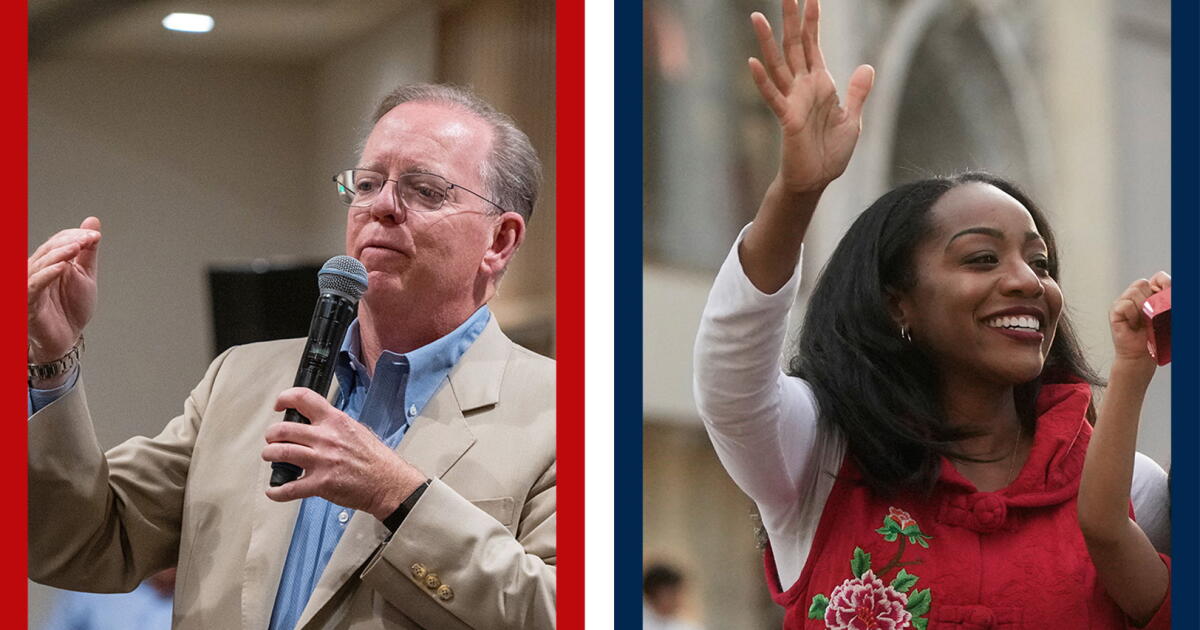
california

Assemblymember Carl DeMaio’s ballot measure will be considered by voters in November

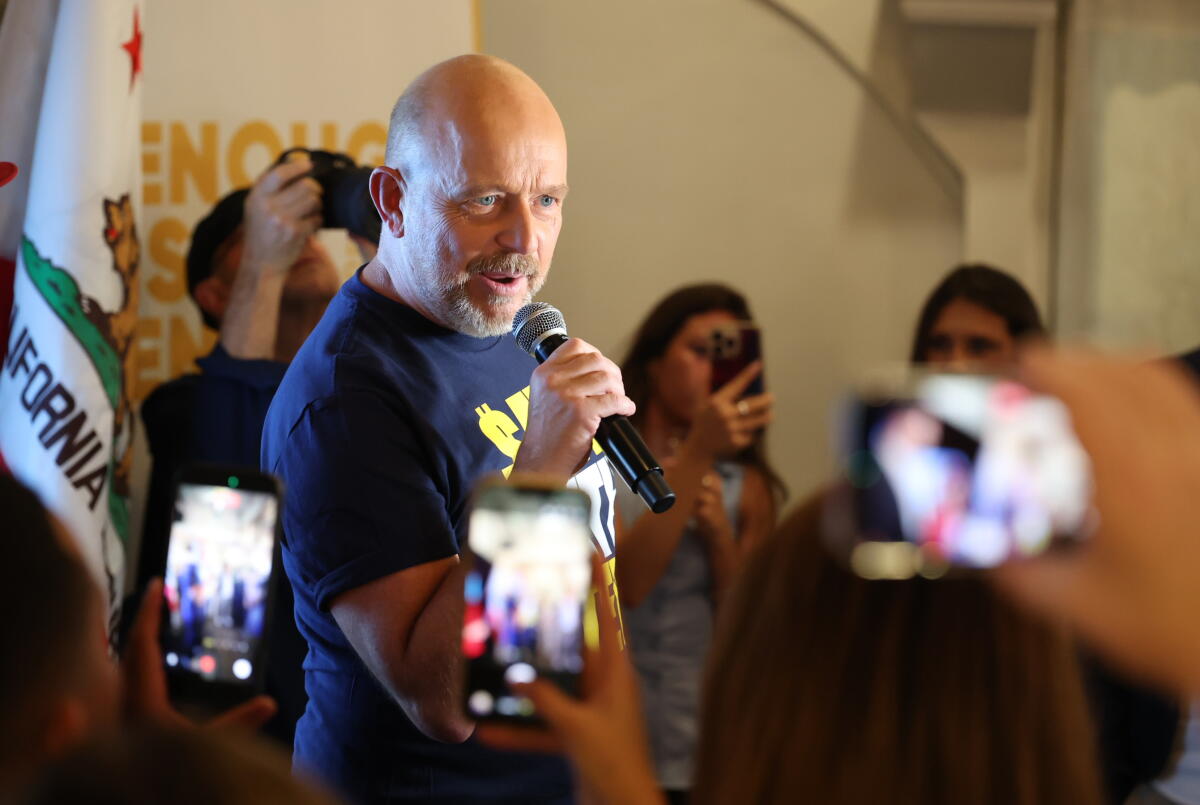
A ballot measure that would require Californians to show identification every time they vote in person, or use a special pin number when submitting mail-in ballots, has qualified for the November ballot, elections officials announced Friday.

The measure also would require election officials to verify registered voters are U.S. citizens, aligning with a Republican-led push for new restrictions on voters in the wake of President Trump’s baseless claims that the 2020 election was stolen from him, and that undocumented immigrants are swaying elections by voting illegally.

Republican Assemblymember Carl DeMaio from San Diego has been pushing the measure for several years, while Trump and Republicans also are seeking a similar initiative at the federal level.

If passed, the California ballot measure would require a voter to present government-issued identification, such as a state driver’s license, every time they vote. Voters mailing ballots would be required to write a four-digit number, essentially a pin number, on their ballots matching the one generated when they registered to vote.

The pin would come from ID such as a driver’s license, or could be generated from the county. The vast majority of Californians mail in their ballots in elections.

Under the measure, election officials also must ensure that registered voters are U.S. citizens by using information from government records, which could include information in the federal Social Security Administration database, and maintain accurate voter registration lists.

DeMaio said the measure is different than a federal proposal, known as the SAVE Act, which stalled out in the U.S. Senate this week.

DeMaio said the state ballot measure “does not do away with mail in ballots, because voters of all political backgrounds like the convenience of mail in ballots. So we want to keep that convenience.”

The ballot measure needs a simple majority to pass.

Under current law, Californians are not required to show or provide identification when casting a ballot in person or by mail. They are required to provide identification when registering to vote, and must swear under penalty of perjury, a felony, that they are eligible to vote and a U.S. citizen.

Jenny Farrell, executive director of the League of Women Voters of California, told the Times that her group is committed to fighting the measure, arguing it would make it harder for people in the state to vote.

She said that people may forget to use a pin on their mail-in ballot, leading to their vote being disqualified. Similar changes in Texas, she said, led to a rise in rejected ballots due to technical errors.

“It doesn’t really weed out illegal voting,” which doesn’t actually exist, she said, “but it does cause more ballots to be incorrectly flagged and ultimately rejected.”

ACLU of Northern and Southern California, Common Cause, Disability Rights California also oppose the measure.

DeMaio filed for the ballot initiative in 2021 and 2023, but did not move forward with the signature collection process in order to fine-tune the ballot language.

He said his ballot measure wasn’t focused primarily about making sure that undocumented people don’t vote.

“That’s one element of concern that we’ve heard from some groups, but it really is making sure that, number one, we properly maintain our voter rolls,” he said.

Source link

The Wallis Annenberg Wildlife Crossing to open this December

Right-wing pundits and politicos recently attacked the gargantuan wildlife crossing being constructed over the 101 Freeway in Agoura Hills over ballooning costs and delays.

A March 18 post in an outlet published by a conservative think tank set the outrage in motion, calling the now $114-million project a “bridge to nowhere” and “jobs program for environmentalists.” The Murdoch-owned California Post republished it and social media lit up. In an X post, U.S. Transportation Secretary Sean Duffy compared it with the state’s long-delayed, budget-busting high-speed train.

In short, they painted it as a boondoggle. One that might never get done.

But now the Wallis Annenberg Wildlife Crossing has a completion date: Dec. 2, announced at an Earth Day news conference held on the structure rising over a 10-lane stretch of the freeway. Cars whizzed by below.

You’re reading Boiling Point

The L.A. Times climate team gets you up to speed on climate change, energy and the environment. Sign up to get it in your inbox every week.

That’s when the ribbon will be cut and mountain lions suffering from a lack of genetic diversity are expected to get their ticket out of the freeway-locked Santa Monica Mountains to seek mates elsewhere. Lions there have already shown alarming signs of inbreeding, including kinked tails and deformed testicles. The population could go extinct without intervention, and state wildlife officials listed the pumas as threatened earlier this year.

“This is a visionary project that was the impossible dream,” said Beth Pratt, California regional executive director with the National Wildlife Federation and the public face of the crossing. “This is something that’s captured the imagination of Angelenos, captured the imagination of the world.”

Driving under the crossing feels unremarkable; just another concrete behemoth. But it’s another world on top. Under a blue sky and puffy clouds, a gentle wind blew through a sea of about 6,000 native plants — Santa Barbara milk vetch, golden yarrow and purple sage.

It melts into the surroundings — and that’s the point. Soil that was hauled in was inoculated with the same microbes and mycorrhizal fungi that thrive in the nearby hills. The plants were grown just for the crossing, with another 40,000 on the way.

Miguel Ordeñana, senior manager of community science at L.A. County’s Natural History Museum, who discovered the late, great mountain lion P-22 in Griffith Park, saw the whole thing unfold.

Standing atop the suspended habitat, he envisioned bobcats hiding behind the bushes and ambushing ground squirrels: “I can see it now as this thing is coming to life.”

The event drew representatives from Caltrans, National Park Service, Santa Monica Mountains Conservancy, Agoura Hills City Council and other partners.

A photo of P-22 taken in the very early morning on Dec.19, 2016 in Griffith Park.

The plight of P-22, a celebrity mountain lion that once inhabited Griffith Park, helped inspire the wildlife crossing being built over the 101 Freeway in Agoura Hills

(Miguel Ordeñana)

There’s still significant work to be done before bobcats can come aboard.

Crews are currently building a second overpass over Agoura Road.

Once that’s completed over the summer, they’ll haul in 3 million cubic feet of soil — enough to fill half of SoFi Stadium — to bridge the gap between the two structures. Berms will be constructed to block out noise and light.

Like many dreams in California, the project didn’t come cheap. When it broke ground in 2022, it was expected to cost nearly $93 million. That held until last spring, when bids for the second stage of the project went out and “came back through-the-roof high,” Pratt told The Times earlier this year. The current estimate is $114 million but could potentially top out several million higher.

The surge came amid inflation and tariff-driven price increases. The National Highway Construction Cost Index, a figure calculated by the Federal Highway Administration, has increased by 67% since 2021. Torrential rains in 2022 and 2023 delayed the completion by a year.

There’s also the scale: It’s the largest wildlife crossing in the world, with two structures that together span roughly 320 by 175 feet.

The effort appears to be paying off. Driving down to L.A. earlier this month, Pratt was distressed because she was hitting painted lady butterflies in the midst of their long-distance migration. When she ascended the crossing the following day, she saw the dainty orange, black and white insects fluttering about. It moved her to tears.

They weren’t the only lepidoptera. American lady butterflies were laying eggs and white-lined sphinx moth caterpillars were inching along plants.

Then there’s Bob, a western fence lizard that’s taken up residence at the top of stairs that lead to the crossing. A rattlesnake has claimed the bottom. Birds like yellow-rumped warblers and California scrub jays round out the initial cast.

“I can say with some certainty that this is going to be the most popular reality show that L.A. produces,” Pratt said. Cameras will capture the action, though it won’t be broadcast live because “this is L.A. and someone will go try to pet the mountain lions.”

L.A. deserves a good show. The region is reeling from devastating wildfires, immigration raids and the upending of the state governor’s race. County residents reported record-low quality of life in a UCLA survey this year, with the high cost of living looming large.

Much is uncertain, uneasy. The soon-to-open crossing offers one non-abstract finish line.

More recent wildlife news

California lawmakers are considering a bill to create a statewide program to promote coexistence between people and wildlife, an issue reinvigorated by the euthanization of a beloved black bear with two cubs in Monrovia, writes Times reporter Katie King. The state’s wildlife agency operated a similar program until two years ago, when funding ran dry.

A bear wanders across a porch.

Blondie the bear wanders across a porch in Monrovia. The mama bear was euthanized by the California Department of Fish and Wildlife following two incidents where she swiped at residents.

(Brian Gordon)

The Golden State expanded the area in which boats are asked to slow down in an effort to avoid hitting and killing whales, reports the San Francisco Chronicle’s Brooke Park. Ship strikes are a leading cause of death for several whale species off California, where some of the world’s largest cargo ships pass through key feeding and migration routes.

Nutria, a hefty rodent with the tail of a rat, reappeared in California in 2017 — close to 40 years after it was deemed eradicated. As my colleague Samantha Lee explains, California wildlife officials recently published a study indicating the animal — considered a pest — was deliberately brought back to the state.

A few last things in climate news

California is in the midst of a powerful late-season storm, bringing significant rain to northern regions of the state. However, as fellow Times writer Ian James broke down, the state experienced the hottest March on record — a phenomenon that prematurely melted snow in the Sierra Nevada. The heat and early melt is expected to dry out forests earlier than normal, increasing the risk of wildfires.

After years of debate between fire officials arguing for the removal of anything that can burn within the first five feet of homes and ecologists backing selective landscaping, California proposed a compromise, reports my colleague Noah Haggerty. New regulations create a strict one-foot “Safety Zone” around homes where nothing burnable is allowed, while permitting some spaced-out plants beyond it.

Some who lost their homes in the Eaton and Palisades fires are rebuilding all-electric due to health and climate concerns. Per Times staffer Blanca Begert, burning gas and propane for cooking, as well as water and space heating, in California homes and businesses creates 10% of the state’s greenhouse gas emissions.

One last thing

A black-furred wolf that visited L.A. County before making her way to the Eastern Sierra.

BEY03F, the wolf pictured, briefly visited L.A. County before making her way to the Eastern Sierra.

(California Department of Fish and Wildlife)

Remember the wolf that stunned everyone by visiting Los Angeles County? She made history again by venturing into Inyo County earlier this month and remains in the Eastern Sierra. Experts believe she’s probably still looking for a mate.

This is the latest edition of Boiling Point, a newsletter about climate change and the environment in the American West. Sign up here to get it in your inbox. And listen to our Boiling Point podcast here.

For more wildlife and outdoors news, follow Lila Seidman at @lila_seidman on X and @lilaseidman.bsky.social on Bluesky.

Source link

Effort to hold Uber liable for driver sexual assaults heads to ballot

California’s trial attorneys and Uber — longtime courtroom foes — are officially bringing their fight to the November ballot.

A coalition of lawyers and advocates announced Thursday that it has gathered enough signatures to ask voters to support a “first in the nation” law that would make rideshare companies legally responsible for sexual assaults that happen to a driver or customer during a trip. Uber has argued it’s not liable for assaults committed by drivers, who are considered independent contractors.

“We must hold Uber accountable today,” said Danielle Tudahl, who recounted being sexually harassed and chased by an Uber driver after ordering a ride through the app, at a Sacramento news conference. “Californians are finally demanding action to try and close some of these gaps and put people’s safety over corporate profits.”

Uber has described the ballot measure, which is sponsored by the Consumer Attorneys of California, or CAOC, as retaliation for its own November ballot push to cap how much attorneys can earn in car crash cases in California.

“This ballot measure is a cynical ploy by billboard lawyers,” said Nathan Click, a spokesperson for A More Affordable California, an Uber-backed coalition. “CAOC didn’t spend millions to put this on the ballot to protect survivors — their goal is protecting billboard lawyer profits.”

The coalition that supports Uber announced last week it had gathered enough signatures for a measure that would cap attorney fees for car crash cases at 25%, among other changes.

Uber says its ballot measure will give victims a larger cut of their settlement money, rather than the payout getting siphoned off primarily to attorneys and doctors. Attorneys fire back that it will leave thousands of people with small or thorny cases without a lawyer because they won’t have financial incentive to sue.

Both sides are gearing up for an expensive fight. Uber has given more than $77 million. The Alliance Against Corporate Abuse, the CAOC-backed coalition pushing the sexual assault measure, has raised more than $68 million from law firms across the state, according to campaign finance records.

The money has helped pay for billboards that have sprouted across L.A. informing drivers that, according to the New York Times, Uber received a report of sexual assault or misconduct every eight minutes on average between 2017 and 2022. The company was the subject of a series of investigations by the paper into sexual assault by drivers. The company says it has invested billions in keeping riders safe and has “done more than any other company to confront” sexual violence.

The proposed sexual assault measure would require ride-share companies to let riders know if the person picking them up has a history of sexual misconduct and conduct yearly fingerprint and background checks for drivers.

The company is currently fighting more than 3,000 lawsuits from passengers who claim they were sexually assaulted or harassed by Uber drivers. Those cases are being coordinated by a federal judge in California.

The attorney coalition had also pushed an initiative aimed at nullifying Uber’s fee-capping measure if it passed. Alex Stack, a spokesperson for the campaign, said they were “pausing/withdrawing” the measure to “focus the fight on our sexual assault prevention measure and beating Uber’s initiative.”

Source link

Stop being so chill, Xavier Becerra. Fight for California’s future

Xavier Becerra needed to land a knockout punch, even more so than the five other candidates for California governor he was facing at Wednesday night’s debate.

Instead, he fired off some slaps.

He needed to roar about his many accomplishments in his 35-year career in Sacramento and Washington, to distinguish himself from the relative political neophytes around him.

Instead, Becerra recited his resume with the vigor of someone rattling off his LinkedIn page.

He needed to uplift Californians with a vision of hope, when many feel the state is going in the wrong direction.

Instead, he offered the oratory equivalent of a pat on the shoulder.

No candidate had more at stake that night than Becerra, who went from an afterthought to a contender after Eric Swalwell dropped out and resigned his congressional seat over sexual assault allegations.

Five weeks ago, Becerra and other candidates of color were protesting their exclusion from a USC debate because they were all polling so low. Now, the 68-year-old has a chance to become California’s first Latino governor.

This possibility seems to have uncorked California’s silent majority — the rancho libertarians turned off by hard-right politics but also the wokoso politics they feel have left them behind. The people who yearn for an unglamorous, competent leader after eight years of all-about-me Gavin Newsom and a decade of Donald Trump.

Becerra’s campaign, once as rudderless as a leaf in a river in a race so chaotic for Democrats that many feared two Republicans would win on June 2 and face each other in the general election, suddenly latched onto a palpable wave.

At the Los Angeles Times Festival of Books last weekend, I saw people sporting Becerra campaign buttons who had just come from a rally that was expected to draw a few hundred but instead had over 2,000 RSVPs. On social media, friends who had never especially cared for state politics suddenly declared they were for Becerra and fought off their more lefty pals who think he’s a Latino Ned Flanders not up for this fraught moment.

Unglamorous and competent are Becerra’s middle names, and they were on display at the debate — for better and mostly worse. This was his chance to show both his new followers and undecided voters that they could trust him as California’s next governor.

But where he needed to be limber like a prizefighter, the former California attorney general was as tightly wound as a Rolex.

While the other candidates pressed their palms against the podiums, ready to pounce on every question, Becerra clasped his hands like an altar boy. When he did gesture, his movements never went further than the span of his shoulders.

As the others grinned and grimaced at their rivals’ responses, Becerra was as stone-faced as Buster Keaton. He stumbled more than he should have — how could someone in his position mistake Iraq for Iran when criticizing Trump’s Middle East quagmire? — and rarely seemed at ease, as if the weight of the moment and the good luck of his surge had suddenly hit him at the worst possible time.

Candidates in California's gubernatorial race

Candidates in California’s gubernatorial race, from left, Matt Mahan, Xavier Becerra, Chad Bianco, and Steve Hilton look on during a debate Wednesday, April 22, 2026, in San Francisco.

(Jason Henry / Associated Press)

Becerra’s supporters say a level-headed leader is what California needs. But voters almost never go for what they need — they pick what they want. And California wants someone who’s loud, or at least louder than Becerra. There’s a reason why strident partisans like Republicans Chad Bianco and Steve Hilton and progressives Tom Steyer and Katie Porter have consistently placed high in the polls, while moderates like Becerra, his frenemy Antonio Villaraigosa and San Jose mayor Matt Mahan have lagged.

The weird thing is that Becerra does know how to brawl. Wallflowers don’t go from a working class Mexican immigrant family to Stanford Law School. Wimps don’t survive the ruthlessness of Eastside politics as an outsider to become a congressmember at just 34. Cowards don’t file over 100 lawsuits against the Trump administration as California’s top prosecutor or tackle the coronavirus pandemic as President Biden’s health secretary.

I’ve only encountered the Sacramento native a few times but always came away impressed. In small crowds, he makes people laugh and tear up. He’s quick with ripostes, righteous in off-the-cuff remarks and has a do-gooder aura that never comes off as sanctimonious.

We saw hints of that Becerra at the debate. To Hilton, he quipped, “You can be a talking head and not worry about the consequences of what you do” after the former Fox News host babbled on about how one-party ruled had failed California.

After Porter accused him of not offering hard numbers for his economic plans, Becerra responded that he has balanced federal budgets larger than California’s. “It’s easy to say you haven’t done this; it’s easier to prove that you actually have,” he concluded.

But after Becerra described the evils of racial profiling by law enforcement and Bianco, the sheriff of Riverside County, ranted that California politicians need to stop thinking so much about race, it was Porter who responded with a verbal haymaker as Becerra silently looked on.

You don’t fight as a choirboy in a battle royale. Becerra wasn’t bad at the debate but he also wasn’t great — and that won’t win this race.

Voters want someone who’ll do the job, yes — especially if it comes with no drama. They also want to elect someone they think is a human, not a joyless bureaucrat. So how did Becerra respond to the debate’s last question about what was the last series you’ve streamed?

Becerra flashed his biggest smile of the night. It was such a softball query that even a kindergartener could have slammed it à la Shohei Ohtani.

“I wish I could tell you I had time to watch streaming shows,” he replied.

Dude. We’re all overworked, but everyone I know unwinds by watching mindless drivel (my current obsession is “Vanderpump Villa”). We all need to relax, even for a moment. As my dad says when he sees me filing one columna after another and urges me to take a break, “El trabajo nunca se acaba pero uno sí se acaba.

Work never ends, but people do.

Xavier, you know you’re on the wrong side of California when the only other candidate with a similar answer was Bianco, who said he doesn’t watch television at all.

Being careful has served you well, but this is the greatest opportunity of your life. You don’t have to suddenly become a flamethrower, but some sparks would help. It’s six weeks until the primary, so time to throw down — channel your inner cholo and go get what should be yours.

Source link

6,800-mile American Discovery Trail that you can start in California

It was my first time hiking through Tilden Regional Park, a 2,079-acre wooded hilly expanse near Berkeley, and I was looking for one very specific thing: a small red, white and blue rounded triangular trail marker with a tiny map of the United States.

I’d already struck out twice, parking at the wrong trailheads, and I was really hoping the third time would be the charm. I trudged up the Upper Big Springs Trail, a wide dirt path lined with fragrant eucalyptus, pine trees and California bay laurels and, peeking out of the invasive grasses, California poppies and orange bush monkey flower.

I crested a hill after about two-thirds of a mile, and there I saw a sign, both literal and metaphorical, on a small brown post letting me know I was exactly where I needed to be. I was officially hiking along the American Discovery Trail, a contiguous 6,800-mile coast-to-coast nonmotorized route of multiuse trails that runs from Point Reyes National Seashore in Marin County to Cape Henlopen State Park in Delaware.

A red, white and blue sign for the American Discovery Trail with a squiggly line through the United States.

The American Discovery Trail sign in Tilden Regional Park near Berkeley.

(Jaclyn Cosgrove / Los Angeles Times)

“The ADT is all about connections — people to people, community to community, urban areas to wilderness,” according to a website outlining its history. “… The ADT connects five National Scenic, 12 National Historic, and 34 National Recreational Trails; passes through urban centers like Cincinnati and San Francisco; leads to 14 National Parks and 16 National Forests” and visits thousands of historic, cultural and natural sites.

I’m excited to share not only about the joy that can be found along this route, but also how you can join a relay in July across America along the trail. I certainly plan to!

You are reading The Wild newsletter

Sign up to get expert tips on the best of Southern California’s beaches, trails, parks, deserts, forests and mountains in your inbox every Thursday

I’d never heard of the American Discovery Trail until last week when I attended the California Trails & Greenways conference in San Ramon. There, I met with American Discovery Trail co-founder John Fazel and John Mercurio, the trail’s California coordinator, to learn more.

The idea to create a coast-to-coast trail was born out of a 1980-81 hike across America called “HikaNation,” where several members of the American Hiking Society trekked more than 4,000 miles across the country. That adventure inspired Backpacker magazine and the American Hiking Society in 1989 to start developing the American Discovery Trail.

A wooded area and beyond that a wide blue expanse and nearby city.

A view of the San Francisco Bay from the Seaview Trail in Tilden Regional Park near Berkeley. The route is a part of the American Discovery Trail.

(Jaclyn Cosgrove / Los Angeles Times)

Organizers contacted trail experts in 13 states, including Fazel in California. In 1990, three people headed out to test the route, an adventure they documented in “American Discoveries: Scouting the First Coast-to-coast Recreational Trail” (Mountaineer Books).

Then, in 1991, the American Hiking Society hired a national coordinator to work with volunteer state coordinators to develop the route, and in 1996, trail advocates formed the American Discovery Trail Society to ensure their dreams became a reality.

“It’s an opportunity to get to know America up close and personal and not as a flyover,” said Fazel, who grew up in Iowa.

A large blue body of water in the midst of rolling green hills.

The San Pablo Reservior as seen from Tilden Regional Park near Berkeley.

(Jaclyn Cosgrove / Los Angeles Times)

Most people don’t complete the trail in one trip, Fazel said, as it takes months to finish and requires participants to leave the East Coast around February to ensure that enough snow has melted by the time they reach the mountains in Colorado and California.

Although the trail has existed for several years, Fazel and Mercurio admit that they don’t know exactly how much of the route is a recreational trail, sidewalk or roadway. That’s in part because it’s a technically complicated task to complete, especially for a mostly volunteer group. But it’s also because the route is ever-evolving (which is actually exciting).

“Since we got involved, small towns, counties, even states are funding millions of dollars to build trails in their area, and when they see a national trail goes across the country, they want to connect to it, and when they do, where it is on back roads, we can move it off,” Fazel said. “And it happens.”

A labyrinth in Tilden Regional Park along the American Discovery Trail.

A labyrinth in Tilden Regional Park along the American Discovery Trail.

(Jaclyn Cosgrove / Los Angeles Times )

In California, the only place hikers are on pavement for a significant amount of time is from the Antioch Bridge north to Sacramento as they travel through the Sacramento-San Joaquin Delta, Fazel said.

Mercurio said he is working with local officials to try to move the trail from this narrow roadway onto an old railroad track that’s owned by the state.

“It’s been sitting there vacant for many, many years,” Mercurio said. “Now, they should know that there’s this national trail, this coast-to-coast trail, [that] is interested in utilizing that to provide a safe way for us to make our way across the delta.”

Unlike the Pacific Crest Trail, Appalachian Trail and other multistate routes, the American Discovery Trail is not federally designated under existing law.

The National Park Service studied the American Discovery Trail in the mid-’90s and acknowledged that the American Discovery Trail doesn’t fit neatly into any of the existing categories outlined in the National Trails System Act, Mercurio said. The agency mapped out three options for Congress to consider, including creating a new category for discovery trails, he said.

A lush tree canopy along the Seaview Trail, part of the American Discovery Trail, in Tilden Regional Park.

A lush tree canopy along the Seaview Trail, part of the American Discovery Trail, in Tilden Regional Park.

(Jaclyn Cosgrove / Los Angeles Times)

Trail advocates have been pushing Congress for more than 25 years to create such a category. They came close in 2021 when U.S. Rep. Mark DeSaulnier (D-Concord) introduced such legislation that garnered 63 co-sponsors.

“We had people on the House resources committee who were far right and killed it,” Fazel said, adding the trail has otherwise garnered bipartisan support for decades in states it passes through.

There was a mix of suspicion and concern that the recognition of the trail would lead to eminent domain and requests for federal money, neither of which the trail’s organizers want, Fazel and Mercurio said.

“The thing is, we don’t build any trail at all,” Mercurio said. “All we do is route onto stuff that’s already there, and our presence influences local jurisdictions to create trail that would be good for our route. But they’re in this anti-federal feeling, so they just knee-jerk don’t want to support it.”

The Golden Gate Bridge as seen from Tilden Regional Park.

The Golden Gate Bridge as seen from Tilden Regional Park.

(Jaclyn Cosgrove / Los Angeles Times)

The duo remains optimistic that their trail will get national recognition. In the interim, they’ve got other big plans.

On July 1, as long as everything goes according to plan, the American Discovery Trail Society will launch its “America 250 Relay,” aiming to cross the Golden Gate Bridge by July 4 and ending in Delaware at the Atlantic Ocean on Thanksgiving Day.

Anyone can join to traverse the trail in a people- or horse-powered way. Participants will carry a copy of the Declaration of Independence in a celebration of America and the outdoors. (I’ve already texted two best friends to entice them to do part of the relay with me!)

A flax-leaved blue pimpernel in Tilden Regional Park.

A flax-leaved blue pimpernel in Tilden Regional Park.

(Jaclyn Cosgrove / Los Angeles Times)

In a time of rising authoritarianism across the globe, it’s important we seek both joy and connection, focusing less on what we’re fed by algorithms and more on our shared humanity. I know that sounds fairly Pollyanna, but especially as a transgender American who constantly worries about whether I can safely visit my family in the Midwest, where lawmakers are seemingly seeking to outlaw my existence, I do actually mean it.

As I neared the end of the trail, a golden Labrador retriever greeted me, and after lots of head scratches, I met the dog’s owner. He and I started chatting, and soon realized that, although we belonged to different generations, we had both grown up as farm kids.

He started to tell me the story of when his dad ran himself over with a tractor.

“My dad ran himself over with a tractor too!” I said. “Did your dad start the tractor from the ground even though he’d told you a million times as a kid not to?”

“No, but he did try to get off and get back on a moving tractor,” he said, which my new friend’s father had repeatedly told him not to do.

I didn’t expect to discuss tractors and hay bales with a stranger in the East Bay, but I found that these experiences are a part of what the American Discovery Trail provides.

A wiggly line break

3 things to do

A person in a bike helmet carries a white silver terrier in a backpack.

A human and canine guest travel along a previous CicLAvia event route.

(CicLAvia Los Angeles)

1. Wander the car-free streets of West L.A.
CicLAvia, an L.A. nonprofit, will host a free three-mile, car-free open streets event from 9 a.m. to 4 p.m. Sunday through West L.A. The event marks the 65th open streets event the organization has held around L.A., but it’s the first time that one has been held in West L.A. The route includes portions of Santa Monica and Westwood boulevards. Attendees are invited to traverse the route in any people-powered device, although there are certain restrictions on e-bikes. Learn more at ciclavia.org.

2. Prop up the pollinators in Castaic
TreePeople will host Pollinator Palooza from 9 a.m. to 1:30 p.m. Saturday at Castaic Lake. Volunteers will plant milkweed and restore habitat. The event will also feature plant giveaways, an environmental resource fair and a pollinator-themed fashion show. Learn more at treepeople.org.

3. Orient yourself in Irvine
Save Orange Hills and Naturalist For You will host a hike, yoga and meditation event from 8 to 10 a.m. Sunday at Irvine Regional Park. After a short warm-up hike, guests will take part in an all-levels yoga session. Tickets are $17.85, but no one will be turned away due to lack of funds. Register at eventbrite.com.

A wiggly line break

The must-read

Several acres of water among flat green fields.

San Joaquin River Parkway, currently operated by the San Joaquin River Conservancy, would join various properties into an 874-acre state park, expanding recreation opportunities and greater access along the river. The park would complement nearby Millerton Lake State Recreation Area.

(California State Parks)

California could soon see the development of three new state parks in the Central Valley. State officials announced the proposed parks on Wednesday, which are Feather River Park in Yuba County, San Joaquin River Parkway near Fresno and Dust Bowl Camp in Bakersfield, Times staff writer Hayley Smith wrote. State officials also aim to expand three existing parks in Mendocino County, Nevada County and San Mateo County. “California’s state parks are nothing short of iconic — with locations like Big Sur, Southern California beaches, and the world’s tallest trees — but our state has even more to offer,” said Wade Crowfoot, California’s natural resources secretary.

Happy adventuring,

Jaclyn Cosgrove's signature

P.S.

Hikers and trail builders have until April 30 to complete the California Trails Survey, which state officials will use to help shape how nonmotorized recreational trails are developed in the state — and how officials use millions from Prop 4, often called the “climate bond” because its money is supposed to be spent to combat climate change. The survey includes two portions, one for trail users and another for trail builders and advocates. If you fit both categories, you are invited to complete both portions. Early data, released at a trails conference I attended last week, suggested that white hikers were overrepresented in the results, so please spread the word, especially to BIPOC hiking organizations in your area!

For more insider tips on Southern California’s beaches, trails and parks, check out past editions of The Wild. And to view this newsletter in your browser, click here.

Source link

Meet the Mexican revolutionary turned L.A. Times columnist

Ninety-five years ago next month, Aurelio Manrique Jr. landed a job as a mild-mannered L.A. Times columnist. But the resume this native of the central Mexico state of San Luis Potosí brought to the paper was that of a firebrand.

You’re reading the Essential California newsletter

Sign up to start every day with California’s most important stories.

Medical student turned political prisoner. Fought in the Mexican Revolution. Governor of his home state. Trusted advisor of general-turned-president Álvaro Obregón. Founder of a left-wing political party. Mexican legislator. He even took to the floor of Mexico’s congress to denounce former president Plutarco Elías Calles as a farsante — a phony — and then pull a gun on a rival who took issue with his vitriol.

Tall, with round wire glasses and a shock of black hair that was the inverse of his Moses-like beard, Manrique cut an exciting figure in Latino L.A. when he arrived as a political exile in 1929 after the so-called Escobar rebellion, which was an attempt to overthrow the Mexican government. A Oct. 28, 1929 Times dispatch noted that “it is not uncommon to find among the shabby, shuffling street venders [sic] of Sonoratown” former Mexican bigwigs “offering sweetmeats and trinkets from trays” in an effort to survive.

Finding a home in L.A.

They, like so many other political refugees before and since, made L.A. a home but also a place to fight for the freedom of their homeland.

Manrique, on the other hand, was hailed as the “intellectual head” of his fellow Mexican refugee politicos and an “accomplished linguist” who spoke Spanish, English, French and German.

“He stands in my memory as a pillar of fire because, at all times, he has never been afraid to do or say what he considered to be right, regardless of his own personal or political fate,” an admirer would recall decades later in the Virginia Quarterly Review.

The revolutionary found welcome audiences across the Southland with lectures and Spanish-language radio show appearances to talk about what was going on in his home country. He participated in Mexican Independence Day and Cinco de Mayo festivities and even found work in Hollywood films as everything from a British lord to an Arab sheikh.

But reputation doesn’t pay the bills, so Manrique also offered translation and interpreter services from a small Bunker Hill office. He also held Spanish-language classes twice a week at the L.A. Central Library. Soon after, The Times — a paper that back then loathed leftists of all stripes — hired Manrique as a columnist in May 1931. He was to be in charge of its daily Spanish-language roundup of world and local events, which the paper had regularly published since 1922.

The revolutionary plays a more reserved role

I wish I could say that Manrique used his platform to inveigh against the mass roundups of Mexican Americans that kicked off that year and that would lead to the repatriation of hundreds of thousands of Mexican Americans, citizens and not, during the 1930s. Or that Manrique taught his Times bosses that Latinos were more than domestic help or a societal scourge. Or that he deserves a spot in the pantheon of legendary Times metro columnists like Jack Smith, Ruben Salazar and Steve Lopez.

Alas, it was not to be.

The daily columna was just a roundup of wire stories published in Spanish, part of The Times’ effort to teach the language of Cervantes to those interested. Every Monday, the 40-year-old Manrique also wrote Platicas de Los Lunes [Monday Lessons], a place for the professor to teach new words to readers via translations, poems and sample sentences.

Manrique’s last byline was April 25, 1932. In the hundreds of columnas he wrote for us, I found nothing even remotely hinting at the progressive lion that Mexicans in Southern California knew him as. But in an era in which Latino visibility in Anglo Southern California was nonexistent when it wasn’t heavily stereotyped, Manriquez’s brief tenure at The Times was an important step for future Latino writers at the paper, all of us whom owe a debt to the man.

He returned to Mexico in early 1933 after President Abelardo L. Rodríguez announced amnesty for him and other exiles. The former revolutionary spent the rest of his life working for the Mexican government, most notably as ambassador to Scandinavian countries from 1946 to 1956.

In 1962, the retired Manrique returned to his old L.A. stomping grounds one final time five years before his death for a lecture at the Alexandria Hotel.

“He finds Los Angeles completely changed,” La Opinión reported, “and told us, with a tone of barely concealed sadness, that many of those who knew him had disappeared.”

The fate of all Angelenos, alas.

Today’s top stories

Republican candidate for governor Steve Hilton at a town hall

Republican gubernatorial candidate Steve Hilton speaks at a March 7 town hall in Mentone.

(Gina Ferazzi / Los Angeles Times)

A Trump-endorsed Republican could become California’s next governor

A second ticket drop for the Olympics

  • A second ticket drop is set to open in August and will offer refreshed inventory across all sports at a range of prices.
  • Those who registered but did not receive a slot in the first ticket drop or did not buy all 12 of their tickets will be enrolled in a lottery for a spot in the second ticket drop.

Court strikes down California mask law

California is getting 3 new state parks

  • California will establish the new parks in the Central Valley, marking the state’s largest park expansion in decades and bringing the statewide total to 283 parks.
  • The parks will serve historically underserved communities with recreation and historic preservation.

What else is going on

Commentary and opinions

This morning’s must-read

Other must-reads

For your downtime

Waffle with maple butter at Max & Helen's in Larchmont

The waffle with maple butter is the drive-across-town dish at celebrity-backed Max & Helen’s, the Larchmont diner opened by Phil Rosenthal and Nancy Silverton.

(Ron De Angelis / For The Times)

Going out

Staying in

A question for you: What’s your favorite California-themed book?

Marya says, “Hard Times in Paradise” by David and Micki Colfax.

Cristina says, “Grapes of Wrath” by John Steinbeck.

Email us at essentialcalifornia@latimes.com, and your response might appear in the newsletter this week.

And finally … from our archives

A white triangle inside of a red square inside of a white square inside of a black square that reads "YouTube"

On this day 21 years ago, “Me at the zoo” was the first video uploaded to YouTube, opening the door to a new medium of television.

For the 20th anniversary last year, The Times’ Wendy Lee wrote about the video sharing platform and how it changed TV as we know it.

Have a great day, from the Essential California team

Jim Rainey, staff reporter
Hugo Martín, assistant editor, fast break desk
Kevinisha Walker, multiplatform editor
Andrew Campa, weekend writer
Karim Doumar, head of newsletters

How can we make this newsletter more useful? Send comments to essentialcalifornia@latimes.com. Check our top stories, topics and the latest articles on latimes.com.

Source link

As primary election nears, top candidates for California governor debate tonight

With the California governor’s race quickly approaching, six candidates will face off Wednesday evening in the first debate since former Rep. Eric Swalwell dropped out of the race in the aftermath of sexual assault and misconduct allegations.

The debate takes place at a critical moment in the turbulent contest to replace termed-out Gov. Gavin Newsom. Ballots will start landing in Californians’ mailboxes in less than two weeks, and voters are split by a crowded field of eight prominent candidates. The debate also takes place after former state Controller Betty Yee ended her campaign because of a lack of resources and support in the polls.

Two Republicans — Riverside County Sheriff Chad Bianco and conservative commentator Steve Hilton — and four Democrats — billionaire Tom Steyer, former Biden administration Secretary Xavier Becerra, former Orange County Rep. Katie Porter and San Jose Mayor Matt Mahan — will take the stage at Nexstar’s KRON4 studios in San Francisco. Former Los Angeles Mayor Antonio Villaraigosa and state Supt. of Public Instruction Tony Thurmond, both Democrats, were not invited to participate because of their low polling numbers.

As the candidates strive to distinguish themselves in a crowded field, the debate could include fiery exchanges about the role of money in politics and potential heightened attacks on Becerra, who has surged in the polls since Swalwell dropped out. With the debate taking place on Earth Day, environmental issues are also likely to be raised.

The Wednesday night gathering is the first televised debate in the gubernatorial contest since early February. Last month, USC canceled a debate hours before it was set to begin over mounting criticism that its criteria excluded all major candidates of color.

The 7 p.m. debate is hosted by Nexstar and will be moderated by KTXL FOX40 anchor Nikki Laurenzo and KTLA anchor Frank Buckley. It can be viewed on KRON4 (San Francisco), KTLA5 (Los Angeles), KSWB/KUSI (San Diego), KTXL (Sacramento), KGET (Bakersfield) and KSEE (Fresno). NewsNation will also air the debate.

Source link

Worst-run state? In Britain, Steve Hilton was inspired by California

Steve Hilton is a former Fox News host who has unexpectedly emerged as a leading candidate in the race for governor with a message that California is a failed state in need of radical reform.

But his sudden rise in California politics comes a decade and a half after he pitched the U.K. Conservative Party with a very different idea: Britain could learn a lot from the Golden State.

Back in 2010, when Hilton was a top strategist during David Cameron’s rise to power as Conservative prime minister, he looked to Silicon Valley’s high-charged ethos of techno-optimism and green innovation for inspiration as he sought to revitalize the ailing Conservative Party and the U.K.

Splitting his time between London and the Bay Area — his wife worked for Google — Hilton was instrumental in getting California companies to invest in the U.K. and persuading Google to open its first wholly owned and designed building outside the U.S. in London. So infatuated was he with California that one British political commentator dubbed the Cameron administration’s philosophy ”Thatcherism on a surfboard.”

But Hilton is now utterly unsparing in his criticism of California.

After moving to the Bay Area full time, teaching at Stanford University and hosting Fox News’ “The Next Revolution,” Hilton is running as a Republican on a platform of “Making California Golden Again.”

To the dismay of many Democrats, the 56-year-old British immigrant, a supporter of President Trump who dubs California “America’s worst-run state,” is ahead in multiple polls in a crowded race with no front-runner.

Even after former Democratic Rep. Eric Swalwell dropped out April 12 after multiple women accused him of sexual assault, Democrats are struggling to unite around one candidate. And Trump’s endorsement of Hilton this month almost seems to guarantee Hilton will secure enough Republican votes to make it past the June primary.

Hilton accuses Democratic leaders of turning the state into the “Wuhan lab of modern leftism.” As Democrats amassed power in Sacramento, seizing control of statewide offices and the Legislature, he argues, California government has become “a massive, bloated, bureaucratic nanny state,” so overregulated and poorly run, it is failing its people.

“We have the highest poverty rate in the country in California, tied with Louisiana, which is shameful, really, for a state that prides itself on being the home of innovation and opportunity,” he told The Times. “We’re ranked by U.S. News and World Report 50 out of 50 for opportunity. The performance of California, when measured against the rest of the country, is really dire.”

Most California voters rank affordability and cost of living as important as they weigh whom to elect as governor. But whether Hilton can persuade them that Democrats are responsible for the state’s problems, or make inroads as a Republican aligned with Trump on immigration and abortion, is unlikely in a state where Democrats outnumber Republicans nearly two to one.

Many Californians who do not watch Fox News know little about Hilton. Even some of Britain’s political observers who followed Hilton for years admit it’s been a struggle at times to make sense of his political odyssey.

Dubbed a “barefoot revolutionary” for his habit of striding around Downing Street without shoes, Hilton was credited with pulling the Conservatives into the 21st century and ushering in a more green, socially liberal strain of British conservatism. He helped turn around their image by highlighting climate change and supporting gay marriage.

Fraser Nelson, a columnist for the Times in London, said Hilton had been seen in Britain as a figure closer to Democratic Gov. Gavin Newsom than to Trump.

“When he popped up on Fox, it was like somebody reborn,” Nelson said. “Somebody who seemed to be on the left of politics was somehow on the Trumpish right. We thought it was like a joke. I’m not saying he is not sincere, just … the political journey of Steve Hilton … to being Newsom’s nemesis is something to behold.”

Born in London to Hungarian refugees who fled their homeland during the 1956 revolution, Hilton grew up in a household without much money.

After studying at Oxford University, a life-changing experience for a son of immigrants, Hilton worked at Conservative Party headquarters and as an ad executive on the Conservatives’ 1997 election campaign. When Labour’s Tony Blair won in a landslide, Hilton co-founded a consulting firm, Good Business, advising corporations on how to make money by investing in social and environmental causes.

In 2001, Hilton voted Green. But he returned to the Conservative fold in 2005 to try to detoxify the Tory brand. As an author of the party’s 2010 manifesto, he came up with Cameron’s “Big Society” agenda, which sought to scale back the state and hand more power to local communities. Critics, however, argued that the focus on local control was a fig leaf for austerity and dismantling the welfare state.

When Cameron won in 2010, Hilton infuriated colleagues in the coalition government, the British press reported, proposing a stream of wacky ideas: scrapping maternity leave, abolishing job centers, even buying cloud-bursting technology so Britain would have more sunshine.

Hilton ultimately became disillusioned with Westminster, deciding U.K. politics was stymied by excessive bureaucracy. In 2012, he moved full time to the Bay Area.

Hilton says he was drawn to California because of its “rebel spirit.”

But what he liked about California was the specific Silicon Valley ethos of disruption that emphasized meritocracy and risk-taking, not the state’s ascendant liberal identity politics.

Hilton settled in California precisely when Democrats were consolidating their political and cultural power. Just months after his move, Democrats gained full control of the Legislature with a two-thirds supermajority.

Meanwhile, populism was rising across the U.S. and Britain.

On the 2016 Brexit referendum on whether the U.K. should leave the European Union, Hilton was firmly pro Leave.

Hilton also disagreed with many fellow conservatives on Trump. In November 2016, George Osborne, chancellor of the exchequer under Cameron, watched the U.S. election on Hilton’s couch in Atherton, Calif. “Steve was the only person in the room who said, ‘I think Donald Trump’s going to win,’” Osborne said. “I think he identifies with Trump, although they’re obviously very different. … The outsider challenging the system.”

After the election, Hilton joined Fox News as a contributor and in 2017 was given his own Sunday night show, “The Next Revolution.” Produced out of Los Angeles, it explored populism in the U.S. and globally.

Like many conservatives, Hilton became agitated in 2020 by the COVID-19 lockdowns and Black Lives Matter protests that swept U.S. cities.

Early in the pandemic, Hilton invited Jay Bhattacharya, a professor of health policy at Stanford, to discuss COVID-19 after his study in Santa Clara County indicated the virus was more widespread and less deadly than initially thought. Bhattacharya argued the best path forward was not a general lockdown, but focused protection of the vulnerable. California leaders went on to impose some of the nation’s most stringent lockdowns.

After Joe Biden defeated Trump in November 2020, Hilton repeated Trump’s false allegations of voter fraud on air and called for an investigation.

Hilton became a U.S. citizen in 2021. Asked how his worldview changed in 2020, Hilton said: “I don’t think it changed. I think it actually enhanced my skepticism of centralized bureaucracy and it made me even more determined to dismantle it in California, because you saw all the worst features of it in California.”

In 2023, Hilton left Fox to launch a supposedly nonpartisan policy group, Golden Together, to develop “common sense” solutions to California’s problems. Two years later, he published “Califailure: Reversing the Ruin of America’s Worst-Run State,” a screed against Democrats. He accused them of spending “their time — and taxpayers’ money — pushing increasingly fringe race, gender, and ‘climate’ extremism instead of attending to the basics of good governance.”

A month later, Hilton announced he was running for governor “to make this beautiful state, that we love so much, truly golden again.”

On the campaign trail, Hilton has pledged to slash taxes, make housing more affordable and bring the cost of gas down to $3 a gallon. But how he plans to achieve some of these goals is controversial.

Hilton advocates scaling back environmental regulations. State agencies such as the California Coastal Commission and the California Air Resources Board, he argues, are a “massive roadblock” to housing development.

To lower gasoline prices, Hilton would ramp up California domestic production of oil and natural gas and reduce regulations on refineries.

Hilton would likely struggle to persuade a majority of voters to roll back environmental protections. According to the Public Policy Institute of California, about 55% of Californians think stricter state environmental regulations are worth the cost, while 43% believe they hurt the economy and jobs market.

Hilton is also at odds with most Californians on major issues from immigration to abortion.

If elected, he would foster more local cooperation with U.S. Immigration and Customs Enforcement and rescind state healthcare to undocumented immigrants. He would work with states such as Louisiana to extradite California doctors accused of prescribing and mailing abortion pills to women in states where abortion is illegal. He would also establish a Covid Accountability Commission to examine officials’ decisions during the pandemic.

Asked if Newsom and other Democrats could face prosecution, Hilton said: “They need to be held accountable for these crimes.”

With Trump in the White House, 2026 is a difficult year to mount a right-wing populist campaign for California governor, said Christian Grose, a professor of political science and public policy at USC.

“That message of ‘Newsom and the Democrats have been a disaster for California,’ that’s like, if you’re running in South Carolina,” Grose said. “It’s a caricature of California. While many California voters think there have been problems and the state is not doing as well, a Fox News presentation for East Coast viewers … that’s not going to win 50%.”

To make inroads past the primary, Grose said, Hilton would need to focus on governance and affordability and ditch the anti-Democratic red meat: “He has to massively soft pedal the kind of Fox News conservative stuff.”

Hilton’s Republican rival in the race, Riverside County Sheriff Chad Bianco, has questioned Hilton’s MAGA credentials, raising his green advocacy in the U.K. to cast him as an unprincipled opportunist.

Hilton, however, said he considers himself a “very strong environmentalist.” The problem, he argued, is the movement has become too narrowly focused on climate change and CO2 reduction. As crude oil production within California has fallen in recent decades and refineries have closed, he questioned California importing the bulk of its oil from as far away as Iraq and Ecuador.

“We are shipping oil halfway across the world in giant supertankers that run on bunker fuel, the most polluting form of transportation you can think of, rather than producing in Kern County and sending it in a nice, clean pipeline to the refineries in Long Beach,” Hilton said. “It’s total insanity. We are increasing carbon emissions in the name of climate change.”

Some political observers in the U.K. argue that Hilton’s questioning of California’s policy isn’t necessarily intellectually inconsistent.

“Perhaps in 2010 we needed more environmental policies,” Nelson said. “Perhaps in 2026 they’re doing more harm than good.”

Nor is it so odd, he argued, that Hilton now views California with a more critical eye.

“Even from a distance, when you look at California, there’s so much going fundamentally wrong,” Nelson said, citing its energy policy, homelessness and the exodus of residents to other states. “I’m not surprised by that, and I think it’s entirely consistent with Steve Hilton in 2010.”

Times staff writer Stephen Battaglio contributed to this report

Source link

Governor’s race wildly unpredictable two weeks before Californians receive ballots

The most unpredictable California governor’s race in recent history took another set of dizzying turns on Monday, with former Health and Human Services Secretary Xavier Becerra surging after former Rep. Eric Swalwell dropped out in the face of sexual assault and misconduct allegations, and former state Controller Betty Yee ending her bid.

The race to replace termed-out Gov. Gavin Newsom is the first in a quarter of a century with no clear front-runner and a sprawling field of candidates who have been jockeying for the attention of Californians, who are just beginning to pay attention to the campaign two weeks before ballots arrive in their mailboxes.

“I certainly could not have imagined the twists and the disturbing turns that this race has taken,” Yee said as she announced she was dropping out. “But through it all, my values and my vision for California has never wavered.”

A poll released Monday by the state Democratic Party — its first since Swalwell (D-Dublin) dropped out — showed Becerra’s support jumped nine points to 13%, placing him in a tie with Tom Steyer, the billionaire hedge fund founder turned environmental warrior. Former Rep. Katie Porter of Orange County saw a slight bump to 10% from 7%, while the remaining Democrats in the contest were mired in the low single digits.

The party began the surveys out of concern that Democrats could be shut out of the governor’s race because of California’s unique primary system, where the top two vote-getters in the June 2 primary move on to the November general election regardless of political party.

“I continue to believe there are too many Democrats in the field,” California Democratic Party Chairman Rusty Hicks told reporters Monday. “My call for candidates to honestly assess the viability of their candidacy and campaigns still stands, especially if you are stalled in the single digits, seeing financial resources dry up and/or are failing to pick up additional support.”

Hicks and other party leaders and allies had unsuccessfully urged low-polling candidates to reconsider their candidacies before the filing deadline in an attempt to cull the field and avoid splintering the Democratic vote. Though most did not name candidates who they thought should think about their viability, Yee was widely believed to be among them.

Yee became emotional as she said on Monday that she decided to withdraw from the race because she wasn’t able to raise the resources necessary to compete in the state. She also said her message of competency and experience wasn’t resonating among voters who were seeking a fiery foil to President Trump, not “Boring Betty,” as she dubbed herself. Yee said she would assess the field before making an announcement on whether she would endorse one of her fellow Democrats.

Becerra was another candidate believed to be a target of party leaders’ efforts to shrink the field. But he held on and apparently benefited from Swalwell’s downfall.

“I’m not the richest candidate, I’m not the slickest candidate, but I am the guy that’s got you,” Becerra said, rallying supporters in Los Angeles on Saturday.

The audience was filled with members of labor groups backing the longtime politician, and Becerra told them he’d serve as a “union man” in the governor’s office.

Pro- and anti-Becerra forces tussled outside the town hall after two people, who declined to identify whom they were working for, passed out fliers highlighting critical media investigations of the U.S. Department of Health and Human Services during the migrant crisis when the agency was led by Becerra.

Pro-Becerra attendees grabbed the fliers and told the men to go away, prompting a security guard to intervene.

The question is whether Becerra, who also served as state attorney general, a member of Congress and a state Assembly member, can raise the funds necessary to compete in a state with some of the nation’s most expensive media markets. And he was tied in the state party poll with a billionaire who dumped an additional $12.1 million of his own money into his campaign last week.

Steyer’s total investment in his bid reached $133 million, according to the California secretary of state’s office. He also received the endorsement of Our Revolution, a progressive political organization founded by U.S. Sen. Bernie Sanders (I-Vt.).

“We’ve never endorsed a billionaire — but Tom Steyer is using his position to upset the system,” the group posted on X on Monday. “As Our Revolution executive director Joseph Geevarghese told @theintercept, ‘He’s been a partner in the movement. Most billionaires have used their wealth and privilege to lock in the status quo. Tom is doing the opposite.’”

San Jose Mayor Matt Mahan, who is also running for governor, accused Steyer of hypocrisy for the hedge fund he founded profiting from investments in private prisons being used to house ICE detainees, and Steyer calling for the abolishment of ICE.

Steyer got “rich investing off the ICE infrastructure he now wants to abolish,” Mahan posted on Instagram.

Steyer, who sold his stake in the hedge fund in 2012, has said he ordered the company to divest from the private prison company and has repeatedly expressed remorse about his former firm’s ties with the detention company.

Mahan also appeared Monday at a Hollywood production lot to announce his proposal for a special fund to lure sporting events, concerts and other productions to California as part of his plan to help the struggling film and television industry.

An independent effort supporting Mahan has also raised roughly $11 million since Swalwell left the race.

Mehta reported from Los Angeles and Nixon from Sacramento. Times staff writer Dakota Smith contributed to this report.

Source link

Former state Controller Betty Yee drops out of the governor’s race

Former state Controller Betty Yee dropped out of the 2026 governor’s race on Monday, citing low levels of support from voters and donors.

Yee, a Democrat, was part of a sprawling field of politicians vying to replace termed-out Gov. Gavin Newsom. But despite the bevy of prominent candidates running to lead the nation’s most populous state and the world’s fourth-largest economy, this year’s governor’s race has long lacked a clear front-runner well known by the electorate.

“The whole notion that voters are looking for experience and competence is not a top priority, and that’s been really my wheelhouse in terms of how we grounded this campaign was based on my experience,” she said in a virtual press conference Monday morning. “The donors have felt the chill of the polling … and it really just came down to where I’m not going to have sufficient resources to get us to the finish line.”

The former two-term state controller did not immediately endorse another candidate and said she would take a few days to assess the field before making an announcement.

The race was upended earlier this month when then-Rep. Eric Swalwell, among the leading Democrats in the race, was accused of sexual assault and other misconduct. The East Bay Democrat, who is facing multiple criminal investigations, promptly ended his gubernatorial bid and resigned from Congress.

Yee, 68, was well regarded by Democrats during her tenure in Sacramento. And she highlighted her no-drama persona on Thursday.

“California — had enough chaos, fear and horrendous political scandals? Ready for calm, cool, collected change? Some may consider that boring. But that’s the point. We need Boring Betty,” Yee posted on the social media site X. “No crisis. No circus. Just competent, drama-free leadership you can trust. #BoringisBetter”

But she never had the financial resources to aggressively compete in a state with many of the most expensive media markets in the nation.

Yee reported raising nearly $583,000 for her gubernatorial bid in 2025, according to campaign fundraising reports filed with the California secretary of state’s office. Yee’s announcement that she is dropping out of the race came days before the latest financial disclosures will be publicly reported.

Despite being elected to the state Board of Equalization twice and as state controller twice, Yee was not widely known by most Californians. She never cracked double digits in gubernatorial polls.

Her name will still appear on the ballot. She was among the candidates who rebuffed state Democratic Party leaders’ request earlier this year to reconsider their viability amid fears that the party could be shut out of the November general election because of the state’s unique primary system. The top two vote-getters in the June primary will move on to to the November general election, regardless of party affiliation.

Though California’s electorate is overwhelmingly Democratic, the makeup of the gubernatorial field makes it statistically possible for Republicans to win the top two spots if Democratic voters splinter among their party’s candidates. Yee said fear of that scenario playing out “kind of took over” the gubernatorial race.

“Was it possible? Yes. Was it plausible? No, we’re in California. That was not going to happen,” she said, adding that the top-two primary system should be done away with.

Still, Yee was beloved by Democratic Party activists, and previously served as the party’s vice chair.

No Democratic candidate reached the necessary threshold to win the party’s official endorsement at its February convention, but Yee came in second with support from 17% of delegates despite calls for her to drop out of the race.

“Every poll shows that this race is wide open, and I know this party,” she said in an interview at the convention. “Frankly, I’ve been in positions where it’s been a crowded field, and we work hard and candidates emerge.”

The gubernatorial primary will take place June 2, though voters will start receiving mail ballots in about two weeks.

Source link

California could launch a wildlife coexistence program amid anger over mama bear’s death

A month after a public uproar over a mama bear being euthanized after swiping at a resident in Monrovia, state lawmakers are considering mandating the use of nonlethal ways to help allow wildlife and humans to coexist.

Sen. Catherine Blakespear (D-Encinitas) said she believes the bear’s death, and the state’s decision to kill four wolves last year that were preying on cattle, raised public concern.

“That made everybody realize we have to do better here,” she told The Times on Thursday. “We need to recognize the importance of seeing ourselves, humans, as part of a larger ecosystem that includes animals and plants and our world and trying to protect it.”

Senate Bill 1135, introduced by Blakespear, would direct the California Department of Fish and Wildlife to create the Wildlife Coexistence Program, which would provide public education, offer technical assistance and maintain a statewide incident reporting system. It would help communities deploy nonlethal devices to deter predators, like barriers or noise and light machines.

At a legislative hearing on Tuesday, Blakespear told the Senate Committee on Natural Resources and Water that a three-year state initiative offering similar services was seeing positive results — until it was discontinued two years ago after funding ran dry. She said it was time to implement a permanent program.

“Human population growth, habitat loss and the growth of industry across California inevitably leads to interaction between humans and wildlife,” Blakespear told legislators. “No two animal species are the same and each has unique behavior patterns and territories. SB 1135 recognizes these differences and gives communities the tools to prevent conflict and respond when it occurs.”

The bill would also rename a state program that reimburses ranchers who lose livestock to wolves, calling it the Wolf-Livestock Coexistence and Compensation Program. It would require ranchers seeking compensation to show they were using nonlethal deterrents approved by the department.

Sen. Shannon Grove (R-Bakersfield) stressed that life in rural areas is different than living in a city. She said some families and cattle ranchers have a genuine fear of predators.

“When these baby calves drop on the ground and then two wolves start ripping them apart, it’s not the prettiest thing you’ve ever witnessed,” said Grove, who abstained from voting on the measure. “These wolves are not puppies.”

More than 30 organizations are supporting the legislation, including the National Wildlife Federation, Defenders of Wildlife, California State Assn. of Counties, Animal Legal Defense Fund and Citizens for Los Angeles Wildlife.

The California Farm Bureau and the California Cattlemen’s Assn. are in opposition due to concerns over funding.

Last month, Blakespear sent a letter to the chair of the Senate Committee on Budget and Fiscal Review requesting $48.8 million to implement the legislation, with $25 million earmarked for addressing wolf encounters. Half of the money for wolf conflicts would go toward deterrents; the remainder would compensate ranchers for their losses.

Kirk Wilbur, vice president of government affairs cattlemen’s association, said the organization is concerned about that division of funding — especially if funding is reduced.

Wilbur told legislators Tuesday that the organization supports some aspects of the bill and was having productive conversations with Blakespear to address their concerns.

The bill ultimately passed the committee with a 5-to-1 vote and now heads to the Senate Committee on Appropriations.

Human wildlife conflicts have made headlines in California recently, with a bear refusing to leave a basement for weeks in Altadena and a mama bear dubbed Blondie crossing paths last month with a woman walking her dog in Monrovia.

Blondie swiped the woman’s leg, and was subsequently euthanized by the California Department of Fish and Wildlife. Her two cubs were sent to the San Diego Humane Society’s Ramona Wildlife Center. The bear’s death upset many in the community, as thousands had signed a petition calling for other solutions, like relocation.

Deadly wildlife attacks on humans, however, are rare in California.

There have been six reported human fatalities from mountain lions since 1890, according to the state Fish and Wildlife Department. The agency recorded one human fatality from a coyote in 1981 and another fatality from a black bear in 2023. The department has no recorded human fatalities from gray wolves.

Source link

Here are some fresh and favorite food haunts to try

Much of the news dominating the local restaurant scene has focused on sadness.

Two Los Angeles icons, Cole’s French Dip and Echo Park’s Taix restaurant, closed after more than 215 combined years of service.

It’s easy to be down and not necessarily want to go out.

Fortunately, our Food team, led by senior editor Danielle Dorsey, has some amazing recommendations for new favorites and old haunts that will fill your stomach and lift your spirits.

This month’s highlighted selections include locales from Altadena and Echo Park to Malibu and Westwood that the team feels are all worth your time.

Let’s take a look at a few of their selections.

Duke’s (Malibu)

The iconic restaurant along PCH was on the heels of reopening after the Pacific Palisades fire last February when heavy rain caused mudslides that led to flooding and extensive damage.

Fourteen months later, Duke’s Malibu is open with significant renovations and limited lunch and dinner menus featuring Hawaiian-influenced seafood staples such as crispy coconut shrimp, Korean sticky ribs and hula pie.

As the restaurant celebrates 30 years in operation, plans are underway for an anniversary party this summer.

Traditional Taiwanese dishes at the Golden Leaf restaurant on Wednesday, March 18, 2026, in San Gabriel, CA.

(Kayla Bartkowski/Los Angeles Times)

Golden Leaf Restaurant (San Gabriel)

A Taiwanese restaurant in San Gabriel was forced to remove stinky tofu, a popular, culturally significant dish, from its menu after repeated complaints from residential neighbors and fines from the city.

City officials have encouraged Golden Leaf restaurant to install an expensive filter to address the pungent smell, though owners insist that none of their immediate shopping center neighbors have complained about the odor.

Supporters launched a Change.org petition last summer backing the preparation of the dish.

Ramen birria is a highlight at the Hoja Blanca popup hosted at Truss & Twine in Palm Springs.

(Bill Addison / Los Angeles Times )

Hoja Blanca (Palm Springs)

If you’re heading to Coachella today, it’s worth making a detour for this weekly pop-up at a sleek Palm Springs bar.

From married couple Omar Limon and Blanca Flores Torres, with help from Omar’s brother Arnold Limon, Hoja Blanca offers a playful take on modern Mexican food with dishes such as quesabirria tacos, esquites with cauliflower and a tetela topped with pork belly, all served alongside Bryan Jimenez’s classic cocktails.

People gather for dinner at Meymuni Cafe in Los Angeles, CA on Saturday, March 7, 2026.

(Stella Kalinina/For The Times)

Meymuni Cafe (Rancho Park)

As war unfolds in Iran and neighboring countries, L.A.’s Persian community has found comfort and support at restaurants such as Meymuni, a modern Persian cafe that offers free tea and cookies to diners, many of whom stop by after related protests at the nearby Federal Building.

The cafe opened in 2025 with barbari bread and lavash wrap sandwiches, tahini-date shakes and chai lattes, plus a full slate of events aimed at uplifting the local Persian community.

A double cheeseburger, cookie, fries and dipping sauces on a bright red plastic tray

(Stephanie Breijo / Los Angeles Times)

NADC Burger (Westwood)

The rapidly expanding smashburger chain from Pasta Bar and Sushi by Scratch Restaurants chef Phillip Frankland Lee has opened its first L.A. location in Westwood Village, with plans to open additional locations in the city.

The signature burger at NADC — an acronym for “not a damn chance” — features two Wagyu patties, American cheese, grilled onions, jalapeños, pickles and a house sauce, with beef tallow fries and brown butter chocolate chip cookies rounding out the short menu.

An exterior of the wood-accented Bengali restaurant Roshana Bilash in Melrose Hill.

(Stephanie Breijo / Los Angeles Times)
Roshona Bilash (Larchmont)

After stepping away from the kitchen for decades, Abul Ibrahim has opened a quick-service restaurant in Melrose Hill that celebrates the Bangladeshi flavors he grew up with.

Roshona Bilash, which translates to “luxurious taste,” features Bengali classics such as bone marrow nihari, rice pilafs and meats and breads cooked in a clay oven, with plans to expand with regional specialties such as seafood dishes popular along the Bangladesh coast.

Check out the full list here.

You’re reading the Essential California newsletter

Sign up to start every day with California’s most important stories.

The week’s biggest stories

The long line at the Los Angeles Times Festival of Books.

(Kyra Saldana/For De Los)

Los Angeles Times Festival of Books

California living

Crime, courts and policing

Entertainment and media news

What else is going on

Must reads

Other meaty reads

For your downtime

Photo of a person on a background of colorful illustrations like a book, dog, pizza, TV, shopping bag, and more

(Illustrations by Lindsey Made This; photograph by Frazer Harrison / Getty Images)

Going out

Staying in

L.A. Affairs

Get wrapped up in tantalizing stories about dating, relationships and marriage.

Have a great day, from the Essential California team

Jim Rainey, staff reporter
Hugo Martín, assistant editor, fast break desk
Kevinisha Walker, multiplatform editor
Andrew J. Campa, weekend writer
Karim Doumar, head of newsletters

How can we make this newsletter more useful? Send comments to essentialcalifornia@latimes.com. Check our top stories, topics and the latest articles on latimes.com.

Source link

Ordered free, still locked up: Judges fume over ICE detentions

Judge Troy Nunley was fed up.

Federal immigration officials had once again flouted his authority by keeping a man locked up in a California City detention center after Nunley ordered him released. When he was finally set free, the man was booted onto the street with no passport, driver’s license or other personal effects. The judge’s demand that the items be returned were met with silence.

And so on Tuesday, Nunley, the chief judge of the Eastern District of California, slapped Department of Justice attorney Jonathan Yu with an official sanction and a $250 fine.

In a scathing order, Nunley laid out why he was compelled to take such a rare step. The fine may have been less than some traffic tickets, but it’s nearly unheard for a judge to formally admonish a government lawyer.

By Yu’s own admission, he was drowning in work. In his order, Nunley recounted the attorney’s claim he’d been assigned more than 300 nearly identical cases in the last three months, all of immigrants in detention who argued they were being held without cause.

Court filings show many California cases involve longtime U.S. residents unexpectedly hauled off to jail after routine check-ins with immigration officials. One was an Afghan who’d helped the American war effort. Another a Cambodian grandmother of eight who fled Pol Pot’s killing fields as a girl nearly 50 years ago.

Until last year, most would have fought deportation on bond after a brief hearing with an immigration judge. Now, their only hope of release is to file a petition for writ of habeas corpus — a legal maneuver once typically reserved for death row inmates and suspected terrorists — inundating the country’s busiest federal courts with thousands of emergency suits.

The Trump administration attorney said he was trying to “triage” the situation, but Nunley found he repeatedly failed to comply, leaving people with the right to walk free stuck behind bars.

“The Court is not persuaded,” he wrote, issuing the sanctions.

The order came days after Nunley took the unusual step of announcing a “judicial emergency” in the district, which covers nearly half of California, stretching from the Oregon border to the Mojave Desert in the inland part of the state, including Fresno, Bakersfield and Sacramento.

In the last year, the Eastern District has received more petitions from immigration detainees than almost any other jurisdiction in the United States: More than 2,700 since January, compared to fewer than 500 last year and just 18 in 2024. Similar crises are playing out elsewhere, with federal courts in Minnesota briefly paralyzed amid the Trump administration’s enforcement blitz there last winter.

People detained are seen behind fences

People detained are seen behind fences at an ICE detention facility in Adelanto, California on July 10, 2025.

(Patrick T. Fallon/AFP via Getty Images)

In an interview with The Times, Nunley said dealing with the surge of activity since last summer has been “like being hit over the head with a bat.”

“We’re up all night doing these cases,” he said.

So far this year, the Eastern District’s six active judges have ordered almost people 2,000 freed.

“The majority of the cases that we see are cases where people should not be detained,” Nunley said. “They should be receiving hearings to determine whether or not they are to remain in this country, and until they receive those hearings, they should be free.”

Since last July, the Department of Homeland Security has ordered that all immigrants it arrests are subject to “mandatory detention” — a policy that had previously only applied to those caught at the border.

The change came four days after President Trump signed a spending bill that earmarked $45 billion to expand the federal network of immigrant lockups.

“This has been a sea change in the way the government has read the law,” said My Khanh Ngo, a senior staff attorney at the ACLU Immigrants’ Rights Project. “Almost every judge who has looked at this has agreed these people should get bond, and yet thousands of people are still sitting in detention.”

high school students protest immigration raids

Elizabeth Vega, 15, right, and Darlene Rumualdo, 15, from Torres High School join labor organizers, clergy leaders and immigrant rights groups to protest immigration raids nationwide at La Placita Olvera in downtown Los Angeles on January 23, 2026.

(Genaro Molina/Los Angeles Times)
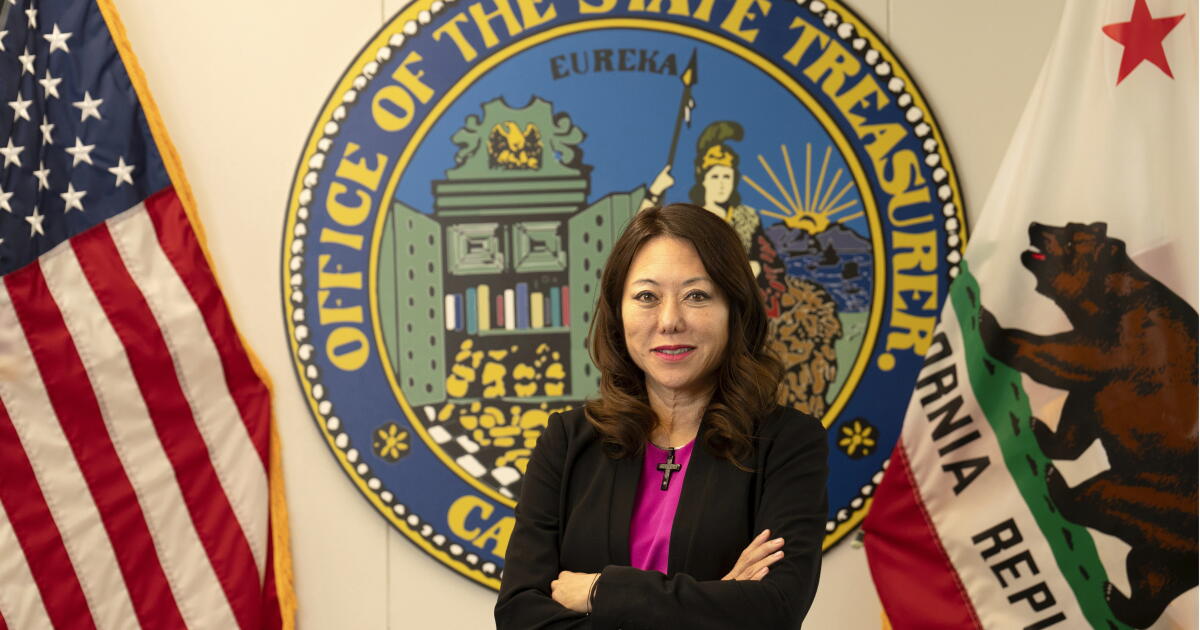
Longtime U.S. residents who might once have fought removal from home — where they can more easily gather evidence to support their case and confer with lawyers — are instead being held indefinitely.

Many have no criminal record. Some have been in the U.S. so long that the countries they came from no longer exist.

“People are locked up in the same facilities as people accused of crimes, people who’ve been convicted of crimes … and then you’re telling people, you have no shot of getting out,” Ngo said. “Detaining people and not giving them the chance to get out of detention is a way of coercing people to give up their claims.”

The habeas process can take weeks or months depending on the judge and the district.

“When the immigration cases dropped on our district, we got hit harder than any other outside West Texas,” Nunley said. “Initially we had more cases than anyone else.”

Today, data compiled by ProPublica and legal activist groups including the Immigration Justice Transparency Initiative show almost a quarter of the roughly 30,000 active habeas petitions in the United States are in California courts. Nunley’s own tabulations show half the California cases are in his district, where a perfect storm of stepped-up enforcement, a large population of immigrant workers and a concentration of detention centers produced a flash flood of habeas petitions.

The cases rely on the Constitution’s guarantee of due process before being deprived of life, liberty or property. But according to court filings, in some instances the government has argued “the Fifth Amendment does not apply” to detained immigrants.

DOJ lawyers responding to the bids for freedom now regularly complain they’re being crushed under paperwork.

Judges accustomed to having government lawyers comply with their orders have been left fuming.

In California’s Central District, which includes L.A. and surrounding areas, Judge Sunshine Sykes wrote a fiery decision earlier this year that said the Trump administration is inflicting “terror against noncitizens.”

Sykes is one of several federal judges across the country that have tried to compel the government to resume bond hearings. The 9th U.S. Circuit Court of Appeals blocked that decision in March, leaving the habeas system in place for now. But with challenges or recent decisions across multiple circuits, experts say the fight is fated for the Supreme Court.

“ICE has the law and the facts on its side, and it adheres to all court decisions until it ultimately gets them shot down by the highest court in the land,” a Homeland Security spokesperson said in an email to The Times.

A woman holds a "ICE not welcome here!" sign at a vigil in San Pedro in January.

A woman holds a “ICE not welcome here!” sign at a vigil in San Pedro in January.

(Gina Ferazzi/Los Angeles Times)
The lawyers fighting to free those jailed under the Trump administration’s mandatory detention policy say they were not initially equipped for these legal battles because they used to be exceedingly rare.

Most federal judges had only seen a handful of habeas petitions before last summer — then suddenly they had hundreds of requests for urgent relief, according to Jean Reisz, co-director of the USC Immigration Clinic.

Reisz said there are efforts to get pro bono law groups trained on how to effectively argue habeas cases, “but it takes a while to get up to speed.”

A Federal agent asks residents to move back at the scene of a shooting

A federal agent asks residents to move back after a shooting during an immigration enforcement operation in Willowbrook on January 21, 2026.

(Genaro Molina/Los Angeles Times)
At the same time, Reisz said, lawyers are pushing judges who oversee the cases to act swiftly, since interminable procedural delays ensure people remain incarcerated.

“Most of the habeas petitions include a motion for temporary restraining orders, and that requires emergency decisions from the courts, which requires the courts to act very fast,” Reisz said.

In California’s federal district courts, the backlog remains thousands deep. Nunley said the system is struggling to keep up with the crush of cases.

“There’s nothing that says that noncitizens should not be entitled to due process,” Nunley said. “These are our people, they reside in our district. They’re entitled to the same due process that you and I are entitled to.”

Source link

Should California secede? How the state is politically out of step with the rest of the country

Not since 2010 has California felt itself politically so out of step with the times. That year the state resisted the nationwide wave of anti-incumbent, anti-regulation and anti-big government voting to elect Jerry Brown as governor, ease the passage of big-money state budgets and turn away a challenge to its pioneering greenhouse gas regulations.

This election day, California voters tightened gun control, extended taxes on the rich, hiked cigarette taxes, legalized marijuana, boosted multilingual education — and of course provided Hillary Clinton with all of her winning margin of 2 million popular votes, and then some, in her losing campaign for president.

It’s impossible to look at the Trump campaign and not see a direct threat to the civil liberties and dignity of California citizens.

— Billionaire activist Tom Steyer

No wonder the election has inspired talk of California’s seceding from the United States. The nascent campaign, organized under the banner of the Yes California Independence Campaign and heralded by the Twitter hashtag #Calexit, has been energized by remarks by Brown, and others, that a Trump election would necessitate “building a wall around California” to preserve its forward-looking policies against a reactionary federal regime. And why not, the argument goes. After all, with a gross domestic product of $2.5 trillion, the state’s economy ranks sixth in the world, sandwiched between Britain and France.

Secession talk is more valuable as a pointer to all the ways that California and federal policies are likely to come into conflict during the next few years than as a formula for practical politics.

“It’s impossible to look at the Trump campaign and not see a direct threat to the civil liberties and dignity of California citizens,” says Tom Steyer, the progressive billionaire who in recent years has focused his energy on combating climate change via his organization NextGen Climate.

To dispense with the prospect of California’s seceding from the union: On the gonna-happen scale, it’s a Not. “We’d either have to win the ensuing civil war or have Congress kiss us goodbye,” says Joel D. Aberbach, director of the Center for American Politics and Public Policy at UCLA. “There isn’t a procedure for seceding” in the Constitution. The very notion of the U.S. as a divisible entity was settled by the Civil War.

A constitutional amendment is the longest of long shots. It must be approved by a two-thirds majority in each house of Congress and ratified by three-fourths of the states (38 of the 50).

But the conflicts between state and federal policy will be serious. Here’s a look at what may be some of the most important.

Climate change: California has been among the national leaders in reducing greenhouse gas emissions, and as recently as September strengthened its policies with a law mandating the reduction of climatologically harmful emissions to 40% below 1990 levels by 2030. Its auto emission rules traditionally have set a benchmark for the auto industry and federal regulators.

During his campaign, Trump dismissed climate change as a Chinese hoax and pledged to withdraw the U.S. from the Paris agreement to reduce greenhouse gas emissions, which already has been ratified by 113 of the 197 signatory countries. The U.S. ratified the agreement by presidential order on Sept. 3.

“The single biggest achievement of the Obama administration in energy and climate was to get those countries to agree,” Steyer said. “It was an example of the best kind of American leadership — moral, technical, financial.”

Since the election, Trump has backed off his assertions about climate change and his promise to withdraw from the Paris pact. If he makes good on his threat, however, American leadership on climate change will pass to the states. Brown has pledged to keep California in the forefront of that movement, and earlier this month sent a state delegation to a U.N. climate change conference in Marrakech, Morocco.

That just continues the sort of state-level leadership that has emerged in recent years. “Over the past decade, Congress has not passed a single bill that takes direct aim at climate change,” former New York Mayor Michael Bloomberg observed in a recent speech. “Yet at the same time, the U.S. has led the world in reducing emissions.”

Trump could stifle federal funding for crucial research on climate change. One of his science advisors says he plans to eliminate NASA spending on earth science, calling it “politically correct environmental monitoring” and refocusing the agency exclusively on space research. That mirrors congressional Republicans’ approach to NASA, whose role in climate monitoring they disdain even though it has made crucial contributions to understanding of global warming.

Immigration: Trump campaigned on a pledge to cut off federal funding to “sanctuary cities” as part of his crackdown on illegal immigration. His chief of staff-designate, Reince Priebus, reiterated the policy in an interview after the election.

These are cities whose police departments aren’t required to check the immigration status of people they stop or arrest or to notify U.S. immigration officials of the status of undocumented persons they release from custody. The roster of sanctuary cities includes Los Angeles, San Francisco, Sacramento and Oakland; an estimated 1 million of the nation’s 11 million immigrants without legal status, many of whom Trump has threatened to deport, live in L.A. County.

Leaders of those cities have pledged to keep protecting immigrants and fight Trump’s proposed cuts in federal funding cuts, which would require congressional action. The stakes are high: Los Angeles receives about $500 million a year in federal funding for such municipal services as port security and homeless shelters. But there are practical as well as moral reasons for cities to steer clear of immigration enforcement. Complicity with immigration agents shatters trust in police in immigrant-rich communities, complicating street-level patrolling. And with undocumented immigrants part of the fabric of diverse communities, rigorous enforcement can have bad economic consequences.

Trump’s anti-immigrant stance has spurred calls to action to protect potential deportees. The Los Angeles Unified School District says it will rebuff any federal request for students’ immigration status. Cal State University Chancellor Timothy P. White, whose system includes as many as 10,000 students without legal documentation, has said that campus police won’t honor federal requests for deportation holds. Last week University of California President Janet Napolitano stated that UC campus police departments would not involve themselves in investigations of the immigration status of individuals on campus and ruled out “joint efforts” on immigration with federal, state, or local law enforcement agencies. She said the university aimed to “vigorously protect the privacy and civil rights of the undocumented members of the UC community.”

An estimated one in three of the 742,000 “Dreamers” — young people who were brought to this country by their parents without documentation and granted protection from deportation under the Obama administration’s Deferred Action for Childhood Arrivals program, or DACA — lives in California. Trump has pledged to shut down the program.

Healthcare: Few states gave the Affordable Care Act, which Trump and congressional Republicans pledge to repeal, support as full-throated as California. The state has enrolled about 1.4 million people in Obamacare health plans via its statewide individual insurance exchange, Covered California, and added about 3 million low-income residents to Medicaid rolls via the law’s Medicaid expansion, the cost of which has been 100% paid by the federal government.

It’s doubtful that this record could be maintained if Trump and congressional Republicans repeal the ACA. Repeal would eliminate the federal tax credits that reduce premiums on Covered California plans and other costs for about 90% of enrollees. That would drive many of them off coverage. The state would surely be unable to make up those subsidies. California would also suffer from the loss of the ACA’s consumer protection elements, including a ban on exclusions for preexisting conditions and on annual or lifetime benefit limits. A study published last June by the Robert Wood Johnson Foundation forecast that without the ACA, the ranks of the uninsured in California would soar by 2021 to 7.5 million, compared with only 3.4 million if the ACA remains in place.

Among the dangers in the GOP plans is uncertainty. The party has promised to “replace” the ACA with something that works better, yet has never coalesced around an alternative in more than six years of trying. But doubts that Covered California and other ACA marketplaces will eventually stabilize could drive more big insurers out of the market and force prices higher.

The prospects of disastrous tampering with healthcare were heightened Monday with Trump’s nomination of Rep. Tom Price (R-Ga.) as secretary of Health and Human Services. Price, an orthopedic surgeon, is a sworn enemy of the Affordable Care Act. He’s the author of an alternative law that could throw older and sicker patients out of the insurance pool and make insurance all but unaffordable for women of child-bearing age. The Price plan would repeal Obamacare and replace it with something resembling the pre-2010 individual insurance market, when overpriced, low-benefit plans were the norm for anyone except young, healthy males.

Republican proposals to convert Medicaid to a block-granted program—almost certainly a prelude to cutting the federal share of its budget—could pose a particular problem for House Majority Leader Kevin McCarthy, R-Bakersfield. In his district, which largely spans Kern and Tulare counties, roughly half of all residents are enrolled in Medi-Cal, the state’s Medicaid program. Efforts to trim the program would have a direct effect on them.

Gun control and marijuana: Voters on election day flouted federal policy in both areas. Proposition 63 mandates background checks for ammunition sales and outlaws high-capacity ammo magazines. Proposition 64 legalizes marijuana.

Trump established himself as an ally of the National Rifle Assn. during the campaign, but White House policy may not be the biggest problem for the state’s firearms policy: the courts would be. In rulings in 2008 and 2010, the Supreme Court extended the reach of the 2nd Amendment’s protection of the right to bear arms. Within a day of the election, the NRA was talking about challenging Proposition 63 and related state laws before the courts.

Trump hasn’t expressed strong objections to the legalization of marijuana, but as the biggest state to legalize pot, California could find itself in the crosshairs of revived anti-marijuana enforcement by his administration. Obama’s Justice Department took an indulgent approach to the wave of state legalizations of the drug, declaring in 2013 that although it was still illegal under federal law, its prosecutors would focus chiefly on preventing sales to minors and to keeping profits out of the hands of criminal gangs.

But Trump’s attorney general-designate, Sen. Jeff Sessions (R-Ala.), stated in April that “marijuana is not the kind of thing that ought to be legalized, it ought not to be minimized, that it’s in fact a very real danger.” One anti-pot activist described him to the Washington Post as “by far the single most outspoken opponent of marijuana legalization in the U.S. Senate.” How he plans to enforce federal law in a legalization state as big as California is still a mystery.

Keep up to date with Michael Hiltzik. Follow @hiltzikm on Twitter, see his Facebook page, or email michael.hiltzik@latimes.com.

Return to Michael Hiltzik’s blog.

ALSO

Trump speaks with Taiwan’s president, which could provoke China

For 11 years, he’d never felt like he’d been targeted for the way he looked. Donald Trump’s victory changed that

California lawmakers want to reform a bail system they say ‘punishes the poor for being poor’

Orange County’s new ‘homegrown’ congressman plans to bring an immigrant’s perspective to Washington


Source link

Live Nation is supporting two California bills to lower prices. Can fans trust it?

Bruno Mars tickets running for $2,000 and ones for SZA costing $600 caught California lawmakers’ attention. They’re advancing two bills targeting the resale market.

Earlier this year, tickets to see SZA perform at the Crypto Arena in Los Angeles were selling for $600 the day before they officially went on sale at $35 a piece.

In San Francisco, tickets to see Sam Smith at the newly renovated Castro Theater went on sale for $120, only to be quickly snatched up by scalpers and resold for upwards of $600.

Those are some of the stories that California lawmakers are citing as they advance two plans to change the ticketing landscape. One caps the extent to which resellers can mark up the original ticket price while the other prohibits resellers from selling tickets they don’t yet own.

Democratic Assemblymembers Issac Bryan of Culver City and Matt Haney of San Francisco are each carrying bills that they say would protect consumers from fraudulent and deceptive ticket sales.

Both measures are backed by the ticket market’s dominant seller, Beverly Hills-based Live Nation, which owns Ticketmaster. Its support has some worried that the bills will help the company crush its competitors and jack up prices.

A federal jury in New York this week found that the company illegally acted as a monopoly in a victory for, among others, California Attorney General Rob Bonta, who with colleagues in other states sued the company two years ago and kept going after federal prosecutors settled. Live Nation is now awaiting penalties.

Despite these headwinds, the ticket bills are sailing through the Legislature.

Supporters say the legislation has nothing to do with the antitrust case against Live Nation and helps consumers. Opponents disagree.

“The state Legislature should really be standing up for consumers instead of advancing bills that are there to help a monopoly that has been caught on record calling its fans stupid and has bragged about robbing them blind,” said Jose Barrera, national vice president for the far west region at the League of United Latin American Citizens, a civil rights advocacy group.

Ticketmaster’s competitors in the online resale market are lobbying against the measures, a sign that they view the proposals as a threat to their business.

Jack Sterne, StubHub’s head of policy communications, wrote to CalMatters, stating, “Passing laws that hand the Ticketmaster monopoly more power and don’t actually make tickets more affordable is the last thing California’s leaders should do.”

But Stephen Parker, executive director of the National Independent Venue Association, which is co-sponsoring the bills, argues that they will regulate the marketplace to better protect fans by limiting price gouging and encouraging the face value — or below face value — exchange of tickets.

“Ultimately, that is what these bills will do, in addition to making sure that the tickets are actually real,” he said. “That is a good thing for California consumers. It’s a good thing for artists and it’s a good thing for these small businesses and nonprofits that make up the independent stages across the state.”

A Live Nation spokesperson said in a statement to CalMatters, “The resale lobby constantly tries to change the subject by pointing fingers at Ticketmaster, even though it has less than 25% of the resale market. This has nothing to do with anyone’s monopoly, but rather is about protecting fans from scalpers and the resale sites that cater to them.”

The company has spent roughly $165,000 on lobbying efforts this legislative session, including to support Bryan’s bill.

‘Unlikely allies’

Bryan’s Assembly Bill 1349 would ban the sale of speculative tickets — or tickets that are not in the possession or ownership of the people who list them online. In an April hearing, Bryan said the bill protects consumers from predatory mark ups.

“This bill is so important that, after our introduction, it brought unlikely allies together,” Bryan said, according to the CalMatters Digital Democracy database. “In fact, this bill brought the Giants and the Dodgers together, brought the National Independent Venue Association and Live Nation together. It brought Kendrick Lamar and Kid Rock together. It brought Isaac Bryan and Donald Trump together.”

Several secondary ticket sellers are fighting the measure, including StubHub, SeatGeek and Vivid Seats. The three companies have spent roughly $1.1 million dollars on lobbying efforts this legislative session, which included opposition to Bryan’s bill.

People watch fireworks during Bad Bunny’s halftime show from a parking garage outside Super Bowl LX at Levi’s Stadium in Santa Clara on Feb. 8, 2026. Photo by Jungho Kim for CalMatters

People watch fireworks during Bad Bunny’s halftime show from a parking garage outside Super Bowl LX at Levi’s Stadium in Santa Clara on Feb. 8, 2026. Photo by Jungho Kim for CalMatters

Opponents including Robert Herrell, executive director for the Consumer Federation of California, argue that the bill strengthens Live Nation Ticketmaster’s grip on the ticketing and live entertainment industry. According to them, the measure would give Live Nation complete control over the ticket even after it has been purchased — meaning, for example, that consumers could lose the ability to sell it or give it away.

“There’s no consumer choice in the matter,” said Herrell. “They can keep people out of shows if they want to. There have been situations where, if you bought a ticket on the secondary market, you’ve been denied entry into a show.”
Proponents say Herrell and other opponents are mistaken. They say they are not trying to prevent transferability but rather, they want to protect fans from speculative costs.

“We want those rooms full,” said Ron Gubitz, executive director of Music Artists Coalition, which is co-sponsoring both bills. “So you have to be able to transfer a ticket. We just want it to be in a way that’s safe, trustworthy and not creating this run on the market that exists now.”

Gubitz pointed to a recent Bruno Mars concert, where tickets were on StubHub for $400 to $2,000 before they were on sale through Ticketmaster.

“That’s crazy,” he said. “That’s a speculative ticket that Bryan’s bill is trying to stop. That shouldn’t happen. It’s not fair to anybody, except for the secondary (market). It seems great for them.”

Price caps in a free market

Haney’s Assembly Bill 1720, also known as the California Fans First Act, would put a 10% cap on resale event ticket markups, inclusive of the ticket fees. In other words, a reseller could not charge more than 10% higher than the original ticket price.

In an interview with CalMatters, Haney said artists, independent venues and downtowns are currently being “screwed over and exploited” by scalpers and brokers.

“We can’t allow the status quo to continue if we want to ensure Californians have access to affordable tickets to see their favorite artists or if we want independent venues or the broader landscape of musicians and artists to thrive in our state,” he said.

Haney rejected the idea that his bill would strengthen the Live Nation Ticketmaster monopoly, saying that the company is one of the biggest operators and profiteers of the secondary ticket market and would therefore be subject to the same restrictions as any other platform or broker.

“I don’t think it’s a free market to allow folks to come in and buy up all these tickets and then create scarcity and then you’re now required to buy your ticket at a much higher price from someone who had nothing to do with the event,” he said. “This is not something we would ever allow for airplane tickets or even dinner reservations.”

The bill has been criticized by opponents like Diana Moss, vice president and director of competition policy at Progressive Policy Institute, who said price caps notoriously distort the market, describing them as “anti-consumer, anti-competitive and anti-artist.”

“If you shut down the resale market with price caps then guess what? Ticket buyers have no place to go but right back to Ticketmaster,” said Moss. “If (Live Nation) succeed(s) in decimating the resale market, then they steer millions and millions of fans back to their own ticketing platform where they charge monopoly ticket fees and where fans are hostage to their glitchy online platform and all of their data, privacy and security concerns that we always hear about in the news.”

Those concerns didn’t stop the bill from passing out of the Assembly Committee on Arts, Entertainment, Sports and Tourism last week with a 6-1 vote. The bill also passed out of the Assembly Committee on Privacy & Consumer Protection on Thursday with a 9-4 vote.

Mihalovich is a California Local News fellow for CalMatters.

Source link

Democratic Senate hopefuls put California cash in the bank

Democrats who once saw retaking the U.S. Senate as a long shot in 2026 have newfound hope thanks to an unpopular president and a California donor machine that has snapped into action.

Californians provided the most out-of-state cash to Democrats in nearly every hotly contested race, and in several cases gave more than in-state donors, according to a Times analysis of campaign finance filings covering the first three months of 2026.

Sen. Jon Ossoff of Georgia, who took in more than $14 million overall, received nearly as much from California backers as from supporters in his home state among donors who contributed at least $200 and whose identities were disclosed.

James Talarico, a Democratic Senate candidate in Texas, has raised a staggering $27 million so far this year, with California donors contributing just under $1.2 million to back his campaign — second only to Texas supporters among those donors whose names were disclosed.

Donors who give less than $200 are not required to be identified in campaign finance reports and made up a significant share of the donors to Ossoff’s and Talarico’s campaigns.

Republicans currently have control of the Senate with 53 of the chamber’s 100 seats. This year 35 seats are at play, including special elections in Florida and Ohio.

GOP still winning a key cash race

While more of the seats up for grabs are in Republican hands, polling showing the potential for tight races in several of them has given Democrats hope that they might be able to shrink or reverse their deficit in November.

Top Democratic candidates have out-raised their GOP rivals in the most competitive Senate races, but Republicans are winning the cash race among big-money committees that can accept checks far larger than the $7,000 cap on donations to candidate committees.

Those Democratic candidates have continued a tradition of relying on donors in the country’s most populous state to bankroll their campaigns.

“California has been a rich gold mine for many a candidate and continues to be that,” said Michael Beckel, director of money in politics reform at Issue One, a bipartisan advocacy group.

Democratic Senate candidates in a few races raised more from California donors than from donors in their home states, according to campaign finance reports filed Wednesday.

Democratic former Rep. Mary Peltola of Alaska, who is challenging incumbent Republican Sen. Dan Sullivan, brought in nearly $900,000 from California donors who had contributed at least $200. Alaska donors contributed just over $520,000 to Peltola in the same time period.

Two of the three leading Democratic hopefuls in Michigan’s open Senate race, Rep. Haley Stevens and physician Abdul El-Sayed, reported taking in more from California donors than from donors in Michigan. California was the second biggest bank of support for the other top Democratic contender, state Sen. Mallory McMorrow.

And in Nebraska, independent Dan Osborn, who is challenging incumbent Republican Sen. Pete Ricketts, took in $80,000 more from disclosed California donors than from Nebraskans.

Dozens of California donors gave to at least five Senate candidates across the country, according to The Times’ analysis of the filing data.

Burbank playwright and screenwriter Winnie Holzman has donated to Democratic candidates in nine key races and said she has been inspired to give to them — and other candidates and political groups — because of concerns about the policies of President Trump’s administration and what she sees as its violation of the law.

“This isn’t just about who is in the Senate,” said Holzman, who wrote the script for the play “Wicked” and co-wrote its movie adaptations. “But if enough Democrats were in the Senate right now, there would be a lot more ability to push back on this.”

The impressive fundraising hauls by Democrats come with a significant caveat.

The two most prominent political committees that support Republican Senate candidates — the party-affiliated National Republican Senatorial Committee and the Senate Leadership Fund super PAC, have both outraised rival Democratic groups by a significant margin this cycle.

For the NRSC, an $11.5-million fundraising advantage since the start of 2025 has translated to a modest $2-million advantage in cash in the bank through the end of February compared with the Democratic Senatorial Campaign Committee.

But the Senate Leadership Fund, which can accept unlimited amounts of cash from donors, had $91.6 million more to spend at the end of March than the Democratic rival Senate Majority PAC.

And the pro-Trump super PAC MAGA Inc. had a stunning $312 million in the bank at the end of February.

Money raised by candidate campaign committees does, however, bring some advantages over money raised by other committees. Most significantly, candidates are able to buy advertising at cheaper rates than other political committees.

That is an important distinction in a year when advertising spending in Senate races is expected to top $2.8 billion.

The Senate map

While political analysts expect that Democrats will likely perform well in congressional races — with early signs pointing to a strong possibility that the party regains control of the House — winning control of the Senate would be a much taller order.

“The Senate is going to be won or lost in red states,” said Kyle Kondik, managing editor of Sabato’s Crystal Ball at the University of Virginia’s Center for Politics.

Even in the best-case scenario for Democrats, to retake control of the chamber they would probably need to win in at least two states such as Iowa, Alaska, Ohio or Texas, all of which went to Trump in the 2024 presidential election by double-digit margins.

With the vast sums likely to be raised — and spent — by both sides, Kondik said that fundraising can reach a point of diminishing returns.

“You’d rather have more than less, obviously, but the actual effect is pretty debatable,” he said.

And history shows that fundraising prowess doesn’t necessarily translate to electoral success in November.

Take the example of Texas Democrat Beto O’Rourke.

In his 2018 challenge of incumbent Republican Ted Cruz, O’Rourke brought in more than $80 million, more than double Cruz’s fundraising haul of $35 million.

But it wasn’t enough to put the then-congressman from El Paso over the top.

O’Rourke lost the race by about 2.5 percentage points.

Source link

California bans local soda taxes

California cities and counties won’t be allowed to tax soda for the next 12 years after Gov. Jerry Brown signed fast-moving legislation Thursday.

The bill, which was first unveiled Saturday evening, prohibits local governments from imposing new taxes on soda until 2031. It comes after a deal was struck between legislators and business and labor interests who agreed to remove an initiative from the Nov. 6 statewide ballot that would have restricted cities and counties from raising any taxes without a supermajority vote of local citizens.

In a signing statement, Brown said soda taxes “combat the dangerous and ill effects of too much sugar in the diets of children.” But he added that mayors across the state called him to support the deal because they were alarmed by the tax initiative.

Brown also reacted strongly to another part of the initiative, which would have restricted the state’s ability to raise certain fees without a two-thirds vote of the Legislature.

“This would be an abomination,” Brown wrote.

Many lawmakers shared Brown’s mixed emotions toward the soda tax ban.

During debate on the legislation, Assembly Bill 1838, legislators said they reluctantly voted to impose the moratorium because the ballot measure, for which signatures were gathered by a political campaign financed by more than $7 million from the beverage industry, would have been worse for state and local government coffers.

Assemblyman Kevin McCarty (D-Sacramento) said he was against both the soda tax ban and how the beverage industry used the threat of an initiative to force the Legislature’s hand, but ultimately supported it.

“I think this is a terrible decision that we’re making,” McCarty said during a state Capitol hearing on the bill Thursday morning.

Sen. Scott Wiener (D-San Francisco) voted against the deal, but said he understood the choice his colleagues were making.

The beverage “industry is aiming basically a nuclear weapon at governing in California and saying if you don’t do what we want, we’re going to pull the trigger and you are not going to be able to fund basic government services,” Wiener said. “This is a pick-your-poison kind of situation, a Sophie’s choice. What the Legislature is doing is perfectly reasonable.”

Coverage of California politics »

Minutes after Brown signed the soda tax ban, proponents formally withdrew their initiative from the statewide ballot. The deadline to do so was Thursday.

The initiative wouldn’t have banned local soda or other tax increases. But it would have made them much harder to pass. It would have required all local tax hikes to pass by a two-thirds supermajority vote, making it significantly more difficult for cities and counties to raise revenue for a variety of projects.

Currently, any local sales, hotel-room or other tax increase needs a simple majority of local ballots that are cast — provided that the money goes to a city’s day-to-day operating budget. Roughly half of the local tax measures approved by voters since 2012 — raising hundreds of millions of dollars annually — did not receive supermajority approval, according to the state’s nonpartisan Legislative Analyst’s Office.

Public health advocates have been pushing for soda taxes across the United States for years, saying that higher prices would reduce consumption amid growing rates of obesity and diabetes while also generating more revenue for local governments. By contrast, the beverage industry has argued such taxes make it harder for low-income residents to buy groceries and unfairly single out soda as the cause of health problems.

Thirty cities and states attempted to pass soda taxes before Berkeley became the first to succeed in November 2014, charging a penny-per-ounce tax. Since then, three other Bay Area cities — San Francisco, Oakland and Albany — have passed soda taxes. The soda tax ban leaves those measures intact, but prohibits others that would have taken effect this year. Earlier this week, Santa Cruz city officials voted to put a 1.5-cent-per-ounce soda tax on the November ballot, an effort that will be blocked under the new state legislation.

California Legislature nears deal to temporarily ban soda taxes »

Activists were stunned by the quick action on the soda tax ban. Carter Headrick, director of state and local obesity policy initiatives at the American Heart Assn., said using a ballot initiative to leverage lawmakers to prohibit soda taxes in communities across California was “blackmail.”

“I don’t think the [beverage industry] ought to be forcing legislators to be taking away the rights of people to vote,” Headrick said.

Some lawmakers attacked the deal because they supported the initiative. Sen. Jeff Stone (R-Temecula) said that Thursday’s decision subverted the will of Californians who wanted to keep their taxes low.

“This bill tells 1 million people that signed this petition to make it harder to raise their taxes that their voices don’t matter,” Stone said.

The American Beverage Assn., which represents soda companies and other nonalcoholic drink manufacturers, contributed 85% of the initial $8.3 million raised by backers of the ballot measure.

A spokesman for the association said that the legislation would keep grocery prices lower and that the industry was working to find alternatives to reduce sugar consumption.

“We believe the legislation approved today will allow us to work toward these goals,” association spokesman William M. Dermody Jr. said in a statement.

Labor interests added momentum to the eleventh-hour soda tax ban legislation, saying the initiative would be far more damaging to the state.

“A temporary pause on further local soda taxes gives California the opportunity to work on a statewide approach to the public health crisis of diabetes,” Alma Hernandez, executive director of SEIU California, said in a statement.

liam.dillon@latimes.com

Twitter: @dillonliam


UPDATES:

6:30 p.m.: This article was updated with comments from a beverage industry spokesman.

3:55 p.m.: This article was updated with Gov. Jerry Brown approving the soda tax ban and details about the withdrawal of a local tax ballot initiative.

This article was originally published at 12:45 p.m.


Source link

Powerful California institutions backed Swalwell’s rise. Now they’re facing questions

Before it all came crashing down, Eric Swalwell appeared on the cusp of rising to the top of the Democratic field in the California governor’s race.

Swalwell had just announced a statewide tour and aired his first ad. The former prosecutor and Dublin city councilman launched his campaign on “Jimmy Kimmel Live!” in November, a comfortable setting for a politician who’d built a national reputation by appearing on cable news shows to attack President Trump.

Influential forces in Sacramento had begun coalescing behind the then-Bay Area congressman, including some consultants and advisors close to Gov. Gavin Newsom. Newsom hasn’t endorsed, but his associates’ involvement lent credibility to Swalwell.

Swalwell’s campaign quickly collapsed with the explosive allegations that he sexually assaulted a former staffer and had acted inappropriately with other women who were just beginning political careers. Swalwell denies the allegations but dropped out of the race for governor and resigned his seat in the House.

The whiplash over Swalwell’s rapid rise and fall has Democratic leaders facing questions about whether they had a blind spot about his alleged behavior.

His onetime allies in Congress are being asked whether they knew about his conduct, which has been described as an open secret on Capitol Hill. Unions who backed Swalwell have fled, and political consultants are returning donations.

A woman holds and speaks into a microphone.

Lorena Gonzalez, president of the California Federation of Labor Unions, speaks to Kaiser Permanente nurses and healthcare workers at the Kaiser Permanente Zion Medical Center in San Diego on Jan. 26.

(K.C. Alfred / San Diego Union-Tribune via Getty Images)

California Federation of Labor Unions President Lorena Gonzalez, whose group endorsed Swalwell and three others in the race, said she confronted Swalwell more than a month ago after hearing rumors about womanizing and illicit photos.

“He’s a liar,” Gonzalez said. “He’s just a very skillful politician who did not tell the truth even when asked directly.”

Though he was little known in much of California, Swalwell, 45, was a youthful and fresh face in a field of candidates, many of them veteran politicians, when he entered the contest.

A little more than a week ago, his campaign was on an upward trajectory. His first statewide ad emphasized his hometown roots and concerns faced by Californians, including rising costs at his favorite doughnut shop in his hometown of Dublin. He rolled out new endorsements from state and federal elected officials almost daily.

Former and current advisors close to Newsom were also helping Swalwell’s campaign, multiple sources told The Times. Others associated with the governor are also helping rival candidates.

“He’s a liar. He’s just a very skillful politician who did not tell the truth, even when asked directly.”

— California Labor Federation president Lorena Gonzalez

Other Democrats in the race said the warnings about Swalwell should have been investigated more thoroughly by the powerful California politicians and interest groups that backed him.

Antonio Villaraigosa, the former mayor of Los Angeles, called him a “flash in the pan” — someone who lacked substance.

“People thought just because he was popular on TV that maybe he had been vetted,” Villaraigosa said. “He had not been vetted.”

A seated woman links toward a man seated next to her.

Gubernatorial candidates Katie Porter and Antonio Villaraigosa share a moment while participating in a candidate forum in Los Angeles on Jan. 10.

(Christina House / Los Angeles Times)
Swalwell’s entrance into the race last fall came at a time when elected officials and leaders of powerful interest groups in Sacramento were unimpressed by the field, particularly after big-name Democrats including former Vice President Kamala Harris, Sen. Alex Padilla and state Atty. Gen. Rob Bonta had passed on running.

Steven Maviglio, a Sacramento-based Democratic consultant, said there was pressure to find the “perfect candidate” for the state’s most powerful office.

“Democrats are looking for a fighter against Trump, and he fit the bill,” Maviglio said. “That was enough for most people.”

As with most members of California’s congressional delegation, Swalwell was an unfamiliar figure to many Californians living outside his Alameda County district, even though he had a lighthearted, robust presence on social media.

He’d never held statewide office when he was elected to Congress after a career that included serving on the Dublin City Council and working as a criminal prosecutor for Alameda County.

But he appeared to be close to former House Speaker Nancy Pelosi (D-San Francisco), who selected him to be an impeachment manager for the case against President Trump in 2021.

A woman speaks into microphones at a lectern.

Former House Speaker Nancy Pelosi (D-Calif.) addresses the crowd at the California Democratic Party State Convention in San Francisco on Feb. 21, 2026.

(Christina House/Los Angeles Times)

At a forum in Washington this week, Rep. Pelosi rejected suggestions that Democrats looked past the accusations.

“None whatsoever,” she said, when asked what allegations she’d heard about.

Sen. Adam Schiff (D-Calif.), who previously worked alongside Swalwell on the House Judiciary Committee and endorsed him, said on MS NOW that he felt betrayed and “sickened” by the allegations.

“My paramount feeling is that I’m grateful these women came forward,” Schiff said. “I’m grateful that they did so when they did — it prevented our state from making a potentially terrible mistake.”

Sara Azari, an attorney for Swalwell, said in a statement that he denies all of the allegations of sexual misconduct and assault and will pursue “every legal remedy” against those making the claims.

“These accusations are false, fabricated and deeply offensive — a calculated and transparent political hit job designed to destroy the reputation of a man who has spent twenty years in public service,” Azari said.

A  woman standing behind a seated woman points to a picture of a woman and a man.

Attorney Lisa Bloom reaches toward a photo at a news conference where Lonna Drewes, left, is seen with former Rep. Eric Swalwell, at a news briefing in Beverly Hills on Tuesday. Drewes detailed a 2018 encounter in which she claimed Swalwell drugged and sexually assaulted her after offering professional mentorship.

(Myung J Chun/Los Angeles Times)
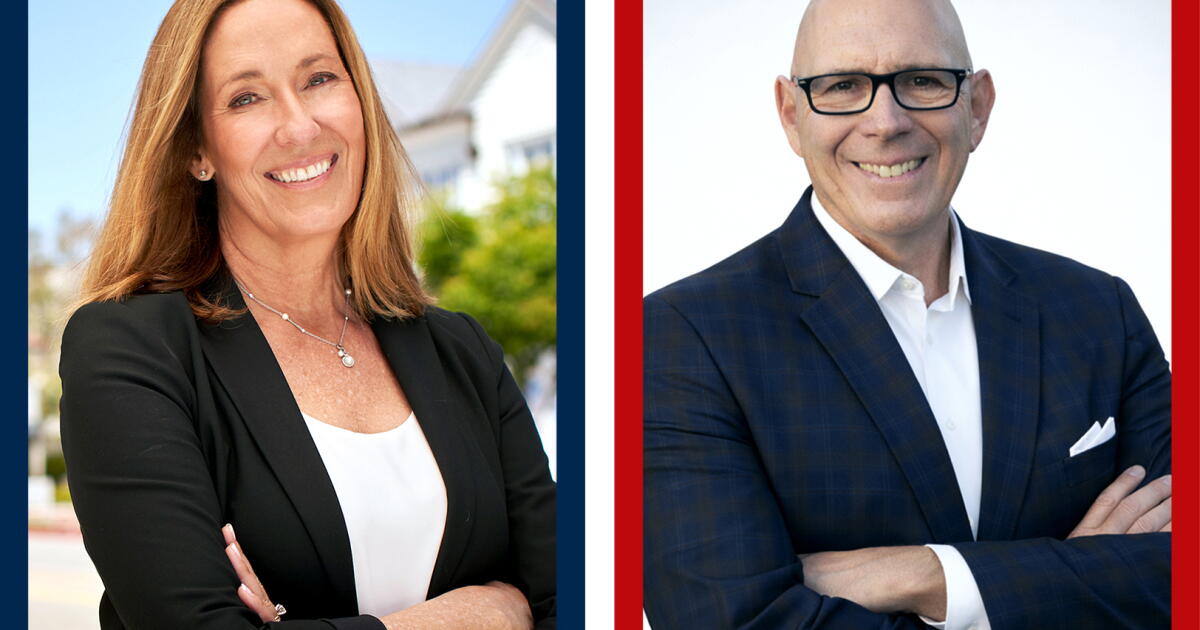
On Tuesday, Lonna Drewes accused Swalwell of drugging and raping her in 2018 while she worked as a model, an allegation now being investigated by the Los Angeles County Sheriff’s Department.

Azari, in an interview on NewsNation, said of Drewes’ allegation: “Two adults consenting, which is our position is, is not against the law.”

California Democratic Party Chairman Rusty Hicks declined to answer questions this week about whether the scandal hurts the party’s credibility, saying only that the allegations are “clear for voters: [Swalwell] is not a suitable choice.”

In an interview with The Times, Hicks said the party relies on delegates to vet candidates before endorsement votes at the party convention. While no gubernatorial candidate reached the necessary level of support to earn the endorsement at the February gathering, Swalwell had the largest share with 24%.

Gonzalez, of the labor federation, said she called Swalwell in the first week of March after being contacted by several people about his sexually inappropriate behavior.

She described the awkward conversation — and his immediate denials. None of it was true, he said. If there was anything sordid to find in his past, it would have been dug up by Trump and conservatives who went after him when he was helping to try and impeach the president, he said.

At the union group’s endorsement meeting, members grilled Swalwell about several issues, including his claimed residency in Livermore, his involvement with a nonunion film production, and his ability to manage his own finances.

The issue of inappropriate sexual behavior never came up at the endorsement, Gonzalez said.

“We were in a position, like so many, of trying to figure out who this guy was with all these red flags, but being told by a lot of surrogates that they were his choice — whether it’s people in Congress or folks who knew him from home,” Gonzalez said.

Other institutional players also threw in their support. The California Medical Assn. endorsed Swalwell early in February. The group represents more than 50,000 physicians in the state and spends heavily in elections.

“It definitely was a nod that that’s where the establishment should head,” Maviglio said.

California Medical Assn. spokesperson Erin Mellon said the group met with candidates and backed Swalwell “based on the information available to us” at the time.

Behind the scenes, Swalwell was courting attention. He began hanging out at the Grange, a favorite hotel bar in Sacramento for state lawmakers and lobbyists, trying to make connections, according to a source who ran into him there.

Months earlier, he sent a text to a California political consultant with questions about who should help his campaign. He asked about the well-known firm of Bearstar Strategies, according to the text exchange, which was viewed by The Times.

Swalwell texted, “would you recommend having our IE go to them?” to the consultant, a reference to an “independent expenditure,” which is an outside committee that raises money in support of candidates but is barred from coordinating with their campaigns.

Bearstar Strategies ultimately launched an independent committee to support Swalwell, which in recent weeks raised more than $7 million from political action committees for the California Medical Assn., DaVita and other medical industry groups, as well as Uber.

A standing man shakes hands with a seated man.

Antonio Villaraigosa, left, shakes hands with Tom Steyer during a gubernatorial candidate forum in Sacramento on April 14, 2026.

(Godofredo A. Vásquez / Associated Press)

Bearstar Strategies, whose members have long advised Newsom, also provides media consultants for a committee running attack advertisements against environmentalist Tom Steyer, another candidate in the race. Swalwell would have benefited from the committee’s spending.

Jim DeBoo, a consultant and Newsom’s former chief of staff, is helping on the anti-Steyer committee, according to multiple sources, which has raised $14 million from real estate agents’ and utility industry groups. DeBoo didn’t respond to a request for comment, and a representative for Bearstar declined a request for an interview.

No one has claimed that any of those consultants or individuals knew about Swalwell’s alleged behavior. Bearstar Strategies said in a statement last week that it had suspended all activity on Swalwell’s independent expenditure.

Jamie Court, president of the nonprofit Consumer Watchdog, said institutional groups backed Swalwell because they thought he could win and they wanted to maintain the status quo in Sacramento.

“They picked the wrong guy,” Court said.

Source link

How to find L.A. hikes where spring is in full bloom

I’ve come to resent the frenzy around superblooms.

You are reading The Wild newsletter

Sign up to get expert tips on the best of Southern California’s beaches, trails, parks, deserts, forests and mountains in your inbox every Thursday

Not because I don’t love seeing our hillsides blanketed with nature’s bounty, but because it misses the point that every wildflower that bursts out of the ground is its own sort of miracle. Have you ever slowed down on the trail just to stare at an individual California poppy and considered how in the world a seed that’s a fraction of an inch (1/20 to be exact-ish) became this bright orange delicate thing before you?

For me, each wildflower I spot on the trail is an opportunity to practice gratitude. I hope I can persuade you to consider the same.

With that same energy, I’d like to teach you how I find wildflowers and other plants I love, both as a hiker and outdoors journalist. Here is what I consider as I’m searching for the best spring hikes.

A large gnarled tree with huge brown branches with small green leaves over a dirt path.

A large oak tree provides shade over a trail in Franklin Canyon Park.

(Jaclyn Cosgrove / Los Angeles Times)

1. Learn the landscapes

L.A. County is home to a multitude of diverse plant habitats, with each offering its own range of wildflowers, shrubs, trees and more. And often, these landscapes can be interspersed among each other.

Hikers around L.A. commonly encounter plant habitats and ecosystems that include:

  • Coastal sage scrub: Found at lower elevations (generally below 3,000 feet), this fire-adapted plant community often includes bright yellow bush sunflower, sticky monkey flower (orange blooms), deerweed (orange and yellow blooms) and fragrant California sagebrush and black sage, which features white and bluish blooms; this is a great plant habitat to hike when you want to really stop and smell things.
  • Chaparral: Often said to be the most extensive vegetation type in California, chaparral is found throughout Southern California’s mountain ranges up to about 5,000 feet, although it does grow higher; chaparral is a “continuous cover of low-growing shrubs creating a mosaic in shades of green,” according to research by the U.S. Forest Service; common flowering plants found in chaparral include woolly bluecurls, chamise (white flowers), ceanothus (shrubs with fragrant purple, white and sometimes pink blooms) and manzanitas.
  • Oak woodlands: A plant habitat often found in low- to mid-elevations (generally below 5,000 feet) in foothills and valleys, this ecosystem is “officially defined as an oak stand in which at least 10% of the land is covered by oaks and other species, mostly hardwoods,” writes author Kate Marianchild in “Secrets of the Oak Woodlands”; wildflowers that often grow here include California buttercup (yellow blooms), Collinsia heterophylla (purple and white blooms), hummingbird sage (super cool plant with magenta flowers) and more.
A coast live oak with a swing, a flowering golden yarrow and a Bush monkeyflower, sometimes called sticky monkey flower.

Several coast live oaks, including this one with a swing, live along the Gabrielino Trail, left. Top right, there are several native plants and wildflowers along the Gabrielino Trail, including golden yarrow. Bottom right, Bush monkey flower, sometimes called sticky monkey flower, is a native shrub found along the Gabrielino Trail.

(Jaclyn Cosgrove / Los Angeles Times)

  • Riparian habitats: This is the term used to describe the lush landscape found around rivers, creeks and in moisture-rich canyons and includes riparian woodlands; it is less defined by elevation and more so is used to describe the life found around water. Wildflowers and plants that bloom include western columbine, scarlet monkey flower and miner’s lettuce (white and pale pink blooms). You can often also find California bay laurels, which have a zesty pungent smell (that not everyone loves).
    • Where to see it: Essentially anywhere along the 28.8-mile Gabrielino Trail, which runs parallel in several sections to the San Gabriel River and Arroyo Seco.
A funky short red plant pokes out of pine needles.

The snow plant (sarcodes sanguinea Torr.) is starting to come up around pine trees at the Chilao Picnic Area in the Angeles National Forest. It grows in the spring, after snow has melted, has no chlorophyll and gets its nutrition from fungi growing on conifer roots in the soil.

(Raul Roa / Los Angeles Times)

2. Go higher for late-season blooms

Thanks to our proximity to the San Gabriel Mountains, the wildflower season often extends into late spring and early summer.

In Angeles National Forest, you can easily hike above 5,000 feet and even farther into the sub-alpine regions where you’ll find mixed conifer forests and a range of wildflowers and other interesting plants. One of my favorites to spot is the snow plant, a funky red parasitic plant that “derives sustenance and nutrients from mycorrhizal fungi that attach to roots of trees,” according to the California Native Plant Society. Other blooms you might spot include various types of lupine, pumice alpine gold and some types of paintbrushes.

Grape soda lupine grows in Angeles National Forest, including here along the Cooper Canyon trail.

Grape soda lupine grows in Angeles National Forest, including here along the Cooper Canyon trail.

(Jaclyn Cosgrove / Los Angeles Times)

3. Determine whether an area has burned in recent years

Many of the most beloved areas of the Santa Monica and San Gabriel mountains have burned in recent years. The immediate aftermath is devastating to witness: blackened hillsides with shrubs and trees burned down to nubs and stumps.

But, as the ecosystem starts to heal, several wildflowers known as “fire followers” will start popping up.

“Often boasting beautiful blooms, some germinate only when their seeds are exposed to heat, while others take advantage of the charred, mineral-rich soil left behind, helping to secure the land and reduce erosion,” according to TreePeople.

I’ve found this to be true in areas that burned in the 2020 Bobcat fire, where trails burst with blooms from several types of lupine (including grape-soda lupine, my personal favorite), phacelias, including large flowered phacelia and caterpillar phacelia, and withered snapdragon.

A field of thick orange flowers.

California poppies bloom next to the California State Route 138 near the Antelope Valley California Poppy Reserve State Natural Reserve on March 12. The state’s wildflowers typically bloom from mid-March through April.

(Kayla Bartkowski / Los Angeles Times)

4. Check the data and help others do the same

Before heading out, I often head to iNaturalist, a citizen science app where users submit photos of animals, plants and other living organisms they observe. I will usually look at what other users have submitted in recent weeks. And on every hike, I typically submit at least 20 observations of wildflowers, lizards and trees I noticed. (As of today, I’ve submitted 675 observations of 341 species, including eight California poppy observations and seven black bear observations, which are really just photos of scat.)

To use iNaturalist, you can either visit its desktop site or use the app, which is available for iPhone and Android. You can easily search specific plants — although rare and endangered specimens will have their locations hidden — to discern whether any have been spotted along the trail you’re headed to. This is one of the ways I discovered an abundant showing of wildflowers in Towsley Canyon and in the Santa Monica Mountains, which hopefully is still there thanks to the recent rainfall.

As you can tell, there is much to learn about the diverse landscapes covering Southern California. I hope this newsletter prompts you to learn even more as you venture out there.

May your adventures lead you to a day full of springtime color and a deep sense of gratitude for whatever you find!

A wiggly line break

3 things to do

A person carries a bag of weeds.

Violet Tiul, 12, removes invasive mustard weed at Friends of the Los Angeles River’s Habitat Restoration & Earth Month Celebration at the Sepulveda Basin Wildlife Preserve in Los Angeles on May 24, 2025.

(Carlin Stiehl / Los Angeles Times)

1. Celebrate Earth Month at the L.A. River
Friends of the L.A. River needs volunteers from 8 to 11 a.m. Saturday at the Sepulveda Basin for its Earth Month habitat restoration day. Other local groups at the event will include the California Native Plant Society and the L.A. and San Fernando Valley chapters of the Audubon Society. Volunteers will yank weeds and install native plants and be rewarded with guided nature walks around the native reserve. Binoculars will be provided. Learn more at support.folar.org.

2. Explore the night sky in Joshua Tree
The Mojave Desert Land Trust will host an interactive evening exploring the night skies from 7 to 10 p.m. Friday at its headquarters in Joshua Tree. Interns from the trust’s Women In Science Discovering Our Mojave (or WISDOM) will share their research findings, and afterward, guests will be treated to s’mores and a night sky viewing with a National Park Service ranger. Learn more and register at mdlt.org.

3. Hike with bats and more in Calabasas
Malibu Creek State Park will host a guided night hike from 7:30 to 9 p.m. in Calabasas. Guests will learn about nocturnal animals as they hike about three miles round trip. Register at eventbrite.com.

A wiggly line break

The must-read

A visitor stands before wildflowers in a beautiful landscape.

Carrizo Plain National Monument in San Luis Obispo County.

(Christopher Reynolds / Los Angeles Times)

If you’re feeling up for a road trip, may I suggest heading to the Carrizo Plain National Monument? Times staff writer Christopher Reynolds outlined how, even though we are past its peak wildflower season, the monument is still a gorgeous display of springtime blooms. “By the time my wife and I arrived in the first days of April, the flowers were past their peak, but the hills were still green and many meadows popped with yellow, purple and blue,” Reynolds wrote. “If I’m reading my wildflowers handbook right, these were tidy tips, Goldfields, Owl’s Clover, thistle sage, Valley Larkspur, coreopsis, phacelia and hillside daisies.”

We are so lucky to live among such rich biodiversity!

Happy adventuring,

Jaclyn Cosgrove's signature

P.S.

Would you like to meet me IRL? I am hosting “L.A. Hiking 101” at 1:45 p.m. Sunday at Mudd Hall 203 during the L.A. Times’ Festival of Books at USC. The festival is free to attend, as are several of the panels, mine included. I will share how to find some of the best hikes around L.A., what I’ve learned writing about our local wildlands and, as a fun show-and-tell, what I carry in my pack when I’m out on a day hike. Space is limited, so grab your ticket now for my talk. I am eager to hear what questions you have. See you there!

For more insider tips on Southern California’s beaches, trails and parks, check out past editions of The Wild. And to view this newsletter in your browser, click here.


Source link

How Coachella grew from a small desert festival into a global cultural behemoth

Commenters who never have been — and never will go — complain about the cost, the influencers, the hype. Purists wax poetic about the days when they disappeared into three days of music and the field wasn’t overtaken by brands like Barbie and e.l.f. cosmetics. Defenders claim they can camp their way to an affordable weekend, and others spend the whole time posting. A select few even talk about great performances they saw — it’s still a music festival.

You’re reading the Essential California newsletter

Sign up to start every day with California’s most important stories.

But one thing everybody can agree on: Coachella has changed. I should know. I’ve been covering it as a journalist since 2007.

Rapid advancements in technology and mass adoption of social media have brought out the best and worst of the festival — not just on screens thousands of miles away, but to those of us trying not to trip over the makeshift photoshoot you might have seen on Instagram.

Coachella pre-2010 was a purist’s paradise

Some of Coachella’s most iconic moments happened before smartphones: The Flaming Lips in a human hamster ball in 2004; Daft Punk’s 2006 pyramid set; Rage Against the Machine reuniting and calling for the George W. Bush administration to be tried for war crimes in 2007. If you even had a cellphone when Coachella started in 1999 it was probably a Nokia brick or a flip phone with an antenna that had limited talk and text options.

In the early years, there were no brand activations on the field; nobody knew what an influencer was and the only corporate sign you saw was for Heineken in the beer gardens. (There was no Heineken House with its own stage, just signs advertising the beer.)

The grounds were also considerably smaller, making it easier to explore the different stages and discover new music. You didn’t have fancy food options, but a slice of Spicy Pie was less than $10. (Coachella upgraded its food options from festival staples to weekend outposts of L.A. restaurants in 2014.)

The music was the draw. The festival’s track record includes artists like the Killers, the Black Keys, Childish Gambino and Kendrick Lamar climbing up from small type to headliner on the lineup poster.

Livestreams and influencers made Coachella’s reach global

The vibes started to shift in 2010 as smartphones grew in popularity, although the service on the field was spotty. It was the first year Coachella offered a livestream — available via Facebook and MySpace. The next year, the stream moved to YouTube, where it remains and draws millions of viewers.

As Coachella expanded to twin weekends due to popular demand on the ground in 2012, it also had the first viral moment fans could enjoy from thousands of miles away: Dr. Dre and Snoop Dogg brought 2Pac back to life via a hologram.

Celebrities were always at Coachella (I spotted Ryan Seacrest, Corbin Bernsen, David Hasselhoff and Danny DeVito in my early years), but the rise of social media made celebrity culture a key part of the event. By 2011, TMZ was posting about stars like Lindsay Lohan. Clips from Coachella went viral and ended up on shows like “Tosh.0” and referenced in “Community.”

The art, which was always part of the festival, became bigger and more iconic. On the growing photo app Instagram, larger-than-life sculptures of astronauts started appearing in selfies.

Brands saw an opportunity. American Express, H&M and Samsung launched activations on-site in 2015. The party scene outside the festival, with non-affiliated events that were timed because everyone was in town for Coachella, became marketing vehicles. Brands are still cashing in more than a decade later.

The next watershed moment was Beyoncé in 2018. Today, most headlining sets at the fest feel as if they are designed for the viewing experience on the livestream rather than the fans on the field (ahem, Justin Bieber and his laptop). But Beyoncé’s spectacle was just as mind-blowing on-site as it was at home. A year later, the “Homecoming” special debuted on Netflix, widening the reach.

Coachella became a key part of the pop culture landscape, and then it became a cornerstone of the influencer economy.

Behind all the hype, there’s still a music festival hiding

I inadvertently photobombed approximately 500 people just trying to go to and from the press tent last weekend and my inbox is overflowing with requests for coverage of off-site events with brands, celebs and TikTok influencers, including social media clips.

But at the end of the day, Coachella is still a music festival, and a really good one at that. The Strokes, David Byrne, Jack White, Iggy Pop, Turnstile, Wet Leg, Fujii Kaze and even Less Than Jake in the Heineken House were some of the best performances I had seen in years.

Coachella is what you make of it. And besides, everyone knows there are fewer influencers on Weekend 2.

Today’s top stories

A health worker administers a measles test.

A health worker administers a measles test on Fernando Tarin, of Seagraves, Texas, at a mobile testing site outside Seminole Hospital District on Feb. 21, 2025.

(Julio Cortez / Associated Press)

Increasing measles cases in California

  • California in 2026 has already seen its highest number of annual measles cases in seven years amid an ongoing resurgence of a disease once considered effectively eradicated in the U.S.
  • The re-emergence comes as vaccination rates have tumbled nationwide in recent years.

Testing LAX’s long-awaited train

  • LAX’s 2.25-mile electric train system will begin running without passengers next week as testing advances following a series of delays.
  • The Automated People Mover system began construction in 2019 and was initially slated to open to the public in 2023.
  • Specific bottles of Xanax, one of the most widely prescribed medications to treat anxiety and panic disorders, has been recalled due to its failure to dissolve at a standard rate.
  • FDA officials are not warning against consuming the product at this time.

What else is going on

Commentary and opinions

This morning’s must-read

Another must-read

For your downtime

A reporter lies on an AI massage table.

Reporter Deborah Vankin gets a massage by an “Aescape” robot at Pause Wellness Studio.

(Christina House / Los Angeles Times)

Going out

Staying in

A question for you: Are you planning on leaving California for another state? If so, tell us why.

Laura says, “I left California during the pandemic. Part of the push factor for me was politics, but not blue politics. I had been living in OC since 2018 and was surprised it was so Conservative (and conservative). That became a bigger source of discomfort for me as the vaccine question demonstrated how our neighbors’ decisions can impact us directly. Rather than moving elsewhere in California, which would have sorted out the political discomfort nicely, I moved to a much more affordable state where I had family.”

Email us at essentialcalifornia@latimes.com, and your response might appear in the newsletter this week.

And finally … from our archives

Kendrick Lamar rapping into a microphone on a dark smoky stage with a dark red backdrop

Kendrick Lamar performs at Coachella Music & Arts Festival at the Empire Polo Club on April 16, 2017.

(Amy Harris / Invision / AP)

On April 16, 2018, Compton’s own Kendrick Lamar became the first hip-hop artist to win the Pulitzer Prize for music.

He won for his album “Damn.,” which the Times’ Mikael Wood heralded as Lamar’s graduation to pop superstardom.

Have a great day, from the Essential California team

Jim Rainey, staff reporter
Hugo Martín, assistant editor, fast break desk
Kevinisha Walker, multiplatform editor
Andrew Campa, weekend writer
Karim Doumar, head of newsletters

How can we make this newsletter more useful? Send comments to essentialcalifornia@latimes.com. Check our top stories, topics and the latest articles on latimes.com.

Source link

Dust storms have overtaken Coachella. Researchers say it’s a sign of what’s to come

A powerful dust storm disrupted the first weekend of the Coachella music festival as blustery winds swept over the sprawling grounds and enveloped concertgoers in a whirlwind of desert sand.

Several social media videos from last Friday night showed attendees navigating the festival grounds amid wind-tossed tents and wearing face masks to guard against the airborne dust.

The weather conditions prompted the South Coast Air District to issue dust advisories for parts of the Coachella Valley, warning that strong winds could expose people to unhealthy dust levels. The dust storm caused festival organizers to cancel a highly anticipated performance by Italian EDM artist Anyma, who had been scheduled to perform Friday at midnight on the main stage.

“I don’t have many words other than to say I’m truly devastated and deeply sorry to everyone who showed up to the main stage, and to those watching the livestream at home,” he posted on X. “The dangerous winds not only prevented us and Coachella from building our stage, but also made it impossible for my entire live setup and performance to operate safely.”

You’re reading Boiling Point

The L.A. Times climate team gets you up to speed on climate change, energy and the environment. Sign up to get it in your inbox every week.

It was the latest instance in which dusty conditions hampered one of the nation’s largest and most profitable music festival, which has been called “Dustchella.” But it is just one fragment of the economy disrupted by this natural phenomenon.

Wind-driven dust is an overlooked environmental hazard — and one that carries a hefty price tag. A recent study estimated that dust storms cost more than $154 billion in the U.S. in 2017, alone. The evaluation puts dust events on par with natural disasters in terms of economic costs, eclipsing, for example, the 2017 wildfire season but shy of that year’s hurricane season, according to Irene Feng, the lead author of the 2024 study, who researched dust at the University of Texas at El Paso.

“Dust is kind of a big deal,” said Feng, now a post-graduate student at George Mason University. “The fact that it was even comparable to hurricanes … was a huge surprise to me.”

Since researchers last attempted to calculate the costs associated with dust pollution in the 1990s, the numbers overall numbers essentially quadrupled.

Some of the greatest costs calculated in the new study include:

  • $100 billion related to dust-related deaths and lost productivity from health issues, as inhaling dust particles can lead to serious respiratory illness and trigger heart attacks.
  • $40 billion from additional household costs from cleaning, painting and property damage.
  • $9.6 billion for damages to agriculture from lost water and weaker crop yields.
  • $4 billion in lost value of weakened renewable energy generation, because dust obscures solar panels and gum up wind turbines.
  • $280 million for traffic crashes caused by reduced visibility due to dust storms.

Among one of the most grave conditions Feng analyzed was a potentially life-threatening respiratory infection known as “valley fever.” Throughout much of Southwest, desert soil can be laced with Coccidioides fungus spores. When inhaled, this fungus can propagate in the lungs, potentially causing scarring and collapse of lungs.

In many cases, valley fever symptoms can mirror the flu or COVID, leading doctors to misdiagnose patients, and to not provide proper treatment.

Coachella, which is hosted at an irrigated polo field surrounded by desert, is particularly susceptible.

“When I heard that there was a dust event at Coachella, I was actually really concerned about the valley fever cases that might come out of that,” Feng said. “Because there’s so many people traveling from outside the state, and they don’t necessarily know what valley fever is.”

But devastating dust-related effects, like valley fever, can be mitigated, at least to some degree, according to environmental experts.

In California, state and local government agencies have launched dust-mitigation efforts by installing windbreaks, such as cultivating native plants or reshaping the topography with more ridges. About 200 miles north of Los Angeles, at the eastern base of the Sierra Nevada mountains, Owens Lake, a critical and controversial source of water for Angelenos, city officials say they have drastically reduced dust near the dry, exposed lake bed in recent years after implementing some of these measures.

Scientists say global warming is causing warmer temperatures and more intense droughts, paving the way for more dust emissions. Feng said that could require more innovative solution, more action and more money.

“From what I’ve seen, it’s projected to be dustier in the future,” Feng said. “So, all these effects, all these costs, they’re just only going to get worse.”

More recent air news

The NAACP sued Elon Musk’s artificial intelligence company this week, claiming xAI (the creator of Grok) violated federal clean air laws. The lawsuit, reported by CNBC’s climate tech reporter Lora Kolodny, accuses the company of installing and operating 27 natural gas-fired turbines to power its data center in Memphis without the necessary air permits.

Recent far-flung wildfire smoke has led to air quality risks in unlikely places. Now, Michigan, my beloved home state, is overhauling its air quality alerts system after having endured heavy smoke from Canadian wildfires in 2023 and 2025, per Planet Detroit’s senior reporter Brian Allnutt.

New research suggests methane emissions have been drastically underestimated in the country’s largest cities. An satellite analysis of 12 urban areas, including New York City and Los Angeles, found up to 80% more methane emissions than previously thought, according to ABC reporter Julia Jacobo.

Because methane warms the atmosphere far more than carbon dioxide, the findings underscore the need to investigate large emitters, such as landfills, gas pipelines and wastewater treatment facilities. One other, underreported source is California’s man-made lakes that we tap for drinking water, L.A. Times water reporter Ian James writes. Environmental groups are urging environmental regulators to investigate why.

A few last things in climate news

Sales of new electric vehicles have slumped as Trump has eliminated federal incentives for car buyers. But, as oil prices have spiked due to the war in Iran, used EV sales have jumped 20%, signaling a renewed willingness by Americans to ween themselves off fossil fuels, according to Bloomberg senior correspondent Kyle Stock.

Stingrays injuries in Southern California have been on the rise. LAist climate reporter Erin Stone, who was recently wounded by stingray’s barb herself, writes that warming waters attract more rays and make these painful encounters more likely.

Under an ambitious proposal, the Bay Area could host the world’s largest floating wind farm, taking California closer to its 100% renewable energy goal, L.A. Times climate reporter Hayley Smith writes. The plan would involve building hundreds of Eiffel Tower-sized wind turbines and towing them into the deep, breezy waters of the Humboldt Bay, where they could generate up to 15% of the state’s electricity.

This is the latest edition of Boiling Point, a newsletter about climate change and the environment in the American West. Sign up here to get it in your inbox. And listen to our Boiling Point podcast here.

For more air quality news, follow me at @_TonyBriscoe on X and on LinkedIn.

Source link