california

Governor’s race wildly unpredictable two weeks before Californians receive ballots

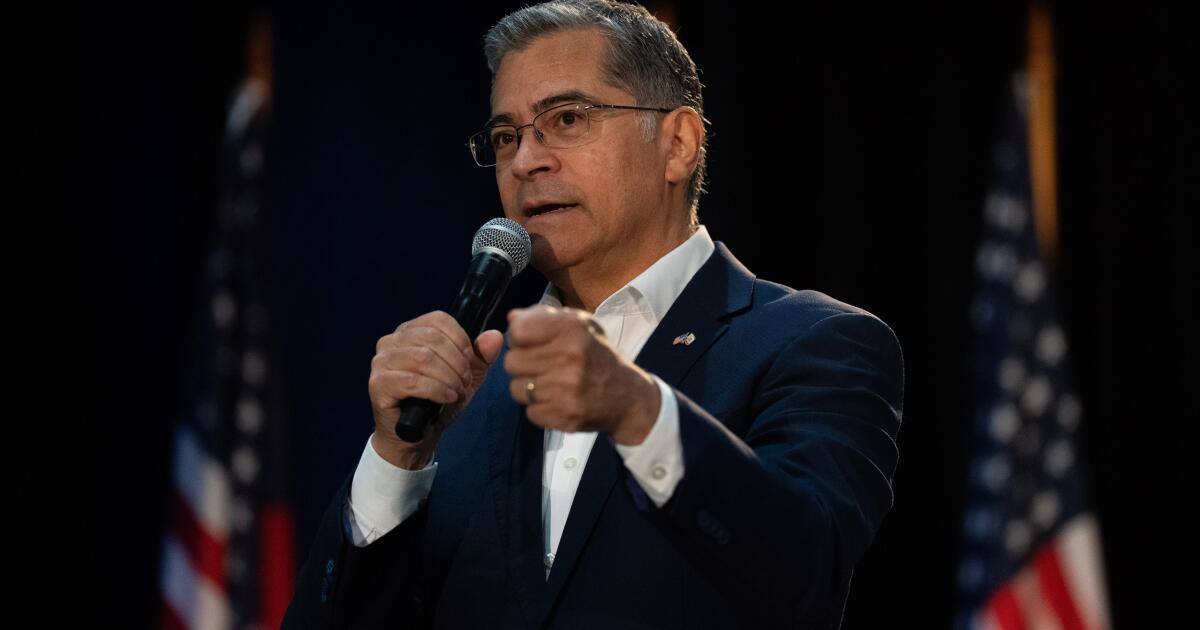
The most unpredictable California governor’s race in recent history took another set of dizzying turns on Monday, with former Health and Human Services Secretary Xavier Becerra surging after former Rep. Eric Swalwell dropped out in the face of sexual assault and misconduct allegations, and former state Controller Betty Yee ending her bid.

The race to replace termed-out Gov. Gavin Newsom is the first in a quarter of a century with no clear front-runner and a sprawling field of candidates who have been jockeying for the attention of Californians, who are just beginning to pay attention to the campaign two weeks before ballots arrive in their mailboxes.

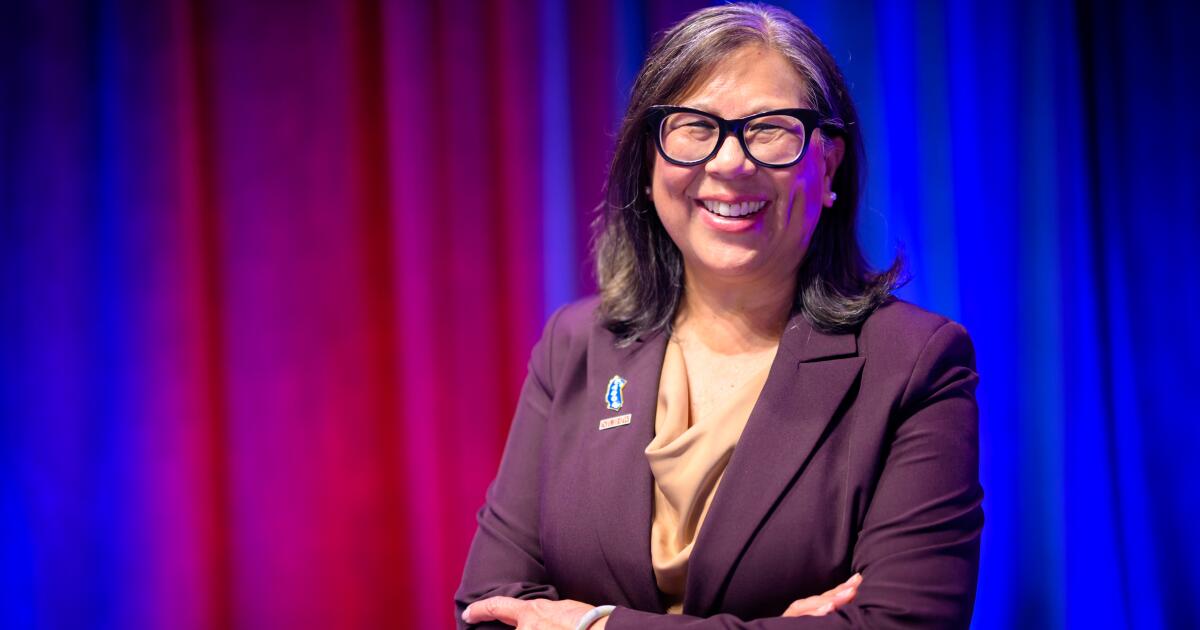
“I certainly could not have imagined the twists and the disturbing turns that this race has taken,” Yee said as she announced she was dropping out. “But through it all, my values and my vision for California has never wavered.”

A poll released Monday by the state Democratic Party — its first since Swalwell (D-Dublin) dropped out — showed Becerra’s support jumped nine points to 13%, placing him in a tie with Tom Steyer, the billionaire hedge fund founder turned environmental warrior. Former Rep. Katie Porter of Orange County saw a slight bump to 10% from 7%, while the remaining Democrats in the contest were mired in the low single digits.

The party began the surveys out of concern that Democrats could be shut out of the governor’s race because of California’s unique primary system, where the top two vote-getters in the June 2 primary move on to the November general election regardless of political party.

“I continue to believe there are too many Democrats in the field,” California Democratic Party Chairman Rusty Hicks told reporters Monday. “My call for candidates to honestly assess the viability of their candidacy and campaigns still stands, especially if you are stalled in the single digits, seeing financial resources dry up and/or are failing to pick up additional support.”

Hicks and other party leaders and allies had unsuccessfully urged low-polling candidates to reconsider their candidacies before the filing deadline in an attempt to cull the field and avoid splintering the Democratic vote. Though most did not name candidates who they thought should think about their viability, Yee was widely believed to be among them.

Yee became emotional as she said on Monday that she decided to withdraw from the race because she wasn’t able to raise the resources necessary to compete in the state. She also said her message of competency and experience wasn’t resonating among voters who were seeking a fiery foil to President Trump, not “Boring Betty,” as she dubbed herself. Yee said she would assess the field before making an announcement on whether she would endorse one of her fellow Democrats.

Becerra was another candidate believed to be a target of party leaders’ efforts to shrink the field. But he held on and apparently benefited from Swalwell’s downfall.

“I’m not the richest candidate, I’m not the slickest candidate, but I am the guy that’s got you,” Becerra said, rallying supporters in Los Angeles on Saturday.

The audience was filled with members of labor groups backing the longtime politician, and Becerra told them he’d serve as a “union man” in the governor’s office.

Pro- and anti-Becerra forces tussled outside the town hall after two people, who declined to identify whom they were working for, passed out fliers highlighting critical media investigations of the U.S. Department of Health and Human Services during the migrant crisis when the agency was led by Becerra.

Pro-Becerra attendees grabbed the fliers and told the men to go away, prompting a security guard to intervene.

The question is whether Becerra, who also served as state attorney general, a member of Congress and a state Assembly member, can raise the funds necessary to compete in a state with some of the nation’s most expensive media markets. And he was tied in the state party poll with a billionaire who dumped an additional $12.1 million of his own money into his campaign last week.

Steyer’s total investment in his bid reached $133 million, according to the California secretary of state’s office. He also received the endorsement of Our Revolution, a progressive political organization founded by U.S. Sen. Bernie Sanders (I-Vt.).

“We’ve never endorsed a billionaire — but Tom Steyer is using his position to upset the system,” the group posted on X on Monday. “As Our Revolution executive director Joseph Geevarghese told @theintercept, ‘He’s been a partner in the movement. Most billionaires have used their wealth and privilege to lock in the status quo. Tom is doing the opposite.’”

San Jose Mayor Matt Mahan, who is also running for governor, accused Steyer of hypocrisy for the hedge fund he founded profiting from investments in private prisons being used to house ICE detainees, and Steyer calling for the abolishment of ICE.

Steyer got “rich investing off the ICE infrastructure he now wants to abolish,” Mahan posted on Instagram.

Steyer, who sold his stake in the hedge fund in 2012, has said he ordered the company to divest from the private prison company and has repeatedly expressed remorse about his former firm’s ties with the detention company.

Mahan also appeared Monday at a Hollywood production lot to announce his proposal for a special fund to lure sporting events, concerts and other productions to California as part of his plan to help the struggling film and television industry.

An independent effort supporting Mahan has also raised roughly $11 million since Swalwell left the race.

Mehta reported from Los Angeles and Nixon from Sacramento. Times staff writer Dakota Smith contributed to this report.
Source link

Former state Controller Betty Yee drops out of the governor’s race

Former state Controller Betty Yee dropped out of the 2026 governor’s race on Monday, citing low levels of support from voters and donors.

Yee, a Democrat, was part of a sprawling field of politicians vying to replace termed-out Gov. Gavin Newsom. But despite the bevy of prominent candidates running to lead the nation’s most populous state and the world’s fourth-largest economy, this year’s governor’s race has long lacked a clear front-runner well known by the electorate.

“The whole notion that voters are looking for experience and competence is not a top priority, and that’s been really my wheelhouse in terms of how we grounded this campaign was based on my experience,” she said in a virtual press conference Monday morning. “The donors have felt the chill of the polling … and it really just came down to where I’m not going to have sufficient resources to get us to the finish line.”

The former two-term state controller did not immediately endorse another candidate and said she would take a few days to assess the field before making an announcement.

The race was upended earlier this month when then-Rep. Eric Swalwell, among the leading Democrats in the race, was accused of sexual assault and other misconduct. The East Bay Democrat, who is facing multiple criminal investigations, promptly ended his gubernatorial bid and resigned from Congress.

Yee, 68, was well regarded by Democrats during her tenure in Sacramento. And she highlighted her no-drama persona on Thursday.

“California — had enough chaos, fear and horrendous political scandals? Ready for calm, cool, collected change? Some may consider that boring. But that’s the point. We need Boring Betty,” Yee posted on the social media site X. “No crisis. No circus. Just competent, drama-free leadership you can trust. #BoringisBetter”

But she never had the financial resources to aggressively compete in a state with many of the most expensive media markets in the nation.

Yee reported raising nearly $583,000 for her gubernatorial bid in 2025, according to campaign fundraising reports filed with the California secretary of state’s office. Yee’s announcement that she is dropping out of the race came days before the latest financial disclosures will be publicly reported.

Despite being elected to the state Board of Equalization twice and as state controller twice, Yee was not widely known by most Californians. She never cracked double digits in gubernatorial polls.

Her name will still appear on the ballot. She was among the candidates who rebuffed state Democratic Party leaders’ request earlier this year to reconsider their viability amid fears that the party could be shut out of the November general election because of the state’s unique primary system. The top two vote-getters in the June primary will move on to to the November general election, regardless of party affiliation.

Though California’s electorate is overwhelmingly Democratic, the makeup of the gubernatorial field makes it statistically possible for Republicans to win the top two spots if Democratic voters splinter among their party’s candidates. Yee said fear of that scenario playing out “kind of took over” the gubernatorial race.

“Was it possible? Yes. Was it plausible? No, we’re in California. That was not going to happen,” she said, adding that the top-two primary system should be done away with.

Still, Yee was beloved by Democratic Party activists, and previously served as the party’s vice chair.

No Democratic candidate reached the necessary threshold to win the party’s official endorsement at its February convention, but Yee came in second with support from 17% of delegates despite calls for her to drop out of the race.

“Every poll shows that this race is wide open, and I know this party,” she said in an interview at the convention. “Frankly, I’ve been in positions where it’s been a crowded field, and we work hard and candidates emerge.”

The gubernatorial primary will take place June 2, though voters will start receiving mail ballots in about two weeks.

Source link

California could launch a wildlife coexistence program amid anger over mama bear’s death

A month after a public uproar over a mama bear being euthanized after swiping at a resident in Monrovia, state lawmakers are considering mandating the use of nonlethal ways to help allow wildlife and humans to coexist.

Sen. Catherine Blakespear (D-Encinitas) said she believes the bear’s death, and the state’s decision to kill four wolves last year that were preying on cattle, raised public concern.

“That made everybody realize we have to do better here,” she told The Times on Thursday. “We need to recognize the importance of seeing ourselves, humans, as part of a larger ecosystem that includes animals and plants and our world and trying to protect it.”

Senate Bill 1135, introduced by Blakespear, would direct the California Department of Fish and Wildlife to create the Wildlife Coexistence Program, which would provide public education, offer technical assistance and maintain a statewide incident reporting system. It would help communities deploy nonlethal devices to deter predators, like barriers or noise and light machines.

At a legislative hearing on Tuesday, Blakespear told the Senate Committee on Natural Resources and Water that a three-year state initiative offering similar services was seeing positive results — until it was discontinued two years ago after funding ran dry. She said it was time to implement a permanent program.

“Human population growth, habitat loss and the growth of industry across California inevitably leads to interaction between humans and wildlife,” Blakespear told legislators. “No two animal species are the same and each has unique behavior patterns and territories. SB 1135 recognizes these differences and gives communities the tools to prevent conflict and respond when it occurs.”

The bill would also rename a state program that reimburses ranchers who lose livestock to wolves, calling it the Wolf-Livestock Coexistence and Compensation Program. It would require ranchers seeking compensation to show they were using nonlethal deterrents approved by the department.

Sen. Shannon Grove (R-Bakersfield) stressed that life in rural areas is different than living in a city. She said some families and cattle ranchers have a genuine fear of predators.

“When these baby calves drop on the ground and then two wolves start ripping them apart, it’s not the prettiest thing you’ve ever witnessed,” said Grove, who abstained from voting on the measure. “These wolves are not puppies.”

More than 30 organizations are supporting the legislation, including the National Wildlife Federation, Defenders of Wildlife, California State Assn. of Counties, Animal Legal Defense Fund and Citizens for Los Angeles Wildlife.

The California Farm Bureau and the California Cattlemen’s Assn. are in opposition due to concerns over funding.

Last month, Blakespear sent a letter to the chair of the Senate Committee on Budget and Fiscal Review requesting $48.8 million to implement the legislation, with $25 million earmarked for addressing wolf encounters. Half of the money for wolf conflicts would go toward deterrents; the remainder would compensate ranchers for their losses.

Kirk Wilbur, vice president of government affairs cattlemen’s association, said the organization is concerned about that division of funding — especially if funding is reduced.

Wilbur told legislators Tuesday that the organization supports some aspects of the bill and was having productive conversations with Blakespear to address their concerns.

The bill ultimately passed the committee with a 5-to-1 vote and now heads to the Senate Committee on Appropriations.

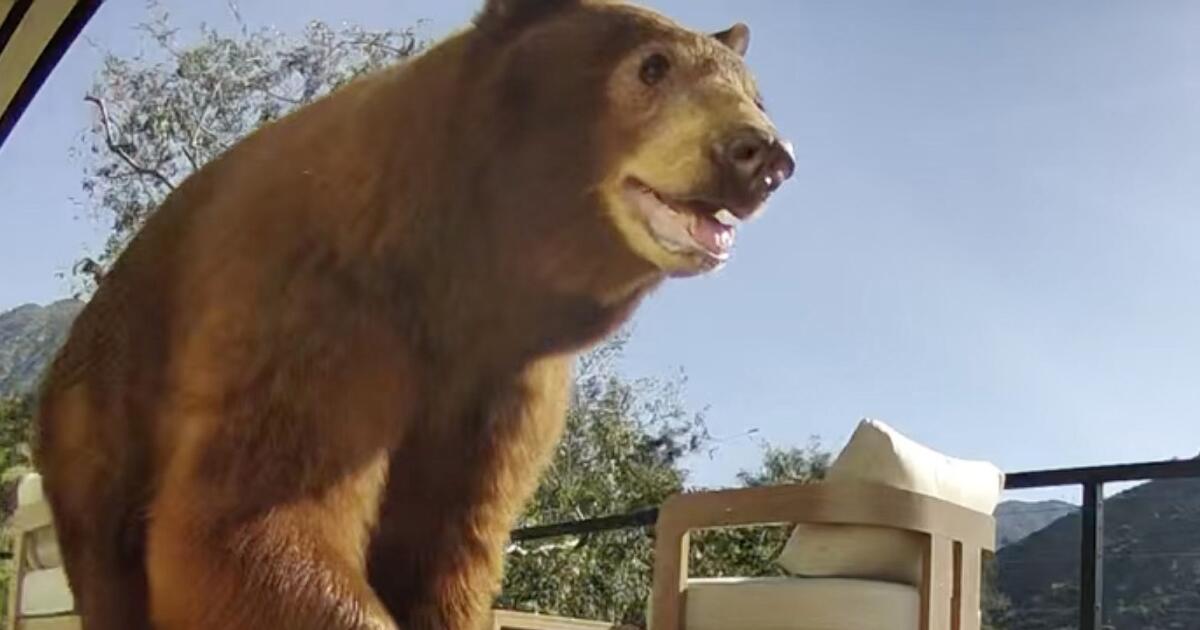
Human wildlife conflicts have made headlines in California recently, with a bear refusing to leave a basement for weeks in Altadena and a mama bear dubbed Blondie crossing paths last month with a woman walking her dog in Monrovia.

Blondie swiped the woman’s leg, and was subsequently euthanized by the California Department of Fish and Wildlife. Her two cubs were sent to the San Diego Humane Society’s Ramona Wildlife Center. The bear’s death upset many in the community, as thousands had signed a petition calling for other solutions, like relocation.

Deadly wildlife attacks on humans, however, are rare in California.

There have been six reported human fatalities from mountain lions since 1890, according to the state Fish and Wildlife Department. The agency recorded one human fatality from a coyote in 1981 and another fatality from a black bear in 2023. The department has no recorded human fatalities from gray wolves.

Source link