Zee will broadcast the 2026 and 2030 World Cups and the 2027 Women’s World Cup among 39 FIFA tournaments until 2034.
Published On 2 Jun 20262 Jun 2026
FIFA has struck a deal with India’s Zee Entertainment to broadcast the World Cup in the country, ending a months-long standoff over the tournament’s availability in one of the last major markets where rights remained unsold.
While the financial terms of the package – signed on Monday – were not disclosed, FIFA reportedly sought about $100m for the 2026 and 2030 tournaments before slashing its asking price to $60m.
The deal gives Zee a toehold in India’s sports broadcast market, where the Reliance-Disney joint venture JioStar holds rights ranging from the Indian Premier League (IPL) cricket tournament to the English Premier League football.
It covers 39 FIFA events over eight years through 2034, including the Women’s World Cup in 2027, according to a joint statement from FIFA and Zee.
Shares of Zee were about 7 percent higher on the day after the announcement.
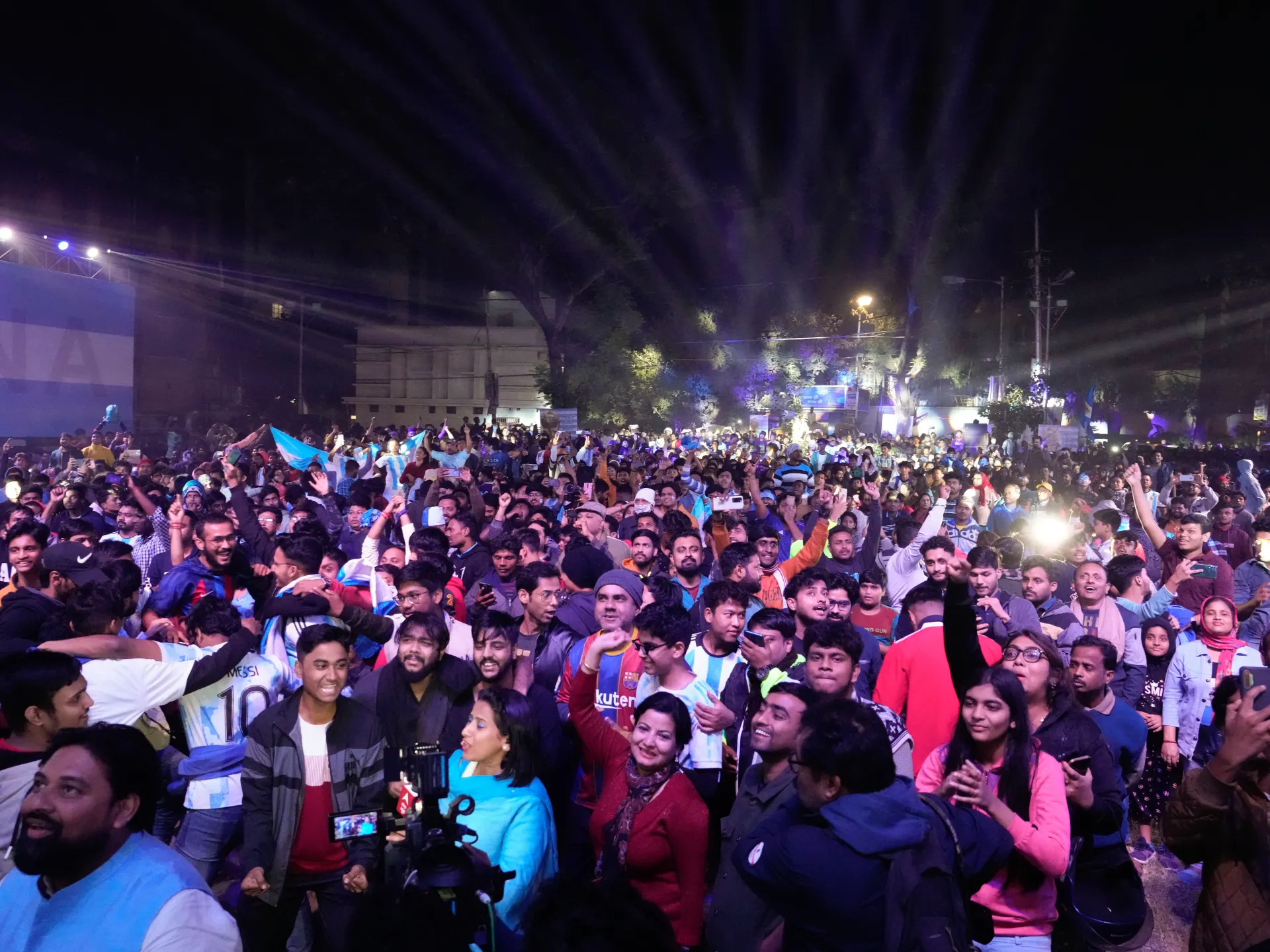
The agreement came just 10 days before the tournament kicks off on June 11 across the United States, Canada and Mexico.
Last month, experts told Al Jazeera that the kickoff times for the majority of the matches are the biggest concern for Indian broadcasters since many games will be played at odd hours for the Indian audience, with a 10-12 hour time difference between the host cities and the South Asian nation.
Only 14 out of the total 104 World Cup games will begin before midnight for fans in India.
The final will be held in New Jersey on July 19, beginning at 19:00 GMT, which will be 12:30am on July 20 in India. By comparison, 98.4 percent of matches at the 2018 World Cup started before midnight, and 82.5 percent at the following edition in Qatar.
Karan Taurani, executive vice president at investment firm Elara Capital, sees TV as a “struggling” medium in India.
“When you have these kinds of sporting events, effectively it is mostly digital that is monetising and raising big money,” Taurani told Al Jazeera. “That is a big reason why no one’s showing interest in the FIFA World Cup.”
Taurani explained that cricket leads the sports economy market in India.
“Only a small fraction of people who watch the Indian Premier League will watch the FIFA World Cup,” he said, adding that an even smaller fraction tune in past midnight to watch a match.
Viacom18 paid about $60m for rights to the 2022 World Cup, which was hosted in Qatar in time zones far more favourable for Indian audiences. Most of this year’s matches will be screened late at night in India due to the time difference, something that dampened broadcaster appetite and complicated FIFA’s sales efforts.
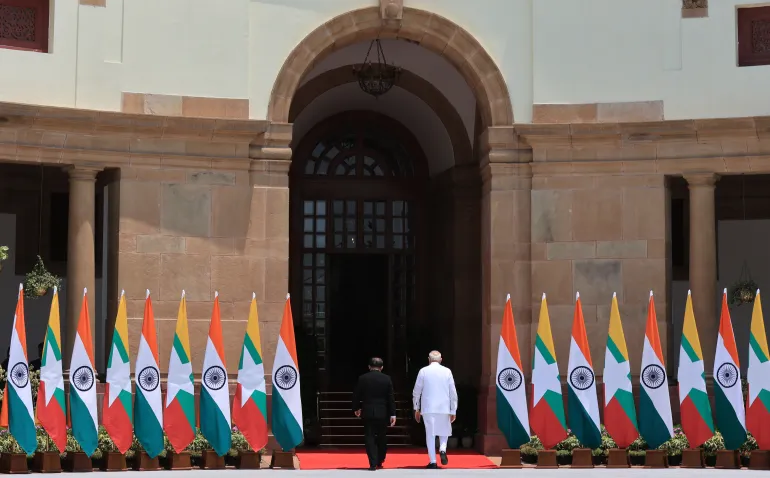
India says it will continue engaging with Myanmar after Prime Minister Narendra Modi spoke with Min Aung Hlaing, the leader of the country’s military government, in New Delhi.
Indian Foreign Secretary Vikram Misri told reporters on Monday that India’s policy is “not intended to be a commentary on the internal political arrangements” in Myanmar and that New Delhi believes engagement is the best way forward.
Recommended Stories
list of 3 itemsend of list
Western nations have sought to isolate Myanmar’s military rulers since they overthrew the elected government of Aung San Suu Kyi in a 2021 coup that triggered a crackdown on opponents and a brutal civil war.
The conflict began when the country’s army leader, Min Aung Hlaing, ousted the government and detained civilian leaders, including Nobel Peace Prize laureate Aung San Suu Kyi.
Some critics and human rights groups have said Min Aung Hlaing’s visit to India risks lending legitimacy to the military-backed government.
“We have always proceeded on the principle that sustained dialogue is what is important,” Misri said, adding that isolating Myanmar would be counterproductive.
“History has shown that disengagement doesn’t give us any results that are better than engagement.”
The visit is Min Aung Hlaing’s first to India since he was sworn in as president in April following an election that critics say was designed to cement his hold on power. His last visit to India was in 2019, when he served as Myanmar’s military chief.
He arrived in India on Saturday, first in the eastern state of Bihar, with a visit to the Buddhist pilgrimage site of Bodh Gaya, where believers say that the Buddha attained enlightenment.
India shares a 1,643-kilometre (1,020-mile) border with Myanmar and a maritime boundary in the Bay of Bengal.
Narendra Modi (right) with Min Aung Hlaing (left) prior to their meeting at Hyderabad House in New Delhi [Rajat Gupta/EPA]
Strategic partnership
Myanmar is also strategically important to India’s security interests. The two countries have cooperated on border security and intelligence sharing to combat armed rebel groups.
Modi and Min Aung Hlaing did not address the media after their meeting, as usually occurs after most bilateral talks involving visiting heads of state or government in New Delhi.
But Misri said the two leaders discussed trade, defence and security cooperation, border management, and regional issues, with talks also focusing on expanding economic and technology ties. He said both sides agreed to deepen collaboration across sectors, including trade, energy and critical minerals, and to accelerate major connectivity projects.
Min Aung Hlaing is expected to hold talks with business representatives during his five-day visit, and will travel to the financial hub, Mumbai.
Bilateral trade was $1.95bn in 2025-2026, according to New Delhi.
The leaders also discussed cooperation against cybercrime and human trafficking, issues that have affected thousands of Indians lured to scam centres in the region.
Misri said India and Myanmar have worked together to rescue more than 2,400 Indian nationals over the past 18 months.
Resistance groups formed after the 2021 coup have captured swaths of Myanmar. Others sought out and fought under the leadership of ethnic armies in exchange for training and weapons with which to fight the military.
These resistance groups, known as the People’s Defence Force (PDF), nominally operate under the leadership of the National Unity Government (NUG), a shadow government formed by Myanmar lawmakers removed by the military coup.
Zin Mar Aung, the foreign minister of the NUG, wrote a letter to Subrahmanyam Jaishankar, the minister of external affairs for India, on May 28, expressing concern about the visit.
“Since the military coup of 2021, which overturned the democratic will of the people, Myanmar has endured prolonged conflict, instability, and immense humanitarian suffering,” she said.
“India has long championed democratic governance, the rule of law, and regional stability. We therefore urge the Government of India to weigh carefully the broader implications of formal engagement that may normalise or legitimise military rule in Myanmar.”
BANGKOK — With summer around the corner, soaring prices and other complications from the war with Iran are straining the tourism-dependent economies of Cambodia, Thailand, Vietnam and other countries in Southeast Asia.
The region’s peak tourist summer season is at risk as elevated jet fuel costs coupled with ceasefire uncertainties prompt flight cancellations and higher ticket prices.
Tourism in Asia has yet to fully recover from the COVID-19 pandemic. Now, many countries are coping with the war’s repercussions on global energy supplies and prices, which hit Asia first and hardest. Some families are pulling back on travel as gas and groceries get more expensive worldwide. Crowds have thinned at some places once synonymous with travel.
“With gasoline prices rising and tourism declining, how can we make money?” asked Siv Pech, a 58-year-old rickshaw driver in Siem Reap, home to Cambodia’s centuries-old Angkor Wat temple complex.
Tourism is an economic lifeline for many developing nations. It contributes nearly 13% of gross domestic product in Thailand and nearly 9% in Vietnam, and it underpins millions of jobs in Cambodia. Travelers bring in much-needed foreign currency for import-dependent economies such as the Philippines and Nepal.
Those tourism dollars are more crucial than ever as war-driven spikes in oil prices push up the cost of fuel imports, especially for parts of the world that relied on the Strait of Hormuz off Iran’s coast as a conduit for much of their oil and gas. Iran essentially shut down the strait to commercial traffic after the U.S. and Israel launched the war more than three months ago.
The war will determine which tourism businesses can survive long enough to benefit from the eventual return of travelers, said Jitsai Santaputra of the Lantau Group, an energy industry consulting firm. “This, happening within five years of each other, first the pandemic and now the war, is horrible for the tourism industry,” she said.
Travel costs
Jet fuel shortages and surging costs have led Vietnam Airlines, the Malaysia-based AirAsia group, Hong Kong’s Cathay Pacific and other carriers to cut flights or otherwise adjust schedules.
European carriers face a squeeze for similar reasons.
Airspace closures across the Persian Gulf early in the war and the intermittent closures of certain Persian Gulf airports cut off key layover locations for Asia-bound flights or forced commercial airplanes to take longer, costlier routes.
Airfares have jumped, with airlines such as Air India and Cathay Pacific implementing sharp increases in fuel surcharges.
Cathay Pacific’s fuel surcharge for medium-haul flights has jumped to $80, up from $34 before the war. For long-haul flights, it increased to $174, up from $73.
“Jet fuel prices remain at highly elevated levels” and have increased cost pressures, said Lavinia Lau, Cathay’s chief customer and commercial officer. Travelers are booking closer to their departure dates, she said, indicating growing unease.
Sandra Awodele, a freelance travel writer in the Washington area, often plans year-round international trips and hoped this summer would be when she finally crossed off Asia from her bucket list.
In March, she began planning a long-awaited vacation to Thailand, envisioning one to two weeks of exploring. Her plans hit a wall when she checked airfares.
“I looked at flight options and that’s where it ended,” Awodele said.
On the ground, rising fuel costs in tourism-dependent Southeast Asia are squeezing taxi and ride-hailing app drivers.
Pech, the Cambodian rickshaw driver, said he used to earn up to $20 a day toting tourists around Siem Reap. That’s plummeted to about $5 a day.
His gas bill eats half of that. The rest goes to food. “Some days, I don’t earn even a cent,” he said.
Slow summer expected
Tourism is vital for many regional economies, accounting for nearly 11% of economic activity in the Assn. of Southeast Asian Nations in 2019, according to the World Travel and Tourism Council.
An analysis by Moody’s Analytics estimated effects from the war would probably reduce economic growth across the Asia-Pacific region by 0.1 to 0.4 percentage points in 2026.
“The conflict will weigh on growth mainly through higher production costs and consumer prices, along with weaker external demand from trade and tourism,” said Albert Park, chief economist at the Asia Development Bank.
Higher airfares and weaker travel confidence can quickly spill over into household livelihoods and public revenues in economies where visitor arrivals are a major source of jobs, income and foreign exchange, according to a recent report by the United Nations Development Program.
Travel is often the first expense people cut when the economy worsens, said Le Tuyet Lan, who runs bed-and-breakfast properties in Vietnam’s Hanoi and Ho Chi Minh City.
In times of crisis, luxury travelers tend to shift toward mid-range options, mid-range travelers move toward budget hotels, and the cheapest tier of the market becomes the most vulnerable.
“This will disrupt the whole industry,” she said.
‘We are feeling it’
Tourism in Thailand is “a big industry and we are feeling it,” said Santaputra with the Lantau Group in Bangkok, one of Southeast Asia’s most visited cities.
The number of visitors to Thailand fell 7% year-on-year in April, while European arrivals fell almost 16% and Middle Eastern arrivals sank 57%, according to the Ministry of Tourism and Sports.
In neighboring Cambodia, Sokha Sambo, owner of the popular Sambo Khmer & Thai Restaurant in Siem Reap, said the rising price of liquefied petroleum gas used for cooking has strained her budget, hindering her ability to dish out her signature green curries.
“I’m worried about gas and goods inflation. It makes the business less profitable and difficult to cover employees’ salaries,” said Sambo, who has 14 staff members.
In the first four months of 2026, the number of recorded international and domestic visitors to Siem Reap dropped by 37.5% compared with the same period last year, according to the province’s tourism department.
“This has greatly affected all of us,” Sambo said.
Delgado and Chan write for the Associated Press and reported from Bangkok and Hong Kong, respectively. AP writers Aniruddha Ghosal in Hanoi and Rio Yamat in Las Vegas and freelance journalist Sinorn Thang in Phnom Penh, Cambodia, contributed to this report.
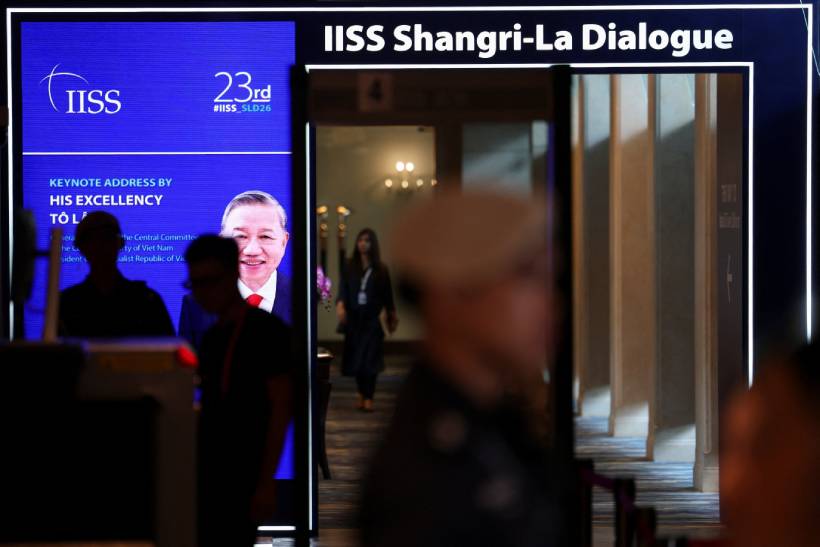
China’s decision to send a largely academic delegation instead of senior defence leadership to the Shangri La Dialogue in Singapore has been described by Australia as a missed opportunity for strategic engagement at a time of rising regional tensions.
Australian Defence Minister Richard Marles said the Asia Pacific region needs greater strategic reassurance from Beijing, particularly given China’s ongoing military expansion and its growing influence across the Indo Pacific.
The Shangri La Dialogue is the region’s most prominent defence and security forum, bringing together senior ministers, military leaders, and policymakers from across the world to discuss security challenges and regional stability.
For the second consecutive year, China’s Defence Minister Dong Jun did not attend the meeting, with Beijing instead sending a delegation made up mainly of academics and military experts.
Why It Matters
The absence of senior Chinese defence officials comes at a sensitive moment for regional security dynamics.
Australia and its allies have repeatedly raised concerns about China’s rapid military buildup, which is widely regarded as the largest conventional expansion since the Second World War. Regional governments argue that this military growth has not been matched by sufficient transparency or reassurance about China’s long term intentions.
The lack of direct high level engagement at forums such as the Shangri La Dialogue limits opportunities to reduce misunderstandings, build trust, and manage rising tensions through dialogue.
For countries in the Indo Pacific, especially smaller states, the absence of senior Chinese representation can increase uncertainty about regional security and long term strategic balance.
Key Stakeholders
China
China’s approach reflects a more controlled engagement strategy in defence diplomacy, relying on lower profile participation while continuing to expand military capabilities and regional influence.
Australia
Australia views sustained dialogue as essential for regional stability, while simultaneously strengthening its alliance with the United States and deepening defence cooperation across the Indo Pacific.
United States
The United States remains a central security partner in the region and continues to position itself as a counterbalance to China’s military rise through alliances and defence agreements.
Regional Partners
Countries such as Japan, the Philippines, Malaysia, and others attending the forum are closely watching China’s engagement level as they navigate their own security concerns in a shifting regional order.
Future Outlook
If China continues limiting senior level participation in regional defence forums, diplomatic channels for managing tensions in the Indo Pacific may become more constrained. This could increase reliance on bilateral alliances and military deterrence rather than multilateral dialogue.
At the same time, ongoing military expansion by China will likely keep regional security concerns elevated, particularly among Southeast Asian and Pacific nations.
However, if future editions of the Shangri La Dialogue see higher level Chinese participation, it could open pathways for improved communication and reduced strategic mistrust.
For now, the gap between China’s military rise and its diplomatic engagement remains a key concern for regional powers seeking stability in an increasingly competitive Indo Pacific environment.
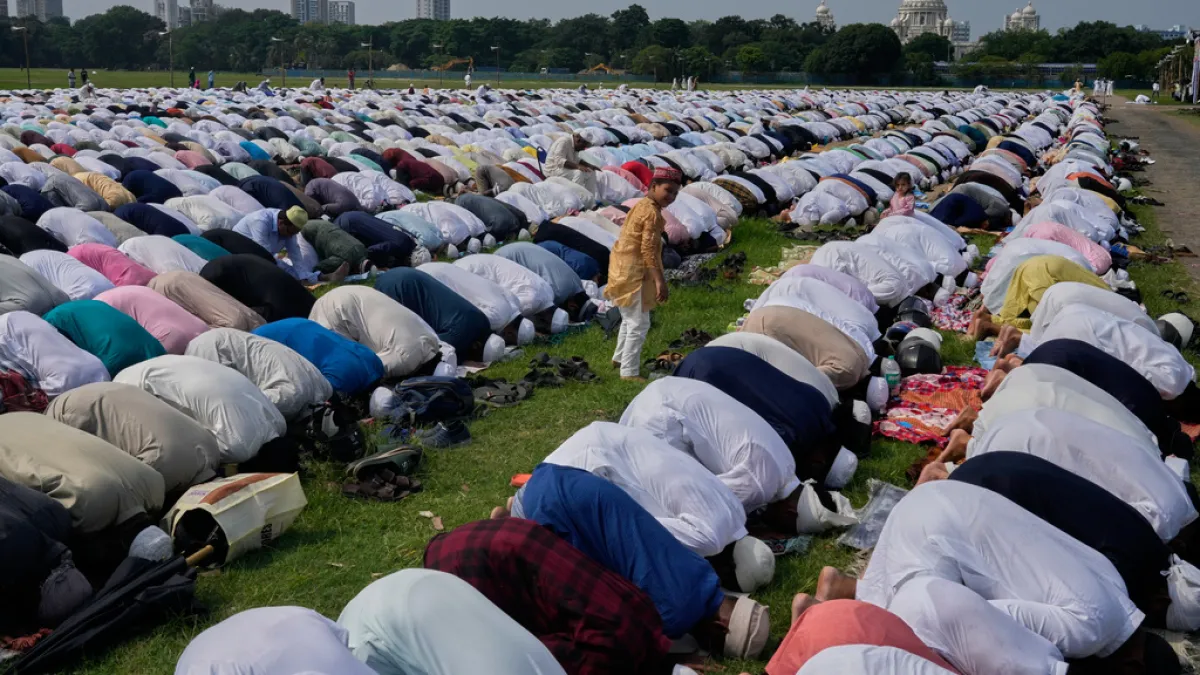
India’s Muslims celebrated Eid al-Adha with mass prayers and gatherings nationwide. Celebrations remained largely peaceful under tight security amid growing anti-Muslim tensions over restrictions on public Eid prayers.
Cricket greats, writers and broadcasters hail 15-year-old Rajasthan Royal opener after his 29-ball 97 in IPL playoffs.
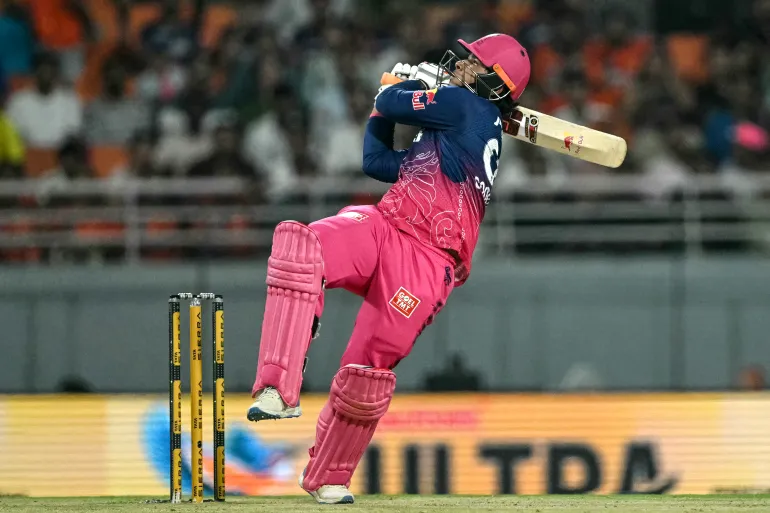
Vaibhav Sooryavanshi has been termed a generational talent after the Rajasthan Royals teenager smashed 97 off 29 balls to power his side to victory in their Indian Premier League eliminator against Sunrisers Hyderabad.
The 15-year-old also broke Chris Gayle’s record for most sixes in an IPL season on Wednesday, taking his tally to 65 in the match and surpassing the former West Indies captain’s 59 set in 2012.
Sooryavanshi’s performance helped Rajasthan secure a 47-run win that kept their hopes of reaching the final alive.
Rajasthan will play Gujarat Titans in the second qualifier on Friday, with the winner advancing to Sunday’s final against defending champions Royal Challengers Bengaluru.
Hyderabad assistant coach James Franklin said the teen batter’s potential was frightening.
“I don’t think anyone’s ever seen a talent like this. It’s freakish what he’s doing at the moment,” he told reporters. “To think that he’s potentially got 25 years left in his career, it’s quite scary.
“He’s only going to get better, stronger and more mature with how he bats. So, it’s just devastating at the moment.”
Sooryavanshi plays a shot [Punit Paranjpe/AFP]
“There’s a very small margin where you could bowl to him,” Franklin said. “He’s an amazing talent that he can start playing around with it [bowling variations] and then start to cause the bowlers to have to go to other places, which tend to then go back into his strength.”
The season’s leading run-scorer struck 12 sixes in his innings, including three in a row off Hyderabad captain Pat Cummins, but fell short of Gayle’s mark for the fastest IPL century off 30 balls.
Sooryavanshi miscued an upper cut to deep third, leaving him visibly dejected after the dismissal as Smaran Ravichandran completed the catch.
“I thought about it [the hundred] after I got out. At that time I was just focusing on contributing as much as I can,” Sooryavanshi said after being named player of the match.
“Hundreds will come, but the goal is to ensure how we win trophies.”
Sooryavanshi tosses his bat as he walks back to the pavilion after his dismissal [Punit Paranjpe/AFP]
Sooryavanshi, who last year hit the first ball he faced in his IPL career for a six at age 14 and later became the youngest player to score a T20 hundred, has amassed 680 runs this season at a strike rate of 242.85.
Indian cricket great Sachin Tendulkar analysed Sooryavanshi’s batting on social media, saying the baby-faced attacking batter’s technique allows him to play with freedom.
“That innings was nothing short of spectacular!” Tendulkar wrote.
The young player was hailed as the best T20 opener by former England captain Michael Vaughan, who urged India to select him in the national side.
“He is the best T20 opener in the world. India have to pick him,” Vaughan wrote on X.
Cricket author and broadcaster Bharat Sundaresan said that despite the change in bat sizes and record-breaking T20 scores, Sooryavanshi’s achievement was “era-defining”.
“Eight sixes in the first four overs of an innings? What are we watching? This is beyond incredible,” he wrote.
West Indies bowling great Ian Bishop, who is now a cricket commentator, said the quality of Sooryavanshi’s strokes was “rare”.
Former India batter Mohammed Kaif joined in heaping praise on Sooryavanshi, calling him a “wonder boy” in a tweet.
Muslims around the world have begun celebrating Eid al-Adha, the “Festival of Sacrifice”, which falls on the 10th day of Dhul Hijjah, the 12th and final month of the Muslim lunar calendar.
One of the biggest holidays in the Muslim calendar, it coincides with the last day of the annual Hajj pilgrimage in Saudi Arabia.
In Gaza, where Israel’s months-long offensive has devastated neighbourhoods and displaced most of the population, many families are marking Eid in tents and crowded shelters, with little meat or festive clothing.
More than 1.7 million people are taking part in the Hajj this year, slightly up from 2025, even as a war pitting the United States and Israel against Iran casts a long shadow across the Middle East.
On Tuesday, pilgrims prayed on Mount Arafat, where Prophet Muhammad is believed to have delivered his final sermon. They then spent the night out in the open at Muzdalifah, halfway between Arafat and Mina, where they collected pebbles for the symbolic stoning of the devil.
After the stoning ceremony in Mina, pilgrims return to Mecca for a final circumambulation of the Kaaba, the cube-shaped building at the heart of the Grand Mosque towards which Muslims around the world face when they pray.
Eid al-Adha commemorates the Quranic story of Prophet Ibrahim’s willingness to sacrifice his son Ismail as an act of obedience to God. Islamic tradition holds that God spared the boy, replacing him with a ram.
The day is marked with the sacrifice of an animal – usually a sheep, goat or cow – and the distribution of its meat among family, neighbours and those in need, underlining the festival’s themes of faith, charity and community.
Across South Asia, concerns over press freedom, political influence, and media credibility are drawing increasing international scrutiny. From Bangladesh and Pakistan to India, journalists and independent media organisations face mounting political, economic, and legal pressures that are reshaping how information is produced and consumed.
Recent international assessments point to what rights groups describe as a broader regional decline in media independence. The 2026 World Press Freedom Index placed multiple South Asian countries near the lower end of global rankings, reflecting concerns over censorship, political pressure, and growing ideological polarisation within news ecosystems.
Among these cases, India continues to attract the most sustained global attention due to its scale, democratic profile, and influence as the world’s largest electoral democracy.
When a country that defines itself as a global democratic model falls to 157th out of 180 nations on the World Press Freedom Index, the question is no longer whether there are challenges within its media environment. The question is how deeply those challenges have reshaped journalism itself.
Together with other regional indicators, the findings suggest not isolated failures but a structural transformation in how media systems operate across South Asia.
The concerns highlighted in global reports do not exist in isolation. Across South Asia, governments and political actors are increasingly accused of exerting pressure on journalists through legal action, advertising influence, regulatory scrutiny, and informal intimidation.
According to World Press Freedom Index in 2026, Bangladesh stood at 152nd. Afghanistan remained among the lowest-ranked countries globally, reflecting ongoing restrictions on press activity. Nepal, while comparatively better positioned at 87th, has also faced periodic concerns over political influence and media ownership concentration.
Analysts argue that while each country’s political context differs, a shared pattern is emerging: fragile media economies, heightened political polarisation, and increasing hostility toward independent journalism.
However, India’s trajectory is often singled out due to its democratic stature and its role as a regional political and cultural benchmark. This contrast between democratic identity and media freedom rankings has intensified global debate about the state of its information ecosystem.
Political Influence and the Changing Nature of News
Within India, one of the central concerns raised by international observers is the perceived growth of political influence over large sections of mainstream media.
A detailed report by Genocide Watch described what it termed a “severe crisis of credibility” in parts of the Indian media landscape, arguing that dominant narratives in some outlets increasingly align with those of the ruling Bharatiya Janata Party rather than independently scrutinising power.
This does not imply uniformity across the entire media sector. India still has a diverse ecosystem of investigative journalists, regional newspapers, and independent digital platforms producing critical reporting. However, critics argue that the dominant tone of mainstream television and high-visibility digital media increasingly reflects political messaging rather than adversarial journalism.
The Reporters Without Borders (RSF) assessment echoed concerns about structural vulnerabilities. It highlighted the heavy dependence of Indian media on advertising revenue, including significant spending by both central and state governments. Critics argue that this financial structure creates subtle incentives for compliance, where editorial decisions may be influenced not through direct censorship, but through economic dependency.
In such an environment, formal restrictions are often unnecessary. Editorial caution can emerge internally, as news organisations weigh political and financial risks before pursuing certain stories.
The Rise of Divisive Television Narratives
Another recurring concern involves the increasing polarisation of televised political discourse.
Genocide Watch and other rights-focused assessments have warned that sections of mainstream media increasingly frame political and social issues through identity-based narratives, often centred on religion and nationalism. Complex policy debates are frequently simplified into binary positions, contributing to heightened social tension.
Human Rights Watch, in its World Report 2026, also documented concerns that hostile rhetoric in parts of media and online spaces has coincided with rising incidents of discrimination and attacks against minority communities, including Muslims in different parts of the country.
While causation is difficult to establish definitively, observers argue that repeated framing of communities through suspicion or collective identity can contribute to an environment where social hostility becomes easier to normalise.
The RSF report additionally pointed to structural imbalances within media representation, noting concerns about concentration of leadership within certain social groups and the underrepresentation of women in prominent political debate programming. These imbalances, critics argue, shape not only who speaks in media spaces, but also which perspectives are amplified or marginalised.
Self-Censorship and Invisible Constraints
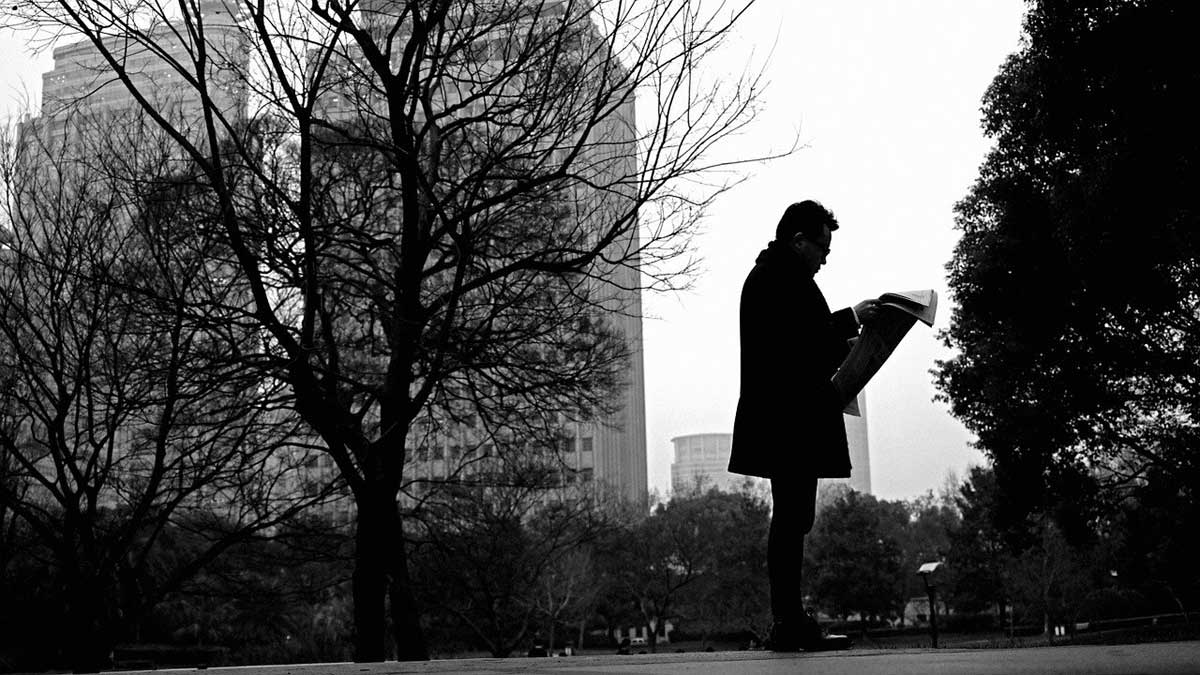
Not all constraints on journalism are explicit. In many cases, they manifest as self-censorship.
According to Genocide Watch, journalists and editors increasingly avoid topics that could lead to political backlash, regulatory scrutiny, legal threats, or coordinated online harassment campaigns. Over time, this produces a newsroom culture in which certain subjects are quietly excluded before formal editorial decisions are even made.
This form of pressure is difficult to measure, but its effects can be significant. When reporters internalise risk calculations, the range of publicly available information can narrow without any formal ban or directive.
RSF similarly highlighted concerns over actions taken against independent journalists, commentators, and publications. It cited instances of restrictions, legal pressure, and bans on certain media outlets in sensitive regions, including Jammu and Kashmir, where authorities have taken action against publications accused of promoting separatism.
Critics argue that such measures contribute to a wider climate of caution, particularly around politically sensitive reporting.
A Broader Democratic Stress Test
The implications of these developments extend beyond journalism alone.
Genocide Watch framed the weakening of press freedom as part of a broader institutional credibility challenge linked to political polarisation and majoritarian dynamics. In this view, media independence is not an isolated issue but part of a wider ecosystem that includes accountability, governance, and civic trust.
A free press plays a central role in democratic systems by enabling scrutiny of power and facilitating informed public debate. When that role weakens, the consequences extend into how citizens engage with institutions and interpret political realities.
India’s trajectory in the RSF index over recent years reflects this concern. The country ranked 150th in 2022, fell further to 161st in 2023, improved slightly to 151st in 2025, and then declined again to 157th in 2026. Analysts interpret this pattern not as random fluctuation but as part of a longer-term structural challenge.
At the same time, government supporters argue that India remains a robust electoral democracy with active institutions, a vibrant political opposition, and a highly diverse media landscape. They contend that international rankings often fail to capture the complexity of India’s scale, security challenges, and internal diversity.
The debate, therefore, is not solely about classification, but about how democratic quality itself should be assessed.
South Asia in a Global Decline
These concerns are unfolding within a broader global downturn in press freedom. RSF’s 2026 index noted that worldwide media freedom has reached its weakest level in 25 years, with more than half of all countries classified as having “difficult” or “very serious” conditions.
South Asia reflects this global trend particularly sharply. Alongside India, countries such as Bangladesh remain in the lower tiers of the global rankings, highlighting shared regional challenges around political influence, media ownership concentration, and journalist safety.
Yet despite this broader pattern, analysts continue to emphasise that each country’s trajectory is shaped by its own political history and institutional structures. In India’s case, its global influence and democratic identity make developments in its media landscape particularly consequential for international observers.
What Is Ultimately at Stake
The credibility of media systems plays a central role in shaping the health of democratic life. Journalism informs not only public debate but also citizens’ ability to evaluate leadership, understand policy decisions, and hold institutions accountable.
When trust in media declines, democratic accountability becomes harder to sustain.
The findings from Genocide Watch and RSF should therefore be viewed not simply as criticism of individual outlets or governments, but as indicators of broader institutional stress across South Asia.
Addressing these challenges would require a combination of stronger protections for editorial independence, more diversified ownership structures, reduced reliance on state advertising, and greater safeguards for journalists facing intimidation or harassment.
Despite these pressures, the region continues to produce significant investigative journalism and independent reporting under difficult conditions. Many journalists continue to work at considerable personal and professional risk to maintain public access to information.
Acknowledging structural challenges across South Asia is not an indictment of any single democracy. Rather, it is increasingly seen by analysts as a necessary step toward strengthening the democratic principles that the region’s constitutions and institutions claim to uphold.
Broadcasting rights for FIFA World Cup 2026 in India have been at a deadlock only weeks ahead of June 11 kickoff.
Published On 26 May 202626 May 2026
India’s Zee Entertainment is in talks with FIFA to stream and broadcast the 2026 World Cup in the country, the company said in a statement.
The announcement on Tuesday, which provided no financial details, comes as talks between a Reliance-Disney joint venture and the football body are at a deadlock, just weeks before the tournament kicks off on June 11.
Recommended Stories
list of 4 itemsend of list
FIFA, which had initially sought $100m for broadcast rights for the 2026 and 2030 World Cups in India, was last looking for no less than about $60m, the news agency Reuters had reported.
The expected amount still far exceeds the $20m offered by Reliance-Disney, led by billionaire Mukesh Ambani’s Reliance.
Sony also held talks but decided not to make an offer for FIFA rights for India.
FIFA has concluded agreements with broadcasters in more than 180 territories globally, it said previously.
Zee Entertainment disclosed its talks with FIFA as part of its launch of Unite8 Sports, a dedicated portfolio of sports channels to strengthen its sports offerings to consumers.
India accounted for 2.9 percent of the global linear TV reach of the Qatar World Cup in 2022, trailing only China in overall engagement figures, with more than 745 million fans following the action across all media platforms in the country, according to figures released by FIFA.
In television viewing numbers, India was among the top 10 countries – ahead of World Cup participants Germany, France and England – with nearly 84 million viewers.
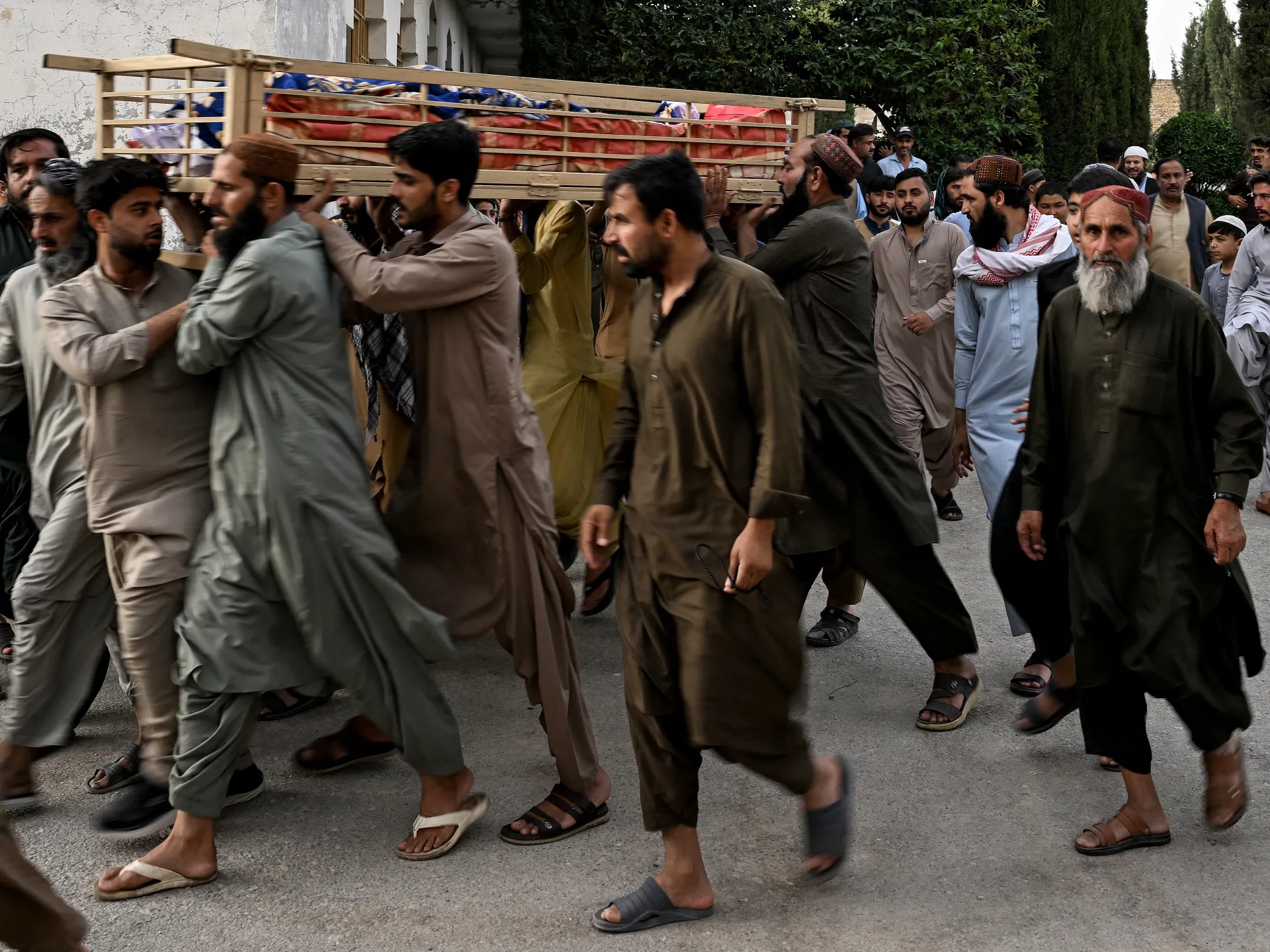
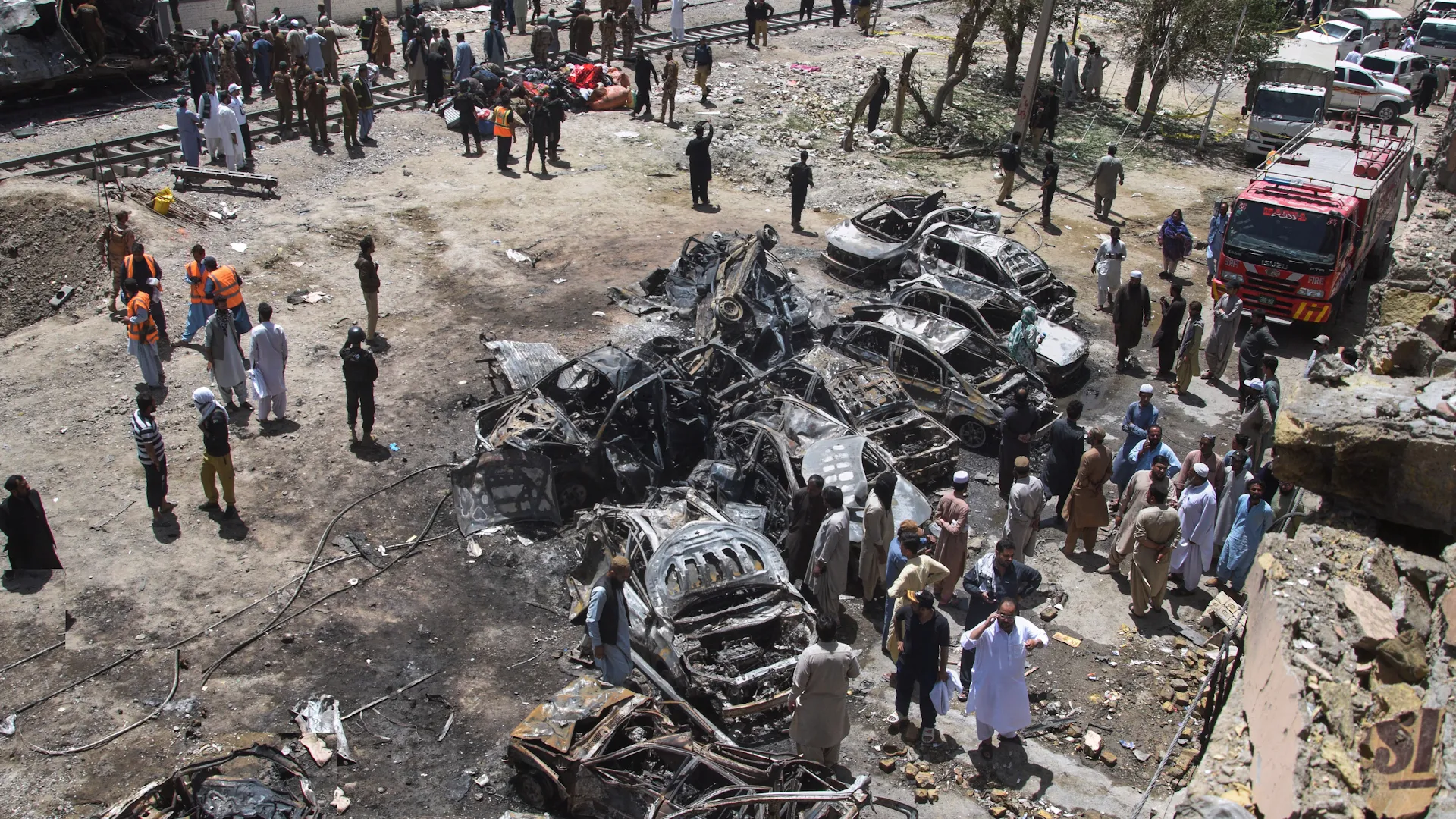
At least 24 people were killed and more than 50 injured when a suicide car bomb detonated on a train carrying soldiers in Quetta, capital of the southwestern Pakistani province of Balochistan, on Sunday.
The attack came amid Pakistan’s Prime Minister Shehbaz Sharif’s four-day visit to China, and the day before his meeting in Beijing with China’s President Xi Jinping, marking 75 years of diplomatic ties between the two nations.
Pakistan is among an exclusive group of countries China regards as an “all-weather strategic partner”, with ties featuring close economic, trade and security cooperation.
Responsibility for the train attack was claimed by the Balochistan Liberation Army (BLA), an armed Baloch separatist group which, apart from calling for an independent state, also strongly objects to large-scale Chinese investment in the region.
While the BLA has long carried out attacks that have killed civilians and members of the security forces in Balochistan and beyond, there has been a recent uptick in such incidents.
We examine what is behind this increase in attacks:
What happened in Sunday’s attack?
Reporting from the scene, Al Jazeera’s Kamal Hyder said several houses and buildings adjacent to the railway line were severely damaged in the blast, which caused train carriages to overturn and catch fire.
According to local media reports, a state of emergency was declared at public hospitals in Quetta, with doctors and other medical staff ordered to remain on duty.
Footage shared online showed charred vehicles and train carriages lying on their sides, with thick plumes of black smoke rising into the sky.
Pakistan has experienced several attacks by separatist groups in recent months. The attacks have increased in ferocity and have also targeted Chinese workers amid protests over Beijing-backed infrastructural projects in Balochistan.
As part of the China-Pakistan Economic Corridor project – one of the main arms of China’s “Belt and Road Initiative” designed to improve trading routes – China’s Xinjiang region has been connected to Pakistan’s deep-sea Gwadar port on the Arabian Sea in Balochistan.
Pakistani Prime Minister Sharif condemned Sunday’s train attack in Quetta in a post on X.
“Such cowardly acts of terrorism cannot weaken the resolve of the people of Pakistan. We remain steadfast in our determination to eliminate terrorism in all its forms and manifestations,” he said.
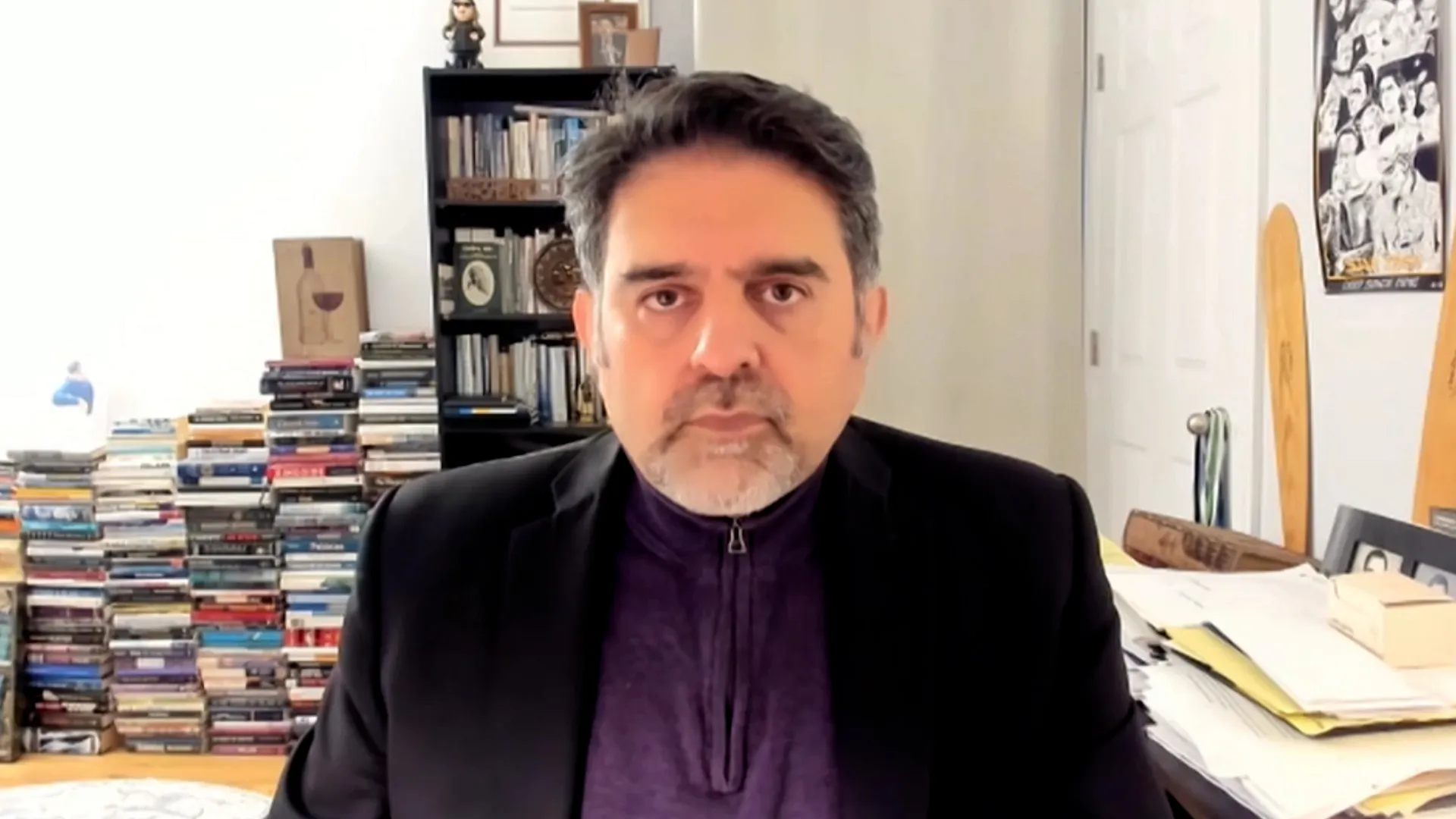
He added that while initial reports indicated a suicide bombing, this has not been officially confirmed. If it is, Yunas Samad, an emeritus professor of South Asian Studies at the University of Bradford in the UK, told Al Jazeera, “this would reflect tactics that insurgent organisations in the region have increasingly adopted over recent years”.
“There are also persistent claims regarding the circulation of sophisticated weaponry originating from stockpiles left behind after the US withdrawal from Afghanistan,” he said.
Are we seeing a new phase of armed separatist attacks in Balochistan?
According to research gathered by the independent, Islamabad-based think tank Pakistan Institute for Peace Studies, Balochistan recorded at least 254 attacks in 2025 – roughly 26 percent more than in 2024.
A December 2025 report published by independent conflict monitor Armed Conflict Location and Event Data (ACLED) found that separatists had also intensified attacks and pressure on security forces. The report said the number of attacks using improvised explosive devices (IEDs) and grenades, mainly targeting convoys and police stations, grew by more than 65 percent in the first 11 months of 2025, compared to the same time period in 2024.
The Global Terrorism Index (GTI) report this year found that there has been more Baloch armed group activity in Pakistan in 2025 as well. The GTI is an annual report published by the Australia-based independent think tank Institute for Economics and Peace (IEP).
Its 2026 report states that the BLA was responsible for Pakistan’s largest terror attack of 2025 – when the Jaffar Express, a train travelling from Quetta to Peshawar, was hijacked in March.
The BLA claimed responsibility and reported that six military personnel had been killed. Hundreds of people were taken hostage from the train, which was carrying 400 passengers.
“What can reasonably be said is that, following the earlier coordinated attack on the Jaffar Express, the Pakistani authorities appear to have intensified security measures around transport infrastructure, military personnel and key lines of communication,” Samad, of Bradford University, told Al Jazeera.
“The fact that this latest incident nevertheless occurred may suggest that militant groups retain a significant operational capability despite those efforts,” he noted.
The group stunned Pakistan’s security establishment in 2022 when it stormed army and navy bases. In August 2024, militants carried out coordinated attacks across Balochistan, including highway assaults in which passengers were pulled from buses and shot after identity checks.
“While statistics in such conflicts are always contested and should be treated cautiously, they do indicate that the intensity of the conflict has not significantly diminished,” Samad said.
“Whether this constitutes an entirely ‘new phase’ is perhaps too strong a conclusion at present. However, it does appear to indicate a degree of resurgence in militant capability and confidence among sections of the Baloch insurgency.”
Who are the BLA and major Baloch armed groups?
The BLA, which has a suicide squad called the Majeed Brigade, says it is fighting for the independence of Balochistan, a province located in Pakistan’s southwest and bordering Afghanistan to the north and Iran to the west.
It is the largest of several ethnic separatist groups that have been fighting the federal government for decades. Balochistan’s mountainous border region serves as a safe haven and training ground for both Baloch separatist fighters and Islamist armed groups.
The BLA often targets infrastructure and security forces in Balochistan, but has also struck in other areas – most notably the southern port city of Karachi.
The BLA has deployed women suicide bombers, including in an attack on Chinese nationals in Karachi, and was designated a “foreign terrorist organisation” by the United States in August 2025 in a move welcomed by the Pakistani government. Analysts say BLA is particularly known for its ability to recruit young, often well-educated fighters.
The group, separately, was at the centre of tit-for-tat strikes in 2024 between Iran and Pakistan over what each said were armed group bases on each other’s territory, which brought the neighbours to the brink of war.
What is the Baloch cause?
Home to about 15 million of Pakistan’s roughly 240 million people, according to the 2023 census, Balochistan is the country’s poorest region despite its wealth of natural resources, including coal, gold, copper and gas.
These resources generate significant revenue for the federal government – unfairly, according to the BLA, which wants Balochistan’s natural wealth to belong to its people and rejects federal control over resource extraction and security.
The province is Pakistan’s largest by area, but smallest by population. It has a long Arabian Sea coastline, not far from the Gulf’s Strait of Hormuz oil shipping lane.
Balochistan is also home to one of Pakistan’s major deep-sea ports at Gwadar, a crucial trade corridor for China’s $65bn investment in the China-Pakistan Economic Corridor (CPEC), a wing of President Xi Jinping’s Belt and Road initiative.
The province is home to key mining projects, including Reko Diq, which is operated by Canadian mining giant Barrick Gold and is believed to be one of the world’s largest gold and copper mines.
China also operates a gold and copper mine in Balochistan.
The province – which was annexed by Pakistan in 1948, six months after partition from India in August 1947 – has a long history of marginalisation. It has since experienced at least five separatist uprisings.
Separatist sentiment was particularly high in the 2000s, around the time the BLA emerged. Analysts of Baloch resistance movements say it was led by Balach Marri, the son of veteran Baloch nationalist leader Nawab Khair Bakhsh Marri.
After the government of military ruler Pervez Musharraf killed prominent Baloch nationalist leader Nawab Akbar Bugti in 2006, the separatist movement escalated.
Rebel fighters have targeted Pakistan’s army and Chinese interests, in particular the strategic port of Gwadar on the Arabian Sea, accusing Beijing of helping Islamabad to exploit the province. Fighters have killed Chinese citizens working in the region and attacked Beijing’s consulate and language centre in Karachi.
More recently, the BLA has also attacked civilians and migrant labourers from other provinces, a shift that officials say marks an escalation in tactics.
Pakistan accuses India and Afghanistan of backing Baloch armed fighters, an allegation both countries deny.
“Baloch separatist groups themselves have, at times, sought to internationalise their cause and last year publicly appealed for diplomatic recognition by India,” Samad said.
“However, establishing clear evidence of direct state support is considerably more difficult, and much of the discussion in this area remains politically contested.”
Hundreds of Baloch activists, many of them women, have protested in Islamabad and Balochistan over alleged abuses by security forces – accusations the government denies.
Over time, the BLA has set itself apart as a group explicitly committed to Balochistan’s full independence from Pakistan. Unlike more moderate Baloch nationalist parties, which press politically for greater provincial autonomy, the BLA has consistently rejected compromise.
Why is this significant now?
Regional stability and international investment
The attack comes as Prime Minister Sharif meets with China’s President Xi in Beijing to discuss economic and security cooperation – something the BLA is strongly opposed to.
The movement could pose a challenge to Pakistan’s attempts to retain Chinese and American investment, experts say, if it reveals a deeper instability.
The Baloch separatist movement is one of the major unresolved questions over Pakistan’s statehood. It is a constant reminder of the challenges of the Pakistani state to stay united, they say.
“More broadly, the persistence of insurgency has had implications for Pakistan’s wider political system,” Samad explained. “Security concerns in Balochistan have increasingly shaped governance and political discourse, strengthening the role of the military and security establishment in national affairs and undermining the democratisation process.”
“Internationally, the issue matters because Pakistan remains a nuclear-armed state of enormous strategic importance,” Samad told Al Jazeera.
“While speculation about state fragmentation is highly premature, any significant escalation in internal instability in a country with nuclear capabilities inevitably attracts international concern. For that reason alone, developments in Balochistan are likely to remain closely watched both regionally and globally.”
Rare-earth metals
Another major issue is that geological assessments suggest Balochistan contains 12 of the 17 rare-earth minerals on the periodic table. Rare earths are critical minerals used to manufacture a vast array of modern items, including batteries, clocks, wiring, military hardware, smartphones and semiconductors, among other technological products.
Since the start of his second term, US President Donald Trump has repeatedly pushed plans to diversify Washington’s stockpile of critical minerals in order to reduce reliance on China, which currently dominates the supply and processing of the world’s rare-earth minerals.
When Pakistan’s Prime Minister Sharif met with Trump at the White House in September 2025, he offered the US access to critical minerals and rare earths.
Then, in December 2025, the US announced a $1.25bn investment in critical minerals mining at Reko Diq to drive “economic growth in Balochistan”.
The Balochistan Liberation Army claimed responsibility for a train bombing that killed at least 30 people in Pakistan. Kamran Bokhari of the Middle East Policy Council argues that the separatist BLA is timing its attacks to exploit Pakistan’s other entanglements.
Samsung Electronics Co. topped smartphone markets in Central and South America, the Middle East and Southeast Asia in the first quarter, industry data showed Monday. In this photo, Galaxy S26 Ultra phones are on display at the Samsung Gangnam store on March 11, 2026. File Photo by Yonhap
Samsung Electronics Co. topped the smartphone markets in Central and South America, the Middle East and Southeast Asia in the first quarter on steady sales of its premium Galaxy S26 and budget Galaxy A series smartphones, industry data showed Monday.
According to the data compiled by industry tracker Omdia, Samsung Electronics sold some 12.9 million units of smartphones in the Central and South American market in the January-March period, accounting for 37 percent of the total 34.8 million smartphones sold there over the cited period.
Omdia said the performance was driven by solid sales of Galaxy A series smartphones as Samsung Electronics responded to market demand with a diversified product lineup.
In the Middle East market, where smartphone sales fell 6 percent on-year to 11 million units in the first quarter, Samsung Electronics led the market with a market share of 34 percent on strong demand for the latest Galaxy S26 and Galaxy A series smartphones.
The company also sold 4.6 million smartphones in the Southeast Asian market, accounting for 21 percent of all smartphones sold there in the first quarter.
Omdia said strong sales of the Galaxy S26 series, launched in January, and steady demand for the Galaxy A series helped Samsung Electronics expand its market share in Southeast Asia, where quarterly smartphone sales fell 9 percent from a year earlier.
Earlier, Omdia said Samsung Electronics ranked No. 1 in the global smartphone market in the first quarter with a 22 percent market share.
Copyright (c) Yonhap News Agency prohibits its content from being redistributed or reprinted without consent, and forbids the content from being learned and used by artificial intelligence systems.
A Baloch separatist group has claimed responsibility for an attack on a train carrying soldiers in Quetta, Pakistan. The suicide car bombing killed at least 24 people and injured dozens more, including women and children.
Rawalpindi, Pakistan – On a cold January morning, Anum Shakoor gallops across a field, wrapped in a black shawl that billows behind her as she charges forward, a 1.8-metre (6ft) lance gripped tightly in her hand.
The 30-year-old has already claimed her first peg. The second lies close ahead.
Recommended Stories
list of 4 itemsend of list
Her horse tears across the dry earth, kicking up a cloud of dust that hangs in the air as she charges forward. A few metres out, Shakoor lowers the lance, steadying her aim and bracing for impact.
She misses by 2.5cm (1 inch).
A collective gasp ripples through the crowded bleachers. Many onlookers shake their heads. Some look away.
Shakoor exhales and slows her horse to a walk. Around her are the desolate, windswept fields on the outskirts of Rawalpindi in northern Punjab province.
And there are men, most of them wearing turbans. Men with “dhol” (drums) hanging from their necks. And men whose fathers had ridden before them and their fathers before their fathers. The men who take pride in the ancient sport, some of whom perhaps are not ready to accept that women are now participating in an overwhelmingly male “neza baazi”, or tent pegging, a high-stakes sport in which horse riders gallop across a field to pierce a buried wooden target.
Local political and feudal elites seen wearing traditional turbans at a tent pegging event near Rawalpindi [Mutee Ur Rehman/Al Jazeera]
The field is lined with thousands of male spectators, gathered to watch the teams of riders charging one after the other at a small wooden peg buried in the ground, trying to pierce it cleanly and carry it forward on their lance.
The event is known as a “mela” in Punjabi, a carnival-like competition typically held on the outskirts of the garrison city.
The beat of drums intertwined with the sharp bursts of the shehnai (oboe), traditionally played in weddings, pierces the cold winter air. Salespeople call out to the crowds from bustling stalls selling cardamom tea and varieties of fried fritters.
Before the competition starts, riders mount their adorned horses, some of which are dressed in embroidered velvet gowns. Others have braided manes or brass bells ringing softly at their necks.
One of the 74 teams competing in this year’s mela is Shakoor’s Bint-e-Zahra Club, Pakistan’s first female-only tent-pegging club. It has three other riders: Eshal Ibrahim and Noor un Nisa Malik, both 16, and Sehrish Awan, a 32-year-old mother of two competing for the first time in a mela.
Shakoor says the club was formed in 2025 after she reached a “frustrating realisation” that female riders practised and played only in mixed clubs. “We wanted to give women riders a stage for training so they can form a community,” she says.
The women are an unusual sight at a competition that has almost entirely male riding teams, mainly male fans and even male musicians.
So when Bint-e-Zahra’s members prepare to make their run, the audience is in for a rare sight. Photographers, vloggers and locals rush to film them, surrounding them from all sides.
Sehrish Awan straightens her lance at a competition organised by a US-based riding club [Mutee Ur Rehman/Al Jazeera]
Ibrahim is accompanied by her mother, who trails closely behind her, keeping a careful eye on her teenage daughter.
“I cannot even take pictures of her in the crowd,” says Fatima Adeel, who accompanies Ibrahim to every mela. “I am in charge of her. I cannot leave a teenage girl alone in a sea of men.”
Shakoor agrees.
“Any woman who wants to come in this sport should be encouraged so she can gain the respect she deserves in the sport,” she says. “Our society cannot bear a woman’s lead in any field.”
‘No concept of a player’
Several kilometres away, Ayesha Khan, 22, gallops on Sawa, the horse she has ridden since she was eight, for a practice run with her club.
She was 17 when her father encouraged her to try out for the women’s national team. A year later, she was the only woman selected for Pakistan’s under-21 mixed gender team and was sent to South Africa for a tournament to compete against a team that had four girls and one boy.
“I was hit with the realisation of how tent pegging is conditioned to appear masculine in Pakistan. But my father and brothers taught me riding when I was five. I used to be the only child riding a horse between adults,” Khan says, describing herself as “addicted” to riding.
Ayesha Khan picks up the first peg at the 2022 Grand Prix Tent Pegging Championship in Jordan [File: Courtesy of Ayesha Khan]
Khan joined the women’s team in 2022 and quickly worked her way up to becoming its captain. That same year, she took the women’s team to Jordan, where it competed against 13 countries.
“We came third,” Khan recalls proudly. “Yet that was the only trip that the Pakistani women’s team competed in internationally. Before that trip, never. After that, never again.”
In 2024, the International Tent Pegging Federation organised an open international competition in Jordan. Pakistan sent a men-only team although the event was open to women. It was simply assumed that only men would want to go.
“In Pakistan, we don’t have the concept of a player,” Khan tells Al Jazeera. “We have the concept of male and female. Unless there is a women-only event, our federation exclusively sends male teams.”
But Khan persisted. At 20, she became the first Pakistani woman to compete against and beat 70 male riders at a mela. Today, she captains Pakistan’s only all-women tent pegging team.
How women entered the sport
The event near Rawalpindi that Shakoor attended was organised by Samiullah Barsa, a 27-year-old United States national of Pakistani origin, as part of his wedding celebrations.
“No wedding is complete without neza baazi,” says Barsa, who is dressed in a blazing red waistcoat and cowboy boots.
His family emigrated in the 1980s from the Punjab city of Gujrat to the US state of Ohio, where they own a stable and host annual melas. Last year, their mela drew more than 2,000 visitors, Barsa says.
Barsa recalls the first time he saw women compete in tent pegging. In 2015, he attended a mela at Kot Fateh Khan in Attock district, an hour from the capital, Islamabad, and the hometown of Malik Ata, fondly remembered as “Baba-e neza baazi” (the father of tent pegging).
Ata was a politician who came from an influential feudal family in Kot Fateh Khan. He was also a legendary equestrian who organised grand melas and invited hundreds of teams from across Pakistan to compete in various equestrian sports, including neza baazi.
At the first such grand mela, Ata invited the Australian women’s tent-pegging team, setting the stage for Pakistani women to embrace the sport.
In 2021, the Equestrian Federation of Pakistan, established by Ata, sponsored six girls to train under a South African coach. Khan was among those who made the journey to South Africa. She credits Ata for laying the roots of female participation in Pakistani tent pegging.
A team of women at a practice session in Rawalpindi, Pakistan [Mutee Ur Rehman/Al Jazeera]
Barsa says Ata’s contribution to the sport cannot be denied and it was time for women to have their own teams.
“Everywhere along the world, women and men have separate competition. For instance, in football or in cricket, have you ever seen women competing against men?” he asks. “When female teams lose against male teams, they lose hope and don’t come forward.”
But has it been easy for women to pursue the sport?
Not really, both Khan and Shakoor say.
‘I never gave up’
Shakoor says there is tremendous social pressure on girls and women to conform to roles defined by the patriarchy.
“My mother has told me multiple times that I have to get married. But since I am part of such a manly sport, she worries how will I get good proposals. My sister did so too, but I never gave up,” she says.
“My brother stood up for me and told my mother that I am excelling in my passion. He asked her to let me live my life.”
Khan is relatively young, so marriage is not a concern for now. But she has heard relatives whisper to her mother: “It is probably just a phase. She should focus on her studies.”
A vendor serves tea and savoury food at a mela near Rawalpindi [Mutee Ur Rehman/Al Jazeera]
Before going to a mela, Khan tries to find out details about the organisers. With the events often spanning two or three days, she also asks whether there are separate enclosures for women. Most riding fields have none or few restrooms or spaces for prayers for women.
In Pakistan, tent pegging is mainly played in northern Punjab, where villages and spacious fields stretch along the Ravi River, allowing the horses to freely run.
Khan says many girls have reached out to her wanting to pursue tent pegging. But most of them don’t have family support. And then there are financial and structural obstacles, which compound women’s lack of access to the sport.
“Not everyone has the privilege of owning a horse, especially women, who are already restricted by society,” Ibrahim says.
Even if you are able to own one, there is a significant cost attached to their upkeep. A horse’s monthly feed averages 30,000 to 35,000 Pakistani rupees ($107 to $125), which is nearly the monthly minimum wage in Punjab. Caretaker fees and rental charges more than double that amount.
“It’s a class thing. Everything related to horses is,” Khan says. A sporting horse costs about $1,500 in Pakistan.
Ayesha Khan holding Pakistan’s flag at the Under-21 World Tent Pegging Championship 2023 held in South Africa. She was the only girl in a team of four boys [Courtesy of Ayesha Khan]
Shakoor agrees. She says she was able to buy a horse after saving from her monthly salary as a manager for a global microfinance network. “You can’t put a price on passion,” she says, using a Punjabi saying.
She says she puts her horse before everything, even her own meals or health. “If I am sick, I do not care about my medicine,” she says. “But I lose sleep if my horse is sick.”
But the high cost of the sport also means many opportunities are lost. Shakoor says she has missed several tent-pegging events because she could not afford to haul her horse across cities for multiple days of competitions.
“Had I had any financial support through sponsorship, I would not have missed those events,” she says.
For Barsa’s event alone, Shakoor’s team spent more than 100,000 rupees ($358), which included the cost of transporting five horses, their feed and lodging.
Similarly, at the national tent pegging trials, every rider must bring their own horse, a rule that shuts out anyone who cannot afford transport, let alone own a horse.
Awan, the 32-year-old mother of two children, used to ride horses as a hobby and began visiting melas to observe how tent pegging was played. Intrigued by the sport, she reached out to Shakoor on Instagram, asking to become a member of Bint-e-Zahra.
In recent years, videos featuring female riders have gained millions of views on Instagram and TikTok, sometimes surpassing their male counterparts. Khan and Zoya Mir, the vice captain of the national tent pegging team, run joint TikTok and Instagram accounts, Equestrians In Green, where they post about their sporting victories.
Some videos show the women playing neza baazi in slow motion, picking up a peg mid-gallop or emerging from clouds of dust dressed in their club’s gear, often set to trendy music and paired with captions that challenge the stereotypical association of horse riding with men. Some of these videos have millions of views.
But the social media visibility also comes at a cost.
Khan recalls a viral video of women riders wearing turbans at a mela, causing a backlash from veteran male riders who claimed “women were polluting the sport.”
The turban, traditionally worn by men as a mark of their social position as well as a defining part of a horse rider’s identity, takes on an added significance in neza baazi. For some, women wearing it is seen as a challenge to a space long associated with male authority.
But the riders at the Rawalpindi mela push ahead despite the vitriol. They wear their turbans with pride – Awan tying hers over a red niqab that covers half of her face while Shakoor has hers pulled low, the way her mentor taught her.
Shakoor pulls up a photo from her Instagram account, which has more than 8,000 followers. Two riders wearing turbans pluck a peg side by side. The dip of their lances, the slight sway of their bodies, the moment of lift are all nearly identical.
“This is a picture of me with my mentor Chaudry Nazakat Hussain, my true inspiration,” she says. “He encouraged me to create Bint-e-Zahra.”
Last year, a mela held in Jathli in Rawalpindi’s Tehsil Gujjar Khan had 50 participating teams with nearly 200 riders – all male except Shakoor, Ibrahim and Malik. Representing the Bint-e-Zahra Club, Shakoor fought her way into the last seven in the team captains’ round, which is a recent addition in melas in which the captain of each club runs for a position.
Shakoor, the only woman among the final seven qualifying riders, did not secure a position but considers being included a feat nonetheless. “In the captains’ round, horses are assigned to riders randomly. This minimises odds of performing better. A sportsman is known for their skill, not their horse,” she says.
Of all the lessons the sport has taught her, Shakoor says the most valuable has been courage.
“This is a sport of the brave. If you don’t have the heart for it, it’s not for you,” she says. “Passion and dedication have no gender. … We don’t want to prove we are better than men. We only want equal respect.”
A satirical political movement called the ‘Cockroach Janta Party’ has gone viral in India after Chief Justice Surya Kant compared unemployed youth to “cockroaches”. The movement taps into growing frustration over unemployment, inflation and living costs under Narendra Modi’s government, gaining more than 22 million Instagram followers in just six days.
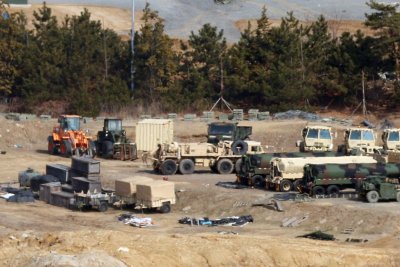
A launch vehicle of the Terminal High Altitude Area Defense (THAAD) system
is seen at a U.S. military base in Seongju, North Gyeongsang Province, South
Korea. The United States has been moving parts of its THAAD anti-missile system from
South Korea to the Middle East. Photo by YONHAP
/ EPA
May 22 (Asia Today) — Concerns are growing over possible security gaps in East Asia after the United States used large numbers of advanced interceptor missiles while defending Israel during the Iran conflict, according to a report published Wednesday.
The Washington Post reported Wednesday, citing recent Pentagon assessments, that the United States fired more than 200 THAAD interceptors during Operation Epic Fury to block Iranian ballistic missile attacks.
The figure reportedly amounts to about half of the Pentagon’s total THAAD interceptor inventory.
The United States also used more than 100 Standard Missile-3 and Standard Missile-6 interceptors launched from Navy warships, the report said.
By contrast, Israel reportedly used fewer than 100 interceptors each from its Arrow and David’s Sling missile defense systems, preserving more of its own stockpile and raising questions about uneven resource consumption between the allies.
Military experts told the newspaper the imbalance stemmed from a prearranged ballistic missile defense structure under which the United States assumed responsibility for the most advanced interception missions.
Israel has increasingly relied on the United States for ballistic missile defense while fighting simultaneous conflicts in Gaza, Lebanon and Yemen, stretching its military capabilities.
The report said growing U.S. missile consumption, combined with limited production capacity, is heightening anxiety in East Asia, where countries such as South Korea and Japan depend heavily on U.S. deterrence against threats from North Korea and China.
Kelly Grieco of the Stimson Center warned that “the bill could come due in a theater completely unrelated to Iran,” referring to East Asia.
The concerns follow earlier reports that U.S. Patriot missile stockpiles had fallen to about 25% of required levels, fueling fears of weakening missile deterrence across the region.
Analysts said any renewed hostilities involving Iran could deepen global security vulnerabilities further.
On May 14, the high court in the central Indian state of Madhya Pradesh ruled that the centuries-old Kamal Maula mosque in the city of Dhar was actually a temple dedicated to a Hindu goddess. Two days later, saffron flags associated with Hindu far-right groups were all over the site, with supporters celebrating and filming rituals that were carried out.
The Kamal Maula mosque, also known as the Bhojshala complex, has been disputed for decades. And such claims are not unique to this mosque. Far-right Hindutva activists have made similar claims – that a given mosque was built atop a temple – across the country, emboldened by Prime Minister Narendra Modi’s rise to power in 2014.
Recommended Stories
list of 4 itemsend of list
Modi is a leader of the Bharatiya Janata Party, which follows an ideology known as Hindutva.
But what is the Hindutva movement, and how did it emerge?
What does Hindutva mean?
Hindutva is a right-wing political and nationalist ideology that defines the cultural and national identity of India based on a particular interpretation of Hindu values. India is a constitutionally secular state, but advocates of Hindutva want the country to adopt Hinduism as its state religion.
The term Hindutva consists of two linguistic parts: The first is the word “Hindu”, whose origin likely traces back to the Sanskrit word “Sindhu”, the ancient name for the Indus River. With the evolution of linguistic usage, the ancient Persians and others replaced the letter “S” with “H”, and the term “Hindus” came to be used for the inhabitants living beyond the river.
The second part is the Sanskrit suffix “-tva”, which indicates essence or being, meaning that the term literally denotes “Hindu essence” or “Hindu identity or being”.
How did Hindutva originate?
Hindu nationalism emerged in protest against British colonial notions of the religion, but quickly grew into a majoritarian ideology that viewed the Indian identity through the lens of a specific interpretation of Hinduism.
Its early years coincided with sectarian Hindi-Muslim tensions in the early 20th century under British rule, culminating in the partition of the subcontinent at independence in 1947 and the formation of Pakistan on religious grounds.
Indian freedom fighter and ideologue Vinayak Savarkar coined the term “Hindutva” in his 1923 pamphlet Essentials of Hindutva, presenting a vision of Hindu identity based on the unity of territory, culture, and historical belonging, while considering India as the fatherland and the holy land of Hindus.
Based on this notion, some Hindutva theorists argued that Muslims and Christians do not fully belong to the Indian nation, as their holy places are located outside India – even though India is home to one of the world’s largest Muslim populations, and has more Christians than many European nations such as the United Kingdom.
Savarkar was, and remains, a controversial figure: He infamously wrote letters to the British pleading for his release from a notorious prison in the Andaman Islands.
From idea to movement
By 1925, the early Hindutva ideologue Keshav Baliram Hedgewar had founded the Rashtriya Swayamsevak Sangh (RSS) – which loosely translates to National Volunteer Organisation – the mothership of the Hindu majoritarian political movement.
The RSS focused on organising and strengthening the Hindu community through local social and cultural activities. Over time, it expanded to include a network of affiliated institutions and organisations spanning religious activities, education, health, publishing, student politics and even the trade union sector.
Some of its early leaders publicly, in their writings, admired the European fascists and the manner in which they dealt with religious and ethnic minorities.
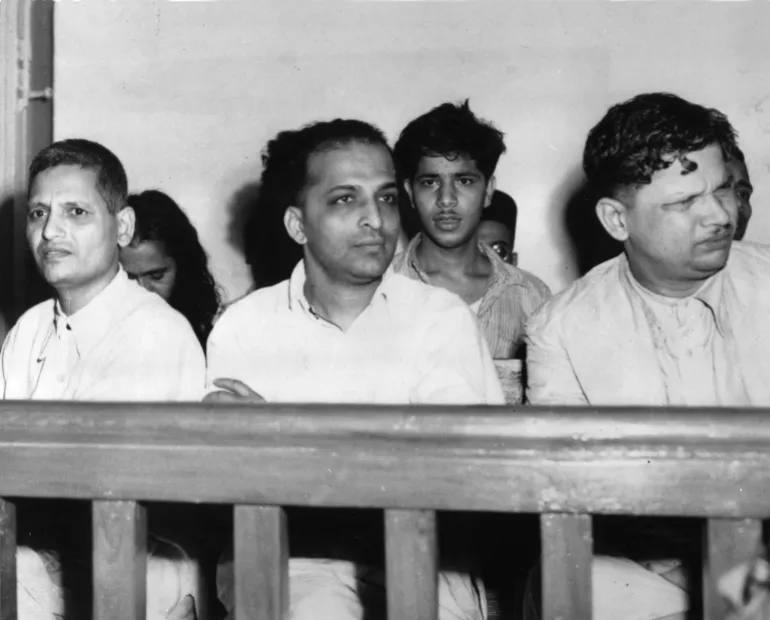
After India’s independence, the movement faced significant pressure following the assassination of Mahatma Gandhi in 1948: Gandhi’s assassin was a former RSS member. Savarkar, the founder of the Hindutva ideology, was also arrested in connection with the assassination but was eventually acquitted because the prosecution could not present corroborating evidence against him.
The men accused of the assassination of Mahatma Gandhi listen to testimony in a courtroom during their arraignment in New Delhi, India, on May 27, 1948. Gandhi was shot three times by Nathuram Vinayak Godse, centre, on his way to a prayer meeting from Birla House on January 30 [AP]
Later, the movement shifted towards political action by establishing a party in 1951, which subsequently evolved into the Bharatiya Janata Party (BJP) in 1980.
The party witnessed a remarkable surge in its political influence during the 1980s and 1990s by championing the construction of the Ram Temple in the city of Ayodhya on the site of the Babri Mosque.
In 1992, the demolition of the mosque by activists associated with the RSS and the BJP prompted a widespread wave of sectarian violence. In the wake of that violence, the BJP first came to national power in 1996 as India’s single largest party, but its government collapsed in 13 days after allies it depended on withdrew support. In 1998, it returned to power, but this time lost after 13 months. New elections followed in 1999, and the BJP emerged as the single biggest party again. It led a coalition government for a full five years until 2004, when the Congress party – now India’s largest opposition force – defeated it.
The Congress ruled for a decade until 2014, when Modi stormed to power with the largest mandate any party had received since 1984.
Thought and Ideology
Hindutva ideology posits that Indian identity is fundamentally rooted in Hindu culture and civilisation.
The ideology relies on historical narratives portraying the periods of Islamic and Mughal rule as an era that weakened Hindu heritage, calling for the restoration of Hindu identity and the strengthening of its presence in the public sphere.
Its most prominent ideas include: Rereading history from a Hindu nationalist perspective, viewing India as a sacred civilisational entity, calling for the return of those believed to have Hindu origins to their ancestral religion, and granting national status to symbols such as cows and the Sanskrit language.
Critics differentiate between Hindutva as a nationalist political project and Hinduism as a religion and spiritual philosophy, arguing that the former politicises religion and can contradict values such as tolerance and nonviolence that have long been central tenets of Hinduism, the faith.
India’s Prime Minister Narendra Modi greets his supporters as he arrives at the Bharatiya Janata Party (BJP) headquarters, as the BJP won the Assam state assembly election and was on course to win West Bengal, in New Delhi, India, May 4, 2026 [Adnan Abidi/Reuters]
Hindutva in political practice
Hindutva has gradually transitioned into the political and legislative spheres with the rise of the BJP to power. Its principles have begun to reflect in laws, public policies, and the nature of social debate within the country. Supporters argue that these policies preserve national identity, while critics contend that they undermine religious and cultural pluralism.
The most notable of these measures was the abrogation of Article 370 of the Constitution in 2019, which had granted the Muslim-majority region of Jammu and Kashmir a special autonomous status.
Additionally, the Citizenship Amendment Act (CAA) was passed that year, granting expedited citizenship to certain immigrants from neighbouring countries, excluding Muslims. It officially went into effect in March 2024, accompanied by the National Register of Citizens (NRC), which threatens to strip millions of Muslims of their citizenship and label them as infiltrators.
The impact of this vision has extended to local legislation in certain states, such as tightening restrictions on cow slaughter and enacting laws to regulate religious conversion and interfaith marriages, alongside calls for the implementation of a Uniform Civil Code to replace certain personal status laws for minorities.
Hindutva has also been linked to the emergence of Hindu nationalist groups, such as the Bajrang Dal, which have been implicated in acts of violence and intimidation against Muslims, Christians and marginalised social groups, particularly over issues related to cows or religious conversion.
In January 1999, when the BJP was in power nationally, Bajrang Dal activists burned alive Graham Staines, an Australian Christian missionary, and his two sons, while they were sleeping in their car. And in 2002, while Modi was chief minister of the western state of Gujarat, independent India witnessed one of its worst massacres of Muslims, after a group of Hindu pilgrims on a train were burned alive under circumstances that are still contested.
Indian far-right groups ideologically aligned with the RSS have also been accused of lynching dozens of Muslims since 2014, often on accusations that they were carrying cows for slaughter. In almost all cases, none of the murderers have been punished, and in several instances, families of the victims have faced charges.








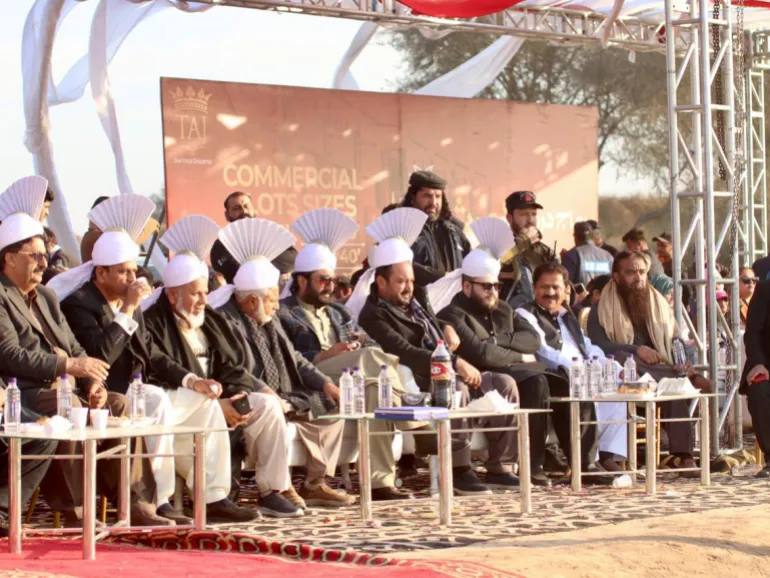
![Local political and feudal elites wearing honorary turbans look on as a tent pegging event kicks off [Mutee Ur Rehman/Al Jazeera]](https://i0.wp.com/occasionaldigest.com/wp-content/uploads/2026/05/IMG_3-1-1779082712.jpg?w=640&ssl=1)
![A female rider, Sehrish Awan, straightens her lance as she gears up for competition in a mela organised by a USA-based riding club [Mutee Ur Rehman/ Al Jazeera]](https://i0.wp.com/occasionaldigest.com/wp-content/uploads/2026/05/IMG_5-1-1779082721.jpg?w=640&ssl=1)

![A team of young women riders warm up for a practice session in Rawalpindi, Pakistan [Mutee Ur Rehman/Al Jazeera]](https://i0.wp.com/occasionaldigest.com/wp-content/uploads/2026/05/IMG_2-1-1779082705.jpg?w=640&ssl=1)
![A local vendor serves tea and savoury food items at in a mela [Mutee Ur Rehman/Al Jazeera]](https://i0.wp.com/occasionaldigest.com/wp-content/uploads/2026/05/IMG_4-1-1779082716.jpg?w=640&ssl=1)