Friday marks one year since a deadly Air India Boeing crash, which killed 260 people in a densely populated suburb of the city of Ahmedabad in India’s western state of Gujarat.
Families of those killed gathered at the site on Friday to mark the anniversary of the disaster, but they are still waiting for answers about what caused the plane to come down shortly after takeoff from the nearby airport.
Indian authorities are expected to issue an interim report in the coming days, another source of frustration for the victims’ relatives, who had been hoping for a definitive finding and a final disclosure. Media reports, citing unnamed sources, suggest that Indian investigators will delay issuing a final report into the crash, citing the need to complete an analysis of the plane’s engines.
Under international aviation rules, a final report is due “if possible” within a year of an accident. If an investigation goes on for longer, an interim statement should be issued on each anniversary.
What happened to the Air India plane?
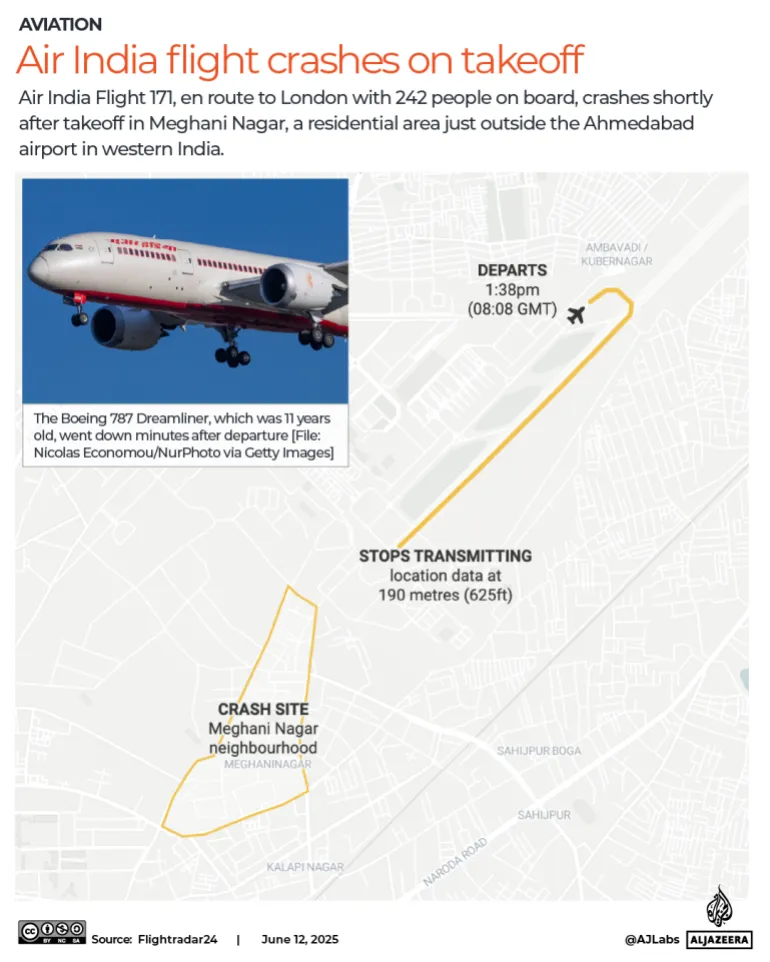
Flight AI171, an Air India Boeing 787 Dreamliner plane which had taken off only moments before, en route to London Gatwick, crashed into a medical college hostel in the residential area of Meghani Nagar, close to the international airport on the edge of India’s western city of Ahmedabad.
According to flight tracking website Flightradar24, the plane’s final signal was received seconds after takeoff at 1:38pm local time (08:08 GMT). It had reached an altitude of 625 feet (190 metres) before crashing back to the ground outside the airport.
The plane had issued a mayday alert to air traffic control just before all communications from the aircraft ceased.
(Al Jazeera)
How many people died in the crash?
Of the 242 people on board, all except one passenger were killed. These included 169 Indian nationals and 52 British nationals. A total of 260 people died, as 19 people on the ground close to the crash site were also killed. Another 67 people near the site were injured.
The sole survivor on board the plane, Vishwash Kumar Ramesh, is a British national whose brother was killed in the crash.
On Thursday, Ramesh’s representative, Sanjiv Patel, told the UK’s Guardian newspaper that Air India had paid £21,500 ($28,800) in compensation to Ramesh to help support his wife and their five-year-old son. It is not clear whether similar payments have been made to other families.
Relatives of the victims are meeting on Friday at a conference organised by lawyers, along with aviation and air safety experts, in Ahmedabad. They are due to hold a candlelight vigil after sunset.
Officials inspect the site of the crash near Sardar Vallabhbhai Patel International Airport in Ahmedabad, Gujarat, western India, on June 13, 2025. Air India flight AI171, bound for London, carrying 242 passengers and crew members, crashed minutes after takeoff in the Meghani Nagar area of Ahmedabad [Rajat Gupta/EPA]
What have preliminary reports shown?
This was the world’s first airliner crash involving a 787 Dreamliner, a Boeing model that has been in service since 2011.
In accordance with international aviation law, India’s Aircraft Accident Investigation Bureau (AAIB) published a preliminary report one month after the disaster.
That 15-page document said the fuel supply to the jet’s engines had been cut off moments before the crash, raising questions about possible pilot error.
It also published a conversation between the captain and his copilot about the fuel supply being cut off – two brief sentences that prompted theories of pilot suicide.
The report was met with strong criticism.
It did not state why the fuel switches were turned off – whether it was the fault of a pilot, or a result of a malfunction.
The preliminary report did not make any safety recommendations to Boeing or engine maker GE Aerospace, suggesting no technical issues had been discovered.
The crash also hit Air India at a sensitive stage of its post-privatisation turnaround, which has been slowed by supply-chain snags, an airspace ban imposed by Pakistan on Indian carriers and, more recently, the US-Israeli war on Iran.
What’s the latest on the investigation?
Under international rules, a final report is due “if possible” within a year of an accident, but sometimes investigations take longer. If it cannot be completed, therefore, an interim statement should be issued on each anniversary. With investigations continuing, the AAIB is expected to issue only an interim report at this stage.
The Federation of Indian Pilots union has been pushing for investigators to seek more technical data about the plane from Boeing and Air India to allow for a “rebuttal of the pilot suicide theory being explored by the AAIB”.
“It [an interim report only] will cause more speculation and more misunderstanding,” Charanvir Randhawa, the union’s president, told reporters at a packed news conference in Ahmedabad ahead of the anniversary of the crash.
“We have requested the Indian government and India’s Aircraft Accident Investigation Bureau (AAIB) not to come out with any interim report.”
A cockpit recording of dialogue between the two pilots of the Air India 787 before it crashed supported the view that the captain cut the flow of fuel to its engines, according to US officials’ early assessment reported by Reuters last year.
But the AAIB said at the time it was “too early to reach any definite conclusions”.
Investigators conducted engine testing in April and visited France last month as part of their analysis of the engine management unit, a source told Reuters on the condition of anonymity, as the information is not public.
On Thursday, Bloomberg also reported that the final report into the crash can be expected within three months, once studies of the engines, which had been sent to the US for examination, are concluded.
The captain’s father has asked India’s top court to order an independent investigation that examines possible causes other than deliberate pilot action – a cause that has been suspected in some other fatal crashes and was confirmed in the case of Germanwings Flight 9525, which crashed into the French Alps in 2015, killing all 150 people on board.
The Washington institution cut its global growth forecast by 0.4 percentage points to 2.5 percent, citing surging energy prices, inflation and borrowing costs.
Published On 11 Jun 202611 Jun 2026
The conflict in the Middle East is set to bring global economic growth to its slowest since the COVID-19 pandemic, the World Bank has warned.
In its latest Global Economic Prospects report, published on Thursday, the Washington-based institution cut its global growth forecast for 2026 to 2.5 percent from the 2.9 percent it had predicted in January, citing surging energy prices, rising inflation and higher borrowing costs.
Recommended Stories
list of 3 itemsend of list
The report highlights the significant economic costs of the conflict, which is at risk of flaring up again, as the fragile ceasefire between the United States and Iran is tested on both sides.
The analysis warns that the outlook could decline further if supply disruptions worsen. Iran’s closure of the Strait of Hormuz – a vital passageway for oil and gas transit – in response to the hostilities launched by the US and Israel has put huge stress upon global energy and other supply chains.
The World Bank estimates that Brent crude prices — the international oil benchmark — will average $94 a barrel this year, 36 percent above last year’s average. Fertiliser prices are forecast to increase significantly this year, with knock-on effects for food prices.
Overall, the closure of the strategic waterway will help to push global inflation to 4 percent this year, a substantial increase from last year’s rate of 3.3 percent.
However, the World Bank cautions that global growth could plummet to as low as 1.3 percent this year, should energy supply disruptions worsen, with inflation pushing to 4.4 percent.
The World Bank report also cautions that developing countries are on the front line of the potential impact.
In its report, the institution has downgraded its growth forecasts for two-thirds of countries since January. Global growth is expected to improve to 2.8 percent in 2027, but will remain 0.4 percentage points below the average during the 2010s, during which the world economy was recovering from the global financial crisis.
Excluding China and India, the report worries that developing countries have made little progress towards narrowing their per capita income gap with wealthy nations over the past decade.
“Developing countries have faced a series of challenges over the last decade,” said Ajay Banga, president of the World Bank Group. “The impact differs by country, but the basic test is the same: protect people and preserve stability today, without giving up on growth and jobs tomorrow.”
The World Bank is pledging to assist any developing country experiencing the economic fallout of the Middle East conflict. The organisation says it has set aside up to $60bn to help. It added that if the conflict persists, it can increase its support to $100bn.
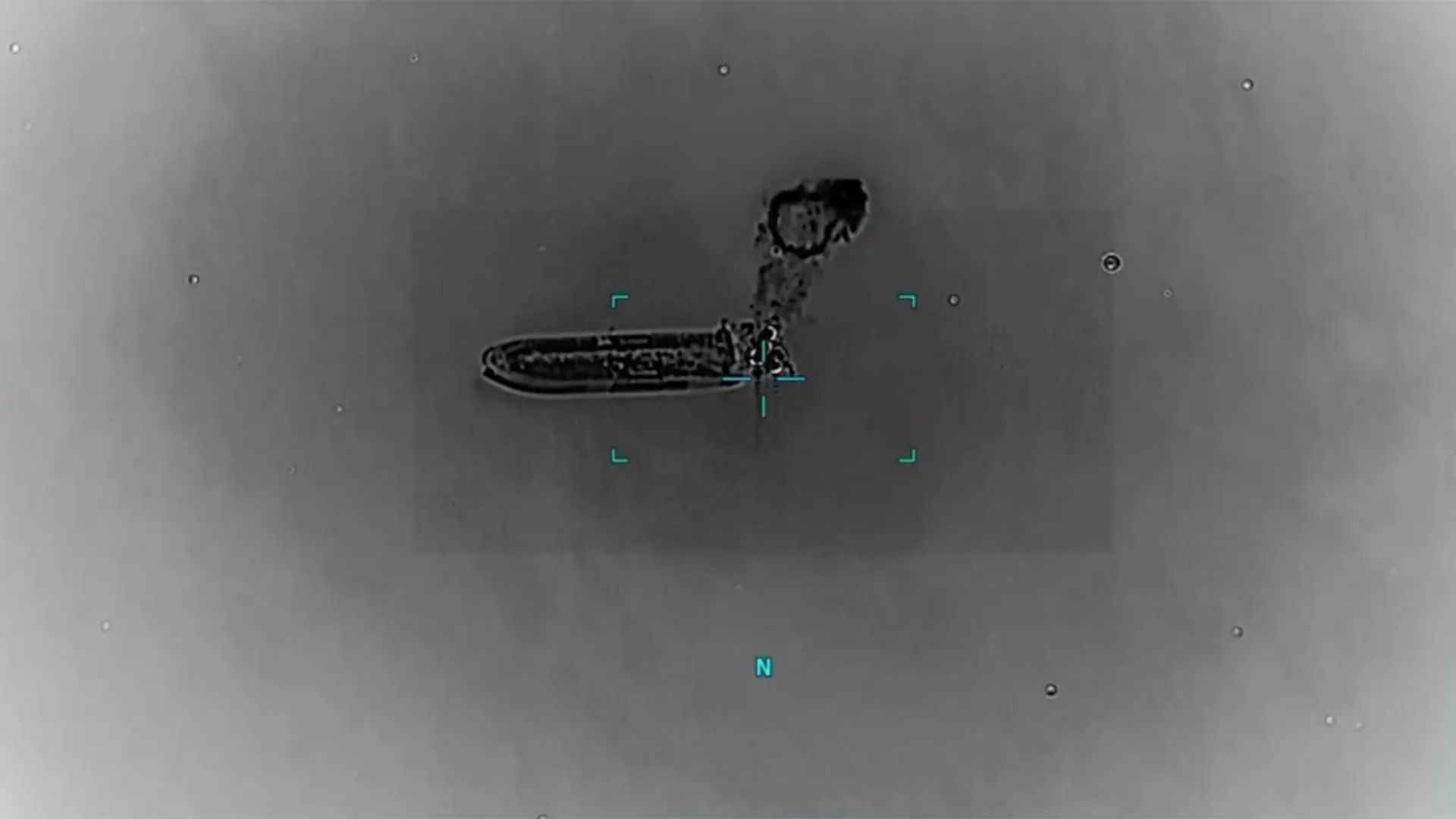
A US strike on an oil tanker accused of transporting Iranian oil has killed three Indian sailors. It was the second attack in three days on a ship carrying crew members from India.
The United States and Iran engaged in some of the most intense fighting overnight since all-out hostilities in the ongoing US‑Israeli war on Iran were halted with a Pakistan‑mediated temporary ceasefire on April 8.
A comprehensive peace agreement remains elusive as Iran and the US have exchanged a series of proposals and counterproposals in the weeks since that pause. After a string of smaller escalations, however, the US struck targets in Iran following the downing of a US Apache helicopter close to the Strait of Hormuz on Tuesday, and Iran retaliated by hitting US military bases in the Gulf.
The US military said it targeted communications and radar facilities. Iranian officials, however, said civilian infrastructure was also damaged, including two water reservoirs.
If correct, this is the first reported strike on civilian infrastructure in Iran in several weeks, but it comes at a time when Iran is facing a severe water shortage.
Which targets have been hit in Iran?
The US launched waves of attacks starting late on Tuesday following the downing of the helicopter in the Strait of Hormuz. The US described the attacks as “self-defence strikes” and a “proportional response to unjustified Iranian aggression”.
While an official US inquiry into what caused the helicopter to crash has yet to conclude, US President Donald Trump quickly blamed Iran, which he said had deliberately shot it down.
“I have just been informed by our Great Military that last night the Iranians shot down one of our highly sophisticated Apache Helicopters while patrolling over the Strait of Hormuz. There were two pilots involved, both are safe and uninjured,” Trump wrote on social media.
“Nevertheless, the United States must, of necessity, respond to this attack.”
Iran’s Islamic Revolutionary Guard Corps (IRGC) said US strikes, which hit targets including Sirik, Jask, Minab, Qeshm Island and the port of Bandar Abbas, had caused major damage to a telecommunications tower in the town of Sirik and destroyed two water reservoirs there.
Iran’s West Asia News Agency (WANA) news outlet reported on Wednesday, citing “available reports”, that two concrete water storage reservoirs in the Bamani district in the Sirik County of Hormozgan Province, in southern Iran, 1,012km (629 miles) from the capital, Tehran, had been hit in the US attacks.
The IRGC claimed attacks on US military bases in Bahrain, Kuwait and Jordan in retaliation.
Has the US hit Iran’s water infrastructure before?
Yes. On March 7, while missiles were flying across the region in an all-out war between Iran and the US-Israel, Iranian Foreign Minister Abbas Araghchi accused the US of striking a desalination plant on Qeshm Island off the coast of Iran in the Strait of Hormuz. The strike reportedly cut off the water supply to 30 villages.
“Water supply in 30 villages has been impacted. Attacking Iran’s infrastructure is a dangerous move with grave consequences. The US set this precedent, not Iran,” Araghchi wrote in an X post.
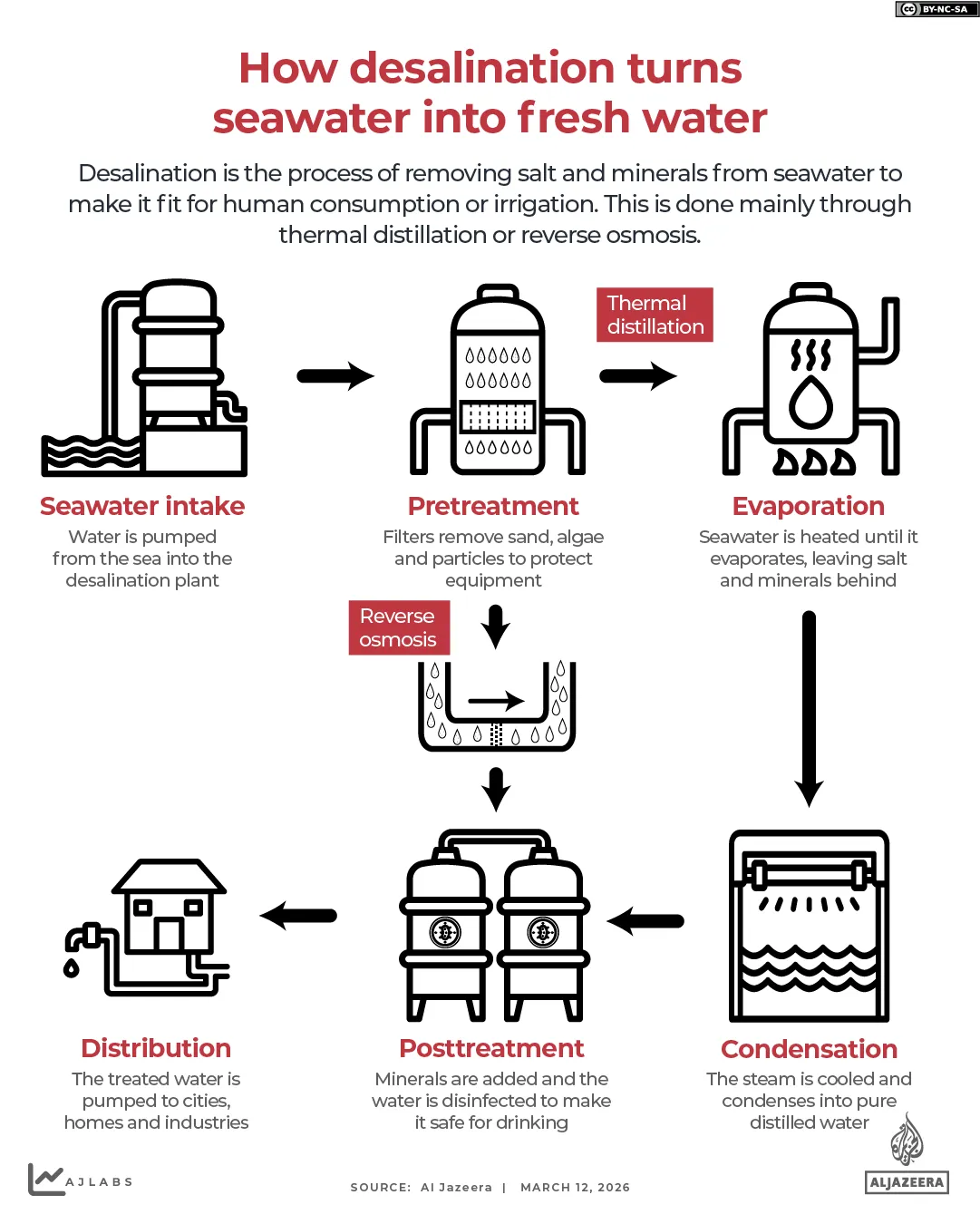
A desalination plant converts seawater into water suitable for drinking, irrigation and industrial use. These facilities are particularly critical in areas such as the Gulf, where freshwater is scarce.
[Al Jazeera]
Why is this significant?
The reservoirs that were struck provide drinking water to more than 20,000 residents in the city of Kouhestak and 10 surrounding villages. WANA reported initial estimates for damages amounting to $780,000 to $830,000.
Iran was already facing a multiyear drought and decline in precipitation before the US-Israeli war on Iran started. After years of poor agricultural practices and mismanagement, Iran’s main water supplies, including its reservoirs, rivers and groundwater reserves, continued to run dry.
According to Aqueduct data from the World Resources Institute, which tracks global water risk, Iran’s baseline water stress is classified as “extremely high” – meaning the country uses more than 80 percent of its renewable water resources in a typical year.
Last year marked Iran’s fifth consecutive year of drought. In November 2025, the water crisis was so dire that Tehran’s Amir Kabir Dam only held 8 percent of its capacity, while across the country, 19 major dams had run dry.
[Al Jazeera]
Is this a war crime?
Isa Bozorgzadeh, spokesman for Iran’s water industry, claimed the US strike on the water reservoirs is a war crime, WANA reported.
International humanitarian law classifies water infrastructure, including drinking water installations, treatment plants and pipelines, as civilian property which is not deemed a legitimate target during war.
The Berlin Rules on Water Resources, drafted by the International Law Association (ILA) and adopted in 2004, are a set of non‑binding international legal principles about how countries should use, share and protect water.
The Berlin Rules prohibit countries at war from destroying water installations “if such actions would cause disproportionate suffering to civilians”.
The Delhi High Court grants bail to Kashmiri rights activist Khurram Parvez, jailed in India for nearly five years.
Published On 10 Jun 202610 Jun 2026
New Delhi, India — A prominent Kashmiri human rights activist who has been imprisoned for nearly five years has won a partial legal victory after being granted bail in a “terror funding” case, but remains in jail over a second case.
The Delhi High Court granted Khurram Parvez, 49, bail in a November 2021 case on Wednesday, according to legal website LiveLaw. However, he will remain in jail in a separate case from March 2023.
Recommended Stories
list of 3 itemsend of list
Parvez was first arrested about five years ago by India’s main counterterrorism law enforcement bureau, the National Investigation Agency (NIA), over accusations of “terror funding”, recruitment of rebels in Indian-administered Kashmir and mobilising protesters during a civilian uprising. The second case is also related to alleged “terror funding”.
International rights groups have widely condemned Parvez’s arrest and continued imprisonment.
His lawyer, Swati Khanna, said she hoped Parvez could be freed from jail soon if there was a “positive result” in the second case.
“We are hoping, in a month or two, he could be out,” she told reporters.
The trial has not begun in either of the cases – an issue highlighted by international rights organisations, which say the process becomes the punishment for political prisoners in India who have to wait years behind bars before even facing trial.
The conviction rate in the counterterror law, the Unlawful Activities Prevention Act (UAPA), remains low at 5 percent nationally. It dips further, to less than 1 percent, when it comes to Indian-administered Kashmir.
Prime Minister Narendra Modi’s Hindu nationalist government has been criticised for persecuting dissent and criminalising expression in Kashmir, the country’s only Muslim-majority region.
Kashmiris protest against the scrapping of the special constitutional status for Indian-administered Kashmir by the government, in Srinagar, September 26, 2019 [Danish Ismail/Reuters]
“Khurram’s arrest proved to be the last nail in the coffin of any meaningful rights activism in Kashmir, one of the world’s most militarised zones,” said a political analyst based in Srinagar, Kashmir, who requested anonymity fearing repercussions from the authorities.
“This bail comes in a completely shallow, and nearly fictitious, trumped-up case after years in jail, and Khurram would still not walk free.”
Kashmir remains disputed between India, Pakistan, and China, which control parts of the region. Pakistan controls the northern and western portions – Azad Kashmir; and Gilgit and Baltistan. India controls the southern and southeastern parts – the Kashmir valley, including its biggest city, Srinagar; Jammu; and Ladakh. China controls the Aksai Chin area in the northeast.
The two neighbours have fought three major wars over Kashmir since the end of British colonial rule and their partition in 1947 led to the creation of Muslim-majority Pakistan and Hindu-majority India. Both countries continue to assert claims to the entire region of Kashmir.
Recent clashes between protesters and police killed at least 11 people.
It’s called the Joint Awami Action Committee, and it’s being accused of fuelling protests in Pakistan-administered Kashmir.
The group has been demonstrating against a rule that sets aside legislative seats for refugees from India-administered Kashmir who live in Pakistan. They say it gives them disproportionate influence in the divided region.
But the government says any change would require constitutional reform.
The issue has long been a subject of political debate in Pakistan-administered Kashmir. But how will its government deal with tensions rising once again?
Presenter: Imran Khan
Guests: Maria Iqbal Tarana – Senior leader of Pakistan Muslim League-Nawaz
Sahar Khan – Nonresident fellow at the Institute for Global Affairs
Imtiaz Gul – Executive director at the Center for Research and Security Studies
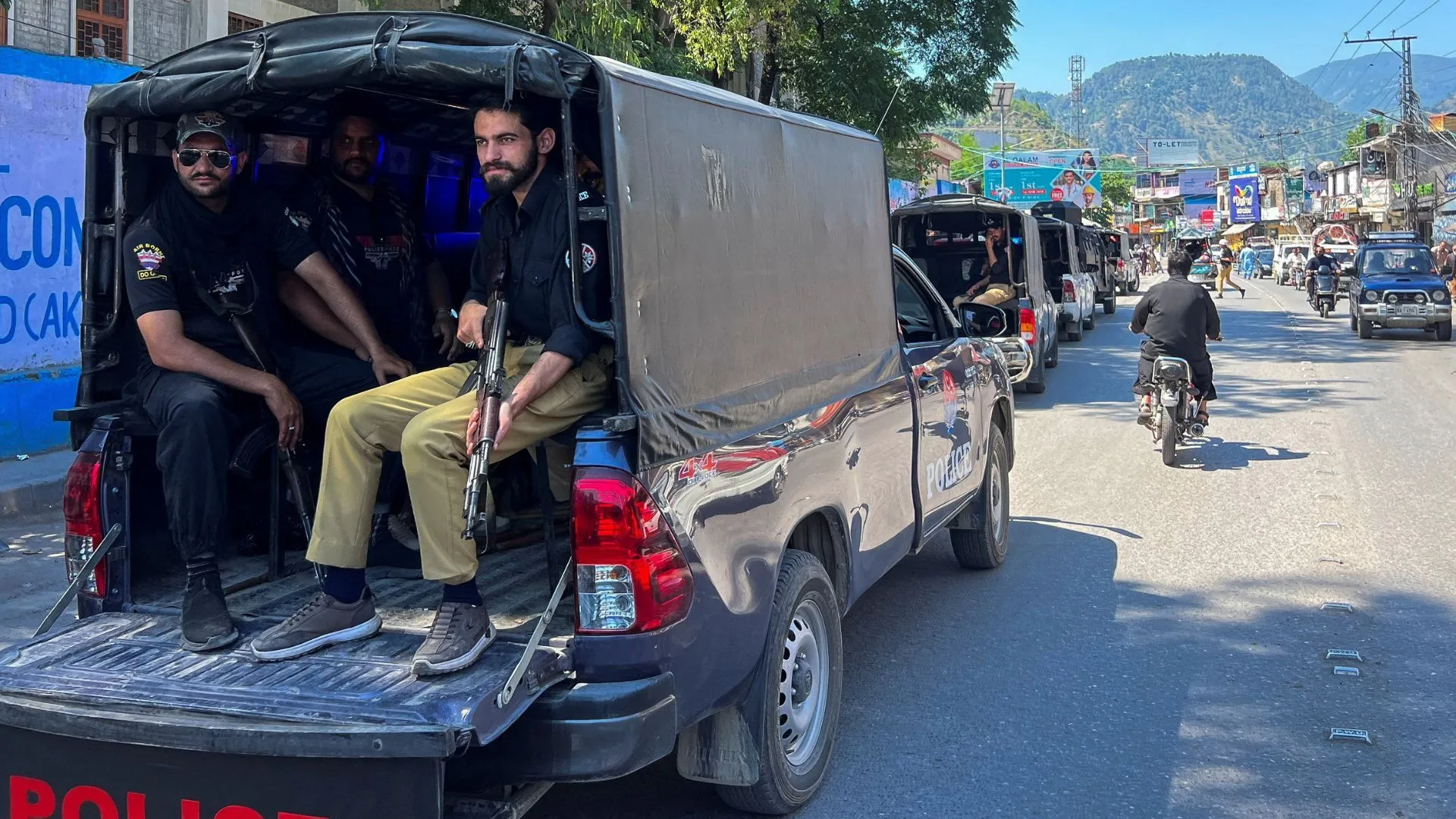
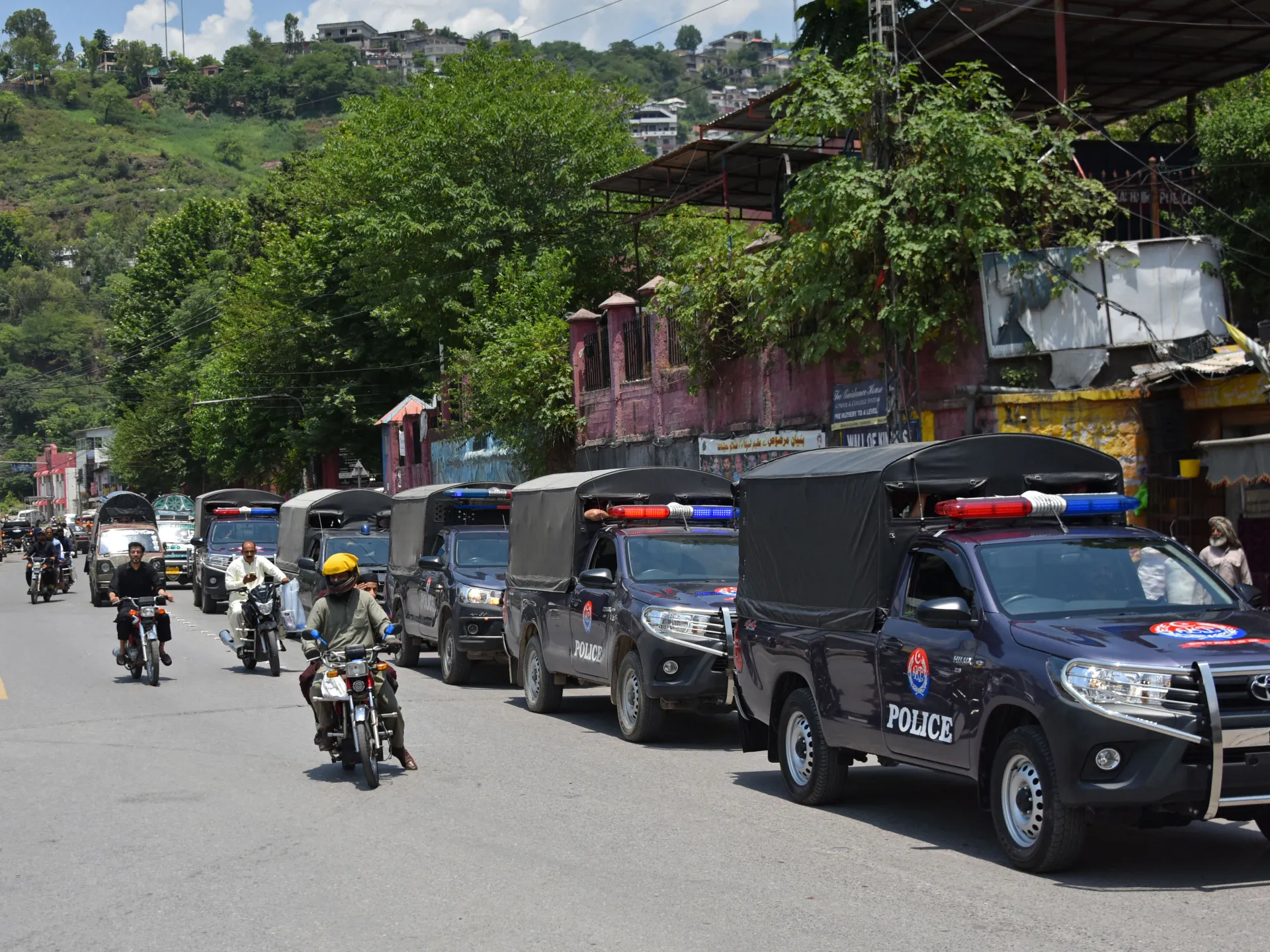
At least 11 people were killed on Sunday during clashes between police and protesters in Pakistan-administered Kashmir’s Rawalakot city, capital of Poonch district, before a major demonstration scheduled by a banned civil society group for Tuesday.
Authorities in Pakistan-administered Kashmir deployed federal paramilitary troops and issued a strict travel advisory before the Tuesday protest, which has gone ahead despite the restrictions.
Recommended Stories
list of 4 itemsend of list
Here is what we know about the latest unrest.
What’s happening in Pakistan-administered Kashmir?
Eleven people have been killed in clashes between the police and protesters, while more than 70 have been injured. The ban on the organisation, alongside regional grievances, set off the protests.
On Tuesday, Sardar Waheed Khan, commissioner of the Pakistan side of the Poonch district, a militarised region shared between Indian-administered and Pakistani-administered Kashmir, told the news agency Reuters that four police officers and a passer-by died “after miscreants shot at them”. Six protesters were killed, he said.
Police Chief Liaqat Malik said 23 security officials and 50 protesters were among those injured in Sunday’s clashes.
On Friday, local authorities issued an advisory urging visitors to avoid travelling to the area.
“The measure is advised to save intending visitors from any unexpected situation or inconvenience,” an unnamed official said in a statement issued by the region’s Press Information Department (PID).
“The government also requests those already in the territory for sightseeing or any other purpose to leave by Friday evening so that they do not confront any unpleasant situation,” the statement added.
Kashmir is a disputed Himalayan region which is claimed in full by both India and Pakistan, with China also controlling a portion of the territory. Pakistan-administered Kashmir – known locally as Azad Jammu and Kashmir (AJK) – is governed under a semi-autonomous system, with its own prime minister and legislative assembly, but ultimate authority resting with Islamabad. Its population exceeds four million people, according to the 2017 census. It is separated from India-administered Kashmir by what is known as the Line of Control (LoC).
The LoC is the 740km (459-mile) military border dividing the disputed Kashmir region between Indian-administered and Pakistan-administered territories.
Who is behind the protests?
The Jammu Kashmir Joint Awami Action Committee (JAAC) is a grassroots umbrella organisation that emerged in 2023 as the leader of a protest movement across the Pakistani-administered part of the region. The JAAC, led by activist Shaukat Nawaz Mir, represents traders and civil society groups.
On Friday, the local government proscribed the JAAC under a regional legislative framework in Pakistan-administered Kashmir called the Anti-Terrorism Act of 2014.
In a circular, the government’s home department claimed the JAAC “is engaged in terrorism, acted in a manner prejudicial to the peace & security of the State, involved in creating anarchy in the State by intimidating public, promoting hatred & creating sense of insecurity in society and public at large, etc”.
In the past, protests organised by the JAAC have led to violent clashes between protesters and security forces, leading to casualties.
In a video message on X responding to Sunday’s incident, Mir accused the authorities of unleashing violence in Rawalakot, saying, “The state has begun a massacre of our people in Rawalakot.”
In response, Khan, the commissioner of Pakistani Poonch, said, “The JAAC leadership is misleading the masses by terming it a massacre. The state’s action was meant to restore law and order.”
On Tuesday, the internet monitoring group NetBlocks said that its data showed that access to the web remained severely restricted in Pakistan-administered Kashmir for a third day in a row.
What is the trigger behind these protests?
These protests are against the reservation of 12 seats in Pakistan-administered Kashmir’s legislature for refugees from Indian-administered Kashmir who now live in other parts of Pakistan. If the refugees live in Pakistan-administered Kashmir, they are not eligible to contest for these reserved seats.
The region votes on July 27 to elect its next legislature, which has 45 seats in all — including the 12 reserved ones.
The JAAC is calling for the abolition of the reserved seats, arguing that all seats in the legislature must go to those who actually reside in Pakistan-administered Kashmir, and not those living in other constituencies scattered across Pakistan.
Abdul Jabbar Nasir, a journalist currently based in Karachi, but originally from a village near the LoC in the Gilgit Baltistan area, which is the majority of the Pakistan-administered Kashmir region, told Al Jazeera that the seats are reserved for those who migrated from Indian-administered Kashmir to Karachi or any other part of Pakistan in 1947.
Nasir explained that the reserved seats have existed in various forms since the late 1940s and were formalised in Pakistan-administered Kashmir’s 1974 interim constitution, which treats the region as a self-governing, autonomous state, with its own prime minister, president and courts, while defence, foreign affairs, currency and communications remain under Pakistan’s control.
“If the constitutional protection provided begins to be changed by these protesters, then I don’t think things can function,” Nasir said.
“It is essential for these seats to exist. If we abolish them, on one hand, Pakistan’s own case for Kashmiri statehood in the United Nations will be weakened, and India’s case will be strengthened,” he added.
He drew a parallel with India, noting that New Delhi historically kept a number of seats vacant in its parliament and the former Jammu and Kashmir assembly as a way of asserting that those bodies represented the entire former princely state, including areas under Pakistani control. If Pakistan now dismantles refugee representation in Pakistan-administered Kashmir, he warned, India could argue that both countries have effectively “regularised” their control over their respective portions of the disputed region.
Marathon talks between a federal ministerial team, including leaders from Pakistan and Pakistan-administered Kashmir, and JAAC leadership in late May failed to yield a breakthrough. This resulted in the JAAC announcing that the protest on Tuesday would proceed as planned.
On Sunday, a top court in Pakistan-administered Kashmir, called the Supreme Court of Azad Jammu and Kashmir, ruled that the 12 reserved seats are constitutionally protected, and a constitutional amendment would be needed to abolish the reservation.
“This ruling effectively closed the legal route for groups seeking to challenge the existing arrangement and intensified calls for protest by the [JAAC],” Raja Qaiser Ahmed, director for the Area Study Centre for Africa, North and South America at the Islamabad-based Quaid-i-Azam University, told Al Jazeera.
What are the deeper issues?
Experts say the current crisis is part of a deeper, long-running debate about governance, political representation, resource allocation and regional autonomy in Pakistan-administered Kashmir. The protest on Tuesday is the fourth such protest led by the JAAC.
“The current crisis reflects a broader and longer-term debate about governance, political representation, resource distribution, and regional autonomy in AJK,” Ahmed said.
“While the refugee-seat issue has become the focal point of the present mobilisation, it is intertwined with wider grievances that have surfaced repeatedly over the past several years.”
In September and October 2025, the JAAC officially released a comprehensive 38-point charter of demands and initiated a lockdown. The government, in response to a lockdown initiated by JAAC, imposed a complete communications blackout.
The protests had their roots in May 2023, when residents first protested skyrocketing electricity bills alongside widespread flour smuggling and acute shortages in subsidised wheat supplies. The movement hit its first major flashpoint in May 2024, when protesters set off on a long march towards Muzaffarabad. The ensuing violent clashes left at least five people dead, among them a police officer.
The 38-point charter remains the focal point of current tensions. The demands of the charter include economic subsidies, investigation of corrupt officials, social welfare and infrastructure, as well as the abolition of the 12 reserved seats.
Bilawal Bhutto-Zardari, chairman of the Pakistan Peoples’ Party (PPP), the party with the most seats in Pakistan-administered Kashmir’s Legislative Assembly, said on Sunday that he would meet Prime Minister Shehbaz Sharif to discuss the ongoing tensions in the region.
“Thirty-five out of 38 demands have been implemented,” Bhutto-Zardari said during a news conference in Islamabad, explaining that the rest of the demands are not feasible or have court orders barring their implementation.
“More fundamentally, the protests reveal an ongoing tension between constitutional arrangements linked to the broader Kashmir dispute and growing demands for greater local accountability and political participation,” Ahmed said.
“The debate is therefore not only about a specific set of assembly seats but also about competing visions of representation, governance, and the future political trajectory of the region.”
The worst-case oil scenario has been avoided, but inflation and slower growth continue to weigh on the global economy.
More than 100 days into the Iran conflict, 20 percent of the world’s energy flows remain disrupted, with the scenario described as the biggest supply shock in history.
For now, the nightmare scenario has been avoided. Oil prices are still at approximately $100 a barrel.
Many analysts have warned that a prolonged disruption to the Strait of Hormuz could send oil above $200 a barrel, triggering a global economic crisis.
Various countries have released their strategic reserves, exporters have found alternative routes and weaker demand has helped contain prices. But the buffers are thinning.
The Organisation for Economic Co-operation and Development (OECD) warns the economic impact could linger well into 2027, even if the conflict ends tomorrow.
India’s fertility rate has for the first time fallen below the level needed to stop the population from shrinking, raising concerns about future labour shortages and an ageing society.
For decades, India has seen rapid population growth. According to government statistics, including the Sample Registration System (SRS) Statistical Report — the country’s largest demographic survey — India has had a falling fertility rate for some years, but the reproduction rate remained high enough to keep the population growing.
Recommended Stories
list of 3 itemsend of list
The latest SRS report, released last month by India’s Office of the Registrar General and Census Commissioner, said that India’s Total Fertility Rate (TFR) had dropped to 1.9 children per woman – lower than the benchmark level of 2.1 needed to keep the population stable in the long run. TFR is the average number of children that a woman is expected to have in her lifetime. In the 2000s, India’s TFR was around 3.3 births per woman.
So, what is behind reduced fertility? Why does it matter and what are the consequences?
Here’s what we know:
What has led to the falling fertility rate ?
For decades starting in the 1970s, Indian governments and policymakers have tried to battle what they argued was overpopulation — too many people, and too few resources to manage for what was then a relatively poor nation.
Many top-down government initiatives — including a brief controversial effort to forcibly sterilise people in the 1970s — aimed to control India’s population.
Despite that, by 2019, India’s Prime Minister Narendra Modi was still warning of a “population explosion”.
But by 2022, the first signs that India was about to tip over into uncharted territory: The National Family Health Survey released data suggesting that India’s TFR was falling fast, across communities. Yet a year later, India surpassed China to become the world’s most populous nation — and the trend of a declining fertility rate was swamped by the headlines of a 1.5 billion population.
Now, latest survey suggests that the prospect of a shrinking population might be more imminent than policymakers had planned for.
Experts say better access to education and contraceptives are among key factors behind the falling fertility rate — along with the increased costs of bringing up children.
“Total fertility rate often drops when more women in society have access to education, contraceptives and more agency in decision-making in households,” Dipa Sinha, a development economist who works on social policy in India, told Al Jazeera. “It also drops when the economy becomes expensive so raising children also becomes expensive.”
She said there’s another reason too.
As infant mortality reduces, the desire to have more children also decreases. According to the latest SRS report, India has recorded a significant decline in infant deaths from 30 per 1,000 live births in 2019 to 24 deaths per 1,000 live births in 2024.
These factors also correlate almost perfectly with the differential levels of fertility rates across the country.
According to the May demographic survey report, India’s poorest states, such as Bihar in northern India with the lowest levels of education and high infant mortality rates, also recorded the highest fertility rate in the country at 2.9, followed by 2.6 in Uttar Pradesh.
By contrast, India’s capital New Delhi — with among the highest levels of education and lowest infant mortality rates — registered the lowest fertility rate, with an average of 1.2 births per woman. Southern states such as Tamil Nadu and Kerala, with among the best health and education systems in India, recorded a rate of 1.3.
“A lot of studies on regional development in India from the early 80s have revealed that states in the South have developed faster with respect to both the economy and women’s status in society. So these reasons have contributed to the lower fertility rate,” Sinha said.
What are the consequences of a falling fertility rate?
In 2005, India’s population entered a stage called ‘demographic dividend’, a phase when the proportion of a country’s working age population (15-64 years) is higher than the number of old people and children who are not in the labour force. According to the UNFPA, India’s demographic dividend is expected to last until 2055.
Japan, Singapore and Hong Kong entered this phase in the 1960s and rapidly became developed economies. China entered this phase in the 1980s and — coupled with economic reforms — rapidly rose as an economy. Today it’s the world’s second-largest economy.
In India too, the demographic dividend has helped propel the economy. But millions remain unemployed and — as with China — India is far from a developed economy.
Now, with a declining fertility rate, India might not be able to reap the benefits of a demographic dividend, experts are cautioning, because of a shrinking workforce and a rapidly ageing population.
“If there are fewer children born, then in about 30 to 40 years, India will have more older people who cannot participate in the labour force as much, posing a challenge to the country’s workforce,” Sinha said.
What is the politics behind India’s population data?
The widely varying fertility rates in different parts of the country mean that northern states — which already have higher populations — will in coming years be home to an ever-increasing share of India’s population.
Southern states have already in recent years been complaining that the Indian federal government — especially under Modi — are being “punished” with fewer funds, Sinha said. Modi’s Bharatiya Janata Party (BJP) has historically struggled to make major political inroads in southern India, though it has made gains in recent years.
Now, “the distribution of financial resources by the country’s government to state governments” could become an even bigger political flashpoint, she suggested. Later this year, India’s government will introduce a policy in parliament called “delimitation”, which will assign seats to each state according to population figures based on the subcontinent’s new census that began earlier this year and conclude in 2027.
“When delimitation comes into effect, there is a fear that the share of southern seats in the Parliament will reduce,” Sinha added.
Moreover, India’s ruling BJP has long stirred the stereotype that Muslims in India are producing more children than Hindus — fanning fears among Hindus that Muslims might some day overtake them as the majority faith in India. The Hindu far-right has been urging Hindus to have more kids. In February, Rashtriya Swayamsevak Sangh (RSS) chief, Mohan Bhagwat, urged Hindu couples to have at least three to four children to prevent the community’s long-term societal decline.
In reality, the Muslim population of India was 13 percent in the last census in 2011. Government data shows that the Muslim fertility rate has been falling faster than in any other religious group, India, including Hindus. The fertility rate among Muslims fell from 4.41 to 2.36 between 1992 and 2021, while it dropped from 3.3 to 1.94 for Hindus.
The latest survey further suggests that India’s fertility rate is falling sharply across faiths.
Is India responding to its declining fertility rate?
While the Indian government has not yet announced a nationwide policy to tackle its falling fertility rate, individual states have been trying to encourage people to have more children.
Last month, the southern Indian state of Andhra Pradesh said families will receive 30,000 rupees ($314) for the birth of a third child and 40,000 for a fourth child ($418). According to the SRS data, Andhra Pradesh’s total fertility rate is 1.4.
States such as Goa in the west and Karnataka and Telangana in the south have introduced state-funded IVF centres for first-time parents, encouraging people to have more children.
Sinha said the Indian government should respect people’s individual reproductive choices and support them.
“It is important for countries like India to develop a public policy based on its demographic structure and future needs. So if we are going to be an ageing population, then we have to be ready to help a lot of old people,” she said. The country needs “a policy now which guarantees that they have better healthcare, pensions and social security in old age”.
Which other countries in Asia have seen dramatic fertility rate declines?
Other Asian countries such as China, Taiwan and South Korea are also experiencing fast-falling fertility rates.
According to the World Bank, China’s 1.0 fertility rate is well below the 2.1 replacement level.
Taiwan’s interior ministry said earlier this year that its total fertility rate is around 0.86 and likely to fall below that.
The United Nations says South Korea’s rate is approximately 0.75 children per woman – the lowest worldwide.
Police crack down down on supporters of the Joint Awami Action Committee, which plans to hold a rally Tuesday.
Published On 8 Jun 20268 Jun 2026
At least 11 people have been killed as police clashed with supporters of an outlawed group in Pakistan-administered Kashmir, officials said on Monday, a day before a planned protest over political rights and legislative representation.
Dozens of others, including police officers and civilians, were wounded in the violence that erupted Sunday after the Supreme Court of Pakistan-administered Kashmir ruled that 12 legislative seats reserved for Kashmiri refugees living in Pakistan are constitutionally protected and cannot be abolished without a constitutional amendment.
Recommended Stories
list of 3 itemsend of list
The landmark ruling came before a rally planned for Tuesday by the outlawed Joint Awami Action Committee, or JAAC, which has long demanded greater political rights for people in the region and the abolition of the refugee seats, on the grounds that the refugees have disproportionate influence.
The group has organised large protests in recent years, a number of which have turned violent.
“Four police officers and a passer-by died after miscreants shot at them,” Sardar Waheed Khan, commissioner of the Poonch sector in the region, told the Reuters news agency. “As the result of the law enforcers’ response, six protesters were killed,” he said.
Police Chief Liaqat Malik said 23 security officials and 50 protesters were among the injured in Sunday’s incident, with 30 offenders arrested in the Himalayan region that is a flashpoint with neighbouring India.
According to the regional police, armed supporters of the JAAC opened fire on security forces in Rawalakot, a city in Pakistan-administered Kashmir, and later surrounded the Combined Military Hospital, disrupting medical services.
Authorities said security forces eventually dispersed the crowd and restored order.
Police accused protesters of setting fires and damaging government and private property.
“The state has begun a massacre of our people in Rawalakot,” Shaukat Nawaz Mir, a JAAC leader, said in a video message on X, referring to the district where the incident happened. He pledged that the group would stay united to take part in the June 9 rally.
On Friday, the regional government designated the JAAC as a proscribed group under an anti-terror law, and advised domestic and foreign tourists to leave the region before June 9.
Mass demonstrations in the last two years by the JAAC against the rising costs of flour and electricity have turned deadly after violent crackdowns on protesters by security forces.
Khan, the police commissioner of the Poonch sector, said, “The JAAC leadership is misleading the masses by terming it a massacre. The state’s action was meant to restore law and order.”
When security forces tried to disperse the protesters, activists used automatic rifles, petrol bombs, and other weapons to target them, he said.
In April, I accompanied a friend on a visit to villages in Daikundi province, central Afghanistan. The purpose of the trip was to speak to farmer beneficiaries of a project that an NGO operating in the agriculture sector had carried out and to follow up on its impact. The week I spent travelling with him was quite eye-opening regarding the state of the non-profit sector in the country.
The project in question provided zero-energy storage houses to preserve harvests, such as fruit and vegetables, in rural areas. On the surface, the idea was promising: provide farmers with storage space so they could sell their produce over a few months.
However, the farmers we spoke to in several villages showed us heaps of apples decaying beneath the trees. They complained that the storage houses had space for the apples of only two to three families in the entire village.
In another village, we saw frustration with another project from a different NGO. That organisation had bought imported seeds for various vegetables and distributed them among farmers. Staff members provided training, conducted weeks of workshops on cultivation methods and techniques, and regularly monitored the crops.
The local participants invested significant time, energy, land, and water in the project. But the harvest they got from these imported seeds was very little and of poor quality. Despite the enormous amount of money spent by the NGO on surveying, training, logistics, transportation, and staff salaries, the vegetables for each family amounted to about 450 Afghans (roughly $7). There was no accountability for the farmers’ losses.
Such stories are common across rural communities in Afghanistan. While aid organisations publish reports of their achievements, many beneficiaries gain little from poorly designed projects that fail to address the real challenges they face. The cost of these projects is extremely high, but the output is often too little.
Since the Taliban took over Kabul and the US-led coalition withdrew from the country, humanitarian aid and funding in Afghanistan have dramatically collapsed. The struggle to secure funds, however, has not led to better efficiency, accountability, and transparency among the NGOs still operating in Afghanistan.
This is not a recent phenomenon. Between 2001 and 2021, Afghanistan became the poster child for corruption, embezzlement, and waste of foreign aid. One US journalist described it as “the $148 bn failure”.
According to the Special Inspector General for Afghanistan Reconstruction (SIGAR), set up by the United States to investigate fraud with US funds, between $26bn and $29bn was lost due to embezzlement or wasteful spending. This was just funding provided by the US government; there is no estimate for how much was wasted from other donors.
While much of the foreign funds went to the security sector, a significant amount went to the non-profit sphere, where waste was also widespread. Millions, if not billions, worth of projects became a missed opportunity to improve the lives of Afghans, especially in rural areas. This is a legacy that persists to this day.
This situation is not unique to Afghanistan. The development sector across the world is known for waste and inefficiency. In the Afghan context, that is exacerbated by the lack of control and difficulty of ground work.
Many foreign NGOs do not directly implement their projects; instead, they work through implementing partners (IPs), which themselves outsource implementation to subcontractors. This extended chain of actors means that often there is a lack of proper quality control and supervision, and there is motivation to carry out lower-quality work in order to increase profit.
Furthermore, the primary concern of IPs is securing funding. So they often present project proposals that look great on paper but do not necessarily have a substantial impact on the circumstances of the local population or address their most urgent needs.
Finally, there is a lot of waste in remuneration, especially when it comes to international staff. Foreign employees often have salaries as high as $10,000–20,000 for doing work that a local hire can do for much less.
It is clear that amid global cuts to donor funding, the development sector is struggling. This should be a moment of change. In Afghanistan, where the need of the local population is enormous while available financing is shrinking, NGOs can take this change into their own hands.
The simplest first step NGOs can take is to employ qualified locals to plan and lead projects. They would know the local culture, realities, and actual needs of communities, as well as market prices and field conditions. They can help not only optimise project costs but also ensure that they actually have a real, measurable impact.
In addition, NGOs should avoid having an extended chain of IPs and subcontractors. They should also regularly collect feedback from local communities and field workers directly in order to evaluate project effectiveness during implementation in order to avoid repeating the same mistakes.
Projects are more likely to produce sustainable results if NGOs invest in addressing pressing nationwide challenges, such as unemployment, infrastructure, and market access.
Improving efficiency and effectiveness would not only ensure Afghan beneficiaries get better services and help, but it would also make organisations more competitive for the dwindling pool of funding. This is the only way to salvage the NGO sector not only in Afghanistan but in the rest of the world.
The views expressed in this article are the author’s own and do not necessarily reflect Al Jazeera’s editorial stance.
At New Delhi’s Jantar Mantar, India’s most famous protest strip, hundreds of mostly young people in cockroach masks and with dog-eared exam guides in hand tried to turn an online joke into a real-world force.
They call themselves the Cockroach Janta Party (CJP) – a satirical “people’s party” born barely three weeks ago after India’s chief justice reportedly likened government critics and unemployed youth to “cockroaches” and “parasites”.
What began as a parody account and meme factory has since exploded into a channel for anger over exams, jobs and a fraying sense of economic promise.
On Saturday, that digital discontent stepped off the screen. Waving India’s national flag and clutching schoolbooks, the protesters demanded the resignation of Education Minister Dharmendra Pradhan after a string of exam paper leaks, technical glitches and cancelled tests.
For many, the fiasco over the NEET medical entrance exam – and reports of student suicides – symbolises a system young Indians say has no credibility left.
The CJP’s founder, 30-year-old political strategist and Boston University graduate Abhijeet Dipke, flew in from the United States to lead the rally, telling supporters that “cockroaches don’t ever fear.”
Police in riot gear and steel barricades underscored the risks of dissent in an era when large protests have often been met with crackdowns and criminal cases.
With more than 20 million followers on Instagram, CJP has already outgrown many mainstream parties online.
Its first street protest now tests whether self-deprecating memes and satire can be converted into a lasting organisation – and whether India’s anxious, hyper-connected youth can find a new political language for their frustration.
Previous World Cup appearances: 0 Player to watch: Mousa Tamari FIFA world ranking: 63
Jordan are appearing at the World Cup finals for the first time, with their Moroccan coach Jamal Sellami hoping that his players can emulate the heroics of The Atlas Lions four years ago.
Recommended Stories
list of 4 itemsend of list
“In big competitions, many teams can surprise. My country, Morocco, reached the semifinals in the last World Cup,” the Reuters news agency quoted him as saying during a training camp in Antalya, Turkiye, in late March.
“That gives us belief.”
While a run to the semifinals might be a little bit optimistic, Jordan are coming into the tournament on a good run of form.
The Middle East nation reached the final of the 2023 Asian Cup, losing to hosts Qatar, and also played Morocco in the final of the 2025 Arab Cup, agonisingly falling short in a 3-2 defeat after extra time.
Jordan also scored 32 goals in World Cup qualifying, marking their highest tally in a single qualification campaign. But eight of those goals were scored by Yazan Alnemat, who will miss this summer’s tournament due to injury.
Sellami takes Jordan into the big time
The Al-Nashama, or the “noble ones”, have developed into a significant force in Arab football since Sellami took over as coach in June 2024 and built on the work of his predecessor, compatriot Hussein Ammouta.
Sellami believes the team he has built can deliver a shock similar to Algeria beating Germany in 1982, Cameroon stunning reigning champions Argentina in 1990, and Senegal repeating the feat against holders France in 2002.
“These results open horizons of hope and ambition for the fans, so they can dream,” Sellami, who played for Morocco at the 1998 World Cup, told Arabic sports channel TFK.
“And we too have the right to dream and to strive to be a strong team and present ourselves well,” he added.
The 55-year-old former midfielder has built a well-structured, disciplined team that utilises their wealth of creative forward talent to hit opponents on the break with lightning-quick transitions.
Star striker misses out
While Jordan’s qualifying campaign gives them plenty of hope for this summer’s tournament, their team in North America will be missing a big part of what made them such a force in Asian qualifying.
Forward Yazan Alnemat contributed eight goals, but will miss the World Cup finals after suffering an ACL injury in the Arab Cup quarterfinals last December.
“Yazan is a player who cannot be replaced,” conceded Sellami. “But we will find a combination for the team that can still be dangerous to the opponent, and that also gives us balance in our defensive performance.”
Alnemat’s likely replacement, Ali Olwan, has recovered from an Achilles injury sufficiently to take his place in Sellami’s extended squad. He contributed nine goals in qualifying, highlighting Jordan’s depth in attacking options.
Mousa Tamari and Nizar al-Rashdan take part in a training session in preparation for the World Cup [Alaa Al Sukhni/Reuters]
‘Jordan’s Messi’ hopes to shine
Captain Mousa Tamari is one of Jordan’s biggest attacking threats and will be looking to torment defenders on the right wing.
The 28-year-old Rennes midfielder is the only Jordan player who competes in one of Europe’s top five leagues and has enjoyed a strong season in France, scoring seven goals and grabbing 11 assists in 36 appearances for the Ligue 1 outfit.
He’s also been a key player at international level, scoring 23 goals in 76 appearances for the Jordan national team.
If Jordan are to upset the odd’s at this summer’s World Cup, they will need to rely heavily on the man known as “Jordan’s Messi”.
How does Jordan’s group look?
Defending champions Argentina provide formidable opposition in Jordan’s final game in Group J, with the real Messi squaring up against his Jordanian counterpart.
Sellami’s side will face Austria in their opening match in San Francisco, with the European nation making their first appearance at the World Cup since 1998.
Jordan are the lowest-ranked team in their group, but perhaps their best opportunity of success will come against the second-lowest-ranked side, Algeria.
The African side recorded eight wins in World Cup qualifying and will look to Riyad Mahrez to provide goals and assists.
Jordan’s group stage match dates and kickoff times:
⚽ June 16: Austria v Jordan (San Francisco Bay Area, US), 9pm (04:00 GMT on June 17).
⚽ June 22: Jordan v Algeria (San Francisco Bay Area, US), 8pm (03:00 GMT on June 23).
⚽ June 27: Jordan v Argentina (Dallas, Texas, US), 9pm (02:00 GMT on June 28).
Al Jazeera’s prediction:
A fight for third in their group, but ultimately, qualification for the knockouts may be a stretch for Jordan.
Full squad
Goalkeepers: Yazeed Abulaila (Al-Hussein), Abdullah al-Fakhouri (Al-Wehdat), Noor Bani Attiah (Al-Faisaly).
Defenders: Abdallah Nasib (Al-Zawraa), Ehsan Haddad, Saed al-Rosan, Saleem Obaid (Al-Hussein), Yazan al-Arab (FC Seoul), Mohammad Abualnadi (Selangor), Husam Abu Dahab, Anas Banawi (Al-Faisaly), Mohannad Abu Taha (Al-Quwa Al-Jawiya), Mohammad Abu Hasheesh (Al-Karma).
Midfielders: Noor Al-Rawabdeh (Selangor), Nizar al-Rashdan (Qatar), Ibrahim Saadeh (Al-Karma), Rajaei Ayed, Mahmoud Al-Mardi (Al-Hussein), Amer Jamous (Al-Zawraa), Mohammad al-Dawoud (Al-Wehdat).
Forwards: Mousa Tamari (Rennes), Odeh al-Fakhouri (Pyramids), Mohammad Abu Zrayq (Raja Casablanca), Ali Azaizeh (Al-Shabab), Ibrahim Sabra (Lokomotiva Zagreb), Ali Olwan (Al-Sailiya).
CJP organisers rally supporters to demand the resignation of Education Minister Dharmendra Pradhan.
Published On 6 Jun 20266 Jun 2026
Hundreds of supporters of the Cockroach Janta Party (Cockroach People’s Party, or CJP), a satirical social media movement in India, have gathered in New Delhi after weeks of grabbing news headlines.
The party, a play on Prime Minister Narendra Modi’s Hindu-nationalist Bharatiya Janata Party (BJP), has attracted millions of online followers and widespread support among young Indians.
Recommended Stories
list of 3 itemsend of list
On Saturday, hundreds gathered in New Delhi’s protest zone near parliament, with some participants wearing cockroach masks.
Last month, India’s Chief Justice Surya Kant likened young people who criticised the government to “cockroaches” and “parasites” during a court hearing.
Kant later said his comments were taken out of context. But Abhijeet Dipke, a political communications strategist and Boston University student, used the insult as inspiration for a parody political party.
Within a week of launching a website and social media accounts, CJP’s Instagram page soared and by Saturday had amassed more than 22.2 million followers, with the slogan: “A political front for the youth, by the youth, for the youth.”
For Saturday’s march, CJP organisers rallied supporters to demand the resignation of Education Minister Dharmendra Pradhan, after an exam irregularity controversy in May that quickly transformed into frustration over India’s education system and limited job opportunities.
CJP supporters chanted slogans including: “Cockroaches are coming, Dharmendra Pradhan is going!”
Organisers of the march encouraged participants to bring India’s national flag and a book, which they said symbolised the right to education and equal opportunity for all. They also urged demonstrators to remain peaceful and avoid any confrontations with police.
Ahead of the protest, Indian police tightened security at the airport and the Jantar Mantar protest site, setting up steel barricades at key points.
Cockroach Janta Party (CJP) founder Abhijeet Dipke, centre, shouts slogans during a protest over alleged irregularities in the country’s major examinations, in New Delhi [AFP]
The group’s rise echoes a similar trend across South Asia, where youth movements born out of social media have been crucial in antigovernment protests, particularly in Sri Lanka, Bangladesh and Nepal.
With the cockroach now a symbol of endurance, CJP supporters have jokingly described themselves as unemployed and perpetually online.
While young people in India make up more than a quarter of the population, they face limited job opportunities, leading to rising unemployment and growing disillusionment with traditional politics.
Some supporters of Modi’s party have dismissed the CJP as nothing more than a social media gimmick. They argue that the parody party’s social media success might not translate into political street mobilisation and that its rapid rise will likely be fleeting.
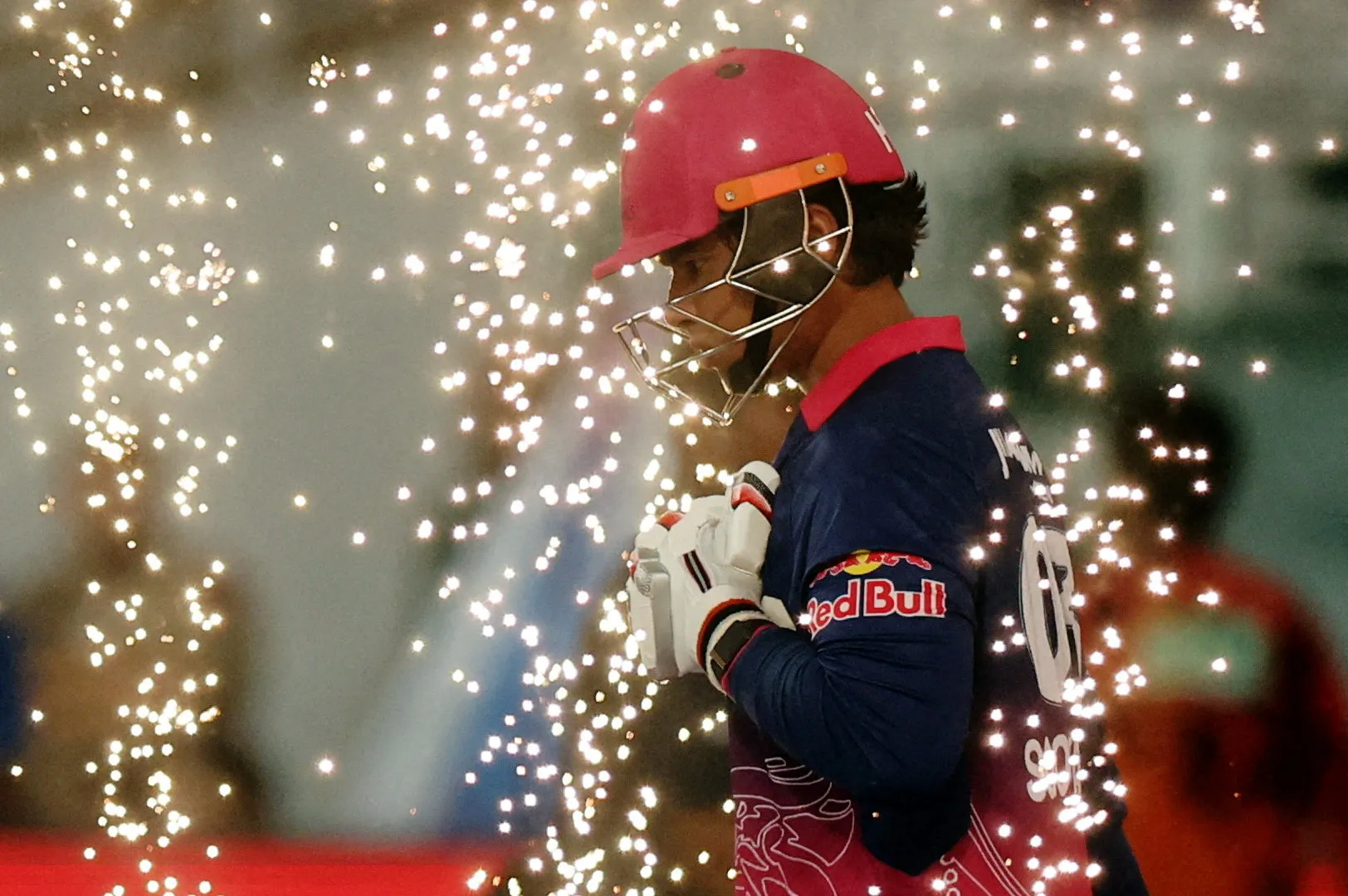
Following his run topping display at the IPL, Vaibhav Sooryavanshi is being lined up as India’s youngest player.
Published On 5 Jun 20265 Jun 2026
The 15-year-old batting sensation Vaibhav Sooryavanshi is likely to be named in India’s T20 squad, while skipper Suryakumar Yadav could get the axe when selectors meet on Saturday.
Sooryavanshi had a stellar Indian Premier League (IPL) for Rajasthan Royals, finishing top of the batting charts with 776 runs, including a hundred and five half-centuries.
Recommended Stories
list of 4 itemsend of list
It is understood that the left-handed opener is in line to be picked for two T20 matches in Ireland, followed by five games in England.
He would be the youngest debutant for India in history.
Batting great Sachin Tendulkar played his first Test for India at 16 years and 205 days in 1989.
Sooryavanshi has also been included in a 30-member of probables for the Asian Games in September-October in Japan, Indian media says.
He was named most valuable player in the IPL, despite his team narrowly failing to reach the final.
He also scooped the Orange Cap for leading the batting charts, and was named emerging player of the season, among other prizes.
The India T20 team is expecting a leadership change, with Suryakumar likely to be removed from the captaincy nearly three months after he led the country to World Cup glory at home.
Suryakumar has struggled with the bat, scoring just 242 runs in nine World Cup innings, with his unbeaten 84 against the United States the only significant knock.
Playing for Mumbai Indians in the IPL, the 35-year-old managed only 270 runs in 13 innings at an average of 20.76. His team ended ninth in the 10-team table.
Indian media have predicted Suryakumar will lose his place in the T20 squad, with insiders calling it a “tough call”.
Suryakumar is likely to be replaced by Shreyas Iyer, who last played a T20 for India in December 2023 but has been an IPL-winning captain.
He led Kolkata Knight Riders to the title in 2024 and then captained Punjab Kings to a runners-up finish in 2025 and into the playoffs this year.
Ishan Kishan and Tilak Varma are also in contention for the captaincy, with selectors set to name the squad over the weekend in Mumbai.
As the rally in AI stocks fades, investors were cautious at the open on Friday, with European markets opening to mixed sentiment following steep falls in Asian markets.
ADVERTISEMENT
ADVERTISEMENT
Indices in London and Frankfurt quickly moved into negative territory, with the FTSE 100 dropping nearly 0.4% and the DAX losing 0.3% right after the opening. The Paris CAC 40 and the IBEX 35 in Madrid were both up 0.3%, while Milan’s main index was flat. So was the EURO STOXX 50, a benchmark index of 50 blue-chip companies from the eurozone.
Investors are awaiting the latest US non-farm payrolls report and keeping an eye on developments in the Middle East.
The US job data is important for forecasting what the Fed’s next move could be. Kathleen Brooks, research director at XTB, said in a market note, “There is now a near 40% chance of a rate hike by year-end. We expect financial markets to be extremely sensitive to today’s data,” adding that this will be the first such report with Kevin Warsh as chairman of the Federal Reserve.
In the UK, the latest data from Halifax showed that house prices unexpectedly declined in May. House prices fell 0.1% month on month, but were still up 0.5% year on year, missing expectations for a 1% jump.
Oil markets are awaiting further direction
Oil prices stabilised after falling on Thursday. Brent crude, the international benchmark, was slightly down and traded at $94.73 per barrel at 10:00 CET. It had been trading at about $70 per barrel before the start of the war in late February.
Benchmark US crude was little changed at $92.51 a barrel.
Oil prices remain under pressure as the Strait of Hormuz, a narrow waterway crucial for global oil and natural gas transport, remains effectively closed, and the war-induced energy shock is threatening to slow economic growth and fuel inflation in many countries.
American and Iranian negotiators reached a tentative deal last week to extend their ceasefire, but the agreement has not been finalised. Meanwhile, developments in Lebanon have cast doubt on the prospects for a permanent end to the conflict.
On Thursday, the Iran-backed Lebanese militant group Hezbollah rejected the latest ceasefire agreement between the Lebanese and Israeli governments.
“While there are few signs of progress in US-Iran talks, the oil market continues to trade on expectations of an imminent deal that would resume flows through the Strait of Hormuz,” ING commodities strategists Warren Patterson and Ewa Manthey wrote in a report.
Asian markets lose steam as AI craze cools
Wall Street rallied on Thursday after falling oil prices and bond yields eased pressure on US stocks. Banks, small-cap companies and other stocks that had previously been left behind by the euphoria around artificial intelligence led the gains.
Banks also helped lead the market, including gains of 5% for Goldman Sachs, 4.7% for Fifth Third Bancorp and 4.4% for U.S. Bancorp.
They helped to more than make up for losses among some AI stocks, which took a sudden back seat after dominating the market. Analysts have been saying AI stocks may have run too high, becoming too expensive, and that the broader US stock market may be set for a slowdown following an unrelenting streak of nine straight winning weeks for the S&P 500, its longest since 2023.
On Wall Street on Thursday, computer chipmaker Broadcom’s shares sank 12.6% after it issued guidance that fell short of investors’ expectations, raising concerns about the wider AI and technology sector.
US memory chip maker Micron Technology dropped 7.7%, and cybersecurity company CrowdStrike Holdings fell 3.8%.
Still, the benchmark S&P 500 climbed 0.4%, and the Dow Jones Industrial Average gained 1.7% to a record high. The tech-heavy Nasdaq Composite edged 0.1% lower.
But in Asia, investors dumped key AI-related shares, with South Korea’s SK Hynix plunging 8.6% and Samsung Electronics shedding 5.4%.
The Kospi dropped 5.1% to 8,199.44. The index has roughly doubled over the past year, lifted by gains in major technology companies.
Japan’s Nikkei 225 slipped 1.3% to 66,573.85, with technology shares leading the decline, even as official data showed that Japan’s real wages rose for the fourth consecutive month. Chip equipment maker Tokyo Electron’s shares fell 7%.
Hong Kong’s Hang Seng declined 1.2% to 24,948.96, while the Shanghai Composite Index fell 0.3% to 4,045.45.
Australia’s S&P/ASX 200 fell 0.7% to 8,623.50.
Taiwan’s Taiex gave up 1.3%, while India’s Sensex was up 0.1%.
In other trading early on Friday, the US dollar fell to 159.96 Japanese yen from 160.03 yen. The euro was trading at $1.1635, up 0.2%. Gold prices were down 0.3%, trading at around $4,490.70.
Karachi, Pakistan – Over a few breezy winter weeks in Karachi, boxing coach Younus Qambrani sent a steady stream of WhatsApp messages from his neighbourhood of Lyari – videos, photos, old newspaper clippings that together formed an extensive archive of how he teaches girls to throw a punch.
In one of the videos, the bearded and skullcap-clad Qambrani, 60, uses the palms of his hands and ducks as his young students practice throwing their punches. The thuds of the colliding boxing gloves and the scuff of the sneakers against the concrete floor of Qambrani’s Pak-Shaheen boxing club mask the din on the street.
Outside, motorcycles speed and sputter on narrow, labyrinthine roads, past omelettes sizzling on outdoor skillets in the many kebab bun stalls that pepper the neighbourhood of nearly 950,000 people: that is the population of Amsterdam packed into about three percent of the Dutch city’s land area.
To millions of followers of Bollywood, the Indian film industry across the border, Lyari is synonymous with brutal gang warfare waged against a perpetually grey background. It is where Bollywood’s highest grossing film of all time, Dhurandhar and its recently released sequel, Dhurandhar The Revenge are set.
The films — about a fictionalised covert mission conducted by India’s Research and Analysis Wing (R&AW) on Pakistani soil — have each earned more than $100m. In the first film, an Indian spy infiltrates Lyari’s criminal underworld and neutralises threats to India’s national security. In the sequel, the same agent continues his deep-cover operation inside Pakistan’s crime networks, again moving through Lyari’s streets.
But to Lyari locals, the neighbourhood is much more than the backdrop to blood and gore: It is a melting pot of cultures and tradition, rooted in history far deeper than Bollywood has dared to explore. It has an emerging rap and hip-hop scene, launching acts such as hip hop group, Lyari Underground, and masked rapper, Eva B, onto the national stage. The neighbourhood has also earned the nickname of Mini Brazil for being Pakistan’s mecca of football.
To be sure, Lyari has had a past rife with gang violence and unrest. Armed groups held significant influence from the mid‑2000s into the early 2010s, when battles between rival syndicates were at their peak. Gangs led by figures such as Rehman Dakait and, later, Uzair Baloch – both depicted in the Dhurandhar film and its sequel – turned parts of the neighbourhood into a militarised conflict zone. At the height of the violence, human rights groups reported about 800 people killed in Karachi in a single year, many of them in and around Lyari.
In 2012, the government launched what became known as Operation Lyari, a major crackdown in which police, backed by the Sindh Rangers paramilitary force, moved against armed groups in the area. The operation, and subsequent security campaigns, dismantled the main gang hierarchies and largely ended the era of open, large‑scale gang warfare in Lyari, even if other forms of crime persisted.
But Lyari, said social anthropologist Adeem Suhail, has always been about much more than that period of violence.
“Think of Naples or Sicily in Italy, which are among the major cultural hubs of the country (food, literature, music, etc) despite having long been associated with Mafia violence,” Suhail, an assistant professor at Pennsylvania-based Franklin and Marshall College, told Al Jazeera.
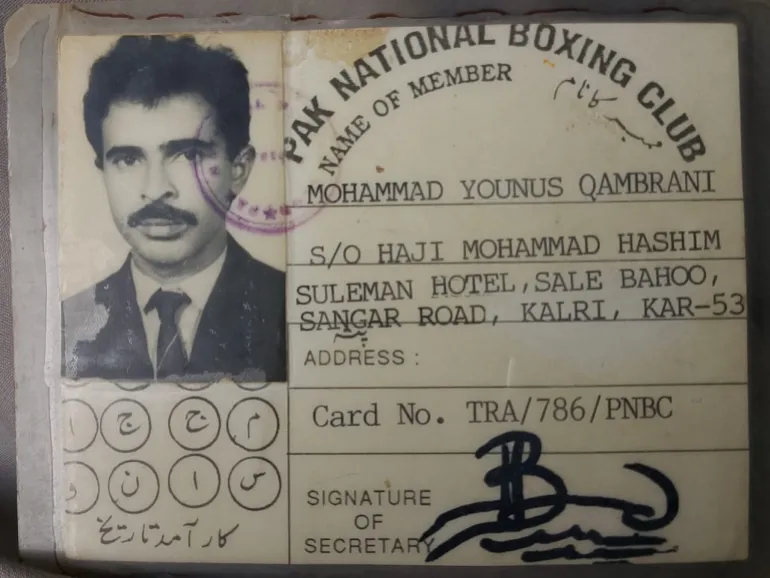
An undated picture of Qambrani’s membership card for Pak National Boxing Club. [Courtesy of Younus Qambrani]
‘Preparing for war’ — of a different kind
Qambrani has been boxing alongside his brothers for as long as he can remember. He began when he was five years old, and was introduced to the sport by his father, uncles and brothers — all boxers. Throughout his childhood, Qambrani says he was a sick and frail child. But he was determined to build muscle and throw punches like the men who had inspired him as he was growing up.
Boxing is so popular in Lyari that in 1989 boxing legend Muhammad Ali visited the neighbourhood, when he was a special guest at the Asian Games in the capital, Islamabad.
Qambrani’s high school, Haji Abdullah Haroon Government College, opened its own boxing club while he was there. He joined, but the club shut down in a few years. So he found another club a little further away and began cycling there to train.
After honing his skills there, Qambrani founded Pak Shaheen Boxing Club in 1992. “I wanted to open a club in my own area,” Qambrani said. At Pak Shaheen, he started out by teaching young boys, aged seven to 16, how to box.
A recent photo at his boxing club. [Courtesy of Younus Qambrani]
A sports enthusiast, Qambrani built friendships with coaches across the city, often visiting their training centres. At a friend’s karate classes at the YMCA (Young Men’s Christian Association) in central Karachi, he noticed young girls practicing kicks and elbow strikes shoulder-to-shoulder with boys. “If girls can do karate, why not boxing?” he wondered.
Qambrani’s students train to spar [Wania Farhan/Al Jazeera]
Soon he began voicing this question to his peers in the local boxing community, saying he wanted to start training young girls. One of them told him that “little girls have weak brains” — a remark that left Qambrani silent.
Then he went home and began looking through news reports featuring stories of girls and women boxing internationally. He would cut out the news clippings and paste them into a notebook. “My eyes were on the whole world,” he recalled. “Girls are boxing in the outside world, why not here?” he would wonder.
So he started at home: when his daughter Anum turned three, he began playfully sparring with her. She would gaze at the many photos of her father and uncles at boxing championships, slip on his medals, and traipse into the living room, mimicking the victorious poses he struck in those pictures. “She couldn’t even run properly, but she would box,” Qambrani said.
Then, in 2013, he opened the doors of his club to young girls. Anum was 16 at the time, and became its first female member.
In 2015, several of Qambrani’s students participated in the South Asian Games, the biennial multi-sport event where athletes from Bangladesh, Bhutan, India, Maldives, Nepal, Pakistan and Sri Lanka compete against each other.
A year later, Anum won a district level championship called the Jinnah First Ever Karachi Women Boxing Championship held at a Lyari stadium. In the same year, she attended a training camp for women organised by the Sindh Boxing Association. Local media reports described this camp as the country’s first government-supported boxing event held for women.
It was Qambrani’s club where Aliya Soomro, Pakistan’s first woman to win a world boxing title, began her training. Last year, Soomro took a mere 45 seconds to knock out her opponent from Thailand to win the WBA (World Boxing Association) Asia 105-pound category.
For Qambrani, though, boxing is about more than medals and trophies. To him, it’s a vital defensive skill.
“Whoever is prepared for war is prepared for peace,” he told Al Jazeera, adding that the defenceless are the ones most likely to be attacked.
With its legion of young boxers, Lyari’s not defenceless. As its reputation and image are mangled by Bollywood, those who know the neighbourhood also turn to its history for support.
An undated childhood photo of son, Munir (L) and daughter Anam [Courtesy of Younus Qambrani]
Lyari’s colonial history
It is not just the Dhurandhar films and Bollywood that Suhail, the social anthropologist, blames for what he describes as “terrible and exploitative” representations of Lyari. Journalistic and scholarly literature have been guilty too, he said.
Lyari is Karachi’s oldest recorded settlement — the earliest inhabitants of the neighbourhood came in 1728. The neighbourhood has survived British colonialism, the partition of the subcontinent, and nearly eight decades in independent Pakistan.
Suhail said Lyari had been a diverse working-class cultural hub since before the 1947 partition of British India.
Some of those working class communities were Baloch and Sindhi, because Karachi is at the tip of the southern Sindh province, which neighbours Balochistan province. Others were Marathi, Gujarati, Afghan and Siraiki migrants from labouring and artisan classes.
“This was because the British required labourers and artisans to develop Karachi into a burgeoning Indian Ocean port city.”
Suhail said that most of these labourers settled on the unplanned sides of the Lyari river, a small 50km-long seasonal river originating in the hills of Sindh, which flows through Lyari before emptying into the Arabian Sea.
“These cosmopolitan working class populations brought with them culinary traditions, dances, religious practices (multi-religious, multi-caste), songs, sports and more,” Suhail said.
He added that Lyari has a “strong cultural memory of East Africa and the Arabian Gulf, which adds to its uniqueness.” The neighbourhood is home to both Baloch and Afro-Baloch communities—people of African ancestry living in Balochistan.
Suhail explained that Lyari’s long history as a cultural hub of Karachi is often forgotten “because, after partition, the city’s demographics shifted drastically and Karachi became an Urdu-speaking Muhajir-majority city.” Muhajirs are Urdu‑speaking Muslims who migrated to Pakistan from India during and after the 1947 partition.
Sarwat Viqar, a professor of humanities at John Abbott College in Montreal, Canada, echoed Suhail’s views.
“Because Lyari has been represented one-dimensionally in the media as only a hotbed of criminality, drugs and the gang wars, what has been overlooked are the rich cultural practices that have always been part of life here,” Viqar told Al Jazeera.
Suhail added that Lyari had also consistently been at the heart of labour movements, and a base of support for reformers, anti-colonial activists and later campaigns for the rights of Pakistan’s various ethnic groups, including the Baloch, Sindhi and Pashtun communities.
“Lyari — because it was the first, most diverse, and most vibrant working-class zone as Karachi was becoming a city — also became the hub of working-class politics,” he told Al Jazeera.
But the neighbourhood’s own fortunes have also oscillated over the years.
“The degree of ‘development’ in Lyari has always been a function of how strong the working-class movement in Karachi was,” Suhail said. “When it was strong—such as in the 1930s and again in the 1970s—Lyari saw development. When ruling elites were strong, it did not.”
What Dhurandhar gets wrong
In the film, Lyari first comes into focus when a long-haired Ranveer Singh, playing undercover Indian RAW [Research and Analysis Wing] agent Jaskirat Singh Rangi, eyes the “Welcome to Lyari town” gate.
The gate looks very similar to the real one in Karachi. Other elements on screen ring familiar too: juice shop owners chanting idiosyncrasies to cajole customers; quick and garbled salams; and the somewhat unkempt colonial era architecture of old Karachi.
But then, the three-hour film’s dusty colour grading seems to wash out Lyari’s cultural depth and its vibrant subcultures.
“We can see how the obscene fetishisation of Lyari and the Baloch with violence and criminality is evident” in the film, Suhail said.
Describing Dhurandhar as “mediocre”, he said it lacks the depth of other Indian gangster films.
For example, in Ram Gopal Varma’s Satya 1998 and Anurag Kashyap’s Gangs of Wasseypur 2012, we see “culturally dense but non-apologetic depictions of Mumbaikar or Bihari gangs that understand the political economy of colonial and post-colonial state formation and how it crystallises in the gangsters portrayed,” Suhail opined.
Satya unpacks the criminal underworld of India’s metropolis Mumbai, following the titular character who arrives in Mumbai seeking a job but is falsely imprisoned and subsequently introduced to the underworld. Gangs of Wasseypur is set in a time before India’s independence in 1947 and follows power struggles, mafias and generational cycles of revenge in India’s eastern state of Jharkand.
In contrast to these films, Dhurandhar, has “heavy-handed homophobic, Islamophobic, hyper-masculine jingoism” and “the characters themselves appear to have no history at all,” Suhail added.
Unlike Lyari
Back at Qambrani’s club, 10 girls aged eight to 16 gather for an hour of sparring every day except Sunday, training for city tournaments that they compete in every two months.
Qambrani is looking to buy a folding, portable boxing ring to take school to school. His dream: to make boxing accessible to as many girls in the neighbourhood as possible. His challenge: he is struggling to find a portable ring in Pakistan and needs funding.
Dhurandhar and Bollywood do not matter at his Lyari club. Qambrani has a new generation of girl boxers to train.
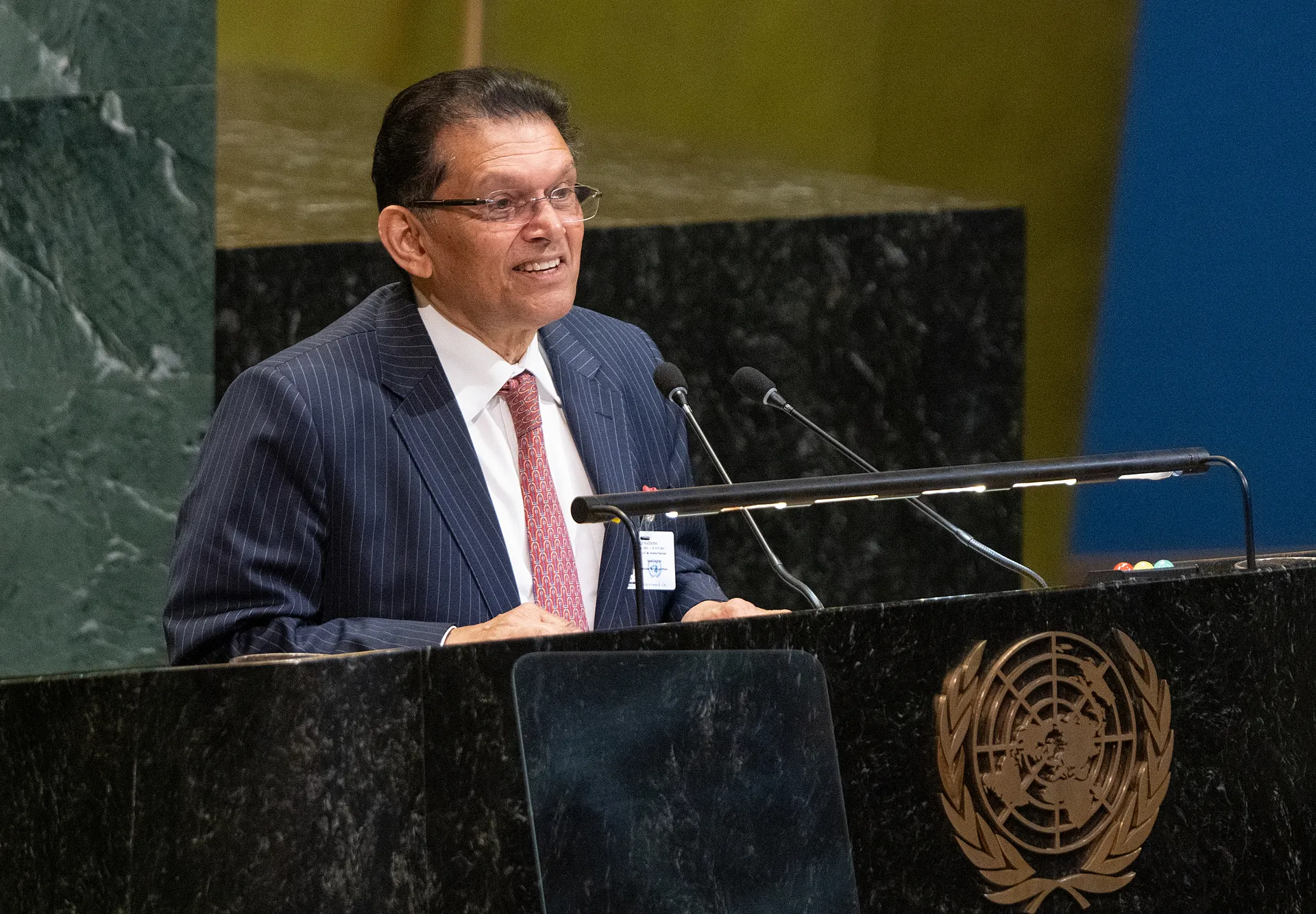
Bangladeshi Foreign Minister Khalilur Rahman has been elected as the 81st president of the 193-member United Nations General Assembly (UNGA). He will assume office when the UNGA session opens in September.
Rahman, who earlier held several portfolios at the UN, won the presidency after defeating Cyprus’s Ambassador Andreas Kakouris in a closely contested vote, taking the helm of the world’s most representative diplomatic body during a time of global geopolitical turmoil.
Recommended Stories
list of 4 itemsend of list
Who is Khalilur Rahman?
A career diplomat, Rahman joined Bangladesh’s foreign service in 1979. He also held senior UN positions in New York and Geneva, including as the spokesperson for the Least Developed Countries (LDCs) and as special adviser to the UN Conference on Trade and Development (UNCTAD).
Between 1986 and 1991, he served as the first secretary at the Permanent Mission of Bangladesh to the UN.
Rahman became foreign minister in February, when the Bangladesh Nationalist Party (BNP) won the country’s first election since a student-led uprising ousted Prime Minister Sheikh Hasina in 2024.
He previously served as national security adviser and the high representative on the Rohingya issue in the interim government led by Nobel laureate Muhammad Yunus.
Rahman’s presidency will coincide with one of the most consequential processes on the UN calendar – the selection of Secretary-General Antonio Guterres’s successor – as his term expires at the end of this year.
“The UN will commence its ninth decade at a time when trust in our organisation is being tested on multiple fronts,” he told diplomats assembled at the UNGA as he accepted the new role. “Taken together, these challenges tend to undermine the public trust and confidence in the ability of our organisation to deliver its promises.”
Guterres congratulated Rahman, saying, “Your remarkable political and diplomatic experience are a guarantee of success not only to the General Assembly but to the United Nations as a whole.”
How is the UNGA president selected?
While the presidency of the UNGA is largely ceremonial, it is also prestigious. It is the UN organ where countries large and small can speak, and it is the scene of the world’s largest annual diplomatic gathering.
The UNGA president is normally chosen by acclamation, meaning member states agree on a candidate by broad consensus. If no consensus can be reached, a secret ballot is held; in that rare case, the candidate who wins a simple majority of votes becomes president.
Before this year, the last contested UNGA presidential election was in 2016, when Fijian diplomat Peter Thomson won the presidency of the 71st session in a secret ballot, defeating Cyprus’s candidate by four votes. In 2012, Serbia’s Vuk Jeremic narrowly beat Lithuania’s candidate in another secret ballot. In 1991, Saudi Arabia’s candidate, Samir Shihabi, won the presidency in a contested vote against candidates from Yemen and Papua New Guinea.
In the secret ballot, Rahman secured 99 votes, eight more than his competitor Kakouris. A total of 190 ballots were cast, with no invalid votes or abstentions.
The presidency rotates among the UN’s five regional groups, and the 81st session falls to the Asia Pacific group. Rahman will serve a one-year term starting on September 8, the UN said.
Outgoing UNGA President Annalena Baerbock, Germany’s foreign minister, highlighted how trust towards multilateralism is under growing strain.
The UN is facing “not only headwinds, but immense pressure”, with consensus increasingly difficult to achieve and defence of the UN Charter becoming “a daily necessity”.
“The role of the president of the General Assembly is no longer simply procedural,” she said.
The US administration under President Donald Trump has tried to undermine the UN system, resorting to unilateral actions to tackle complex global geopolitical issues. Washington has withdrawn from several UN organisations, such as the World Health Organization and the Human Rights Council, and cut funding to the global body.
The US president has called the UN a “talking shop”, questioning its purpose during his speech at the annual UNGA meeting last September. “The UN has such tremendous potential … but it’s not even coming close to living up to that potential,” he said.
What is the UNGA?
The General Assembly is the UN’s most representative body, bringing together all 193 member states, each with one vote. Its annual gathering in September in New York is the only UN forum where world leaders from all countries can speak.
The UNGA controls the UN budget, adopts treaties, addresses global issues from poverty to corruption and passes numerous resolutions that, while not legally binding, almost always reflect global opinion.
The UNGA also makes key decisions for the UN, including appointing the secretary-general on the recommendation of the UN Security Council (UNSC) and electing the nonpermanent members of the council.
The coming UNGA session will open on September 8.
On Wednesday, the UNGA elected Austria, Kyrgyzstan, Portugal, Trinidad and Tobago and Zimbabwe to the 15-member UNSC for two-year terms starting on January 1, 2027.
Germany, which had lobbied hard for a seat, failed to win the UNSC seat in a major setback for Chancellor Friedrich Merz.
The council is the only UN body that can make legally binding decisions, such as imposing sanctions and authorising the use of force. It has five permanent veto-wielding members: China, France, Russia, the United Kingdom, and the United States.
An aerial photo made with a drone shows gasses burning off near oil storage tanks and a drilling rig near Karnes City, Texas. Photo by TANNEN MAURY / EPA
June 2 (Asia Today) — U.S. crude oil exports reached a record high in May as demand from Asian and European refiners surged, market data showed.
U.S. crude exports averaged 5.6 million barrels per day in May, surpassing the previous record of 5.2 million barrels per day set in April, according to data from analytics firm Kpler.
The increase was driven in part by a widening price gap between West Texas Intermediate, the U.S. benchmark crude, and Brent crude, the global benchmark.
The spread between WTI and Brent widened to as much as $20.69 a barrel in March, the largest gap in 13 years. In April, the gap averaged $8.86 a barrel, wider than the prewar average of $4.85.
Supply disruptions in the Middle East caused by the war involving Iran also prompted refiners in Asia and Europe to seek more U.S. crude as an alternative.
Asia imported an average of 2.45 million barrels per day, making it the largest destination for U.S. crude for a second consecutive month.
Japan was the biggest Asian buyer, importing 808,000 barrels per day, up 32% from the previous month.
Europe ranked second, importing 2.4 million barrels per day.
Italy led European demand with imports of 335,000 barrels per day. Bulgaria, Croatia, Turkey and Greece also made rare purchases of U.S. crude, according to the data.
Industry analysts expect U.S. crude exports to decline from June. Consulting firm Energy Aspects projected exports would fall to an average of 4.9 million barrels per day in June and 4.6 million barrels per day in July.
Sources and analysts said declining WTI inventories in the United States are expected to encourage domestic storage and reduce export volumes.