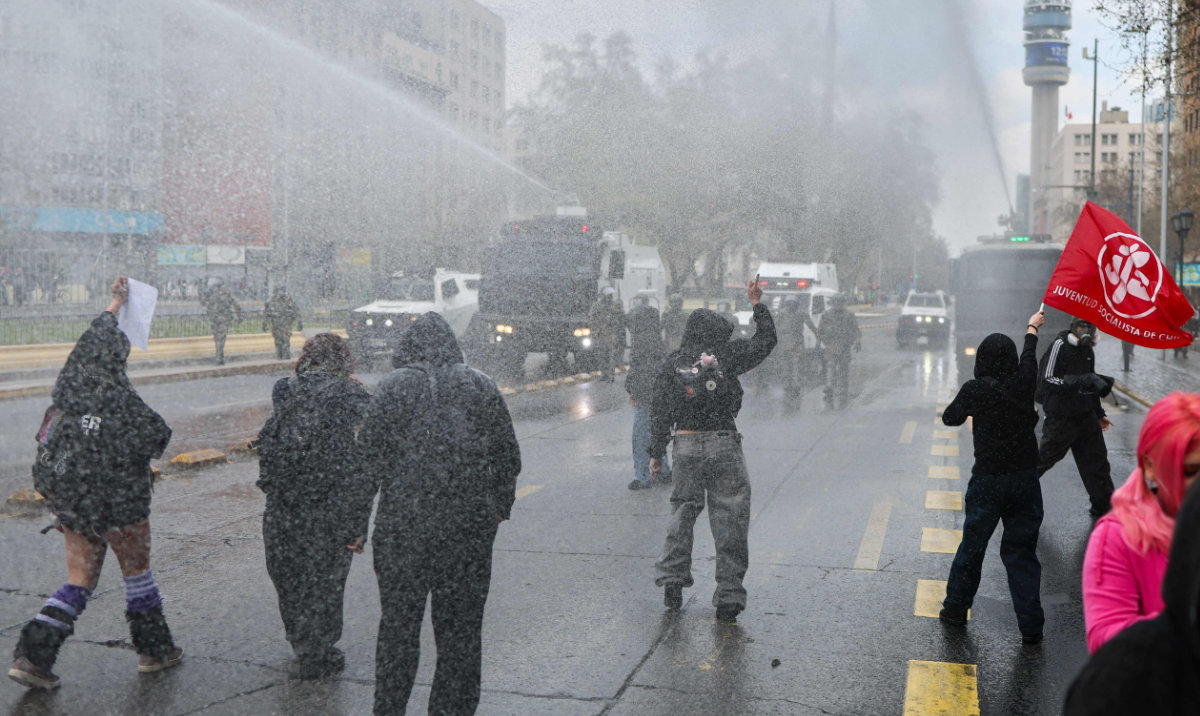
DUBLIN: Thousands of demonstrators marched through Dublin on Saturday to protest against US President Donald Trump’s visit to Ireland, with campaigners condemning his policies on foreign affairs, climate, immigration and social issues, according to The Irish Times.
The Dublin protest drew a broad mix of political parties, campaign groups, trade unions and unaffiliated demonstrators, The Irish Times reported. Organizers said about 25,000 people attended, although the newspaper said the actual number was likely lower.
Marchers walked from the Garden of Remembrance to the Dáil, carrying Palestinian flags and placards criticizing Trump over issues including Gaza, racism, misogyny, climate policy and US military activity.
One protester quoted by The Irish Times said the crowd was intended to send a message of opposition, adding: “With Trump, the only people on the streets are here to oppose him.”
Another protester, Holly Eustance, told the newspaper that Trump’s policies threatened vulnerable species and the planet, saying war and climate change caused widespread destruction while political and economic systems favored billionaires over people.
The march was largely peaceful, though The Irish Times reported that a masked breakaway group, Anti-Imperialist Action, burned a US flag near Molesworth Street, set off firecrackers and chanted against the presence of US troops at Shannon Airport.
Speakers outside the Dáil criticized the Irish government’s handling of Trump’s visit. Labour TD Ciarán Ahern accused officials of “sycophancy,” while Senator Alice Mary Higgins described the trip as a “grotesque pantomime,” according to The Irish Times.
Trump earlier appeared to dismiss questions about the protests, suggesting they were probably “friendly,” but demonstrators quoted in the Irish newspaper said their message was that he was not welcome in Ireland.
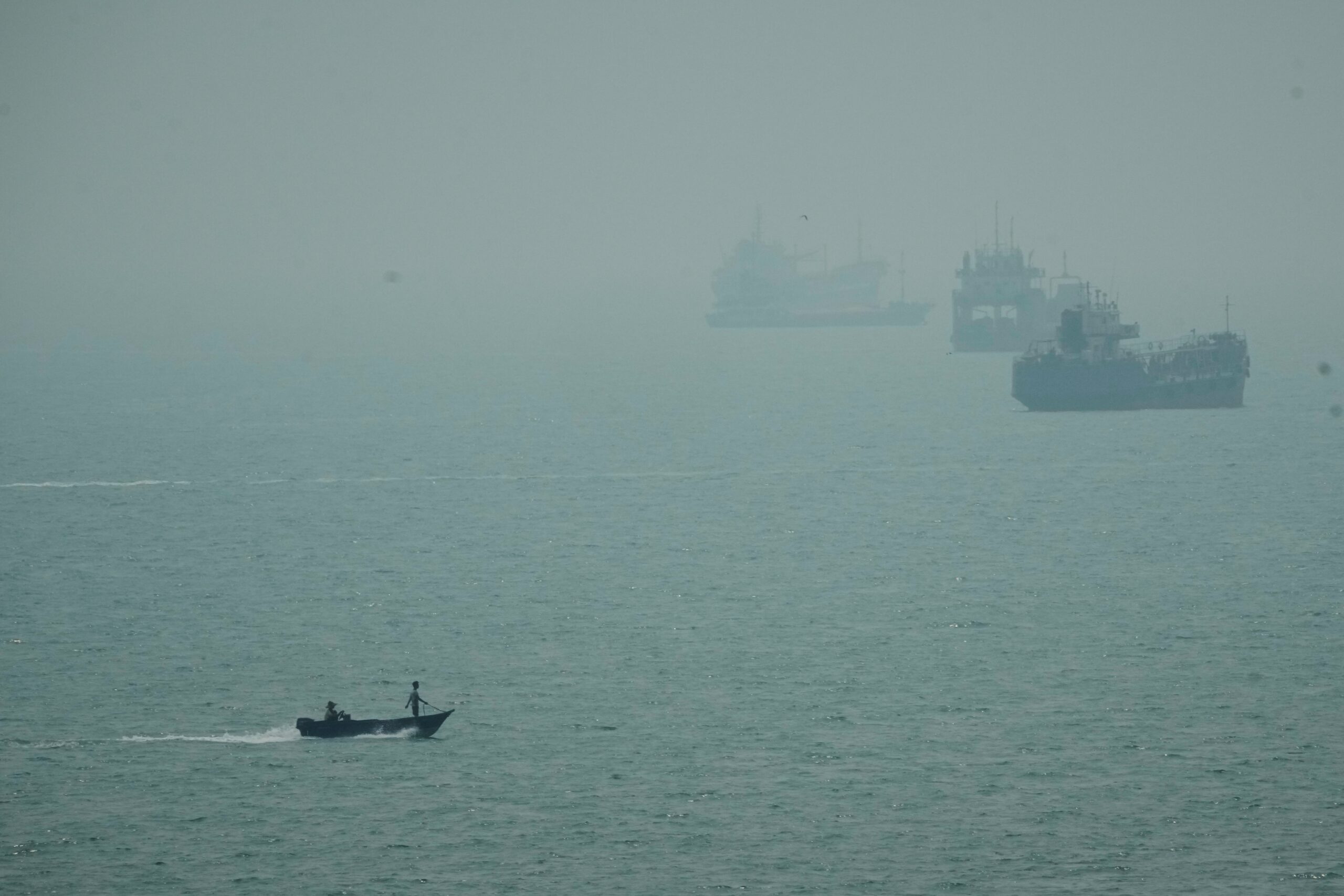
JAKARTA: Indonesian rescuers launched a search operation Sunday after a passenger ship carrying at least 240 people lost contact in the Java Sea while traveling from East Java to South Kalimantan on Borneo island, officials said.
The Search and Rescue Office in Banjarmasin, the capital of South Kalimantan province, said they received a report the Virgo Transport 8 had experienced a communication failure while en route to the city from Surabaya, Indonesia’s second largest city in East Java province.
Initial information indicated the vessel’s last known position was in the Java Sea, about 148 kilometers (92 miles) from a pier in Banjarmasin. The ship’s manifest said it was carrying 241 passengers.
There were no immediate reports of casualties.
Arianto Ardi, operations chief at Banjarmasin’s rescue agency, confirmed the loss of contact with the vessel and said rescue personnel had been dispatched to the area.
“We have established an operations post at Trisakti,” Arianto said.
Authorities said the ship’s operator reported the incident after receiving information that the vessel had encountered bad weather.
One person has been confirmed dead and more than 30 remain missing after the MV Matui ferry sank off the coast of Vanuatu, according to a statement from the office of Prime Minister Jotham Napat. The incident occurred on Sunday, with dozens of crew and passengers on board, the statement said.
Search and rescue operations are ongoing in Vanuatu, a Pacific Island nation located approximately 1,750 km (1,090 miles) east of Australia. The Prime Minister’s office stated on Facebook that 15 individuals have been accounted for alive. The ferry sank in adverse weather conditions on Friday between the islands of Ambae and Santo, according to New Zealand public broadcaster RNZ. The search has shifted from open waters to the south-east coast, where currents may have carried survivors, RNZ reported.
Investigation into causes
The statement from the Prime Minister’s office indicated that strong winds and marine warnings may not have been heeded, and that potential negligence, including overloading of the vessel, is being investigated. Authorities have announced that a formal investigation will be conducted to determine the causes of the incident.
“To the survivors, we pray for your strength and recovery. To the families of those missing and those we have lost, please know that the nation stands with you in this time of grief,” the statement from the Prime Minister’s office said.
Rescue operations and official response
Matai Seremaiah, a representative of the Luganville area in Vanuatu’s Parliament, stated that rescue efforts began after a crew member of the MV Matui swam ashore and raised the alarm. “He alerted us that the ship has capsized, we went out for the search,” Seremaiah said in remarks broadcast by RNZ.
The Vanuatu police, the Vanuatu Maritime Safety Authority, and the ferry’s operator, Tui Shipping Agency, have not yet responded to requests for comment. The search and rescue operation continues as authorities work to locate the missing passengers and crew.
DAMASCUS: Syria’s Culture Ministry is stepping up efforts to combat illiteracy and expand access to adult education as the country grapples with the legacy of years of war and displacement that has left about one in five Syrians unable to read or write.
The ministry highlighted the scale of the challenge at an event marking International Literacy Day, where officials outlined plans to expand literacy programs, introduce new teaching methods and use digital technology to reach people who have been excluded from education.
Ministry data presented at the event showed that around 4 million people in Syria are illiterate, equivalent to about 20% of the population, while an estimated 2.5 million children have dropped out of education.
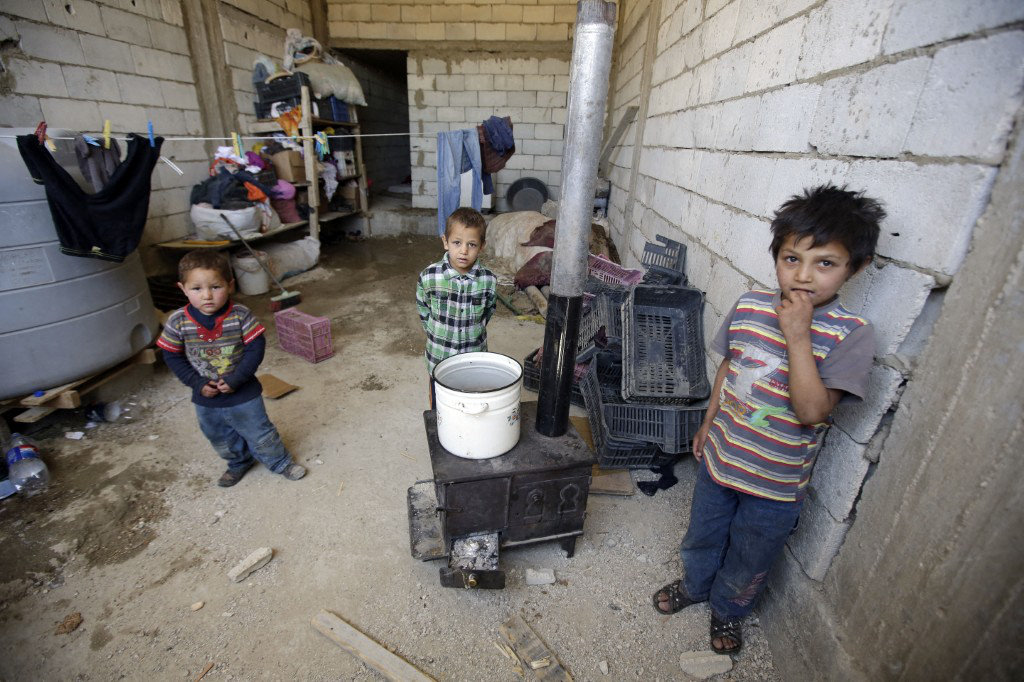
Syrian refugee children whose mother was killed while fleeing recent violence in Qussayr pose in the place they live with their father on June 14, 2013 in Arsal in the Lebanese Bekaa valley.
Officials said years of war, displacement and deteriorating economic and social conditions had contributed to the high numbers, making literacy not only an educational issue but also a challenge for the country’s broader recovery and development.
Targeting single-digit illiteracy rate
Mohammad al-Asha, director of the Cultural Development and Adult Education Department at the ministry, said authorities were pursuing two parallel approaches to address the problem.
More than 400 literacy courses have been launched since the beginning of the year as part of an immediate response, while the ministry is also developing a national plan aimed at reducing the illiteracy rate to single digits within three years.
Syrian-Kurdish children refugee play outside tents at the Domiz refugee camp, 20 km southeast of the northern Iraqi city of Dohuk, on June 19, 2013.
New curricula are expected to go beyond basic reading and writing skills to include digital and legal literacy, critical thinking and Syrian cultural identity, as well as awareness aimed at preventing extremism, addiction and behavioral problems.
Deputy Culture Minister Ahmad al-Sawwaf said literacy was closely linked to human dignity, development and citizenship, describing reading and writing as essential tools for people to understand their rights and responsibilities and participate in rebuilding their communities.
Children walk back from school past building rubble in the devastated Hajar al-Aswad area near the Yarmuk camp for Palestinian refugees on the southern outskirts of Damascus on December 23, 2024.
Digital tools to broaden access
The event also focused on using digital technology and artificial intelligence to expand adult education at a time when limited resources and staffing pose additional challenges.
Engineer Ramez al-Sammak said digital tools could be used to assess learners’ abilities and tailor educational content to individual needs, helping move literacy programs beyond traditional classroom-based teaching.
Such technology could also help programs reach more people and address difficulties including low motivation and the challenge of attending lengthy courses, participants at a specialized seminar on digital literacy education said.
The event honored 18 people who had benefited from adult education programs, including some who went on to complete secondary education and others who used their newly acquired skills to start income-generating projects in food production, handicrafts, woodworking and crochet.
The event honored 18 people who had benefited from adult education programs.
People with disabilities who continued their education despite difficult circumstances were also honored.
The Culture Ministry said tackling illiteracy required a broad national effort to help vulnerable groups regain access to education and overcome economic, social and psychological barriers.
Through its Adult Education Directorate, the ministry implements Syria’s national literacy policy and develops programs aimed at providing sustainable learning opportunities and helping people excluded from formal education participate more fully in social and cultural life.
MAKKAH: More than 60 early Islamic inscriptions and two historic wells in Wadi Al-Usaylah, northeast of Makkah, are providing archaeologists with a record of early Arabic writing and the pilgrimage routes used by caravans traveling to the holy city.
The six-kilometer-long, two-kilometer-wide valley was historically an important passage for travelers and pilgrim caravans arriving from Iraq and surrounding regions, according to a report by the Saudi Press Agency, or SPA.
The inscriptions, carved into mountain rock faces, date to the seventh and eighth centuries — corresponding to the first and second centuries of the Islamic calendar. They include references to figures from the early Islamic period and offer scholars tangible evidence of changes in the form, structure and aesthetic development of early Arabic script.
Water was also essential to sustaining travelers crossing the arid landscape. Successive Islamic rulers established water infrastructure along the route, with two of the valley’s four original historic wells still surviving near the inscribed rock faces. Some of the wells are believed to date to the Abbasid Caliphate.
The Royal Commission for Makkah City and Holy Sites is carrying out a comprehensive preservation program along the corridor to protect the inscriptions and wells from erosion. The effort forms part of wider initiatives under Saudi Vision 2030 to preserve the Kingdom’s archaeological heritage while developing sustainable cultural destinations, SPA reported.
The Wadi Al-Usaylah findings add to a growing body of archaeological evidence documenting the development of writing and human settlement across Saudi Arabia.
In a July 2026 report, SPA said the King Salman bin Abdulaziz Royal Reserve contains thousands of archaeological inscriptions and rock carvings, including Thamudic and Nabataean writings as well as depictions of animals, hunting scenes and aspects of daily life. More than 400 archaeological and historical sites have been documented across the reserve, with some remains dating as far back as 8,000 BC.
Najran provides another extensive record of the evolution of writing in the Arabian Peninsula. In a September 2024 report, SPA described the UNESCO-listed Hima Cultural Area as a vast outdoor museum containing rock carvings and inscriptions in Ancient South Arabian, Thamudic and Islamic scripts.
Archaeological surveys in Najran have documented inscriptions from different periods, including tribal markings and writings in Thamudic, Sabaean, Himyarite and early Islamic scripts. The accompanying rock art depicts people, camels, horses, ibexes, hunting scenes and battles, offering clues to ancient communities and their material culture, SPA reported.
The continuity and development of Arabic writing are also illustrated by a bilingual inscription discovered and documented in 2024 in Alqan village in the Tabuk Region. According to an SPA report, the inscription dates to the fifth century AD and contains two lines in Thamudic script and one in early Arabic.
The Heritage Commission said the Tabuk discovery provided evidence that Thamudic writing continued to be used alongside early Arabic during the fifth century. It also offered new insights into the coexistence of the two writing traditions and the development of Arabic letter forms.
Together, such discoveries underscore the archaeological value of Saudi Arabia’s mountains, valleys and desert landscapes as repositories of written history. They also highlight the importance of systematic documentation and preservation to protect inscriptions and other remains from erosion and other threats while making them accessible for scientific research and cultural tourism.
For Wadi Al-Usaylah, the combination of early Islamic inscriptions and surviving water infrastructure provides a particularly important glimpse into the networks that connected travelers and pilgrims with Makkah during the formative centuries of Islam.
WASHINGTON: A federal judge has ruled that a plan by the Trump administration to slash staffing at the federal agency tasked with responding to disasters by 50% was unlawful.
The opinion issued late Friday marked a victory for labor groups who had sued the agency. The labor organization had argued that plans by the Department of Homeland Security violated congressional protections that were designed to safeguard the independence of the Federal Emergency Management Agency.
The issue of the FEMA staffing was part of a much larger lawsuit filed by the American Federation of Government Employees and other labor groups, pushing back on efforts by the Trump administration to slash the federal workforce.
U.S. District Judge Susan Illston wrote in her opinion that top Homeland Security officials late last year directed FEMA’s leadership to submit a staffing plan that included a 50% staffing cut even though the agency’s own supervisors objected.
“Frankly, the FEMA staffing plan number appears as if pulled from thin air,” wrote Illston.
The Department of Homeland Security and FEMA did not immediately respond to requests for comment.
Illston wrote that it was clear that the government violated rules established after 2005’s Hurricane Katrina that put decisions on staffing levels squarely in the hands of FEMA, not the Department of Homeland Security and that prevented DHS from “substantially” reducing the “functions” of FEMA.
Illston didn’t order a specific remedy to carry out her opinion but directed the two sides to meet and decide on a course of relief.
Although FEMA has experienced terminations, the 50% staffing cuts ultimately were not carried out. In recent months, after top leadership changes at FEMA and the Department of Homeland Security, the agency has rehired some staffers who were let go.
FEMA was one of the agencies targeted in the federal government for staff reductions as part of a broad Trump administration plan to reduce the size of government. The embattled agency has been buffeted by mass staff departures, disruptions of grant programs, and delays of disaster aid.
In May, a Trump-appointed FEMA Review Council submitted a final report recommending sweeping changes to how the agency supports states, tribes and territories in disaster.
The final version backed away from the recommendation to cut the FEMA workforce by 50%, which was included in a December 2025 draft reviewed by The Associated Press.
The council instead recommended the agency conduct a “strategic review” to determine “appropriate staffing levels.”
In an August report, the Government Accountability Office said it found the departures of thousands of staff in 2025 resulted in a “loss of institutional knowledge and experienced personnel” and “exacerbated longstanding workforce challenges.”
More than 4,300 employees, or about 17% of FEMA’s workforce, separated from the agency in the 2025 budget year, with over 1,500 through voluntary reductions. The agency also made about 2,900 new hires.
The GAO recently recommended to Congress that it “consider requiring” FEMA to base “significant workforce decisions” on a more strategic planning process.
Without it, the GAO found, “FEMA cannot be assured that the agency is positioned to effectively meet its mission needs.”
NEW YORK: Elena Rybakina won her first US Open title and punctuated her climb to the top of women’s tennis by beating Aryna Sabalenka 6-4, 5-7, 6-2 on Saturday.
Rybakina had already been guaranteed to replace Sabalenka at No. 1 in the rankings next week and for good measure took the US Open title that Sabalenka had won the previous two years.
“It’s tough to find words right now, honestly,” Rybakina said. “I don’t expect nothing like this coming to this tournament. I’ve been dealing with a little bit with an injury, but somehow everything aligned together on my side.”
It was the third Grand Slam title for Rybakina and the second this year — both against Sabalenka on hard courts. She opened the season by beating Sabalenka for the Australian Open title.
This time, she stopped Sabalenka’s 19-match winning streak at the US Open, where she hadn’t lost since falling to Coco Gauff in the 2023 final.
“I really felt like home here and cannot wait to come back next year,” Sabalenka said. “I wish I could perform a little bit better but I guess next year.”
Rybakina earned $5.5 million, the largest prize in Grand Slam history, and tied Sabalenka and French Open winner Mirra Andreeva with a tour-high three titles this season.
Aryna Sabalenka, of Belarus, left, and Elena Rybakina, of Kazakhstan, right, hold up their trophies after Rybakina won the women’s singles final of the US Open tennis championships Saturday, Sept. 12, 2026, in New York. (AP)
Sabalenka took home $2.8 million but it was clear how little that meant to her, as she smashed her racket after a brief hug with Rybakina at the net.
Sabalenka was trying to become the first person since Serena Williams from 2012-14 to win three in a row at Flushing Meadows.
Rybakina dethroned the champ without even having her best stuff. The WTA Tour leader in aces got less than half of her first serves in but instead put Sabalenka under constant pressure with a strong return game, racking up 12 break chances and converting three, which was all she needed.
The third meeting of No. 1 vs. No. 2 in a US Open women’s final since 2000 was the first to go the way of the challenger. Williams was the top seed for the other two, beating her sister Venus in 2002 and Victoria Azarenka in 2013.
The numbers didn’t signify much this time, because they are going to flip Monday. Sabalenka has held the top spot for 99 consecutive weeks, but Rybakina gained enough points to unseat her simply by reaching the semifinals.
She didn’t stop there.
The 27-year-old who was born in Russia but represents Kazakhstan won her first major title at Wimbledon in 2022 and now needs just the French Open to complete the career Grand Slam.
And it’s clear her power — and her ability to absorb her opponent’s — was something that unnerved Sabalenka.
A native of Belarus, Sabalenka sometimes swings from her heels, like a golfer trying to unleash a 300-yard drive, grunting “Aaaaahhhh!” as she takes her mighty cuts.
Rybakina’s power comes more easily. There is little sound coming from her side of the net besides the squeaking of her sneakers, and she rarely shows any hint of stress.
“I think Elena is probably — not nonchalant, I don’t want to say that, because she’s not nonchalant — but just no reaction ever,” Gauff said after losing to Rybakina in the semifinals.
Belarus’ Aryna Sabalenka reacts during her women’s singles final match against Kazakhstan’s Elena Rybakina. (Reuters)
Rybakina did show some frustration after pulling a backhand wide with a break point in the opening game of the third set, but soon she had taken charge of the match for good.
Sabalenka had won the two other meetings this season, on the hard courts at Indian Wells and Miami, and leads their rivalry 10-8.
But her season then took a strange dip after those victories. Sabalenka fell to Naomi Osaka in the fourth round at Wimbledon, then returned to action with consecutive fourth-round exits in Toronto and Cincinnati.
Rybakina had to take a brief break after she was forced to stop playing in her quarterfinal match against Iga Swiatek in Cincinnati because of a foot injury, but she was healthy in time for a tournament where she had never done particularly well, failing to advance past the fourth round until this year.
“I honestly was coming here for the last 10 years, and it was never successful — nothing close to that,” Rybakina said. “It’s just incredible. I’m falling in love with New York more and more.”
Arthur Ashe Stadium, meanwhile, had been Sabalenka’s house, with four straight trips to the final and six to at least the semis. Whatever troubled her during the summer seemed forgotten once she was back in New York — until Saturday.
Sabalenka repeatedly looked toward her coaches’ box with her palms up, wondering why everything was going so poorly, and showed much more frustration than that when she double-faulted to hand Rybakina a 3-2 lead in the first set. Rybakina hit the serve back and the ball bounced directly to Sabalenka, who whacked it into the crowd, earning a warning from the chair umpire.
Sabalenka eventually began putting consistent pressure on Rybakina in the second set. She picked up two break points with a chance to end the set with a 5-4 lead, and though Rybakina won four straight points to get out of that jam, Sabalenka got another chance in the next service game and this time capitalized, stepping into a return to set up a miss by Rybakina.
VENICE, Italy: “Woman Unknown,” a drama about Denmark in the aftermath of the Nazi occupation directed by May el-Toukhy, won the prestigious Golden Lion at the 83rd Venice Film Festival on Saturday.
The Maggie Gyllenhaal -led jury announced the winners, which included a best actor prize for John Malkovich for his performance in the dark CIA comedy “Wild Horse Nine.”
Malkovich was not in attendance at the ceremony, but he sent a video message, explaining that he is shooting in Montreal.
“I am humbled to be chosen for this award which has been given to so many wonderful actors,” Malkovich said.
Only 8 women have won a Golden Lion
El-Toukhy, who was the only woman to have solely directed a film in the main competition this year, is the eighth woman to have won the festival’s top prize.
“To me personally, ‘Woman Unknown’ is about the female body as a battleground,” el-Toukhy said. “At the same time the film tells the tale of women who are unseen, invisible and voiceless.”
May El-Toukhy, winner of the Golden Lion Award for Best Film for the movie “Woman Unknown”, poses with the artistic director of the Venice Film Festival Alberto Barbera, during the closing ceremony of the 83rd Venice International Film Festival on September 12, 2026. (REUTERS/Yves Herman)
She thanked Gyllenhaal for using her voice to shine a light on unequal opportunities for women in moviemaking.
The film, which does not yet have distribution in North America, is centered on a young nanny and housemaid who is about to marry her wealthy employer in the immediate aftermath of the war. But she harbors a secret past intimate relationship with a German soldier that threatens to upend her reputation. The lead, Mathilde Arcel, won the festival’s best actress prize.
Arcel was visibly emotional as she accepted the award, which she placed on the floor as she spoke as she said it was very heavy.
“This is my first lead role in a movie and my first time at a film festival,” she said. “I’m extremely honored.”
Director Lee Chang-dong, winner of the grand jury prize for the film ‘Possible Love’, poses for photographers at the awards photo call during the closing ceremony of the 83rd edition of the Venice Film Festival. (Photo by Scott A Garfitt/Invision/AP)
South Korean auteur Lee Chang-dong’s poetic portrait of class and labor, “Possible Love,” won the Silver Lion grand jury prize. “Possible Love” is Lee’s first film in eight years, following his acclaimed “Burning.”
“We are living in an era where the meaning of labor is fading and human connections are increasingly becoming severed,” Lee said through a translator. “I made this film to ask what cinema can and should do in times like these. I take this award as a sign that you want me to keep asking these questions.”
Gaza documentary takes special jury prize
“NAZA,” a harrowing documentary about military strategies employed in the war in Gaza from Israeli filmmakers Yuval Abraham and Rachel Szor, was awarded a special jury prize.
“It’s honestly not very easy to stand here, thinking of all the people, the Israeli politicians, the journalists back home who are attacking this film, denying it without even seeing it,” Abraham said. “It is really, really especially important to us that Israelis watch this film.”
Director Yuval Abraham and Director Rachel Szor winners of the Special Jury Prize for “Naza” attend a photocall on the red carpet following the closing ceremony of the 83rd Venice Film Festival at Venice Lido on September 12, 2026. (Photo by Tiziana Fabi / AFP)
The was added to the main competition late — at the request of the filmmakers — and debuted late in the schedule as well, but its impact was felt as it received a record-breaking standing ovation, lasting some 25 minutes, after its premiere.
Shot on the rooftops of Tel Aviv at night in extreme secrecy over three years, “NAZA” features testimony from 24 Israeli military insiders including intelligence officers and soldiers give who insight into the war in Gaza and what they say is the systemic killing of Palestinian civilians.
The jury gave the Silver Lion for directing to Ilya Krzhanovsky for his film “Dau,” a project about the Soviet physicists who built the atomic bomb that has taken over 20 years to make. Krzhanovsky, who renounced his Russian citizenship in protest of the war in Ukraine, dedicated the prize to Ukrainians, including his mother who was born there.
Director Ilya Khrzhanovsky poses with the Silver Lion Best Director Award for “Dau” during the closing ceremony of the 83rd Venice International Film Festival on September 12, 2026. (REUTERS/Yves Herman)
French director Stéphane Brizé’s won the screenplay prize for his corporate drama “A Good Little Soldier.” Malou Khebizi was given the Marcello Mastroianni award for emerging actor for her role in Cédric Kahn’s “A Place to Heal,” which is set in an adolescent psychiatric ward in a public hospital.
The jury this year included “The Voice of Hind Rajab” director Kaouther Ben Hania, English composer Daniel Blumberg, French filmmaker Xavier Giannoli, Afghan filmmaker Shahrbanoo Sadat and Hong Kong filmmaker Johnnie To.
Malkovich’s Oscar chances just went up
Aside from Malkovich’s win, the starrier, Hollywood films playing in competition were shut out of the awards, including “Primetime,” “Bunker” and “Ink.”
US actor John Malkovich attends the red carpet event for the screening of “Wild Horse Nine” at the 83rd International Venice Film Festival, at Venice Lido on September 3, 2026. (Photo by Stefano Rellandini / AFP)
Some look to the Venice Film Festival awards for early indications of who might be in with a shot at Oscar nominations and wins. In recent years, Venice has launched winning best actor campaigns for people like Brendan Fraser and Adrien Brody.
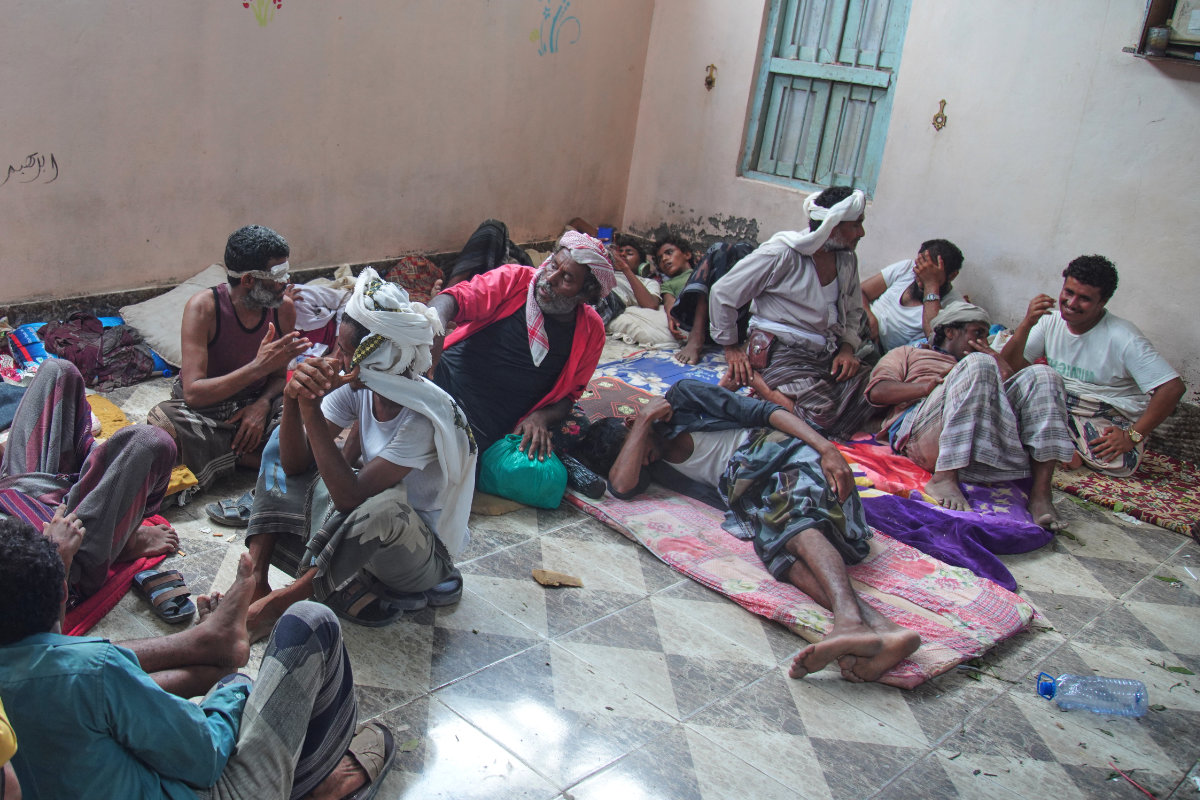
ADDIS ABABA: About 1,400 people have fled Yemen for Djibouti due to fighting between government forces and Iran-allied Houthis, Djibouti’s minister of economy and finance said Saturday.
Houthi fighters control a large part of northern Yemen, including the capital Sanaa and Hodeida in the west. They have advanced along the coast in just days and on Thursday seized the port city of Mokha.
The Houthis have since taken control of the coastline and islands in the Red Sea, and on Friday tightened their grip on the Bab Al-Mandab Strait, which is vital to global shipping through the Suez Canal.
“1400 #refugees arrived in #Djibouti from #Yemen in just 24 hours,” Ilyas Moussa Dawaleh wrote on X.
Located opposite Yemen on the Horn of Africa, tiny Djibouti borders the Bab Al-Mandab Strait at the entrance to the Red Sea from the Gulf of Aden.
Safiya Ibrahim, humanitarian response coordinator for the International Organization for Migration, told AFP that “vulnerable groups such as women and children have reached the shores of Obock, with more expected in the coming days.”
According to the United Nations, at least 76,000 people have been displaced in Yemen since July, with the number quadrupling in the last week after the latest fighting.
Last week, Houthi fighters launched a new offensive against Saudi-backed government forces, targeting zones bordering the Bab Al-Mandab Strait.
The waterway has taken on new importance, particularly for Saudi oil exports, since the Strait of Hormuz was blocked by Iran.
Hundreds have been killed in the fighting on both sides.
MADRID: Kylian Mbappe struck twice to help Real Madrid smash Rayo Vallecano 4-1 on Saturday to pull level with Barcelona at the top of La Liga.
Jose Mourinho’s side got back to winning ways after a defeat by Real Betis in their previous top-flight outing, with a convincing victory against neighbours Rayo.
Jude Bellingham and Alvaro Carreras were also on target for Real Madrid, while Sergio Camello pulled one back for the visitors early in the second half.
Champions Barcelona visit Levante on Sunday looking to extend their 100 percent start to the campaign and restore their lead on Madrid.
Mourinho’s side took a commanding three-goal lead against Rayo by half-time.
“(It was) fundamental to win, above all after losing the last game in La Liga,” Mourinho told Real Madrid TV.
“We killed the game in the first half — that’s not easy, working like we did after the Champions League game, not just physically, but mentally.”
Los Blancos took the lead from the penalty spot in the 14th minute after Florian Lejeune clumsily felled Carreras. Mbappe sent Rayo goalkeeper Emil Audero the wrong way.
The French forward helped create the second, after Lejeune gave the ball away under pressure from Vinicius Junior. Carreras exchanged passes with Mbappe and drilled home.
Handed a first start for Madrid, the club’s record signing Yan Diomande cut inside from the right flank with a rapid dribble that left Rayo’s defence scrambling but lashed his shot high and wide.
Bellingham notched Madrid’s third goal and his third of the season after Vinicius charged down the left and cut the ball back for the England international, who has started the season in top form.
Mourinho defended Vinicius in midweek after some Madrid supporters whistled him in the Champions League win over Inter Milan.
Mbappe powered a strike from distance against the post as Madrid sought a fourth, while Pedro Diaz forced a rare save from Thibaut Courtois at the other end, the Belgian with a strong hand to push away his effort.
Diaz hit the post early in the second half as Rayo tried to find a foothold at the Santiago Bernabeu.
Golden ambitions
Mbappe, who stated his case for why he should win the Ballon d’Or this week, almost added a second with a low drive.
Rayo pulled one back in the 51st minute when Vinicius gave the ball away to Camello under pressure and the forward poked past Courtois.
It was the Spanish forward’s sixth goal of the campaign, making him joint-top scorer with Barcelona’s Raphinha and Mbappe.
Benat San Jose’s side, 15th, had further chances to score but Courtois pushed out Giorgi Tsitaishvili’s drive and an effort from Lejeune.
Mourinho brought on Turkish midfielder Arda Guler to help regain some control.
“Arda is very good, he’s got a lot of quality, he influences the team’s play in a good way and today he made a difference in terms of the stability of the game,” said Mourinho.
Guler helped create Madrid’s fourth for Mbappe in stoppage time, lethally finished low and across goal.
It was Mbappe’s seventh goal of the season across all competitions.
“Conceding the (early) penalty was a blow, then we had another mistake when bringing the ball out,” said Rayo coach San Jose.
“I think we could have scored in the first half too, but it’s true that they were better…
“We have to congratulate Madrid, but I’m proud of the players because the second half was much better.”
On Tuesday Real Madrid travel to face Elche, while Rayo Vallecano host Espanyol.
Earlier on Saturday, Racing Santander defeated third-place Alaves 2-1, while Espanyol won 2-0 at Osasuna and Athletic Bilbao drew 1-1 at home against Elche.
VATICAN CITY: Pope Leo XIV has named Father Mario Leon Dorado as a successor-in-waiting to the current archbishop of Rabat, Cardinal Cristobal Lopez Romero, who is being investigated over accusations of sexual assault revealed by AFP.
A statement from the Vatican on Saturday said Dorado was made the Moroccan archdiocese’s “coadjutor archbishop,” a title for a church official appointed to assist a sitting archbishop which also confers automatic succession in the event the incumbent retires or dies.
Dorado, a 52-year-old Spanish priest and member of the Missionary Oblates of Mary Immaculate, had been serving in Western Sahara for nearly 25 years, ultimately becoming apostolic prefect there.
In August he was named Rabat’s apostolic administrator, an official tasked with provisionally governing a diocese whose sitting bishop is “impeded or suspended,” after the accusations against Romero came to light.
On July 8, AFP revealed that at least five women were accusing Romero — who was among the prominent cardinals considered in 2025 as potential successors to Pope Francis — of sexual violence and inappropriate behavior.
No complaint has yet been filed with the Moroccan judiciary, the prosecutor’s office and police told AFP recently.
In response to AFP inquiries, Romero has said he “committed neither assault nor violence nor sexual harassment,” while announcing that he was stepping aside pending a Vatican investigation.
Romero’s mandate as archbishop of Rabat is officially due to end in 2027.
After Dorado was named apostolic administrator, two Vatican investigators went to Rabat to speak to some of Romero’s alleged victims and members of the diocese.
MOGADISHU: Somali pirates briefly hijacked a vessel off the coast of Yemen this week, the European Naval Force and security sources in Puntland said on Saturday.
Six armed men stormed the MT Glamour on Thursday when the ship, sailing under the flag of Saint Vincent and the Grenadines, was about 38 nautical miles (70 kilometers) off the coast.
The Gulf of Aden and the Somali coast have seen a resurgence in piracy since April, with at least 15 attacks recorded this year — the highest since 2013, according to the International Maritime Organization.
Several security sources in the northeastern Puntland region — a major hub of Somali piracy — told AFP that six armed men boarded the Glamour after setting off from a small fishing village.
According to the European Naval Force, the crew stopped the vessel, shut down its systems and took refuge in the citadel as a precaution before the vessel was boarded.
After the hijacking, a Japanese warship approached the vessel and helicopters circled the ship, prompting the pirates to abandon it, the Puntland authorities said.
On Friday, Somali pirates released the cargo ship MV Sward, which was hijacked in April with 17 crew members on board.
Security sources and the authorities in Puntland said a ransom was paid.
Four tankers seized this year remain in the hands of pirates off the Somali coast — the Honour 25, the Eureka, the Asana and the Seamull, which is also known as Sibu 1.
The Seamull, which is part of Iran’s “ghost fleet” accused of exporting Iranian oil, is subject to US sanctions.
DAMMAM: It was a day of contrasts for last season’s SPL champions and runners-up — Al-Nassr and Al-Hilal — on Matchday 7 of the 2026/27 Saudi Pro League. The title holders dropped two valuable points against a winless Al-Khaleej in their worst performance of the season, while Al-Hilal produced their best yet, hitting Al-Taawoun for six in Qassim.
Al-Nassr could not have asked for a worse start against Al-Khaleej. The stifling Dammam heat — reminiscent of their torturous evening against Al-Ettifaq a few weeks ago — combined with a surprisingly well-organised Al-Khaleej side to limit Al-Nassr’s possession, as they ended the first 45 minutes without a shot on target.
With an away fixture against Al-Ain in the AFC Champions League Elite on Tuesday, Ange Postecoglou knew that managing the team’s tempo throughout the game was vital. But after losing to Al-Ittihad last Saturday, Al-Nassr could not afford to drop further points in what promises to be one of the most competitive SPL title races in recent memory.
It did not help that their opponents were going through their roughest start in recent years. Under head coach Jose Gomes, Al-Khaleej had failed to win any of their first six fixtures, drawing four and losing two — including a 5-1 defeat to Al-Hilal and a 3-0 loss to NEOM.
The expectation, then, was that Al-Nassr’s attack would overrun the Al-Khaleej defense. What they got instead was Al-Khaleej’s most composed performance of the season.
The icing on the cake for Al-Khaleej came on the stroke of half-time, when an Angelo Fulgini corner delivered to the far post found the unmarked Omar Mascarell, who headed home for the opener — with Bento’s failure to claim the ball helping Mascarell on his way.
Al-Nassr reorganized in the second half with Mohamed Simakan replacing Abdullah Al-Khaibari. The full-backs pushed up high and wide, with Samu Costa sitting in front of the back three as Al-Nassr’s front four moved freely through Al-Khaleej’s lines. But it was not until Abdullah Al-Hamddan came on in the 70th minute that Al-Nassr registered their first shot on target.
Seconds after coming on, Al-Hamddan received the ball outside the box from Inigo Martinez, who dispossessed Al-Khaleej midfielder Miguel Crespo — who had initially played the ball away after what appeared to be a foul. In the ensuing confusion, Al-Hamddan unleashed a curling effort from outside the box to beat Anthony Moris and send the Al-Nassr fans into raptures.
But — unlike in the aforementioned Al-Ettifaq clash, where Al-Nassr came back from 2-0 down to win 3-2 with a man down — they could not build on the equalizer.
Their best chance came in the 86th minute, when — from the same position Al-Hamddan scored from — Joao Felix fired at Moris, only for his deflected effort to be tipped away.
A golden opportunity arose on the counter in the first minute of stoppage time, with Felix driving toward goal and Ronaldo and Mane on either side of him — but he opted not to pass, as the attack broke down, and Al-Khaleej cleared the danger.
The draw leaves Al-Nassr frustrated — they now sit third behind Al-Ittihad and Al-Hilal. Having just won the SPL Manager of the Month award, it may be that Ange Postecoglou’s honeymoon is coming to an end.
Elsewhere, Al-Hilal bounced back emphatically after a 2-0 defeat to NEOM that ended their 47-game unbeaten league streak. The Blues hit Al-Taawoun for six, dominating every aspect of the game — and all but sealing Zarko Lazetic’s fate at Al-Taawoun. Prior to the game, Asharq Al-Awsat reported that the Al-Taawoun board had taken a collective decision to part ways with the Serbian regardless of the Al-Hilal result — and the scoreline certainly did not help his case.
It was a night to remember for Ollie Watkins and Gabriel Martinelli, who finally hit the ground running at their new club.
In the ninth minute, Ruben Neves delivered one of his trademark long balls to Watkins, who latched on despite the challenge of Awn Al-Saluli to finish past Mailson for the opener.
Nine minutes later, Martinelli opened his Al-Hilal account. The Brazilian winger slipped between Al-Taawoun midfielders Ashraf El-Mahdioui and Oscar Dorley to collect a loose ball in the box before doubling the lead. Martinelli added his second before half-time, when Watkins slipped him through on goal with a threaded ball — the former Arsenal man cutting inside to finish coolly into the net.
Al-Hilal pushed for more in the second half, and in the 50th minute Martinelli completed his hat-trick from Crysencio Summerville’s run to the byline, which teed him up for an easy finish. Watkins secured his brace in the 53rd minute when he won possession from the Al-Taawoun midfield and drove toward goal, leaving Mailson with no chance to make it 5-0.
Sultan Mandash completed the rout with a goal against his former club in the 75th minute, choosing not to celebrate.
It was a statement performance from Al-Hilal, who had come under immense pressure after that defeat to NEOM — which had coincided with the first start of the former Premier League trio of Summerville, Watkins and Martinelli together. The victory moves Al-Hilal into first place on 18 points ahead of the international break.
SPL action returns on Sunday for its final day before the league takes a break for the Arabian Gulf Cup in Jeddah. NEOM face Al-Fateh at 7:20 p.m., before two matches kick off at 9 p.m.: Al-Riyadh against Al-Kholood and Diriyah against Abha.
SAO PAULO: Former Liverpool playmaker Philippe Coutinho has joined Santos, team-mate Neymar announced on Saturday, although his new club has yet to officially confirm the move.
Coutinho, 34, has been without a club since leaving Vasco da Gama in February, citing mental burnout.
“We’re very happy that you’re here,” Neymar said on social media, with a video showing Coutinho alongside Santos players and coaches.
“Our squad and our fans will welcome you with arms wide open.”
According to local media, former Brazil international Coutinho needs to pass his medical before Santos can confirm his arrival on a contract that runs until the end of the season.
Europe has long been the primary target for US President Donald Trump’s tirades against traditional allies. However, Asia got a taste of this treatment last month when he cut short, at very short notice, the annual “Ulchi Freedom Shield” US military drills with South Korea.
Seoul is still angry at this development, especially given Trump’s later confirmation that he would also try to arrange a meeting with North Korea’s supreme leader, Kim Jong Un, in coming months. Signs of this frustration included President Lee Jae Myung’s call to speed up the development of new nuclear-powered submarines and his push to regain presidential wartime operational control of South Korean forces from the US, insisting that enhanced domestic military capabilities were needed in parallel with the alliance with Washington.
As remarkable as Trump’s decision was, it only confirmed the degree to which US partnerships with traditional allies have changed during his presidencies, as Washington demands wider concessions in return for US collaboration. These White House expectations include not only huge investments in the US, but also support in a conflict with Iran that has failed to unseat the regime in Tehran, while causing the largest global energy shock in a generation.
Certainly, some agree that Trump has legitimate concerns about South Korea. However, the manner in which he expressed his disagreement, in such a publicly humiliating way, is self-defeating. The US president said he told his South Korean counterpart that “we have 39,000 soldiers over there, guarding you from Kim Jong Un, your next-door neighbor, and you’re not going to help us on a very easy military operation in Iran? That’s strange.”
As ever, Trump’s statement requires a fact check. Currently, Seoul is scheduled this year to pay Washington about $1.19 billion of the estimated $5.5 billion-$6 billion it costs to station approximately 28,500 US troops in South Korea.
Even though that $1.19 billion sum represents a significant increase, Trump claimed that during his first term, Seoul pledged to pay much more: $3 billion. He further contends that the Biden administration failed to follow up on this pledge.
Trump’s decision to end the latest US-South Korea military exercises on Aug. 21 rather than Aug. 27, as scheduled, was embarrassing enough for Seoul. To also confirm that he planned to try to arrange another meeting with Kim was rubbing salt in the wounds.
His tirade has set back recent and extensive efforts by his team to reassure Asian allies about the US commitment to the region. At a recent meeting of Association of Southeast Asian Nations foreign ministers in the Philippines, for instance, Secretary of State Marco Rubio pledged about $2.5 billion of strategic investments in Southeast Asia. During a speech at Singapore’s Shangri-La conference in May, US Secretary of Defense Pete Hegseth emphasized the importance of the region to Washington.
White House expectations include not only huge investments in the US, but also support in a conflict with Iran.
Andrew Hammond
Asian allies also query the utility of reengaging with Kim, after Trump’s first three meetings with him, between 2017 and 2021, failed to deliver any diplomatic breakthroughs.
White House expectations include not only huge investments in the US, but also support in a conflict with Iran.
Andrew Hammond
The prospects appear slim for any sustained de-escalation of tensions in the world’s last Cold War-era frontier in the form of the prize of a verifiable, comprehensive denuclearization of North Korea. Pyongyang’s weapons program has only grown in size and sophistication since Trump’s first term. This potentially widens the negotiating divide between the two sides.
The central challenge in making any meaningful diplomatic process with Kim is, as it was during Trump’s first term, the differing US and Korean interpretations of what exactly would constitute “denuclearization” of the peninsula.
To Trump, this appears to mean unilateral North Korean disarmament. For Kim, it appears to be more about potentially lengthy negotiations in which Pyongyang should be treated as an equal to the US, providing him with the further potential for propaganda victories. In this context, Kim will continue to be wary of commitments on specific time frames, and will want to win further concessions from Trump before agreeing to any reduction in nuclear capabilities, let alone committing to full denuclearization.
As was the case during Trump’s first term, it is far from clear what, if any, sequencing is possible to move the process forward. After the last meeting between Trump and Kim, North Korea disputed the US assertion that the reason the talks collapsed was because Kim demanded a full roll-back of sanctions. Pyongyang said it asked only for partial sanctions relief, and that an offer had been made to permanently halt nuclear and long-range rocket testing.
One reason Pyongyang’s position will not shift far or fast is that it was Kim, not Trump, who emerged as the bigger beneficiary of their previous engagements. The North Korean leader made few concrete concessions while Trump called off US-South Korea military exercises, and held out the prospect of an easing of sanctions on Pyongyang if it did “something meaningful” on denuclearization.
Taking all of this together, the damage to US alliances in Asia from last month’s decisions therefore goes far beyond South Korea and might outlast Trump’s second term. The paradox is that the White House had spent much time in recent months reassuring allies of enduring US support for the region, efforts that have now been badly set back.
• Andrew Hammond is an associate at LSE IDEAS at the London School of Economics.
LONDON: Tottenham were booed off after their goalless start to the Premier League season stretched to a fourth match following Saturday’s dismal 0-0 draw against Everton.
Roberto De Zerbi’s expensively assembled side have made a wretched opening to the new campaign and they were easily held by Everton in north London.
Tottenham have taken two points from their first four matches, with their only goals this season coming against second tier Charlton in the League Cup.
Their search for a goal takes them to Liverpool in the League Cup third round on Tuesday before they host Aston Villa in the top-flight next weekend.
David Moyes’s Everton remain unbeaten after three draws and a win.
Despite spending more than £300 million ($406 million) on 10 signings since the end of last term, Tottenham’s crisis is mounting after a remarkably bad start.
Defeats against Brentford and Newcastle and a draw against Nottingham Forest left them languishing in the relegation zone ahead of this weekend’s action.
With the spectre of another relegation battle looming after last season’s final-day escape, De Zerbi desperately needed a morale-boosting victory.
Tottenham, who finished 17th for the last two seasons, climbed out of the bottom three after this draw, but it was hardly any reason for celebration.
They had secured their top-flight survival with a win against Everton in north London.
De Zerbi’s men rarely looked like recreating that success, with Savio shooting just wide from Sandro Tonali’s delivery.
Ainsley Maitland-Niles scored a stunner to salvage a draw against Manchester United last weekend, but the Everton midfielder was off-target from the edge of the area this time.
Mateus Fernandes, one of Tottenham’s expensive recruits, fired over from a good position.
Omar Marmoush made a hash of another decent chance, triggering groans of frustration from the disgruntled Tottenham fans.
Everton went close to snatching the lead just before half-time when James Garner’s free-kick was clawed away by Antonin Kinsky.
When Fernandes forced a routine save from Jordan Pickford, Tottenham supporters responded with ironic cheers to mark their team’s first shot on target.
Thierno Barry should have added to the fans’ angst after Tyrique George’s cross picked him out but the Everton striker’s header was parried by Kinsky.
De Zerbi had seen enough of Tottenham’s lethargic performance and sent on Mohammed Kudus, Mathys Tel and Lucas Bergvall.
Kinsky gifted Everton a golden opportunity when his attempt to find Tonali instead rolled to Kiernan Dewsbury-Hall, but the midfielder took too long to shoot and the chance was gone.
Picked out by Dewsbury-Hall, former Tottenham forward Brennan Johnson blazed over with the goal at his mercy to let his old club off the hook.
Bergvall was denied by Pickford in the closing minutes but it was not long before jeers were cascading down from the stands.
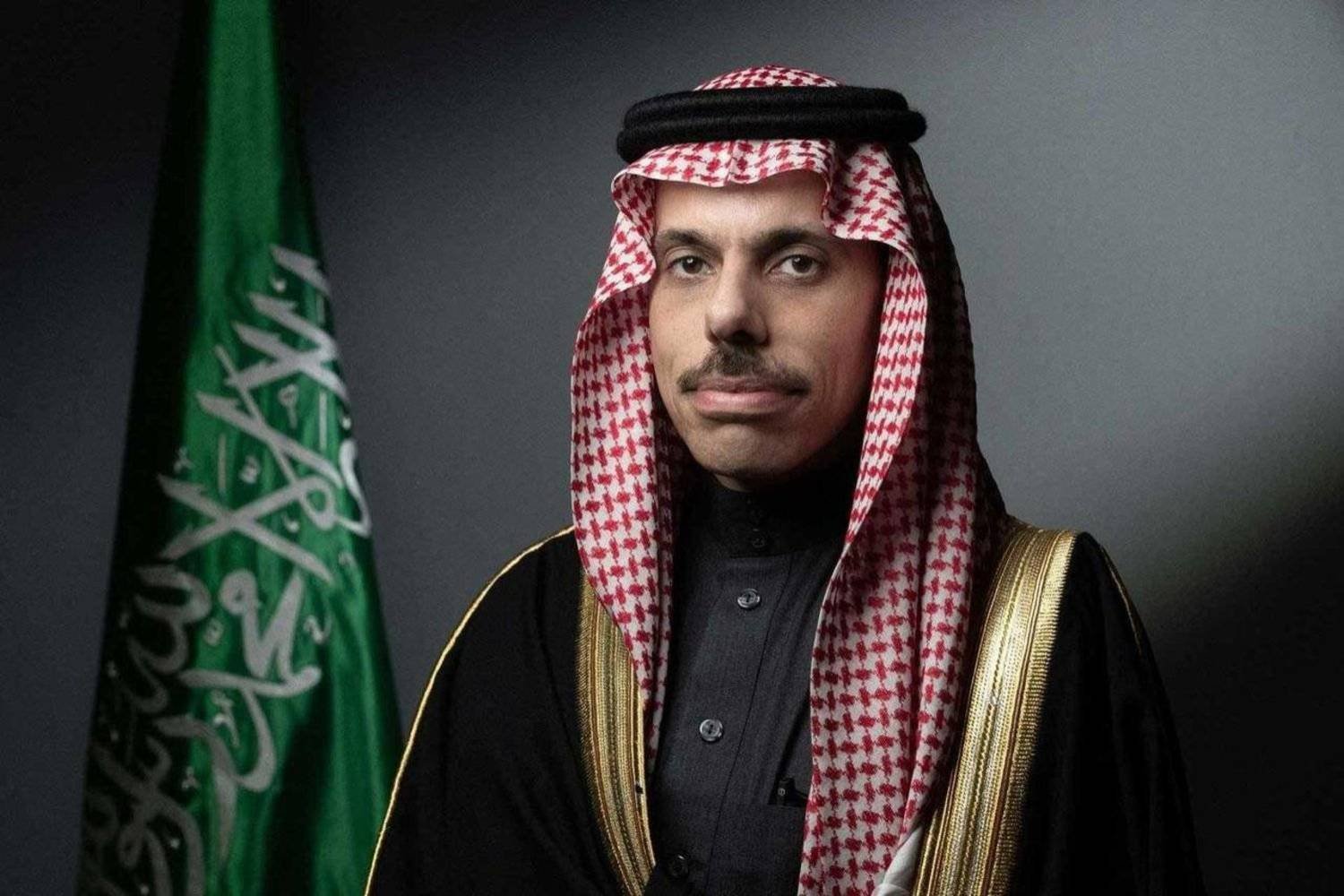
NEW DELHI: Saudi Foreign Minister Prince Faisal bin Farhan arrived in New Delhi on Saturday to represent Crown Prince and Prime Minister Mohammed bin Salman at the 2026 BRICS Summit.
Saudi Arabia is participating in the summit as an invited country, which is being held under the theme “Building Resilience, Innovation, Cooperation, and Sustainability.”
Prince Faisal is scheduled to take part in discussions on key international issues and ways to strengthen multilateral cooperation among BRICS members, partner countries and invited nations, the Saudi Press Agency reported.
The BRICS group comprises Brazil, China, Egypt, Ethiopia, India, Indonesia, Iran, Russia, South Africa and the United Arab Emirates.
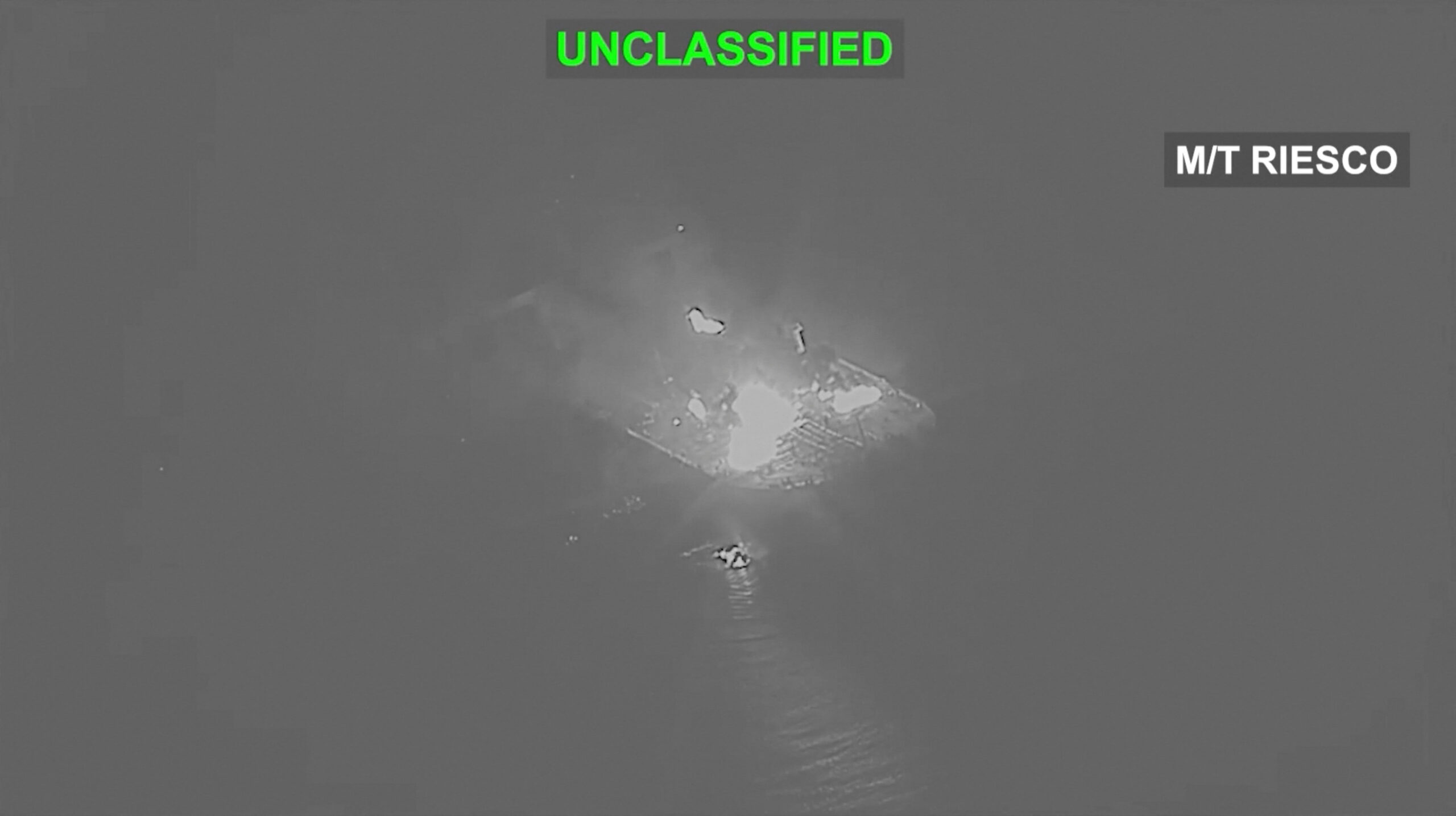
A large-scale oil spill, believed to be from a tanker struck by the US military, doubled in size between Wednesday and Thursday, endangering two protected areas off Oman and Iran, said Nina Noelle of Greenpeace Germany.
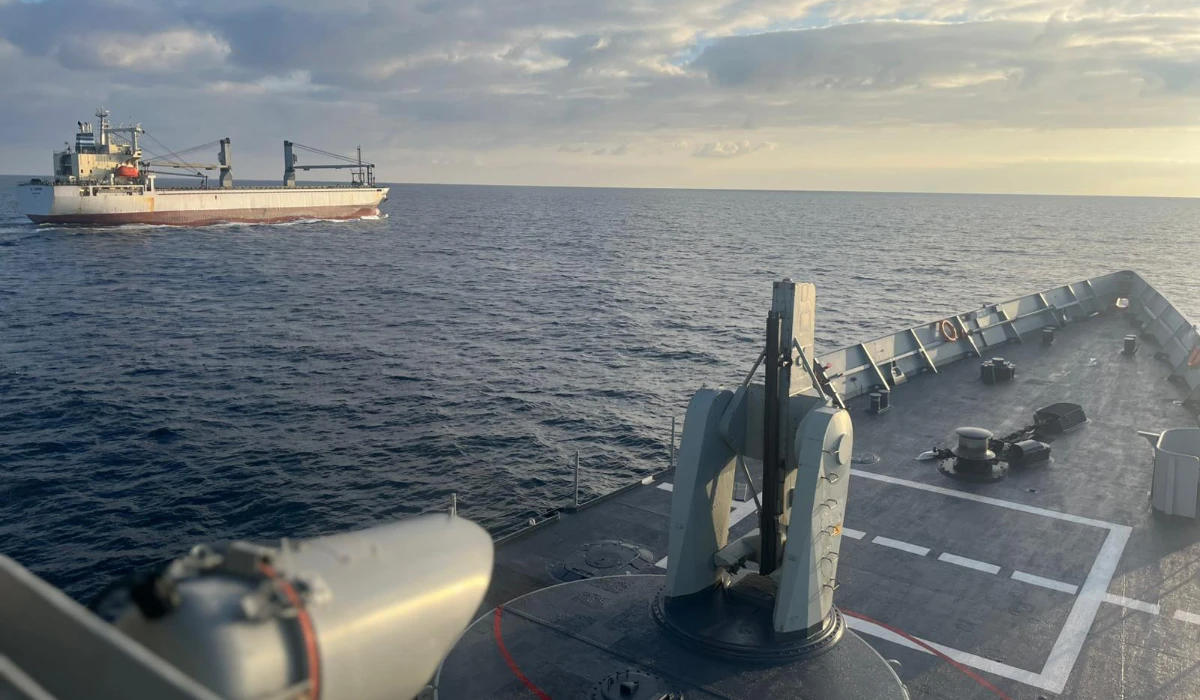
The tanker RIESCO was one of four attacked Tuesday in the Gulf of Oman. A fifth was destroyed in the Strait of Hormuz off Iran’s Kharg island.
The visible area of pollution measured about 400 square kilometers (154 square miles) on Thursday, Noelle said. Satellite images reviewed by The Associated Press showed the spill stretching almost 70 kilometers (43 miles) long.
The spill is located between the Musandam protected area on the Omani side, which includes one of the region’s most important seabird breeding islands.
On the Iranian side is the Hara-e Roud-e Gaz Protected Area in Hormozgan province that includes mangrove forests.
“The current situation in the Strait of Hormuz, together with our experience of oil spills since the beginning of the war, unfortunately suggests that an effective response is unlikely,” Noelle said.
WASHINGTON: The US military said Saturday that it has pushed back 100 commercial vessels in the past 60 days under its blockade of Iranian ports.
CENTCOM forces have redirected 100 commercial vessels over the past 60 days since America 🇺🇸 resumed the steel wall blockade against Iran. ZERO ships have passed through the blockade without U.S. forces allowing. American service members remain laser focused on this mission. pic.twitter.com/tIV2fvtuG6
“ZERO ships have passed through the blockade without US forces allowing. American service members remain laser focused on this mission,” US Central Command said on X.
Iran blocked the strategic Strait of Hormuz after the US and Israel launched attacks on Tehran in late February.
In response, the United States has sought to prevent ships from traveling to and from Iranian ports to deprive Tehran of revenue.
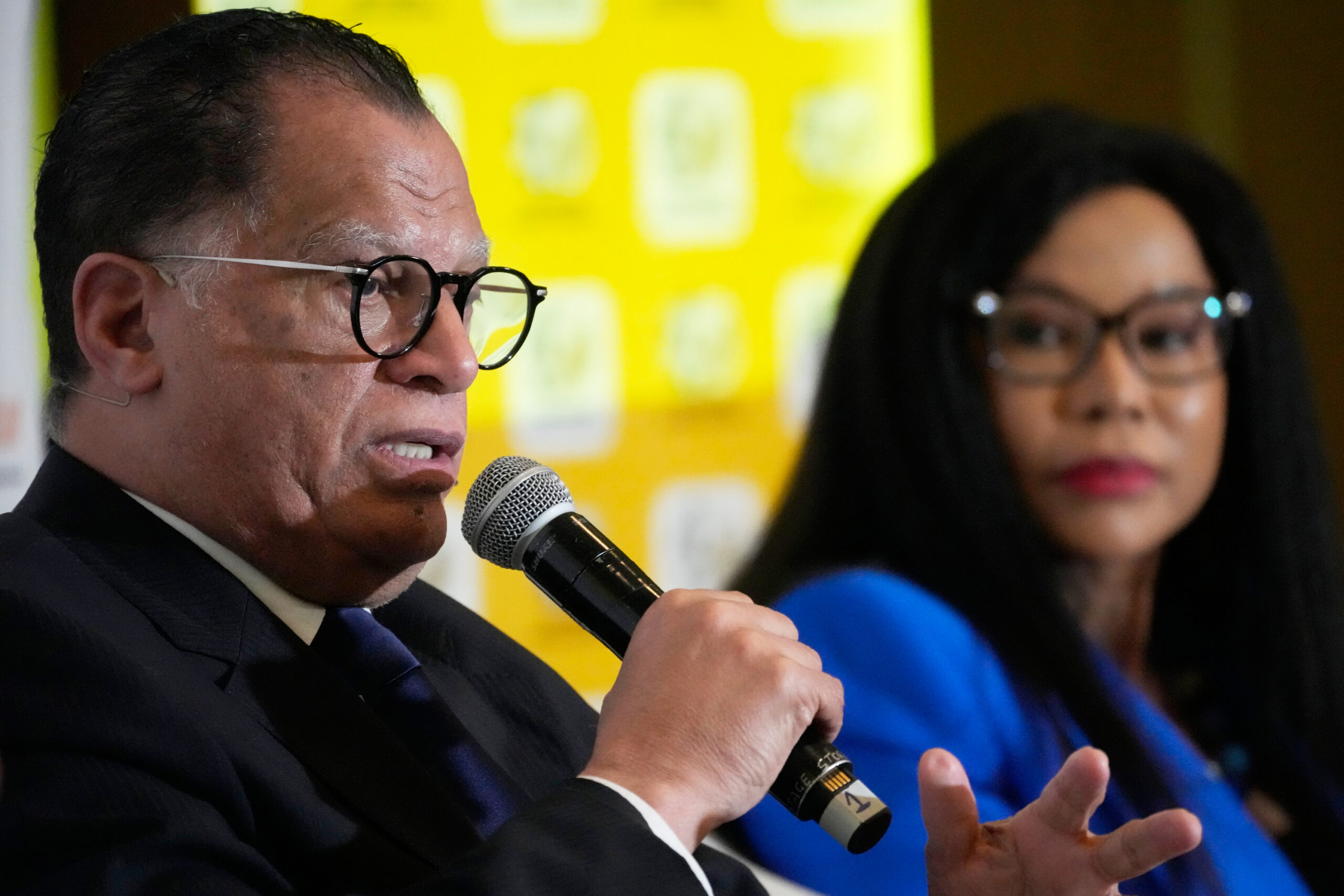
CAPE TOWN: The head organizer of the 2010 World Cup was re-elected president of South Africa’s soccer federation on Saturday despite facing criminal charges over alleged fraud while in office.
Danny Jordaan, 75, beat challenger Sandile Zungu, a South African businessman and soccer club owner, by 157 votes to 82, according to an announcement by the South African Football Association. Jordaan has been head of SAFA since 2013 and will serve a fourth term.
Jordaan was a pivotal figure in bringing the World Cup to Africa for the first time in 2010 and his work was praised in helping make the tournament a success.
But he has been followed by controversy since then.
He came under scrutiny in 2015 over if he had knowledge of an alleged $10 million bribe made by South Africa to a FIFA official to help win the 2010 hosting rights. The allegation against unidentified South African bid officials was contained in an indictment by the US Department of Justice. South Africa denied the allegation.
Jordaan was accused in 2017 of rape by South African singer and political activist Jennifer Ferguson, who said the rape happened more than two decades earlier. Jordaan denied that allegation, and charges against him were dropped because of a lack of evidence.
Jordaan was arrested in 2024 and charged with fraud and theft for the alleged misuse of around $70,000 while SAFA president. He was accused alongside several others, including a former acting CEO of SAFA and the chief financial officer of SAFA.
The charges accuse Jordaan of using SAFA money to hire personal security and a PR company to enhance his public image in the wake of the Ferguson rape allegations.
The fraud case has been bogged down by delays and is yet to go to trial. Jordaan and his co-accused denied wrongdoing.
The buildup to Saturday’s SAFA election was also troubled, with the national association saying some voting officials had received death threats and others had been harassed and intimidated. SAFA said it would notify the police but didn’t say who was behind the threats.
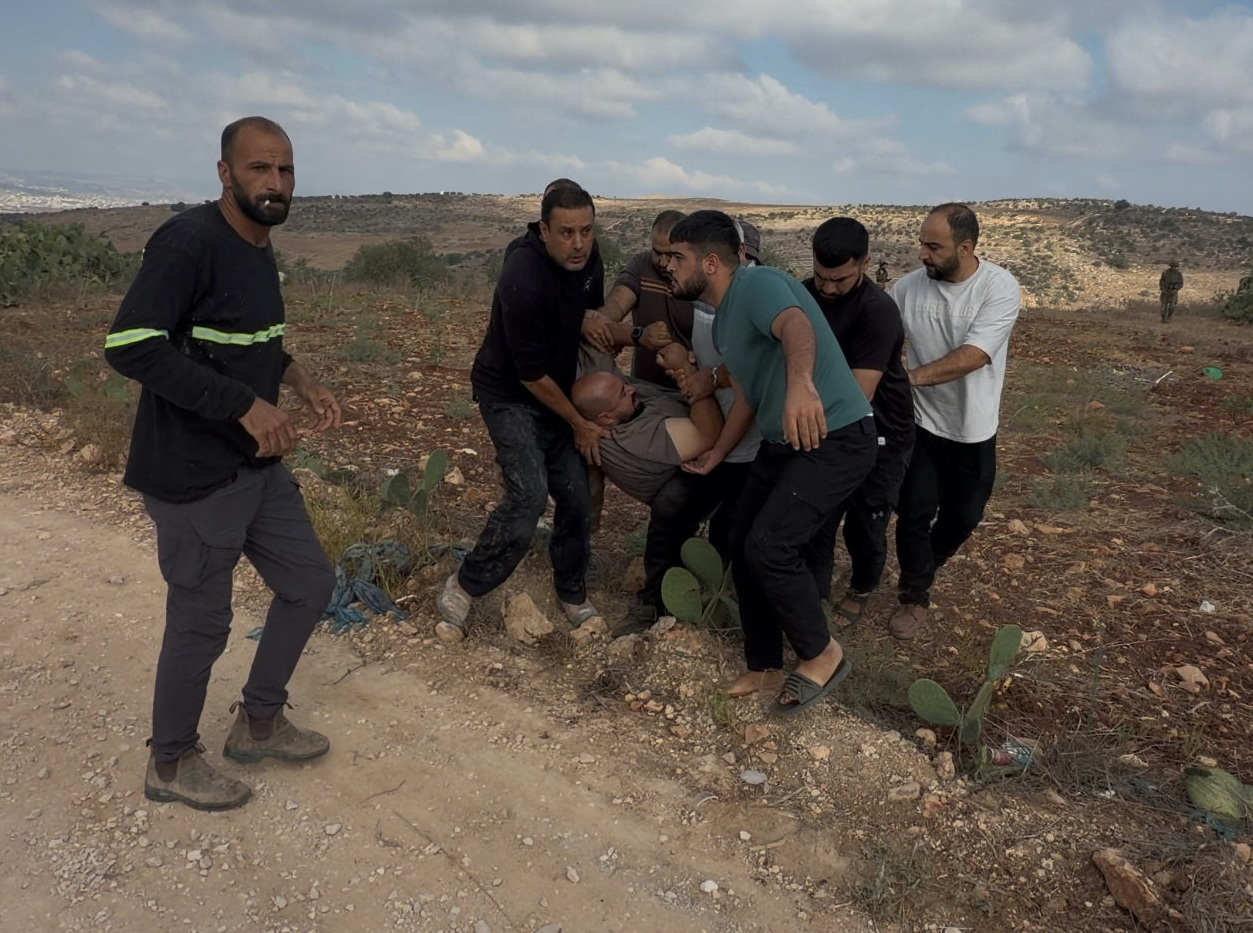
Israeli troops opened fire Saturday at a group of Palestinians who did not appear to be posing a threat in the occupied West Bank, wounding one man, according to video obtained by The Associated Press.
The video, shot by an eyewitness, showed the man falling to the ground near the Palestinian village of Faqqua, north of the West Bank.
At least 14 shots in total were fired during the duration of the video. They continued as several men rushed to move the injured man to safety before setting him down and tying a tourniquet around his leg in an apparent attempt to stop the bleeding.
Mahmoud Shahin, a resident of the village, said the Palestinians had rushed to the area after receiving reports that Israeli settlers had arrived there with a flock of sheep. He said Israeli soldiers then came and began firing in the air and toward the Palestinians.
He added that the wounded man was undergoing surgery at a hospital in Jenin.
Israel’s military said the video was authentic and confirmed its forces had fired toward the Palestinians, wounding one man, and said commanders would review the incident.
Under the ultranationalist government of Israeli Prime Minister Benjamin Netanyahu, settler violence in the West Bank has surged. The international community largely considers Israeli settlements to be illegal and obstacles to peace.
Over 700,000 Israelis now live in the West Bank and east Jerusalem, areas captured by Israel in the 1967 Mideast war and claimed by the Palestinians as parts of a future state.