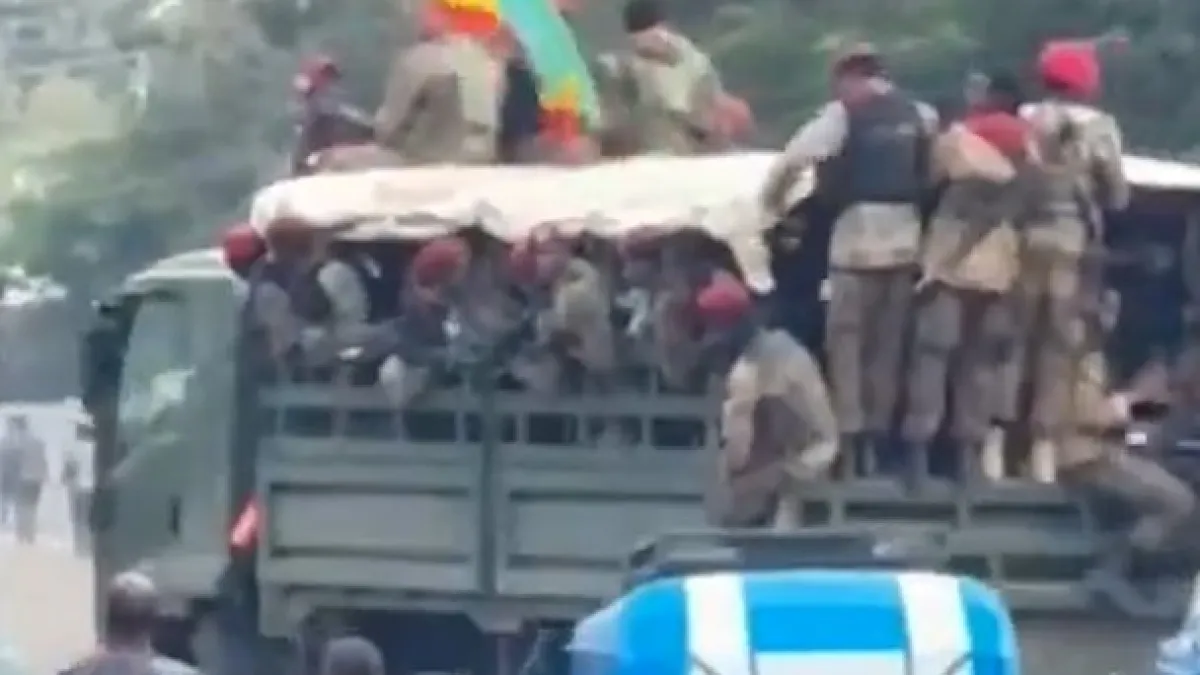
Ethiopia’s government forces say they’ve seized Mekelle from Tigray fighters after a week of intense battles. The fighting has reignited fears of a full-scale war that could draw in neighbouring countries.
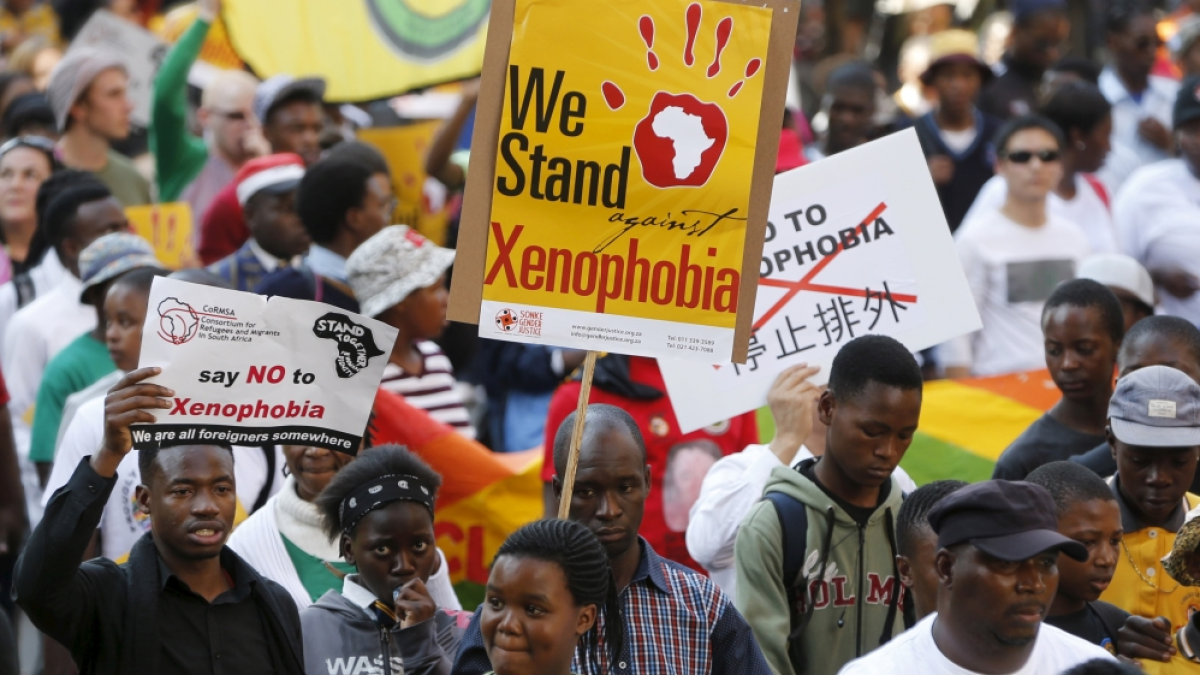
Mutare, Zimbabwe – Samantha Chimbuya had built a life in South Africa after leaving Zimbabwe in 2019 in search of better opportunities.
She found work, could afford food and believed her two children had access to better education. She also had access to healthcare.
Then, she no longer felt safe.
As June 30 approached, a deadline set by anti-immigrant activists for undocumented migrants to leave South Africa, the 30-year-old packed her belongings and returned to Zimbabwe.
“It was not safe any more. They were raiding our homes, warning us to leave. It was scary,” Chimbuya told Al Jazeera.
Chimbuya was living in KwaZulu-Natal when anti-immigrant protests intensified. March and March, one of the groups behind the June 30 deadline, accused undocumented migrants of taking jobs and putting pressure on public services.
The deadline was not imposed by the South African government, which said June 30 would be a normal day and warned against intimidation and violence. But thousands of migrants left amid fears of unrest.
Some governments organised transport for citizens returning home. Chimbuya paid for her own journey to Hurungwe, in northern Zimbabwe.
By July 28, 116,670 Zimbabweans had returned from South Africa, according to Information Minister Zhemu Soda. Of those, 36,940 were assisted by the government, while 79,730 returned independently. A further 38,057 had registered for employment, Soda said.
Hard times in Zimbabwe
For Chimbuya, coming home meant confronting many of the economic difficulties that had pushed her to leave in the first place.
She has struggled to find work and now relies on family and friends for help. Her husband remains in South Africa, where she says he is also struggling.
She had hoped to receive a grant to start a small business but said she had not received one.
Reverend Useni Sibanda, executive director of the Zimbabwe Christian Alliance, said many returnees had spent years abroad and were coming home without jobs or adequate support.
Some had not invested in homes or property in Zimbabwe while they were away, he said, leaving them with little to fall back on.
“They are coming back to a country where there are no jobs and where the social support systems may not be enough to accommodate them,” Sibanda said.
The government says it is trying to help.
Local government Minister Daniel Garwe said authorities were screening and profiling returnees to identify their skills and needs. Reintegration centres were being established, while the Ministry of Primary and Secondary Schools was considering recruiting qualified teachers among those who had returned.
Garwe also said companies were being encouraged to employ skilled returnees and that vocational training and support for people wanting to start businesses were being considered.
For some, however, the skills they acquired in South Africa have offered a more immediate route to earning a living.
Rebuilding from scratch
Sidney Bunya, from Zvimba, northeast of Harare, left Zimbabwe in March 2020 because of economic hardship.
He moved first to Johannesburg, where he took various jobs, before settling in Port Elizabeth. There, a cousin introduced him to professional carpenters.
Bunya honed his skills and eventually secured large projects, specialising in roof trusses.
But in 2026, groups demanding permits began raiding his workplace. Bunya had only his passport, and employers became reluctant to hire him because of the harassment.
He bought carpentry tools, shipped them to Zimbabwe and left South Africa before the June 30 deadline.
Using his savings, he started a business at home. It now supports his family and employs five people.
“It was difficult to set up the business. But I am getting more jobs now,” Bunya said.
Motsi said churches had also partnered with local businesses to provide training in welding, carpentry and computer science.
Calls for longer-term support
Churches have been helping returnees with shelter, food and transport, but Ray Motsi, president of the Theological College of Zimbabwe, said the needs were overwhelming.
He criticised the government for not doing enough to support people returning after years abroad.
“We need a deliberate programme to reintegrate these people,” Motsi said, arguing that returnees needed more than transport home.
Rashweat Mukundu, a human rights activist in Harare, said the government should provide longer-term assistance, including small grants, agricultural inputs and machinery, to help people establish livelihoods.
The challenge, he said, was not simply getting Zimbabweans across the border but helping them remain economically secure once they arrived.
“I plan to open a grocery store, but funding is a challenge.”
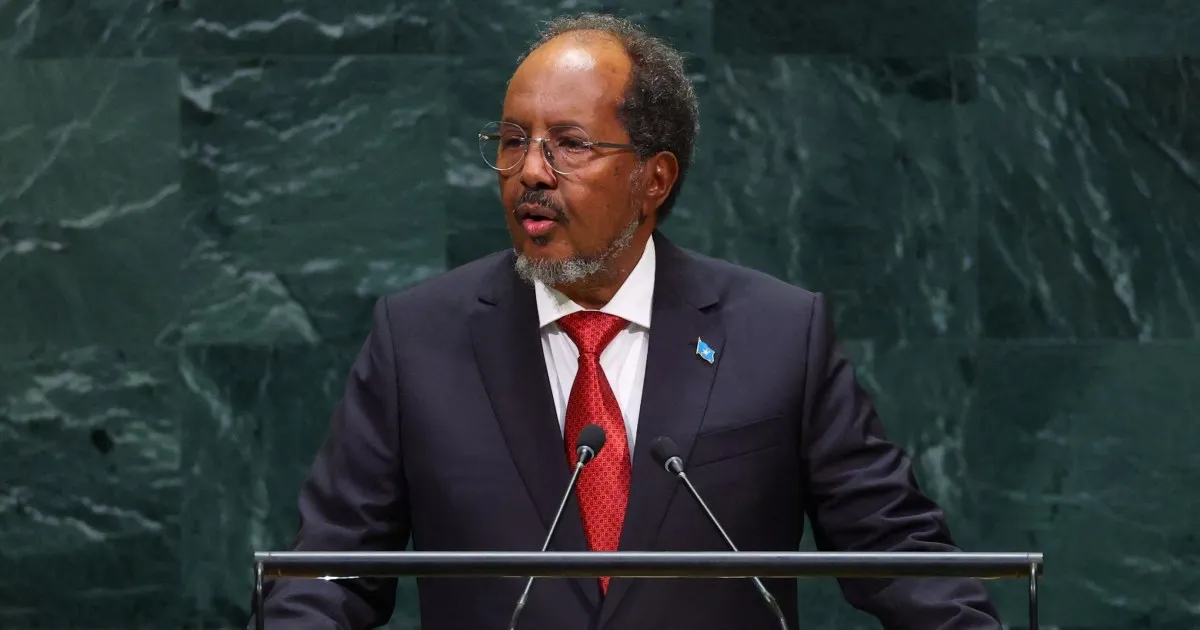
In exclusive Al Jazeera interview, President Hassan Sheikh Mohamud says attempts to pull Somalia into Middle East crises won’t succeed.
Somalia will not accept Israeli presence in the country “under any circumstances” and will resist any attempts to be pulled into the Middle East’s crises, its President Hassan Sheikh Mohamud tells Al Jazeera.
Speaking in an exclusive interview, Mohamud said that Israel was planning to establish a naval base in Berbera and use the city’s airport, adding that its real aim was to get closer to the Gulf states and Iran.
Recommended Stories
list of 3 itemsend of list
Berbera is a port city on the Gulf of Aden coast in Somaliland – the self-declared republic in northwestern Somalia that Israel recognised last year, but which is claimed by Mogadishu.
Berbera faces Yemen across the water near the strategic Bab al-Mandeb strait. The Iran-aligned Houthis have previously enforced a blockade on Israel-linked ships in the area.
“We will overcome the challenges posed to our country by Israeli moves,” Mohamud said in his wide-ranging interview.
He added that the Israeli plans fall under the “Greater Israel” project – referring to a term for various proposals, often rooted in biblical interpretations, for Israeli control over territory beyond its current borders. Some versions extend from the Nile to the Euphrates.
Israel has not adopted it as official policy, but Prime Minister Benjamin Netanyahu said in an August 2025 interview that he felt connected to the vision, prompting condemnation from Arab governments.
The Somali president described Israel as a “destabilising force” that does not abide by international law.
He also criticised Tel Aviv’s recognition of Somaliland in December.
No country other than Israel recognises Somaliland, while the region’s own residents are completely opposed to an Israeli presence, Mohamud said.
Somaliland declared independence from Somalia in 1991 and has governed itself independently for more than three decades. But it had not secured recognition from any United Nations member state until Israel’s move.
Fight against armed groups
The Somali president told Al Jazeera the United States remains his country’s strongest partner in the fight against “terrorism”, and added that al-Shabab has no presence in the major cities, leaving no possibility of the group taking control in Somalia.
Al-Shabab is a Somali armed group that emerged from the Islamic Courts Union in the mid-2000s and pledged allegiance to al-Qaeda in 2012. It has fought Somalia’s federal government for years, holds territory in parts of southern and central Somalia, and has carried out deadly attacks, including in Mogadishu and in neighbouring Kenya.
Regarding the East Africa region, Mohamud said Somalia’s relations with neighbouring Ethiopia are good, and Mogadishu does not object to Addis Ababa gaining access to the sea through Somali territory.
Ethiopia has been landlocked since Eritrea became independent in 1993 and relies largely on Djibouti’s ports for trade. In January 2024, Addis Ababa signed a memorandum of understanding with Somaliland on sea access, which Somalia condemned as a violation of its sovereignty. Somalia and Ethiopia later agreed to ease tensions.
Houthis ‘destabilising’ region
Mohamud also accused Yemen’s Houthis of “destabilising” the region and disrupting navigation in the Bab al-Mandeb strait.
His comments come as the group attempts to build on its lightning offensive that captured the country’s Red Sea coast last month.
Thus far, Yemeni government forces have been able to hold their positions on the front lines and even claimed to have inflicted heavy losses against the Houthis.
The Houthis have also intensified their attacks on Saudi Arabia, but the kingdom’s Crown Prince Mohammed bin Salman (MBS) has promised not to compromise on its security, saying the Yemeni rebels chose “chaos and destruction, threatening the Yemeni people and the region”.
The full interview with President Mohamud will be broadcast on Al Jazeera Arabic on Sunday.
The multi-vehicle crash occurred in the Salama area, 90km southeast of Nairobi, killing mostly Catholic pilgrims.
Published On 3 Oct 20263 Oct 2026
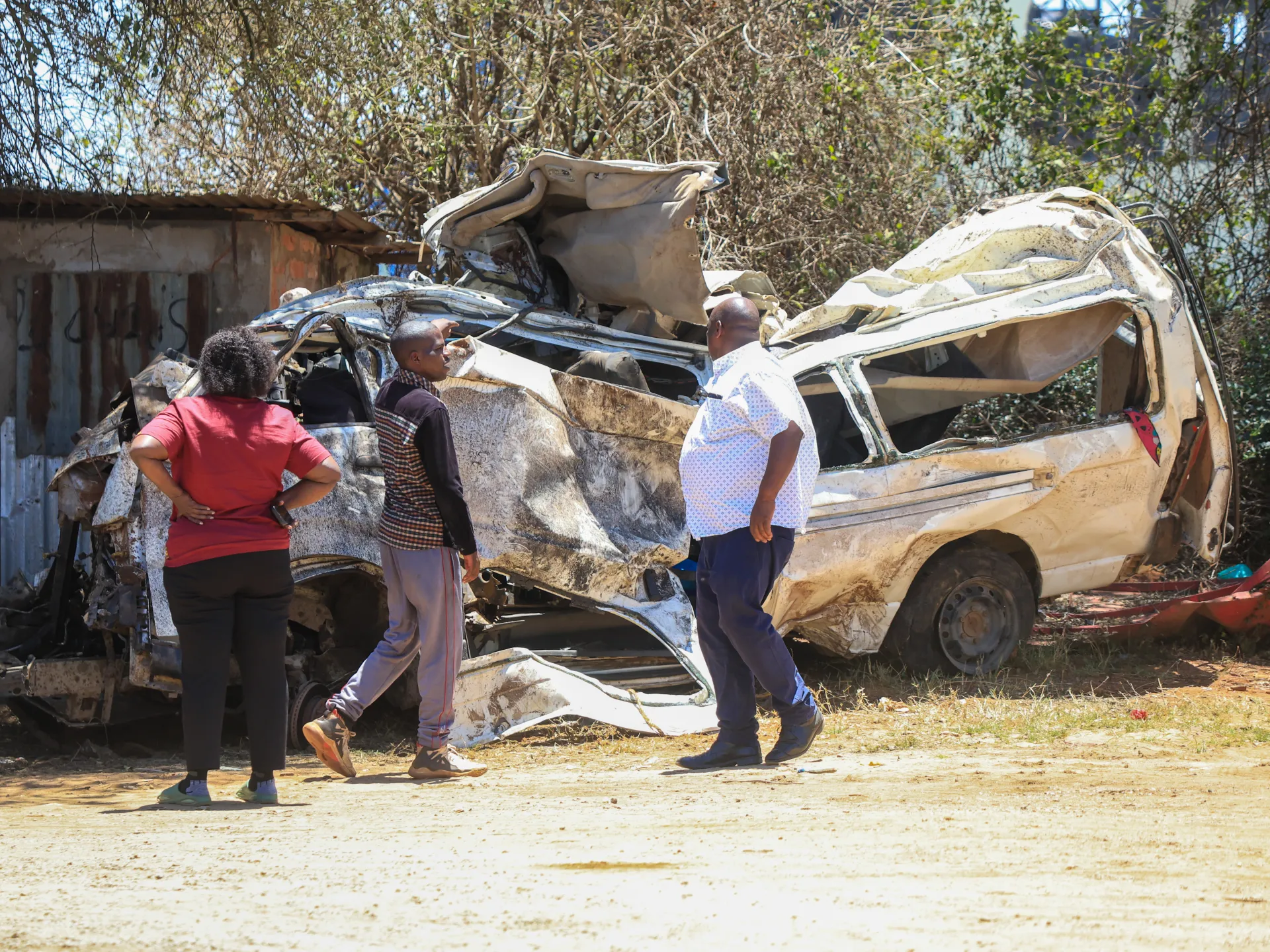
At least 17 people, most of them Catholic pilgrims on the way to a prayer site, have been killed in a crash involving multiple vehicles on the highway to the Kenyan coastal city of Mombasa.
The crash in the Salama area, about 90 kilometres (about 55 miles) southeast of the capital Nairobi, happened after midnight, police said on Saturday.
The crash occurred when a truck driver tried and failed to overtake another truck; that caused a collision with vehicles including a van carrying pilgrims, police said.
Kenyan media reported that the pilgrims were travelling in a 14-seater minibus.
The van’s driver and 16 passengers, most of them women, died at the scene, police said.
The pilgrims were going to a prayer site in Nakuru County, west of Nairobi, said Martin Kivuva, archbishop of the Catholic Archdiocese of Mombasa.
The archbishop said in a statement that he and others were “saddened with lots of grief” over the deaths.
President William Ruto offered condolences to the families, friends, parishioners and the entire Catholic community “who are mourning this painful loss”.
Kenya’s National Transport and Safety Authority (NTSA) launched an investigation into the crash.
The NTSA said it dispatched investigators “to establish the full circumstances leading to the collision”.
But it noted that the stretch of road where the crash occurred is a known “black spot” and that “recommendations have been made to address safety concerns” regarding the route.
Road accidents are a problem across Africa. In Kenya and elsewhere in the region, the accidents are often blamed on poorly maintained vehicles, excess speed and poor road conditions.
Kenya recorded 5,009 road traffic deaths last year, while 2,150 deaths were reported in the first six months of 2026, local media reported, citing numbers from the NTSA.
Memusi Lochede sits on a bed as her 24-year-old daughter Chaula lies motionless on the floor of their home in Archer’s Post, in the shadow of the training grounds. A donated wheelchair sits in the corner. Her daughter’s right leg is gone; metal rods brace a body so badly injured that she struggles to hold up her head.
“I have so much pain in my heart seeing my daughter in this condition,” 46-year-old Lochede tells Al Jazeera, wiping the drool from her daughter’s chin. “I feel ashamed that she needs so much help, and I don’t know how to help her.”
In 2019, Chaula, then a teenager, says she was hit by a speeding BATUK vehicle while crossing the road. Her leg was amputated and, her mother says, she was left paralysed and spent nearly three years in hospital.
A BATUK representative later came to see Lochede, she says.
“He apologised for what happened and said they don’t want a court case and would take care of my daughter — anything she needs,” she recounts.
The MOD said it “has not located a record of an approach having been made by a BATUK representative to the family.”
When her daughter was discharged, BATUK paid the hospital bills — without receipts or disclosing the amount — and disappeared, Lochede says. For years, Lochede called its community liaison officer, the Kenyan official tasked with receiving complaints like hers, who never answered. Eventually she gave up.
The MOD told Al Jazeera in August that BATUK is aware of the claim that one of its drivers “hit and injured a minor” in 2019, “resulting in permanent injuries”.
It said legal representatives have been in contact with the Kenya National Commission on Human Rights about the case and that a compensation offer has been made but the commission has not responded.
In late September, Al Jazeera asked the MOD what had been offered, when, and through whom. It did not provide those details, saying instead that BATUK “remains willing to engage with the child’s family, through an appropriate representative and on a without-prejudice basis,” but that “to date, we have been unable to establish contact with the family or an authorised representative”. Any resolution would have to rest on “verified medical and factual information” and, because the claim concerns a minor, be approved by a Kenyan court.
Ruth Getobai Nchagwa, a deputy director at the commission, says it has “never engaged with BATUK directly as our letters to them went unanswered”.
Chaula’s case “has not been addressed to date,” she notes, and the commission is not aware of any discussions about compensation. Lochede similarly says no one has ever approached her about compensation.
Before the accident, Lochede supported her five children by making beaded necklaces and selling them in Nairobi. Now she cannot leave her daughter’s side, and Chaula’s care costs about 30,000 Kenyan shillings ($230) a month — more than Lochede usually earns.
“It’s a shameful feeling to pick up the phone and call so many numbers for help, and no one picks up your call,” she explains, her lips quivering as she fights tears. “In those moments where I can’t provide for my daughter, I just lock myself inside the room and lie in my bed and cry.”
Her daughter, once healthy and active, now barely speaks.
“There are some days she wakes up and says just one word, like ‘food’ or ‘bathroom,’” Lochede says. “Those are the good days. Other days, she refuses to eat. I can see that she’s depressed and lonely. Inside, her soul is shattered.”
“These soldiers do these things because they know they can get away with it,” she adds sharply. “They know we don’t have money. We don’t have power. It’s extremely difficult for us to fight them.”
Cases like Chaula’s are far from isolated. Last year, a landmark two-year inquiry by Kenya’s parliamentary defence committee put decades of alleged BATUK abuses on the official record.
The 94-page report gathered testimony from hearings across Laikipia and Samburu, including a herder allegedly shot by a British sergeant; the alleged gang rape of 30 women at knifepoint in 1997; a boy who lost both arms and an eye to unexploded ordnance; and women with children their British fathers had never acknowledged.
BATUK declined to appear, citing its status and immunities under the defence arrangements. The committee condemned the refusal as contemptuous, calling it “emblematic of institutional contempt for the authority of Parliament and, by extension, the sovereignty of the people of Kenya”.
It concluded that BATUK “is increasingly seen as an occupying presence rather than a development partner”, with affected residents drawing parallels to colonial injustices. Witnesses told the committee that “suspected BATUK abuses are not only unpunished but actively covered up” — that whenever a BATUK member is implicated, police files often “go missing” and complainants are “intimidated into silence.”
An MOD spokesperson told Al Jazeera the UK “deeply” values its relationship with Kenya, “which has long been the UK’s defence partner of choice in East Africa”.
The MOD is “addressing concerns raised by Kenyan authorities and communities, focusing on legal accountability, ethical standards, environmental stewardship, economic benefit and social responsibility,” the spokesperson said.
Regarding road traffic incidents, the spokesperson said BATUK “cooperates fully with the local authorities and Kenyan Police”, that all such incidents are “investigated thoroughly” and that “where claims are made, BATUK submits to the jurisdiction of the Kenyan courts”.
When asked what progress the MOD had made on the concerns raised by the committee, and whether it was investigating any of the specific cases, it referred Al Jazeera to the written statement it submitted to the inquiry, which said it was “not aware of any evidence to support any allegation of collusion with security forces to suppress or dismiss complaints, or intimidate, bribe or coerce victims into silence”, and that any such evidence “would be taken extremely seriously and investigated accordingly”.
For Awino Okech, professor of feminist and security studies at SOAS University of London, the parliamentary report points beyond individual abuses. “This is no longer a case of a few bad apples but reckoning with what many will interpret as accepted militarised institutional culture,” she tells Al Jazeera.
“The fundamental question the British government is being asked to reflect on is their responsibility when there is a documented pattern of malbehaviour by their employees in a foreign country.”
Okech says the pattern cannot be separated from race. “We cannot ignore the racialised element. In this case, it is visible when crimes committed in Kenya are taken less seriously.”
South African Lhuan-dre Pretorius hit 50 in 24 balls, needed 16 more to reach 100 and took another 18 to hit 150.
Published On 3 Oct 20263 Oct 2026
Lhuan-dre Pretorius hit 188 not out off 79 deliveries in Bloemfontein to break Chris Gayle’s record score in the T20 format.
Playing for the Titans against the Knights in the South African CSA Challenge, the 20-year-old left-hander opened the batting and hit 13 sixes and 14 fours in his innings to surpass Gayle’s 175 for Bengaluru in the Indian Premier League in 2013.
Recommended Stories
list of 4 itemsend of list
Pretorius reached 50 in 24 balls, needed 16 more to get to his century and took another 18 to hit 150.
Gayle scored his 175 off 66 balls, striking 17 sixes and 13 fours.
The 20-year-old has represented South Africa in all three international formats. He was making his first Titans appearance of the season after scoring 226 total runs, tied for most with Dewald Brevis, in a three-nation series in Namibia in September.
On Friday, he dominated the strike, facing the equivalent of more than 13 overs to tie Australians Aaron Finch and Marcus Stoinis for the most balls faced in a T20 innings.
The second-highest scorer was Sinethemba Qeshile with 14 as the Titans finished on 267-3.
They then bowled out the Knights for 143 to win by 124 runs.
The Titans total was the second-highest in the competition’s history, behind their 271 also against the Kings in 2022. In that match, Brevis hit 162, until Friday, a competition record. This time he made seven.
The Cricinfo website calculated that in 91 T20 games, Pretorius has a strike rate of 150.44.
The rebels are seen leaving the capital of the northern Tigray region, according to local sources.
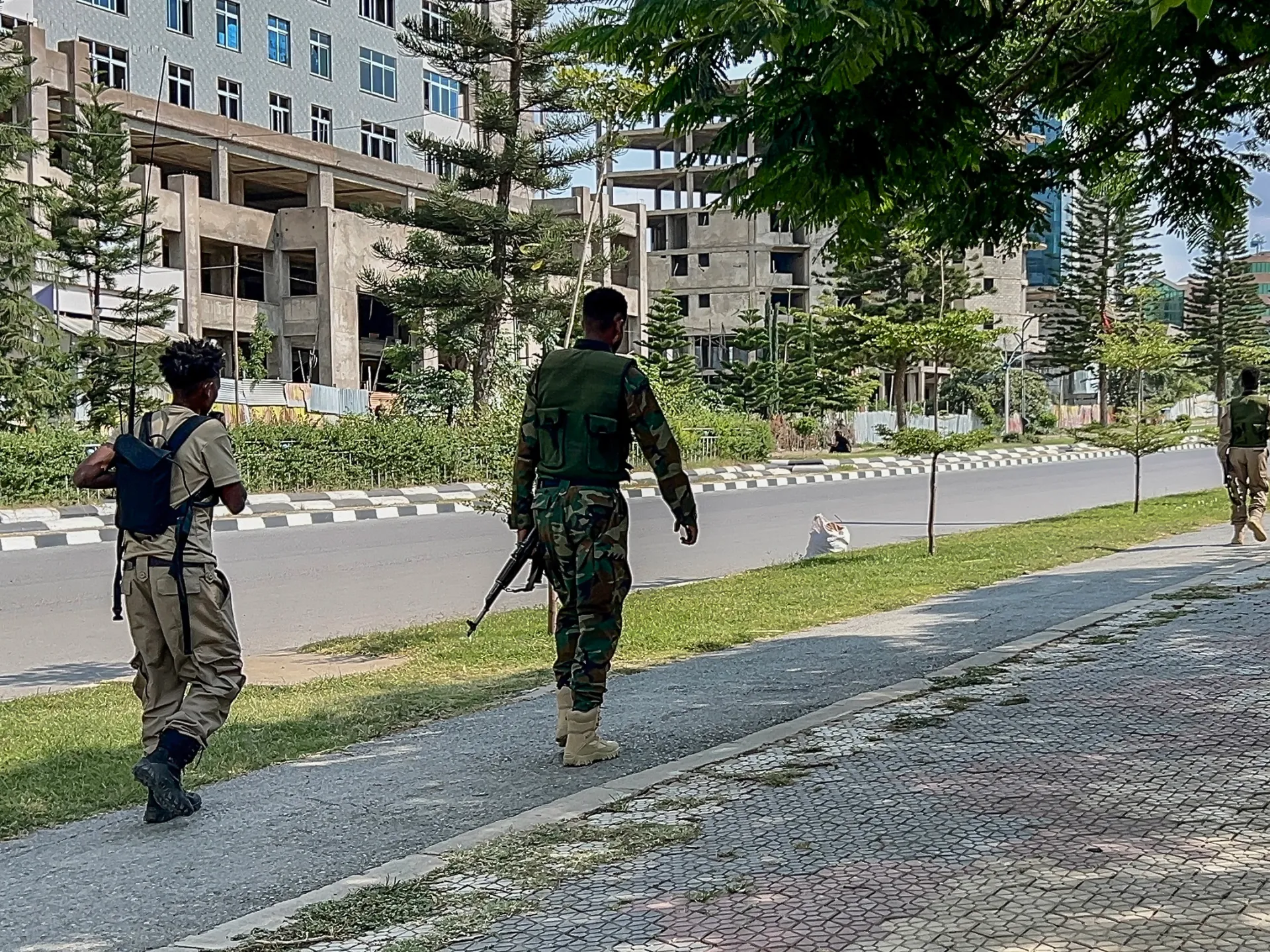
Ethiopia’s federal army and pro-government fighters have recaptured the main airport in the capital of the northern Tigray region, with the rebels seen leaving the city, according to multiple unnamed sources.
The Ethiopian National Defence Forces regained control of Alula Aba Nega Airport in Mekelle, one source with knowledge of events in the city and a humanitarian source told Reuters news agency on Saturday.
Recommended Stories
list of 3 itemsend of list
The airport, which is about 10km (6 miles) from the centre of Mekelle, was one of three airfields in the region that were seized by the rebel forces at the start of the fighting on September 23.
The fighters, as well as the leaders of the Tigray People’s Liberation Front (TPLF), were seen retreating from the city, a local journalist and residents told the AFP news agency.
The journalist added that federal forces had not yet been seen inside Mekelle.
“I am concerned that government and public property could be exposed to looting because there are no security forces in the city,” a resident told AFP.
“I am worried that lawlessness could spread in the city, and I am also afraid for my life. I want us to quickly return to law and order,” added another resident.
Al Jazeera could not independently confirm these claims. Media access is currently heavily restricted in Ethiopia, and there have been significant communications blackouts.
Last month, rebels announced the formation of a seven-party rebel coalition led by the TPLF, the same armed group that fought in the 2020-2022 civil war against federal forces from Addis Ababa. The new coalition includes rebel groups of varying sizes from across the country.
Later that month, the coalition started an offensive, seizing three airports around the contested Tigray state and engaging in fighting on the borders with Amhara and Afar states.
The government is now engaged in a counteroffensive, pushing into Tigrayan territory along three axes towards Mekelle, according to the Critical Threats Project, part of the American Enterprise Institute think tank.
Fighting has so far been concentrated in Tigray. However, rebels have reportedly carried out drone attacks on Addis Ababa.
The TPLF and government have not commented on developments on the ground.
The fighting has seen drone attacks, intensified forced conscription, and attacks on civilian infrastructure, according to Amnesty International, a global rights group.
The renewed conflict has not yet reached the heights of the Tigray war, which lasted from 2020 to 2022 and saw hundreds of thousands of deaths, but it is quickly taking on an international dimension.
Risk of conflict spreading
The government of Prime Minister Abiy Ahmed has accused Eritrea, Sudan and Egypt of backing the opposition coalition. Khartoum and Cairo have denied involvement.
Eritrea has severed diplomatic ties with Ethiopia over the accusations.
On Thursday, Eritrea also denied involvement in the Tigray conflict, and accused Addis Ababa of “pursuing an agenda of incessant hostility”. It also said Ethiopia, which is landlocked, was planning to invade Eritrea to secure sovereign access to the Red Sea coast.
The TPLF’s leader, Debretsion Gebremichael, said in a video published on Thursday that “the war is regional and it is a war to control the Red Sea”.
Eritrea has cut off diplomatic relations with neighbouring Ethiopia, escalating a long-simmering conflict between the two states rooted in territorial disputes and mutual accusations of interference.
The move comes as fighting flares in northern Ethiopia between Ethiopian federal troops and an opposition alliance that Addis Ababa accuses Eritrea of backing.
Recommended Stories
list of 3 itemsend of list
The clashes are the most severe in Ethiopia since its 2020-2022 civil war that killed hundreds of thousands of people.
But this time, the ripple effects could go further, potentially fuelling broader unrest in a region already plagued by numerous interrelated conflicts, analysts warn.
Here’s what we know about the Ethiopia-Eritrea conflict, the latest fighting in northern Ethiopia and what it could mean for the region at large:
Why did Eritrea break off ties with Ethiopia?
Eritrea announced it was severing ties with Ethiopia on Thursday, after Addis Ababa announced it would close its embassy in Asmara and expel 10 Eritrean diplomats.
In a statement, Eritrea’s Ministry of Foreign Affairs said Ethiopia’s actions had left it with “no option but to reciprocate in kind and sever all diplomatic ties with Ethiopia”.
The Eritrean ministry accused Ethiopia of pursuing a years-long “agenda of incessant hostility”, including by infringing on its coastal areas and arming fighters opposed to Ethiopia’s government.
Ethiopia has likewise accused Eritrea of backing armed groups opposed to its government. Both sides have rejected the other’s accusations.
The diplomatic breakdown follows months of worsening relations, driven largely by disputes over landlocked Ethiopia’s push for access to the Red Sea and allegations that Eritrea is backing the rebel Tigray People’s Liberation Front (TPLF), which leads the Ethiopian Peoples’ Forces Alliance for Survival, a rebel alliance fighting for control of parts of northern Ethiopia.
Have Ethiopia’s ties with Egypt and Sudan been hit, too?
Yes. Ethiopia accuses Egypt and Sudan of joining Eritrea in backing Tigrayan rebel forces, worsening already strained ties with both countries.
Ethiopia has long been at odds with Egypt over the status of Ethiopia’s Grand Ethiopian Renaissance Dam (GERD) project, which Cairo views as a risk to its water security and share of the Nile.
Ethiopia and Egypt have also expelled diplomats. Cairo ordered an Ethiopian diplomat to leave the country on Thursday, after Addis Ababa earlier kicked out an Egyptian diplomat, Egyptian state-linked media reported.
Egyptian state-linked broadcaster Al-Qahera News quoted an Egyptian official as calling Ethiopia’s move to expel the Egyptian diplomat as “regrettable and unjustified” and saying that Cairo responded in line with “the principle of reciprocity”.
The latest conflict also has implications for Sudan, whose military-backed government accuses Ethiopia of backing rebel forces it is fighting in its own civil conflict. Ethiopia rejects those allegations.
“The conflicts in Ethiopia and Sudan have become more interconnected, with the Ethiopian government and Sudanese Armed Forces accusing each other of harbouring and equipping respective opposition forces from inside their own borders,” Ahmed Soliman, senior research fellow at the Chatham House think tank’s Africa programme, told Al Jazeera. “Egypt has also been drawn into the escalation with its long-running enmity with Ethiopia over the Nile.”
What is happening in northern Ethiopia?
Tigrayan-led rebel forces have engaged in clashes with Ethiopian government-backed forces in the country’s north since last week. Fighting is concentrated in three regions: Tigray, Amhara and Afar.
Al Jazeera’s bureau chief in Ethiopia, Mohammed Taha Tawakel, reported that forces loyal to the federal government have made significant gains in the Tigray region, taking control of several towns and closing in on the regional capital, Mekelle.
Further east in Afar, a pro-government armed group claimed on Thursday to have recaptured the town of Erebti, which rebel forces had taken control of earlier in the week. The pro-government group thanked the Ethiopian military for its “magnificent air support” and said it would pursue further advances.
Despite the pro-government advances, Tawakel reported that rebel forces still maintain what he described as a “strong rear link with Eritrea” along the countries’ border.
He also reported growing fears that fighting could move into major urban centres of Tigray, such as Adwa, Axum, Shire and Mekelle. Some people have already begun fleeing to Amhara and Afar, he added.
Outside northern Ethiopia, the conflict appeared to spill into the capital, Addis Ababa, for the first time early on Thursday, as an explosion was reported at the Ministry of Defence.
AFP quoted a diplomatic source as saying small drones were the most probable cause of the blast.
While Ethiopia’s army has a much larger arsenal of drones, rebel forces have previously used them to target airbases and airports in various parts of the country, reported conflict monitor ACLED.
What are the roots of the Ethiopia-Eritrea dispute?
Ties between the neighbours have been historically fragile. In 1962, Ethiopia annexed Eritrea. An armed independence struggle, led by Eritrea’s current President Isaias Afwerki, secured independence in 1993. The countries fought another border war from 1998 to 2000.
When Ethiopian Prime Minister Abiy Ahmed came to power in 2018, he moved to end the tensions and normalise diplomatic relations with Eritrea. During Ethiopia’s last civil war in 2020-2022, Eritrea even backed Ethiopia’s government against the TPLF.
But Abiy’s ambitions to seek direct sea access for landlocked Ethiopia have contributed to recent tensions, say analysts. Abiy has repeated that Ethiopia has a right to sea access, words that officials in Asmara take as a declaration of territorial conflict with Eritrea.
Could the current conflict spread in the region?
Many analysts fear it could.
Laura Hammond, professor in development studies at SOAS University of London, told Al Jazeera this scenario is already under way.
“The risks that conflict will spread to other countries, or that neighbours in the region will be brought into the present conflict are already playing out in terms of Eritrea’s support for the TPLF and the Alliance for Survival,” said Hammond.
“There is a strong possibility that Eritrea will become more involved in the conflict on the ground inside Tigray if it continues much longer,” she continued. “There is also a risk that the conflict could inflame relations with and inside Sudan.”
Martin Plaut, an analyst specialising in the Horn of Africa, also said there was a “real danger” of the conflict spreading.
“The situation is extremely tense and it would only require a spark to ignite a conflagration that could engulf [Ethiopia and Eritrea], as well as neighbouring Sudan,” he told Al Jazeera.
Burning of a Ebola-hit transit camp sends 19,000 fleeing, illustrating the difficulties of controlling epidemic.
Published On 2 Oct 20262 Oct 2026
The Democratic Republic of Congo’s Ebola outbreak has now killed more than 4,000 people, according to government data, making it the worst epidemic in the country’s history.
Figures released on Friday showed that the death toll has risen to 4,018, and confirmed cases had reached 8,300 across seven provinces, as the government continues to struggle to contain the outbreak.
Recommended Stories
list of 4 itemsend of list
Weak infrastructure, the remoteness of the region in eastern DRC, and ongoing conflict with armed groups near the borders with South Sudan, Uganda, and Rwanda have hindered efforts to respond to cases quickly and effectively.
The United Nations reported on Friday that an Ebola-hit camp housing a transit centre for infected patients was burned by soldiers earlier this week as they were looking for weapons on the outskirts of Bunia, capital city of Ituri Province, which is at the epicentre of the outbreak.
The incident forced 19,000 people to flee the camp.
“The enormous challenge of halting the spread of Ebola in the Democratic Republic of the Congo (DRC) just became even harder after a key transit centre for patients requiring treatment burned down in Ituri province,” the UN said.
People’s mistrust and anger towards health workers and authorities have also contributed to the obstacles the government faces in its efforts to contain the outbreak.
A senior member of DRC’s governing Union for Democracy and Social Progress (UDPS) party was beaten to death days ago after taking part in a radio programme to raise awareness about the epidemic.
The attack on Marie-Celestin Karondwa, a local official with UDPS, took place last Sunday at his home in Butembo, an Ebola hotspot in the eastern North Kivu province. His house was set on fire afterwards, and he died at hospital from his injuries.
The World Health Organization has warned that the epidemic is “far from over” and on track to surpass the regional 2014-2016 West Africa Ebola outbreak, which killed more than 11,000 people, primarily in Guinea, Liberia, and Sierra Leone.
Caused by the Bundibugyo strain of Ebola, the current epidemic became the largest and deadliest in the DRC after surpassing the 2018-2020 epidemic.
Several treatments and vaccines are being trialled against Bundibugyo, but currently, there is no approved vaccine or treatment.
The current outbreak, which is the DRC’s 17th, has spread rapidly since it was officially declared on May 15.
More than 2,000 patients have recovered from the Ebola epidemic so far. The Africa Centres for Disease Control and Prevention said in its latest news conference that the number of confirmed cases is falling, although that could be attributed to insecurity and challenges in getting communities to cooperate in some of the hotspots.
NBA says its focus is on new global academy opening in Abu Dhabi as Africa, Mexico and Australia hit by closures.
Published On 2 Oct 20262 Oct 2026
The NBA has closed its only elite training academy in Africa, less than a decade after it was launched in Senegal to prepare promising young African players for professional leagues in the United States and elsewhere.
The decision to close NBA Academy Africa was a blow to students and young players across the continent, two former employees said.
Recommended Stories
list of 4 itemsend of list
Michel Chikwanine, who had been the academy’s performance and lifestyle adviser, said late Thursday that the news discouraged African players just beginning to build confidence.
“From the moment we told them, their confidence waned, their confidence dropped,” he said.
Michael Abbott, former head of academic planning at the academy, said it showed a lack of commitment to the students.
“They weren’t invested in them as kids as much as they were invested in the business model,” he said.
In response to questions from the Reuters news agency, the NBA said the decision reflected a shift in global basketball development strategy. It has previously closed academies in Mexico and Australia. All training will be run out of a new global academy to open soon in Abu Dhabi in the United Arab Emirates, it said.
In its statement, the NBA added that it is continuing to invest in African talent through other programmes and closing the academy does not signal a diminished commitment to the continent.
It cited examples such as the creation of a Basketball Africa League, which has concluded six seasons, and Basketball Without Borders, which organises elite training camps for young people worldwide, including in Africa.
NBA success in Africa followed by closure
NBA Academy Africa has trained about 110 students since launching in Senegal in 2018, Abbott said, and many have moved on to elite schools and universities in the US. The most successful students were drafted into the NBA.
Graduate Ulrich Kamka Chomche of Cameroon became the first player to be drafted into the NBA in 2024 and played for the Toronto Raptors. Former academy student Khaman Maluach of South Sudan plays for the Phoenix Suns.
Chikwanine said closing the academy will limit opportunities for African players, who often come from challenging backgrounds and need specific support. All African prospects will have to compete globally for spots in the UAE.
He said the NBA’s decision reinforced a message felt by many Africans that big companies come to the continent claiming to want to invest in people but in reality just want to make money.
“They come in with an extraction mindset,” he said. “That has always been a reality on the continent of Africa. … There is a huge mistrust that has been built.”
The NBA denied that closing the academy would limit opportunities for young African players. It said training all young players at a single location would give them greater exposure to professional coaches and scouts worldwide.
“We’re incredibly proud of the impact that NBA Academy Africa has had and remain committed to developing the next generation of African players,” Troy Justice, NBA senior vice president, said in a statement, adding that several other youth development initiatives still operate on the continent.
Pointe aux Sables, Mauritius – “At one funeral, we scattered sand from Chagos into an elder’s tomb to honour his unfulfilled wish to breathe his last in his homeland,” says Olivier Bancoult of the Chagos Refugees Group.
For elderly Chagossians displaced from their Indian Ocean homeland decades ago, delays to a treaty allowing their return are raising fears that they may never see the islands again.
The agreement, signed by Britain and Mauritius in May 2025, would allow resettlement on islands other than Diego Garcia, which would remain a military base. But it has yet to enter into force amid opposition from US President Donald Trump.
“We remain unshaken by Trump’s interference in the Chagos deal,” Bancoult says.
“The 2019 ICJ advisory opinion in favour of the archipelago’s return to Mauritius has restored our dignity and faith in our rights as native Chagossians.”
The Chagos archipelago, a group of islands in the Indian Ocean, was separated from Mauritius by Britain in 1965, three years before Mauritius gained independence. Britain later established a military base with the US on Diego Garcia, the largest island in the group.
Between 1968 and 1973, Britain removed an estimated 1,400 to 1,700 Chagossians from the islands. Many were resettled in Mauritius and the Seychelles, with others later moving to the United Kingdom. British authorities also made it illegal to remain on or return to the islands without permission.
“If Trump wants to meddle in this matter, well, let him,” Bancoult says. “We’ve had the 2019 ICJ [International Court of Justice] advisory opinion, the International Tribunal for the Law of the Sea’s 2021 judgement, and the 2025 UK-Mauritius treaty providing for Mauritius to exercise sovereignty over the archipelago. International law is squarely on our side.”
Signed on May 22, 2025, the treaty provides for Mauritius to exercise sovereignty over the Chagos archipelago, while allowing the UK to exercise rights over the Diego Garcia military base for an initial 99-year period. It also allows Mauritius to arrange for the resettlement of Chagossians on islands other than Diego Garcia. The treaty has not yet entered into force.
In April, the UK government told Parliament that the legislation needed to implement the agreement could not complete its passage during the 2024–26 parliamentary session. The session ended on April 29, meaning the bill made no further progress.
In January, Trump criticised the agreement, calling it an “act of great stupidity ” and questioning whether it adequately protected the Diego Garcia military base.
The issue returned to the diplomatic agenda in September. On September 21, British Prime Minister Andy Burnham said the UK would work with Mauritius and the US on a way forward that secures the operation of Diego Garcia and protects UK national security.
On September 26, Mauritian Prime Minister Navin Ramgoolam travelled to the UK for talks with British National Security Adviser Jonathan Powell and other officials on the Chagos issue. He remains in London, with the Mauritian government saying the discussions would cover recent developments concerning the archipelago.
For Bancoult, the central question is whether elderly Chagossians will live long enough to see the treaty’s promises fulfilled.
“Chagossians born on the archipelago are now aged between 58 and 100. We are growing old, and we have lost several Chagossian elders this year alone,” he says.
For younger Chagossians, the consequences are also cultural.
Pointe aux Sables, a coastal village in Mauritius where many Chagossians live [Ameerah Arjanee/Al Jazeera]
Chrisyl Wong-Hang-Sun, a PhD researcher in anthropology at the University of Edinburgh, says years of displacement and migration are making it harder to preserve Chagossian culture.
“During my fieldwork, many diaspora members expressed concerns over cultural loss, such as words in Chagossian Creole and recipes that are difficult to recreate abroad,” she says. “Descendants of Chagossians, myself included, long to know the islands of their relatives and ancestors.”
The dispute has also exposed political differences among Chagossians.
“The actions of both the British and Mauritian governments have resulted in very nuanced and differing political opinions among Chagossians across the UK, Mauritius and the Seychelles,” Wong-Hang-Sun says.
The Chagos Refugees Group is at odds with UK-based second-generation Chagossian Misley Mandarin and his supporters, who favour resettlement under British rather than Mauritian sovereignty and have received backing from Reform UK.
Wong-Hang-Sun says those differences should be recognised as negotiations continue.
Both governments, she says, need to “find ways to prioritise and engage with the Chagossian diaspora as a whole”.
Mauritius keeps talks largely private
Mauritius has disclosed little publicly about the substance of the latest talks on Chagos.
At the United Nations General Assembly in September, Foreign Minister Dhananjay Ramful reiterated Mauritius’ position that its sovereignty over the Chagos archipelago was “non-negotiable”. He also described the 2025 agreement as a vindication of international law and said Mauritius was committed to diplomacy and dialogue over the issue.
Beyond official statements and communiques, the Mauritian government has provided few details about the substance of the current discussions.
Members of the Chagos Refugees Group, all born on the Chagos archipelago, in Pointe aux Sables, Mauritius [Ameerah Arjanee/Al Jazeera]
International relations consultant Bruno Donat, who has previously worked at the UN, says Mauritius should focus on sustained engagement with diplomatic partners, including the African Union, small island states, the Commonwealth Secretariat and sympathetic voices in the US Congress.
“Being in New York corridors for a photo” is not the priority, Donat says. Sustained engagement, he argues, can build pressure on Washington and prevent the issue from remaining unresolved indefinitely.
The Chagos Refugees Group has pursued a similar approach. In June, two months after the treaty stalled, its members travelled to the UK to lobby representatives of British political parties, with the exception of Reform UK.
The unresolved question of Diego Garcia
But Diego Garcia remains the most contentious part of the agreement.
Lalit, a Mauritian political organisation that has campaigned for decades for the closure of the base, opposes its continued military use. Lindsey Collen of Lalit says the treaty, as it stood in April, would have kept the base open and brought Mauritius into a closer relationship with the US military presence on the island.
“In addition to the moral responsibility, we have the knowledge that we might become a target for self-defence if our land is used this way,” she says.
Portraits of native Chagossians who have passed away hang on the walls of the Chagos Refugees Group headquarters [Ameerah Arjanee/Al Jazeera]
Collen is also concerned about a new partnership between the Mauritius Police Force and the New Mexico National Guard, as well as what she describes as the “enormous military-looking buildings” of the new US embassy in Mauritius.
Donat argues that the treaty could instead give Mauritius greater leverage over how Diego Garcia is used.
“Mauritius has publicly stated that the strikes launched from Diego Garcia against Iran breached international law,” he says. “That is not the position of a government staying silent to protect a lease payment.”
For Bancoult, those wider strategic questions are secondary to the need to ensure that elderly Chagossians have the chance to return to their homeland during their lifetimes.
“We are opposed to war, ethically, but we are also running out of time.”
The Chagos Refugees Group hopes to soon celebrate the 101st birthday of one of its members.
“God willing, he’ll stay with us for more years,” Bancoult says.
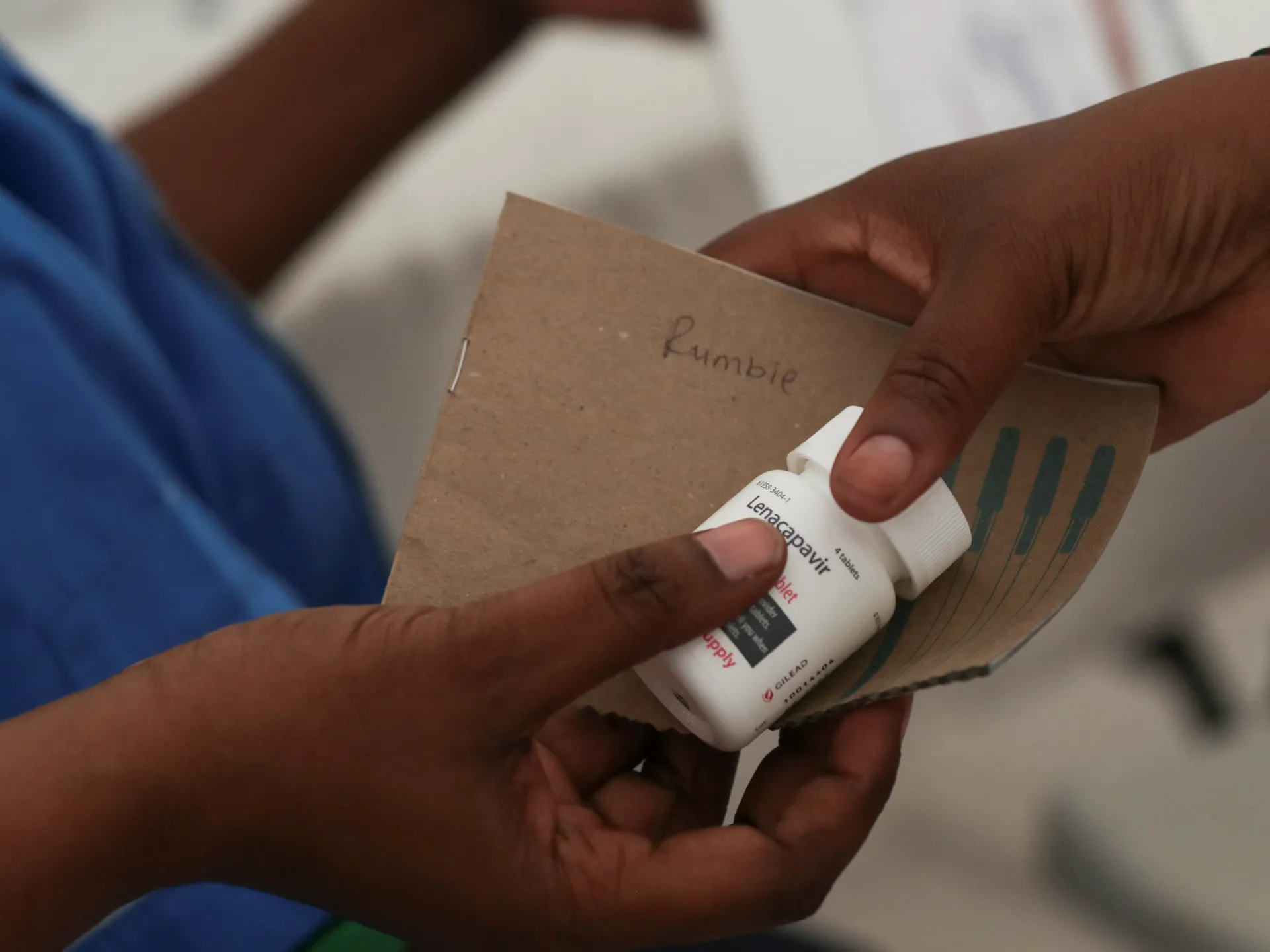
A medicine injected just twice a year could transform the fight against HIV.
In a 2024 clinical trial involving more than 2,000 young women in South Africa and Uganda, no participants who received lenacapavir contracted HIV.
Recommended Stories
list of 4 itemsend of list
Developed by United States pharmaceutical company Gilead Sciences, the injectable drug can be used to prevent HIV.
“It’s the most innovative tool that has reached the HIV arena for the last decade, because it’s the closest we have [to] a vaccine,” Carlota Baptista da Silva, global HIV lead at Doctors Without Borders (known by its French initials, MSF), told Al Jazeera.
The World Health Organization has recommended the long-acting injectable as an additional form of pre-exposure prophylaxis, or PrEP – medicine to reduce the risk of getting HIV.
But the arrival of the drug comes at a challenging juncture in the global fight against HIV.
International funding for HIV fell 18 percent in 2025, to $7.3bn, its lowest level in nearly two decades, according to the United Nations programme on HIV/AIDS (UNAIDS). The squeeze has already hit prevention programmes: The number of people receiving medicine to reduce risk fell from 1.4 million in 2024 to 1.1 million in 2025.
That makes the arrival of a highly effective, twice-yearly prevention option significant. The question of who can access it is now more urgent.
For MSF, the scientific question has largely been answered: lenacapavir can prevent HIV with remarkable efficacy.
The fight now is whether the rules governing manufacture, price and supply will allow that scientific breakthrough to reach the people who need it.
Why some countries are excluded
In the United States, lenacapavir costs about $28,000 per person annually. Generic versions are expected to cost about $40 a year.
A generic version is a copy of the original drug made by another manufacturer after the patent holder licenses the technology. It contains the same active ingredient, but it can be produced and sold at a much lower price.
In June 2025, the US Food and Drug Administration (FDA) approved lenacapavir for HIV prevention, giving people the option of an injection twice a year. But in several low- and middle-income countries, access to cheaper versions is not expected at scale until 2027.
Gilead is supplying its own version of lenacapavir at no profit for programmes supported by the Global Fund and the US President’s Emergency Plan for AIDS Relief (PEPFAR), with rollouts under way in countries including South Africa, Kenya, Zambia, Nigeria and Eswatini.
These are not the cheaper generic versions expected to cost about $40 per person a year. Gilead has licensed six manufacturers to produce those, with large-scale generic rollout expected in 2027.
At least 26 middle-income countries are excluded from Gilead’s generics agreement, MSF says, including countries with rising HIV infections and some that helped test the drug. Among them are Brazil, Mexico, Argentina and Peru.
“People should not really help generate the evidence for breakthrough medicine and then find that their country is excluded from affordable generic access,” da Silva said.
According to MSF, countries excluded from the licence accounted for close to 23 percent of new HIV infections globally in 2023.
Gilead has since announced a separate agreement with the Pan American Health Organization, creating an access pathway for 14 Latin American and Caribbean countries outside its generic licensing territory, including Brazil, Mexico, Argentina and Peru.
MSF argues that leaves those countries dependent on Gilead rather than able to automatically buy the cheaper generics.
MSF says it still cannot buy the drug
For more than a year, MSF says it has sought permission to purchase lenacapavir directly from Gilead for its medical programmes, without demanding a discounted price.
“Despite those requests, Gilead has not allowed MSF to purchase this medicine directly,” da Silva said.
That matters particularly in humanitarian emergencies, she argues. People displaced by conflict or disaster may struggle to take a prevention pill every day, while sexual violence and other vulnerabilities can increase the risk of HIV.
Daily PrEP pills are already available as an alternative to the injection. But unlike lenacapavir, they need to be taken consistently to provide protection. An injection offering six months of protection could be particularly valuable.
“People living through conflict [and] humanitarian crises cannot be the last in line for medical innovation,” da Silva said.
Gilead declined Al Jazeera’s request for an interview due to scheduling constraints. In its emailed statement, it said its access strategy combines no-profit supplies, royalty-free licensing and regional agreements. It didn’t reply to questions about why it won’t sell its drug to MSF, or why certain countries were excluded from its generics agreement.
The company plans to provide enough lenacapavir for up to three million people through 2028 as generic manufacturers scale up production, with large-scale generic rollout expected in 2027.
MSF says that is nowhere near the scale required, pointing to projections that close to 20 million people worldwide need access to PrEP to substantially reduce new HIV infections. That includes all forms of PrEP, not just lenacapavir.
But countries left outside Gilead’s generic licensing deal may have another option.
Can governments bypass the patent barriers?
World Trade Organization (WTO) rules allow governments, in some cases, to bypass a drug company’s patent so cheaper versions of a medicine can be made or imported without the company’s permission.
They can also authorise government use of patents and challenge patents they consider weak or unjustified. The 2001 Doha Declaration affirmed WTO members’ right to use such safeguards to protect public health.
Brazil has used them before in the fight against HIV. In 2007, after negotiations with pharmaceutical company Merck over the price of the HIV drug efavirenz failed, Brazil issued a compulsory licence allowing it to access cheaper generic versions of the medicine.
Nearly two decades later, activists are urging Brazil to consider using those powers again for lenacapavir if patent barriers prevent affordable generic access.
MSF says governments excluded from Gilead’s licence could consider those same legal safeguards for lenacapavir, including compulsory licensing, government-use authorisations and challenges to patents.
It is also calling on Gilead to ensure its agreements with generic manufacturers do not prevent them from supplying countries where patent barriers have been removed through such measures.
For MSF, the stakes go beyond lenacapavir. The way the drug is made available could determine whether one of the greatest advances in HIV prevention in decades reaches people based on need, rather than where they live or what their health systems can afford.
“For a humanitarian medical organisation, we should not have to spend more than a year trying to find a way to buy a WHO-recommended medicine,” da Silva said.
What if you could invent a government agency and get the government to fund it? That’s what Nigerian prosecutors accuse Adeniyi Adeyemi of doing, alleging he posed as its boss and secured a $1m budget allocation. He denies wrongdoing and has pleaded not guilty.
Nairobi, Kenya – With less than nine months until the 2027 Africa Cup of Nations kicks off, Kenya, Uganda and Tanzania are entering the most demanding phase of preparations: completing and testing the stadiums, training grounds and supporting infrastructure needed to host the tournament.
The tournament, scheduled for June 19 to July 17, 2027, will be the first Africa Cup of Nations jointly hosted by three countries and the competition’s return to East Africa since Ethiopia staged the finals in 1976.
A Confederation of African Football (CAF) delegation spent eight days inspecting facilities across the three host countries earlier this month, assessing stadiums, training grounds, hotels, airports and other infrastructure. The delegation included officials responsible for competitions, safety and security, transport, media, television and logistics.
Kenya: Talanta takes centre stage
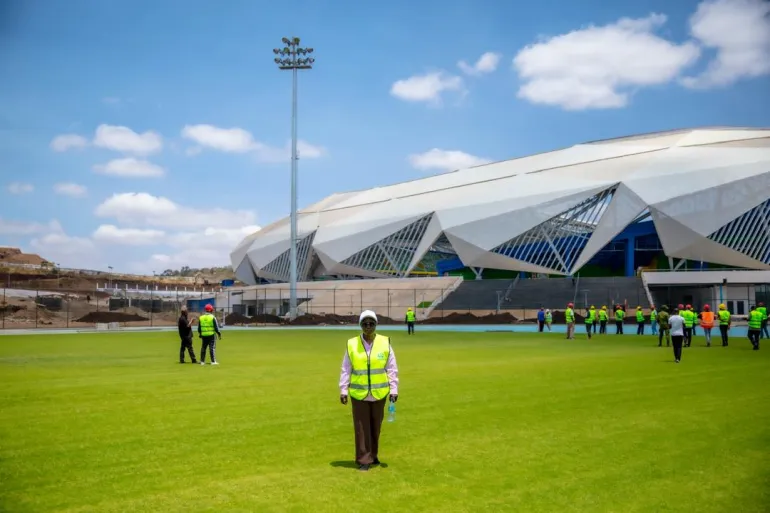
In Kenya, the biggest project is the newly built Talanta Sports International Stadium in Nairobi.
The 60,000-capacity stadium is intended to be the country’s flagship AFCON venue and was inspected by CAF earlier this month. During a subsequent visit, CAF President Patrice Motsepe said he was impressed by the progress at Talanta. He also visited Kasarani Stadium, where work remains to be completed.
But Kenya’s preparations extend well beyond its new flagship stadium.
CAF’s inspection also covered training venues, hotels, airport infrastructure and other sites supporting the Nairobi tournament operation.
Nicholus Musonye, chairman of Kenya’s AFCON 2027 Local Organising Committee, told Al Jazeera that the country was addressing the outstanding requirements.
“I want to assure Africa, and I want to assure the world, that Kenya, Uganda, Tanzania, we are ready to host AFCON,” Musonye said.
He said work on Kasarani’s pitch should be completed by the end of October, with the venue planned to be ready for handover in December.
But concerns remain about some of the facilities that will support the tournament.
Kelvin Kimaru, a Kenyan football fan, told Al Jazeera that training grounds remained a concern.
“We are not yet ready because the training grounds for the coming teams are not yet ready,” Kimaru said.
Moses Kamalik, an executive member of the Boxing Federation of Kenya, said other venues also needed work, including Nyayo Stadium and Kipchoge Keino Stadium in Eldoret.
The challenge for Kenya is broader than completing Talanta; it needs a network of match venues, training grounds and supporting facilities capable of operating together when teams and supporters arrive.
Tanzania: the race extends beyond stadiums
Tanzania is also entering the final stretch, with preparations covering stadiums, training grounds and the infrastructure connecting them.
Neema Msitha, chief executive of the country’s AFCON 2027 Local Organising Committee, told Al Jazeera that the country’s stadiums were more than 80 percent complete on average and expected to be ready for handover to CAF in January.
“All these stadiums are almost ready. If you grade them on average, all of them are almost above 80 percent,” Msitha said.
Training facilities are being developed alongside the main venues, with five facilities being prepared in each host location. Msitha said they were about 75 percent complete.
The three East African hosts are moving from construction to testing and operational preparations as the 2027 tournament approaches [Hafsa Abdiwahab Sheikh/Al Jazeera]
The Tanzanian government has also applied pressure to accelerate the work.
In August, Prime Minister Mwigulu Nchemba ordered work on AFCON training grounds to speed up, saying the facilities needed to be completed on time and meet CAF standards. He issued the directive after inspecting the Farasi and Leaders Club training grounds in Dar-es-Salaam.
Road infrastructure is also part of the preparations. In June, Works Minister Abdallah Ulega ordered contractors working on roads linked to the tournament in Arusha to operate around the clock to meet deadlines and international standards.
Msitha pointed to regional airlines, Air Tanzania and ferry services between Dar-es-Salaam and Zanzibar as part of the transport arrangements being developed for teams, officials and supporters.
CAF’s September inspection included Benjamin Mkapa Stadium in Dar-es-Salaam and other key facilities in Tanzania as the governing body continued to assess preparations across the three hosts.
Uganda faces its own deadlines
Uganda is working towards the same year-end push.
Patrick Ogwel, a CAF infrastructure monitoring officer, told Al Jazeera that infrastructure development was expected to be ready by December 31.
Hoima City Stadium has been completed and commissioned, he said, while Akii-Bua Olympic Stadium in Lira is due to be completed and commissioned by December.
Uganda’s Local Organising Committee has identified Akii-Bua, Hoima City Stadium and Mandela National Stadium as its three main stadiums. It expects 10 of the country’s 12 training facilities to be ready by the end of the year.
The organising committee said after CAF’s latest inspection that all three stadiums remained on course for completion by the end of December, while some training facilities were planned to be completed in January 2027.
But the deadlines are not without pressure.
On September 24, Uganda’s State Minister for Sports Peter Ogwang directed the Uganda People’s Defence Forces to accelerate work on several AFCON training facilities, citing concerns about the pace of construction at sites including Pece Stadium in Gulu, Lira and Gulu University.
After its September inspection, the CAF delegation also briefed President Yoweri Museveni, with challenges outside Kampala among the issues raised during the assessment.
From construction to tournament readiness
The coming months will test whether the three hosts can turn construction progress into a functioning tournament operation.
AFCON requires stadiums and training grounds that can handle teams and spectators while meeting requirements for broadcasting, media, security, transport, hospitality and match operations.
A completed stadium is only one part of the equation.
CAF inspections are now focusing on whether venues and supporting facilities can meet the operational demands of the continental tournament [Hafsa Abdiwahab Sheikh/Al Jazeera]
Kenya, Tanzania and Uganda have already gained experience from jointly hosting the 2024 African Nations Championship, which allowed the three countries to work together on a major continental tournament. CAF has also involved representatives from the three local organising committees in an observer mission at the recent AFCON in Morocco.
But AFCON will be a larger undertaking, with 24 national teams competing across the three countries for almost a month.
The coming months will determine whether the work under way across the three countries can be completed, verified and brought into operation before teams and supporters begin arriving.
For supporters in East Africa, the tournament represents more than a test of stadiums and infrastructure. It is also a chance to experience Africa’s biggest national-team competition on home soil.
Gilbert Okeya, a Kenyan football fan and Football Kenya Federation referee, told Al Jazeera:
“We are happy because we are going to host, and we are going to have an opportunity to have live matches for AFCON in our country.”
A twice-yearly injection could revolutionise HIV prevention. But who gets access raises bigger questions about public money, pharmaceutical power, drug prices and shrinking global health funding. Al Jazeera’s Mikail Malik looks at the fight over access.
Then from Birmingham you’ll be able to head to Copenhagen, Rome Fiumicino in Italy and Marrakech in Morocco which is perfect for winter sun – with some of these flights costing as little as £14.99 per person, per-way.
And there are other lesser-known destinations where you won’t find the crowds experienced elsewhere in Europe such as Tirana in Albania and Warsaw Modlin in Poland.
The airline has also announced that it is increasing the amount of flights departing Manchester Airport to 26 destinations including Malaga, Palma de Mallorca and Madrid in Spain.
It comes as the airline’s boss Michael O’Leary also warned of flight prices rising next year.
At a press conference last week, he said: “Fares for Ryanair passengers and every other passenger into the summer of 2027 are going to rise materially, I believe, because of significantly higher oil prices.
And the flights start from as little as £14.99 per person, per wayCredit: EPA
“I have no doubt fares are rising next year. The question is by how much.”
The airline also announced recently that it was axing even more seats that are equal to around 13,000 flights.
In 2025, France lost 25 routes and some 750,000 seats last winter and in Brussels, Ryanair axed 20 routes and cut one million seats across Brussels-Zaventem and Brussels South Charleroi airports.
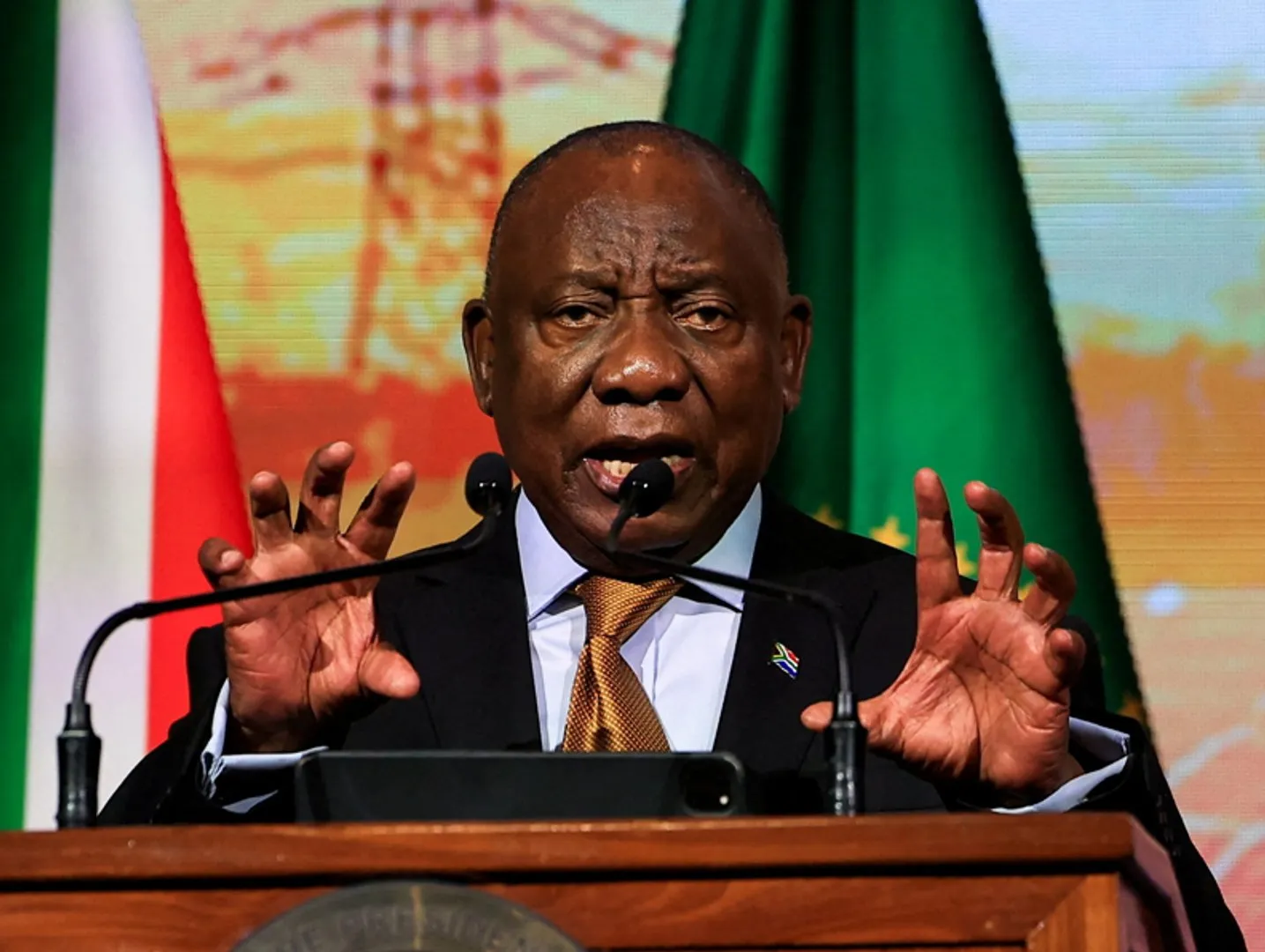
South African President Cyril Ramaphosa has described violence against women as a “national shame” after the discovery of another woman’s body intensified public anger over the country’s persistent gender-based violence.
Eleven women’s bodies have been found in Ekurhuleni, a municipality east of Johannesburg, since July, prompting renewed fear and outrage after years of government promises to tackle violence against women.
Most of the victims were in their 20s or 30s. Some were found stripped and showing signs of sexual violence, according to authorities.
“There are women lying tonight in government mortuaries waiting to be identified, waiting for someone to claim them, waiting to be taken home and laid to rest,” Ramaphosa said in a televised address late on Tuesday.
Stay ahead of the geopolitical week.
MD Briefing delivers expert analysis across five global fronts — the Indo-Pacific, energy, geoeconomics, European security, and the Middle East — every Monday morning. Free.
“How can our hearts not be broken? How can we not be angry?”
He described violence against women as a source of “profound pain and national shame” and acknowledged growing anger among South African women.
Investigation Into the Killings
Ramaphosa said police had so far found no evidence that a serial killer was responsible for the 11 deaths. He stressed, however, that investigators were continuing to examine all possibilities.
Authorities have made arrests in connection with three of the killings, while investigations into the remaining deaths are continuing.
The president said none of the cases would be allowed to go cold, amid growing concerns over whether South Africa’s law enforcement agencies can adequately investigate violent crimes against women.
The latest deaths have revived criticism of the government’s efforts to tackle gender-based violence, despite repeated national campaigns and commitments aimed at reducing the problem.
South Africa’s Wider Crime Crisis
The killings are unfolding against a broader backdrop of severe violent crime in South Africa.
The country has one of the highest murder rates per capita in the world, while corruption, limited resources and weaknesses within the policing system have made it difficult to investigate and prosecute cases effectively.
Only about one in 10 murders is solved, highlighting the scale of the challenge facing investigators.
For communities in Ekurhuleni, the discovery of 11 women’s bodies has therefore become more than a series of individual criminal investigations. It has renewed questions about public safety, accountability and whether years of government commitments are translating into effective protection for women.
Ramaphosa’s remarks reflect the political pressure surrounding the issue as authorities face renewed demands to identify the victims, establish who was responsible for their deaths and prevent further violence.
South Africa’s President Cyril Ramaphosa has announced new measures to combat femicide and gender-based violence in the country. Since July, the bodies of at least 11 women have been found in an area east of Johannesburg prompting a nationwide outcry for action
The deaths appear to be the first at the hands of Somali pirates in more than a decade.
By Al Jazeera Staff, AFP and Reuters
Published On 30 Sep 202630 Sep 2026
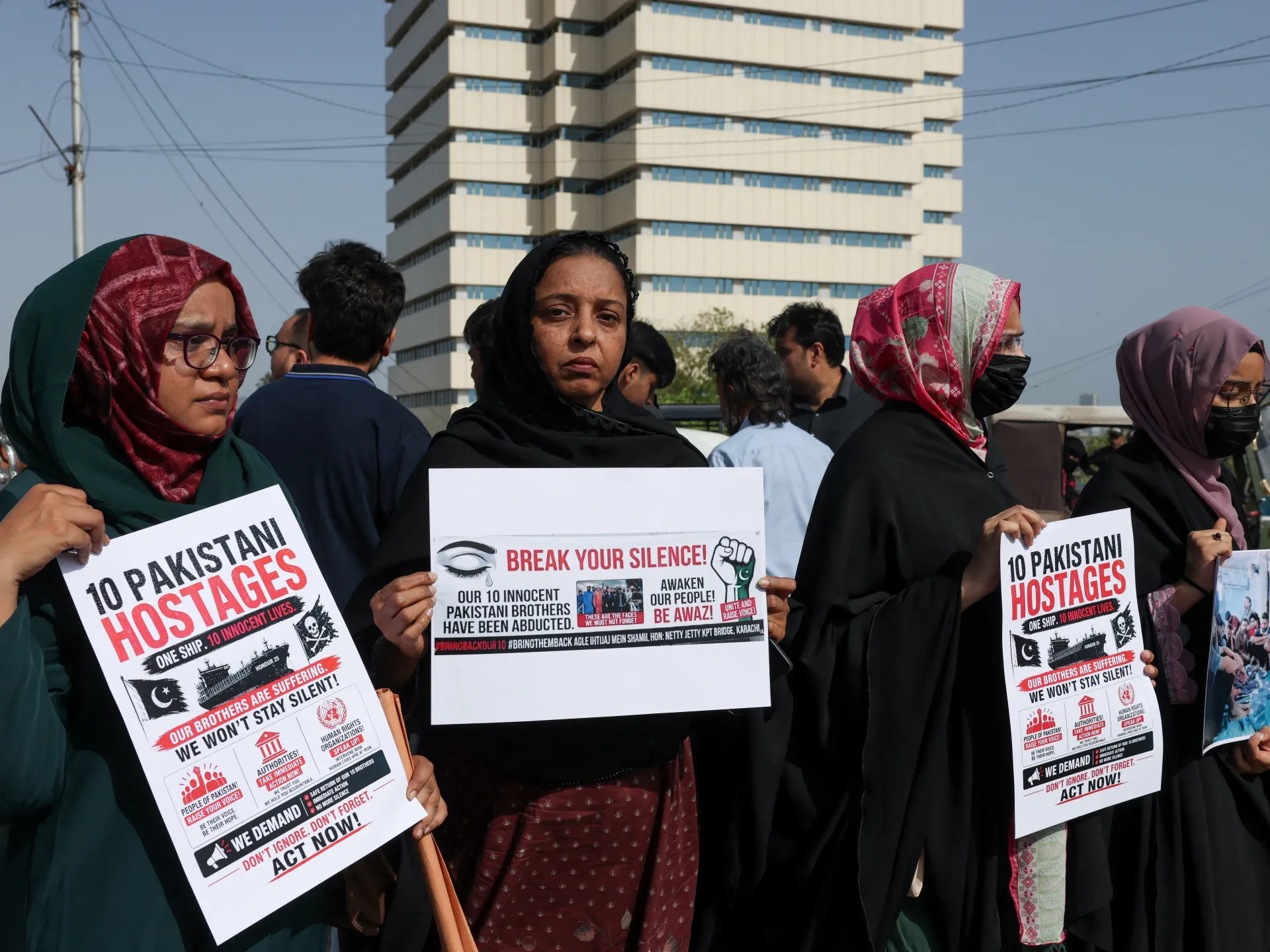
Pirates have killed five crew members on board a Palau-flagged oil tanker off the coast of Somalia before security forces rescued the ship, according to Somali authorities.
The deaths on the tanker, the MT Honour 25, were announced on Tuesday.
Recommended Stories
list of 3 itemsend of list
They appear to be the first deaths at the hands of Somali pirates in more than a decade and come amid a resurgence of Somali piracy that experts have attributed in part to the effects of the United States and Israel’s war on Iran.
The MT Honour 25, which authorities said was carrying 18,500 barrels of oil, was seized by pirates off Somalia on April 21.
The Information Ministry of Puntland, a semiautonomous region of Somalia, said in a statement that a rescue mission had freed the ship and captured 16 suspected pirates.
“Before the operation began, the pirates on board the ship killed five of the crew,” the statement said. “Among those killed were three from Pakistan, one from Myanmar and one from India.”
Four other crew members, three Pakistanis and one Indian, were injured, it said.
In a post on social media, the Puntland Maritime Police Force said the vessel was “safe” and under the government’s control. It said efforts were continuing to find others involved in the hijacking.
The rescue follows another operation last week in which the maritime police freed the Sibu 1, a tanker sanctioned by the US that Somali pirates had hijacked in August.
But 28 of the 41 pirates arrested in that operation later escaped while being transferred to jail, and several Puntland security officials accused local police of complicity.
At least 15 attacks have been reported off Somalia since April, according to officials.
A previous wave of piracy, from 2008 to 2014, disrupted one of the world’s busiest shipping routes, cost the global economy billions of dollars and resulted in hundreds of millions of dollars in ransom payments.
As renewed fighting spreads across northern Ethiopia, the government has accused Eritrea, Sudan and Egypt of backing armed opposition groups, raising fears that the conflict could draw in regional powers.
Over the weekend, Ethiopian army chief Birhanu Jula attributed his country’s unrest to those he called Ethiopia’s “historical and contemporary adversaries”.
Recommended Stories
list of 3 itemsend of list
Birhanu accused Eritrea of being the go-between linking these external powers – including Sudan and Egypt, which he explicitly named – with armed groups inside Ethiopia.
Eritrea, Sudan and Egypt have all rejected the accusations. Speaking to Al Jazeera, Egyptian Foreign Ministry spokesperson Nader Zaki said that Egypt’s foreign policy was founded on “full respect for the sovereignty, unity and territorial integrity of states, and noninterference in the internal affairs of other countries”.
Zaki added that Egypt “is fully committed to the rules of international law and the Charter of the United Nations, and rejects any practices that would undermine regional security and stability”.
Major-General Samir Farag, the former head of the Egyptian Armed Forces’ Morale Affairs Department, also told Al Jazeera that the accusations against Egypt were false. “It has not been Egypt’s policy to interfere in the internal affairs of any state in the region,” he said.
Sudan’s military also dismissed the accusations as “baseless” and levelled its own charge of destabilising behaviour at Ethiopia, accusing it of supporting the paramilitary Rapid Support Forces (RSF), which has been fighting the Sudanese Armed Forces since 2023. Ethiopia has denied those allegations.
Troubled relations
Ethiopia’s relations with the countries it has accused have already been strained by other disputes that predate the latest fighting.
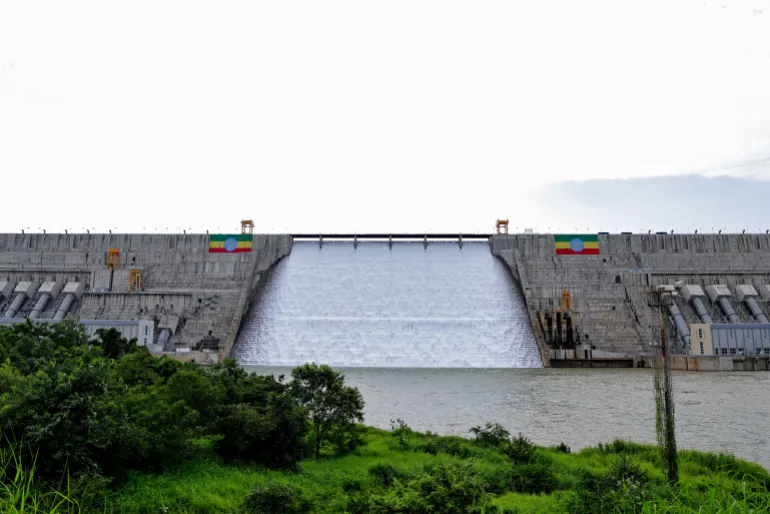
Relations between Cairo and Addis Ababa have remained tense as a longstanding dispute over the Grand Ethiopian Renaissance Dam (GERD) remains unresolved. Competition between the two has increasingly extended to regional security, the Red Sea and the Horn of Africa.
The Grand Ethiopian Renaissance Dam, the construction of which stoked fears in Cairo that Ethiopia could choke off the Nile River, September 9, 2025 [File:Tiksa Negeri/Reuters]
Sudan’s relations with Ethiopia are similarly troubled. Since the outbreak of the Sudanese civil war, Khartoum has accused Addis Ababa of providing training, supplies and the use of Ethiopian territory to the RSF.
Eritrea had fought alongside Ethiopia against rebel groups in the latter’s Tigray region during a war between 2020 and 2022, but relations between the two neighbours have since soured, with Eritrea alarmed by Ethiopia’s attempts to gain access to the Red Sea.
Against that background, some analysts and Ethiopian opposition figures say that Addis Ababa is pointing the finger at foreign conspiracies in a bid to rally support behind its national army.
Mohamed Selim, deputy chair of the Egyptian parliament’s African Affairs Committee, told Al Jazeera that he believes the accusations were an attempt to shift attention from Ethiopia’s domestic problems by creating an external enemy and seeking to unify the internal front.
Amani al-Tawil, director of the Africa Programme at the Al-Ahram Centre for Political and Strategic Studies, similarly described the accusations as “an understandable attempt to escape from internal crises”.
She questioned why Egypt would choose this moment to intervene militarily in Ethiopia, given the two have been in dispute over GERD since 2011.
Al-Tawil said the breadth of the new opposition alliance in Ethiopia – seven groups representing disparate ethnic groups and regions announced the coalition last week – presented a challenge to Addis Ababa.
(Al Jazeera)
Spillover concerns
The renewed fighting in Ethiopia has spread across Tigray and into neighbouring Amhara and Afar.
Mohammed Hussein, the chairman of the Prosperity Party Afar Region Branch Office – the ruling party in Ethiopia’s Afar region – told Al Jazeera that the three regions together have a population of more than 38 million, according to his estimate, and include areas near the borders with Djibouti and Eritrea, raising fears of a regional war.
Ammar Arki, a writer focusing on Horn of Africa affairs, told Al Jazeera that Ethiopia had, at various stages, blamed Sudan, Egypt and Eritrea for contributing to instability inside Ethiopia.
He said the latest accusations could be interpreted as an attempt to redirect some domestic attention towards an external threat and build support around the federal government.
But Arki warned that the longer Addis Ababa continued to explain its internal crisis in terms of an “external conspiracy”, particularly if neighbouring states responded in the same way, the greater the risk that Ethiopia’s conflict could move beyond Ethiopia’s borders and become regional.
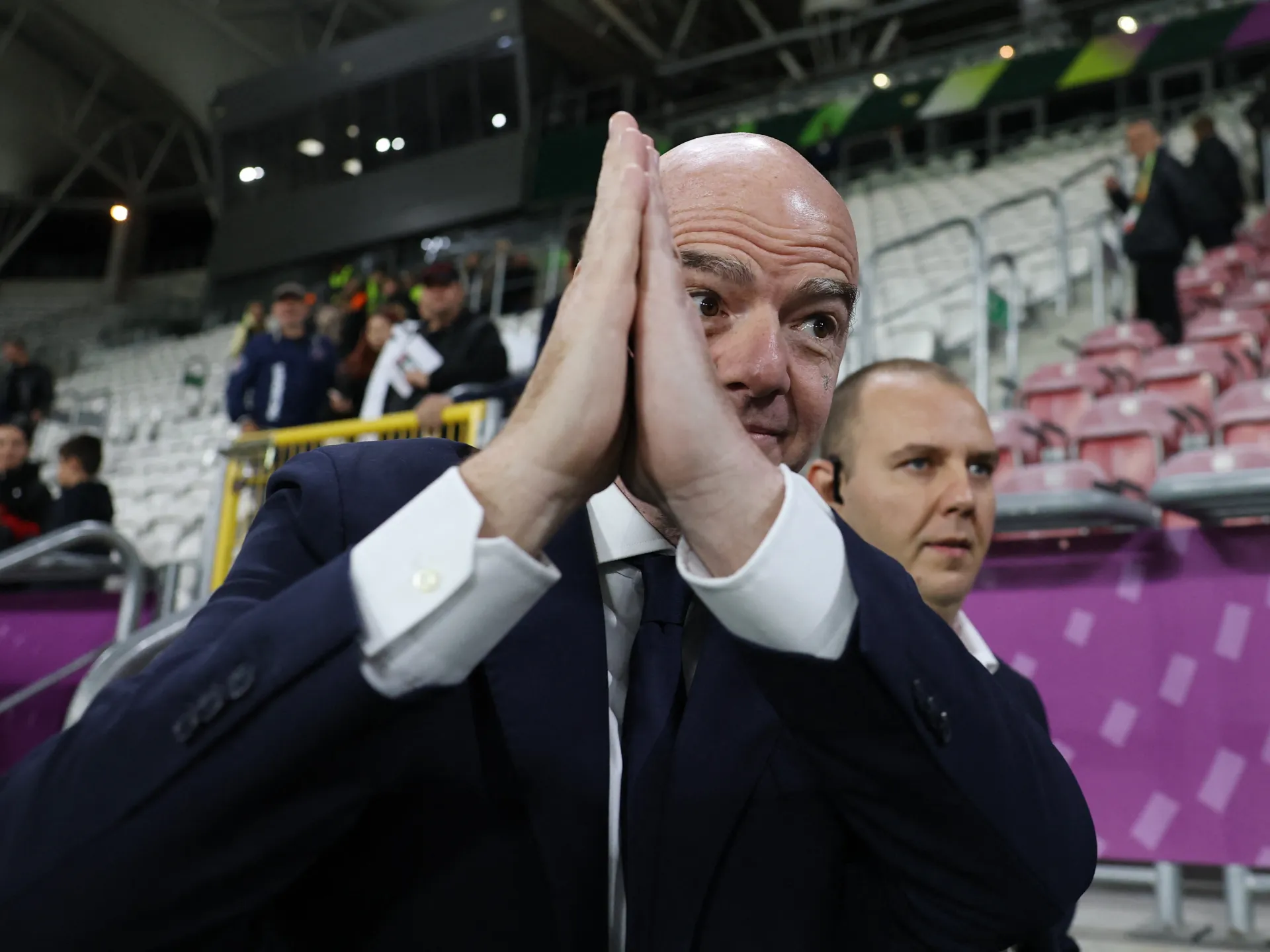
FIFA president Gianni Infantino is willing to discuss the disbursement of millions of dollars to the member associations of football’s global governing body as the Swiss chief seeks re-election to the post he has held for 10 years amid growing opposition.
The amount of the distributions to individual nations will be on the agenda of the FIFA Council’s October 15 meeting, according to a letter Infantino sent to the heads of the six regional confederations, as reported by media in the United States on Monday.
“I will not prejudge the amount,” Infantino wrote, according to one report. “I will support the greatest level of additional funding that can responsibly be delivered through FIFA’s proper governance process, applied fairly and supported by transparent and auditable arrangements. The ambition is welcome. The financial evidence, governance and implementation must now support it.”
“A single figure can begin the discussion, but it cannot complete a global policy. I have therefore instructed the Secretary General to consolidate all submissions into one integrated assessment for consideration by the FIFA Council.”
The move is seen as Infantino’s latest attempt to placate regional football bodies, as well as their chiefs, in a bid to hold on to his position as the most powerful man in football.
Earlier this month, the 56-year-old confirmed his bid amid widespread criticism of his leadership and the growing threat of legal proceedings.
Infantino has faced stiff opposition since the fallout from his proposed plan to sell approximately 20 percent of a proposed new entity, FIFA Forward Enterprise (FFE), focused on the commercial and operational facets of the World Cup and other FIFA tournaments.
The Swiss-Italian has been the most powerful man in world football over the past 10 years, but has increasingly lost support from regional football confederations and national associations. Last month, he appeared to be pulling out all the stops in a bid to retain his position, despite growing calls for his ousting and wide-ranging disapproval of his plans.
A joint statement with leagues from Spain, Italy and Germany accused Infantino of actively promoting “exploitative ideas rather than safeguarding against them”.
He is seen as a divisive figure in international football, with his close ties to some of the most powerful global leaders and plans for maximising revenue from football viewed as a threat to the game.
With fewer than six months until the next round of elections for FIFA’s presidency, Infantino appears to be losing ground among his usual backers.
FIFA presidents are limited to three terms, each lasting four years.
However, in 2022, Infantino successfully argued that his first spell in charge, which began when he was elected at an extraordinary FIFA Congress in 2016 following Sepp Blatter’s resignation, should not count towards that limit because it completed an interrupted mandate.
His plans to run for a fourth term have been questioned by critics and rights groups, who have asked FIFA’s Governance, Audit and Compliance Committee (GACC) to block the re-election bid.
The financial discussion comes in the wake of UEFA, CONCACAF and the AFC calling for Infantino to resign over the plan.
UEFA president Aleksander Ceferin and CONCACAF’s Victor Montagliani recently wrote a letter to FIFA, seeking payments such as the one Infantino addressed in his letter. Salman bin Ibrahim Al Khalifa, head of the Asian Football Confederation, made a similar request, per the reports.
Among the investors in FFE was to be Joshua Kushner, the brother of President Donald Trump’s son-in-law Jared Kushner. Trump is a close ally of Infantino.
Infantino subsequently abandoned the private equity plan, but he has refused to resign, and he plans to run for re-election in March. With seven weeks remaining for candidates to announce their intention to oppose Infantino, no challenger has stepped forward.
Had Infantino’s FFE plan gone through, each member nation would have received at least $20m. The letter from UEFA and CONCACAF asks for every member association to receive a minimum of $10m from FIFA’s reserves, according to the reports.
Democratic Republic of the Congo secure their second straight win in Group E, with striker Yoanne Wissa scoring again.
Published On 29 Sep 202629 Sep 2026
Yoane Wissa scored the first goal and created the second as the Democratic Republic of the Congo (DRC) spoiled a Zimbabwe homecoming by winning a 2027 Africa Cup of Nations qualifier 2-1 in Harare.
The 30-year-old Newcastle United striker struck in the 30th minute, poking a loose ball into the net after goalkeeper Elvis Chipezeze allowed a cross to slip from his grasp in the qualifying match on Monday.
Recommended Stories
list of 3 itemsend of list
DRC, who secured a historic last-32 finish at the 2026 FIFA World Cup, went further ahead in first-half added time when a Wissa pass sent Samuel Moutoussamy through to score.
After being outplayed in the opening half by a team 89 places higher in the FIFA world rankings, Zimbabwe improved after half-time, with Marshall Munetsi scoring a 93rd-minute consolation goal.
Zimbabwe last played at home in November 2021 before the Harare venue was deemed unsuitable for international fixtures, leading to lengthy renovations.
DRC, whose second of two AFCON titles came 52 years ago, top Group E with a maximum six points after launching their campaign with a 2-0 home victory over Equatorial Guinea.
Botswana hold Tunisia to draw
Zimbabwe and Equatorial Guinea, who meet twice in November, have three points each, and Sierra Leone are pointless.
A first-minute goal from Loren Zuniga earned Equatorial Guinea a 1-0 win over Sierra Leone in Cameroon’s capital, Yaounde.
Equatorial Guinea are among the 11 of the 48 qualifiers for the AFCON group stage who must host matches at neutral venues as they lack an international-standard stadium.
Central African Republic are another “homeless” nation. They fell 1-0 to Burkina Faso in Group F in the Moroccan commercial hub of Casablanca. Aboubacar Camara netted the second-half winner.
Struggling Tunisia were held at home for the second time in four days, drawing 2-2 with Botswana in Rades near Tunis.
Tunisia looked set for a first competitive win this year when Hazem Mastouri scored either side of half-time after Botswana had taken the lead.
But the minnows from Southern Africa – 90 places below Tunisia in the world rankings – equalised on the hour through a delicate lob from substitute Lebogang Ditsele.
It was the second successive 2-2 draw for Botswana after sharing the points in Libya last week, and they remain top of Group H on goals scored ahead of Tunisia.