Iraq, Bahrain, Kuwait and Qatar face double-digit declines in GDP amid the fallout from the US-Israel war on Iran.
Published On 13 Oct 202613 Oct 2026
The economy of the Middle East and Central Asia is set to shrink in 2026 amid the fallout of the US-Israel war on Iran, with countries such as Kuwait and Qatar facing double-digit contractions, according to the International Monetary Fund (IMF).
The region’s gross domestic product (GDP) is forecast to contract by 0.3 percent this year, a sharp downgrade from the 1.9 percent expansion projected in April, the IMF said in its latest economic outlook on Tuesday.
Recommended Stories
list of 4 itemsend of list
The IMF cited the prolonged disruption to shipping in the Strait of Hormuz, a conduit for one-fifth of global oil supplies in peacetime, for the downgraded outlook.
Kuwait, Iraq and Qatar are forecast to have the most severe economic contractions, with their GDPs expected to shrink by 16.7 percent, 16 percent and 15.6 percent, respectively.
Bahrain’s GDP is forecast to contract by 11.3 percent, while Iran’s economy is projected to shrink by 7.6 percent.
Saudi Arabia, which has partially offset the hit to its energy sector by boosting oil exports through the East-West pipeline, is projected to record negative growth of 3.3 percent.
Kyrgyzstan is expected to have the strongest growth in the region, with GDP forecast to expand 9 percent.
The Middle East and Central Asia is the only region that is expected to experience negative growth in 2026.
Emerging and developing Asia’s GDP is forecast to grow 5.1 percent, while the economies of Sub-Saharan Africa and Latin America and the Caribbean are projected to expand 4.5 percent and 2.3 percent, respectively.
The United States and China, the world’s two largest economies, are forecast to register growth of 2.3 percent and 4.5 percent, respectively, while the eurozone’s GDP is estimated to grow 1.1 percent.
The IMF said it expected global GDP to grow 3.1 percent, up from 3 percent in its previous outlook.
The Washington, DC-based institution said while economic activity had proved resilient this year, the global economy faced multiple risks.
“Further escalation in conflicts, a reassessment of expectations surrounding artificial intelligence (AI), renewed trade tensions, and fiscal vulnerabilities could weaken growth,” it said.
“On the upside, stronger momentum in AI investment and productivity gains from AI or a sustained easing of geopolitical and trade tensions could strengthen growth.”
Addis Ababa, Ethiopia – As renewed fighting in Ethiopia’s Tigray region threatens to destabilise the Horn of Africa, public backing by the United Arab Emirates (UAE) of Ethiopia’s federal government and Saudi Arabia’s record of regional diplomacy are drawing scrutiny.
Both Gulf powers have strategic interests in the Horn of Africa, but their roles differ. The UAE has publicly backed Ethiopia’s government while Saudi Arabia has previously helped broker an Ethiopia-Eritrea rapprochement and was reported to have offered to mediate between the two countries in 2025.
The renewed fighting threatens to unravel the November 2022 Pretoria peace agreement, which ended a war between Ethiopia’s federal government and Tigrayan forces. As tensions with Eritrea add to the risks of a wider confrontation, the positions of Abu Dhabi and Riyadh offer a window into the interests of external powers in the crisis.
The UAE: Clear alignment, unproven leverage
On September 25, the UAE condemned attacks by the Tigray People’s Liberation Front (TPLF) and its allied armed groups against Ethiopian federal forces, the seizure of airports in Tigray and the escalation in the neighbouring regions of Afar and Amhara.
Sheikh Shakhboot bin Nahyan Al Nahyan, the UAE minister of state, expressed solidarity with Ethiopia’s government and people, reaffirmed support for the country’s sovereignty and territorial integrity, and called for an end to hostilities, the protection of civilians and adherence to the Pretoria Agreement.
The statement made Abu Dhabi’s public position clear: It backs Ethiopia’s federal government while calling for de-escalation and dialogue. It did not establish whether the UAE was providing military assistance or had secured commitments from the parties to end the fighting.
The UAE also has commercial interests across the Horn of Africa. Dubai Ports World (DP World) operates Berbera port in Somaliland, and a shipping route launched in 2025 connects the port with Jebel Ali in the UAE, providing an additional corridor for cargo serving inland destinations, such as Ethiopia. Landlocked since Eritrea’s independence in 1993, Ethiopia relies heavily on Djibouti for access to international trade.
These commercial links help explain Abu Dhabi’s interest in regional stability and its relationship with Addis Ababa. However, they do not establish that the UAE can influence the TPLF, persuade Eritrea to de-escalate or change Ethiopia’s military calculations.
The extent to which Abu Dhabi can use its relationship with the federal government to encourage a political response to the conflict remains unclear.
Saudi Arabia: Diplomatic experience, uncertain engagement
Saudi Arabia has yet to publicly announce its position on the latest fighting in Tigray.
The kingdom has not publicly commented on the renewed war, according to an October 1 analysis by Critical Threats, although it undertook diplomatic efforts earlier this year to reduce tensions between Ethiopia’s federal government and the TPLF.
Saudi Arabia has previously sought to mediate between Ethiopia and Eritrea. In November 2025, Chatham House reported that sources said Riyadh had offered to mediate between the two countries amid rising tensions over maritime access and regional security.
A June 2026 analysis by Germany’s SWP think tank said previous Saudi mediation efforts had failed, partly because negotiations did not address Ethiopia’s interest in the Eritrean port of Assab.
A Saudi navy frigate sails alongside US 5th Fleet ships during operations to support security in the Red Sea, where rising tensions between Ethiopia and Eritrea have raised concerns about wider regional stability [File: Reuters]
The kingdom’s broader regional alignment also matters. An August 2026 analysis by the Soufan Center described Saudi Arabia and Egypt as backing Eritrea in opposition to Ethiopia’s ambitions for Red Sea access.
This is an assessment of regional alignment, however, not evidence that Saudi Arabia is directly providing military support to Eritrea or the TPLF in the current fighting.
Saudi Arabia has a strong interest in Red Sea security, a vital corridor for international shipping and its own oil exports. Whether Riyadh will take a more public diplomatic role as tensions escalate remains unclear.
Egypt’s rivalry with Ethiopia adds to regional tensions
Egypt’s role in the crisis is shaped by its longstanding dispute with Ethiopia over the Grand Ethiopian Renaissance Dam (GERD) and its growing ties with Eritrea.
Cairo has also stressed that responsibility for the governance and security of the Red Sea rests with countries bordering the waterway, a position shared by Asmara. The issue has added to regional tensions as Ethiopia seeks reliable access to the sea.
In September, Ethiopia’s army chief, Field Marshal Birhanu Jula, accused Egypt and Sudan of supporting armed groups fighting the federal government, including the Tigray People’s Liberation Front (TPLF).
His remarks, reported by Al Jazeera on September 28, did not provide evidence substantiating the accusation. Egypt’s Foreign Ministry spokesperson, Nader Zaki, subsequently reaffirmed Cairo’s commitment to state sovereignty and non-interference, rejecting suggestions that it had departed from those principles.
He did not directly address the specific allegation of Egyptian support for the TPLF.
Egypt’s relationship with Eritrea has nevertheless become an important part of the regional picture. President Abdel Fattah el-Sisi met Eritrean President Isaias Afwerki in Cairo on June 8, 2026.
According to Egypt’s presidency, the talks covered bilateral cooperation, developments in the Horn of Africa and Red Sea security.
The two leaders also stressed the importance of coordination to maintain regional stability. The meeting highlighted closer cooperation between Cairo and Asmara, but did not establish that either country was involved in the renewed fighting in Tigray.
For Cairo, the dispute with Ethiopia extends beyond Tigray to the Nile and the balance of power in the Horn of Africa.
Its relations with Eritrea and its disagreements with Addis Ababa form part of the wider regional context, but they are not evidence of direct Egyptian involvement in the renewed conflict. Whether these regional relationships will affect the course of the fighting remains uncertain.
From Tigray to a wider regional crisis
The risks extend beyond Tigray. Ethiopia’s pursuit of maritime access has become a source of tension with Eritrea, whose Red Sea coastline includes the port of Assab. Addis Ababa argues that reliable access to the sea is a national priority while Asmara rejects any threat to its sovereignty.
Ethiopia has accused Eritrea of sending troops across the border and supporting armed groups. Eritrea denies the allegations and has called on the United Nations Security Council to intervene. The allegations remain contested, but deteriorating relations have raised the stakes of renewed fighting in northern Ethiopia.
A wider confrontation could put more civilians at risk, complicate humanitarian access and disrupt regional trade and security. It would also test whether external partners could encourage restraint without appearing to endorse either side’s military objectives.
The UAE’s close ties with Addis Ababa could provide a channel for diplomatic engagement while Saudi Arabia’s record of regional diplomacy offers a possible opening for renewed talks. However, the available public evidence does not establish that either country is currently leading an initiative to contain the crisis.
Influence must be measured by outcomes
The UAE and Saudi Arabia should not be cast as pursuing opposing strategies simply because one has publicly backed Ethiopia’s federal government while the other’s current position is less visible. Their interests and diplomatic approaches differ, but the evidence does not show that either has decisive influence over the fighting.
Their contribution should be assessed by whether they can help secure concrete steps towards de-escalation, renewed political dialogue and a reduction in tensions between Ethiopia and Eritrea. Public statements, commercial interests and past diplomatic achievements may create opportunities for engagement, but they are not substitutes for progress on the ground.
The Pretoria Agreement remains the framework for a political settlement in Tigray, yet renewed fighting underscores the difficulty of sustaining peace while underlying disputes persist. A durable settlement will depend primarily on the parties themselves. External partners could contribute by encouraging restraint and supporting credible negotiations.
For now, the UAE’s public alignment with Ethiopia and Saudi Arabia’s diplomatic record offer different potential channels for engagement. Whether either country can turn those relationships into a meaningful contribution towards de-escalation remains unresolved.
Smith moves to 223 career catches, a record for fielders, as Australia bowl out South Africa for 284 in reply to 390.
Published On 12 Oct 202612 Oct 2026
Steve Smith has broken the Test record for the most career catches by a fielder as Australia have played themselves into a strong position on the third day of the first Test against hosts South Africa.
Smith held four catches on Sunday, taking his total to 223, as South Africa were bowled out for 284 in reply to Australia’s first innings of 390 at Kingsmead Stadium in Durban.
Nic Maddinson (17 not out) and Travis Head (10 not out) added 33 runs off just 5.4 overs to stretch Australia’s overall lead to 139 before bad light ended play for the third day in a row.
Maddinson, who laboured to a 33-ball duck in the first innings, hit two fours off Marco Jansen in the first over of the second innings and added a six off Wiaan Mulder before play was called off.
Australia’s bowlers applied relentless pressure on an easy-paced pitch and a succession of South African batsmen contributed to their own dismissals by playing poor shots.
Six Protea batters reached 30, but David Bedingham’s 49 was the top score.
Australian captain Pat Cummins took three for 54, and Mitchell Starc, Josh Hazlewood and Nathan Lyon claimed two wickets each as Australia’s long-serving bowling quartet combined with customary efficiency.
Smith special in the slips
Smith started the day on 219 catches, one behind Joe Root of England.
He equalled the record when he caught Temba Bavuma. Smith, playing in his 126th Test, broke the record when he lunged to his left from second slip to hold a sharp edge from Bedingham off Cummins.
Smith was in the action again with a spectacular catch to dismiss Verreynne, again anticipating well at slip as the South African wicketkeeper made good contact with a reverse sweep that Smith held in an outstretched right hand.
His fourth catch was from an edge to slip by last man Anrich Nortje off the bowling of Beau Webster.
Smith’s career haul of 223 catches exceeds the total of all but 11 specialist wicketkeepers.
Ethiopian government forces entered Adigrat in northern Tigray after rebel fighters withdrew, heightening tensions with neighbouring Eritrea. The two neighbours cut off diplomatic ties last week. Al Jazeera’s Hamza Mohamed reports.
At least 139 migrants, including 15 children, have died and 84 remain missing after a boat carrying more than 300 people capsized off Djibouti en route to Yemen. The disaster highlights the dangers of the Eastern Route, where more than 900 people died or went missing in 2025.
Australia’s modern Test side remain a fascinating one to unpick.
Viewed by many in England as there for the taking in last winter’s Ashes despite a 4-1 win, they are also labelled too old by many observers at home.
The victims of recent shock defeats by West Indies and Bangladesh, they are still unbeaten in their past nine Test series.
But while their struggling batting line-up was bailed out by Matt Renshaw across the first two days of the first Test in Durban, they took control over South Africa on day three in an all-too familiar way.
Nine years after they first appeared together as Australia’s bowling quartet, Mitchell Starc, Josh Hazlewood, Pat Cummins and Nathan Lyon produced their latest relentless performance to dismiss South Africa for 284. There was even some magic from Steve Smith thrown in too.
Cummins took three wickets, Starc, Hazlewood and Lyon two apiece, in doing so brushing off any doubts about their effectiveness at the start of a run of Tests against the world Test champions, in-form New Zealand, India and England.
Ethiopia and Eritrea have exchanged accusations of aggression at the United Nations, raising fears of a new conflict in the Horn of Africa region as fighting intensifies in Ethiopia’s northern Tigray region.
The diplomatic spat comes as Ethiopian troops and allied armed groups advanced across Tigray, where forces from Asmara have allegedly crossed the border to support rebels fighting the government forces.
The two neighbours, which fought a deadly border war between 1998 and 2000, were allies during Ethiopia’s devastating 2020-2022 Tigray war.
However, they have since been at loggerheads over the 2022 peace agreement that ended a two-year civil war between the government in Addis Ababa and Tigray rebels, and over Ethiopia’s demands for access to the Red Sea.
So, what did Eritrea and Ethiopia accuse each other of, and are they inching towards war?
What did Eritrea and Ethiopia say at the UN?
Eritrean troops had advanced as far as 60km (37 miles) into Tigray, Ethiopia told the UN Security Council on Friday, accusing its neighbour of violating its sovereignty.
In a letter, Ethiopian Foreign Minister Gedion Timothewos described the alleged incursion as “a blatant act of aggression that engages Ethiopia’s inherent right to self-defence”.
He invoked Article 51 of the UN Charter, which recognises a country’s right to self-defence, but did not specify what measures Ethiopia was taking.
Eritrea, which won independence from Ethiopia in 1993, rejected the accusations of incursions into Ethiopia, calling them a pretext for an Addis Ababa offensive.
Members of the Ethiopian National Defense Force (ENDF) gather in front of Mekelle Alula Aba Nega International Airport after federal forces retook control of the facility in Mekelle, Ethiopia, October 6, 2026 [AFP]
Eritrean Foreign Minister Osman Saleh, in his own letter to the UN Security Council on Saturday, urged the body to condemn Ethiopia’s “deplorable declaration of war” and take “deterrent measures”.
He warned that an Ethiopian offensive would cause “huge devastation to the peoples of both countries and destabilise the whole region”.
The accusations come amid a broader dispute over access to the Red Sea.
Landlocked Ethiopia has repeatedly argued that securing direct sea access is essential, while Eritrea fears Addis Ababa intends to seize its port of Assab.
Ethiopian Prime Minister Abiy Ahmed reiterated on Monday that Ethiopia must have access to the Red Sea.
Hossamaldeen Ibrahim, an analyst at Bloomsbury Intelligence and Security Institute (BISI), said the narratives of both countries contain “verifiable elements”.
“The danger lies in the fact that each side now treats the other’s narrative as existential,” he told Al Jazeera.
Eritrea and Ethiopia fought a deadly border war from 1998 to 2000. Relations improved after Abiy came to power in 2018, but have soured again in recent years.
Professor Matthias Rompel from the Institute of Sociology at the Justus-Liebig-University Giessen in Germany, said that both sides have legitimate security concerns, but their accusations need to be distinguished from independently verified facts.
“Ethiopia’s allegations of Eritrean military incursions into Tigray… and …the scale of Eritrean involvement, and particularly allegations that Asmara is orchestrating the rebellion against Addis Ababa, remain difficult to substantiate independently,” he told Al Jazeera.
He added that the latest developments suggest that the confrontation is no longer merely about Tigray. “Ethiopia’s quest for Red Sea access, Eritrea’s concerns about sovereignty, and Egypt’s strategic rivalry with Ethiopia over the Nile are interconnected,” he said.
“The conflict, therefore, has the potential to destabilise the wider Horn of Africa, with repercussions for Sudan, Somalia and Red Sea security.”
What is the latest fighting about, and how is Eritrea allegedly involved?
Fighting escalated on September 23 when a rebel alliance, including the Tigray People’s Liberation Front (TPLF), launched attacks against Ethiopian government forces across Tigray, Amhara and Afar regions.
The rebels captured Tigray’s capital, Mekelle, and its airport before announcing their withdrawal on October 3. Government-allied forces subsequently entered the city.
In the latest on the battlefront, government and allied forces took Idaga Hamus early Friday and Abiy-Adi, in the Tembien area, on Thursday afternoon, according to Ermiyas Ababu, a commander of the government-allied Tigray Peace Force.
Residents, according to Reuters news agency, also reported the takeover of Idaga Hamus. Gebremedhin Kihishen, a business owner in Tembien, said government-allied forces controlled Abiy-Adi.
It was unclear from those accounts who held the towns immediately before the reported government advance or whether Eritrean troops were involved in the fighting.
Ermiyas previously reported Eritrean personnel entering Adigrat on Tuesday and Idaga Hamus on Wednesday, citing reports from his personnel. Al Jazeera was unable to independently verify the claims.
The Armed Conflict Location and Event Data Project (ACLED), a United States-based conflict monitor, reported that Eritrean troops crossed into Ethiopia near Zalambessa and came under Ethiopian drone attack while advancing towards Idaga Hamus. Eritrea has yet to comment on the development.
Addis Ababa accuses Asmara of financing, arming and directing armed groups, as well as deploying troops inside Tigray. Eritrea denies the allegations, which have not been independently verified.
The renewed fighting threatens to unravel the 2022 peace agreement.
That conflict began in November 2020 after months of tensions between Prime Minister Abiy Ahmed’s government and the TPLF, which had dominated Ethiopian politics for nearly three decades before Abiy took office in 2018.
Eritrea fought alongside Ethiopian federal forces against the TPLF, its longtime adversary. The war killed hundreds of thousands of people and was marked by allegations of massacres, sexual violence and widespread hunger.
The November 2022 Pretoria agreement ended major hostilities, but Eritrea was not a party to the deal. Relations between Addis Ababa and Asmara subsequently deteriorated.
Has Ethiopia sent troops north towards Eritrea?
Multiple media reports say Ethiopian government troops and allied militias entered Adigrat, a strategic city roughly 30km (19 miles) from the Eritrean border, on Saturday.
Three residents confirmed their presence to Reuters, while verified footage showed government-allied militia members walking through the city.
Associated Press news agency footage also showed Ethiopian military vehicles entering Adigrat as some residents welcomed the troops.
Government-allied forces have reported capturing Idaga Hamus and Abiy-Adi, while explosions and alleged drone strikes have been reported near Adigrat.
Are Ethiopia and Eritrea inching towards war?
Analysts warn that Ethiopia and Eritrea may already have moved beyond threats and into a dangerous phase of possible military confrontation.
BISI’s Ibrahim said the two countries have moved beyond “inching” towards war, noting that “The situation has entered a high-risk phase of limited but direct military confrontation with a real possibility of rapid escalation into interstate war.”
He warned that the severing of diplomatic ties removed the “last formal mechanism for crisis management”, while Ethiopian military advances towards the Eritrean border increased the risk of “miscalculation”.
Tom Gardner, a correspondent for The Economist, said the current tensions should be understood in the context of decades of hostility between the neighbours.
Their brief alliance during the 2020-2022 Tigray war was an exception and was driven by a shared hostility towards the TPLF, Gardner told Al Jazeera.
“The Ethiopian government’s strategic goal number one is access to the Red Sea, but also removing Eritrea’s government from the picture,” he noted.
“It’s very much looking like the most dangerous moment for the region since that 1998 to 2000 war.”
Rompel from Justus-Liebig-University Giessen said that the current situation is evolving. “The danger of a wider interstate conflict is real, and the situation has already moved beyond a purely diplomatic confrontation,” he said.
“The central danger is not necessarily that either government has decided to launch a full-scale war, but that military miscalculations, mutual distrust and domestic political pressures could trigger a further escalation neither side can easily control.
“A wider conflict is not inevitable, but the space for diplomatic de-escalation is rapidly narrowing,” he said.
Beni, Democratic Republic of Congo – The Ebola outbreak in the Democratic Republic of the Congo (DRC) has spread to another health zone in the east, while a fatal imported case in Kenya has underscored the risk of cross-border transmission.
The World Health Organization (WHO) said in an October 8 update that Alimbongo health zone in North Kivu province had reported cases for the first time. As of October 6, four confirmed cases, including two deaths, had been recorded there.
The outbreak is caused by the Bundibugyo virus, a species of Ebola virus. According to the WHO, cases had been reported in 64 health zones across seven provinces in the DRC. Ituri remained the worst-affected province in cumulative cases, while North Kivu was accounting for a growing share of newly confirmed infections.
As of October 6, the WHO had recorded 8,728 confirmed cases and 4,205 confirmed deaths in the DRC. A further 2,269 people had recovered, and the crude case fatality ratio stood at 48.2 percent.
Kenya confirms imported case
Kenya confirmed its first imported case of Bundibugyo virus disease on October 6, according to the WHO. The patient, a Kenyan citizen who had been living in the DRC, fell ill there and received treatment at several health facilities before travelling to Kenya through Uganda.
The patient travelled by road to Kampala, Uganda, before flying to Nairobi, arriving on October 3. The patient was isolated in hospital and tested positive for the virus. Despite supportive treatment, the patient died on October 5, the WHO said.
Kenyan authorities identified 28 contacts, including family members and healthcare workers. The WHO also reported efforts to trace passengers and crew members from the flight to Nairobi.
Kenyan Ministry of Health officials screen arriving passengers at Jomo Kenyatta International Airport in Nairobi amid Ebola-related health precautions [AFP]
Public health measures have been initiated in Kenya and Uganda, including contact tracing and enhanced surveillance.
On October 8, preliminary laboratory results for a suspected Ebola case in Kenya’s Wajir County came back negative, according to the county governor. The result eased concerns about a possible second case, although monitoring continued.
The imported infection has underscored the importance of surveillance and coordination between neighbouring countries. Identifying exposed people and monitoring them for symptoms are central to detecting infections early and interrupting further transmission.
Treatment capacity under pressure
In the DRC, the response is facing mounting pressure from limited treatment capacity, insecurity and difficulties securing cooperation from some communities.
Daniel Makasi Levergénois, founder of Watoto Radio, said insecurity and misinformation were undermining efforts to contain the outbreak. In Beni and Butembo, both in North Kivu, rumours and misconceptions about Ebola had contributed to reluctance among some residents to cooperate with response teams, he said.
In an October 5 update, medical charity Doctors Without Borders, known by its French initials MSF, said North Kivu accounted for nearly 40 percent of newly confirmed cases nationwide, up from 24 percent at the end of August.
MSF also reported that, as of September 28, 34 percent of confirmed Ebola patients were being treated in non-specialised health facilities. Dedicated treatment centres lacked sufficient beds, while delays in diagnosis meant some patients were being treated outside facilities equipped to manage Ebola.
The organisation warned that many of these facilities lacked the resources and expertise needed to manage the disease, increasing the risk of transmission among patients and healthcare workers.
“For weeks, treatment capacity has stretched to its limit,” said Stephanie Hoffmann, coordinator of MSF’s Ebola treatment centre in Butembo.
“Because there are not enough beds available, we are sometimes forced to refer confirmed Ebola patients elsewhere, despite the significant risk this poses to the wider community. In addition, standards of care in some peripheral facilities do not always meet the requirements for Ebola treatment. This is extremely concerning.”
Mistrust threatens containment efforts
Alberto Lusenge, a community leader in Beni, said the failure to stop transmission early in Ituri province, followed by new cases and attacks on response workers in Beni and Butembo, had deepened public concern.
Lusenge warned that mistrust could discourage residents from reporting symptoms or cooperating with health workers. He said North Kivu could become a greater focus of the outbreak if authorities failed to secure stronger cooperation from local communities.
A worker in protective gear handles sanitary basins at an Ebola treatment centre run by MSF in Butembo, eastern DRC [Gradel Muyisa Mumbere/Reuters]
The WHO said response teams were following up 23,741 of the 29,535 identified contacts as of October 4, equivalent to 80.4 percent – below the response target of at least 85 percent.
Contact tracing allows health authorities to identify people who may have been exposed, monitor them for symptoms and detect infections early. Gaps in follow-up can make it harder to identify and interrupt chains of transmission.
The Africa Centres for Disease Control and Prevention (Africa CDC) has called for a community-centred response, including active case finding, systematic contact tracing, daily follow-up of exposed people and sustained engagement with local communities.
A history of deadly outbreaks
The DRC’s 2018–2020 Ebola outbreak, caused by a different virus species, killed nearly 2,300 people. The current outbreak presents distinct challenges: According to the WHO, there are no approved vaccines or specific treatments for Bundibugyo virus disease.
Early detection, supportive care and infection prevention therefore remain central to the response. But as infections spread into additional health zones and treatment facilities struggle to accommodate patients, health authorities face the dual challenge of containing transmission and maintaining public trust.
Jean Kaseya, director-general of Africa CDC, has stressed the importance of rapidly identifying and monitoring people exposed to the virus.
“To bring this outbreak under control, we need to know where every contact is, track them and quickly identify anyone showing symptoms before they pass the virus on to their family, their community or across borders. We will only bring this outbreak under control once the last chain of transmission has been broken,” Kaseya said in a news release seen by Al Jazeera.
CAF had declared the Africa Cup of Nations would be held every four years, but may reverse that decision.
Published On 9 Oct 20269 Oct 2026
The Confederation of African Football (CAF) is reappraising its decision to hold the Africa Cup of Nations (AFCON) every four years, CAF president Patrice Motsepe declared on Friday, while insisting his organisation did not take orders from FIFA or UEFA.
Motsepe, who last December announced the biennial AFCON would switch to a four-year cycle from 2028, said on Friday that it was “nonsense, absolute rubbish” that CAF was being dictated to by either the world or European governing body.
Recommended Stories
list of 4 itemsend of list
The decision at the time, bringing the competition to a schedule that aligned with FIFA’s international calendar, rankled many at the 2025 AFCON in Morocco, with some saying it was made with European wishes at heart to the detriment of African interests.
Motsepe, a South African billionaire who is also a vice-president of FIFA, appeared stung by the criticism.
“My No. 1 job, my No. 1 duty is to protect, promote, and advance the interests of Africa,” he said. “And there are times when I have to stand firm and say, ‘Listen, we’re going to fight on this issue.’ And there are times when I have to say, ‘No.’
“The AFCON — because this is one of the issues we’re talking about — we took a decision as Africa because there were lots of issues, but I can guarantee you we have discussed it over the last few days to say we are looking at everything, including having the AFCON coming back every two years,” Motsepe said. “We’re very clear.”
He was speaking at the final day of CAF’s three-day strategy conference in Cape Verde. On Thursday, he reiterated the 54-member body’s “unanimous” support for FIFA’s under-fire president Gianni Infantino, and Infantino reminded his potential election voters of investments FIFA has made for African football since gaining the job 10 years ago.
Motsepe reaffirmed the 2027 Africa Cup will go ahead as planned in Kenya, Tanzania and Uganda next year, despite recent media reports from France saying construction projects were not going to schedule and some CAF members were pushing to have the tournament moved.
“You have to believe in Africa. There will be problems, there will be failures, fine, but we will be there. That’s what Mandela taught us,” Motsepe said.
The Africa Cup of Nations could continue to be held every two years, with discussions under way to reverse its proposed switch to a four-year cycle.
Speaking on Friday at a Confederation of African Football (Caf) strategy conference in Cape Verde, president Patrice Motsepe said: “We’ve discussed it over the last few days.
“We are looking at everything, including having the Afcon coming back every two years. We are very clear, the matter is being reviewed.”
The tournament has taken place every two years since 1968, bar a one-year gap between the 2012 and 2013 editions.
However, in December 2025 CAF announced it would shift to being staged every four years after the 2027 Afcon in East Africa and a 2028 edition.
That planned alteration to the schedule had received widespread criticism across the continent.
National associations had raised concerns about the visibility of their teams, the commercial implications and where Africa’s biggest competition would sit in the international football calendar.
Eritrea denies backing TPLF as Ethiopia alleges collusion, further straining their already volatile relationship.
Published On 9 Oct 20269 Oct 2026
Ethiopia has accused Eritrea of an “all-out invasion” in a message to the United Nations Security Council, while Eritrea says it is facing a “war of aggression” from its neighbour.
“The all-out invasion of parts of northern Ethiopia by Eritrea is a matter of public record,” said a letter by Ethiopia’s Minister of Foreign Affairs Gedion Timothewos, which was shared with news agencies on Friday.
Recommended Stories
list of 3 itemsend of list
“It is a blatant act of aggression that engages Ethiopia’s inherent right to self-defence,” added the letter dated Thursday and addressed to French Foreign Minister Jean-Noel Barrot.
Gedion said that Eritrean troops had advanced up to 60 kilometres (37 miles) into Ethiopia’s northern Tigray region and demanded their withdrawal, just days after the two nations cut diplomatic ties.
Eritrea’s Minister of Information Yemane Gebremeskel rejected Ethiopia’s claims.
“The Ethiopian regime has been pursuing, in effect, an unprovoked war of aggression against Eritrea for more than three years now,” he said on X.
Yemane said Asmara had shown restraint since landlocked Ethiopia had essentially declared a war against Eritrea when it stated in 2023 that it would gain access to the sea.
Citing statements made by Ethiopian officials, Yemane accused Addis Ababa of using the current conflict to take Assab, an Eritrean port, in order to restore access to the Red Sea.
Eritrea also denied Ethiopia’s claim that it is backing the Tigray People’s Liberation Front (TPLF), which is part of an alliance of seven armed groups that has been attempting to overthrow Prime Minister Abiy Ahmed’s government since September.
Over the past week, Ethiopia’s army has pushed back the TPLF and seized the Tigrayan capital, Mekelle.
Witnesses also told the AFP news agency that rebels had lost the Tigrayan cities of Shire and Adigrat. Eritrean troops were reportedly seen in Adigrat before Ethiopian drone strikes hit them, according to several witnesses.
Tumultuous history
Ethiopia and Eritrea have traded accusations since the reported incursions by Eritrean troops this week raised fears of outright war in the region, where the two nations have fought previous conflicts.
The stakes have been raised this time around by conflicts in the Horn of Africa region and tensions across the Red Sea.
Diplomatic ties between the two have collapsed amid the escalation: Ethiopia closed its embassy in Asmara and ordered 10 Eritrean diplomats to leave the country last week. In response, Eritrea announced it was severing ties.
The neighbours have a tumultuous history, as Eritrea won independence from Ethiopia in 1993 and they fought a border war for two years in 1998.
Relations improved slightly in 2018 when Abiy took power in Addis Ababa, and Eritrea fought alongside Ethiopia against the TPLF in a civil war from 2020 to 2022.
Eritrea, however, was not part of the peace deal that ended the war, which soured ties soon afterwards.
Tensions are also fuelled by Abiy’s repeated claim that landlocked Ethiopia – which lost its access to the coast when Eritrea secured independence – has a right to sea access, which Eritrea sees as a threat to seize its Red Sea port of Assab.
Addis Ababa, Ethiopia – After nearly two weeks of fierce fighting, Ethiopian federal forces entered the Tigrayan capital of Mekelle as forces from an alliance of rebel groups, including the Tigray People’s Liberation Front (TPLF), withdrew from the city.
The fighting that erupted late last month has effectively ended the 2022 Pretoria ceasefire and the fragile peace that followed the devastating Tigray war.
But Mekelle’s capture may mark the end of conventional warfare rather than the end of the conflict. Fighting has continued elsewhere in Tigray, while reports of Eritrean troops entering northern Tigrayan towns have added a potentially more dangerous regional dimension.
Ethiopian federal forces used air power and ground forces to advance across Tigray. After suffering successive defeats around the towns of Alamata and Kobo, rebel forces withdrew into the surrounding countryside. They have pledged to continue fighting.
“We will confront the enemy on our terms and where we choose,” TPLF leader Debretsion Gebremichael said.
A war that may not be over
There are echoes of the war that began in 2020, when Prime Minister Abiy Ahmed’s government declared victory after federal forces captured Mekelle. Tigrayan forces subsequently regrouped in the mountains, retook much of the region and recaptured the capital, prolonging the war for nearly a year and a half.
The renewed conflict could follow a similar trajectory, particularly if the TPLF and other armed groups succeed in turning the mountainous terrain into a prolonged armed rebellion. Ethiopia is already fighting insurgencies in Amhara and Oromia, raising the prospect of its federal forces being stretched across multiple fronts.
But the battlefield reversals suffered by the rebels could have implications well beyond Tigray. They have raised concern in Egypt and among other Ethiopian rivals, according to Hossamaldeen Ibrahim, an African analyst at the Bloomsbury Intelligence and Security Institute.
“Egypt views the Renaissance Dam, and any Ethiopian [army] move towards the Red Sea, as a strategic threat, so it has allied with Eritrea, Sudan and Somalia against any Ethiopian unilateralism,” Ibrahim told Al Jazeera.
“Ethiopia is seeking a sea outlet; Eritrea sees this as an existential threat.”
Ethiopia’s Red Sea ambitions
Ethiopia has been landlocked since Eritrea won its war of independence in 1991, leaving Addis Ababa heavily dependent on neighbouring countries for access to international trade.
Abiy has increasingly made access to the Red Sea a strategic priority since 2023, raising concerns in Eritrea over Ethiopia’s ambitions, particularly over the port of Assab.
Ethiopia currently relies heavily on Djibouti for maritime trade, while also pursuing alternative arrangements, including through Kenya and Somaliland.
After being sworn in on Monday for another five-year term following his party’s victory in the June 1 election, Abiy again put the issue at the centre of his parliamentary address.
“Based on the principle of give and take, we will work diligently to ensure that Ethiopia has an outlet to the sea,” he told parliament.
The issue has increasingly become part of a wider regional contest.
A loose regional alignment
In recent months, Egypt, Eritrea, Sudan and Somalia have found themselves sharing concerns over Ethiopia’s regional ambitions. On October 4, the leaders of the four countries met for a quadrilateral consultative summit in New Alamein, Egypt, where they discussed regional issues and pledged to strengthen political, economic and trade cooperation as well as consultation and coordination.
The meeting does not amount to a formal military alliance, and the four countries have different interests in their dealings with Addis Ababa. The summit’s joint declaration also called for respect for sovereignty and territorial integrity, noninterference in internal affairs and the peaceful resolution of disputes.
But their concerns increasingly overlap around Ethiopia’s ambitions in the Red Sea, the Nile and the wider Horn of Africa.
Relations between Ethiopia and Eritrea have also deteriorated sharply since the Pretoria ceasefire. Ethiopia closed its embassy in Eritrea and expelled Eritrean diplomats on October 1, accusing Asmara of hostile acts and involvement in the renewed fighting. Eritrea responded by severing diplomatic ties, while denying that it supported the opposition alliance. Egypt and Sudan have also denied Ethiopian accusations that they are backing the alliance.
The Ethiopian army’s advance into Tigray has added another layer to that rivalry.
“The [Ethiopian army’s] advance in Tigray directly threatens [Eritrean President] Isaias [Afwerki] and the Eritrean state,” said Etana H Dinka, an assistant professor of African history at the University of Miami.
Eritrean forces fought alongside Ethiopian troops during the 2020–22 Tigray war, but relations between Abiy and Isaias have since deteriorated. Eritrean troops have reportedly been seen in towns in northern Tigray, adding a potentially significant new dimension to the conflict. The Associated Press news agency reported Eritrean troops entering Adigrat and Idaga Hamus after crossing into Ethiopia, while Eritrea has neither confirmed nor denied the troop movements.
Eritrea’s role could be decisive
For Eritrea, the location of the fighting matters as much as its outcome.
A prolonged conflict in Tigray could keep Ethiopian forces tied down and limit Addis Ababa’s ability to pursue its Red Sea ambitions. But a decisive Ethiopian victory could leave the federal government with greater freedom to turn its attention towards regional rivals.
“With reports that Eritrean troops are moving into Tigray, Eritrea seems keen on boosting TPLF forces withdrawing northwards, so that the engagement between Ethiopian and Eritrean soldiers takes place in Tigrayan territory, and not in Eritrea,” said Mohamed Kheir Omer, a researcher focused on the Horn of Africa.
That could create an incentive for Eritrea to support forces capable of keeping the Ethiopian army tied down, without necessarily entering a direct confrontation of its own.
Sudan adds another layer
Sudan’s war adds another dimension to the regional rivalry.
Egypt has provided political backing and logistical and technical support to Sudan’s army, according to the Reuters news agency, while the Rapid Support Forces (RSF) have been accused of atrocities in Darfur.
Ethiopia has faced accusations of facilitating support for the RSF. A Reuters investigation reported in February that Ethiopia was hosting a camp in its western Benishangul-Gumuz region where thousands of fighters linked to the RSF were being trained. Reuters cited eight sources, including a senior Ethiopian government official, who said the United Arab Emirates financed the camp’s construction and provided military trainers and logistical support. The UAE denied the allegations, and Reuters said it could not independently verify the UAE’s role.
Those competing relationships are part of a broader contest over the Nile, Sudan, the Red Sea and access to trade routes.
For Egypt, its dispute with Ethiopia over the Grand Ethiopian Renaissance Dam remains a major strategic concern. For Eritrea, Ethiopia’s search for a Red Sea outlet is viewed through the lens of national security. For Sudan’s neighbours, the conflict threatens to reshape regional power balances.
Will Egypt, Eritrea, Sudan and Somalia intervene?
The shared interests of Ethiopia’s regional rivals do not necessarily translate into direct intervention.
Egypt has its own calculations over the Nile and Sudan. Eritrea has a direct security interest in developments in Tigray. Somalia is dealing with its own security challenges and a complicated relationship with Addis Ababa. Sudan remains consumed by its devastating civil war.
At the same time, Ethiopia’s federal forces now face the possibility of fighting on several fronts.
The TPLF, Amhara Fano and the Oromo Liberation Army (OLA) have each sought to challenge the federal government in different parts of the country. If they can maintain pressure on the army while retreating from major population centres, the fall of Mekelle could prove to be only the first phase of a much longer conflict.
For Ethiopia’s rivals, the question is whether to exploit that vulnerability or avoid being drawn into another regional war.
The extent of any regional involvement may ultimately depend on whether the TPLF can keep federal forces tied down in Tigray, and away from the Eritrean border.
“It isn’t difficult to understand Cairo’s commitment to prevent Ethiopia from succeeding in the current warfare, whatever its army’s intended goals, including Abiy’s acclaimed access to the Red Sea, are,” University of Miami’s Dinka said.
The question now is whether those regional calculations will remain largely diplomatic or spill into the battlefield.
Colombian President Abelardo De la Espriella had promised closer ties with Israel on the campaign trail.
Published On 8 Oct 20268 Oct 2026
Israel has announced that Colombia will open an embassy in Jerusalem, becoming the latest country to establish a diplomatic mission in the disputed city claimed as a capital by Israelis and Palestinians. Most countries have their embassies in Israel in Tel Aviv.
Israeli Foreign Minister Gideon Saar said Thursday the Latin American country’s embassy would open next week as he touted expanding relations with the region.
Recommended Stories
list of 3 itemsend of list
“Next Wednesday, we are going to inaugurate … the Colombian embassy,” Saar told attendees at a conference in Jerusalem.
An official at the Colombian Foreign Ministry in Bogota told AFP news agency the country’s Foreign Minister Omar Bula Escobar would travel to Jerusalem on Sunday ahead of the opening.
Colombian President Abelardo De la Espriella, who was sworn in as president in August, promised close relations with Israel during his election campaign. When he came into office, he restored diplomatic ties between Colombia and Israel. Colombia had previously severed ties with the country over Israel’s genocidal war in Gaza.
The announcement comes as a small but growing list of countries has opted to route their diplomatic ties with Israel through Jerusalem.
Since 2018, the US, Guatemala, Paraguay, Kosovo, Honduras, Papua New Guinea, Fiji, Nauru and Somaliland, which has been recognised as an independent entity only by Israel, have opened embassies in the city.
Other countries that have diplomatic relations with Israel have located their embassies in Tel Aviv, as Jerusalem is not recognised by the international community as Israel’s capital.
“We will work hard because this is the diplomatic battle over the truth. And the truth is, Jerusalem was always the capital of one nation,” Saar said, dismissing Palestinian claims to the capital.
The Israeli minister said the Democratic Republic of the Congo would open its embassy in Jerusalem “very soon” and hinted at another opening.
“I think that with the possible results in Brazil, they might have the same move,” he said after right-wing Senator Flavio Bolsonaro won the first round in the country’s presidential election.
Protesters in Colombia took to the streets of Bogota on Wednesday to rally against the new far-right government’s policy towards Israel, including the decision to open the Jerusalem embassy.
“When diplomatic relations with Israel were broken off, the message was that we would not be a nation complicit in their atrocities,” Nicolas Isaza, who took part in the protest, told Al Jazeera.
“Today our government is no longer drawing a line against the atrocities being committed in Palestine,” he added.
Australia play their first Test in South Africa since the 2018 ball-tampering scandal when they start a three-match series in Durban on Friday, with the visitors unlikely to face more than a few heckles over the incident that rocked the sport eight years ago.
The tourists’ efforts to roughen up the ball using sandpaper to aid reverse swing in Cape Town in March 2018 were caught on camera and led to a major reckoning for the game in Australia, with captain Steve Smith among those banned for their role in the subterfuge.
Recommended Stories
list of 4 itemsend of list
Al Jazeera Sport takes a closer look at the first Test battle in South Africa since the infamous series.
What is the context for the first return of series since ‘Sandpapergate’
South Africa have played Tests in Australia since ‘Sandpapergate’, and Australia have toured South Africa in the interim for limited-overs internationals.
The scandal has attracted little media focus in South Africa over recent weeks in comparison to the attention devoted to the incident in the Australian press.
After dethroning Australia last year in a thrilling World Test Championship (WTC) final at Lord’s to win a first major title, South Africa are focused on improving their chances of a return to the final at the end of the 2025–27 WTC cycle.
What shape are South Africa in for the visit of Australia?
The pitch at Kingsmead often proves a fickle track but should offer the spinners a chance to play a leading role in a change from South Africa’s usually seamer-friendly surfaces.
It is unusual for South Africa’s chances to be largely entrusted to their spin attack, but Simon Harmer and Keshav Maharaj wreaked havoc in India last November when they triumphed in their last two Test outings.
Spin was also a key factor for the home side as they beat Australia in the recent One-Day International series.
South Africa may therefore opt to rest frontline attack bowler Kagiso Rabada from the Test as he continues his comeback from a hamstring injury.
South Africa also have a choice to make over their number three batsman, with coach Shukri Conrad having several options including a potential first cap for 30-year-old Marques Ackerman.
How are Australia poised for their South Africa return?
Australia are also in need of a boost after a surprise home Test defeat by Bangladesh in August in their drawn series, and with an Ashes tour to England starting next June.
Injury to Australia all-rounder Cameron Green opens up a chance at number five for Cooper Connolly, or a fairytale return for 34-year-old Nic Maddinson after recovering from cancer.
Head hits back at former Australia players in defence of Test team
Australia opener Travis Head has taken to task former Test players turned critics whom he accused on Wednesday of “putting a bullet” through the current team.
Head did not single out any pundit directly, but his strong remarks at a news conference came the day after Matthew Hayden, one-time holder of the record for the most runs in a Test innings, accused selectors of “promoting the greatest pile of mediocrity that we’ve seen in a generation of cricket”.
The reference, made in a podcast, was about the recall of Maddinson, who has been out of Test cricket for nearly 10 years, but who joined the squad in South Africa after Josh Inglis fractured his finger and Cameron Green suffered a stomach injury.
“I think it’s unfairly judged a fair bit from a group of past players, pretty much that put the bullet through a lot of players, which I think is unfair,” Head said.
“But that’s what they’re paid to do. Some of them need a job, so they go after us, and that’s totally fine.
“This group is strong enough to deal with those sorts of things. That’s how it is. It’s unfortunate sometimes to have some of that feedback from a generation of players that we have huge respect for, but that’s the caper.”
Why have Australia selectors been accused of disrespecting cricket?
Hayden accused the selectors of “disrespecting first-class cricket”, asserting that batsmen should have an average of 45 runs or more before being considered for Test selection.
Head, however, praised Maddinson’s abilities and the benefits of choosing experienced players for Test cricket despite the 34-year-old replacement having a first-class average of 37.11.
“We need mature guys that know what they need to be doing,” Head said. “That revolves back to why we’ve been so good over a period of time, and why Australian cricket was so good back then in that era, because you’d bring in the Mike Husseys of the world, who are 30, who are tried and tested and know what they need to do.”
Former Australia captain Allan Border suggested that the 32-year-old Head would face his toughest test as an opener against the South African bowling attack and would perhaps be better batting at number five.
“I have laughed at a fair bit of it because if a traditional opening batter had pushed out the same sort of numbers in his first 20 innings, I think he’d be pretty safe and not talked about in the way that it has been talked about,” Head said. “It’s a lot of headline stuff.”
South African fans hold up a banner with reference to the sandpaper scandal during the fourth Test against Australia in 2018 [File: Gavin Barker/EPA]
Smith still traumatised by Sandpapergate
In the build-up to the series, Smith has admitted he is still traumatised by “Sandpapergate” – the series he oversaw as captain.
The prolific batter was sent home in disgrace, banned for a year and sacked as captain for his role in the ball-tampering scandal during the third Test in Cape Town eight years ago.
David Warner, considered the ringleader, was suspended for 12 months and stripped of all leadership roles, while Cameron Bancroft was slapped with a nine-month ban.
Smith said he still suffers flashbacks to a traumatic period of his life, haunted by memories of leaving Johannesburg airport, with cameras clicking furiously around him, and a harrowing Sydney news conference on his return when he broke down in tears.
“I’m not a big fan of cameras … I get anxious around cameras to be honest,” he told News Corp.
“That was a traumatic experience in my life, and when I hear the flash of a camera it makes me revisit that in a way.
“The 24-48 hours of being told by James Sutherland [then Cricket Australia chief executive] that I was getting banned for a year. That and going through the airport in Johannesburg getting absolutely mobbed, and then flying back and doing that press conference.
“I still have little flashbacks here and there of it.”
Smith bore the brunt of the scandal that is considered one of Australian sport’s darkest moments, but bounced back emphatically.
He smashed a superb century against England on his return and has gone from strength to strength, with 10,920 Test runs so far at an average of 56.
“It was certainly a difficult period, particularly the initial period a few days after,” he said.
“The mental state I was in was not great. That’s somewhere I’d like not to get to again, but I certainly learned from that and have been able to move forward with my life.
“I’ve tried to kind of erase a lot of 2018 and what happened,” he added.
“I can’t remember a lot about the series. I’ve tried to block most of it out of my memory bank.”
Smith has been back to South Africa for a white-ball series since 2018, but not for a Test, and he is bracing for hostile crowds.
But the 37-year-old is unperturbed, having negotiated multiple Ashes tours to England since 2018, where the Barmy Army abused him relentlessly.
“It’s something I’m kind of used to. I’ve copped a lot at times away from home at different venues across my career and it’s something that I take in my own stride,” he said.
“I use it as motivation to try and go out and do well and try and take a positive from it.”
Eritrea dismisses allegation as Ethiopia’s pretext for more war.
Published On 7 Oct 20267 Oct 2026
Eritrean soldiers have been seen driving through a northern town inside Ethiopia, witnesses tell the Reuters news agency, days after the neighbouring countries severed ties.
At least two witnesses told Reuters they saw “dozens” of Eritrean soldiers drive through Adigrat in two trucks on Wednesday. The town is located 25km (15 miles) south of the border with Eritrea.
The witnesses said they could identify the soldiers as Eritrean by their off-white camouflage uniforms.
Another Adigrat resident who was not in town at the time said family members had told him they had also seen Eritrean troops, according to Reuters, which could not independently verify their accounts.
“The Eritrean army has entered Tigray in uniform, equipped with heavy weaponry,” said Gebreigziabher Beyene, commander of the Tigray Peace Force, a pro-government militia that has fought alongside the federal army.
“This force is being struck by drones,” he said, adding Eritrea was “deliberately deploying its forces so that the fighting takes place inside Tigray rather than spilling into Eritrea”.
Last week, the chief administrator in Ethiopia’s northeastern Afar region said Eritrean troops were fighting in the area, but Reuters was unable to confirm the claim.
In a statement on X, Eritrea’s Information Minister Yemane Meskel did not deny that troops had crossed the border, but said Ethiopia’s government was creating “a fallacious narrative of ‘self-defense’ to rationalise and camouflage its war of aggression”.
If confirmed, it would mark the first time Eritrean forces have been seen inside Ethiopia since the renewal of fighting between Ethiopian forces and a seven-group armed alliance, including the Tigray People’s Liberation Front (TPLF), on September 23.
Ethiopia has accused Eritrea, as well as Egypt and Sudan of backing the armed alliance which is fighting to remove the government. All three countries have denied involvement.
Eritrea announced it was severing ties with Ethiopia on Thursday after Addis Ababa announced it would close its embassy in Asmara and expel 10 Eritrean diplomats.
In a statement, Eritrea’s Ministry of Foreign Affairs said Ethiopia’s actions had left it with “no option but to reciprocate in kind and sever all diplomatic ties with Ethiopia”.
Members of the Ethiopian pro-government Tigray Peace Force (TPF) give a thumbs up to residents after Ethiopian federal and allied forces entered the Tigray capital of Mekelle on October 4, 2026 [AFP]
On Monday, Ethiopian forces captured Tigray’s regional capital Mekelle, days after the TPLF confirmed that it had withdrawn from the city and moved its regional administration “temporarily” to another location.
It happened as Ethiopia’s Prime Minister Abiy Ahmed was sworn in for another five-year term, during which he insisted that his landlocked country must have access to the Red Sea.
On the same day, Eritrea joined Somalia, Sudan and Egypt in issuing a joint declaration calling for a political and peaceful solution to the war in Ethiopia.
The declaration appeared to push back against several policies pursued by Ethiopia in recent years, highlighting widening rifts between Addis Ababa and its neighbours.
Court of Arbitration for Sport (CAS) hearing set to begin after Senegal stripped of Africa Cup of Nations title by CAF.
Published On 7 Oct 20267 Oct 2026
The long-running saga over the winner of this year’s Africa Cup of Nations (AFCON) title will move closer to resolution on Thursday when Senegal’s appeal, after being stripped of the title, is heard by the Court of Arbitration for Sport in Lausanne.
Senegal are contesting the Confederation of African Football’s decision to declare Morocco champions, despite Senegal beating the hosts 1-0 after extra time in January’s final in Rabat.
Recommended Stories
list of 4 itemsend of list
Senegal walked off the pitch for 14 minutes after a penalty was awarded against them late in regulation time, with several players returning to the dressing room in protest before they resumed play.
Morocco failed to convert the spot kick, sending the match into extra time, where Senegal scored the winner to secure victory.
However, they were stripped of the title two months later after CAF’s Appeal Board ruled that Senegal had forfeited the match by walking off the pitch, overturning the result and awarding a 3-0 victory to Morocco.
Senegal quickly followed with an appeal to CAS, which was lodged on March 25 but is only being heard on Thursday. Senegal want to be reinstated as winners, and a panel will listen to arguments from Senegal, Morocco and CAF.
“After the hearing, the panel will start its deliberations. At this stage, CAS cannot state when a final decision will be rendered but it will not be on the date of the hearing,” CAS said in a statement.
Three-man CAS panel to hear Senegal and CAF arguments
The panel will be presided over by French civil rights expert Gerald Simon, with assistance from Italian international law professor Luigi Fumagalli and Hamburg-based lawyer and professor of law at the University of Zurich, Ulrich Haas.
They are likely to hear arguments from Senegal that the Laws of the Game determine the referee’s decisions on incidents of play are final and cannot be challenged after the fact.
Also important is an interpretation of the articles of the tournament regulations on which CAF’s Appeals Board ruled in Morocco’s favour, which state that “if, for any reason whatsoever, a team refuses to play or leaves the ground before the regular end of the match without the authorisation of the referee, it shall be considered the loser and shall be eliminated for good from the current competition.”
Senegal’s lawyers are expected to argue that the articles must be interpreted strictly and that a temporary departure from the field cannot be equated with abandoning the match, while Morocco are expected to argue for an opposing interpretation, according to which a team that leaves the field without the referee’s authorisation must be considered the loser and definitively eliminated from the competition, even if its departure was not permanent.
The hearing takes place behind closed doors.
Qualification for AFCON 2027 has already begun, with Senegal drawing the opening game of Patrick Vieira’s tenure as coach with Mozambique on September 25, before winning 1-0 in Ethiopia on September 29.
Morocco have won both of their opening games, beating Gabon and Lesotho.
At least 10 civilians were killed in West Kordofan and 5,500 displaced in Blue Nile as clashes widened on Tuesday.
Published On 7 Oct 20267 Oct 2026
Sudan’s military chief, Abdel Fattah al-Burhan, has promised to seize “every inch” of territory under the control of the paramilitary Rapid Support Forces (RSF), rejecting negotiations to end three and a half years of war.
Al-Burhan made the comments on Tuesday while addressing a gathering in Village 5, located in the northern Sudanese locality of Merowe, according to the Sudan News Agency.
Recommended Stories
list of 2 itemsend of list
He said the “military option” would continue until the RSF was removed from Sudan.
The Sudanese army and the RSF have been fighting since April 2023 after leaders of the groups fell out over plans to integrate the paramilitary force into Sudan’s army. The conflict has killed tens of thousands of people and displaced around 13 million, according to UN and international estimates.
Al-Burhan’s pledge to continue fighting came as 10 civilians were killed and several others were wounded in an attack by the RSF in Sudan’s West Kordofan state, according to a local charity group.
Women gather for a meal in al-Rahmaniyah camp for displaced people, near the city of el-Obeid in Sudan’s North Kordofan state, on July 7, 2026 [File: AFP]
In a statement, the Dar Hamar Emergency Committee accused the RSF of multiple violations against civilians in Abu Ajal village in the southeastern countryside of En Nahud.
The RSF has been massing in West Kordofan as Sudan’s army advances towards the cities of En Nahud and Al Khuway after gains in neighbouring North Kordofan.
In Sudan’s Blue Nile state, more than 5,500 people were displaced from villages over three days amid deteriorating security, the International Organization for Migration (IOM) said on Tuesday.
Meanwhile, an envoy of US President Donald Trump said Sudanese parties must take the lead in talks to end the war.
In a post on X on Monday, Massad Boulos, the US senior adviser for Arab and African affairs, said peace could be achieved “through an inclusive Sudanese-owned and Sudanese-led national dialogue, transition toward a civilian-led government”.
The US State Department said last month that neither the Sudanese Armed Forces, the RSF, nor their respective leaders “represent legitimate, constitutional governance for Sudan”.
The first imported case of Ebola has been recorded in Kenya. The health minister said a Kenyan citizen who had been living in the Democratic Republic of the Congo, arrived in Nairobi on Saturday and died from the disease.
Rabat, Morocco – “I was surveilled not because of a specific article. I was investigating land dispossession in Morocco. I then learned I was a Pegasus target,” Omar Radi, a journalist and human rights defender, told Al Jazeera, referring to the mobile surveillance tool developed by Israeli company NSO Group.
The findings emerged in June 2020, when Amnesty International Security Lab examined his phone. Radi, now based in Germany, said he had spent two years, from 2018 to 2020, noticing signs including his phone’s battery draining quickly, its temperature rising and the network slowing down.
The physical surveillance, he said, was barely discreet.
“They came every day to get a daily report from the parking attendants in my street, the shops I used to go to, and my friends,” he said. “I would sometimes turn around and walk towards the people following me to take photographs, but they ran quickly and hid their faces.”
His case is among four detailed in a new Amnesty International report, We Start With the Verdict: Inside Morocco’s Surveillance Machine, produced with 14 media organisations and coordinated by the international network of journalists Forbidden Stories.
The other three are Fouad Abdelmoumni, a veteran activist; Abdessadak El Bouchattaoui, a human rights lawyer; and Hicham Mansouri, a journalist in exile who had been imprisoned in 2015 on charges of adultery and sexual exploitation, which Amnesty describes as trumped-up.
The report draws on interviews with a whistleblower using the pseudonym Safir, a former employee of Morocco’s General Directorate for Territorial Surveillance (DGST). Amnesty said it corroborated key parts of Safir’s testimony with independent sources, technical evidence and interviews with 10 people identified as surveillance targets, including Radi.
“The Amnesty report connected many dots as to what I was living and feeling while I was under tight surveillance,” Radi said.
“It explains the extraordinary aspect of my police interrogations and my trial, where many of my rights weren’t respected, because even the judicial police and the judges were under monitoring,” he added.
Amnesty identifies the DGST as the agency behind the deployment of Pegasus spyware in Morocco and documents what it describes as abuses of the spyware against activists and journalists between 2017 and 2021.
Morocco denies surveillance
Morocco has previously rejected Amnesty’s allegations that its authorities used Pegasus to target journalists, activists and other critics.
In statements issued in 2020 and 2022, Moroccan authorities challenged Amnesty to provide material evidence supporting its claims.
Amnesty said it wrote to Moroccan authorities four weeks before publishing its latest report and invited them to respond, but received no response.
Al Jazeera also sought comment from Moroccan officials but had not received a response at the time of publication.
Moroccan media have also challenged the latest report. Le360 cited arguments that the presence of a phone number in Pegasus targeting records does not, by itself, prove that a device was infected or establish who ordered an alleged attack.
The outlet also argued that Amnesty had not provided the conclusive technical and material evidence Moroccan authorities had demanded.
The report says Morocco’s Pegasus operations were fully active by October 2017, pointing to the case of human rights lawyer El Bouchattaoui, whose number was entered into the system in September 2017 and selected for targeting weeks before he received an infection link by text message.
Amnesty said its analysis of Pegasus records matched 103 Moroccan phone numbers to individuals identified as potential targets between September and December 2017. Of those, 65 were identifiable as civil society members, including 34 human rights defenders, 22 journalists and media workers, five lawyers and four academics.
According to Amnesty, Safir described a surveillance apparatus that combined digital and physical methods. Targeted individuals were secretly filmed and recorded in detention, offices, cars, cafes and even bedrooms, he said.
Phone shops, he added, were coopted to sell targets devices infected with spyware. Neighbours of human rights defenders, he said, were recruited as informants to file daily reports on their movements.
Safir also described the use of remote control systems (RCS) at internet cafes. Field agents would identify which cafe a target was visiting, he said, giving the DGST access to activity on machines it had already infected and allowing an operator to track calls, read messages, access photographs and record audio.
The report says similar tactics were used against activist Abdelmoumni, who was secretly filmed at home with his fiancee in 2021. Abdelmoumni said he believed the footage was captured through a hidden camera in an air-conditioning unit, based on the recording’s angle.
Safir described the episode as a “textbook case” of a DGST surveillance and cleanup operation designed to leave no trace.
Journalists describe pressure and intimidation
Taoufik Bouachrine, one of Morocco’s best-known journalists and host of the Talk on Politics podcast, was not named in Amnesty’s report but described a similar pattern.
“In Morocco, as in all Arab countries, inventive methods are used to silence journalists and deter them from investigative journalism, particularly when it concerns the unlawful exercise of power, financial corruption, and the intertwining of political authority and money,” he told Al Jazeera.
The first method, he said, is fabricating criminal cases against journalists, “often involving allegations of sexual misconduct in a conservative society that amount to a journalist’s moral execution”.
The second, he said, is a smear campaign run through armies of online trolls and operatives who target journalists and their families.
Bouachrine, 57, was arrested in 2018 on charges of rape and human trafficking and sentenced to 15 years in prison. He has denied the charges, saying his prosecution was tied to his journalism.
The United Nations Working Group on Arbitrary Detention found Bouachrine’s detention arbitrary and said he had been subjected to judicial harassment. The European Parliament adopted a resolution calling for his release, along with other journalists tried on similar charges.
He served more than six years before being released under a royal pardon. By then, Akhbar Al-Youm, the newspaper he founded, had already closed. Bouachrine said authorities had cut off its advertising revenue.
“This is another method of destroying investigative journalism,” he added, “turning off the advertising tap and leaving a newspaper to die slowly.”
Neighbouring countries say coastal states must govern Red Sea as fighting escalates in northern Ethiopia.
Published On 5 Oct 20265 Oct 2026
Ethiopia’s Prime Minister Abiy Ahmed has insisted that his landlocked country must have access to the Red Sea, despite a conflict in the north of the country that risks escalating into a regional conflict.
Abiy made the demand as he was sworn in for another five-year term in power on Monday. His call came as Ethiopian forces were pushing back opposition forces in the northern Tigray region, which are backed by Eritrea, whose independence in 1993 blocked Addis Ababa’s access to the coast.
Recommended Stories
list of 4 itemsend of list
Repeating previous assertions, Abiy said in a speech in Parliament that the country would work to secure a port on the Red Sea, saying that access was critical to Ethiopia’s “civilisation”.
“Based on the principle of give and take, we will work diligently to ensure that Ethiopia has an outlet to the sea,” he said.
Ethiopian pro-government Tigray Peace Force fighters ride in a truck as federal forces entered Tigray’s capital of Mekelle, October 4, 2026 [AFP]
Abiy’s new term and call for Red Sea access come amid worsening relations between Ethiopia and its neighbours.
Ethiopia has accused Eritrea, Egypt and Sudan of supporting opposition forces in the northern Tigray region, following a resurgence of fighting against Abiy’s government.
Lower-level clashes between the federal military and Tigray People’s Liberation Front (TPLF) began in August, violating a three-year-old peace deal that ended a devastating two-year war between the parties.
Fighting intensified following the formation of the Ethiopian Peoples’ Forces Alliance for Survival – a coalition of seven armed movements, including the TPLF, which has committed itself to removing Abiy’s government.
In an exclusive interview with Al Jazeera, Somali President Hassan Sheikh Mohamud said Somalia did not object to Ethiopia gaining access to the Red Sea through Somali territory but added that the two countries would need to officially negotiate.
Four of the five countries bordering the Red Sea – Egypt, Eritrea, Sudan and Somalia – met on Sunday in Egypt’s New Alamein, claiming that oversight of the coastline was reserved for bordering states.
The following day, Ethiopia’s Foreign Ministry said discussions over the Red Sea must account for the country’s “legitimate interests and enduring connection” to the body of water.
Addis Ababa, Ethiopia – The capture of Tigray’s regional capital Mekelle by Ethiopian federal forces and allied Tigray Peace Force fighters has revived painful memories of the 2020–22 Tigray war, with residents fearing a return to prolonged violence, displacement and economic hardship.
The Tigray People’s Liberation Front (TPLF) confirmed on Saturday that it had withdrawn from Mekelle, saying its regional administration would temporarily operate from another location. Government forces and allied fighters entered the city on Saturday, with a pro-government militia source, a humanitarian worker and a Mekelle resident confirming to the Reuters news agency on Sunday that they were in control of the city.
The development comes less than four years after the Ethiopian government and the TPLF signed the Pretoria agreement that ended two years of devastating fighting.
Berihu, a 32-year-old bajaj driver in Shire, northwestern Tigray, said the latest fighting had been particularly difficult to watch.
“I feel very heartbroken knowing that Tigray has gone back to full-scale war,” he said in a phone interview with Al Jazeera. “We have already seen what the last war did to our people, and now it feels like we are going through it all over again.”
The 2020–22 war killed hundreds of thousands of people, according to estimates, displaced millions and caused extensive damage to infrastructure and livelihoods.
The African Union-facilitated agreement, signed in Pretoria in November 2022, ended the large-scale fighting, but key issues, including the status of disputed territories, the return of displaced people and the disarmament of Tigrayan forces, remained unresolved.
In July, the TPLF said the Pretoria agreement had effectively collapsed, accusing the federal government of failing to implement key provisions. The federal government rejected that characterisation, saying it remained committed to the peace process while accusing the TPLF of undermining the agreement.
The political dispute was accompanied by growing military tensions, including reports of sporadic clashes and drone strikes in parts of Tigray. The two sides also traded accusations over troop movements and preparations for renewed fighting.
The capture of Mekelle marks a major development in the renewed conflict, putting the city once again at the centre of the fighting.
Fear spreads beyond Tigray
In Addis Ababa, the developments have also alarmed residents who remember the consequences of the previous war.
“I woke up and heard that my city had been hit,” he said. “You hear about fighting in Tigray, and it feels far away. But when you hear about explosions in Addis Ababa, you start asking yourself what will happen next.”
Diplomatic sources said explosions were heard in several parts of the capital, including near the headquarters of Ethiopia’s military. Reuters separately reported that a source linked to an opposition alliance claimed the group had carried out drone strikes in Addis Ababa, including against military facilities. The claim could not be independently verified.
For Abel, the economic consequences are as concerning as the fighting itself.
“If the war becomes bigger, ordinary people will suffer,” he said.
Bisrat, a college student in Addis Ababa, said the overnight explosions had reinforced his fear that Ethiopia could be entering a much wider conflict.
“If Ethiopia goes into a full-scale war, ordinary people will suffer,” he said. “I fear seeing another Sudan.”
Sudan has been engulfed in war since April 2023, when fighting broke out between the army and the paramilitary Rapid Support Forces, displacing millions and creating a major humanitarian crisis.
The current fighting also involves a wider set of actors than the Tigray war that ended in 2022. The TPLF is part of a broader opposition alliance that includes armed groups from several parts of the country.
Fighting has also spread into Afar, while relations between Ethiopia and Eritrea have sharply deteriorated.
Ethiopian officials have accused Eritrea of interfering in Ethiopia’s internal affairs and supporting forces opposed to the federal government. Eritrea has rejected the accusations.
On Thursday, Ethiopia’s Ministry of Foreign Affairs announced the closure of its embassy in Asmara and declared 10 Eritrean diplomats persona non grata, saying they had been involved in activities that posed a threat to Ethiopia’s national security.
Eritrea subsequently announced that it was severing diplomatic relations with Ethiopia.
The diplomatic rupture has added to concerns that the renewed fighting could acquire a wider regional dimension.
Mekelle changes hands again
In Mekelle, residents were left trying to understand what comes next after the TPLF withdrawal.
Goitom, 37, said there was a period of uncertainty after TPLF forces left the city, with what he described as a security vacuum allowing theft in some areas, including government offices.
“On Friday night, we were hearing gunfire but did not know what was happening,” he said.
By Saturday, Ethiopian federal forces and allied fighters had taken control of key locations, including the airport, according to Goitom. Reuters and The Associated Press news agency also reported that government-aligned forces had entered Mekelle following the TPLF withdrawal.
“It feels like we are back to square one,” he said. “We have already seen what war can do to this city and to our families. People are worried about what will happen next.”
The TPLF, however, portrayed the withdrawal as a tactical decision rather than an end to the fighting.
In a statement issued on Saturday, the group said it had “temporarily moved out of Mekelle” and that the regional government would “operate from somewhere else”. It said the decision was intended to prevent further destruction in the city and indicated that its forces would continue the conflict from other positions.
For the federal government, the capture of Mekelle represents a significant step towards restoring federal control over the region.
Abraham Belay, former president of the Tigray Interim Administration, said on Sunday that preparations were under way to establish a new interim administration in Tigray, with the aim of holding regional elections within months.
“We are working to establish a new administrative structure that will enable the people of Tigray to govern themselves,” Abraham said in an interview with Fana Broadcasting Corporate.
He said new administrative structures would be organised from the kebele level upwards, with community participation, before regional elections were held.
The competing accounts leave the next phase of the conflict uncertain. The federal government says it is seeking to restore its authority and establish a new regional administration, while the TPLF says its forces will continue fighting from elsewhere.
Civilian fears return to the fore
For people who lived through the previous war, the return of fighting has brought back fears of displacement, destruction and another prolonged humanitarian crisis.
Berihu, the bajaj driver, said he had seen villages bombed and civilians caught up in the fighting during the previous conflict, experiences that have shaped his fears about what could follow.
“It is painful to even think that civilians could once again bear the cost,” he said.
After years of displacement, loss and disruption, he said, many people in Tigray simply want the fighting to stop.
“We have already suffered enough,” Berihu said. “We just want peace. We don’t want to go through the same thing again.”
Students, teachers and volunteers in a working-class Dakar neighbourhood have joined forces to clean up the dilapidated Medina Gounass Elementary School in advance of the new academic year, highlighting wider concerns over public education and sanitation in Senegal’s capital.
On Saturday, pupils, members of environmental organisations and residents swept classrooms, cleared drains and collected piles of plastic and household waste from the school in Medina Gounass, a densely populated suburb of Dakar.
The initiative comes as the 2026-27 school year is set to begin on Monday for staff and Tuesday for students.
Footage from the scene shows young students wielding brooms and shovels alongside older volunteers.
Medina Gounass, like many outlying districts of Dakar, struggles with inadequate waste management, blocked drainage and overcrowded classrooms, problems that often worsen during the rainy season.
Organisers say the cleanup is meant not only to ready the school for reopening but also to raise awareness among students and residents about the importance of environmental protection and shared responsibility for public spaces.

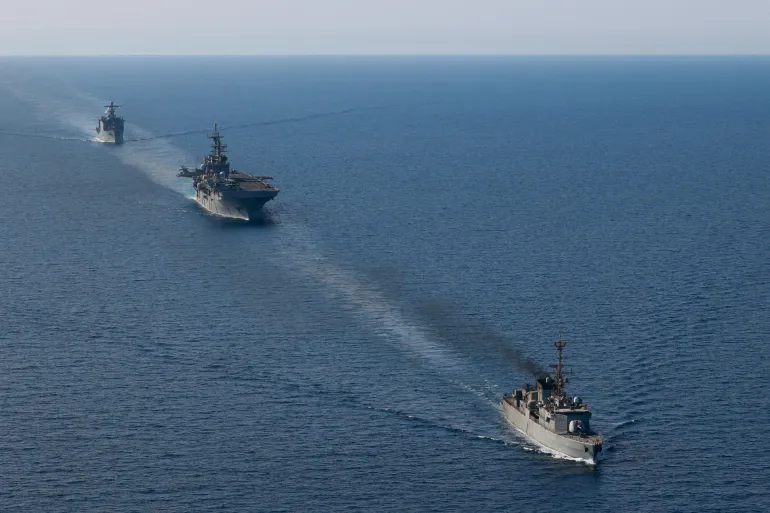
![A Royal Saudi Navy frigate sails alongside US 5th Fleet ships during operations to support maritime security in the Red Sea, where rising tensions between Ethiopia and Eritrea have raised concerns about wider regional stability. [File: Reuters]](https://i0.wp.com/www.aljazeera.com/wp-content/uploads/2026/09/2023-08-10T091620Z_2126421058_RC2LJ2A97N2D_RTRMADP_3_GULF-SECURITY-1789646493.jpg?w=640&ssl=1)
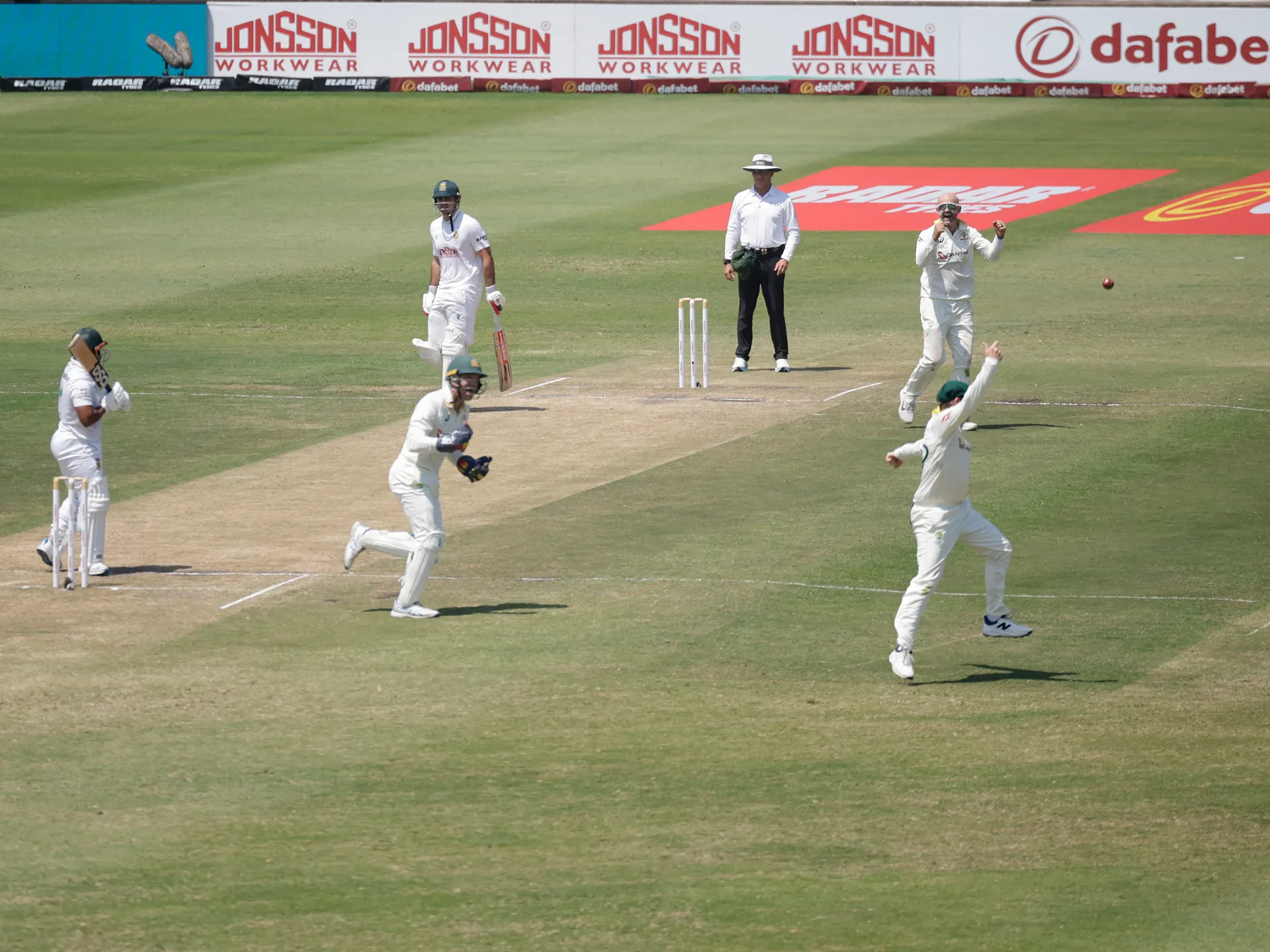
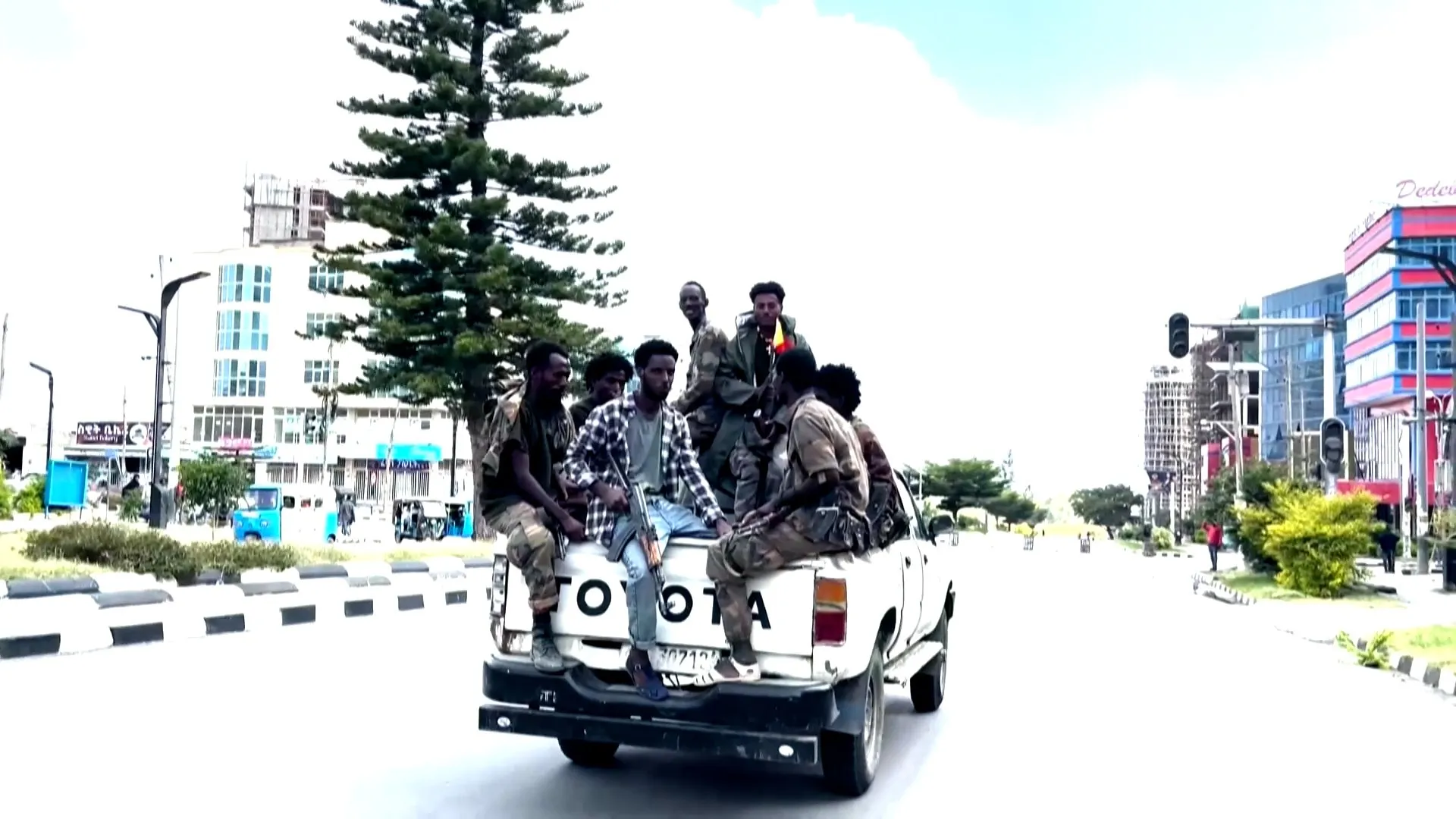
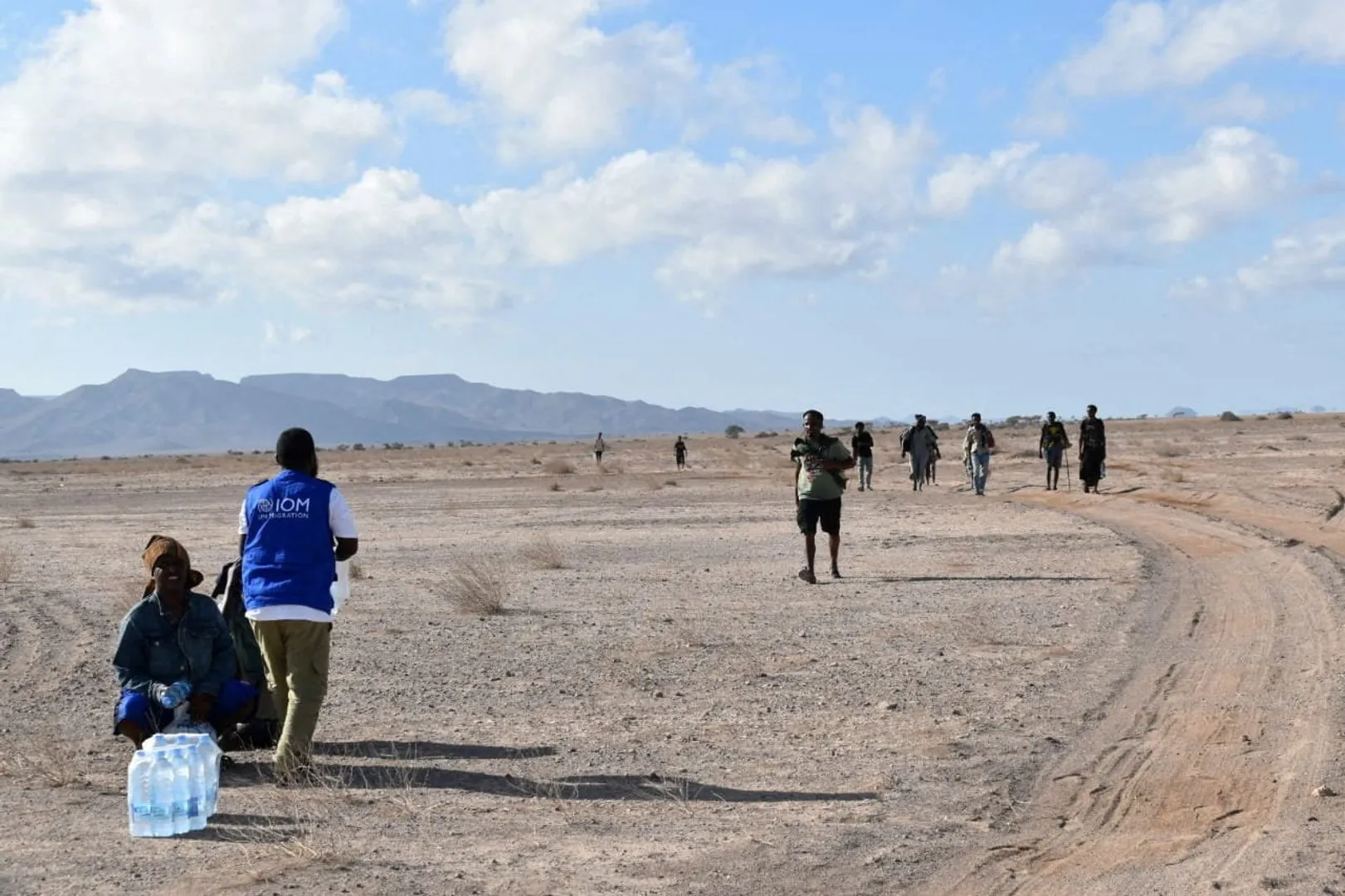
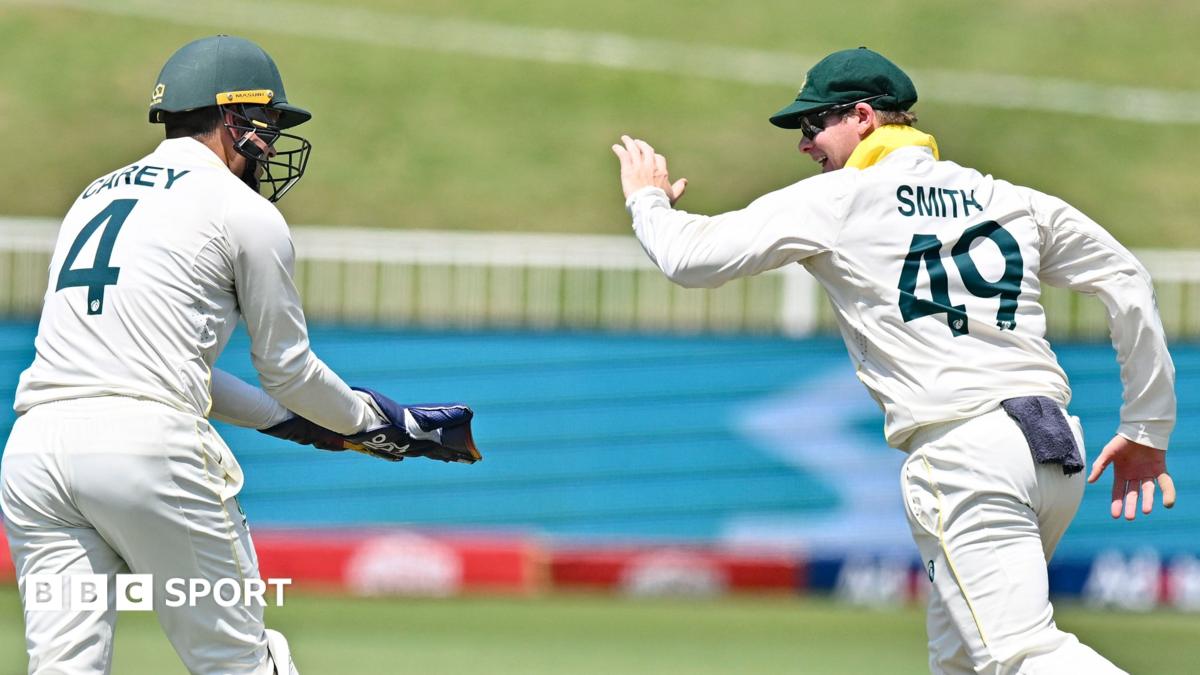
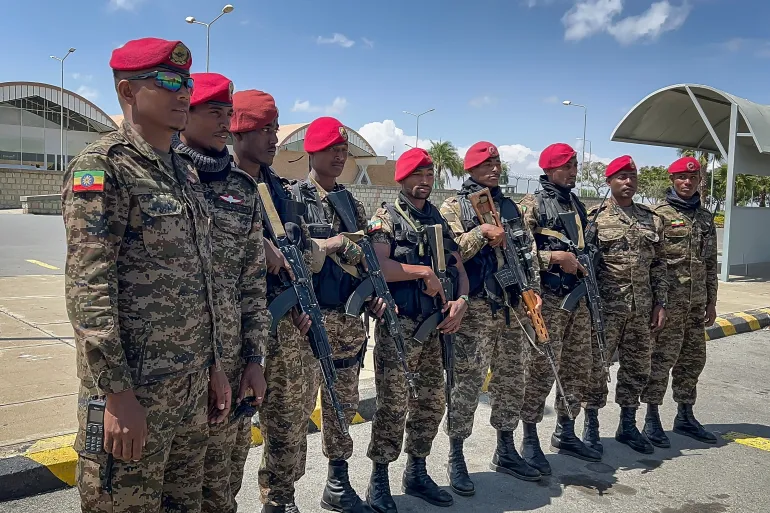
![Members of the Ethiopian National Defense Force (ENDF) gather in front of Mekelle Alula Aba Nega International Airport after federal forces retook control of the facility in Mekelle, Ethiopia, October 6, 2026 [AFP]](https://i0.wp.com/occasionaldigest.com/wp-content/uploads/2026/10/AFP__20261006__D2CC4C4__v1__HighRes__EthiopiaTigrayConflictUnrest-1791393629.jpg?w=640&ssl=1)
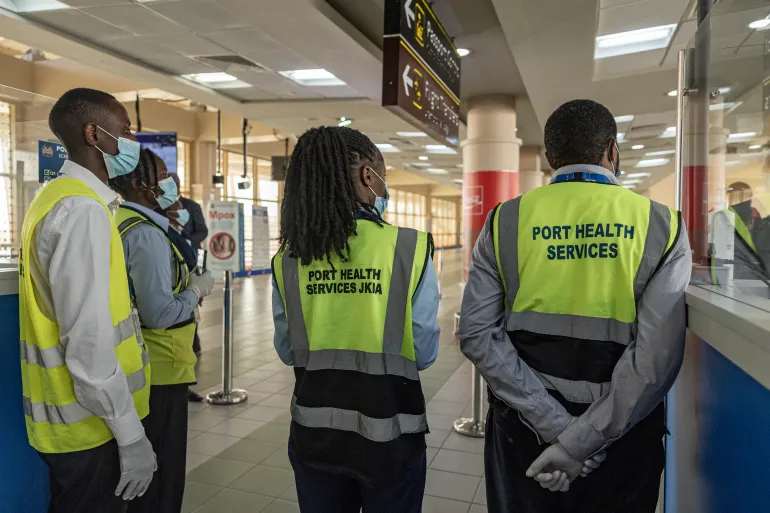
![Kenyan Ministry of Health officials screen arriving passengers at Jomo Kenyatta International Airport in Nairobi amid Ebola-related health precautions [AFP]](https://i0.wp.com/occasionaldigest.com/wp-content/uploads/2026/10/afp_6ac66094d7af-1791385748.jpg?w=640&ssl=1)
![A worker in protective gear handles sanitary basins at an Ebola treatment centre run by Médecins Sans Frontières in Butembo, eastern DRC [Gradel Muyisa Mumbere/Reuters]](https://i0.wp.com/occasionaldigest.com/wp-content/uploads/2026/10/reuters_6ab6e4f3-1790371059.jpg?w=640&ssl=1)
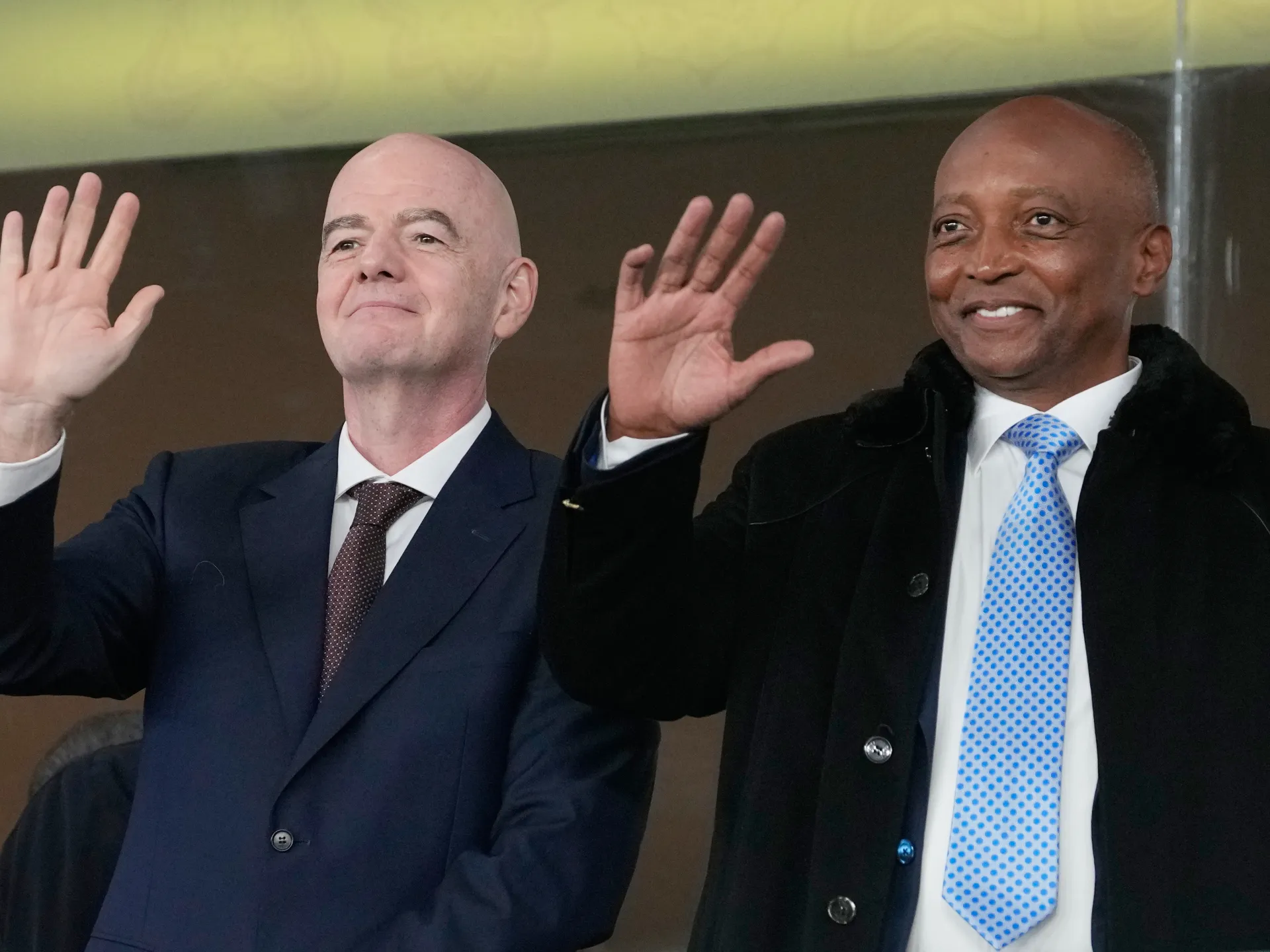
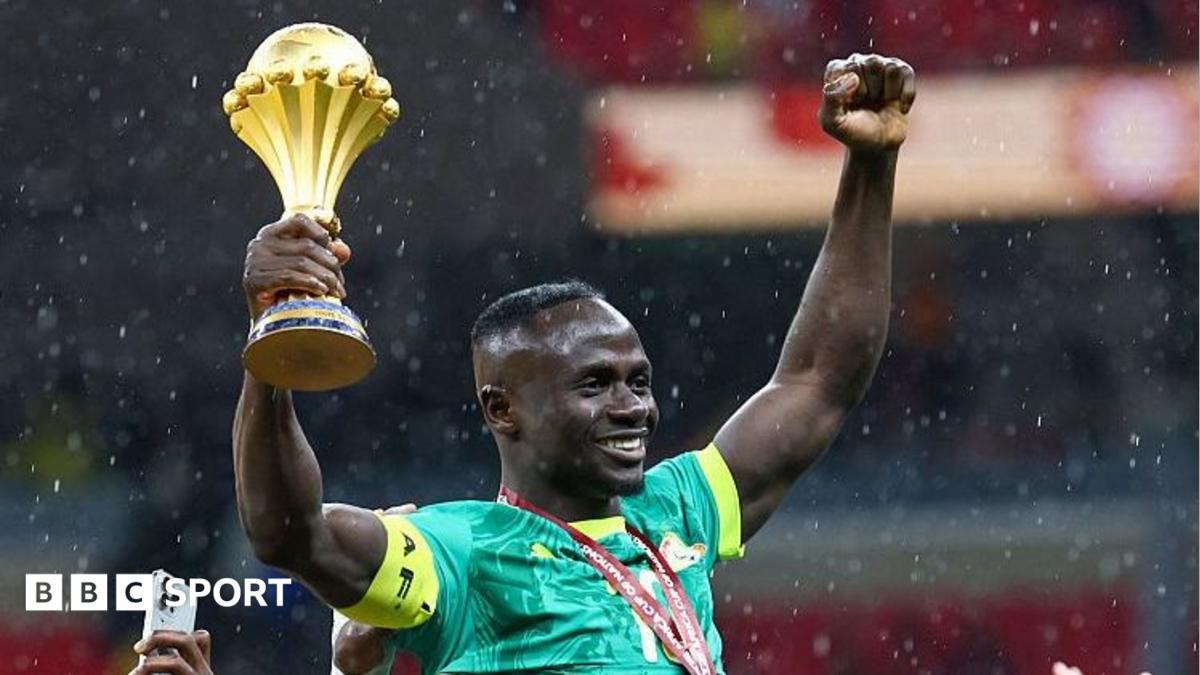
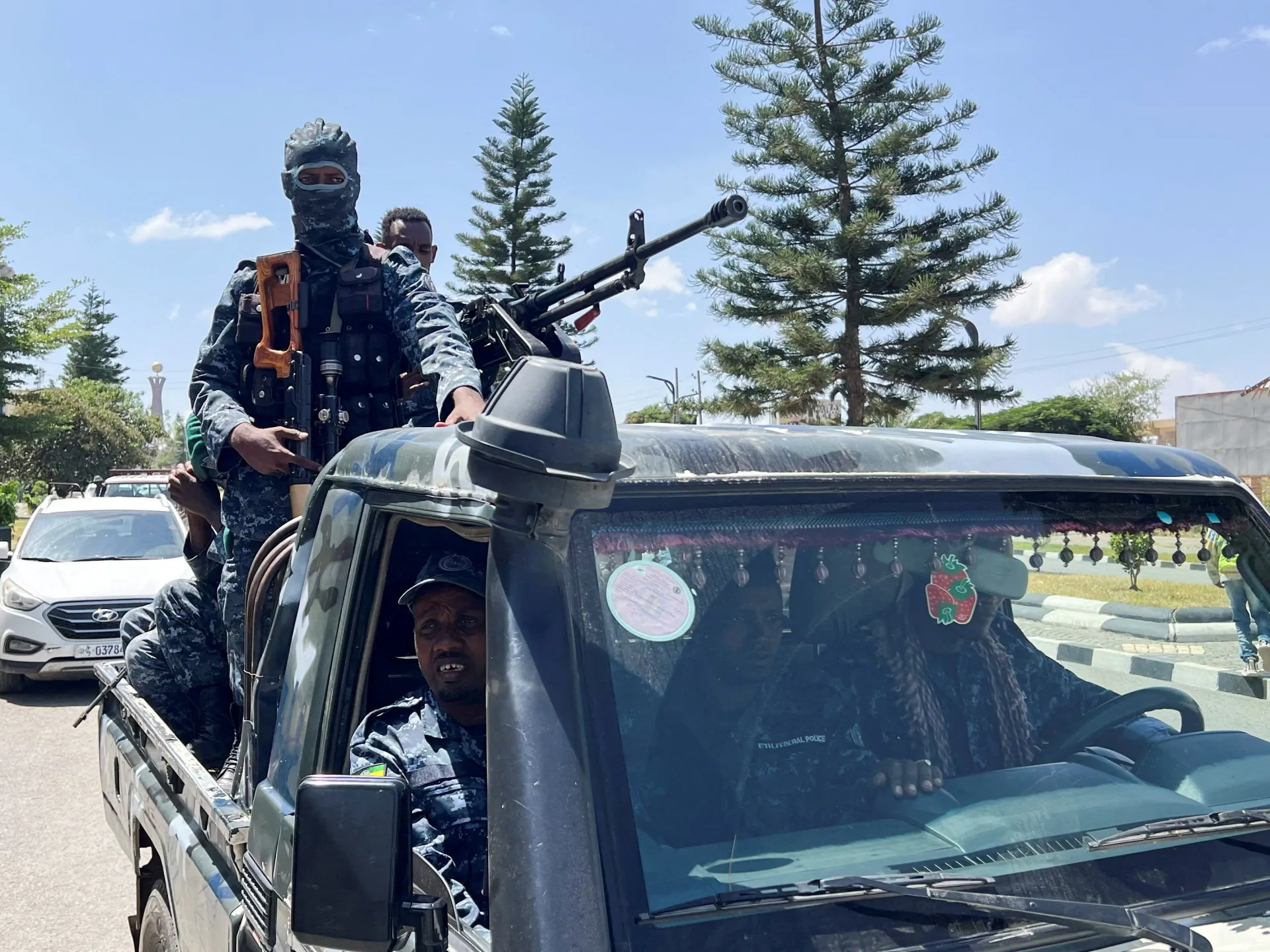



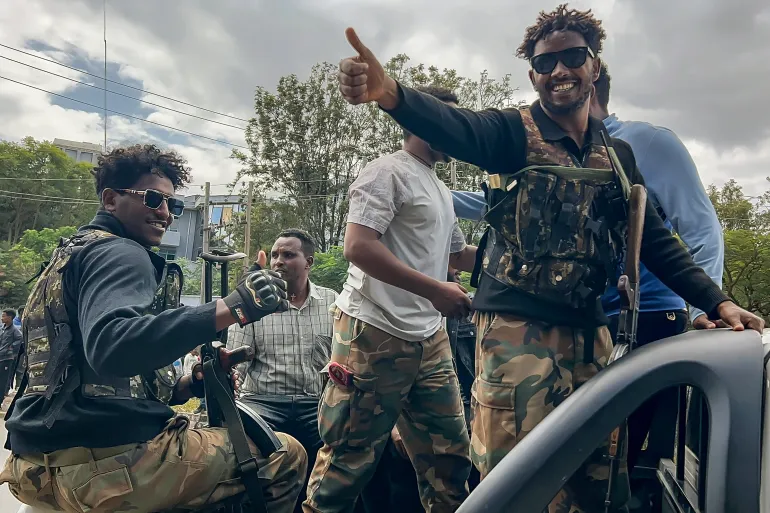



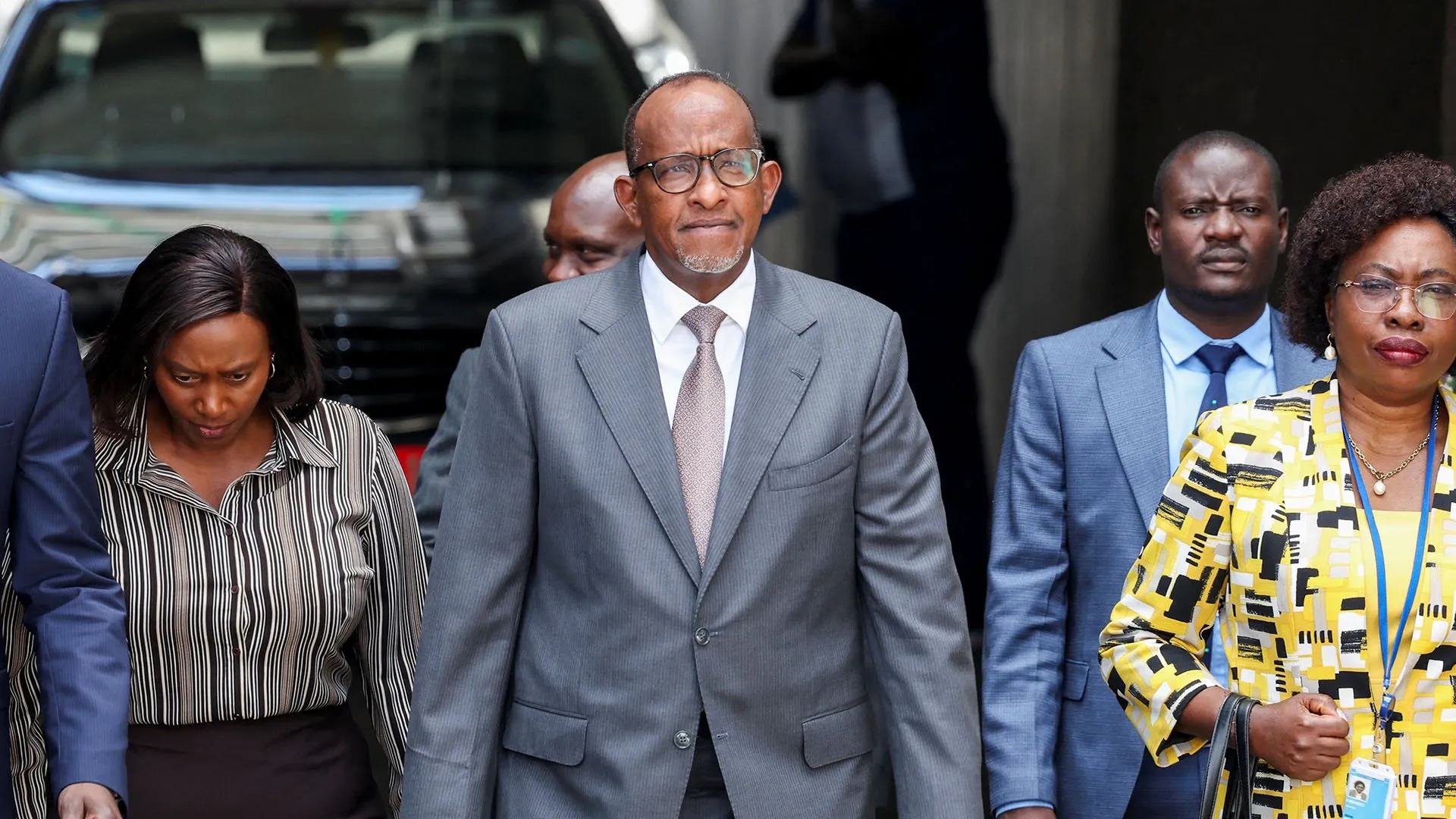

![Members of the Ethiopian pro-government Tigray Peace Force (TPF) ride in a pickup truck while Ethiopian federal and allied forces enter the Tigray capital of Mekelle, October 4, 2026 [AFP]](https://i0.wp.com/occasionaldigest.com/wp-content/uploads/2026/10/afp_6ac4015e5e71-1791230302.jpg?w=640&ssl=1)