A breakdown of the teams and groups of the FIFA World Cup in Canada, Mexico and the US after the final playoffs.
Published On 1 Apr 20261 Apr 2026
Iraq’s qualification for the FIFA World Cup 2026 has completed the lineup of 48 nations for the tournament hosted by Canada, Mexico and the United States.
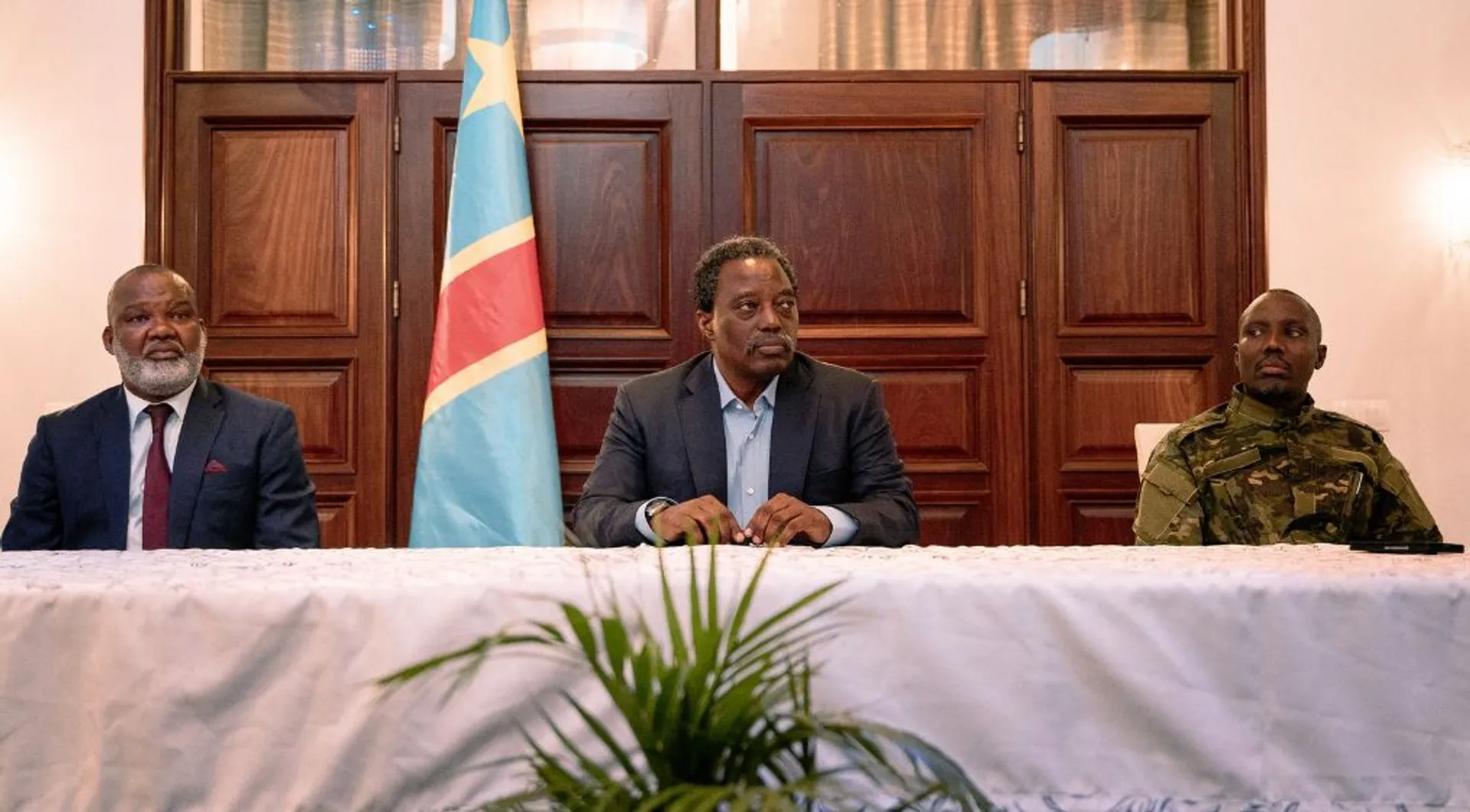
The Lions of Mesopotamia edged Bolivia 2-1 on Tuesday to win the second final of the FIFA Playoff tournament in Mexico. In the first final earlier, Democratic Republic of the Congo beat Jamaica 1-0.
Recommended Stories
list of 4 itemsend of list
In the other games, Turkiye, Bosnia and Herzegovina, Sweden and Czechia were the final four teams to complete the European quota of World Cup qualification.
Widely considered the most famous sporting event in the world, the 2026 FIFA World Cup will be its biggest ever. Forty-eight nations will play instead of the usual 32, with 104 matches in 16 venues across the three host nations.
Argentina will look to defend the trophy lifted by iconic captain, Lionel Messi at Qatar 2022. Cape Verde, Curacao, Jordan and Uzbekistan will make their debut.
The World Cup’s first game will be a throwback to 2010 when Mexico take on South Africa on June 11 in Mexico City in a replay of the tournament opener then. Football fans will hope the opening goal this year matches the screamer scored by Lawrence Tshabalala from the South African hosts then.
Mexico in group A – which includes South Korea and Czechia – will be one of the toughest of the 12 groups.
Team USA are alongside Australia, Paraguay and Turkiye.
Canada, too, face the challenging task of making it out of a group comprising Switzerland, Qatar and Bosnia.
Here’s a breakdown of the 48 teams in the 12 groups:
New Zealand all-rounder Amelia Kerr hit a stunning 179 not out off 139 balls to inspire her side to chase down 346 against South Africa in the highest successful run chase in women’s one-day international history.
Laura Wolvaardt’s 69 from 74 balls, a 91 from 90 balls by Anneke Bosch and Chloe Tryon’s 25-ball 52 helped South Africa post 346-6 in the second ODI of their series against the Kiwis.
Kerr came in at 21-1 in New Zealand’s reply and struck 23 fours and one six at a strike rate of 128.78 during her match-winning knock.
She was helped by Izzy Gaze, who made 68 from 48 balls, as the Kiwis made 350-8 in reaching their target with two balls to spare and levelling the series.
The previous highest successful chase in women’s ODI cricket was when India made 341-5 in reaching a 338 target set by Australia in their World Cup semi-final last October.
Kerr is no stranger to producing heroics, especially against South Africa, as she inspired New Zealand to victory against them in a T20 World Cup final in 2024.
She was also the ICC’s women’s cricketer of the year in 2024.
Kerr also holds the record for the highest individual innings in a women’s ODI, having hit an unbeaten 232 against Ireland when aged 17 in 2018.
Slavery declared the gravest crime against humanity.
Slavery has been declared the gravest crime against humanity in a United Nations resolution. Argentina, Israel, and the United States were the only countries that voted against it, with many others abstaining. So what does this resolution mean, and why won’t the countries that built their wealth on slavery agree to a path for justice? Al Jazeera’s Marthe van der Wolf explains.
‘We’re going to be vocal about it, we’re going to make noise until we’re heard,’ South Africa’s gold medallist says.
Published On 31 Mar 202631 Mar 2026
Double Olympic champion Caster Semenya says she intends to fight against the introduction of gender testing for the female category at the Olympics, a policy the South African insists “undermines women’s rights”.
The International Olympic Committee (IOC) unveiled the policy last week and it is expected to become a universal rule for competitors in female elite sports after years of fragmented regulation that led to controversy.
Recommended Stories
list of 4 itemsend of list
Semenya has been at the centre of one of those controversies due to her long-running legal case against World Athletics over her right to compete on the track despite having a Difference of Sexual Development (DSD).
“We’re going to be vocal about it, we’re going to make noise until we’re heard,” the 35-year-old athlete told the Reuters news agency on Monday.
“Now it’s a matter of women standing for themselves to say, ‘Enough is enough.’ We are not going to be told how to do things.
“If really we are accepted as women to take part, why does my appearance or my voice, why do my inner parts need to be a problem to take part in the sport?”
DSDs are a group of rare conditions involving genes, hormones and reproductive organs. Some people with DSDs are raised as female but have XY sex chromosomes and blood testosterone levels in the male range.
The IOC policy document said including “androgen-sensitive XY-DSD athletes” in the female category in events that rely on strength, power or endurance “runs fundamentally counter to ensuring fairness, safety and integrity in elite competition”.
Semenya, who won two Olympic and three world titles in the 800 metres before being limited to shorter events, believes the IOC got the science wrong.
Semenya said “there’s no science” that XY-DSD gave an athlete an advantage. “I’ve been there, I’ve done that. There’s no such thing as that,” she said.
“There are people who are delusional. There are people who are convinced because a woman is masculine, a woman is born with intersex conditions, the DSD, they’ve mentioned all those things [that they have an advantage].
“But what I say is that if you’re going to be a great athlete, it’s through hard work.”
The test that will be applied to all athletes who want to compete in the female class will be conducted by a cheek swab or saliva analysis.
There will be further investigation for any athletes who test positive for the SRY gene, which is on the Y chromosome and triggers the development of male characteristics in mammals.
“What this decision does, it undermines women. It undermines women’s dignity. It violates women’s rights because we know historically, these [tests] have failed before,” Semenya said.
“Women need to be celebrated. Women are not supposed to be questioned about their gender. Why that is their physique? Why it is how they look like? It doesn’t matter. Neither also the hormone level. Those are the things that are obviously genetics that cannot be controlled.”
Semenya said IOC President Kirsty Coventry, the first woman and first African to hold the office, had failed to properly consult her or other athletes living with DSDs about the policy.
“They sent us a letter the day they were going to publish [the new policy],” she said.
“If you’re going to consult, consult with a genuine heart. Don’t consult because you’re ticking the box. Unfortunately, they have ticked a wrong box.”
Korir tested positive for a drug that stimulates red blood cell production during out-of-competition tests.
Published On 30 Mar 202630 Mar 2026
Kenya’s 2021 New York marathon champion Albert Korir has been banned for five years after he admitted using a banned performance-enhancing drug, the Athletics Integrity Unit (AIU) said.
The AIU said on Monday that Korir had received a one-year reduction from the original six-year suspension “based on an early admission and acceptance of the sanction”.
Korir, 32, tested positive for the synthetic form of erythropoietin (EPO) that stimulates red blood cell production during out-of-competition tests in Kenya in October 2025.
His five-year ban will run from January 8, 2026, the date he was provisionally suspended, until January 7, 2031.
Korir won the 2021 New York marathon in a time of 2hr 08min 22sec and came third in 2023 with a personal best time of 2:06:57.
He won the Ottawa marathon in 2019 and 2025.
Korir’s sanction comes nearly six months after compatriot Ruth Chepngetich, the current world marathon record holder was banned for three years after admitting the use of Hydrochlorothiazide (HCTZ), a banned diuretic used as a masking agent.
Kenya worked to clean up its image after a string of doping scandals around the 2016 Rio Olympics led to it being declared non-compliant by the World Anti-Doping Agency (WADA).
More than 140 Kenyan runners, mainly long-distance athletes, have been sanctioned for drugs offences since then.
In June 2024, Kenya handed out its first lifetime ban to marathon runner Beatrice Toroitich and a six-year ban to 10km record-holder Rhonex Kipruto.
Veron Mosengo-Omba’s resignation follows the fallout over the CAF board’s decision to strip Senegal of the AFCON title, Africa’s showpiece football tournament.
Published On 30 Mar 202630 Mar 2026
The Confederation of African Football (CAF)’s general secretary, Veron Mosengo-Omba, resigned on Sunday after repeated calls for his removal and at a turbulent time for the game on the continent.
Mosengo-Omba said he was retiring, but his departure comes amid a crisis of confidence in the organisation’s leadership, with a growing fallout over the decision to strip Senegal of the Africa Cup of Nations (AFCON) title and calls for an investigation into alleged corruption at African football’s governing body.
Recommended Stories
list of 4 itemsend of list
There has been a swell of recent criticism of his staying on as general secretary well past the organisation’s mandatory retirement age of 63, largely on social media but also from members of CAF’s executive committee.
“After over 30 years of an international professional career dedicated to promoting an ideal form of football that brings people together, educates, and creates opportunities for hope, I have decided to step down from my position as Secretary General of CAF to devote myself to more personal projects,” Mosengo-Omba said in a statement.
“Now that I have been able to dispel the suspicions that some people have gone to great lengths to cast on me, I can retire with peace of mind and without constraint, leaving the CAF more prosperous than ever.
“I sincerely thank the CAF’s President Dr. Patrice Motsepe, my teams, and all those who, directly or indirectly, have enabled CAF and organised African football to make real and remarkable progress. Let us hope that the progress made will last and be sustained,” he concluded.
Senegal won the 2025 Africa Cup of Nations in January but were later stripped of the crown by the Confederation of African Football board [File: Amr Abdallah Dalsh/Reuters]
Accused of creating toxic atmosphere
Mosengo-Omba has been a divisive figure at CAF, accused by some employees of creating a toxic atmosphere at the workplace, although an investigation conducted after the staff complaints cleared him of any wrongdoing.
The 66-year-old is of Congolese origin, but he is a Swiss citizen and former FIFA employee who was a university friend of FIFA president Gianni Infantino.
Although he said he was retiring, Mosengo-Omba is expected to run for the post of president of the Democratic Republic of the Congo’s football federation in elections in the coming months, sources told the Reuters news agency.
If successful, that would thrust him into contention for CAF’s top job should Motsepe resign to enter politics in his native South Africa, where he is being touted as a possible successor to President Cyril Ramaphosa. Motsepe has, however, denied this.
Earlier this month, Motsepe admitted that CAF was struggling with questions over its integrity and, in the wake of the Cup of Nations final controversy, Senegal’s government has called for an international investigation into the running of the organisation.
Stripping Senegal of the Cup of Nations title was a decision made by CAF’s Appeals Board, but as a result, there has been a heavy toll on the image of the African game.
CAF said later on Sunday that its competitions director, Samson Adamu, would take over as acting general secretary.
Crude prices continue to climb as world faces its biggest energy crisis in decades.
Published On 30 Mar 202630 Mar 2026
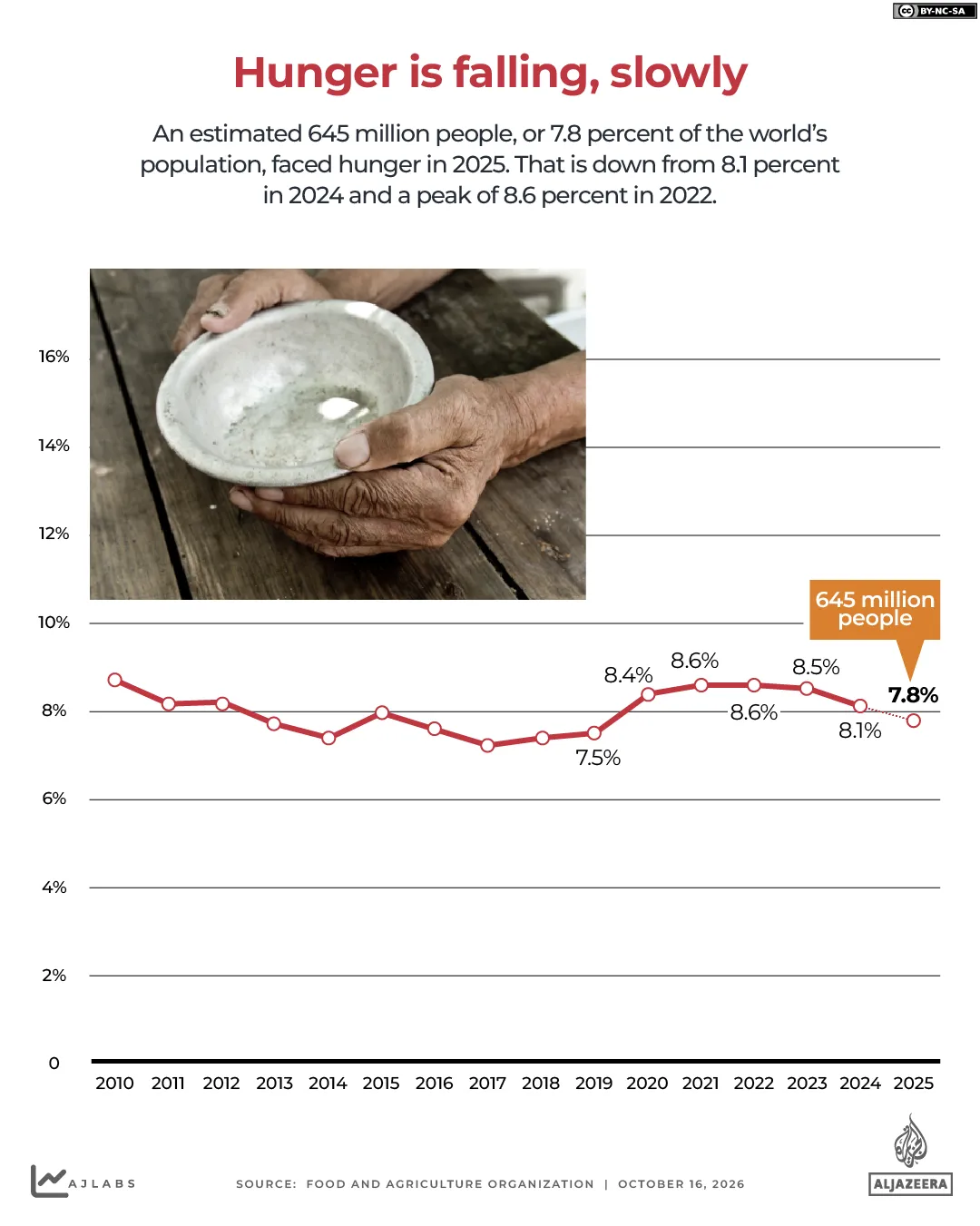
Oil prices have surged to their highest level in nearly two weeks amid escalation on multiple fronts of the US-Israel war on Iran.
Brent crude, the global benchmark, rose more than 3 percent on Monday morning to top $116 a barrel.
Recommended Stories
list of 4 itemsend of list
The latest climb took the global benchmark to its highest point since March 19, when it briefly touched $119 a barrel.
The surge came after Iran said it was prepared for a US ground invasion, with the speaker of the country’s parliament warning that Tehran was waiting for the arrival of US troops to “set them on fire” and “punish” their regional allies.
Tehran’s warning came as the conflict deepened over the weekend, with the Iranian-backed Houthis launching missiles at Israel for the first time in the war, and Israel expanding its invasion of southern Lebanon.
Iran’s effective closure of the Strait of Hormuz in retaliation for the US-Israel war has disrupted about one-fifth of global oil and liquified natural gas (LNG) supplies, plunging the world into its biggest energy crisis in decades.
Oil prices have risen nearly 60 percent since the start of the war, driving up fuel prices worldwide and forcing numerous countries to adopt emergency measures to conserve energy.
Analysts have warned that oil prices are likely to keep rising unless maritime traffic returns to normal levels in the strait.
Greg Newman, the CEO the Onyx Capital Group, which began as an oil derivatives trading house, said that energy markets were only beginning to feel the fallout of the turmoil.
“Physical oil moves around the world in loading cycles , and Europe has taken around three weeks to really start feeling the effects of the oil shortage,” Newman told Al Jazeera.
“Brent is starting to reflect the reality, and we think it’s a steady rise from here towards $120 and beyond.”
Newman said the scale of the disruption had yet to be fully appreciated.
No one in the market has ever seen the outages we are now suffering from – physical premiums are the highest ever. There is still a sense that the macro world is not taking this seriously enough, but it is worse than anything that has come before it,” he said.
“The reality will come out in the economic numbers over the coming months.”
South African sprinter Caster Semenya, a two-time Olympic 800-metres champion, says the International Olympic Committee’s (IOC’s) reinstatement of gender verification tests for the 2028 Los Angeles Games is “a disrespect for women”.
The hyperandrogenic athlete on Sunday also expressed her disappointment that the measure was taken under new IOC President Kirsty Coventry of Zimbabwe.
Recommended Stories
list of 3 itemsend of list
“For me personally, for her being a woman coming from Africa, knowing how African women or women in the Global South are affected by that, of course it causes harm,” Semenya said in Cape Town on the sidelines of a sporting competition.
The IOC said on Thursday that only “biological females” will be allowed to compete in women’s events, preventing transgender women from competing.
The IOC had previously used chromosomal sex testing from 1968 to the 1996 Atlanta Olympics before abandoning it in 1999 under pressure from the scientific community, which questioned its effectiveness, and from its own athletes commission.
“It came as a failure, and that’s why it was dropped,” Semenya said.
“It’s like now we need to prove that we are worthy as women to take part in sports. That’s a disrespect for women.”
Semenya has become the symbol of the struggle of hyperandrogenic athletes, a battle on the athletics tracks and then in courtrooms, to assert her rights, which she has waged since her first world title in the 800m in 2009.
In 2025, she won a partial victory at the European Court of Human Rights in her seven-year legal fight against track and field’s sex eligibility rules.
The court’s highest chamber said in a 15-2 ruling that Semenya had some of her rights to a fair hearing violated before Switzerland’s Supreme Court, where she had appealed against a decision by the Court of Arbitration for Sport. It had ruled in favour of track’s international governing body, World Athletics.
The original case between Semenya and Monaco-based World Athletics was about whether female athletes who have specific medical conditions, a typically male chromosome pattern and naturally high testosterone levels, should be allowed to compete freely in women’s sports.
The European court’s ruling did not overturn the World Athletics rules that in effect ended Semenya’s career running the 800m after she had won two Olympic gold medals and three world titles since emerging on the global stage as a teenager in 2009.
IOC’s policy shift removes conflict with Trump
In a major shift of policy, the IOC is abandoning rules it brought in in 2021 that allowed individual federations to decide their own policy and is instead implementing a policy across all Olympic sports.
“Eligibility for any female category event at the Olympic Games or any other IOC event, including individual and team sports, is now limited to biological females, determined on the basis of a one-time SRY gene screening,” the IOC said in a statement.
They will be carried out through a saliva sample, cheek swab or blood sample. It will be done once in an athlete’s lifetime.
“The policy we have announced is based on science and has been led by medical experts,” Coventry said.
“At the Olympic Games, even the smallest margins can be the difference between victory and defeat, so it is absolutely clear that it would not be fair for biological males to compete in the female category. In addition, in some sports it would simply not be safe.”
The new policy removes a potential source of conflict between the IOC and United States President Donald Trump as the 2028 Los Angeles Olympics comes onto the horizon.
Trump issued an executive order banning transgender athletes from women’s sport soon after he returned to office in January 2025.
The US leader took credit for the IOC’s new policy in a post on his Truth Social network on Thursday.
“Congratulations to the International Olympic Committee on their decision to ban Men from Women’s Sports,” Trump wrote. “This is only happening because of my powerful Executive Order, standing up for Women and Girls!”
2024 Olympic gender row
While sports such as swimming, athletics, cycling and rowing have brought in bans, many others have permitted transgender women to compete in the female category if they lowered their testosterone levels, normally through taking a course of drugs.
The IOC is bringing in the new policy after the women’s boxing competition at the 2024 Paris Olympics was rocked by a gender row involving Algerian fighter Imane Khelif and Lin Yu-ting of Taiwan.
Khelif and Lin were excluded from the International Boxing Association’s 2023 world championships after the IBA said they had failed eligibility tests.
However, the IOC allowed them both to compete at the Paris Games, saying they had been victims of “a sudden and arbitrary decision by the IBA”.
Both boxers went on to win gold medals.
Lin has since been cleared to compete in the female category at events run by World Boxing, the body that will oversee the sport at the Los Angeles Summer Games.
Barthélemy Boganda was a leading nationalist politician and the driving force in the creation of the Central African Republic in 1958.
Before his political career, Boganda had become the first African Roman Catholic priest in Ubangi-Shari, a French colony that is now part of the CAR. He became involved in politics and in 1946 he was elected to the French National Assembly, becoming the first representative of the CAR in the French government.
His strident anticolonial views led to him becoming disillusioned with the French political system and leaving the priesthood in 1949; and forming his own political party, the Social Evolution Movement of Black Africa.
Hugely popular, Boganda became the president of the Grand Council of French Equatorial Africa (which also included Chad, Gabon, and the French Congo) in 1957. His vision was for a pan-African movement to unite several African states.
Boganda became the first prime minister of the Central African Republic on 1 December 1958.
Barthélemy Boganda designed his country’s flag using the Pan-African colours and the colours of the French flag.
Senegal parade AFCON trophy at Stade de France ahead of friendly against Peru, despite being stripped of the title.
Published On 28 Mar 202628 Mar 2026
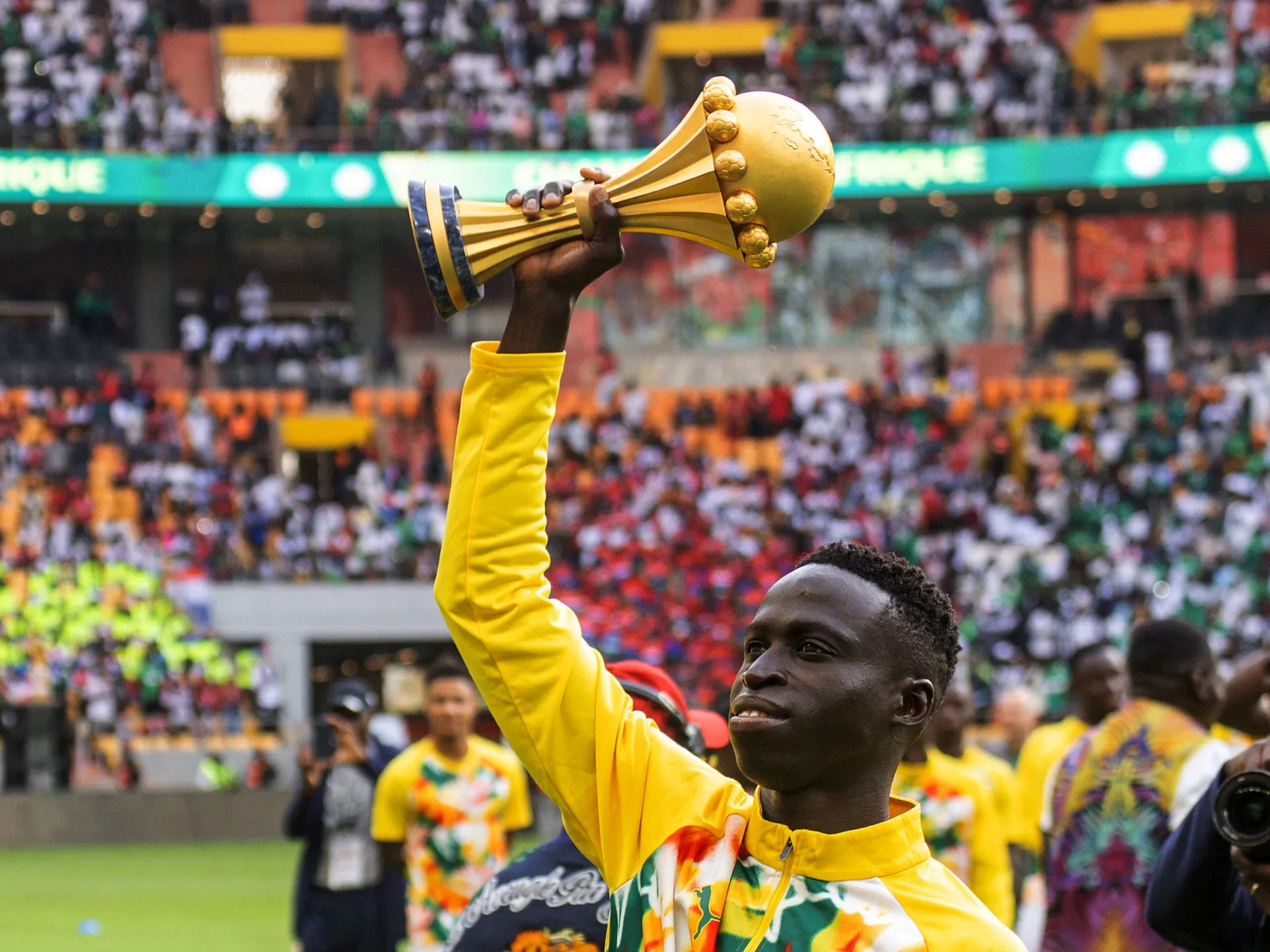
Senegal, who won the Africa Cup of Nations title in a controversial final against hosts Morocco in January – only to be stripped of their victory weeks later – have paraded the trophy ahead of a friendly against Peru at the Stade de France in Paris.
Senegal captain Kalidou Koulibaly and his teammates came out onto the pitch with the AFCON trophy on Saturday for a lap of honour after a pre-match concert by Senegalese superstar Youssou N’Dour.
Recommended Stories
list of 4 itemsend of list
Koulibaly and goalkeeper Edouard Mendy went up to the stadium’s presidential box to place the trophy there in front of Abdoulaye Fall, the president of the Senegalese Football Federation, among others.
Only hours earlier, Morocco had declared the case for the trophy closed, following the Confederation of African Football (CAF) ruling that Senegal’s 1-0 win in January’s final was to be overturned following the mid-game walk-off by their players.
Senegal’s players parade around the pitch with the trophy [Julien de Rosa/AFP]
Senegal and Morocco set to remain locked in AFCON dispute
Senegal have said they will take their own appeal back to CAF and to the Court of Arbitration for Sport (CAS), which could take a year to rule.
The Senegalese government has called for an independent international inquiry into CAF’s decision, alleging corruption should also be looked into.
Senegal’s players left the field in normal time during the final in protest at a penalty awarded to Morocco, which – upon the Senegalese return after a 14-minute delay – was missed.
The match on the day was settled by Pape Gueye’s strike in extra time. Morocco immediately appealed the result, but were initially rebuffed by CAF.
Edouard Mendy of Senegal lifts the Africa Cup of Nations trophy in the stands [Franco Arland/Getty Images]
Senegal turn Paris into AFCON trophy celebration
A crowd of 70,000 was expected for the match at 16:00 GMT on Saturday. Thousands of Senegalese supporters, sprinkled with Peruvian fans, were already in the Stade de France by the time the players showed off their trophy.
Earlier, nearly 200 Senegal supporters gathered in front of the nearby Basilica of Saint-Denis before making their way to the Stade de France to the sound of traditional drums and percussion.
Bally Bagayoko, the newly elected mayor of Saint-Denis, briefly joined the procession.
“Welcome to Saint-Denis,” said the mayor. “I wanted to thank everyone who organised this wonderful initiative.
“You are the pride of the residents of working-class neighbourhoods. We have often been discriminated against, often looked down upon.
“You are showing that you are capable, at such an important moment, of coming together. Today, Africa is united. Everyone behind Senegal.”
The friendly against Peru was due to be the Lions of Teranga’s first match since the Africa Cup of Nations final.
They are preparing for the World Cup, where they have been pitted in a group with France, Norway and either Bolivia or Iraq.
Their squad on Saturday was almost identical to the one that competed in the Africa Cup of Nations.
Morocco believe their successful appeal against their 1-0 defeat by Senegal means the case of the AFCON crown is closed.
Published On 28 Mar 202628 Mar 2026
Senegal may still possess the Africa Cup of Nations (AFCON) trophy and have launched a legal battle against the decision to strip them of it, but as far as new champions Morocco are concerned, the case is closed.
Although the Atlas Lions lost 1-0 in the January final, the Confederation of African Football awarded them a 3-0 victory last week because of several Senegal players leaving the pitch in protest at the award of a penalty.
Recommended Stories
list of 4 itemsend of list
Morocco drew 1-1 against Ecuador on Friday in a friendly in Madrid, in their first match since the final and the controversial decision to punish Senegal.
It was new coach Mohamed Ouahbi’s first game at the helm, just three months out from the 2026 World Cup.
After becoming the first African side to reach the final four in Qatar in 2022, expectations are high for Morocco, and they are looking to the future, despite Senegal’s outrage.
“We’re focused on what’s to come and not getting into that [topic],” Morocco goalkeeper Yassine Bounou told reporters.
“The answer from us [about whether the decision was fair] would be what our federation said, and that’s all … we’re looking forwards.”
Thousands of Morocco fans, many draped in their country’s flag and tooting vuvuzelas, are convinced justice was served.
“If someone says there are regulations, you have to follow them,” said Yassine el-Aouak, 35, a Morocco supporter who travelled to the game from Italy.
“I think we will bring the trophy home [eventually] – we know that we deserve it.”
Before being awarded victory against Senegal, Morocco had won the Africa Cup of Nations only once, in 1976.
“The rules are the rules … they are so clear, you go outside the pitch without any reason, you lose 3-0,” said another Morocco supporter, Taha El Hadiguy, 22.
“It’s very different to winning on the night of the final, to win two months later, but a win is a win. We have one more star on our shirt.”
Like the players, the Moroccan media was more concerned with the upcoming World Cup and Ouahbi’s tactical approach than whether Senegal are right to feel aggrieved.
Ecuador’s coach Sebastian Beccacece said his were satisfied with a draw against the “African champions”.
Ouahbi’s team are now technically unbeaten in 25 matches, despite falling 1-0 on a dramatic night in Rabat against Senegal in the AFCON final.
They lacked precision in attack against Ecuador, but Ouahbi, who led Moroccan youngsters to Under-20 World Cup glory last year, highlighted the strength of his team.
“I don’t talk in terms of weaknesses. They’re not weaknesses. We are a top-level team – the Ecuadorian coach reminded us of that,” Ouhabi told reporters.
“If you are a top-level team, ranked eighth in the world and World Cup semifinalists, you don’t have weaknesses.
“You only have strengths, and then any qualities we’re missing, areas where we’re not performing, we have to make up for collectively.”
Morocco will face record five-time World Cup winners Brazil in their first game at the tournament this summer on June 13, one of the most intriguing match-ups of the group phase.
Before then, the Moroccan Federation’s lawyers may have to defend their status as African champions against Senegal’s case, but Ouahbi and his players are only looking forward to the summer, when they have a chance to win another trophy, this time on the pitch.
Iranian football players laid backpacks on a football pitch in Turkey to pay tribute to the children killed in a US-Israeli strike on Minab elementary school last month. The tribute came ahead of a friendly match against Nigeria.
Kano, Nigeria – On a bustling day in northern Nigeria, Marian Shammah made her way to the Sabon Gari Market, one of the largest electronics hubs in Kano state.
The 34-year-old cleaner was in need of a refrigerator, but with rising costs and a meagre income, she saw the second-hand appliances sold at the market as a lifeline.
Recommended Stories
list of 3 itemsend of list
After locating the one she wanted, she paid the vendor 50,000 naira ($36) and took it home. But just a month later, the freezer collapsed.
“Only the top half of the refrigerator was working, and the freezer wasn’t working,” said Shammah.
Her food spoiled, her savings disappeared, and she was soon back in the market searching for another appliance.
Although Shammah could have bought a new local appliance for just over 30,000 naira ($30) more, she – like millions of Nigerians – believes second-hand products from America and Europe “last longer” than new products sold in Nigeria.
Observers say this trend is part of a larger crisis. Nigeria has become a major destination for the developed world’s discarded electronics – items often near the end of life, sometimes completely dead, and frequently toxic because they contain hazardous materials. When they break down, they add to landfills, worsening an already dire e-waste crisis on the African continent.
Around 60,000 tonnes of used electronics enter Nigeria through key ports each year, with at least 15,700 tonnes already damaged upon arrival, according to the United Nations.
The trade in used electronic goods is powered largely by foreign exporters. A UN tracking study between 2015 and 2016 showed that more than 85 percent of used electronics imported into Nigeria originated from Germany, the United Kingdom, Belgium, the Netherlands, Spain, China, the United States, and the Republic of Ireland.
Many of these imports violate international restrictions, like the Basel Convention, an environmental treaty regulating the transboundary movement and disposal of hazardous electronic waste to developing countries with weaker environmental laws.
Across West Africa, the Basel Convention’s “E-Waste Africa Programme”, a project focused on strengthening e-waste management systems across the continent, estimates that Benin, Ivory Coast, Ghana, Liberia, and Nigeria collectively generate between 650,000 and 1,000,000 tonnes of e-waste annually – much of it the result of short-lifespan second-hand imports.
A man sorts out iron and plastic to sell while a bulldozer clears the garbage and birds surround it in a dump site in Lagos, Nigeria [File: Sunday Alamba/AP]
Health risks
The United Nations describes e-waste as any discarded device that uses a battery or plug and contains hazardous substances – like mercury – that can endanger both human health and the environment. Several of the toxic components commonly found in e-waste are included on the list of 10 chemicals of major public health concern maintained by the World Health Organization (WHO).
According to the WHO, used electrical and electronic equipment (EEE) presents a growing public health and environmental threat across Africa, with Nigeria at the centre of the trade.
“Much of the equipment shipped as used electronics is close to becoming waste,” said Rita Idehai, founder of Ecobarter, a Lagos-based environmental NGO, warning that devices imported and sold as affordable second-hand goods often fail shortly after arrival and quickly enter the waste stream.
The consequences are far-reaching. Many imported fridges and air conditioners, for instance, still contain CFC-based and HCFC-based refrigerants such as R-12 and R-22 – chemicals banned in Europe and the US for causing ozone depletion or being linked to cancer, miscarriages, neurological disorders, and long-term soil contamination. These gases live for 12 to 100 years, meaning leaking equipment adds to a multi-generational environmental burden.
After these imported items stop working or fall apart, informal recyclers then dismantle the electronics with their bare hands, Al Jazeera observed. In Kano, the recyclers inhale poisonous fumes and manage the heavy metals without protection. Their work earns them a meagre 3,500–14,000 naira ($2.50-$10) per week, they said, and the after-effects linger – including persistent coughing, chest pain, headaches, eye irritation, and breathing difficulties after long hours of burning cables and dismantling electronic devices.
The health crisis extends into Kano’s communities.
Among casual recyclers and residents who live close to e-waste dumps, many report symptoms that range from chronic headaches and skin irritation to breathing issues, miscarriages and neurological concerns, according to health surveys done by the International Journal of Environmental Research and Public Health. These ailments are consistent with longtime toxic exposure, the researchers said.
Recent field assessments conducted by Nigeria’s Federal University Dutse also stressed that in and around Kano state, where the Sabon Gari Market is located, there are rising levels of heavy metals in soil and drainage channels.
Dr Ushakuma Michael Anenga, a gynaecologist at the Benue State Teaching Hospital and second vice president of the Nigerian Medical Association, warned that toxic exposure from informal e-waste recycling poses grave health risks to communities in Kano.
“Exposure to heavy metals and refrigerant gases in e-waste causes extreme brief and long-term health issues, generally affecting the breathing and renal organs,” he told Al Jazeera.
“Common casual practices like exposed burning and dismantling result in direct, high-level exposure for workers and nearby residents. Children and pregnant girls are particularly inclined due to the fact that those toxicants can disrupt development or even skip from mother to unborn baby, [while] recyclers who work without defensive equipment face repeated, frequently irreversible damage.”
Old computer monitors discarded as electronic waste are pictured at a recycling facility in Lagos, Nigeria [File: Temilade Adelaja/Reuters]
Profits over protection
In Sabon Gari Market, second-hand electronics are advertised as less costly lifelines for households and poor business owners burdened by inflation.
Many customers say foreign-used home equipment appears sturdier and seems like better value for money than new imports from the developing world. Meanwhile, others are just looking for cheap options in difficult economic times.
“I usually go for second-hand or foreign-used electronics because brand-new ones are too expensive for me,” Umar Hussaini, who sells used electronics at the market, told Al Jazeera.
“Sometimes you can get them for half the price of new ones, and they look almost the same, so it feels like a good deal at the time.”
But the last refrigerator he bought stopped cooling after just three months. With no warranty or guarantee, the seller refused responsibility.
“For weeks, we couldn’t store food properly at home, and we ended up buying food daily, which was more expensive,” he said. “However, I have to buy another one again.”
For small business owners like Salisu Saidu, the losses can be even more devastating. He bought a used freezer for his shop, believing it had been serviced. Within weeks, it failed.
“I lost a lot of frozen food, which meant I lost money and customers,” he told Al Jazeera.
Around his neighbourhood, broken electronics are often dumped out in the street, sometimes emitting smoke or sparks.
“There’s also a lot of electronic waste piling up around,” he said, calling for tighter import controls, proper certification, and mandatory warranties to protect buyers from being sold what he described as “damaged goods disguised as fairly used”.
Umar Abdullahi’s second-hand electronics shop in Kano, Nigeria [Abdulwaheed Sofiullahi/Al Jazeera]
Bought as bargains, sold as burdens
At Sabon Gari Market, another vendor, Umar Abdullahi, is surrounded by imported refrigerators, air conditioners and washing machines stacked tightly together.
The products in his shop are advertised as “London use” or “Direct Belgium”, while he negotiates the sale of a double-door fridge for 120,000 naira ($87).
Abdullahi’s store is where Shammah returned after the refrigerator she bought failed. But he admits that much of what he sells to customers arrives unchecked.
“We buy them untested from suppliers in Europe, and we also sell them untested so we can make our profit,” he told Al Jazeera.
This despite the fact that international rules under the Basel Convention, as well as Nigerian environmental regulations, prohibit the shipment of material considered e-waste – with penalties including fines and jail terms.
Nwamaka Ejiofor, a spokesperson for Nigeria’s National Environmental Standards and Regulations Enforcement Agency (NESREA), said the country does not permit the import of e-waste. However, the entry of used electronics is allowed under regulated conditions.
“The importation of used electrical and electronic equipment is regulated and may be allowed only where such equipment meets prescribed conditions, including functionality and compliance requirements,” she told Al Jazeera.
“Nigeria applies a combination of regulatory, administrative and enforcement measures to ensure that imported used electronics comply with national law and the country’s international obligations,” she added, listing out measures including environmental regulations, cargo inspection and verifying that imported equipment is “functional”.
However, despite this, some traders find loopholes in the system, including declaring cargo they plan to sell as personal belongings or second-hand household goods to avoid scrutiny.
Although NESREA says enforcement has improved, critics say the steady flow of mediocre goods continues largely unchecked. Even dealers at Sabon Gari Market acknowledge that most appliances are sold “as is”, without certification or guarantees.
Baban Ladan Issa’s worker washes a second-hand fridge before selling it to a customer [Abdulwaheed Sofiullahi/Al Jazeera]
‘Loopholes’
Behind the second-hand electronics trade is a network of collectors and exporters who source discarded appliances across Europe.
Baban Ladan Issa, who ships used electronics from Ireland to Nigeria, said items are gathered from weekend markets, private homes that are replacing old gadgets, and contractors clearing out equipment from offices, hotels and hospitals.
“Some suppliers mix working and damaged goods together,” he told Al Jazeera, noting that while he tries to avoid faulty items, not all buyers do the same.
Once assembled, shipments worth millions of naira are sent to Lagos through ships then down to sellers in the market in Kano state, sometimes packed in containers or hidden inside vehicles to reduce inspection risks.
Shipping records seen by Al Jazeera showed consignments labelled as “personal effects”, a classification that can limit detailed checks at ports.
Chinwe Okafor, an environmental policy analyst based in Abuja, said the problem is systemic.
“Exporting nations regularly take advantage of loopholes by means of labelling nonfunctional e-waste as ‘second-hand goods’ or ‘for repair,’” she told Al Jazeera. “In some instances, research estimates that over 75 percent of what arrives in developing countries is truly junk.”
“This permits wealthy countries to keep away from highly-priced recycling at home while pushing unsafe materials into nations with weaker safeguards.”
Ibrahim Adamu, a programme officer with the NGO Ecobarter, added that mislabelling, poor inspection technology and corruption at ports make enforcement difficult.
“The highest profits are captured by exporters and brokers who arbitrage the gap between disposal costs in Europe or Asia and the strong demand for ‘tokunbo’ goods in Nigeria,” he said, using the local name for used imported electronics.
To forestall this, he said Nigeria “must reinforce border inspections” and implement a policy whereby producers and manufacturers bear financial responsibility. At the same time, “the international network has to adopt binding bans that [hold] manufacturers and exporters responsible”, Adamu said.
People shop at a market in Nigeria [File: Sodiq Adelakun/Reuters]
Little oversight, mounting risks
Although Nigeria has regulations governing the import of electrical and electronic equipment, enforcement gaps keep exposing markets like Kano’s Sabon Gari to ageing and near-end-of-life appliances, locals say.
Ibrahim Bello, a used electronics importer with a decade in the business, said many shipments that arrive from Europe are in less-than-ideal condition.
“Around 20 to 30 percent of the items we receive have issues when they arrive,” he told Al Jazeera. “Some are already damaged, while others stop working after a short time because they are old.
“That’s just part of the business.”
Retailer Chinedu Peter gave similar estimates. “From what I’ve experienced, maybe 40 percent of the electronics have some fault as they come,” he said, adding that environmental and protection checks don’t happen as they are meant to.
“Such a lot of items enter without special checks.”
Both men feel that clearer rules and certified testing systems will improve trust. But until then, thousands of ageing, unsuitable products will continue to flood Nigeria.
Shammah, back at Sabon Gari Market just weeks after her refrigerator broke, was once again searching through rows of stacked appliances, hoping her next purchase might last longer than the last.
“I don’t really trust these fairly used appliances again, but I still have to buy something because we need it at home,” she told Al Jazeera.
“This time I’m thinking … I can buy a new one from a proper shop, even if it takes longer, because I don’t want to lose my money again.”
Brent crude tops $104 a barrel as hopes fade for deescalation in US-Israel war on Iran.
Published On 26 Mar 202626 Mar 2026
Oil prices have climbed higher amid fading hopes of deescalation in the Iran war following Tehran’s denial that talks with the United States are under way.
Futures for Brent crude, the international benchmark, rose nearly 2 percent on Thursday to top $104 per barrel after Tehran dismissed reports of direct negotiations with US President Donald Trump’s administration.
Recommended Stories
list of 4 itemsend of list
The rise comes after oil prices eased on Wednesday following reports that Trump had shared a 15-point plan for ending the war with Iran.
Asian stock markets opened lower on Thursday, with Japan’s Nikkei 225, South Korea’s KOSPI and Hong Kong’s Hang Seng Index all seeing losses.
Iranian Foreign Minister Abbas Araghchi said in an interview with state media aired on Wednesday that Tehran was not engaged in direct talks with Washington and has “no intention of negotiating for now”.
White House Press Secretary Karoline Leavitt warned on Wednesday that Iran would be “hit harder” than ever before if Tehran did not accept military defeat.
Iran’s effective closure of the Strait of Hormuz, a conduit for one-fifth of global oil supplies, and its attacks on energy facilities across the Middle East have prompted a surge in energy prices worldwide.
Oil prices are up more than 40 percent compared with before the US and Israel launched strikes on Iran on February 28, prompting numerous countries to implement fuel rationing and other energy conservation measures.
Market-watchers say prices are likely to rise further until shipping is free to traverse the strait, despite efforts by countries to bolster supply by tapping emergency stockpiles in coordination with the International Energy Agency.
While Tehran has repeatedly claimed that the strait is open to ships that are not aligned with its enemies, daily transits have all but collapsed since the start of the conflict.
Four vessels were tracked transiting the waterway via their automatic identification systems on Tuesday, down from an average of 120 daily transits before the conflict, according to maritime intelligence firm Windward.
As the United States-Israeli war with Iran sends tremors through the global economy, the poorest members of the Global South are the most exposed to the fallout.
In Asia, Africa and the Middle East, developing economies are bearing the brunt of surging energy costs prompted by the closure of the Strait of Hormuz and attacks on oil and gas facilities across the Gulf.
Recommended Stories
list of 4 itemsend of list
From Pakistan to Bangladesh and Sri Lanka, through to Jordan, Egypt and Ethiopia, policymakers are facing the double whammy of being both heavily dependent on imported energy and having limited financial firepower to absorb the shock of spiking prices.
In Pakistan, which imports about 80 percent of its energy from the Gulf and has lurched between economic crises for years, authorities have scrambled to roll out measures to conserve fuel.
Facing the depletion of the country’s petrol and diesel reserves within weeks, officials have closed schools, introduced a four-day working week for government offices, ordered half of the country’s public sector employees to work from home, and slashed fuel allowances for official business.
Pakistani Prime Minister Shehbaz Sharif said last week that he had decided against a proposed hike in petrol and diesel prices before the Eid Al-Fitr celebration, saying the government would “bear the burden” of rising costs.
Sharif’s announcement came after the government had earlier this month approved a 55 rupee ($0.20) rise in the price of a litre (0.26 gallons) of petrol or diesel.
While government subsidies have helped cushion the blow for the public, there are fears that petroleum prices will surge and bring economic activity to a halt if the war drags on, said S Akbar Zaidi, the executive director of the Institute of Business Administration in Karachi.
“The overall shock is quite severe, although it has not been fully passed on to consumers and to industry,” Zaidi said.
“I expect the next few weeks to make things far worse once the disruption and price factors pass through.”
A man gets his motorcycle refuelled at a petrol station in Dhaka, Bangladesh, on March 9, 2026 [Munir Uz Zaman/AFP]
In Bangladesh, which imports about 95 percent of its oil and is expected to run through its fuel reserves within days, petrol pumps in some districts have run dry despite the introduction of fuel rationing.
Sri Lanka, which imports about 60 percent of its energy needs and is still reeling from an economic meltdown that began in 2019, has declared every Wednesday a public holiday and introduced a mandatory fuel pass for vehicle owners to conserve petrol and diesel, stockpiles of which are projected to run dry within weeks.
In Egypt, one of the biggest energy importers and among the most indebted economies in the Middle East, the government has ordered malls, shops and cafes to close by 9pm on weekdays and 10pm during weekends, and cut back on public lighting.
Facing growing pressure on public finances due to the government’s heavy subsidisation of fuel prices, Egyptian officials on March 10 announced price hikes of between 15 and 22 percent for petrol, diesel and cooking gas.
While acknowledging the burden on the public, Egyptian President Abdel Fattah el-Sisi said the move was necessary to avoid “harsher and more dangerous outcomes”.
“For a majority of developing economies, especially those already grappling with debt and high import dependence, they are facing a potent mix of inflation, currency pressures and fiscal strains,” said Yeah Kim Leng, a professor of economics at the Jeffrey Cheah Institute on Southeast Asia at Sunway University in Kuala Lumpur, Malaysia.
“The hardest hit are net energy and food importers, especially those with fragile macroeconomic foundations and pre-existing vulnerabilities that typified countries with low per capita income and high poverty rates,” Yeah added.
Pakistan, Bangladesh, Sri Lanka, Jordan, Senegal, Egypt, Angola, Ethiopia and Zambia are among the most at risk, according to a recent analysis by the Washington-based Centre for Global Development, which looked at factors including dependence on fuel imports, public debt levels and foreign exchange reserve/import ratios.
Currency depreciation
The weakening of many developing countries’ currencies against the US dollar – the result of investors buying the greenback amid heightened geopolitical uncertainty – has compounded the situation by further driving up costs.
“Countries such as Indonesia and the Philippines have already seen their currencies at near record lows even before the start of the conflict, making imports, including oil, much more expensive,” said Azizul Amiludin, a non-resident senior fellow at the Malaysia Institute of Economic Research in Kuala Lumpur.
Much as the fallout of the war poses particular challenges for governments in developing countries, the effect on citizens is disproportionate, too.
In less advanced economies, citizens spend much more of their pay cheques on fuel and food, leaving them more exposed to rising living costs.
At the same time, governments in developing countries have less capacity to provide a safety net for those at risk of falling through the cracks.
“In vulnerable economies, governments often attempt to shield their populations from price hikes by subsidising fuel and food,” said Yeah, the Jeffrey Cheah Institute professor.
“However, with depleted fiscal buffers and shrinking revenues, this becomes unsustainable. The ensuing austerity, combined with hyperinflation, can trigger widespread social unrest and a full-blown fiscal crisis.”
Motorcyclists crowd a filling station and wait their turn to get fuel, in Lahore, Pakistan, on March 6, 2026 [K M Chaudary/AP]
With the US and Israel barely a month into their war and no clear timetable for its end in sight, many analysts expect things to get worse before they get better.
Khalid Waleed, a research fellow at the Sustainable Development Policy Institute in Islamabad, said rising transport costs would soon be felt at supermarket checkouts.
“Diesel is the backbone of Pakistan’s freight and agricultural economy,” Waleed said.
“Trucking costs have started climbing, and that will feed into everything from flour to fertiliser in the weeks ahead.”
Once Pakistan’s wheat harvest gets under way in April, food prices could spike well beyond their current levels, Waleed said.
“Combine harvesters, threshers, tractors for haulage from field to market, and the trucks that move grain from fields to flour mills and storage facilities all run on high-speed diesel,” he said.
“For a country where wheat flour is the single largest item in the food basket of the bottom two income quintiles, this is not a marginal concern,” Waleed added.
“If diesel prices stay elevated through April and May, Pakistan will harvest its wheat at the most expensive input cost in years, and that cost will transmit directly into food inflation at a time when households have almost no capacity left to absorb further price shocks.”
WHILE most Brits are busy planning their summer holidays right now, the clever ones are thinking further ahead.
Club Med has just launched its Winter 2026/27 Sale, and all you’ll need to pay right now is a £150-per-person deposit – but you’ll need to act fast.
Sign up for the Travel newsletter
Thank you!
Club Med is offering savings of up to 20% across holiday packages in South Africa, the Dominican Republic and other top destinations
Club Med Winter 2026/7 Sale: Pay £150pp deposit
The Club Med sale, which runs until midnight on Friday (27th March), offers tiered discounts across a huge range of sunny destinations for departures between November 2026 and May 2027.
Nobody can be blamed for not thinking ahead to next winter: we’re barely out of the last one, after all.
But this is a great chance to guarantee some much-needed winter sunshine and – just as crucially – futureproof your next big holiday against the rising costs that have been predicted amid surging prices and cancelled flights.
Club Med tends to run very short-term deals on its packages; the last one we spotted was back in February, on ski holidays in the Alps.
In this new flash sale, you can save up to 15% on Superior rooms, while Deluxe rooms, Suites and Villas are slashed by 20%.
It is particularly good news for families, with kids under six staying for free and the largest discounts applied to high-capacity villas.
There’s also a brand-new South Africa resort available to book, where thrill-seekers can surf the waves or fly over sugarcane fields on a trapeze.
You can even add a safari at the Vikela Safari Lodge to spot Africa’s legendary Big Five game animals (lions, leopards, rhinos, elephants and buffalo).
Families looking for a tropical paradise may prefer Punta Cana in the Dominican Republic, which features a dedicated acrobatics playground and white-sand beaches.
Parents can even treat themselves to the Tiara space, where free Champagne is served every evening from 6 pm.
Couples can escape to Marrakech La Palmeraie, tucked away in Morocco’s oldest palm grove, with tranquil courtyards and top-tier food.
If you want to dodge the noise of the city’s souks, the Riad Luxury Space offers a private oasis for an intimate getaway.
Best of all, you don’t need a huge layout to secure these rates.
A low deposit of just £150 per person locks in the current price, protecting your 2027 holiday budget against future price increases.
Club Med Sun resorts on sale this week
From gorgeous Caribbean islands to bustling desert retreats, there’s a massive selection of world-class resorts included in Club Med’s sale.
Key indexes in Japan, South Korea and Hong Kong tumble as Iran threatens attacks on energy infrastructure across region.
Published On 23 Mar 202623 Mar 2026
Stock markets in the Asia Pacific have fallen sharply amid US President Donald Trump’s ultimatum warning Iran to reopen the Strait of Hormuz or face the annihilation of its energy infrastructure.
Japan’s benchmark Nikkei 225 and South Korea’s KOSPI plunged 4 percent and 4.5 percent, respectively, in early trading on Monday.
Recommended Stories
list of 4 itemsend of list
In Hong Kong, the Hang Seng Index tumbled about 2 percent.
Australia’s ASX 200 dropped about 1.6 percent, while the NZX 50 in New Zealand dipped about 1.3 percent.
Futures on Wall Street, which are traded outside of regular market hours, saw moderate losses, with those tied to the S&P500 and the Nasdaq Composite down about 0.5 percent.
Oil prices remained volatile amid fears of further disruption to global energy supplies.
Futures for Brent crude, the international benchmark, rose more than 1.5 percent to top $114 a barrel, before easing to about $112 as of 02:00 GMT.
Trump on Saturday threatened to “obliterate” Iran’s power plants within 48 hours if Tehran does not end its effective blockade of the strait, through which about one-fifth of global oil and natural gas exports usually transit.
Tehran has pledged to completely close the waterway, which is still being transited by a small number of Chinese, Indian and Pakistani-flagged vessels, and launch retaliatory attacks on energy and water infrastructure across the region if Trump follows through on his threat.
Based on the timing of Trump’s warning on Truth Social, the deadline for his ultimatum is set to expire at 23:44 GMT on Monday.
A woman stands beside a sign for prices at a gasoline station in Quezon City, Philippines, on March 19, 2026 [Aaron Favila/AP]
Trump’s threat has added to fears of a cascading global energy crisis as the US and Israel’s war on Iran approaches the one-month mark with no clear end in sight.
Oil prices have surged more than 50 percent since the start of the war, which began with US-Israeli strikes on February 28.
Analysts have warned that energy prices are likely to rise significantly further if the strait remains effectively closed, with some observers predicting oil to hit $150 or even $200 a barrel.
Trump on Sunday held a phone call with UK Prime Minister Keir Starmer to discuss the situation in the Middle East, including the effective closure of the strait.
The two leaders agreed that unblocking the strait is “essential to ensure stability in the global energy market”, Starmer’s office said in a statement.
Trump has provided conflicting messages about the goals of the war and how long it might last.
Hours before issuing his ultimatum on Saturday, Trump said that his administration was “very close to meeting our objectives as we consider winding down” military operations against Iran.
Israeli military spokesperson Lieutenant Colonel Nadav Shoshani last week told reporters that officials had detailed plans for at least three more weeks of war.
‘These are countries that face drought, food or economic difficulties that compound this crisis much farther.’
David Owiro, founder of the African Development Think Tanks, says that African countries are particularly vulnerable to the economic consequences of the US-Israeli war on Iran.
Owalai, Uganda – Martha Apolot navigates a dusty path through fields of cassava and millet under the searing hot sun. She carries a hoe on one shoulder, the blade carefully balanced, and over the other, her eight-year-old son, Aaron.
Every day, the 21-year-old mother takes Aaron to the fields where she works.
“Aaron is so weak, so I have to carry him from the house and lay him somewhere so I can work,” Martha says quietly, holding Aaron on her lap as she sits on the bare earth inside their tiny, single-room hut in Owalai, a rural hamlet in eastern Uganda.
They return home when it’s time to feed Aaron or when he has soiled himself, not when the tilling is done.
Aaron has an undiagnosed disability. He cannot walk, talk, eat solid foods or hold up his head without support. The back of his head is balding from lying down and prone to sores. He needs constant care, but Martha has no one else to look after him while she works.
Martha was 13 when a man lured her from her schoolyard and raped her. She did not know the man and never saw him again, she says. Her memories of that day are traumatic, and she goes quiet, breathing deeply and looking skyward.
Her pregnancy created an immediate rift within her family.
“My dad did not want me to come home, but my mother pleaded with my father to [let me] stay,” she explains after a long pause.
The seventh of eight children, Martha ran away, spending months at friends’ homes. Eventually, her older brother Paul, with whom she is close, tracked her down and told her their parents had accepted the situation and she could return home.
Aaron’s birth was long and complicated. After 15 hours of labour, doctors at the hospital in the city of Soroti admitted the teenager for an emergency caesarean section
Martha remembers the love she felt when she first saw her baby. “I felt so good, receiving my child. He was so handsome,” she recalls.
But Aaron was placed on oxygen shortly after birth. When he was taken away, she thought he had died. As he spent the first week of his life on oxygen, doctors warned Martha of future complications.
When governing body offficials the Africa Cup of Nations title to Morocco, overturning Senegal’s victory two months after the chaotic final, football fans were stunned.
While Moroccan fans took to the streets to celebrate their team’s belated success, the decision by the Confederation of African Football (CAF) was met with disbelief in Senegal, with fans and authorities calling the decision “unjust”.
Senegal’s government on Wednesday said it will pursue “all appropriate legal avenues” to overturn the decision and called for an international investigation into “suspected corruption” within African football’s governing body.
The Senegal Football Federation (FSF) then announced on Thursday that it had instructed lawyers, apparently carrying through its threat to take the matter to the Court of Arbitration for Sport (CAS). Such a move could lead to a yearlong legal battle before a ruling.
CAF’s appeals board on Tuesday ruled that Senegal forfeited the final by leaving the field of play without the referee’s authorisation, and it awarded Morocco a default 3-0 win.
The game was delayed for 14 minutes as most of the Senegalese players and staff returned to their dressing room, while Senegal fans battled stewards behind one of the goals in protest against a controversial penalty call for Morocco after Senegal had a goal ruled out.
Morocco and Senegal have long shared close ties built on religion, trade and culture. Tijaniyyah, a Sufi Muslim order, is widely followed in both countries. Moroccan banks and companies heavily invest in Senegal’s finance and agriculture sectors. Cultural exchanges include student programs, migration and joint festivals.
But the tensions surrounding the final and CAF’s appeals court decision to overturn Senegal’s victory have put a strain on the relationship between the two countries.
Last month, 18 Senegal fans who were arrested on charges of hooliganism at the final were given prison terms of up to a year by a Moroccan court. The Senegalese government has expressed solidarity with the Senegalese supporters.
Seydina Issa Laye Diop, president of the Senegalese national team’s fan group called “12th Gainde”, told The Associated Press on Thursday that the incidents should not damage the relationship between Senegal and Morocco.
“However, there are limits: if this continues, it could somewhat affect the pride of the Senegalese people,” Diop said. “If the goal is to preserve friendship, then it must be nurtured. Small gestures can have a big impact. These are things we can move past, especially since, during the trial, no solid argument has justified the continued detention of these supporters.”
Mariama Ndeye, a student in Senegal’s capital Dakar, said the decision has negatively affected her view of Moroccans.
“When everything goes well, they call us their brothers. But when things don’t go their way, they start being nasty,” Ndeye said.
The newspapers reporting the fallout from CAF’s AFCON decision are seen on display in Dakar, Senegal [Misper Apawu/AP]
Politics and sport are rarely separated as Senegal and Morocco find out
On Wednesday, Morocco’s embassy in Dakar called on Moroccans in Senegal to “demonstrate restraint, vigilance, and a sense of responsibility.”
“It is important to recall that, in all circumstances, it is only a match, the outcome of which should never justify any form of escalation or excessive remarks between brotherly peoples,” the embassy said.
While the dispute has remained centred around the football match, bad feelings have spread more generally.
In Casablanca, home appliances business owner Ismail Fnani said he felt like other African countries were rooting against Morocco during the final.
“Honestly, my views toward Senegalese and sub-Saharan Africans changed after this,” he said. “We used to feel sympathy and help them because they were migrants who had struggled to get here. Where there was once sympathy and compassion, now I will treat them as they have treated us.”
Mohamed el-Arabi, who works in a grocery shop in Casablanca, said he did not celebrate the decision awarding Morocco the title.
“We would have preferred it to stay with Senegal because it doesn’t feel right otherwise,” El Arabi said.
“People here have started hating Senegalese. They no longer provide them with help. We used to be like brothers, especially since they are Muslims like us, but that is no longer the case,” he added.
The Senegalese government’s allegation of “suspected corruption” at CAF followed anger at perceived favouritism towards Morocco, which is a 2030 World Cup co-host and has invested heavily to become a football superpower.
On Wednesday, CAF President Patrice Motsepe defended the body against perceptions of favouritism towards Morocco.
“Not a single country in Africa will be treated in a manner that is more preferential, or more advantageous, or more favourable than any other country on the African continent,” Motsepe said in a video published on the CAF website.
The football federation of Morocco says it welcomes the CAF Appeal Board decision to award it the 2025 AFCON title.
Published On 19 Mar 202619 Mar 2026
The Royal Moroccan Football Federation (FRMF) has commended the decision to award its country the 2025 Africa Cup of Nations (AFCON) title, which was stripped from Senegal.
The FRMF “welcomes the decision, which reaffirms the primacy of competition regulations and reinforces the conditions necessary for the proper conduct of international tournaments”, the federation said in a statement on Thursday.
Recommended Stories
list of 4 itemsend of list
The Confederation of African Football (CAF) had announced on Tuesday that its Appeal Board had awarded the tournament to Morocco, the defeated finalists, on January 18.
The final, which Senegal won 1-0 in extra time, was delayed for 14 minutes when the Senegalese players and staff returned to the dressing room in protest against the awarding of an injury-time penalty to Morocco in the second half.
When play eventually resumed, Moroccan striker Brahim Diaz missed the kick with Senegal going on to win the game thanks to Pape Gueye’s stunning strike.
“From the outset, following the incidents that led to the interruption of the match, the FRMF maintained a clear and consistent position: the strict application of the governing regulations. The Federation’s approach was solely guided by this principle,” the FRMF statement read.
“Following its appeal, CAF has now confirmed that the applicable regulations were not properly enforced.”
Morocco appealed to CAF to overturn the result immediately after the final, which descended into chaos during and after the protest, and led to a pitch invasion, which resulted in 18 Senegalese fans being handed prison sentences.
The initial appeal was rejected, and the Appeal Board decision came exactly two months after the final was completed.
“Throughout the process, the FRMF acted in full compliance with all relevant legal and procedural frameworks, with a constant focus on upholding its rights and preserving the integrity of the competition,” it said in the statement.
“This decision provides clarity on the applicable framework and strengthens the consistency and credibility of international competitions, particularly within African football.”
The Senegal Football Federation (FSF) immediately responded to CAF’s ruling by saying it would take its own appeal to the Court of Arbitration for Sport.
Such a process could take as long as a year to reach a final decision.
Senegal’s government on Wednesday went on to allege corruption following the decision and called for an independent international investigation into the matter.