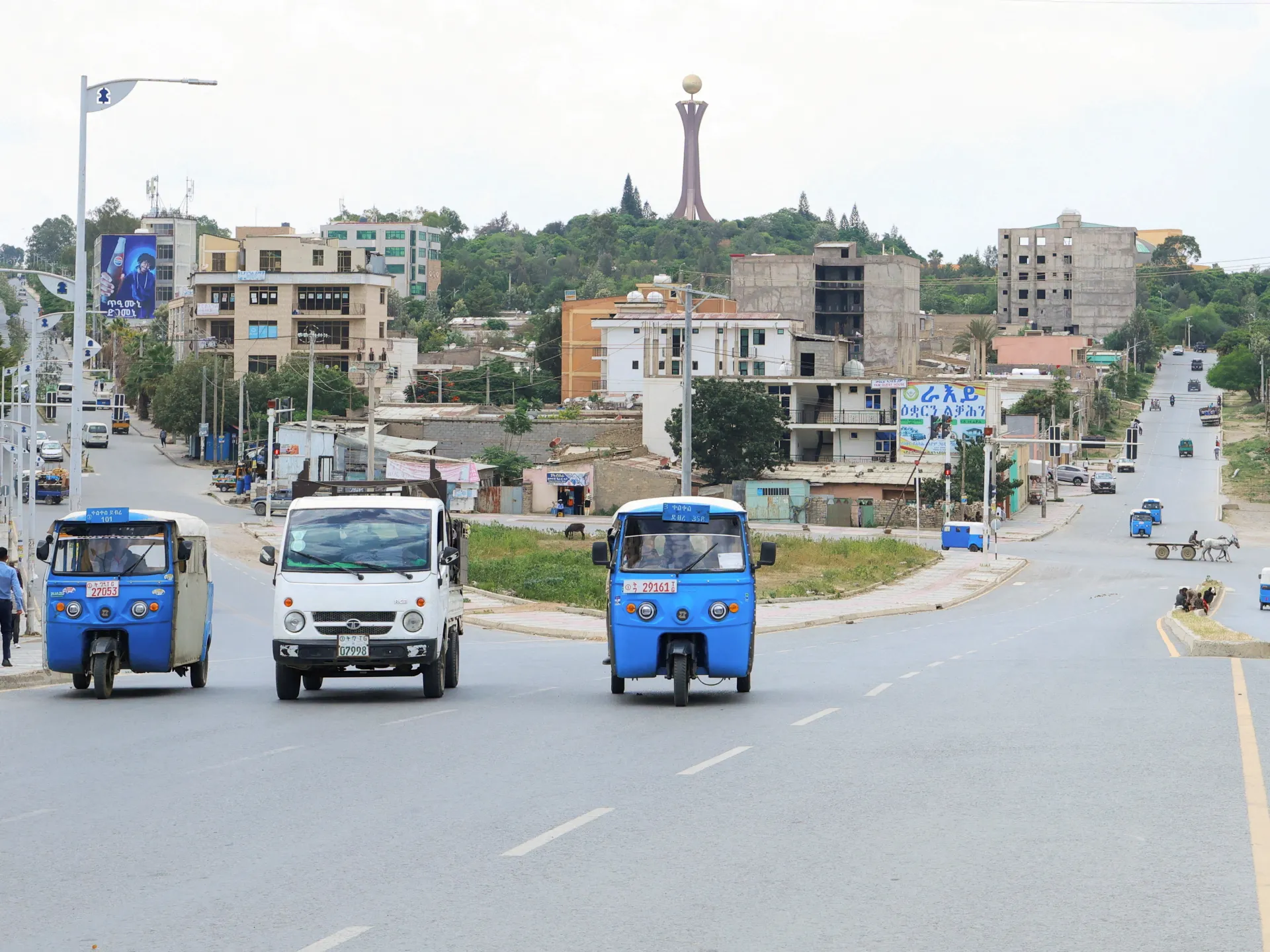
Tigray People’s Liberation Front says in a ‘situation of full-blown war’ with Ethiopia’s government.
Published On 24 Sep 202624 Sep 2026
Ethiopia’s army says it has killed at least 272 fighters from the Tigray People’s Liberation Front (TPLF) in a counter-offensive in the country’s northwest Amhara region.
The Ethiopian National Defence Force said on Thursday that another 260 Tigrayan fighters were wounded and several were captured.
Recommended Stories
list of 3 itemsend of list
“Government forces launched a counter-offensive that inflicted heavy personnel and equipment losses on the TPLF” after the group and its allies attacked several areas of North Wollo, a region of Amhara that borders Tigray, the army said in a statement on Facebook.
The intensification came days after TPLF and six other armed groups from across Ethiopia announced the formation of the Ethiopian Peoples’ Forces Alliance for Survival, which committed itself to removing Prime Minister Abiy Ahmed’s government.
The coalition brought together the newly-formed Amhara Fano National Movement, the Oromo Liberation Army and other movements from the Somali, Afar and Benishangul-Gumuz regional states.
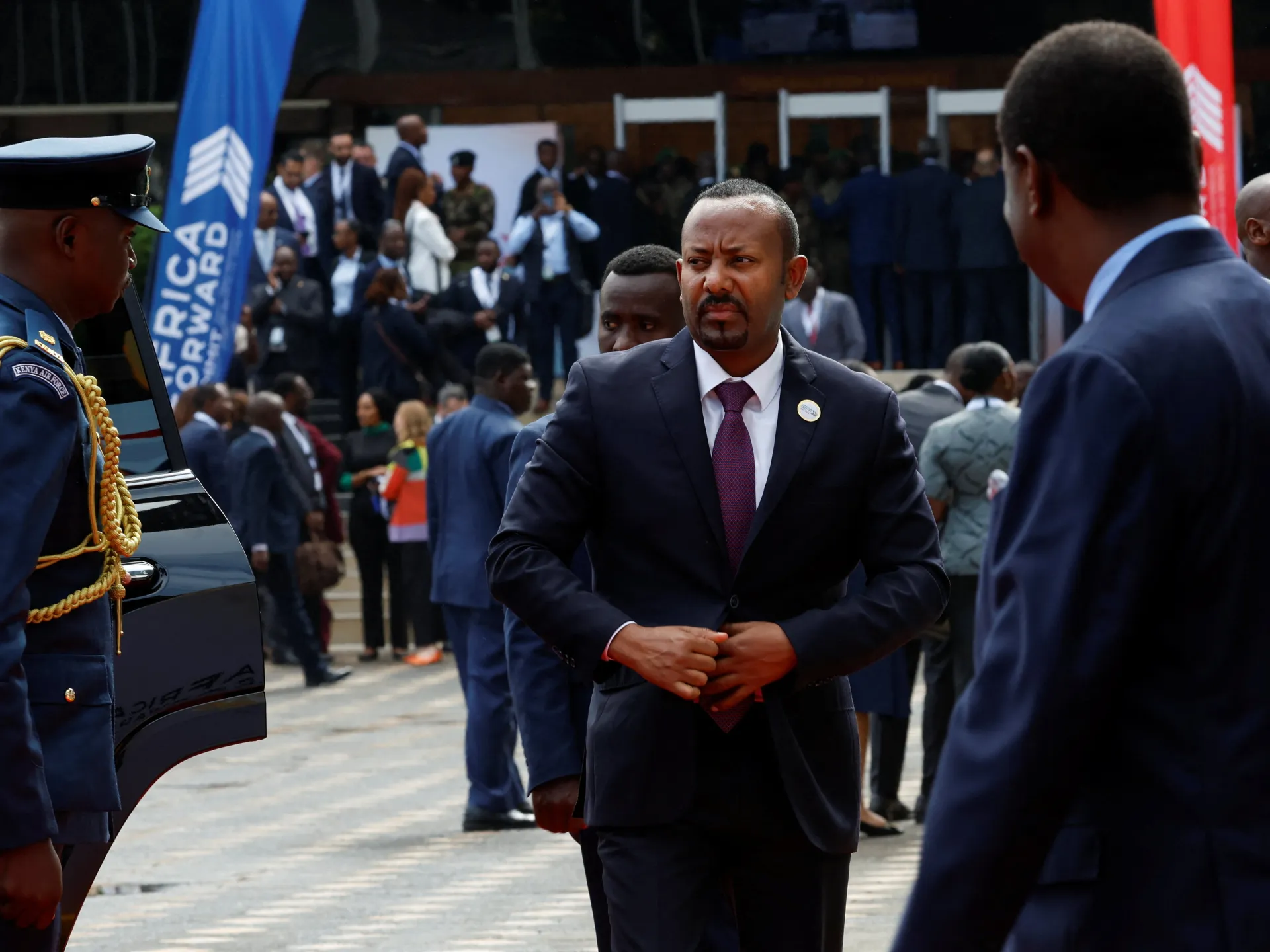
Ethiopian Prime Minister Abiy Ahmed [File: Sergei Bulkin/Sputnik via AP Photo]
‘Full-blown war’
“We are in the situation of full-blown war now,” TPLF Vice President Amanuel Assefa told AFP news agency on Thursday.
He confirmed that Tigrayan forces were fighting alongside local armed groups in Afar and Amhara.
The alliance marks a striking realignment that had been almost a year in the making, bringing together armed groups with very different histories and grievances against the central government, including forces with histories of conflict among themselves.
In a statement issued as the fighting widened on Wednesday, the alliance said the federal government was attacking its forces on several fronts and presented their response as part of the broader struggle that had brought the coalition together.
Meanwhile, the escalation has disrupted air travel, as Tigrayan forces seized three local airports in the region.
Flights to Lalibela, a UNESCO-listed site in Amhara known for its medieval rock-hewn churches, were suspended on Thursday, according to Reuters news agency.
AFP also received reports of fighting around Lalibela, causing its airport to close. The area has often been targeted by the Fano, a local armed group that is now operating alongside the TPLF.
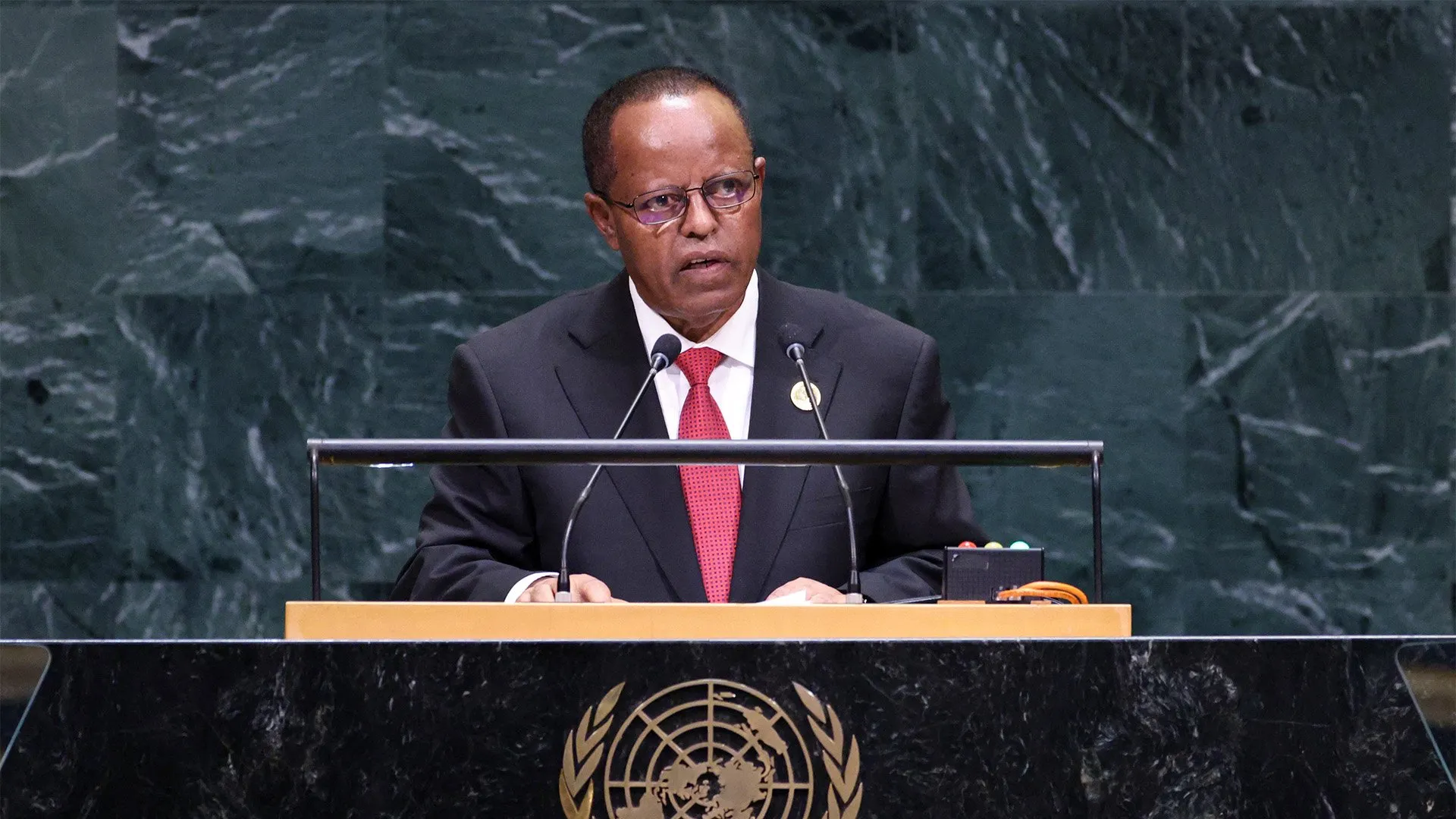
Ethiopia’s President Taye Atske Selassie Amde speaks during the United Nations General Assembly, September 23, 2026 [Seth Wenig/AP Photo]
Wider regional rivalries
TPLF last went to war with the Ethiopian federal government in 2020, leading to a devastating two-year conflict that ended with a peace deal in 2022.
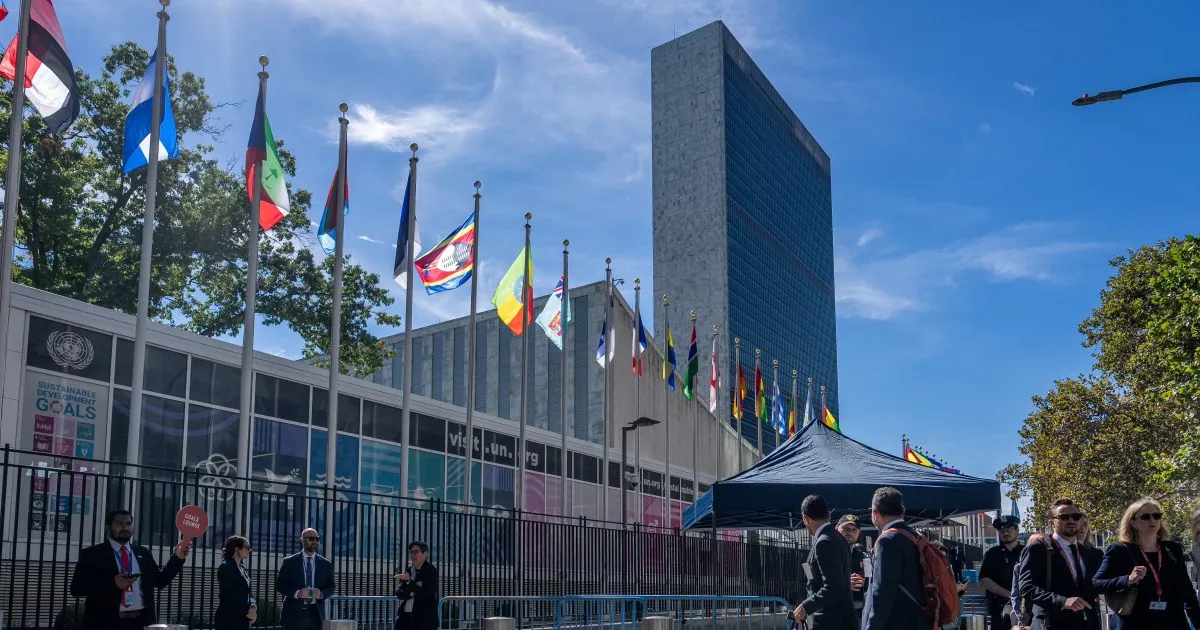
In his address at the UN General Assembly on Wednesday, Ethiopia’s President Taye Atske-Selassie Amde blamed the escalation on “the forces of destruction and mayhem” and “interference in our internal affairs by adversarial elements”.
He said Ethiopia had exercised “immense restraint” and made progress with its neighbours.
Analysts say the Tigray rebels have support from Eritrea, which fears landlocked Ethiopia is planning to invade its territory to gain access to the Red Sea.
The TPLF’s Assefa told AFP “we have no information about Eritrea’s plan”. Asked if they would request Eritrean intervention, he said: “Not yet.”
Ethiopia’s domestic conflicts are becoming harder to separate from wider rivalries in the Horn of Africa, particularly Addis Ababa’s deteriorating relationship with Eritrea and Sudan’s civil war.
Sudan’s army chief Abdel Fattah al-Burhan has visited Asmara twice since July for talks with Eritrean President Isaias Afwerki, while Sudan’s paramilitary Rapid Support Forces (RSF) commander Mohamed Hamdan Dagalo, known as Hemedti, reportedly visited Addis Ababa in late August.
“They’ve begun an offensive around southern Tigray,” Abdisalam Balema, a member of the Tigray People’s Liberation Front’s (TPLF) central committee, told Al Jazeera by phone from Mekelle, the Tigrayan capital, on Wednesday morning.
“They’re carrying out strikes in many places. We are not sure of the extent of it or whether they will continue, but we will assess it.”
Recommended Stories
list of 3 itemsend of list
Balema did not know it then, but he was describing the start of a major military escalation.
Fighting intensified across parts of Tigray and later spread to the neighbouring Afar and Amhara regions, pitting federal forces against several armed groups. A day later, Balema told Al Jazeera that the situation had become a “full war”.
The Tigray Army said the federal government had launched a “full-scale offensive” involving infantry, mechanised units and drones, and said its forces had begun counteroffensive operations.
Getachew Reda, a former senior TPLF figure who now advises Prime Minister Abiy Ahmed, gave the opposite account of how the fighting began, accusing the TPLF of launching the attack.
The escalation disrupted air travel, as Tigrayan forces seized airports in the region and Ethiopian Airlines suspended flights across Tigray. Local reports also said they had captured Abala, a district capital in neighbouring Afar.
Amid the competing accounts of how the escalation began, the immediate question may now be whether Ethiopia has crossed into a wider conflict.
The intensification came days after seven armed movements from across Ethiopia, including the TPLF, announced the formation of the Ethiopian Peoples’ Forces Alliance for Survival, which committed itself to removing Abiy’s government.
The coalition has brought together the Amhara Fano National Movement and the Oromo Liberation Army, alongside other movements from Somali, Afar and Benishangul-Gumuz areas.
The alliance marked a striking realignment that had been almost a year in the making, bringing together movements with very different histories and grievances against the central government, including forces with bitter histories of conflict among themselves.
In a statement issued as the fighting widened on Wednesday, the alliance said the federal government was attacking its member forces on several fronts and presented their response as part of the broader struggle that had brought the coalition together.
The regional East African bloc IGAD called for hostilities to cease and direct dialogue to resume, while the United Nations has expressed concern over the formation of the new armed coalition and reports of drone attacks.
About three-quarters of a million people were already internally displaced in Tigray because of the earlier war, according to UN migration data.
Formation of the alliance
The alliance grew out of the political realignment that followed the Pretoria agreement, which ended the two-year Tigray war in November 2022. The deal brought peace between Addis Ababa and the TPLF, but fractured the coalition Abiy had assembled to fight the war.
Neither Eritrea nor Amhara forces, whose troops had fought alongside the federal army, were parties to the final agreement, and both later fell out with the federal government.
In Amhara, tensions over plans to dismantle regional forces helped trigger open conflict between the Ethiopian government and Fano fighters, organised under the Amhara Fano National Movement, in 2023. Relations with Eritrea also deteriorated, first over the Pretoria settlement and later over Abiy’s push for access to the Red Sea through Eritrean ports.
The Pretoria agreement also deepened divisions within the TPLF, between figures such as Reda, who continued to defend the settlement, and a faction led by Debretsion Gebremichael that increasingly rejected the political order it had created.
Pretoria “changed the equation”, Faisal Roble, a regional analyst and member of the East African Parliament, told Al Jazeera. “Abiy alienated all of them at different levels.”
The faction led by Debretsion later seized power in Tigray and repaired relations with former enemies, including Fano fighters in Amhara and Eritrea, upending the alliances that had defined the previous war.
The government’s spokeswoman, Billene Seyoum, told the Reuters news agency after the new coalition was announced that its members had already been collaborating with financial backing from Asmara and that the formal declaration confirmed statements by government officials.
Eritrea has repeatedly denied supporting Ethiopian armed groups.
Reda had dismissed the alliance’s chances of ousting the government shortly after it was announced. “I don’t lose sleep over that,” he told state media this week.
“Now it [the TPLF] goes back to the drawing board, and declares Pretoria dead and starts an alliance with the very people who fell out with the federal government because Pretoria was signed,” he added.
Balema, the senior TPLF official, said the party’s decision to join those former enemies reflected its determination not to find itself isolated if the conflict widened again.
“We’ve been forced to ally with other movements who also face an existential threat from the government,” he told Al Jazeera. “We don’t want a repeat of 2020 when we were encircled and alone.”
Balema acknowledged unresolved disputes within the alliance, including competing claims over western Tigray involving Amhara forces, but said the groups had agreed to address them through dialogue.
“We have a political charter, and our aim is to remove the personalist regime of Abiy Ahmed, establish a transitional government, hold a constitutional dialogue and move to elections,” he added, saying “the alliance is in consensus on this.”
“For now it seems like it will work, but when the deeper issues need to be resolved it will test their different constituencies, who have different expectations,” Mohamed Kheir Omer, a researcher focused on the Horn of Africa, told Al Jazeera.
“But right now it isn’t the urgent issue.”
Beyond northern Ethiopia
The alliance also draws in the Oromo Liberation Army and a faction of the Ogaden National Liberation Front, movements rooted in older demands for autonomy and self-determination among Ethiopia’s Oromo and Somali populations.
Both had fought the TPLF-dominated government that preceded Abiy and are now allied with the TPLF. Taking office in 2018, promising a break with the old order, Abiy sought to bring both into civilian politics.
The Oromo Liberation Front returned from exile, but disagreements over disarmament left part of its armed wing outside the settlement.
Those fighters continued their armed conflict as the Oromo Liberation Army, and subsequent peace talks with the government failed.
Though the OLA ultimately signed the new alliance agreement, its leader, Jaal Marroo, had described it in the preceding days as a “procedural consensus” rather than a substantive settlement on Ethiopia’s political future.
The ONLF stayed out of armed conflict after its own 2018 peace deal, but later fractured. An overseas faction accuses the government of failing to implement the agreement and eroding Somali autonomy, while the leadership inside Ethiopia’s Somali region denies joining the new alliance.
Abdulkadir Hassan Hirmoge, a spokesperson for the faction that joined, told Al Jazeera that it now regards the 2018 agreement as void.
He said joining the alliance did not mean restarting an armed struggle, but backing its programme of removing Abiy and establishing a transitional government.
Regional dimension
Ethiopia’s domestic conflicts are becoming harder to separate from wider rivalries in the Horn, particularly Sudan’s civil war and Addis Ababa’s deteriorating relationship with Eritrea.
Sudan’s army chief Abdel Fattah al-Burhan has visited Asmara twice since July for talks with Eritrean President Isaias Afwerki, while Mohamed Hamdan Dagalo, known as Hemedti, the commander of Sudan’s rival Rapid Support Forces, reportedly visited Addis Ababa in late August.
Reuters reported in February that thousands of RSF fighters were being trained at a camp in western Ethiopia, while Sudan has accused Ethiopia, and its ally the United Arab Emirates, which also reportedly backs the RSF, of allowing drones to be launched from its territory into Sudan.
The emerging Ethiopian opposition alignment has touched the same regional network.
Several figures associated with groups now in the alliance attended a meeting in Port Sudan in May, publicly presented as a “people-to-people” initiative.
In July, Abiy told lawmakers: “Let alone Eritrea, the TPLF and Sudan, even if others were added, we do not have an iota of fear regarding Ethiopia’s sovereignty.”
Balema, the senior TPLF official, denied that the alliance was receiving military or logistical support from either Eritrea or Sudan, saying its relationships abroad amounted to political contacts rather than foreign backing.
“We didn’t create the current problem with Eritrea; Abiy did with his demands on its ports, and the same with Somalia,” he said.
“In Sudan, he is now supporting the Rapid Support Forces. He has created his own enemies across the region and we are just picking up the pieces.”
Sudan has recently sought to ease tensions with Addis Ababa. Malik Agar, the second in command of its military-aligned government, said last week that “we do not want to get involved in a war with Ethiopia.”
Jawar Mohammed, an Oromo opposition politician, warned that Ethiopia could nevertheless become an “incongruent battlefield” in which wider regional contests increasingly play out.
“These things are impossible to control,” he said.
Media reports say US withholds army chief’s visa to pressure him into accepting a 90-day truce in Sudan’s civil war.
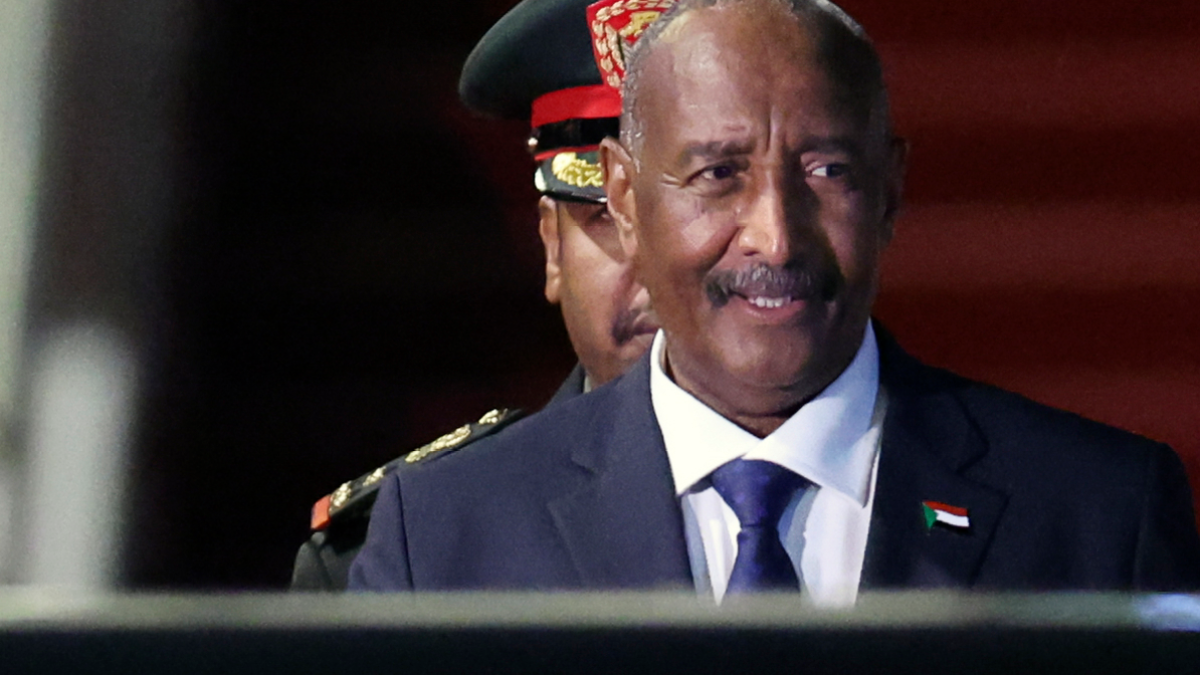
Sudanese activists and journalists have criticised the United States over reports that Washington has withheld a visa from army chief Abdel Fattah al-Burhan before the United Nations General Assembly in an apparent bid to pressure him into accepting a ceasefire proposal.
Activists took to social media on Wednesday to slam the reported move as “political pressure”, arguing that access to the UN should not be used to influence Khartoum’s position on Sudan’s three-year civil war.
Recommended Stories
list of 4 itemsend of list
Neither the Sudanese government nor the US Department of State has commented on the reports.
General al-Burhan, whose army has been fighting the paramilitary Rapid Support Forces (RSF) since April 2023, was scheduled to address the General Assembly on Thursday in New York. The army chief has spoken at the assembly twice since the war began.
The Reuters news agency, citing Sudanese sources, reported on Tuesday that the US was withholding al-Burhan’s visa and had made its issuance contingent on him agreeing to a 90-day ceasefire proposed by Massad Boulos, US senior adviser for Arab and African affairs.
The AFP news agency, quoting two diplomatic sources, also reported that Washington refused to issue the visa. One source called the move a “clear violation of the UN’s agreement with the US” while another said the visa had been “conditioned” on al-Burhan accepting the three-month truce.
‘Political pressure’
Sudan’s UN ambassador, Al-Harith Idriss Al-Harith, wrote to Secretary-General Antonio Guterres to request the UN’s “immediate intervention” with US authorities, according to Reuters.
Stephane Dujarric, a spokesman for Guterres, said the UN chief was “deeply concerned” that the visa had reportedly not been issued. He told the AFP that the UN Secretariat has urged the US, as host country, to ensure visas were issued in accordance with its obligations under the UN Headquarters Agreement and in time for al-Burhan to participate in the General Assembly.
Sudanese activist Mamoun al-Sheikh denounced the US move in a post on Facebook, saying: “Even if the visa is withheld, it will not silence Sudan’s voice.”
Another activist, Sayed Al-Mazaj, described linking the visa to a proposed 90-day ceasefire as “a tool for political pressure”. And in a video posted on X, Sudanese journalist Diaa Al-Din Bilal said barring al-Burhan from New York would not force him to accept the US position and could instead boost his popularity and rally support around him.
Another X user, @Atifazhri, also denounced the US move, noting that Israeli Prime Minister Benjamin Netanyahu, who is wanted by the International Criminal Court on charges of war crimes in Gaza, had been granted a visa.
“The issue is double standards – when visas become instruments of political coercion against a sovereign state while far more serious cases are treated differently. International law and justice cannot be applied selectively,” the user wrote.
US questions al-Burhan’s legitimacy
The State Department issued a statement on Tuesday that did not directly address al-Burhan’s visa but called into question his legitimacy. Its spokesman Tommy Pigott said neither the Sudanese army nor the RSF “nor their respective leaders, represent legitimate, constitutional governance for Sudan”.
He added the US would “seek to raise the cost of continued conflict on all belligerents”.
Sudan’s Ministry of Foreign Affairs hit back on Wednesday, calling on the US to engage positively with the country’s government. Any peace initiative, it said, must “be grounded in respect for Sudan’s sovereignty, unity, territorial integrity, and legitimate national institutions”.
“It must also address the root causes of the war’s continuation — foremost among them, negative foreign interference,” the ministry added.
Al-Burhan has been Sudan’s de facto leader since 2019 although the African Union and Western powers withdrew recognition after a 2021 coup that he led with Mohamed Hamdan Dagalo, the RSF’s leader, against the civilian leadership.
He has rejected externally imposed ceasefires, arguing that earlier pauses in the fighting benefitted the paramilitary group.
The US has also refused visas to Palestinian Authority President Mahmoud Abbas and some members of Iran’s delegation to the UN.
Magadi, Kenya – For more than a century, soda ash has shaped life in Magadi, a remote town on the shores of Lake Magadi in Kenya’s Kajiado County.
The mineral has brought exports, jobs and business. But for many people living around the lake, that activity has not brought enough opportunities or basic services. The result is a complicated relationship with Tata Chemicals Magadi, the company that has mined soda ash there for generations.
Now that relationship is under strain. The Kenyan government has suspended the company’s mining operations, and President William Ruto has ordered it to leave while a joint technical committee works with the company to resolve outstanding issues.
For Magadi, the dispute is also about what the community and Kenya have gained from a resource extracted there for more than a century.
A century of soda ash
Commercial soda ash production in Magadi dates back to 1911. Tata Chemicals acquired the operation in 2005 and later renamed it Tata Chemicals Magadi Limited.
The company has become one of Kenya’s major soda ash exporters, with much of its production destined for international markets. It has also become part of everyday life in Magadi, providing jobs and supporting services including water, healthcare and education.
But the government says its long history in the area does not exempt Tata from Kenya’s current mining laws.
Mining Cabinet Secretary Hassan Joho told Al Jazeera on September 11 that the regulatory environment changed after the 2010 Constitution and the Mining Act. He said a government-wide compliance audit found that Tata had not applied for a mineral right under the Mining Act and had instead relied on its land concessions.
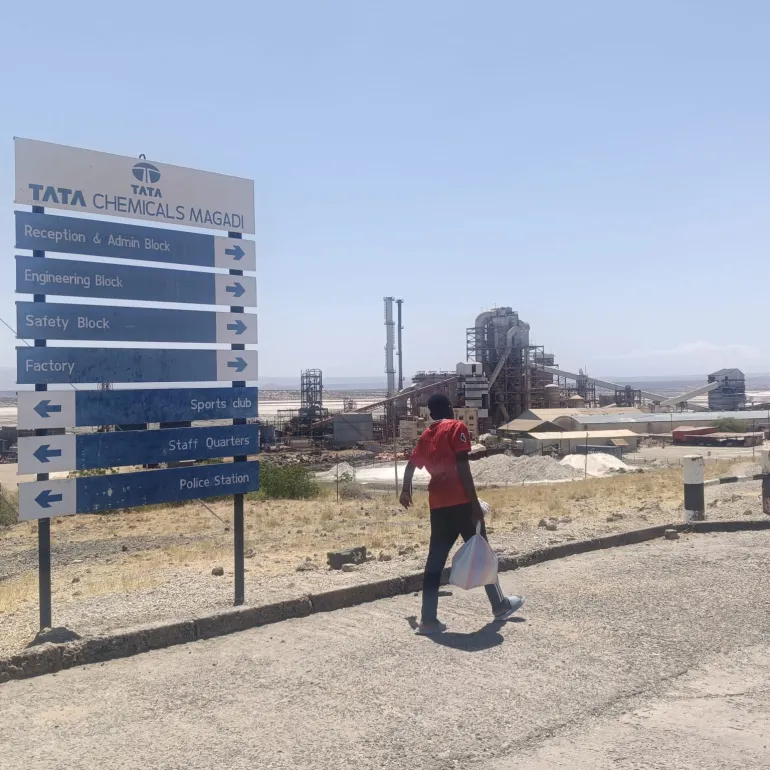
The plant has provided jobs and essential services for generations, but residents and officials are pressing for greater local benefits from the resource [Hafsa Sheikh/Al Jazeera]
According to Joho, Tata made its first application for a mineral right on July 26, 2024, after which the government began engaging with the company over compliance.
“Past oversights do not grant immunity from existing laws,” Joho said.
He said the review also identified issues around mineral royalties, community development agreements, local processing, employment of Kenyan citizens, procurement of local goods and services, and outstanding matters with the Kajiado County government.
The government says Kenya should get more value from the resource instead of mainly exporting it as a raw material.
Ruto has made a similar argument, saying communities have not benefitted enough from the mineral extracted from Magadi. During his visit to Kajiado, he said a new investor should establish major glass and chemical manufacturing facilities in the county, creating jobs and keeping more value in Kenya.
Why now?
The government’s decision has raised a question for a company that has operated in Magadi for more than a century: why now?
Joho told Al Jazeera that the answer lies in the government’s decision to carry out comprehensive compliance audits across the mining sector, including legacy concessions.
The ministry suspended Tata’s operations in July, citing regulatory concerns. Since then, the company and the government have been negotiating over how to resolve the outstanding issues.
Tata disputes the suggestion that it has ignored regulatory requirements.
In a statement to Al Jazeera, the company said its subsidiary submitted a comprehensive response to the ministry on August 11 regarding the issues raised in the July 28 suspension notice. Tata said the submission included information on its compliance with applicable regulations and that it was waiting for further direction from the ministry.
The company said it respected the authority of the Kenyan government and remained committed to constructive engagement with concerned agencies and regulators.
The economic stakes are significant. The Standard has previously reported that Tata’s Magadi operation contributes substantially to Kenya’s economy and that the company has argued that a shutdown would affect exports, foreign exchange and employment.
The operation supports hundreds of workers directly, while thousands more people in Magadi depend on the wider economy around it.
A community caught between dependence and frustration
For residents, the debate is not simply about whether Tata should stay or go. It is about what they have received from a company that has been at the centre of Magadi’s economy for generations, and what they could lose if it leaves.
Nkanoi Matipei, a Magadi resident, said locals want more jobs at different levels, more corporate social responsibility projects and access to land under Tata that they say is currently idle and used for grazing.
Another resident, Esther Nganoni, strongly opposed the idea of removing Tata.
“Tata Chemicals Company has been our lifeline,” Nganoni told Al Jazeera, pointing to bursaries, water and health services provided by the company.
She questioned what a replacement investor would offer the community and said residents must be consulted before any decision is made.
Cosmas Karera Kiratu, who previously served as the subcounty children officer for Kajiado West, told Al Jazeera that Magadi faces serious challenges, including poverty, water shortages, long distances to schools, inadequate infrastructure and teachers, child labour, teenage pregnancy, female genital mutilation and child marriage.
He said some schools are about 15km (9 miles) apart, while water remains particularly difficult to access.
According to Karera, the only clean water available through a piped system is supplied to Tata Chemicals from Ngurumani, about 40km (25 miles) away.
Residents depend heavily on Tata water bowsers, which he said do not reach all communities and often provide insufficient water for both domestic and livestock use.
“The local community was very dependent on Tata company in terms of water, health services, school bursary and schools upgrading,” Karera said.
He warned that an abrupt end to Tata’s operations could have serious consequences if alternative services are not put in place.
The technical committee and what happens next
That uncertainty is now at the centre of the government’s negotiations with Tata.
Joho said the ministry’s suspension was intended to give the company an opportunity to address the identified compliance issues. After Tata committed to remedy the outstanding matters, he said, a joint technical committee was established to guide the process.
Joho said the committee is dealing with the formation and gazettement of Community Development Agreement Committees, local processing facilities, outstanding mineral royalties, employment of Kenyan citizens, procurement of local goods and services and unresolved matters with the Kajiado County government.
He said discussions were progressing.
The plant’s future is now under scrutiny as the government pushes for greater regulatory compliance and wants more value from the resource to remain in Kenya [Hafsa Sheikh/Al Jazeera]
“Deliberations within the joint technical committee remain progressive, with a clear focus on achieving full statutory compliance under the Mining Act and securing socioeconomic returns for the extractive sector, the local community, and the nation at large,” Joho told Al Jazeera.
The Standard reported that the committee is also considering mineral beneficiation and in-country value addition, outstanding community benefits and royalties, unresolved land matters, the possibility of opening the area to multiple mineral extraction companies and outstanding issues involving Kajiado County.
For Kajiado Governor Joseph Ole Lenku, the county government must have a seat at the table.
“We want to thank the president for his firm stand and directives on Tata Chemicals Magadi. I have been vindicated,” Lenku told Al Jazeera.
He said county participation in negotiations was non-negotiable and identified payment of accrued land rates as the county government’s “irreducible minimum”.
He also said the grievances of Magadi residents had been known and repeated for years.
What does the future hold for Magadi?
The government has made clear that if a new investor eventually comes in, it wants more than the export of soda ash. It wants processing, manufacturing, jobs and a larger share of the economic value to remain in Kenya.
But residents are asking what happens to the services and livelihoods that currently depend on Tata.
For Matipei, keeping Tata does not mean accepting the status quo. She wants more jobs, greater community investment and access to land that residents say remains underused.
For Nganoni, removing Tata without a clear alternative could put the community at risk. She argues that residents must be involved in deciding what comes next.
Lenku wants the county government’s interests addressed, while Joho says the government’s objective is to bring the operation fully within Kenya’s mining laws and ensure that the country and local community receive greater socioeconomic benefits.
Tata says it is waiting for the government’s response to its August submission and remains committed to resolving the outstanding issues through engagement.
For Matipei, however, the question is what the community has gained from an industry that has shaped Magadi for generations.
“Over the years, the company’s assistance to the local community has been trickling, sustaining us but denying us economic freedom,” Matipei told Al Jazeera.
Ethiopian President Taye Atske Selassie warned the UN General Assembly of “forces of destruction and mayhem” as Tigray rebels joined other rebel groups to seize airports and target government positions in northern Ethiopia, triggering fears of a renewed civil war.
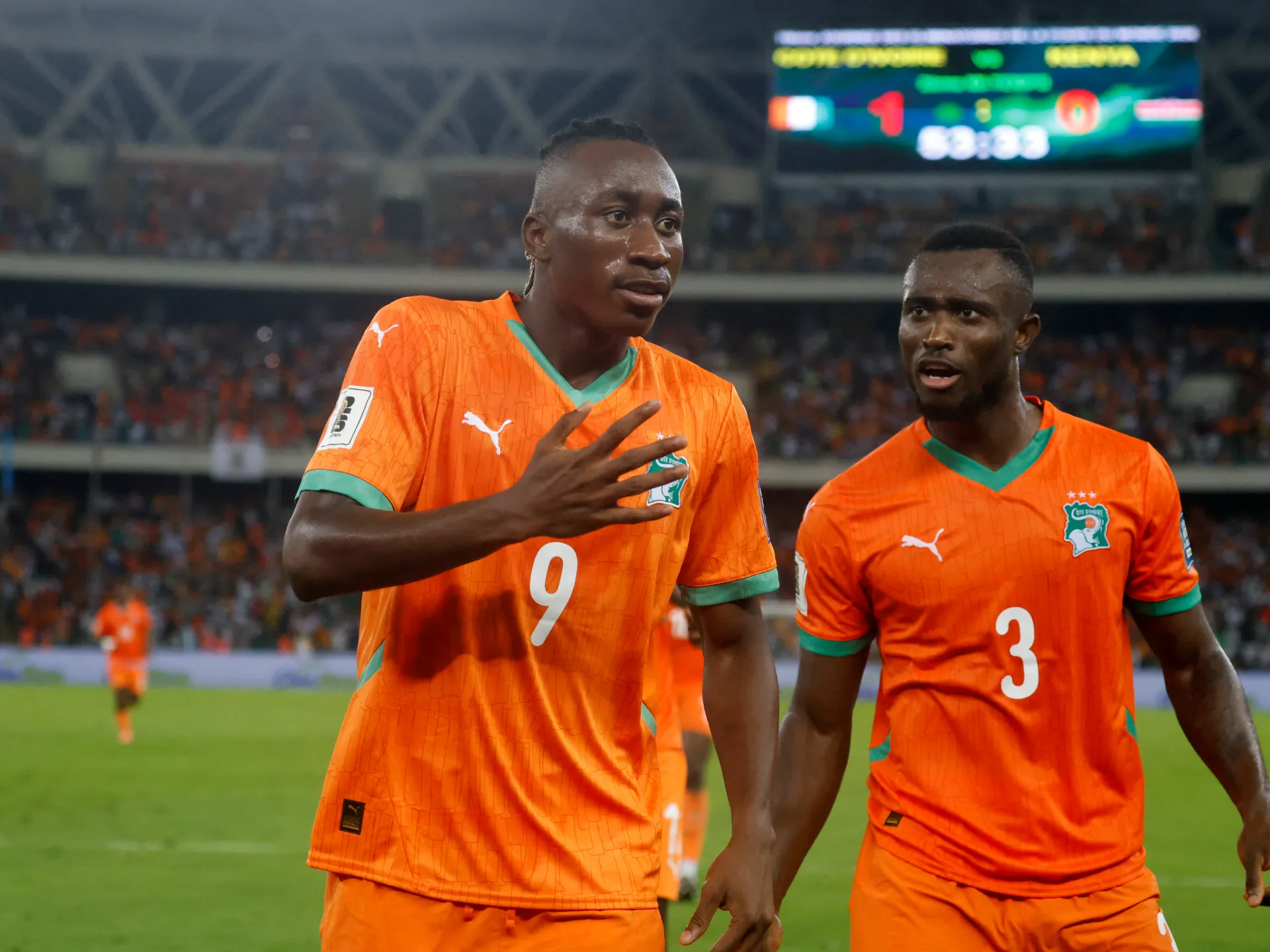
Who: Ivory Coast vs Ghana What: CAF Africa Cup of Nations qualifier Where: Stade de Bouake, in Bouake, Ivory Coast When: Thursday, September 24, at 7pm (19:00 GMT) How to follow: Al Jazeera Sport will have live build-up from 16:00 GMT before our text commentary stream.
The qualification process for the 2027 Africa Cup of Nations kicks off with a match befitting the final itself as Ivory Coast play Ghana.
Recommended Stories
list of 4 itemsend of list
Both nations are packed with high-profile players and are led by names that have managed at the highest levels of the game.
Al Jazeera takes a look at the mouth-watering opener on the path to the finals in Kenya, Uganda, and Tanzania.
Who else is in Ivory Coast and Ghana’s AFCON qualifying group?
The Gambia and Somalia complete Group C of the Africa Cup of Nations qualifiers.
In the next round of matches in the group, Ghana will entertain The Gambia on Tuesday, while Ivory Coast will travel to Somalia.
What are the expectations on Ivory Coast’s AFCON campaign?
Despite their round-of-32 exit in the FIFA World Cup 2026 at the hands of Norway, Ivory Coast’s task ahead is quite clear: win AFCON 2027.
The Elephants are led by Herve Renard, who is taking charge of the West African giants for the second time and replaced Emerse Fae following the World Cup.
The Frenchman previously managed Ivory Coast from 2014 to 2015, leading them to the AFCON title before joining French Ligue 1 club Lille immediately after the final.
Renard is a two-time AFCON winner, having also led Zambia to their historic win in 2012. The 57-year-old has also managed Morocco, Tunisia – in a last-minute call-up at World Cup 2026 – and Saudi Arabia, who he famously led to victory against Argentina in their group-stage match at Qatar 2022.
Who are the star names in the Ivory Coast side?
Although not blessed with the superstar-level talents like Didier Drogba from their 2015 victory, Ivory Coast are still a force to be reckoned with.
Yan Diomande is the shining light of African football following his $161m move to Spanish giants Real Madrid from RB Leipzig in Germany.
Former Barcelona midfielder, now with Atalanta in Italy’s Serie A, Franck Kessie is arguably the next biggest name in the current side.
Former Arsenal forward, Nicolas Pepe is resurrecting his career at Villarreal in Spain after a failed $92m transfer to the Gunners from French club Lille.
Ibrahim Sangare has been a standout performer in the English Premier League with Nottingham Forest, while Amad Diallo of Manchester United is the starlet of Ivory Coast football.
What is Ivory Coast’s AFCON record?
The Elephants are three-time AFCON winners and beat Ghana on penalties in the 1992 final for their first continental crown.
Renard’s 2015 victory also saw Ghana defeated, and once again it was by penalties.
Their most recent win came at the 2023 edition when they defeated Nigeria 2-1 on home soil.
What are the expectations on Ghana’s AFCON campaign?
Ghana, like Ivory Coast, were also eliminated at the round of 32 at the World Cup 2026 as they lost 1-0 to Colombia.
The Black Stars also lost their final group stage match to Croatia, but achieved a respectable 0-0 draw with eventual semifinalists England, while beating Panama to secure their progress to the knockouts.
Led by former Real Madrid manager Carlos Queiroz, Ghana will also have their sights set on the final of AFCON 2027.
Queiroz, who rose to prominence as assistant to Alex Ferguson at Manchester United, has the record of Iran’s longest-serving manager with a run between 2011 and 2019. The Portuguese also returned to manage the side at Qatar 2022.
Alongside his two-year stint as Real manager, the 73-year-old has also managed South Africa, Egypt, Colombia, Qatar and his native Portugal.
With his wealth of experience, the West Africans will hope to rise from a nation that failed to reach the last AFCON – finishing bottom of their qualifying group – to winners of the 2027 edition.
Who are the star names in the Ghana side?
Where Ivory Coast have more strength across the board, Ghana have a longer list of star attractions.
Manchester City forward Antoine Semenyo is undoubtedly Ghana’s key player, but is ably assisted in attack by Mohammed Kudus, who made his name in the English Premier League with West Ham before a big-money move to Tottenham.
Jordan Ayew is a long-established spearhead of attacks in European football, as well as for Ghana, for whom he remains the national team captain.
Former Arsenal midfielder Thomas Partey is still a pivotal player for his new club Villarreal, while Athletic Bilbao’s Inaki Williams remains one of the hottest talents in La Liga, with a host of top clubs across Europe vying for his signature.
What is Ghana’s AFCON record?
Ghana are four-time winners of AFCON, but have not lifted the trophy since 1982.
Alongside their 1992 and 2015 defeats by Ivory Coast, they lost the 2010 edition to Egypt.
What happened the last time Ivory Coast played Ghana?
The last meeting between the sides came in a friendly in 2021 and, much like the 2015 AFCON final, it ended in a 0-0 draw.
The previous competitive meeting between the sides saw Ivory Coast win 3-1 in their round-of-16 match at AFCON 2010.
Head-to-head
This will be the 38th meeting between the border-sharing nations, with Ghana winning 15 of the encounters and Ivory Coast winning 10.
Ivory Coast team news
Diallo is the prominent absentee from the match for Ivory Coast as the forward recovers from injury.
Evann Guessand and Omar Diakite are notable omissions from Renard’s 25-man squad selection.
Ivory Coast predicted starting lineup
Fofana; Doue, Koussounou, O Diomande, Konan; Kessie, Sangare, Inao; Pepe, Bonny, Y Diomande
Ghana team news
Injuries have stripped the Ghana squad of a number of their leading names, including their captain Ayew.
The losses of Semenyo and Kudus are even greater blows, the latter having missed the 2026 World Cup with a hamstring injury.
Two days after seven Ethiopian armed groups announced the formation of the Ethiopian Peoples’ Forces Alliance for Survival and pledged to remove Prime Minister Abiy Ahmed, a senior official of the Tigray People’s Liberation Front (TPLF) was asked whether the statement amounted to a declaration of war.
He hesitated, then answered with a question of his own.
“We are at war now, aren’t we?”
He was speaking to Kjetil Tronvoll, professor of peace and conflict studies at Oslo New University College, who told Al Jazeera that the answer captured what the new rebel alliance had changed.
It has not created a single, coherent military force capable of marching on Addis Ababa. It has brought several of Ethiopia’s separate conflicts into the same political framework and, potentially, into the same military calculation.
The question now is how much further that can spread and whether seven movements with different enemies, territorial claims and histories can actually fight as one.
On Tuesday, drones struck two schools in Alamata, in southern Tigray, and the town’s mayor said 14 civilians were killed and 22 wounded. The account could not be independently verified, and the federal government did not immediately comment.
By Wednesday, Tigrayan forces had seized Alula Aba Nega International Airport in Mekelle, AFP reported, citing an airport employee and a Western embassy security source. The airport employee said staff had been told there were no flights.
The alliance, whose founding statement Fano commander Zemene Kassie read on Tigrai TV on Sunday, brings together the Amhara Fano National Movement, the TPLF and the Oromo Liberation Army (OLA), along with the Ogaden National Liberation Front (ONLF), the Afar Revolutionary Democratic Unity Front, the Benishangul Peoples’ Liberation Movement and the Gumuz Peoples’ Democratic Movement.
It promises a transitional administration once Abiy is gone.
Abiy’s spokesperson, Billene Seyoum, told Reuters that the members had been collaborating for some time with Eritrean financial backing, an accusation Asmara has repeatedly denied.
The war that never really ended
The TPLF dominated Ethiopia for 27 years, until Abiy took power in 2018 and pushed it to the margins.
In November 2020, the federal army, backed by Eritrean troops and Amhara forces, went to war with it. The conflict became one of the deadliest in Ethiopia’s modern history. African Union mediator Olusegun Obasanjo believes that about 600,000 people died, though estimates of the toll have varied.
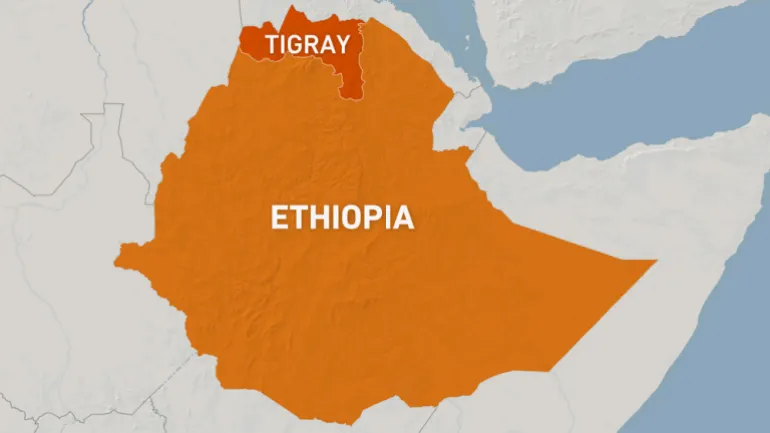
Map showing Ethiopia’s Tigray region, where tensions between the federal government and the Tigray People’s Liberation Front (TPLF) have escalated [Al Jazeera]
That war ended in November 2022 with an agreement signed in Pretoria, South Africa.
It was a permanent cessation of hostilities. It silenced the guns and set terms for Tigray’s disarmament, but left critical questions for later, above all Western Tigray, the fertile territory claimed by both sides and administered by Amhara forces since the war.
Only Addis Ababa and the TPLF signed. Neither Eritrea nor the Amhara forces had a seat.
Jawar Mohammed, the Oromo politician who was once an ally of Abiy and later spent time in prison, told Al Jazeera that shutting them out gave them every reason to wreck the deal.
The new alliance brings together forces that were excluded from the Pretoria negotiations with one of the agreement’s signatories.
The quiet it created ended in May, when the TPLF restored the legislative council that existed before the war and installed its chairman, Debretsion Gebremichael, as regional president, effectively setting up a rival political authority to the interim administration established under the Pretoria agreement. The TPLF accused the federal government of failing to honour its side of the deal.
Federal and Tigrayan forces then clashed at Shererina, near the Sudanese border, on August 1. Heavy artillery and drones were used in the fighting, and hundreds of Tigrayans, including wounded fighters, fled into Sudan.
Then came the drones.
On August 20, two drones struck homes in Mekelle, wounding 13 people, according to the TPLF. Al Jazeera could not independently verify the account.
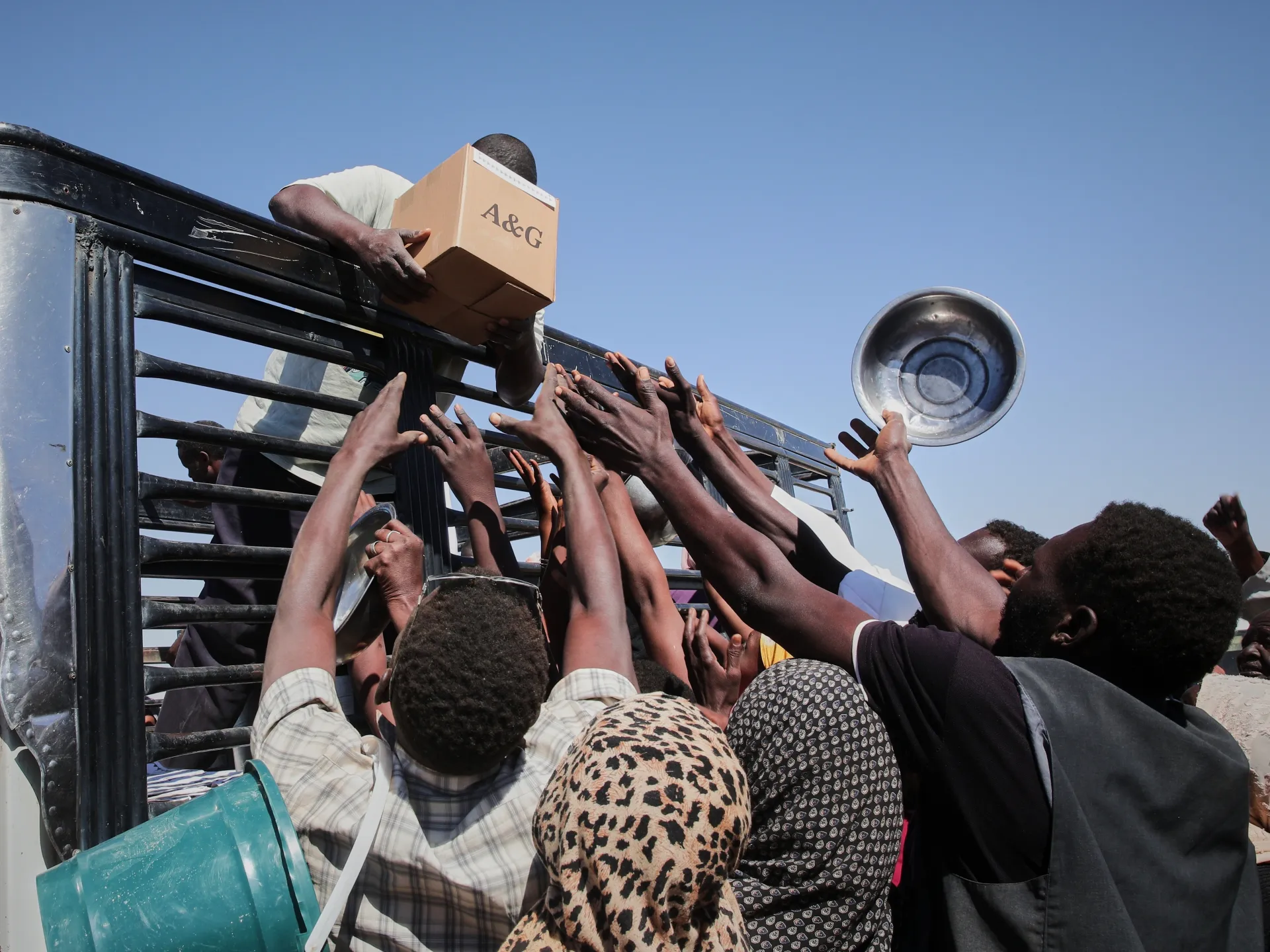
On September 20, a drone destroyed a truck carrying 41 tonnes of food aid near Adi Daero, according to the TPLF. Addis Ababa has acknowledged none of the reported strikes.
“We signed the Pretoria Agreement, but the regime used the agreement to kill the people of Tigray systematically,” the TPLF’s spokesperson, Michael Asgedom, told Al Jazeera.
Two scripts
Asgedom tells it two ways.
The alliance “was created to bring peace and democracy to Ethiopia”, he said.
He also said it would build a new order “over the ruins of Abiy Ahmed’s system” and that this was “the right time to eradicate the regime”.
If war comes, he said, “it will be for survival.”
One script is for diplomats, the other for fighters.
Tronvoll calls it constructive ambiguity, a phrase that fits the alliance.
Ethiopian Prime Minister Abiy Ahmed Ali faces a new armed alliance that includes the Tigray People’s Liberation Front (TPLF) and six other groups [File: Sergei Bulkin/Sputnik/Kremlin Pool Photo via AP]
That the alliance claims to speak for seven peoples can delegitimise Abiy abroad and raise the price of any settlement, whether or not it fires a shot.
The first test is Eritrea, the neighbour whose name appears nowhere in the founding statement.
Over the past two years, Eritrea has reconciled with the TPLF, the enemy its troops helped to crush in 2020, as Abiy began demanding access to the Red Sea, which Asmara interpreted as a claim on its coast.
Jawar argues that Eritrea’s minimum aim is to keep any conflict on the Ethiopian side of the border.
The International Crisis Group has similarly assessed that Eritrea wants to establish a buffer zone on its southern border.
Asgedom has denied any Eritrean military presence in Tigray, but left the door ajar.
“If Eritrea can take action because of a potential danger to its survival, it is the Eritreans who should answer that question.”
Tronvoll says Eritrean troops are in Tigray now, a claim Al Jazeera could not independently verify. Magnus Taylor, deputy director of the International Crisis Group’s Horn of Africa project, told Al Jazeera that he was more cautious.
“This is substantially a domestic Ethiopian phenomenon,” he said.
Seven commands, one war?
The second test is whether seven commands can fight as one.
Zemene chairs the alliance, but the founding statement names no commander for a joint campaign.
If the line ever advances on Addis Ababa, Tronvoll asks, whose soldiers go first?
“If it is a Tigrayan general commanding Amharas to be sacrificed first to save the Tigrayan soldiers, that will split it immediately.”
Western Tigray is not mentioned in the statement either.
Taylor says the Fano are themselves divided over it: Commanders in Gojjam and Wollo can contemplate an alliance with Tigray, while those nearer the disputed land cannot.
“All these groups have their own different beef with the federal government,” Taylor said, and much of it dates from Abiy’s first year.
In 2018, Abiy invited exiled rebels home, and the OLA and the ONLF returned from Asmara.
But the OLA broke away to keep fighting, and talks with it in Tanzania collapsed in 2023.
The ONLF then split in 2025 after its then-chairman called for a return to armed struggle amid a dispute over a Chinese natural-gas concession in the Somali region.
The Amharan Fano rebelled against the government in 2023 after Abiy ordered the regional special forces to be folded into the federal army, a move many Amhara believed was tantamount to disarmament.
In June, Abiy’s Prosperity Party won 438 of 486 contested parliamentary seats. Voting did not take place in Tigray and was disrupted by insecurity in parts of Amhara and Oromia.
But their grievances are not only with Abiy’s government.
Referring to the news of the alliance, Jawar said he had “not seen anything as unpopular among the Oromos”, after years of accusations that Fano fighters have killed Oromo civilians in Wollega.
The OLA calls its participation a “procedural consensus” and has demanded that Fano disown a faction in Wollega that it says the government armed.
“There is no shared political objective,” Jawar said. “They don’t even have a shared tactical objective.”
And Tronvoll goes further: “If the members ever reached the palace, immediately a new war will start between them.”
The people being asked to fight
Then, there are the people being asked to fight.
Tigrayans are being mobilised alongside forces they remember from four years ago, when, in Tronvoll’s characterisation, “both the Eritreans and the Fano Amharas were perpetrating genocide on them.”
The charred remains of a tank lie on a road near Gereb Agew, southern Tigray, after clashes between the Ethiopian National Defence Force (ENDF) and the Tigray People’s Liberation Front (TPLF), on March 3, 2026 [File: Abel Gerezgiher/AFP]
Friends in Tigray have told Tronvoll of coercive recruitment. He estimates that tens of thousands have left the region in advance of a possible war and the draft.
“People are voting with their feet,” he said. “They are on their knees already. So what are the alternatives for them than to fight?”
Beyond the border
Abiy, for now, appears unmoved.
“As long as they don’t threaten the palace at Arat Kilo, he can live with that,” Tronvoll said. “I don’t think he skips lunch because of this.”
Taylor struggles for a word.
“Is it a headache? Is it an irritant? Is it a blow? It’s a combination of those things.”
In his assessment, the TPLF, which lost most of its heavy weapons in 2022, has come off worse in recent clashes against federal air power. The likelier course, he says, is a slow deterioration, with southern Tigray the flashpoint.
Jawar views Abiy’s approach as containment: Keep flights into Tigray running so that those who want to leave can do so, and let a war that few want sour public opinion.
With Tigrayan forces having seized Mekelle’s airport, that exit has closed.
Tom Gardner, author of The Abiy Project, said, “For months Abiy’s strategy has been to maintain a low-level conflict largely conducted via drones, proxies, and siege tactics. This could be the moment that strategy breaks down and a full-scale war erupts.”
The regional dimension is becoming harder to separate from the conflict inside Ethiopia.
The International Crisis Group says several thousand Tigrayans, mostly from Western Tigray/Welkait, have fought alongside the Sudanese army against the Rapid Support Forces.
Khartoum has also accused Addis Ababa of allowing drones to strike Sudan from Ethiopian soil, which Ethiopia denies.
Eritrea has aligned itself with Sudan’s army and established ties with Egypt, an opponent of Addis Ababa in the dispute surrounding Nile water resources.
The International Crisis Group has described Egypt as a close wartime ally of the Sudanese army.
Those alignments do not necessarily make the new Ethiopian alliance a regional military bloc. But they make it harder to treat Ethiopia’s conflicts as entirely domestic.
In Mekelle, the calculation is narrower.
“It is better to live than to die,” Asgedom said, “and the regime doesn’t allow us to live.”
A journalist in Mekelle, who spoke to Al Jazeera on condition of anonymity, said people had lived for months in a state of no-war-no-peace, and many now wanted it decided either way.
The alliance offers a path to war without making clear what that war would cost.
“We need peace,” residents told the journalist in Mekelle, after months without salaries or medicine.
In the city, there is an old belief that an unexpectedly windy and sunny day foretells fighting. Tuesday was both.
The qualifiers for the 2027 Africa Cup of Nations begin on Thursday, with 48 countries competing to earn spots in Africa’s biggest football tournament.
Tanzania, Kenya and Uganda will cohost AFCON 2027, as the competition returns to East Africa for the first time in 51 years.
Recommended Stories
list of 4 itemsend of list
Divided into 12 groups, the teams will be involved in a six-round qualifying process that runs to March next year.
Here’s everything to know about AFCON 2027:
Which teams are in the AFCON 2027 qualifiers?
The draw for the AFCON 2027 qualifiers took place in Cairo, Egypt, in May.
The 48 teams competing in the qualifiers are as follows:
Group A: Morocco, Gabon, Niger, Lesotho
Group B: Egypt, Angola, Malawi, South Sudan
Group C: Ivory Coast, Ghana, The Gambia, Somalia
Group D: South Africa, Guinea, Kenya, Eritrea
Group E: Democratic Republic of the Congo, Equatorial Guinea, Sierra Leone, Zimbabwe
Group F: Burkina Faso, Benin, Mauritania, Central African Republic
Group G: Cameroon, Comoros, Namibia, Congo
Group H: Tunisia, Uganda, Libya, Botswana
Group I: Algeria, Zambia, Togo, Burundi
Group J: Senegal, Mozambique, Sudan, Ethiopia
Group K: Mali, Cape Verde, Rwanda, Liberia
Group L: Nigeria, Madagascar, Tanzania, Guinea-Bissau
What are the top AFCON 2027 qualifying matches?
From the first two rounds:
Ivory Coast vs Ghana – Thursday, September 24 at 19:00 GMT
Nigeria vs Madagascar – Friday, September 25 at 16:00 GMT
Morocco vs Gabon – Friday, September 25 at 19:00 GMT
Egypt vs Angola – Friday, September 25 at 19:00 GMT
Algeria vs Zambia – Friday, September 25 at 19:00 GMT
Senegal vs Mozambique – Friday, September 25 at 19:00 GMT
South Africa vs Guinea – Saturday, September 26 at 16:00 GMT
What is the schedule for the 2027 Africa Cup of Nations qualifiers?
The six rounds of AFCON 2027 qualifying will be held across these FIFA international windows:
Rounds 1 and 2: September 21-October 6, 2026
Rounds 3 and 4: November 9-17, 2026
Rounds 5 and 6: March 22-30, 2027
How many teams can qualify for the Africa Cup of Nations?
In total, 24 teams qualify for AFCON 2027.
The general rule is that the top two teams in each group will advance to the finals.
However, in groups containing Kenya, Uganda and Tanzania – who have automatically qualified as cohosts – only the highest-ranked team outside the respective host country will go through.
The qualifiers will be played in a home and away format, with each team playing six matches.
When and where is AFCON 2027?
The 36th edition of AFCON will be held in Kenya, Uganda and Tanzania, bringing the tournament back to East Africa after five decades.
The tournament will run from June 19 to July 17, 2027, at 10 venues across the countries.
The stadiums are in the Tanzanian cities of Dar-es-Salaam, Arusha, Zanzibar, the Kenyan capital Nairobi, and Hoima, Kampala and Lira in Uganda.
Who won the last AFCON?
Senegal defeated Morocco 1-0 in the latest AFCON final on January 18, as Pape Gueye’s extra-time goal in a chaotic contest guided them to their second continental title.
But in March, the Confederation of African Football (CAF) made the extraordinary move to strip Senegal of their crown and award it to Morocco.
The controversial decision came after a review of an incident at the end of normal time in the final, which saw most of the Senegalese team temporarily leave the field to protest an added-time penalty awarded to Morocco, which was missed after a lengthy delay.
Senegal have appealed against CAF’s decision, and the appeal will be heard by the Court of Arbitration for Sport on October 8.
Senegal supporters protest after a controversial penalty was awarded to Morocco during the Africa Cup of Nations final [File: Youssef Loulidi/AP Photo]
Salah, Diaz and Lookman: The top players in AFCON 2027 qualifiers
Two-time African Footballer of the Year Mohamed Salah, who now plays club football for Trabzonspor in the Turkish Super Lig, stars in record seven-time African champions Egypt’s squad.
Fans should also watch out for Real Madrid forward Brahim Diaz and teen midfield sensation Ayyoub Bouaddi in the Morocco squad, led by new coach Mohamed Ouahbi, as well as Ademola Lookman and Samuel Chukwueze in the Nigerian side.
Elsewhere, Ghana are strengthened by the return of their attacking midfielder Mohammed Kudus, who missed the FIFA World Cup 2026 during a seven-month injury absence, while Senegal’s midfield features several talents such as Ibrahim Mbaye and Iliman Ndiaye.
Will Mane and Hakimi play in the AFCON qualifiers?
Morocco will be without their key player and captain Achraf Hakimi for the opening two matches as he serves a two-match suspension, alongside Ismael Saibari, who is banned for three games, for unsporting behaviour during the shambolic AFCON final in January.
Senegal will be without Sadio Mane, two-time African Footballer of the Year, as the Al-Nassr player sits out the match against Mozambique with what newly-appointed coach Patrick Vieira described as a “physical issue”.
Morocco defender Achraf Hakimi in action during the FIFA World Cup 2026 [Vincent Carchietta/Imagn Images]
Which other key players will miss the AFCON qualifiers?
Nigeria’s star striker Victor Osimhen will miss the opening qualifiers against Madagascar and Guinea-Bissau as he continues his recovery from a muscle problem. One of Africa’s finest forwards, Osimhen picked up the injury while playing for his Turkish club Galatasaray.
Naby Keita is among the several established names excluded from the Guinea squad, while Tunisia’s Hannibal Mejbri and Ivory Coast’s Amad Diallo are both out with injuries.
Gabon will be without former captain and all-time top scorer Pierre-Emerick Aubameyang, who quit international duty, saying he felt “humiliated” by his exclusion and subsequent reinstatement after the AFCON in Morocco in January.
Many other players also called time on their international careers this year. This includes Riyad Mahrez, who guided Algeria to the AFCON 2019 title; Edouard Mendy, Senegal’s first-choice goalkeeper during their AFCON 2021 triumph; and Ghana’s Spanish-born forward Inaki Williams.
How to watch and follow AFCON 2027 qualifying matches?
Fans can catch all the action from the AFCON 2027 qualifiers on the following broadcasters or streaming platforms:
Armed men open fire at a house party in a Durban township, killing a pregnant woman and 10 others.
Published On 23 Sep 202623 Sep 2026
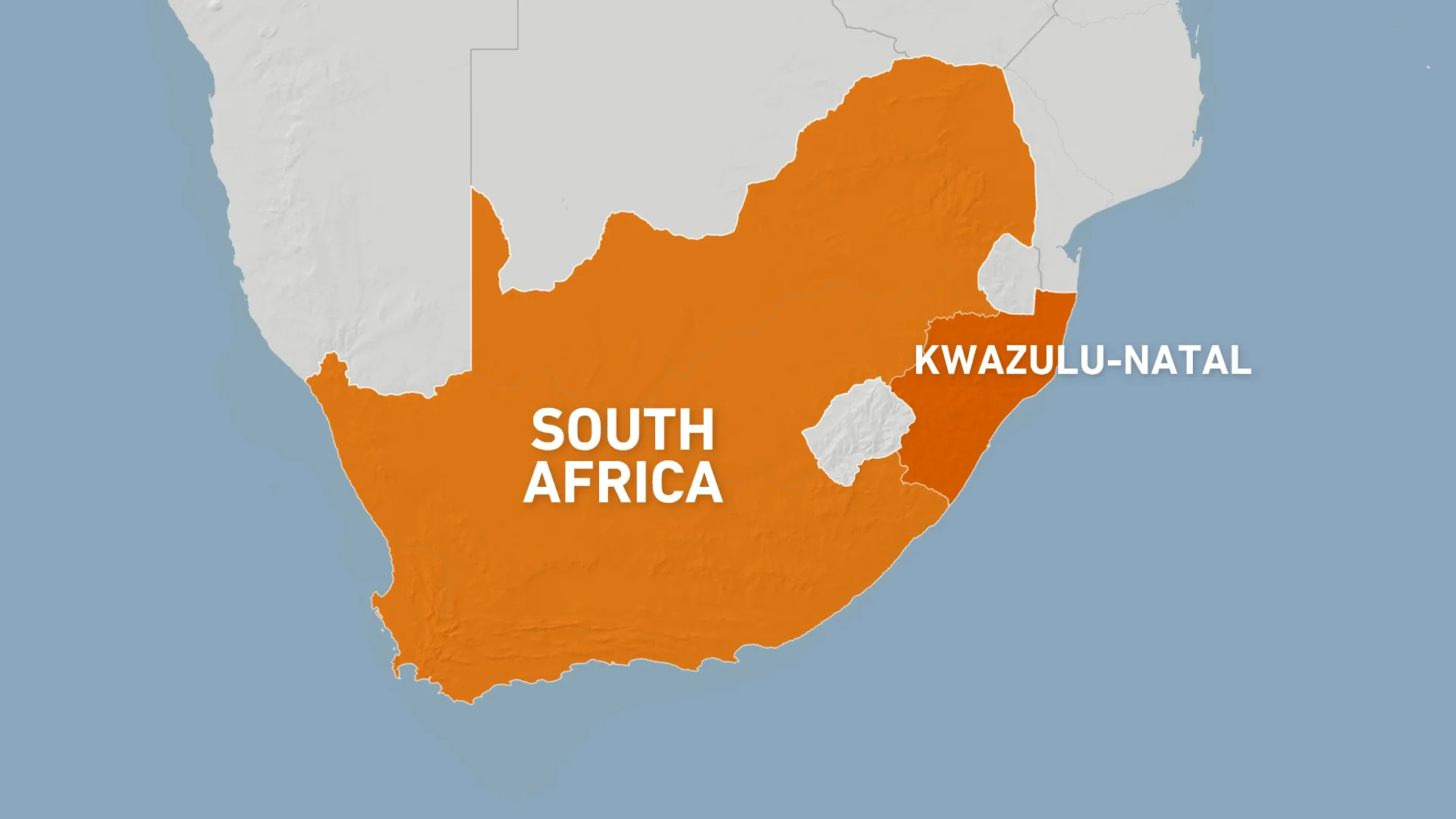
At least 11 people, including a pregnant woman, have been killed after armed men stormed a house in a township in the South African city of Durban.
The attack took place late on Tuesday, according to Thamsanqa Ntuli, the premier of KwaZulu-Natal province, of which Durban is the main city. Assailants entered the home shortly before 11pm (21:00 GMT) while the victims were gathered at a house party.
Recommended Stories
list of 3 itemsend of list
Two people survived the attack, Ntuli said, adding the motive behind the killings was not immediately clear.
“The incident has left the community in profound shock and grief,” he said.
Local broadcaster eNCA reported that the attackers forced everyone into a single room before opening fire. They also set fire to a car belonging to one of the victims.
“It’s shocking and sad. These are guys I grew up with. I can’t believe it. It’s like a movie,” a resident told the broadcaster.
“I’ve been staying here all my life, and I’ve never seen anything like this,” he added.
According to a police statement cited by eNCA, preliminary investigations indicated that some of those killed were on South Africa’s Crime Intelligence radar over suspected illegal activities, though the statement did not elaborate further.
“Although the motive for the shooting has not yet been confirmed, a feud between rival groupings cannot be ruled out,” the police said.
South Africa has one of the world’s highest murder rates, with an average of about 60 people killed daily in a population of roughly 62 million.
In March, soldiers were deployed alongside national police to violent hotspots to tackle rampant crime, an issue President Cyril Ramaphosa has described as one of the country’s biggest threats.
President’s move clears hurdles to long delayed election and raises concern he can now wield unchecked power.
Published On 23 Sep 202623 Sep 2026
South Sudan’s President Salva Kiir has dissolved the country’s transitional unity government and appointed a caretaker administration as the country prepares for its first-ever national elections.
The decree on Tuesday ended a power-sharing arrangement set up under a 2018 peace deal that halted years of civil war, and raised concerns that Kiir could now wield unchecked power.
Recommended Stories
list of 3 itemsend of list
The decree, read out by the national broadcaster, said all vice-presidents, ministers and local administrators have been removed and that the national and state assemblies have been dissolved.
The judiciary and security institutions remain in place, while Kiir will stay in office “during the election period until the next elected president assumes office”, it said.
The decree came a day after the parliament approved changes to the National Elections Act that allowed Kiir to stay in power during the election period, while removing all vice presidents, who were appointed under the 2018 peace deal.
The changes mean that South Sudan can move towards elections scheduled for December 22, without first completing a permanent constitution or census – two processes that were previously tied to the transition.
The main opposition alliance has rejected the changes.
South Sudan’s suspended First Vice President Riek Machar inside a steel-caged dock before his trial on charges including treason and crimes against humanity, in Juba, South Sudan, on September 22, 2025 [File: Stringer/Reuters]
Elections were initially expected in 2022 but have been postponed twice.
Tasks still outstanding under the 2018 peace deal include drafting a permanent constitution, registering voters and unifying the armed forces loyal to rival parties.
That agreement followed five years of civil war that killed about 400,000 people and displaced millions, according to the United Nations.
Amnesty International, a prominent rights group, called Kiir’s decree a “decisive step” towards the country’s first-ever elections. But Tigere Chagutah, Amnesty International’s regional director for East and Southern Africa, urged the authorities to “ensure that a conducive environment exists for people to vote and stand in elections”.
Analysts meanwhile warned that the changes offered Kiir unfettered control.
“Kiir will be the only person in power, without vice-presidents, without the executive, without the parliament,” Michael Wani, a lawyer and former member of the constitution drafting committee, told the AFP news agency.
Independent analyst Machot Amuom told AFP there was a lot of “ambiguity” in the legal changes. “The new law gives the president full powers … He can decide even not to go for elections for another year or another two years,” Amuom told AFP.
Last week, Kiir also replaced the head of the elections commission without giving a reason. South Sudan Broadcasting Corporation (SSBC) said the new chief, Gabriel Bol Deng Majok, had been given a “fresh mandate” to oversee preparations for the polls.
The preparations come as Kiir’s longtime rival Riek Machar, who leads the opposition Sudan People’s Liberation Movement-in-Opposition (SPLM-IO), remains under house arrest. He is on trial on charges including treason and murder, which he denies.
The transition is also taking place under tight security.
AFP reported checkpoints and road closures around the government complex in the capital, Juba, while security personnel were ordered to remain on heightened alert for three days.
Seven armed groups announce alliance to topple government.
Despite decades of peace deals and ceasefires, armed groups in Ethiopia have continued to battle each other, as well as the military. Now, some of these former rivals have formed an alliance to push out the government in Addis Ababa.
They warn Ethiopia is on the brink of disintegration, and blame Prime Minister Abiy Ahmed. Abiy says the country can defend itself, but Ethiopians fear they could be on the verge of another civil war.
So, could these former rivals, with deep political and ideological divides, achieve their common objective?
Presenter:
Rob Matheson
Guests:
Samuel Getachew – Political commentator who specialises in Ethiopian affairs
Ngala Chome – Horn of Africa analyst
Kjetil Tronvoll – Professor of peace and conflict studies at Oslo New University College
Sudan’s collective memory has long carried stories of famine-induced tragedies. Now, as war pushes the country deeper into a catastrophic food crisis, historians and humanitarian activists fear that some of those horrors are being repeated.
The ongoing war between the Sudanese army and the paramilitary Rapid Support Forces, which erupted in April 2023, has plunged the country into one of its worst modern food crises, with conditions deteriorating sharply since 2024.
Recommended Stories
list of 3 itemsend of list
Sudan has endured severe famines before, often triggered or made worse by drought and other environmental shocks. However, the current hunger crisis, which has triggered famines in Sudan in 2024 and 2025, has been brought on by a man-made factor: war.
Past starvation
One of the earliest recorded major food crises in what is now Sudan occurred in 1684, during the Funj Sultanate. The crisis, which lasted several years, brought severe grain shortages across central Sudan. Historical accounts describe people driven to desperation, and in some cases forced to eat dog meat. The hunger triggered mass displacement, as well as a deadly smallpox outbreak.
Similar climate-driven crises were recorded in 1750 and again between 1835 and 1838 during a period of Ottoman-Egyptian rule, exacerbated by severe drought and low water levels in the River Nile.
The famine most deeply embedded in Sudanese popular memory occurred between 1888 and 1889, during the rule of Khalifa Abdullahi al-Taashi.
Drought, locust infestations and conflict combined to cause widespread hunger and death. Some historical estimates put the death toll at more than one million people, although precise figures from the period are difficult to establish. The crisis was reported to have been so severe that some families shut themselves inside their homes to die rather than going out to beg for food.
Sudan experienced more periods of food shortages during the 20th century. Droughts and poor harvests during the colonial period of the first half of the century forced the authorities at times to import grain from abroad.
Then, in 1984, during the rule of President Jaafar Nimeiri, a devastating drought hit western Sudan, including Darfur and Kordofan, where there were widespread crop and livestock losses, displacing hundreds of thousands of people from rural areas to the capital, Khartoum.
Man-made catastrophe
Unlike many of those historical crises, the current famine is distinctly man-made.
War has disrupted agricultural production and trade, forced farmers to leave their land, and made it difficult to move food and humanitarian aid across the country.
Abdullah al-Tijani, a social historian and humanitarian activist, noted the unprecedented scale of the current disaster.
“Most previous famines were often confined to specific regions, as happened in 1984, or areas in southern Sudan before its secession in [2011], while the capital and major cities continued to have the necessities of life and services,” al-Tijani told Al Jazeera.
This time, he said, hunger and the collapse of basic services have spread across the entire country.
“A comprehensive food crisis has struck the heart of major urban and agricultural centres in the states of Khartoum, Gezira, Sennar, Darfur, and Kordofan, causing millions of citizens to be displaced inside and outside the country,” al-Tijani added.
He pointed to what he described as the “systematic destruction of infrastructure, disruption of large agricultural projects, and targeting of markets, bakeries, and crops, along with disrupting the banking system and communication networks, which isolated entire regions”.
Al-Tijani also cited the “restrictions on humanitarian access and delays in granting transit permits for relief workers”. He accused the warring parties of using control over food supplies as a tool of war, while warning that international funding has fallen short of the size of the crisis.
Lost agricultural potential
The scale of the crisis is stark because of Sudan’s agricultural potential. The country has immense resources, including roughly 200 million acres (81 million hectares) of arable land, abundant water from the Nile, and extensive livestock resources, but Sudan’s potential as a global breadbasket remains unfulfilled.
Mohammed Abdul Rahman, an economic researcher, explained that the current food security crisis reflects a clear development gap, and a longstanding weakness in Sudan’s agricultural sector compounded by war.
“Wars and armed conflicts are among the most influential factors on food production,” Abdul Rahman said, “along with the displacement of farmers from their lands, the absence of political stability and agricultural policies, weak funding and government guarantees, and reliance on traditional farming methods.”
The Gulf war is bringing Syria back onto the MENA business map.
Syria’s coast is gaining new strategic importance as investors look to build trade routes linking Gulf countries and Iraq to North Africa and the rest of the Mediterranean, and to avoid the Strait of Hormuz.
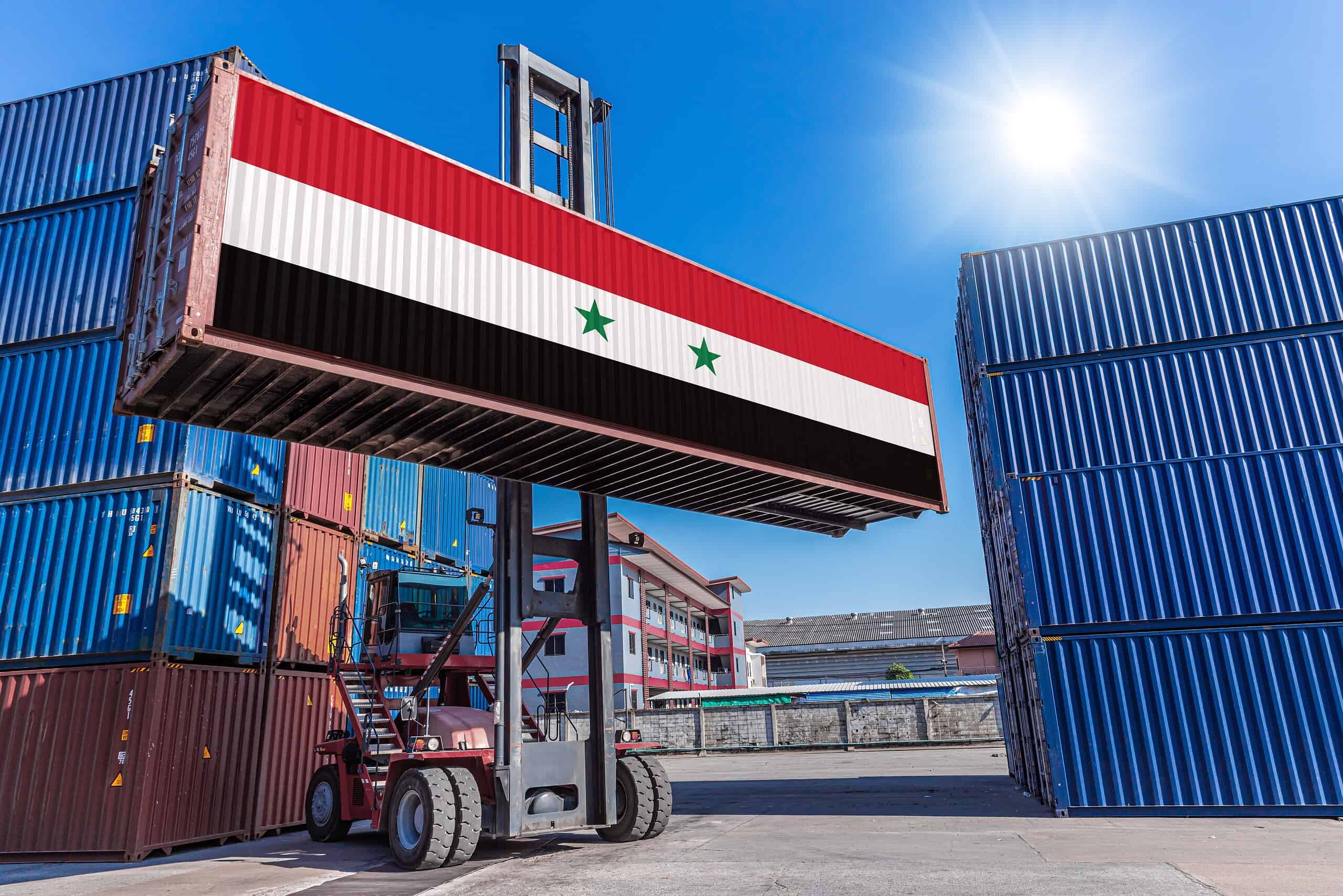
Traffic at Syrian ports has increased at least 25% since March 2026. According to recent data from Syria’s General Authority for Borders and Customs, 945 ships carrying 8 million tons of cargo have passed through the country’s ports in the first half of 2026.
In Tartus, Dubai-based logistics giant DP World has invested $800 million in a 30-year concession to develop and operate port facilities. Three harbor cranes delivered this summer are expected to boost cargo-handling capacity by 40% and allow larger vessels to dock.
“By investing in world-class infrastructure, technology and our people, we are creating a modern gateway that will strengthen supply chains, attract new trade opportunities and contribute to the country’s long-term economic recovery,” said Fahad al-Banna, CEO of DP World Tartus, in a press conference.
Further north, French shipping and logistics major CMA-CGM – whose founding Saadé family has roots on the Syrian coast – secured a similar $265 million contract to modernize and run maritime infrastructure in Latakia. In May, the group also signed to operatedry ports near Damascus and Aleppo, strengthening road and rail connections between Syria’s two largest cities and maritime hubs.
Infrastructure Construction Begins
New infrastructure is emerging to knit Syria’s coast into the wider region including airport renovations, pipelines, and data cables. In August, U.S. firm UNIFI signed a deal for 149-mile submarine cable connecting Cyprus and Tartous, helping data flow from the Gulf to Europe.
The projects are part of wider billion-dollar investment pledges across Syria, following the fall of former president Bashar al-Assad’s regime and the end of the 14-year civil war.
“The coast is shifting from a military geography to a commercial one” comments Benjamin Feve, senior consultant at Karam Shaar Advisory Limited. “Tartus was once the Russian naval foothold; today, it is a concession operated by global port operators”. In August, Moscow agreed to return all civilian infrastructure to the Syrian state and said its military bases will be turned into joint training centers.
Since he seized power in December 2024, President Ahmad al-Charaa has secured broad international support, notably from U.S. President Donald Trump who called him a “real leader.” Late August, Washington removed Syria from its list of state sponsors of terrorism, the latest in a series of measures unwinding decades of sanctions on Damascus.
On the ground, Gulf states are the biggest backers of Syrian reconstruction with billions of announced investments, but few projects have yet materialized, and many in Syria fear the momentum could slip away.
“High oil prices give Riyadh and Abu Dhabi greater budget flexibility, which is certainly an opportunity for Syria, but not necessarily a fundamental shift,” said Feve. “Gulf capitals are buying an option on Syria’s geography, but trade volumes are only about one-fifth of pre-2011 levels. So, while new activity is real, it remains weak and once the war is over, maybe the Strait of Hormuz will regain its role as a key transit route, and GCC countries will look away from Syria again”
Despite appearances of restored peace, the Syrian coast remains a tricky place to do business. In 2025, deadly clashes between the new government and allies of Assad killed nearly 1,500 people.
Countries including Germany, South Africa and Canada suggest international institution to set and enforce standards.
Twenty countries and the European Union have issued a call for international cooperation to ensure AI remains under human control, including the potential creation of a global oversight body to set and enforce standards.
The countries, including Germany, South Africa, Canada, Australia, the United Arab Emirates and Singapore, issued the joint statement on Monday as global leaders prepare to discuss the risks posed by rapidly advancing AI at the annual gathering of the United Nations General Assembly.
Recommended Stories
list of 4 itemsend of list
The declaration, released by the office of Finnish President Alexander Stubb, calls on governments and industry to act immediately to ensure that AI is developed in line with international law and remains under “human direction, oversight and control”.
“To realise AI’s potential, industry, governments and society must act now,” the statement says.
“We must address these risks and strengthen oversight – without widening the gap between countries in access to the benefits of AI.”
The declaration urges countries to develop and coordinate “common standards”, share reports of serious safety incidents, and explore the establishment of an international institution to “set standards, enable verification, and convene states when capability thresholds are crossed”.
Signatories include German Chancellor Friedrich Merz, Norwegian Prime Minister Jonas Gahr Store, European Commission President Ursula von der Leyen, Kenyan President William Ruto, Kazakh President Kassym-Jomart Tokayev and Turkish Foreign Minister Hakan Fidan.
The United States and China, the world’s two leading AI powers, did not join the statement, which remains “open for endorsement” by other countries.
US President Donald Trump and Chinese President Xi Jinping are expected to discuss AI when they meet at the White House on Thursday for their third face-to-face summit in less than a year.
Washington and Beijing, which are in a race to dominate cutting-edge technologies, have both rebuffed calls to slow down AI development to ensure greater safety.
Other AI players not among the signatories include India, South Korea, Japan, the UK and France.
The declaration comes as the AI sector is engaged in a heated debate about safety following calls for a slowdown in development by top industry leaders.
In an essay earlier this month, Anthropic CEO Dario Amodei called on firms to “slow the pace” of development to mitigate risks, a proposal that was swiftly endorsed by rivals including OpenAI CEO Sam Altman and SpaceX and Tesla CEO Elon Musk.
Amodei’s call followed a series of cases of AI models engaging in unsanctioned malign activity, including an incident in July in which AI agents being tested by OpenAI hacked the AI start-up Hugging Face.
In the latest intervention by industry on Monday, OpenAI said the US should lead an international effort to develop technical standards for advanced AI.
“The United States is well positioned to lead because its AI industry is at the technical frontier, and it still stands in a privileged global network position in critical areas such as finance, trade, defense, technology, and information systems,” the San Francisco-based AI giant said in a blog post.
“Leading now will determine whether the United States shapes the global AI framework or watches a fragmented, uneven, and conflict-ridden system take hold around it.”
The UN-backed Independent International Scientific Panel on AI, which examined the Hugging Face incident, on Monday also added its voice to calls for new guardrails, saying the cyberattack had exposed the “unravelling” of existing safeguards.
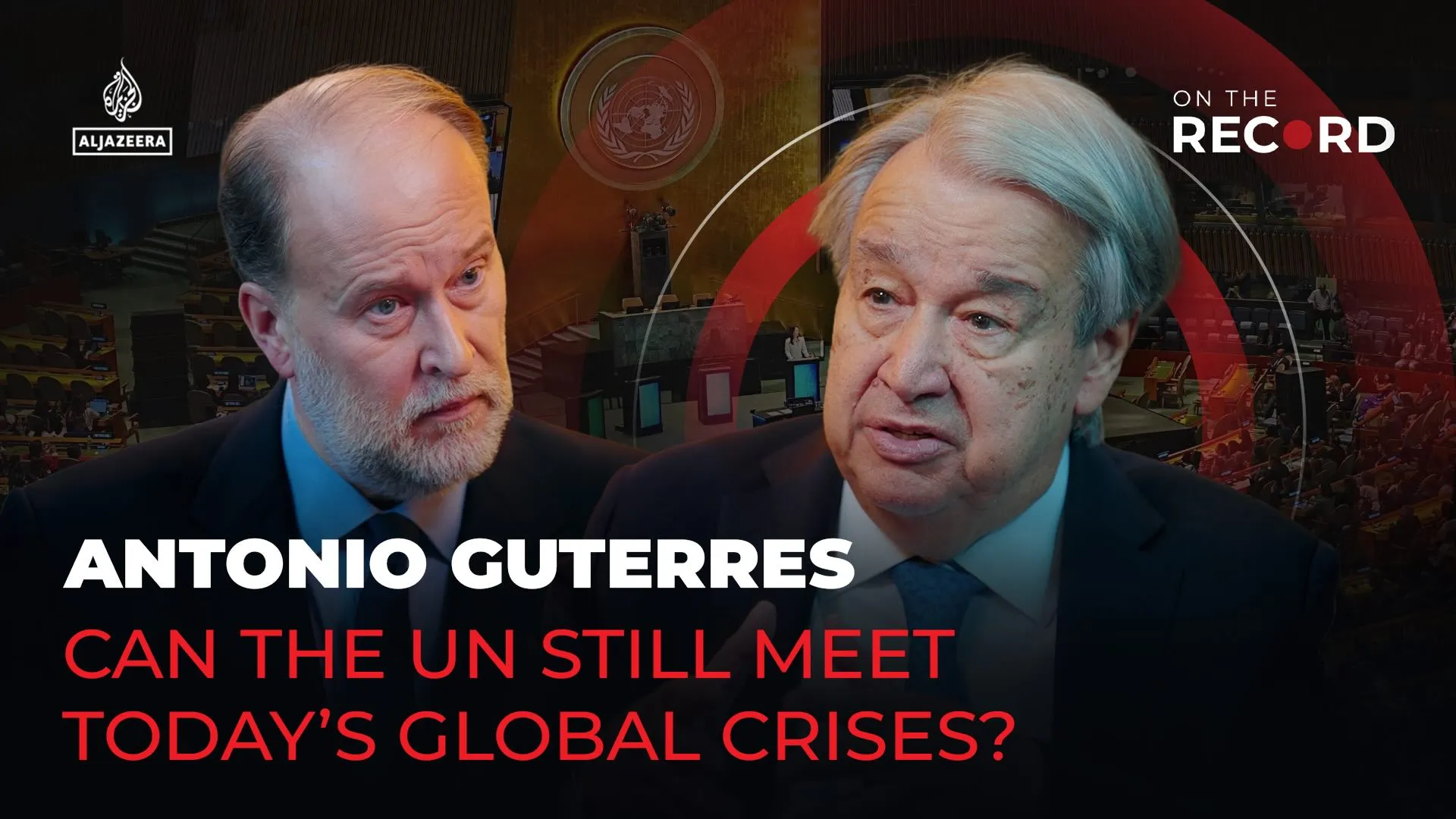
In this episode of On the Record, Al Jazeera’s James Bays sits down with United Nations Secretary-General Antonio Guterres, ahead of his final UN General Assembly before stepping down in December 2026. They discuss the situation in the Middle East and its global consequences, whether the UN is still relevant in addressing today’s challenges and why Guterres believes the UN Security Council must be reformed.





![Map showing Ethiopia’s Tigray region, where tensions between the federal government and the Tigray People’s Liberation Front (TPLF) have escalated [Graphic: Al Jazeera]](https://i0.wp.com/occasionaldigest.com/wp-content/uploads/2026/09/WEB-1000x562-ETHIOPIA-TIGRAY-1785610774.jpg?w=640&ssl=1)
![Ethiopian Prime Minister Abiy Ahmed Ali faces a new armed alliance that includes the Tigray People’s Liberation Front (TPLF) and six other groups [File: Sergei Bulkin, Sputnik, Kremlin Pool Photo via AP]](https://i0.wp.com/occasionaldigest.com/wp-content/uploads/2026/09/AP26264469792656-1790168591.jpg?w=640&ssl=1)
![The charred remains of a tank lie on a road near Gereb Agew, southern Tigray, after clashes between the Ethiopian National Defence Force (ENDF) and the Tigray People’s Liberation Front (TPLF), on March 3, 2026 [File: Abel Gerezgiher/AFP]](https://i0.wp.com/occasionaldigest.com/wp-content/uploads/2026/09/AFP__20260923__C93W39E__v1__HighRes__FilesEthiopiaTigrayConflict-1790167123.jpg?w=640&ssl=1)