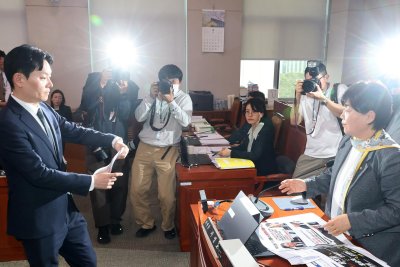

Prosecutor Park Sang-yong submits a written explanation for refusing to take the witness oath during a parliamentary inquiry at the National Assembly in Seoul. Photo by Yonhap News Agency
April 5 (Asia Today) — A senior South Korean prosecutor refused to take an oath before a parliamentary inquiry, escalating tensions between the prosecution and lawmakers and raising the possibility of coordinated action within the prosecution.
Park Sang-yong, a deputy chief prosecutor leading an investigation into alleged illegal financial transfers to North Korea, declined to be sworn in as a witness during a National Assembly inquiry into allegations of politically motivated prosecutions under the previous administration.
Under South Korean law, witnesses may refuse to take an oath if their testimony could expose them to criminal liability.
Park submitted a seven-page written explanation to the committee chair and left the hearing after about 38 minutes. He later said the inquiry itself was unconstitutional and illegal, arguing that participating would amount to cooperating with an improper process.
“The law allows a refusal to take the oath if justified, yet I was prevented from following that procedure,” Park said after leaving the session.
Justice Minister Jeong Seong-ho criticized the move as “highly inappropriate,” saying it undermined accountability. The acting prosecutor general also expressed regret, calling the incident unacceptable.
The dispute stems from an investigation into alleged payments to North Korea involving a South Korean company. Park has also faced separate allegations of misconduct during the probe, which are under investigation by prosecutors.
Within the prosecution, signs of collective action have emerged. Members of the investigative team reportedly created a group chat, fueling speculation about a coordinated response to the inquiry.
Legal experts warned the standoff could weaken the effectiveness of the parliamentary probe and deepen concerns over institutional conflict between the legislature and prosecution.
Some analysts said the episode reflects broader tensions over the independence of investigative authorities and the limits of parliamentary oversight.
— Reported by Asia Today; translated by UPI
© Asia Today. Unauthorized reproduction or redistribution prohibited.
Original Korean report: https://www.asiatoday.co.kr/kn/view.php?key=20260405010001293