prosecutor

Rubio testifies he didn’t know of allegations an ex-lawmaker was lobbying for Venezuela’s Maduro

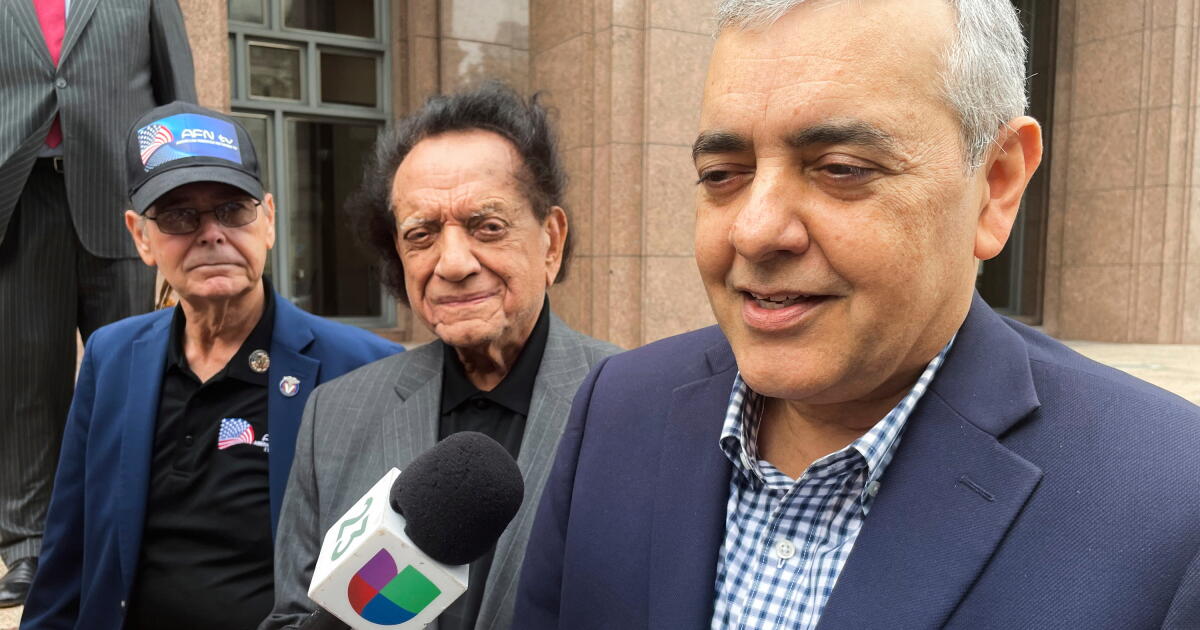
Secretary of State Marco Rubio testified in court that he had no knowledge that former Florida congressman David Rivera was lobbying on behalf of Venezuela’s government — as prosecutors later alleged — when he met with his longtime friend to discuss U.S. policy toward the South American country several times at the start of the first Trump administration.

“I would’ve been shocked” had I known, Rubio said in almost three hours of testimony Tuesday at Rivera’s federal trial in Miami.

Rivera and an associate were charged in 2022 with money laundering and failing to register as a foreign agent after being awarded a $50-million lobbying contract by Nicolás Maduro’s government.

Prosecutors allege that the goal of the lobbying effort was to persuade the White House to normalize relations with Venezuela, while Rivera’s attorneys argue that the three-month contract, which ended before Rivera met with Rubio, was focused exclusively on luring Exxon Mobil back to Venezuela — commercial work that is generally exempt from the Foreign Agents Registration Act.

As part of his work, Rivera and his co-defendant are accused of trying to arrange meetings for then-Foreign Minister Delcy Rodríguez — now Venezuela’s acting president — in Dallas, New York, Washington and Caracas, Venezuela, with White House officials, members of Congress and the chief executive of Exxon.

Rubio testifies, an unusual move

In sometimes deeply personal testimony Tuesday, Rubio discussed at length friendships that date back to the start of his political career as an aide to Bob Dole’s 1996 presidential campaign and a West Miami council member.

Testifying in a packed courtroom with heightened security, Rubio said he and Rivera became “very close” when they overlapped as members of the Florida Legislature. The two Cuban American Republicans co-owned a house in Tallahassee, celebrated family events together and ardently opposed Venezuela’s socialist government when both went to Washington at the same time — Rubio elected to the Senate, Rivera to the House.

So when Rivera texted Rubio in July 2017 that he needed to see him urgently to discuss Venezuela, they agreed to meet the next day, a Sunday, at a friend’s home in Washington where the then-senator was staying with his family, Rubio said.

At the meeting, Rivera informed Rubio that he was working with Raul Gorrín, a media magnate in Venezuela, on what he described as a plan for Maduro to step aside.

“I was skeptical,” said Rubio, adding that the Maduro government was full of “double dealers” constantly pitching unrealistic plans to unseat Maduro. “But if there was a 1% chance it was real, and I had a role to play alerting the White House, I was open to doing that.”

Rubio said he had no knowledge Rivera was himself working for Maduro, as prosecutors would later allege. Rubio said he doubted Gorrín would betray Maduro even when the former congressman opened his laptop and showed millions of dollars in a Chase bank account that he was told were payments from the businessman to Venezuela’s opposition.

“It was an impressive amount,” Rubio said. “He didn’t tell me whose account it was. He said it was to support the opposition.”

Two days later, borrowing talking points provided by Rivera, Rubio wrote and delivered a speech on the Senate floor signaling the U.S. would not retaliate against Venezuelan insiders who worked to push Maduro from power.

“He provided me with insight into some of the key phrases that regime insiders would’ve wanted to hear to know this was serious,” Rubio testified. “No vengeance, no retribution.”

Rubio also spoke to Trump, alerting the president in his first term that there may be something “brewing” with Venezuela.

‘A total waste of my time’

But the peacemaking effort collapsed almost immediately. At a second meeting at a Washington hotel, Gorrín failed to produce a promised letter from Maduro to Trump that he wanted Rubio to hand-deliver to the president.

“It was a total waste of my time,” Rubio testified.

Shortly afterward, Trump imposed heavy sanctions on Maduro and members of his inner circle for their decision to go forward with what Rubio called a “fake election” to empower a constituent assembly that undercut the opposition-controlled legislature.

By that time, the senator hewed closely to the Trump administration’s hard line. He taped a rare 10-minute address to the Venezuelan people in July 2017, a day after the divisive election, that was broadcast exclusively on Gorrín’s Globovision network.

“For Nicolás Maduro, who I am sure is watching, the current path you are on will not end well for you,” Rubio said in the televised address.

On the stand, Rubio said that had he known Rivera was working with Gorrín on behalf of Maduro, he never would have agreed to deliver the address on the network.

But Rivera said Rubio’s testimony backed his defense that as a lifelong opponent of communism he never worked to strengthen Maduro’s grip on power.

“Marco Rubio made it abundantly clear today that everything we worked on together in 2017 was meant to remove Maduro from power in Venezuela,” he said in a statement.

Throughout his testimony Rubio, a lawyer, spoke calmly and in command of granular details of U.S. policy toward Venezuela over the past decade, even as he struggled to recall the specifics of his text exchanges with Rivera on Venezuela matters.

His testimony was highly unusual. Not since Labor Secretary Raymond Donovan testified at a Mafia trial in 1983 has a sitting member of the president’s Cabinet taken the stand in a criminal trial.

As if to underscore the uniqueness of his appearance in federal court, Rivera’s attorney, Ed Shohat, asked Rubio to sign a copy of his 2012 autobiography, “An American Son,” at the conclusion of his testimony.

Rivera and his co-defendant, political consultant Esther Nuhfer, are among a small number of friends and family Rubio thanks in the acknowledgment section of his memoir.

Goodman writes for the Associated Press.

Source link

ICC Chief Prosecutor Khan cleared of sexual misconduct by judges: Report | ICC News

Karim Khan has denied the allegations and took voluntary leave from his position in May.

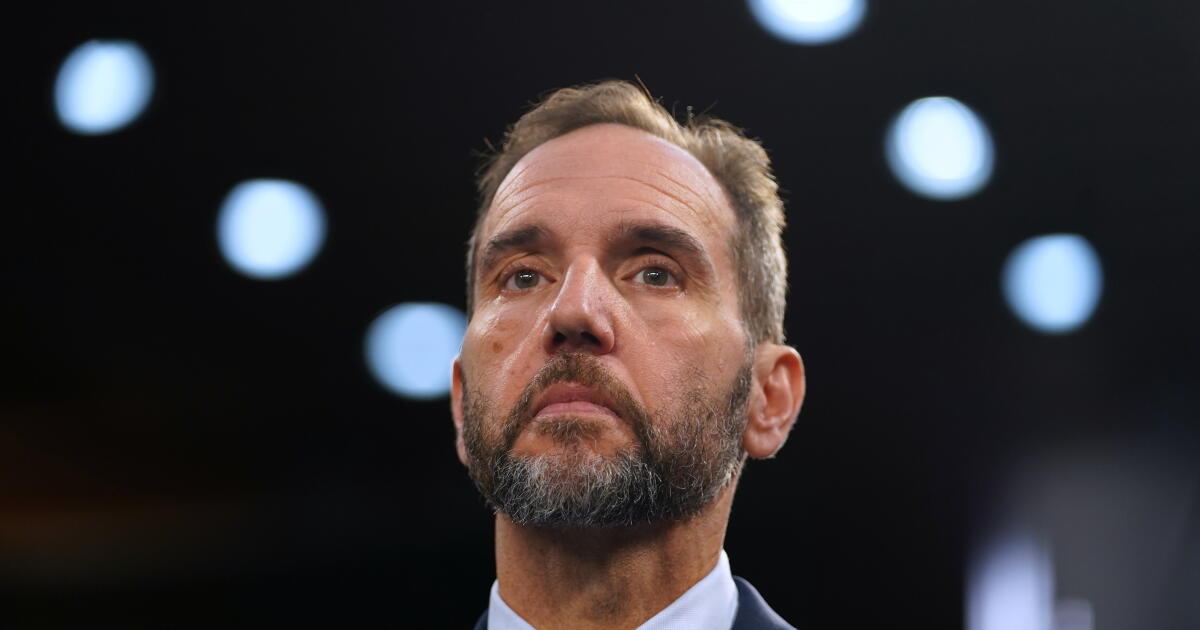
Judges have cleared the chief prosecutor of the International Criminal Court (ICC), Karim Khan, of all wrongdoing after an investigation into alleged sexual misconduct, Middle East Eye reports.

A report by Middle East Eye published on Saturday said a panel of three judges submitted a confidential report to the court’s oversight body, the Bureau of the Assembly of States Parties (ASP), on March 9.

Recommended Stories

list of 3 itemsend of list

“The Panel is unanimously of the opinion that the factual findings by [The UN’s Office of Internal Oversight Services] OIOS do not establish misconduct or breach of duty under the relevant framework,” the report concluded, according to the sources cited by Middle East Eye.

The OIOS investigation was commissioned by the head of the ASP in November 2024 after a member of Khan’s office accused the prosecutor of sexual misconduct.

In August last year, a second woman came forward and alleged that Khan had abused his power over her while she was working for the British lawyer.

The woman had described his behaviour to UK newspaper The Guardian last year as a “constant onslaught” of advances.

Khan has denied the allegations and took voluntary leave from his position at the ICC in May, while awaiting the inquiry’s results. His deputy prosecutors have been in charge of his office in his absence.

According to Middle East Eye, the ASP met on Monday to discuss its response to the panel’s report. Under the court’s rules, if the bureau determines that no misconduct has occurred, the investigation should be closed.

The ASP has 30 days from receiving the report to make its preliminary assessment of the alleged sexual misconduct. Khan will then have 30 days to respond, and the bureau will have another 30 days to make its decision.

Khan declined to comment on the report, the outlet said.

The allegations of sexual misconduct came as Khan’s office was pursuing an investigation into alleged war crimes and genocide by Israeli officials and forces in Gaza and the occupied Palestinian territory.

Khan sought arrest warrants for Israeli Prime Minister Benjamin Netanyahu and his then-defence minister, Yoav Gallant, over “criminal responsibility” for alleged war crimes and crimes against humanity in Gaza.

He also sought arrest warrants for Russian President Vladimir Putin and other Russian officials over the alleged unlawful deportation of Ukrainian children during Moscow’s ongoing war on Ukraine.

Source link

Man in pipe bomb case argues Trump’s Jan. 6 riot pardons apply to him

President Trump’s sweeping act of clemency for rioters who stormed the U.S. Capitol also should apply to a man charged with planting pipe bombs near the national headquarters of the Democratic and Republican parties on the eve of the Jan. 6, 2021, riot, the suspect’s attorneys argue in a bid to get his case dismissed.

In a court filing Monday, defense attorneys assert that Trump’s blanket pardons extend to the charges against Brian J. Cole Jr. because his alleged conduct on Jan. 5, 2021, is “inextricably tethered” to what happened at the Capitol the next day. They’re asking U.S. District Judge Amir Ali to throw out the case before trial.

Justice Department prosecutors didn’t immediately respond in writing to the defense’s request. In a previous court filing, prosecutors said Cole, under questioning by FBI agents, denied that his actions were related to the Jan. 6 proceedings at the Capitol.

On his first day back in the White House last year, Trump pardoned, commuted prison sentences and ordered the dismissal of all 1,500-plus people charged in the attack by a mob of his supporters.

Nearly a year later, Cole was arrested on charges that he placed two pipe bombs outside both the Republican and the Democratic national committees’ headquarters in Washington the night before the riot. The devices didn’t detonate before law enforcement officers discovered them Jan. 6.

Cole’s attorneys said the Justice Department’s framing of the case has explicitly linked Cole’s alleged conduct on Jan. 5 to the events of Jan. 6, when rioters disrupted the joint session of Congress for certifying Joe Biden’s electoral victory over Trump.

“That is not happenstance sequencing in time. It is the government’s theory of Mr. Cole’s alleged motive and context,” defense lawyers wrote. “According to the government, the timing was chosen because of what was scheduled to occur at the Capitol on January 6.”

They also argued that prosecutors’ theory of a possible motive places Cole’s alleged conduct “in the same political controversy that animated the January 6 crowd.”

In court filings, prosecutors have said that Cole confessed to investigators after his Dec. 4 arrest. He told FBI agents that he felt “bewildered” by conspiracy theories related to the 2020 presidential election and “something just snapped” after “watching everything, just everything getting worse,” prosecutors said.

Cole has remained jailed since his arrest. His attorneys have appealed Ali’s refusal to order Cole’s pretrial release from custody. The judge hasn’t set a trial date yet.

Cole, 30, of Woodbridge, Virginia, has been diagnosed with autism and obsessive-compulsive disorder. His attorneys say he has no criminal record.

Authorities said they used phone records and other evidence to identify him as a suspect in a crime that confounded the FBI for more than four years.

Kunzelman writes for the Associated Press.

Source link

ICC prosecutor clears U.S. in sanctions against Venezuela case

The International Criminal Court in The Hague, the Netherlands, has cleared the United States of crimes against humanity against Venezuela for sanctions. File Photo by Robin Utrecht/EPA

March 12 (UPI) — The International Criminal Court Office of the Prosecutor announced Thursday that the United States did not commit crimes against humanity with its sanctions against Venezuela.

The investigation, called Venezuela II by the court, was referred to the court by Venezuela’s government in 2020, alleging that sanctions against the country had caused suffering and hardship.

The referral from now-deposed President Nicolas Maduro alleges the suffering of Venezuelans from “the application of unlawful coercive measures adopted unilaterally by the government of the United States of America against Venezuela, at least since the year 2014.”

Venezuela alleged that “murder, extermination, deportation, persecution and other inhumane acts constituting crimes against humanity” were committed, the OTP said.

The ICC prosecutor determined that the “evidential requirements of causation and intent are not met.”

The evidence “must provide a reasonable basis to believe that sanctions by the United States of America led to murder, displacement or other alleged crimes,” the OTP said.

The decision is unrelated to the January 2026 events in Venezuela, the prosecutor noted.

In January, the United States invaded Venezuela, arrested Maduro and his wife and took them to Manhattan, where they await trial on drug trafficking charges.

The ICC prosecutor said it is still investigating “Venezuela I,” a case that doesn’t involve the United States.

Supporters of ousted Venezuela’s President Nicolas Maduro carry his portrait during a rally outside the National Assembly in Caracas, Venezuela, on January 5, 2026. Photo by Jonathan Lanza/UPI | License Photo

Source link

Smartmatic says Trump’s ‘campaign of retribution’ is driving criminal prosecution

Voting technology firm Smartmatic is seeking to dismiss a criminal indictment for money laundering, blaming President Trump and his allies for seeking its prosecution as part of a “campaign of retribution” against those they blame for his 2020 election loss.

Smartmatic’s parent company, UK-based SGO Corporation, was added to a criminal indictment last fall previously charging several executives with paying $1 million in bribes to election officials in the Philippines.

In a motion to dismiss the indictment filed Tuesday, attorneys for Smartmatic said the company had been cooperating with the Justice Department since it first learned of its investigation in 2021, including by producing millions of pages of documents and making presentations to federal agents. A trial date for the executives, including co-founder Roger Pinate, had been set and the company believed that it was in the clear.

But when Trump returned to the White House, the Justice Department reversed course and decided to press charges against Smartmatic. Attorneys for the company said the decision was prompted by Trump’s demands to prosecute his perceived enemies and his “mantra” that Smartmatic helped rig the 2020 U.S. presidential election won by Joe Biden — allegations that are at the heart of a $2.7-billion lawsuit filed by Smartmatic against the president’s allies in the media.

“The prosecution of SGO furthers their collective false narrative that President Trump did not actually lose the 2020 election,” Smartmatic said in the filing in Miami federal court.

The White House did not immediately respond to a request for comment.

Attorneys likened the prosecution to the Justice Department’s targeting of Kilmar Armando Ábrego García, a Salvadoran migrant who was criminally charged for conduct years earlier after he successfully sued the Trump administration over its decision to deport him.

In the years since the election, the filing states, “Smartmatic USA has exercised its right to hold those individuals and entities legally accountable for their deluge of defamatory statements and the attendant damage inflicts on its business, putting it squarely in the crosshairs for retribution.”

The criminal case against Smartmatic and its employees stems from payments, between 2015 and 2018, that were allegedly made to obtain a contract with the Philippine government to help run that country’s 2016 presidential election. Pinate, who no longer works for Smartmatic but remains a shareholder, has pleaded not guilty.

As part of the criminal case, prosecutors in August sought the court’s permission to introduce evidence they argue shows that revenue from a $300-million contract with Los Angeles County to help modernize its voting systems was diverted to a “ slush fund” controlled by Pinate through the use of overseas shell companies, fake invoices and other means.

They also accused Pinate of secretly bribing Venezuela’s longtime election chief by giving her a luxury home with a pool in Caracas. Prosecutors say the home was transferred to the election chief in an attempt to repair relations following Smartmatic’s abrupt exit from Venezuela in 2017 when it accused then-President Nicolas Maduro ’s government of manipulating tallied results in elections for a rubber-stamping constituent assembly.

Smartmatic was founded more than two decades ago by a group of Venezuelans who found early success running elections while the late Hugo Chavez, a devotee of electronic voting, was in power. The company later expanded globally, providing voting machines and other technology to help carry out elections in 25 countries, from Argentina to Zambia.

But Smartmatic has said its business tanked after Fox News gave Trump’s lawyers a platform to paint the company as part of a conspiracy to steal the 2020 election.

Fox said it was legitimately reporting on newsworthy events but eventually aired a piece refuting the allegations after Smartmatic’s lawyers complained. Nonetheless, it has aggressively defended itself against the defamation lawsuit in New York — arguing that the company was facing imminent collapse over its own internal misconduct, not due to any negative coverage.

Goodman writes for the Associated Press.

Source link