Korean

Ex-President Moon urges N. Korean leader to return to dialogue on summit anniv.

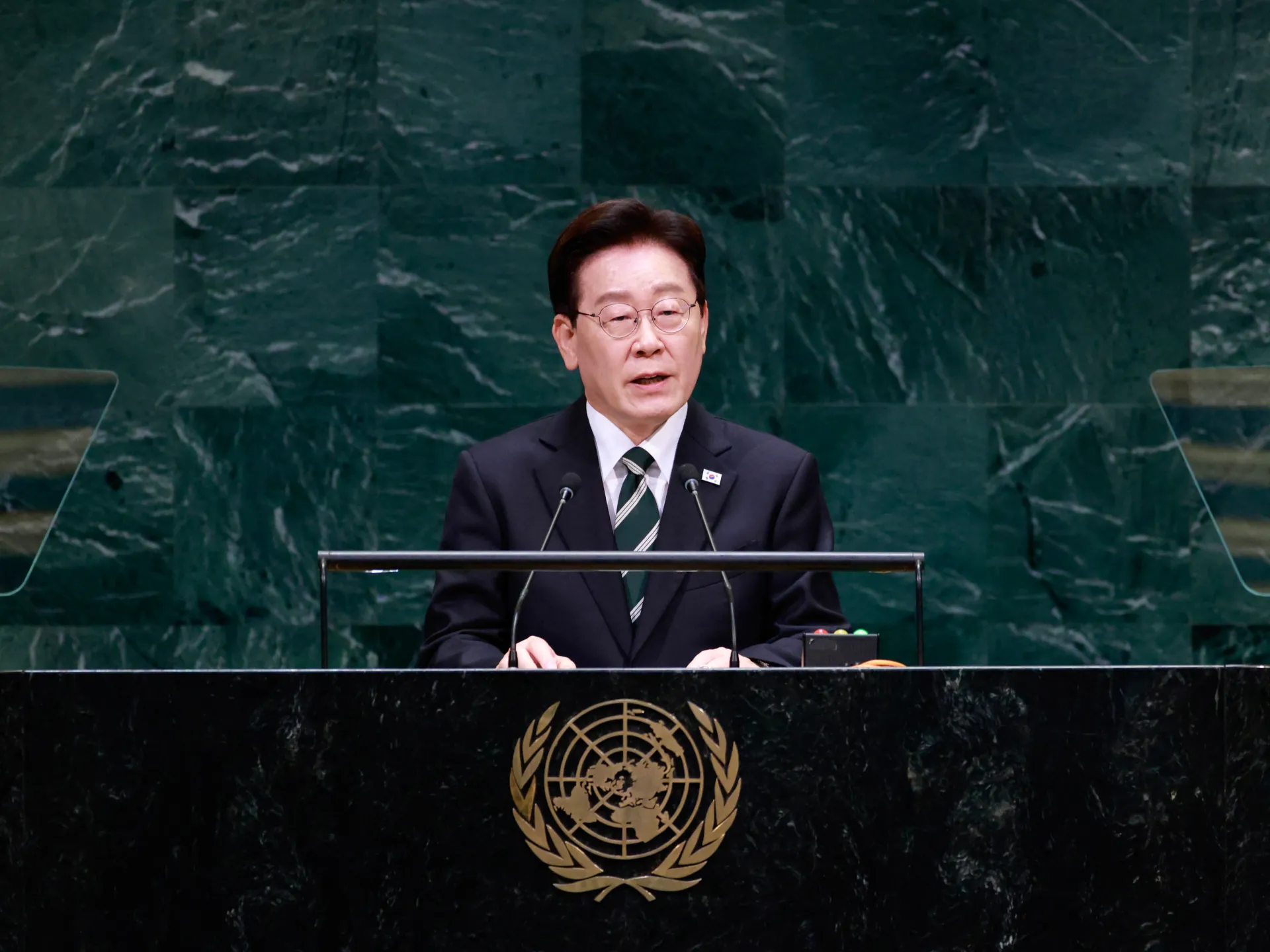
Former President Moon Jae-in speaks during a ceremony at the National Assembly in Seoul on Monday to commemorate the eighth anniversary of the Panmunjom Declaration, signed by the leaders of the two Koreas. Pool Photo by Yonhap

Former President Moon Jae-in on Monday urged North Korean leader Kim Jong-un to resume inter-Korean talks, calling it the “fastest and safest” way to overcome the current deadlock.

Moon made the call during a ceremony held at the National Assembly to commemorate the eighth anniversary of the Panmunjom Declaration, a landmark agreement signed by Moon and Kim during their summit at the truce village of Panmunjom in April 2018.

“I ask you to return to the spirit of the April 27 Panmunjom summit and open the door to dialogue, and to work together with the Lee Jae Myung government to once again build a vision of ‘peace and prosperity on the Korean Peninsula’ and to live as a proud member of the international community,” Moon said. “Inter-Korean dialogue is the fastest and safest breakthrough to overcome the current deadlock.”

Moon also stressed that Pyongyang cannot be ensured “genuine security” by continuing to bolster its military capabilities and opting for isolation.

“Engaging in communication and expanding exchanges with the outside world, instead, is the most effective way to safeguard security,” he added.

On U.S.-North Korea relations, Moon expressed hope that Kim will take the “bold step of sitting down” with U.S. President Donald Trump as Trump earlier voiced his willingness to engage in talks with the North.

“I hope you use the improved inter-Korean ties as a bridge toward dialogue between North Korea and the U.S. as you did eight years ago,” he said.

Moon then urged Trump to demonstrate his decisiveness to help bring back the North to the negotiating table, saying the Korean Peninsula issue is a “key national interest” of the United States that must never be pushed down its list of priorities.

“There is no other way but to seek a diplomatic solution to resolve the North Korean nuclear issue and bring peace to the Korean Peninsula,” he added.

Lee has offered to resume stalled talks with the North since taking office in June last year, but Pyongyang has rebuffed his peace overtures.

Copyright (c) Yonhap News Agency prohibits its content from being redistributed or reprinted without consent, and forbids the content from being learned and used by artificial intelligence systems.

Source link

S. Korean special envoy calls for safe Hormuz transit in meeting with Iran’s FM

This photo, released by Iran’s foreign ministry on Thursday, shows South Korea’s special envoy, Chung Byung-ha (L), meeting with Iranian Foreign Minister Abbas Araghchi in Tehran. Photo Courtesy of Ministry of Foreign Affairs of the Islamic Republic of Iran

South Korea’s special envoy to Iran has met with Iranian Foreign Minister Abbas Araghchi in Tehran and called for efforts to ensure safe passage through the Strait of Hormuz and the safety of Korean nationals, Seoul’s foreign ministry said Thursday.

Chung Byung-ha, special envoy for South Korea’s foreign minister, has been in Iran since March 11 as Seoul seeks to secure the safety of its vessels and seafarers stranded in the vital waterway blocked by both Iran and the United States amid the Middle East crisis.

“Special envoy Chung requested Iran’s continued support for the safety of 40 South Korean nationals remaining in Tehran, and 26 Korean vessels and crew on board,” ministry spokesperson Park Il said in a press briefing. The meeting took place late Wednesday (Iran time).

A total of 173 Korean crew members remain aboard the stranded ships.

South Korea has been in talks with Iran and neighboring countries to ensure their safety, sharing details of the vessels and crew with relevant parties, including Iran and the U.S.

Chung expressed hope in his meeting with Araghchi that peace talks between Iran and the United States will resume so as to restore regional peace and stability, the ministry said in a press release.

Chung also noted the importance of developing bilateral relations between Seoul and Tehran.

Echoing Chung’s remark on their ties, Araghchi expressed Iran’s readiness to cooperate in that regard, adding that Tehran will continue to pay attention to Korean nationals staying in the country.

Seoul’s decision to dispatch a special envoy to Iran has sent a positive signal to Tehran in terms of bilateral relations and is seen as contributing to potential future talks with Tehran on the ships and nationals, according to sources familiar with the matter.

South Korea is among a handful of countries that still maintain their embassy operations in Iran. Seoul also recently provided humanitarian aid to the war-hit country through the International Committee of the Red Cross.

Regarding Iran’s blockade of the strait, Araghchi defended the measure as an effort to safeguard its national security and interests, saying that “responsibility for any resulting consequences lies with the parties carrying out the aggression,” Iran’s foreign ministry said on a social media post.

Copyright (c) Yonhap News Agency prohibits its content from being redistributed or reprinted without consent, and forbids the content from being learned and used by artificial intelligence systems.

Source link

China blocks South Korean spy chief visit amid Taiwan tensions

China’s Foreign Ministry spokesperson Mao Ning speaks during a press conference at the Ministry of Foreign Affairs in Beijing, China, 13 January 2026. Photo by WU HAO / EPA

April 21 (Asia Today) — China has denied entry to South Korea’s intelligence chief and signaled reluctance to improve bilateral relations, amid growing tensions over Seoul’s perceived stance on Taiwan, according to diplomatic sources.

A South Korean delegation led by lawmaker Cho Jung-sik of the Democratic Party of Korea recently visited Beijing and returned Sunday after holding talks on political issues and bilateral relations. The delegation had initially planned to include National Intelligence Service Director Lee Jong-seok.

However, Chinese authorities reportedly refused Lee’s visit, citing remarks in which he suggested that engagement with Taiwan could be used as leverage to encourage China’s cooperation in improving inter-Korean relations.

According to a diplomatic source in Beijing, China reacted strongly to the comments and demanded an explanation through diplomatic channels. The delegation was subsequently restructured to include deputy officials and retired military officers instead of Lee.

Although the visit proceeded, its outcomes were limited. Chinese officials maintained protocol by assigning a vice foreign minister to host the delegation, but expectations for substantive progress were low, sources said.

Beijing is believed to be increasingly dissatisfied with what it views as South Korea’s ambiguous position – publicly supporting the “One China” principle while maintaining a level of engagement with Taiwan.

Tensions have also been fueled by a recent dispute over how Taiwan is officially referenced, in which South Korea appeared to adjust its position following objections from Taipei. Chinese officials reportedly viewed the move as inconsistent and unfavorable.

The strained atmosphere has cast doubt on the possibility of a visit to South Korea this year by Chinese Foreign Minister Wang Yi, which Seoul has sought as part of efforts to stabilize ties.

Analysts say the situation highlights the need for South Korea to carefully manage relations with China while balancing broader regional dynamics.

— Reported by Asia Today; translated by UPI

© Asia Today. Unauthorized reproduction or redistribution prohibited.

Original Korean report: https://www.asiatoday.co.kr/kn/view.php?key=20260421010006584

Source link

Lee hails S. Korean oil tanker exiting Red Sea

President Lee Jae Myung, seen here at the Blue House on Friday, shared a news report that a South Korean oil tanker exited the Red Sea for the country’s first shipment since the blockade of the Strait of Hormuz. Photo by Yonhap

President Lee Jae Myung on Friday shared a news report that a South Korean oil tanker exited the Red Sea, marking the first shipment of crude oil to the nation since the blockade of the Strait of Hormuz.

Earlier in the day, the nation’s fisheries ministry reported that the tanker carrying crude oil from Saudi Arabia exited the Red Sea, as the Strait of Hormuz has been effectively closed amid the prolonged war in the Middle East.

“It is good news that our vessel is transporting crude oil via the Red Sea for the first time since the blockade of the Strait of Hormuz,” Lee wrote in his social media post.

He described the safe passage as a “valuable achievement” made possible through close coordination among relevant ministries and the dedication of seafarers under difficult circumstances.

“The government is mobilizing all available resources to address the crisis stemming from the war in the Middle East,” Lee said, pledging to safeguard people’s livelihoods and national interests.

South Korea has been exploring ways to ship crude oil via the Red Sea, an alternative route, as the Strait of Hormuz, a critical maritime chokepoint, has been effectively closed amid the Middle East conflict.

Copyright (c) Yonhap News Agency prohibits its content from being redistributed or reprinted without consent, and forbids the content from being learned and used by artificial intelligence systems.

Source link

Over 2,000 join peace marathon honoring Korean religious leader

Pope Francis (3-R, 1936-2025) talks with Han
Yang-Won (2-L, 1924-2016), chairman of the Association of Korean Native
Religion, as he meets with South Korea’s religious leaders at Myeongdong
Cathedral in Seoul, South Korea. File. Photo by JUNG YEON-JE / EPA

April 14 (Asia Today) — More than 2,000 people took part in a marathon in southwestern South Korea to honor the legacy of Han Yang-won, a spiritual figure known for promoting coexistence and peace.

The third Haepyeong Marathon was held Saturday in Namwon, North Jeolla Province, the hometown of Han, who died in 2016. The event was organized by the Association for Coexistence and Peace and supported by the Ministry of Culture, Sports and Tourism.

The marathon commemorates Han’s lifelong efforts to promote interfaith harmony and shared national values. The event name comes from his pen name “Haepyeong,” reflecting his core philosophy of coexistence and peace.

Organizers said this year’s event also aimed to express solidarity with people affected by ongoing conflicts around the world and to call for an end to war.

Participants ran 5-kilometer and 10-kilometer courses, with ages ranging from 5 to 78, highlighting a cross-generational turnout.

“The message of coexistence and peace is more urgent than ever in a world marked by conflict,” said Kim Dong-gyu, secretary-general of the organizing group. “We hope this event can help inspire a future where people live together in peace.”

Han was a leader of a Korean indigenous religious tradition that incorporates elements of Confucianism, Buddhism and Taoism. He also founded a national council of Korean religions in 1985 and led it for more than three decades.

He was posthumously awarded one of South Korea’s highest civilian honors in 2017 in recognition of his contributions to religious harmony.

— Reported by Asia Today; translated by UPI

© Asia Today. Unauthorized reproduction or redistribution prohibited.

Original Korean report: https://www.asiatoday.co.kr/kn/view.php?key=20260414010004375

Source link

Middle East turns to Korean air defense amid missile threats

South Korea’s medium range surface-to-air missile (SAM) systems named ‘Cheongung’ are seen during the media day for the 69th anniversary of the Armed Forces Day at the 2nd Fleet Parade Ground in Pyeongtaek, South Korea. File. Photo by JEON HEON-KYUN / EPA

April 13 (Asia Today) — Middle Eastern nations are accelerating efforts to secure missile defense systems, with growing demand for South Korean interceptors as regional threats intensify.

Countries including Saudi Arabia, the United Arab Emirates and Qatar are seeking faster deliveries of South Korea’s Cheongung-II system, also known as M-SAM, following recent large-scale missile attacks linked to Iran.

Industry officials said Gulf states have made urgent inquiries to LIG Nex1 and affiliates of Hanwha Group about expediting delivery schedules.

The Cheongung-II system is produced by LIG Nex1 as the prime contractor, with Hanwha Aerospace manufacturing launchers and Hanwha Systems providing radar components.

A report by The Wall Street Journal said Gulf countries are increasingly looking beyond U.S. suppliers and viewing South Korea as a key alternative source of missile defense systems.

The United Arab Emirates signed a contract worth about $3.5 billion in 2022 for multiple Cheongung-II batteries, while Saudi Arabia reached a $3.2 billion deal in 2024, according to the report.

At the same time, Israel is ramping up production of its Arrow missile defense system as interceptor stockpiles are strained by repeated attacks.

According to Israel’s Defense Ministry, Israel Aerospace Industries has begun accelerating production to several times normal levels after facing sustained missile and drone attacks from Iran and Houthi forces in Yemen.

Israeli Defense Minister Israel Katz said strengthening missile defense capabilities is critical to national security, as concerns grow over potential shortages of interceptor missiles.

Analysts warn the situation highlights a broader challenge for countries facing missile threats, including South Korea.

Experts say a large-scale barrage using low-cost missiles or artillery could quickly deplete high-cost interceptors, underscoring the need for larger stockpiles and more cost-effective defense systems.

A senior South Korean defense industry official said the country should expand reserves of key systems such as Cheongung-II and long-range surface-to-air missiles, while maintaining a balance between exports and domestic needs.

There are also growing calls to accelerate development of next-generation systems, including laser-based air defense technologies designed to reduce interception costs.

— Reported by Asia Today; translated by UPI

© Asia Today. Unauthorized reproduction or redistribution prohibited.

Original Korean report: https://www.asiatoday.co.kr/kn/view.php?key=20260413010003773

Source link

K-defense faces fear of N. Korean drone attacks as shield lags behind sword

North Korean leader Kim Jong Un (2-L) inspecting what appears to be a large reconnaissance drone at an undisclosed location in North Korea. According to state media KCNA, Kim reviewed newly developed reconnaissance and suicide drones by the Unmanned Aeronautical Technology Complex and electronic warfare research group and oversaw their performance test on 25-26 March 2025. Photo by KCNA / EPA

April 9 (Asia Today) — Drones have emerged as a game changer that is reshaping modern warfare, from the Russia-Ukraine war to the U.S.-Israel conflict with Iran in the Middle East.

Scenes of suicide drones costing only a few thousand dollars knocking out tanks worth millions have sent shockwaves through defense officials around the world. As South Korea’s defense industry sweeps global markets with tanks and self-propelled howitzers, a pressing question is coming into focus: How competitive is the country’s drone technology, and is it ready for the next war?

South Korea strong in hardware, weak in software

According to defense experts and military officials, South Korea’s drone platform design capability has already reached a world-class level. Large unmanned aircraft developed by Hanwha Aerospace and Korean Air, including medium-altitude unmanned aerial vehicles, have demonstrated strong global competitiveness.

But the picture looks very different beneath the surface.

Among smaller drone manufacturers, the localization rate for flight controllers and core software – the brains of the drone – remains low. In many cases, companies still modify and use Chinese-made Pixhawk systems despite persistent security concerns. In the supply chain as well, South Korea has been slow to reduce dependence on China for critical parts such as motors, gearboxes and communication modules, raising red flags over supply chain security.

Industry officials say government regulation remains another major obstacle. Complaints that “the technology exists, but there is no market” continue to spread through the sector. Strict testing requirements and rigid procurement procedures have created bottlenecks that keep civilian innovation from quickly turning into military capability.

A defense industry expert said drones that are domestic in name only could remain fully exposed to data theft or remote disablement in wartime. The expert said the localization of core components directly tied to security must be the top priority for South Korea’s drone industry.

South Korea’s drone sector is often described as having a strong information technology foundation, but facing an urgent need to localize critical parts and secure battlefield readiness. Experts say the next decisive turning points will be whether the country can localize motors and transmission systems and take the lead in standards for artificial intelligence-based autonomous flight.

North Korea’s asymmetric drone threat evolves with AI and swarming

While South Korea struggles to close those gaps, North Korea’s drone threat is rapidly evolving beyond simple surveillance.

Analysts say the unmanned aircraft recently unveiled by Pyongyang are advancing toward suicide attack capabilities and AI-based autonomous flight. One military expert, speaking on condition of anonymity, warned that North Korea is trying to overcome its weakness in hardware through three forms of low-cost, high-volume drone warfare backed by AI technology.

The first is the suicide drone, or kamikaze drone, which poses a severe threat in cost-effectiveness because a cheap drone can destroy military assets worth vastly more. The second is the swarm drone tactic, in which dozens of drones attack at the same time to overload radar and air defense networks. The third is the AI-equipped autonomous drone, which can ignore GPS jamming, recognize terrain on its own and press toward its target.

North Korea has also unveiled drones modeled after U.S. systems such as the Global Hawk and Reaper, emerging as a new source of threat. In peacetime, such aircraft could be used for surveillance of the Seoul metropolitan area and frontline units near the Demilitarized Zone. In wartime, they could become a serious asymmetric threat capable of striking mechanized ground forces through low-altitude penetration, even if South Korea and the United States secure control of the skies.

Unhappily for South Korea, the military’s shield against such threats remains in its infancy. Laser-based air defense weapons are being fielded, but experts say they are still not enough to completely stop ultra-small, low-flying drones.

Defense specialists and drone manufacturers say that if South Korea wants to rise as a true drone power, it must now place its bet on AI-based manned-unmanned teaming systems and anti-drone technology.

Modern warfare, they say, is now an age of evolutionary acquisition. Rather than waiting for a weapon to become 100% perfect, militaries must field systems that are 80% ready, learn from feedback and build them into something stronger. If enemy drones are using AI overhead to choose targets while South Korea remains tied down by regulation and dependence on Chinese-made parts, the outcome could become painfully clear.

Experts say the government and military must recognize that drone sovereignty is survival. They argue that a fast track must be opened so civilian innovation can cross immediately into military service before the gap becomes a battlefield liability.

— Reported by Asia Today; translated by UPI

© Asia Today. Unauthorized reproduction or redistribution prohibited.

Original Korean report: https://www.asiatoday.co.kr/kn/view.php?key=20260409010002881

Source link

South Korean mail carrier hailed after rescuing man

The main entrance of the Yeouido Post Office in Seoul on Wednesday. Photo by Hyojoon Jeon / UPI

April 8 (Asia Today) — South Korea’s postal service chief praised a mail carrier who helped save a man injured at the scene of a suspected gas explosion.

The Korea Post said Tuesday that Park In-hwan, head of the postal service, visited the Gunsan Daeya Post Office in North Jeolla Province a day earlier to commend mail carrier Han Sang-geun.

According to the agency, Han was delivering mail in Gunsan in February when he heard a loud explosion and ran toward the scene.

Han found a man in his 60s collapsed at the site and provided emergency assistance while helping with rescue efforts, the postal service said.

Park said he was proud of Han for acting courageously in a dangerous situation to help save a life.

He added that mail carriers serve as watchful figures in communities across the country and can have a positive impact beyond their daily duties.

— Reported by Asia Today; translated by UPI

© Asia Today. Unauthorized reproduction or redistribution prohibited.

Original Korean report: https://www.asiatoday.co.kr/kn/view.php?key=20260408010002584

Source link

U.S., South Korea launch joint search for aircraft lost in Korean War

April 6 (UPI) — The United States and South Korea began a joint investigation Monday to locate the wreckage of at least three U.S. aircraft that crashed off South Korea’s northeastern coast during the Korean War, officials said.

The four-week survey of the Gangneung and Yangyang areas of northeastern Gangwon Province seeks to trace the wreckage of a fighter plane and two transport aircraft, ahead of underwater investigations scheduled for August, South Korea’s Ministry of Defense said in a statement.

The joint survey is being conducted by the Pentagon’s POW/MIA Accounting Agency and South Korea’s Ministry of National Defense Agency for KIA Recovery and Identification, which will collect materials, including information from local residents, as well as confirm the availability of medical decompression chamber facilities essential for underwater operations.

“Since 2024, I have been coming to Korea for three years to work with MAKRI to find traces of the heroes who fought in the war,” U.S. Marine Staff Sgt. Jordyn King, deputy team leader of the Pentagon’s DPAA investigation team in South Korea, said in a statement.

“During the one month given to us, we will carefully gather materials so that we can achieve good results in the future underwater investigation.”

Seoul said the survey covers three aircraft crash sites, including that of a transport plane that crashed on Nov. 15, 1952, after departing Gangneung Air Base for Pohang with nine people, including a South Korean service member, on board.

The plane suffered engine trouble mid-flight and crashed into the sea.

A second site is waters near Yangyang County, where a U.S. aircraft crashed on Feb. 21, 1952. The third is in waters near Gangneung, where a transport plane with 17 people on board crashed on Oct. 16 of that same year after suffering a mechanical problem.

“Just as we recover the remains of South Korean troops killed in action, we will spare no support in helping to find the war dead and missing of the U.S. military who helped us,” Lt. Col. Kim Seong-hwan, acting head of MAKRI, said in a statement.

The announcement comes months after the two agencies signed a memorandum of understanding in Arlington, Va., committing to the recovery and identification of remains of soldiers who were classified as missing during the Korean War of 1950-1953, which ended with an armistice.

According to a DPAA release announcing the signing in August, the agreement enhances cooperation and collaboration between the two agencies, while streamlining efforts to locate, excavate and identify the remains of fallen service members.

More than 1.8 million Americans served in the Korean War of 1950-1953, about 37,000 of whom were killed, more than 92,000 wounded and roughly 8,000 were listed as missing, according to Pentagon statistics.

Source link

South Korean Prosecutor refuses oath at inquiry, tensions rise

Prosecutor Park Sang-yong submits a written explanation for refusing to take the witness oath during a parliamentary inquiry at the National Assembly in Seoul. Photo by Yonhap News Agency

April 5 (Asia Today) — A senior South Korean prosecutor refused to take an oath before a parliamentary inquiry, escalating tensions between the prosecution and lawmakers and raising the possibility of coordinated action within the prosecution.

Park Sang-yong, a deputy chief prosecutor leading an investigation into alleged illegal financial transfers to North Korea, declined to be sworn in as a witness during a National Assembly inquiry into allegations of politically motivated prosecutions under the previous administration.

Under South Korean law, witnesses may refuse to take an oath if their testimony could expose them to criminal liability.

Park submitted a seven-page written explanation to the committee chair and left the hearing after about 38 minutes. He later said the inquiry itself was unconstitutional and illegal, arguing that participating would amount to cooperating with an improper process.

“The law allows a refusal to take the oath if justified, yet I was prevented from following that procedure,” Park said after leaving the session.

Justice Minister Jeong Seong-ho criticized the move as “highly inappropriate,” saying it undermined accountability. The acting prosecutor general also expressed regret, calling the incident unacceptable.

The dispute stems from an investigation into alleged payments to North Korea involving a South Korean company. Park has also faced separate allegations of misconduct during the probe, which are under investigation by prosecutors.

Within the prosecution, signs of collective action have emerged. Members of the investigative team reportedly created a group chat, fueling speculation about a coordinated response to the inquiry.

Legal experts warned the standoff could weaken the effectiveness of the parliamentary probe and deepen concerns over institutional conflict between the legislature and prosecution.

Some analysts said the episode reflects broader tensions over the independence of investigative authorities and the limits of parliamentary oversight.

— Reported by Asia Today; translated by UPI

© Asia Today. Unauthorized reproduction or redistribution prohibited.

Original Korean report: https://www.asiatoday.co.kr/kn/view.php?key=20260405010001293

Source link

S. Korea to deploy ‘Korean Iron Dome’ system by 2029

A launch vehicle of the Terminal High Altitude Area Defense (THAAD) system is seen at a U.S. military base in Seongju, North Gyeongsang Province, South Korea, 05 March 2026. File. Photo by YONHAP / EPA

April 3 (Asia Today) — South Korea will accelerate deployment of its long-range artillery interception system, known as the Korean Air and Missile Defense system, aiming to bring it into service by 2029, two years ahead of schedule.

The Defense Acquisition Program Administration said Thursday it approved a revised development and deployment plan during a Defense Acquisition Program Committee meeting.

Under the plan, the military will use prototypes to speed up deployment, advancing the timeline from the original target of 2031. The project was accelerated in response to North Korea’s expansion of long-range artillery capabilities.

The government plans to invest 842 billion won (about $630 million) in research and development for the system through 2030.

The system, under development by the Agency for Defense Development, is designed to intercept North Korea’s long-range artillery fired in large volumes at low altitudes and short ranges. Officials have said the system is intended to outperform Israel’s Iron Dome by engaging a greater number of incoming targets simultaneously.

Separately, the committee also approved plans to procure SM-3 ballistic missile interceptors from the United States by 2031 at a cost of 753 billion won (about $565 million). The missiles will be deployed on the King Jeongjo-class Aegis destroyers.

Additional measures approved include improvements to tactical information-sharing systems for joint South Korea-U.S. maritime operations, as well as a broader 2026-2030 defense industry development plan.

— Reported by Asia Today; translated by UPI

© Asia Today. Unauthorized reproduction or redistribution prohibited.

Original Korean report: https://www.asiatoday.co.kr/kn/view.php?key=20260403010001025

Source link

Samsung joins U.S. Navy project as Korean shipbuilders expand

The christening ceremony of South Korea’s 500th liquid natural gas carrier for export at Samsung Heavy Industries Co. on the southeastern Geoje Island, South Korea. File. Photo by YONHAP / EPA

April 1 (Asia Today) — Samsung Heavy Industries has joined a U.S. Navy vessel development project, marking another step forward for South Korea’s shipbuilding industry in the American defense market following similar moves by Hanwha.

Samsung Heavy Industries said Wednesday it has begun conceptual design work for the Navy’s Next-Generation Logistics Support Ship program in partnership with U.S. shipbuilder General Dynamics NASSCO and Korean engineering firm DSEC. The project is scheduled to run through March 2027.

The program involves developing small, highly maneuverable vessels to support the Navy’s distributed maritime operations strategy, which emphasizes dispersed forces and flexible logistics. More than 13 ships are expected to be built under the initiative.

Samsung Heavy Industries will focus on hull design and technical support, using a 400-meter test tank at its research facility to improve efficiency and performance.

The announcement follows a move by Hanwha’s shipbuilding unit, which recently confirmed its participation in a separate U.S. Navy program. Industry analysts say a broader Korea-U.S. shipbuilding cooperation framework is beginning to take shape as major South Korean companies expand their presence in U.S. defense projects.

A company official said the NGLS program will serve as a foundation for expanding cooperation with the U.S. partner shipyard and accelerating efforts to secure tangible results in the American market.

In parallel with the design project, Samsung Heavy Industries is preparing to bid jointly with a U.S. shipyard for maintenance, repair and overhaul contracts. The company is also pursuing certification under the Navy’s ship repair agreement program, which would allow it to compete for future maintenance work.

The company is further strengthening collaboration in advanced manufacturing technologies, including artificial intelligence-based automation and robotics, through a research center established with San Diego State University. Plans include expanding cooperation to build a shipbuilding supply chain in the United States and train skilled workers.

The latest developments suggest South Korea’s shipbuilders are moving beyond commercial vessels into defense-related projects in the United States, broadening their global footprint and deepening bilateral industrial ties.

— Reported by Asia Today; translated by UPI

© Asia Today. Unauthorized reproduction or redistribution prohibited.

Original Korean report: https://www.asiatoday.co.kr/kn/view.php?key=20260401010000142

Source link

Iran’s top envoy says S. Korean ships can transit Strait of Hormuz only after coordination with Tehran

Iranian Ambassador to South Korea Saeed Koozechi speaks during a press conference at the Iranian Embassy in Seoul on Thursday. Photo by Yonhap

Iran’s top envoy to Seoul said Thursday South Korean ships can pass through the Strait of Hormuz, but only with prior coordination with Tehran, saying that his country has asked Seoul to provide details of the vessels stranded in the key waterway amid the ongoing conflict.

Iranian Ambassador to South Korea Saeed Koozechi made the remarks in a press conference, as 26 South Korean ships with about 180 crew members aboard remain stranded in the shipping lane effectively blocked by Iran following attacks by the United States and Israel.

Koozechi also said that Iran considers South Korea a non-adversarial country.

“There are no problems with the vessels,” he said through an interpreter. “But in order for them to pass through, you need coordination, prior consultations with the Iranian military and government.”

Koozechi went on to say that Tehran had asked Seoul to provide the details of the stranded ships during the phone talks between their foreign ministers on Monday, without specifying whether the request was meant to start negotiations on the ships’ passage.

“Iran is acting in good faith and is willing to allow South Korean ships to transit the Strait of Hormuz, but the process will depend on receiving the relevant information and the vessels list. Once they are provided, we will consider it,” he said.

When asked to confirm Iran’s request, Seoul’s foreign ministry said it was a request for cooperation on safety measures in the event of a humanitarian situation on the anchored vessels, and not related to their transit.

“We have not negotiated (with Iran) on (the passage) of vessels,” a ministry official said, adding that it has received no such request from Tehran, nor has it provided any details of the ships.

In the phone talks with his Iranian counterpart, Foreign Minister Cho Hyun called on Tehran to ease tensions and ensure safe navigation through the vital waterway for global energy supplies.

Cho also requested Iran’s cooperation regarding the safety of stranded South Korean vessels and their crew, but the issue of permitting their transit was reportedly not addressed.

While Iran sees South Korea as a non-hostile country, restricting activities of ships engaged in business with U.S. companies has been unavoidable as part of its self-defense measures, the ambassador said.

“Imposing restrictions on them is only natural,” Koozechi said. “Blocking their activities and enforcing economic restrictions is Iran’s right to self-defense.”

Thursday’s press event featured a photo exhibition and documentary screening at the Iranian Embassy in Seoul. The materials highlighted the impact of U.S.-Israeli attacks on Iran, including images of destroyed buildings and footage of children killed in an airstrike at an elementary school and their grieving families.

Copyright (c) Yonhap News Agency prohibits its content from being redistributed or reprinted without consent, and forbids the content from being learned and used by artificial intelligence systems.

Source link

Report: Russia paid North Korean workers via ‘scholarships’

1 of 2 | People look at pictures of North Koreans missing in North Korea during an exhibition held as part of the 2025 Seoul World Convention on North Korean Human Rights in front of Seoul City Hall in Seoul, South Korea, 24 October 2025. The convention, held under the theme ‘Let Them Be Free!’, took place from 22 to 24 October. Photo by JEON HEON-KYUN / EPA

March 25 (Asia Today) — Russia funneled about 50 billion won ($33.4 million) to North Korean workers under the guise of scholarships, according to a report released Tuesday by a South Korean human rights group.

The Citizens’ Coalition for North Korean Human Rights said the arrangement allowed Pyongyang and Russian entities to evade U.N. Security Council Resolution 2397, which bars the hiring of new North Korean workers abroad and requires the repatriation of those already deployed.

According to the report, a Russian university identified as Sozheistvie received 2.7 billion rubles ($33.34million) in support from 76 Russian companies between October 2023 and June 2025 and distributed the funds to North Korean laborers who were presented as foreign students.

The group said the workers were formally registered in language, technical or vocational training programs, but were in practice assigned to full-time construction, logging and industrial jobs.

Based on an analysis of the university’s financial records, the report said individual payments ranged from about 330,000 won to 4.7 million won, or about $220 to $3,135, per worker – far above the average scholarship paid by Russian higher education institutions, which it said was about 70,000 won, or roughly $47, per student in 2024. (Xe)

The report said the wages were ultimately confiscated by North Korean authorities and routed into accounts linked to institutions involved in weapons development and regime maintenance, including agencies associated with uranium mining, nuclear and ballistic missile programs, arms exports and internal security.

It also said North Korean military-linked companies and firms tied to Office 39, a key regime finance network, remain active in Russia despite international sanctions.

The findings were based on in-depth interviews with eight North Korean defectors, including former workers in Russia, witnesses and former managers with direct knowledge of the labor system, the group said.

— Reported by Asia Today; translated by UPI

© Asia Today. Unauthorized reproduction or redistribution prohibited.

Original Korean report: https://www.asiatoday.co.kr/kn/view.php?key=20260325010007833

Source link

Ukraine says captured North Korean soldiers granted POW status

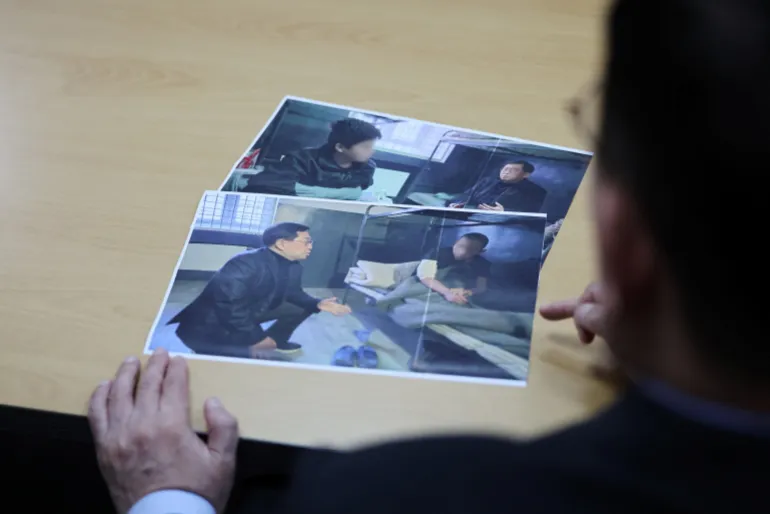
Yoo Yong-weon, a lawmaker of South Korea’s ruling People Power Party, speaks during an interview with Yonhap News Agency about his recent meetings with two North Korean soldiers captured by Ukraine at the National Assembly in Seoul, South Korea, 07 March 2025. The two photographs Yoo is holding were taken from his meetings with the soldiers in Kyiv on 25 February 2025. Photo by YONHAP / EPA

March 24 (Asia Today) — Ukraine’s Defense Ministry has told a South Korean civic group that two captured North Korean soldiers are recognized as prisoners of war and are being protected under the Geneva Convention on the treatment of POWs.

According to a reply disclosed Tuesday by an emergency committee campaigning for the soldiers’ transfer, the Ukrainian ministry said the men are being guaranteed contact with the outside world, access by international monitors and human rights organizations, and other protections required under international humanitarian law.

The ministry also said the principle of non-refoulement, which bars forced return to a country where a person may face harm, is being taken into account in their treatment.

The statement aligns with remarks made March 6 by South Korean Foreign Minister Cho Hyun, who said he had received assurances from his Ukrainian counterpart that the soldiers would not be repatriated to North Korea or Russia. (Yonhap News)

The civic group, however, said the two men remain in a military detention facility under the authority of Ukraine’s Defense Ministry and still hold legal POW status, leaving open the possibility that they could become subjects of negotiations between governments.

The group said the soldiers should be shifted from military custody to an internationally protected status. It called for their transfer to a civilian protection facility and urged direct involvement by the U.N. refugee agency, the U.N. human rights office and the International Committee of the Red Cross.

It also proposed that procedures begin to determine whether the two soldiers should receive refugee status or another form of international protection.

Photo made available by the Emergency Committee for the Free Repatriation of North Korean Soldiers shows a reply from Ukraine’s Defense Ministry regarding two captured North Korean soldiers. /Provided by the committee

— Reported by Asia Today; translated by UPI

© Asia Today. Unauthorized reproduction or redistribution prohibited.

Original Korean report: https://www.asiatoday.co.kr/kn/view.php?key=20260324010007333

Source link

South Korean banks tighten corporate guarantees amid risks

An illustration shows slowing growth in South Korean banks’ payment guarantees alongside a rising won-dollar exchange rate. Graphic by Asia Today and translated by UPI

March 22 (Asia Today) — South Korea’s four largest banks are tightening corporate payment guarantees as exporters face mounting pressure from U.S. tariffs and a prolonged period of high exchange rates.

The combined value of guarantees issued by KB Kookmin Bank, Shinhan Bank, Hana Bank and Woori Bank reached 79.2 trillion won (about $59 billion) at the end of last year, up 3.9% from a year earlier, according to financial industry data.

The increase marks a sharp slowdown compared with double-digit growth in previous years, reflecting a more cautious approach by banks amid rising economic uncertainty.

Banks have scaled back new guarantees as U.S. tariff policies weigh on export profitability and a weaker won raises costs for companies. The won-dollar exchange rate has hovered around 1,500 won, adding further pressure on corporate balance sheets.

Payment guarantees, commonly used by exporters, allow companies to secure financing or complete trade transactions by relying on a bank’s credit backing. If a company defaults, the bank assumes the repayment obligation.

Industry data show that firm guarantees – where the amount is fixed and the bank assumes the debt – rose 8.5% to 60.9 trillion won (about $45 billion), while contingent guarantees fell 8.8% to 18.3 trillion won (about $13.7 billion).

Analysts said banks are favoring lower-risk transactions and reducing exposure to more complex contingent guarantees, which are harder to manage.

The slowdown also reflects weaker demand. Large exporters, which drove much of last year’s trade growth, often do not require bank guarantees, while rising delinquency risks have prompted lenders to focus on balance sheet stability.

Looking ahead, growth in guarantees is expected to remain subdued as geopolitical tensions in the Middle East and global logistics disruptions continue to weigh on trade.

A prolonged period of high exchange rates could further increase risks, as most guarantees are denominated in foreign currencies, meaning their value rises in won terms even without new issuance.

Experts say stabilizing the foreign exchange market and expanding trade finance support will be key to preventing broader financial strain on companies.

— Reported by Asia Today; translated by UPI

© Asia Today. Unauthorized reproduction or redistribution prohibited.

Original Korean report: https://www.asiatoday.co.kr/kn/view.php?key=20260323010006560

Source link

South Korean game firms expand hit IPs into offline experiences

Visitors explore themed zones at the “Cookie Run in Lotte World Aquarium: Ocean Adventure” exhibition in Seoul. Photo by Asia Today

March 19 (Asia Today) — South Korean game companies are increasingly taking popular intellectual property beyond screens, launching immersive offline experiences to deepen engagement and diversify revenue.

The shift reflects efforts to reduce the industry’s reliance on new game releases, which can drive sharp swings in earnings. By combining well-known titles with venues such as aquariums and theme parks, companies aim to boost profitability while strengthening brand loyalty.

Experiential offerings typically include photo zones, merchandise sales and live events, creating both direct revenue and indirect benefits by encouraging players to return to games. Industry officials say the approach also opens the door to expansion into animation, performances and theme parks.

Devsisters will host “Cookie Run in Lotte World Aquarium: Ocean Adventure” from Thursday through June 7, transforming multiple floors of the aquarium into nine themed zones. The event blends eight signature Cookie Run characters with marine life, offering visitors an interactive storyline.

The exhibition also introduces an augmented reality stamp tour, allowing visitors to play mini-games on their smartphones and receive rewards such as character voice messages. Merchandise tied to the franchise will be sold on-site.

The company plans additional tie-ins, including a collaborative program at the “Sky Run,” a 123-floor vertical marathon at Lotte World Tower on April 19.

Nexon is pursuing a similar strategy with “MapleStory in Lotte World,” running through June 14 in Seoul’s Songpa district. The event features a themed “Maple Island” zone, along with recreations of in-game locations such as Henesys and Arcana.

Visitors can import or customize their in-game characters at dedicated experience zones. The event also includes retro gaming areas and themed products such as a “Red Potion” drink inspired by in-game items.

Other major firms are following suit. Krafton has operated pop-up stores based on “PUBG: Battlegrounds,” while Netmarble has hosted events featuring its “Kungya Restaurants” franchise.

“As pop-up stores, exhibitions and collaborations expand, game-based cultural content will become more diverse,” an industry official said.

— Reported by Asia Today; translated by UPI

© Asia Today. Unauthorized reproduction or redistribution prohibited.

Original Korean report: https://www.asiatoday.co.kr/kn/view.php?key=20260319010005893

Source link

Fire at Korean car parts factory kills 14, injures nearly 60

1 of 2 | Firefighters search for missing people at a car parts plant after a large fire engulfed the building in Daejeon, South Korea, Friday. Photo by Yonhap/EPA

March 21 (UPI) — A fire at a Daejeon, South Korea, car parts factory Friday has killed at least 14 people and injured dozens more.

There were nearly 60 injured in the fire in a three-floor plant. The Ministry of the Interior and Safety said that some of the injured had inhaled smoke, and some were injured when they jumped from the building. It said 25 were seriously injured, but it didn’t say if any were in life-threatening condition. There were 170 people inside when the fire erupted.

Nam Deuk-woo, fire chief of the city’s Daedeok district, said almost all of the bodies were found inside a third-floor space that had been used as a gym locker room, The New York Times reported. Some bodies were so badly burned it will take DNA testing to identify them.

Nam said workers recovered more than 220 pounds of highly reactive chemicals from the site before firefighters could spray water on the fire, and some witnesses have reported that there was an explosion when the fire began.

All of those missing have now been found, The Guardian reported.

Officials said they are still investigating the cause of the fire.

Firefighters said they couldn’t enter the structure earlier for fear of collapse.

They used unmanned robots Friday to cool the structure and do a safety inspection before they were able to go in and search for missing workers.

Daejeon is in central South Korea.

Source link

British steel curbs add pressure on South Korean exports

Coast Guard officials inspect the area in the aftermath of a fire at the POSCO steel factory in the city of Pohang, South Korea. Photo by YONHAP / EPA

March 20 (Asia Today) — South Korea’s steel industry faces mounting pressure as Britain moves to tighten import restrictions, adding to growing trade barriers in the United States and Europe. Britain said it plans to cut steel import quotas by 60% and raise the tariff on volumes above the quota to 50% from 25%, with the new measures set to take effect July 1.

The tougher British measures have raised concerns about weaker exports and shrinking profitability for South Korean steelmakers. South Korea exported 640,000 metric tons of steel to Britain last year, accounting for 2.3% of its total steel exports, according to the industry ministry.

South Korean companies including POSCO and Hyundai Steel have shipped products such as heavy steel plate to Britain. POSCO said it is reviewing the situation and plans to respond after Britain releases more details on the affected products and volumes. The industry ministry said the move could violate World Trade Organization rules and the Korea-Britain free trade agreement, which provides for tariff-free steel trade, and pledged to work with London to limit damage to Korean companies.

The British action comes as other major markets also harden their trade defenses. The United States raised tariffs on imported steel and aluminum to 50% in June 2025. The European Union is also pursuing a tougher steel regime that would cut tariff-free import volumes by 47% and double out-of-quota duties to 50%.

The broader protectionist shift has already hurt Korean producers. Industry officials say companies are increasingly reliant on government trade talks as barriers rise across major export markets.

— Reported by Asia Today; translated by UPI

© Asia Today. Unauthorized reproduction or redistribution prohibited.

Original Korean report: https://www.asiatoday.co.kr/kn/view.php?key=20260320010006218

Source link

S. Korean refiners boost output to prevent fuel shortages

Drivers pump gas into their cargo trucks at a gas station in Incheon, South Korea, 13 March 2026. The government implemented a temporary fuel price cap system the same day to ease cost burdens amid supply concerns linked to the Middle East crisis. YONHAP / EPA

March 18 (Asia Today) — South Korea’s four major oil refiners are ramping up production and delaying maintenance to stabilize domestic fuel supply amid rising global energy risks, industry officials said Tuesday.

The move comes as refining margins approach $30 per barrel, far above the industry break-even level of about $4 to $5, signaling what analysts describe as a “super cycle.”

Despite strong profitability, refiners said the decision reflects a priority on supply stability as concerns grow over potential fuel shortages linked to Middle East tensions and disruptions in the Strait of Hormuz.

GS Caltex has postponed major maintenance at its Yeosu refinery by about two months to May, opting to keep production running during the current high-margin period. Such maintenance typically lasts about 40 days and costs hundreds of billions of won.

Industry officials said the delay was driven not only by profitability but also by the need to ensure stable supply, including naphtha, a key feedstock for petrochemical production.

Naphtha prices have surged to about $1,009 per ton, roughly double the level seen a year earlier.

Refiners said maintaining high operating rates will also support petrochemical companies by ensuring a steady supply of raw materials.

SK Energy said it will continue operating at full capacity while complying with the government’s oil price cap policy. Authorities are monitoring refinery inventories and shipments in real time through a joint task force.

S-Oil and HD Hyundai Oilbank are also prioritizing domestic supply in line with government measures limiting exports of gasoline and diesel.

Industry sources said other refiners may follow GS Caltex in adjusting maintenance schedules, as shutting down facilities during a period of elevated margins would reduce efficiency.

Analysts said refiners are seeking to balance strong earnings with their role in preventing a domestic fuel crisis as geopolitical tensions persist.

— Reported by Asia Today; translated by UPI

© Asia Today. Unauthorized reproduction or redistribution prohibited.

Original Korean report: https://www.asiatoday.co.kr/kn/view.php?key=20260317010005107

Source link

Iran war fuels S. Korean tanker bet as shipping heir’s strategy pays off

The homepage of South Korean shipping company Sinokor Merchant Marine (Janggeum Shipping) is shown in this screenshot. Captured by Asia Today from Sinokor website

March 16 (Asia Today) — A bold bet by a South Korean shipping heir on ultra-large oil tankers is paying off handsomely as the war involving Iran disrupts global energy markets and drives tanker demand sharply higher.

Bloomberg reported that Sinokor Merchant Marine, a major South Korean shipping company, positioned itself to profit from the crisis after securing a large fleet of very large crude carriers (VLCCs) months before the conflict escalated.

The strategy was led by Jeong Ga-hyun, a director at Sinokor Petrochemical and the son of Sinokor Chairman Jeong Tae-soon, according to the report.

Bloomberg described the move as an unprecedented large-scale bet in the global tanker market, executed well before the outbreak of the Iran conflict.

Tankers deployed to Gulf before war

On Jan. 29, weeks before the war erupted in late February, Sinokor reportedly deployed at least six empty VLCCs to the Persian Gulf, positioning them to wait for cargo.

After disruptions in the Strait of Hormuz pushed tanker demand and charter rates sharply higher, the strategy began generating massive returns.

The Strait of Hormuz is one of the world’s most critical energy chokepoints, handling roughly 20% of global oil shipments.

Tanker rates surge to $500,000 a day

With oil exports disrupted and storage facilities across the Middle East filling rapidly, oil producers have increasingly turned to tankers as floating storage units.

According to Bloomberg, Sinokor is now chartering vessels for about $500,000 per day, roughly ten times last year’s average tanker rates.

Industry estimates suggest that by late February the company controlled around 150 VLCCs, representing roughly 40% of available tankers not already tied up in sanctions or long-term contracts.

Quiet heir behind massive shipping strategy

Jeong is known in the shipping industry as the low-profile heir to one of South Korea’s major maritime families.

Bloomberg reported that he rarely appears publicly and is known internally for a military-style management approach. Industry anecdotes even describe him challenging employees and business partners to arm-wrestling contests.

Oil supply disruptions reshape tanker market

The Iran war has dramatically altered global oil transportation patterns, forcing ships to reroute and increasing the need for offshore storage.

Under those conditions, Sinokor’s aggressive tanker acquisition strategy is now being viewed as one of the biggest winners of the crisis, Bloomberg said.

WSJ: Sinokor among winners of Hormuz crisis

The Wall Street Journal earlier identified Sinokor as one of the companies benefiting from the Strait of Hormuz tensions.

According to the newspaper, the company purchased dozens of oil tankers and deployed some of them to the Gulf region even before the conflict intensified.

Sources told the Journal that Sinokor is leasing several vessels to ADNOC, the United Arab Emirates’ state-owned oil company, to be used as floating storage facilities.

These vessels can earn up to $500,000 per day in charter fees, the report said.

As land-based storage in Gulf oil-producing countries approaches capacity, producers have increasingly stored crude at sea. Drilling firms in Iraq and Kuwait have even slowed production due to storage shortages.

The WSJ also noted that Greek shipping magnate George Prokopiou adopted a similar strategy, sending at least five tankers to the Strait of Hormuz through his company Dynacom, which is reportedly earning up to $440,000 per day – about four times pre-war rates.

— Reported by Asia Today; translated by UPI

© Asia Today. Unauthorized reproduction or redistribution prohibited.

Original Korean report: https://www.asiatoday.co.kr/kn/view.php?key=20260316010004394

Source link

Survey: Nearly half of S. Korean students study with AI

A graphic illustrates survey results showing how South Korean high school students use artificial intelligence for studying. Graphic by Asia Today and translated by UPI

March 11 (Asia Today) — Nearly half of South Korean high school students are using artificial intelligence to help them study, a survey showed, as the government moves to expand AI education in public schools.

According to a survey conducted by education company Jinaksa of 3,525 high school students nationwide, 47.7% said they use AI for studying at least once a week.

The most common usage frequency was once or twice per week at 25.2%. Another 14.4% said they use AI three times or more each week, while 8.1% reported using it almost daily.

Meanwhile, 22.7% said they never use AI for studying, and 29.6% said they use it only once or twice a month.

Students most frequently used AI to ask for explanations of unfamiliar concepts, accounting for 49.7% of responses. Other common uses included help solving problems at 29.0%, summarizing notes or reading passages at 27.9% and requesting feedback on answers at 17.4%.

The findings suggest students are not using AI simply to find correct answers but increasingly treat it as a question-based learning tool that explains concepts and helps guide problem-solving.

Education officials are also expanding artificial intelligence education in public schools.

The Ministry of Education said it has designated 1,141 elementary, middle and high schools nationwide as “AI focus schools” in cooperation with 17 regional education offices.

These schools will integrate AI-related lessons across subjects and expand interdisciplinary programs that combine artificial intelligence with existing curricula. Schools will also strengthen ethics education to encourage responsible use of AI and provide activities such as AI clubs and hands-on learning programs.

The ministry plans to gradually expand the program to 1,500 schools by 2027 and 2,000 schools by 2028.

Woo Yeon-cheol, director of the admissions strategy research institute at Jinaksa, said students are increasingly using AI as a form of “digital tutoring.”

“Students are not simply using AI to complete assignments,” Woo said. “They are using it to ask questions about concepts they do not understand and to check the direction of problem solving.”

He added that the ability to ask questions anytime and receive immediate explanations is helping AI become a new learning support tool.

Woo also noted that even as the government moves to expand AI-based education in schools, students have already been adapting quickly to AI-driven learning environments outside the classroom.

— Reported by Asia Today; translated by UPI

© Asia Today. Unauthorized reproduction or redistribution prohibited.

Original Korean report: https://www.asiatoday.co.kr/kn/view.php?key=20260311010003167

Source link