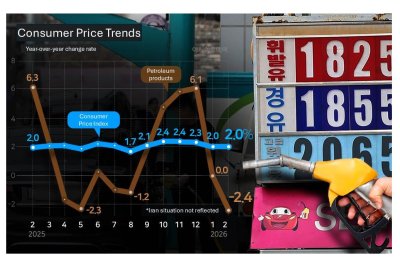

A graphic shows South Korea’s February consumer price trend as inflation remained at 2.0% and oil-price risks increased. Graphic by Asia Today and translated by UPI
March 6 (Asia Today) — South Korea’s consumer prices rose 2.0% in February from a year earlier, extending a six-month run of inflation at or above 2% as officials warned that rising oil prices linked to Middle East tensions could add fresh upward pressure in coming weeks.
The consumer price index stood at 118.40 in February, government data showed Thursday. The annual increase matched January’s rate and met the government’s inflation target, but the February figures did not yet fully reflect the late-month jump in global oil prices after the regional conflict intensified.
Service prices helped drive the increase. Personal services rose 3.5%, the sharpest gain in more than two years, while agricultural, livestock and fishery products rose 1.7%. Livestock prices climbed 6.0%, and the living-cost index, which tracks frequently purchased items, rose 1.8%.
Petroleum prices fell 2.4% from a year earlier, helping contain headline inflation in February. Officials said that decline was tied to earlier movements in international crude prices and that the latest Middle East shock had not yet been reflected in the monthly data.
Government officials said Lunar New Year holiday demand also pushed up prices for travel, lodging and livestock products.
The outlook has become more uncertain since the end of February. Nationwide gasoline prices moved above 1,800 won ($1.35) a liter, while prices in Seoul topped 1,900 won ($1.43), according to local reports citing Opinet, the Korea National Oil Corporation’s fuel price system.
President Lee Jae-myung has ordered officials to prepare a fuel price ceiling system, and the government has said it could invoke legal authority to set temporary maximum prices if fuel costs rise sharply. The industry ministry has also issued an early-stage alert for crude oil and natural gas supply conditions.
Analysts say higher crude prices and a weaker won could lift inflation in the coming months. ING said it raised its 2026 South Korea inflation forecast from 2.0% to 2.2%, estimating the recent oil shock could add 0.2 to 0.4 percentage point to consumer prices.
— Reported by Asia Today; translated by UPI
© Asia Today. Unauthorized reproduction or redistribution prohibited.
Original Korean report: https://www.asiatoday.co.kr/kn/view.php?key=20260306010001666