
April 28 (Asia Today) — South Korea has completed deployment of a five-satellite reconnaissance system designed to strengthen its preemptive strike capabilities against North Korea, marking a major milestone in its defense space program.
The project, known as the “425 program,” gives Seoul an independent ability to monitor North Korea with high-resolution imagery at roughly two-hour intervals, officials said.
The system combines one electro-optical and infrared satellite with four synthetic aperture radar satellites, allowing surveillance regardless of weather or time of day. Military officials say the network can track mobile missile launchers and other high-value targets, enhancing the country’s “kill chain” capability – a core element of its three-axis defense system.
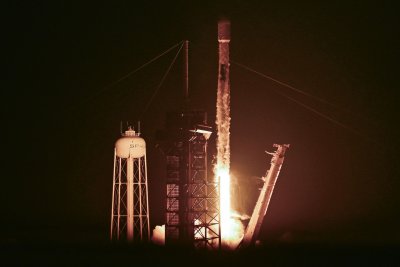
The satellites were launched between late 2023 and late 2025, with the final unit successfully placed into orbit in November. U.S. space company SpaceX supported the launches, providing real-time global broadcasts that demonstrated the reliability of South Korea’s space assets.
The deployment marks a shift away from reliance on U.S. intelligence toward what officials describe as “independent surveillance,” enabling South Korea to observe targets at times of its choosing.
Despite the progress, military officials and analysts warn of a critical challenge: delays in real-time intelligence sharing with the United States.
Sources said that during the satellite deployment process, some U.S. intelligence inputs were delayed or limited, raising concerns about coordination between South Korea’s independent assets and allied systems.
The issue has implications for the effectiveness of the kill chain, which relies on rapid detection, identification and strike decisions within a narrow time window.
To address coordination gaps, U.S. Forces Korea has established a new unit known as J10, or Integrated Strategy Division, to support nuclear-conventional integration between the allies.
The unit is intended to act as a control hub linking U.S. nuclear deterrence capabilities with South Korea’s precision strike assets, enabling real-time operational coordination under the bilateral Nuclear Consultative Group framework.
Defense experts say the effort reflects growing complexity in integrating allied systems, particularly as both sides seek to align security protocols and data standards.
“The challenge is not just hardware, but digital synchronization,” one analyst said. “If delays persist, the kill chain could miss its critical response window.”
Another limitation is the system’s revisit rate. With North Korea believed to be able to prepare missile launches within 30 to 40 minutes, a two-hour surveillance cycle leaves potential gaps.
To address this, South Korea is accelerating plans to deploy constellations of small satellites in low Earth orbit, aiming to reduce revisit times to under 30 minutes.
Officials also emphasized the need for artificial intelligence-based analysis platforms capable of processing large volumes of satellite data in seconds to detect early warning signs.
Experts say the long-term success of the program will depend on software capabilities as much as hardware.
“When South Korea can produce intelligence as quickly and accurately as its allies, real-time data sharing will naturally deepen,” a defense expert said.
— Reported by Asia Today; translated by UPI
© Asia Today. Unauthorized reproduction or redistribution prohibited.
Original Korean report: https://www.asiatoday.co.kr/kn/view.php?key=20260428010008986