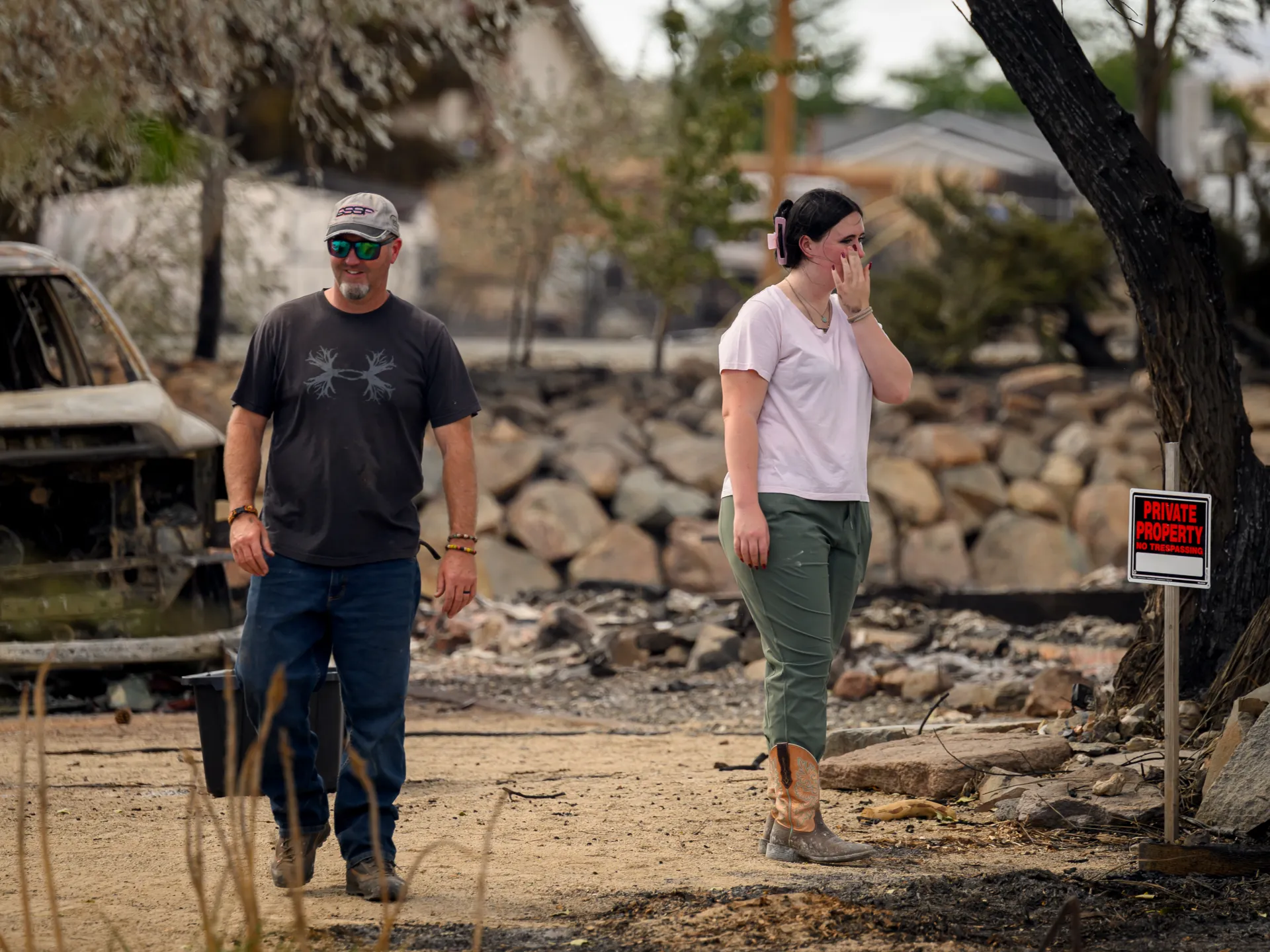
Fire containment has reached 27 percent in the rampant wildfire that first erupted in the Sierra Nevada foothills near the city of Reno in the state of Nevada in the United States. At least seven people – three first responders and four civilians – have been injured.
The blaze first broke out on Saturday and exploded in size by Sunday, destroying at least 32 homes and damaging six as it spread perilously close to dense neighbourhoods. Local officials, speaking at an afternoon news briefing on Monday, said those numbers are sure to rise as assessment teams begin to survey the charred areas.
Recommended Stories
list of 3 itemsend of list
They also said the fire had no new growth and has held steady at about 60 square kilometres (23 square miles) since it burned out of control on Sunday.
“We are making progress,” assured US Forest Service District Ranger Matt Zumstein.
Videos posted on social media showed the smouldering ruins of homes and cars, with only a scorched basketball hoop still standing.
By Monday, the number of residents under evacuation orders and warnings was lowered to about 63,000, down from more than 90,000 people when the blaze first mushroomed over the weekend. While winds have eased, there are still concerns that gusts could propel the flames through dry brush into newly developed neighbourhoods in Nevada’s largest city outside of metro Las Vegas. Reno is home to about 280,000 people.
Schools across the local area were closed because of the evacuations and to keep roads clear for emergency crews.
‘Like nothing I’ve seen before’: Reno faces third wildfire in two weeks
Reno Mayor Hillary Schieve said the way the fire spread so quickly at its peak had her fearing for the worst.
“It lit up these areas like nothing I’ve seen before,” she said Monday, adding, “it took your breath away, in the worst way”.
This is the third large wildfire in the craggy, high-desert region north of Reno in just the past two weeks – driven completely by human behaviour, according to fire officials. They have not disclosed whether the Hawk Fire, which is what the blaze is known as due to having started near the Hawk Meadow Trail, was intentionally set or accidental. Much of the area that burned was sagebrush and grass.
Resident Crystal Hallock, 53, has lost her home to a fire twice in under a decade. She moved into the rebuilt house in 2019, a year after an electrical fire burned it down.
Nevada’s governor quickly declared a state of emergency in Washoe County over the weekend after mobilising the National Guard to help with aerial firefighting and protecting evacuated neighbourhoods northwest of downtown Reno. But at one roadblock, residents expressed frustration that they could not get back into their homes, according to The Associated Press news agency.
“There’s no fire here! Why are the National Guard here?” a driver yelled.
Washoe County Sheriff Darin Balaam said he understands that some residents are frustrated that they can’t get home, but the danger isn’t over yet. “It just takes that little breeze and one ember,” he said.
Reno is southwest of Nevada’s Black Rock Desert, site of the annual Burning Man festival, which begins on August 30.
Many who travel to Burning Man make Reno a regular pit stop. Organisers on Monday requested that attendees not take hotel rooms and other resources away from fire evacuees, while being mindful of closures.
“Treat our neighbors, first responders, hospitality workers and everyone affected by this emergency with patience and care,” a Burning Man statement read.
Western wildfire risk stays high
Much of Nevada’s western edge is under an increased risk of wildfires this week because of high winds and low relative humidity, the National Interagency Fire Center said. The National Weather Service says the region will see warm, dry and breezy conditions, and that critical fire weather conditions are possible in the week’s latter half. Reno sits at an elevation of 1,370 metres (4,500 feet).
Extremely dry conditions across the American West have sparked a rash of wildfires this summer. Fires in eastern Washington state forced the evacuation of 60,000 people in the Spokane area in early August.
Nationwide wildfires have topped 50,000 this year, marking a 10-year high for the same period, according to the National Interagency Fire Center.