In the UK, there is a proud tradition of naming long-distance walking paths after talented reprobates. I mean the various opium fiends, international terrorists and child murderers who make up our colourful national tapestry (see the Coleridge Way, Drake’s Trail and the Richard III Trail). So perhaps a 30-mile weekend walk dedicated to the Mortimers, and their most notorious scion, Sir Roger, is an appropriate addition to the weave.
After all, this is the man who allegedly slept with a reigning queen (Isabella), probably killed her husband (Edward II), and certainly became de facto tyrant of the realm for three turbulent years in the 1320s, feathering his own nest relentlessly during that time. They don’t make world leaders like that any longer, do they?
Roger’s stomping ground, however, was not where you might expect: he was a marcher lord on the Welsh border, and his family trail wends its way through tranquil countryside from Ludlow in Shropshire to the quiet Herefordshire border town of Kington, the perfect distance for a weekend hike. But can such a location, so peaceful and orderly today, live up to the outrageous standards of Sir Roger? The Mortimer Trail itself has existed for some years, but now a new guidebook and app have brought this magnificently horrid hero back into the limelight.
I start then in Ludlow, a town now famous for its foodie traditions, but also a place that oozes history throughout its crooked lanes. Walking down Broad Street, I admire the bay window of The Angel, from which Horatio Nelson waved to the crowd in 1802, with his left hand, of course. Local legend has it that the hero of the Battle of the Nile leaned out the window and shouted, “Thank you for the oak,” to the adoring crowd below. Behind him stood Emma Hamilton, his mistress, and her husband, Sir William, the trailing third in a menage that would thrill the British public until Nelson died at Trafalgar in 1805. (The Angel restaurant is currently closed but will reopen soon.)
I get my lunch under the walls of the castle at CSONS, one of Ludlow’s celebrated cafes. There is a lot of good food in this town, plus an excellent farmer’s market and at least three “parlour pubs” – front room pubs marked only by a lamp outside and often serving only one type of beer from a cask.
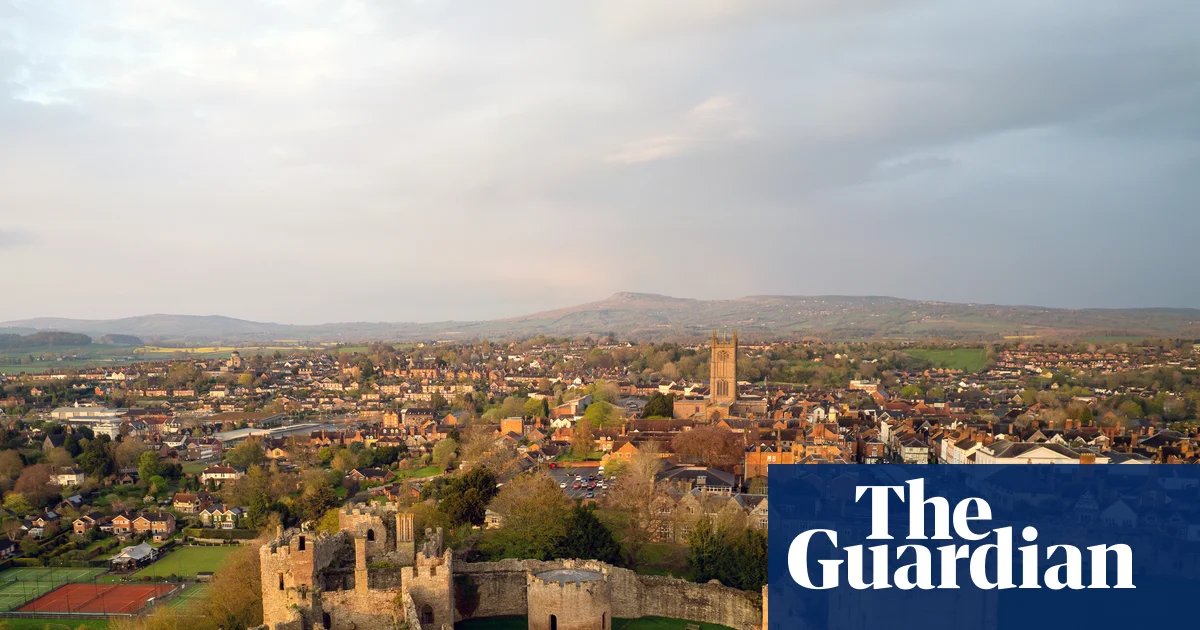
The castle in Ludlow is really the start of the trail, being the seat of English borderland power in medieval times and worth a detour. Look out for the solar wing, built for Queen Isabella who stayed here in 1328. Sir Roger’s wife, Joan, was also in attendance, apparently, but slept in a different wing. History has not recorded where Sir Roger spent the night; no doubt Netflix will, when they get hold of the story.
The trail sets off across Dinham Bridge, climbing up into Mortimer Forest with great views back to the castle. Watch out for the deer and goshawks that are resident in this ancient woodland. My first night is in Salwey Lodge whose farming owners, Arabella and Hugo, not only organise walks along the trail, but have devised their own handy guiding app. They also shuttle visitors around, so no car is needed (Ludlow is on the main railway line between Shrewsbury and Hereford).
The lodge proves to be the perfect place to get into the ambience of a regicide like Sir Roger. An ancestor of the Salweys was sent to the Tower for anti-monarchial tendencies and was implicated in the Farnley Wood Plot of 1663. Richard’s Castle, close to the lodge, is where he is thought to have lived, but little remains, although there is a lovely decommissioned 12th-century church worth visiting. The lodge is atmospheric, lined with the type of ancient ancestral oil portraits that most families, including my own, inadvertently forgot to commission. The superlative food comes from the house’s vegetable garden, the farm and local suppliers.
Day two of the walk takes me up through more woodland to fabulous views of the Shropshire countryside, notably from an iron age hill fort at Croft Ambrey, abandoned after six centuries of occupation at around the time of Emperor Claudius’s invasion in AD 43.
I pass only a handful of people on the path during the entire weekend, but see plenty of reminders that this area was once a highly militarised and dangerous borderland. All through the middle ages, the Welsh kept up a sturdy resistance to the Norman conquerors, who responded with unwavering brutality. Sir Roger, of course, was right there in thick of it until the newly crowned Edward III had the insufferable upstart hanged at Tyburn. (The ruins of Roger’s main residence, Wigmore Castle, can be seen from Croft Ambrey, but rather inexplicably the trail does not go there. The closest diversion would add five miles.)
The path rolls along pleasantly, unveiling magnificent panoramas of the Welsh mountains, before dropping down to the River Lugg and an overnight stop at the Riverside Inn. The food here is excellent, serving the kind of breakfast that, without some self-restraint, could nail you to an early siesta rather than set up a big day of hiking.
This starts with a long ramble by the river, then up into quiet woodlands and high heaths, with plenty of historical military madness. The serene church at Byton was sacked several times by angry Welsh nobles, including the last Welsh king, Llywelyn ap Gruffudd, and later Owain Glyndŵr. The Mortimers, of course, were always in the mix. Llywelyn was killed in 1282 by the forces of Edmund Mortimer, Roger’s father, and then another Edmund, Roger’s great-grandson, cocked a snook at Henry IV by marrying Glyndŵr’s daughter, Catrin, in 1402.
It is possible to shorten this third day at a 12-mile limit, finishing at the church in Titley, but for me it’s much better to press on, rising up towards the Welsh border and a meeting with the ultimate symbol of militarisation and tribal anxiety, Offa’s Dyke. The path curls up across a featureless mountain pasture, and there it is – the formidable security wall of its day, designed to keep two irredeemably hostile peoples apart, now a little ripple in the earth which sheep use to see if there’s more grass in the next field. Sit down and ruminate on human folly before striding into Kington where there’s a decent cafe, the Border Bean, and wait for Arabella to collect you.
The trip was supported by Visit Shropshire. Download the new Mortimer Trail guidebook or buy it in Castle Bookshop, Ludlow. Salwey Lodge offers a four-night Mortimer Trail package that includes accommodation at the lodge and Riverside Inn, walking information, breakfasts, packed lunches, one dinner and local transfers for £560 per person