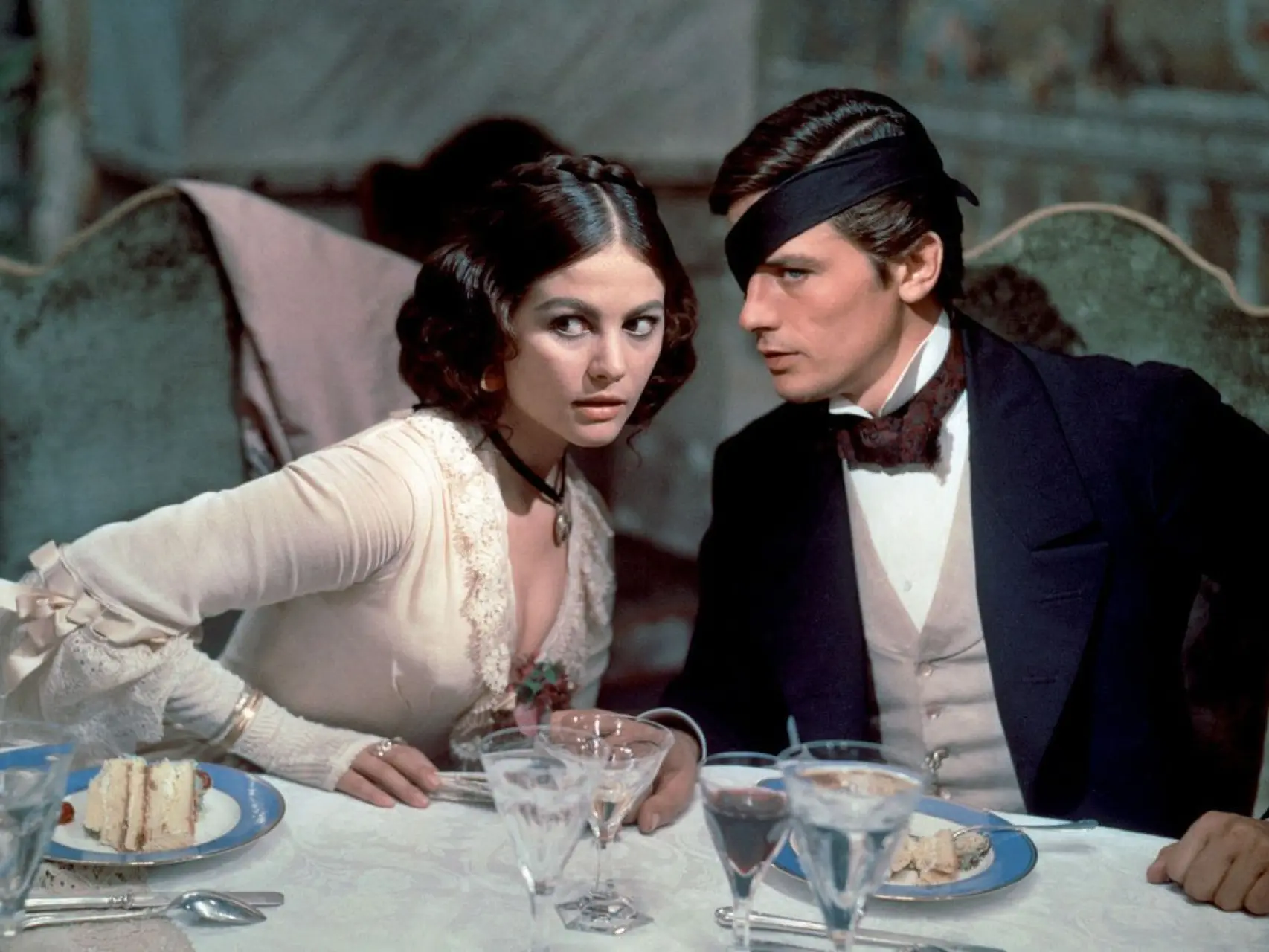
Tarek William Saab, one of the key figures in the repressive apparatus that oppresses Venezuelan society, is dismissed as prosecutor general, but a family friend who has spent years denying Maduro’s atrocities on the international stage is appointed in his place. Vladimir Padrino, under investigation for systematic human rights violations, is replaced by Gustavo González López, also under investigation for systematic human rights violations. They pass an amnesty law, but primarily to grant amnesty to themselves. Over 700 political prisoners are released, but another 473 remain in prison, and those who are released do not always enjoy full freedom.
The institutional reforms of Delcy and Jorge Rodríguez generate headlines abroad that portray them, to those who don’t pay attention to the details, as the moderates The New York Times described them as shortly before the military incursion of January 3rd. The economic reforms, on the other hand, provide arguments, or rather content, for the Trump administration to claim on its social media accounts that it is succeeding in reshaping Venezuela, when on the ground the population observes their living conditions—the blackouts, the inflation, the widespread vulnerability—and concludes that they remain the same as when Maduro was dancing calmly over our dead.
Yes, there are some reasons for optimism, especially regarding the economic transition, but the transition to democracy doesn’t seem to be happening yet. The dictator was removed in a helicopter, but the dictatorship remains.
So far, all of this fits into a metaphor that has been cited countless times in decades of opinion pieces in Venezuela: the Rodríguezes are changing everything so that nothing changes. I grew up reading that cliché in the press, before chavismo burst onto the scene, guns blazing, in our history. “They’re like the Leopard, they change everything so that nothing changes.” In a country that has seen so many supposed reinventions, so many revolutions promising a clean slate to simply replace one set of power with another without solving any of the nation’s structural problems, that cliché has been uttered in relation to many governments and many leaders. But where does it come from, and what does it originally mean?
The cunning of the opportunist
Giuseppe Tomasi, Prince of Lampedusa, was a Sicilian aristocrat who seemed like a character from a novel: he failed as a soldier, he couldn’t prevent his family’s ruin, he saw his palace destroyed by Allies bombs during World War II, and in reality, he was only good for reading and learning languages. He published very little during his lifetime, and spent more than twenty years writing a novel that was published a year after his death in 1957. The book, which was a great success from the start, was titled Il Gattopardo (The Leopard in the English translations), after the cheetah that appears on the coat of arms of its protagonist: Don Fabrizio, the Prince of Salina.
The world is full of Tancredis like Jorge, Venezuela has never lacked them. Juan Vicente Gómez also promised change when he overthrew his crony Cipriano Castro, remaining in power for 27 years.
The character, like his creator, was the last of a line. He was a landowner whose noble titles and privileges depended on the existence of the Kingdom of the Two Sicilies, as the Spanish dominion of southern Italy was called in 1860. When, that year, Garibaldi’s troops invaded Sicily, in the process that would eventually produce the Italy we know today, Don Fabrizio found that everything he stood for was in danger. Sicily would cease to be Spanish and merge into the new Kingdom of Italy, and he would lose his place at the pinnacle of that feudal society, dominated by a few through the mere will of a foreign sovereign. Don Fabrizio, who had dedicated his life to preserving what he had inherited, saw no way to stop the transformations that were approaching like a tsunami at the gates of his palace, crowned by wrought-iron leopards. But his favorite nephew, Tancredi, an ambitious climber who married the daughter of an uneducated nouveau riche and joined Garibaldi’s Redshirt revolution without hesitation, showed him what had to be done: “If we want everything to stay the same, we have to change everything.”
The fate of the cynics
Il Gattopardo is an exquisite work, a great historical novel that brings together all the virtues of the genre: the ability to transport you to an era and dissect it; the pleasure of escaping to a beautiful palace in the golden hills of Sicily, beside a turquoise sea; details like the pasta timbale and granitas served at a fully set table. All of that is in Luchino Visconti’s magnificent 1963 film version, starring Burt Lancaster and Alain Delon, and in the superb miniseries—in which all the actors are Italian—on Netflix.
But what immortalized it was that line from Tancredi. Because of its power to synthesize what many people, in many different historical contexts, have done time and again: move from the old order to the new, disguised as reformers, to avoid losing their privileges by securing a place in the emerging elite. Changing everything so that nothing changes is the strategy of those who must pretend to be the future and not the past, because they would pay a heavy price if they didn’t. It’s the roadmap of those who, like Delcy and Jorge Rodríguez, have prepared themselves to take advantage of an external factor that destabilizes the order of their world—Garibaldi’s landing, the arrival of the Marines—and reorganize that world to their advantage.
Perhaps Jorge Rodríguez read Lampedusa back when he frequented bookstores and wrote fiction like the story that won the El Nacional literary contest. Perhaps he saw Visconti’s film. Perhaps he doesn’t even know this story: the world is full of Tancredis like him, and Venezuela has never lacked them. Juan Vicente Gómez also promised change when he overthrew his crony Cipriano Castro, remaining in power for 27 years at the head of a dictatorship that had a very good relationship with foreign oil companies.
In the novel, however, Tancredi meets a bad end: he loses an eye, fails in his ambition to seize power, pays for the mistake of underestimating the Mafia father-in-law with whom he became involved, and for overestimating his own talents. The prince, as expected, disappears along with the world he represented. Italy in the 1860s changed in many ways, and left other things as they were. When you truly read that immortal book left to us by that sad, solitary Sicilian prince, you understand how cynics work to appropriate historical changes, but you also realize that no one, not even those who seem most powerful, can control these.