Delcy

Delcy, the Leopard | Caracas Chronicles

Tarek William Saab, one of the key figures in the repressive apparatus that oppresses Venezuelan society, is dismissed as prosecutor general, but a family friend who has spent years denying Maduro’s atrocities on the international stage is appointed in his place. Vladimir Padrino, under investigation for systematic human rights violations, is replaced by Gustavo González López, also under investigation for systematic human rights violations. They pass an amnesty law, but primarily to grant amnesty to themselves. Over 700 political prisoners are released, but another 473 remain in prison, and those who are released do not always enjoy full freedom.

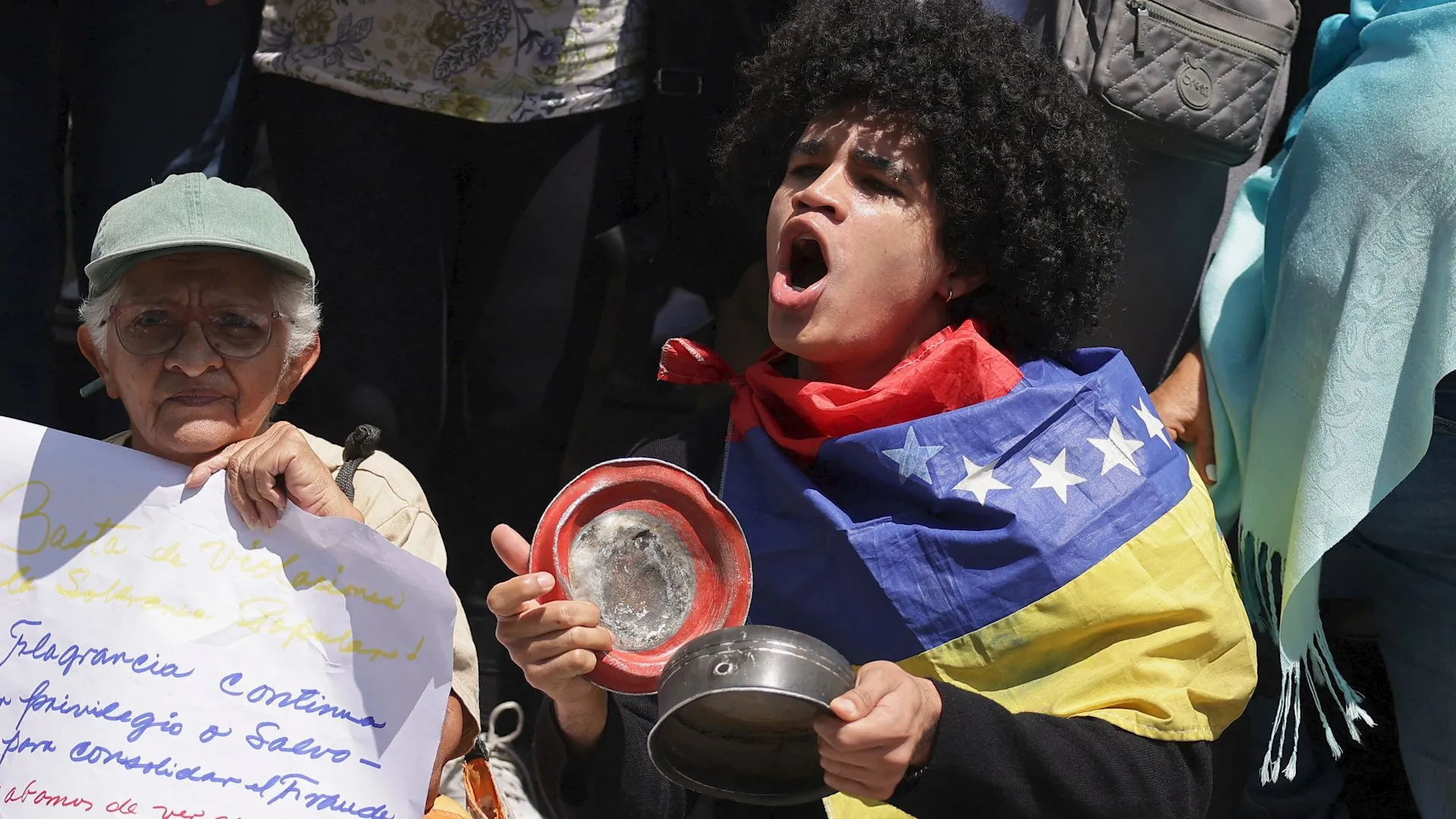
The institutional reforms of Delcy and Jorge Rodríguez generate headlines abroad that portray them, to those who don’t pay attention to the details, as the moderates The New York Times described them as shortly before the military incursion of January 3rd. The economic reforms, on the other hand, provide arguments, or rather content, for the Trump administration to claim on its social media accounts that it is succeeding in reshaping Venezuela, when on the ground the population observes their living conditions—the blackouts, the inflation, the widespread vulnerability—and concludes that they remain the same as when Maduro was dancing calmly over our dead.

Yes, there are some reasons for optimism, especially regarding the economic transition, but the transition to democracy doesn’t seem to be happening yet. The dictator was removed in a helicopter, but the dictatorship remains.

So far, all of this fits into a metaphor that has been cited countless times in decades of opinion pieces in Venezuela: the Rodríguezes are changing everything so that nothing changes. I grew up reading that cliché in the press, before chavismo burst onto the scene, guns blazing, in our history. “They’re like the Leopard, they change everything so that nothing changes.” In a country that has seen so many supposed reinventions, so many revolutions promising a clean slate to simply replace one set of power with another without solving any of the nation’s structural problems, that cliché has been uttered in relation to many governments and many leaders. But where does it come from, and what does it originally mean?

The cunning of the opportunist

Giuseppe Tomasi, Prince of Lampedusa, was a Sicilian aristocrat who seemed like a character from a novel: he failed as a soldier, he couldn’t prevent his family’s ruin, he saw his palace destroyed by Allies bombs during World War II, and in reality, he was only good for reading and learning languages. He published very little during his lifetime, and spent more than twenty years writing a novel that was published a year after his death in 1957. The book, which was a great success from the start, was titled Il Gattopardo (The Leopard in the English translations), after the cheetah that appears on the coat of arms of its protagonist: Don Fabrizio, the Prince of Salina.

The world is full of Tancredis like Jorge, Venezuela has never lacked them. Juan Vicente Gómez also promised change when he overthrew his crony Cipriano Castro, remaining in power for 27 years.

The character, like his creator, was the last of a line. He was a landowner whose noble titles and privileges depended on the existence of the Kingdom of the Two Sicilies, as the Spanish dominion of southern Italy was called in 1860. When, that year, Garibaldi’s troops invaded Sicily, in the process that would eventually produce the Italy we know today, Don Fabrizio found that everything he stood for was in danger. Sicily would cease to be Spanish and merge into the new Kingdom of Italy, and he would lose his place at the pinnacle of that feudal society, dominated by a few through the mere will of a foreign sovereign. Don Fabrizio, who had dedicated his life to preserving what he had inherited, saw no way to stop the transformations that were approaching like a tsunami at the gates of his palace, crowned by wrought-iron leopards. But his favorite nephew, Tancredi, an ambitious climber who married the daughter of an uneducated nouveau riche and joined Garibaldi’s Redshirt revolution without hesitation, showed him what had to be done: “If we want everything to stay the same, we have to change everything.”

The fate of the cynics

Il Gattopardo is an exquisite work, a great historical novel that brings together all the virtues of the genre: the ability to transport you to an era and dissect it; the pleasure of escaping to a beautiful palace in the golden hills of Sicily, beside a turquoise sea; details like the pasta timbale and granitas served at a fully set table. All of that is in Luchino Visconti’s magnificent 1963 film version, starring Burt Lancaster and Alain Delon, and in the superb miniseries—in which all the actors are Italian—on Netflix.

But what immortalized it was that line from Tancredi. Because of its power to synthesize what many people, in many different historical contexts, have done time and again: move from the old order to the new, disguised as reformers, to avoid losing their privileges by securing a place in the emerging elite. Changing everything so that nothing changes is the strategy of those who must pretend to be the future and not the past, because they would pay a heavy price if they didn’t. It’s the roadmap of those who, like Delcy and Jorge Rodríguez, have prepared themselves to take advantage of an external factor that destabilizes the order of their world—Garibaldi’s landing, the arrival of the Marines—and reorganize that world to their advantage.

Perhaps Jorge Rodríguez read Lampedusa back when he frequented bookstores and wrote fiction like the story that won the El Nacional literary contest. Perhaps he saw Visconti’s film. Perhaps he doesn’t even know this story: the world is full of Tancredis like him, and Venezuela has never lacked them. Juan Vicente Gómez also promised change when he overthrew his crony Cipriano Castro, remaining in power for 27 years at the head of a dictatorship that had a very good relationship with foreign oil companies.

In the novel, however, Tancredi meets a bad end: he loses an eye, fails in his ambition to seize power, pays for the mistake of underestimating the Mafia father-in-law with whom he became involved, and for overestimating his own talents. The prince, as expected, disappears along with the world he represented. Italy in the 1860s changed in many ways, and left other things as they were. When you truly read that immortal book left to us by that sad, solitary Sicilian prince, you understand how cynics work to appropriate historical changes, but you also realize that no one, not even those who seem most powerful, can control these.

Source link

Delcy Rodríguez hires U.S. lobbyist for possible presidential campaign

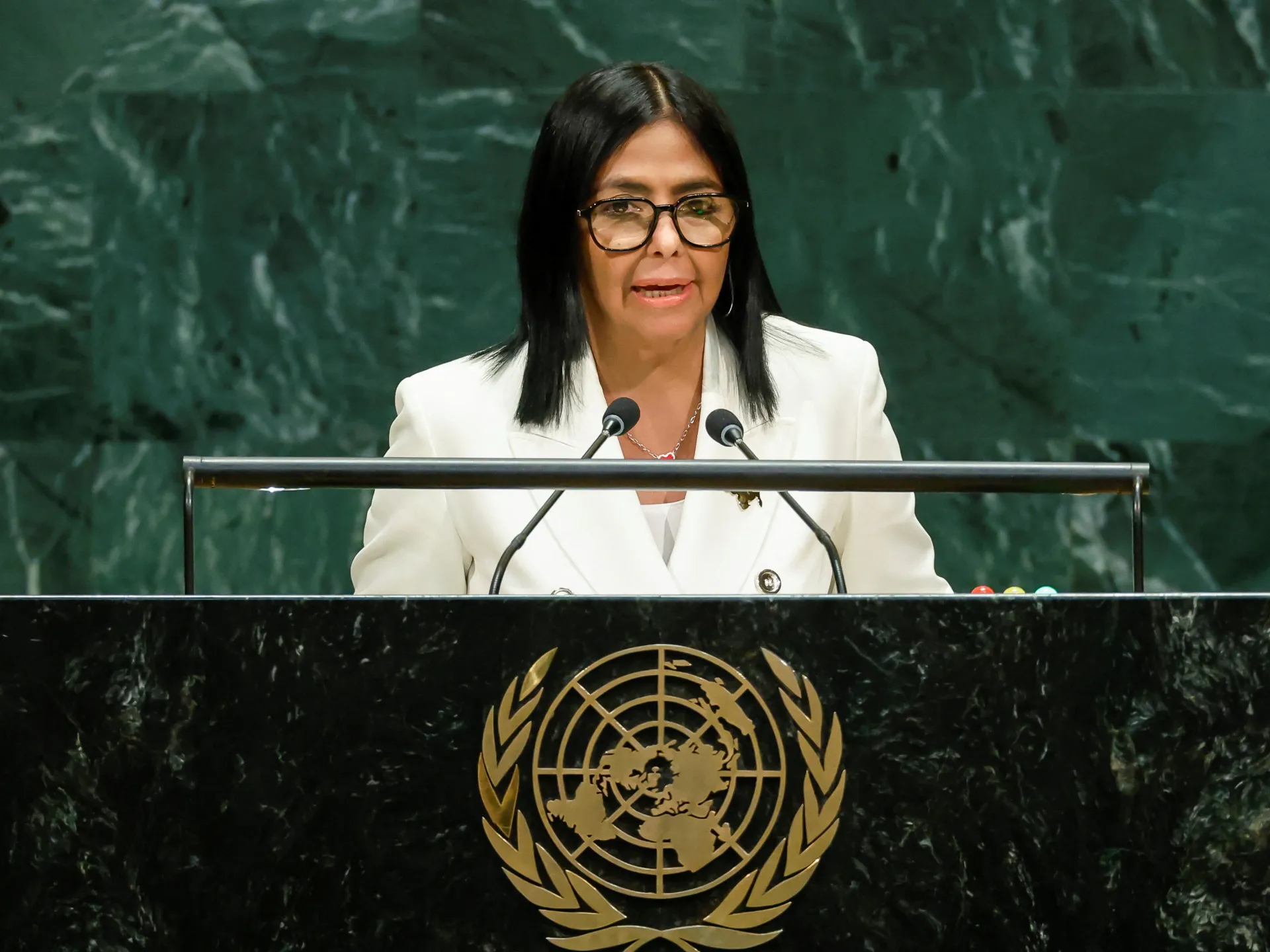
The acting president of Venezuela, Delcy Rodriguez, speaks at a pro-government event in Caracas on Monday to commemorate National Dignity Day, which marks the return of the late former president Hugo Chavez to the presidency after being ousted in a coup. Photo by Miguel Gutierrez/EPA

April 16 (UPI) — Venezuelan interim President Delcy Rodríguez has hired U.S. attorney and lobbyist Jihad M. Smaili to represent her interests in Washington and support groundwork for a possible presidential campaign, according to filings with the U.S. Department of Justice.

Records filed under the Foreign Agents Registration Act show Smaili will act as a foreign agent for Rodríguez, including assisting with her “future political campaign” ahead of Venezuela’s next presidential election, though no date has been set for the vote.

According to the filing, Smaili will represent Rodríguez in pending and future litigation involving Petróleos de Venezuela, S.A., Citgo and creditor claims. He will also provide daily advice on matters involving the U.S. State Department and the White House, independent news organization Efecto Cocuyo reported.

The contract said Smaili will “provide daily advice and counsel to the foreign principal on matters involving the Department of State and the president of the United States, including advice on how to strengthen and advance the current relationship for the benefit of the Venezuelan people.”

The agreement also describes Rodríguez as a candidate in Venezuela’s upcoming presidential elections and includes support for her “future political campaign.”

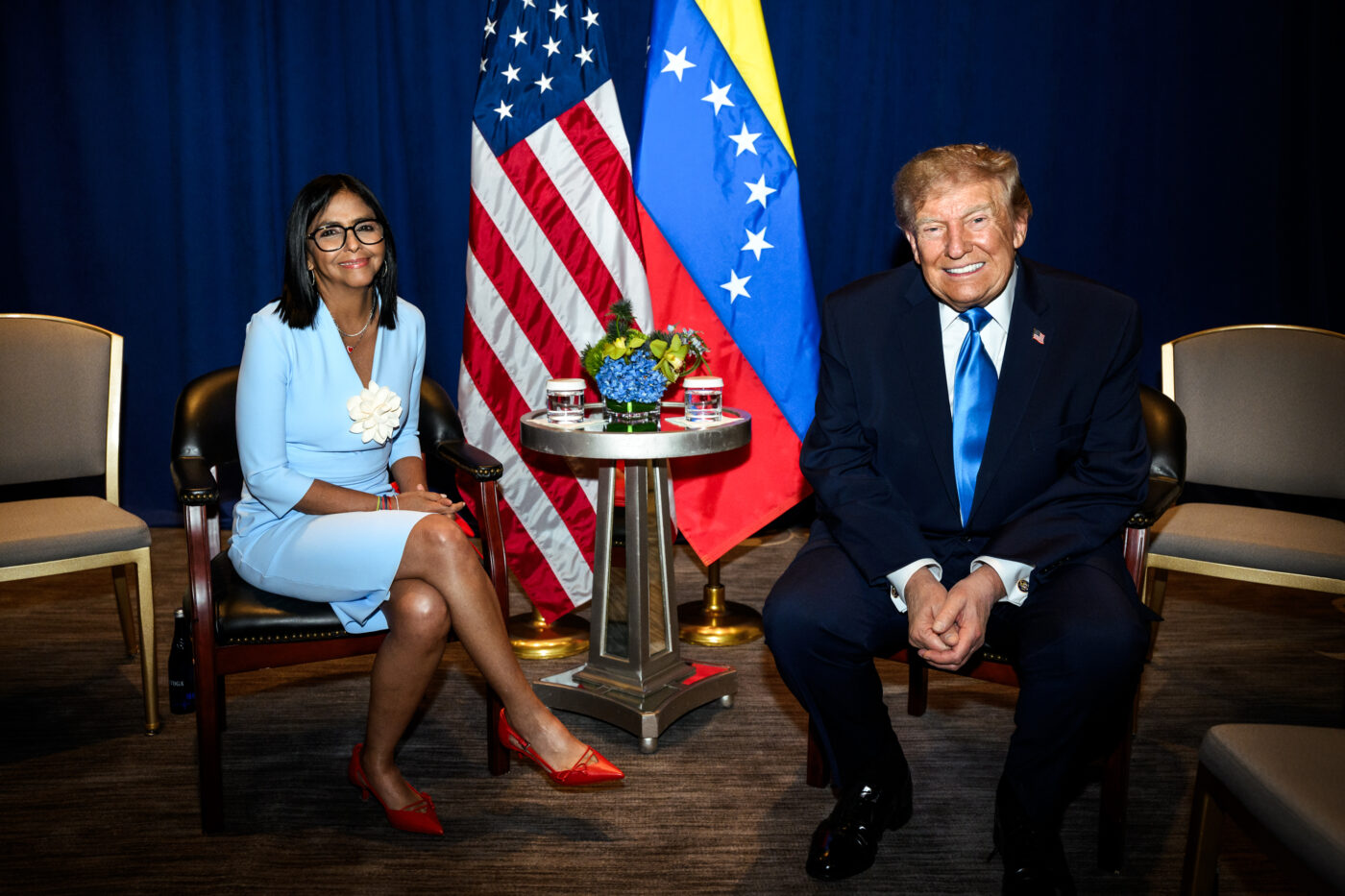
The move comes shortly after the United States lifted personal sanctions on Rodríguez and recognized her as a legitimate authority in Venezuela’s political transition.

According to Infobae, Smaili also will advise on retaining law firms involved in litigation tied to oil companies, as well as creditor claims related to cases involving the Revolutionary Armed Forces of Colombia, or FARC.

Citgo, PDVSA’s U.S.-based refining and marketing subsidiary, is at the center of multiple creditor disputes as international claimants seek to seize the asset to satisfy unpaid Venezuelan debts. A federal court in Delaware has authorized the sale of shares in the company to help cover claims totaling about $20 billion.

U.S. victims of FARC-related violence are also seeking to participate in the auction and recover about $318 million in damages.

Source link

The Network of Fake News Sites Amplifying Delcy

Behind a network of fake YouTube newscasts spreading propaganda in favor of Venezuela’s acting president, Delcy Rodríguez, lies a hidden digital structure made up of dozens of websites and social media accounts. It is a much larger and still-active operation than initially believed, designed to distribute content as if it came from independent regional outlets.

In two previous reports, Cazadores de Fake News named this influence operation “Hispan Online.” The first revealed part of the network of YouTube channels whose videos appeared as ads on Venezuelan screens, pushing narratives favorable to the Rodríguez administration. The second report confirmed that the “anchors” were not journalists, but more than 20 actors living in Argentina who were hired through an intermediary agency. The videos racked up millions of views.

The channels mimic Spanish-language news outlets, presenting their content as if it were multiple spontaneous local coverages. So far, Cazadores has identified: Hispan Online (the most prolific producer and the network’s central amplification node), Nación Argentina, Colombia Actual, Panorama Colombiano, La Perspectiva Global, México en Datos, Informe Mexicano, United Data News, Continental Report, Nación Digital MX, Chile en Datos, Argentina en Perspectiva, EC En Análisis, and El Informe Europeo. All of them are part of the network identified so far as the YouTube arm of the operation.

Logos of 12 of the “Hispan Online” network’s YouTube channels.

But Venezuelans exposed to those videos are largely unaware that the operation extends far beyond YouTube. At least 30 websites were created as part of it, publishing more than 11,000 articles in just one month. Each site links to Instagram, Facebook, and YouTube accounts bearing the same names as the fake newscasts.

Domain records for some of these websites identify QSocial, an Argentine political communications firm, as the registrant of several of them. A separate investigation by La Nación points in the same direction.

YouTube channels as the tip of the iceberg

The propaganda videos promoted through YouTube ads amassed millions of views, but the 14 channels that initially hosted them hardly resembled real news outlets. Most displayed little more than a logo, and their videos were often not publicly listed.

Some channels, however, included short descriptions and, in some cases, a website address—such as colombiaactual.co for “Colombia Actual” and nacionargentina.info for “Nación Argentina.”

Ongoing monitoring of F. G. Medios S.A. (the company that paid for the YouTube ads) through Google’s Ads Transparency Center led to the identification of 30 distinct YouTube channels. Together, they published at least 90 videos and amassed more than 47.5 million views. Following the pattern of the web addresses, additional associated sites were expected: Manual searches confirmed 30 corresponding websites.

At least five of these sites embedded YouTube playlists or windows featuring the same fake “journalists” seen in the ads.

Screenshots of four websites from the “Hispan Online” network.

All 30 domains with known registration dates were created within just nine days, between February 17 and 25, 2026. Fourteen were registered on February 20 alone. This pattern mirrors the creation of the YouTube channels, which appeared between February 18 and early March. The clustering of dates is one of several technical indicators of coordination in this influence operation.

The sites also share a common technical architecture. All run on WordPress, use Cloudflare servers, were registered via Dattatec or DonWeb, use themes developed by Ansar, and have the same Jetpack plugin installed. Articles across all sites are published by the same three WordPress users: “administrador,” “periodista 1,” and “periodista 2.”

This is not a network of independently built websites. It is a single model replicated 30 times and operated by the same group. In total, the network includes more than 90 social media accounts: 30 YouTube channels, 32 Instagram accounts, and 29 Facebook pages. As of publication, most have minimal activity and almost no followers—but the infrastructure is in place and regularly updated.

Venezuela content stands out

With 30 active websites identified, the next step was to analyze their content. Reviewing each article manually was not feasible at that scale.

To do so, Cazadores de Fake News developed a tool—with assistance from generative AI—capable of automatically downloading all articles published across the 30 sites, including full text and images. The result was a database of 11,391 articles produced in just one month.

While most articles are not about Venezuela, it is the most frequently referenced country. With 1,912 pieces, Venezuela accounts for 16.79% of all content, ahead of Brazil (14.30%), Colombia (8.83%), Mexico (8.79%), and Argentina (8.12%). The rest covers other countries, helping each site appear as a regional outlet with its own editorial agenda.

Much of the Venezuela-related content mirrors the narratives promoted in the YouTube ads: favorable coverage of Delcy Rodríguez and her brother Jorge Rodríguez (who presides the Venezuelan parliament), reporting on the new amnesty and hydrocarbons laws, and stories highlighting positive economic projections and the oil sector.

Screenshots of related articles published across “Hispan Online” websites.

The analysis also revealed another pattern: the same article often appeared across multiple sites with different headlines and slight rewrites tailored to each country, but with nearly identical core narratives. It is a form of serial production, where one base story is rewritten and redistributed to simulate independent local coverage.

One example is coverage of joint ventures between PDVSA and US oil companies. Articles published on March 16–17 across republicahoy.do, pulsonacional.mx, and panoramabrasil.info repeat identical figures (250,000 barrels per day, 22% of national output) while adapting their framing. The Dominican version adds references to Caribbean fuel prices. The Mexican version mentions the Dos Bocas refinery and the Energy Ministry. The Brazilian version refers to the Palácio do Planalto and investment opportunities for Brazil.

The texts share repeated transitional phrases—“in this context,” “on the other hand,” “diante deste cenário”—and identical section structures. The Brazilian version also contains errors suggesting automated translation, such as “empresas americana” instead of “americanas” and leaving “barriles” untranslated.

Although headlines and wording vary, these articles share one constant: they use exactly the same featured images. By comparing images across all 11,391 articles, the tool identified hundreds of such clusters. Contents largely consist of one base story, adapted and republished across multiple sites with the same photo.

Articles published across multiple websites show minor variations tailored to different national audiences.

This is the first time Cazadores de Fake News has documented evidence suggesting the use of automation or generative AI to sustain an influence operation of this scale targeting Venezuelan audiences. Producing more than 11,000 articles in one month, localized by country and language, would have been unfeasible for a small team of human writers.

The websites have so far attracted little traffic. But the infrastructure is active, content continues to be published, and the material already looks credible enough to be mistaken for real journalism.

The trail leads to QSocial

Despite the scale of the operation (30 websites, three social media platforms, and thousands of articles) those who registered the domains left traces. At least five domains lacked privacy protection, exposing registrant names and emails.

Three “.com” domains—brasilemdados24.com, ecuadorenanalisis.com, and panamaestrategico.com—list “QSN Big Data” as the registrant, linked to the email [email protected].

Two Dominican domains—diariocaribedigital.do and republicahoy.do—were registered on February 20 at the exact same second. Their records list “QSocial” as the registrant. These are different names pointing to the same corporate ecosystem.

Multiple websites in the network list QSocial or QSN Big Data—names tied to the same Argentine political communications firm—as their registrant.

QSN Big Data and QSocial are names used by the same Argentine political communications firm, which has also operated as QSocialNow. According to a March 23 investigation by La Nación, the company—led by former Chubut governor Martín Buzzi—produced the fake newscast videos. The outlet reported that the videos were recorded at the company’s offices in Buenos Aires, where actors were recruited through a casting process.

The firm also has a documented history within Venezuela’s propaganda ecosystem. After the July 2024 presidential election, it produced a poll under the name QSocialNow backing a decision from Venezuela’s Supreme Tribunal to declare Nicolás Maduro the winner, despite widespread independent evidence of electoral fraud.

All domains in the network were registered through the same Argentine provider, within the same time frame, and using the same servers. However, this investigation could not determine whether QSocial itself entered the domain registration data or whether it was done by a third party.

Cazadores de Fake News and Argentine fact-checking outlet Chequeado contacted QSocial for comment. The company had not responded at the time of publication (March 24).

An unprecedented operation in Venezuela

Although QSocial director Martín Buzzi denied involvement to La Nación, the technical records documented in this investigation and the newspaper’s sources point to the same company. Who commissioned the operation and how it was financed remain unanswered questions.

It is also unclear whether the thousands of articles about Argentina, Mexico, Brazil, and other countries are merely camouflage for the pro-Rodríguez campaign or part of parallel influence operations using the same infrastructure.

There is no recent precedent in Venezuela for an influence operation of this scale deployed in such a short period.

Before Google, Meta, or the operators themselves took down most of the YouTube channels and 15 Instagram accounts, the propaganda videos had already surpassed 47.5 million views. At the time of publication, all Facebook accounts and the 30 websites remain active.

Source link

The US Has Recognized Delcy Rodríguez. What Now?

For years, the legal fight over Venezuelan assets abroad turned on one basic question: who does a foreign government recognize as the person entitled to act for Venezuela? In the United States, that question once pointed toward the opposition-led structure tied to the 2015 National Assembly and, before that, Juan Guaidó. After Guaidó fell, Dinorah Figuera became the head of what remains of that 2015 Assembly, the Comisión Delegada. Through that entity, the opposition continued trying to preserve control over foreign assets such as Citgo and funds held abroad.

Reuters reported in 2023 that the new opposition leadership under Figuera moved to oversee foreign assets, including Citgo and gold held at the Bank of England. During the Biden administration, the State Department likewise said in January 2023 that it would continue to recognize the democratically elected 2015 National Assembly as the last remaining democratic institution in Venezuela.

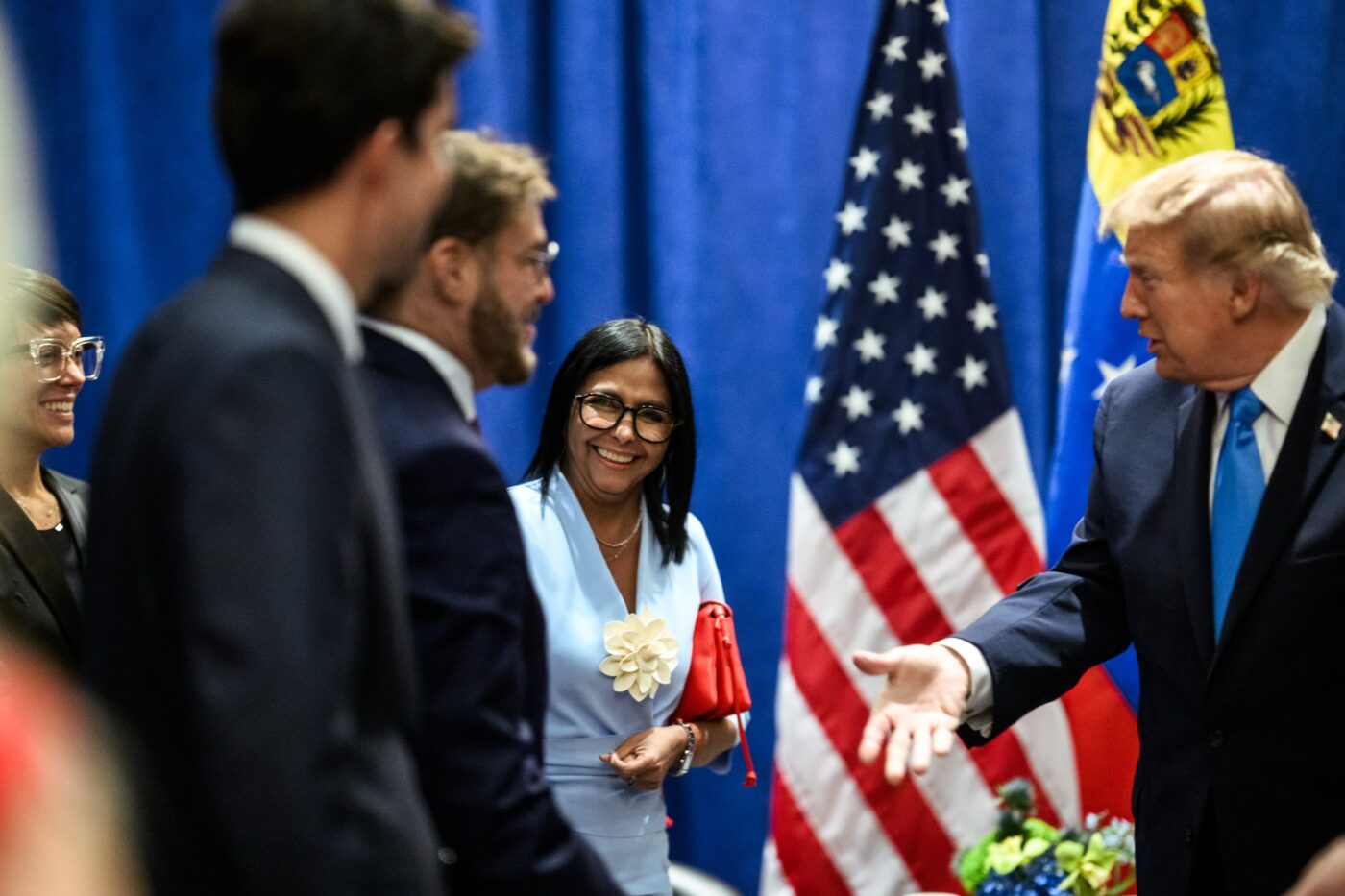
That is no longer the key US posture. In March 2026, the US government formally told a federal court in New York that the United States is recognizing Delcy Rodríguez as the “sole Head of State, able to take action on behalf of Venezuela.” The filing relied on the State Department’s March 5 statement normalizing relations with Venezuela under Delcy Rodríguez and on President Trump’s public remark that the United States had “formally recognized” the Venezuelan government. That is the legal pivot. Once Washington says who it recognizes as Venezuela’s head of state, US courts and agencies do not get to run their own foreign policy.

This is why the debate about Delcy’s legitimacy under Venezuelan domestic law, while politically important, is not the decisive question in New York, Delaware, Texas, or Washington. The majority of Venezuelan lawyers believe that Delcy Rodríguez is illegitimate. I am not arguing otherwise. However, under US constitutional law, recognition of a foreign sovereign belongs exclusively to the President of the United States.

The recognition question has shifted sharply in Delcy’s favor, even if some operational steps are still controlled by licenses, sanctions, and pending litigation.

In the case Zivotofsky v. Kerry, decided in 2015, the US Supreme Court said exactly that: the President has the exclusive power to grant formal recognition, and the nation must speak with “one voice” on that subject. Older US Supreme Court cases say the same thing in slightly different words. The practical result is simple: if the President recognizes one person as the one entitled to act for a foreign state, US courts (federal and state courts) generally follow that determination.

So, does that mean Delcy now controls Citgo? As a matter of US recognition law, the answer is yes, in the sense that authority now runs through the person Washington recognizes, not through whichever Venezuelan faction lawyers or commentators prefer. But there is one important practical wrinkle: Reuters reported that Delcy’s team still needs US Treasury clearance to take over Citgo’s US subsidiaries, and Citgo also remains entangled in ongoing court proceedings. In other words, the recognition question has shifted sharply in Delcy’s favor, even if some operational steps are still controlled by licenses, sanctions machinery, and pending litigation.

England works in much the same way. In the Bank of England gold litigation, the Supreme Court of the United Kingdom held that recognition of foreign heads of state is a matter for the executive, not the courts. The Court called this the “one voice principle”: English courts must accept the executive’s recognition position as conclusive. That is why the courts treated Juan Guaidó as the recognized head of state when the UK government recognized him. The logic is straightforward. English judges do not decide who truly won the constitutional struggle in Caracas. They follow the position taken by His Majesty’s Government.

If London does the same, the same logic will likely carry over to Venezuelan assets in England, including the gold dispute.

That is also why there is no serious legal basis for pretending that personal politics can change the answer. A lawyer may dislike Delcy Rodríguez. Another may dislike Dinorah Figuera. Someone else may prefer Edmundo González. None of that changes the recognition rule. On this issue, legal analysis is supposed to be colder than politics. If Washington recognizes Delcy, US institutions will generally treat Delcy as the person entitled to act for Venezuela. If London does the same, the same logic will likely carry over to Venezuelan assets in England, including the gold dispute. The law here is not about who we admire or dislike. It is about who the executive power of the US recognizes. Nothing else.

One last point matters. I have not found any official UK statement, as of now, publicly recognizing Delcy Rodríguez in the same clear way the United States has. A January 2026 statement by the UK Foreign Secretary referred to her as “acting President” and urged democratic steps, but it did not announce the kind of formal recognition statement the UK issued for Guaidó in 2019.

So the US conclusion is already here. The English conclusion depends on whether London takes that additional recognition step.

Source link