Discover the latest happenings and stay in the know with our up-to-date today news coverage. From breaking stories and current events to trending topics and insightful analysis, we bring you the most relevant and captivating news of the day.
Lebanese President Joseph Aoun praises the release and thanks US President Donald Trump for his efforts.
Published On 4 Sep 20264 Sep 2026
Four Lebanese citizens who were held in Israel have been released and handed over to the International Committee of the Red Cross (ICRC), the day after a first prisoner was freed.
In a statement on Friday, Lebanon’s President Joseph Aoun thanked the United States after the Red Cross facilitated the transfer. The US has been brokering talks between Beirut and Tel Aviv aimed at ending hostilities between the neighbouring countries.
Recommended Stories
list of 4 itemsend of list
Aoun expressed his gratitude “for all the efforts exerted, particularly by the US under the leadership of President Donald Trump and by international bodies, especially the ICRC”.
The ICRC confirmed that “at the request of the relevant parties, [it] facilitated the transfer to Lebanon of five individuals released from Israeli detention”.
Associated Press and Anadolu news agency reporters said they saw a convoy of ICRC vehicles heading towards the Naqoura border crossing on Friday morning and later returning. The convoy then entered a Lebanese army barracks in Tyre.
The prisoner released on Thursday was identified as Malek Ghazi.
It was the first such handover since the outbreak of the latest Israel-Hezbollah war six months ago.
Other released prisoners include Hussein Ayash from the village of Harouf and Mohammed Juheir, a fisherman from the border town of Naqoura, AP reported.
Dozens of Lebanese citizens are believed to be held in Israeli detention centres, including civilians as well as Hezbollah members captured during fighting in southern Lebanon.
The ICRC called for its teams to be granted access to the remaining prisoners unjustly held by Israel, noting that it has not had access to detainees held in Israel since October 2023.
“Many families in Lebanon are still waiting for answers about the fate of loved ones who may be detained, deceased or otherwise unaccounted for,” it said.
Clashes between the Israeli army and Hezbollah began after Israel launched its genocidal war on Gaza in October 2023. That led to over a year of hostilities that escalated into a full-blown war in 2024.
Two years later, Lebanon was fully drawn into the conflict when the US and Israel launched a war on Iran. Hezbollah, a key ally of Iran, fired rockets into Israel in retaliation for the killing of Supreme Leader Ayatollah Ali Khamenei. Israel responded with air strikes and a ground invasion that have killed at least 4,300 people in Lebanon.
China is buying ninety percent of Iran’s oil exports, settling transactions in renminbi, and hiding the rest beneath layers of shell companies. This is not defiance. It is a demonstration, conducted in plain sight, of exactly how far American economic reach actually extends.
Scott Bessent promised, when he launched Operation Economic Outcast last week, that no one would be above the reach of US sanctions. China’s foreign ministry responded by saying Beijing would do everything necessary to safeguard its own rights and interests. That exchange, watched by the rest of the world, is not really about Iran. It is about whether the threat of American secondary sanctions can force a country that has already fought several trade wars with Washington to a standstill into changing its economic behaviour. The answer, which China has been demonstrating methodically for months, is no.
How China Made Itself Immune to US Secondary Sanctions
The architecture of Chinese-Iranian trade has been specifically designed to sit outside dollar-system jurisdiction. Chinese banks and companies that buy Iranian oil settle transactions in renminbi or through barter arrangements, making them effectively immune to American extraterritorial authority. The handful of Chinese entities that still touch dollar-denominated transactions do so through shell companies that can be discarded and replaced faster than Washington can identify and sanction them. The result is the regulatory whack-a-mole problem that American Treasury officials privately acknowledge, eliminate one entity, and three more appear in its place, each more obscured than the last.
Washington could escalate by sanctioning major Chinese banks and companies that have no Iran ties at all, using them as leverage to pressure Beijing to rein in those that do. That option exists on paper. In practice, it would constitute a declaration of economic war against China’s financial system at a moment when the US economy is already strained by six months of conflict with Iran, oil prices are elevated, and midterm elections are eight weeks away. The Trump administration knows this, which is why Bessent’s ultimatum came with no major Chinese institution on the sanctions list. The threat was real. The enforcement mechanism was not.
Stay ahead of the geopolitical week.
MD Briefing delivers expert analysis across five global fronts — the Indo-Pacific, energy, geoeconomics, European security, and the Middle East — every Monday morning. Free.
What a US Victory in Iran Would Cost Beijing
China sources roughly forty percent of its oil imports from the Gulf, with Iran accounting for ten percent of that total. If the US wins this war convincingly, meaning Iran’s government collapses or capitulates and Washington reinstalls itself as the dominant security guarantor across the Gulf, the energy architecture that China has spent two decades building becomes dependent on American goodwill. Every barrel of Gulf oil that China buys would effectively pass through a security framework Washington controls.
The regional knock-on effects compound that problem. The Mecca pact between Saudi Arabia, Turkey and Pakistan, the SCO’s deepening trade and financial architecture, the China-brokered Saudi-Iran normalisation of 2023: all of these represent years of Chinese diplomatic investment in a Middle East that is gradually reducing its security dependence on the United States. An Iranian defeat that pushes regional states back under the American umbrella undoes that investment at a stroke. From Beijing’s perspective, the cost of buying Iranian oil at a discount and absorbing American secondary sanctions is considerably lower than the cost of losing the regional influence that Iran’s survival helps sustain.
Neither Ally Nor Bystander
The SCO summit in Bishkek last week illustrated Beijing’s position with more precision than any official statement. Xi met Putin and Modi bilaterally. Iran’s President Pezeshkian attended the summit and held consultations at foreign minister level. He was not invited to Beijing. He did not get a Xi bilateral. That calibrated distance is deliberate, and it reflects a Chinese calculation that is more sophisticated than either alliance or abandonment.
Beijing does not want Iran to lose. It also does not want Iran to win so completely that Tehran’s regional hegemony destabilises the Gulf relationships China has been cultivating. The Chinese position, buying Iranian oil, refusing to arm Iran, keeping diplomatic engagement at arm’s length, is designed to keep Iran functional without making China responsible for Iranian behaviour. It is the foreign policy equivalent of keeping a fire burning without touching it.
Xi’s scheduled visit to Washington later this month, coming directly after the Bishkek summit, reinforces this reading. Beijing is simultaneously demonstrating to Iran that it has economic backing and demonstrating to Washington that it has strategic restraint. Both demonstrations serve Chinese interests. Neither requires China to choose a side.
Five Things Worth Watching
Whether Xi’s Washington visit produces any concrete understanding on Iran-related secondary sanctions. If the two sides agree on a framework that gives China cover to quietly reduce Iranian oil purchases over time, the sanctions architecture gains traction it currently lacks. If the summit produces only standard language about constructive competition, Operation Economic Outcast’s China problem remains unresolved.
The SCO Development Bank’s progress toward implementation. If the bank moves from agreement to operational institution in the coming months, it creates dollar-independent financing infrastructure that makes secondary sanctions significantly less effective not just for China-Iran trade but for the broader Eurasian trade network the SCO is building.
Whether any Chinese entity on the August sanctions list is large enough that its designation produces real disruption rather than being absorbed and routed around. The signal from August’s first wave was that Washington sanctioned deliberately small targets. The size and visibility of the next wave’s targets will tell you how seriously Washington is willing to press China.
India’s position on renminbi settlement for its own Iranian oil purchases. If Delhi follows Beijing’s approach and expands non-dollar settlement for energy trade, the secondary sanctions architecture faces a second major exemption that Washington is even less able to address given how carefully it has been courting India.
Iran’s currency trajectory. The rial has hit record lows despite Chinese oil purchases continuing. If the currency continues to deteriorate even with Chinese demand stable, it suggests Operation Economic Outcast is landing on Iran’s non-oil economy in ways that the Chinese lifeline cannot fully offset which changes the pressure calculus regardless of whether Beijing complies.
The Bottom Line
Washington designed Operation Economic Outcast to isolate Iran. What it has demonstrated is the outer boundary of American economic jurisdiction in a world where China has spent a decade building the infrastructure to sit outside it. Renminbi settlement, dark fleet shipping, teapot refineries, shell company networks, these are not improvised workarounds. They are a parallel financial architecture, constructed precisely for this contingency, and it works well enough to keep Iranian oil flowing at volumes Washington cannot stop.
The deeper problem for the Trump administration is not that China is defying its sanctions. It is that China is proving, transaction by transaction, that the sanctions cannot be enforced against a country of sufficient size and sufficient preparation. That demonstration has an audience well beyond Beijing and Tehran. Every country currently watching whether to comply with American secondary sanctions is learning the same lesson: the reach of US economic power has a ceiling, and China has found it.
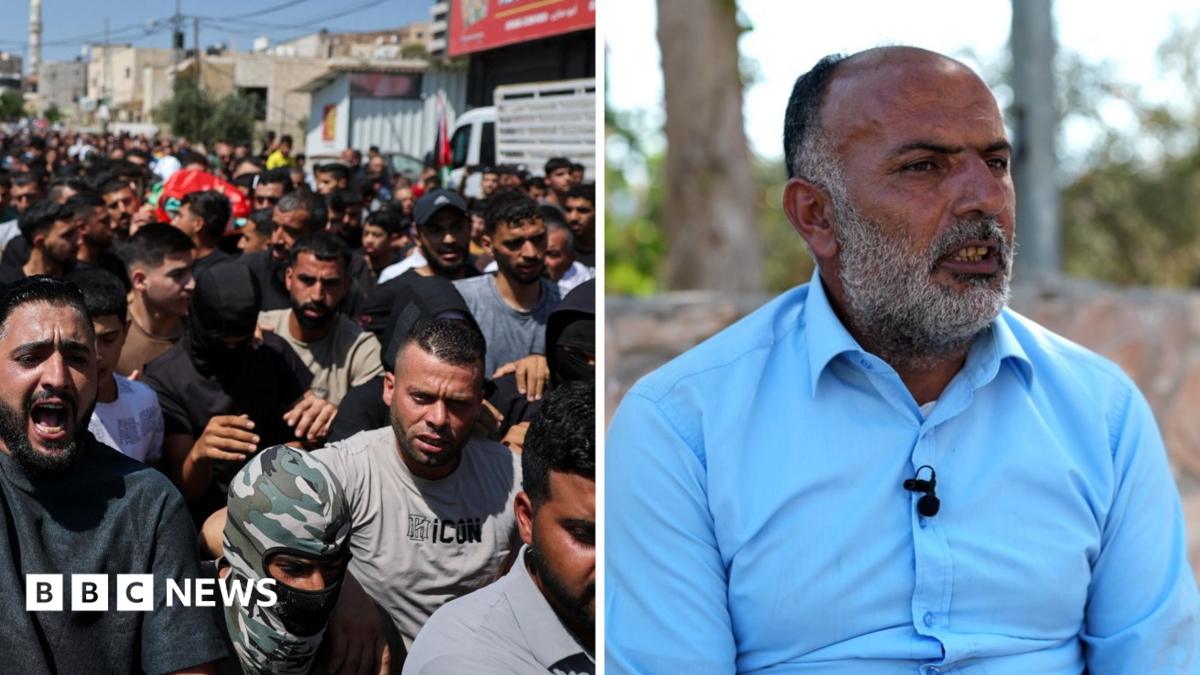
Funerals have taken place for two Palestinian teenagers who were shot dead this week when settlers and soldiers entered a Palestinian village in the occupied West Bank.
The killing of Omar al-Naasan and Khalil Abu Alia comes amid near-daily attacks by Jewish settlers in the village of al-Mughayyir, south of Nablus.
“We expect that when our sons walk in the street, they are likely to return to you injured or killed,” Mohammed Al-Naasan, Omar’s father, told the BBC.
Israel’s military says it fired on “instigators of a violent riot” and that the incident is under review.
The United Nations says more than 80 Palestinians have been killed by Israeli forces or settlers in the territory since the beginning of the year.
FOUND a lovely new partner? Great, but be aware she’s probably already drawing up a list of which of your friends you won’t be seeing again.
Your ex
She’s convinced you’re still carrying a torch for her, and must therefore never be in contact. Insisting the split was amicable and you’re merely friends now is just conclusive proof you’re desperate to rekindle your lost passion. Your new girlfriend is just being paranoid, apart from those 2am drunk-dialling calls begging your ex to have you back.
The womaniser
You shouldn’t be hanging around with good-looking gigolos now you’re with her, and any womanisers must be replaced with good, clean, homely lads. She’ll tell you it’s because he’s a sexist pig who treats women like objects. But won’t mention she shagged him on a filthy one-night stand just after you met, and would prefer you didn’t find out. To be honest, you’d prefer to overlook his undoubtedly better sex skills too.
The pisshead
Why would you want to go on all-day benders with Tom now you’re with her and could be spending your Saturdays shopping for clothes or going on country walks? If you want to keep having sex, drop him like hot bricks. All your mates will laugh and call you under the thumb, which you will vehemently deny. It’s more like being tagged with strict bail conditions.
The ugly one
There’s no point in you having pig-ugly friends she can’t matchmake her single pals with, so goodbye Carl. You may have been best friends since primary school but a geek with massive ears and ginger hair is now obsolete. The fact that none of her friends are in danger of landing modelling contracts and could do with a few Carls as back-ups will go completely over her head.
The Friday night football crew
Friday evenings are for taking her to expensive restaurants now, not playing five-a-side with your mates before a few beers. Take it on the chin and accept that’s the price of an occasional blowjob these days. In fairness, you were shit at it anyway, and the others only let you join in because you booked the sports hall every week.
As the United States and Iran exchanged attacks this week, one date was increasingly looming over the conflict.
The US midterm elections on November 3 could prove a pivotal moment in the war, as senior advisers to President Donald Trump seek to prevent the conflict from returning to all-out war before the polls when Republicans will be defending narrow majorities in both houses of Congress.
Recommended Stories
list of 4 itemsend of list
The push for restraint comes as Washington turns to economic pressure on Iran instead of military force. In August, the Trump administration announced its so-called “Economic D-Day”, imposing sanctions on 60 entities that it says facilitate oil revenues for trade with Iran and threatening other countries doing business with Tehran with secondary sanctions.
At the same time, the US naval blockade of Iranian ports in and around the Strait of Hormuz continues to exert pressure on Tehran’s oil exports.
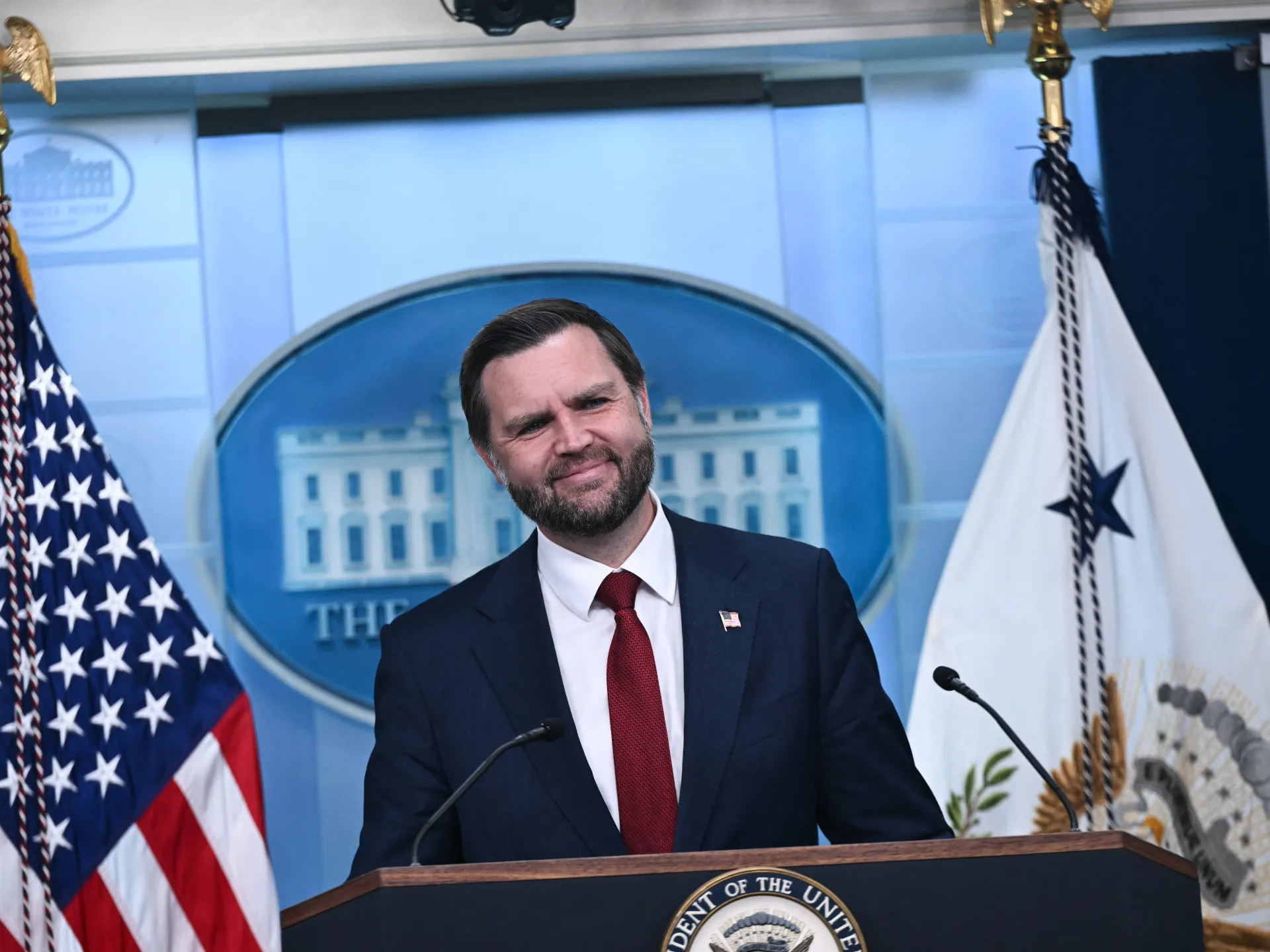
Vice President JD Vance has meanwhile sought to downplay the war, which the US and Israel launched with attacks on Iran on February 28, as rising fuel prices and public opposition in the US threaten to become political liabilities for Republicans before the vote.
But there are clear limits to the restraint the Trump administration can show, with US forces continuing to strike Iran in recent days, and US leaders insist that further military action remains an option. Vance said this week that “everything that could happen is on the table,” including economic, military, diplomatic and covert pressure.
That leaves the coming two months as a particularly tricky period to navigate. Washington will want to avoid an all-out war while ratcheting up economic pressure, but Iran has its own calculations and could respond militarily anyway, potentially forcing the US into an escalation it would rather avoid before Americans go to the polls.
Here’s what we know.
Why do the midterms matter for Trump?
The midterms will determine whether the Republican Party can retain its narrow control of Congress. If the war escalates again before then, that could persuade more people to vote against the Trump administration.
Containing the fighting until November, therefore, may help prevent an already deeply unpopular war from dominating the political agenda.
A late-August Reuters/Ipsos poll suggested that just 31 percent of Americans support the war, compared with 63 percent who oppose it. Trump’s approval rating has also fallen since the outbreak of hostilities, from 40 percent to 33 percent, according to Reuters/Ipsos polling.
Observers say the Trump administration did not expect things to get to this point.
In early March, Trump insisted the war would last for “four or five weeks”. Instead, the conflict has dragged on, and unexpected consequences – including Iran’s closure of the Strait of Hormuz causing energy prices to spike – have made it even more unpopular with US households.
US diesel prices hit a record high on Thursday, surpassing the previous peak recorded in 2022, as higher crude oil prices and refining bottlenecks drove up the cost of a fuel that underpins much of the US economy.
That is particularly damaging for a president who campaigned partly on a promise to dramatically reduce energy costs – as well as not to get involved in “unnecessary” wars.
The fallout from the war has not stopped at the petrol pump. Sustained increases in fuel and transport costs feed into the price of groceries, manufactured goods and other everyday purchases – potentially worsening inflation when Democrats are making the cost of living a defining issue for the midterm campaign.
A Politico poll conducted in August suggested that 61 percent of Americans believe the Iran war had made life more expensive for their families, four percentage points higher than a month earlier.
Can Trump keep the war contained until November?
There are signs that his administration is trying to do exactly that.
In recent weeks, Washington has intensified its campaign to economically isolate Iran, threatening severe sanctions against countries that continue trading with it while maintaining military pressure around the Strait of Hormuz.
With strikes on Iran earlier this week, Trump has also indicated he is willing to engage in sporadic attacks, while trying to keep the war from escalating back to all-out conflict.
Senior administration officials have simultaneously sought to play down the scale of the military confrontation. Asked at a White House briefing whether the Iran war would be resolved before the midterm elections, Vice President JD Vance said he “wouldn’t call it a war” and claimed there was “no active shooting right now”.
Asked when Iran would stop attacking commercial shipping, Vance said: “You would have to ask the Iranians.” He also said the conflict was having “less effect day by day” on global energy markets. The US claims it is escorting about 30 ships per night through the Strait of Hormuz – and officials claimed some 18 million barrels of oil were transported through on Tuesday this week. However, shipping data does not appear to fully support this claim.
Trying to maintain a strategy of “no war, no peace” with sporadic attacks is high-risk, analysts have warned. Negar Mortazavi, senior fellow at the Washington, DC-based Center for International Policy, told Al Jazeera this week: “Tehran will not capitulate under [economic] pressure. Both sides may believe they can control the escalation, but every new exchange increases the risk of a wider regional conflict.”
One of the US attacks this week is also believed to have hit a civilian home where a wedding was taking place in Kuhestak, southern Iran, killing at least four people, including children, and wounding dozens.
Furthermore, The Washington Post reported on Sunday that senior Army, Navy and Air Force leaders have warned Pentagon chief Pete Hegseth in a written assessment that continuing the war at its current pace is unsustainable and risks undermining US military readiness in other parts of the world.
Trita Parsi, executive vice president of the US-based Quincy Institute for Responsible Statecraft, told Al Jazeera that this week’s attacks point to a US strategy that remains deeply unsettled.
“I think it’s quite likely that what we’re seeing right now is just complete military, strategic disarray on the American position in which the positions, the actions, the tactics, the strategies keep on getting changed,” Parsi said.
Washington had imposed sweeping economic sanctions on Iran in an apparent attempt to make further military intervention unnecessary, he noted. “Seven days later, the US is back into bombing Iran.”
The US appears to be “jumping from one position to the other”, he added.
What are Iran’s calculations?
While the most recent attacks between the US and Iran have been less intense than the heavy exchanges seen in the early weeks of the war and during the two flare-ups in July, the risk of escalation is high. And it may be in Iran’s interests for that to happen sooner rather than later.
Iran has excelled at the use of asymmetric warfare against an enemy with considerable military might – using cheap, mass-produced drones to exhaust US supplies of very expensive defensive systems, and launching attacks on US allies around the Gulf, sowing disharmony.
In particular, Tehran has demonstrated that it can severely disrupt maritime traffic through the Strait of Hormuz, causing global economic consequences.
Continued Iranian attacks on US or regional military assets, shipping or energy infrastructure would place pressure on Washington to retaliate more strongly than via the few attacks it has carried out this week, creating the possibility of an escalatory cycle that could return the two countries to a much wider war regardless of the White House’s electoral calculations.
Furthermore, Washington’s economic strategy to isolate Tehran – an attempt to move away from open warfare – may in fact create a greater Iranian incentive to retaliate.
Parsi told Al Jazeera that Iranian officials appear to believe Trump ultimately intends to restart the war on a larger scale but is just waiting until after the midterms.
That creates a potentially dangerous calculation for Tehran, where it is better to escalate now – while Trump is at his most politically vulnerable. “The reaction of the Iranians to that might be to actually trigger the war themselves early right before the midterm elections in order to maximise the pain that will impose on the US president,” Parsi said.
What happens after November?
Reuters reported on Wednesday that senior White House officials are already considering whether to intensify military operations against Iran after the November 3 vote, although no decision has been made on returning to full-scale conflict, it reported.
A Republican victory in the midterms could give Trump greater political room for this option, particularly if the administration interprets the result as approval – or at least lack of enough disapproval – for the war despite the economic consequences for voters.
A Republican defeat presents a more complicated picture, however. On the one hand, losing one or both chambers of Congress will constrain the administration, as Congress controls government funding. Democratic control of the House or Senate would also give Trump’s opponents greater scope to hold hearings, investigate the US conduct of the war and challenge requests for additional military spending.
Conversely, with Trump no longer facing a congressional election, he may feel less pressure to contain the war, experts fear.
Parsi warned that an electoral defeat could therefore have the opposite effect to what Tehran might expect.
“I’m not so sure that it’s going to pay off necessarily for the Iranians because a Trump that is humiliated at the elections, who is faced with a Democratic [majority] House [of Representatives] and potentially a Democratic Senate, may also become a much more desperate and reckless president,” he said.
Resignations come after documentary alleges party arranged for overseas company to fund polling.
Published On 4 Sep 20264 Sep 2026
Two officials from Britain’s Reform UK have stepped down amid the latest in a series of funding scandals for the far-right political party.
Party officials James Orr and Dan Jukes announced on Friday that they would step down, following the broadcast of an investigative television documentary. The party, which has seen support slide amid numerous reports regarding infringement of party donation rules, said it would launch a probe into the latest allegations.
Recommended Stories
list of 2 itemsend of list
The undercover investigation by Channel 4 News alleged that the Reform UK officials breached political donation rules by arranging to have polling paid for by an overseas company.
In the documentary, Jukes is seen suggesting to an undercover reporter how to evade electoral law to make donations to the party from abroad.
Sitting at the table, Party leader Nigel Farage says all is “above board” as the reporter tells him that he has been in talks with Orr for some time.
The resignation of long-term Farage aide Jukes, and Reform’s head of policy Orr, comes on the eve of the party’s annual conference.
Farage – who has been dogged by questions over money received on a personal basis as well as by Reform in recent months – insisted on Friday in a radio interview that the party has “broken no laws”.
However, he added, “entrapped conversations don’t look good, and that’s why we’ve [launched the party investigation]”.
A spokesperson for London’s Met Police said it was “aware of media reporting … involving political party donations and an alleged breach of the Political Parties, Elections and Referendums Act 2000 relating to polling”.
The ruling Labour Party, as well as the opposition Liberal Democrats, said they had reported Reform to the police following the revelations, which the anti-immigration party initially dismissed as a “hoax”.
Farage sought to hit back by accusing other political parties of “selling peerages”.
“In the world of political funding, all sorts of things have been done over decades that are wrong,” he asserted. “We as a party have done nothing wrong. A couple of our contractors have said things that shouldn’t have been said.”
Amid the series of funding scandals to have hit Reform in recent months, the disclosure of an undeclared personal gift of 5 million pounds ($6.7m) to Farage by cryptocurrency billionaire Christopher Harborne has done the most damage so far.
Both criminal and parliamentary investigations into Harborne’s donations – he has also given Reform more than 25 million pounds ($33.6m) – are continuing.
Scrutiny is focused on Tether, Harborne’s cryptocurrency, which has been widely linked to drug cartels, fraud and human trafficking.
Amid the storm, Farage made international headlines by resigning his parliamentary seat to prompt a by-election, in which he cast himself as taking on “the establishment”.
With other major parties dismissing the move as a stunt and refusing to put up candidates, the populist leader won comfortably, although the nearly 10,000 votes achieved by his closest rival, “intergalactic space warrior” Count Binface, illustrated significant opposition.
“Over the last five or six years, man-to-man pressure has become bigger,” Kane says.
“European football is physical and top teams are trying to win the ball back high, trusting their defenders and midfielders to defend man for man to win their battles.”
Given that change, the best teams have recruited physical athletes and brilliant dribblers who can beat their man when the game becomes a series of one-against-ones.
Kane, not known for his dribbling – and by his own admission “not the fastest”, has thrived on his own terms.
Against Dortmund, there was a specific moment Kane dropped deep, looking to arrive in space unmarked. Recognising the danger, two players converged on the Englishman.
Kane’s dribbling is cerebral. His speed of thought provides him solutions to problems others would attempt to solve with their feet alone.
After getting low and using his strength to shrug centre-back Waldemar Anton off him, Kane rose, slightly adjusting his body to the right. These micro-adjustments are a hallmark of his game and through them he is able to shift an entire team’s momentum.
Fooled by this feint, Daniel Svensson and Jobe Bellingham found themselves wrong-footed as Kane snapped the ball back the other way, opening up the entire pitch from within Bayern’s half.
Two workers have been pulled alive from a hydropower tunnel nine days after deadly flash flooding hit Nepal. Rescuers say hundreds more are trapped in dozens of hydropower projects buried across the area.
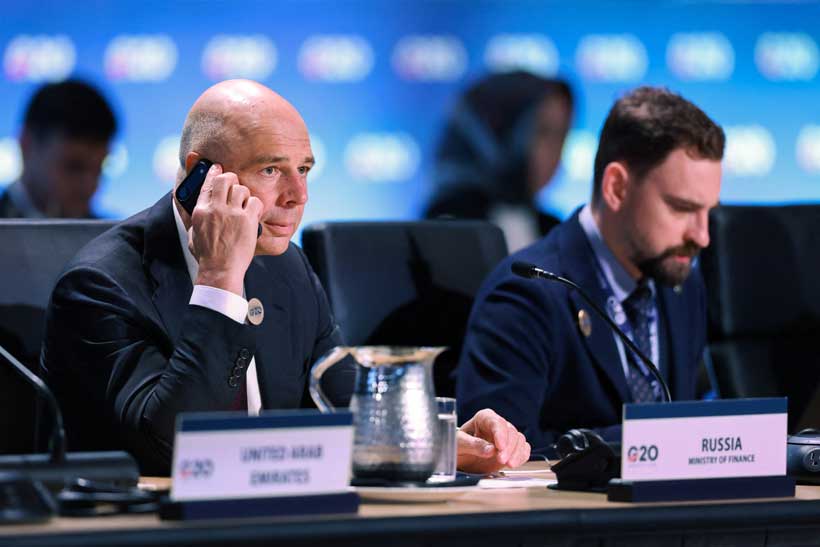
On 31 August, in Asheville, North Carolina, Anton Siluanov sat down at a G20 finance ministers’ meeting for the first time since Russia invaded Ukraine. When he tried to open a conversation about areas of mutual interest, US Treasury Secretary Scott Bessent cut him off: nothing is possible until the war is over. European ministers refused to appear beside him in the traditional group photograph, and the photograph was taken without him.
The snub is not the story. The composition of the delegation is. Ten days earlier, Deputy Foreign Minister Sergey Ryabkov had told a Russian outlet that Moscow was ready to hear new ideas for ending the war, provided they aligned with the goals Putin has set and with realities on the ground. Read alongside Asheville, that statement stops looking like an opening and starts looking like an invoice. Moscow is not testing whether it can stop fighting. It is testing what stopping would be worth, and it sent its finance minister to find out.
The Missing Fifth of Donetsk
Stay ahead of the geopolitical week.
MD Briefing delivers expert analysis across five global fronts — the Indo-Pacific, energy, geoeconomics, European security, and the Middle East — every Monday morning. Free.
Four and a half years in, the war has settled into an asymmetry that neither side’s rhetoric captures. Russian forces hold roughly 80 percent of Donetsk oblast and virtually all of Luhansk, according to the Institute for the Study of War. The missing fifth of Donetsk is the “fortress belt”, the fortified urban chain of Kostiantynivka, Druzhkivka, Kramatorsk and Sloviansk that has anchored Ukraine’s eastern defence since 2014. Putin has issued fifteen separate deadlines to take Donetsk since 2022 and missed all of them. The current one expires on 31 December 2026.
Diplomacy has been dormant since March, when a scheduled round collapsed as Washington went to war with Iran alongside Israel. Before that came a 28-point American framework, drafted with Russian input in late 2025, that would have recognised Crimea, Luhansk and the whole of Donetsk as de facto Russian, frozen the southern front, and phased Russia back into the global economy. Kyiv and Europe forced it into revision. In August, Volodymyr Zelensky put forward a joint Ukrainian-American-European counter-proposal built on three planks: a ceasefire, reciprocal withdrawal from the current line, and security guarantees underwritten by the EU and NATO. Moscow has not responded to it.
Unlike North Sea oil, most of which is exported and then reimported in various refined forms, almost all North Sea gas is used domestically in the UK.
The UK is heavily reliant on gas imports with over 60% imported from Norway and the United States.
Wholesale natural gas prices have surged this year as a result of the Iran war and are currently at a three-year high, prompting concerns over energy security.
Gas storage levels in Europe are significantly lower than usual for this time of year after countries delayed stockpiling in the summer in the hope that the conflict would end before winter and prices would in turn fall.
They face the prospect of rushing to buy gas now or paying potentially higher prices when the winter comes.
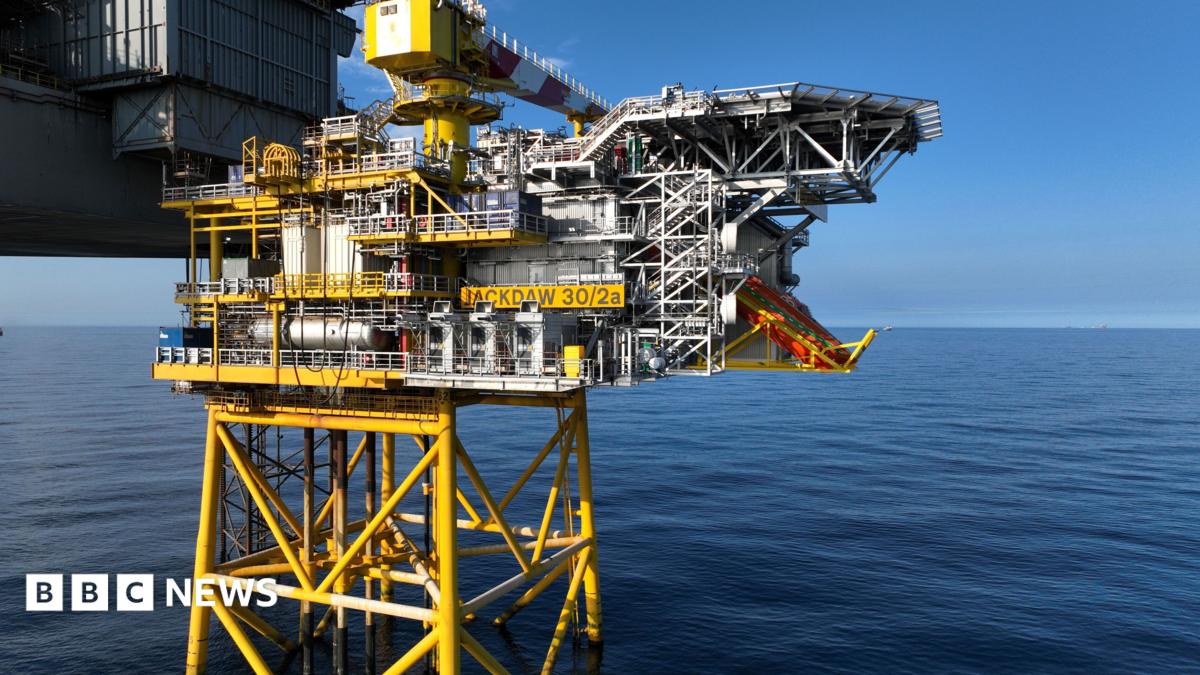
Prices are set internationally and a green light to Jackdaw would not lower the cost of gas for domestic consumers.
But extracting gas domestically creates lower greenhouse gas emissions than liquefying, shipping and regasifying liquid natural gas (LNG) imported from other countries.
Chris O’Shea, the boss of British Gas owner Centrica, said any additional domestic gas supply would reduce Britain’s reliance on imported fossil fuels, “so it’s got to be good”.
He told the BBC’s Today programme: “It wouldn’t lower the cost materially, but basic economics would tell you that if you’ve got a fixed demand for a product and you increase the supply, the price should move.”
He also pointed to the high tax rates on profits from North Sea oil and gas, adding that the new extraction would give the government more money to spend.
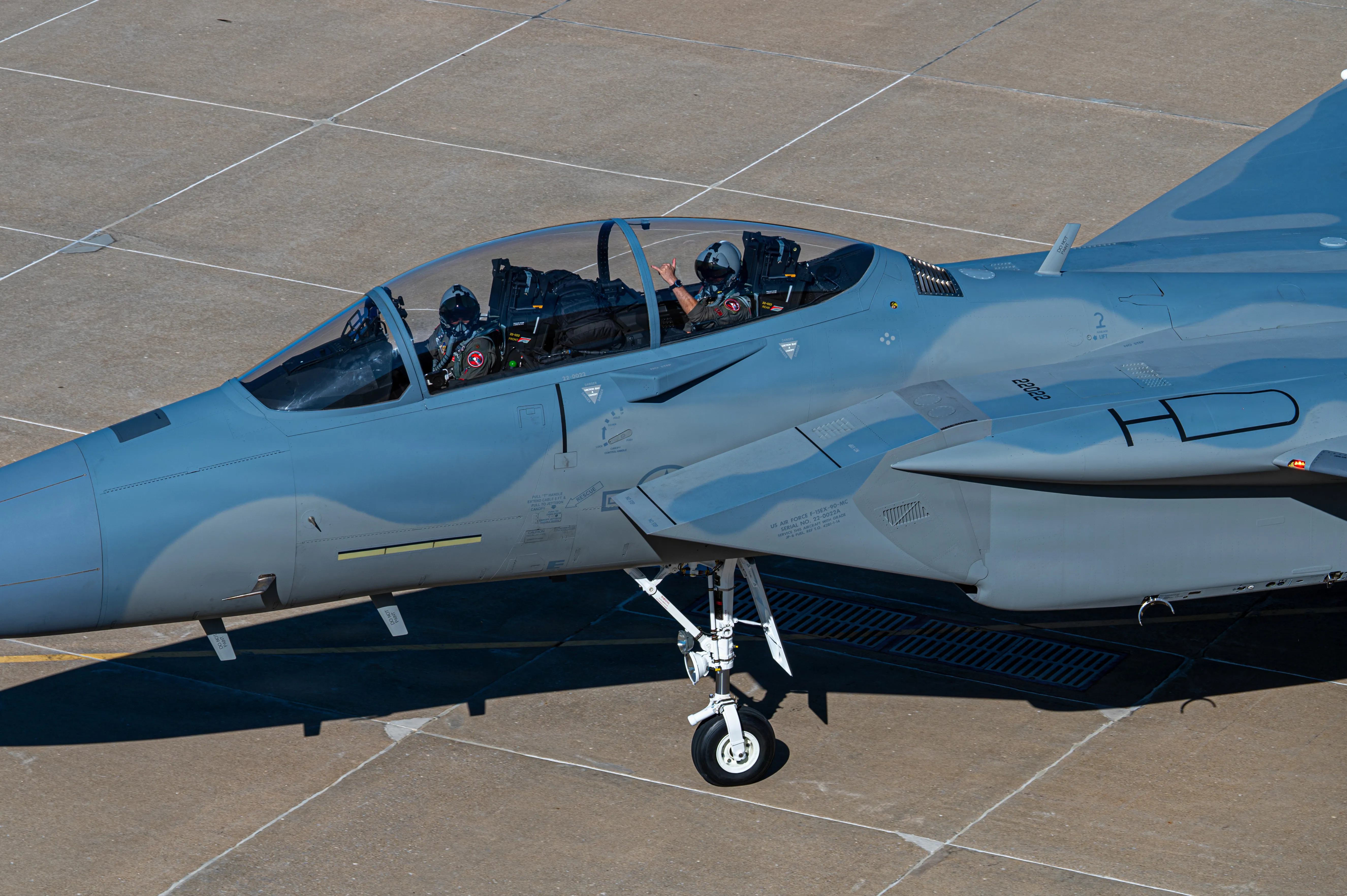
The first F-15EX Eagle II destined for permanent assignment at Kadena Air Base in Okinawa departed Boeing’s St. Louis, Missouri, facility on August 28, 2026. The aircraft left St. Louis for the 142nd Wing at Portland Air National Guard Base, Oregon, where it will undergo final staging and integration preparations before its eventual deployment to the sprawling Okinawa installation it will call home. The Oregon unit is acting as a coordination and preperation unit for the 18th Wing, a function you can read more about in our interview with the wing’s commander.
A first F-15EX Eagle II designated for Kadena Air Base, Japan, taxis at Boeing’s St. Louis facility. U.S. Air Force photo by Senior Airman Melany Bermudez
This departure represents a critical, long-awaited milestone for the 18th Wing, which has been working toward the permanent stationing of the service’s most advanced Eagle variant to replace its now-withdrawn F-15C/D fleet. The arrival of the F-15EX in Japan, expected to begin in fiscal year 2027, which begins on October 1, 2026, will be a central pillar in the Air Force’s modernization of tactical airpower in the Indo-Pacific region.
“This is an important next step toward bringing the F-15EX home to Kadena,” said Brig. Gen. John Gallemore, 18th Wing commander, in an Air Force release. “Our team is ready to welcome the F-15EX, and this is another milestone that brings us closer to putting this capability in the hands of the airmen who will fly, maintain and employ it from Japan.”
The first F-15EX for Kadena Air Base, Japan, at Boeing’s St. Louis facility last month. U.S. Air Force photo by Senior Airman Melany Bermudez
The first F-15EX for Kadena’s 18th Wing, serial 22-0022, was noted flying test sorties from St. Louis in early August, initially in primer paint. By the middle of the month its was flying with its full livery, including the famous “ZZ” tail code.
The F-15EX is a significant jump in capability over the legacy Eagles. With modernized avionics, flight controls, an expanded electronic warfare suite, and increased weapons carriage — as well as potentially new and longer-reaching weapons — the jet is well-suited to operating in the vast Western Pacific. As Kadena prepares for the permanent arrival, the 18th Wing plans to integrate the EX with regional allies, including the Japan Air Self-Defense Force, building upon existing bilateral training exercises.
A U.S. Air Force F-15EX Eagle II and F-15E Strike Eagles assigned to 85th Test and Evaluation Squadron, Eglin Air Force Base, Florida, land at Kadena Air Base in June 2026. U.S. Air Force photo by Airman 1st Class Gracelyn Hess
The F-15EX will give U.S. forces in the Indo-Pacific a high-capacity platform that complements the fifth-generation F-22 and F-35. With its ability to carry large air-to-air and air-to-surface payloads, the Eagle II can serve as a long-range “missile truck,” extending the reach and firepower of stealth aircraft operating closer to contested airspace. Its open-architecture systems also allow it to incorporate new sensors, weapons, and electronic warfare capabilities more readily than the aging F-15C/D fleet.
The first F-15EX designated for Kadena Air Base, Japan, is photographed at Boeing’s St. Louis facility, on August 28, 2026. U.S. Air Force photo by Senior Airman Melany Bermudez
The aircraft’s value is also tied to its role in networked operations. Exercises such as Valiant Shield have demonstrated how the F-15EX can work with uncrewed aircraft like the MQ-28 Ghost Bat, pointing toward mixed formations in which crewed fighters provide weapons, sensing, and command-and-control capacity for autonomous wingmen. Operating from strategic locations such as Kadena, the Eagle II could help the Air Force generate more combat power across the vast Pacific while reducing the burden on its limited number of stealth fighters.
A U.S. Air Force F-15EX Eagle II accompanies an MQ-28 Ghost Bat during the U.S.-led Valiant Shield 26 military exercise. PACAF
Kadena will become the second Air Force location with combat-coded F-15EX aircraft, following the Oregon Air National Guard’s 142nd Wing.
While the movement of this first Kadena-bound F-15EX is a positive step, the wider Eagle II program is currently navigating some issues. According to a new Pentagon selected acquisition report released in August, the Air Force’s decision to aggressively expand its F-15EX fleet from 129 to 267 jets — intended to recapitalize the older F-15E force — has introduced substantial cost and schedule uncertainties that officials are now scrambling to manage.
The first F-15EX designated for Kadena Air Base, Japan, taxis at Boeing’s St. Louis facility, before departing for Portland Air National Guard Base, Oregon. U.S. Air Force photo by Senior Airman Melany Bermudez
The report warns that the extended acquisition strategy, which shifted from eight production lots to 12, will require Boeing to execute a “major technical refresh” to combat diminishing manufacturing sources and material shortages. As systems like the radar, mission computer, and engines face potential obsolescence over the now-lengthened production timeline, the service faces what the report characterizes as a “significant redesign effort.” Program managers are planning to mitigate these risks by integrating upgrades through operational flight program releases scheduled between 2031 and 2035, a strategy they describe as a “structured, risk-reduced pathway” to avoid production line gaps.
Compounding these technical challenges are tangible production delays, largely stemming from a labor strike at the St. Louis plant from August to November 2025. The report notes that these are “unrecoverable delays,” forcing a cascading schedule slip. While Boeing was contracted to deliver all 12 jets from Lot 3 by early 2026, the company will only be able to field half of those by the end of the year. This has directly impacted the timeline for the Kadena deployment, which was originally envisioned for earlier in 2026, and has left the Air Force relying on “bridging strategies” and rotations to cover operational requirements until the Eagle IIs can fully stand up in Okinawa.
The first F-15EX for Kadena Air Base, Japan, flies en route to Portland Air National Guard Base, Oregon, after departing Boeing’s St. Louis facility, on August 28, 2026. U.S. Air Force photo by Senior Airman Melany Bermudez
The Pentagon is now moving toward an aggressive production ramp-up, tasking Boeing to hit a rate of two jets per month. Keeping the F-15EX schedule on track will be a challenge, however, requiring successfully navigating ongoing parts shortages for critical systems, all while balancing the needs of foreign military sales customers who are also integrated into the supply chain.
For the 18th Wing, the arrival of the first F-15EX will bring a major advance in capabilities in a part of the world that needs them badly. At the same time, the program’s overall trajectory suggests that the wider transition to the new Eagle will come with some complex logistical and industrial challenges.
Critics argue that the administration’s arcade games prioritise entertainment over pressing issues like rising costs and foreign conflicts.
Published On 4 Sep 20264 Sep 2026
The White House’s unveiling of five arcade-style games on its website, each believed to be promoting a different policy of United States President Donald Trump’s agenda, has ignited backlash, with critics accusing the administration of prioritising entertainment over addressing rising living costs and the ongoing war on Iran.
Announced on Thursday, the games include “Build the Wall” where players run to capture little green figures before they reach a border wall; “Rio Run”, a Snake-style game in which players gather border crossers along a fence; “Supply Line”, in which players reject food items that fail to meet “Make America Healthy Again” standards; “Flappy Bill,” a Flappy Bird-style game in which a bald eagle carries legislation over the National Mall; and “Trump Savings Tycoon”, in which players catch flying cash and gold bars to “fill your kids’ Trump Accounts,” in reference to the administration’s child savings programme.
Recommended Stories
list of 3 itemsend of list
“Heating oil is near an all-time high but hey you can play Border Czar Tom Homan in a video game,” Senator Matt Lesser wrote on X.
Rights groups have also criticised the administration for the gaming website.
“Makes me sick. They’ve been playing games with people’s lives for years, now they’ve made a video game of what they’re doing,” Amerika Garcia Grewal, co-director of the Frontera Federation in Eagle Pass, Texas, told AFP news agency.
The game designers “have lost touch with what it means to be human and care for others”.
Adriana Jasso, programme coordinator for AMIGOS San Diego Community, who works at the border, said the arcade-style games showed a fundamental “lack of seriousness” from the administration.
“The cruelty, the extremity of the administration … is no longer surprising,” she said.
In recent months, Trump has faced mounting criticism over the economic toll of the war on Iran and his broader domestic agenda.
The conflict has kept the Strait of Hormuz closed for nearly six months, disrupting global supplies of oil and natural gas and fertiliser, and pushing US inflation above the Federal Reserve’s 2-percent target, according to reporting by Texas Public Radio.
Trump has also faced criticism over tariff policies that the Supreme Court partly struck down earlier this year, along with cuts to food assistance programmes and the expiration of Affordable Care Act tax credits, all of which economists say have compounded the squeeze on household budgets.
The White House, meanwhile, appeared unfazed, posting “CAN’T STOP WINNING” on X alongside a link to the games.
Wright visited Caracas for a second time since the January 3 US strikes and Maduro kidnapping. (AFP)
Caracas, September 3, 2026 (venezuelanalysis.com) – Venezuelan Acting President Delcy Rodríguez and US Energy Secretary Chris Wright celebrated an oil agreement between the two countries and North American Blue Energy Partners (NABEP) and a flurry of additional energy deals signed on Wednesday.
“This is a historic day in the transformation of Venezuela,” Wright said in a joint press conference at Miraflores Palace. “President [Donald] Trump has a clear mission in Venezuela: to bring peace, freedom, and prosperity to everyone.”
The US official went on to praise the “enormous deal” announced last Friday that will see NABEP, a company owned by Venezuelan businessman Alejandro Betancourt, receive long-term concessions for 17 prime oilfields in the Caribbean nation that hold 65 billion barrels of reserves.
According to the White House, the US Department of War’s Office of Strategic Capital (OSC) will acquire a 35 percent stake in NABEP through penny warrants. The US State Department will be able to purchase 20 percent of NABEP’s production at cost and hold a right of first refusal for the remaining 80 percent.
Washington will likewise control the company’s board of directors. Wright stated that the NABEP deal is “ambitious” and predicted that Venezuelan oil production would surpass 2 million barrels per day (bpd) by the end of the decade, nearly doubling the current output of 1.1 million bpd.
For her part, Rodríguez urged Wright to convey her gratitude to Trump, the US State Department, and the Department of Energy for helping secure “a mutually beneficial, win-win agreement.”
“I trust that the binational agreement will also prove beneficial for the people of the United States,” the acting president told reporters. “Venezuela is ready to welcome these investments that will boost the country’s development.”
Rodríguez had previously stated that Venezuela is estimating US $19 of revenue per barrel extracted in the project, significantly below the government take under the 2001 Hydrocarbon Law enacted by former President Hugo Chávez. The law was overhauled with US support in January to expand benefits for foreign corporations.
Both Rodríguez and Wright faced questions about Betancourt, who has faced embezzlement and money laundering investigations in Spain and Switzerland stemming from alleged corruption in dealings with state oil company PDVSA.
NABEP has operated in the country since 2024 and was awarded the project without a prior bidding process. It is currently Venezuela’s second-largest crude producer after Chevron. Wright said the US government had negotiated the agreement carefully and would exercise strict control over the flow of funds associated with the NABEP deal.
Rodríguez, for her part, said that Betancourt is not facing any judicial proceedings in Venezuela, with a 2022 arrest warrant for corruption having been dropped one year later. Similarly, Secretary of State Marco Rubio argued in an interview that the Venezuelan mogul is not the subject of any investigation in the US.
Before the afternoon press conference, Wright attended a ceremony at the presidential palace that saw the Venezuelan government sign a number of agreements with foreign corporations.
Chevron, the largest foreign corporation operating in Venezuela, saw its joint venture with PDVSA awarded two additional extra-heavy crude fields, Carabobo-1 and Carabobo-2 South, in the Orinoco Oil Belt.
The Texas-based company announced plans to invest $7 billion in its Venezuela projects over the next five years with the goal of more than doubling the current 250,000 bpd output. Chevron CEO Mike Wirth affirmed in an interview that the “strong legal protections” and “improved terms” under the reformed Hydrocarbon Law granted the company “attractive low-cost oil growth” prospects.
Italian company Eni also signed a contract to develop the Junín-5 block, one of the largest in the Orinoco Oil Belt. The project will migrate from a joint venture with PDVSA majority to a concession-type deal, called a Productive Participation Contract, which offers increased benefits for the private operator.
Eni CEO Claudio Descalzi was likewise present in Miraflores Palace and thanked US and Venezuelan authorities for backing foreign investments in the South American country.
Wednesday’s ceremony also saw Primavera secure a concession to exploit the medium- and heavy-crude Budare-Elotes block in eastern Venezuela. Primavera is an energy-investment vehicle created by billionaire Fred Ehrsam, a Trump supporter and co-founder of Coinbase, to enter the Venezuelan oil industry.
Additionally, Colorado-based wildcatter Aspect Energy received rights to study potential new oilfields in eastern Venezuela.
Finally, PDVSA and state electricity company CORPOELEC signed “strategic alliance” agreements with GE Vernova, an offshoot of General Electric, to upgrade and repair electrical infrastructure supporting Venezuela’s oil industry.
Following the pro-business overhaul of its energy sector, Caracas has signed new or updated agreements with multiple Western multinational corporations, including BP, Shell, and Repsol.
Since the January 3 military strikes and kidnapping of President Nicolás Maduro, the Trump administration has wielded significant control over the Venezuelan oil and gas industry. The Caribbean nation’s export revenues are currently deposited in a US Treasury account before the White House decides the disbursement timings and amounts.
Washington has also kept wide-reaching sanctions in place while issuing licenses for select corporations and banning dealings with companies from Russia, China, and Iran. With NABEP set to take over five oilfields previously operated by joint ventures with Chinese firms, Beijing demanded that its “rights and interests” in Venezuela be respected.
This is Galaxy Robot Park, a 16,500-square-meter venue that’s opened near Seoul in South Korea . The company behind the park says their aim is to bring artificial intelligence and robotics into the world of entertainment. The question is, can robots keep people coming back?
Haitian foreign minister says renewal is necessary to ensure safety ahead of elections scheduled in December.
Haiti’s Foreign Ministry has called on the United Nations Security Council to renew the mandate of an internationally backed security force meant to tamp down the powerful armed groups controlling parts of the country.
On Thursday, Foreign Minister Raina Forbin reiterated her view that the Gang Suppression Force (GSF) needed to be fully deployed to her country, with support from the international community.
Recommended Stories
list of 3 itemsend of list
Its mandate, however, is slated to expire on September 30, unless the UNSC acts to extend its mission.
“We need technical, financial, logistical and safety support that is up to the challenge,” said Forbin. “We must now move from solidarity to action.”
Her remarks came at a meeting of the Organisation of American States (OAS), focused on the continued gang violence in Haiti.
Forbin gestured to a pressing need in her country. This year alone, in the three months from April to June, an estimated 1,408 people were killed in Haiti, with 656 injured. Much of that violence was attributed to gangs.
Haiti is also pushing ahead with long-postponed general elections. Critics, however, fear that the violence could disrupt the elections and weaken public confidence in the outcome.
Political instability in Haiti has been heightened since the assassination of former President Jovenel Moise in 2021. Armed groups have flourished in the vacuum, assuming control over large swaths of the capital of Port-au-Prince and displacing more than one million people.
Authorities have struggled to address either the out-of-control violence or the deeper causes of instability in the country, including poverty and government corruption.
The upcoming elections, the first in a decade, are currently scheduled to take place on December 13. But officials have questioned whether they will take place, given conditions on the ground.
OAS Secretary-General Albert Ramdin said that the regional body would deploy an Electoral Observation Mission to help support a credible vote, urging greater assistance for Haiti’s provisional electoral council.
He added that about one million identity cards must also be produced and distributed before voting can take place.
“Haiti is at a critical juncture,” Ramdin said in a statement on Thursday. “Our responsibility is clear: to strengthen security efforts, advance electoral preparations, fulfill existing commitments and ensure that international cooperation translates into tangible improvements in the daily lives of the Haitian people.”
But international assistance efforts have also drawn criticism, with many Haitians sceptical of outside interference in their country.
Officials within such international forces have also bemoaned a lack of steady support. Before the GSF, Kenya had led a Multinational Security Support (MSS) to support Haitian police, only to withdraw in April, after failing to meet its funding and deployment goals.
The UN Security Council voted to create the GSF task force in October 2025 as a replacement for the MSS. The mission was given a 12-month mandate.
The GSF is authorised to pursue “counter-gang operations to neutralize, isolate, and deter gangs”, either independently or in cooperation with Haitian police and its military.
Human rights advocates, however, note that such international support has been lacking for Haitians fleeing the violence.
Many Haitians have been forcibly returned to the country after fleeing for safety. A UN official informed an emergency meeting of the UNSC last week that nearly 200,000 people have been sent back to Haiti during the first eight months of this year.
That amounts to a 20,000 increase over the same period last year.
This traditional Hindu festival begins on the day of Krishna Janmastami (birth of Lord Krishna), and lasts for three days. Though the festival is celebrated mainly in the western parts of Nepal, the first day is celebrated as a public holiday across the country.
The festival is observed by worshipping Lord Shiva and especially the goddess Guari (Parvati), the second wife of Shiva.
During Gaura, married women make idols of Shiva and Guari from grass. The women put on new clothes and sing traditional songs. The women also fast and many rituals take place at the numerous temples dedicated to Gauri, who is worshipped with Biruda – a mixture of five kinds of grains. The fasting women then return home and bless their husbands with Biruda, to give them long life and health.
The deuda dance is a major part of the festivities in which participants hold hands and form a circle as they step to traditional music.
According to legend, the festival is also celebrated in memory of Shiva’s first consort, Sati Devi’s bodily sacrifice to the burning altar and her reincarnation as Gauri.
Trump’s use of AI generated content has ramped up in recent months, going so far as posting videos of fake military strikes on Iranian infrastructure. His administration says he’s ‘sending a message’, but as Al Jazeera’s Emma Withrow explains, the rest of the world is left to figure out if he’s serious or not.
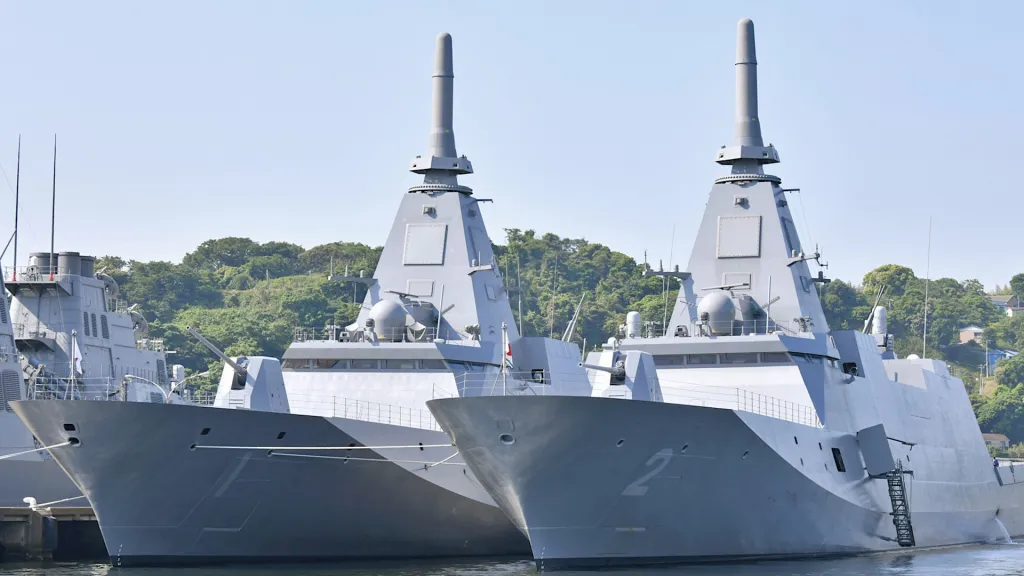
USNI Newswas first to report on Tuesday that the Japanese, South Korean, and Turkish frigates are included in an ongoing Navy study, citing anonymous sources. The review is in direct response to one of the provisions in a larger memo President Trump sent out last month, titled “Rebuilding the United States Navy and America’s Shipbuilding Industrial Base.” This also comes amid strong opposition in Congress to the basic idea of buying foreign warships for the Navy.
A pair of the Japan Maritime Self Defense Force’s (JMSDF) Mogami class frigates. JMSDF
Per that memo, the Secretary of the Navy (currently Acting Secretary Hung Cao) was directed to “submit a plan to the President … that includes timelines and resourcing requirements, for a new competitive acquisition approach for surface combatants with sufficient inherent capabilities to perform anti‑submarine warfare, surface warfare, and convoy escort duties.” The memo also said the “plan should address meeting the requirements for Consolidated Cargo Replenishment at Sea (CONSOL) Tankers and — separately — Roll-On, Roll-Off Vessels.”
The study could lead to “an international warship competition [that] could include building up to two of the ships in foreign shipyards before transitioning to domestic yards as part of the Trump administration’s push to rapidly expand the fleet, three industry sources familiar with the deliberations confirmed,” according to USNI News‘ report. The outlet also said the Navy declined to “directly address the potential for an open competition for a new frigate” when asked.
The South Korean Navy’s ROKS Chungnam seen during sea trials before its delivery in 2024. HD Hyundai Heavy Industries
The acquisition approach described here is in line with what the Trump administration is currently calling the “Finland Model,” which entails construction of an initial batch of ships overseas before moving further production to yards in the United States. The name comes from a partnership the U.S. and Finnish governments announced last year regarding the construction of new icebreakers for the U.S. Coast Guard. Canada’s Seaspan Shipyards is also involved in that plan.
Broader plans to explore foreign surface combatant designs for the U.S. Navy, and potentially more to acquire one of those ships, were mentioned in the Pentagon’s 2027 Fiscal Year budget request released earlier this year. President Trump, former Secretary of the Navy John Phelan, and other U.S. officials have also openly raised the possibility of cooperation with shipbuilders in Japan and South Korea, specifically, including with regard to surface combatants. USNI‘s report says that the Istanbul class was included in the current review after it came up in discussions between Trump and Turkish officials on the sidelines of the NATO summit in Ankara in July.
Turkish Navy I-Class Frigate TCG ISTANBUL (F-515) – Istanbul Strait, October 29th, 2023
Many questions remain, but there are clear signs the Trump administration wants to move in pursuing the acquisition of foreign naval vessels. The particular focus on frigates also aligns with a clear Navy need for new ships in that size class.
Why frigates?
Before exploring the specific designs the Navy is now said to be reviewing, it is worth taking a step back to understand why frigates are so important to the service’s shipbuilding plans, in general. The United States has not technically operated frigates since the retirement of its last Oliver Hazard Perry class type in 2015. The expectation had been that the Freedom and Independence class Littoral Combat Ships (LCS) would fill the resulting gaps. However, those ships struggled for years with a variety of major issues over the years and still have not lived up to their promised potential, despite certain strides having been made in expanding their operational employment in recent years.
A rendering of a now-cancelled Constellation class frigate. USN
A new FF(X) frigate program has since emerged. Through that effort, the Navy is now in line to get ships derived from the U.S. Coast Guard’s Legend class National Security Cutter (NSC), with the goal being to have the first one in the water by 2028. However, those frigates, at least the ones built in the initial tranche, will lack a Vertical Launch System (VLS) and certain other features that were seen as critical for the preceding Constellation class. This has immediately raised questions about the operational utility of these new small surface combatants, asTWZ has previously explored in detail.
A rendering of the US Navy’s future FF(X) frigate. USN
None of this diminishes the Navy’s current desire for new frigates, and more of them, to provide smaller, lower-cost platforms that can be used to bolster larger surface action groups or operate more independently in roles that do not require larger, more capable designs. When fielded in sufficient volume, they can also free up other types of surface combatants for other, higher priority duties or similar help relieve strain on those fleets.
Today, the Navy’s fleet of Arleigh Burke class destroyers “gets used with a very high demand signal combatant commanders. The Navy can’t operate with only one size of ship,” Rear Adm. Brian Metcalf, the Navy’s Deputy Portfolio Acquisition Executive for Maritime for Combatants, said in an official video in June. “The [FF(X)] frigate will fill that gap. They can be used in less contentious waters. They can be used as high-value escorts. There are all kinds of things the frigate can fill the gap for and allow destroyers to execute the high-end mission set.”
With all this in mind, it is not surprising that the Navy would be seeking to further bolster its future frigate fleets on a shorter timetable by leveraging foreign shipbuilders. There are also clear benefits to taking advantage of capable, in-production designs, which leads us to the Mogami, Chungnam, and Istanbul classes.
The Mogami class
Japan’s Mogami class, with its stealthy design characteristics, has long been a standout among modern frigates currently in production globally. The ship is designed as a multi-mission platform with anti-air, anti-surface, anti-submarine, and mine warfare capabilities, the latter of which includes both mine-hunting and mine-laying.
TWZ has covered the ship in detail in the past, writing:
“The original Mogami class design (also known as the 30FFM), the first of which only entered Japanese service in 2022, is already a very modern design with its shape featuring some stealthy characteristics. The 436-foot-long, 53-and-a-half-foot-wide, 5,500-metric-ton displacement frigates have a combined diesel and gas (CODAG) propulsion system that allows for fuel-efficient normal cruising operations and an additional burst of speed in combat. The ships have an active electronically scanned array (AESA) main radar, as well as a host of other advanced sensors and mission systems. One of the Mogami‘s most distinctive features is its NORA-50 UNIted COmbined Radio aNtenna (UNICORN) mast on top of the main superstructure, which contains various antennas. The frigates also have especially futuristic-looking Combat Information Centers (CIC)…”
The Japan Maritime Self Defense Force’s (JMSDF) first-in-class JS Mogami. JMSDF
“Armament-wise, the baseline Mogami class frigate has two four-round launchers for Type 17 anti-ship cruise missiles, a SeaRAM close-in defense system loaded with RIM-116 Rolling Airframe Missiles (RAM), and a five-inch main gun in a turret at the bow. There are also two remote weapon stations, each armed with a .50 caliber machine gun, on top of the bridge for additional protection against close-in low-end threats.”
“The Mogami design was originally slated to feature a 16-cell Mk 41 launch system array, but the seventh ship in the class, the JS Niyodo, which was commissioned in May, was the first to be fitted with it. The first six of these frigates were delivered without this capability, but they are expected to be back-fitted with it in the future. Mk 41 cells on Mogami class frigates are expected to be primarily filled with domestically-developed A-SAM or U.S.-designed RIM-162 Evolved Sea Sparrow Missiles. Four ESSMs can notably be loaded in a single Mk 41 cell.”
The Mogami classfrigates also have a flight deck and hangar designed to accommodate a single Seahawk helicopter. The ships can also deploy uncrewed underwater and surface vessels (UUV/USV), as well as rigid-hull inflatable boats (RHIBs), via a ramp at the stern.
MHI in Japan has also developed an enlarged derivative that is close to 466 feet long, almost 56 feet at its widest, and displaces some 6,200 metric tons. This version also features a 32-cell VLS array, along with an upgraded radar, other improved sensors, and updated mission systems. Last year, the Australian government announced it would be acquiring a fleet of these ships with certain unspecified country-specific features as part of its SEA 3000 program.
A model of the enlarged derivative of the Mogami class. Japan Ministry of Defense
The Australian deal is one of, if not still the most significant foreign arms sale for Japan since the end of World War II. It also helps ensure that the Mogami production line will remain hot for years to come. For the U.S. Navy, sharing a frigate with two of America’s two highest-profile allies in the Pacific, and which could therefore be readily serviced in those countries, would be very advantageous.
The Chungnam class (also sometimes referred to as the FFX-III or FFG-III) is the latest frigate for the South Korean Navy, and feature a mix of anti-air, anti-ship, and anti-submarine capabilities. The first example entered service in that country in 2024. These ships are just over 423 feet long, approach 49 feet at the widest point in the hull, and displace some 4,300 tons with a full combat load. The design is based on the earlier Daegu class, which was itself an evolution of the precedingIncheon class that traces its roots back to the late 1990s.
As was the case on the Daegu class, the Chungnam class uses combined diesel–electric or gas (CODLOG) propulsion, which offers benefits for power management and efficiency, as well as when it comes to reducing maintenance requirements and operating costs. The design features a prominent integrated mast structure with four fixed-face arrays for the main multi-function AESA radar near the top. The ships have additional radars and other sensors, as well as an electronic warfare suite.
The ROKS seen at the time of its launch. HD Hyundai Heavy Industries
Each one of the Chungnam class frigates has a 16-cell K-VLS array. Domestically developed K-SAAM surface-to-air missiles and Haeseong I anti-ship cruise missiles (also called the SSM-700L or C-Star), as well as K745A1 Hong Sang Eo (Red Shark) vertically-launched anti-submarine rockets, can be loaded into these cells.
The armament package on these ships also includes a five-inch main gun in a turret at the bow, a pair of triple torpedo tubes, and a Close-in Weapon System II (CIWS II) armed with a seven-barrel 30mm Gatling-type cannon.
A look at the CIWS-II, which is part of the full armament package on the Chungnam class frigate. Hyundai WIA
The Chungnam class frigates also have a flight deck and hangar for a single helicopter at the stern.
As it stands now, the South Korean Navy has two Chungnam class frigates in service and has plans to acquire four more over the next few years. The lead ship in the class was built by HD Hyundai Heavy Industries, which is also one of the principal designers of the ship. A different shipbuilder, SK Oceanplant, built the second ship in the class, ROKS Gyeoungbuk, and is now working on the third and fourth examples. Hanwha Ocean is reportedly in line to build the last two ships in the class for South Korea. Hyundai and Hanwha have pitched export designs based on the Chungnam class, with both firms notably in the running to supply new frigates to Thailand.
S. Korea shows off shipbuilding prowess by launching 2nd next-gen frigate in 5 months
Hanwha has already been making steady inroads in the shipbuilding industry in the United States, including the acquisition of the Philly Shipyard in Philadelphia, Pennsylvania, in 2024. Hyundai has reportedly been working to do the same. Just last month, Hanwha publicly announced a new $1.2 billion bid to buy out Australian shipbuilder Austal’s U.S. subsidiary, Austal USA. Austal notably built the Independence class LCSs for the U.S. Navy and continues to supply that service with other vessels. Austal subsequently said it was considering the South Korean offer.
The Istanbul class
Turkey’s Istanbul class (also known as the Istif class or just I class), developed under the country’s MILGEM national warship program, is not a design that has typically come up in previous discussions about potential foreign-made frigates for the U.S. Navy. It is described as a multi-role frigate with anti-air, anti-surface, and anti-submarine capabilities. The lead ship in this class, TCG Istanbul, entered Turkish Navy service in 2024.
Türkiye’s Modern Naval Power: The I-Class Frigates
At around 371 and a half feet long and with a beam of just over 47 feet, as well as a displacement of some 3,000 tons with a full combat load, the Istanbul class is notably smaller than either the Mogami class or Chungnam class. Like the Mogami, it uses CODAG propulsion. The Turkish design is understood to have leveraged lessons learned from the Project GENESIS program to upgrade the country’s second-hand ex-U.S. Navy Oliver Hazard Perry class frigates, as you can learn more about here.
TCG Istanbul is armed with a 16-cell MiDLAS VLS array, with past reports saying it is primarily configured to fire Hisar short-to-medium-range surface-to-air missiles. However, just in August, it was revealed that the second ship in the class, the future TCG Izmir, which is undergoing sea trials now, has a new 16-cell version of MiDLAS with visibly longer cells. This would allow the ship to fire larger weapons vertically, such as the Siper medium-range surface-to-air missiles, Atmaca anti-ship cruise missiles, and/or Gezgin land-attack cruise missiles. MiDLAS is a scalable VLS design developed in Turkey as an alternative to the U.S.-made Mk 41.
The future TCG Izmir with its noticeably larger VLS array in front of the main superstructure. Anadolu Shipyard
The initial Istanbul class design already had four deck-mounted launchers that can be loaded with up to 16 Atmaca missiles, in total. The frigates also have a 76mm cannon in a turret on the bow, a Gokdeniz CIWS with a twin-barrel 35mm cannon, two 25mm cannon-armed remote weapon stations, and a pair of twin torpedo tubes.
The main sensor on the Istanbul class is a rotating AESA radar mounted on top of the ship’s main integrated mast structure. It has additional radars and other sensors, as well as electronic support measures and electronic countermeasures systems.
The Istanbul class design also features a flight deck and hangar at the stern, sized around the Seahawk helicopter.
An infographic offering a general overview of the Istanbul class’ capabilities. STM via X
As mentioned, the second Istanbul class frigate for the Turkish Navy is now in sea trials, and the country plans to eventually acquire eight of these warships in total. They are being built through several shipyards in Turkey. Last year, Turkey’s TAIS Shipyards also secured a contract to build at least two Istanbul class frigates for Indonesia.
Growing U.S. roadblocks to any foreign warships
Much remains to be seen about how the U.S. Navy might proceed with the acquisition of new frigates, or any other naval vessels, via foreign shipbuilders. Whether any other relevant, in-production designs are being considered, or could be in the future, is unknown. USNI News‘ report says the current study is scheduled to wrap up in November.
Furthermore, what the Navy might want to do could well turn out to be moot. Members of Congress on both sides of the political aisle have been very vocally pushing back on any plans to acquire foreign warships amid concerns about negative impacts on the U.S. shipbuilding industry.
Current U.S. law would already require the Trump administration to issue a national security waiver to pursue foreign-made naval vessels. A draft of the annual defense policy bill, or National Defense Authorization Act (NDAA), for the 2027 Fiscal Year now making its way through the Senate would eliminate the ability to issue such a waiver. In June, members of the House Armed Services Committee separately moved to outright block any spending on foreign-built warships in a separate draft NDAA.
The aforementioned Finland Model, as outlined in Trump’s August memo, is clearly intended to try to assuage Congressional concerns. Under the stated plan, foreign shipbuilders would be required to make major investments in U.S. shipbuilding enterprises and hire American workers as part of any future contract, even if an initial tranche of vessels is built overseas.
A rendering of one of the future Arctic Security Cutter icebreakers the US Coast Guard is set to acquire in part through a shipyard in Finland. Seaspan
“The Administration strongly opposes section 1025, which would prohibit the use of funds for procurement of initial battle force ships to be built in a foreign shipyard, especially while, in accordance with the ‘Finland Model’ first employed with the Coast Guard’s medium icebreaker program, long-term investments are being made in an American brown or greenfield shipyard,” the White House’s Office of Management and Budget (OMB) wrote in a statement of Administration Policy in July, specifically in response to provisions in the the House’s NDAA draft. “This prohibition fails to seriously address the challenges posed by current shipbuilding backlogs across six major programs in our ‘prime’ shipyards.”
This latter point here speaks to an already worrisome and still-widening gap between U.S. shipbuilding capacity and that of chief global competitor China. The U.S. government has tried to take steps in recent years to revitalize the American side of the equation, but workforce retention and other factors have continued to present serious hurdles. There are additional concerns now about how the addition of work on the Trump class battleship program will affect America’s naval shipbuilding ecosystem, which the Trump administration has separately pushed back on.
An unclassified Office of Naval Intelligence briefing slide from circa 2023 underscoring the disparity between U.S. and Chinese naval shipbuilding capacity. ONI
Continuing U.S. shipyard capacity and quality issues raise their own questions about the viability of the Finland Model. The construct inherently limits the U.S. government’s ability to make use of yards overseas and is heavily contingent on the shipbuilding industry in the United States expanding at a rate where it will be able to absorb the additional production demands. With the naval shipbuilding deficit already becoming extremely problematic, buying examples of relevant classes with minimal changes and having them built where production is already established could arguably be the priority, especially in light of the failures of the LCS and Constellation programs.
Ensuring that any U.S.-specific changes to the design are minimal will also be critical for any such plan to be successful. As mentioned, the Constellation class was undone in large part due to a near-constant stream of changes ordered by the Navy, which negated the benefits of choosing a derivative of an in-production design. The service has stressed its intention to avoid any similar pitfalls with its existing FF(X) frigate program, which also has to be factored into the larger domestic shipyard capacity question.
“The President has directed the Navy to aggressively increase domestic shipbuilding capacity, including leveraging the proven shipbuilding skills and industrial expertise of our allies,” Navy Capt. Ron Flanders said in a statement on Tuesday, according to USNI News. “We are actively developing options to fulfill the President’s intent to deliver ships faster while ensuring long-term investment, technology transfer, and workforce expansion within United States shipyards.”
Signs are certainly growing that the Navy is moving closer to kicking off a formal process to acquire foreign-designed warships, which could include Mogami, Chungnam, and/or Istanbul frigates, to help grow its fleets, especially in the face of growing challenges posed by China.
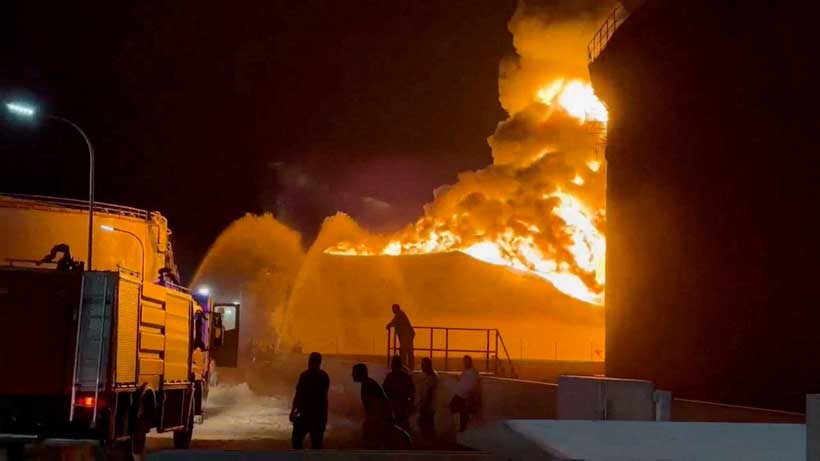
The drone strike that hit a gasoline tank at the Zawiya refinery in August was more than a security incident. Zawiya is Libya’s largest operating refining facility, and the National Oil Corporation warned that continued attacks could force operations to halt. In an economy still built almost entirely around hydrocarbons, a disruption at one major facility rarely stays local. It becomes a national economic risk.
Libya’s dependence on oil has generated enormous wealth, but it has also concentrated economic risk in a relatively narrow network of fields, pipelines, export terminals, and refineries. A disruption at any one of these nodes can threaten fuel supplies, production, and the state revenue that depends on them, reaching well beyond the site itself.
None of this means Libya should move away from oil, which will remain central to the economy for years. The more useful question is whether Libya can build enough productive capacity around it that the country’s economic future isn’t defined by the vulnerability of a handful of facilities. Diversification is often discussed in the abstract. In Libya, it is starting to take a more concrete shape, particularly in cement and steel, where investment is beginning to build an economic base around production, employment, infrastructure, and domestic value rather than around extraction alone.
Why cement is more than a construction material
Stay ahead of the geopolitical week.
MD Briefing delivers expert analysis across five global fronts — the Indo-Pacific, energy, geoeconomics, European security, and the Middle East — every Monday morning. Free.
Cement doesn’t carry the same strategic weight as oil in most conversations about Libya’s economy, but for a country rebuilding its cities and infrastructure, it arguably should. Housing, roads, and public infrastructure all depend on a steady domestic supply of building materials, and meeting that demand locally generates a different kind of value than exporting raw resources: factories, supply chains, jobs at multiple skill levels, and more of the value construction generates staying inside the national economy.
There is also an export dimension. Libya’s location and access to regional markets give a competitive cement industry real potential beyond its own borders. Suhail Abushiha, Libya’s Minister of Economy and Trade, has said the country could eventually export as much as 25 million tonnes of cement annually, a figure that indicates how far this ambition is meant to reach, even if it remains some distance from current output.
A functioning industrial sector depends on engineers, technicians, suppliers, contractors, energy, transport, finance, logistics, and maintenance, and its output in turn supports other industries and the wider construction economy. That is the multiplier effect Libya needs, not just revenue, as oil provides, but economic activity that spreads across businesses, regions, and communities. The foundations for that are already forming.
The industrial base already in place
Libya is not starting from scratch. The Libyan Cement Company in Benghazi remains one of the country’s most established industrial producers, accounting for roughly 20 percent of national cement output and supporting more than 1,000 direct jobs. Over the years, its cement has supplied major infrastructure and reconstruction projects, and its history tracks the broader shift in Libya’s private sector. In 2023 it came under the ownership of businessman Ahmed Gadalla and has since grown to become a defining industrial player in eastern Libya.
The company’s importance extends past what it produces. A major industrial operation generates demand for engineers, contractors, transportation, logistics, maintenance, and energy services, and its output feeds directly into the construction and infrastructure projects that will shape Libya’s future. Gadalla’s industrial interests go beyond cement, in fact. His involvement in the SULB steel venture, alongside Tosyalı Holding, follows the same logic of building productive capacity in sectors that support construction and long-term development.
Alongside these established players, Libya is seeing a new wave of large-scale investment. In Nalut, ALHEDAB Cement Company is developing a major project with an estimated investment of $600 million, designed to produce up to 12,000 tonnes of cement per day, one of the largest industrial projects currently under development in the country. What distinguishes the project isn’t only its scale. Around 25 percent of its capital is expected to open to public and foreign investors, with plans for a future stock market listing, which points to a shift in how large industrial projects in Libya could be financed going forward: less reliant on the state or a narrow group of private interests, and more open to broader participation.
Other producers are expanding the sector as well. Arabian Cement Company, a domestically owned producer based in Khoms, has an annual production capacity of roughly 3.3 million tonnes, and international companies including Pakistan’s Lucky Cement and Oman’s Raysut Cement have identified opportunities in the Libyan market. What matters is less any single project than the combined effect: a growing network of producers, suppliers, contractors, logistics companies, and skilled workers starts to resemble an industrial ecosystem rather than a collection of unrelated ventures.
Diversification depends on projects reinforcing each other
Libya’s economic future won’t be transformed by one factory or one investment announcement. Diversification becomes meaningful when industries start reinforcing each other: cement supports construction, construction creates demand for steel, transport, and engineering services, and new industrial facilities need energy infrastructure, maintenance, logistics, and finance in turn. Industry’s value isn’t limited to what leaves the factory. It lives in the network of activity that builds up around it, which matters for Libya in particular, since oil has financed much of the state for decades without creating a broad productive base on its own. Cement and steel fit that gap reasonably well, given that reconstruction already creates substantial domestic demand and regional markets could add export opportunities over time.
Incentives alone won’t be enough
Projects at this scale need capital, confidence, and long-term commitment. Libya has been working to strengthen the investment environment through incentives and guarantees aimed at domestic and foreign investors. Investment promotion mechanisms backed by the Public Investment Bank are meant to build investor confidence, and the investment framework has tried to encourage the transfer of foreign expertise and technology, including requirements such as health insurance for workers.
These measures matter, but they aren’t sufficient on their own. Market opportunities, natural resources, and favorable terms can draw investors in, but long-term industrial investment depends on something more basic: confidence that regulators apply the rules consistently, and that assets, workers, and supply chains can operate somewhere secure. That is where the Zawiya attack becomes relevant again.
Security, not just incentives, will determine whether this works
The refinery attack points to a challenge that goes beyond any single facility: Libya’s economic prospects can’t be separated from its security and political environment. A country can offer investment guarantees, but uncertainty erodes their value. A manufacturer weighing a multi-million-dollar factory has to account for demand and profitability, but also electricity, logistics, regulation, security, and whether operations can run consistently for years at a time. That is why economic diversification and institutional reform need to move together. Libya needs investment, but investment needs predictability just as much: clear regulations, reliable institutions, and an environment where companies can plan past the next political or security disruption.
The Zawiya attacks make that need difficult to ignore. They show how quickly insecurity can threaten assets central to the national economy, and they strengthen the case for an economy that doesn’t depend on a narrow set of sources. Diversification can’t eliminate political or security risk, but it can reduce how much of the country’s economic life hinges on a limited number of facilities.
Where this leaves Libya
The Zawiya fire is a warning about what happens when a national economy leans too heavily on a narrow group of critical assets. Libya will remain an oil producer for the foreseeable future, and hydrocarbons will continue generating a large share of national wealth. But that doesn’t mean the country’s economic future has to be defined by oil alone.
New cement plants are under development, existing producers continue to back reconstruction and employment, capital is opening to domestic and foreign investors, and international companies are moving in alongside Libyan businesses. These are early signs of a possible shift, not evidence of one already completed. Whether Libya can turn individual investments into a coherent industrial strategy will depend on more than capital and ambition. It will depend on regulatory reform, stronger institutions, security, and sustained commitment to building productive capacity, with Libya’s oil wealth funding the broader transformation rather than substituting for it.
Authorities say agent fired into home with people inside, lied about circumstances.
Published On 3 Sep 20263 Sep 2026
Federal prosecutors in the United States have charged an Immigration and Customs Enforcement (ICE) officer accused of lying under oath to investigators regarding the shooting of a Venezuelan man during an immigration crackdown this year.
Prosecutors alleged that Christian Castro lied to federal investigators about the events that led up to him firing on 24-year-old Julio Cesar Sosa-Celis through the door of a Minnesota home in January.
Recommended Stories
list of 3 itemsend of list
The Associated Press news agency and The New York Times reported the indictment, quoting a person familiar with the matter who was not authorised to discuss the investigation publicly. It was expected to be unsealed when Castro is detained.
Castro, a former Department of Homeland Security agent, also faces multiple state felony charges in Minnesota related to the nonfatal shooting, including assault with a dangerous weapon.
Authorities in the Midwestern state had sought to extradite Castro from Texas to face trial. Texas Governor Greg Abbott, a Republican and President Donald Trump loyalist, declined to cooperate with the request.
The ensuing standoff left Castro detained in Texas for 90 days before his release last week. Under Texas law, the state cannot hold the subject of an extradition order for longer than that. His whereabouts were unclear as of Thursday.
The charges mark a rare move by the Department of Justice under Trump.
Trump’s top officials have repeatedly argued that immigration agents maintain broad protections while conducting enforcement, a position rejected by many legal experts.
For example, no one has been charged in the fatal shootings by immigration agents of Renee Nicole Good and Alex Pretti in Minneapolis in January.
An Associated Press review conducted in February found about two dozen ICE employees and contractors had faced criminal charges since 2020.
An American Civil Liberties Union report released in July documented instances of violent tactics or other civil rights violations in about a third of 1,200 immigration enforcement incidents reviewed in 2025 alone.
Video evidence contradicts statement
The Trump administration distanced itself from the Castro case after video emerged contradicting the agent’s initial accounts of the confrontation.
Castro told investigators that Sosa-Celis had attacked him, which the surveillance footage showed did not happen.
Todd Lyons, then acting head of ICE, said at the time that the footage “has revealed that sworn testimony provided by two separate officers appears to have made untruthful statements”.
Castro and a fellow agent chased Alfredo Aljorna, a Venezuelan national, after a traffic stop, according to charging documents.
Aljorna fled to the home he shared with Sosa-Celis. After a brief scramble, the two men ran inside. Castro then shot through the closed door, “knowing [the home] was occupied by several people”, the documents said.
One witness said there were two children in the house when Castro opened fire. Sosa-Celis was hit in the leg.
Federal authorities have since suspended Castro and dropped all charges against Sosa-Celis and his co-defendant, who were both initially accused of forcibly assaulting an ICE officer. The other agent involved in the incident was also suspended, but has not yet been charged.
Thursday’s indictment comes after ProPublica this week reported that Department of Justice (DOJ) officials had blocked prosecutors from pursuing more serious civil rights charges against Castro, including “deprivation of rights under color of law”.
However, a source close to the investigation told the AP the active investigation could still result in civil rights charges.
The Trump administration has scaled back the DOJ’s Civil Rights Division and dismantled several Biden-era police oversight initiatives since returning to office in January 2025.
That has come as the administration has revved up its mass deportation campaign across the country.
In August, immigration agents detained 50,925 people with the Department of Homeland Security hailing it as a new record for the “highest number of illegal aliens arrested in a single month”.
Ukraine carried out one of its farthest uncrewed surface vessel (USV) attacks from Ukrainian shores, striking the Nefrit, a multipurpose offshore vessel, in the Russian Black Sea resort city of Sochi. The seaside getaway is located about 350 miles on a direct line from the nearest Ukrainian-held territory, but the trip is a lot longer if originating from Ukrainian-held shores.
This marks the first known USV attack on this city that Russian President Vladimir Putin often visits. As we have reported in the past, it has been attacked several times by Ukrainian aerial drones.
The Russian Black Sea port of Sochi came under attack on Thursday. (Google Earth)
“The multipurpose support vessel, flying the Russian flag, was hit by an unmanned naval vessel of the Ukrainian Navy,” the service said on Telegram. “A powerful explosion and smoke were observed in the area of the vessel.”
“The NEFRIT is part of Russia’s maritime and energy infrastructure, providing support for oil and gas operations, servicing offshore facilities, transporting cargo and personnel, and carrying out underwater technical work,” the Ukrainian Navy explained. “Its activities directly supported the enemy’s war economy and financed the criminal aggression against Ukraine.”
“The damage to the NEFRIT is a blow to the enemy’s logistics, special capabilities, and military-economic infrastructure,” the Ukrainian Navy added. “The Ukrainian Navy continues to deprive the enemy of resources and capabilities for waging war, and once again demonstrates that even Russian territory is not a safe haven.”
🇺🇦⚓ВМС України уразили судно забезпечення рф NEFRIT у порту Сочі Багатоцільове судно забезпечення під прапором рф було уражене морським безекіпажним катером Військово-Морських Сил. У районі судна зафіксовано потужний вибух та задимлення.
There is also video of one of the USVs being destroyed before it could reach its target.
Starting at about 6 a.m. local time, Sochi Mayor Andrey Proshunin declared an emergency.
“ATTENTION! THREAT OF A USV ATTACK IN SOCHI,” he warned on Telegram. “All forces and resources are working to defend the city. Take shelter in a safe place, remain calm.”
Sochi Mayor Andrey Proshunin declared an emergency about an impending sea drone attack on Thursday. (Sochi Mayor Andrey Proshunin’s Telegram)
About a half hour later, Proshunin issued an all-clear notice, but did not provide any details about what happened.
Sochi Mayor Andrey Proshunin lifted the emergency about a half hour after it started. (Sochi Mayor Andrey Proshunin’s Telegram)
There was no immediate response from the Kremlin.
Ukraine has carried out long-distance USV attacks on Russian Black Sea targets in the past, including one in 2023 on theRopucha class vesselOlenegorsky Gornyak, located in Russia’s Black Sea port of Novorossiysk. A major Russian port on the eastern coast of the Black Sea, it sits roughly 420 miles from Ukrainian-held shores. Sochi is about 110 miles southeast of Novorossiysk, meaning the USVs in today’s attack would have had to travel an even longer distance if launched from Ukrainian-held shores. However, the launch point of the Sochi USV strike is not publicly known and there is always the possibility that a mothership could have been used.
The attack occurring during broad daylight is also interesting, as Ukraine has often taken advantage of the cover of darkness for USV strike operations on port facilities.
You can see a video of that strike below:
The strike on the Nefrit is the latest in Ukraine’s long-running drone boat campaign in the Black Sea. This onslaught has already kept Russia’s Black Sea Fleet (BSF) at bay, forcing it to retreat from Crimea to Novorossiysk. Ukrainian USVs have also damaged enemy military facilities in occupied Crimea and the Kerch Bridge.
In July, the U.S. military used USVs as combat weapons for the first time, striking Iranian targets in Bandar Abbas. The following video shows that attack.
Yesterday, using multiple one-way attack surface drones, CENTCOM forces successfully struck a submarine and ship maintenance facility in Iran. Three Corsair unmanned surface vessels hit the port at Bandar Abbas Naval Base, marking the first time American forces have employed sea… pic.twitter.com/bOM2kmgRxz
It may be a day or so before we get a better picture of the extent of the damage to the Nefrit. Regardless, the attack itself is another sign that Ukraine can reach targets with sea drones far from its own shores.
The Latest
All across the battlefield, Ukrainian forces are largely holding off continued Russian attacks or are making small advances. Overall, in August, “Russian forces advanced or infiltrated into about 123.53 square kilometers — an average pace of 3.98 square kilometers per day,” according to the Institute for the Study of War (ISW). “Russian forces’ main territorial gains in August 2026 have been in the Fortress Belt area, Donetsk Oblast. Even there, Russian forces managed to achieve only marginal tactical gains and have thus far failed to complete the seizure of Kostyantynivka.”
Kharkiv: Russian forces continued offensive operations in northern Kharkiv Oblast and the Velykyi Burluk direction on September 1 and 2 but did not advance. Russian forces also continued offensive operations in the Borova and Kupyansk directions on September 2 but did not advance. However, Moscow’s troops continued attempts to secure and expand the bridgehead on the left bank of the Oskil River to enable further infiltrations into Kupyansk.
Donetsk: Ukrainian forces recently defeated a Russian infiltration mission in the Slovyansk direction. They also recently maintained positions or advanced in the Dobropillya tactical area. Russian forces continued offensive operations in the Novopavlivka direction on September 1 and 2 but did not advance. Neither Ukrainian nor Russian forces reported ground activity in the Oleksandrivka direction on September 2.
Zaporizhia: Russian forces continued offensive operations in the Hulyaipole direction on September 1 and 2 but did not advance. Russian forces continued offensive operations in western Zaporizhia Oblast on September 1 and 2 but did not advance as Ukrainian forces counterattacked west of Orikhiv.
Kherson: Neither Russian nor Ukrainian forces reported ground activity in the Kherson direction on September 2.
MORE 🧵(1/3): ISW has observed evidence to assess that Russian forces consolidated positions in or seized about 90.35 square kilometers of territory in Ukraine in August 2026, averaging 2.91 square kilometers seized per day. Including Russian infiltrations, Russian forces… https://t.co/0RlwRfBdhspic.twitter.com/Cp2Knry2Du
Air traffic around Moscow continued to be disrupted on Thursday as Russian authorities responded to another large-scale Ukrainian drone operation, according to EU Today. The disruptions came two days after President Volodymyr Zelensky warned international airlines and insurers that Russian airspace was becoming increasingly unsafe for civilian aviation due to Ukrainian drone attacks.
Moscow Mayor Sergei Sobyanin said that 548 drones had flown towards the wider Moscow region between 8 a.m. on Wednesday and midday Thursday local time. However, Russian authorities claimed that most were intercepted before they could reach the Moscow area while 143 were destroyed on approaches to the Russian capital.
“Temporary restrictions were again imposed at Moscow’s principal airports,” EU Today noted. “Vnukovo and Domodedovo stopped arrivals and departures for periods during the operation, while Sheremetyevo handled flights under additional restrictions. The measures produced cancellations, delays and diversions extending beyond the periods in which individual airports were formally closed.”
The disruption “had already become extensive on Wednesday,” the publication added. “Flight-tracking data showed 21 cancellations and 235 delayed services at Sheremetyevo, Russia’s largest airport, while Vnukovo recorded 22 cancellations and 94 delays.”
⚡️ Moscow airports cancel flights after Zelensky’s ‘closed skies’ warning
“Temporary restrictions on the arrival and departure of aircraft have been introduced,” Russia’s Federal Air Transport Agency (Rosaviatsia) said.https://t.co/BAlAASaDv5
Putin on Thursday said there is a chance of resolving the “Ukrainian conflict” but Kyiv’s campaign to shut down Russian airspace is “complicating the negotiation process.”
Russia and Ukraine themselves must reach an agreement, while other countries can only support and assist, the Russian leader added, according to a translation from former Ukrainian government official Anton Gerashchenko.
Russia is in contact with the White House and President Donald Trump “is committed to positive and constructive engagement,” Putin proclaimed. “Russia has many friends in the United States. One of them is Steven Seagal, the ‘best envoy of peace.’”
Putin said there is a chance of resolving the “Ukrainian conflict” but Ukraine’s threats to shut down Russian airspace are “complicating the negotiation process.”
A Russian drone strike on an Odesa apartment building injured at least 17 people, including three children, Zelensky stated on X.
In Odesa, emergency services continue working at the site of a drone strike on an apartment building. Damage to apartments from the 10th through the 17th floors left 17 people injured, including three children. Efforts are also ongoing to deal with the aftermath of the strikes in… pic.twitter.com/FWAmFNJSYp
— Volodymyr Zelenskyy / Володимир Зеленський (@ZelenskyyUa) September 3, 2026
Overall, Ukraine says its air defenses downed or suppressed 135 of 163 Russian drones launched overnight, including Shahed-type UAVs, about half of which were jet-powered. Russia also used S-8000 Banderol, Gerbera and decoy drones. Hits were recorded at 15 locations and debris fell at four.
Ukraine says air defenses downed or suppressed 135 of 163 Russian drones launched overnight, including Shahed-type UAVs, about half of them jet-powered. Russia also used S-8000 Banderol, Gerbera and decoy drones. Hits were recorded at 15 locations and debris fell at four.… pic.twitter.com/JyxTS6QBzL
Russia has been increasingly using jet-powered drones to attack Ukraine. The Ukrainian Defense Ministry released video it says shows troops from the 208th Anti-Aircraft Missile Brigade downing one of those drones. The jet powered Shahed-like one-way attack drones fly higher and faster than their propeller-driven cousins, making them harder to intercept by more cost effective and plentiful means, such as Ukraine’s many drone interceptors. Instead, much more expensive and increasingly scare missile must be used in some circumstances.
What appears to be the first video of Ukrainian troops using Cold War-era Leopard 1 tanks with turrets swapped out for the Rheinmetall Skyranger 35 short-range air defense system has emerged on social media. The @deaidua X account that tracks German war materiel donations to Ukraine said the 1020th Anti-Aircraft Missile Regiment recently took delivery of this system, designed to be a highly mobile counter to a range of aerial threats.
The Skyranger 35 “is equipped with a KDG 35/1000 revolver cannon in 35 mm x 228 caliber with a firing rate of 1,000 rounds per minute,” according to Rheinmetall, which began delivering these to Ukraine in January. “It has an effective range of up to 4,000 meters and a high degree of commonality with the Oerlikon Revolver Gun Mk 3. Thanks to AHEAD technology, the Skyranger 35 is airburst-capable. In the future, it will also be possible to equip it with modern guided missiles.”
It seems that Ukraine’s 1020th Anti-Aircraft Missile Regiment which belongs to the Ground Forces has taken delivery of the first Skyranger 35 SPAAGs mounted on a Leopard 1 chassis made by @RheinmetallAG.
A new documentary about Ukraine’s use of the combat-proven National Advanced Surface-to-Air Missile System (NASAMS) air defense system debuts tomorrow.
“Sky Defenders is a new documentary taking audiences inside the increasingly critical battle to protect the skies of Europe and Ukraine,” according to the film’s producers. “Launching globally on Apple TV and Amazon Prime on Sept. 4, the 50-minute film explores the people, technology and strategy behind modern air defense and the race to stop missiles and drones before they reach their targets.”
SKY DEFENDERS | Official Trailer
A new video shows a Russian soldier being attacked by three Ukrainian kamikaze drones simultaneously, underscoring just how dense the drone threat has become to troops near the front.
That kind of attrition is also visible around Pokrovsk, where Ukrainian kamikaze drones are increasingly coordinating strikes against individual Russian infantrymen and small assault groups.https://t.co/HfKBCW7ZOm
It’s been more than three years since the Russians captured the town of Bakhmut in the eastern Donetsk region after a long battle that incurred a tremendous toll on personnel and equipment on both sides of the fight. New drone video has emerged showing the city remains in ruins, with blocks and blocks of vacant and destroyed buildings.
A harrowing new video from Bakhmut, filmed in the summer of 2026. The Ukrainian city was captured by the Russians three years ago and has lain in ruins ever since.
In this once-vibrant city of 72,000 inhabitants, there are no longer any shops, schools, kindergartens, cafés,… pic.twitter.com/clFfLu5jkq
Four Palestine Action activists convicted of criminal damage “with a terrorist connection” after raiding an Elbit Systems factory in the UK are appealing their convictions. The ruling marked the first time property damage was categorised as “terrorism” in a British court.