Fifa accuses Uefa of 'smear campaign' against Infantino
Fifa accuse Uefa of conducting a “smear campaign” against president Gianni Infantino and the corporation’s leadership.
Source link
Discover the latest happenings and stay in the know with our up-to-date today news coverage. From breaking stories and current events to trending topics and insightful analysis, we bring you the most relevant and captivating news of the day.
Fifa accuse Uefa of conducting a “smear campaign” against president Gianni Infantino and the corporation’s leadership.
Source link
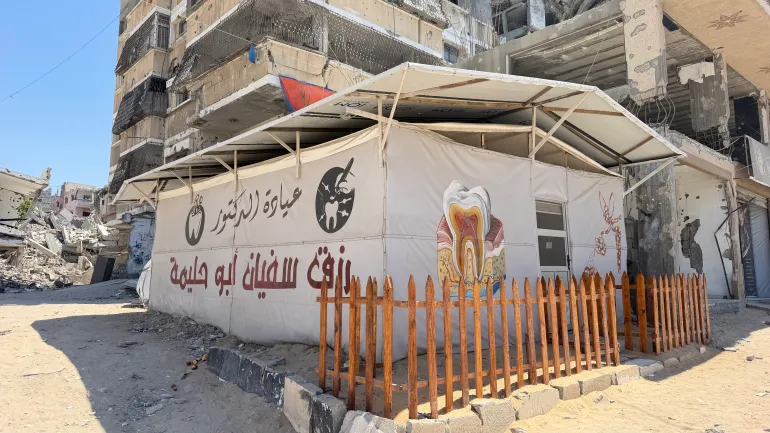
Gaza City, Gaza Strip – In the stifling heat of Gaza City, Dr Rizq Sufyan Abo Halima sits in a small tent pitched in an alleyway, waiting for his next patient.
The tent was a last resort for the doctor, given that the high demand and low supply of properties in the Gaza Strip as a result of Israel’s genocidal war have made finding an affordable surgery impossible.
list of 3 itemsend of list
“The stifling rise in temperatures was my first challenge,” he told Al Jazeera. “I had to adjust the corners of the tent and lift it at the ends to allow air to pass through.”
His old clinic, Smile One, in Sheikh Zayed City in northern Gaza, was bombed during the early days of the war in 2023.
The 31-year-old built a new clinic in May last year, next to where his current tent is pitched, in Gaza City’s al-Nasr neighbourhood. But three months later, it too was destroyed when Israeli forces assaulted the area, just weeks before the ceasefire last October.
He is now forced to conduct operations and other emergency dental procedures in the tent close to the ruins of his former surgery. When the electricity supply stops, which is frequent, there is little he can do but sit in his tent and wait for the power to come back on.
Finding another office would be the obvious solution, but residential and commercial units are hard to find in Gaza and those few that remain are unaffordable.
More than four in five buildings in Gaza City and northern Gaza have been completely destroyed or severely damaged in Israel’s war, according to the United Nations Satellite Centre (UNOSAT).
Fewer than one in five buildings in Gaza can still be used and Israel’s ban on building materials has made repairs impossible. That has created a skewed supply situation, which has made prices of office spaces or homes unaffordable.
“Before the war, I used to rent an entire apartment for my clinic for 500 shekels ($166) a month, but today I cannot afford the prices of remaining apartments at all,” he said. Now, the cost is closer to $1,000.

Using a tent is the cheapest alternative Dr Abo Halima could find, and he does not want to pass on what he calls the excessive price of building rent to his customers, who are already suffering immense personal and financial hardships.
“If I had rented an apartment for my clinic instead of a tent, the cost of one filling to teeth would have doubled for the patient,” Dr Abo Halima said.
“I am here, enduring the harsh summer heat, so that I can protect people from the high prices that I will inevitably have to charge if I rent an apartment, in addition to the fact that I have no other options at all.”
Dr Abo Halima treats his instruments with care. He sterilises them regularly to protect them from dust and germs and hires a security guard. After all, the thin canvas walls offer little protection from thieves.
Despite his best efforts, the collapsed, resource-starved economy in Gaza means that dental care is a luxury for many patients.
One of them, 25-year-old Yousef Abo Halima, sums up the situation in a few simple words: “I can handle the harsh heat inside the tent, but I certainly cannot afford the high costs of fillings at clinics that operate inside apartments”.

After Heba Rihan, 23, graduated from Al-Aqsa University with a major in general nursing, she struggled to find work in her field.
So she made an arduous daily journey from the south of the Gaza Strip to the west on foot, looking for work. She eventually found Dr Abo Halima’s clinic in May and began working there.
Now, one of the most regular parts of her job is explaining to patients that the high cost of treatment is due to the scarcity of materials and other issues related to the war and Israel’s siege on Gaza.
“One day [a patient] came in deep pain… When he asked how much the filling cost and was told it was 350 shekels ($116), he didn’t have the money. He asked directly about the tooth extraction, which is only 50 shekels ($17),” she said.
“He decided to extract his original tooth because he could not bear the pain or the cost. That was the most painful moment I’ve ever had here.”
The United States and Iran continue to make competing claims about who has greater control of the critical Strait of Hormuz in the Gulf.
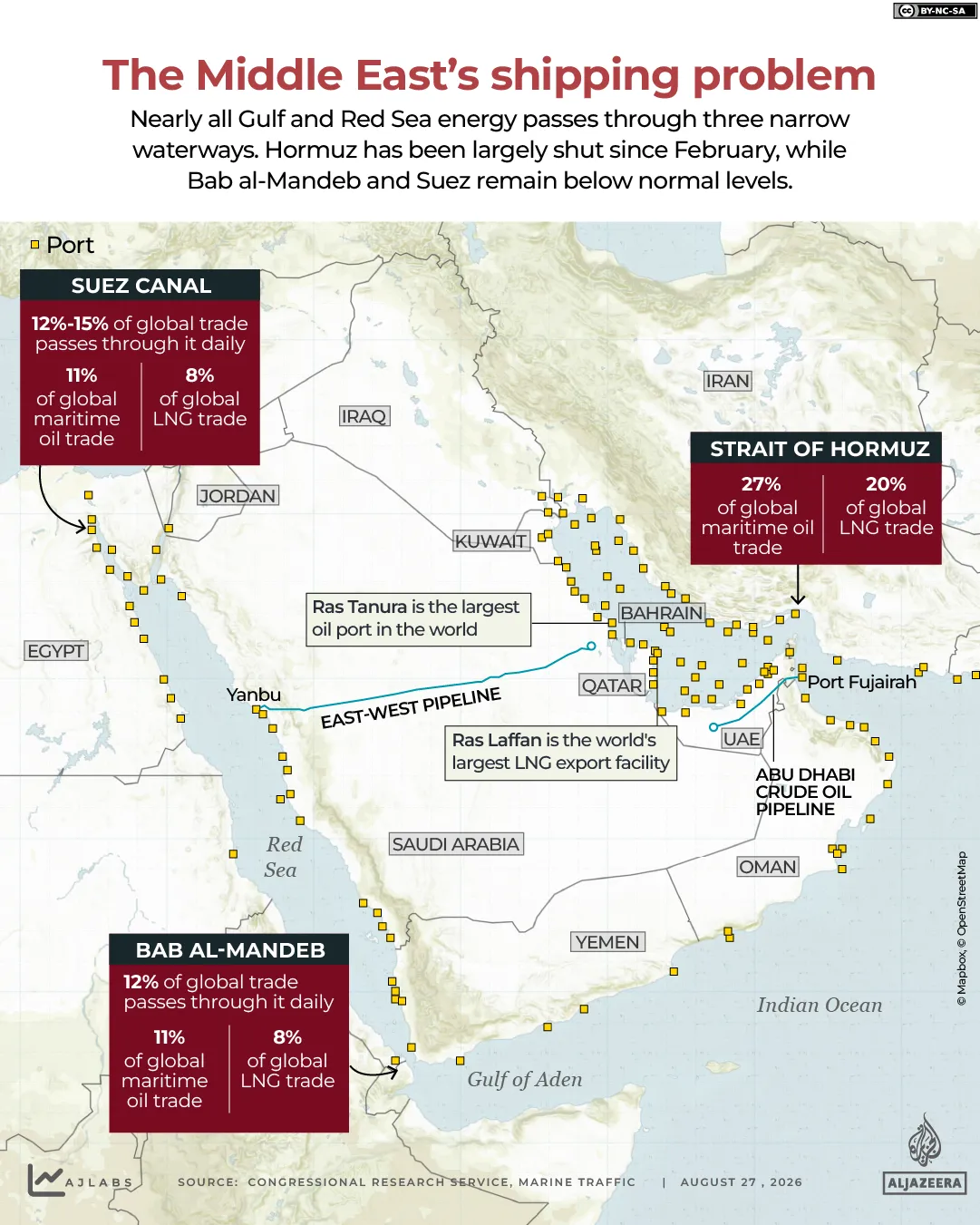
Washington claims the strait is open and that dozens of ships, carrying millions of barrels of oil, are passing through each day. US President Donald Trump claimed last month that the US was in “total control” of the waterway, through which one-fifth of the world’s oil and gas is shipped during peacetime, but which has been closed since the US-Israel war on Iran began six months ago.
list of 3 itemsend of list
Iran, however, says the strait remains under its control and is closed except to pre-approved vessels using its designated channels. It has warned that other ships attempting to transit risk being targeted.
So what is really going on in the strait – and what explains the divergent accounts?

The US says shipping through the Strait of Hormuz has significantly increased in recent weeks.
Two US officials told CNN that 40 commercial ships carrying some 18 million barrels of oil passed through the strait under US military escort on Tuesday, in what would be a new wartime record.
Trump gave a similar figure on Monday, saying the US Navy was helping some 30 ships pass through Hormuz every night. He later said the waterway was “under USA control”.
In terms of oil, US Treasury Secretary Scott Bessent said that “at least 10 million barrels” were getting through the strait each day, with between 15 million and 17 million on Tuesday.
The assessment comes after US CENTCOM commander Brad Cooper claimed last week that the US military had cleared Hormuz’s transit lanes of sea mines.
Before the war began, an average of around 100 ships and 20 million barrels of oil are estimated to have passed through the waterway each day.
According to figures from PortWatch, this has fallen to an overall average of seven vessels since March.

Iran has acknowledged that some vessels are getting through the strait, but insists it remains in control of the waterway.
Iran’s Parliament Speaker Mohammad Bagher Ghalibaf on Tuesday said “the enemy managed to get some ships” through Hormuz, but stressed that Iranian forces remain “in complete control of the strait and will not allow it to be opened”.
Ghalibaf accused the US of giving ships “false guarantees” about their ability to cross a southern route in Hormuz, warning that ships that try to do so would be targeted.
The following day, Iran’s Islamic Revolutionary Guard Corps (IRGC) claimed two oil tankers had hit mines and were disabled while trying to cross an “illegal route” in the strait. Saudi Arabia, meanwhile, claimed an Iranian attack hit a Saudi oil tanker, killing two Filipino sailors.
The latest ship-tracking data paints a different picture than the US claims, with far fewer vessels recorded as transiting the strait.
According to marine analytics firm Kpler, just six vessels crossed the strait on Wednesday, 11 on Tuesday and five on Monday. It put the 10-day average at 13 vessels per day.
Other ship-trafficking services show a similar pattern. Maritime data firm Lloyd’s List Intelligence recorded an average of around 12 transits per day from August 26 to September 1, though the latest data may be incomplete “due to a lag in identifying dark transits”, said the firm’s maritime intelligence and research director, Bridget Diakun. This means that some ships are switching off their tracking beacons.
From August 17-23, Lloyd’s List Intelligence recorded “about 14 non-Iranian-linked ships each day”, Diakun told Al Jazeera.
All these figures are far lower than the US claim that 40 ships transited the strait on Tuesday.
The Joint Maritime Information Center (JMIC), which monitors threats to shipping in the region, said in a September 1 advisory that commercial traffic through Hormuz was “far below baseline”, despite a “modest uptick from recent lows”.
The advisory put the risk level for Hormuz at “severe”, citing a “continued risk of drifting or uncharted mines”, despite US claims to have cleared the strait of mines.
Diakun told Al Jazeera that it is difficult to explain the gap between US-claimed transit figures and those recorded by ship trackers without insight into how the US tallies its own figures.
She said it’s possible the US includes smaller or non-cargo-carrying ships in its total, unlike Lloyd’s, which only counts “cargo-carrying vessels over 10,000 dwt [deadweight tonnage]”.
Eirik Hooper, a senior associate covering the ports and terminals sector for maritime research consultancy Drewry, also pointed to possible differences in how the US counts vessel transits.
“A US operational count plausibly includes everything that moved under or near naval protection: naval auxiliaries, offshore support and tugs, coastal and small craft [and] dhows,” said Hooper, noting that ship-tracking firm Kpler filters out such vessels “on size or cargo grounds”.
Hooper also said the US has access to “satellite, airborne and other sensor coverage plus its own convoy manifests”, which enables it to see vessels not immediately picked up by the normal automatic identification system (AIS) tracking system.
“By late August, the majority of Hormuz crossings were classified ‘dark’ or unknown by route, and AIS data counts often need to be revised to include vessels that switch off their transponders, with confirmed movements backdated,” said Hooper.
More generally, both the US and Iran have an incentive to play up their influence in the strait, the status of which has become a major sticking point in their six-month conflict.
Former US Ambassador Henry Ensher recently told Al Jazeera that he believes the latest cycle of US-Iran confrontation was likely triggered by CENTCOM’s claims to have de-mined that strait, and said “both sides would be well served to stop talking quite so much”.
At least 81 Palestinians have been killed by Israeli forces or settlers in the West Bank since the start of the year, according to the UN’s figures. At least 23 of those deaths have occurred in the context of settler attacks.
Three Israelis, both security forces and civilians, have been killed by Palestinians in the West Bank over the same period, the UN says.
The Israeli military has faced mounting criticism for actively participating in settler attacks on Palestinians, standing by, or failing to prosecute those responsible.
On Thursday, Israel’s police force said a 19-year-old settler had been arrested on suspicion of participating in an attack on the Palestinian village of Qusra on Saturday. It marks the first such arrest in weeks of attacks on Qusra.
Dozens of masked settlers descended on the village, surrounding a house while Palestinians were trapped inside, and throwing stones.
Israeli soldiers who were deployed to the scene reportedly detained the trapped Palestinians but not the settlers, allowing them to leave. The Israeli military said troops removed “rioters” and protected residents.
Israel has built about 160 settlements housing 700,000 Jews since it occupied the West Bank and East Jerusalem – land Palestinians want, along with Gaza, for a future state – during the 1967 Middle East war. An estimated 3.3 million Palestinians live alongside them.
The settlements are illegal under international law.
In a separate development on Wednesday, Israeli forces demolished the Palestinian village of Khirbet al-Tabban, in the Masafer Yatta area.
Israeli human rights group B’Tselem said the village’s 70 residents, including 28 children, were given no warning prior to the demolition and were not allowed to remove their property.
It described the demolition as the most significant in Masafer Yatta since May 2025.
In the 1980s, the Israeli military declared about 3,000 hectares in the South Hebron Hills, which includes Masafer Yatta, as a restricted firing zone for training purposes.
The military says the Palestinian homes there have been built illegally.
In 2022, Israel’s Supreme Court ruled to allow the demolition of homes in the firing zone and the expulsion of their residents, who had argued that such a move violated international law and that their families had been living there since before the State of Israel was established.
B’Tselem says Khirbet al-Tabban is the 66th Palestinian community to be expelled by Israeli authorities since the start of the Gaza war in October 2023, which it alleges is part of a campaign of “ethnic cleansing” being carried out in the West Bank.
Kyiv, Ukraine – Russian Aerospace Forces (RAF) chief Aleksandr Chayko barely survived a blast that killed his son-in-law.
Chayko, who turned 55 in the last week of July, was reportedly having a belated birthday party on August 1 at a high-end Italian restaurant in central Moscow.
list of 4 itemsend of list
But the celebration was cut short, as an unidentified woman carrying a homemade bomb tried to enter the restaurant. She was stopped by a security guard, according to Russia. The explosive in her bag detonated, killing at least five people.
The Kremlin did not confirm the casualties, but blamed the attack on the “bloody tentacles” of Ukrainian President Volodymyr Zelenskyy’s government.
Kyiv has not commented on the attack.
Chayko helped lead Russia’s intervention in Syria and commanded Russian forces north of Kyiv in early 2022.
Ukraine has accused him of war crimes.
In May, President Vladimir Putin appointed him commander-in-chief of the RAF that controls the military component of Russia’s space programme.
The RAF’s satellites and ground-space facilities have been used for gathering intelligence, navigation, and supporting the coordination of ground troops and drone and missile attacks.
These facilities are located mostly in western Russia, and new Ukrainian long-range drones and missiles are capable of striking them.
“Key factories are few, and they all are within the reach of Ukrainian missiles,” Nikolay Mitrokhin, a researcher with Germany’s University of Bremen, told Al Jazeera.
“These attacks may result – and certainly will – in the problems with all of Russia’s space programme, including specifically civilian and international programmes,” he said.
In late June, Ukrainian drones hit the giant space communications centre in the leafy, tranquil town of Dubna outside Moscow that managed reconnaissance satellites and processed military data.
The strike damaged a 32-metre (105-foot) satellite antenna, hardware modular complexes, central control consoles and technical buildings.
“Our long-range sanctions against Russia for this war once again reached the Dubna space communications centre,” Zelenskyy said on June 30.
Russian authorities said an unspecified building in Dubna was damaged and a six-month-old baby died.
Ukrainian drones also struck three smaller space communication centres in western Russia and annexed Crimea.
“These centres are very expensive, very labour-consuming from the viewpoint of construction,” Anatoly Zak, a United States-based author and one of the foremost experts on the Russian space programme, told Al Jazeera. “It’s very difficult to transfer their functions to another infrastructure” because they manage geostationary satellites “tied” to a certain location.
So far, there have been no signs that the satellites lost orbit or became unmanageable, but “behind the scenes there are for sure serious communication problems”, Zak said.
On August 23, swarms of Ukrainian drones flew more than 1,800km (1,120 miles) to reach Russia’s northwestern Arkhangelsk region.
Some 40 drones were downed, regional authorities claimed, but at least two reached the area near Plesetsk, Russia’s military cosmodrome, or spaceport, and launchpad for intercontinental ballistic missiles and rockets carrying military satellites.
No harm was done. A day later, Roscosmos, the state-run space corporation, reported the successful launch of a rocket with unnamed “military satellites”.
The timing of the Ukrainian attack – along with two more strikes earlier this year – was calculated to strike a booster rocket that had just been fuelled and lifted for takeoff.
“There have been three attempts to air-raid Plesetsk, and not just air-raid, but air-raid at the moment when there’s a fully-fuelled rocket on the launchpad that is about to start,” Zak said.
The attempts were serious enough to be publicly reported to Putin.
“Our [Ukrainian] ‘friends’ did everything to make this launch not happen,” Dmitry Bakanov, head of the Kremlin-run Roscosmos space agency, told Putin in April.
At least a dozen drones are necessary to damage Plesetsk’s launch table or rocket assembly shop, according to Pavel Luzin, an analyst with the Jamestown Foundation, a think tank in Washington, DC.
The military satellites launched from Plesetsk are part of the Rassvet (Dawn) satellite fleet designed to rival and replace Starlink satellite modems by Elon Musk’s SpaceX company, Moscow claimed.
Sputnik 1, the Earth’s first artificial satellite, was the size of a fitness ball, and had nothing but a radio transmitter and three silver-zinc batteries inside.
The “Sputnik moment” was the US’s realisation, after the Soviet Union launched the first satellite in 1957, that the USSR had taken the lead in space technology and science.
But Sputnik 1 was launched on a modified R-7 – the world’s first intercontinental ballistic missile, designed to carry a hydrogen bomb across continents. The same rocket technology that could deliver a nuclear warhead into the US had been repurposed to put a satellite into orbit.
The R-7 became a prototype of the Soyuz booster rockets, the world’s most launched spaceships that made Soviet and then Russian launches routine and precise, unlike US launches of space shuttles.
“Rain or shine or sleet or snow don’t matter,” Mark Bowman, deputy director of NASA’s human spaceflight programme, told this reporter in 2007 at the Baikonur spaceport, the world’s oldest in southern Kazakhstan that Russia leases.
The only place where the Soyuz rockets are produced is the Progress Rocket and Space Centre in the Volga River city of Samara – and Ukrainian missiles struck it on August 15. The attack ignited a fire and slightly damaged one of the facilities.
“So far, we see that the damage in Samara wasn’t critical,” Luzin said.
If it becomes critical, Russia would be unable to manufacture the Soyuz rockets, but the existing stash of rockets would still last a year, he said.
Communist Moscow never advertised the military component of its space programme, emphasising its “peaceful exploration of space”.
The USSR was first to send a dog, a man and a woman into space, and to launch the world’s first space station. In 1988, its Buran space shuttle became the first to complete an unmanned orbital flight and land automatically.
Its unmanned probes soft-landed on Venus and Mars and took the first photos of the moon’s dark side.
Some key figures of the Soviet space programmes were born in what is now Ukraine, and a string of crucial design bureaus and manufacturing facilities kept working there after the 1991 Soviet collapse.
Following Russia’s 2014 annexation of Crimea and the subsequent breakdown in Russian-Ukrainian relations, Ukrainian aerospace facilities severed their longstanding ties with Moscow, disrupting decades-old supplies of booster rockets, guidance systems, electronics and other components.
Russia’s invasion of Ukraine also deepened the international isolation of its civilian space programme, with Western governments and space agencies suspending or abandoning several planned missions and partnerships.
After the war began in 2022, the European Space Agency terminated its cooperation with Roscosmos on ExoMars, removing the Russian-built Kazachok landing platform from the mission designed to search for signs of past life on Mars.
The same year, Berlin switched off its X-ray telescope on Spektr-RG, a Russia-German space observatory that maps clusters of galaxies and surveys the universe for black holes.
For the sake of seizing insignificant areas in eastern Ukraine, “Putin will waste the Russian space programme the way he wasted the rest of the Soviet legacy”, analyst Mitrokhin believes.
Yet Russia has not been completely cut off from international space cooperation.
Despite the collapse of some partnerships, NASA and Roscosmos have continued to work together on board the International Space Station, while Moscow has turned to China and other non-Western partners for new projects.

Guendouzi and Greenwood made provocative gestures towards the Lyon supporters after their Champions League playoff.
Published On 3 Sep 20263 Sep 2026
UEFA has opened disciplinary proceedings against Fenerbahce’s Matteo Guendouzi and Mason Greenwood following the second leg of a Champions League playoff match at Olympique Lyonnais, the Turkish club said.
“Our club will present the necessary defences before the relevant UEFA bodies in order to protect the rights and interests of our players and Fenerbahce during this process,” the Turkish outfit added in a statement on Thursday.
French midfielder Guendouzi and English forward Greenwood allegedly made provocative gestures towards the Lyon supporters, which was followed by a brawl as Guendouzi left the pitch, following Fenerbahce’s 2-1 win last month.
It led to clashes between players and coaching staff on and off the football pitch, and the visiting team’s celebrations descended into chaos.
Fenerbahce said they are also under scrutiny.
“Everything from that match is still with the disciplinary body,” a UEFA spokesperson said.
Fenerbahce progressed to the league phase of the Champions League with a 3-2 aggregate victory.
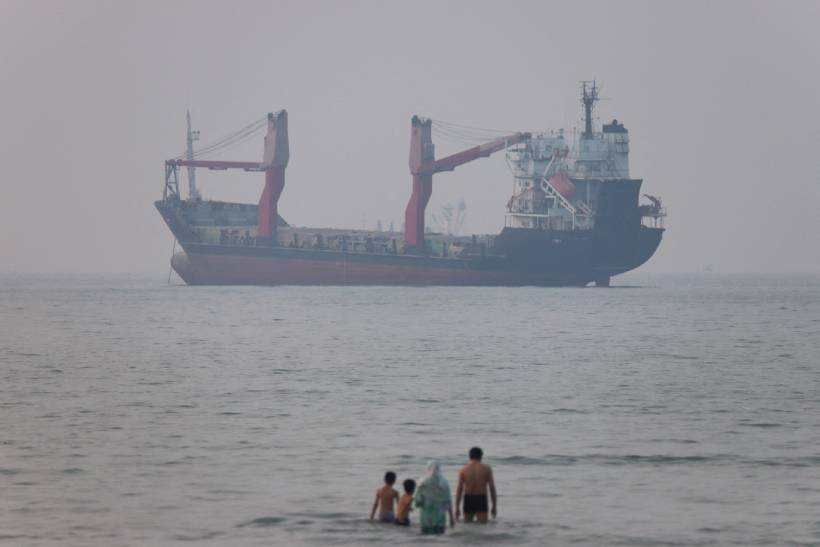
The Iran conflict and disruption to the Strait of Hormuz are forcing major oil importing countries to rethink how they source crude. Countries that once relied heavily on nearby Middle Eastern suppliers are increasingly turning to producers in the Americas and Africa, accepting longer voyages and higher shipping costs in exchange for greater energy security.
Japan is among the clearest examples of this shift. Before the conflict, more than 90% of its crude came from the Middle East, benefiting from short and relatively inexpensive shipping routes.
Since Gulf exports were disrupted, Japanese imports from the United States have surged. Between March and June, Japan imported more than 4.5 million metric tons of US crude, compared with less than 1 million tons during the same period in 2025.
The alternative comes with a cost. US crude takes roughly nine days longer to reach Japan, increasing freight expenses and requiring refiners to adjust their delivery schedules.
Stay ahead of the geopolitical week.
MD Briefing delivers expert analysis across five global fronts — the Indo-Pacific, energy, geoeconomics, European security, and the Middle East — every Monday morning. Free.
Japan is not alone. South Korea and India are also increasing purchases from suppliers in the Americas and Africa as Middle Eastern shipments decline.
China, the world’s largest crude importer, has relied heavily on strategic reserves to cushion the impact of the conflict. As those reserves are drawn down, Chinese buyers could return to international markets and intensify competition for crude from alternative producers.
The disruption has created a major opportunity for oil exporters outside the Middle East.
US crude exports reached a record 61.6 million metric tons in the second quarter of 2026, up 43% from a year earlier. Brazil, Argentina and Guyana have also recorded strong export growth.
Brazilian shipments to India, for example, were three times higher in the first half of 2026 than during the same period in 2025.
The new trade patterns are considerably less efficient.
A tanker travelling from major Gulf terminals to India’s western coast can take only three to five days. A shipment from Brazil to the same destination can take around 25 days.
Longer journeys mean higher tanker demand, greater freight costs and more complicated logistics. Yet importers are increasingly willing to absorb those costs because dependence on a single vulnerable supply corridor carries its own risks.
The shift is also about reducing exposure to vulnerable maritime routes.
The Strait of Hormuz remains a major risk, while geopolitical tensions have reduced traffic through the Suez Canal. Drought has also constrained the Panama Canal.
As a result, importers are increasingly valuing suppliers whose shipping routes can bypass these chokepoints.
The emerging pattern is creating a more geographically dispersed oil market.
Middle Eastern producers will remain crucial because of their enormous reserves, low production costs and established infrastructure. But Asian buyers are unlikely to forget the disruption caused by the Hormuz crisis.
Regular purchases from new suppliers can therefore become a form of insurance, even after Gulf exports recover.
The most important change is that energy security is beginning to outweigh pure economic efficiency.
For decades, Asian refiners benefited from buying Middle Eastern crude because geography made it cheaper and faster. The Iran conflict has exposed the vulnerability of that model. A short shipping route is of limited value if a single geopolitical crisis can disrupt it.
The result could be a lasting diversification of global oil trade. Importers are unlikely to completely abandon Middle Eastern crude, but they may maintain larger relationships with US, Latin American and African suppliers to create alternative sources of supply.
This means the cost of energy security will increasingly be reflected in the global oil market. Longer voyages, higher freight rates and more complex supply chains may become the price importers are willing to pay for resilience.
The broader shift is therefore from an oil market designed primarily around efficiency to one increasingly designed around redundancy and geopolitical risk.
With information from Reuters.
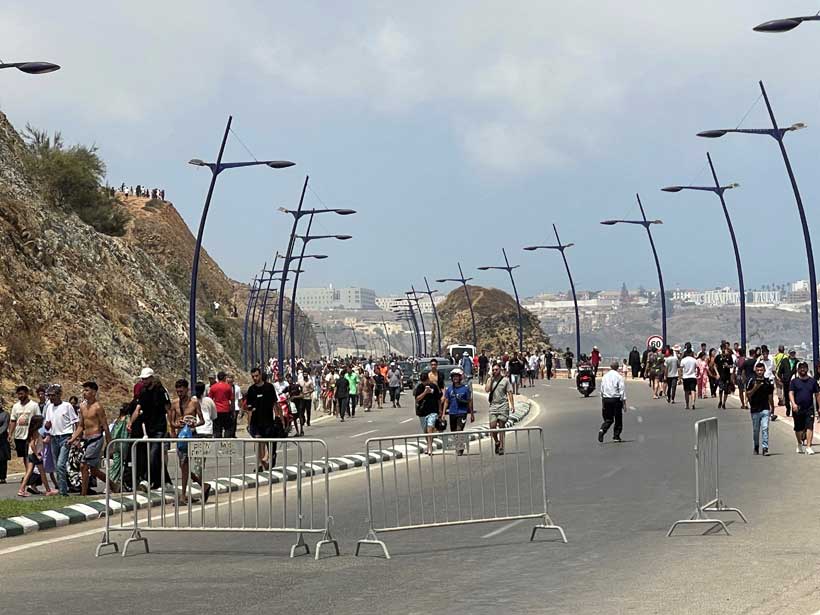
Spain has found no evidence that Moroccan authorities planned or orchestrated the massive migrant surge into the Spanish enclave of Ceuta in July, Prime Minister Pedro Sánchez told parliament. His comments come amid conflicting accounts over whether the unprecedented border crossing was a spontaneous migration event or a coordinated operation designed to overwhelm Spanish border controls.
More than 70,000 migrants entered Ceuta from Morocco during the July 30 to 31 crisis, overwhelming local authorities and creating a major humanitarian and political challenge for Spain.
The scale of the movement has raised questions about how such a large number of people were able to reach the Spanish enclave within such a short period.
Sánchez told lawmakers that neither Spain’s diplomatic services, the European Commission nor international organisations had provided evidence showing that Morocco had planned or carried out the incident.
Stay ahead of the geopolitical week.
MD Briefing delivers expert analysis across five global fronts — the Indo-Pacific, energy, geoeconomics, European security, and the Middle East — every Monday morning. Free.
However, he acknowledged that Moroccan security forces allowed crossings to continue during a critical 10 hour period on July 30, when arrivals reached their peak.
Sánchez said Spain had not yet determined whether this reflected deliberate inaction or an inability to control the situation.
The government’s position has been complicated by a police report that reportedly described the influx as a planned and phased operation rather than a spontaneous movement.
According to reports on the document, Moroccan security forces were initially deployed in smaller numbers near the Tarajal crossing and did not make a serious effort to disperse the crowds. Some uniformed officers were also allegedly seen directing people towards the crossing.
However, the report did not identify individual officers or provide independently verified evidence that Moroccan authorities had ordered the operation.
Moroccan authorities have rejected accusations that they deliberately facilitated the mass movement into Ceuta.
The controversy has nevertheless put renewed pressure on Spain’s relationship with Morocco, a crucial partner in controlling migration across the western Mediterranean.
The allegations have also created a political problem for Sánchez’s government.
Spanish authorities have previously attributed the surge largely to misinformation circulating online and the activities of smuggling networks. Reports suggesting possible Moroccan involvement therefore challenge part of Madrid’s explanation for how the crisis developed.
Spain’s police leadership has also pushed back against claims that an official police report conclusively blamed Morocco for orchestrating the incident.
Morocco plays a central role in Spain’s efforts to manage migration from North Africa. Any deterioration in bilateral cooperation could make it harder for Madrid to control future crossings and could turn migration into a wider diplomatic dispute.
Ceuta and Melilla are particularly sensitive because they are Spanish territories located on the North African coast and represent the European Union’s land borders with Africa.
The central issue is no longer simply whether thousands of migrants crossed into Ceuta, but who enabled the conditions that made the surge possible.
Sánchez’s position protects Spain’s strategically important relationship with Morocco and avoids directly accusing Rabat without conclusive evidence. At the same time, the reported police findings create a credibility problem for Madrid because they suggest that Moroccan security forces may have played some role in allowing or directing the movement, even if they do not establish government-level planning.
The distinction between deliberate orchestration, passive border enforcement and inability to control the crowd is therefore crucial. Evidence of Moroccan officials physically facilitating crossings would not necessarily prove that the Moroccan state ordered the operation.
For Spain, the episode also exposes the vulnerability of Ceuta’s border to sudden mass movements and information campaigns. For Morocco, the accusations carry diplomatic costs because migration cooperation is an important component of its relationship with Spain and the wider EU.
The immediate challenge for Madrid is to establish what happened without turning an unresolved border investigation into a diplomatic confrontation with Rabat.
With information from Reuters.
Moscow challenges Norway’s seizure of vessel, the Professor Molchanov, calling it an act of piracy.

Published On 3 Sep 20263 Sep 2026
Norway has seized a Russian ship in the Arctic to enforce a compensation claim by Ukrainian energy firm Naftogaz, linked to Russian asset seizures in Crimea.
Norway seized the ship on Wednesday, after Moscow failed to pay Naftogaz $4.22bn plus interest and legal costs to compensate for assets it seized in Crimea after a tribunal ruling at The Hague in 2023.
list of 3 itemsend of list
In a post on X, Naftogaz said the seizure made up “part of global efforts to enforce the arbitral award obtained by Naftogaz against the Russian Federation in connection with the unlawful expropriation of their assets in Crimea, which Russia illegally annexed in 2014”.
The vessel, the Professor Molchanov, was taken off the Norwegian Arctic archipelago of Svalbard after a 24-hour standoff with the Norwegian Coast Guard, according to Covington, the US law firm representing Naftogaz.
Russian state news agency TASS quoted a Ministry of Foreign Affairs spokesperson as calling the Norwegian action “piracy”.
Alexei Chekunkov, Russia’s minister for the development of the Russian Far East and Arctic, said Moscow would challenge the ruling.
Chekunkov called Norway’s seizure of the Professor Molchanov “another example of Western countries’ legal nihilism and lawlessness,” according to the Interfax news agency.
Naftogaz has been pursuing legal action against Russia since 2016 to seek compensation for the expropriation of its property in Crimea.
“Russia cannot evade responsibility simply by refusing to comply with an international arbitral award,” said Naftogaz Acting CEO Sergii Fedorenko.
“We will continue to pursue Russian assets around the world until the compensation awarded to Naftogaz and other Naftogaz Group companies is paid,” the Ukrainian company said.
Covington, the law firm, said it had been tracking the Professor Molchanov, a Russian-owned vessel that is used for commercial cruises, for months.
The ship was being used for commercial expedition cruises, including to Svalbard, according to the company.
Naftogaz said the passengers on board are being handled by Norwegian authorities.

Published On 3 Sep 20263 Sep 2026
Families in Nepal held symbolic funerals for relatives who remain missing, hoping to free their souls after they were presumed dead.
In Hindu tradition, cremation is a vital final rite, and for some families, performing the ceremony without the bodies of their loved ones has brought a measure of spiritual release.
Authorities in Nepal have meanwhile been burying recovered bodies in temporary graves until they can be identified. DNA samples are being preserved, distinguishing facial features photographed and other identifying details recorded to help match the remains with missing people and eventually return them to their families.
The August 26 flash flood has been one of the deadliest disasters to hit the Himalayan nation in recent years.
More than 1,200 people were killed and about 4,750 remain missing in Nepal and China’s Tibet region, after a huge wave of mud and debris destroyed towns, roads, bridges and several hydropower dams.
Last week, a prominent Saudi Sheikh, Mohammed Al-Issa, visited the Auschwitz concentration camp in Poland to commemorate the 75th anniversary of its liberation, which signalled the end of the Nazi Holocaust. Although dozens of Muslim scholars have visited the site, where about one million Jews were killed during World War Two, according to the Auschwitz Memorial Centre’s press office, Al-Issa is the most senior Muslim religious leader to do so.
Visiting Auschwitz is not a problem for a Muslim; Islam orders Muslims to reject unjustified killing of any human being, no matter what their faith is. Al-Issa is a senior ally of Saudi Crown Prince Mohammad bin Salman (MBS), who apparently cares little for the sanctity of human life, though, and the visit to Auschwitz has very definite political connotations beyond any Islamic context.
By sending Al-Issa to the camp, Bin Salman wanted to show his support for Israel, which exploits the Holocaust for geopolitical colonial purposes. “The Israeli government decided that it alone was permitted to mark the 75th anniversary of the Allied liberation of Auschwitz [in modern day Poland] in 1945,” wrote journalist Richard Silverstein recently when he commented on the gathering of world leaders in Jerusalem for Benjamin Netanyahu’s Holocaust event.
READ: Next up, a Saudi embassy in Jerusalem
Bin Salman uses Al Issa for such purposes, as if to demonstrate his own Zionist credentials. For example, the head of the Makkah-based Muslim World League is leading rapprochement efforts with Evangelical Christians who are, in the US at least, firm Zionists in their backing for the state of Israel. Al-Issa has called for a Muslim-Christian-Jewish interfaith delegation to travel to Jerusalem in what would, in effect, be a Zionist troika.
Zionism is not a religion, and there are many non-Jewish Zionists who desire or support the establishment of a Jewish state in occupied Palestine. The definition of Zionism does not mention the religion of its supporters, and Israeli writer Sheri Oz, is just one author who insists that non-Jews can be Zionists.
![Mohammad Bin Salman and Netanyahu - Cartoon [Tasnimnews.com/Wikipedia]](https://i0.wp.com/www.middleeastmonitor.com/wp-content/uploads/2018/01/2017_11-29-Mohammad-Bin-Salman-and-NetanyahuCaricature_of_Mohammad_Bin_Salman_03.jpg?w=1200&ssl=1)
Mohammad Bin Salman and Netanyahu – Cartoon [Tasnimnews.com/Wikipedia]
We should not be shocked, therefore, to see a Zionist Muslim leader in these trying times. It is reasonable to say that Bin Salman’s grandfather and father were Zionists, as close friends of Zionist leaders. Logic suggests that Bin Salman comes from a Zionist dynasty.
This has been evident from his close relationship with Zionists and positive approaches to the Israeli occupation and establishment of a Jewish state in Palestine, calling it “[the Jews’] ancestral homeland”. This means that he has no issue with the ethnic cleansing of almost 800,000 Palestinians in 1948, during which thousands were killed and their homes demolished in order to establish the Zionist state of Israel.
“The ‘Jewish state’ claim is how Zionism has tried to mask its intrinsic Apartheid, under the veil of a supposed ‘self-determination of the Jewish people’,” wrote Israeli blogger Jonathan Ofir in Mondoweiss in 2018, “and for the Palestinians it has meant their dispossession.”
As the de facto ruler of Saudi Arabia, Crown Prince Bin Salman has imprisoned dozens of Palestinians, including representatives of Hamas. In doing so he is serving Israel’s interests. Moreover, he has blamed the Palestinians for not making peace with the occupation state. Bin Salman “excoriated the Palestinians for missing key opportunities,” wrote Danial Benjamin in Moment magazine. He pointed out that the prince’s father, King Salman, has played the role of counterweight by saying that Saudi Arabia “permanently stands by Palestine and its people’s right to an independent state with occupied East Jerusalem as its capital.”
UN expert: Saudi crown prince behind hack on Amazon CEO
Israeli journalist Barak Ravid of Israel’s Channel 13 News reported Bin Salman as saying: “In the last several decades the Palestinian leadership has missed one opportunity after the other and rejected all the peace proposals it was given. It is about time the Palestinians take the proposals and agree to come to the negotiations table or shut up and stop complaining.” This is reminiscent of the words of the late Israeli Foreign Minister Abba Eban, one of the Zionist founders of Israel, that the Palestinians “never miss an opportunity to miss an opportunity.”
Bin Salman’s Zionism is also very clear in his bold support for US President Donald Trump’s deal of the century, which achieves Zionist goals in Palestine at the expense of Palestinian rights. He participated in the Bahrain conference, the forum where the economic side of the US deal was announced, where he gave “cover to several other Arab countries to attend the event and infuriated the Palestinians.”
![U.S. President Donald Trump looks over at Crown Prince of Saudi Arabia Mohammad bin Salman al-Saud as they line up for the family photo during the opening day of Argentina G20 Leaders' Summit 2018 at Costa Salguero on 30 November 2018 in Buenos Aires, Argentina. [Daniel Jayo/Getty Images]](https://i0.wp.com/www.middleeastmonitor.com/wp-content/uploads/2018/12/2018-12-3_trump-and-bin-salmanbin-salman-g20-trump.jpg?w=1200&ssl=1)
US President Donald Trump looks over at Crown Prince of Saudi Arabia Mohammad bin Salman al-Saud as they line up for the family photo during the opening day of Argentina G20 Leaders’ Summit 2018 at Costa Salguero on 30 November 2018 in Buenos Aires, Argentina [Daniel Jayo/Getty Images]
While discussing the issue of the current Saudi support for Israeli policies and practices in Palestine with a credible Palestinian official last week, he told me that the Palestinians had contacted the Brazilian President Jair Bolsonaro to ask him not to relocate his country’s embassy to Jerusalem. “The Saudis have been putting pressure on us in order to relocate our embassy to Jerusalem,” replied the Brazilian leader. What more evidence of Mohammad Bin Salman’s Zionism do we need?
The founder of Friends of Zion Museum is American Evangelical Christian Mike Evans. He said, after visiting a number of the Gulf States, that, “The leaders [there] are more pro-Israel than a lot of Jews.” This was a specific reference to Saudi Arabia’s Crown Prince, and his counterpart in the UAE, Mohammed Bin Zayed.
“All versions of Zionism lead to the same reactionary end of unbridled expansionism and continued settler colonial genocide of [the] Palestinian people,” Israeli-American writer and photographer Yoav Litvin wrote for Al Jazeera. We may well see an Israeli Embassy opened in Riyadh in the near future, and a Saudi Embassy in Tel Aviv or, more likely, Jerusalem. Is Mohammad Bin Salman a Zionist? There’s no doubt about it.
The views expressed in this article belong to the author and do not necessarily reflect the editorial policy of Middle East Monitor.

Carlos Queiroz quit the job after leading Ghana to the World Cup Round of 32 but has returned for an interim period.
Published On 3 Sep 20263 Sep 2026
Carlos Queiroz has been reappointed Ghana coach for an indeterminate period, two months after stepping down in the wake of the country’s FIFA World Cup campaign.
The Ghana Football Association (GFA) said on Wednesday the 73-year-old Portuguese coach would “embark on a new coaching mandate, commencing with the upcoming international window”.
list of 4 itemsend of list
“The GFA believes Queiroz’s extensive international experience, technical expertise, and knowledge of the Black Stars position him strongly to lead the team into this next chapter,” the association said in a statement.
The experienced former Iran, Portugal, Colombia and Egypt coach guided the Black Stars to the round of 32 at the World Cup despite having only a couple of months to prepare them for the tournament.
Ghana were left without a coach 72 days before the World Cup kickoff after parting company with Otto Addo following friendly defeats by Austria and Germany in March.
Ghana are scheduled to play home and away group matches against Ivory Coast in qualifying for the 2027 Africa Cup of Nations during the next international window, which runs from September 21 to October 6.
Queiroz led Portugal to the round of 16 at the 2010 World Cup and later coached Iran in the last three editions of the tournament, recording three wins in 13 matches.
Born in Mozambique, the former goalkeeper has also held coaching positions with Egypt, Japan, Colombia and South Africa, and previously led Portugal in the early 1990s.
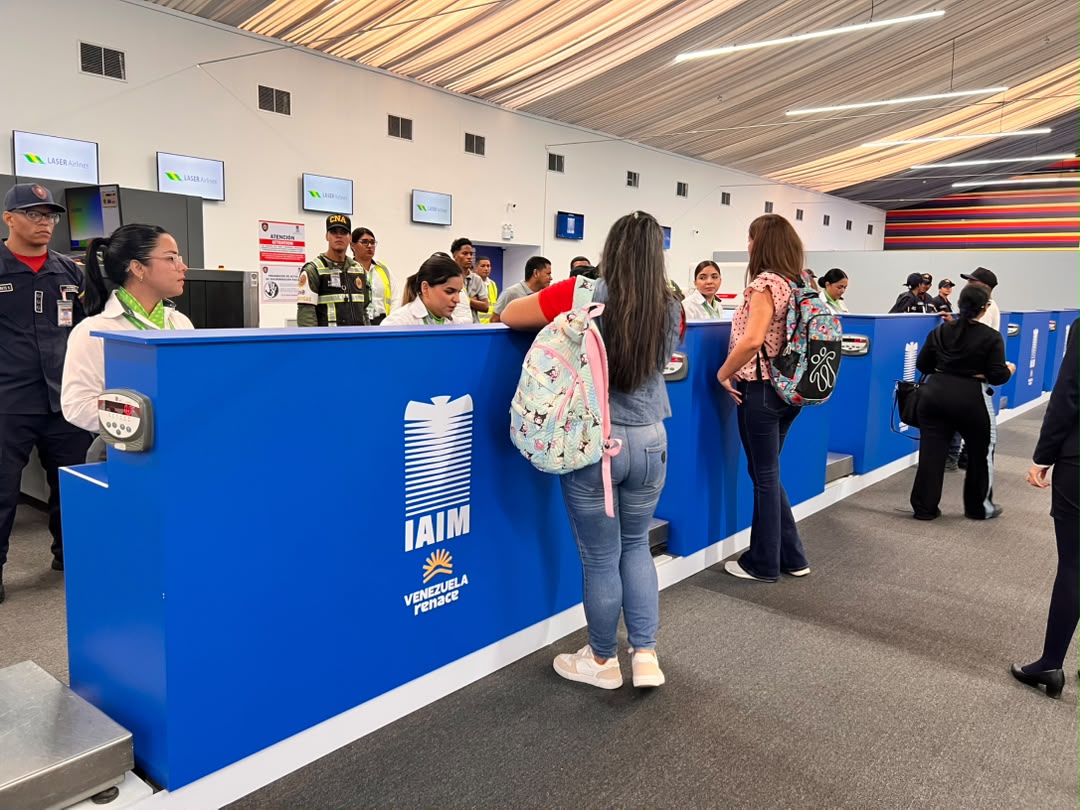
Multiple airlines have resumed connections from Venezuela’s main airport. (AVN)
Mérida, September 2, 2026 (venezuelanalysis.com) – Venezuela’s Simón Bolívar International Airport, located in Maiquetía, La Guaira State, officially resumed commercial flight operations on Tuesday through newly constructed temporary terminals.
Air connections resumed more than two months after a powerful double earthquake struck central and coastal Venezuela on June 24, causing severe structural damage to the Simón Bolívar Airport, including fractured runways.
The initial phase of renewed operations relies on four modular, temporary terminals erected in the airport’s external parking areas. Spanning more than 10,000 square meters, the temporary structures house fully functional services for ticketing, baggage drop and retrieval, security checkpoints and migration control.
Venezuelan authorities have also set up shuttle buses to take passengers from the modular gates to the aircraft on the tarmac. They have also issued operational guidelines for passengers and organized a security deployment in the airport grounds and surrounding areas.
Before official operations began, national aviation authorities executed four operational simulations to test passenger circulation routes, security protocols, luggage handling, and overall system readiness.
During an official inspection, Minister of Transportation Francisco Garcés outlined the operational milestones, technical parameters, and long-term recovery timeline for the nation’s main aviation hub.
“There is full operationality from these temporary terminals, with capacity to accommodate 720 departing and 496 arriving passengers in the international area, and 480 and 472, respectively, in the domestic sector,” Garcés stated during a media briefing. “We have made a strong effort to maintain rigorous international standards for user comfort and safety, completing this complex logistical solution in record time.”
Garcés explained that the current facilities restore approximately 25 percent of the airport’s pre-earthquake operational capacity, with projections of expanding to 40 percent within the next two months and 60 percent by the end of the year.
Meanwhile, engineering teams continue comprehensive structural repairs on the main permanent terminals, with full reconstruction scheduled for the first quarter of 2027.
On September 1, the opening day of the temporary facilities featured eight scheduled flights split equally between domestic and international routes, with the inaugural flight departing to Valera, Trujillo State.
Air carriers currently operating or scheduling their immediate return to Maiquetía include national lines Conviasa, Laser Airlines, Estelar, Avior and Venezolana, alongside international operators such as American Airlines, Iberia, and Copa Airlines.
Throughout the two-month shutdown following the June 24 seismic events, national and international air transit was diverted through smaller, regional airports across the country, including Barcelona (Anzoátegui State), Valencia (Carabobo State), and Maracaibo (Zulia State).
Alongside the reopening of Venezuela’s main air hub, the acting Delcy Rodríguez government has continued to address housing rehabilitation and structural reconstruction in damaged urban centers.
In La Guaira State, Rodríguez oversaw the formal handover of 210 fully repaired apartments in the Ana Victoria community. The rehabilitation works under the Plan Venezuela Renace allowed displaced families to return to their homes after two months in temporary shelters.
Additional structural works in La Guaira include “tetra-houses” in Catia La Mar and public infrastructure reconstruction near the El Trébol highway interchange.
Concurrently, Rodríguez announced the delivery of direct financial assistance and low-interest loans to 104 condominium boards and 1,216 individual housing units in the Chacao and Altamira areas of Eastern Caracas.
“We have begun an inspection process; I know it may take some time, but it is important because we are in a phase of changing the seismic resistance standards for construction,” she said.
Disbursed through joint public and private banking channels, individual loans can be up to US $5,000, while funding for common area repairs can reach $20,000.
These funds enable residents and homeowner associations to address structural issues on buildings categorized under yellow and red risk tags, ensuring compliance with updated seismic resistance construction standards.
Edited by Ricardo Vaz in Caracas.

Tens of thousands rallied across Spain in support of Ceuta, protesting the government’s handling of the migrant crisis and accusing Morocco of involvement in the border surge.
Published On 3 Sep 20263 Sep 2026
Share
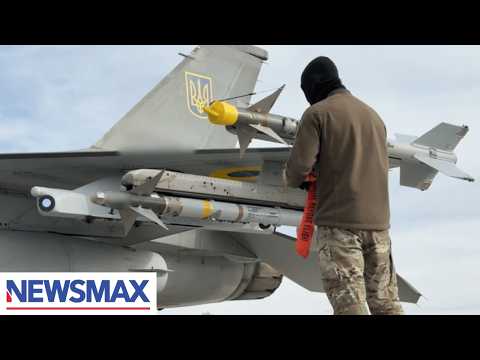
Ukrainian F-16 pilots are facing such a severe shortage of air-to-air missiles that some daytime sorties have seen them rely solely on the fighters’ internal guns to engage Russian aerial threats, according to a journalist who recently spoke with a senior Ukrainian Air Force commander. Meanwhile, the lack of air-to-air missiles means that the available weapons stocks are now being rationed.
The disclosure provides a remarkable glimpse into the day-to-day reality of Ukraine’s F-16 operations. While the aircraft may be available, the pilots may be ready, and Russian drones and cruise missiles may be approaching, there may simply not be enough missiles on hand to arm the jets.
According to Newsmax journalist Shelby Wilder, the Ukrainian Air Force can find itself monitoring missile shipments as they cross the country’s border, with personnel counting not just the hours but the minutes until those weapons reach the aircraft. The concern is whether the missiles will arrive in time for the next major Russian aerial attack.

EXCLUSIVE: Ukraine F-16 Pilots Rationing Missiles as Russian Attacks Intensify | NEWSMAX2
The Ukrainian commander, who identified himself by the callsign “Phantom” and as commander of the country’s 107th Wing, confirmed the underlying problem when asked directly whether Ukraine was severely short of missiles for its F-16s.
“Yes, that’s true. Any aircraft without weapons is … useless,” Phantom said.
That blunt assessment is particularly striking given what Ukraine is asking its F-16s to do, and the relentless nature of Russian bombardments against Ukrainian cities and infrastructure.
❗️The moment when a 🇺🇦Ukrainian F-16 fighter jet shot down a 🇷🇺Russian Kh-101 cruise missile at extremely low altitude pic.twitter.com/7zVujRkYaG
— 🪖MilitaryNewsUA🇺🇦 (@front_ukrainian) June 1, 2026
The fighters have become an important part of Ukraine’s layered air defense network, hunting Russian drones and cruise missiles while also providing a potential counter to Russian combat aircraft, and conducting air-to-ground sorties. Ukraine has operated the F-16 since the summer of 2024.
“We are focusing on defending our skies against Russian unmanned drones to protect our infrastructure inside the country,” Phantom said. “Our target priority is cruise missiles.”
Destroying as many incoming threats as possible before they reach Ukrainian cities and infrastructure requires missiles, with the F-16 primarily armed with the AIM-120 Advanced Medium-Range Air-to-Air Missile (AMRAAM) and the shorter-range AIM-9 Sidewinder.

According to the new disclosure, those missiles have become a commodity whose availability can determine how a sortie is flown.
The F-16 carries an M61A1 Vulcan 20mm rotary cannon, but using the gun against an aerial target is fundamentally different from engaging it with a missile, and comes with its own risks, as we have explored before. This tactic is especially hazardous when going after small targets and especially slow ones, and it becomes even more dangerous at night.
Ukraine has already demonstrated that its F-16s can use their guns in combat. In May 2025, the Ukrainian Air Force said an F-16 pilot had destroyed three aerial targets and was engaging a fourth with the aircraft cannon before an emergency forced him to eject.

One air-to-air weapon not mentioned by Phoenix is the laser-guided 70mm Advanced Precision Kill Weapon System II (APKWS II) rocket, now apparently also part of the arsenal. These rockets would offer the Ukrainian Air Force an extremely valuable, lower-cost option for engaging drones and subsonic cruise missiles.
Regardless, Phantom specifically called for additional air-to-air missiles, as well as interceptors for ground-based Patriot batteries.
“We require more means of protection, such as Patriot missiles and air-to-air missiles, AIM-9s or AIM-120s to our fleet,” he said.
Phantom’s message is that simply delivering more aircraft is not enough. Ukraine needs a sustainable weapons pipeline to keep those aircraft combat-effective.
This is increasingly becoming a wider problem across Ukraine’s air defense network. Patriot interceptors have been heavily consumed, with relatively few replacement missiles now trickling in, leaving Ukraine with limited ability to defend against ballistic missiles in particular. The strain is now spilling into the lower tiers, including the air-to-air missiles carried by F-16s. Ukraine’s continued consumption of interceptors is a major driver, but it is competing with the enormous demand generated by ongoing wars in the Middle East and a broader surge in demand for advanced air defense weapons around the world. With production struggling to keep pace, scarce interceptors are effectively being rationed across an increasingly crowded global battlefield.
“At least we need to try to increase the production, or at least to allow Ukraine to localize the production in Ukraine or other European countries,” he said.
That proposal reflects the fundamental vulnerability of a relatively small fleet operating in a high-intensity air war. Every missile fired at a Russian cruise missile or drone is one less available for the next engagement. A finite inventory therefore has to cover both routine air-defense missions and the possibility of much larger Russian attacks. At the same time, both the AIM-9 and especially the AIM-120 are used for Ukrainian ground-based air defenses too. The AMRAAM, in particular, is the effector for the NASAMS, which protects Kyiv, and other key objectives against cruise missiles and drones.

The problem becomes even more acute because Ukraine cannot know precisely when the next major Russian strike will arrive.
That is why, according to Wilder’s account, the arrival of missile shipments is being followed with extraordinary urgency.
At the same time, Phantom welcomed the major technological leap that the F-16 represents over the Soviet-designed MiG-29s and Su-27s that formed the backbone of Ukraine’s fighter force.
“The F-16s in comparison with the legacy aircraft like MiG-29 or Su-27? This is kind of like a new technology,” Phantom said.
But sophisticated aircraft are only as useful as the weapons available to them.
Ukrainian F-16s have reportedly destroyed huge numbers of Russian drones and cruise missiles, and in July a Ukrainian F-16 was publicly identified by the U.S. Joint Chiefs chairman as having shot down a Russian fighter.
⚡️ CONFIRMED!
On July 8, 2026, a Russian Su-35 multi-role fighter was shot down on the eastern sector!🇺🇦 Glory to Ukraine!
✊ Together to victory! pic.twitter.com/r8S9fgQaC5— Ukrainian Air Force (@KpsZSU) July 8, 2026
Phantom also asked Ukraine’s Western partners to think beyond individual weapons transfers and toward production capacity.
He also urged the United States and European countries to do more to prevent Russia from acquiring components used in its own missile production through third countries.
“We need to make as much as we can to stop providing the parts, most technological parts to Russians, bypassing the direct sales, of course, through the third party,” he said.

Phantom argued that Russia continues to obtain sophisticated components through intermediaries and even ostensibly civilian products.
“It would not be a surprise that Russians [are] using the washing machine that they’re buying from the third party to use those smart details for building missiles,” he said.
His recommendation is tighter sanctions and enforcement designed to cut off Russia’s access to those components.
“Important is to sanction to stop Russia from being able to have access to those parts,” he said.
That, combined with missile shortages, could become an even bigger problem when Russia conducts another major aerial campaign against Ukraine, particularly as Moscow traditionally intensifies attacks against the country’s energy infrastructure during the winter months.
Contact the author: thomas@thewarzone.com
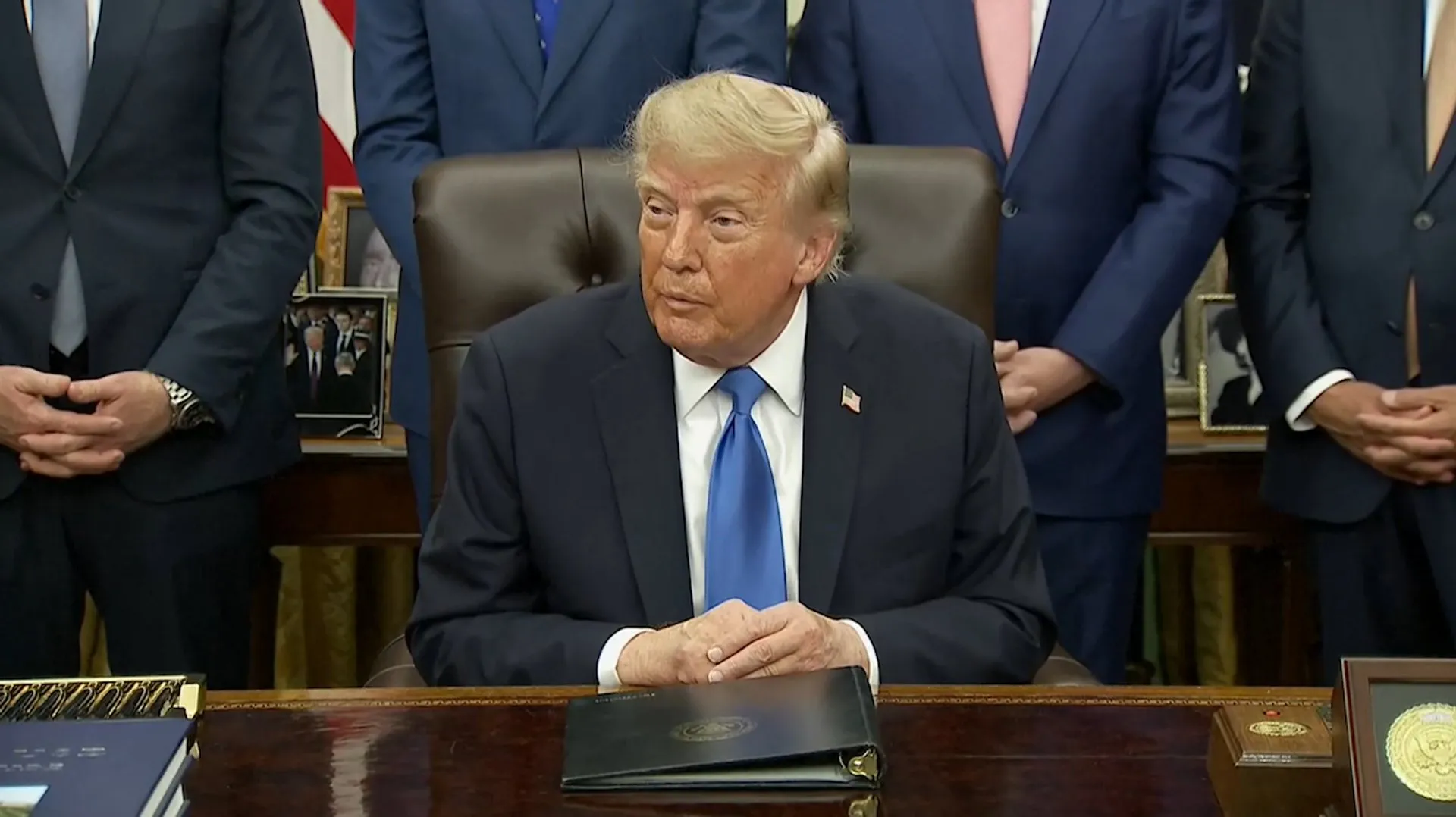
United States President Donald Trump has threatened more attacks on Iran, warning that Washington could hit Iran “anytime we want”, as the death toll from the latest US strikes climbed to 18, with at least 108 others wounded.
Trump’s threat on Wednesday came after the US and Iran exchanged their biggest barrage since July. The US military struck cities and areas along Iran’s southern coast, near the blockaded Strait of Hormuz, including a wedding party in the city of Kuhestak.
list of 4 itemsend of list
Iran retaliated with attacks on US bases across the Middle East, including Bahrain, Iraq and Jordan.
Speaking to reporters at the White House, Trump said, “We hit them very hard last night” and that the strikes “took out all of the new equipment that they tried to build along the Strait of Hormuz”.
“It was a very heavy attack last night. And we’re prepared to do another one. And anytime we want,” he said.
Iranian officials said at least 18 people were killed in the US strikes.
The victims included two children, according to Mohammad-Reza Zafarghandi, Iran’s health minister. One of them was a four-year-old who was killed in the strike on the wedding party in Kuhestak in Sirik county.
At least four people were killed in that strike.
Esmaeil Baghaei, the spokesman for Iran’s Ministry of Foreign Affairs, described the Kuhestak attack as a “war crime” and hit back at US claims that it does not target civilians.
“The reality is so horrifying that even American propaganda has never dared make the claim [the US military] is making today. Sirik is not a story. The civilians are real. The victims are real”, Baghaei wrote on X.
Iranian media said the funeral for the four Kuhestak victims will be held on Thursday.
The six-month war has led to a spike in oil prices, roiled the global economy and posed increasing political problems for Trump’s Republican Party ahead of November midterm elections in the US.
Only 31 percent of Americans approve of the war, while some 63 percent disapprove, according to a poll by the Reuters news agency and the Ipsos polling firm in August. Voters are particularly unhappy about high gas prices. Since the fighting resumed this weekend, the price of Brent crude oil, the international standard, has climbed to about $95, up more than 30 percent from the start of the war.
Trump’s approval rating has also fallen from 40 percent to 33 percent since the conflict began, according to Reuters/Ipsos polling.
On Wednesday, Trump said he did not think the renewed military campaign would last long. He also reiterated his position that the upcoming elections were not a factor in his Iran strategy.
“Number one, I’m not running. My party is running, and I’m going to help my party,” he told reporters in the Oval Office. “But I think my party respects the fact that we’re not allowing Iran to have a nuclear weapon.”
Iran has denied seeking a nuclear weapon.
Tariq Khan, a retired Pakistani lieutenant-general and former commander of the Pakistan Army’s Frontier Corps, said the US “now finds itself in an increasingly uncomfortable strategic position in the Iran war”.
“The US has not succeeded in restoring the maritime environment that existed before the war, and is now expending military resources to deal with a problem the war itself helped create,” he told Al Jazeera, referring to Iran’s closure of the Strait of Hormuz.
The strait was a free-flowing international waterway carrying roughly one-fifth of the world’s traded oil before the war. Tehran shut the waterway in response to the US and Israeli strikes on February 18 that began the war. Despite repeated US claims that the strait remains open, only a handful of vessels now pass through each day, and Iran continues to target ships attempting the crossing.
On Wednesday, Iran’s Islamic Revolutionary Guard Corps (IRGC) said two oil tankers had struck mines and were disabled while attempting an unauthorised transit. Separately, Saudi shipping firm Bahri reported that two Filipino sailors were killed in an attack on their vessel earlier in the week.
Iran’s Persian Gulf Strait Authority (PGSA), which Tehran set up to police the Strait of Hormuz, added 11 more ships to its blacklist for alleged “noncompliance” this week, on top of the 45 blacklisted last week. The PGSA said the vessels will face fines, seizures or confiscation unless they submit required documentation to Iran before attempting to cross the strait.
At the same time, the US has intensified an economic isolation campaign against Iran, threatening to slap countries that trade with Tehran with massive sanctions, while also maintaining its own blockade in the Strait of Hormuz.
Trump on Wednesday continued to insist that Washington was in control of the strait, saying US forces were helping bring “lots of boats out every day with millions of barrels of oil”.
“We are, for the most part, doing it without trouble. Every once in a while they shoot a drone, and we knock it down. We have control, very strong control,” he said.
On Tuesday, he had claimed the US Navy was helping escort some 30 ships out of the strait every day. Before the war, some 130 ships transited the waterway daily.
Khan, the former Pakistani general, said Iran understands it cannot defeat the US conventionally and is seeking to make the war costly for Trump.
“If Trump escalates, Iran can portray America as being drawn deeper into another Middle Eastern war; if he restrains himself, Tehran can claim that American military superiority cannot compel Iran to surrender,” he said.
“Iran does not need a battlefield victory; it needs to remain standing, keep the economic disruption alive, and make the war politically costly for the US. Tehran has to make American victory increasingly unaffordable – militarily, economically and electorally.”

The Republic of San Marino is a landlocked nation surrounded by Italy. It is the smallest republic in the world and the oldest existing state in Europe.
In the centuries after the death of Jesus, Christianity had become a popular sect within the Roman Empire. For many years it was treated no worse or better than any other minority religion. During the reign of Emperor Diocletian (284 – 306 AD), the imperial view of Christianity became less benign and Christians were increasingly being persecuted and killed for their faith.
In this atmosphere, Marinus, a stonemason, fled from Dalmatia (in modern-day Croatia) to escape from religious persecution for his Christian beliefs. He arrived at Monte Titano, where he founded and built a chapel and a monastery.
Over the years, the monastery and the area around it grew until a sizable population had been established, safe high in the mountains from the persecution of Diocletian. When the mountain people were discovered, the landowner Felicissima bequeathed it to the community in perpetuity.
The monastery, which although no longer standing, existed until the late sixth century. The first mention of a church named after Saint Marinus dates to the year 530. Today the old church has been replaced on the site by the Basilica of San Marino, which was built in the 19th century.
San Marino is the only country in Europe with more vehicles than people.
The ruling follows a 6-3 decision from the Supreme Court that found Trump’s effort to limit birthright citizenship was illegal.
Published On 3 Sep 20263 Sep 2026
A United States federal judge in Maryland has blocked President Donald Trump’s latest effort to roll back birthright citizenship, after the Supreme Court ruled that his last attempt violated the Constitution.
District Judge Deborah Boardman issued a preliminary injunction on Wednesday against Trump’s new executive order, which was issued on August 6.
list of 3 itemsend of list
The new order took aim at what Trump has called “birth tourism”, the practice of intentionally giving birth on foreign soil.
It sought to deny citizenship to children of foreign nationals in certain groups, including those accused of engaging in a commercial transaction to obtain citizenship or classified as an “alien enemy”.
Boardman, however, said the order was unconstitutional for the same reason Trump’s previous effort failed. She cited the Supreme Court’s June decision in the case Barbara v Trump.
The order “is almost certainly unconstitutional as applied to the certified class for the simple reason that the Supreme Court in Barbara already decided that the children in the class are citizens at birth”, she wrote.
“This Court must, once again, preliminarily enjoin enforcement of the President’s most recent attempt to strip the right to citizenship from them.”
In the Barbara case, the Supreme Court ruled six to three that birthright citizenship was protected under the Fourteenth Amendment of the Constitution.
Birthright citizenship confers automatic citizenship on anyone born in the US, outside of a handful of narrow exceptions, such as the children of diplomats or invading armies.
The constitutional basis for birthright citizenship has been upheld in several Supreme Court cases over the years, most notably in US v Wong Kim Ark, the case of an American man born to Chinese parents.
But Trump campaigned for a second term as president on the pledge to crack down on immigration into the country.
One of his promises was to reform the concept of birthright citizenship. Trump and his allies have argued that children of temporary or undocumented immigrants do not qualify for the right, as they are not under the “jurisdiction” of the US.
Since the Supreme Court defeat in June, Trump and his allies have continued to probe for ways to challenge the constitutional protections for birthright citizenship.
Wednesday’s legal challenge was brought by immigrant rights advocates and families, including groups like the Asylum Seeker Advocacy Project.
They had previously won an injunction from Boardman last year, blocking the Trump administration from enforcing his initial executive order about birthright citizenship.
Last week, Boardman instructed the plaintiffs to revise their complaint to specifically address the second executive order, rather than relying on the same material used for the first.
But she signalled scepticism at the time about the constitutionality of Trump’s latest attempt, calling it “unprecedented”.
“The Supreme Court has spoken: Children in the certified class are ‘citizens at birth’,” she wrote in Wednesday’s decision.

After a gruelling five-week murder trial, Lindsay Clancy’s fate rests with 12 anonymous jurors. And they cannot make up their minds.
The jury of nine women and three men have told the judge, two days in a row, that they cannot reach a unanimous decision. Despite the judge’s continued urging that jurors keep at it, the struggle has raised the prospect of a mistrial in Clancy’s case.
“It is desired that the case be decided,” Judge William Sullivan told the panel on Wednesday afternoon, after members sent him a second note saying they are undecided after five days.
He read a mandatory, formal set of instructions and sent them back – some with frustrated expressions on their faces.
The 36-year-old former nurse does not dispute that she killed her two sons and daughter in 2023 in the basement of their family home in Massachusetts. But her lawyer argues she was suffering from postpartum psychosis at the time, and therefore could not distinguish right from wrong.
The prosecution claimed Clancy made a calculated, intentional decision to kill them and knew right from wrong in that moment. She is charged with three counts of first-degree murder.
Under US law, the jury must unanimously reach a conclusion “beyond a reasonable doubt”. If they cannot, the judge can call a mistrial, which ends the trial with no verdict.
This jury has several outcomes to choose from. Potential verdicts include not guilty, not guilty by reason of insanity, first-degree murder, second-degree murder, and manslaughter.
Multiple new cases have been filed against OpenAI, alleging ChatGPT played a role in the Tumbler Ridge mass shooting.
Published On 2 Sep 20262 Sep 2026
OpenAI is facing another wave of lawsuits in the wake of the February mass shooting in Tumbler Ridge in Canada’s province of British Columbia, which left eight people dead.
On Wednesday, 30 new complaints were reportedly filed in a United States federal court in California, including teachers and students who were witnesses and survivors at the school where most of the shooting took place, joining seven initial lawsuits filed in April.
list of 4 itemsend of list
The lawsuits accuse the San Francisco, California-based artificial intelligence giant and its CEO, Sam Altman, of negligence, as well as aiding and abetting a mass shooting.
The suits, brought by lawyer Jay Edelson, allege that the company knew about the intentions of the 18-year-old shooter who, in her interactions with OpenAI’s chatbot ChatGPT, had described scenarios involving gun violence, but that the leadership did not report their concerns to law enforcement, echoing earlier lawsuits on the matter.
In April, Altman penned a letter to the community apologising that the company did not alert law enforcement about the shooter, Jesse Van Rootselaar.
“While I know words can never be enough, I believe an apology is necessary to recognize the harm and irreversible loss your community has suffered,” Altman wrote in the letter.
Authorities say that Van Rootselaar killed her mother and half-brother before going to the Tumbler Ridge Secondary School and opening fire. Five children and one educator were killed at the school. More than 25 others were wounded before Van Rootselaar died from what police described as a self-inflicted gunshot wound.
One of the new cases filed was on behalf of a 13-year-old identified as A C, who played dead after watching the shooter kill their classmates and the teacher. Another new case was brought by a grade seven teacher named Deidre Rushlow, who hid under her desk with her students during the rampage.
“There isn’t a day that goes by that I don’t think about what happened at Tumbler Ridge, or the victims of this devastating tragedy and their families. It’s a constant and sobering reminder of the important and incredibly difficult work that many people in my team do each and every day,” Jason Kwon, OpenAI’s head of strategy, wrote in a post on X on Wednesday.
“We’ve been approaching this litigation with respect for both the legal process and the families and victims of this tragedy, and we’ll continue to engage in good faith with that process.”
Edelson did not respond to Al Jazeera’s request for comment.
In July, British Columbia’s Attorney General Niki Sharma announced that the province would also pursue “all legal avenues to hold OpenAI and its decision-makers accountable” for the shooting.
The company has faced a growing slate of suits, apart from the ones from British Columbia, alleging that its product played a role in incidents that led to users harming others and themselves.
A recent lawsuit in Florida alleges that the company “actively assisted and encouraged the mass shooting” at Florida State University in April 2025.
There are other complaints filed on behalf of victims across the US and Canada alleging that the victims took their own lives after being pushed by ChatGPT to do so, including a case in Quebec earlier this year.

The drizzle cleared up as stars arrived at the Guildhall, with Vinnie Jones, Kaya Scodelario, Joely Richardson and Ray Winstone all in attendance.
When asked about the reports regarding Meghan, Jones said he’s heard “only what you have”.
But he joked: “We’ve got a lot of pretty women in this. So I’m not sure there’s room for any more.”
“Way above my pay grade,” Scodelario said, while Bonneville commented he had “no idea” if there was any truth to the rumours.
Jama, meanwhile, said as a newcomer herself to the cast, she had no tips to share with Meghan.
“Oh my God, she’s a seasoned actor. I have no advice for her. She knows what she’s doing,” added Jama.
Ritchie, who also attended the premiere, did not speak to the press. But writer and executive producer Matthew Read told BBC News they were looking forward to “bringing up more energy and surprises in series two and further on in the series”.
Not a no then, I asked.
“I just don’t think it’s right to speculate at this stage, so I wouldn’t like to say yes or no,” he added.

Families in Nepal hold symbolic funerals as rescuers search for survivors and bodies. At least 1,100 people have died and more than 3,900 are missing, including hundreds of workers in hydropower tunnels. Aid is arriving as rebuilding costs could reach $5 billion.
Published On 2 Sep 20262 Sep 2026
Share