Discover the latest happenings and stay in the know with our up-to-date today news coverage. From breaking stories and current events to trending topics and insightful analysis, we bring you the most relevant and captivating news of the day.
The now widely used Mercator map was created in 1569 by Flemish cartographer Gerardus Mercator.
Its main purpose was to help European sailors navigate the oceans, as cartography Professor James Cheshire at University London College explained.
“He wanted a straight line to be drawn on a map to look like a straight line in reality if you followed a compass bearing,” he told the BBC. “That was what it was intended to do, and that’s what it does brilliantly well.”
To keep those angles correct on a flat map, Mercator had to stretch the grid lines wider as they moved away from the equator toward the poles.
His map accommodates for the curvature of the Earth by making countries near the equator seem much smaller than they are, with countries nearer the poles appearing stretched.
The distortion is a result of it being impossible to accurately represent the surface of a globe on a two-dimensional chart.
More than 450 years on, Mercator’s creation is still the basis for many of the maps we see in classrooms, on TV and online, including Google Maps.
But critics of the Mercator map say there is a psychological effect to viewing some places as smaller than they actually are and others as larger, as we instinctively view bigger things as more important.
For Kenyan geographer Kioko Muendo, this has implicitly downplayed Africa’s vast resources, population and investment opportunities.
“Maps are more than just guides for travellers – they shape how regions are perceived politically and economically,” he told the BBC.
The United Nations General Assembly has voted to back a resolution spearheaded by several African countries to adopt a map that shows the continent as much bigger than it is on conventional world maps.
On Friday, the resolution aimed at “a more accurate representation” of continental landmasses on the globe was supported by 164 countries, while the United States voted against it and six other states abstained.
Recommended Stories
list of 3 itemsend of list
The new map – known as the Equal Earth cartographic projection – “is a relevant option for improving the accuracy of the cartographic representation of the world”, the resolution stated.
Foreign Minister Robert Dussey of Togo, which drove the resolution, said maps “guide education, nourish the imagination, and influence collective perceptions”.
“The resolution adopted today reaffirms African reality,” he added.
But how does the new map differ from the traditional version, and why did the US object?
What has the UN decided?
The UN has urged member states to adopt a new map in place of the centuries-old, traditional Mercator projection, which was designed for maritime navigation by Flemish cartographer Gerardus Mercator in 1569.
That projection focused on accurate depictions of the shapes and angles of land masses, but their relative sizes were often inaccurate – in part because of the challenge of rendering a three-dimensional globe onto a two-dimensional surface.
It inflated northern regions and compressed equatorial ones, making Europe and North America appear much larger, while shrinking Africa and South America.
(Al Jazeera)
How big are Africa, Latin America, South Asia and Oceania?
It does not look like it on the conventional Mercator map, but Africa is a giant among the world’s continents at about 30.3 million square kilometres (11.7 million square miles).
It is large enough to contain the US, China, India and most of Europe, yet on a Mercator map it looks roughly the same size as Greenland, which is actually about 14 times smaller than the continent.
Latin America covers roughly 20 million sq km (7.7 million sq miles), of which South America accounts for 17.8 million sq km (6.9 million sq miles).
Oceania spans about 8.5 million sq km (3.3 million sq miles), almost all of it Australia.
South Asia is the smallest of the four at about 5.1 million sq km (2 million sq miles), though it is home to about a quarter of the world’s population.
Combined, the four cover about 64 million sq km (24.7 million sq miles), more than 40 percent of the world’s land surface.
Europe, by comparison, is 10.2 million sq km (3.9 million sq miles).
What has the response to the change of maps been?
Largely positive.
France, which co-sponsored the resolution in support of the new map, announced on Friday that it would abandon the Mercator projection.
In that map, “the United States, Russia and China take on a disproportionate visual prominence compared to Africa, Latin America or Southeast Asia”, while “Greenland appears almost as big as Africa,” Foreign Minister Jean-Noel Barrot said.
“Changing maps obviously doesn’t change the world,” he added. “But correcting a distorted representation is already an act of truth.”
Only the US voted against it, while six other countries – Serbia, Estonia, Georgia, Lithuania, Moldova and Ukraine – abstained.
US representative Yaryna Ferencevych said before the vote that the resolution is “the reason this institution is losing its credibility”.
“Instead of focusing on genuine problems … this body is debating map projects from the 16th century,” she said.
What is Equal Earth?
Equal Earth was launched in 2018 by three cartographers – Bojan Savric of the Environmental Systems Research Institute, Tom Patterson of the US National Park Service, and Bernhard Jenny of Monash University.
“Equal Earth preserves the relative surface areas of continents and, as much as possible, shows their shapes as they appear on a globe,” Savric told the AFP news agency in 2025.
The UN resolution encourages governments and institutions worldwide to adopt the Equal Earth projection.
Will the world map actually change?
Friday’s resolution is not binding, but is intended to encourage changes to maps used by default around the world.
The UN said in its report that it is not banning the Mercator projection or imposing a replacement, but is merely encouraging the use of the Equal Earth projection.
DESPITE their popularity, tattoos are still not fully accepted by those who do not cover their skin with childish drawings. Could it be for these obvious reasons?
They’re inherently frightening
A skull, even with flowers dotted around it, is still a human head stripped of flesh and a universal symbol of death favoured by organisations such as the SS. You have chosen to put one on your body permanently. Expect to be shunned.
Your tattoo jars with your job
Tattoos are popular in careers such as the Army. However jobs like nurse, accountant or fancy cake baker do not need the same macho, comrades-in-arms ethos. Did you drag that slice of red velvet cake out of a burning Humvee under enemy fire?
They makes you unemployable in a meta way
A potential employer won’t see your neck tats and think: ‘By Jove, he looks like a ruffian and a ne’er-do-well!’ because they’ve seen plenty. But they will think: ‘Did this guy not consider his future applications for professional roles when he had those done? No second interview for you, Machine Gun Kelly.’
They’re frequently clichéd
Maori-style ‘tribal’ designs, skeletons in top hats and roaring lions: all groaningly unoriginal. How were you this oblivious to trends when you had them done? Did you not realise they should each have a best-before date underneath?
Face and hand tattoos are loved by nutters
Equally popular with aggressive beggars off their heads, prison inmates and young chaps with poor impulse control and electronic tags. Your tats may be quite arty and cost £850, but you can’t expect people to switch off reasonable associations.
They’re notoriously chavvy
It is no secret that the body art of the lower classes is lavishly mocked. Expect sneering reactions to your tramp stamp and the names of your children in cursive script, especially if those names are Darcy-Rae and Jaxxon.
Tattooists can’t draw
A lot of stencils are involved, but questionable images get inked nonetheless. When others look askance at your dragon with a dislocated pelvis or are genuinely struggling to tell if that is a Minion or Bart Simpson, the problem lies with the artist.
Investors, however, are more bullish on the eatertainment model than they are on traditional restaurants, Camillo says.
“A padel [another racket sport rising in popularity] court or a bowling lane is a much more durable, less trend-driven revenue stream than a dining room seat, and it comes with better real estate economics. It’s not competing purely on per-seat turns. F&B just juices the model on top of that.”
Private equity isn’t just investing in dine-in pickleball concepts because the sport is popular among Americans. Landlords are eager to lease to pickleball concepts for multiple reasons. Large indoor pickleball facilities can absorb anywhere from 30,000sq ft (2,800sq metres) to 70,000sq ft (6,500sq metres), giving new leases of life to former sites of shuttered big-box retail stores, department stores and grocery stores. Look at where many of these pickleball venues are located on a map, and you’ll see that they frequently correlate with suburban developments needing traffic.
Pickleball is “a draw for strip centres and malls as well as it brings in traffic where people will shop and eat after they are finished”, says Jeff Lichtenstein, CEO and broker at Echo Commercial Properties. “In South Florida, there is a lot of demand for this, especially in the summertime or when it rains as the country clubs and other communities don’t have indoor facilities. People need AC to play in the summer.”
In other words, investors aren’t simply betting on pickleball remaining popular. They’re betting that these venues can generate recurring revenue while helping revive struggling retail corridors. The business appeals to landlords and investors for the same reason it appeals to customers: It keeps people in one place longer.
For consumers, that extra time translates into something that has become increasingly difficult to find in the restaurant industry: value. Indeed, when dinner is paired with a fun activity, patrons are happier to hand over their credit card: 21 percent of Americans said they were willing to pay more at an eatertainment venue than at a traditional restaurant, according to a 2019 study conducted by SevenRooms, a data-driven hospitality platform.
“These eatertainment venues, pickleball or otherwise, are very popular now as people look for greater value when dining out,” says Maeve Webster, president of the food industry consultancy Menu Matters.
“Restaurants have been struggling with prices, quality, consistency and, as a result, their value proposition,” Webster added. “Places like this offer guests more than just a meal, which makes for a far greater value proposition. And all of this is coming at a time when people are placing a far greater emphasis on experiences and human connections.”
Increasingly, meeting up has become about more than just eating and drinking; people want to do something together. OpenTable, an online platform for learning about restaurants and booking reservations, reports a 46 percent year-over-year rise in experiential dining from 2024 to 2025, with 37 percent of consumers saying they wanted more of it in 2026.
The Physical Activity Council, which conducts an annual study to establish levels of personal activity and identify key trends in sports, fitness and recreational participation in the US, estimates that since 2020, the number of “inactive” Americans has dropped by 13.6 million, or 18 percent.
Those changing habits have helped eatertainment concepts attract private equity interest. But these firms must ensure return on their investment, which has increasingly taken the form of private corporate events and membership models. Monthly membership fees at the nation’s most popular dine-in pickleball venues range from $75 to $149 a month but include perks like food and beverage discounts and dedicated court times.
“From a recurring revenue perspective, when you make it a subscription, the business can forecast revenue more accurately,” Bhasin says. “They’re not making margin off the superusers. The users who only come in every couple weeks are where they make their margin.”
We’ve seen the recurring membership model become standard at country clubs, golf courses and bowling leagues. The more successful these businesses become financially, the more exclusive they risk becoming socially.
Bhasin hopes pickleball club operators can find ways to preserve affordability.
“My request to private equity companies is: Can we find a way to offer deals?” Bhasin says. “It’s meant to be a ubiquitous experience, but the prices are a barrier to entry.”
Still, a dine-in pickleball venue membership is much more affordable for the average American than, say, a country club, where monthly dues can range from a few hundred dollars to $2,000 on top of a hefty initiation fee.
Electric Pickle offers free court reservations every day until 4pm from June through August. The promotion makes the experience more affordable, but it’s also smart business strategy. If most guests visit in the evening, free daytime court reservations may generate food and beverage sales that otherwise wouldn’t exist.
Video emerged on social media of local workers cleaning the carrier. Two of them can be seen on a scaffolding platform, dressed in silver-colored protective clothing, yellow helmets, face shields and black boots, spraying the side of the big ship. You can see that most of the rust, as well as all of the green swath of algae, was removed from the section where they are working.
The camera also pans across the ship, showing the extent of the work still needed.
Those recent viral rust photos/footage of the USS Abraham Lincoln (CVN-72) in Thailand overstated the story.
Yes, the hull looked rough in pictures, but the ship itself was never in question, that’s the part the headlines skipped.
It is unclear whether this work had already been scheduled as part of routine maintenance or whether it had been ordered after images of the ship emerged showing its rough condition. The ship was a huge focus of attention even before it got to Thailand.
Interest in the Lincoln flared up anew after it arrived in Thailand due to its condition, as well as intense curiosity about how the crew would fare in a Thai port call after being at sea for so long.
The USS Abraham Lincoln (CVN-72) aircraft carrier arrives at Laem Chabang Port on Sept. 2, 2026 in Si Racha, Thailand. (Photo by Thananuwat Srirasant/Getty Images) Thananuwat Srirasant
“It’s terrible. I think they should be ashamed,” John Phelan told members of Congress at a hearing last year after being shown pictures of a very worn-looking Arleigh Burke class destroyer, the USS Dewey, during a stopover in Singapore. “Would you want to go on that ship?”
One driving factor in the condition of ships like Lincoln is the operational tempo of deployments, a Navy official noted earlier this year.
“We know what to do, but we choose not to do it,” Mark Lattner, director of the Navy’s Ship Integrity and Performance Engineering, Naval Systems Engineering Directorate, said in January during a panel at the Surface Navy Association’s annual symposium that TWZ attended. “And we choose not to do it because there’s always some other problem I’ve got to fix. I don’t have time. Our corrosion can wait. And so we don’t implement the fixes.”
Finding a solution to the Navy’s rust problem became one of Lattner’s main missions in the wake of the fallout from Trump’s late-night texts to Navy officials demanding answers about the condition of theArleighBurke class guided missile destroyer USS Dewey after he saw pictures of it covered in running rust as it pulled into Singapore last year.
A picture of the USS Dewey covered in ‘running rust’ during a recent port visit in Singapore is shown at the confirmation hearing for Secretary of the Navy nominee John Phelan on January 27, 2025. (Senate Armed Services Committee screen capture) Senate Armed Services Committee capture
Port calls offer critical time to fix long-standing issues and resupply the ship of pretty much everything you can think of, from jet fuel to food. So it’s no surprise that the Lincoln would be swarmed with support personnel and supplies while much of her crew enjoys being on land once again for a few days.
It’s unclear how long the clean-up work on the Lincoln will last or how much of it will be finished by the time the ship and crew leave port. Either way, from what we have seen so far, it will look much better leaving Thailand than when it arrived.
The global ratings agency has also maintained the country’s sovereign rating at AA.
Published On 5 Sep 20265 Sep 2026
Fitch Ratings has removed Qatar from “Rating Watch Negative” while maintaining its sovereign rating at AA amid the US-Israel war on Iran and the Strait of Hormuz blockade.
The global ratings agency announced the decision on Friday, citing reduced risks to the country’s liquefied natural gas (LNG) facilities since March.
Recommended Stories
list of 3 itemsend of list
The agency, however, kept a negative outlook on the rating, citing ongoing risks surrounding the movement of gas exports through the blockaded Strait of Hormuz.
“The impact of the war on the credit profile will take longer to discern,” the agency said in a statement.
Qatar, one of the world’s largest gas exporters, continues to face export disruptions and shortages caused by damaged energy facilities during the war on Iran, which began six months ago.
Earlier this year, credit agencies S&P and Moody’s also affirmed Qatar’s ratings, noting that the country’s sizeable financial cushion helps protect it from the economic impact of the war.
Defending singles champions Carlos Alcaraz and Aryna Sabalenka have sailed into the last 16 of the US Open as tennis icons Serena and Venus Williams suffered an agonising defeat on their long-awaited return to Grand Slam doubles.
Alcaraz, coming off a four-month injury absence, beat China’s Wu Yibing 6-3, 6-4, 6-1 on Friday to book his place in the fourth round, while Sabalenka was similarly dominant in a 6-3, 6-4 defeat of Kamilla Rakhimova.
Alcaraz will face 20th-seeded American Tommy Paul for a place in the quarterfinals after Paul beat 15th-seeded Alexander Bublik 6-4, 3-6, 6-7 (4/7), 6-1, 6-3.
“The way he plays is unbelievable, the rhythm he has on every shot – forehand, backhand,” Alcaraz said of Wu. “His balls skid a lot on the court and, for me, it’s really difficult to control sometimes.
“But I think I stayed there. I played aggressive. I played smart in the toughest moments.”
Wu recovered an early break in each of the first two sets, but Alcaraz pocketed both with breaks in the final games, and after saving a pair of break points in the first game of the third, the Spaniard rolled home.
“I think my level is really good,” he said. “I’ve got into the rhythm of the competition. I’m getting there.”
World number one Sabalenka did not face a break point in her dismissal of Rakhimova, firing 29 winners with 10 aces.
The numbers did not tell the whole tale of a match that saw 92nd-ranked Rakhimova challenge Sabalenka in a second-set slugfest.
Sabalenka was also unimpressed by the pervasive smell of marijuana – an increasingly common issue at the US Open – wafting down from the stands during her match.
“It’s a bit tricky to handle that smell while you’re trying to compete at your best,” said Sabalenka, who at one point complained to the umpire about the issue.
Sabalenka, who must repeat as champion to have a chance of remaining number one, next faces Taylor Townsend, the 96th-ranked American who beat 15th-seeded Russian Diana Shnaider 6-2, 6-7 (3/7), 6-3.
Williams sisters lose thriller
With Alcaraz and Sabalenka among the early starters, all eyes on the evening session were on the Williams sisters, partnering in a Grand Slam doubles event for the first time since 2022.
The duo returned to the US Open stage comes after 23-time Grand Slam singles champion Serena came out of a four-year retirement to play at Wimbledon.
But the most famous sister act in tennis – who won 14 Grand Slam doubles titles together along with three Olympic gold medals – were beaten 6-3, 6-7 (6/8), 7-6 (10/7) by 14th seeds Chan Hao-ching of Taiwan and Australia’s Maya Joint in a marathon three-hour battle.
The Williams duo had shown flashes of their brilliant best after recovering from losing the first set to level the match after taking the second set on a tie-break.
Momentum and a raucous New York crowd appeared to be carrying them towards victory after they sprinted into a 5-0 lead in the third-set tie-break. But Chan and Joint fought back superbly to erase the deficit before clinching victory.
Serena Williams, right, and her sister Venus shake hands with Chan Hao-ching, left, and Maya Joint after losing their women’s doubles first-round tennis match [Kena Betancu/AFP]
Pegula through, Muchova upset
In other singles action on Friday, third-seeded American Jessica Pegula, one of the players with a chance to knock Sabalenka off her No 1 perch, mounted a desperate fightback to beat Canadian Leylah Fernandez 1-6, 6-4, 6-3 in a battle of former finalists.
Elsewhere, Ukraine’s Marta Kostyuk beat Russian Ekaterina Alexandrova 6-3, 6-2 and American Emma Navarro upset seventh-seeded Czech Karolina Muchova 6-3, 7-5.
Back in the men’s draw, American 11th seed Frances Tiafoe was a comfortable 6-4, 6-2, 6-4 victor over Monaco’s Valentin Vacherot, seeded 22.
Tiafoe’s win earned him a last 16 showdown with Russian seventh seed Daniil Medvedev.
Medvedev was a similarly unfussy winner over French 26th seed Arthur Rinderknech, easing to a 6-4, 6-4, 6-4 win in just under two hours.
Unseeded former world number three Stefanos Tsitsipas – whose ranking has plummeted to 53 – meanwhile toppled 18th seed Jiri Lehecka, 2-6, 6-1, 7-6 (7/3), 6-1 to reach the US Open fourth round for the first time.
Tsitsipas will face American eighth seed Ben Shelton in the last 16. Shelton defeated Canada’s Denis Shapovalov 7-6 (7/3), 6-7 (5/7), 6-3, 6-4 in the late match.
The U.S. Air Force is targeting an approximately $10 million unit price, excluding sensors and certain other systems, for a drone to succeed the MQ-9A Reaper. The cost of a fully kitted-out Reaper today is generally reported to be between $30 million and $50 million. The Air Force is also now pushing to accelerate the program to acquire the new drones, dubbed the Massed Modular Aircraft (MMA), amid what it admits are “concerning” Reaper losses in the course of recent operations against Iran.
Air Force Lt. Gen. Christopher Niemi, the service’s Chief Modernization Officer, told reporters that the goal was for the MMAs to be “closer to half” the cost of a Collaborative Combat Aircraft (CCA), at a roundtable at the Pentagon yesterday, according to Breaking Defense. He also said the service was hoping to see the price tag on its future CCAs fall to around $20 million after full-rate production of those drones gets underway.
A row of USAF MQ-9A Reapers. USAF/Staff Sgt. Ariel OShea
Beyond cost, the Air Force has previously said that it wants the MMA drone to perform the same general intelligence, surveillance, and reconnaissance (ISR) and strike missions as the MQ-9A. To that end, stated program requirements to date include a speed of at least 200 knots true airspeed, a munition and sensor payload capacity of at least 2,800 pounds, an unrefueled combat radius of at least 2,300 nautical miles with payload, the ability to self-deploy one-way at least 8,000 nautical miles, and the ability to operate from runways no longer than 6,000 feet. The MMAs also need to be highly modular and use open architecture mission systems to make it easier to integrate new capabilities and functionality down the line.
With all that in mind, Niemi’s MMA cost “estimate includes only the cost of the air vehicle, without being fully missionized,” an Air Force spokesperson clarified after yesterday’s roundtable, per Breaking Defense.
The MQ-9A is out of production, but, as mentioned, the full cost of each one in Air Force service today is generally pegged at between $30 million and $50 million, depending on the sensors, weapons, and other mission equipment they carry. Speaking yesterday, Lt. Gen. Niemi explicitly used the $50 million price point to underscore the MMA program’s unit cost target, as well as explain why the Air Force does not view the newer, in-production MQ-9B as a path to meeting its current needs. General Atomics developed the MQ-9B from the Reaper, but the former is a significantly evolved design with substantial differences from its predecessor.
“If you don’t like losing an MQ-9A that cost on the order of $50 million, with the sensors, you’re probably not going to like losing an MQ-9B at a higher price point,” Niemi said at yesterday’s roundtable, according to a separate report from Air & Space Forces Magazine.
An MQ-9B drone. General Atomics
“There’s a, I think, sort of a misconception that because the MQ-9B is in production, we can walk down there with a big fat check and have 100 of them this year,” the general also said, Breaking Defense also reported. “That’s not reality.”
Niemi acknowledged that tradeoffs will have to be made to find an MMA design that is substantially lower cost compared to the MQ-9A.
“You’re going to have to certainly give up something,” he said, per Breaking Defense. “There’s no doubt if we try and pursue the exact same approach that we had with things like the MQ-9, we’re going to get something that costs about the same as an MQ-9.”
However, “what makes the MQ-9 special has nothing to do with the aircraft itself. Like there is no cutting-edge technology for how fast it flies, how high it flies, how far it flies, all that is proven, decades-old technology,” he added, according to that outlet. “So, if you’re focusing on the truck, and you do it in a way where you’re able to make some smart design compromises … we do think you can drive the cost down.”
Niemi said that he expected the MMA, in very general terms, to look much like an MQ-9, including that it would likely also be turboprop powered and have a similarly shaped main wing.
A US Air Force MQ-9A Reaper. USAF
“I think it’s all going to be proven stuff, because that’s how I’m going to drive down the cost so I can get to that goal that I laid out,” Niemi, added.
For its part, General Atomics has had choice words in the past regarding discussions about the costs of the MQ-9A and MQ-9B, as well as their capabilities, particularly in light of recent losses. We will come back to the matter of attrition in a moment.
“Some say we need cheaper, disposable aircraft, so that we can use them and throw them away, or lose them and not feel bad about it. No one is talking about actual capability, ready today,” C. Mark Brinkley, a spokesperson for the company, told TWZ back in June after new discussions about a Reaper successor for the Air Force first began to surface. “No one is talking about all of the hard lessons, already learned, about icing and weather and weapons integration. No one is talking about the multiple survivability upgrades available for the existing platforms and the lack of investment in those.”
“These make-believe weapons that don’t exist have the luxury of being anything you imagine them to be,” Brinkley added at that time. “Unscratched lottery tickets, promising all of the win and none of the lose [sic].”
USAF
“I think it’s really unfortunate that MMA has been branded as a ‘Reaper replacement’ because it misrepresents what America needs now and what we need later,” he told us last month. “We need an immediate backfill solution to a critical shortage of unmanned MALE [medium altitude, long endurance] ISR/Strike. We need to get going on that now. MMA isn’t a backfill solution, or even a bridge to a backfill solution. This isn’t that.”
Brinkley was speaking here in the context of a discussion about Wildfire, a new drone General Atomics is now developing in response to the MMA requirements.
Wildfire “addresses all of the concerns posed by the MMA solicitation. We can deliver years earlier and maintain the same high quality. You can have everything that makes Reaper special, plus more, at a price that doesn’t break the bank,” Brinkley also told Breaking Defense for its story yesterday.
All of this brings us back around to the matter of MQ-9A losses and the Air Force’s efforts now to accelerate the schedule for the MMA program.
Air Force officials have offered glowing assessments of the MQ-9A’s performance in operations against Iran, despite these losses, but have also said that the level of attrition is worrisome. That reality, in turn, had major impacts on discussions that led to the current MMA program.
“Although we have plenty of MQ-9As today, we are going through them at a rate that is concerning to us,” Niemi said yesterday, according to Air & Space Forces Magazine. “There’s not a lot of good options to immediately replace those aircraft.”
When the MMA program was first announced in July, the stated goal was to have an initial operational fleet of 20 of the drones in service by 2031. The Air Force is now working to push that timeline to the left, but still sees fielding of the new drones as being around three years away, at least. The service eventually hopes to acquire at least 180 MMAs.
“I can’t buy an MMA today. The reality is, based on the budget and other constraints, that I’m not going to buy a whole lot of MQ-9Bs today either,” Niemi conceded, per Breaking Defense.
It is important to remember here that the Air Force has already tried multiple times to develop a replacement for the MQ-9 without success. In that time, the idea of what a successor to the Reaper would look like has changed dramatically. As we’ve written previously:
“The Pentagon has long worked on the basis that a future conflict with a peer rival, and especially with China in the Pacific, would see it facing highly robust anti-access/area-denial (A2/AD) scenarios. With that in mind, previous Reaper replacement studies had suggested that low observability would need to be incorporated into the design.”
“The latest thinking seems to reject that, or at least reorient the program toward a lower-cost platform of the kind that the Air Force would be able to field in mass, as well as to absorb the anticipated attrition in a high-end conflict. This does not preclude this airframe from featuring low-observable elements. In fact, it most likely will. But those would be more aggressively balanced against cost.”
MMA is also looking at a wider slate of potential vendors. General Atomics, which has long had a monopoly on the U.S. MALE combat drone market, is not the only one angling now for an MMA contract.
A rendering of a stealthy concept Northrop Grumman previously put forward as a possible MQ-9 replacement, underscoring how the thinking in this regard has changed over the years. Northrop Grumman
“…the U.S. drone landscape has changed considerably in terms of manufacturers. A few years ago, Northrop Grumman, Lockheed Martin, and General Atomics would have been seen as the front-runners for the MQ-9 replacement. Now, there are more contenders, often with a founding focus on rapidly scaling up production at low cost. Still, these firms have much to prove, especially considering the risk in replacing an aircraft as important as the MQ-9. At the same time, in the more advanced drone space, the legacy defense ‘prime’ contractors are also making major progress in leveraging new technologies to reduce production costs and migrating away from exquisite, very expensive drones as their default offerings.”
The possibility was reportedly raised yesterday that the MMA program could ultimately lead to the fielding of multiple types of drones through successive incremental development cycles. This is exactly how the Air Force is running its CCA program now.
With the Air Force now pushing for a more aggressive schedule for the MMA effort, more details about the designs it is considering may begin to emerge relatively soon. The service certainly has a pressing need already for these drones after so many MQ-9A losses.
US sanctions Turkish bank over alleged IRGC ties, accusing it of facilitating millions in transactions for Iran.
Published On 5 Sep 20265 Sep 2026
The United States Treasury Department has imposed sanctions on a Turkish bank and its subsidiaries over alleged ties to Iran, as Washington seeks to economically isolate Tehran.
The Treasury Department accused Golden Global Yatirim Bankasi Anonim Sirketi (Golden Global Bank) on Friday of facilitating “tens of millions of dollars’ worth of transactions for the Islamic Revolutionary Guard Corps-Qods Force” and providing the Iranian government with banking access to move its funds internationally.
Recommended Stories
list of 4 itemsend of list
Washington alleged the bank “was established for the purpose of enabling Iran’s rahbar network [shadow banking system] to transfer oil revenues from China to Turkey” using gold and cash.
Golden Global Bank responded on Friday, saying it fulfilled all local and international banking compliance rules and would take legal action against the US-imposed sanctions.
There are no transactions conducted by Golden Global Bank that could substantiate the claims made by the US, the bank said in a news release.
“We will exercise all our rights of objection and legal recourse in the most effective manner and will take the necessary actions at the earliest against these allegations and the decision,” the Turkish bank added.
“Financial institutions continue to find out the hard way that we are serious about Operation Economic Outcast,” said Secretary of the Treasury Scott Bessent in a statement published by the department on Friday.
The sanctions place the bank and its two subsidiaries on the US Office of Foreign Assets Control (OFAC)’s Specially Designated Nationals list, cutting off access to the US financial system.
The bank said individuals and entities named in the OFAC decision “have never been and are not currently customers” of Golden Global.
US Ambassador to Turkiye Tom Barrack said on Saturday that it would be a mistake for Turkish officials “to read [the US’s] narrow measure as a judgement upon Turkiye”.
“The health of the Turkish financial system is not in question; the conduct of one institution was,” Barrack said on X.
Last week, the US took steps towards severing the UAE operations of Egypt’s second-largest bank from financial access after accusing it of processing transactions for companies linked to Iran’s shadow-banking system.
Bessent said on Tuesday on the sidelines of a G20 summit that Washington would likely announce a bank sanction this week and another next week, as it ramps up its economic campaign against Tehran.
Islamabad, Pakistan – Staff nurse Razia Noreen was at a medicine cupboard on the nursery ward of the Pakistan Institute of Medical Sciences (PIMS), Islamabad’s largest public-sector hospital. She was two doors from the babies in her care, preparing the morning’s injections.
As she shut the cupboard door, she saw through the nursery’s glass panel a light too sharp and too red to be anything ordinary. She did not wait to understand what it was.
Recommended Stories
list of 3 itemsend of list
It was 6:38am on Wednesday, August 26. Elsewhere in the ward, her colleague, Sister Nasreen, was already running out, shouting for help.
At 56 seconds past 6:38am, according to security camera timestamps later logged by a government inquiry committee, Noreen rushed into the nursery.
Eight seconds later, she emerged carrying a baby. She tried to go back in. She could not. By 6:40am, the room was gone, swallowed by smoke so thick that the security cameras could no longer see through it.
Noreen was recalling this eight days later, in a plain office beside the hostel warden’s room at PIMS, dressed in a pale pink shalwar kameez, her dupatta loose over one shoulder.
“There was a proper blast,” she told Al Jazeera. “Everything turned to smoke.”
Fifteen newborns had been in that nursery. Fourteen died. The baby Noreen carried out was the only one who lived.
On Thursday, Noreen was given an award by Prime Minister Shehbaz Sharif for her courage. But for the nurse, the trauma of that Wednesday morning was still raw.
Barely two hours after meeting the prime minister, she sat down and talked, at length, about what happened inside.
Rescue workers had to break the concrete grill and then a window to gain access to the ward [Abid Hussain/Al Jazeera]
‘Save the babies’
Noreen had been on duty since 8pm the previous night, working a routine dawn medication round with Sister Nasreen, with less than two hours left before the end of her shift.
When she saw the light through the nursery glass, she says she did not stop to work out what it was.
“I just told my sister nurse, save the babies,” she told Al Jazeera. “I went in. I didn’t think about what would happen next.”
Noreen said the fire was coming out of the side of the air-conditioning unit facing her.
“The AC was right in front of me, and the fire was coming out of its side,” she said. “We don’t know what was happening behind it. That’s just what I saw.”
The government’s interim inquiry, submitted on August 28, states that the precise cause of the fire “is not yet conclusively established”, with evidence pointing variously to the air conditioner, an incubator or an electrical short circuit.
Inside the nursery, Noreen reached the nearest baby. There was no time to choose between 15. She carried the infant out and handed her to Dr Abdul Rehman, a doctor who had been inserting a feeding tube in the next room and emerged into the corridor moments after her. Then she turned back.
“I thought I’d get five, six, seven, eight more of them out,” she said. “But the fire was moving faster than I was.”
A second doctor, Dr Rimsha, who had been doing rounds nearby and saw the same light Noreen had, followed her in.
The two of them, and later Sister Nasreen, tried to crawl back through the smoke below the worst of the heat. A sudden loss of power plunged the room into darkness. They could not get through.
Noreen’s phone, left behind on the medication table when she ran in, sat inside the burned ward overnight. Hospital guards found it and returned it to her the next afternoon. Its case is still scorched and cracked.
Noreen, Dr Rimsha and Sister Nasreen instead moved to where a separate rescue team was lowering babies from an adjoining gynaecology ward. They stood there catching newborns and running them to the neonatal intensive care unit until the smoke became too thick to remain.
The government’s inquiry later found that the available evidence “does not support generalised allegations that front-line medical and nursing staff simply abandoned the newborns”.
Ask Noreen what a nurse is to a newborn separated from its mother, and she has one answer: its first mother.
“A mother who gives birth endures a pain no one else can stand in for,” she said. “But once a baby is in our hands, no one else is watching over it the way we are, checking their oxygen, their feeding, whether they’re breathing right, every two hours, whatever else is happening around us. That is why we are their first mother.”
Noreen’s phone, left behind in the nursery during the fire. Hospital guards recovered it and returned it to her the next day [Abid Hussain/Al Jazeera]
‘I am very happy with the children’
Noreen, 38, has spent 21 years in government nursing, the last 17 of them at PIMS. She trained in Karachi right after school, at the age of 17, before a transfer brought her to PIMS in 2009. She has never married.
“Thank God, I am very happy with the children,” she said, when asked about it directly.
Born in Punjab’s city of Sahiwal, she was one of seven children. Her father, Victor John, was a pastor; he died when she was in the eighth grade. Two of her sisters have died; a third, also a nurse, lives in Lahore.
Her mother, 83, a retired government school teacher who is hard of hearing, lives in Lahore with one of Noreen’s brothers.
Noreen herself has lived in the PIMS staff hostel, across from the ward where she works, for most of the past two decades.
With her own phone trapped inside the burning ward, Noreen could not call her family herself.
Noreen’s niece happened to be staying with her that week. It was the niece the warden found, and who got word to the family in Lahore: Noreen was safe.
‘It’s always the two of us’
On the morning of the fire, Noreen and Sister Nasreen were the only two nurses on duty in a nursery holding 15 babies, backed by two doctors, one of them two rooms away. She says it was not an unusual night.
“Sometimes there are 20 babies, sometimes 25,” she said. “It’s always the two of us.”
Doctors on her ward work 36-hour shifts, she said, arriving at 8am and going off duty at 2pm the following day.
Handover between nursing shifts, checking each baby’s medication, feeding and vital signs, takes roughly 45 minutes given the numbers involved. The cost of drugs can also run to tens of thousands of Pakistani rupees per injection, all provided by PIMS to its patients.
“Sometimes we get a break, sometimes we don’t,” she said. “When the workload is heavy, even the water we carry with us goes back home untouched.”
No fire drill had been run in the nursery before August 26, not even after an earlier fire at a nearby PIMS hostel in July.
Asked what is required after an incident like this, she does not hesitate.
“We should all have proper drills. If a fire starts, everyone needs to already know what to do.”
She lists what should follow: extinguishers within reach, cross-ventilation to clear smoke, and a rehearsed evacuation route for babies who cannot walk or call out for help.
Broken windows at the PIMS building housing the nursery, hours after the August 26 fire [Abid Hussain/Al Jazeera]
‘Golden letters in history’
Until the fire, almost nobody outside her own ward knew her name, Noreen says.
“I have almost no presence in the main hospital,” she said. “Nobody there knows who I am. I work in the nursery, in my own department. I never imagined that saving one baby would take me this far.”
She travelled on Thursday to meet the prime minister in a car the government sent.
During the meeting, Sharif called her “the nation’s daughter” and said her act would be remembered “in golden letters” in Pakistan’s history.
He confirmed Noreen will formally receive the country’s Sitara-i-Khidmat (Star of Service) award at a ceremony on March 23, and handed her a cheque for 10 million Pakistani rupees ($36,000).
She used the meeting to say what she had already told her own colleagues privately.
“My fellow nurses work with just as much dedication,” she said. “This was a very heartbreaking incident.”
‘I haven’t slept since that day’
Eight days on, Noreen is unwell. She has had a fever of 102 to 103 degrees Fahrenheit (38.9C to 39.4C) on and off, and a cough she says came from smoke she breathed in from the fire that morning — a morning she will never forget. She takes an antibiotic and sleeping tablets at night. Neither has worked as it should.
“I haven’t slept, not since that day,” she said. “I take the tablets, I drink the cough syrup, but sleep doesn’t come. I close my eyes, and I open them again.”
Asked whether the same dawn shift keeps replaying in her mind, she did not need the question finished.
“The whole incident. The same babies. The mothers’ screams, and the babies’ screams, how they must have screamed. Those are the things that don’t let me sleep.”
She was signed off on medical rest only the day before this interview. Colleagues have been steadying her since.
“I would just start crying, sitting there,” she said. “They supported me like I was a child.”
But the nights are still hers alone.
“It comes back to the same thing,” she said. “When I’m in the hostel, when I’m alone, it all comes back.”
Nurse Razia Noreen meets Prime Minister Shehbaz Sharif in Islamabad on September 3, 2026, where he presented her with a cheque for 10 million Pakistani rupees ($36,000) and announced she will receive the Sitara-i-Khidmat (Star of Service) civil award [Handout/Pakistan Prime Minister’s Office]
‘That, I regret’
The baby Noreen carried out — she hasn’t been named yet, according to the nurse — remains in the neonatal intensive care unit a week on.
Born preterm at just over a kilogramme (2 pounds, 3 ounces), the baby was already unwell before the fire. She remains critical.
Noreen met the baby’s parents for the first time the day before the meeting with the prime minister.
“She [the baby’s mother Asifa] hugged me and thanked me, and cried, and I cried with her,” Noreen said, “because for the rest of the children, my heart is still exactly where it was.”
She has told the mother the same thing she tells herself.
“I said, look, your child survived such a huge storm, she will survive what comes next, too. You pray, and I will pray.”
Asked what she would tell other nurses, Noreen urged them to work with honesty and without conditions.
“When you work somewhere with honesty, the reward comes eventually,” she said. “It came to me after 21 years. Work with the same loyalty. That is our real strength.”
Then, unprompted, she returned to the 14 babies who died.
“I do regret it,” she said. “I could not save the rest of the children. That, I regret.”
Authorities say seven people are still missing after deadly explosions at a facility storing pyrotechnic material.
Published On 5 Sep 20265 Sep 2026
Two explosions at a military facility in the Bolivian city of Viacha have killed at least 10 people and injured dozens of others, authorities said.
The blasts occurred on Friday in an area used to store pyrotechnic material, about 30km (18 miles) from the administrative capital, La Paz, Bolivia’s Ministry of Defence said.
Recommended Stories
list of 4 itemsend of list
Viacha health director Rita Nebraska told a local television station that between 10 and 15 people were believed to have been killed and 62 others were injured.
She said 14 of the wounded were transferred to hospitals in La Paz, including a girl with third-degree burns.
Fireworks were stored at the military facility, but the cause of the explosions remains under investigation, police spokesman Roger Roca said. He added that seven people were still missing.
Firefighters warned that a heat source remained at the site, Nebraska said, urging residents to stay at least 150 metres away because of the risk of another explosion.
Military personnel evacuating civilians near the site of an explosion at an army barracks in Viacha [AFP]
Police said dozens of nearby homes were damaged and that many civilians were injured by shattered glass.
About 50 civilians and six military personnel injured in the explosions “have been treated … by the different medical centres of Viacha”, Deputy Minister of Defence Ernesto Justiniano Urenda said in a statement.
An investigation is under way to determine the cause of the explosions, how the pyrotechnic material was stored and whether anyone was responsible, he added.
Footage posted on social media showed one of the explosions shattering windows in nearby buildings and sending debris into the air as thick black smoke rose from the facility.
The Ojo de Agua campesino council joined the 2018 “Admirable March” to demand justice in the countryside. (Cacriphotos)
Caracas, September 4, 2026 (venezuelanalysis.com) – Dozens of campesino families in Bolívar State, southeastern Venezuela, are calling for support from the acting Delcy Rodríguez government after their land title was arbitrarily revoked.
“This should not happen. We have worked the land which we fought for and secured legally,” campesino spokeswoman Zurima Carvajal told Venezuelanalysis.
Carvajal belongs to the “Ojo de Agua Las 3 Raíces” campesino council, which brings together 41 families in a 470-hectare land estate with the same name located in the Padre Pedro Chien municipality of Bolívar state.
The rural organization denounced that their collective land title was arbitrarily revoked in 2024 but local authorities did not give any notice for more than two years. In recent weeks, the campesino families have denounced intimidation and attempts at eviction.
“A few days ago there were shots fired against my house,” Carvajal stated. “Local police came and wrote a report, but then nothing happened.”
The campesino leader denounced that a local family who claims to own the land has ties to military officials, National Assembly legislators, and Bolívar State Governor Yulisbeth García. Carvajal added that she has received recurring threats and that a group of men hired to intimidate the campesino council destroyed a fence, causing the families to lose five heads of cattle which ran into nearby fields.
“We urge national authorities, from Acting President Delcy Rodríguez to Agriculture Minister Vladimir Padrino, as well as the Land Institute (INTI), to investigate this case and restore our land deed,” Carvajal concluded. “There has to be a mechanism to protect those who work the land.”
The Ojo de Agua campesino council began its struggle in 2016, reporting to authorities that vast tracts of land were abandoned in the Padre Pedro Chien municipality. Shielded by Venezuela’s Land Law, which protects rural collectives who occupy and produce in idle estates, the campesino families began to settle in the area in 2018.
Carvajal recalled that the organization immediately faced intimidation and violence from would-be landowners who could not produce any property deeds after the INTI opened an investigation. However, they repeatedly destroyed the campesinos’ crops, while bringing legal charges that led to the jailing of several activists.
The Ojo de Agua organization had a decisive breakthrough after joining the 2018 Admirable Campesino March that saw hundreds of rural activists march for hundreds of kilometers to demand that the Nicolás Maduro government address agrarian issues, including landowner violence and the judicial persecution of local organizers.
With support from other campesino organizations, Ojo de Agua received its land title from the Maduro government in 2020. Carvajal affirmed that the land has been permanently productive, with a variety of crops including corn, sugar cane, beans, and vegetables, as well as a small herd of cattle.
Land struggles have recently intensified in rural Venezuela, with a growing number of rural collectives denouncing the arbitrary revocation of titles. Opposition party Vamos Vamos Venezuela, backed by agroindustrial and cattle rancher lobbies, has campaigned for the repeal of the landmark 2001 Land Law, approved by former President Hugo Chávez, in order to turn Venezuela into “a country of property owners.”
Campesino movements have vowed to fight to defend the popular gains in the countryside.
The Venezuelan acting government and parliament have yet to comment on a potential reform to the Land Law. However, the National Assembly preliminarily approved a law to “protect cattle rearing activities,” with legislature President Jorge Rodríguez publicly criticizing the nationalization of large land estates under Chávez.
In parallel with land issues, Venezuelan rural organizations have also denounced that national production is at risk due to unrestrained imports of foodstuffs such as corn, rice, and sugar. Small-scale producers have pointed the finger at agribusiness corporations for resorting to imports during harvest season in order to drive down crop prices.
The US is the second largest source of agricultural imports to Venezuela by volume, totaling $758 million in 2025. Researcher Felipe Pacheco reported that corn imports from the US more than quadrupled in the first five months of 2026, compared to the average of the prior five years.
Fans had travelled from across the UK and the world to see the rapper, including Prince Dean Sithole, who hailed Jay-Z as one of his role models.
“I think he’s very impacting, especially for us black people because we don’t get a lot of recognition,” the 19-year-old from Leeds told BBC Newsbeat.
“Seeing him today shows that dreams are possible and you can be that person that you want to be.”
Jay-Z, real name Shawn Carter, broke through with his 1996 debut album, but it was his third record, Vol. 2: Hard Knock Life, in 1998 which landed him the top spot in the US charts for the first time and a best rap album Grammy.
He went on to establish himself as one of the most influential figures in hip-hop, releasing 13 solo studio albums and several collaboration records, which have secured him 25 Grammy Awards.
He was also the first rapper inducted into the Songwriters Hall of Fame in 2017, as well being inducted into the Rock & Roll Hall of Fame in 2021.
Over the years, he has also become one of the most prominent music mogul’s in the world, with his company Roc Nation representing a host of top talent and, in recent years, it has been behind the Super Bowl half-time show.
In 2019, he was declared hip hop’s first billionaire by Forbes, having built an empire based on music, property, fashion and investments alongside his wife Beyoncé.
The power couple have three children, daughter Blue Ivy, 14, and 9-year-old twins, Rumi and Sir.
Mother Teresa was born on August 26th 1910, in Skopje (now the capital of North Macedonia) in the Ottoman Empire. Born to a family of Albanian ancestry, she was named Anjezë (Agnes) Gonxhe Bojaxhiu.
From an early Agnes had been inspired by tales of missionaries and when she was 18, she moved to Ireland to join a nunnery to learn English.
Having arrived India in 1929, she became a nun in 1931, adopting the name Teresa, after Thérèse de Lisieux, the patron saint of missionaries.
In 1950, Mother Teresa founded the Missionaries of Charity, a Roman Catholic religious congregation.
Today, expanding beyond the original location of Calcutta, the 4000 sisters of the congregation run orphanages, AIDS hospices, soup kitchens and mobile clinics in 123 countries; caring for refugees, the blind, disabled, the poor and homeless, and victims of floods, epidemics, and famine.
Members of the congregation must adhere to the vows of chastity, poverty and obedience as well as a fourth vow, to give ‘wholehearted free service to the poorest of the poor’.
Mother Teresa gained worldwide recognition for her charitable works and was the recipient of numerous honours including the 1979 Nobel Peace Prize. She became famous as ‘Teresa of Calcutta’.
Welcome to Bunker Talk. This is a weekend open discussion post for the best commenting crew on the net, in which we can chat about all the stuff that went on this week that we didn’t cover. We can also talk about the stuff we did or whatever else grabs your interest. In other words, it’s an off-topic thread.
This week’s caption reads:
U.S. Marine Corps Lance Cpl. Vincenzo Morrison, right, a metal worker, and Chief Warrant Officer 4 Daniel Opper II, an engineer equipment officer, both with 1st Maintenance Battalion, 1st Combat Readiness Regiment, 1st Marine Logistics Group, utilize an underground bunker to repair a drone’s flight controller during a field exercise on Marine Corps Base Camp Pendleton, California, Aug. 19, 2026. The FEX focused on increasing proficiency in tactical communication networks, analog processes, field intermediate maintenance and supply operations, as well as refining Marine combat skills in an expeditionary environment in order to prepare for Exercise Steel Knight 27 at the end of the year. (U.S. Marine Corps photo by Cpl. Desiree Ruiz)
PRIME DIRECTIVES:
If you want to talk politics, do so respectfully and know that there’s always somebody that isn’t going to agree with you.
If you have political differences, hash it out respectfully, stick to the facts, and no childish name-calling or personal attacks of any kind. If you can’t handle yourself in that manner, then please, discuss virtually anything else.
No drive-by garbage political memes. No conspiracy theory rants. Links to crackpot sites will be axed, too. Trolling and shitposting will not be tolerated. No obsessive behavior about other users. Just don’t interact with folks you don’t like.
Do not be a sucker and feed trolls! That’s as much on you as on them. Use the mute button if you don’t like what you see.
So unless you have something of quality to say, know how to treat people with respect, understand that everyone isn’t going to subscribe to your exact same worldview, and have come to terms with the reality that there is no perfect solution when it comes to moderation of a community like this, it’s probably best to just move on.
Finally, as always, report offenders, please. This doesn’t mean reporting people who don’t share your political views, but we really need your help in this regard.
The Eastern Economic Forum (EEF) has been described as a successful solid platform since its creation. It increasingly attracts guests from widely different countries, especially leaders of China, India, Malaysia, Mongolia, and Myanmar. The leaders of Vietnam, Kazakhstan, Laos, and Thailand have visited it in various capacities. The business segment of the forum has long gone far beyond the geographical boundaries of Eurasia. Its frequent unprecedented large number of guests includes businesspeople from South America, Africa, and the Middle East. That, however, it remains open for entrepreneurial contacts with everyone whose natural interests are primarily in the trade, economic, and social spheres. This cross-platform cooperation between the structures is developing, growing deeper and creating a new agenda. The most essential feature is that the platform is guided by the principles of equality, mutual benefit, and honest dialogue, which are entirely different from those of Western-oriented structures.
The EEF, which opened on 1st-4th September, in Russia’s Far Eastern city of Vladivostok, has become a solid platform for open and constructive dialogue among business leaders, government officials, and members of the expert community. It has also become a unique venue for discussing the strategic development of the Russian Far East and the country as a whole, while fostering and strengthening potential partnerships with counterparts, particularly from the Asia-Pacific region, in food production, infrastructure, logistics, industry, energy, and many other sectors of the economy. While recognizing the huge untapped economic potential of the region, it is also understandable that the development of the Far East largely depends on human capital, entrepreneurial efforts, and the ability of regions to create the necessary conditions for realizing the practical expectations.
On 2nd September, as part of the business program, the “Towards a Common Future: Inclusion as a Development Resource for the Far East” discussion was held with a strong focus on how to create an equal opportunity environment, develop human capital, and engage diverse groups in economic and social life. The following day, the majority of the participants in the “Inspiring Investments: A Development Strategy for Growth and Scaling” session touched on funding mechanisms for creative projects, opportunities to enter foreign markets, and collaboration between businesses, investors, development institutions, and government agencies. The key point focused on the development of the creative economy and international cooperation with Asia-Pacific countries, industry investments, the export of intellectual property and creative products, the media’s role in the development and positioning of regions in the Far East, new content formats, and training personnel for the economy of the future.
As part of the discussions at the forum, Russia and the United States continued their business dialogue, headed by Robert Agee, president and CEO of the American Chamber of Commerce in Russia (AmCham Russia), and with the participation of US representatives. It was spearheaded by the Roscongress Foundation in Russia. Anton Kobyakov, Adviser to the President of the Russian Federation, noted, however, that there is a strong appetite on both sides for direct professional engagement. What matters most is to sustain the momentum and possibly broaden the agenda to include bilateral entrepreneurial partnership.
Stay ahead of the geopolitical week.
MD Briefing delivers expert analysis across five global fronts — the Indo-Pacific, energy, geoeconomics, European security, and the Middle East — every Monday morning. Free.
“There is the need to facilitate more networking to identify specific strategic areas for cooperation,” said Robert Agee, president and CEO of the American Chamber of Commerce in Russia, and unreservedly agreed to continue their work on developing business ties and prepare for the participation of American representatives in the Russian Federation.
With many Asian and Pacific participants, explored opportunities for developing small and medium-sized enterprises. This is becoming increasingly important amid structural changes in the economy, as businesses look for new avenues for growth. The EEF made it possible not only to exchange experience but also to find concrete solutions that will help entrepreneurs adapt to changing conditions and unlock new opportunities for growth.
Developing trade, strengthening of interstate ties, and the creation of a common space for interaction among Asia-Pacific countries have assumed a new trend with Russia. The argument was logically based on Russia’s historical experience of cooperation with East Asian countries. It was further underlined that Russia and the Asia-Pacific attract politicians and entrepreneurs from around the world. In these current geopolitical circumstances, Russia needs to seek out new opportunities for development, particularly from the Asia-Pacific region, and with reference to the emerging new multipolar world. At the heart of the forum program was the search for new sources of growth and resilience for SMEs amid structural changes in the economy, from raising productivity and adopting new technologies to managing risks and adapting business models. One section of the program focused on the role of automation and artificial intelligence, changes in business processes, employees’ readiness to work with new technologies, and ways of improving productivity.
In addition to the above, a special session was devoted to analysis where experts outlined the key economic trends across the Asia-Pacific region. As monitored, this session was set out in the analytical review entitled “Asia Trends 2026: The AI Boom, Industrial Relocation, and Geopolitical Fragmentation,” prepared ahead of the opening of the Eastern Economic Forum on 1st September. The review clearly noted, among other things, that Asia accounts for around 60% of global GDP growth and is becoming the world’s new center of trade, industry, technology, finance, and military power. Within the region, however, economic growth is highly uneven, while technology and capital are concentrated in a small group of states, making consolidation difficult. The ASEAN countries, meanwhile, face competition from Chinese manufacturers while also coming under growing geopolitical pressure from Washington. More broadly, the Asia-Pacific region is more exposed than any other to the effects of the energy crisis and to climate risks such as a super El Niño.
According to the International Monetary Fund, Asian GDP grew by 5% in 2025, significantly ahead of global growth of 3.5%. Within the region, however, countries face a range of specific challenges, from high labor costs and insufficient industrial capacity to balance-of-payments difficulties and currency instability. These factors are driving increasingly divergent development paths among Asian economies. The region’s advanced economies, such as Japan and South Korea, posted lower growth rates, at 1.2% and 1%, respectively, in 2025. Asia’s emerging economies grew by 5.5% overall over the same period, with performance ranging from a 2% contraction in GDP in Myanmar to an 8% surge in Vietnam.
Countries with the strongest growth prospects are attracting investment, leaving others with fewer opportunities to draw in capital. According to the United Nations Conference on Trade and Development, developing countries in Asia attracted US$644 billion in foreign direct investment in 2025. That is around 40% of the global total and more than 70% of all investment in developing countries. Capital flows are unevenly distributed: eight of the ten largest recipients of foreign direct investment among developing countries are in Asia, and together they account for around 60% of all inflows to developing economies and more than 80% of inflows to the region.
Capital is becoming increasingly concentrated not only in a small number of countries but also in a narrow range of sectors, particularly artificial intelligence, clean energy, semiconductors, and critical minerals. In the longer term, this could deepen inequality and worsen the position of countries without a strong presence in these fields. Asia is one of the principal beneficiaries of the global AI boom. The investment cycle associated with its development has driven up demand for semiconductors, memory, servers, network equipment, and related electronics. The region occupies a central position in the global supply chain for these products. Technology exports will remain a powerful engine of economic growth in Asia, although the benefits will be distributed unevenly depending on each country’s position in the value chain.
South-East Asia’s role as an industrial center is growing as production capacity relocates there from China, which is no longer a low-cost manufacturing base. Chinese companies have begun redirecting production to Vietnam and Indonesia in particular in order to mitigate the impact of US tariffs. At the same time, China has increased its exports of industrial components and capital goods, supplying the equipment and parts needed by manufacturing centers in other countries. Exports of intermediate goods, including memory chips, other semiconductors, and industrial components, rose by 9% in 2025. Part of this represented an indirect offset to reduced shipments to the United States, as components, particularly in electronics, were used by manufacturers in other countries to produce goods that were subsequently exported to the US. A fall of roughly US$15 billion in smartphone exports, for example, was matched by a comparable increase in shipments of components, notably to India.
In many other cases, however, the growth in exports of components and equipment was not linked to replacing sales China had lost in the US. Instead, it supported the expansion of production in third markets, especially developing ones, reinforcing China’s role as a supplier of production inputs rather than an exporter of finished goods. The result is an integrated supply chain taking shape across the region, encompassing research and development and the manufacture of high-technology components in China, assembly and packaging in an ASEAN country such as Malaysia or Vietnam, and the subsequent shipment of products to markets within the region and beyond.
Amid the fragmentation of the global economy and trade, the development of the Eurasian space calls for resilient regional supply chains and logistical connectivity between states. Russia’s Far Eastern Federal District can play a strategically important role here. Thanks to its location, the district can serve as a resource and logistics gateway within the transport corridors linking European Russia with Asia. For a long time, infrastructure constraints held back the expansion of ties between Russia and Asian states, but the situation has begun to change with the development of the Eastern Operating Domain, which comprises the Baikal–Amur Mainline and the Trans-Siberian Railway.
A program to modernize the Eastern Operating Domain has been under way since 2013, aimed at eliminating bottlenecks on the railways of Siberia and the Far East. Over that period, its carrying capacity has increased by 84%, reaching 180 million tonnes in 2025. The modernization is expected to raise that figure to 210 million tonnes by the end of 2030 and 270 million tonnes by the end of 2032. The development of the rail network and port infrastructure will largely determine the prospects for Eurasia and for the Asia-Pacific region in particular, as the world’s economic, financial, and trade center shifts towards the region.
Emerging trends are reshaping the world; South-South economic partnership is seemingly becoming both the political and economic architecture. Logically, developing collaboration with Asian partners, anchoring discussions on technological leadership, and making breakthroughs in scientific fields and adopting innovative technologies are increasingly reshaping the world. Today, the role of academic institutions is to build a solid scientific and technological foundation that addresses applied industrial challenges while enhancing business efficiency, eco-friendliness, and sustainability. It is only through this synergy between science and the real economic sectors that can bring true multifaceted sovereignty. In conclusion, Asia-Pacific and Russia have to create a new model of economic and business and trade relations in the Global South.
As monitored from official reports, Russia is creating practically a new model of development of the Far East with maximally comfortable conditions for enterprises, as well as legal innovations for the investment climate in the region. Therefore, potential Asia-Pacific investors have to work on new ideas and new strategies for developing trade, agro-processing, industry, and other economic sectors in the Far Eastern region. The Eastern Economic Forum was held from September 1 to 4 on the campus of the Far Eastern Federal University. This year’s theme: “The Far East: Development for the Benefit of People.” It was the 11th EEF and organized by the Roscongress Foundation.
Israeli forces bar Israeli and Palestinian activists from delivering food and medicine to homes besieged by settlers.
Published On 4 Sep 20264 Sep 2026
Israeli police have killed a Palestinian man in Jerusalem and the Israeli army has blocked humanitarian assistance from reaching an occupied West Bank village besieged by settlers for weeks.
Officers opened fire on a 33-year-old Palestinian near Damascus gate in Jerusalem on Friday. Israeli police said its border guard “neutralised” the man, claiming he was attempting to stab one of them.
Recommended Stories
list of 3 itemsend of list
The Palestinian Wafa news agency identified the man as Ibrahim al-Hendi from East Jerusalem’s Beit Hanina neighbourhood. He was pronounced dead at the scene.
Following the incident, Israeli forces deployed around Damascus Gate and the surrounding area of Jerusalem’s Old City, Palestinian sources told Al Jazeera.
Separately, the Israeli army said that it arrested Palestinians in the town of Qabatiya in the West Bank, alleging they were “planning to carry out an attack” against Israelis and security forces.
Ten other Palestinians were arrested during a 48-hour Israeli army operation in Nablus in the West Bank. The Israeli army said it seized more than “30 weapon production machines used to manufacture weapons” during the operation.
Meanwhile, Israeli settlers and soldiers carried out attacks across the occupied West Bank on Friday, Wafa reported. Settlers stormed the Khirbet al-Hamra community in the northern Jordan Valley and assaulted one resident.
Israeli settlers, accompanied by soldiers, also attacked Khalet a-Nahlah in southern Bethlehem. Israeli forces also fired tear gas and concussion grenades at a crowd of Palestinians who gathered to resist the attacks.
Israeli forces block peace activists carrying food and water from reaching Palestinian families whose homes have been cut off from supplies by Israeli settlers in the village of Qusra on September 4, 2026 [Jaafar Ashtiyeh/AFP]
Blocking access to Qusra
As violence and harassment of Palestinians continues across the occupied territory, the Israeli army on Friday also prevented around 100 peace activists from delivering food and medicine to Palestinians who have been under siege in the town of Qusra for 28 days.
Since August 9, Israeli settlers have besieged three Palestinian homes in the northern occupied West Bank village, while the Israeli army has also prevented the families from entering or leaving them, claiming the area is a “closed military zone”.
“Day 28 of the blockade on Qusra. About 100 activists arrived to deliver supplies to the besieged families,” the Israeli Peace Now movement said in a post on X.
“The army blocked us at first, claiming Qusra was a ‘closed military zone.’ Then let us in but on the way back detained us for ‘violating a closed military zone’,” it added.
Qusra Mayor Abdel Azim Wadi also told the state-run Turkish Anadolu news agency that the Israeli army has been “preventing the delivery of basic necessities to three families trapped on Mount Ras al-Ain”.
US ambassador to Israel Mike Huckabee told Israeli public broadcaster Kan on Friday that settler violence against Palestinians is “damaging the image of Israel as a nation and a people, warning that Israel “needs all the friends it can get” and “doesn’t need more enemies”.
Around 750,000 Israeli settlers live in 156 illegal settlements and 360 settlement outposts in the occupied West Bank, including East Jerusalem, and carry out attacks aimed at forcibly displacing Palestinians, according to Palestinian figures.
World number one Aryna Sabalenka’s straight-sets US Open win against Kamilla Rakhimova stopped by smell of cannabis.
Published On 4 Sep 20264 Sep 2026
World number one Aryna Sabalenka had an unusual interruption during her US Open third-round match, stopping play to alert the umpire to a strong smell of cannabis drifting onto the Louis Armstrong Stadium court.
Sabalenka, who had made a fast start to go 3-0 ahead before securing a straight-sets win against Uzbekistan’s Kamilla Rakhimova, raised the issue during her second service game on Friday, pointing out the smell before play resumed.
Recommended Stories
list of 4 itemsend of list
“Someone is smoking weed,” top seed Sabalenka told umpire Eva Asderaki-Moore as she was serving 30-0 up. “Would you mind to… because it’s so strong.”
Sabalenka later told reporters she was not objecting to anyone enjoying themselves, but asked for the smoking to be kept away from the court.
“I was like, Guys, you can do whatever, you can smoke whatever, you can relax as much as you can, but please to not do it around the tennis courts,” a smiling Sabalenka said. “It’s a bit tricky to handle that smell while you’re trying to compete at your best.”
The odour of cannabis has become a familiar — if unwelcome — feature at Flushing Meadows, with players complaining about the distraction in the past.
While smoking is not permitted inside the grounds, recreational cannabis is legal for adults 21 and older in New York, and smoke from people in the surrounding Flushing Meadows-Corona Park can drift into the tennis complex and onto the courts.
Sabalenka said she had smelled cannabis before during the tournament but never so strongly during a match, with Friday’s wind apparently carrying the odour into the stadium.
“That strong, yeah. Also, because it was a bit windy,” she said. “I don’t know if it was coming from the crowd or was from the outside because the wind blows it into the stadium.
“I just hope they are a bit more aware of that stuff,” she added, before laughing when the questions returned to the subject. “Come on, guys. I think there is nothing else to say about weed. I’m just asking people not to smoke it next to the tennis court.”
It’s the dead of night when the buzz of the engines of a series of Shahed-136 one-way attack drones breaks the silence. Carrying their lethal payloads the drones slip into the darkness with a distant supply base as their target. Tracking, identifying, and then destroying this swarm of drones is no easy task.
The unmanned aircraft system (UAS) threat environment is changing rapidly with an increasing variety of killer drones that demand differing methods of tracking and identification to engage and defeat them. Operational users are learning from rapidly-evolving- conflicts, and modern air defense methods increasingly rely on scalable, layered, and persistent sensing teams that can detect and track small, fast, low-altitude, and even swarming, aerial threats in all kinds of complex situations, on land or at sea.
A layered system is required to tackle the toughest drone threats. USAF
Ray Bischoff served active-duty with the U.S. Army for nearly 25 years, and he’s now the senior director of business development at Leonardo DRS, specialising in evaluating tactical formations and defensive requirements at all operational levels throughout the Department of War and allied nations. He is particularly focused on emerging threats from drones..
Bischoff spoke at length with TWZ’s Jamie Hunter about the use of tactical radar systems as part of a layered counter-drone system that is sufficiently versatile to tackle the toughest drone problems now, and what may come in the near future.
JH: Can you set the scene with regards to how you see the counter-UAS mission right now from a sensing perspective.
RB: The counter-UAS environment is changing and advancing very quickly. At the top level, we need to employ a variety of sensor systems – in this particular case we’re talking about tactical radars – but there are many other types of sensors, and at the highest end of the threat level it’s about connecting these together into a networked architecture.
Layering different systems in depth is vital, both from a communications architecture perspective and physically layering them in different places to protect different routes or avenues of approach, or sensitive facilities.
Look at the Strait of Hormuz, for instance, which is a vast area, with a layered and networked system to maximize the depth of coverage. The primary reason for this is that the biggest enemy in many situations like these is time. That networked architecture and having sensors in depth really gains you time, which gives you opportunities to make a better decision, time to reposition, to better evaluate. You need time to evaluate what different things in space are doing, where they’re going or where they’re coming from.
JH: When you say layered, are you talking about different systems that can look in different ways over different distances and systems in different positions that help you with that time element? What does layered actually mean?
RB: You can layer different types of sensors. Think of baseball. If all your players are home-run hitters, you probably aren’t going to do very well. You need to have different skills across your team to succeed, and it’s the same thing here. Layering of radar sensing bands, different types of technology such as electro-optic and infra-red that “see” in long, short and midwave, acoustic sensors, electronic warfare sensors to look for signals and other types of energy. It’s also about physically layering them in space, or depth.
Large drone swarms are particularly challenging to defend against. U.S. Army
We often see large exquisite sensors that have a lot of range and cover a large area. But this makes them susceptible to being targeted and destroyed. Layering sensors gives you redundancy, retaining the ability to defend. So, this is layering both in physical location, and in different types of technology.
This way, if one of your sensors is taken down by any means – for example by electronic countermeasures – your other systems can theoretically continue to operate. Just think how you can see, smell, touch, taste – it’s the same concept with layering different types of technologies, which is exactly what we at Leonardo DRS do and we integrate them so we can interact and share information to maximize the benefits of this layered approach. A team ultimately makes the sensors more effective across networks and architectures.
JH: Presumably you get good indicators on developments from the current operations in Ukraine. You already mentioned the Strait of Hormuz as well. What are the big lessons that you’re getting here about different types and sizes of drones?
RB: Without going into the details of combat operations, the bottom line is you have to advance your technologies at the rate or as close to the rate of the advancement of the weapons systems that are being utilized. We’re seeing a mixture of things when it comes to the UASs; that’s larger craft that are getting faster and can carry heavier payloads, or smaller ones with longer ranges that can move through areas almost undetected.
There’s been so much investment in UAS technology, and they are becoming cheaper and easier to manufacture. People can 3D-print these things in their houses now. So, looking at this from a sensing perspective, that layering is becoming increasingly important.
We are looking to do things to counter these developments, such as maybe elevate the sensors to “see” across the top of the trees or place a sensor down in a valley – so that adds layering in altitude or elevation to remove blind spots. Just like the military, if you’re setting-up a defensive position, you have to cover what we called “dead space” where you can’t see with eyes or sensors from ground level.
Leonardo DRS’ 202 Expeditionary Skid (U-KIT-0091) is based on the company’s Extended Multi-Mission Hemispheric Radar. Leonardo DRS
JH: Can we dig further into the role of tactical radars in counter-UAS, specifically Leonardo DRS’ 202 Expeditionary Skid, which I believe is based on your Extended Multi-Mission Hemispheric Radar [exMHR].
RB: Radars “see” things that are physically present in space and time, and that’s why they are such great tools in the counter-UAS kit bag of sensors. That said, some radars are affected by weather and other factors, some work better in particular environments.
The 202 Expeditionary Skid is a new system from Leonardo DRS that uses our long-range exMHR, which is a software-defined AESA [Active Electronically Scanned Array] pulse-Doppler radar. It operates in the S-Band and that’s a very reliable band for all weather conditions including strong performance in dust storms and rain. When you get into K, Ku, and X-bands, they typically have smaller beams and therefore greater accuracy, but they suffer in poor weather and can become extremely degraded. S-band radar suffers significantly less degradation in that environment.
The 202 Expeditionary Skid, also known as U-KIT-0091, has a single radar panel that has a search area of 90 degrees by 90 degrees, so we often mount them in groups of four to provide full 360-degree coverage. Each panel has a really fast scan rate, much faster than a traditional spinning radar set. Plus, having multiple radar faces to make up a complete system is much more survivable. They can also overlap their field of regard without impairing each other.
We have sought to provide a solution that marries an appropriate level of range, accuracy, capability, and performance, that can still be very flexible in its ability to relocate or change mission sets. This is designed to be extremely versatile, meaning that it operates in different environments quickly. U-KIT-0091 has been purposefully designed to be mobile in a compact system that can either be used by itself or networked and fused together with other systems. Back to the baseball analogy, this is the kind of guy you really want on your team because you can use them wherever you need them.
The radar or set of radars sit on a small skid system that can slide into the back of a pickup truck, into the back of a tactical vehicle, onto a trailer, you can set it just about anywhere and it occupies a four-by-four-feet position. It has its own power generation, its own positional information that works in denied environments, basically it’s capable of working by itself from the get-go. The best part is that it’s truly mobile – the operator doesn’t have to stop the vehicle to make it work. You can turn it on and set-off. It’s working. If you come to a stop, it’s still working. It can be mounted on a ship, it can be taken airborne by an aircraft, so it’s got land, sea, and air applications. We’ve installed these on all types of ground platforms, water-based platforms, on top of a building or some sort of structure and it’s already in service, but I can’t specify where. It tracks drones very well, but of course it can track just about anything that can exist in that space.
The 202 Expeditionary Skid U-KIT-0091 mounted in the back of a pickup truck. Leonardo DRS
JH: So you could strategically locate several of your radars to look in different directions or be positioned to look in a certain direction if you knew the expected paths that the threats would use?
RB: The system is designed exactly for things like that. Instead of putting all of your eggs in one basket, you disperse your eggs, and focus on different avenues or approach angles so that you can then have sensors strategically located where they can pick up these things and then as long as they’re networked back into weapons systems that have the overlapping fields of fire or bubbles – coverage areas – then you can protect your area.
Any time you can decouple a sensor from a weapon system or multiple types of sensors from each other, you stand a far greater chance of survivability and optimizing accuracy. If you put all your eggs in one basket, and if you lose that basket, you lose everything. In addition, if you separate sensors, you gain accuracy because you have different angles and you can leverage simple geometry.
JH: Could you depict what an end-to-end engagement might look like using your tactical radar.
RB: The radar sensors will typically be emitting energy as they search for objects in a particular space. If something is detected and determined to be a valid target then the data is sent from the radar to some type of a command and control system, which may well be receiving information from other complementary sensors too. It then fuses that data and passes it to an effector, whether that’s a non-kinetic or a kinetic system, for engagement.
Meanwhile, the radar continues to track and it can determine whether that object was removed or if its path changed, and so on and so forth. But you know, a lot of these radars operate in a way whereby they can be turned on or off by different sensors to avoid them having to constantly transmit energy, they’re very customizable to meet the requirements and the emissions that are needed, whether that’s air defense, counter-drone, etc.
They can operate independently too, maybe covering a small area that needs to be protected, and integrated with a localized weapon system, or, as I already explained, they can be networked into a much larger set-up, they are modular, open system architecture and easily incorporated.
Most customers tend to choose their own command and control systems, which is why the plug-and-play part of our system is so important. It really doesn’t matter what they want to partner it with, what we provide enables that very easily.
A counter-drone exercise run by the Joint Task Force-National Capital Region/United States Army Military District of Washington. U.S. Army/Sgt. Zack Stine
JH: To be clear, your tactical radars could be deployed to defend the entire eastern seaboard of the U.S., they could be positioned to defend an air base, or they could be used to defend a ship in the Strait of Hormuz.
RB: The architecture can scale geographically through a distributed, networked sensor approach. The specific coverage area depends on factors including sensor density, the threat environment, command-and-control integration, and the available effectors.
Customers can deploy multiple radars and feed them into a single command-and-control system, positioning sensors to optimize coverage for the operational need. For example, one radar set could cover a valley vulnerable to low-flying drone ingress, while another positioned on higher ground provides longer-range surveillance. The key is a modular capability that enables users to tailor coverage and layer sensors where they are most needed – without relying on one large radar system to see everything from a single location.
JH: I’m keen to know what you consider to be the most challenging drones to detect and track. Is the challenge the speed they’re traveling out at, maybe new low observable designs, or the fact they’re flying very low. What are the big issues you’re seeing?
RB: It’s really all of the above. The other really challenging problem is when something is flying very low to the ground. The lower they bring them in altitude, they are harder to track as an independent target.
The challenge with drone swarms isn’t detection – if you can see the drones, you can track them. The harder problem is managing those tracks, deciding which threats matter most, and assigning the right effector to each one.
If 100 drones are inbound, it’s not just about having 100 weapons available. It’s about coordinating a fast, cost-effective response across a large number of simultaneous threats.
Ultimately, pairing radars and electro-optical/infrared sensors together is the way to go, because each of those have their own strengths. One of those sensors is going to see the drone better than the other, plus you have the redundancy that at least a couple of them will “see” the threat and give you enough information in sufficient time to prosecute it. Fitting into that team, however it is constructed, is exactly how we position our 202 Expeditionary Skid U-KIT-0091 radar.
Since receiving these tanks last year, the crews, serving with Ukraine’s 425th Separate Assault Regiment “Skala,” have used the Abrams in two combat operations in the fight for Pokrovsk, a key Ukrainian logistics hub and part of a defensive belt of towns in Ukraine’s eastern Donetsk region. They recounted their experiences to Hromadske, an independent media channel in Ukraine.
Чому «Скеля» їхала на Abrams у Покровськ / hromadske
Fighting around Pokrovsk
The first major deployment described by the crews took place in December of last year, when Abrams tanks were used to support assault groups entering Pokrovsk.
The crewmember with the callsign Kent described moving into the city behind a mine-clearing tank and ahead of two infantry fighting vehicles (IFVs) carrying assault troops, during a mission that was deliberately aggressive.
“Since a tank is a priority target — my task was to draw their attention, while our infantry dismounted and moved in successfully.”
The Abrams was also assigned three target points to engage along the route.
“We went right in there, poured it on, and drove back out,” he recalled.
A video showing the 425th Separate Assault Regiment in action in August 2025, soon after receiving the Abrams:
Танки Abrams в 425 ОШП “Скала” [Серпень 2025]
The second operation, on March 31, involved an attempt to enter and hold an industrial area near Pokrovsk to help block Russian movement toward Hryshyne, a contested village in the district.
The operation was prepared for more than two weeks. Ukrainian forces conducted reconnaissance flights, examined difficult sections of the planned routes, and provided crews with extensive video and imagery.
“They knew every meter of the route,” another of the unit’s commanders, with the callsign Kubik, said.
Weather was considered essential. The Ukrainians waited for fog and rain, hoping to limit the effectiveness of Russian drones.
“Without the right weather we wouldn’t have been able to pull off operations like that,” Kubik said.
The operation nevertheless resulted in the destruction of four out of five armored vehicles, some of which are seen in the video embedded below.
Russia’s Rubicon Drone Center FPV drones destroyed a Ukrainian assault group near Pokrovsk, hitting an M1A1 Abrams tank, M1117 APC and BMP-2 as the unit tried to advance near Hryshyne under fog cover. #Ukrainepic.twitter.com/ZzE52qAYxp
The commander acknowledged that the Russian side may have had advance knowledge of the operation.
“I can’t rule out the possibility that the enemy knew our plan,” he said.
His Abrams was not immediately destroyed. According to the crew, it completed its task and the assault troops dismounted before the weather changed.
“Once the fog lifted, they started working on it with an FPV drone,” the commander said.
Why use tanks at all?
The losses prompted criticism from Ukrainian military commentators, particularly after footage of the destroyed vehicles was published.
However, the crews defend the decision to use armored vehicles for the missions. According to the men of the Skala interviewed, the alternative was often to send infantry over several miles on foot while carrying weapons, ammunition, water, and other supplies.
“That takes more time,” Kubik explained. “And the enemy isn’t standing still — the enemy is moving toward them.”
🇦🇺🇺🇦 Australia-supplied M1A1 Abrams AIM main battle tank in service of the Ukrainian 425th Separate Assault Regiment “Skala.”
The argument that infantry could simply move more stealthily on foot also has limitations.
“Every day the Mavic drones are flying, the fixed-wing drones are flying,” he said. “No fog, guys are visible.”
Combined witu IFVs, the Abrams can provide the ability to rapidly move troops while simultaneously delivering heavy direct fire against enemy positions and offering substantial protection to its crew.
The crews argue that this capability remains worthwhile even when the tank itself may eventually be lost.
One commander was asked whether deploying a roughly $5-million tank makes sense if a single sortie can result in its destruction.
“Yes, of course it makes sense to deploy it,” he replied.
“First and foremost — it saves the lives of the crew inside it.”
Russian forces captured a relatively lightly damaged M1A1SA Abrams main battle tank operated by the 47th Separate Mechanized Brigade in the Pokrovsk direction.
— Status-6 (War & Military News) (@Archer83Able) October 27, 2024
A tank under attack by drones
The Ukrainian crews repeatedly highlighted the Abrams’ accuracy and survivability.
“What are the biggest advantages of the Abrams?”, Kent was asked.
“Accuracy.”
Its biggest disadvantage, he said, is equally obvious on a modern battlefield: “It’s very tall — and very large — so it’s hard to conceal.”
A video showing a U.S.-supplied Abrams under attack from Russian FPV drones:
🇺🇸🇺🇦 An Abrams tank withstands 9 FPV drones hits. Eventually, the tank was destroyed, but the tank crew successfully survived. pic.twitter.com/4NBKdg2zmW
He pointed to fairly basic modifications including rubber strips and a foldable wire cage mounted on the turret, as additional layers of protection against drone attacks.
“A drone doesn’t hit the actual penetrating element directly — it just can’t reach it,” he explained. “It hits the rubber, and then the blast wave travels from there.”
Even with their tanks festooned with explosive reactive armor (ERA) bricks, the crews acknowledge that such protection has limits.
A head-on view of an M1A1 of the 425th Separate Assault Regiment shows the ERA bricks installed around the turret and in front of the hull. Ukrainian Armed Forces
US-supplied M1A1 Abrams tank in service of the Armed Forces of Ukraine with added Kontakt-1 ERA on the frontal hull and standard ARAT ERA on the sides. pic.twitter.com/PC2kDfxefO
— Status-6 (War & Military News) (@Archer83Able) May 21, 2024
“They also protect very well. An effective thing,” he said.
A Russian tank with the ‘hedgehog’-type protective covering. Russian state media
For now, the drone threat has led the regiment to keep its Abrams out of combat, as we will return to later.
The Abrams as a machine
The crews’ assessment of the Abrams included praise for its mobility, roomy interior, gun, and fire-control system.
Kubik said he had personally driven an Abrams to 50 miles per hour cross-country.
“The engine is an absolute beast,” he added.
The tank can also rapidly perform a pivot turn, which the crews consider particularly useful when maneuvering in confined spaces. Despite its prodiguous weight, it only rarely becomes bogged down after the kind of very heavy snow-melt that effects all vehicles on the battlefield.
Loading a 120mm M1028 canister cartridge into an M1A1 AIM Abrams main battle tank of the tank battalion of the 425th Assault Regiment. pic.twitter.com/tMd8QcROQe
— 𝔗𝔥𝔢 𝕯𝔢𝔞𝔡 𝕯𝔦𝔰𝔱𝔯𝔦𝔠𝔱 🦩🇬🇪🇺🇦🇺🇲🇬🇷 (@TheDeadDistrict) June 21, 2026
Its disadvantages include its demanding maintenance requirements. The running gear was described as particularly sensitive, with crews inspecting, lubricating, and replacing components after every sortie.
Fuel consumption is another major burden. The crew cited roughly 400 to 700 liters (106 to 185 gallons) per 100 kilometers (62 miles) depending on terrain and operating conditions.
“On asphalt it burns about 400 liters,” one said. In boggy terrain, consumption can reach “700 liters or more.”
The Abrams thirsty gas turbine engine and extreme logistical demands have always been a criticism of the platform.
An M1A1 of the 425th Separate Assault Regiment fording a river. Ukrainian Armed Forces
The crews said the vehicle’s ability to operate on different fuels is useful, although diesel provides the best engine-hour performance in their experience. Prior to delivery, the gas turbine engines of the tanks were reconfigured to use diesel fuel instead of the standard JP-8 aviation kerosene, according to earlier reports.
They also praised the Abrams’ protected ammunition storage and crew space compared with Soviet-designed tanks.
The version operated by the Ukrainians is an M1A1 rather than the latest Abrams configuration, with less sophisticated electronics than newer variants. It also lacks the classified armor found on its U.S. Army counterpart.
“For me — as a tanker — this configuration, what we have right now, is more than enough,” Kubik said. “The sight is absolutely excellent. The gun is also great.”
Waiting for a solution to the drone problem
The interview ultimately presents a more complicated picture than either the declaration that tanks are obsolete on the Ukrainian battlefield.
At the time of writing, at least 25 Abrams have been confirmed visually to have been destroyed, damaged, or abandoned in Ukrainian service. This is from a total of 31 provided by the United States and 49 from Australia.
“For now, we’re not using them further — there’s no way to,” Kubik said. “The enemy has developed their drone component very heavily, and for now we don’t have the means to counter that.”
While tanks remain exceptionally powerful direct-fire and protected mobility platforms, the proliferation of inexpensive uncrewed aircraft has made operating them increasingly difficult.
M1A1 AIM Abrams tanks of the 425th Assault Regiment 🇺🇦. The reinforced upper glacis and turret roofs are clearly visible. pic.twitter.com/Sn9h8OWZ9P
— 𝔗𝔥𝔢 𝕯𝔢𝔞𝔡 𝕯𝔦𝔰𝔱𝔯𝔦𝔠𝔱 🦩🇬🇪🇺🇦🇺🇲🇬🇷 (@TheDeadDistrict) June 21, 2026
“If someone had told me, as a tanker, back in 2022: ‘Take this — we’re giving you an Abrams, we’ll give you time to train and you’ll fight in it,’” Kubik said, “I would never have climbed out of it.”
“I’d only be saying: ‘Bring me shells. I’ll drive non-stop wherever needed, arrive and work.’”
An M1A1 of the 425th Separate Assault Regiment firing its main gun. Ukrainian Armed Forces
As it stands, reconnaissance drones can find the Abrams, FPV drones can attack it, and persistent surveillance makes concealment difficult. Experience has shown that without more effective counter-drone capabilities, even a heavily protected tank can eventually be overwhelmed.
But Kubik believes that will change.
“The day will come when one of our bright minds figures out some excellent solution against drones — and we’ll start using them again.”
Asked whether the era of tanks is over, his answer was unequivocal.
“It’s not over … They’re just waiting it out for now, biding their time. Writing off tanks — in my opinion — is still too early.”
Rescue teams in Algeria are racing against time to save a 10-year-old boy named Ayoub, after he fell into an 80-metre-deep well in El Ghassoul municipality in southwest Algeria. Ayoub reportedly fell into the well two days ago.











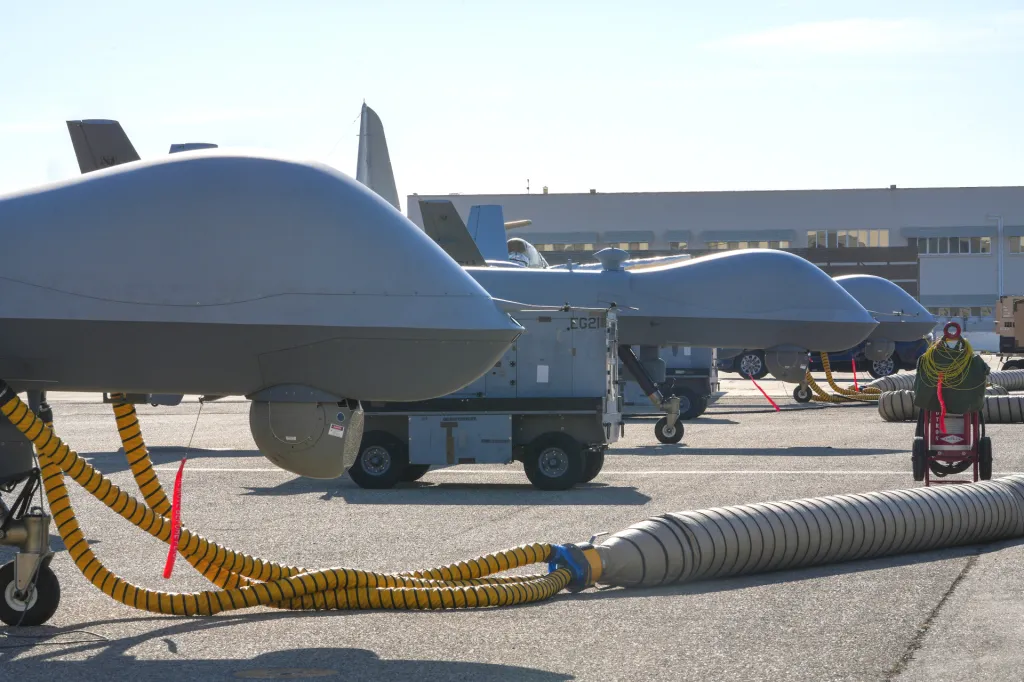




![Rescue workers had to break the concrete grill and then a window to gain access to the ward [Abid Hussain/Al Jazeera]](https://i0.wp.com/www.aljazeera.com/wp-content/uploads/2026/09/PXL_20260826_080628419-1788470176.jpg?w=640&ssl=1)
![Noreen's phone, left behind in the nursery during the fire. Hospital guards recovered it and returned it to her the next day. [Abid Hussain/Al Jazeera]](https://i0.wp.com/www.aljazeera.com/wp-content/uploads/2026/09/PXL_20260903_125757640-1788470002.jpg?w=640&ssl=1)
![Broken windows at the PIMS building housing the nursery, hours after the August 26 fire. [Abid Hussain/Al Jazeera]](https://i0.wp.com/www.aljazeera.com/wp-content/uploads/2026/09/PXL_20260826_065731518-1788470208.jpg?w=640&ssl=1)
![Nurse Razia Noreen meets Prime Minister Shehbaz Sharif in Islamabad on September 3, where he presented her with a cheque for 10 million Pakistani rupees ($36,000) and announced she will receive the Sitara-i-Khidmat civil award. [Handout/Pakistan Prime Minister's Office]](https://i0.wp.com/www.aljazeera.com/wp-content/uploads/2026/09/05c61766-36e0-4dae-b2da-2a70e872e3be-1788505507.jpg?w=640&ssl=1)

![Military personnel evacuating civilians near the site of an explosion at an army barracks in Viacha. [AFP]](https://i0.wp.com/www.aljazeera.com/wp-content/uploads/2026/09/afp_6a9b8149021c-1788576073.jpg?w=640&ssl=1)



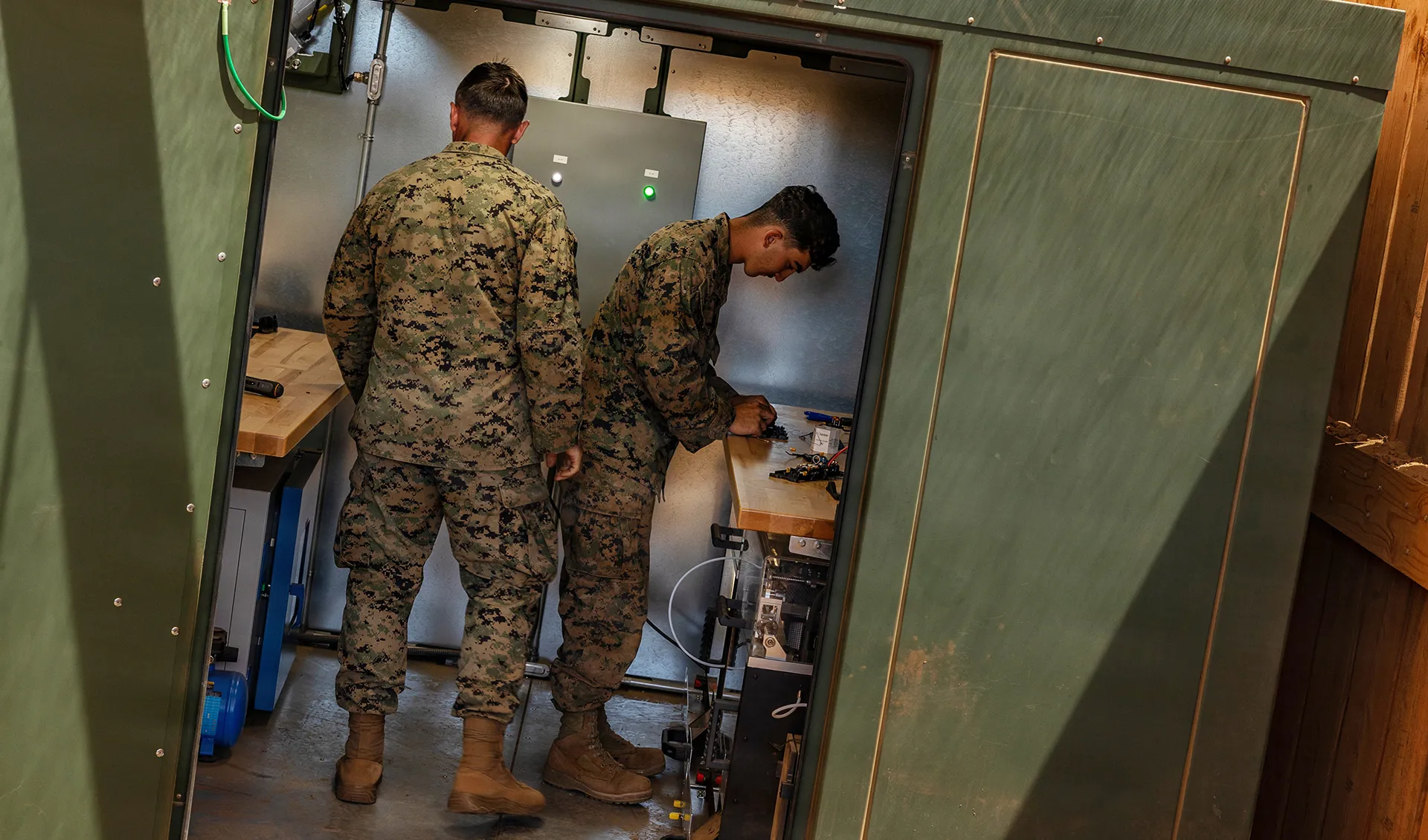




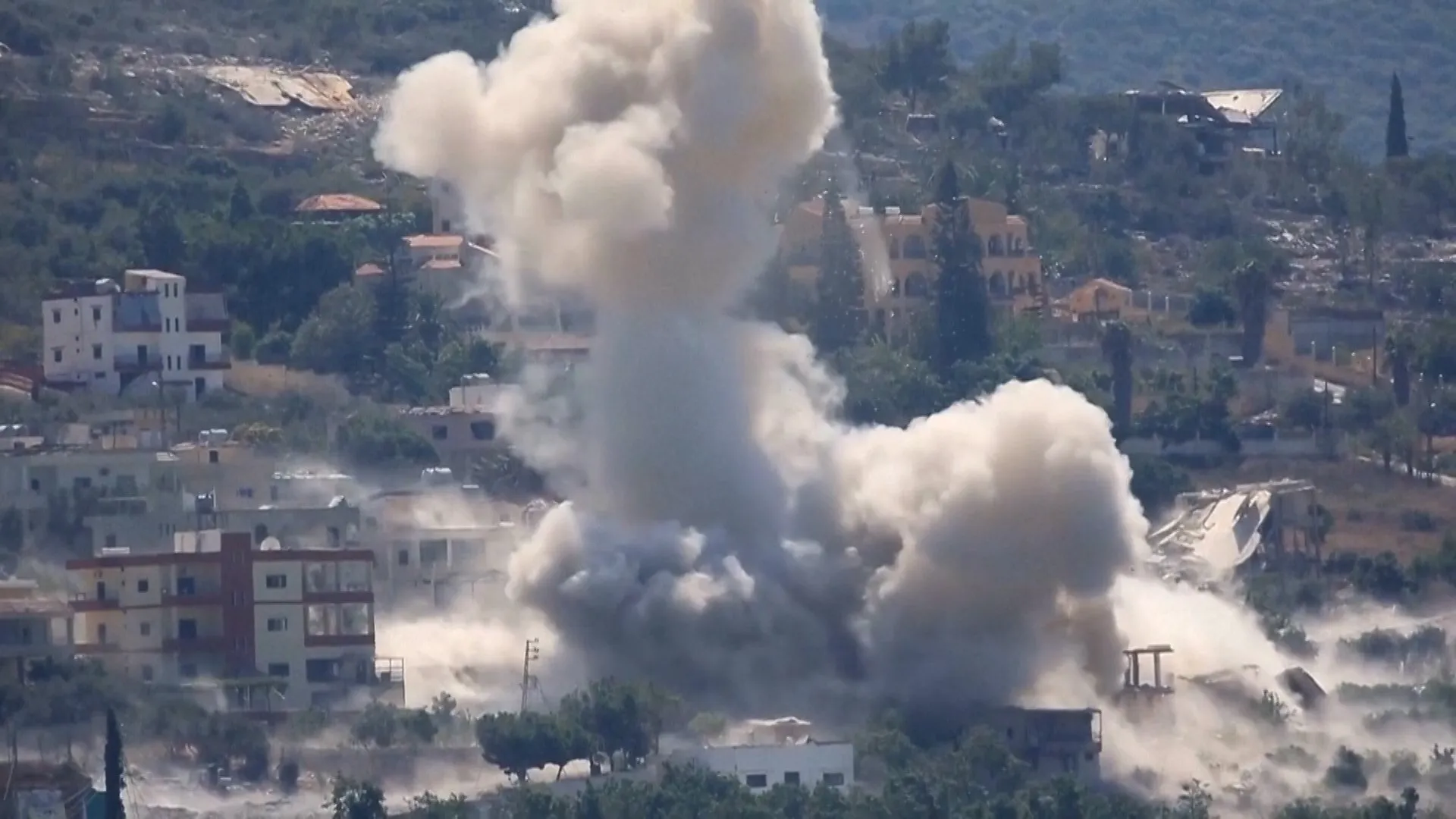





![Танки Abrams в 425 ОШП "Скала" [Серпень 2025] thumbnail](https://i0.wp.com/i.ytimg.com/vi/tAsBO3BCMn0/hqdefault.jpg?w=640&ssl=1)