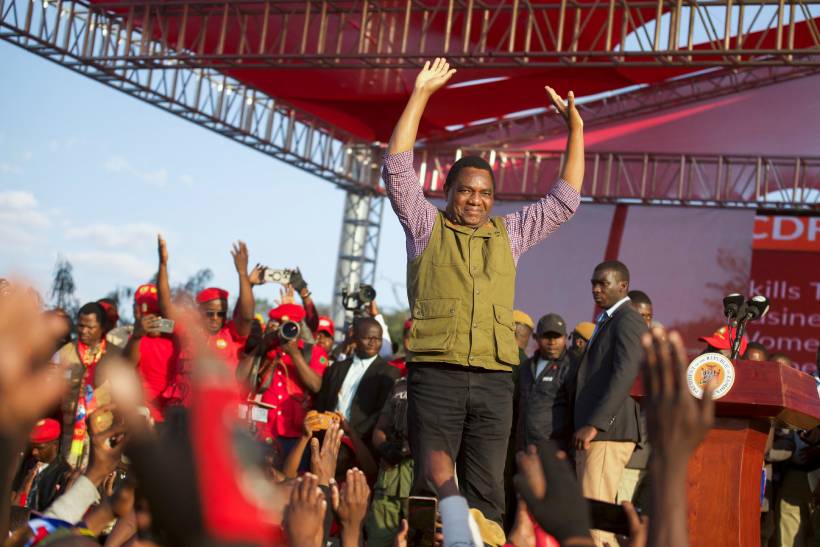
Zambians will vote on August 13 in presidential and parliamentary elections, with polls and investors widely expecting President Hakainde Hichilema to defeat a fragmented opposition led by Brian Mundubile.
For investors, however, the central question extends beyond the election outcome. The focus is on whether a second Hichilema administration can transform Zambia’s post-default economic stabilisation into stronger, broad-based growth while maintaining fiscal discipline.
IMF Programme Seen as Key Test
One of the first issues investors will monitor is whether Zambia secures a new programme with the International Monetary Fund (IMF) after its previous $1.7 billion arrangement ended in January.
The earlier programme helped underpin Zambia’s sovereign debt restructuring after the country became Africa’s first pandemic-era sovereign default. Markets now view a successor agreement as an important indicator of policy continuity.
Stay ahead of the geopolitical week.
MD Briefing delivers expert analysis across five global fronts — the Indo-Pacific, energy, geoeconomics, European security, and the Middle East — every Monday morning. Free.
Investors will closely watch how quickly negotiations conclude and whether any new programme shifts its focus from crisis management toward promoting long-term economic growth while preserving fiscal discipline.
Copper Industry Remains the Economic Backbone
Copper continues to dominate Zambia’s economy, accounting for about 70% of export earnings while serving as a major source of government revenue, foreign investment and employment.
Investors are watching whether planned investments can translate into higher production. Major projects include Vedanta’s return, continued expansion by Barrick Gold, and First Quantum Minerals’ ongoing investments.
The government has maintained that mining tax rates will remain unchanged, providing policy stability. However, investors are paying close attention to a proposed local-content law that would require mining companies to increase domestic procurement to around 40% over the next three to four years from roughly 20% today.
Mining companies have warned that many local suppliers currently lack sufficient financing and technical capacity, potentially creating supply chain challenges during a period of major expansion.
Growth Reforms Still Needed
Despite recent macroeconomic improvements, investors argue that broader structural reforms remain necessary.
Among the priorities are increasing exploration spending to discover new mines, improving tax collection efficiency, and reforming Zambia’s grain market to reduce the government’s role in purchasing maize harvests.
A record maize crop is expected this year, but analysts warn that government purchases of surplus grain could increase fiscal pressure, particularly alongside election-related spending.
Some forecasts suggest Zambia’s fiscal deficit could exceed official government targets if these pressures continue.
Reliable Power Critical for Mining Expansion
Electricity supply has become another major concern following drought-induced power shortages that exposed Zambia’s heavy dependence on hydropower.
Although investment in solar energy is increasing, investors say expanding copper production will depend on creating a more reliable and diversified electricity system capable of supporting future mining operations.
Election and Climate Risks
While most observers expect a relatively orderly election, monitoring groups have highlighted concerns including alleged voter card confiscation, vote buying and the possibility of localized unrest if results are disputed.
Weather also remains a significant economic risk. Zambia remains highly dependent on rain-fed agriculture and hydropower, leaving the economy vulnerable to future droughts similar to the severe 2023–24 El Niño event that caused widespread crop failures and electricity shortages.
Analysis
The election itself is unlikely to unsettle investors if Hichilema secures the expected victory. Instead, markets will judge whether his government can move beyond economic stabilization toward sustained, private sector-led growth. A new IMF programme, continued mining investment, reforms to agriculture and tax collection, and a more resilient energy sector will be the key indicators of success. While Zambia has made notable progress since its debt default, structural challenges and climate risks continue to test the country’s long-term economic outlook.
With information from Reuters.