zambia

Can Hichilema Turn Zambia’s Recovery Into Sustainable Growth?

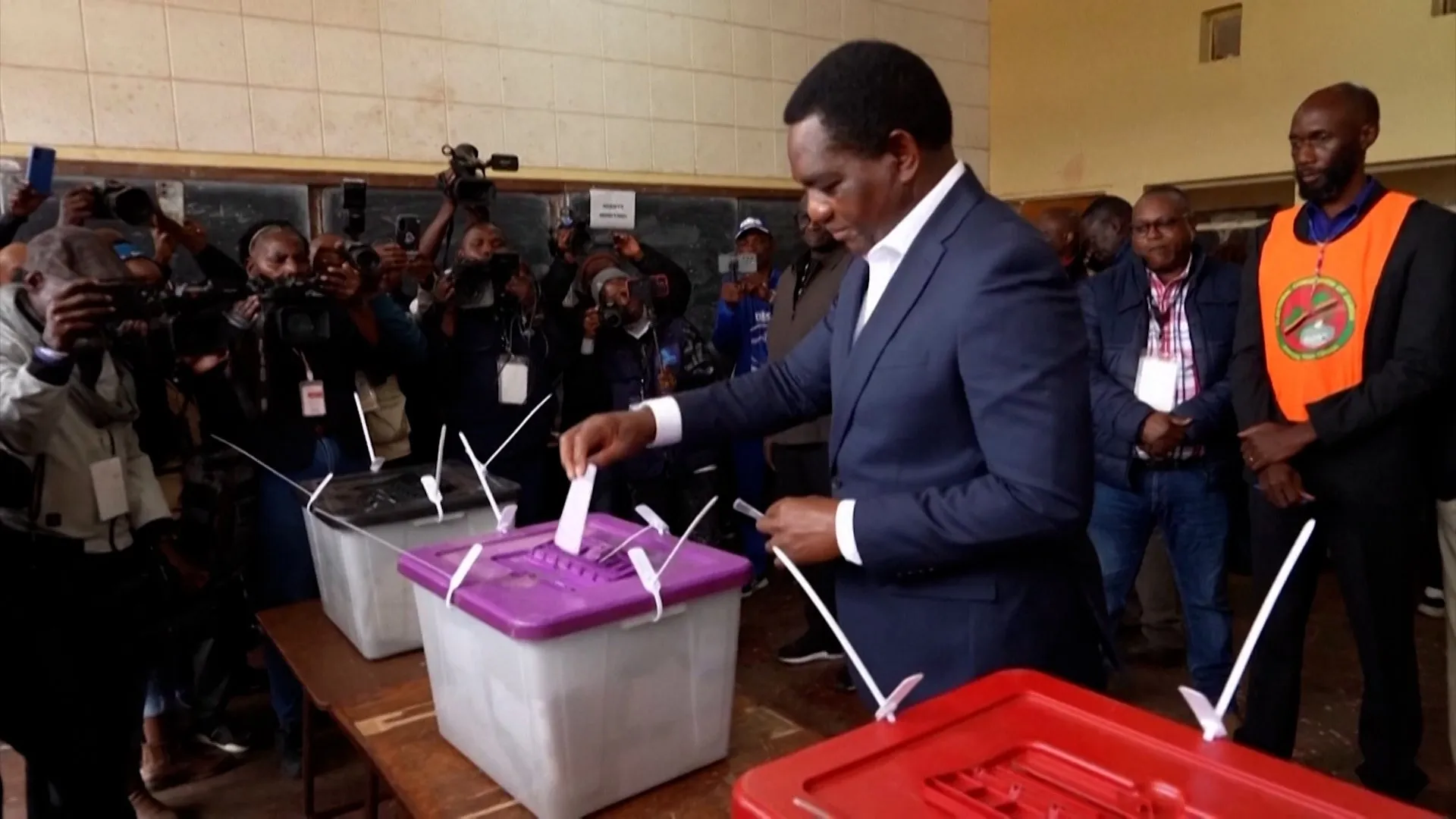
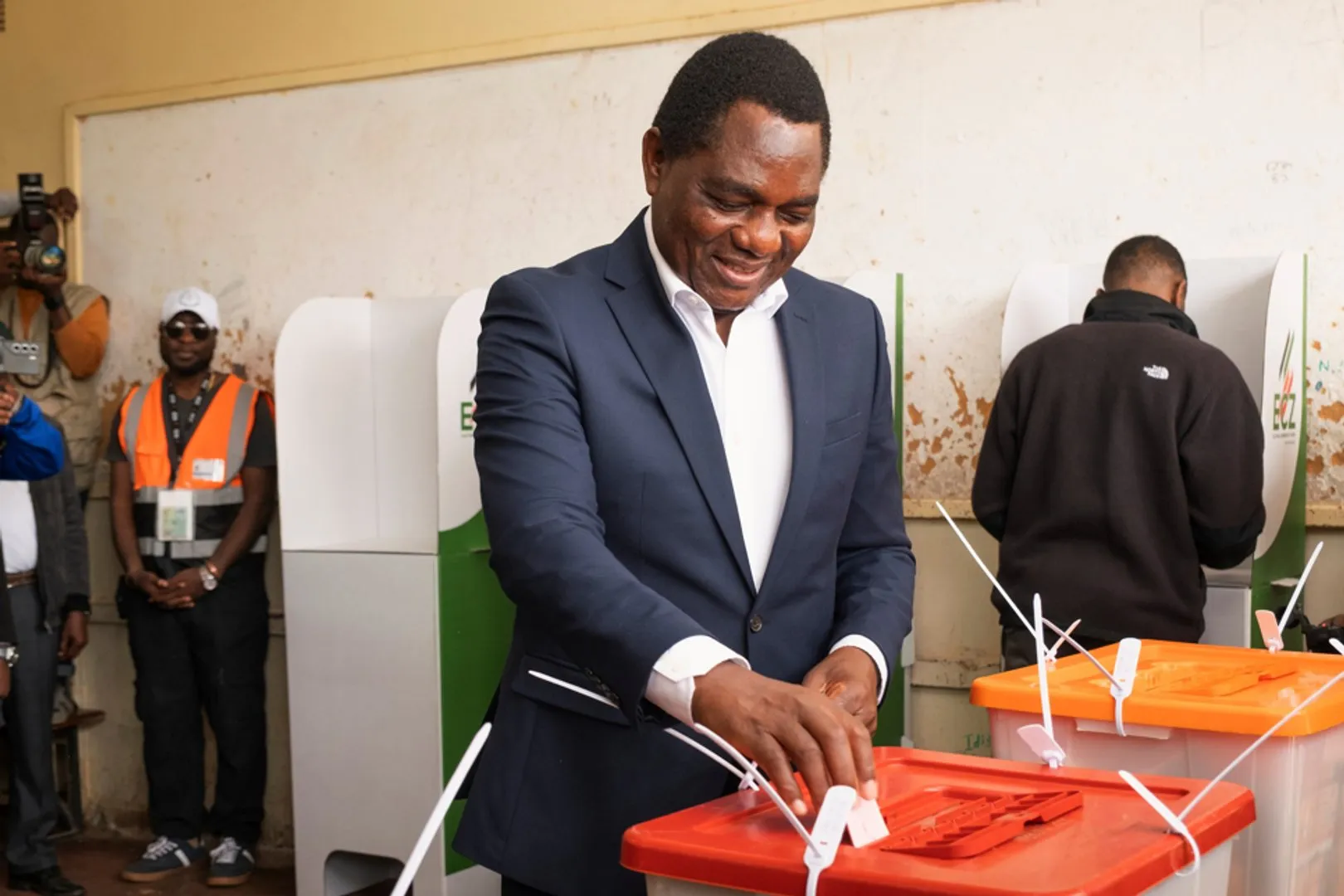
Zambians will vote on August 13 in presidential and parliamentary elections, with polls and investors widely expecting President Hakainde Hichilema to defeat a fragmented opposition led by Brian Mundubile.

For investors, however, the central question extends beyond the election outcome. The focus is on whether a second Hichilema administration can transform Zambia’s post-default economic stabilisation into stronger, broad-based growth while maintaining fiscal discipline.

IMF Programme Seen as Key Test

One of the first issues investors will monitor is whether Zambia secures a new programme with the International Monetary Fund (IMF) after its previous $1.7 billion arrangement ended in January.

The earlier programme helped underpin Zambia’s sovereign debt restructuring after the country became Africa’s first pandemic-era sovereign default. Markets now view a successor agreement as an important indicator of policy continuity.

Stay ahead of the geopolitical week.

MD Briefing delivers expert analysis across five global fronts — the Indo-Pacific, energy, geoeconomics, European security, and the Middle East — every Monday morning. Free.

Investors will closely watch how quickly negotiations conclude and whether any new programme shifts its focus from crisis management toward promoting long-term economic growth while preserving fiscal discipline.

Copper Industry Remains the Economic Backbone

Copper continues to dominate Zambia’s economy, accounting for about 70% of export earnings while serving as a major source of government revenue, foreign investment and employment.

Investors are watching whether planned investments can translate into higher production. Major projects include Vedanta’s return, continued expansion by Barrick Gold, and First Quantum Minerals’ ongoing investments.

The government has maintained that mining tax rates will remain unchanged, providing policy stability. However, investors are paying close attention to a proposed local-content law that would require mining companies to increase domestic procurement to around 40% over the next three to four years from roughly 20% today.

Mining companies have warned that many local suppliers currently lack sufficient financing and technical capacity, potentially creating supply chain challenges during a period of major expansion.

Growth Reforms Still Needed

Despite recent macroeconomic improvements, investors argue that broader structural reforms remain necessary.

Among the priorities are increasing exploration spending to discover new mines, improving tax collection efficiency, and reforming Zambia’s grain market to reduce the government’s role in purchasing maize harvests.

A record maize crop is expected this year, but analysts warn that government purchases of surplus grain could increase fiscal pressure, particularly alongside election-related spending.

Some forecasts suggest Zambia’s fiscal deficit could exceed official government targets if these pressures continue.

Reliable Power Critical for Mining Expansion

Electricity supply has become another major concern following drought-induced power shortages that exposed Zambia’s heavy dependence on hydropower.

Although investment in solar energy is increasing, investors say expanding copper production will depend on creating a more reliable and diversified electricity system capable of supporting future mining operations.

Election and Climate Risks

While most observers expect a relatively orderly election, monitoring groups have highlighted concerns including alleged voter card confiscation, vote buying and the possibility of localized unrest if results are disputed.

Weather also remains a significant economic risk. Zambia remains highly dependent on rain-fed agriculture and hydropower, leaving the economy vulnerable to future droughts similar to the severe 2023–24 El Niño event that caused widespread crop failures and electricity shortages.

Analysis

The election itself is unlikely to unsettle investors if Hichilema secures the expected victory. Instead, markets will judge whether his government can move beyond economic stabilization toward sustained, private sector-led growth. A new IMF programme, continued mining investment, reforms to agriculture and tax collection, and a more resilient energy sector will be the key indicators of success. While Zambia has made notable progress since its debt default, structural challenges and climate risks continue to test the country’s long-term economic outlook.

With information from Reuters.

Source link

Zambia blasts the U.S. over a $2-billion health deal in exchange for critical minerals

Zambia is accusing the United States of tying a $2-billion deal for critical health assistance to access to the southern African nation’s rich mineral assets, and calling the outgoing U.S. ambassador’s allegations of corruption “mischievous” and “undiplomatic.”

The comments by Zambia’s foreign affairs minister, Mulambo Haimbe, on Monday brought into the open simmering tensions over President Trump’s “America First” strategy, which is reshaping aid to Africa into transactional agreements.

Some African leaders and health experts have criticized the new U.S. stance and its demands for sensitive health data in exchange for badly needed support for health systems strained by the Trump administration’s dismantling of foreign aid. Some say they would not receive access to health innovations like vaccines in return.

The U.S. is also seeking to challenge China, a dominant player in Zambia and much of Africa, whose minerals are critical to the green energy transition, including inputs for solar panels, electric vehicle batteries and energy storage systems.

Zambia says talks stalled over data-sharing demands

In a statement, Haimbe described the accusations of Zambian graft and negotiation inertia by outgoing U.S. ambassador Michael Gonzales as “mischievous” and “deeply regrettable, undiplomatic and inconsistent with the spirit of mutual respect.”

Haimbe also accused the U.S. of tying access to critical minerals to the conclusion of the health deal, which Gonzales earlier dismissed as “alarmist allegations” that he called “disgusting” and “absolutely and patently false.”

Negotiations have continued for months to conclude the deal, one of dozens the Trump administration is pursuing in some of the world’s most aid-dependent countries.

Gonzales in late April said Zambian leaders had “abdicated their responsibilities, letting the United States pay for healthcare while officials diverted government funds to their own pockets.” He said Zambian authorities had “ignored” U.S. overtures to conclude a new deal.

But Haimbe said negotiations had stalled over “unacceptable” data-sharing demands “in violation of our citizens’ right to privacy” and “the insistence on preferential treatment of U.S companies over Zambia’s critical minerals.”

Zambia “takes the view, first and foremost, that Zambians must have a say on how her critical minerals are used, and second that no one strategic partner is to be treated preferentially to others,” he said.

The U.S. Embassy did not immediately respond to a request for comment.

U.S. says its approach aims to reduce donor dependency

The U.S. approach replaces decades of engagement anchored in the now-dismantled United States Agency for International Development and the President’s Emergency Plan for AIDS Relief, or PEPFAR.

In their place, U.S. officials are negotiating country-by-country agreements that recast aid as a transaction, tying funding to conditions including commercial provisions, domestic financing commitments, disease surveillance, pathogen sharing and even religion.

Since late last year, the U.S. has signed agreements with about 30 countries, many in Africa. Washington says the approach is meant to reduce donor dependency, promote local ownership and safeguard American interests, including against an aggressive China that dominates trade in Africa but contributes less aid.

There has been pushback.

Ghana last week said it had rejected a proposed deal over provisions granting broad access to sensitive health data without safeguards. Zimbabwe walked away from a $367-million package over similar concerns. In Kenya, a $2.5- billion agreement signed in December has been put on hold after a court challenge arguing it violates data protection laws.

In Lesotho, draft U.S. proposals sought 25 years of access to health data and biological samples before local officials secured a shorter five-year deal.

Health experts say data would largely flow one way

Critics say the data-sharing demands tilt toward U.S. interests and warn the information-sharing would largely go in just one direction: toward Washington.

The new agreements aim to ensure the flow of disease surveillance data and biological samples, but through bilateral channels, after the U.S withdrew from the World Health Organization in January, said Asia Russell, executive director of advocacy group Health GAP.

Countries currently report disease outbreaks primarily through the WHO, which coordinates responses and is negotiating new frameworks on pathogen-sharing and equitable access to vaccines.

The U.S., now outside those talks, is pursuing direct access instead.

“[The U.S. wants] to understand what’s actually happening,” said Jen Kates, a senior vice president at the Washington-based nonprofit KFF. “But they are trying to do it in a very different way.”

Health advocates say this risks creating a parallel global health system. In Zimbabwe, a government spokesperson in February said the government terminated negotiations because the U.S. was not offering a “corresponding guarantee of access to any medical innovations — such as vaccines, diagnostics or treatments — that might result from that shared data.”

“That raises serious concerns about who benefits,” said Atilla Kisla of the Southern Africa Litigation Center.

Advocates point to the harsh experience of the COVID-19 pandemic, when African countries contributed data and samples but were largely last in line for vaccines.

Experts warn against health as a ‘bargaining chip’

The agreements with the U.S. are drawing criticism for closed-door negotiations and limited public scrutiny.

“Secrecy is at the center of this. That puts accountability for results at risk,” said Health GAP’s Russell. “It’s impossible to evaluate these deals properly without seeing the full terms. Part of what made PEPFAR successful was transparency. Now that’s been taken away.”

The deals also come with tighter financial conditions. Many include reduced funding compared to previous levels of U.S. assistance, while requiring countries to increase domestic health spending, with aid at risk if targets are not met.

“These are going to be very heavy lifts,” said KFF’s Kates. “Countries are already under strain.”

Critics say some agreements also advance U.S. commercial and political interests, blurring the line between aid and transactional diplomacy.

“When health becomes a bargaining chip, everyone becomes less safe,” Russell warned.

Mutsaka and Imray write for the Associated Press. Keketso Phakela in Maseru, Lesotho, contributed to this report.

Source link