ANT McPartlin and Declan Donnelly have taken a surprise swipe at former This Morning presenters Holly Willoughby and Phillip Schofield – four years after the infamous “queue gate.”
Phillip and Holly received a slew of backlash back in September 2022 over claims they “skipped the queue” to pay their respects to the late Queen Elizabeth, who was lying-in-state at Westminster Hall.
Ant and Dec have taken a cheeky swipe at Holly Willoughby and Phillip SchofieldCredit: PAHolly and Phillip received national backlash over ‘skipping the queue’ to see Queen Elizabeth lying-in-state at Westminster HallCredit: Universal News & Sport
Now, four years on from the controversy, Ant and Dec have made a very cheeky comment about their conduct.
Sign up for the Showbiz newsletter
Thank you!
The telly duo were chatting about going to see the Bayeux tapestry – which depicts the events leading up to the Battle of Hastings and the Norman Conquest of England in 1066 – at the British museum.
Dec said on their podcast Hanging Out: “It’s the first time in nearly 1,000 years, it’s been in the UK. You’ve got to go and see it.”
They both agreed to visit the museum together but believed it was going to be very busy.
Ant asked listeners: “If anyone from the British Museum is watching this podcast in their downtime… I’d like to jump the queue.”
Appearing to take aim at Holly and Phillip, Dec laughed: “I’m not sure about TV presenters skipping queues.
“I don’t think that’s going to end well.”
Telly legends Ant and Dec took the surprising swipe during an episode of their podcast Hanging OutCredit: YouTube/Belta Box – Hanging out with Ant & DecHolly and Phillip co-hosted This Morning for nearly 14 yearsCredit: Getty
Ant continued: “What could possibly go wrong? It’s just scuttle down the side, pop in the front.”
Dec added sarcastically: “Do you think that’s the end? Nobody’s gonna say anything about it.”
TV star Ant then asked Dec if he wanted to skip the queue with him but the latter was adamant that’s something he’d have to do alone.
He said: “I don’t ever throw anyone under the bus, but I have a very good instinct for these things and I knew it was a bad thing to do.
“We were texting each other backwards and forwards afterwards. I said to Holly ‘I knew I should have gone with my gut,’ and she said ‘I know.’
“But we were shell-shocked, the both of us, completely shell-shocked by the reaction.
“What are the two things you don’t screw up? The Queen and a queue.”
Phillip continued: “So we are forever now [associated]… it doesn’t matter now because I’m not going to go out any more … but forever now, you go to the butchers and someone says, ‘Oh do you want to [skip ahead]…?’ ‘No, no, I’ll stand here.’ I’m serious.”
“They did not jump the queue, have VIP access or file past the Queen lying in state – but instead were there in a professional capacity as part of the world’s media to report on the event.”
Aryna Sabalenka beat Jessica Pegula 7-5, 6-2 to reach US Open final with Elena Rybakina, who toppled her as World No 1.
Published On 11 Sep 202611 Sep 2026
Aryna Sabalenka stormed past Jessica Pegula in straight sets on Thursday to keep her bid for a rare US Open threepeat on track, booking a championship showdown with Elena Rybakina.
Sabalenka was simply unstoppable in a 7-5, 6-2 victory on Arthur Ashe Stadium, where she beat Pegula en route to US Open victories in 2024 and 2025.
Recommended Stories
list of 4 itemsend of list
Rybakina battled back to beat 2023 champion Coco Gauff 3-6, 6-4, 6-4.
In Saturday’s final, the Kazakh will try to deal Sabalenka another blow after her run to the semifinals ensured she will end the Belarusian’s reign atop the world rankings.
Sabalenka, bidding to join Chris Evert and Serena Williams as the only women to win three straight US Open titles, pounded third-seeded Pegula remorselessly with her powerful groundstrokes.
“I was super desperate,” said Sabalenka, who has had a slow summer since back-to-back wins at Indian Wells and Miami in March.
“I wanted it badly to go to the finals, and of course, I want to go all the way.
“The mentality was just I’m ready. I’m ready for whatever it’s going to take to get the win,” Sabalenka added, after producing her best performance of the tournament to snuff out Pegula’s dream of a first-ever Grand Slam title.
Sabalenka’s frustration at her inability to make any headway against Pegula’s serve showed in a tense first set. But she maintained her focus and was rewarded as Pegula, feeling the pressure to stay in the set as she served down 6-5, fell behind 0-40.
The American saved one set point but could not salvage the next.
Sabalenka kept rolling in the second set, attacking Pegula’s suspect second serve and seizing a break for a 3-1 lead when she lasered a forehand into the corner.
She sealed the victory with another break courtesy of another thunderous forehand.
“I thought her level was insanely high,” Pegula said. “Honestly, I don’t really know if there was much I could do today.”
Rybakina, who beat Sabalenka in the Australian Open final in January to claim her second Grand Slam title, said she would need to raise her level to do the same in Flushing Meadows.
“I feel like I definitely need to step my game up, serve much better than today and stay aggressive,” Rybakina said.
Gauff’s bid to return to the final for the first time since she defeated Sabalenka for the 2023 title had got off to a smooth start, the American gaining the lone break of the opening set for a 4-2 lead and pocketing the set with a love game.
But Rybakina hit back with an early break on the way to a 4-1 lead in the second.
Gauff responded superbly, breaking back and holding to square the set at 4-4 to roars from the crowd.
But she was unable to make the most of her fightback and double-faulted in the 10th game to hand two set points to Rybakina, who pounced to force a third set.
Rybakina looked on the brink of victory after breaking Gauff for a 5-3 lead in the third. Gauff broke back, but Rybakina clinched it in the next game.
A deft volley from Rybakina left her with two match points, and Gauff then hit a wide-open smash long to hand her opponent victory.
“I feel like I was a little bit lucky on her serve,” Rybakina said. “A couple of deep returns, one mistake from her, it went quickly my way … It was a real battle.”
Gauff, meanwhile, was left reflecting on the fine margins of the defeat.
“It honestly came down to a couple of service games of mine in both sets and I didn’t quite hold,” Gauff said. “I think she was able to hold the line a bit better than I could tonight.”
The men’s semifinals are on Friday, when eighth-seeded Ben Shelton takes on 11th seed Frances Tiafoe in an all-American clash.
Shelton took out defending champion and seven-time Grand Slam winner Carlos Alcaraz in an epic quarterfinal that ended at 3:34am on Wednesday – the latest finish in tournament history.
“Big Ben” and “Big Foe” will duel for a chance to end American men’s 23-year Grand Slam title drought.
The winner will take on either top-seeded French Open champion Alexander Zverev or unseeded Russian Karen Khachanov.
Fenerbahce president refuses Ismail Kartal’s resignation after fans threw bottles at coach in Roma Champions League tie.
Published On 11 Sep 202611 Sep 2026
Fenerbahce coach Ismail Kartal quit his role with the Turkish club after he was targeted by a bottle thrown from the crowd during hit side’s 1-1 Champions League draw with Roma on Thursday, only for his president to reject the resignation minutes later.
The 65-year-old Kartal told a press conference he was leaving “never to return”, adding that he had taken the decision “to clear the way for the club”.
Recommended Stories
list of 4 itemsend of list
Immediately after the press conference, Fenerbahce president Aziz Yildirim told reporters that Kartal “continues in his role”.
“Some fans threw a bottle at the coach’s head this evening during the game. He is upset about it,” Yildirim said.
“I just spoke to Ismail Kartal. He mentioned the bottle incident and he also complained about being under pressure.”
Asked if Kartal had told him that he would stay, Yildirim said: “There’s no need for him to say (openly) that he’d continue. I am his senior, I told him to continue and that’s it. We are a family.”
Kartal, who spent a decade at Fenerbahce as a player, coached the club in 2014-15, then on an interim basis in 2021-22 before returning for a full campaign in 2023-24. He was assistant manager at Fenerbahce the last two times the club won the Super Lig and returned for a fourth managerial spell in June.
Fenerbahce have finished second in the Turkish top flight in the last five seasons and reached the league phase of the Champions League this season for the first time in 18 years.
A man from London was determined to find his sister, following the death of their mother
Michael was searching for his sister on Long Lost Family(Image: ITV)
A brother and sister have finally been reunited after they both applied to appear on the ITV show.
The latest episode of Long Lost Family, which aired on Thursday (September 10), followed Michael, 56, who was trying to find his older sister, whom he had never met. The retail worker from South East London was determined to fulfill his mother’s dying wish to track down his sister, who had been given up for adoption as a baby.
Mary had been in a Catholic mother and baby home when she took care of her daughter, Angela, for three months before she was placed for adoption. But Michael explained that his mother didn’t think she had a choice.
Their mother, Mary, died of cancer eight years ago at the age of 74, and she had asked Michael to find his sister, Angela, for her. “She said, could you please try and find Angela for me please?” Michael shared. Ever since then, he has been desperate to find her.
Two years ago, in an attempt to find his sister, Michael took a DNA test and got a match with a woman named Gemma. The DNA report suggested that she was his half-sister. He assumed that Gemma was Angela’s new adoptive name and messaged her, however, he never received a reply.
“It’s made me happy, but in another way, it’s made me sad because obviously she’s been looking. It makes me think, why is she not on here, she’s given up. I’m so close now,” he said.
Michael went on: “I’m so close. And it’s like just a brick wall is just there. But I want to knock this brick wall down, but it’s very difficult.” In a twist, the Long Lost Family team discovered that Gemma, who had been named Angela at birth, had also contacted the show in the past to find her biological family.
Gemma was told about her mother’s death off-screen before host Nicky Campbell informed her that she had a brother, and passed on an emotional message. “Your brother, Michael, wanted to tell you that she didn’t want to give you up for adoption. She thought about you every day. She always, always loved you, and she wanted to tell you that. She wanted to see you and tell you that”, Nicky told Gemma.
Later in the episode, Davina McCall informed Michael of the wonderful news that Gemma had been found. This left him feeling incredibly emotional to hear that his sister wanted to have contact with him.
Davina explained: “She has been looking for 30 years. She was really sad to hear that your mum had died, but she was so grateful that someone was looking for her. She applied for Long Lost Family, so it’s incredible.”
Michael couldn’t wait to meet her but wistfully said, “I just wish my mum was here. 30 years? Oh god, if only I had knew.” Gemma traveled from Manchester to London to meet her brother, and when they came face-to-face, they could not stop crying. “This has been the best day of my life. It’s like a dream come true, I finally met my sister,” Michael added.
US President Donald Trump has jokingly asked Republican voters to ‘cheat like hell’ in the midterms, ‘like Democrats’. He made the comments at the RNC midterm convention in Dallas.
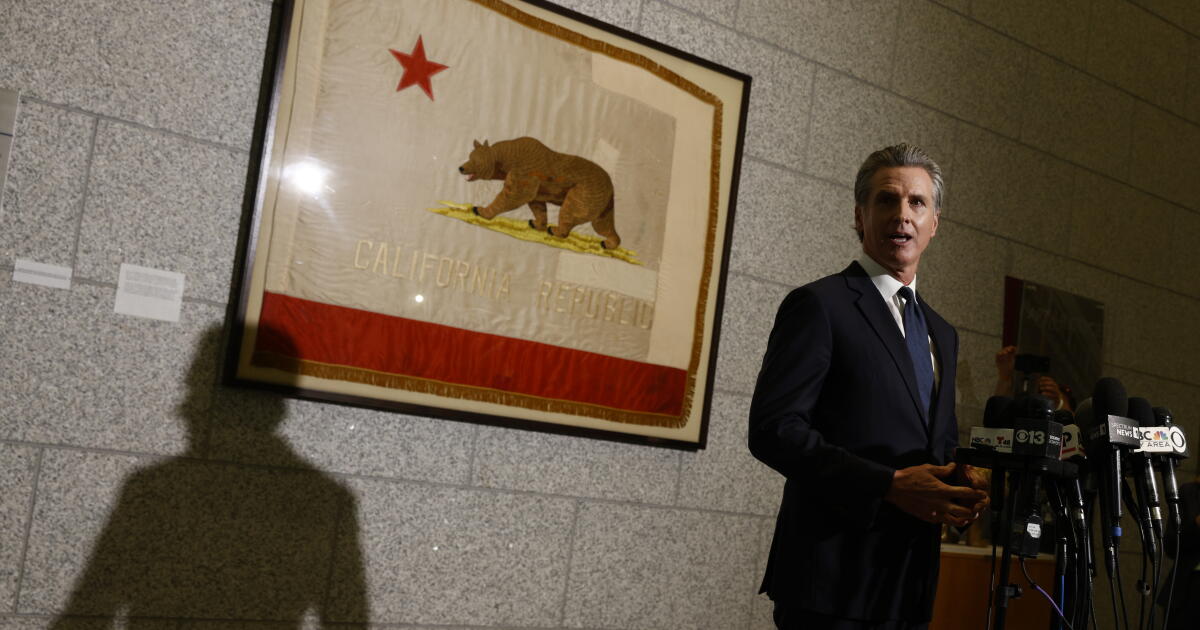
Hollywood’s film and TV post-production workers took their case directly to Gov. Gavin Newsom on Thursday, urging him to sign a bill that would create the state’s first standalone post-production tax incentive.
Workers such as editors, singers and sound supervisors joined bill author Assemblymember Nick Schultz (D-Burbank) and Mayor Karen Bass at a news conference Thursday morning in front of the Television Academy’s headquarters in North Hollywood.
The bill, AB 2319, is aimed at supporting the industry’s editors, sound mixers, composers and visual effects artists. It passed the state Senate 33 to 5 on Aug. 30, and the Assembly approved the final version 72 to 2 the same day. Newsom, who has not taken a public position on the measure, has until Sept. 30 to sign or veto it.
Bass urged supporters not to let up before then.
“We need our industry in full force,” Bass said. “It’s all a part of making our city more affordable. We know that this is one of the biggest issues in our city, and so having a strong, robust industry helps Angelenos across the board.”
The incentive would allow a 35% to 50% credit on qualified expenses relating specifically to post-production in California. The state’s existing film and TV tax credit program already covers post-production, but only if 75% of filming or the overall budget is spent in the state. The new credit doesn’t require productions to shoot in California.
Even if Newsom signs the bill, the program would start small. Schultz initially proposed $100 million to fund the effort, but the Legislature’s end-of-session budget sets aside $10 million to launch it.
“When you think about production, it’s easy to think about the actors, the directors and the writers; you don’t think about all that happens when the camera stops rolling,” Schultz said. “What’s changed is that they’re now telling their story about the struggles they’re facing.”
For industry veteran Karen Baker Landers, the decline in local post-production work is impossible to overlook. A two-time Oscar-winning supervising sound editor, Baker Landers is vice president of California Post Alliance, the group sponsoring the bill.
“It’s affecting people in huge ways, like losing their health insurance. I get people calling me asking to get just two weeks of work to qualify for coverage,” said Baker Landers. “It’s really difficult.”
Despite the state’s bigger bet on the industry — and this summer’s fight over the cap — L.A. City Councilmember Adrin Nazarian, whose district includes North Hollywood, argued at the press conference that this is the right moment to keep asking for more.
“It’s that exact momentum that we need. When you double down on something, you’re giving more than hope, and you’re saying welcome back. Please come and do your work. Don’t stop doing this,” Nazarian said.
RIYADH: Oysters, mussels, crabs and other aquatic invertebrates may be making a far greater contribution to global nutrition than previously recognized, according to a new study led by researchers at King Abdullah University of Science and Technology (KAUST).
The study, published in the journal Nature and featured on the KAUST website, examined 30 nutrients essential to human health and found that current global production of aquatic invertebrates provides enough vitamin B12 and selenium to meet the equivalent annual requirements of more than 5 billion people. It also supplies enough iodine, zinc, copper and omega-3 fatty acids to meet the annual requirements of more than 1 billion people.
The findings challenge the way aquatic food systems are commonly assessed, with production often measured by the amount of food harvested rather than the nutrients it delivers.
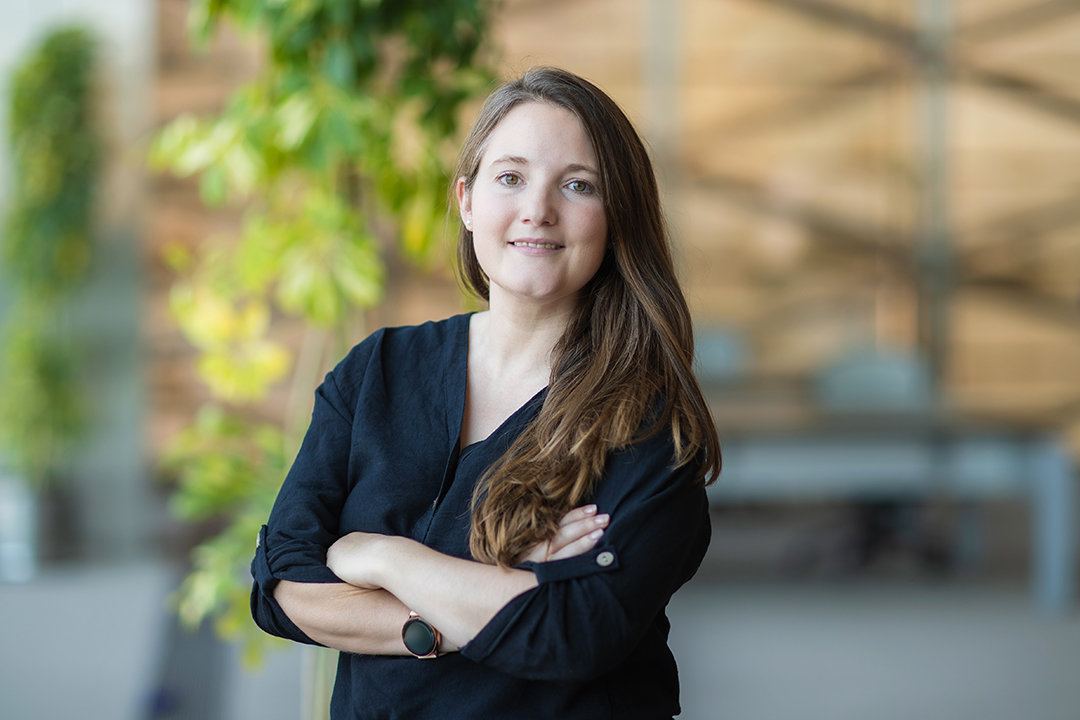
“For far too long, we have measured success of aquatic food systems in tons of production, rather than in the nutrients they deliver to people,” said Jessica Zamborain-Mason, the study’s lead author and an assistant professor of marine science at KAUST.
Jessica Zamborain-Mason, lead author of the study and assistant professor of Marine Science at KAUST. (KAUST photo)
The research team said incorporating nutritional value into decisions on fisheries, aquaculture and food systems could help governments pursue healthier diets while ensuring marine resources are managed sustainably.
Researchers compiled nutritional data from hundreds of aquatic invertebrate species and used predictive models to estimate nutrient content for more than 50,000 potentially edible species. The models were based on species-specific environmental, ecological and life-history traits, addressing major gaps in available nutritional data.
The resulting estimates will be incorporated into SeaLifeBase, a major online database of marine species, giving researchers and policymakers broader access to information on the nutritional value of aquatic foods.
The study found that invertebrates can provide disproportionately large amounts of key micronutrients compared with their share of production. In aquaculture, for example, they account for about one-third of production by weight but provide more than half of the supply of nutrients including iodine, vitamin B12, vitamin C and iron, according to the study.
Processing can also affect nutritional value. The researchers found that 100 grams of dried invertebrates often contain higher concentrations of minerals than raw tissue, pointing to potential opportunities to improve nutrition through food processing while reducing waste.
The study is not a call to harvest more aquatic species, the researchers stressed. Instead, it provides evidence for considering nutrition alongside ecological sustainability when managing fisheries and developing aquaculture.
KAUST-led research provides new evidence to help shape healthier, more sustainable food systems. (KAUST photo)
Many aquatic invertebrates remain poorly studied or unassessed for sustainability, Zamborain-Mason said, underscoring the need to better protect, monitor and assess these resources.
The researchers hope the findings will help governments, industry and international organizations incorporate nutrition more fully into fisheries, aquaculture and food policies, while highlighting areas where more research and nutritional data are needed.
As countries seek more resilient food systems, the study argues that measuring how much food is produced is only part of the equation. Understanding the nutrients that food provides may be just as important.
European Parliament’s Vice President Pina Picierno says Hsiao Bi-khim’s visit ‘was kept secret until her arrival to protect her participation’ in the conference.
Published On 11 Sep 202611 Sep 2026
Taiwanese Vice President Hsiao Bi-khim is making a rare visit to Europe, attending a forum on democracy in Italy alongside the island’s foreign minister, the presidential office said.
Hsiao has been invited to attend the Ventotene Conference for Freedom and Democracy, and is travelling with Taiwanese Foreign Minister Lin Chia-lung, the presidential office said in a brief statement.
Recommended Stories
list of 4 itemsend of list
Other details will be provided once the two return to Taiwan from the Italian island of Ventotene, it added,
While Taiwan’s foreign ministers occasionally visit Europe and other parts of the world that have no formal ties to the Chinese-claimed island, it is rare for an official as senior as the vice president to do so, given the risk of backlash from Beijing against the host nation.
Pina Picierno, vice president of the European Parliament, said Hsiao’s planned participation “was kept secret until her arrival to protect her participation” in the conference.
“No one can determine who can be hosted on European soil, what voices can be heard, and what presences must be hidden,” Picierno said in a Facebook post. “It is a simple and very clear message: intimidation cannot decide who participates in our democratic debate.”
“Freedom of debate is not negotiable with autocracies. And Ventotene, more than ever today, must continue to be the place where freedom and democracy are defended without fear,” she added.
The Ventotene conference takes place from Thursday until Saturday this week. Italy, like most countries, has no formal diplomatic ties with Chinese-claimed Taiwan.
Oleksandra Matviichuk, a 2022 Nobel Peace Prize laureate and president of Ukraine’s Centre for Civil Liberties, is also expected to participate in the conference.
China says Taiwan is one of its provinces, a view the democratically governed island strongly rejects.
Last November, Hsiao spoke at the Inter-Parliamentary Alliance on China’s annual summit, held in the European Parliament in Brussels.
Alanis Morissette is getting candid about the terror she experienced with what she calls “postpartum activity.”
Although terms like postpartum depression and postpartum psychosis may not have dominated trending topics in the 2010s when the singer-songwriter was having her three babies, Ever Imre, now 15; Onyx Solace, 10; and Winter Mercy, 7, it’s an especially hot-button issue today. And Morissette knows a thing or two about grappling with the condition.
On Wednesday, Morissette appeared on the “Call Her Daddy” podcast and told host Alex Cooper that she experienced postpartum depression after giving birth to each of children, and that the condition worsened each time.
“Basically, I became another person,” she said, adding that her hormones felt out of whack. “There’s some version of menopausal flux combined with … invasive thoughts that are so harrowing — terrible, ceaseless, invasive thoughts, anxiety, depression, rage, off the charts. I felt completely out of control, and yet I was touring … and being a boss and being someone taking care of money and finances and everything, and that is the part where, when I’m quiet and alone, I might weep a little bit.”
In recent months, attitudes around postpartum depression have shifted, and the condition has been discussed more urgently than perhaps ever before. Hayden Panettiere’s death sparked renewed scrutiny of society’s treatment of women suffering from the condition. And the polarizing trial of Lindsay Clancy, a labor-and-delivery nurse who pleaded not guilty by reason of insanity after killing her three children in 2023, has captivated the country since July.
Back in 2019, Morissette discussed her experience with the illness, but the topic hadn’t yet garnered the public’s attention like it has today. Morissette told Cooper that when she first experienced symptoms, she reached out to multiple therapists, who didn’t seem to know how to treat the issue, no matter how well-meaning they were.
The “You Learn” singer said that the “invisible load” that mothers often carry — which the Institute of Child Psychology describes as the mental and emotional weight involved in running a home and tending to children — should no longer be invisible.
“We’re making it visible,” she said. “I’m going to tell you the 37 things that we do an hour … let’s name it. Even us calling it ‘invisible load’ keeps it invisible.”
The Grammy winner told Cooper that she went on tour while suffering from postpartum depression during the pandemic and that it became so severe, she “dipped into psychosis.”
“The depression piece inside PPD, unfortunately, I was familiar with it,” she said. “It was all the other stuff. It was the invasive thoughts and the terror. All I could picture was death and terrible things. … The bummer for me inside PPD was that I was losing people’s trust in my sanity. That’s a bummer. When I have spent my whole life attempting to establish to people I love that I’m safe, and that I’m predictable, and then all of a sudden I wasn’t. That was a loss, because people looked at me differently. They looked at me like I maybe couldn’t be trusted.”
The singer said she’d recovered since the struggle. “I feel so happy that I’m back.”
SAN FRANCISCO, California: Anthropic said Thursday it shut down multiple cases of state-sponsored surveillance operations that used its artificial intelligence (AI) models, and warned that governments and state-aligned actors are increasingly using AI to spy on ethnic minorities and dissidents.
The incidents were found and disrupted between January and July, and they originated in China, Iran and west Africa, Anthropic said in a report about misuse of its models.
These surveillance campaigns “targeted the same diaspora and dissident communities these regimes have historically targeted. These include pro-democracy figures in Hong Kong, Tibetan and Falun Gong communities across Asia, and Iranian minority communities and opponents of the Iranian regime abroad,” the report said.
In one case, Iranian actors developed a way to identify people through their social media accounts; in another, a contractor working for Malian national security authorities used Claude “to design the underlying software that enabled the intelligence gathering.”
“AI is now being used in place of an engineering workforce,” the report said.
Anthropic also disrupted efforts by users to design weapons, conduct questionable biological research, and create dating scams.
The San Francisco-based AI lab also accused Chinese developers of deceptively using Claude to produce responses to user queries while simultaneously “distilling” that data to improve their own models.
Distilling is an industry term that refers to a process where one AI model is used to train another one.
Chinese developers have previously been accused of using that technique without permission, essentially stealing resources from American labs such as Anthropic and OpenAI.
Now Anthropic alleges that China’s Moonshot and Deepseek have also secretly used Claude to generate answers given to its users.
“In one instance, over a ten-day period, Moonshot relayed almost 300,000 customer requests to Anthropic” through a “network of 5,380 fraudulent accounts, most of which appeared to be located in Singapore and Japan,” the report said.
Some of that data contained sensitive user information, potentially in violation of privacy agreements.
“We do not know if Moonshot notified their customers that their requests were being rerouted to Anthropic and exposed to a third party,” the report said.
Deepseek used similar techniques.
When it comes to the research Anthropic detected and blocked that was related to biological weapons, the intent of the actors was less clear-cut and the AI lab did not identify them.
“The individuals implicated in these case studies are working scientists. We do not assert that they intended harm, and identifying them or their labs could expose them to harm,” the report said.
The scientific research in those cases involved work around the mosquito-born chikungunya virus, a “highly-pathogenic” strain of the bird flu, a family of viruses that include smallpox and mpox, venoms and other toxins.
Members of the high court have exchanged accusations after one justice was accused of involvement in a bank scandal.
By AFP and The Associated Press
Published On 11 Sep 202611 Sep 2026
Brazil’s Supreme Court has cancelled a second straight day of deliberations as suspicions of corruption, political bias and police interference loom over several of its members.
Cancellations are rare at the high court. But on Thursday, Chief Justice Luiz Edson Fachin nixed a second consecutive session, calling for the court to reconvene on Tuesday instead.
Recommended Stories
list of 3 itemsend of list
The decision was spurred by an ongoing crisis among the court’s members.
The divisions emerged on September 1, when one justice, Andre Mendonca, unsealed a series of federal police documents that appeared to show a disgraced banker, Daniel Vorcaro, seeking advice from another justice, Alexandre de Moraes.
De Moraes has rocketed to prominence in recent years for his roles in high-profile cases.
He presided over the trial of former President Jair Bolsonaro after prosecutors accused the far-right leader of plotting a coup following his 2022 election defeat. De Moraes also oversaw suspensions of platforms like X and Rumble for failing to abide by court orders, making him a target for Brazil’s right wing.
The document release authorised by Mendonca, a Bolsonaro appointee, contains roughly 30 text messages sent to a phone number associated with de Moraes, allegedly from Vorcaro.
In response, de Moraes has accused Mendonca of abusing his authority on the court for political gains. He requested a probe into whether Mendonca interviewed Vorcaro without the presence of police or prosecutors.
Tuesday’s session will involve the full Supreme Court bench, and 10 of the justices will discuss whether the 11th member, de Moraes, should be investigated over the text messages.
The tit-for-tat on Brazil’s high court is the latest fallout from the Banco Master corruption scandal.
Vorcaro, the head of the Banco Master financial institution, was arrested in November 2025 on accusations he defrauded investors of billions in lost funds, in one of the biggest banking scandals in the country’s history.
The collapse of Banco Master’s private banking arm left behind more than $7bn in debt.
Lawmakers from across the political spectrum have become embroiled in the unfolding scandal as new details emerge.
The turmoil risks affecting October’s general elections, including a pivotal presidential election.
Left-wing incumbent Lula Inacio Lula da Silva is set to compete for the presidency against Jair Bolsonaro’s eldest son, Senator Flavio Bolsonaro.
Both Lula and Senator Bolsonaro have called for investigations into the Supreme Court justices.
The Bolsonaro family itself has been dragged into the Banco Master scandal. In May, the publication Intercept Brasil released a report showing that Senator Bolsonaro petitioned Vorcaro for funds to finance a film about his ex-president father, who is now serving a 27-year prison sentence.
Senator Bolsonaro has denied wrongdoing, claiming he did nothing more than seek private sponsorship for the film, entitled Dark Horse.
But on Thursday, Brazilian police executed dozens of raids related to the Banco Master scandal, including some that targeted two figures involved in the film: Karina Gama, the head of a production company, and Congressman Mario Frias, who served as executive producer.
Senator Bolsonaro has called the probes “attempted political interference” ahead of the elections.
Monty Don recently quit Gardener’s World after more than two decades but has now landed something new, teaming up with one of the most famous footwear brands in the country
22:53, 10 Sep 2026Updated 22:53, 10 Sep 2026
Mont Don has landed a new job after quitting Gardeners’ World (Image: ACN / New Balance)
Monty Don has landed a new job just days after quitting Gardener’s World. The TV star,71, is best known for having fronted the BBC agricultural programme, and on air for more than two decades.
“Created as a dedicated space for rest, reflection and connection, the garden brought New Balance’s manufacturing heritage with Burnham’s distinctive creative language and longstanding relationship with the natural world.”
Just days ago, the presenter said the time had come for change and he was ready for his next adventure, but promised his fans that the move does not signal the end of his TV career.
Monty said: “I have decided that the current series of Gardeners’ World is to be my last. I began hosting the programme 23 years ago, first at Berryfields and for the past 16 years here in my own garden, Longmeadow.
“Throughout that time – and around seven hundred programmes – I have had the privilege of sharing my own abiding passion for gardens and gardening with an equally passionate, and often equally knowledgeable audience.
“That connection with millions, not just in Britain but across the world, who share a love of gardens, plants and the natural world is something I have always treasured and which I increasingly believe to be at the heart of a life well lived.
“I have also always relished the craft of programme making and to do so, week in week out, as part of a superlative BBC team has been a deeply rewarding experience. But now is the right time for a change.
“I look forward to continuing to work with and for the BBC on other projects, as well as following new avenues. There are more books to write, more programmes to make. And of course, I will still be gardening, dog by side, here at Longmeadow.”
Born in Germany and raised in England, Monty made his television debut on This Morning in 1989 after his home garden was featured in several publications. After repeat appearances, he got additional TV work on BBC shows Holiday and Tomorrow’s World.
He also began putting his ideas and tips into words, and has published over 25 books since 1990. In 2002, he was recommended by Alan Titchmarsh to replace him as the lead presenter of Gardeners’ World. Monty then became the first self-taught horticulturist presenter in the show’s history.
NEW YORK: Aryna Sabalenka moved a win away from her third straight US Open title, beating Jessica Pegula 7-5, 6-2 on Thursday night.
Sabalenka blasted her way out of what was a dead-even match for most of the first set, pouncing on Pegula’s second serves and turning the second set into perhaps her most impressive stretch of tennis in the tournament.
“No complaints,” Sabalenka said. “I’m just super happy that I was able to pull out such tennis.”
The No. 1 seed will face No. 2 Elena Rybakina or No. 4 Coco Gauff on Saturday, needing a victory to become the first player to win three in a row in Flushing Meadows since Serena Williams from 2012-14.
Rybakina will replace Sabalenka atop the women’s tennis rankings next week, and Sabalenka said this week she would be fine ceding No. 1 after she held it 99 consecutive weeks if it she was able to win another US Open trophy.
It will be hard to prevent that if she hits the ball Saturday the way she did against Pegula.
Sabalenka pounded 29 winners to Pegula’s 12, turning their third straight meeting at the end of the US Open into a rout, after her victory in the 2024 final and 2025 semifinals were tight most of the way.
“I was so desperate for the win, I wanted it badly,” Sabalenka said.
She has won 19 straight matches at the US Open since losing to Gauff in the 2023 final.
Venezuela’s former first lady, Cilia Flores de Maduro, has asked a judge to release her from federal detention in the United States, citing a worsening heart condition.
In an application for pre-trial release on Wednesday, her legal team asked for the court to allow Flores to await trial under home confinement in Manhattan.
Recommended Stories
list of 3 itemsend of list
It described her declining health since US military operation on January 3 that resulted in her abduction from Caracas and imprisonment in New York, as well as that of her husband, former Venezuelan President Nicolas Maduro.
“Prior to the United States’ military invasion of Venezuela, Ms. Flores de Maduro was physically healthy and took no ongoing medication, other than a monthly injection to help control her mitral valve prolapse,” the legal filing said.
“Now she is prescribed four medications, maintains nitroglycerin by her side in the event of a potential heart attack, and grapples with the continued medical advice suggesting coronary exploration and surgery.”
Flores was a prominent figure in her husband’s government, serving as first lady since his inauguration in 2013.
Prior to Maduro’s first inauguration, she was also a leading member of the United Socialist Party of Venezuela (PSUV), the country’s dominant political movement, leading the National Assembly for more than four years.
But Maduro had long clashed with the administration of US President Donald Trump, who accused Venezuela of sending drug-traffickers into the US. Both Maduro and Flores have also faced allegations of participating in human rights abuses, including the violent suppression of political dissent.
After launching a one-day military operation to abduct Maduro and Flores, the Trump administration charged them both with drug- and weapons-related charges. They are currently awaiting trial in New York City.
But Flores’s health has been in doubt since her forced removal from Venezuela, according to her legal team.
After consulting outside medical experts, Flores’s lawyers said they believe she may have suffered a minor heart attack on July 29 while in US custody.
They also questioned whether she was receiving the appropriate medical care for her mitral valve prolapse, a condition affecting one of the heart’s valves.
Since her imprisonment, her lawyers said Flores has not received the monthly injection she needs to manage the condition.
Instead, she has reportedly been prescribed baby aspirin, a statin, diltiazem and nitroglycerin to use when she experiences chest pain.
Doctors have recommended that she undergo a cardiac procedure, which could result in additional heart operations. If she undergoes such treatment, Flores “will need adequate time to recover from any procedures in a setting conducive to restoring her health”, her lawyers said.
Thursday’s filing acknowledges that Flores does not “dispute that she has received excellent care” from medical professionals. But it argues that “a detention centre lacks the conditions needed for such a recovery”.
Her lawyers proposed moving Flores from the Metropolitan Detention Center in Brooklyn to a residence within the Manhattan federal court district, where she and Maduro are due to go on trial next June.
Under home detention, Flores would be subject to round-the-clock armed monitoring, with visits restricted to people approved by the court and federal prosecutors. Her home would also be monitored by video and her phone calls recorded, according to the filing.
Judge Alvin K Hellerstein has yet to rule on the application.
Flores, 69, and Maduro, 63, have been held in US custody since the January raid on their home in Caracas. Both have pleaded not guilty to the charges of participating in a conspiracy to traffic cocaine into the US.
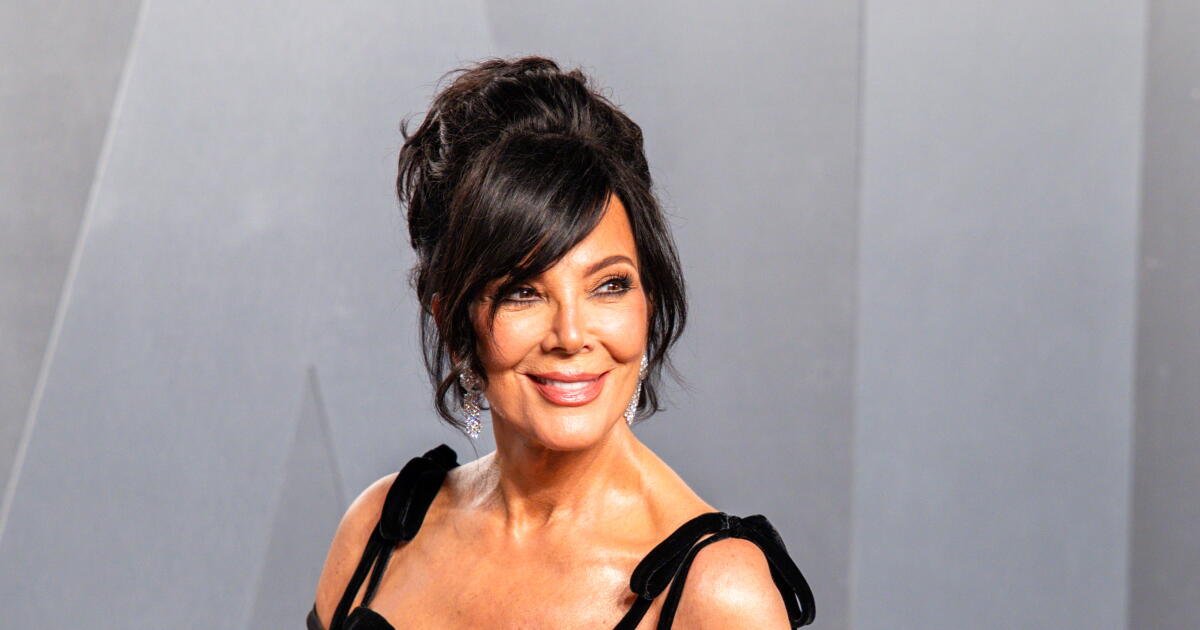
A man was arrested this week near Kris Jenner’s home in Calabasas on suspicion of stalking. It wasn’t the reality TV star’s first brush with the alleged stalker.
Officers with the Los Angeles County Sheriff’s Department on Monday arrested the man, identified as 25-year-old Zenwilliam Robson, after he was detained by Jenner’s security in her neighborhood, The Times confirmed.
It was not clear whether Jenner was at home at the time of Robson’s arrest.
Robson was booked Monday evening and charged with one misdemeanor count of trespassing and refusing to leave private property, according to court records.
He is currently jailed at the Twin Towers Correctional Facility in downtown Los Angeles and is set to appear in court on Sept. 22. A representative for Robson could not immediately be reached for comment.
A representative for the “Keeping Up With the Kardashians” star declined to comment. But according to a source familiar with the case who was not authorized to speak publicly, Jenner’s team is aware of Robson and that he tried to contact the 70-year-old reality TV personality and businesswoman in the past.
BIRMINGHAM, England: Rain prevented England from putting Pakistan in a deeper hole than 52-2 and 268 runs behind on day two of the Edgbaston cricket test on Thursday.
Pakistan walked out after tea 320 runs behind to begin its second innings in gloomy, lights-on conditions perfectly suited for England’s four-man pace attack which has dominated the series.
Pakistan has yet to crack a 200 total, and Ollie Robinson was the man of the moment again.
Robinson got Saim Ayub to nick to the slips off the first ball and became only the fifth bowler in test history to twice take a wicket with the first ball of an innings in a series. The last person was Zaheer Khan for India against Bangladesh in 2007. Bill Voce was the only previous Englishman in 1937 against Australia.
Ayub was playing Twenty20s in the Caribbean 10 days ago but was summoned in mid-series in a panic call by the Pakistan Cricket Board to play his first test in 20 months. He bagged a pair.
Robinson struck again with his fourth ball, nicking off Abdullah Shafique.
That made Pakistan start 0-2 for the sixth time ever in tests and the second time against England. The other was at the same ground in 1982. The bowler was Ian Botham.
From 0-2, Azan Awais and Shan Masood dug out Pakistan to 52-2 in 12 overs. Awais had 29 and Masood 21 after being dropped on 13 by Ben Duckett off the luckless Gus Atkinson.
Wet weather came sooner than forecast and guaranteed Pakistan lived to fight at least one more day in a three-test series already lost. England, up 2-0, should complete the sweep on Saturday with no test going the distance.
Fifties and no hundreds again
England began the day already in front with a lead of 23 at 156-4.
In two sessions, 50 overs, they added 297 runs at a pacy 5.9, its fastest rate on any day all summer. Three more batters scored fifties to add to Emilio Gay’s gritty 60 and Harry Brook’s unbeaten 52 on Wednesday but the effort looked nothing like Bazball.
However, Brook, Dan Lawrence, Jamie Smith and less so Robinson would have thought a century was at their mercy.
The former trio spent more than two hours at the crease, three hours in Brook’s case, but all fell tamely and showed obvious frustration to miss out on a century on a fair pitch against a popgun attack.
Brook ran himself out on 75, Lawrence dragged on on 65, and Smith chipped back to fast bowler Razaullah Khan on 69.
Robinson’s breezy 50 from 47 balls highlighted the merciless contribution from the tailenders of 116 runs and 15 boundaries.
Brook resumed on a restrained 52 and Dan Lawrence on 5, and in sunny conditions they plundered seven runs per over in the first hour.
Brook then mistakenly took on Shan Masood at midwicket and has now been involved in five run outs in tests — only Virat Kohli (6) has been in more. Brook has gone 11 tests without a century but was still averaging more than 40.
Lawrence, filling Ben Stokes’ old spot, had in hand his third fifty in three tests when he chopped on. He gave up an agonizing “No” and Mohammad Imran’s first test wicket.
“Bitterly disappointed to get out in the 60s,” Lawrence said. “Something I’ve prided myself on this season is kicking on. I really wanted a big hundred today.
Pakistan still went to lunch with an air of resignation as Smith collected an unbeaten 47 of the 143 runs in the session.
Smith got his third 50 of the summer straight after lunch by crashing Razaullah through the covers, but Razaullah got him caught and bowled on 69.
No. 9 batter Robinson greeted the new ball by lofting Mohammad Abbas for six over cow corner and got his second 50 of the season from 46 balls. The entertainment was ended by a good catch from Masood in the covers.
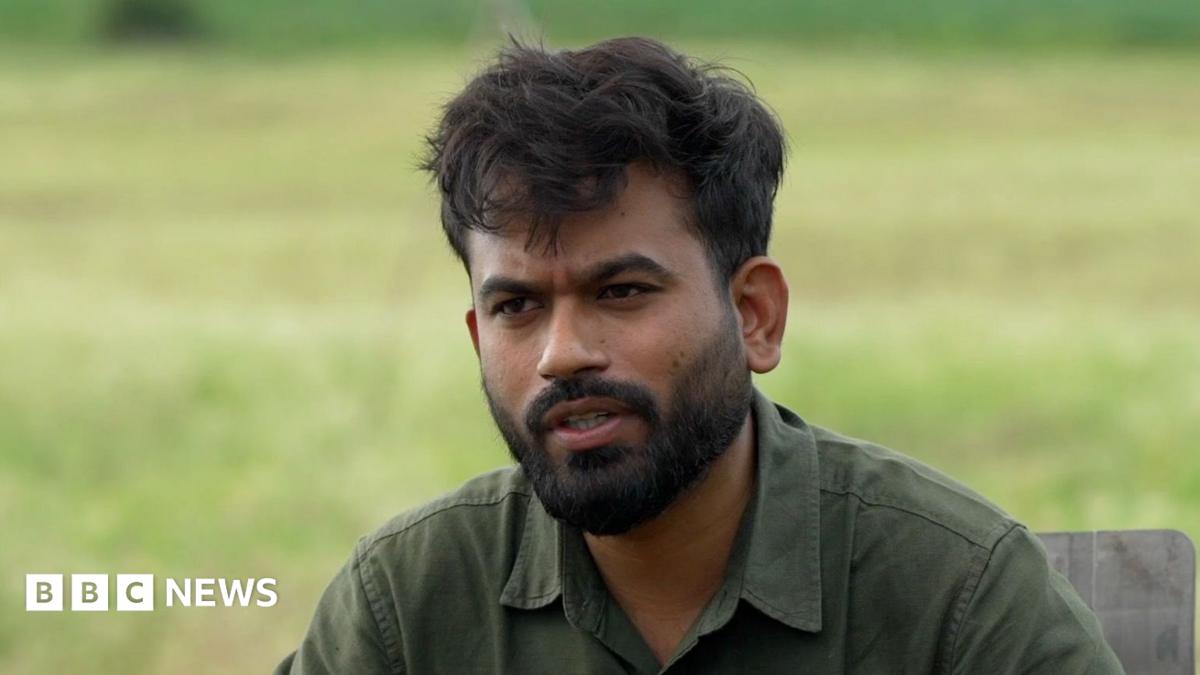
In just under three months, 30-year-old Abhijeet Dipke – the founder and face of India’s Gen Z “cockroach” protests – has acquired the kind of celebrity status normally reserved for a breakout actor or cricketer.
In politics or activism, unless you come from an influential family, such recognition can take years – if it comes at all.
“It’s been a rollercoaster ride. Two-three months ago, nobody knew me. I was just in my room in Boston watching documentaries or attending lectures,” said Dipke, who recently completed a master’s in public relationsat Boston University.
“Now I’m here surrounded by hundreds of people, by cameras. It’s a bit overwhelming.”
In and around his hometown of Chhatrapati Sambhajinagar in the western state of Maharashtra, Dipke is routinely thronged by people wanting to shake his hand or take a photo.
If the attention bothers him, it doesn’t show. Perhaps because politics isn’t entirely new to him: before moving to the US, Dipke had worked with the Aam Aadmi Party (AAP), an opposition party that grew out of an anti-corruption movement, for three years.
Then, on 16 May, Dipke wrote a post on X that would change his life: “What if all cockroaches come together?”
It was a response to a remark by India’s Chief Justice Surya Kant, who had likened jobless youngsters to cockroaches. Kant later said his comments had been misinterpreted and were directed specifically at young people using fake degrees, rather than the country’s youth more broadly.
But the clarification did little to quell the outrage.
Dipke said he wrote his post while playing a video game. “It was totally spontaneous. I had no idea it would become such a big movement,” he said.
Encouraged by tens of thousands of responses, he joined a handful of former colleagues and activists to launch the satirical Cockroach Janta Party (CJP), its name playing on both the chief justice’s remark and that of Prime Minister Narendra Modi’s Bharatiya Janata Party (BJP).
Alongside the support, Dipke and the campaign were fiercely trolled by government supporters. Their website and X account was briefly taken down in India.
Dipke says that when he wrote to X and to India’s Ministry of Electronics and Information Technology asking why the account had been taken down, he received a notice saying it had been withheld under Section 69A of the Information Technology Act which allows the government to block online information ‘in the interest of sovereignty and integrity of India, defence of India, security of the State’.
The ministry did not reply to the BBC’s questions about the issue, but The Indian Express and other media reported government officials as saying the sites had been blocked because of ‘national security concerns’. Dipke says he decided to return to India in response to this.
“I took the decision to come back to India when I was called a national security threat by my own government. That really hurt me. Isn’t my government supposed to stand by me when I’m abroad?” he said.
“I decided I need to go back to my country to show I’m not a national security threat. I love my country, just not in the way that you [the government] want.”
KATIE Piper has called out cruel abuse from online trolls over her National Television Awards look – as celebs rallied with their support.
Taking to Instagram, the writer and presenter shared a video addressing upsetting online comments she’d received.
Katie Piper spoke out after receiving cruel online comments about her appearanceCredit: Instagram / katiepiper_Presenter and writer Katie attended the National Television Awards on Tuesday nightCredit: Getty
She was left with severe facial burns and blindness in one eye after an acid attack in 2008Credit: GettyWhile at the event, Katie posed for photos with her fellow stars of Loose WomenCredit: Getty
Katie noticed notifications popping up on her phone after Woman & Home posted a red carpet interview featuring her.
She continued: “The comments are going mad. I thought, “Oh why?” and it’s just endless.
“Oh, look at her. What happened to her face? Oh, she’s overdone it on the filler.
“Oh my God, why are we talking about the hair, the hair’s not the problem. The face, blah blah.”
“And you’re just like, “I am a normal person, I am a real person”. I’m just out here trying to do my best, trying to live my life.
Katie added she had replied to these commenters, but later felt it wasn’t the right move.
She said: “I started replying to them all saying, “What’s it got to do with you how I look? Why are you policing women’s appearance?
“What if this was even a choice? Why does it matter to you how I look?”
Celebrities soon offered support, as Lisa Snowdon wrote: “You are the most beautiful inside and out Katie- never forget that.”
Morning Live‘s Rav Wilding penned: “Pipes, as your husband knows as your kids know and how all your friends know, you ARE beautiful.”
Matt Goss shared: “This breaks my heart you’re amazing and you have every right to let people know how you feel.
“You are genuinely an inspiration. sending so much love.”
Myleene Klass posted: “Katie. I was with you that night and I was over the moon to be with you.
“Your company, your energy, your funny one liners….and you also happened to look incredibly BEAUTIFUL. They don’t matter. They’re trying to. They just don’t x.”
Dannii Minogue wrote: “Katie – you, your words, your kindness and your digital footprint, you can be proud of. By all means take time for you, but do not let them take your light.”
NEW YORK CITY: Saudi Arabia’s ambassador to the UN warned the Security Council on Thursday that “the international community cannot call for de-escalation” in Yemen “while at the same time allowing the continued flow of support that enables this (Houthi) militia to continue its hostile and criminal conduct.”
The warning from Abdulaziz Alwasil came during an emergency council session to discuss Houthi attacks against the Kingdom this week. It was requested by the UK, the penholder on Yemen, and Bahrain.
He said the latest strikes on Saudi cities, which began on Tuesday, were not an isolated episode but “an extension of a systematic, hostile approach pursued by this militia since its coup against the legitimate Yemeni government in 2014,” and part of a pattern that has also targeted commercial shipping and threatened freedom of navigation in the Red Sea and the Bab Al-Mandeb Strait.
He said a press statement by the council on Aug. 7 condemning Houthi missile strikes on the Kingdom since July 13, and attacks against commercial vessels since July 22, had gone unheeded, and the militia had answered the international warnings with further escalation.
Alwasil said Saudi Arabia had backed nearly every major effort to end the Yemen war — including the Gulf Initiative, the transitional period, the National Dialogue Conference, the Geneva, Kuwait and Stockholm talks, a 2021 initiative and the UN-brokered truce in 2022 — but the Houthis had repeatedly met those efforts with renewed violence.
“My country affirms its legitimate right to defend itself, its citizens and residents, and to safeguard our national resources,” he said, adding that Riyadh “will not hesitate to take all measures necessary to deter Houthi attacks and to protect our security, sovereignty and territorial integrity.”
He called on the council to enforce Resolutions 2216, which imposed an arms embargo and sanctions on the Houthis, and 2722, which demanded an immediate halt to Houthi attacks on commercial shipping in the Red Sea, and to send “a clear and firm message” that leaves no room for misinterpretation that attacks on the Kingdom must stop.
Yemen’s ambassador, Abdullah Alsaadi, affirmed Sanaa’s “full solidarity with the Kingdom of Saudi Arabia, its leadership, government and people,” and its “absolute rejection of the use of any part of the Yemeni territory as a platform for launching missiles and drones, or for threatening the security of the Kingdom or any neighboring country.”
He said the attacks amounted to the “hijacking” of Yemen’s own sovereign decisions over war and peace, carried out by a militia that operates outside of state institutions and was “militarily and technically supported by the Iranian terrorist regime.”
Saudi Arabia had shown “a great degree of restraint,” Alsaadi said, and been “the principal partner of the Yemeni people and state” in supporting institutions, salaries and services throughout the war. But he cautioned that “restraint should not be misconstrued as weakness.”
The security of Yemen and of Saudi Arabia “cannot be separated from one another,” he added, as he called for full enforcement of the arms embargo on the Houthis, and accountability for those who finance and arm the group.
Israeli attacks come a week after it said to have established operational control over the strategic ridge.
Published On 10 Sep 202610 Sep 2026
The Israeli military says it has destroyed Hezbollah’s underground infrastructure at a key site in southern Lebanon, with Israeli government officials adding that the operation consolidated its so-called security zone in the area.
In a joint statement, Prime Minister Benjamin Netanyahu and Defence Minister Israel Katz said on Thursday that Israeli forces would remain in the area to prevent the Iran-aligned Hezbollah militant group from re-establishing its presence and rebuilding its capabilities.
Recommended Stories
list of 4 itemsend of list
The Ali al-Taher ridge, about 15 km (10 miles) from the Israeli border, has become one of the most contested areas of the war between Israel and Hezbollah. Katz claimed last Friday that Israeli forces had driven Hezbollah fighters out of what he said was a network of tunnels under the disputed highland.
Reuters reported that Hezbollah is believed to have built an underground command centre and weapons stores there in July, quoting unnamed Lebanese security sources.
Lebanon’s National News Agency said that the Israeli military carried out a powerful blast at the ridge, with tremors and the sound of the explosion felt across Nabatieh and surrounding areas in southern Lebanon.
Hezbollah has yet to respond to the recent Israeli attack.
The Israeli military said its forces had established “operational control” over the ridge, both above and below ground, before dismantling the infrastructure. The network extended for more than 2 km (just over 1 mile) and contained dozens of rockets, missiles and drones, as well as anti-tank missiles, mines and explosive devices, it said.
The military said a central command complex belonging to Hezbollah’s Badr unit was located within the underground infrastructure. The complex contained command centres, weapons storage rooms and living quarters that allowed fighters to remain underground for extended periods, it said.
Iran reportedly warned the United States last month that it would respond forcefully if Israeli attacks on the ridge continued.
Over the last weeks, Israeli strikes and ground operations around the Ali al-Taher ridge continued despite a ceasefire agreed in June, after Israel gained control of nearby Beaufort Castle and part of the higher ground overlooking much of southern Lebanon and northern Israel.
A US-brokered framework agreed after a June ceasefire — between Lebanon and Israel, without negotiating with Hezbollah — called for Israeli forces to gradually withdraw from southern Lebanon while Lebanese troops disarm Hezbollah.
The process has stalled, however, with Hezbollah refusing to give up its weapons and Israel saying it will not withdraw until the group disarms.
Since 2023, Israel has pushed into southern Lebanon and seized several strategic positions, occupying swathes of land, which it now increasingly says it needs to maintain a so-called buffer zone between Israel and Hezbollah positions in Lebanon.
SHE’S in her eighth decade but Chaka Khan has no intention of slowing down.
In fact, the legendary singer, 73, is about to release her 13th studio album, a record she describes as “ageless music”.
Legendary singer Chaka Khan in a photo shoot for her new album ChakzillaCredit: Nick NelsonKhan with Snoop on set for the Boogie’s In My Soul videoCredit: Vincent Nolan
Called Chakzilla, she believes it can connect with “everybody, every age”.
And after 50-plus years of making music, when asked about her proudest achievements, the Grammy-winning star says: “My legacy is that I stayed alive and that I’m still here. That’s a big deal.”
Sign up for the Showbiz newsletter
Thank you!
She is chatting from her home in Georgia where she is resting on her 80-acre farm before she heads back to the UK.
Tomorrow she headlines Radio 2 In The Park in Stirling, a week before the release of her new album, her first in seven years.
“I didn’t plan it, or anything like that,” she says. “It just happened. I was just working — you know, working hard with my band.
“We were doing a lot of gigs, and that’s always fun. Everybody’s happy because they’re getting paid. And in that time, it just so happened that I met Sia.”
Sia is the Australian singer-songwriter behind huge hits such as Titanium and Unstoppable, who Khan met through her sister and manager Tammy McCrary. McCrary is a huge fan of Sia, who became central to the album’s creation.
“I didn’t have to work hard at all,” says Khan. “It was just easy for me and for her. She loves to write poetry and she’s a brilliant lyricist.
Khan and Sia on stage in 2023Credit: GettyChaka Khan is still going strong at 73, with a new album and no plans to slow down after more than five decades in musicCredit: Getty
“I haven’t met anyone like her ever. I’m just happy that she’s my goddaughter now.”
The pair clicked so well creatively, they became family after Sia asked her to be her godmother and Khan agreed.
“I’m just happy that we’re together and that we’re part of each other’s life,” says Khan. “I’m really, really blessed.”
And it was this close relationship that started Chakzilla, with Sia bringing in celebrated producer Greg Kurstin to shape the album’s sound.
Khan says: “Greg did some writing with Sia and when she played these songs to me, it was just the most beautiful thing. I mean, she gets me. She knows me.
“And Tammy and I listened to the album a lot in the car. We keep playing it over and over again. We don’t get tired of it.
“When I am not tired of listening to my own music, that says a great deal because I often get tired quickly. That’s deep. That’s a beautiful thing.
“It’s fun for me to sing. All the songs are so good. My background singers and my band feel the same way. Everybody loves it. We’re feeling really special about this.
Chaka has teamed up with stars including Sia, Snoop Dogg and Lenny Kravitz on her new album ChakzillaCredit: GettyAlexandra Burke stars as Chaka in the hit musical I’m Every Woman — The Chaka Khan MusicalCredit: Getty
“So, I think people are going to feel the same way and they’re going to discover songs they like.
“They’re very sincere songs and very true about me. Heart Of Gold is the sweetest song and Dreamy Stuff is really true about me too. Curious Subject is another good one — because I am. That’s what my family is always saying about me.”
That sense of fun also runs through the album’s title, Chakzilla, inspired by Khan’s lifelong love of monster movies.
“I’ve loved horror and monster films my whole life,” she says. “I’ve been watching Godzilla and Mothra (the giant moth-like creature from the Japanese Godzilla films) since I was a little girl and I never got tired of them.
“I loved the fact there were good monsters and bad ones — the ones that tore things up and the ones that fixed things.
“So, I thought, ‘OK, I could be the Zilla that comes and fixes everything up. A positive monster, because I’m not a curlicue, I’m not a sweetie pie, so it works for me.
“Chakzilla is something I really love.”
The new record is packed with collaborations. The sultry Cool U Down sees Sia guest, while the joyous Boogie’s In My Soul has Snoop Dogg. The funky Bring The Party featuresLenny Kravitz on guitars and vocals.
When not on stage, Chaka is embracing life on her Georgia farm, where she grows her own food and enjoys spending time with her familyCredit: GettyChaka has reunited with stars including Patti LaBelle and Gladys Knight for her Queens tourCredit: Getty
“Sia told me she wanted to write a song called Boogie’s In My Soul and I thought, ‘Oh that sounds horrible’,” Khan says honestly.
“Then I heard what she had in mind and thought, ‘This is brilliant’. She said, ‘All we need is a good rapper’. And I thought, ‘Oh yeah, I know just the guy’.
“I really admire Snoop. He’s so smart and such a great guy, so it was perfect. And the words are brilliant. She says, ‘Show the world your light. Show the world of joy’.
“I thought, ‘Yes, right on, sis’. It’s beautiful. It’s like old school.”
Snoop opens the track with a playful nod to Khan’s 1984 Prince-penned hit I Feel For You, echoing Grandmaster Melle Mel’s famous “Chaka Khan” chant.
Khan says: “Yeah, it sounds great, even though I’m so sick of that song. But it fits. It fits.
“I’m just glad he’s not saying ‘Chaka, Chaka, Chaka, Chaka Khan, Chaka Khan’, like the start of that record.”
Straight-talking with a larger-than-life personality, Khan is refreshingly honest when asked whether it was fun making the video with the rapper.
“No, I worked my ass off. Let me tell you that thing went on until the night.”
Working with old friend Lenny Kravitz on Bring The Party was long overdue, she says, as he is someone who shares much of her outlook on life.
“I’ve known Lenny for many years,” says Khan. “I have friends, but I don’t really have friendships in the way I’d like to because of the life I lead.
“He pulled up some songs from an album he did over 20 years ago. It was some old rock and it was brilliant, and I sang on some of that old stuff with him. I guess he’s going to bring some of it into the future now.
“So, he then played guitar and sang with me on this cut. It was great to bring in some friends that I love and do good work.
“And Lenny lives a lot like I do. If I wanted to go and hang out with him, it would be easy and vice versa. We live in similar ways.
“He’s living on an island (Kravitz, lives part of the year on the Bahamian island of Eleuthera), growing beautiful plants and food, with a great studio in the middle of it all.
“He’s moved, like I am, by being in the real world and loving what God has put here for us.” Around four years ago, Khan left California for Georgia, where her grandma was from and where she lives a very different life.
She says: “I came back to Earth, to the trees and lakes and plants, to real living, with no sirens and craziness around me. It’s brilliant.
“I can look at the sky every morning when I wake up. I look at my lake every day, my animals, and I’m eating right.
“My sister and I are in the middle of opening a plant-based restaurant, and I’m growing my own food. I’ve got greenhouses and I’m learning how to live on the planet and from the planet, rather than having to go to stores and buy crap.”
Georgia has given Khan space, peace and proper time with her family.
“I really am enjoying it,” she tells me. “I’ve never felt so happy to come home off the road before.
“Touring is hard work. It always has been. But now I come home, close the gate and it’s really nice. My family can come and stay for a week or two and we get proper quality time together.
“I just spent a whole month with all my grandchildren and great-grands. They wore me the hell out but I had the best time ever.”
Last year Khan joined soul legends Patti LaBelle, Gladys Knight and Stephanie Mills for the historic Queens tour, which had extra dates in May this year.
“It was an amazing feat that we finished it,” says Khan. “I took it on because I thought, ‘This is a one-time thing — Gladys, Patti, Stephanie and myself. A one-off.
“It was an amazing show. It was tough because we were working like back in the day.
“Stevie Wonder came to the opening night and sang with me, which was lovely.
“We were really cool. Nobody was tripping, there was no drama. It was beautiful. And between the four of us, you could imagine how diverse the audience was. I saw families, I saw men bringing their sons. It was really special.”
Earlier this year, I’m Every Woman — The Chaka Khan Musical opened in London starring Alexandra Burke as Khan.
Did Burke nail the role?
“What could Alexandra do wrong? She’s amazing. She’s really something. I didn’t realise she was already such a big star. She’s no joke.
“I was amazed by her staying power. She and the whole cast had stamina like you’ve never seen.
“Nia Hill, who wrote the book for the show, is an old friend. She knows me inside out. We’ve had very deep conversations, and she’s been there for me through some really hard knocks.
“She would ask me which songs we should use, and I suggested songs that people don’t often get to hear.
“That’s what I’m trying to do now, bring back songs I did years and years ago that I still love.
“I’m going to do a show with that old stuff. Young kids today are so savvy, they know a good song when they hear one.”
Khan’s admiration for younger generations also connects back to her own political awakening.
As a teenager in Chicago, she was involved with the Black Panther Party and says the battles facing young people today feel both familiar and far broader.
She says: “It was crazy then too, but in a different way. With the Panthers, the focus was mostly on fundamental racism. Today, it’s that and so much more that these kids are dealing with. My heart goes out to them because they’re not afraid. They’re fearless, beautiful beings and they get it. They understand what’s right and what’s wrong.
“I’m really happy about young people today. I love that they’re not afraid, because fear will tear it all down.”
With our time up, Khan says how much she is ready to return to the UK this weekend.
“I love Scotland and love the big shows, I can’t wait. I’m going to play the favourites. Absolutely.
“It’s important to keep the music going. I’m still here. Yeah, in every way.
“We lost Prince, and the big stars like Aretha and Whitney.
“There are not a lot of those musicians and artists like that any more. So, I’m enjoying that I’m still making new music and playing shows.
“I’m up for the challenge. Absolutely, that’s how I live. That’s me.
“I love that line, ‘I may be small, but I’ve got this’.
“It doesn’t matter what size you are, it’s what you’ve got.”
Chaka Khan headlines Radio 2 In The Park on Saturday night and the set will be broadcast on BBC iPlayer and Radio 2, and at 10pm on BBC Two. The album Chakzilla is released on September 18.
Chaka’s new album Chakzilla is released on September 18