Nvidia CEO excluded in TIME’s 100 most influential people in AI
Nvidia CEO excluded in TIME’s 100 most influential people in AI
Source link
Nvidia CEO excluded in TIME’s 100 most influential people in AI
Source link


Robotaxi reveal: Tesla's Cybercab takes the stage next week
Source link
Marking his 100th day in the job, Federal Reserve Chair Kevin Warsh told the Kansas City Fed’s symposium in Wyoming that the US economy has strengthened rather than weakened under recent shocks, that the labour market is consistent with full employment, and that inflation remains the central bank’s dominant concern.

Warsh declined to say what he would do next month, but he removed most of the arguments against acting and bolstered the ones in favour of a rate hike.
“For my part, today I am impressed by the overall performance of the economy, which appears to have strengthened,” Warsh stated.
“One indicator of strength is how well an economy holds up to shocks. On that score, both Main Street and Wall Street have been remarkably resilient,” he added.
On inflation, Warsh noted that the PCE index stood at 3.7% over twelve months and 4.1% over six, and 54% of the basket’s components rose by more than 3% over the past year, against 32% in the two decades before the pandemic.
Summer readings that beat expectations “do not tell me that underlying trends have meaningfully improved,” Warsh stated.
The Federal Reserve Chair’s conclusion was blunt: “the Fed’s predominant focus right now should be on prices.”
The standard set was equally direct. “We must be confident that underlying inflation is moving to our objective, clearly and at sufficient speed. Otherwise, we have work to do,” Warsh declared.
That assessment matters because it eliminates the case for supporting growth with further stimulus and potentially opens the door for restrictive measures as markets moved in response.
At the time of writing, the 10-year Treasury yield has fallen 0.5% from its Friday high to 4.67% and the 30-year dropped around 0.9% to 5.16%, while the dollar index rose 0.4% from the intraday low to roughly 99.4 points.
Traders raised the implied probability of a 0.25% hike at the 15 and 16 September Fed meeting to 55%, from around 35% before Warsh’s speech.
Warsh opened his speech with what he called a hinge point in history, arguing that artificial intelligence has advanced faster than even its advocates predicted.
Annualised AI token sales at the two leading labs alone exceed $100 billion, he said, up more than 500% in a year.
AI is “a new variable, potentially a new factor of production,” raising questions the Fed cannot answer yet such as whether it will lift productivity and when, whether it complements or replaces labour, and where the returns will ultimately land.
A new Federal Reserve task force on productivity and jobs is examining it, though he stressed its recommendations will have no bearing on current policy decisions.
Warsh then listed extensive evidence for his positive outlook on the US economy.
Business investment in equipment and intangibles growing at around 9%, its fastest since 2021, with more than half of this year’s capital expenditure growth attributable to the AI buildout.
S&P 500 profits went up more than 20% over the year, credit spreads are near historic lows and banks are easing lending standards. Housing and agriculture are strained, Warsh acknowledged, but on balance he “would be hard pressed to describe broad financial conditions as restrictive.”
Unemployment at 4.1% is low by historical standards, with jobless claims near their lowest in decades, leaving inflation as the outlier.
The Federal Reserve Chair devoted a substantial section to defending his refusal to signal future moves, a stance that has drawn criticism since he took office in May.
Forward guidance was adopted during the 2008 crisis by colleagues including himself, he said, and was essential then, but “the practice has overstayed its welcome” and now “risks creating ambiguity in the name of clarity.”
Warsh warned of a hall-of-mirrors problem in which markets read the Fed while the Fed reads markets, leaving both blind to new developments.
“We should not indulge a regime in which market participants are looking primarily to the Fed for their next trade,” he said, adding that the costs of such errors fall not on “financial high-fliers” but on households facing high inflation or insecure jobs.
Warsh also rejected calls to publish an explicit reaction function, arguing economic knowledge does not permit a mechanical rule.
Instead he set out six principles: interrogate incoming data rather than trust stale figures, accept that judging supply against demand is imprecise; treat the 2% PCE target as firm and fixed; pursue both mandates without treating them as a trade-off; rely on short-term rates rather than unconventional tools; and remember that money itself matters.
“I stand here today committed to a discipline, not to a decision,” Warsh said in closing.
The decision comes on 16 September at the next Fed meeting.
NewtekOne revises down 2026/2027 EPS guidance, shares fall
Source link

da-kuk/E+ via Getty Images
Technology was the only S&P 500 (SP500) sector to gain more than 3% on Thursday while all other sectors closed lower, marking just the second such session since 2000, according to Bluekurtic Market Insights.
The previous instance occurred on March
New U.S. sanctions target Iran’s tech, gold, and shipping sectors, pressing global intermediaries.
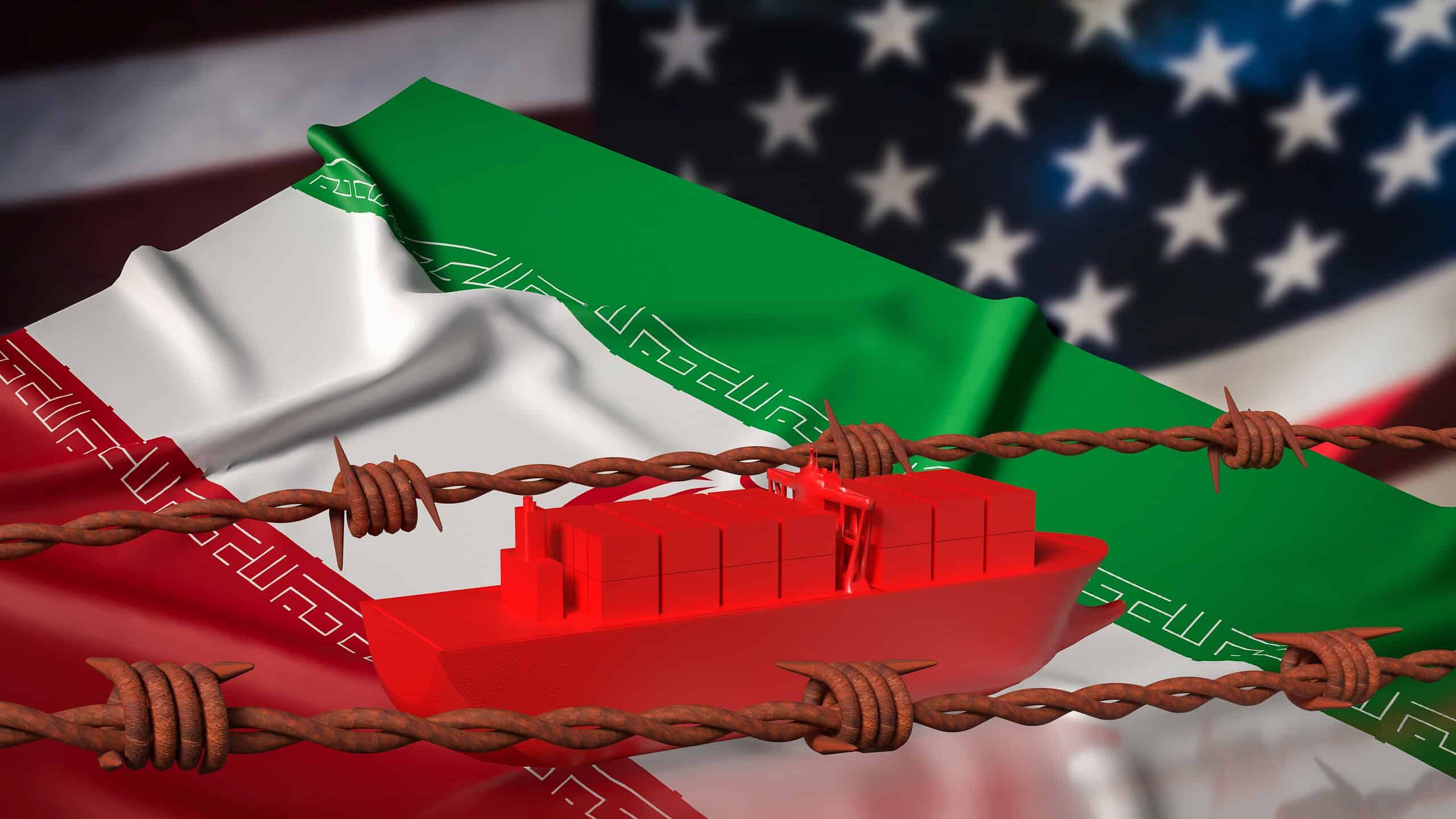
The U.S. Department of the Treasury invoked the memory of approximately 160,000 Allied soldiers storming a 50-mile stretch of Normandy’s coast when it published its latest round of secondary sanctions against Iran on Aug. 24. However, rather than capturing Gold, Juno, Omaha, Sword, and Utah beaches, the sanctions seek to hobble Iran’s digital assets, technology, gold, aviation, and shipping sectors.
“In the Second World War, D-Day marked the historic beginning of a campaign with our allies to target and drive the enemy from its positions, including those in third countries,” U.S. Treasury Secretary Scott Bessent posted on the social media platform X, formerly Twitter. “Today, in that same spirit, we are launching an economic onslaught against Iran’s financial connections around the globe. Our objective is to sever every economic lifeline that sustains this tyrannical regime until Tehran stands alone.”
The Treasury, Department of State, and the rebranded Department of War personnel have worked with their counterparts to convey expectations for immediate action on the sanctions.
“Every country will be given a defined timeline to shut down the Iran-related activity we have identified,” the Treasury said in a prepared statement. “If they fail to act, the Treasury will act. Any entity that facilitates money laundering or sanctions evasion on behalf of Iran risks being cut off from the U.S. financial system.”
The new sanctions may deter international companies from doing business in Iran, but their immediate effect may be over-compliance due to the Treasury’s new designations, Kari Heerman, Brookings senior fellow and Director of Trade and Economic Statecraft, told Global Finance.
The harder question is how much additional pressure the latest sanctions have on Iran’s economy.
“Years of sanctions have pushed Iran’s remaining trade toward firms and financial channels more willing or able to tolerate U.S. sanctions,” she added. “That makes evasion more expensive for Iran, but it also makes each successive round of enforcement more difficult for the United States.”
Besides blocking transactions involving property and property interests owned directly or indirectly by designated individuals located in the U.S. or in the possession or control of a U.S. person, they prohibit financial institutions from making any contribution, provision, or receipt of funds, goods, or services by, to, or for the benefit of any designated individual no matter their location.
At the time of the announcement, the Treasury had already sanctioned more than 60 entities, individuals, and vessels located in China, Europe, Hong Kong, Singapore, Switzerland, the United Arab Emirates, and other regions that have worked with Iran’s Ministry of Defense and Armed Forces Logistics and its Ministry of Intelligence and Security.
As the newly minted sanctions target entities further up Iran’s supply chains, they stop short of reaching major Chinese financial institutions that have been Iran’s lifelines.
“Targeting a major Chinese bank could have a much larger deterrent effect than sanctioning smaller intermediaries, but it could also provoke Chinese retaliation and affect other U.S. objectives, including the economic issues Washington, D.C., hopes to address at next month’s Trump-Xi summit,” said Heerman. “Bessent’s comment that he does not want to ‘blow up the global financial system’ acknowledges the most powerful sanctions tools can also be the most costly to use.”
Hours after the announcement, the Iranian rial plummeted on the open market, trading at roughly 2 million rials to a single U.S. dollar.
How key international trade partners respond to this new round of U.S. sanctions will ultimately reveal if Washington has gone a bridge too far.
Rob Daly covers fintech and the economy. Contact him at rdaly@gfmag.com.
Earnings Call Insights: SentinelOne (S) Q2 FY 2027
“Q2 was an outstanding quarter for SentinelOne” with the company stating it “exceeded our top and bottom line guidance, delivered record second quarter net new ARR, and record operating margin” and “raising our revenue operating income
Seeking Alpha’s Disclaimer: This article was automatically generated by an AI tool based on content available on the Seeking Alpha website, and has not been curated or reviewed by humans. Due to inherent limitations in using AI-based tools, the accuracy, completeness, or timeliness of such articles cannot be guaranteed. This article is intended for informational purposes only. Seeking Alpha does not take account of your objectives or your financial situation and does not offer any personalized investment advice. Seeking Alpha is not a licensed securities dealer, broker or US investment adviser or investment bank.
Earnings Call Insights: LifeVantage (LFVN) Q4 fiscal 2026
Seeking Alpha’s Disclaimer: This article was automatically generated by an AI tool based on content available on the Seeking Alpha website, and has not been curated or reviewed by humans. Due to inherent limitations in using AI-based tools, the accuracy, completeness, or timeliness of such articles cannot be guaranteed. This article is intended for informational purposes only. Seeking Alpha does not take account of your objectives or your financial situation and does not offer any personalized investment advice. Seeking Alpha is not a licensed securities dealer, broker or US investment adviser or investment bank.
Here are the major earnings before the open Friday
Source link
Earnings Call Insights: Lucky Strike Entertainment Corporation (LUCK) Q4 2026
Seeking Alpha’s Disclaimer: This article was automatically generated by an AI tool based on content available on the Seeking Alpha website, and has not been curated or reviewed by humans. Due to inherent limitations in using AI-based tools, the accuracy, completeness, or timeliness of such articles cannot be guaranteed. This article is intended for informational purposes only. Seeking Alpha does not take account of your objectives or your financial situation and does not offer any personalized investment advice. Seeking Alpha is not a licensed securities dealer, broker or US investment adviser or investment bank.
Published on
European Commission President Ursula von der Leyen said on Thursday that if negotiations to reduce the record-high trade deficit with China did not produce a breakthrough, the EU should make use of all its trade defence mechanisms.
Tensions have remained high between Brussels and Beijing since the talks were launched last June. Over the summer, China moved to ban Chinese firms from participating in EU antitrust probes, while the Commission has continued opening trade defence investigations into the suspected dumping of Chinese products into the European market.
“Dialogue with China remains necessary. But it must produce results. And when dialogue is not enough, we must be ready to make full use of our instruments,” von der Leyen said in remarks to Medef, the French business organisation.
The EU is facing a wave of cheap imports coming from China, which have increased by 45% in five years, the Commission’s President added, pointing out that 30 trade defence investigations have been opened over the last year – “almost three times more than the historical average”.
“We are stepping up investigations significantly,” she said.
Von der Leyen’s remarks come as the EU’s trade deficit with China reaches €1 billion a day. The Commission has set October as a deadline to reach a deal with Beijing to rebalance the trade relationship.
“China is a key economic partner. And our approach is clear and consistent: derisking without breaking ties. But being a partner does not mean accepting permanent imbalances,” von der Leyen said.
Beijing and Brussels have been on the verge of a trade war in recent months, with China threatening several times to retaliate against proposed EU regulations that could reduce market access to Chinese firms.
On Thursday, von der Leyen recalled that all EU member states now record a trade deficit with China.
In June, EU leaders gave her a mandate to act to rebalance the relationship through dialogue as well as the use and review of defence mechanisms. Among these is the EU’s so-called anti-coercion instrument, which can be triggered in case of pressure from a foreign country on the EU to change its policies.
This tool, sometimes referred to as the “trade bazooka”, allows the EU to adopt strong measures such as restrictions on access to public procurement or the removal of intellectual property rights.
However, it requires the support of a majority of the bloc’s member states. It is unclear whether this could be achieved while EU countries continue trading with China on a bilateral basis, seeking access to its market or investments from Beijing.
The idea of one bourse for the whole Nordic region has resurfaced.
Reports on Wednesday, citing people familiar with the discussions, said industry alliance Nordic Compass is studying options including the consolidation of Sweden, Denmark, Norway and Finland’s national exchanges, as well as the harmonisation of their regulatory frameworks.
Nordic Compass told Euronews it is analysing a range of possibilities but that the work remains preliminary.
“Nordic Compass’ Capital Markets Track is working to improve opportunities to raise capital to support competitiveness across all stages, from start-up, venture, growth and scale-up to IPOs, as well as the ecosystem for Nordic listings,” said Christian Clausen, chair of the alliance’s Capital Markets Track and chairman for the Nordics at BlackRock.
“This includes analyses of a range of potential initiatives, including issues related to liquidity. The work is still at an exploratory stage, and no agreement has yet been reached on specific initiatives or conclusions,” Clausen explained to Euronews.
Nordic Compass was launched in May as a pan-Nordic industry alliance gathering more than 25 companies, foundations and organisations, among them Wallenberg Investments, EQT, Nordea, SEB, Nasdaq Nordic, Ericsson, Nokia, Saab, Ørsted and the Novo Nordisk Foundation.
Chaired by former Finnish prime minister Jyrki Katainen, it works across four tracks covering capital markets, deep tech, defence and energy.
The alliance’s first initiatives are due at a summit in Gothenburg on 4 and 5 November, where the capital markets proposal is rumoured to be presented.
The prize is considerable.
Nordic pension funds and sovereign investors manage close to $4 trillion (€3.43tn) and take in more than $175 billion (€3.43tn) a year, but that capital is spread across four separate markets rather than being pooled into one.
Any merger would need the cooperation of three parties that do not answer to the alliance directly.
Nasdaq operates most of the region’s national bourses, Euronext owns Oslo’s stock exchange, and Euroclear plays a central role in settling Nordic securities trades.
Nasdaq did not respond to a request for comment.
Euronext signalled openness telling Euronews that through Oslo Børs, its securities depositories in Norway and Denmark, Nord Pool and Admincontrol, it has an established Nordic franchise and is “in dialogue with Nordic Compass about potentially contributing to practical measures.”
“Euronext welcomes initiatives aimed at making the Nordic capital markets even more competitive globally,” the exchange operator added.
“The region already benefits from strong market traditions, sophisticated investors and successful local ecosystems. The opportunity is to build on these strengths by making it easier for capital to flow across borders,” a spokesperson for the group told Euronews.
Euronext also pointed to its own multi-country structure as a template.
“Our experience demonstrates how deeper liquidity, shared technology and harmonised rules can benefit issuers and investors, while our federal model keeps local exchanges close to the markets they serve,” the exchange operator concluded.
What potentially emerges in Gothenburg in November will show whether the exploratory work has produced anything firmer than analysis.
Grieg Seafood Non-GAAP EPS of -NOK 1.30, revenue of NOK 1.83B; updates full-year outlook
Source link


Richard Drury
The U.S. has cracked down on a Chinese state-sponsored hacking operation that targeted the Department of Justice, Federal Reserve, NASA, Senate and other government agencies.
The DOJ and FBI seized domains used by hacking platforms known as “QScan” and “QTRouter” that were part of

JPMorgan Chase dominates other banks when it comes to AI banking citations, but regional banks are invisible.
Whenever someone poses banking-related inquiries to AI platforms like ChatGPT, Claude, Gemini or Perplexity, the biggest banks are getting upstaged by third-party comparison hubs and media outlets.
Three websites in particular — Bankrate, Investopedia and Wikipedia — supply 68% of all banking-related AI citations, according to an “AI Visibility” report from communications firm 5WPR. Bank-owned domains, meanwhile, account for less than 7%.
Even within the narrow slice of visibility banks do capture, one name dominates. In response to real consumer questions, such as “best bank near me” or “top bank in [state],” JPMorgan Chase & Co. holds 28.4% of consumer banking AI citation share in the U.S. That’s more than Bank of America (7.1%), Wells Fargo (5.9%), Citi (4.8%), and Capital One (4.2%) combined.
The findings underscore a new reality in the AI era: brand prestige matters less if a chatbot leaves a bank out of the conversation entirely.
“It isn’t accidental,” Ronn Torossian, founder and chairman of 5WPR, told Global Finance in an email. JPMorgan Chase operates more than 4,800 branches across the U.S., but “branch count has almost nothing to do with it,” he added.
Whenever someone consults an AI platform about where to bank, the New York-based firm wins the AI answer outright in only three states: New York, Illinois, and Arizona. Still, Chase owes its AI presence to machine-readable content on its own site, combined with a press footprint that keeps it landing in outlets AI engines already trust, Torossian explained.
But the bank hasn’t locked in the lead just yet. “This is a snapshot, and AI citation patterns shift as engines update retrieval and as competitors invest in the same levers,” he added. “Any bank willing to match that content and structural investment can close the gap.”
Until then, AI assistants will likely continue citing media coverage of banks rather than the banks themselves, he added.
“What these publishers [Bankrate, Investopedia, Wikipedia and also NerdWallet] are doing right is straightforward: comprehensive, frequently updated comparison content, clear schema markup, strong domain authority, and a format built to directly answer the exact questions people and now AI are asking,” Torossian said.
These sites present direct ‘best’ and ‘worst’ rankings of banks, credit cards, and other financial products, giving AI engines structured data to pull from.
Bankrate, for example, feeds answers to specific inquiries about borrowing and connects them with competing lenders. This forces banks to up their game to win over potential customers.
“When banks compete, users get better [interest] rates that help them save money more easily and more effectively,” Bankrate editor-in-chief John Puterbaugh said in an email. “Our commitment to consumer advocacy and helping people get better deals runs across our whole business, and we believe this approach will win even as AI platforms and LLMs continue to evolve.”
Bank websites, by contrast, typically heighten the marketing language to tout their products and offerings. The problem? AI engines ignore that type of content and, instead, identify content that answers specific questions with clarity.
As Andy Mollison, head of search and Innovation at Varn Search Marketing, puts it: AI systems are built around language.
“Vague claims such as ‘we go above and beyond’ provide little useful information,” Mollison said in an email. “A statement such as ‘customers can access support 24 hours a day, seven days a week’ is concrete, verifiable and far more likely to match a user’s query.”
Regulatory and compliance constraints also limit how banks communicate in ways that don’t affect financial-information publishers, Mollison explained. “That often leaves them with less educational content, and more content that is cautious, technical or heavily qualified,” he added.
As a result, publishers have the AI advantage over banks, because they write in language that matches how people actually ask questions.
Perhaps the starkest finding from the 5WPR report is this: 22 of the 75 largest U.S. banks registered less than 0.3% citation share. Top bank names — Fifth Third, KeyBank, M&T, Huntington and Regions — barely show up despite their branch networks. Meanwhile, fintech challengers are eating their lunch.
Chime, SoFi, Ally and Discover now out-cite regional banks like PNC, Truist, U.S. Bank and Citizens in AI answers, despite operating with a fraction of the deposit base.
“These five banks registering under 0.3% citation share despite significant size and branch networks isn’t a vanity-metric problem; it’s a discovery problem,” Torossian said. “As more consumers use AI assistants as a first stop for financial research, a bank that’s missing from those answers is missing from consideration at the exact moment decisions are being formed.”
5WPR is careful to frame the index not as a hard count pulled from platform query logs. “Nobody outside those companies has access to that, and any firm claiming otherwise is overselling,” Torossian said. He also acknowledged the report can’t yet tie citation share to account openings or traffic. AI platforms, after all, don’t publish that data. “We’re measuring the front door. We’re not measuring the sale,” he said.
Still, Torossian argued that waiting for proof before investing in AI visibility carries its own risk.
Recall the early days of search engine optimization when Google’s search algorithms transformed how businesses competed online. Companies began investing heavily in web presence during the so-called “SEO Gold Rush” in the early 2000s.
“The brands that showed up first captured the customers,” Torossian said. The ones that waited for proof spent the next decade “trying to catch up,” he added.
“That’s the same bet regional banks made about search fifteen years ago,” he added. “And it’s the same bet that let fintechs out-cite them in AI answers today.”
5WPR isn’t the only agency tracking AI usage among bank consumers. Wells Fargo published a survey in April, alongside the American Bankers Association, reporting that 19% of U.S. adults (and 38% of Gen Z) use AI for financial advice. Two-thirds of those respondents acted on the AI financial suggestions and said those recommendations proved profitable or worthwhile.
In other words, facts matter. Tyler Desjardin, the founder of Pivot Creative Media, a firm that focuses on improving business visibility when it comes to SEO and AI-generated results, advises clients to prioritize just that.
“Brands need to ensure that they provide accurate information so that AI does not have to create something that could be misleading to search engines,” Desjardin said. “Visibility should come from structured information that conveys correct facts, rather than trying to game the system, since AI automatically eliminates any thin or misleading content.”
Anthony Noto covers corporate finance and private credit. Contact him at anoto@gfmag.com
Earnings Call Insights: CrowdStrike (CRWD) Q2 FY 2027
Seeking Alpha’s Disclaimer: This article was automatically generated by an AI tool based on content available on the Seeking Alpha website, and has not been curated or reviewed by humans. Due to inherent limitations in using AI-based tools, the accuracy, completeness, or timeliness of such articles cannot be guaranteed. This article is intended for informational purposes only. Seeking Alpha does not take account of your objectives or your financial situation and does not offer any personalized investment advice. Seeking Alpha is not a licensed securities dealer, broker or US investment adviser or investment bank.

6381380/iStock Editorial via Getty Images
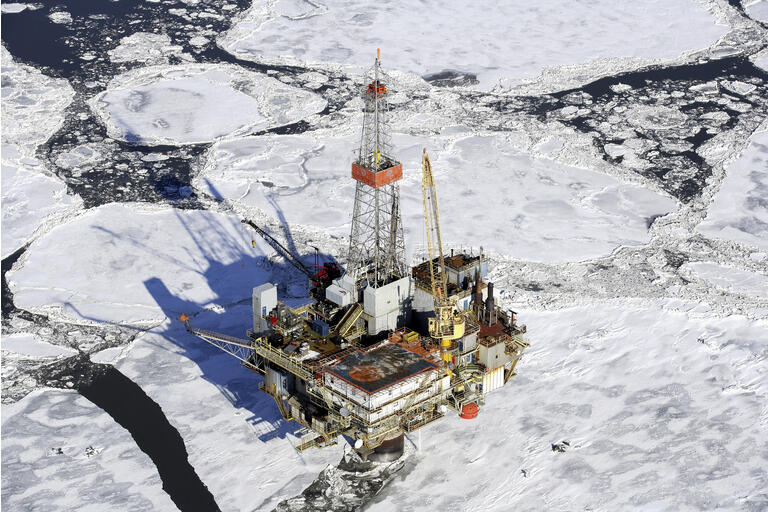
The owners of the 800-mile Trans-Alaska Pipeline System aim to renew its federal land authorization more than seven years before it expires, seeking to ensure that the Trump administration will make the determination rather than the president’s successor in the White


