Finance Desk

Iran says it’s suspending ceasefire commitments with U.S.

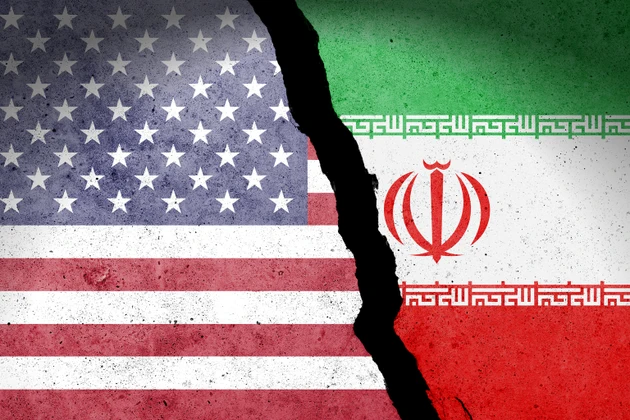
Flag of USA and Iran painted on a concrete wall

Tomas Ragina

Iran says it is suspending all commitments reached with the U.S. under the Islamabad Memorandum of Understanding a month ago, accusing Washington of violating the deal through a wave of military strikes.

“We were in negotiations. Unfortunately, it was the Americans themselves

Source link

Insider trades: Morgan Stanley, Goldman Sachs, Broadcom among notable names

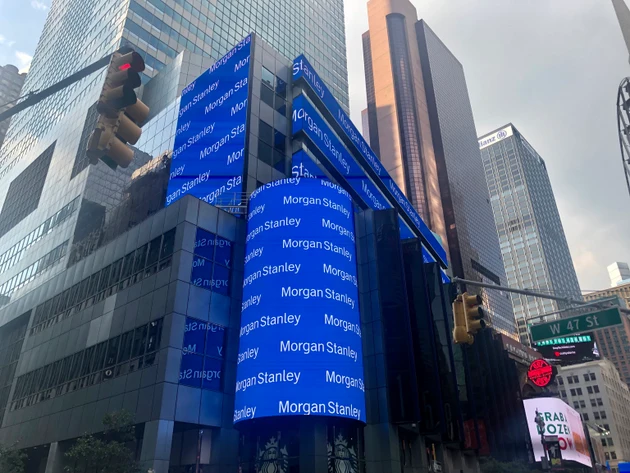
Morgan Stanly Investment Bank Advertisement

FinkAvenue

This week saw minimal trades by insider executive. Major transactions were seen at firms including Morgan Stanley (MS) and Broadcom (AVGO). The following is a list of major trades that occurred between July 13 and July 17.

Source link

F.N.B. forecasts $375M-$385M Q3 net interest income while revising full-year NII to $1.485B-$1.515B (NYSE:FNB)

Earnings Call Insights: F.N.B. Corporation (FNB) Q2 2026

Management View

  • “F.N.B.’s second quarter earnings per share grew 17% year-over-year to $0.42 with net income of $149 million.” (Chairman, President & CEO Vincent J. Delie)
  • “Our results included another quarter of

Seeking Alpha’s Disclaimer: This article was automatically generated by an AI tool based on content available on the Seeking Alpha website, and has not been curated or reviewed by humans. Due to inherent limitations in using AI-based tools, the accuracy, completeness, or timeliness of such articles cannot be guaranteed. This article is intended for informational purposes only. Seeking Alpha does not take account of your objectives or your financial situation and does not offer any personalized investment advice. Seeking Alpha is not a licensed securities dealer, broker or US investment adviser or investment bank.

Source link

Fifth Third outlines $8.74B-$8.80B 2026 NII outlook ahead of Labor Day conversion (NYSE:FITB)

Earnings Call Insights: Fifth Third Bancorp (FITB) Q2 2026

Management View

  • “Today, we reported earnings per share of $0.83 or $1.02, excluding certain items outlined on Page 2 of the release.” (Chairman, CEO & President Timothy Spence)
  • “Tangible book value

Seeking Alpha’s Disclaimer: This article was automatically generated by an AI tool based on content available on the Seeking Alpha website, and has not been curated or reviewed by humans. Due to inherent limitations in using AI-based tools, the accuracy, completeness, or timeliness of such articles cannot be guaranteed. This article is intended for informational purposes only. Seeking Alpha does not take account of your objectives or your financial situation and does not offer any personalized investment advice. Seeking Alpha is not a licensed securities dealer, broker or US investment adviser or investment bank.

Source link

Butterfield Readies CIBC Caribbean Purchase

The Bermuda bank agrees to buy a 91.7% stake in CIBC Caribbean Bank for $1.8 billion, creating a regional giant.

This article appears in the July/August issue of Global Finance Magazine.

Butterfield Group has agreed to acquire a 91.7% stake in CIBC Caribbean Bank Limited for $1.8 billion — $1.09 billion in cash and the remainder in shares — in a deal that would create one of the region’s largest banking groups.

This is at least the third time in the past seven years that the Canadian Imperial Bank of Commerce (CIBC) has attempted to sell some of its Caribbean interests.

“This deal combines two storied, complementary banks with significant local scale advantages and time-honored customer relationships in their respective core jurisdictions,” said Michael Collins, Butterfield’s chairman and chief executive, in a statement. 

The new banking group will hold an estimated $29 billion in assets. The Bermuda-based Butterfield Group—formerly The Bank of N.T. Butterfield & Son Limited—also operates in The Bahamas, the Cayman Islands, the Channel Islands, Singapore, Switzerland, and the U.K. CIBC has a presence in 10 countries and is based in Barbados.

CIBC will hold about 22% of the enlarged Butterfield Group and will have the right to appoint two directors to the board. 

The bank’s top brass says the deal underscores a shift in the Caribbean financial sector. 

“This is really a change in Butterfield’s positioning because it now picks up both a retail and a business portfolio that spans the entire gamut of the region, and it probably could make it the biggest bank in the region,” former Butterfield CEO Mariano Browne told the Trinidad and Tobago Guardian.

Butterfield has promised to maintain CIBC’s Barbados office. Customers should expect no immediate changes. Existing branches will remain open, and clients can expect improved cross-border payments and expanded consumer, digital, and merchant banking.

The deal, pending regulatory approval, should close in the first half of 2027.

In 2018, CIBC attempted to list FirstCaribbean on U.S. stock markets to raise up to $240 million but withdrew the application less than a month later after failing to drum up sufficient investor interest. A 2019 deal to sell 66.7% of CIBC to GNB Financial Group for $797 million fell through after the deal failed to secure regulatory approval.

Nic Wirtz is a contributing writer based in Guatemala.

Source link

Apple surpasses Nvidia as world’s most valuable company

By Greta Ruffino with AFP

Published on Updated

Apple reclaimed the title of the world’s most valuable company on Friday, overtaking Nvidia as investors grew more confident in its AI strategy.


ADVERTISEMENT


ADVERTISEMENT

Shares of Nvidia were down as much as four percent as worries about the valuation of artificial intelligence equities dogged the market, giving the company a valuation of about $4.8 trillion (€4.2 trillion), slightly below Apple’s $4.9 trillion (€4.3 trillion).

The company later clawed back the losses, with Apple and Nvidia trading neck and neck for the top spot.

Nvidia’s stock has soared more than 1,200% since January 2023, climbing from a split-adjusted $14.86 (€13.00) to about $205 (€179.30) by mid-July 2026. The company carried out a 10-for-1 stock split in June 2024.

Nvidia became the world’s most valuable company in 2025, driven by the AI boom sparked by the launch of ChatGPT in November 2022.

Originally designed for video games, Nvidia’s graphics processing units (GPUs) have become the core hardware used in AI data centres to train large language models developed by companies such as OpenAI, Anthropic and Google.

In recent weeks, however, analysts have begun questioning whether the massive investments in Nvidia’s chips and software will pay off as new AI products reach the market.

Those questions have intensified as ChatGPT-maker OpenAI and rival Anthropic, two of the most valuable private companies in history, having filed to go public.

Meanwhile, investor confidence in Apple confidence in Apple has strengthened in recent weeks, pushing its shares up about 20% since late June. Apple also unveiled a redesigned version of Siri, receiving broadly positive early reviews.

Source link

Gold Purchases Accelerate as Dollar Confidence Wanes

Central banks are scaling back on the dollar as institutional bullion buying climbs to record highs.

In the World Gold Council’s (WGC) latest annual survey of central banks, 83% of respondents expect to increase their gold holdings over the next year. That’s up from 76% in 2025. This surge in demand is due to the U.S. dollar’s waning preeminence in global reserves and the growing number of international crises. 

Almost three-quarters of central banks predict a lower share of global reserves held in greenbacks over the next five years, and a record 45% say they plan to increase their institutional bullion reserves over the next 12 months, up from 43% last year.

Gold Overtakes Bonds as Ultimate Safe Haven

Gold recently overtook U.S. government bonds as the world’s top reserve asset, according to the June 16 report. The survey polled 76 central banks between February and May; most responses were received after the recent Mideast hostilities began. Greenbacks accounted for 42% of total reported reserves, including gold and foreign exchange, in the third quarter of last year, according to the International Monetary Fund. 

A record 90% of those polled by the WGC say gold’s performance during volatile periods is a key reason for acquiring more of it. Similarly, 82% say they value gold for portfolio diversification, and 84% value it as a long-term store of value. 

The metal’s role in hedging geopolitical risk is especially important among central bankers in developing and emerging markets, with 85% citing this factor.

Half of respondents seeking to procure more gold say they will finance such purchases through domestic purchase programs denominated in local currency, while 38% say they would buy more gold by selling existing reserve assets.

Global Shift in Gold Storage Strategy

Central banks also appear to be rethinking their gold storage strategy. The survey found that 9% of central banks increased domestic storage over the past year, while 10% say they diversified their overseas storage locations.

The Bank of England remains the most popular gold storage location, cited by 57% of respondents, while the Swiss National Bank saw a sharp drop in preference, from 12% to 6% in 2025.

In the past four years, central banks have, on average, acquired 1,000 tonnes of gold annually, double the 500-tonne average of the previous decade. Mainland China’s bullion stores totaled 74.96 million troy ounces in late May, up 320,000 from April, marking the 19th consecutive month of increase, according to the People’s Bank of China.

Ajay Shamdasani is a contributing writer based in Hong Kong.

Source link

BlackRock tops $15tn: Where does the world’s largest asset manager put it all?

No asset manager had ever crossed the $15 trillion (€13tn) threshold before BlackRock confirmed the milestone in results published on Wednesday.


ADVERTISEMENT


ADVERTISEMENT

The rise was driven by market gains and new client money.

Clients handed the New York-based giant a net $192 billion (€167bn) in the second quarter of 2026, capping a record first half in which inflows reached $321 billion (€280bn), more than double the same period a year earlier.

To illustrate the sheer scale of BlackRock’s assets under management, the firm manages more money than the projected nominal annual economic output of every country except the US and China, and nearly three times that of Germany.

However, assets under management represent a stock of investments, while GDP measures economic output over a year.

The surge in assets came during a quarter that was lucrative too.

According to BlackRock’s second-quarter earnings release, revenue climbed 31% year on year to $7.1 billion (€6.2bn), while adjusted earnings per share reached $13.91, comfortably beating expectations.

BlackRock shares jumped about 7% on the day of the release.

“Market fundamentals are strong and well supported, with higher margins and earnings momentum catalysed by new technology,” CEO Larry Fink said in a statement.

“Our momentum is accelerating, and I’ve never been more optimistic about the growth ahead,” Fink added.

Where the trillions actually sit

The first thing to understand is that this is not BlackRock’s money.

It is the pooled savings of pension funds, insurers, governments and ordinary investors, which the firm manages for a fee. Most of the money is invested in shares.

Equities account for $8.9 trillion (€7.7tn), or 58% of the total.

Bonds and other fixed-income investments make up a further $3.4 trillion (€2.9tn), or 22%. Multi-asset strategies that combine different investments hold $1.3 trillion (€1.1tn), or 9%, while cash-management products, such as Treasury bills, account for another $1.1 trillion (€960bn), or 7%of the total.

The headline-grabbing alternative investments, including infrastructure, private credit, private equity and property remain a sliver at $449 billion, roughly 3% of assets, but they generate about 15% of BlackRock’s base fees.

Commodity and currency products hold $152 billion (€132bn), while crypto-linked funds, launched in 2024, manage about $49 billion (€42bn).

The way the money is invested matters as much as the asset mix.

Some 41% of the total sits in exchange-traded funds (ETFs). Fink noted that the iShares ETF range crossed $6 trillion during the quarter, roughly double its size three years ago.

Ports, pensions and politics

BlackRock’s scale has increasingly brought it into deals with geopolitical implications. The dispute over ports at either end of the Panama Canal is one of the clearest recent examples.

After US President Donald Trump claimed China was effectively running the waterway, Hong Kong’s CK Hutchison agreed in March 2025 to sell 43 ports, including terminals at either end of the canal, to a consortium led by BlackRock. The proposed deal was valued at $22.8 billion (€19.9bn) and welcomed by Washington as a step towards restoring US influence over the ports.

Beijing objected and pressed for state-owned Cosco to be included. The sale has yet to be completed.

Panama meanwhile annulled Hutchison’s canal concessions in February, handing interim operations to Maersk and MSC, whose terminals arm counts BlackRock’s infrastructure unit GIP among its shareholders, while talks on the wider portfolio continue.

Meanwhile, Panama’s Supreme Court annulled Hutchison’s concessions to operate container terminals at either end of the Panama Canal in January. The government transferred interim control of the ports to Maersk and MSC in February, while talks over the wider portfolio continued. BlackRock’s infrastructure business, Global Infrastructure Partners, is a shareholder in MSC’s ports division.

Larry Fink’s proximity to the White House was on display again in May, when he travelled to Beijing as part of the corporate delegation accompanying Trump during his meeting with Chinese President Xi Jinping.

Fink joined chief executives including Tesla’s Elon Musk and Apple’s Tim Cook on a visit dominated by trade and technology.

The firm’s reach extends into American retirement policy as well.

An executive order signed by Trump last year directed regulators to broaden access to private-market assets through the country’s 401(k) pension plans. BlackRock had championed the shift and stands to benefit as it develops private-market products for retirement savers, which typically carry higher fees than index funds.


Source link

‘China’s model is flawed’: top MEP says trade pressure could test Beijing’s stability

Published on

Restricting Chinese access to the EU’s market of 450 million consumers could undermine Beijing’s export-driven economy and pose a risk to the country’s political stability, German liberal MEP Engin Eroglu, chair of the European Parliament’s delegation for relations with China, told Euronews, arguing that China’s model is “flawed.”


ADVERTISEMENT


ADVERTISEMENT

His comments come as tensions between Brussels and Beijing have ramped up in recent weeks. The EU has set an October deadlinewith China last month to discuss how they can reduce their trade imbalance, after the bloc’s deficit with China reached a record €1 billion in 2026.

With low-cost Chinese imports continuing to flood the EU market, the European Commission, which is negotiating on behalf of the bloc’s 27 member states, could impose measures to restrict access to the European market before the two sides reach a breakthrough.

“If Europe were to restrict access to its market even slightly, Chinese domestic companies would be affected—especially since China’s domestic consumption is stagnating,” the MEP told Euronews.

“China’s model is flawed despite dancing robots and great fanfare,” he added, referring to China’s display of technological prowess during its latest Lunar New Year gala, when a performance by humanoid robots drew global attention.

According to him, if Chinese companies had to lay off workers because of EU’s restrictions “this could lead to political problems for the Chinese government.”

“There is high youth unemployment”

The European Commission said on Tuesday that it intends to implement “unilateral” trade defence measures to protect the EU market from the surge of Chinese imports before the October deadline.

These measures could include tariffs and quotas on Chinese imports that threaten specific sectors of European industry.

After the US began closing its market to Chinese imports through tariffs in 2025, China redirected its industrial overcapacity to the EU, putting pressure on key sectors of European industry, including steel, cars and chemicals.

However, according to Alicia Garcia Herrero, chief economist for Asia-Pacific at French corporate bank Natixis, state-backed “zombie” companies accounted for more than 12% of all registered firms in China in 2026, more than double their share in 2018.

In a report published in early June, the Organisation for Economic Co-operation and Development (OECD) also said that Chinese companies receive between three and eight times more subsidies than companies in OECD member countries.

According to Eroglu, that model is far from sustainable, undermining Beijing’s claim to global dominance as it seeks to replace the US as the world’s leading economic and political power through an aggressive trade policy.

“There is already high youth unemployment. China’s current self-confidence may not reflect the actual situation. This means that by controlling access to our market, we hold leverage over China.”

The European Commission could also impose new anti-dumping duties on Chinese products, as it has done in several cases in recent years.

The number of unfair trade practice complaints filed by EU producers is rising, and for the first time, the EU’s trade enforcement authority opened an investigation last Thursday into the agricultural sector by targeting China’s Peking duck.

“I hope we can avoid a trade conflict, but the rapid decline of European industries makes it difficult not to react,” Eroglu said.

Source link