“We announced the largest transaction for Alcoa Corporation,” said President, CEO & Director William Oplinger, describing the planned acquisition of South32’s upstream aluminum value chain assets (“AliGroup”) as “about creating long-term shareholder value,” and stating Alcoa has identified “approximately $900 million
Seeking Alpha’s Disclaimer:This article was automatically generated by an AI tool based on content available on the Seeking Alpha website, and has not been curated or reviewed by humans. Due to inherent limitations in using AI-based tools, the accuracy, completeness, or timeliness of such articles cannot be guaranteed. This article is intended for informational purposes only. Seeking Alpha does not take account of your objectives or your financial situation and does not offer any personalized investment advice. Seeking Alpha is not a licensed securities dealer, broker or US investment adviser or investment bank.
“Our performance in Q2 was solid,” said CEO David Rosa, reporting that “total procedures increased 16% driven by 15% growth in da Vinci procedures and 36% growth in Ion procedures,” and adding that the company “exited the quarter
Seeking Alpha’s Disclaimer:This article was automatically generated by an AI tool based on content available on the Seeking Alpha website, and has not been curated or reviewed by humans. Due to inherent limitations in using AI-based tools, the accuracy, completeness, or timeliness of such articles cannot be guaranteed. This article is intended for informational purposes only. Seeking Alpha does not take account of your objectives or your financial situation and does not offer any personalized investment advice. Seeking Alpha is not a licensed securities dealer, broker or US investment adviser or investment bank.
Earnings Call Insights: Great Southern Bancorp (GSBC) Q2 2026
Management View
CEO Joseph Turner said results showed “the strength and resilience of our core banking franchise,” while noting Q2 net income of $15.8 million, or $1.43 per diluted share, “was negatively impacted by several one-time expenses
Seeking Alpha’s Disclaimer:This article was automatically generated by an AI tool based on content available on the Seeking Alpha website, and has not been curated or reviewed by humans. Due to inherent limitations in using AI-based tools, the accuracy, completeness, or timeliness of such articles cannot be guaranteed. This article is intended for informational purposes only. Seeking Alpha does not take account of your objectives or your financial situation and does not offer any personalized investment advice. Seeking Alpha is not a licensed securities dealer, broker or US investment adviser or investment bank.
The race is on to secure alternative routes for both Gulf fossil fuels and clean energy.
This article appears in the July/August 2026 issue of Global Finance Magazine.
More than 30 years after the first Gulf War, it seemed unlikely, if not unthinkable, that images of burning oil facilities would once again make headlines in the Middle East.
Yet here we are again. And once again, the region’s energy producers must figure out how to pick up the pieces.
“It’s like Pandora’s box is open or the genie is out, but can it really be put back?” said Laury Haytayan, an energy expert and MENA director at the Natural Resource Governance Institute (NRGI), a U.S.-based nonprofit. “Gulf countries think this event could happen again, and if it does, they never want to find themselves in the same position, so they need an alternative. Now, what sort of infrastructure should they invest in? Big pipelines? Road projects? Other alternatives? Everything is on the table.”
Laury Haytayan, MENA director at the Natural Resource Governance Institute
In March, the conflict among the U.S., Israel, and Iran escalated into a regional crisis. Tehran retaliated against Gulf Cooperation Council (GCC) states and blocked the Strait of Hormuz, the narrow waterway through which roughly a fifth of the world’s oil and large volumes of liquefied natural gas (LNG) transit each day. The disruption pushed Brent Crude above $100 a barrel and sent shockwaves through global markets.
For Persian Gulf states whose economies depend heavily on hydrocarbon exports, the consequences have been unprecedented.
Damaged infrastructure and lower export revenues have weighed on growth, though the impact varies across the sub-region. According to the International Monetary Fund’s April projections, Qatar’s economy is expected to contract by 8.6%, while Kuwait and Bahrain are expected to contract by 0.6% and 0.5%, respectively. Oman, Saudi Arabia, and the United Arab Emirates (UAE) are expected to prove more resilient, with projected GDP growth of 3.6%, 3.1%, and 3.1%, respectively.
“Saudi Arabia, Oman, and the UAE were best prepared because they have an alternative to bypass Hormuz,” Haytayan notes. “The others are largely unable to export hydrocarbons and their byproducts.”
The conflict has affected adjacent industries, including mining, petrochemicals, and metals. The knock-on effects are already visible in global agriculture and food systems, where fertilizer supply chains are heavily dependent on natural gas.
The GCC, led by Saudi Arabia and Qatar, accounts for roughly 25% to 30% of global exports of ammonia, urea, phosphate, and sulfur, key inputs for nitrogen-based plant boosters. Production constraints and logistical bottlenecks have tightened supply and pushed prices higher. Regional manufacturers such as QAFCO and SABIC may benefit from stronger margins in the short term, but prolonged shortages could lead to food insecurity in import-dependent countries.
The aluminum sector has also been hit hard. Smelters, including EGA in the UAE, Qatalum in Qatar, and Alba in Bahrain, have sustained physical damage. In April, the International Aluminum Institute reported that regional output had fallen to about 11,000 tons per day, a 40% decline from pre-war levels. Although the Gulf accounts for only 8% of global output, it supplies 18% of European imports and 21% of U.S. imports.
Building GCC Energy Escape Routes
Much like elsewhere in the world, the discussion in the Gulf revolves around a single question: How to avoid Hormuz?
For now, much of Gulf trade has been rerouted to the ports of Fujairah in the UAE, Muscat in Oman, and Jeddah and Yanbu in Saudi Arabia. This stopgap has renewed importance for the Suez Canal and the Red Sea route, but it also raises eyebrows given the volatile situation in Yemen and the Horn of Africa.
More cargo is also moving overland. Governments are studying pipeline projects, rail lines, and new roads to the north through Iraq, Jordan, Syria, and Turkey. Despite regional tensions, notably between Saudi Arabia and the UAE, industry experts anticipate consensus on building shared infrastructure. Private-sector players seizing opportunities include UAE-based TruKKer, a digital freight platform often described as an Uber for trucks, which closed a $300 million financing round in May to meet surging demand.
None of the region’s producers is considering scaling back fossil fuel use. On the contrary, the financial sector continues to support investment in extraction and export infrastructure.
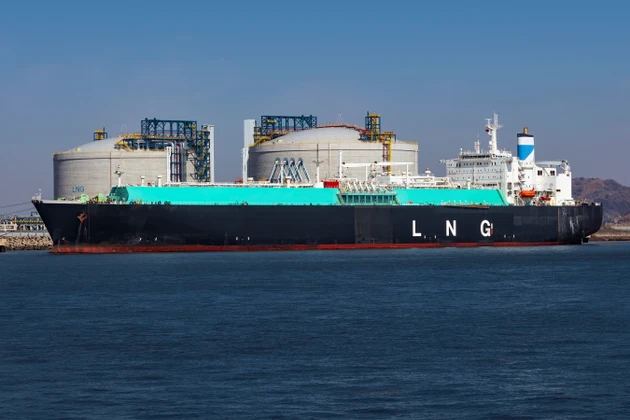
Qatar, already one of the world’s largest LNG exporters, is moving ahead with the North Field expansion, a landmark project that is set to more than double production. Although Iranian attacks in March damaged some facilities and delayed the project, the expansion remains on track.
“Hydrocarbon financing continues to be a key strategic priority for the bank, underscoring its central importance to Qatar’s economy,” said Sheikh Abdulrahman bin Fahad bin Faisal Al Thani, group CEO of Doha Bank. “Temporary capacity constraints and shipping challenges, including concerns about key transit routes, have affected revenues in the near term, yet the overall situation remains manageable.”
Qatar’s long-term LNG contracts continue to provide revenue stability and predictability, he adds. The North Field expansion reinforces Qatar’s position as a global LNG leader, making LNG “a major driver of medium- to long-term economic growth.”
The picture is similar in Kuwait, where hydrocarbons account for 90% of government revenue. The country is investing in offshore exploration and overseas assets as part of a strategy to increase national production by a third over the next decade.
Oman has also announced plans to increase oil production to 1.2 million barrels per day by 2028, up from about 1 million barrels per day currently. However, additional oil and gas is valuable only if it can reach buyers.
In April, the UAE surprised many observers by leaving the Organization of Petroleum Exporting Countries (OPEC). For Abu Dhabi, quotas increasingly conflicted with expansion plans. Over the past several years, the federation spent about $150 billion to increase capacity to 5 million barrels a day, yet OPEC restrictions keep output closer to 3.5 million.
To strengthen their position in global energy markets, GCC producers are not only pumping more oil but also expanding their geographic footprint.
“We’ll see increased investments in new fields as well as in storage facilities around the world,” predicts Haytayan.
In May, QatarEnergy signed a memorandum of understanding with ConocoPhillips of the U.S. and TotalEnergies of France to explore offshore reserves in Syria. Gulf oil majors are also pursuing opportunities in Africa and South America.
Diversification Is Still on the Agenda
Despite challenges and delays, GCC countries continue to implement their long-term diversification agendas.
“We believe the current environment is reinforcing, rather than slowing, momentum in diversification investments and ESG integration across the Gulf,” said a spokesperson for National Bank of Kuwait (NBK), which manages a $6 billion sustainability portfolio and targets $10 billion by 2030. “Rather than moving away from conventional energy, the region is pursuing a dual-track model that leverages the strength of its hydrocarbon sector to support long-term investment in renewables, hydrogen, sustainable infrastructure, and lower-carbon technologies.”
GCC governments “will look for efficient diversification,” Haytayan said. The authorities will likely favor projects that generate revenue and a return on investment, rather than megaprojects such as Saudi Arabia’s lavishly funded Neom desert city, she said.
For banks, opportunities for new products and services will arise as the nonhydrocarbon and clean-energy sectors develop. “Energy transition financing remains in its early stages for many institutions in the region,” Al Thani said. “ESG strategies are being developed and refined, but allocations to alternative energy remain modest relative to traditional lending portfolios. Financing activity is expected to expand into renewables, hydrogen, and other low-carbon technologies, with investor appetite gradually increasing as projects mature and risk profiles become better understood. This segment is well-positioned to capture a significantly larger share of lending activity over the coming decade.”
While the final settlement and long-term impact of the Iran war remain to be seen, the GCC can count on strong fundamentals, clear national strategies, and a strong ambition to remain a central player in global energy markets.
“While risk awareness has risen meaningfully, confidence in the region’s long-term role in global energy markets remains intact,” Al Thani said.
Chloe Domat is a contributing writer covering the Middle East and North Africa.
“Today, we issued second quarter results that included sales growth of 4.8%… and adjusted earnings per share of $1.31” (Executive Chairman, President & CEO Robert Ford), adding Abbott is “reaffirming our full year guidance for comparable sales growth of
Seeking Alpha’s Disclaimer:This article was automatically generated by an AI tool based on content available on the Seeking Alpha website, and has not been curated or reviewed by humans. Due to inherent limitations in using AI-based tools, the accuracy, completeness, or timeliness of such articles cannot be guaranteed. This article is intended for informational purposes only. Seeking Alpha does not take account of your objectives or your financial situation and does not offer any personalized investment advice. Seeking Alpha is not a licensed securities dealer, broker or US investment adviser or investment bank.
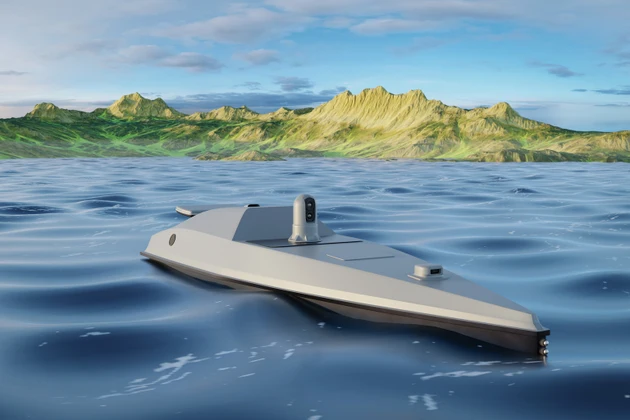
Saronic Technologies, the startup whose naval drones this week were used in combat by the U.S. military for the first time, is building a $3.2 billion shipyard in South Texas.
The facility, called Port Alpha, will manufacture autonomous boats at the Port
TSMC posted a record quarterly profit on Thursday and raised its revenue outlook as booming demand for artificial intelligence chips continued to fuel growth at the world’s largest contract chipmaker.
ADVERTISEMENT
ADVERTISEMENT
Taiwan-based TSMC reported earnings of $4.31 per share for the April-June quarter, beating analysts’ expectations.
Revenue came in at $40.2 billion (€36.8bn), above analysts’ estimates of $39.63 billion (€34.6bn).
In local currency, net profit reached a record NT$706.6bn (€19.1bn), up 77% from a year earlier, while revenue climbed 36% to NT$1.27 trillion (€36.8bn), as appetite for the advanced chips TSMC makes for customers such as Nvidia and Apple showed no sign of cooling.
Given that it manufactures semiconductors for almost every major chip designer, the Hsinchu-based firm’s results are closely read as a gauge of the wider sector and of broader AI demand itself, just as investors fret over a possible bubble.
CEO Che-Chia Wei described global AI-related demand as “extremely robust” and said he expected it to remain very strong until around 2029 or 2030. On that basis, TSMC now forecasts 2026 revenue growth of slightly above 40% year on year, up from its previous guidance of more than 30%.
Thursday’s figures confirmed what monthly sales data had already suggested.
As reported on Monday, June revenue jumped 67.9% year on year, and first-half sales rose 35.6% from the same period in 2025, slightly ahead of analysts’ consensus forecasts for the quarter.
TSMC shares rose about 1% after the earnings release but later pared those gains as a sell-off in AI-related shares weighed on benchmarks across Asia during Thursday’s session.
Expanding US manufacturing
Alongside the results, TSMC said it would spend an additional $100 billion (€87.4bn) to expand its manufacturing capacity in the US, on top of the $165 billion (€144bn) already committed to building six fabrication plants in Arizona.
The move would bring the company’s total US investment pledges to around $265 billion (€231bn).
The fresh funds are expected to fund four further Arizona plants dedicated to the most advanced chips, those of 2 nanometres and below, and are intended to “support the strong multi-year demand” from the company’s leading American customers, CEO Che-Chia Wei said during the firm’s earnings conference.
TSMC also said it would spend more this year than previously planned, increasing its capital expenditure budget to between $60 billion (€52.4bn) and $64 billion (€55.9bn), up from an earlier range of $52 billion (€45.4bn) to $56 billion (€48.9bn).
The announcement follows a trade agreement struck earlier this year between the Trump administration and Taiwan, under which Taiwanese companies committed to invest at least $250 billion (€218bn) in the US technology sector inreturn for lower tariffs.
As the Q2 earnings season gets underway, investors are closely watching consumer staples companies for insights into consumer spending, pricing power and demand for everyday essentials.
Businesses with consistently strong profitability are expected to remain in focus as earnings reports
Tenaris (TS) up 0.9% in Wednesday’s trading as Morgan Stanley upgrades the manufacturer of steel pipe products and related services for the energy industry to Equal Weight from Underweight with a $65 price target, raised from $53, citing improving industry fundamentals
Healthcare equipment maker Intuitive Surgical (ISRG) is due to report second-quarter earnings on July 15, with analysts expecting a quarter of solid growth.
The consensus EPS Estimate for Intuitive Surgical is $2.50, representing a 14.2% Y/Y jump. On the revenue side, ISRG is projected to
Rocket Lab (RKLB) is testing its 200-day moving average following a sharp July pullback, with the setup matching a historically bullish signal, according to Schaeffer’s Investment Research.
In a post on X, Schaeffer’s said the stock has produced positive one-month returns
“The third quarter reflected continued progress across our strategic priorities. Revenue and enrollment were generally consistent with prior year, supported by continued strength in retention and healthy growth in employer-supported
Seeking Alpha’s Disclaimer:This article was automatically generated by an AI tool based on content available on the Seeking Alpha website, and has not been curated or reviewed by humans. Due to inherent limitations in using AI-based tools, the accuracy, completeness, or timeliness of such articles cannot be guaranteed. This article is intended for informational purposes only. Seeking Alpha does not take account of your objectives or your financial situation and does not offer any personalized investment advice. Seeking Alpha is not a licensed securities dealer, broker or US investment adviser or investment bank.
Investors step in to close Africa’s critical $80B infrastructure financing gap.
Gulf investors are rapidly reshaping Africa’s investment landscape, committing billions of dollars to ports, transport corridors, logistics, renewable energy, and critical minerals as governments across the continent seek new sources of long-term development finance.
The shift gathered momentum in June, when sovereign wealth funds (SWFs), commercial banks, development finance institutions, institutional investors, and corporate issuers launched the Africa–Middle East Corridor. Debuted during the Global Banking & Markets Middle East 2026 conference in Dubai, the initiative aims to mobilize capital for infrastructure, deepen Africa’s debt capital markets, and expand cross-border investment between the Gulf and Africa.
The launch comes at a critical moment for the continent. According to the African Development Bank (AfDB), Africa requires approximately $170 billion annually to finance infrastructure, yet current investment totals only $80 billion to $90 billion, leaving an annual financing gap approaching $80 billion.
The Gulf is positioning itself to help close the deficit.
Investors from Gulf Cooperation Council (GCC) countries announced 73 foreign direct investment (FDI) projects worth more than $53 billion across Africa in 2023, reflecting a decisive shift toward fewer but significantly larger investments concentrated in renewable energy, logistics, critical minerals, transport and digital infrastructure.
China Cuts Back
The changing investment landscape also reflects a broader shift in global capital flows.
For nearly two decades, Chinese policy banks financed much of Africa’s modern infrastructure expansion, underwriting railways, highways, ports, airports and power projects across the continent. Yet, according to the Boston University Global Development Policy Center, Chinese policy bank lending fell from a peak of $28.8 billion in 2016 to $2.1 billion in 2024. Annual lending regularly exceeded $10 billion between 2012 and 2018, but Beijing has increasingly pivoted from sovereign-backed megaprojects to smaller, commercially driven investments.
That retreat has created space for Gulf SWFs, export credit agencies, and commercial banks to expand their presence across Africa.
The United Arab Emirates has emerged as Africa’s fourth-largest foreign investor. Between 2019 and 2023, Emirati investments exceeded $110 billion, including an estimated $70 billion directed at renewable energy.
Several flagship transactions illustrate the scale of that commitment. ADQ’s $35 billion Ras El-Hekma development in Egypt ranks among the largest FDI deals ever concluded on the continent. DP World now operates six African ports and logistics facilities, while Abu Dhabi Ports has secured concessions in Egypt, Angola, and the Republic of Congo, strengthening Gulf influence over strategic maritime trade routes linking Africa with Europe, Asia, and the Middle East.
Renewable energy has become a major pillar of Gulf investment in Africa.
Masdar, Abu Dhabi’s state-owned renewable energy company, has committed $10 billion to develop 10 gigawatts (GW) of renewable energy capacity across sub-Saharan Africa by 2030. Infinity Power, a joint venture between Masdar and Egypt’s Infinity, is now Africa’s largest pure-play renewable energy company, operating 1.3GW of generation capacity in Egypt, South Africa, and Senegal, with a further 16GW under development. Saudi Arabia’s ACWA Power, one of the Middle East’s largest private power developers, continues to expand its renewable energy portfolio in Morocco, Egypt, and South Africa, while Gulf investors are increasingly financing green hydrogen, battery storage, and electricity transmission projects across the continent.
Gulf Capital Steps In
Commercial banks, too, are increasing their African presence.
In March, First Abu Dhabi Bank announced plans to establish its first representative office in Lagos, making Nigeria its West African hub. The lender has already participated in financing the $1.13 billion Lagos – Calabar Coastal Highway, signaling growing Gulf interest in African project finance and structured lending.
“Gulf capital is increasingly vital to Africa because of a strategic alignment of economic needs,” says Phumlani Majozi, senior economist and executive director at the African Markets Institute. “As traditional Western and Chinese funding slows, African countries require enormous investment for infrastructure, energy, and digital transformation, while Gulf states are actively diversifying beyond hydrocarbons. The relationship is evolving from aid-based engagement into long-term commercial integration.”
The trend represents a structural shift rather than a temporary investment cycle, Majozi says, driven by long-term economic diversification strategies such as Saudi Vision 2030 and the UAE’s ambition to become a global investment and logistics hub.
Private-sector advisers see the relationship as rooted in geography and commercial history.
“The Middle East is Africa’s closest neighbor. Trade between the two regions stretches back thousands of years,” said Jacqueléne Coetzer, founder and CEO of Jacqueléne Global Consulting. “Africa and the Gulf do not need to discover entirely new markets; they need to rediscover one another.”
Gulf investors are targeting critical minerals in the Democratic Republic of Congo and Zambia, agriculture in Ethiopia, renewable energy in Kenya and South Africa, logistics in Egypt and Nigeria, and financial services through Mauritius, Coetzer says.
Africa’s bargaining position is also strengthening.
The African Continental Free Trade Area (AfCFTA) is creating a $3.4 trillion integrated market spanning 54 economies. The continent controls roughly 30% of the world’s critical minerals, including copper, cobalt, lithium, and manganese — resources central to the global energy transition.
Individual countries are strengthening their ties across the regions as well. Kenya’s Comprehensive Economic Partnership Agreement (CEPA) with the UAE, signed in January 2025, was the first such agreement between the UAE and a mainland African country. The accord improves business access to both countries’ markets by expanding investment protection and providing a framework for deeper cooperation in trade, logistics, financial services and digital commerce.
“Africa’s leverage has never been stronger,” Majozi argues. “The continent possesses roughly 30% of the world’s critical minerals, the world’s youngest workforce and the AfCFTA’s $3.4 trillion integrated market. The challenge is converting that structural advantage into negotiating power.”
If the Africa–Middle East Corridor succeeds in converting investment commitments into bankable projects, it could become one of the principal channels through which Gulf capital finances Africa’s next generation of infrastructure, industrialization, and capital-market development.
Charles Wachira is a contributing writer based in Kenya.
The Shell-led (SHEL) LNG Canada venture said Tuesday it reached a deal for five First Nations to have an equity option to invest as much as C$1B (~US$710M) to acquire infrastructure in Canada’s biggest liquefied natural gas project as a major
Earnings Call Insights: Kestra Medical Technologies (KMTS) Q4 fiscal 2026
Management View
“We concluded fiscal 2026 with another strong quarter” and “Revenue was $28.6 million” alongside “over 6,300 prescriptions written for the ASSURE system,” Brian Webster said (Founder, President, CEO & Director Brian Webster).
Seeking Alpha’s Disclaimer:This article was automatically generated by an AI tool based on content available on the Seeking Alpha website, and has not been curated or reviewed by humans. Due to inherent limitations in using AI-based tools, the accuracy, completeness, or timeliness of such articles cannot be guaranteed. This article is intended for informational purposes only. Seeking Alpha does not take account of your objectives or your financial situation and does not offer any personalized investment advice. Seeking Alpha is not a licensed securities dealer, broker or US investment adviser or investment bank.