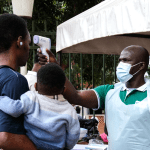

The recent Ebola outbreak in the eastern Democratic Republic of Congo (DRC) has resulted in a rising death toll, reaching 118 fatalities on Monday, May 18, which is a significant jump from the 80 deaths recorded just two days earlier. This outbreak is the 17th recorded Ebola virus epidemic in the DRC and has been described as a matter of international emergency by the World Health Organisation (WHO).
Patrick Muyaya, the DRC government spokesperson, announced that two additional health zones have been identified as impacted by the virus. These include Nyankunde in the Irumu territory of Ituri province. A suspected case has also emerged in Goma, the chief town of North Kivu.
The outbreak is now affecting multiple geographic areas, including Mongwalu, Rwampara, Bunia, Nyankunde in Ituri, as well as Butembo-Katwa and Goma in North Kivu.
Butembo, a commercial town in North Kivu, was severely impacted during the Ebola Zaire strain outbreak from 2018 to 2020. Goma, which has been under the control of the M23 rebels since early 2025, serves as a significant regional transit hub on the border with Rwanda and Uganda.
The Bundibugyo Ebola strain, noted as the 17th epidemic in the DRC, was declared on May 15. Complete sequencing of the viral genome confirms that it is a genetically distinct variant from previous Bundibugyo outbreaks in 2007 and 2012, originating directly from an animal reserve, according to Jean-Jacques Muyembe, director of the DRC National Institute of Biomedical Research.
On May 17, after the WHO declared the epidemic an international public health emergency, the British organisation Oxfam also estimated that the global number of infections currently stands at 400.
The recent Ebola outbreak in the eastern Democratic Republic of Congo (DRC) has seen a significant rise in fatalities, reaching 118 deaths. It marks the 17th epidemic in the region and has been declared an international emergency by the World Health Organisation.
The outbreak affects several areas, including Nyankunde, Goma, Mongwalu, Rwampara, and Bunia. The outbreak was declared on May 15, involving a genetically distinct Bundibugyo strain.
According to WHO, the global infection count is around 400, indicating a need for coordinated health measures.