outbreak

Fear grips eastern DR Congo amid deadly Ebola outbreak | Ebola

NewsFeed

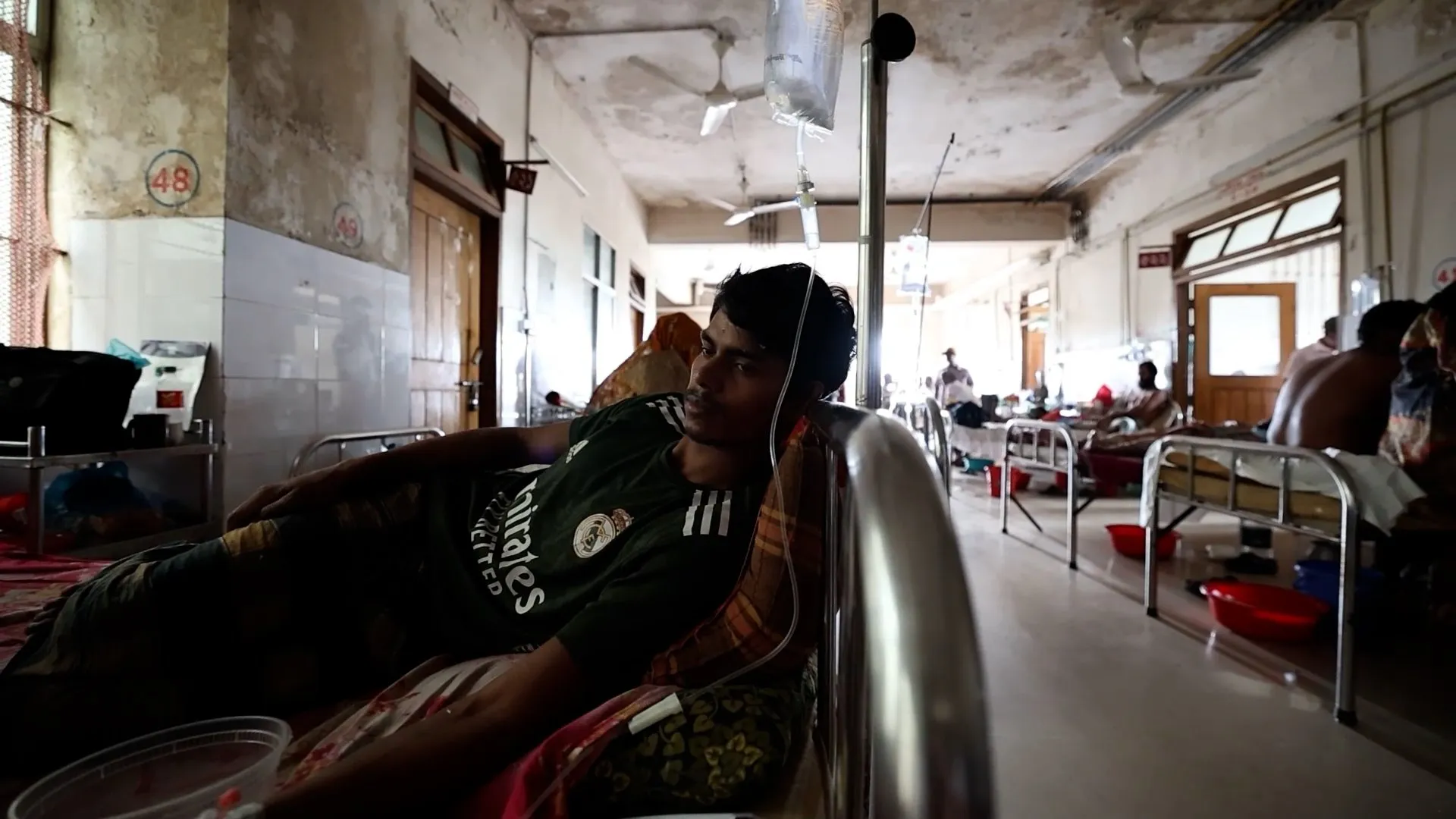
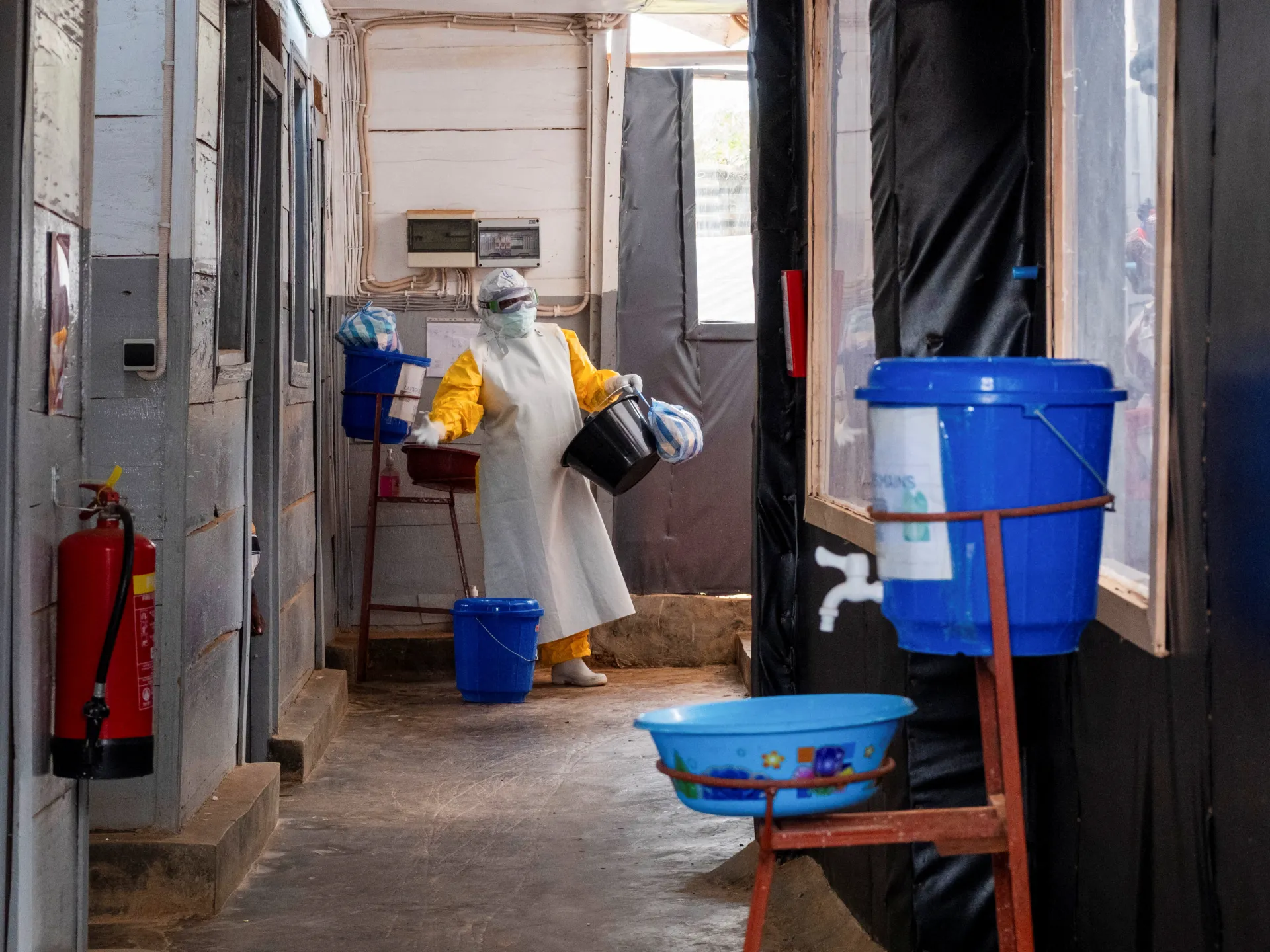
“I am afraid of dying.” From Bukavu to Kinshasa, concern is spreading among residents and street vendors as Ebola cases rise. In cities hundreds of miles apart, people are wearing face masks and calling for stronger protections from the latest outbreak in DR Congo.

Source link

Death Toll Rises to 118 in Fresh Ebola Outbreak in Eastern DRC

The recent Ebola outbreak in the eastern Democratic Republic of Congo (DRC) has resulted in a rising death toll, reaching 118 fatalities on Monday, May 18, which is a significant jump from the 80 deaths recorded just two days earlier. This outbreak is the 17th recorded Ebola virus epidemic in the DRC and has been described as a matter of international emergency by the World Health Organisation (WHO).

Patrick Muyaya, the DRC government spokesperson, announced that two additional health zones have been identified as impacted by the virus. These include Nyankunde in the Irumu territory of Ituri province. A suspected case has also emerged in Goma, the chief town of North Kivu.

The outbreak is now affecting multiple geographic areas, including Mongwalu, Rwampara, Bunia, Nyankunde in Ituri, as well as Butembo-Katwa and Goma in North Kivu. 

Butembo, a commercial town in North Kivu, was severely impacted during the Ebola Zaire strain outbreak from 2018 to 2020. Goma, which has been under the control of the M23 rebels since early 2025, serves as a significant regional transit hub on the border with Rwanda and Uganda.

The Bundibugyo Ebola strain, noted as the 17th epidemic in the DRC, was declared on May 15. Complete sequencing of the viral genome confirms that it is a genetically distinct variant from previous Bundibugyo outbreaks in 2007 and 2012, originating directly from an animal reserve, according to Jean-Jacques Muyembe, director of the DRC National Institute of Biomedical Research.

On May 17, after the WHO declared the epidemic an international public health emergency, the British organisation Oxfam also estimated that the global number of infections currently stands at 400.

The recent Ebola outbreak in the eastern Democratic Republic of Congo (DRC) has seen a significant rise in fatalities, reaching 118 deaths. It marks the 17th epidemic in the region and has been declared an international emergency by the World Health Organisation.

The outbreak affects several areas, including Nyankunde, Goma, Mongwalu, Rwampara, and Bunia. The outbreak was declared on May 15, involving a genetically distinct Bundibugyo strain.

According to WHO, the global infection count is around 400, indicating a need for coordinated health measures.

Source link

CDC restricts people traveling to U.S. from three African nations amid Ebola outbreak

Local officials the Democratic Republic of the Congo on Sunday updated reporters on the Bundibugyo Ebola virus outbreak there, which has caused the WHO to declare it a health emergency of international concern and the United States to enacte travel restrictions. Photo by Marie Jeanne Munyerenkana/EPA

May 18 (UPI) — The U.S. Centers for Disease Control and Prevention on Monday restricted non-U.S. passport holders from entering the United States if they have been in Uganda, the Democratic Republic of the Congo or South Sudan in the past 21 days.

The agency made the announcement as there have at least 346 cases and 88 deaths in the DRC, on top of several cases that have been confirmed in nearby nations in people who been there, the CDC said over the weekend.

The CDC said that is coordinating with various agencies and companies to manage travelers who have been exposed to Ebola as it also deploys employees to support containment of the outbreak in the three nations.

“CDC assess the immediate risk to the general U.S. public as low, but we will continue to evaluate the evolving situation and may adjust public health measures as additional information becomes available,” the agency said in a situation summary.

In the last five days, the World Health Organization confirmed that the Ebola virus circulating in the three countries right now is the Bundibuyo virus, one of four known strains that have affected humans since Ebola was discovered in mid-1970s.

Although there is an approved, licensed vaccine against Ebola which has successfully been used to quell outbreaks, the vaccine — called Ervebo — only protects against acquisition of the Zaire species of Ebola virus, making it useless in the current outbreak, according to the CDC.

WHO on Saturday declared the outbreak a public health emergency of international concern.

In its update, WHO said that there are “significant uncertainties to the true number of infected persons and geographic spread associated with this event at the present time. In addition, there is limited understanding of the epidemiologic links with known or suspected cases.”

Ebola spreads from wild animals to humans and from human to human through direct contact with blood or other bodily fluids from infected individuals, and carries a case fatality rate of roughly 50%.

A number of affected Americans have reportedly been exposed to the virus during the outbreak.

The CDC has recommended that people who have traveled through the two countries in the last 21 days should immediately seek medical attention if they develop Ebola symptoms, which can include fever, weakness, vomiting, diarrhea or unexplained bleeding.

In addition to roughly 30 CDC employees dispatched to the region, and will join officials from several other global and regional health agencies, the WHO is expected to convene an emergency committee to advise the agency’s director-general on its response the outbreak.

Source link

Will the latest Ebola outbreak in DR Congo and Uganda spread further? | Health News

The World Health Organization declares the epidemic a global health emergency.

It’s a global health crisis – not a pandemic.

But the World Health Organization is warning that the Ebola outbreak in the Democratic Republic of the Congo and neighbouring Uganda could be much larger than what has been detected so far.

The global health body is advising countries to activate national disaster mechanisms and introduce cross-border and internal screening.

Presenter: James Bays

Guests:

Ariel Kestens – Head of the Kinshasa delegation, International Federation of Red Cross and Red Crescent Societies

Dr Margaret Harris – Lecturer at the United Nations Institute for Training and Research

Dr Ahmed Ogwell Ouma – Former deputy director-general of the Africa Centres for Disease Control and Prevention

Source link

DRC struggling to contain Ebola outbreak as cases spread | News

NewsFeed

The Democratic Republic of Congo has faced repeated Ebola outbreaks, but insecurity in the eastern part of the country is making this most recent outbreak difficult to control.

Neighbouring countries have already reported some cases, and the World Health Organization has said the outbreak’s real impact is yet to be seen.
The Democratic Republic of Congo has faced repeated Ebola outbreaks, but insecurity in the eastern part of the country is making this most recent outbreak difficult to control.

Neighbouring countries have already reported some cases, and the World Health Organization has said the outbreak’s real impact is yet to be seen.
Al Jazeera’s Hamza Mohamed explains.

Source link

Ebola Outbreak in Congo and Uganda 2026: What We Know So Far About Cases, Spread, and Response

The World Health Organization (WHO) has declared an Ebola outbreak in the Democratic Republic of Congo (DRC) and Uganda as a public health emergency of international concern. This outbreak is caused by the Bundibugyo strain of the virus, which is less understood than the Zaire strain and lacks effective treatments or vaccines. The WHO notes that while this outbreak does not qualify as a pandemic emergency, countries bordering the DRC are at high risk for spread.

Ebola is a severe virus that causes symptoms like fever, body aches, vomiting, and diarrhea, spreading through contact with infected individuals or materials. The DRC has experienced 17 outbreaks of Ebola since it was first discovered in 1976.

Currently, the outbreak in the DRC is the most severe, with the WHO reporting eight confirmed cases, 80 suspected deaths, and 246 suspected infections. Goma, a town in the DRC, has reported a confirmed case, and Uganda has also identified a second case. The true number of infections and the outbreak’s geographic spread are still uncertain, according to the WHO.

With information from Reuters

Source link

WHO declares Ebola outbreak in DRC a global health emergency | World Health Organization News

An Ebola outbreak caused by the rare Bundibugyo strain has killed dozens in Democratic Republic of the Congo and is spreading into Uganda, raising fears of regional transmission. Health officials say instability and shared borders are complicating containment efforts as the World Health Organization declares a global health emergency.

Source link

Democratic Republic of Congo declares Ebola outbreak; 65 people killed

A handout photo made available by the World Health Organization shows temperature screening at Mpondwe border point with the Democratic Republic of Congo, near Bwera, Uganda, in May 2019. The Democratic Republic of Congo declared an Ebola outbreak on Friday as 65 people have died from the disease in the country’s eastern region. File Photo by the World Health Organization/EPA-EFE

May 15 (UPI) — The Democratic Republic of Congo declared an Ebola outbreak on Friday as 65 people have died from the disease in the country’s eastern region.

There have been about 246 cases reported, many of them in the Ituri province’s small mining towns of Mongbwalu and Rwampara. The Africa Centres for Disease Control and Prevention said in a statement Friday that it is meeting with DRC, Ugandan and South Sudanese leaders to prepare a response to the outbreak.

Uganda and South Sudan border the Ituri province.

Africa CDC said that the DRC’s national research laboratory has detected Ebola in 13 of 20 samples it has tested.

There have been 16 prior Ebola outbreaks in the DRC since 1976 when it first identified the virus within its borders. Vaccines are available for the Zaire strain. Africa CDC said that early testing indicates the current strain is not the Zaire strain.

“Africa CDC stands in solidarity with the government and people of the Democratic Republic of the Congo as they respond to this outbreak,” Dr. Jean Kaseya, director general of Africa CDC, said in a statement. “Given the high population movement between affected areas and neighboring countries, rapid regional coordination is essential.”

The mining towns where the outbreak is centered experience a lot of inbound and outbound traffic, raising concerns about the disease spreading further.

Ebola is a severe illness with a high fatality rate in humans, reaching as high as 90% in some cases, the World Health Organization says.

Infection can be spread by direct contact with a person who is infected or object surfaces that are contaminated with bodily fluids from a person who is sick or has died from the disease.

The Ebola virus can incubate between two and 21 days. Symptoms include fever, fatigue, malaise, muscle pain, headache and sore throat, before progressing to vomiting, diarrhea, abdominal pain, rash and symptoms related to impaired kidney and liver functions.

There were 64 cases of Ebola reported in the DRC last year, with 45 deaths, a 70% rate of fatality, the U.S. Centers for Disease Control and Prevention said. That outbreak occurred from September to December in the remote Bulape health zone in the Kasai province, which has a relatively low population density.

Source link

France allows asymptomatic passengers off new cruise ship struck by stomach bug outbreak

Passengers unaffected by an illness outbreak on a British cruise ship have been allowed off the ship in Bordeaux, while authorities confirmed the cause of the outbreak is norovirus, a nasty stomach bug that spreads easily.

French authorities had initially ordered over 1,700 passengers and crew on The Ambition cruise ship to remain on board, but then decided late Wednesday to let those unaffected disembark. One passenger was spotted raising his arms in triumph while leaving the vessel.

It was not immediately clear how many left the ship.

French authorities said there is no link to a deadly hantavirus outbreak on a Dutch vessel that has put European health authorities on alert in recent weeks.

The Ambition was midway through a 14-night cruise from Belfast and Liverpool, with scheduled stops in northern Spain and along France’s Atlantic coast when it was struck by the outbreak. It reached Bordeaux on Tuesday evening, according to the operator, Ambassador Cruise Line. It was not immediately clear if or when it would resume its journey.

Samples analyzed at Bordeaux University Hospital confirmed an outbreak of norovirus. Local authorities said at this stage no serious cases have been reported and that sick passengers were cared for onboard by the ship’s medical team.

The U.S. Centers for Disease Control and Prevention, which tracks outbreaks on voyages that call on U.S. and foreign ports, recorded 23 gastrointestinal outbreaks on cruise ships last year. Most were caused by norovirus, including a new strain.

Ambassador Cruise Line, a British operator catering to passengers over 50, was founded in 2021.

Source link

Cruise ship hit by hantavirus outbreak arrives in Tenerife | Health News

The cruise ship hit by a deadly hantavirus outbreak has arrived near the Port of Granadilla in Tenerife in the Canary Islands.

The Dutch-flagged MV Hondius arrived at the Spanish port early on Sunday, escorted by a Civil Guard vessel, according to data from the maritime tracking service VesselFinder.

Recommended Stories

list of 3 itemsend of list

The ship had left for Tenerife on Wednesday from the coast of Cape Verde after the World Health Organization (WHO) and European Union asked Spain to manage the evacuation of its passengers after the hantavirus outbreak was detected.

The WHO said on Friday that at least eight people on the ship had fallen ill, including three who died – a Dutch couple and a German national. Six of these people are confirmed to have contracted the virus with another two suspected cases, the WHO said.

All passengers on the luxury cruise ship are being considered high-risk contacts as a precautionary measure, Europe’s public health agency said late on Saturday as part of its rapid scientific advice.

In Tenerife, the passengers will be tested by Spanish health authorities to ensure they remain asymptomatic and will then be transported to land in small boats, according to Spanish officials.

Sealed-off buses will take the passengers to the Spanish island’s main airport about 10 minutes away, where they will board planes heading to their respective countries.

The evacuation is expected to begin between 7:30am and 8:30am (06:30 and 07:00 GMT), according to Spanish authorities.

Spanish nationals are set to disembark first with other nationalities to follow in groups, government officials said. Thirty crew members will remain on board and will sail to the Netherlands, where the ship will be disinfected.

‘This is not another Covid’

Hantavirus is usually spread by rodents but can in rare cases be transmitted person to person.

WHO Director General Tedros Adhanom Ghebreyesus arrived on Saturday evening in Tenerife with Spain’s interior and health ministers and its minister for territorial policy to coordinate the arrival of the ship.

He gave people in Tenerife assurances and thanked them for their solidarity.

“I need you to hear me clearly,” Tedros wrote in an open letter to the people of Tenerife on Saturday: “This is not another Covid.”

WHO’s epidemic and pandemic preparedness and prevention director, Maria Van Kerkhove, said that while everybody on board will be classified as “a high-risk contact”, the risk to the general public and the people of the Canaries remained low.

In the city of Granadilla de Abona early on Sunday, life appeared largely normal. Some people were swimming, others shopping at the market or sitting at cafe terraces.

“There are worries there could be a danger, but honestly, I don’t see people being very concerned,” David Parada, a lottery vendor, told the AFP news agency.

Tracking and tracing around the world

The MV Hondius left Ushuaia, Argentina, on April 1 for a cruise across the Atlantic Ocean to Cape Verde.

Argentinian provincial health official Juan Petrina said there was an “almost zero chance” the Dutch man linked to the outbreak contracted the disease in Ushuaia based on the virus’s incubation period, among other factors.

Health authorities in several countries have been tracking passengers who had already disembarked and anyone who may have come into contact with them.

A flight attendant on the Dutch airline KLM, who came into contact with an infected passenger from the cruise ship and later showed mild symptoms, tested negative for the hantavirus, the WHO said on Friday.

The passenger, the wife of the first person to die in the outbreak, had briefly been on a plane bound from Johannesburg to the Netherlands on April 25 but was removed before takeoff. She died the following day in a Johannesburg hospital.

Spanish authorities said a woman on that flight was also being tested for the hantavirus after having developed symptoms at home in eastern Spain. She is in isolation in hospital, Secretary of State for Health Javier Padilla said.

Two Singapore residents who had been on the ship tested negative for the disease but will remain in quarantine, the city-state’s authorities said on Friday.

British health authorities also said on Friday that there was a suspected case on Tristan da Cunha in the South Atlantic, one of the world’s most isolated settlements with about 220 residents. The MV Hondius had stopped there on April15.

Source link

Should we be worried about the hantavirus outbreak? | Health News

The incident has drawn comparisons to the COVID-19 pandemic.

The World Health Organization says the hantavirus poses a low risk to public health.

Arrangements are underway to repatriate passengers from a cruise ship after three people on board died.

So, how are officials applying the lessons learned during the COVID-19 pandemic to respond to the hantavirus?

Presenter: James Bays

Guests:

Dr Mukesh Kapila – Professor Emeritus of Global Health and Humanitarian Affairs at the University of Manchester

Dr Margaret Harris – Lecturer at the United Nations Institute for Training and Research, former W.H.O. spokeswoman

Nicholas Locker – Professor of Virology at the Pirbright Institute, near Guildford, UK

Source link

As hantavirus outbreak unfolds on ship, CDC is absent

No quick dispatching of disease investigators. No televised news conference to inform the public. No timely health alerts to doctors.

In the midst of a hantavirus outbreak that involves Americans and is making headlines around the world, the U.S. government’s top public health agency, the Centers for Disease Control and Prevention, has been uncharacteristically missing in action, according to a number of experts.

To President Trump, “we seem to have things under very good control,” as he told reporters Friday evening.

To experts, the situation aboard a cruise ship has not spiraled because, unlike COVID-19 or measles or the flu, hantavirus does not spread easily. It has been health experts in other countries, not the United States, who have been dealing primarily with the outbreak in the last week.

“The CDC is not even a player,” said Lawrence Gostin, an international public health expert at Georgetown University. “I’ve never seen that before.”

Not until late Friday did CDC actions accelerate.

Health officials confirmed the deployment of a team to Spain’s Canary Islands, where the ship was expected to arrive early Sunday local time, to meet the Americans onboard. They said a second team will go to Offutt Air Force Base in Nebraska as part of a plan to evacuate U.S. passengers from the ship to a University of Nebraska quarantine center for evaluation and monitoring. Also, the CDC issued its first health alert to U.S. doctors, advising them of the possibility of imported cases.

At their first briefing, held Saturday by telephone only for invited reporters, officials pledged to be transparent in updating the public but said the media could not cite the speakers by name under rules set by aides to Health Secretary Robert F. Kennedy Jr. They did not directly answer a question about whether the U.S. passengers could leave the university medical facility when they wanted.

The CDC’s diminished role in this outbreak is an indicator the agency is no longer the force in international health or the protector of domestic health that it once was, some experts said.

The hantavirus outbreak is “a sentinel event” that speaks to “how well the country is prepared for a disease threat. And right now, I’m very sorry to say that we are not prepared,” said Dr. Jeanne Marrazzo, chief executive officer of the Infectious Diseases Society of America.

How the outbreak unfolded

Early last month, a 70-year-old Dutch man developed a feverish illness on a cruise ship traveling from Argentina to Antarctica and some islands in the South Atlantic. He died less than a week later. More people became sick, including the man’s wife and a German woman who both died.

Hantavirus was first identified as a cause of sickness of one of the cases on May 2. The World Health Organization swung into action and by Monday was calling it an outbreak. About two dozen Americans were on the ship, including about seven who disembarked last month and 17 who remained on board.

It’s WHO taking center stage

For decades, the CDC partnered with the WHO in such situations. The CDC acted as a mainstay of any international investigation, providing staff and expertise to help unravel any outbreak mystery, develop ways to control it and communicate to the public what they should know and how they should worry.

Such actions were a large reason why the CDC developed a reputation as the world’s premier public health agency.

But this time, the WHO has been center stage. It made the risk assessment that has told people the outbreak is not a pandemic threat.

“I don’t think this is a giant threat to the United States,” said Jennifer Nuzzo, director of Brown University’s Pandemic Center. But how this situation has played out “just shows how empty and vapid the CDC is right now,” she said.

Tumult under Trump

The current situation comes after 16 tumultuous months during which the Trump administration withdrew from the WHO, has restricted CDC scientists from talking to international counterparts at times and embarked on a plan to build its own international public health network through one-on-one agreements with individual countries.

The administration has laid off thousands of CDC scientists and public health professionals, including members of the agency’s ship sanitation program.

As this was playing out, Kennedy said he was working to “restore the CDC’s focus on infectious disease, invest in innovation, and rebuild trust through integrity and transparency.”

Waiting to hear from the CDC

The CDC has not been completely silent on hantavirus.

The agency on Wednesday issued a short statement that said the risk to the American public is “extremely low,” and described the U.S. government as “the world’s leader in global health security.”

Said Nuzzo: “Not only was that not helpful, it actually does damage because a core principle of public health communications is humility.”

The CDC’s acting director, Dr. Jay Bhattacharya, posted a message on social media that the agency was lending its expertise in coordinating with other federal agencies and international authorities. Arizona officials this week said they learned from the CDC that one of the Americans who left the ship — a person with no symptoms and not considered contagious — had already returned to the state. WHO officials said the CDC has been sharing technical information.

The CDC also is “monitoring the health status and preparing medical support for all of the American passengers on the cruise,” Bhattacharya wrote.

But federal health officials have mostly been tight-lipped, declining interview requests.

COVID-19 comparison

In interviews this week, some experts made a comparison with a 2020 incident involving the Diamond Princess, a cruise ship docked in Japan that became the setting of one of the first large COVID-19 outbreaks outside China.

The CDC sent personnel to the port, helped evacuate American passengers, ran quarantines, shared genetic data on the virus, coordinated with the WHO and Japan, held public briefings and rapidly published reports “that became the world’s reference data on cruise ship COVID transmission,” said Dr. Tom Frieden, a former CDC director.

Some aspects of the international response to the Diamond Princess were criticized, and it did not halt the outbreak or stop COVID-19’s spread across the world. But some experts say it was not for the CDC’s lack of trying.

“The CDC was right on top of it, very visible, very active in trying to manage and contain it,” Gostin said, while the agency’s work now is delayed and subdued.

Instead of working with nearly all of the world’s nations through the WHO, the Trump administration has pursued bilateral health agreements with individual nations for information sharing, public health support, and what it describes as “the introduction of innovative American technologies.” Roughly 30 agreements are currently in place.

That’s not sufficient, Gostin said. “You can’t possibly cover a global health crisis by doing one-on-one deals with countries here and there,” he said.

Stobbe writes for the Associated Press. AP writers Ali Swenson in New York, Darlene Superville in Washington and Susan Montoya Bryan in Albuquerque contributed to this report.

Source link

Hantavirus Tenerife travel update issued by World Health Organisation after cruise ship outbreak

The island is a popular holiday destination for Brits

The World Health Organisation (WHO) has moved to reassure concerned residents in Tenerife that they will not come into contact with passengers from a hantavirus-affected cruise ship due to arrive on the island. Nearly 1million people call the island home, which also serves as a major holiday destination for British tourists and visitors from across Europe.

The UN health body confirmed there had been six cases of hantavirus linked to the MV Hondius vessel, with four patients currently receiving hospital treatment. It revealed that a total of eight cases, including three fatalities, had been recorded — though one suspected case has since been ruled out after returning a negative hantavirus test.

Around 22 British passengers and crew members aboard the ship are due to arrive in Tenerife on Sunday, with plans to fly them back to the UK on the same day. Representatives from the UK Health Security Agency (UKHSA) and the Foreign Office will meet the MV Hondius when it arrives in Spain’s Canary Islands, with British nationals on board undergoing hantavirus testing before disembarking.

Those who test negative and show no symptoms will be transported directly to a specially arranged repatriation flight with medical staff on board. British citizens returning home will be required to self-isolate for 45 days and will be prohibited from using public transport to reach their residences. The WHO confirmed on Saturday that no symptomatic passengers were currently aboard the vessel. In a letter to the residents of Tenerife, WHO director-general Dr Tedros Adhanom Ghebreyesus acknowledged locals were “worried”.

READ MORE: Parents using baby product told to ‘stop immediately’ after urgent recallREAD MORE: Ryanair passengers with flights booked to Portugal issued EES update

The Ethiopian public health official described the virus as “serious” but stressed the outbreak was “not another Covid” and the “current public health risk from hantavirus remains low”.

He explained: “Spain’s authorities have prepared a careful, step-by-step plan: passengers will be ferried ashore at the industrial port of Granadilla, far from residential areas, in sealed, guarded vehicles, through a completely cordoned-off corridor, and repatriated directly to their home countries.

“You will not encounter them. Your families will not encounter them. Nearly 150 people from 23 countries have been at sea for weeks, some of them grieving, all of them frightened, all of them longing for home. Tenerife has been chosen because it has the medical capacity, the infrastructure, and the humanity to help them reach safety.”

Two British men are currently being treated for hantavirus in the Netherlands and Johannesburg, South Africa, while a third British man with symptoms is being cared for on the isolated South Atlantic island of Tristan da Cunha. The Foreign Office confirmed that a total of 30 passengers and crew aboard the MV Hondius are British nationals, with 22 still remaining on the vessel. The outbreak has been linked to a birdwatching trip in Argentina, which two of the passengers attended prior to embarking on the ship.

Source link

Three dead in suspected hantavirus outbreak on Atlantic cruise ship | Health News

Three of six passengers who fell ill from suspected rodent-transmitted virus have died, and one is in intensive care, the WHO says.

Three people have died on a cruise ship in the Atlantic, with at least one confirmed to have suffered from hantavirus, a rare disease transmitted to humans from rodents.

Health authorities are now investigating a suspected outbreak of the virus on the MV Hondius, which is sailing from Ushuaia in Argentina to Cape Verde.

Recommended Stories

list of 3 itemsend of list

In a statement on Sunday, the World Health Organization said that one case had been confirmed and at least five other passengers were suspected of being infected.

“Of the six affected individuals, three have died, and one is currently in intensive care in South Africa,” WHO said in a statement.

“Detailed investigations are ongoing, including further laboratory testing and epidemiological investigations. Medical care and support are being provided to passengers and crew. Sequencing of the virus is also ongoing.”

WHO added that it was “facilitating coordination” between countries to evacuate the two other passengers showing symptoms of the infection.

Hantavirus, a rare disease transmitted to humans through the droppings or urine of infected rodents, can be fatal in severe cases and cause hemorrhagic fever.

Infected couple among casualties

South Africa’s National Department of Health said earlier on Sunday that there had been an outbreak of a “severe acute respiratory illness”, which had killed at least two people, and that a third person was in intensive care in Johannesburg, according to the AFP news agency.

The ministry’s spokesperson, Foster Mohale, confirmed that the patient being treated in Johannesburg tested positive for hantavirus.

A 70-year-old was the first to develop symptoms. He died on the ship, with his body now being held on the island of Saint Helena, a British territory in the South Atlantic, the spokesman said.

The patient’s 69-year-old wife also fell sick and was evacuated to South Africa, where she died in a Johannesburg hospital, he added.

Mohale told AFP that authorities have not confirmed the nationalities of the deceased. But the person in intensive care was reported by AFP to be a 69-year-old Briton.

Source link