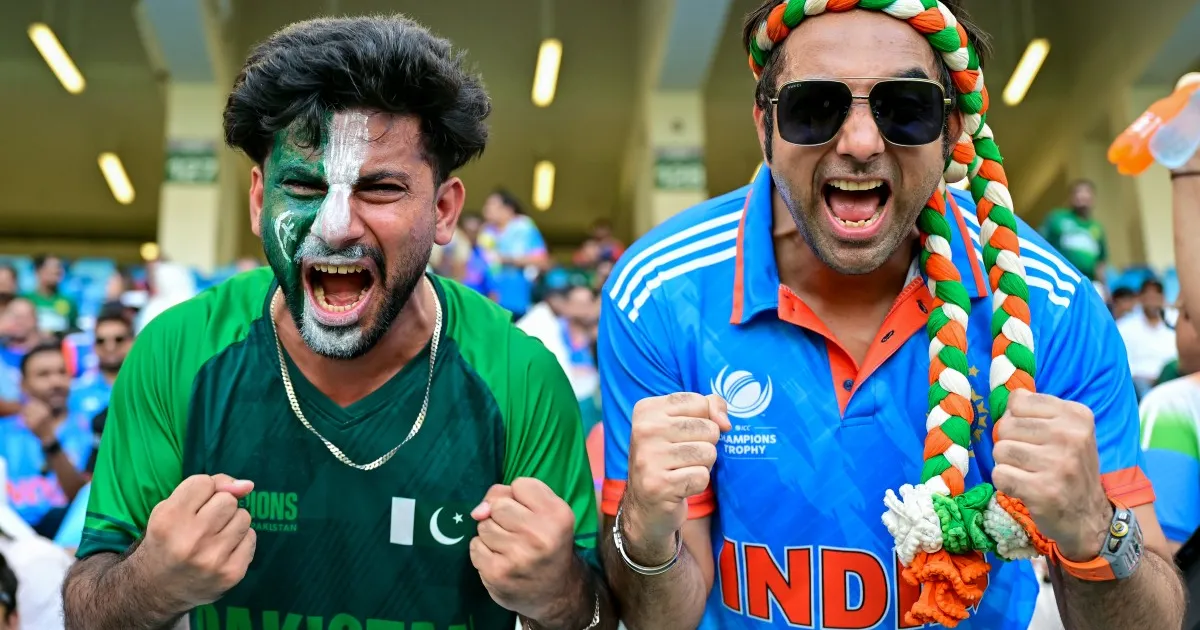
Pakistan’s decision to reverse its boycott of the match against India at the T20 World Cup has been welcomed by fans, players and coaches in both countries.
The highly anticipated confrontation between the archrivals was thrown into doubt for more than a week after Pakistan’s government ordered its team against taking the field for Sunday’s clash in Colombo, Sri Lanka.
Recommended Stories
list of 4 itemsend of list
The reversal late on Monday brought relief to millions of fans on both sides of the countries’ shared border as well as tournament organisers and coaches.
The Indian camp said it would be “delighted” to play against a “quality side”.
“It’s great that the game is back on. We kind of never changed the preparation,” India’s assistant coach Ryan ten Doeschate said on Tuesday.
India will play their second Group A match against Namibia on Thursday in New Delhi before flying to Colombo the following morning.
It means a quick turnaround for Sunday’s match, the biggest and most lucrative clash in world cricket.
“It’s going to be a challenge going to Colombo, where Pakistan have been for the last two weeks,” ten Doeschate added.
“We are fully focused on just bringing our best game to that fixture.”
‘Good for cricket’
Pakistan’s decision to go ahead with the game was hailed as an outbreak of “good sense” and “good for cricket”.
A frantic weekend of negotiations saw the International Cricket Council (ICC) and Bangladesh Cricket Board chiefs fly to Lahore on Sunday for talks with the Pakistan Cricket Board.
The governments of Bangladesh and Sri Lanka both wrote to the Islamabad government on Monday, urging it to change its stance and allow the game to go ahead.
After “multilateral discussions, as well as the request of friendly countries, the Government of Pakistan hereby directs the Pakistan National Cricket Team to take the field on February 15”, the Islamabad government said on its official X account late on Monday.
The decision had been taken with the aim of “protecting the spirit of cricket”, it added.
Former India cricketer Madan Lal told the AFP news agency that the resumption was “good for cricket”.
“We want strong teams to play so that the charm of the World Cup is not lost,” he added.
Sri Lanka, who will host the match – which generates multimillions of dollars in advertising, broadcast rights, sponsorships and tourism – also praised the decision.
Sri Lankan President Anura Kumara Dissanayake in a social media post thanked Pakistani Prime Minister Shehbaz Sharif for “ensuring the game we all love goes on”.
Veteran Indian journalist Pradeep Magazine said, “Good sense has prevailed on all sides.”
Financial considerations would have been taken into account, he added.
“Everyone realised that losing the revenue from an India-Pakistan match would have been a loss-loss situation for all ICC member nations.”
‘No greater happiness’
For fans, it’s another chance to watch the bitter rivals face off at a global tournament.
Kafeel Ahmed, a cricket fan from Karachi, said Pakistan vs India matches were unique.
“There is a different intensity to it. If Pakistan wins by 12 runs, there is no greater happiness than that,” Ahmed told the Reuters news agency. “This happiness is not just about a challenge against a rival; it is the feeling that comes after defeating your opponent.”
India and Pakistan have not played a bilateral series since 2012-2013 due to their longstanding political rift.
“The benefit is not only that the public is happy or that young people who play cricket are happy; it also increases business and public interest,” cricket fan Rai Fayaz said.
Rajeev Shukla, vice president of the Board of Control for Cricket in India, said on Tuesday that it was good that a solution had been found.
“All kudos to the ICC for taking this initiative, resolving the whole issue and bringing cricket back to the forefront. This is a big achievement as far as the ICC is concerned,” he said.