This season’s Oscar nominees for film editing have one thing in common: coping with trauma. The Envelope invited editors from each film to break down a pivotal scene that showcased their craft.
‘F1’

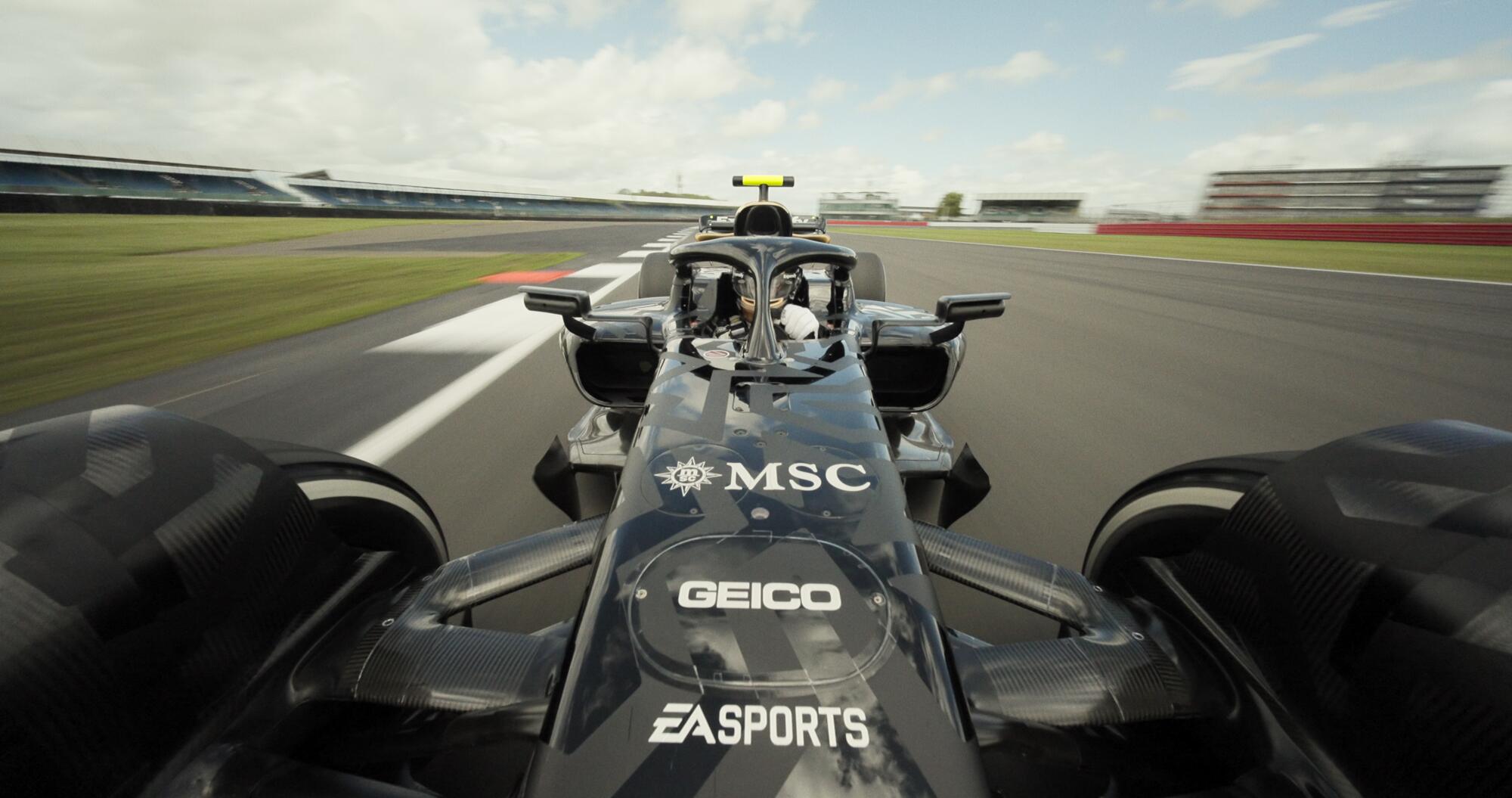
“F1” builds momentum for its underdog tale with an intricately constructed racing montage.
(Warner Bros. Pictures)
Editor: Stephen Mirrione
Scene: The montage in which Brad Pitt’s washed-up racer Sonny Hayes begins his winning streak through a momentum-building Grand Prix swing.
“There were more than a dozen structural versions of how we were getting through this story,” said Oscar winner Mirrione (“Traffic”). The three-minute, high-octane montage benefited from 5,000 hours of footage, captured with 20 cameras around the tracks. It was treated like a massive puzzle, with the racing order moved around for maximum impact. The key was seamlessly integrating in-camera footage with broadcast footage from actual races that offered happy accidents such as rain and a crash. “At one point, it was more focused on rookie driver Joshua [Damson Idris],” added Mirrione. “But then we realized that Sonny was more interesting, visually, in terms of his arc about dealing with the trauma of his near-fatal crash. And then once we saw it in context, it was not just about the two of them and their rivalry but also the team coalescing around Sonny.”
‘Marty Supreme’

A dinner in “Marty Supreme,” starring Timothée Chalamet as Marty Mauser, leads to a startling flashback.
(A24)
Editors: Ronald Bronstein, Josh Safdie
Scene: The jarring dinner scene/Holocaust flashback introducing nasty businessman Milton Rockwell (Kevin O’Leary)
In this scene from the 1950s-set psychological drama, we get a glimpse of Marty’s (Timothée Chalamet) motivation for his obsessive pursuit of table tennis: Jewish pride and survival instinct. “The adversarial impulse of the Rockwell dinner scene involves several characters, each with a distinct subjective agenda,” said Bronstein. “The act of cutting the scene [with close-ups and extreme close-ups] became inseparable from its sensations and emotions.” Yet Bronstein pushed it to extremes with the bizarre Auschwitz flashback involving Marty’s dinner guest, Béla (Géza Röhrig). Thanks to his table tennis prowess, Béla disarms bombs for the Nazis in the woods. But when he discovers a beehive, he shares the honey with his fellow prisoners by smearing it over his body. “That’s like a carrot on a rope that’s hanging in front of me at all times, and when I get to the end of that exchange, I’m allowed to break free and go into an entirely new set of tools, which are much more expressive,” added Bronstein.
‘One Battle After Another’

Leonardo DiCaprio as Bob Ferguson, nearing the conclusion of “One Battle After Another’s” climactic car chase.
(Warner Bros. Pictures)
Editor: Andy Jurgensen
Scene: The climactic roller-coaster car chase
Jurgensen assembled the best VistaVision car chase in history for Paul Thomas Anderson‘s turbulent father-daughter actioner. That’s where teenage Willa (Chase Infiniti) becomes the hero by outsmarting and killing the hired muscle (John Hoogenakker), who chases her up and down the rolling hills followed closely by Willa’s flummoxed ex-revolutionary dad, Bob (Leonardo DiCaprio). Shot at shaky high speeds, the scene actually took shape as a result of the unique San Diego location called the Texas Dip, which looks epic in the 8 perf/35mm horizontal format. The Hitchcockian cross-cutting among the three cars, favoring Willa’s POV, was achieved with close-ups from rearview and side mirrors. The layering of the propulsive soundscape and Jonny Greenwood’s percussive score completed the adrenaline rush. But the tender father-daughter reunion at the end required reshooting. “The moment Bob pulled up to the crash site, when we first did the scene, he ran over to her right away, and they embraced,” Jurgensen recalled. “When we watched the dailies, it just didn’t feel authentic. So we reshot it with more meat: Willa second-guessing everybody and Bob having to earn her trust by proving his identity with the secret code.”
‘Sentimental Value’

Renate Reinsve’s Nora plays a part in her father’s new film in “Sentimental Value.”
(Kaspar Tuxen Andersen)
Editor: Olivier Bugge Coutté
Scene: Actor Nora Borg’s (Renate Reinsve) early stage fright breakdown
Joachim Trier’s family drama finds Nora confronting the Borgs’ generational trauma when she reunites with her estranged director father, Gustav (Stellan Skarsgård). After an opening montage on the layered history of their Oslo home, which Nora once wrote about in a school essay, our introduction to the adult Nora is conveyed by the chaos and humor of her panic attack before a performance. But finding this arresting sequence first required trimming a very long setup of patrons entering the theater and sitting down, and the camera discovering Nora, frozen in fear, in the back of the dark stage. “It was so boring,” Coutté insisted. “But here we’re starting right on Nora’s face. Where are we? Has she become an actress? And then you slowly understand. There are no rules; just rhythm.”
‘Sinners’

Jayme Lawson performs “Pale, Pale Moon” in a pivotal scene from “Sinners.”
(Warner Bros. Pictures)
Editor: Michael P. Shawver
Scene: Pearline’s (Jayme Lawson) violence-inducing “Pale, Pale Moon” performance
In Ryan Coogler’s Imax spectacle, where the blues collides with vampires, the monstrous transformation commences with Pearline’s siren call: “Pale, Pale Moon.” This was Shawver’s boldest sequence, cross-cutting her mesmerizing performance with the rhythmic crowd stomping, the brutal beating of a card cheater and newbie vampire Mary (Hailee Steinfeld) seducing and murdering Stack (Michael B. Jordan). “When this was first cut together, it was about three or four times as long as the actual song that had been recorded and performed,” explained Shawver. “And so Ryan watched it and he liked what he saw, but he wanted to cut it to the length of the song. That first moment I wondered if I was the right editor, but that fear and anxiety gives you a bit of freedom to find those spiritual connections that built to this climax at the end. It was really just about Ryan’s ability to engage audiences on a personal level and unlock those things and find the ways that they can go together.”