Month: October 2026

Brit ‘won’t go back to Egypt’ after being left ‘vulnerable’ in aggressive taxi scam

Scott, from Cheshire, had visited Hurghada in Egypt twice before, but a taxi ride back from a nightclub on his last trip has put him off returning to the Red Sea destination for good

A Brit has vowed never to return to an Egyptian holiday hotspot after he was scammed.

Scott, from Cheshire, had visited Hurghada in Egypt twice before, but a taxi ride back from a nightclub on his last trip has put him off returning for good. Despite being warned by holiday reps to agree to a total fare before getting in, Scott and his friends ended up paying well over the odds by the end of the ride.

“The worst part is how it’s stuck with me. I’d been to Hurghada twice before and enjoyed it, but that one journey ruined the whole holiday. You forget all the good bits, and that’s the part that stays with you. It’s put me off going back for good,” Scott told the Mirror.

The incident unfolded after an evening out in the beach resort city, which sits on Egypt’s Red Sea coast.

“It was the strangest taxi journey I’ve ever experienced. We’d been told to always agree on a total price before getting in, so that’s what we did. But partway back, the driver pulled over and went off to get himself some food,” Scott explained.

When they got back to the hotel, the taxi driver announced a different, much higher price than they’d expected.

“When we finally got back to the hotel, he suddenly wanted us to pay per person. It felt like, these are tourists, we’re going to rinse them,” Scott said. The situation quickly escalated when the driver mentioned that they would call the police. Unable to speak the local language and unsure whose side the police would take, Scott focused on keeping things calm, and the group ended up paying more than they had agreed just to bring it to an end. “My friend was getting really anxious, and all I could think was, if the police turn up, who are they going to believe?” he explained .

“Honestly, it left me feeling really uneasy and quite vulnerable. We’d done everything we were told to do and agreed a total price before getting in, so when the driver suddenly demanded we pay per person, it felt like we were being taken advantage of just because we were tourists. Once he started talking about calling the police, that unease turned into real anxiety. My friend was getting really worked up, I couldn’t speak the language, and all I could think was, if the police turn up, who are they going to believe? In the end I just wanted it over, so we paid more than we’d agreed to keep things calm.

“It ruined the whole holiday. You forget all the good bits, and that’s the part that stays with you. Now I’d use Uber or a local app wherever I can, because you know the price before you get in. Having one guide or site that shows you which apps work in each destination and what an average fare looks like would give people that confidence before they even arrive.”

It’s experiences like Scott’s that led Confused.com to create its interactive global taxi guide. Travellers can search any destination to see which apps to use, what a typical fare looks like and the local tips worth knowing before they set off.

Do you have travel story to share? Email webtravel@reachplc.com

Source link

Major airport warning as THREE train lines face disruption this weekend

ANYONE planning to get to London Heathrow this weekend should check travel options before heading to the airport.

Major engineering works will see one tube line partly close and two other services to the terminals will be scaled back.

Anyone heading to Heathrow on the train or tube could run into problems this weekend Credit: Getty
On both days there will be no service to London Heathrow on the Piccadilly Line Credit: Getty – Contributor

On both Saturday and Sunday, the Piccadilly Line will have no service between Hammersmith and London Heathrow terminals.

There will also be no Night Tube service on October 16 – normal service is expected to resume on October 19.

Travel to or from Heathrow Airport on the Elizabeth Line will also experience issues.

Services on Saturday will run as usual, but on Sunday, there will be a reduced service between Paddington and Heathrow Terminal 4.

BAG IT

Cheap summer 2027 holidays you should book NOW for under £60pp – before prices go up


STAY CHEAP

Bargains at Butlins & manor stays… incredible value UK hols from £2.50pp a night

The disruption means that only two trains will serve the terminal an hour.

Meanwhile, there will be four trains an hour on the Elizabeth Line between Heathrow Terminals 2 and 3.

The Heathrow Express will run as normal on Saturday, but will see disruption on Sunday due to the ongoing engineering works.

Between 9.40am and 10.40pm on Sunday, trains will have a reduced timetable between London Paddington and Heathrow Terminal 5.

These trains will run every 30 minutes.

The bus timetable will run as normal with some accepting pre-paid rail tickets due to the closures.

The Elizabeth Line is reducing its timetable to the terminal on Sunday Credit: Getty


Source link

Trump rules out using a nuclear bomb on Iran: Why that matters | US-Israel war on Iran News

United States President Donald Trump has for the first time explicitly ruled out the use of a nuclear weapon against Iran, but has not denied US media reports that his administration is considering deploying the US’s most lethal non-nuclear munition, nicknamed the “mother of all bombs” in the near future.

In an interview published on Thursday by right-wing American news site Newsmax, Trump suggested he does not plan to use nuclear weapons, but also clarified that the devastating aerial weapon, the GBU-43/B Massive Ordnance Air Blast Bomb (MOAB – ‘mother of all bombs ) “is not nuclear”.

Recommended Stories

list of 4 itemsend of list

“I wouldn’t use nuclear. We don’t have to. We’re the greatest nuclear power in the world,” he told Newsmax.

The comments marked Trump’s first definitive statement on the nuclear topic following speculation about a possible atomic conflict earlier in the US and Israel’s war on Iran. They also appeared to confirm speculation that another phase of the war is imminent, likely after the US midterm elections on November 3.

Here’s what we know:

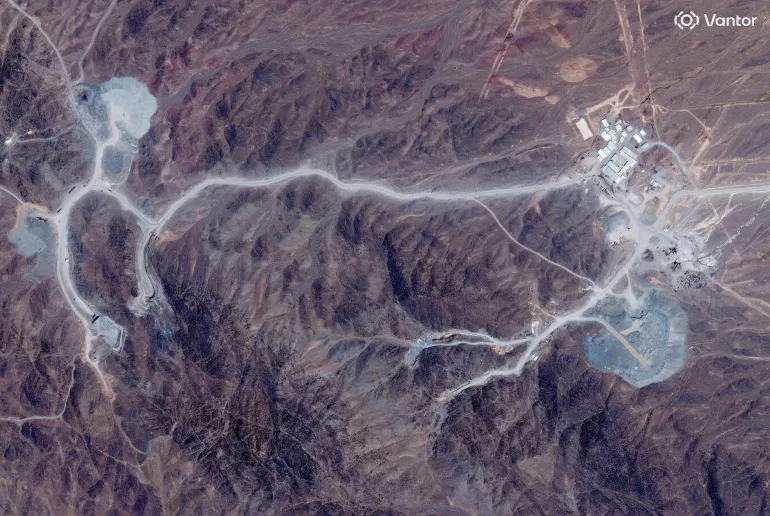
A satellite view of tunnel entrances on Pickaxe Mountain at the Natanz nuclear facility in Iran, June 30, 2026
A satellite view of tunnel entrances on Pickaxe Mountain at the Natanz nuclear facility in Iran, June 30, 2026 [Vantor/via Reuters]

What did Trump say?

Trump told Newsmax that the US might indeed launch another strike on Iran’s nuclear sites, particularly on Pickaxe Mountain, where Tehran is believed to be hiding a nuclear facility deep under layers of granite.

He ruled out using a nuclear weapon or a tactical nuclear weapon.

“I wouldn’t use nuclear. We don’t have to. We’re the greatest nuclear power in the world,” he said.

He also clarified that the MOAB, which CNN reported the US government is considering using, “is not nuclear”.

Responding to a question about whether the MOAB is “tactical nuclear” – meaning smaller nuclear munitions – Trump reiterated that it is not.

“Well, the mother of all bombs is not nuclear,” Trump said. “It’s not nuclear at all. This is just an extremely large bomb.”

Trump declined to say whether he had authorised its use in Iran.

Trump also suggested renewed attacks are likely in the near future. The US cannot end the war now because it has to ensure Iran cannot produce a nuclear weapon, he argued, saying he believes that “if they had it, they would use it, in my opinion, instantaneously”.

Trump also reiterated that the war would end “very soon” whether by force or diplomacy and that oil prices would then drop.

When asked if he would put “troops on the ground”, Trump said: “No, I don’t see that, I don’t see it.” Earlier in the war, Trump had made comments regarding sending in troops, a move analysts said would be devastating for US soldiers because of Iran’s mountainous territory.

What is the ‘mother of all bombs’?

The MOAB carries a massive payload of about 8,500kg (18,000 pounds or 8.5 tonnes) of high explosives. It weighs 9,800kg (21,605 pounds or nearly 10 tonnes) – about the same as four cars – and is just over nine metres (about 30 feet) long. Stealth bombers are too small to carry it, so it has to be deployed by larger, Lockheed C-130 Hercules transporters.

It is designed to explode a few metres above the ground, sending out intense fireballs that can blast buildings and other hard-surface structures within a 1km radius, experts have told Al Jazeera. It is so powerful that a mushroom cloud from its blast has been seen 32km (20 miles) away in tests, the US Air Force has said.

“Its large explosive charge can produce devastating blast effects against exposed personnel, equipment and vulnerable structures,” Brussels-based military and weapons analyst Elijah Magnier said. “Its purpose is to generate an exceptionally powerful blast across a surface area.”

However, Magnier said there is doubt about whether using the massive surface explosive would be effective against deeply buried nuclear installations in Iran. He added that the terrain in Iran could be difficult for larger cargo aircraft to access.

What has Trump previously said about nuclear weapons?

Trump has never explicitly mentioned using a nuclear weapon, but he has also never ruled it out.

Speculation regarding whether Washington might use nuclear weapons was rife in the early days of the conflict, largely because of the extreme nature of Trump’s numerous threats against Tehran.

In April, for example, as Iran enforced a blockade on ships in the Strait of Hormuz, Trump posted on his Truth Social site that “…a whole civilisation will die tonight, never to be brought back again”, if Iran did not agree to a peace deal and reopen the strait.

He also threatened to destroy Iran’s infrastructure, saying a bombing campaign “will be Power Plant Day and Bridge Day, all wrapped up in one”, in Iran.

Experts widely interpreted his statements as a threat of nuclear destruction, but one that still failed to force Iran to the table.

Although Trump largely moved away from his sabre-rattling rhetoric in the following weeks, he reiterated at the United Nations General Assembly in New York last month that he could “annihilate” Iran. He also told the assembly that he believed a deal would emerge after the midterms.

What is a ‘tactical’ nuclear weapon?

“Tactical” nuclear weapons (TNW) are smaller nuclear munitions designed for the battlefield as opposed to strategic nuclear munitions designed for mass destruction.

Some perceive TNWs as having a lesser impact than an atomic bomb, but experts warn that their names are misleading and they can nevertheless be devastating. Their explosive yield, between 0.3 and 50 kilotons, can impact areas within a 500-600km radius.

The US dropped a 15-kiloton nuclear bomb on Hiroshima, meaning that weapon would today be considered a TNW. The US, North Korea and Russia have TNWs in their arsenals, although no country has ever used them. TNWs are not subject to any international treaties and are largely unregulated.

What might another US attack on Iran look like?

With Trump failing to rule out dropping the MOAB, analysts speculate that the US might launch another – perhaps final – intensive bombing campaign targeting Iran’s nuclear and defence sites, particularly Pickaxe Mountain.

The US could also continue its naval blockade on Iranian ports, while providing escorts for commercial ships through the Strait of Hormuz.

Iran has vowed to respond to escalatory strikes by targeting oil and digital infrastructure in neighbouring Gulf states.

Senior defence officials have also warned that Iran will invade its neighbours if the US launches a ground operation, although Trump appears to have ruled that out.

Earlier in the war, he hinted at the possibility of sending ground forces to retrieve some 400kg of “yellowcake” – highly enriched uranium that Washington and Israel claim Tehran has hidden underground.

Trump’s phone calls in March to Kurdish militia groups fighting Iran provoked speculation that Washington could coordinate with them for an invasion, although that did not happen.

Source link

GMB shares Strictly Come Dancing baby news as host says ‘congratulations’ 

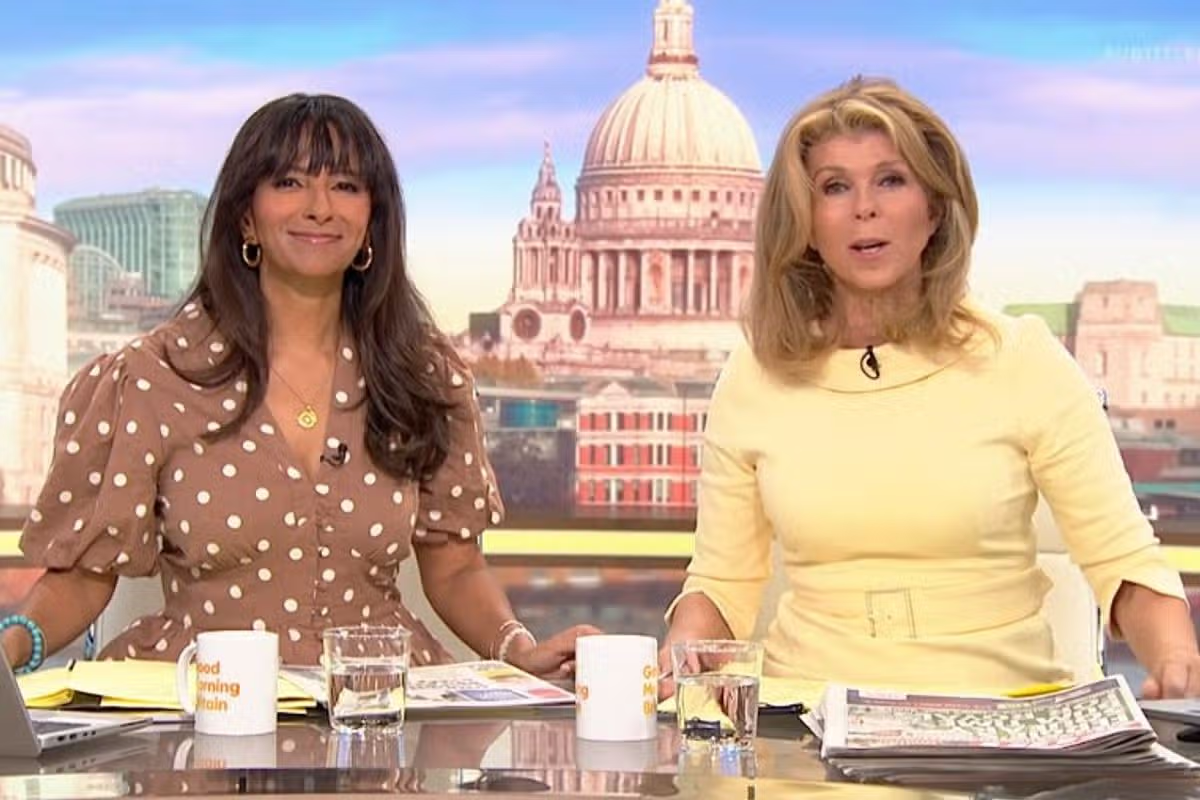
Good Morning Britain’s Kate Garraway and Ranvir Singh were quick to congratulate one Strictly star who shared some exciting baby news this week.

Strictly’s Will Best has become a dad for the first time.

On Friday’s instalment of Good Morning Britain, Kate Garraway and Ranvir Singh were speaking about the latest showbiz news with Rishi Davda. During the round-up, which included a discussion about the most recent star banished on Celebrity Traitors, they touched on the news of Will Best becoming a dad.

Rishi told the ITV stars: “There’s the pitter-patter of brand new little dancing feet in the Strictly family. Big Brother host Will Best has announced he’s become a dad for the first time, welcoming a baby boy with his fiancée, Tobi Rose.

“The couple have named their little bundle of joy Sonny. Will shared some adorable snaps from the hospital, saying they’re feeling ‘very lucky’ and, of course, very tired. With Strictly’s Icons Week coming up tomorrow night, Will’s got a very little special supporter cheering him on from home.”

The programme then played a clip from Will’s socials where he was seen holding his newborn in the hospital. He told his followers he had got a “cool new thing today”, and he gave a glimpse at his newly born son.

When the clip ended, Ranvir called it “so lovely” as Rishi highlighted how small the baby was. Ranvir added, “You know what’s funny, though? Will Best will go, ‘Gosh, you know what love, I’m so tired’. She’ll be like, ‘Err, I’ve just given birth to a baby?’. You know what I mean?”

As Kate suggested, Will could get out of the night feeds, Ranvir stated he wouldn’t want to, as she added: “Congratulations, Will and Tobi”.

Will took to Instagram to announce the news himself on October 15 as he shared a selection of adorable images introducing Sonny to the world.

He captioned the post: “Well, who do we have here then?! Welcome to the world, Sonny Best, you little smasher. @tobiroseofficial, you’re a miracle, and I love you so much. A couple of tired new parents (see last slide), but oh my goodness, aren’t we lucky xxx”

Content cannot be displayed without consent

It wasn’t long before people commented on the announcement, with one person saying: “Oh Will! He’s perfect! Huge huge congrats to you and Tobi!” Another wrote: “Huge congrats to you both!! Welcome to the world, Sonny!”

Currently, Will is one of the 13 remaining celebrities taking part in Strictly Come Dancing. He’s been matched with professional dancer Dianne Buswell, with the pair expected to perform an Elton John-inspired routine on Saturday night for Icons Week.

Good Morning Britain continues weekdays on ITV from 6am. Strictly Come Dancing airs Saturday October 17 on BBC One from 6:15pm.

Source link

The cheap family UK holiday parks where kids eat FREE

EVERY parent knows that taking a toddler on holiday often feels less relaxing getaway and more like a parenting shift in a different location.

Don’t worry – we’ve found the ultimate cheap holiday for parents with under 5’s where everything’s taken care of for you – plus the kids even eat for free.

Parkdean Resorts offer four-night Tots Breaks where children under 5 eat for free Credit: Alamy

Book a four-night Tots Break from £6.19pp per night (save £70)

Parkdean Resorts are running Tots Breaks packages, four-night stays starting from £99.

If you’re visiting as a family of four, that works out to a tiny £6.19pp per night.

These action-packed breaks are bursting with free activities and entertainment that’s sure to keep the little ones smiling.

However, the best part may just be the food. On a Tots Break, kids eat completely free for the entire duration of your stay.

Read more on holiday parks

SPLASHING OUT

UK holiday park reveals ‘biggest ever’ £4million upgrade with new splash park


FREE FOR ALL

The 45 UK holiday parks with ‘all inclusive breaks’ from £25 a night

That means hot breakfasts, lunches, and dinners are totally sorted, saving a family up to £70 on their holiday dining.

Fussy eaters are well-catered for with the Starland Krew Menu, with kid-friendly classics like tomato pasta, beef burgers, and chicken strips with chips.

You won’t need to constantly dip into your wallet to keep them entertained, either. These breaks are packed with free activities tailored specifically to young children.

Kids can burn off energy at the Tots Adventure Playground, get stuck into messy play, or enjoy the musical Tots & Tunes sessions.

Plus there’s even adorable ‘Mini Olympics’, mini archery, and mini fencing classes.

And if your kids are completely obsessed with their favourite TV characters, you’re in luck.

There are plenty of activities for under 5’s across Parkdean Resorts’ holiday parks Credit: Parkdean Holidays

Book a four-night Tots Break from £6.19pp per night (save £70)

Parkdean Resorts host Milkshake! Mornings packed with stories and singing, plus the chance to meet PAW Patrol legends like Chase and Marshall in the flesh (well, in the fur).

The fun is perfectly timed for early bedtimes, too. Early evening entertainment includes toddler discos, ‘kideoke’ sing-alongs, and even a fun ‘Sparkle Like a Princess’ event.

When it’s finally time to crash, the accommodation is set up for families.

The standard Bronze caravans are spacious, featuring stylish cream-coloured interiors, fully equipped modern kitchens, and TVs for a chilled movie once the kids are asleep.

Tots Breaks are available across dozens of Parkdean Resorts locations nationwide throughout the year.

Participating parks include Sandford in Dorset, a peaceful woodland park close to Poole and Bournemouth, and Trecco Bay in Wales, which is one of Europe’s largest holiday parks.

If you have older children, they may enjoy a Parkdean Resorts’ Nickelodeon Weekender instead.

These breaks start at £163 for three nights, working out to £13.58pp per night for a family of four.

Nickelodeon-themed entertainment includes ‘Mighty Missions’ set by PAW Patrol’s Ryder, learning the Pup Pup Boogie dance, and meeting the Teenage Mutant Ninja Turtles.

Families can even enjoy a ‘Movie with the Stars’, where you’ll sit down to a movie night alongside the actual characters from the film.

Kids under 5 can enjoy three meals a day as part of the Tots Break package Credit: Parkdean Holidays

Book a four-night Tots Break from £6.19pp per night (save £70)

Prices correct at the time of publication.

Source link

The UK’s most haunted hotel

FANCY a stay inside a haunted hotel this Halloween? Consider a night at Ettington Park in Stratford Upon Avon.

The property is home to so many ghosts that the AA declared it to be the most haunted hotel in the country, with plenty of ghostly sightings by guests.

Ettington Park Hotel in Stratford is considered the most haunted hotel in the UK Credit: @ettingtonparkhotel/Instagram
The Long Gallery is said to be one of the most haunted rooms in the hotel Credit: HeadBox

Ettington Park’s roots go all the way back to the time of William the Conqueror, and as many as 21 ghosts are said to wander its corridors.

Guests and staff have reported sightings of a woman standing by their bed, floating candles and even taps turning on on their own.

One of the most commonly sighted ghosts is Lady Emma in White, who is believed to be a former governess – she wears a long white gown and vanishes into solid walls.

An older Victorian woman has also been seen and heard walking near the conservatory, while others have seen the ghost of a man walking with his dog inside the library.

BAG IT

Cheap summer 2027 holidays you should book NOW for under £60pp – before prices go up


STAY CHEAP

Bargains at Butlins & manor stays… incredible value UK hols from £2.50pp a night

One member of staff even claimed that on Christmas Eve, a candle lifted up off the mantelpiece and floated by itself.

The Long Gallery on the top floor has a vaulted ceiling and is said to be one of the eeriest parts of the building.

Lots of guests have taken to social media after their stay to reveal their experience, with one writing on Facebook: “I woke in the night feeling rather cold and was hit by a feeling of pure fear. It felt like someone was leaning over me and so close I couldn’t move .

“The room was completely black but I was totally convinced someone was there. I don’t know how long I lay terrified before I screamed.”

Another said that during their stay they woke up in the middle of the night to find the taps running and had to “sleep with the lights on all night.”

Talking to The Sun, another guest said that he woke and was laying in bed when he saw a light under the door.

It’s said that a Roman villa once existed on the site of the hotel Credit: Hand Picked Hotels
Collage of travel items including a plane, sunscreen, passport, suitcase, and plane tickets, advertising The Sun's travel Instagram account.

When he opened it, he “saw this woman standing there, screaming, but there was no sound. I was really freaked out.”

The hotel is tied closely to The Shirleys, one of Warwickshire’s oldest families and has owned Ettington for many years.

There’s evidence that people have been living in the area for at least 2,000 years and that it’s possible a Roman villa once existed on the site of the Ettington Park Hotel.

Next door is a private chapel with a graveyard and tombs, ancient headstones and a pet cemetery.

The hotel has a beautiful swimming pool and spa area Credit: @ettingtonparkhotel/Instagram
Stays at the hotel start from £125 per night Credit: Hand Picked Hotels

The hotel even featured in the 1963 film ‘The Haunting’ which follows a small group who spend several nights in a sinister, isolated mansion to investigate whether it is truly haunted.

Aside from its hauntings, visitors describe the hotel as incredibly beautiful and it’s a popular wedding venue too.

If you fancy a stay and perhaps a glimpse of a ghost, the hotel has a variety of rooms from superior to feature and classic.

Meals are served in the grand Drawing Room which has tapestries and enormous windows with views of the grounds.

Afternoon tea is popular too and starts from £29 per adult.

The hotel even has its own spa with a huge swimming pool, hot tub and treatments too from manicures to massage.

Classic rooms start from £125 per night.


Source link

Taleh Kazimov: Shoring Up Resilience

Taleh Kazimov, governor of the Central Bank of the Republic of Azerbaijan, discusses the central bank’s drive to modernize the banking system and how it supports economic diversification.

Global Finance: How well armored is Azerbaijan’s monetary framework against today’s global risks?

Taleh Kazimov: Azerbaijan is an open, small economy; in 2025, trade turnover reached 79.8% of GDP. Energy prices work through three channels that do not point the same way. Directly, a U.S.$10 rise in the oil price adds roughly U.S.$1.2 billion to the current account, and a U.S.$50 rise per thousand cubic meters of gas, about US$900 million.

The second channel runs the opposite way; around 80% of our non-energy imports come from energy-importing economies, so a 10% oil-price increase raises trading-partner inflation by roughly 0.67%. Here, the nominal effective exchange rate absorbs much of the pressure. The third channel runs through the valuation of strategic assets. Netting the three, the overall effect remains clearly positive.

The framework rests on three pillars.

Exchange rate stability is the key nominal anchor; where trade is the dominant transmission channel, a stable nominal rate neutralizes much imported inflation and expectations stay anchored within our corridor of 4%, plus or minus 2 percentage points. Second, an interest rate corridor with standing facilities ensures policy decisions transmit predictably. Third is the buffer stock; strategic reserves rose U.S.$700 million this year to U.S.$85.8 billion at end-June, exceeding 125% of GDP and covering close to 400% of broad money.

GF: What are your priorities for modernizing the framework?

Kazimov: The objective is unchanged: price stability. Our baseline projects inflation at 6.1% at end-2026 and 5.8% at end-2027: both inside the band, with upside risks on the supply side. The priority is not a change of objective but strengthening and deepening interest rate transmission while preserving exchange rate stability as the primary anchor, with interbank rates as the auxiliary anchor for domestic inflation.

Since September 2022, we have built an active interbank money market from the ground up. AZIR, the overnight unsecured benchmark, has been our secondary operational target for over a year, with the average spread to the policy rate now about four basis points. Last year, the European Bank for Reconstruction and Development issued floating-rate notes referenced directly to AZIR, which is a stronger endorsement.

We have three priorities: strengthening passthrough to market rates; deepening capital and money markets by expanding instruments referenced to AZIR, including the yield curve; and upgrading forecasting through data analytics and AI. I would add a fourth, easily overlooked: communication. Credibility remains a central bank’s most valuable asset.

GF: How would you evaluate the success of the Financial Sector Development Strategy 2024-2026, the central bank’s modernization plan?

Kazimov: We designed the strategy around measurable priorities across every major segment and committed to publishing annual progress reports. That matters as much as the targets, because a strategy whose execution is not measured externally converges on whatever is easiest to accomplish. The execution rate reached 81.8% in 2024 and 85.6% in 2025.

Behind those achievements lies substantive change: reforms aimed at improving transmission through the interest-rate channel, strengthening the stability of the financial sector, modernizing payment infrastructure, fostering digital financial innovations, and introducing a green taxonomy.

GF: Economic diversification away from the energy sector remains a national priority. How is it proceeding?

Kazimov: The six-month data illustrate the composition. The non-oil share remains solid at around 70%. Construction contracted 13% while transport and logistics expanded 8%, information and communication 7.5%, and non-oil industry 4.1%. This is precisely the reallocation we want: activity moving into tradable sectors that earn foreign exchange. During the first six months of the current year, investment in the non-oil sector increased by 5.5%, primarily driven by a 20.8% increase in private-sector investment, which offset a 3.8% decline in public investment.

Monetary policy can support but not deliver diversification. What we can do is provide the conditions: stable prices, a stable exchange rate, a sound banking system, and a market capable of transforming long-term savings into productive investment. Structural reforms on the 2027–2030 economic agenda will determine the pace [of diversification]. Our contribution is to ensure macroeconomic and financial stability.

Source link

Could California be the solution to Trump’s diesel woes?

Gas prices are high. Diesel prices are higher — about $8 a gallon in California, $2 more than the national average.

For truckers, that’s a crisis. Their big rigs get about a paltry six miles to the gallon and filling their tanks in the Golden State now costs up to $2,500 a pop. For the guys who own a single truck or the small companies (which is the majority of trucking businesses), it can be hard to pass along those extra fuel costs to customers — which, as my colleague Nilesh Christoper wrote about, is causing a lot of pain in the industry.

Truckers everywhere are stomping mad, and it’s a problem for President Trump and Republicans heading into the midterms. Eventually, higher diesel prices are going to mean higher prices on the goods those trucks are transporting, and that’s an even bigger problem.

Trump has been throwing spaghetti at the wall trying out one limp solution after another to bring prices down — cutting taxes, brokering deals with Russia, telling us it’s just not a problem. But of course, it is.

Truck drivers fill they diesel tanks at United Oil in Long Beach on Wednesday, Oct. 7, 2026.

Truck drivers fill they diesel tanks at United Oil in Long Beach on Wednesday, Oct. 7, 2026.

(Christina House / Los Angeles Times)

One Southern California energy expert has spent recent days in Washington, D.C., trying to convince the administration that the solution lies in California, in the vast oil reserves under our cities and farms that we largely leave untapped for environmental reasons. Environment aside, it’s a long-running and compelling (to some, anyway) argument that may have found its moment, meaning California might become Trump’s next solution — or at least scapegoat — to a costly problem.

More on that, but first, a recap of where we are.

The red dye ploy

Three thousand years ago in Trump time, but which I mean earlier this month, the president signed an executive order that allowed truckers to use red dye diesel as a way to lower costs.

Red dye diesel is, you guessed it, my genius readers, diesel that has been dyed red — to differentiate it from the stuff at truck stops. Farmers and other agricultural types are allowed to buy red dye diesel without certain taxes to use in tractors and other equipment that doesn’t run on our roads.

The Trump order allows truckers to buy red dye and defer paying the roughly 25-cent-per-gallon federal tax on it. So it’s not really saving them money, just delaying payment.

“It’s a small step, but nonetheless, it’s a positive step,” said Michael Mische, a professor at the USC Marshall School of Business whose conservative-leaning take on energy policy has often raised the ire of the Newsom administration.

President Trump signs an executive order to lower the cost of diesel fuel during a campaign rally

President Trump signs an executive order to lower the cost of diesel fuel during a campaign rally on Oct. 5, 2026, in Grand Island, Neb.

(Win McNamee / Getty Images)

But there’s a problem with Trump’s red dye plan. States have their own laws about red dye diesel, and the feds can’t change them. So even if truckers could find a place to buy red dye diesel (again, not sold at regular gas stations), and even if the incentive of paying taxes later made the search seem worthwhile, they would often be breaking state laws.

Eric Sauer, chief executive of the California Trucking Assn., a trade group that advocates for the industry, said his group has been advising members not to use the crimson fuel until it’s clear that states are going to change their rules. Some, like Missouri, have. California has not.

Either way, Sauer said, allowing truckers to use diesel dyed red really doesn’t increase the overall supply, just shifts it around — which is unlikely to bring prices down.

“It’s still the same supply of diesel fuel out there,” Sauer said.

Global supply

The global supply of crude oil, has been, shall we say, negatively affected by our war with Iran. Despite Trump’s assurances that the conflict is winding down, two container ships in the Strait of Hormuz were attacked this week, highlighting that perhaps Iran is unaware the war is over. Fears of that conflict and others sent energy prices soaring even higher.

Faced with that unpleasant reality, Trump this week also announced he was lifting sanctions on diesel exports from Russia, a move that shocked his own party and most of the world.

In this aerial view the PCK petroleum refinery stands illuminated at twilight

The PCK petroleum refinery stands illuminated at twilight on April 28, 2026, in Schwedt, Germany. The refinery, which produces gasoline, diesel, kerosene and bitumen, receives 20% of its oil from Kazakhstan through the Russian Druzhba pipeline.

(Sean Gallup / Getty Images)

That deal could bring 36 million barrels of Russian diesel, at most, to American shores, which sounds like a lot until you realize we use about 4 million barrels of the stuff every day. So Trump essentially sold out Ukraine and demolished what was left of our European standing for nine days of diesel — an amount unlikely to lower prices.

In California, that’s especially true because, as UC Berkeley professor Aaron Smith points out, about 70% of our diesel “is actually not made from crude oil and coming from oil refineries. It’s made from vegetable oils and animal fats.”

Yes, the Golden State relies heavily on so-called renewable diesel that, Smith says, “introduces, I think, another wrinkle” when trying to lower costs.

California’s fault

But let’s get back to Mische, the USC professor. For years, he’s been arguing that California’s refusal to pump more oil should be viewed as a national security concern.

California actually imports the majority of its crude oil, more than 60% from other countries, and our refineries for a number of debated reasons have been closing. Our imports have been growing in recent years. We also have no pipelines connecting us to the rest of the U.S., unlike many other states. That means we can’t easily get oil except what’s shipped in through our ports.

At the same time, the West Coast with its many military installations is undeniably pivotal to national security. Mische argues that without adequate fuel reserves for a shortage — like during a war — our military readiness could be jeopardized. He wants to see California not only pump more, but for the federal government to store more of that California crude.

A train of tank cars enters the Chevron EL Segundo refinery

A train of tank cars enters the Chevron EL Segundo refinery, one of the largest petroleum processing facilities in California, on April 8, 2026. California imports approximately 75% of its crude oil, with nearly one-third of the crude supplied from the Middle East. Prices at the pump in the state are averaging $5.93 per gallon today amid the war in Iran.

(Mario Tama / Getty Images)

These arguments haven’t gained much traction in our heavily Democratic state, which has moved forcefully away from fossil fuels and toward renewable sources in recent years and which has little interest in increasing drilling. But Mische and his colleagues may have found their moment.

Earlier this year, they wrote draft executive orders about California’s oil industry that he says the Trump administration is considering — one would attempt to force California to pump more oil using the authority of the Defense Production Act of 1950.

Trump has used that wartime act several times in the last few months, and Tuesday, Vice President JD Vance announced it would be used to expand production at a Texas oil refinery.

Mische said he spent last week in conversations with the administration on the proposed orders and is “confident” Trump will “issue additional executive orders under the Defense Production Act for California” by the end of the year.

Beyond the national security argument, such orders could please Trump because they do two things. First, if California pumps its own oil, it could free up some imported oil for other states, which could lower prices — though it would certainly take time and require more refinery capacity.

Second, and likely of more interest to the White House, it makes California — and Newsom — the villain for this sticky Republican problem. California will sue, of course, which would just help the Trump political narrative.

Kevin de León, a California Senate president emeritus and author of SB 100, California’s landmark 100% clean energy law, said he can easily envision Trump claiming that “we have lots of cheap oil in the United States that can lower your gas prices — but crazy lefty California is blocking us.”

Actually, it’s hard to imagine Trump not grabbing the chance to blame gas prices on the Golden State — or Newsom.

What else you should be reading:

The must-read: ‘Very few people out in the streets’: ICE surge rattles California’s Central Valley

The California angle: Justice Dept. demands California prove citizenship for lists of voters or withhold ballots

The L.A. Times Special: The U.S is in the death business. Newsom can change that, and win votes
Stay Golden,

Anita Chabria

—

Was this newsletter forwarded to you? Sign up here to get it in your inbox.

Source link

China-North Korea border bridge may do little to spur trade, experts say | International Trade News

As China and North Korea cut the ribbon on New Yalu River Bridge this week, officials described the new border crossing in momentous terms.

Chinese Premier Li Qiang said the 3km (1.9-mile) bridge, which links China’s Dandong and North Korea’s Sinuiju, would “vigorously promote” trade and “strengthen emotional bonds”.

Recommended Stories

list of 4 itemsend of list

North Korean Premier Pak Thae-song expressed his belief that the crossing would “accelerate the advance for the prosperity of the two countries” and “add fresh vigour” to their economic cooperation.

Analysts on China-North Korea ties are much more circumspect.

While the bridge is a concrete symbol of China and North Korea’s efforts to revitalise relations that have waned from their Cold War-era peak, the prospects for trade are hindered by obstacles ranging from international sanctions to a North Korean leadership that prioritises security above all else, experts say.

“It reflects China’s renewed effort to strengthen its relationship with North Korea at a time of changing regional alignments,” Phillip Park, a professor at the University of North Korean Studies in Seoul, South Korea, told Al Jazeera.

“But whether this leads to substantially deeper economic integration, greater North Korean dependence, or a significant shift in Pyongyang’s strategic orientation remains an open question.

“The bridge could facilitate trade and logistics, but it does not remove international sanctions,” Park added.

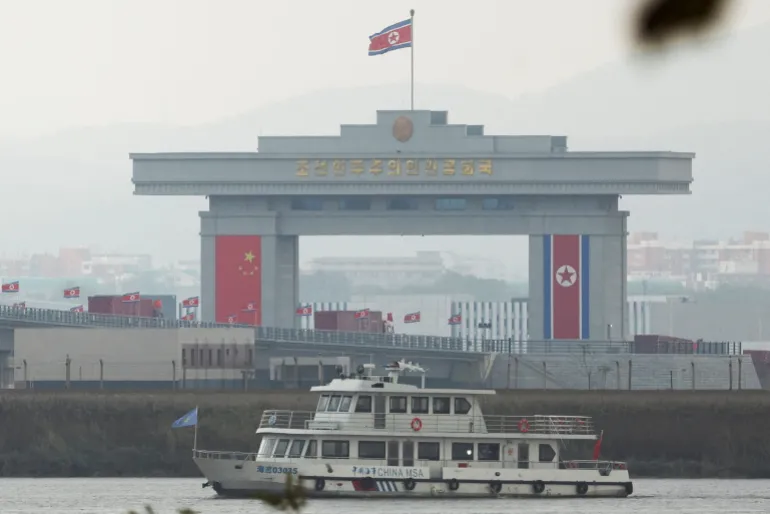
A Chinese maritime patrol vessel travels along the Yalu River as trucks adorned with Chinese flags cross the newly opened New Yalu River Bridge into North Korea’s Sinuiju from China’s Dandong New Zone, as seen from Dandong, Liaoning province, China, on October 15, 2026
A Chinese maritime patrol vessel travels along the Yalu River as trucks adorned with Chinese flags cross the newly opened New Yalu River Bridge into North Korea’s Sinuiju from China’s Dandong New Zone, as seen from Dandong, Liaoning province, China, on October 15, 2026 [Florence Lo/Reuters]

China, whose troops fought alongside Pyongyang in the 1950-53 Korean War, has long been North Korea’s most crucial economic benefactor.

China accounts for as much as 95 percent of official trade with the secretive country, which is among the world’s most diplomatically and economically isolated states.

Before the four-lane New Yalu River Bridge officially opened on Thursday, road and rail freight between Dandong and Sinuiju, the main route for China-North Korea trade, travelled exclusively via the ageing Sino-Korean Friendship Bridge.

Opened in 1943, the bridge, which has a single-lane road and a rail track, can only carry vehicles weighing a maximum of 20 tonnes.

Jae-woo Joo, a professor of Chinese foreign policy at Kyung Hee University in Seoul, said the new bridge could “tremendously” boost trade between the sides, including the transfer of components banned under sanctions against Pyongyang’s nuclear and missile programmes.

“It is therefore really significant to open this bridge with China,” Joo told Al Jazeera.

After coming under strain from North Korea’s nuclear weapons tests in the mid-2000s, Beijing-Pyongyang ties have warmed under Chinese President Xi Jinping and North Korean leader Kim Jong Un.

At Xi and Kim’s most recent meeting in June, their seventh summit since 2018, the leaders pledged to enhance cooperation in areas spanning trade, defence, agriculture, law, science and technology.

Analysts have, in part, cast Beijing’s deepening engagement with Pyongyang as a response to the latter’s growing ties with Moscow, which have included the deployment of thousands of North Korean troops to the front lines of Russia’s war in Ukraine.

Last month, North Korean and Russian officials opened the first road bridge linking their countries across the Tumen River.

Chinese President Xi Jinping walks with North Korean leader Kim Jong Un, right, to a reception following a military parade to commemorate the 80th anniversary of Japan’s World War II surrender held in front of Tiananmen Gate in Beijing, China, on September 3, 2025
Chinese President Xi Jinping walks with North Korean leader Kim Jong Un, right, to a reception following a military parade to commemorate the 80th anniversary of Japan’s World War II surrender held in front of Tiananmen Gate in Beijing, China, on September 3, 2025 [Mahesh Kumar/AP]

North Korea and China’s two-way trade grew 25 percent in 2025 to reach $2.74bn, according to figures from China’s General Administration of Customs.

Bilateral trade has continued to grow in 2026, jumping nearly 20 percent to reach $1.5bn in the first half of the year, putting it on track to reach its highest volumes since the COVID-19 pandemic.

But while growing, trade remains relatively minuscule in the context of global commerce.

With China’s overall trade hitting $6.36 trillion in 2025, North Korea’s contribution to the total was a little more than 0.04 percent.

Official trade between the neighbours also remains substantially below its 2010s heyday.

Trade hovered around $5-6bn throughout much of the decade, peaking at $6.45bn in 2013.

Economists have offered explanations for the slowdown that range from tightened sanctions to China’s waning reliance on imports amid its efforts to boost economic self-reliance.

Christopher Green, a senior consultant for the Korean Peninsula at International Crisis Group, said the new border crossing’s significance should not be overstated, considering that China-North Korea trade “is fundamentally driven by politics”.

“Lack of cross-border transit routes is not the main obstacle,” Green told Al Jazeera.

“If the bridge opening signifies a political desire on both sides to give political cover to rising trade volumes, then a boost to trade should follow,” Green said, describing ties up until now as “steady-as-she-goes” economic engagement.

“Time will tell. But the key is the politics of national security, not economics.”

Vehicles drive through a new bridge linking China and North Korea as it opened in North Phyongan province, North Korea, on October 15, 2026
Vehicles drive through a new bridge linking China and North Korea as it opened in North Phyongan province, North Korea, on October 15, 2026 [Cha Song Ho/AP]

As much as officials have hailed the New Yalu River Bridge as a reflection of Chinese-North Korean cooperation, the project had a long and torturous road to completion.

Construction began in 2011 and was finished on the Chinese side in 2014.

But North Korean authorities only completed roads and customs facilities on their side of the river this year following repeated pauses in construction amid tensions with Beijing.

“The 12-year delay certainly suggests that economic cooperation is more conditional than the language of friendship might imply,” Marco Mari, a PhD researcher at Bocconi University in Italy who studies China-North Korea economic ties, told Al Jazeera.

“The bridge can facilitate supplies and economic activity, while Russian support gives North Korea alternatives that diminish Beijing’s leverage,” Mari added.

“This does not necessarily imply broader economic reform or a comparable improvement in ordinary people’s lives.”

Chinese Premier Li Qiang, on screen, makes a speech through video conference as a new bridge linking China and North Korea opens in North Phyongan province, North Korea, Thursday, October 15, 2026
Chinese Premier Li Qiang, on screen, makes a speech through video conference as a new bridge linking China and North Korea opens in North Phyongan province, North Korea, Thursday, October 15, 2026 [Jon Chol Jin/AP]

Weiqi Zhang, an associate professor at Suffolk University who studies relations between North Korea and China, said the history of China-North Korea economic ties is littered with abortive projects, such as the Hwanggumpyong Special Economic Zone, a North Korean-Chinese development near Dandong.

“There were cases, like the Hwanggumpyong Special Economic Zone – established by China and North Korea – where China built infrastructure on its side, but North Korea didn’t even pave the road on their side,” Zhang told Al Jazeera.

“One reason is that, unlike its neighbours, North Korean government doesn’t really pay much attention to trade for economic development,” Zhang said.

“International trade is used by North Korea more like a foreign policy tool.”

With China wishing to demonstrate its “indispensability” as a trade partner and North Korea eager to strengthen their economic ties, trade is likely to grow, said Edward Howell, a lecturer in international Relations at the University of Oxford.

Even so, economic engagement will be subject to political considerations, Howell said.

“North Korea will obviously want to avoid facing any Chinese influence to change its economic model, but Pyongyang will want to reap the economic benefits of trade with its principal economic benefactor,” Howell told Al Jazeera.

Source link

Friday 16 October Malaysia Day in Malaysia


The provided text outlines the historical significance of Malaysia Day, which marks the formation of the Malaysian Federation on September 16, 1963, when the Federation of Malaya united with Singapore, Sabah, and Sarawak. Although the holiday officially became a recognized national celebration in 2010 to promote national unity and honor the country’s path to freedom, Singapore withdrew from the coalition just two years after its inception. Furthermore, the selection of the launch date faced multiple postponements due to scheduling adjustments and regional referendums. Because the nation already observes Independence Day on August 31, the establishment of this secondary holiday gives citizens a unique dual celebration of their sovereignty. Additionally, the source briefly lists unrelated current events coverage concerning regional flight cancellations, refugee deportations, and global news headlines.


Source link

How to have the best Sunday in L.A., according to Karina Longworth

Karina Longworth loves Los Angeles for all its quirks and charms.

Born and raised in the San Fernando Valley, the film critic, author and journalist has made a career out of celebrating her city. Her podcast “You Must Remember This,” about “the secret and/or forgotten histories of Hollywood’s first century,” has spent 21 seasons diving into the intricacies of the movie industry, from lauded stars to undersung production designers. (Its new season, “The Bisexuals,” tells the story of singer turned actor Libby Holman, whose love life would later intersect with the now-famously queer screen star Montgomery Clift.)

In Sunday Funday, L.A. people give us a play-by-play of their ideal Sunday around town. Find ideas and inspiration on where to go, what to eat and how to enjoy life on the weekends.

She’s also fiercely loyal to the hangouts and haunts she grew up frequenting.

“Until they closed down three or four years ago, my favorite Indian restaurant was this place in Studio City on Ventura Place called Gangadin,” she says. “That was the only place I would order from, and I have not been able to find an Indian spot that I like since just because I’m comparing it to Gangadin, which probably wasn’t even the most authentic or the best. It’s just what I had been eating for 30 years.”

Here’s how Longworth would spend her perfect Sunday in L.A., from a stroll down Mulholland Drive to grabbing a cup of frozen yogurt with a cinematic spin.

This interview has been lightly edited for length and clarity.

9 a.m.: Get up and grab a latte

I try to sleep as late as possible, but the older I get, the harder it is to actually sleep in. Ideally on a perfect Sunday, I would sleep until 9. It doesn’t always happen, but I try.

My favorite place to get coffee in L.A. is Kings Road Cafe. I’ve been going there since the ‘90s, and I still think they have the best coffee in Los Angeles. It’s very strong and they give you a large portion, and I find that you rarely get both of those things in L.A. (I like a coffee that can last me multiple hours.) I’ll usually get an almond milk latte — iced if it’s warm out, hot if it’s not.

10 a.m.: A Laurel Canyon hike

Probably what I’d do next is go over to Laurel Canyon. I built my recording studio in a tiny house at the end of a cul-de-sac in Laurel Canyon a few years ago, and I really like hiking around there. So I’d drive up, park there, and then walk up Laurel Pass to the Nancy Hoover Pohl Overlook.

The first half of that walk is really tough because it’s just straight uphill until you get to Mulholland, but I like it because it’s not a hiking trail, so it’s not dusty and there aren’t that many people. There’s an element of solitude and quiet to it, and I love that the end of it is all downhill so you can just kind of run down and get it over with.

Growing up in the Valley, I always romanticized Mulholland Drive, which was always quote-unquote “over the hill.” There’s something about manifesting and then realizing my ideal adult life that I can come to understand by standing at the overlook and looking at the other side, remembering when I dreamed of living where I do now.

In the ‘80s and ‘90s, the Valley wasn’t what it is now. There wasn’t an Alfred Coffee or anything like that. It was a few years behind the times compared to Hollywood or Beverly Hills, where all the cool stuff that I wanted to do was usually happening. All the good record stores, all the good bookstores and movie theaters.

I used to go to the Silent Movie Theater when I was a teenager or the Beverly Cinema, which is now the New Beverly. I’d go to the Nuart all the time, too. I saw a lot of important movies at the Sunset Five, which is now called the Landmark Sunset [Hollywood] and isn’t going to be showing the 2026 equivalent of “Gummo.” I think being in the Valley just felt like being in the Los Angeles version of suburbia and so it was like, “I’ve got to get out of here and go to where things are actually happening.”

11:30 a.m.: An old favorite

After that walk, I’ll go back to my place in Laurel Canyon to have a shower and get dressed and then it’s off to Art’s Deli on Ventura Boulevard in Studio City, which is a place that I’ve been going to since 1987. I had friends that worked there in high school, too, so I was there almost every day having matzo ball soup and coffee.

There used to be a lot more really good delis in L.A. My favorite actually was Solley’s in Sherman Oaks, where I used to go with my grandfather. I’ve never had white fish salad that’s better than what they had at Solley’s, but Art’s Deli is good, too. I really like their knishes, or I’ll get a half-sandwich and soup. I’d probably do turkey on rye with mustard, but with coleslaw and Russian dressing on the side so I can add small amounts when I want. That and a cup of split pea soup.

1 p.m.: Sweet treats

Ideally after lunch, I’ll get dessert at Humphrey Yogart. It’s sort of a funny joke that I’ve become this classic movie person and there’s this frozen yogurt place inspired by the name Humphrey Bogart, but I’ve actually been eating Humphrey Yogart since before I knew who Humphrey Bogart was.

They take frozen yogurt — sweet or tart — add mix-ins, and then put it in this crazy blender that’s like a giant drill with a handle that comes down. I like to do sort of a fake Cherry Garcia with cherries and some kind of nut, but they also have an option called Killer Chocolate where they take plain tart yogurt and add a dark chocolate syrup, which I really like. I’ll add orange and espresso to that, and sometimes I’ll have them put sprinkles on top because sprinkles are amazing.

2 p.m.: Movie magic

I love to go to the movies. On Sundays at the Los Feliz Three, they do something called “Sunday Print Edition” where they show a 35mm print and have somebody come and talk about it, which is always cool. Or if there’s a festival happening at the Egyptian or something I wanted to see at Vidiots, maybe I’d do that.

I think the Egyptian is probably my favorite movie theater in L.A. It’s historic, it’s beautiful inside, and I find that the projection and programming are both very good. It’s also close to where I live so that’s convenient and, assuming they’re open, you can go have a drink or food at Musso and Frank after, which is perfect.

4 p.m.: Dodgers and drinks

Usually on Sundays, the Dodgers play at 1 o’clock, but if it’s a nationally broadcast game sometimes it’ll be on at 4 o’clock. If that’s the case, then I’d like to go to Colombo’s to sit at the bar, have a drink, and watch some of the game.

I think I’d have either a vodka martini, a Manhattan on the rocks, or maybe a glass of wine. Colombo’s is my favorite place to watch a Dodger game that’s not a sports bar. I don’t really love sports bars anyway, but if it’s a big World Series game maybe I’d go somewhere in Koreatown that’s more sporty to watch. But for sitting in a dark bar to watch an hour and a half of a game while you have one or two drinks, Colombo’s is perfect.

6 p.m. Dinner at Da Prato

Right now, I really like Da Prato, which is run by this chef Elisa Da Prato, and she’s calling it a supper club. It’s in this strange almost-loft space on 2nd Street downtown, and I’ve been there three times since early July. Each time it’s gotten busier and busier, too, so I think word of mouth is growing.

She just makes very beautiful traditional but artistically done Italian food. Everything is homemade, and it’s very L.A., but at the same time, it feels like you stumbled into some small place in an alleyway in Rome because it’s informal and they only have a small staff. It’s such a great experience, but you have to think of it in a European way because it’s not a place where you’re going to get in and out in 45 minutes. You’re going to have several courses, you’re going to linger over your food, order a couple bottles of wine, and everything’s going to be very relaxed and wonderful.

If I can’t go to Da Prato or if I need a more “special occasion” place, I’d do Jacaranda, which was started by chef Daniel Patterson and his wife, Sarah Lewitinn. I’ve been internet friends with Sarah for 15 to 20 years, so I went a couple times when they were doing it as a pop-up in their house, and now I’ve gone once since they opened the official restaurant. I’m not normally a tasting menu person because some places it can feel like too much food, but Daniel’s cooking is so phenomenal and you can absolutely manage to eat all 12 courses without feeling like you want to die.

10 p.m.: Skincare and sleep

After dinner, I’d head home and maybe take a little walk to burn off dinner a bit. Otherwise, it’s time for my nighttime routine, which is boring middle-aged lady stuff like skincare and taking magnesium. I try to be asleep by 10, but oftentimes the only time I really have to read a novel or to read for pleasure is in the 10 minutes before bed. So I’ll read a physical book or my Kindle or put on a show that I’ve seen 1,000 times if I just need something to fall asleep.


Source link

Essex dad sentenced after son died in Cyprus hotel fall

A father whose two-year-old boy fell to his death at a five-star hotel in Cyprus has been fined 3,000 euro (£2,500).

Joshua Foster thought the window was closed when he placed the boy on a sill to show him the view of a waterpark and “lost control” of him, Paphos District Court previously heard.

The boy fell nearly 40ft (12.1m) from the fourth floor of the King Evelthon Beach Hotel and Resort on 12 July, the first day of the family’s holiday in Chlorakas.

Foster, 37, from Essex, admitted causing death through a reckless, rash or dangerous act and was sentenced on Friday morning.

He held back tears as his sentence was handed down by the judge, before hugging his lawyer and parents.

Foster had lifted his son on to the windowsill to show him the view of a water park, the court in Cyprus was previously told.

This breaking news story is being updated and more details will be published shortly. Please refresh the page for the fullest version.

You can receive Breaking News on a smartphone or tablet via the BBC News App. You can also follow @BBCBreaking on X, external to get the latest alerts.

Source link

Amanda Holden shares heartbreaking tribute to her stillborn son Theo

AMANDA Holden has shared a heartbreaking but beautiful tribute to her stillborn son Theo.

The star took to her Instagram story in honour of Baby Loss Awareness Week and tagged the charity Tommy’s.

Amanda Holden has paid tribute to her stillborn son Theo Credit: Licenced by Story Picture Agency
She posted a lit candle onto her Instagram story in honour of Baby Loss Awareness Week Credit: @noholdenback/Instagram

In the post, Amanda showed a candle with the words “waves of light” on it.

The flame flickered in memory of her little one, who passed away 15 years ago.

Amanda wrote: “Thinking of our beautiful son Theo and sending love to you all #waveoflight #tommys #babylossawarenessweek.”

Earlier this year Amanda opened up about losing her son, emotionally sharing how she still views herself as a “mother of three”.

TOOTH FAIRY

I make rings with TEETH – Amanda Holden is a fan but some think I’m weird


GLOW & BEHOLD

Amanda Holden shows off legs in black dress & plots to build wellness empire

Amanda shares two daughters with her husband Chris Hughes Credit: Instagram
She found great support in her BGT co-star Alesha Dixon while navigating her pregnancy loss Credit: Instagram

She chatted about the experience on her show Amanda and Alan’s Greek Job with Alan Carr.

He was stillborn at 28 weeks in February 2011, a tragedy which happened just a year after she miscarried another baby.

She told the comedian: “I always say I am a mother of three. Because I am.

“When we lost Theo, there wasn’t one moment where I thought ‘why has this happened to me?’

“But there also wasn’t a moment where I blamed God or anything.

“And the way I accepted it was to think that he chose me, just for those few months, to see what it was like to live, and develop, and be in the universe. “Then the universe took him back.

“Now I don’t think that’s religious, but I let him go back.

“And that was my belief, rather than he went back to Heaven as such.

“I felt like he went back into the universe and he is still out there and is part of our family”.

Amanda shares two daughters, Lexi and Hollie, with husband Chris Hughes.

She previously revealed that fellow Britain’s Got Talent judge Alesha Dixon had been a major source of support for her throughout her baby loss.

Source link

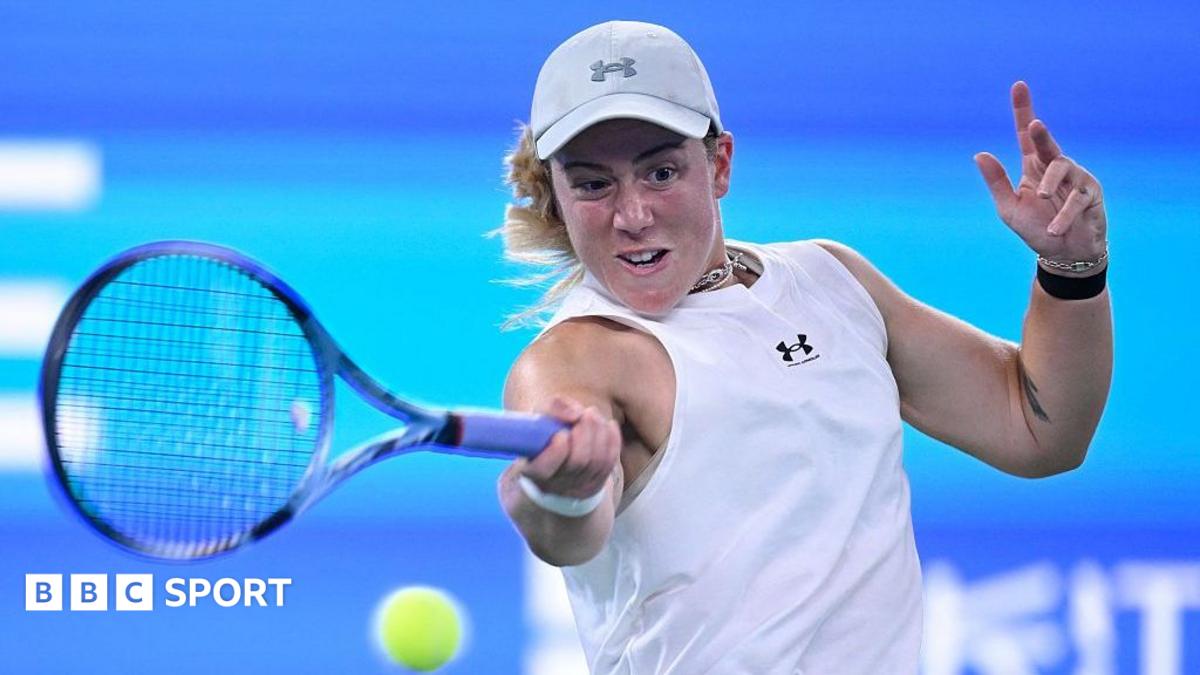
Wuhan Open: Britain’s Sonay Kartal beats Elina Svitolina to reach semi-finals

Speaking on court after her victory, Kartal said she knew “what a great fighter” world number six Svitolina is, so she “was never safe” in the match.

“It was solid composure from me throughout,” she added. “It’s breaking new ground for me this week.

“I love playing here and on this court. The atmosphere was amazing, so big thank you to the crowd.”

Kartal had not dropped a set during her run to the quarter-finals at Wuhan, and she broke Svitolina early in the first to start on a positive note.

Svitolina then called for a medical timeout for treatment on her right arm, but she came back strong to take the second set 6-2 and send the last-eight tie to a decider.

The two players were evenly matched in the third set but it was Kartal, using a protected injury ranking to play, who managed to break Svitolina’s serve at 5-4 and book her place in the last four.

In the other quarter-finals, Polish 16th seed Maja Chwalinska faces Greek Maria Sakkari, while American Ann Li takes on six-time Grand Slam winner and seventh seed Iga Swiatek.

Source link

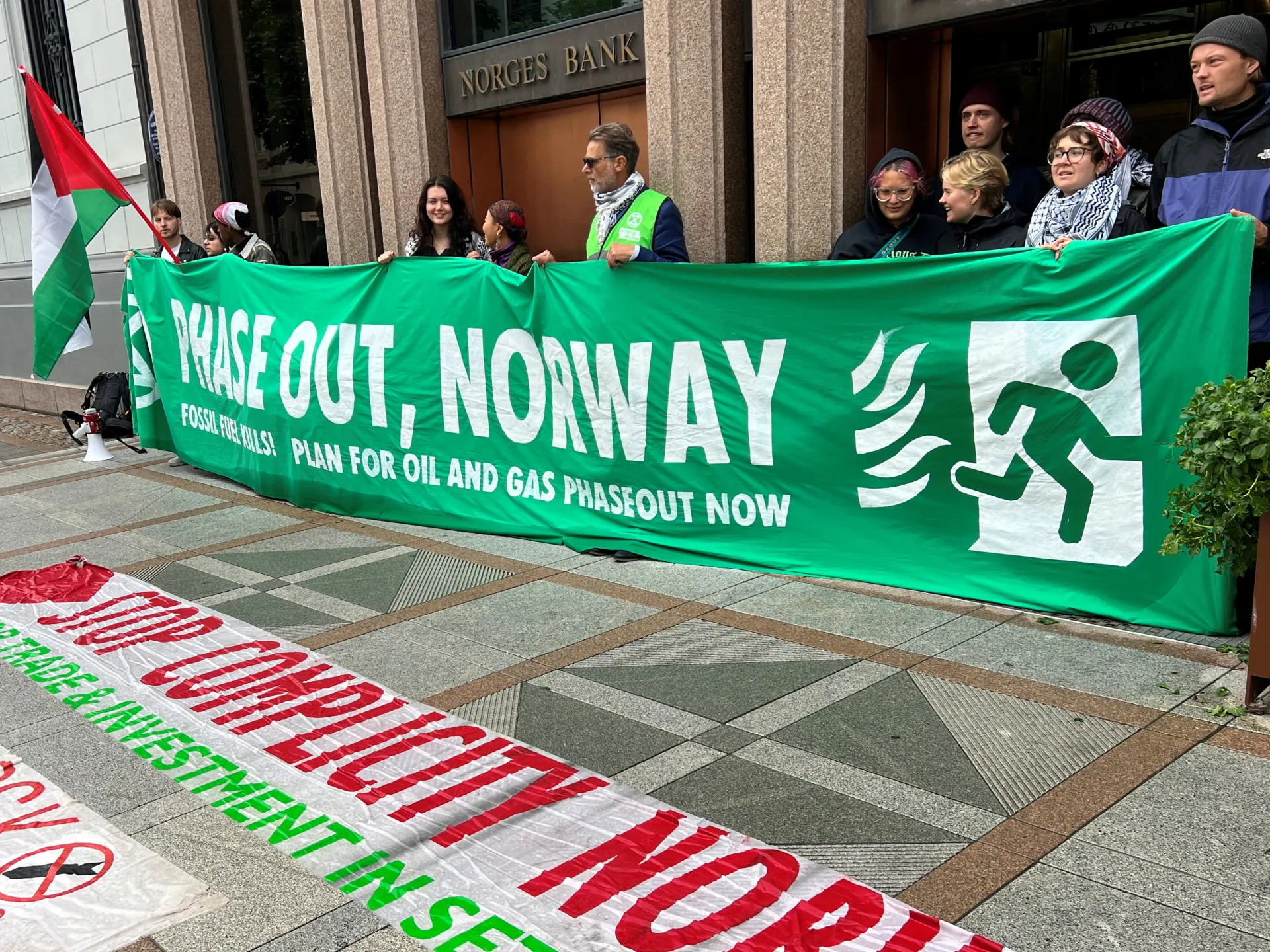
Norway wealth fund urged to ease nuclear arms ban after Gaza investment row | News

Review prompted by Gaza action calls for Norway’s sovereign wealth fund to lift ethical risk limitations on its investments.

A government-appointed committee has called for Norway’s sovereign wealth fund to lift limitations on its investments based on ethical risks, including those regarding nuclear weapons and Israel’s genocidal war on Gaza.

In a report released on Thursday, the committee said the world’s largest sovereign wealth fund, which controls assets totalling nearly $2.3 trillion, should be allowed to invest in companies that produce nuclear weapons. With reference to Gaza, it also called for the fund to refrain from involvement in diplomatic issues.

Recommended Stories

list of 3 itemsend of list

Led by former Central Bank Governor Svein Gjedrem, the committee recommended easing the fund’s investment conditions as part of a broader overhaul that would give its manager, the central bank, greater discretion over how it addresses ethical risks.

The review was prompted in part by controversy over the fund’s disinvestment last year from United States construction giant Caterpillar. The fund said the move was prompted by Caterpillar’s purported involvement in rights violations perpetrated by Israel amid its genocidal war on Gaza and in the occupied West Bank. Washington has since pressured Oslo over the move.

“Parts of the rationale for the appointment of the Committee was the Fund’s management related to the war in Gaza,” the committee commissioned by the government said. In the report, it argued that decisions regarding “another state’s conduct” should not be made by the fund but “reserved for the ordinary diplomatic channels of the Norwegian authorities”.

The unanimous recommendations of the committee in the report, which was submitted to the Ministry of Finance, also called for a review of the fund’s exclusion of investment in companies involved in the production of nuclear weapons.

Citing Norway’s reliance on NATO’s nuclear deterrent and a worsening security environment, the report suggested that investments in companies based in the US, United Kingdom and France that are involved in the production of nuclear weapons should be allowed.

The proposals also extended to reshaping the role of the fund’s independent ethics watchdog, allowing some assessments of potential investments to remain confidential.

‘Pandora’s box’

The report has already provoked a backlash in Norway, with opposition politicians slamming the potential changes. Meanwhile, analysts suggested that weakening ethics considerations could have a wide impact.

“If the Norwegian sovereign wealth fund – often considered a global gold standard – changes its posture towards nuclear weapons, it will open Pandora’s box for many global investors to follow suit,” Lawrence Loh, director of the Centre for Governance and Sustainability at the National University of Singapore Business School, told Al Jazeera.

The committee framed the proposed change as an obligation to protect Norway’s national security, citing the country’s dependence on its allies’ nuclear umbrella.

“The global security situation has changed. Norway is building up its defence capabilities, and the protection provided by NATO’s nuclear umbrella has become increasingly important. The companies that would be reincluded produce weapons that Norway needs for its own defence”, the report argued.

Gareth Evans, former Australian foreign minister, told Al Jazeera the report was “an encouraging initiative in a world that has become alarmingly complacent about the risks of nuclear war, with every major nuclear arms control agreement dead, dying or on life support, and the longstanding taboo against threat or use eroding”.

Amid US President Donald Trump’s shake-up of NATO, European countries are increasingly looking to join France’s nuclear deterrent umbrella.

Trump said on Thursday that Washington is holding talks with Russia and China aimed at denuclearising the countries with the biggest stockpiles of nuclear weapons.

However, Loh warned that shifting the Norwegian fund’s investment conditions could encourage investment by others in nuclear companies “in scenarios different from the Norwegian’s condition of the invested companies being based in allied, nuclear-armed NATO countries”.

Source link

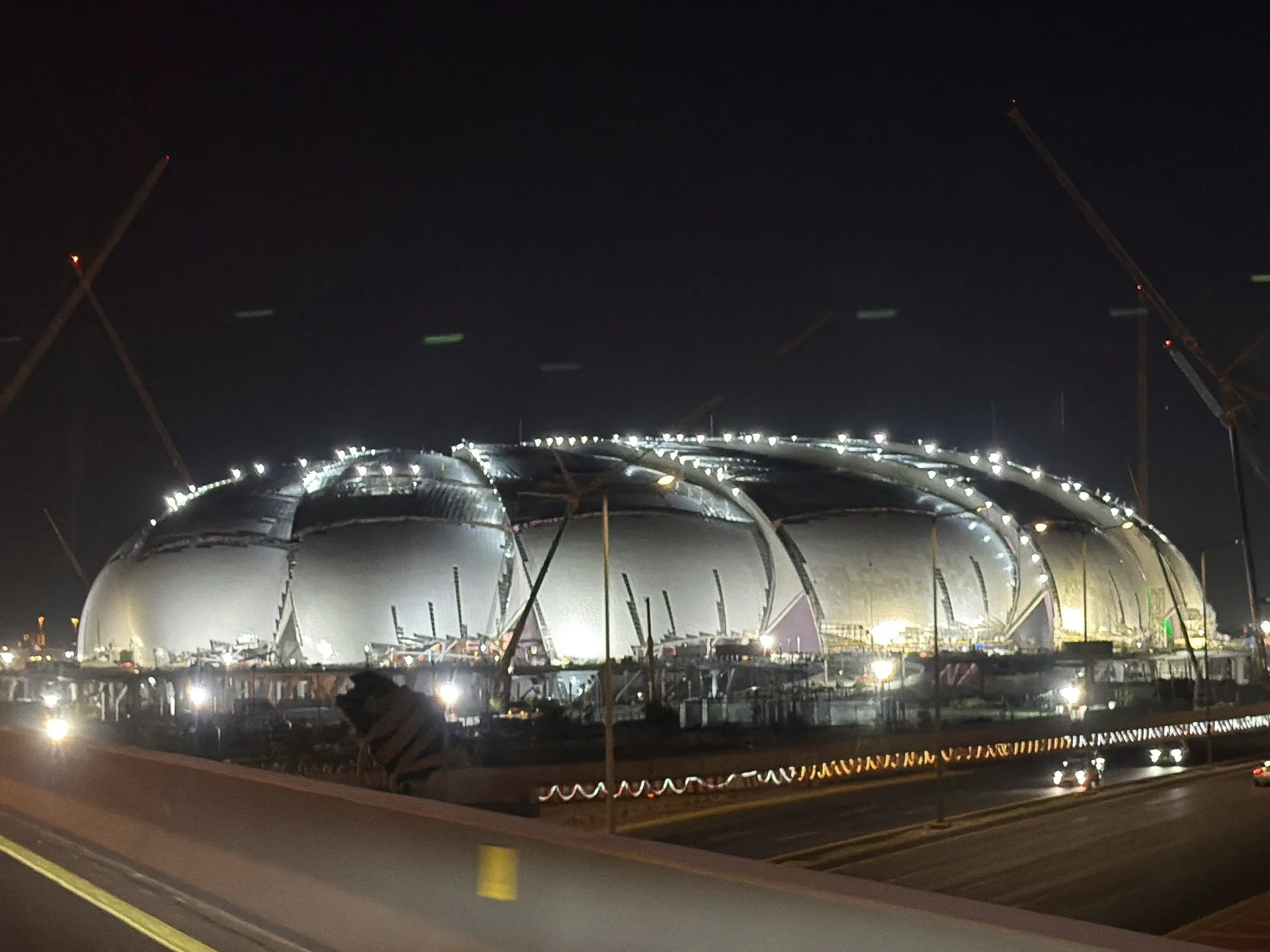
Asian Cup in Saudi Arabia still on, organisers say, but golf tour postponed | AFC Asian Cup News

Asian Cup preparations continue for January, but Asian Tour delays golf’s Saudi Invitational after Houthi attacks.

The Asian Cup football tournament is on track to take place in Saudi Arabia early next year, local organisers say, but golf’s Asian Tour has postponed the Saudi International indefinitely in the aftermath of a series of attacks on Riyadh.

Yemen’s Houthi group claimed responsibility for the deadliest attack, which took place on Saturday on Riyadh’s international airport. It killed 14 people and ⁠wounded more than 300.

Recommended Stories

list of 4 itemsend of list

Australia also withdrew its team from the urban cycling World Championships on Friday, citing safety concerns over travelling to Riyadh, where the event is scheduled to take place in early November.

The Six Kings Slam exhibition tennis tournament in Riyadh has already been moved from October to December while FIFA on Thursday postponed the FIFAe Finals 2026 video game competition in ‌Jeddah until an unspecified future date.

In that environment, serious questions were being asked about whether the 24-team Asian Cup could still go ahead in Saudi Arabia from January 7 to February 5.

Three Saudi Pro League matches, including one featuring Cristiano Ronaldo’s Al-Nassr, were postponed this week while Al-Nassr’s Asian Football Confederation (AFC) Champions League game on Monday was delayed by an hour after Saudi Arabia’s Civil Defence said it had intercepted a missile fired towards Riyadh.

AFC chief Salman bin Ibrahim Al Khalifa said earlier this week that a postponement of the continental championships until 2028 was possible if necessary, but the local organising committee (LOC) said on Friday that it was sticking to the original schedule.

“Preparations across all organisational and operational areas are progressing according to the approved schedule, including work on venues, facilities ⁠and supporting services,” it said in a statement.

The LOC “will continue to monitor developments ⁠relevant to the tournament and ensure the appropriate conditions are in place for its successful delivery”.

Attacks in Saudi Arabia disrupt sport calendar

The $5m Saudi International, which is sponsored by Saudi Arabia’s Public Investment Fund (PIF), is the flagship event on the Asian Tour and had been scheduled to take place at Riyadh ⁠Golf Club on November 18-21.

“The decision to postpone was taken following an assessment of the organisational and logistical challenges associated with hosting the tournament and ensuring the event is ⁠delivered to a standard befitting its international stature,” an Asian Tour statement ⁠said.

AusCycling said its decision to withdraw the Australian team from the urban World Championships was made “with the safety and wellbeing of our athletes and staff our highest priority”.

The Australian government is advising travellers to “reconsider” trips to Saudi Arabia in general and Riyadh’s King Khalid International Airport in particular “due to recent ‌security incidents”.

The Saudi government has invested heavily in sport through the PIF in recent years, and the Asian Cup was pitched as an early rehearsal for hosting football’s FIFA World Cup in 2034.

Source link

In ‘Party Line,’ Cuban American poet Kyle Carrero Lopez takes a stand

Cuban American poet Kyle Carrero Lopez first learned what sanctions were as a child — not as a political measure, but as a gendered one. In his poem “Sanctions,” he describes how his father, a surly Cuban refugee who worked as a DJ, laid out the terms of acceptable masculinity.

“No dance class/no “girl toys”/don’t walk like that,” writes Carrero. “His anthem, his law, hammered, hammered, into me.”

The poem features in his debut book of poetry, “Party Line,” released in July by indie publisher Graywolf Press. As a gay, Black Cuban American, Carrero uses social etiquette as a springboard to critically examine how marginalized people learn to negotiate space — whether at a nightclub; in the stratified gay mecca of Fire Island; at a socialist magazine party; or in line for customs at the U.S. border. He cites Black cultural figures like the queen of salsa Celia Cruz, American fashion journalist André Leon Talley, the late French singer and dancer Josephine Baker and political activist Assata Shakur as guiding lights.

“There are two sides of me,” he told De Los. “Between the party girl and the politico is Kyle Carrero Lopez.”

Born in 1995 to Cuban parents in New Jersey, Carrero is now based in New York City, where he earned a master of fine arts in poetry at NYU and published his award-winning 2022 chapbook, “Muscle Memory.” He answered my phone call in South Carolina, while overlooking the Atlantic Ocean; his mother was on the precipice of getting married a second time. Carrero, already a poet, scholar, political organizer and nightlife host, would flaunt yet another title that weekend as wedding officiant. “My work is naturally in conversation,” he explained.

Many of the poems in “Party Line” came to Carrero after visiting Cuba for the first time in 2017, through the CubaOne Foundation. Inspired by the Birthright Israel program for Jewish youth, the nonprofit sponsored trips for Cuban Americans to connect with Cubans on the island. Yet for Carrero, this strengthened his political dissonance with many Cubans in the U.S., who’ve supported economic sanctions on the communist nation. In order to force regime change, in January the Trump administration levied an oil blockade on Cuba, triggering a humanitarian crisis.

Written with an unmistakably Caribbean verve and snappy, conversational meter, Carrero defines his stance on Cuba in no uncertain terms.

“This book really is for Cuban Americans,” he said. “Those of us who are not trying to destroy Cuba, that is.”

Carrero spoke to De Los about party politics, Black Cubanidad and how visiting the island changed his writing for the better. The following interview has been lightly edited for clarity and length.

A lot of people fall back on these ideas about immigrant communities being all hard work and drudgery — but we come from a festive, dance-fueled culture. How did you get the idea to combine poems about parties with poems about politics?

I’ve always been involved in politics. I’ve done a lot of canvassing. In high school, I was in a learning community called the Civics and Government Institute. We did a “social reformers” panel, where you had to play somebody from a social movement. They had me up there dressed up as Elijah Muhammad in the 10th grade, asking me what I’d think of Obama. I had to drag Obama! These Nation of Islam people were not feeling the moderate Democrats.

But that informed my political engagement to this day. I was concerned with the language surrounding the embargo and U.S. aggression against Cuba. In my poem “Torricelli,” I talk about how [former New Jersey congressman and senator] Bob Torricelli wrote the Cuban Democracy Act, which he designed to, quote, “wreak havoc on that island.”

And I write a lot about nightlife. It is a family industry for me on both sides. My maternal grandfather ran a social club in New Jersey, a games parlor. My mom was a club kid. She was out all the time. Parenthood changed some things, but my father still had DJ gigs. Our basement was his studio. He’d leave the house at 9, 10 o’clock to go to the gigs. You know that new Jordan Firstman movie, “Club Kid”? I’m the original club kid.

How do you write for those who may not be ready to receive the club kid and the politico at once?

I like challenging assumptions that political people are drab and unglamorous — and that party people are brain-dead, escapist and have nothing to say. One of the problems I have with the ’90s club kid scene, as it existed, is they were extremely apolitical. And not only were they apolitical, but I would go so far as to say the club kids in the ’90s were a white supremacist entity. We don’t talk enough about how their whole thing was like whiteness and white privilege. All we’re here to do is have fun — and we see what that mentality leads to, right?

[The movie] “Party Monster”!

Yes, “Party Monster”! Michael Alig literally killed a man of color. That is not the party world that I live in. We don’t take off who we are just because there’s low lighting and fog and loud music. I’m going to respond the same way to harassment and perceived injustice as I would any other space.

To this day, there are white club kids in New York who are in the club talking in black-ccents and wearing imitations of black people’s hairstyles. And then if you call them out, they’re like, “Why? It’s a party!” And I’m like, “OK, but it’s a party where all of the music comes from Black people … you are a guest in this space.” Before I’m going to serve you a history lesson, let’s at least start with decency.

And though you may not think you’re doing politics … politics will still do you. Your club kid parents experienced politics by coming to the U.S. from Cuba. Can you tell me about their journey?

My father emigrated from Havana as a child. My mother was born to parents who emigrated in the 1950s during Batista’s regime. Cubans have a privileged relationship to immigration — the pipeline available to us [political asylum] was not the same for most people of Latin American descent.

My family came here not only as Cuban immigrants, but as Black immigrants. Politics happened to them. My father came to the U.S. in the late ’60s, getting called the N-word walking home from school with his two sisters…. They got hit so hard with belts that they would go home having soiled themselves. They were not only Black, but they didn’t even know what language or culture they were trying to assimilate to. There were layers of hatred…. When people talk about Cuban Americans, they think of white, rich Miami Cubans. It’s irresponsible to think in such a flat and one-dimensional way.

In the poem “Usefulness,” which was originally published in the Yale Review, you speak of how Black Cubans exist at the nexus of two different political agendas: the pro- and anti-Revolution contingents. Can you talk about that?

My opinion is very useful to many agendas. I joke that I would make a great Republican talking head. If I decided tomorrow that I wanted to get the GOP bag and be like, “Democrats are liars! I hate immigrants! I hate welfare! There’s two genders! We don’t need gay marriage!” — I would be a millionaire in under six months.

There’s a tokenism that happens when you exist at this nexus of identities. It’s true of the left as well sometimes. You could ask five different people in Cuba what they think about the government and they will give you five different answers. And that is OK! We need to allow that to be the case.

I don’t want what Trump and the Marco Rubios of the world want for Cuba — which is to seize it, to subjugate it and turn it into the next Puerto Rico. If people who are progressive and committed to Cuba’s autonomy don’t want that, I think part of [the work] is talking to Cuban people and hearing them out. I don’t think it’s acceptable to seek out only the opinions that match your own.

You bring up a historical moment that not a lot of Cuban Americans know about, which was the 1976 bombing of Cubana Flight 455, by an anti-Castro Cuban exile group. You said they planned on bombing a flight to Havana the week before, which your mom and her sister were on. How did they manage to avoid that?

[My grandfather] was an influential man. He knew the right people. So he heard something was going down and said, “I’m not putting my kids on that flight.” The flight went on as planned, but these men knew my grandfather and heard that his daughters were getting on the plane. To me that’s like getting on the list … sometimes you get into the party, or the plane [isn’t] bombed. It’s the same negotiation. Or just a moment of alignment.

What was it like visiting Cuba for the first time after the Obama administration eased travel and trade restrictions?

I don’t give Obama much, but he did try to normalize relations there. Unfortunately, Biden didn’t follow through with that, but for a second, we did care about Cuba.

The first time I went was in 2017, when I was 22. It was an incredible experience. My mother traveled to Cuba as a teenager; my father never went back. But they never discouraged me from going. I know that’s the case for a lot of Cuban Americans; there’s so much baggage. But once there was an easy path to go, it changed my life.

I write about Amiri Baraka’s time in Cuba, when he was earlier in his poetry journey — and his writing changed from being there. He wrote a poem called “Betancourt,” named after a young radical there. It made me more politically serious. I feel closer to my heritage, having done that.

What made you close the book with “I Saw Assata In Havana”? Did you really see Assata Shakur?

That was an imagined encounter. But it was the vision of what I imagine was her new life in Cuba — her second chance. I thought that it was a good ending note to land on, pushing against prevailing narratives.

I think the ways that we talk about our radicals — the Huey Newtons of the world, people like Kwame Ture or Angela Davis — we think of them as mythical beings, or, depending on who you ask, terrorists. But that disconnects them from their humanity. I wanted to create a portrait of [Shakur] as a normal lady who needed to pick up groceries sometimes. These were regular people who saw what was going on in the world and decided that they needed to do something about it. Each of us has that ability to enact change.

There are so many ways to make societal shifts, whether that’s writing to your officials or protesting or creating art that is challenging. What Shakur did was to say, “I don’t like this for my people. I don’t like this for the world I’m living in.” The same boot that’s on the necks of Black American people is on the necks of people in the Congo, people in Palestine, people of the global majority. We all have to share the planet. If we work together, we can have a world that can actually sustain itself.

My last question for you is: What would you like to see happen for Cuba?

I’m not a politician; I’m an artist. My duty is not toward any specific government; it is toward truth. My Cuba position, as a Cuban American, is focused first and foremost on my home country’s contribution to the conflict. If Cuba is truly no more than a failed state, why not lift all of the restrictions? Let’s see what happens when Cuba is unimpeded by hostile U.S. policy. That’s how you can best prove your point, right? Unless, of course, you’re afraid of what Cuba could be.
Source link

Ancient UK coastal city that’s home to HUGE celebrities named top global holiday destination for 2027

ONE Roman city in the UK has made its way onto the list of the best places to visit in the WORLD next year.

Chichester in West Sussex is a must-see spot in amongst places in California, Canada, Italy and even Australia.

Chichester has made it onto the list of top places to visit in the world in 2027 Credit: Getty
The city has its own harbour and is close to beaches too Credit: Getty

Expedia has revealed the trending hotspots for next year, which have seen a boom in searches.

Chichester has seen an increased interest of up to 30 per cent, the city itself dates back almost 2,000 years – and its main attraction dates back to 1075.

Chichester Cathedral sits right in the heart of the city and has done for over 900 years.

At 277 feet high, it’s the only medieval cathedral in England that can be seen from the sea.

STAY CHEAP

Bargains at Butlins & manor stays… incredible value UK hols from £2.50pp a night


BAG IT

Cheap summer 2027 holidays you should book NOW for under £60pp – before prices go up

Other popular spots for visitors include Fishbourne Roman Palace, the biggest Roman house in the UK, and the open-air Weald and Downland Living Museum.

Hopefully visitors will bump into friendly locals too as the city was voted the happiest place to live by The Guardian last year.

The location of the city means that it’s less than half an hour away from some of Britain’s beaches.

West Wittering Beach is a mere seven miles away from Chichester city centre and still in the district of Chichester.

The pretty beach has Blue Flag status and is backed by colourful beach huts, and the village itself is home to huge celebrities including Keith Richards and Kate Winslet.

Other nearby coastal spots include Selsey Beach and Bognor Regis – both of which are home to popular holiday parks like Seal Bay Resort and Butlin’s.

Chichester Harbour has thousands of moorings and waterfront restaurants Credit: Alamy

There is waterfront nearer to the city however as Chichester has its own harbour with sailing clubs, marinas and thousands of moorings.

One popular spot for visitors to enjoy lunch is The Boathouse in the marina which has indoor and outdoor seating.

Chichester also has lots of green spaces too as the area surrounding the city is part of the South Downs National Park.

For those who want to visit, Chichester has its own railway station with direct trains to London Victoria – these take around an hour and a half.

Also in Chichester is Bosham, a tiny village compared to Venice which is home to England’s best B&B.

It is even in the famous Bayeux Tapestry, as it was where King Harold lived.

The Credit: Alamy
Chichester canal basin, West Sussex, England Credit: Getty

Other locals say it looks like an ‘old fishing village‘ found in Devon or Cornwall.

Talking about Unpack ’27, Expedia Group CEO Ariane Gorin explained: “In 2027, travellers are being more intentional in choosing their next adventure, seeking experiences that are more personal and purposeful to them.

“We’re making it easier to discover, plan, and book the right trip, so travellers can spend less time managing the details and more time enjoying the moments that matter.”

The next closest spot for Brits, and the perfect destination for a holiday is Perugia in the Umbria region of Italy.

Flights with Ryanair are direct from London Stansted and start from as little as £20.

Found on the hilltop, the Umbria capital is one for the foodies, being famous for its chocolate (and annual chocolate festival).

There are also jazz festivals, historic fortresses and beautiful architecture to explore as well.

Here is Expedia’s full list of Destinations of the Year for 2027…

South Lake Tahoe, California

Hyogo, Japan

Punta del Este, Uruguay

Sedona, Arizona, USA

Busan, South Korea

Holbox, Mexico

Perugia, Italy

The Tweed, New South Wales, Australia

Niagara-on-the-Lake, Canada

Chichester, UK


Source link

Dodgers’ three-peat dream dies with Game 4 NLCS loss to Brewers

The hope for a Dodgers comeback in the National League Championship Series ended with the smack of the ball hitting leather.

Milwaukee Brewers left fielder Jackson Chourio, sprinting toward the warning track, had to leap to reel in Kiké Hernández’s line drive in the gap. But he secured the catch. And ended the Dodgers’ season.

The Dodgers’ hopes of making National League history with a three-peat died with a 6-4 loss to the Brewers on Thursday, completing Milwaukee’s four-game sweep.

“It sucked,” veteran left fielder Teoscar Hernández said. “Especially after [what] we had done the last two years. This year at the beginning of the year, what we’ve been through, a lot of injuries throughout the year the last two years, a lot of ups and downs. It just sucked that we’re in this situation, but it’s part of the game.

“Somebody has to win, somebody has to lose. This time, we’re the ones that lost, and just reflect on everything that we didn’t do great this year and just try to do it next year.”

As the Dodgers’ postseason hype video declared before the game: “October doesn’t remember who came close. It remembers who triumphs.”

The Dodgers, after reinforcing to their back-to-back championship roster in the offseason and entering the year as the World Series favorites, fell short. And instead the Brewers will represent the National League, making their first trip to the Fall Classic in 44 years.

“They may have a bunch of Hall of Famers, but we have a bunch of gamers,” Brewers manager Pat Murphy said from the stage. “And the gamers won this week.”

When the Dodgers went down 3-0 in the series, they faced a steep climb that only one team in MLB history has overcome. But the Dodgers showed resolve to begin the game.

Three singles in the second inning gave the Dodgers a lead, with Andy Pages driving in the first run. It was his third hit of the postseason with runners in scoring position and the Dodgers’ fourth overall. Then with two outs, Ohtani not only prolonged the inning but also made it the Dodgers’ highest-scoring frame of the postseason, with their first home run of the series.

It had been a maddening couple of months as Ohtani battled injuries, slid down the batting order and failed to produce when the Dodgers needed him most — in the postseason.

Then on Thursday, with the Dodgers on the brink of elimination, one swing momentarily wiped all that away.

Ohtani got his bat head down to a cutter from former Dodgers pitcher Dustin May on the inside corner. He lifted it into the stands for a three-run home run.

Ohtani turned to the Dodgers’ dugout, spread his arms wide and tossed his bat to the side. He tilted his face to the sky and yelled. He punched the air.

This was the version of Ohtani the Dodgers had sorely been missing. He announced his return with authority. And he breathed life into a stadium that had a crowd of only 49,104 — short of a sellout.

It was his first home run since Aug. 18. And it had been even longer since he’d hit a homer quite like that. With an exit velocity of 113.1 mph, it was his hardest-hit home run since June 20 and his third-hardest hit of the year, according to Statcast.

Even more important, it was the big swing the Dodgers had been waiting for all series.

“It was something that you don’t see very often from Shohei,” manager Dave Roberts said. “I think it was a lot of pent-up anger, frustration. It was the best ball he hit in probably two, three months, and it was a big hit. So I think that for him to look at the dugout, show that emotion, it just shows how much he cares. He’s still human. He still cares and wants to help his team win a baseball game. That was a big hit.”

Dodgers starter Tyler Glasnow kept the good vibes going, retiring the first 10 batters he faced. But the Brewers, as they had all series, had a comeback in them.

“We got a nice lead, we got Glas on the mound, we’re confident behind him,” third baseman Max Muncy said. “And they just kept stringing together one good at-bat after another after another after another. They were just kind of relentless.”

It began with one out in the fourth inning, as Brice Turang drew a walk, the first baserunner against Glasnow. Then William Contreras and Jake Bauers each bounced ground-rule doubles into the stands, Bauers’ driving in two runs to cut the Dodgers’ lead in half.

Dodgers star Shohei Ohtani strikes out with a runner on third during the seventh inning of Game 4 of the NLCS.

Shohei Ohtani strikes out with a runner on third during the seventh inning.

(Gina Ferazzi / Los Angeles Times)

The next inning, the Brewers used a walk, stolen base and David Hamilton’s RBI single to trim the Dodgers’ lead to one and knock Glasnow out of the game.

Right hander Evan Phillips replaced him and loaded the bases the rest of the way, before left-hander Alex Vesia entered to face Bauers, who had been a nightmare for the Dodgers this series.

Vesia walked Bauers on four pitches, tying the score at 4-4.

The Dodgers had lost their momentum, but they still had time.

Then, in the sixth, Dodgers setup man Tanner Scott took the mound early, at an inflection point in the contest. He worked ahead 0-and-2 in the count to Garrett Mitchell. But Mitchell spat on three straight balls to get to a full count.

Scott missed down the middle with a fastball. Mitchell sent it over the fence to give the Brewers the lead for the first time.

Even down by a run, Roberts continued to manage like he had hope, bringing in Edwin Díaz in the seventh to keep the game close.

The Dodgers’ offense got runners to third in three straight innings. In the sixth, Kyle Tucker hit a one-out double, and Teoscar Hernández moved him over with a groundout. In the seventh, Pages led off with a double, and Kiké Hernández bunted him over. In the eighth, with one out, Will Smith cut out the middle man by doubling into the right-field corner and advancing to third when Milwaukee’s Sal Frelick misplayed the carom off the wall.

The Dodgers stranded all three at third, failing to score the tying run.

“They just outplayed us this series,” first baseman Freddie Freeman said. “That’s just kind of how it goes. We had our opportunities. We just didn’t get it done.”

Díaz did his part to keep the Dodgers in the game, retiring eight straight batters. But the ninth batter he faced, Hamilton, hit a solo homer to add cushion to the Brewers’ lead.

“I wouldn’t want to go through this with any other group of guys,” Muncy said. “We really tried to do something special in this clubhouse, and I know next year we’ll be ready to get right back to it. But right now, this sucks.”

Source link

How Israel’s elections will affect Palestinians | Elections

How Israel votes this month will shape the future of over 5.5 million Palestinians who have no say in the election. Even if there’s a new government, Al Jazeera’s Nida Ibrahim says it’s unlikely to change the situation for Palestinians living under occupation.

Source link

Tesla unveils car that can drive upside down and jump through the air | Elon Musk

Tesla has unveiled an electric sports car that can drive upside down and use rocket-like thrusters to jump and turn mid-air. Developed with Elon Musk’s SpaceX, it can reportedly accelerate to 97km/h in under a second. First promised in 2017, the car is now expected in 2028.

Source link