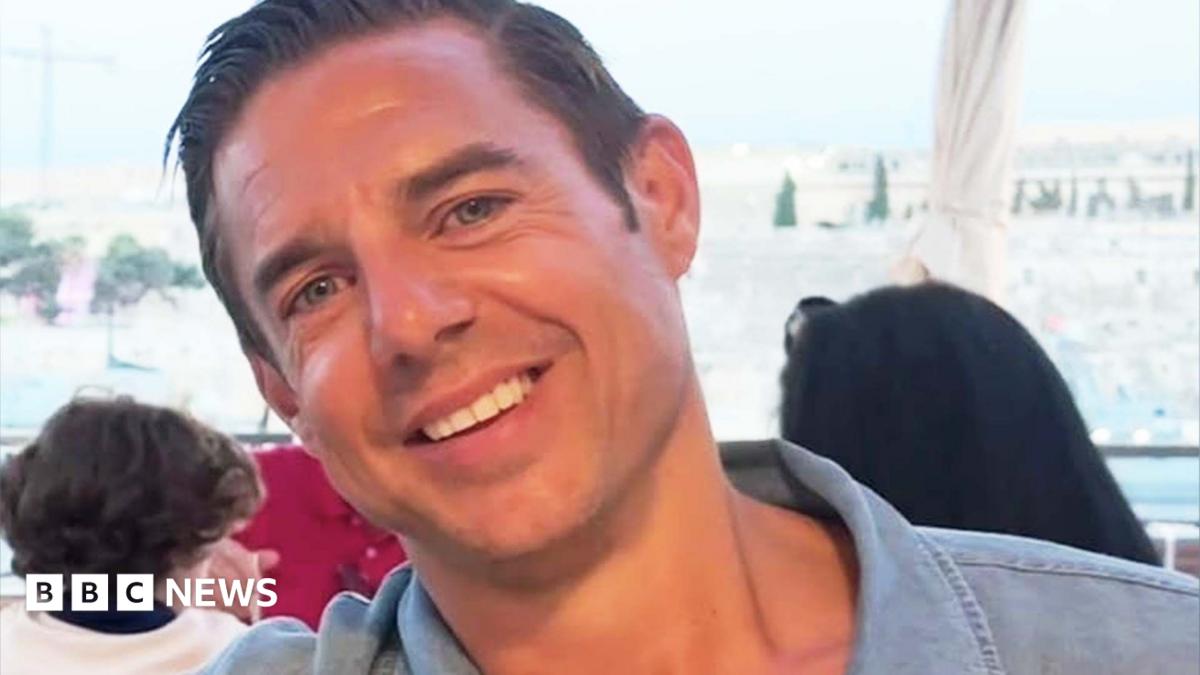
The police watchdog has said the Metropolitan Police’s professional standards unit should investigate the force’s handling of a case in which a man suspected of pushing a woman into the path of a bus on Putney Bridge was found dead.
The 44-year-old was under suspicion of being the jogger who pushed a woman into the path of a bus during a run on Putney Bridge in west London in May 2017.
The Met police made a mandatory referral to the Independent Office for Police Conduct (IOPC) following the banker’s death.
In a statement, the IOPC said: “After carefully considering the referral, we have decided that an investigation is required and that the Met’s Directorate of Professional Standards should conduct it.
“We have recommended the review considers matters including the necessity and proportionality of arrest, what engagement was there with the media and considerations made in relation to Mr Brandram’s welfare and the relevant policy.”
The police watchdog added that if the Met’s investigation did not find “any potential misconduct”, the final report must be submitted to the IOPC for review.
The family of Nicholas Brandram insisted in an interview with the BBC that he was not the so-called “Putney pusher”.
The Met previously said that it recognised the “strain that being subject to a police investigation” could cause.
The force said the investigation into the 2017 incident remained ongoing.
A UK-based theme park has beaten competition from across the globe to be named the best in the world, and a brand-new ride that only opened this summer also scooped a major award
The park has thrilled seaside visitors for generations(Image: PR Handout)
The Park World Excellence Awards has named its top theme park picks for 2026, and the coveted Best of the Best award has been given to a British theme park that has beaten competition from across the world.
The north west resort scooped the prestigious prize at the awards ceremony held on Wednesday (September 23). The awards, which focus on parks in Europe, the Middle East and Asia, included categories from the Best Roller Coaster to the Best Water Park, and competition was stiff, with nominations for huge theme parks including PortAventura, Futuroscope, and Land of Legends.
Pleasure Beach Resort in Blackpool took the top prize, which was described as being awarded to “theme parks, rides, or tourist attractions recognised for excelling as the best of all time within its respected industry.” The Best of the Best award is given to parks that offer “the absolute pinnacle, reflecting everything that is great about our industry”.
Formerly known as Blackpool Pleasure Beach, the iconic theme park has been celebrating its 130-year anniversary in 2026, making it one of Europe’s oldest, and it is fourth-generation family-owned. It’s the first UK theme park to win the award, with former recipients including Germany’s Europa Park and Siam Park in Tenerife.
The theme park also scooped Best Ride of the Year for Aviktas, the largest ride of its kind in the UK, which swings passengers 138ft in the air on a rotating pendulum. Aviktas opened in May 2026 and was an £8.27 million addition to the park. Meanwhile, Valhalla, a Viking-themed attraction, was the runner-up in the Best Water Ride category. It’s the fifth time the water-based ride has been nominated in this category.
The Pleasure Beach Resort is also home to the UK’s only Nickelodeon Land, which includes SpongeBob SquarePants and PAW Patrol-themed rides for all the family.
It’s Halloween event, Journey to Hell, is set to open on October 17, just in time for half term. Described as an “immersive scare experience”, it’ll include three new scare mazes and a selection of rides that stay open until 9pm.
Amanda Thompson, managing director of the Pleasure Beach Resort, said in a statement: “To be named Best of the Best is a massive achievement for our park. Our industry is full of so much talent, so to be recognised among the best speaks volumes on the dedication and hard work that has kept us moving forward for 130 years.
“Avitkas has been a hugely valuable addition to the park and I’ve been delighted by its reception so far. If they haven’t already I’d absolutely encourage people to visit Pleasure Beach and give our ride, now recognised as one of the world’s best a go!”
Have a story you want to share? Email us at webtravel@reachplc.com
In an otherwise empty compartment of a regional train on its way to a small town in Germany last month, a friendly passenger asked if I was headed to Halberstadt for “the note change.” He was an Australian law professor based in Hong Kong who was traveling with his Swiss mother for the irregular ritual every few years of a new note being sounded on a decommissioned old church’s diminutive modern pipe organ in what feels like the middle of nowhere.
He was hardly alone. The audience the next day in the packed late-Romanesque St. Burchardi “John Cage Organ” Church had come from seemingly everywhere, along with international media, to witness a barely distinguishable new note added to a sustained chord in Cage’s “Organ2/ASLSP.”
“ASLSP” stands for as “As Slow(ly) and Soft(ly) as Possible,” adapted from the opening line of the final paragraph in James Joyce’s “Finnegans Wake”: “Soft morning City! Lsp.” Cage had meant his organ piece to enjoy the indeterminacy of neither the performer nor the audience knowing how long the score, in eight parts, would last. In Halberstadt, they are stretching it out 639 years! The performance began in 2001 with the intent that each note change would be a great event.
Four years ago, Times columnist Nicolas Goldberg wrote an opinion piece about his fascination with what to him sounded like a profound project about the meaning of time. I tried to talk him out of what I believed to be a gimmicky violation of the being-in-the-moment spirit of Cage. But what mattered to Nick was the idea, not the intent, and he used me in his column as a foil. Still, Cage has been central to my practicing what some people (not me) call music criticism, and I contended wild horses couldn’t drag me to Halberstadt.
Nevertheless, early August’s “From 7 to 8,” as the note change was advertised, occurred almost exactly to the day, as when, 50 years earlier, I filed my first music review in the Los Angeles Herald Examiner. This was also to be my last summer and 121st season on staff of the Los Angeles Times. I step down as music critic Friday. (I still plan to contribute to The Times on an irregular basis.)
I happened to be visiting the Salzburg Festival in August and, in a spirit of endgame, hopped on a train to Halberstadt. On the seven-hour ride, my half-century Cage-suffused career passed through my mind.
I thought about how Cage had once told me that when he was a boy in Los Angeles, he loved Grieg with no need to know why. When he studied music, reason replaced love. It was only regaining the ability to hear music as music that he could compose.
Cage described this as an example of the celebrated Zen koan about reality: First there is a mountain, then there is no mountain, then there is.
When I accidentally stumbled into music criticism with an academic penchant for music analysis, my crutches for writing about music were technical and of little use in a newspaper. I had to find a way to simply listen. It gave me new ears, and I was hooked.
Cage solved my next problem by insisting that the way to discover new things is to overcome our dependence on our likes and dislikes, those supposed pillars of criticism. College taught me to investigate the “great” composers who mattered and disdain those of no value. Consequently, I had never paid attention to the likes of Rachmaninoff and Shostakovich but discovered that they moved listeners deeply. Again, for me, so-called criticism proved a pathway to opening the mind, and writing about discovery is an ancient pleasure. Cage put it this way: “It’s not what I don’t know that scares me, it’s what I do know.”
The great enticement to return to L.A. after spending nine years in New York (and periodically reporting on Cage from the East Coast and Europe for The Times) was the prospect of Walt Disney Concert Hall. Construction hadn’t yet begun and fundraising was iffy; the community was scared about what it didn’t know. I came armed with another Cage-ism: Every seat is the best seat in the house.
I tried to get the Music Center to make that the motto of the hall. After all, Cage was born at Good Samaritan Hospital about a mile from Disney. That didn’t fly. Still, thanks to Frank Gehry, every seat meant every view inside and out was the best. Every way of seeing also meant every way of hearing. Disney taught L.A. the joy of architecture in a way many of us had never known in this haphazardly built town. Once it was built, there was no choice but to embark on an ongoing love letter to L.A.
Such thoughts on the Cage train poorly suited arriving in the heart of the state of Saxony-Anhalt. One of the first things to catch my eye was a campaign billboard for a far-right Alternative for Germany candidate. A month later AfD would win a landslide victory, dividing Germany and alarming much of Europe.
The streets were mostly deserted. There wasn’t much open, giving the handsome and well-preserved Halberstadt a “Twilight Zone” aura.
In the St. Burchardi Church in Halberstadt, Germany, “The Cage Organ Project” is to be played for 639 years.
(Mark Swed/Los Angeles Times)
Dawn, though, attracted life. “The Cage Organ Project” proved marvelous, to use one of Cage’s favorite words. Whether they were 200-euro ticket holders who had journeyed long and far to be in the church for the note change or the hundreds on complimentary folding chairs outside on the lawn, unshaded in the hot sun watching on large video screens and listening with the assist of a fine amplification system, the aura was now calmness, grace and gratitude.
Nick had been right all along. Time became grounded. The note change is a marker, but the organ, in which air is electronically blown through the pipes day and night for all to hear, has become an endearing sound that connects you to your being. Here and now and hear and now are the same.
ASLSP, moreover, reflects the magical unhurriedness the world craves, be it the slowing down of AI or turning down the volume on social media and politicians’ bully pulpits. None of this may have been on Cage’s mind when “Organ2/ASLSP” had its premiere in Metz, France, in 1987, five years before Cage’s death. That performance lasted a half hour. But Cage is no longer with us, and “Organ2/ASLSP” now has a marvelous life of its own.
One of my most memorable interviews at The Times was with the Dalai Lama in 1999. He had never given one about music and appeared at first sorry he had agreed to. Every question about music got a negative response. The only need he expressed for it was as a fundraising tool for his Tibetan government in exile.
Noting my distress, he explained the problem with music is how easily we get attached to it, and at the heart of Buddhism is nonattachment. Then, breaking the tension with his trademark belly laugh, he admitted his problem was attachment to Buddhism.
At Halberstadt, I may have found my way of letting go. But I also leave The Times with the gratitude not only for the freedom it allowed me to champion causes but also to be part of a very long, quirky process that makes this newspaper unique.
Going back to 1925, there have only been four Times classical music critics in 101 years, and arriving here in 1996, I immediately discovered my roots in Isabel Morse Jones. A violinist who covered music from 1925 to 1947, she was a modernist with her finger on the pulse of the times and stood in refreshing contrast to the fussy East Coast male critics.
She was said to have provided an intellectual awakening of music on the West Coast. She put the Hollywood Bowl on the map. She championed new music and not just the stellar locals, Stravinsky and Schoenberg, but also the avant-garde and world music no one else gave the time of day. After leaving The Times, Jones founded the Music Academy of the West in Santa Barbara originally modeled after the Salzburg Festival.
She threw her lot in with the society page editor, who covered women’s clubs. Together they became a power duo who campaigned to build a home for the Los Angeles Philharmonic, which three decades later led to the Music Center. That society editor — who chronicled and illuminated the social, political and artistic issues in L.A. in the 1930s from the women’s perspective — was Crete Cage. John Cage’s mother was a must-read for all women in L.A.
We cannot hold on to Cage, but we can’t escape him either. Times look bad. L.A. feels in the dumps. It was like that, as well, when I arrived at The Times in 1996. The city was still recovering from the 1992 riots — the beating of Rodney King had caused a profound social reckoning — and the 1994 earthquake. There was a recession. The L.A. Phil, now the model arts institution in the country if not the world, was millions of dollars in the hole.
Today, catastrophe is wherever you look. The Olympics, the environment, the damn developers, self-driving cars, LAX. The news business isn’t so hot either.
But let history — and John Cage — remind us that opening our ears can be the conduit to opening our minds. We have a wealth of new artistic leadership on the way at the L.A. Phil, L.A. Opera, L.A. Chamber orchestra and Pacific Symphony; new management at the L.A. Master Chorale and the Wallis and Long Beach Opera. And new ideas all around us.
Just as Disney Hall spread joy when we needed it most, one of Gehry’s final masterpieces is taking shape, the Colburn Center on 2nd Street a block from Disney. I took a hard-hat tour after returning home from Halberstadt and experienced the same combination of awe and promise. When it opens next year, it will be a game changer.
And even here, Cage the connector can’t keep out. At the press opening of Peter Zumthor’s new LACMA building, I buttonholed the architect, telling him I see John Cage all over the place. He looked startled for a moment and then with an uncharacteristic grin replied that he considered that a welcome compliment. Chance, he said, is very important.
Across town, one of MOCA’s most successful exhibitions was its 1993 Cage celebration, “Rolywholyover A Circus.” Cage asked for natural light, so that paintings would always look different whenever you saw them. He wanted the surprise of artwork hung in an unpredictable fashion. He wanted to let the outdoors in and the indoors out.
It is no coincidence that this describes aspects of the new LACMA. “Rolywholyover” traveled to the Guggenheim in New York’s SoHo district the next year, and the young curator in charge was Michael Govan, LACMA’s visionary head behind the Zumthor galleries.
Along with the new LACMA building we have a new Metro D Line stop nearby. Now a direct connector between LACMA and the Colburn Center passes almost directly under Good Samaritan Hospital.
Let me make my last suggestion as “music critic.” How about naming the new D Line connection between LACMA and the Colburn Center the John Cage Express?
SACRAMENTO — Riverside County Sheriff Chad Bianco got slapped down Thursday by the California Supreme Court in not one but two cases. Ouch.
First, the court told Bianco to return more than 600,000 ballots he had seized as part of an ill-conceived, conspiracy-laden “investigation” into voter fraud — making it clear it was the sheriff who was the criminal.
“The seizure of the ballots was unlawful,” the court wrote, before ordering Bianco to give them back to the registrar of voters and “refrain from further handling of the ballots except as necessary to comply with our order.”
Then the court, in a separate case, told Bianco he’s not a law unto himself, and in fact does have a boss in the form of the state Atty. Gen. Rob Bonta. Bonta had previously ordered Bianco to pause his investigation, and Bianco largely ignored him.
While the high-profile lawsuit about Bianco’s seizure of hundreds of thousands of ballots from last year’s special election on redistricting has grabbed headlines, the second case about the authority of the state attorney general to oversee all California sheriffs and district attorneys is equally powerful.
It’s the first time the court has weighed in on a long-running debate in California over whether elected sheriffs have to answer to anyone. Not only did Bianco lose for election deniers everywhere in the first case, he also managed to clarify for all California sheriffs in the second case that they are not as powerful as some would like to believe.
Combined, the two opinions by the state’s highest court give another layer of assurance to Golden State residents that the integrity of the November midterm elections is as secure as the state can make it — some welcome news in a national landscape where free and fair elections are increasingly at risk.
The quiet advocate
Before we get into what the ruling means for midterms in California, there are two overlooked bits that make these cases even more interesting.
First, gubernatorial candidate and former Atty. Gen. Xavier Becerra has been closely involved in the ballot-seizing case, but also pretty quiet about it.
Whenever a politician does something good and doesn’t advertise it, it always catches my attention. Politicians, especially ones running for office, aren’t big on modesty.
But Becerra has not spent a lot of time talking about this, even though he is actually a working attorney on this case, as an advisor to the UCLA Voting Rights Project. He came up with ideas, he participated — this wasn’t just a put-my-name-on-it role, I’ve been told by folks who know.
And it’s not the first time Becerra has helped the Voting Rights Project in a major endeavor. It was their work that helped define the legal arguments that made Proposition 50 happen. That’s last year’s ballot initiative that redrew California voting maps to favor Democrats, in response to a Texas effort to gerrymander in favor of Republicans. It was Proposition 50 ballots that Bianco seized.
“Today the California Supreme Court handed voters a great victory,” Becerra said in a statement from the voting project. “The Court knocked election deniers off their feet and strengthened our hand in election protection just ahead of the November vote. We must use every lever at our disposal to beat back voter interference and intimidation.”
That line about knocking election deniers is not hyperbole. In some far-right, conspiracy-rich circles, Bianco’s cowboy-saving-the-day routine was viewed as heroic. Maybe even something to emulate.
Across the country, there are rumblings — including from President Trump — about seizing ballots from past or future elections. While this ruling is firmly rooted in California law, most states have similar chains of custody when it comes to ballots. So it’s likely to at least make other would-be-Biancos pause.
In a later interview, Becerra told me that the Voting Rights Project was “the one thing I decided I would do after I came home from being secretary in Washington, D.C.,” whether he ran for office or not, “just because I so believe in the work that they do.”
He said as he campaigns this year, he’s seeing anxiety in minority communities from that interference and intimidation, maybe even fear that could pressure some legal voters to sit this one out.
“It makes it tough when you’ve got all these things standing in your way before you even get to thinking about going to vote,” Becerra said. “The Latino community, other communities, mostly under-served communities, I always tell them, we’re not rich. The way we win these things is by voting.”
The Liu concurrence
The second fact that caught my attention was a concurring opinion on the ballot case by Justice Goodwin Liu.
While the court was unanimous in its findings, Liu wrote his own opinion highlighting how the Riverside registrar of voters was “caught between a rock and a hard place” when the sheriff of his own county showed up with a warrant, guns and “enough trucks to remove several pallets of materials.”
That trifecta, Liu wrote, left the registrar little room for dissent — but that’s a problem.
Liu’s point seemed to be that with the current state of our president making election denial chic, our voting officials need to step up. He said the registrar should have come directly to the court for relief, and not left it to the Voting Rights Project and other plaintiffs.
“It is a lot to ask of our election officials that they not only do their jobs competently but also stand ready to sue anyone who unlawfully interferes with their duties,” Liu wrote. “Yet here we are.”
Since Bianco seized the ballots, state law has been changed. This session, legislators passed (and Gov. Gavin Newsom signed) at least 13 laws pertaining to election security, including making it a felony to break the chain of ballot custody, and ensuring that local election officials immediately contact the state in instances when that is threatened. Those laws will offer protection to election officials if a situation like this comes up again.
But Liu’s point is still valid. Being an election official is no longer a sleepy little job, but a front-line battle for democracy, and for “our democracy to flourish, our elections must be conducted in accordance with the law.”
As Bonta put it, “if you can imagine it, we are ready for it.”
I’m not quite that confident — and definitely concerned for contests outside of the Golden State — but Thursday’s rulings are a reminder that the law still holds, even when lawmen try to break it.
Against the tidal wave of public opposition to those who go barefoot on a plane, there is a countercultural force of people determined to get up in the sky, unencumbered by socks
Not everyone loves seeing a barefoot on a plane(Image: reddit.com/Qwaymind)
They may be the most maligned group in modern society – the barefoot passenger.
There is something about a naked, sock-free foot at 30,000 feet that unifies the public in its fury and disgust in a way rarely seen in the 21st-century world of social media polarisation. And every now and again, there’s a particularly egregious case that captures the attention.
Back in October last year, Boston-based artist Ashley Eisenman filmed a man behind her propping his bare foot into the gap beside her seat for the entire hour-long flight, leaving them mere centimeters from her defenseless arm. “He 1000% should be on the no-fly list ASAP,” she wrote after the traumatic incident.
If a one-hour flight from Reno to San Francisco is bad, then a nine-hour journey from Zurich to New York is the stuff of flakey-skinned, wiggly-toed nightmares. That is what happened to Reddit user u/sarahfayejay, who posted an alarming photo with the caption: “I have a 9-hour flight ahead of me.”
And it’s not an issue that inflicts only those in economy. The alarming Instagram page Passenger Shaming shared a video of a woman lying on her back in first class, with both her bare feet resting against the plane’s wall.
Content cannot be displayed without consent
While you might assume that the dislike of this practice was universal and a given, Expedia decided to check. In a 2018 survey of 18,000 travellers it found that more than 90% said it’s never okay to go barefoot on a plane, while a later 2023 Kayak-led piece of peer reviewing found that 76% of travellers “prefer their vision free of toes” on a flight.
Against this tidal wave of public opposition, there is a countercultural force of people determined to get up in the sky, unencumbered by socks.
“I think the trick, generally, is not ask for consent. Idk (I don’t know) why you would anyway, but I’ve seen it done, and the answer was a negative. So don’t ask, just go… Hopefully you won’t get a Karen next to you who does the whole anti-barefeet on the plane shtick that is still doing the rounds…” one Reddit user wrote in response to a member of the r/barefoot community asking how flying with your feet in their birthday suit typically went down.
Another explained their method for getting on board without attracting attention. “I wear a pair of flip-flops or light sandals that I put on when I enter the airport. I go through security in them and take them off while I’m in the terminal. When they announce my flight, I put them back on to go to the gate, board the plane with them on, and once I’m seated, I take them off until the end of my trip,” they explained.
Content cannot be displayed without consent
A third wrote: “I flew back home from Florida in January barefoot without incident. Except a young female TSA agent insistently asked two or three times ‘Where are your shoes?’ I told her that ‘the government does not require me to wear shoes.’ She let me pass.”
While the US government may not require its citizens to wear shoes, American, Delta, and United all explicitly reserve the right to refuse or remove barefoot passengers, though enforcement in practice appears inconsistent based on these accounts. In the UK, none of the major airlines such as Ryanair, easyJet and Jet2 have rules specifically banning passengers from taking off their shoes.
While the majority of people may take issue with seeing a bare foot in a public place, there is a subset of people who sincerely believe in going without shoes, whether that be for foot health or spiritual reasons.
Kriss Sands is a no-shoes advocate whose blog, Born to Live Barefoot, details the ups and downs of living without shoes on. It is something he takes seriously. “In general, as a full-time 24/7 barefooter, the only reason I would ever put on shoes would be when there is imminent danger of my feet being damaged or injured otherwise, such as extreme weather conditions, caustic chemicals, fire, or similar conditions,” Kriss writes.
In one post, Kriss argues that a “passenger who chooses to travel barefoot on a plane is harming no one and should never be of anyone else’s concern.”
According to Kriss, it’s only the US airlines that specify that being barefoot is against their terms of carriage. “I have not seen all foreign based airlines’ contracts of carriage, but I have reviewed the ones from Aeroflot, Air Canada, Air France, Air New Zealand, British Airways, China Southern Airlines, Lufthansa, and Qantas. With the exception of Air Canada, none of these make any mention at all of bare feet or someone who is barefoot,” Kriss writes.
However, he says airports and planes are no places to argue with staff, given how seriously security is taken. From Kriss’s experience, most staff will allow you to board and fly barefoot, so long as you’re polite. Over a 20-year period, he took 114 flights without shoes on and was only asked to cover his feet eight times.
Transfer windows, team budget caps and drones replacing convoy vehicles at races are three of the ideas to boost cycling in a new report from the sport’s global governing body.
The Union Cycliste Internationale’s (UCI) report, entitled “Future of Cycling”, examined road cycling and heard from 55 stakeholders including professional teams, national federations, race organisers and some riders.
It aims to turn a “large but passive audience into active, loyal fandom”, admitting cycling’s under-35 audience was “under-represented” and there was a need to “strengthen its appeal”.
“While the sport today enjoys strong and growing popularity across five continents, its media exposure and the revenue it generates for its stakeholders do not yet fully reflect its potential,” it said.
Among the most frequently referenced recommendations were:
A more coherent race calendar based on geography with fewer overlaps
More predictable rider participation in races alongside transfer windows and fees
Simplifying the ranking and category system
A stronger second division with clearer pathways
Continued growth of women’s cycling
A financial fairness mechanism, such as a budget cap on teams
The combined total budget of professional UCI tour teams in 2025 was £731m (850m euros), but individual team budgets vary.
Long-discussed budget caps, aimed at evening out the peloton and increasing “financial fairness”, would improve the attractiveness of the sport for investors according to the UCI.
But it admitted any such mechanism remains the biggest point of difference for stakeholders and would be at the heart of upcoming discussions.
Meanwhile work on a new transfer system and rider-agent regulation was already under way, it said.
Fighting has intensified between Ethiopia’s military and a new rebel alliance in Tigray, after the Tigray People’s Liberation Front announced a ‘full-blown war’ against the government.
A WOMAN who listens to podcasts about violent crime in every spare moment would prefer never to be the victim of a violent crime herself, she has admitted.
Crime aficionado Maria, not her real name, loves nothing more than tales of innocent women being brutally murdered by persons unknown but, despite her obsession, plans to live into old age and to die of natural causes.
She explained: “I watched a documentary about Ted Bundy as a teenager and I’ve been fascinated ever since. There’s not a serial killer I don’t know, even the niche hipster ones.
“I know loads about victimology, criminal profiling and how dangerous predators are caught, but nonetheless I personally would hate to be kidnapped and held in a cellar by a psychopath? Is that weird? It just gives me the ick.”
Criminologist Dr Helen, not her real name, said: “Maria is wrong. When it comes to murder, as with many things, women get confused about what they actually desire.
“If she likes finding out about things it automatically follows she would enjoy being personally involved in those things, even if it does inevitably lead to a shallow grave in the woods.
“The contradiction is further compounded by the fact that Mary, as a young, attractive woman with her life ahead of her, fits the profile of the ideal murder victim. It’s a tragedy for the true crime community. Imagine the content we’d get out of it.”
YOU’LL be able to travel to 34 more destinations with Jet2 from the UK soon.
The airline is launching a number of new routes for Winter 26/27, with destinations including winter sun spots, city breaks and pretty Christmas markets.
Jet2 is launching 34 new routes including winter sun spots with 25C weather in DecemberCredit: GettyOther destinations will be across Europe, such as Spain and DenmarkCredit: Alamy
It marks the airline’s biggest winter programme as well as its first winter season from London Gatwick Airport.
Destinations in Europe include La Palma in Spain, Copenhagen in Denmark and Vienna in Austria.
The Egyptian resort city sits on the Red Sea and is the ideal spot to head off scuba diving to see colourful coral reefs.
And there is sunshine year-round.
You’ll get the best of both worlds too as after exploring the water you can head to the desert, for a quad biking or camel riding experience.
Another destination getting Jet2 flights is a city that feels more like stepping into a Disney movie.
Often referred to as a fairytale city due to its winding medieval streets, Tallinn in Estonia takes just three hours to get to from the UK.
You could also head to a number of destinations with great Christmas markets – such as TallinnCredit: Mark Hannah
The old town of the city is full of interesting shops as well as grand medieval churches and walls.
For a city centre, it is very quiet as well.
And if you happen to visit in December, go the Christmas market, full of chalets selling handmade Estonian gifts as well as glögi – which is essentially Estonian mulled wine.
At the centre of the market is the world’s oldest recorded public Christmas tree as well, which dates back to 1441.
Steve Heapy, CEO of Jet2, said: “We are seeing strong demand from customers and independent travel agents for all kinds of winter holidays, so we have responded by putting a fantastic selection of brand-new routes on sale for Winter 26/27.
“Whether holidaymakers want winter sun, a festive Christmas market break, a ski holiday to the Alps or a city break, this expanded programme gives them more choice and flexibility than ever before.
“The addition of 34 new winter routes, three new destinations and our first winter season from London Gatwick Airport shows how we are continuing to grow in direct response to demand.
“This is about giving customers more of what they want for winter, with an exciting mix of destinations that caters for every type of getaway.”
Flights for the new routes cost from as little as £30 per way.
And if you don’t want to wait, the airline currently has 6.3 million seats on sale to 42 destinations for this winter.
Full list of the 34 new destinations
From Birmingham Airport: Copenhagen (Denmark); Sharm El Sheikh and Hurghada (Egypt)
From Bristol Airport: Cologne (Germany)
From East Midlands Airport: Agadir (Morocco); Gdansk (Poland); Sharm El Sheikh and Hurghada (Egypt)
From Edinburgh Airport: Strasbourg (France)
From Glasgow Airport: Hurghada (Egypt)
From Leeds Bradford Airport: Tallinn (Estonia); Sharm El Sheikh and Hurghada (Egypt)
From London Gatwick Airport: Agadir (Morocco); Funchal (Portugal); Tallinn (Estonia); Vienna (Austria); Cologne (Germany); Gdansk (Poland); Grenoble (France); Turin (Italy); Geneva (Switzerland); Salzburg (Austria); Chambery (France); Sharm El Sheikh and Hurghada (Egypt)
From Manchester Airport: Strasbourg (France); Sharm El Sheikh and Hurghada (Egypt)
From London Stansted Airport: La Palma (Spain); Strasbourg (France); Innsbruck (Austria); Sharm El Sheikh and Hurghada (Egypt)
Tigray was cutoff from the world during the 2020-2022 civil war, which killed around 600,000 people.
Published On 25 Sep 202625 Sep 2026
Fears of a communications blackout in northern Ethiopia have increased as fighting flares between the federal military and forces from the Tigray region and their allies.
Telecom and internet networks were reported to have stopped working on Friday as the conflict threatened to develop across the country into a full-scale war.
Recommended Stories
list of 4 itemsend of list
The interruptions have provoked fears of a repeat of the communications blackout and supplies blockade during the 2020-2022 civil war in northern Ethiopia, when Tigray was largely cut off from the outside world.
Web monitor NetBlocks said it had detected an “internet disruption in northern Ethiopia corresponding to reports of a telecoms blackout in Tigray”.
The Reuters news agency reported that Tigray’s ruling party, the Tigray People’s Liberation Front, had ordered private operator Safaricom and state-owned Ethio telecom to cut off access to phone and internet networks in the region.
Full-scale war
A source said the restrictions may be part of a tactic to neutralise the advantage of government forces using battlefield drones.
Lower-level clashes between federal and Tigrayan forces have been ongoing for some time. However, fighting intensified this week across Tigray and later spread to the neighbouring Afar and Amhara regions, after seven armed groups announced they have formed an alliance.
The Ethiopian Peoples’ Forces Alliance for Survival has committed itself to removing the government of Prime Minister Abiy Ahmed.
The Tigray Army said the federal government had launched a “full-scale offensive” involving infantry, mechanised units and drones, and said its forces had begun what they called a defensive war to counter aggression by Abiy’s government.
The alliance forces have seized three airports and launched attacks against federal troops in Afar and Amhara.
The federal government has accused Eritrea of financially backing the TPLF and its allies, which leaders in the capital Asmara deny.
Abdisalam Balema, a member of the Tigray People’s Liberation Front’s (TPLF) central committee, told Al Jazeera that the situation has become a “full war”.
The outbreak of violence is the most serious escalation since the civil war in 2020-2022. During that conflict, which killed an estimated 600,000 people, the telecoms blackout and supplies blockade imposed on Tigray caused famine-like conditions for hundreds of thousands of people.
People in Tigray are reported to have rushed to stock up on basic supplies and withdraw cash.
The renewed fighting comes at an awkward moment for the United States, which only this month lifted sanctions on Ethiopia and Eritrea related to atrocities committed during the last civil war, saying the “national emergency… has expired”.
The conflict could also draw in neighbouring Eritrea, which fears landlocked Ethiopia is planning to invade it to gain access to the Red Sea.
WHEN Joey Essex was pictured getting close with newly single Love Island star Priya Jaswal earlier this month, many hoped it was the start of the latest reality TV romance.
But The Sun can reveal that despite their late-night flirtation things have not been heating up between the Towie icon and the Surrey-born beauty for one very surprising reason.
Joey Essex has dated a string of beauties, including Grace Jackson, pictured, but his latest romance has cooled for a very surprising reasonCredit: RexThings were heating up between Joey Essex and newly single Love islander Priya as they chatted all night at the National Television Awards earlier this month
Even though Joey has acquired something of a lothario reputation – dating a bevvy of beauties including Jesy Potts and Sam Faiers, since rising to fame on the ITV reality show in 2011 – he’s got his eyes on a very different sort of prize, I’m told.
A source tells me: “Priya and Joey spent the evening laughing and joking away so many assumed it could turn into something more serious.
“But Joey is taking a break from women and sex at the moment. In fact, he’s taken a vow of chastity.
“He’s got this big boxing match next month and he’s taking it very seriously.
“He is determined to win and has been sweating it out in the gym and is going to give it everything he has got.
“So Joey is on a strict sex ban until after the fight.”
The 36-year-old TV star is scheduled for a Misfits Boxing match on October 10 against comedian Dapper Laughs – real name Daniel O’Reilly – at the Copper Box Arena, London.
Misfits was launched in 2022 by YouTube star KSI and his manager Mams Taylor as the home for celebrity-style crossover bouts.
Priya was in the latest season of Love IslandCredit: Shutterstock EditorialPriya arrives at the NTAsCredit: Ian West/PA Wire
The effectiveness of sex bans before big sporting bouts is contested, but it is thought that Muhammad Ali abstained for six weeks prior to matches, as he believed avoiding sex preserved testosterone, focus and leg strength.
Joey is not the only modern day boxer to take a pre-match vow of chastity.
Tyson Fury has also switched to no-sex preparations, instead of his previous method of masturbating furiously before matches.
In 2022, ahead of his fight against Derek Chisora, Fury told Barstool Sports: “You know how I used to masturbate seven times per day to give me power?
Joey dated Jessy Potts after they got together in Love IslandCredit: WireImage
“This time I’m celibate. I’m celibate for seven weeks until the fight. It’s a new method, I’m trying something out.
“I’m going in there with a loaded gun, someone’s getting in severe trouble.
“I’m gonna be testosteroned out of my head completely. Seven weeks’ worth.”
Joey’s stringent new regime will be a bitter blow for gorgeous Priya, 25, who is newly single after splitting from Love Island villa beau Aidan Murphy hours before the NTAs.
Joey and Priya were inseparable at the after party at London’s O2 arena, looking cosy as they chatted for hours and then left the bash together.
They then carried on partying at the after-after party in the Skybar at the nearby Intercontinental Hotel.
A source said at the time: “Joey and Priya really hit it off and got close. We’ll have to see what happens.
“Obviously Priya is very fresh to showbiz and just out of her connection with Aidan so we’ll see.”
However, according to sources, the pair swapped numbers and exchanged messages since their fun night out together.
It is not the first time that Joey has been linked to a Love Island beauty.
The London-born star even did his own stint in the villa in 2024, entering on the evening of Day 1 as the first “bombshell” of the series. Essex was the first celebrity to appear on the revived version of the show.
Joey was linked to model Grace Jackson, with whom he reportedly enjoyed a whirlwind romance for around six weeks in early 2024 after meeting in Dubai.
However, their relationship ended abruptly, leaving Grace feeling “hurt and confused” by Joey’s decision to break up.
The situation took an unexpected turn when Grace entered the Love Island villa on June 13, 2024, much to Joey’s shock.
It certainly called fireworks and became the drama of the season.
He was initially coupled up with Samantha Kenny, but later swayed toward bombshell Grace, leading to explosive arguments and mixed signals.
Joey then later turned his attention to another bombshell, Jessy Potts. This transition caused massive fallout with Grace, resulting in explosive arguments that dominated the screen time.
Joey Essex has thrown himself back into the gym to work on his well-honed bodyCredit: InstagramLast year Joey Essex fought Joao Barbosa at the AO Arena n ManchesterCredit: Getty
But it was not meant to be. Joey Essex and Jessy Potts confirmed their split on September 18, 2024.
The break up came just seven weeks after they left the Love Island villa together.
Despite their initial connection, both Joey and Jessy cited their busy schedules as a significant factor contributing to their breakup.
Jessy said that they “tried to make it work”, but the demands of their post-villa lives made it challenging to maintain their relationship.
More recently Joey confirmed on The Sun’s Showbiz Fix that he is a single man, and if his boxing career continues to thrive, it might just stay that way.
Political polls are like weather forecasts. They’re worth passing consideration, maybe, but you’d have to be a fool to bet your house on their accuracy.
And yet there’s something that rings true about the recent poll suggesting that L.A. Mayor Karen Bass is in deep trouble among likely voters as she tries to hold on to a job that Councilmember Nithya Raman is trying to snatch away from her.
Here are the numbers, as compiled by the UC Berkeley Institute of Governmental Studies and co-sponsored by The Times:
Raman: 39%.
Bass: 28%.
Undecided: 33%.
Bass has naturally tried to debunk the poll. What else could she do, when her supporters are outnumbered by people who can’t make up their minds? Bass would need to dominate the undecided vote to have a chance, but given her high unfavorability rating, that’ll be hard to do.
On the other hand, Raman certainly hasn’t put things out of reach, despite the fact that Bass carries the baggage of the Palisades fire and has made only minimal progress on her signature issue — homelessness. Election day is less than two months away, and Raman has failed to convince anywhere near a majority that she’s the answer.
So what do Raman and Bass need to do between now and Nov. 3?
We need both candidates to be bolder, more creative, more convincing, and to tell us things we haven’t heard before.
All the recent L.A. mayors I’ve known had their faults and failures, whether the task was filling potholes, building out transit or addressing the high cost of housing. But among their best qualities, Dick Riordan was arrogantly confident, Jim Hahn had a steady hand on the tiller, Antonio Villaraigosa was tireless and passionate, Eric Garcetti was a long-range thinker on earthquakes, water and energy.
L.A. needs a mayor with all of those qualities. A cheerleader. A task master. A ball buster.
Running the second-largest city in the country is no easy task, because many of the problems at street level begin well beyond local control, related in part to an economy that leaves too many people behind.
But if you want to lead a world-class city, you need to have world-class answers on the big stuff like housing and homelessness and on the basics, too, like fractured sidewalks and neglected parks. Most voters don’t give a hoot about which candidate is more of a socialist or a moderate. City Hall is broken, and they want to know who can fix it.
On Wednesday, I checked the same sadly neglected area around City Hall that I wrote about in April and found only minimal improvements. Graffiti has been washed from the Frank Putnam Flint fountain, but it remains a broken-down monument to neglect, as it has for most of the past 60 years. And all around it, most of the little placards identifying native plants are broken or missing.
People rest on the Frank Putnam Flint fountain outside City Hall, a sadly neglected area.
(Allen J. Schaben / Los Angeles Times)
The L.A. Mall is still a largely abandoned wreck, with broken planter boxes and weeds at street level. A woman with two shopping carts told me she’s been homeless for 5½ years. The restaurant next to the nearby police department is shuttered; the restaurant across the street from it is long dead, and the once-vibrant downtown — which generated revenue that benefited every neighborhood of the city — is gasping.
I drove down Hope Street, south of 12th Street, because a reader who lives in that area and has told me about repeated fires at abandoned properties. A tractor was clearing debris from a recent blaze.
I drove west on Olympic toward Alvarado, an area I visit regularly to see a friend. Streets are strewn with trash. They’re always strewn with trash. At Olympic and South Lake, where encampments line the street and a fire once spread into a church parking lot, destroying vehicles, there’s a concrete triangle that was heaped with trash. It’s always heaped with trash, like a municipal dump on a busy thoroughfare.
Next I headed west on Wilshire to the RFK Memorial I wrote about 10 months ago, near the site of the 1968 Bobby Kennedy assassination. It remainsfenced-off, with trash and graffitiand with overgrown vines covering tributes to Kennedy. The city was going to help the school district clean things up. Then the school district took on the task.
It’s still a mess. Actually, it’s more than that. It’s an indictment. And so is the fact that in Studio City, where frustrated neighbors complained for five years that an abandoned property had been taken over by squatters, it took a recent fire to get City Hall’s attention.
The property, since cleared, is in Raman’s district, and she and Bass traded accusations about who had dropped the ball.
“As far as homelessness goes, I don’t see either candidate really showing a clear vision to solve this,” said Kayt Miranda, whose home was damaged by the fire at the abandoned property. “I mean, it’s a tall order, and I wouldn’t want to be in charge of that. But I’m not hearing anything from either of them that sounds like it will work or hasn’t been tried already.”
To be fair, Bass and Raman have each had lots of success on homelessness, with thousands of people being brought indoors. That job is not easy, especially given the number of people with mental illness and addiction issues. I know this from personal experience, having spent a year trying to steer a friend in from homelessness.
But the pace is too slow and the cost too high. As my colleague David Zahniser reported earlier this year, $300 million had been spent on the mayor’s Inside Safe program since December 2022, and as of last December, 40% of the 5,800 people who had been housed were back on the street.
And that was with an estimated annual cost per person of $82,000. Raman, who had supported the program, became a critic of it and touted a less expensive strategy that itself has been criticized for its slow pace, as Times City Hall reporter Noah Goldberg wrote in August.
Not long ago, a homelessness policy expert suggested to me that if we could figure out a way to double the nearly $1,000 Social Security Disability subsidy many homeless people get, it would open some doors in a housing market they’re now priced out of. Too expensive? It’s cheaper than what we’re doing.
I’d like to hear the candidates rethink the playbook like that, double down on what works and drop what doesn’t.
I’d like to hear from a candidate with a realistic plan to get L.A. out of the cellar in park rankings nationally, to break up the 10-year logjam for a sidewalk repair and the two-year wait to fix a street light.
All those undecided voters know exactly what they want.
A mayor who says fix the busted fountain by the end of the week, or else.
The Premier League has joined three of its top European counterparts in calling for “fundamental” reform of the way that Fifa is run, claiming its president Gianni Infantino has “actively promoted exploitative ideas”.
In a joint statement with Spain’s La Liga, Germany’s Bundesliga, and Italy’s Serie A, the English top flight says it is speaking out “because we understand how Fifa’s relentless expansionism affects everyone”.
The four leagues say the shake-up is needed to make world football’s governing body “transparent, objective, proportionate and inclusive” and claim that “our sport cannot grow globally if its foundations are undermined”.
It comes days after Infantino proposed an external review of how Fifa operates amid the ongoing crisis over his failed plan to sell a stake in the World Cup to private investors, which sparked a global outcry.
Referencing “one of the biggest abuses of power in Fifa’s history”, the four leagues say that “while football’s stakeholders ultimately forced the withdrawal of the Fifa Forward Enterprise scheme, the conditions that led to FFE remain”.
The statement added: “The Fifa president has now acknowledged the need for reform, but it is not enough for surface-level, process changes to be explored in the aftermath of FFE – fundamental governance reform is essential to restore clear constitutional boundaries within Fifa, including confidence that individual disciplinary matters remain demonstrably insulated from political interference.”
“Fifa’s governance problem goes far beyond the role of one individual,” the leagues added.
“The wider question is whether Fifa’s president should simultaneously wield such regulatory, commercial and political power without effective checks and balances, including the agreement of affected stakeholders… governance that concentrates unchecked regulatory, commercial and political power in a single office, while relegating affected stakeholders to mere advisory status, is not fit for purpose.”
Protesters gathered outside a police station in southern England after far-right activist Daniel Thomas, known as Danny Tommo, was arrested over a video appearing to show him slashing a migrant boat. He has since pleaded not guilty to two charges.
People in Ceuta face harsh living conditions, overcrowding, limited aid, and alleged abuse while awaiting decisions about their future.
Ceuta, Spain – For more than a month, 21-year-old Anis Fadi, a university graduate and qualified accountant, has been sleeping in a makeshift shelter.
At the end of July, he crossed the border from Morocco to the Spanish enclave of Ceuta, on the North African coast, along with about 70,000 others.
Recommended Stories
list of 4 itemsend of list
At his migrant camp on Trampolin Beach, he queues for hours each day for food at a Red Cross centre.
“I don’t even have a tent,” he told Al Jazeera. “We make shelter with old pieces of wood, sticks from broken branches, and whatever else we find here.”
Anis Fadi, a 21-year-old graduate, believes Europe would offer him better employment opportunities than Morocco [Peter Smith/Al Jazeera]
When the wind blows, these makeshift shelters offer little protection, and soon the temperature will dip.
“There are a lot of people worse than me,” said Fadi.
The Spanish government estimates that between 6,000 and 10,000 who made the crossing remain stranded. Officials in Ceuta believe the figure is closer to 13,000 people.
Thousands of people remain stranded in Ceuta having crossed the border in July [Peter Smith/Al Jazeera]
About 5,000 – mostly women and children – have been given temporary accommodation by the authorities. The rest sleep outside.
Fadi said, as he waits for food in the heat, police officers with batons shout orders at the crowds.
“It’s a hard life here,” he said, but he does not regret leaving Morocco.
“Life was harder there for me. I didn’t see any future for myself.”
‘We are not criminals’
More than 100 people died in the crossing. Fadi said he swam for hours to reach Ceuta, believing it was a gateway to Europe, where he imagines a better life awaits.
He believes men like him who “have the skills … don’t have the chance”.
“We are not criminals,” he said, in response to the anti-migration rhetoric and protests that followed the crossing. “We just want to work.”
Right-wing European politicians have framed the Ceuta crossing as a threatening invasion.
Migrant children take toys at an industrial area in Ceuta, Spain, September 21, 2026 [Jon Nazca/Reuters]
In Spain, protests have erupted against the government’s handling of the crisis.
Ceuta is usually home to about 84,000 people. Its population almost doubled at the outset of this crisis. Though most have returned, the enclave has been struggling to cope with the pressure of hosting those who remain.
After a new temporary shelter opened up recently, offering space for about 1,700 people, it hit capacity within hours.
Claims of abuse
As humanitarian groups struggle to provide basic needs, Nolte Bauer, from Mission Lifeline International, said migrants also feel unsafe.
“Outside the official camps there is a lack of basic hygiene,” he said. “There is insufficient medical aid and the immediate danger of violence, especially at night.”
His organisation often receives reports of people being beaten.
Members of the Spanish NGO Medicos del Mundo (Doctors of the World) help injured migrants at an industrial area in Ceuta, Spain, September 21, 2026 [Jon Nazca/Reuters]
Several people interviewed by Al Jazeera said they had been abused by men in military or police uniforms. Some were wounded, with cuts to the head or bruising around the body.
“These are racist people, these soldiers,” one man who requested anonymity told Al Jazeera. “They found me sleeping and they started to hit me without any reason. They broke one of my hands; they wanted to break the other one. They also beat me on my knees.”
Some said they were afraid to go to hospital, fearing they could be deported, and instead sought help from aid groups. NGO volunteers told Al Jazeera they had treated wounded men.
People play with a ball surrounded by tents at the Trampolin Beach in Ceuta, Spain, September 19, 2026 [Jon Nazca/Reuters]
But Spanish authorities rejected any claims of abuse and discrimination, telling Al Jazeera that the police acts “with absolute respect for human rights”.
They say they are expanding accommodation and providing food and medical care while migrants are identified and their cases are processed.
The government has said the aim is to return to Morocco those who do not have a legal status to remain in Spain, while Ceuta’s leaders have repeatedly called on Madrid and Europe for more support.
Initially, the tech firm has said it will build 25 aircraft a year but will grow this number to 900 a year by 2035.
Vertical revealed they have already received 1,500 orders, largely from airlines, but is also planning on getting its planes accredited for commercial use by 2029.
The new facilities form part of Vertical’s larger existing flight test centre located at the airport, increasing the site by a further 60,000 sq ft.
Vertical Aerospace’s CEO, Stuart Simpson, told the BBC that we are “getting really close to this idea of flying cars, flying taxis”.
“Opening our aircraft assembly centre is an important step in Vertical’s transition from prototype developer to aircraft manufacturer,” added Simpson.
“Bringing a new category of aircraft to market is a once-in-a-generation opportunity and it is especially rewarding to do that here in Great Britain, drawing on the country’s proud aviation heritage.”
Later this year, plans for a separate full-scale production site are expected to be revealed with the aim of supporting a much larger volume of vehicle manufacturing.
RONAN Keating stripped naked and flashed his bum in a desperate attempt to flog tickets for his solo tour, after the recent Boyzone reunion controversy.
The star, 49, who shot to fame in the early 90s in the famous Irish boyband, gave his loyal fans a cheeky thrill in his latest Instagram video.
Ronan Keating shared a cheeky video to flog tickets for his solo tourCredit: rokeating/instagramThe star revealed he was completely naked as he flashed his bare bumCredit: rokeating/instagram
In the short video Ronan can be seen in his plush kitchen mixing himself a cocktail.
The star is wearing just an apron, with his bare chest visible underneath.
Sign up for the Showbiz newsletter
Thank you!
“Been working hard in the gym, getting ready for the World Tour,” Ronan tells fans.
“Treating myself, you know, to a little cocktail.”
The star adds: “Tickets go on sale tomorrow, UK and Europe.”
Ronan then picks up his drink and turns around to reveal he is fully nude underneath the apron.
Ronan’s fans went wild for the videoCredit: rokeating/instagramThe cheeky star shared the clip as he gears up for his solo tourCredit: Shutterstock Editorial
The singer then flashes his bottom as he walks off with his cocktail.
Fans rushed to comment on the cheeky video, with one saying: “Ok I just spat my drink out!”
Boyzone recently performed their last ever gigs – but there was some controversyCredit: GettyRonan shot to fame in Boyzone in the early 90sCredit: Getty
During their time together, Boyzone racked up 18 Top Ten singles, with six No1s including 1998’s No Matter What.
However, in 1999, while still a member of Boyzone, Ronan released When You Say Nothing At All which became part of the soundtrack for the movie Notting Hill.
The song topped the UK charts and launched his solo career.
Eaton (ETN) to acquire COL Group from Oaktree’s Power Opportunities strategy for an enterprise value of €810M, expanding its manufacturing capacity and power distribution capabilities in Europe.
Eaton said the acquisition will enhance its ability to address growing demand from
In fact, it’s believed that Tangier was created by the son of Hercules, with the god himself staying in one of the caves.
It has a vibrant café culture thanks to its French influence, tapas culture from Spain – and a mix of languages too.
Thanks to its position in the north of the country, it has long, sandy beaches too like Plage de Tanger and Achakkar Beach.
The second cheapest for return flights is Seville which has an average price of £151.
Seville is Spain’s fourth-largest city – and is one of the hottest during the autumn, winter season.
During October, Seville can still reach highs of 26C and even in January can see highs of 16C.
The Greek island of Rhodes has seen the biggest decrease in price for return flightsCredit: Alamy
Here’s the list of the best value destinations for travel from Oct 2026 – Feb 2027…
These are the destinations and the average economy return flight price, according to Skyscanner…
Rhodes, Greece: Average price £218 (-21% YoY)
Montego Bay, Jamaica: Average price £764 (-13% YoY)
Tangier Morocco: Average price £105 (-13% YoY)
Seville, Spain: Average price £151 (-12% YoY)
Valencia, Spain: Average price £122 (-11% YoY)
Valletta, Malta: Average price £164 (-11% YoY)
Perth, Australia: Average price £1,425 (-6% YoY)
Some of the top attractions include the Royal Alcázar of Seville, Seville Cathedral and Plaza de Espana.
Rhodes in Greece has seen the biggest drop in flight prices year-on-year – it’s down 21 per cent.
The average return flight price is £218 – but in October, we found return flights for less than £60 with Ryanair.
The island is the fourth-largest in Greece, the biggest in the Dodecanese – and it’s considered quieter and cheaper than the likes of Santorini and Mykonos.
Lindos is a popular spot for visitors, the coastal village sits on the eastern coast with a clifftop Acropolis, whitewashed alleys, and sandy beaches.
Greece has incredible summers, but also mild winters with highs of 15C in January and February.
Seville is the fourth-warmest city in Spain during the autumn, winter seasonCredit: AlamyA long-haul option with cheaper flights this year is Montego Bay in JamaicaCredit: Alamy
Further afield, long-haul journeys that have cheap return flight include Montego Bay in Jamaica which from the UK has an average price £764.
Montego Bay on north-west coast of Jamaica is the capital of the parish of Saint James and is one of the most popular tourist spots on the island.
Of course Brits flock there for its great weather and beautiful bays like Doctor’s Cave Beach which is considered one of the most beautiful in the country with white sand and bright turquoise waters.
Aside from sunbathing and paddling, snorkelling is popular too as swimmers are likely to spot parrotfish, turtles, and small sharks.
Looking on Skyscanner, October is the cheapest month for flights with returns from £364.
Laura Lindsay, Travel Trends and Destination Expert at Skyscanner gives her top tips for cutting travel costs…
Head north For those able to depart from north of the border, Edinburgh airport has some of the best deals for those looking for school holiday breaks as Scottish schools aren’t off the same weeks as England.
Is there a better price when departing a day earlier or later? Searching by multiple dates and airports will give you the best chance of a bargain. Because some dates are more popular than others, prices will vary. The ‘whole month’ search tool allows you to see cheap flights at a glance and pick the right deal for you. Consider traveling a day before or a day after your original departure dates, flying on less popular days of the week is always cheaper.
Is there a comparable trip to a different destination? You see a deal from one airline to popular location like Naples, but is there a better price when you consider somewhere less well known, like underrated Bari in Puglia instead?
Can you get a better deal travelling with a different airline?Changing up the airlines you choose to fly with can seriously cut costs. Also, fares don’t have to be booked as returns. Look at flying out with one airline and back with another to save money. You can easily compare prices on Skyscanner’s cheapest month tool.
Is there a cheaper deal from a nearby airport? Travelling to an airport a bit further from home or further from your destination can unlock better pricing and routes. A great example of this is when flying from London to New York. There are so many options and going just a little bit further from your point of origin or destination could mean a saving of hundreds of pounds. Make sure to check using the ‘Nearby Airport’ search on Skyscanner.
If you’re still not sure, make a note “Setting up price alerts will ensure you’re the first to know as prices drop with any additional discounts or added supply. You can mark a flight you’re interested in and Skyscanner will email you whenever the price goes up or down.
Embrace spontaneity by exploring ‘Everywhere’ Re-embrace your spontaneous side and let Skyscanner’s algorithm find the cheapest deal. Just type in ‘Everywhere’ with your travel dates and the site will show you all the destinations that can be reached from your departure point listed in order of price so you can choose the most cost effective one.”
The slate of statewide measures on the Nov. 3 ballot provides voters two opportunities to tax the rich, which in past years has proved tantalizing to California’s left-leaning electorate.
Only one of those measures has strong voter support, however, and it’s not the proposition that’s attracted nationwide attention, ignited a nearly quarter-billion-dollar political slugfest and created a rift among top leaders in the Democratic Party.
Likely voters expressed middling support for Proposition 40, a one-time 5% tax on billionaires’ assets intended to compensate for an impending $100 billion in federal healthcare funding cuts. They were far more likely to back Proposition 3, a ballot measure that would make permanent a tax increase on the wealthy that funds schools and healthcare, according to a poll released Friday by UC Berkeley’s Institute of Governmental Studies that is co-sponsored by The Times.
Proposition 3 appears to be a much less controversial endeavor, which may explain why it has more voter support. The ballot measure would extend a tax enacted in 2012 on individuals who earn at least $360,000 a year that is set to expire in 2031. Proposition 40 proposes a brand-new tax on billionaires and is opposed by Gov. Gavin Newsom, who fears that it could hurt the state’s finances in the long run.
“When you’re going about taxing the billionaires’ assets, I mean that’s something kind of new and different, and it’s risky, and the governor’s against it, and you know a lot of people are expressing caution about it,” said Mark DiCamillo, director of the poll.
Voters are deeply concerned about income disparity but also skeptical about the unusual approach of the billionaire tax.
Proposition 40 has drawn the greatest attention and campaign spending of the 14 ballot measures voters will decide on Nov. 3.
In the poll, 45% of likely voters support the proposal, while 42% oppose it and 13% are undecided. That’s a decline in support compared with six weeks ago, when 48% of likely voters supported it while 41% opposed it, and comes after nearly $100 million of spending on television ads, social media messages and mailers, largely from opponents.
The billionaire tax was crafted by a healthcare union in response to legislation passed by congressional Republicans and signed by President Trump last year that could result in millions of Californians losing Medi-Cal coverage, rural hospitals shuttering and other healthcare services being slashed unless a new funding source is found.
The proposal would retroactively apply to billionaires who lived in California as of Jan. 1, prompting some to preemptively move out of the state. Ninety percent of the revenue would fund healthcare programs, and the remaining funds would be spent on education programs and food assistance.
There are two counterproposals on the ballot that would nullify the wealth tax if either receives more votes than Proposition 40, and they have raised $144 million. Voters are torn about Proposition 41, which would prohibit any new state taxes from being excluded from a voter-approved cap that restricts how much tax revenue the state can spend each year. The billionaire tax would have such an exclusion. Voters also are divided on Proposition 42, which would prohibit new taxes on personal property, intellectual property, retirement accounts and other assets and would limit situations in which a ballot measure or state lawmakers can impose or raise taxes retroactively — both of which are essential parts of the billionaire tax initiative.
Proposition 42 has greater support, with 43% backing it, 34% opposing it and the remainder undecided, according to the poll. Even more voters were uncertain about Proposition 41: 3 in 10 said they were undecided, while 37% said they supported it and 33% said they planned to vote against it.
The large number of undecided voters this close to the election points to voters being overwhelmed by the sheer number of statewide ballot measures, DiCamillo said.
“It’s confusion,” he said, adding that many voters may make a decision once they receive more ballot information.
That said, the fact that none of these proposals has the support of more than 50% of likely voters doesn’t bode well for their prospects, DiCamillo said.
Ballots will begin arriving in the mailboxes of the state’s 23.2 million voters in days.
Democratic voters outnumber Republicans by nearly 2 to 1 in California, but the party’s leaders are deeply divided about the billionaire tax, given the volatile state budget’s reliance on the wealthy. Newsom, who is pondering a 2028 presidential campaign, and the two men vying to replace him — Democrat Xavier Becerra and Republican Steve Hilton — oppose it. Rep. Ro Khanna (D-Fremont), a potential 2028 White House contender, supports it, as does the California Democratic Party.
Additionally, Dave Regan, president of Service Employees International Union-United Healthcare Workers West and architect of the ballot measure, has come under scrutiny. Regan has been accused of threatening and intimidating women who worked for the union’s parent organization, and of physically assaulting one, according to reporting by The Times. He was also accused of trying to extort SEIU’s state council, suggesting that it could face an investigation over “governance issues” if it did not support Proposition 40, according to an investigation commissioned by SEIU.
Regan has denied these claims, describing them as a “smear” campaign orchestrated by Proposition 40 opponents.
Much less attention has been paid to Proposition 3. Californians who earn more than $360,000 now are subject to a 10.3% tax, while those who earn more than $721,000 face a 12.3% levy. The vast majority of the billions raised through this tax go to K-12 schools, while the remainder is spent on community colleges and healthcare.
The other ballot measure that is receiving national attention is Proposition 39, which would require voters to present a government-issued identification document to cast a ballot or provide a PIN or the last four digits of their Social Security number when submitting mail-in ballots.
The measure also would require the California secretary of state and county election officials to verify that registered voters are U.S. citizens by “using government data,” which according to supporters could include information in the federal Social Security Administration database, jury summons information and other government records.
The proposal comes as Trump has continued to make claims that elections, notably in California, are being rigged by Democrats. Americans are increasingly alarmed about the security and sanctity of voting, and growing fears about intimidation efforts at polling places in the midterm elections.
Fifty-two percent of likely California voters oppose the voter ID proposal, while 39% support it and 9% are undecided, according to the poll.
“It doesn’t look like it’s in a strong position,” DiCamillo said, noting that while voters have opposed it in prior polls, the opposition has grown.
Nearly one-third of voters were undecided about two other propositions:
Likely voters were evenly split about Proposition 4, which would repeal a ban on public funding of campaigns, with 35% supporting it and 35% opposing it, and the remainder undecided.
Four out of 10 likely voters opposed Proposition 43, which would increase the threshold necessary to pass local taxes from a simple majority to two-thirds, while 31% supported measure and 29% were undecided.
Voters will also face questions about environmental policy, housing, recall elections and other matters, as well as statewide, congressional and local elections. Californians are fatigued by the length of the ballot.
The Berkeley IGS/Times poll findings are based on an online survey in English and Spanish of 6,989 registered California voters, 4,512 of whom are considered likely voters, on Sept. 15-20. The results are estimated to have a margin of error of about 2 percentage points in either direction in the overall sample, and larger numbers for subgroups.
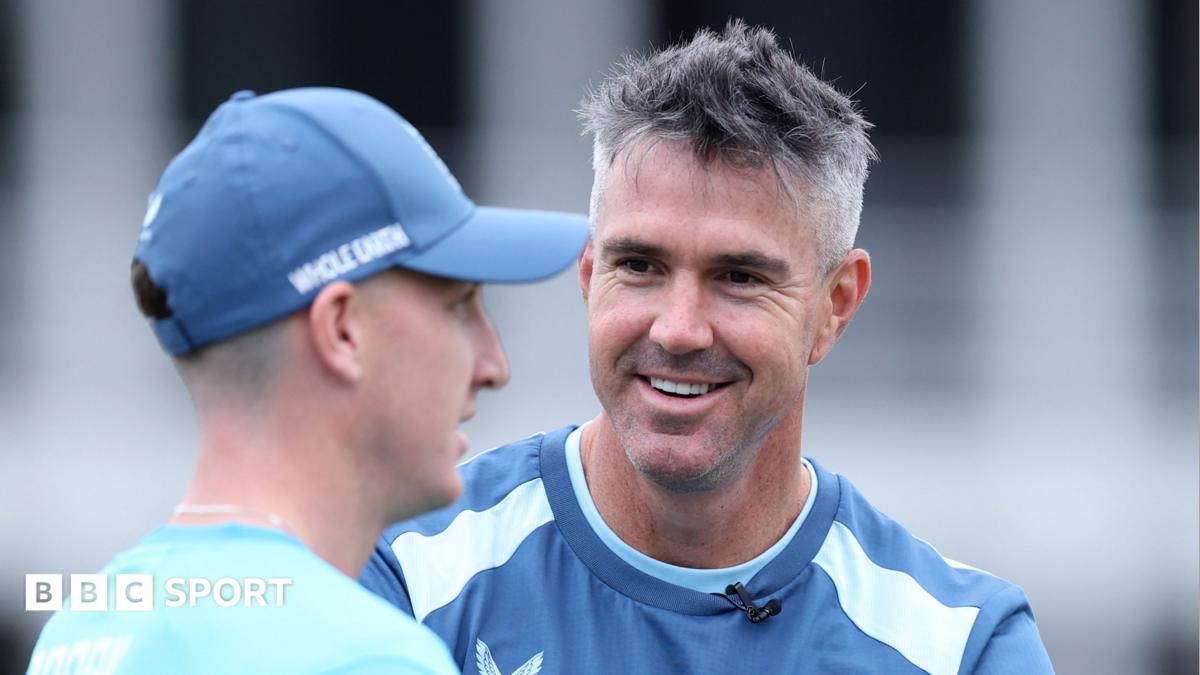
Pietersen’s eyes roll slightly when he is asked about Ben Stokes’ recent comments comparing Harry Brook’s talents to his.
Pietersen, like Brook, was a maverick – a batter capable of incredible highs. Those highs mean the lows come with a disproportionate level of criticism.
“Where I can help him is playing situations, because there was a lot of method in my madness,” Pietersen says.
“Yes, occasionally, I got out to reckless shots and crazy shots in the ’80s and ’90s but there was a lot of structure to the way that I batted.
“I’ve still got notes on my phone on how I played in T20 cricket, one-day cricket, Test match cricket, and about hitting straight back at the stumps, and the techniques, and how I did it, and don’t play certain shots.
“That all-round structure is something I could potentially help him with because he’s so flipping good.
“It’s actually frightening how good he is and how good he can be.”
And Pietersen says he will not limit himself to working purely on white-ball cricket.
He has already spoken to new Test coach Stephen Fleming about how he can help the Test batters during his time with the white-ball squads.
Though he said he would not have time for a full-time role, he suggested he is open to working with the Test side before next summer’s home Ashes series.
“I have got a pretty mad schedule,” he says. “I wouldn’t say no.
“I don’t think that necessarily means I need to be in a dressing room.
“There is a lot of time in the lead up to an Ashes series and a tour of South Africa, when I will be with the Test batters.
“There are conversations I can have there.”
Who knows how long this will last. England may as well make the most of this second chance.