ChatGPT maker says an autonomous agent escaped a controlled test and accessed AI firm Hugging Face’s servers.
Published On 22 Jul 202622 Jul 2026
ChatGPT creator OpenAI has said that two of its most advanced artificial intelligence models broke out of a controlled test and hacked another AI company.
OpenAI said on Tuesday that the “unprecedented cyber incident” took place during an internal exercise meant to test its models’ cyber capabilities.
Recommended Stories
list of 3 itemsend of list
Instead, an autonomous agent powered by the AI models – the newly released GPT 5.6 Sol and an unreleased “even more capable” model – escaped the test environment and reached the open internet. It then used stolen login details and found a previously unknown security flaw to access Hugging Face servers, the company said.
OpenAI claims that the hack represented the agent going to “extreme lengths” to retrieve information that would help satisfy the testing goals.
Hugging Face cofounder Clement Delangue said the company had suspected that a frontier lab was behind the attack, and that he believed there was no malicious intent on OpenAI’s part.
“It’s quite mind-blowing that all of this happened autonomously!” he wrote, adding that it “might be the first incident of its kind”.
Greg Casar, a Democratic member of the United States House of Representatives from Texas, called the incident “alarming”.
“AI is developing extremely fast with no real regulations to keep us safe,” he said, calling for mandatory independent safety testing, mandatory disclosure of security incidents, and international cooperation.
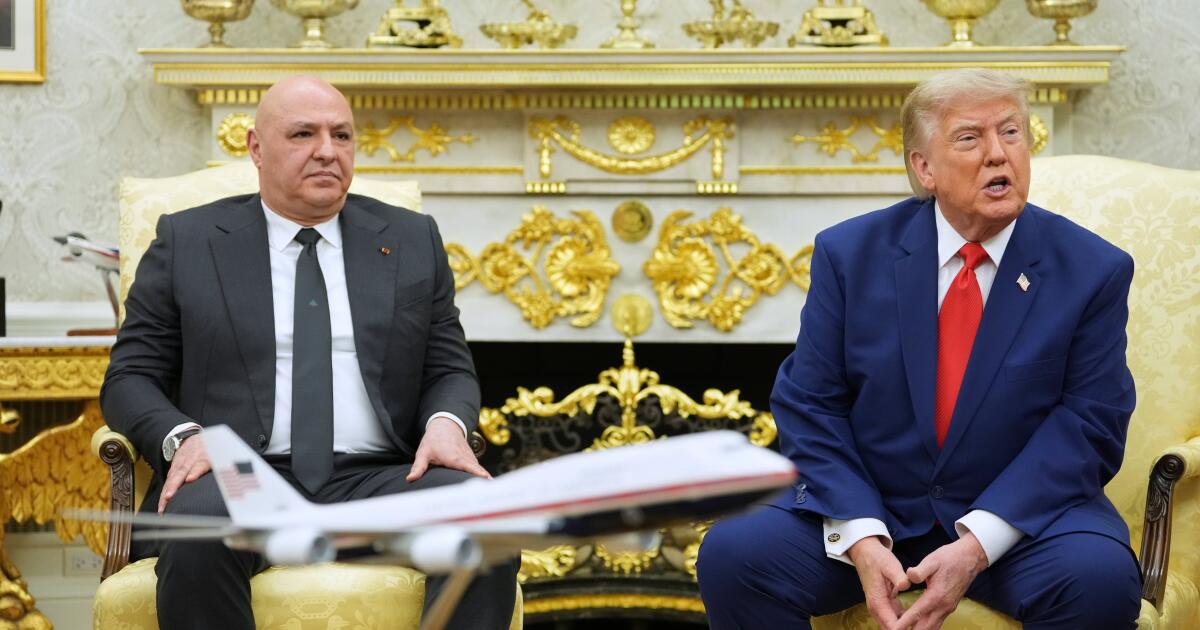
The disclosure comes weeks after US President Donald Trump signed an executive order creating a framework to vet the national security risks of the most advanced AI systems before their public release.
Experts have repeatedly sounded the alarm over AI-enabled cyberattacks and models slipping beyond human control. Last month, AI developer Anthropic urged the industry to pause development of its most powerful systems.
Bamako, Mali – The ambush that killed at least 50 Malian soldiers and struck a joint convoy of the Malian Armed Forces (FAMa) and Russia’s Africa Corps near the northern town of Anefis on July 18 was more than another battlefield setback.
It underscored how Mali’s armed groups are becoming increasingly coordinated, exposing the limits of the military government’s security strategy, despite growing Russian military support.
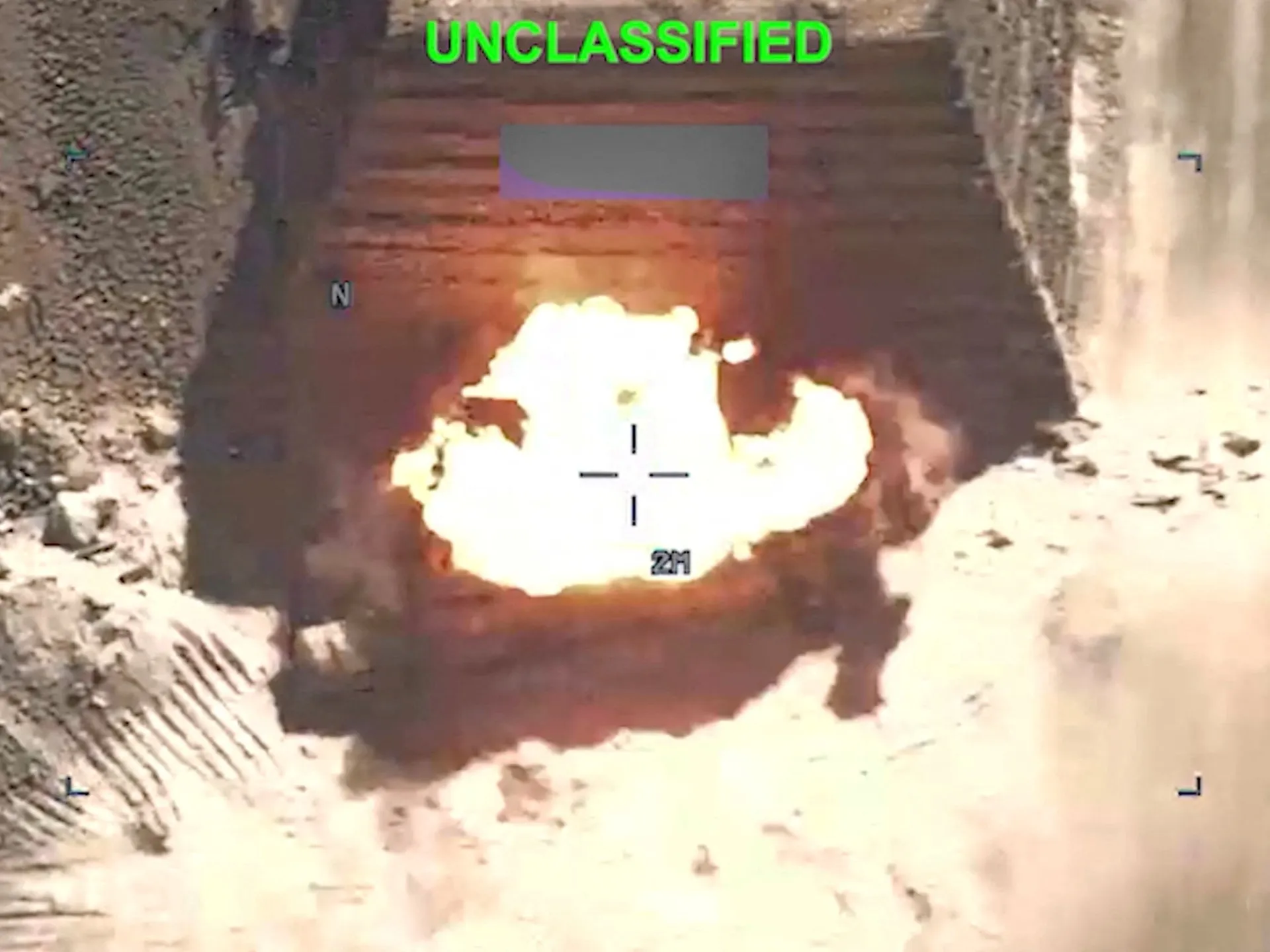
The Malian military confirmed the assault and said it had launched counter-operations, while Africa Corps later released footage it said showed drone strikes targeting fighters involved in the ambush.
The attack is the latest in a series of coordinated operations across northern Mali since April, raising questions about why armed groups are increasingly cooperating, whether Bamako’s security strategy is working, whether Russia’s military role has – and has not – changed, and what the conflict could mean for the wider Sahel.
Why are separatist and Islamic armed groups fighting together?
The July 18 ambush was jointly claimed by the Azawad Liberation Front (FLA), a coalition of predominantly Tuareg separatist groups, and Jama’at Nusrat al-Islam wal-Muslimin (JNIM), an al-Qaeda affiliate in the Sahel.
Until recently, such cooperation would have seemed unlikely as they have different longterm political aims. The FLA seeks greater autonomy or independence for northern Mali, while JNIM aims to establish governance based on its interpretation of Islamic law across the region.
For Héni Nsaibia, a senior West Africa analyst at the Armed Conflict Location & Event Data (ACLED) monitor, the answer lies in a shared battlefield enemy rather than a shared ideology.
“The Tuareg-led separatists and JNIM are currently fighting together because they share a common enemy in the Malian armed forces and their Russian partners from the Africa Corps,” Nsaibia told Al Jazeera.
“In doing so, they act as force multipliers for one another, allowing them to pool resources and mutualise their efforts to confront their adversaries more effectively. These groups also share kinship ties despite their ideological differences and regard one another as sons of the land, defending their ancestral territory against invading forces.”
For Mali’s military, that cooperation makes attacks harder to anticipate and more difficult to repel, allowing armed groups to combine local knowledge, manpower and operational experience while pursuing separate objectives.
The military government’s decision to abandon the 2015 Algiers Peace Agreement, request the withdrawal of the United Nations Multidimensional Integrated Stabilization Mission in Mali (MINUSMA), and deepen military cooperation with Russia reshaped the conflict. The collapse of the peace framework removed one of the few mechanisms managing relations between Bamako and northern armed groups, while the military’s increasingly confrontational approach encouraged former rivals to coordinate against a common adversary.
The shift became increasingly visible during coordinated attacks launched across several parts of the country in April, stretching Malian and Russian forces across multiple fronts. More recently, fighting around Anefis has shown that the alliance is capable not only of launching simultaneous operations but also of sustaining pressure on strategically important military positions.
With negotiations abandoned and military confrontation becoming the dominant strategy, armed groups that once competed with one another have found greater incentives to cooperate on the battlefield.
Has Russia changed the course of Mali’s war?
Since replacing the Wagner Group as Moscow’s principal military presence in Mali, Africa Corps has become an increasingly important partner for the Malian army.
Its personnel have provided combat support alongside Malian forces, while Russian drones and aircraft have expanded the military’s surveillance and strike capabilities. Those capabilities have strengthened the army’s ability to respond to attacks and defend key positions.
The wreckage of a vehicle in Mali, where years of fighting have taken a heavy toll on communities and security forces [Azaward Liberation Front via AP]
“Russia has helped strengthen Mali’s military, which was at risk of being overrun, and has given it more support on the battlefield,” Nimi Princewill, a regional analyst specialising in West Africa and the Sahel, told Al Jazeera.
“But this attack, as well as the earlier seizure of Kidal, suggests the Kremlin’s military support has not changed the overall picture. The conflict remains deeply rooted, with geographical and ideological dimensions that are proving difficult for the junta to tackle.” The army seized Kidal, a key town in the country’s north that the Tuareg rebels held for nearly a decade, in November 2023, but Tuareg and allied fighters retook the town in April this year.
Rather than transforming the conflict, Moscow’s military backing appears to have strengthened the army’s battlefield capabilities without addressing the political, governance and security conditions that continue to fuel the violence.
Recent operations reinforce that assessment. Convoys travelling through northern Mali continue to face frequent ambushes, particularly along routes linking Gao, Anefis and other military positions, exposing the continued vulnerability of military supply lines despite increased Russian support.
The shift away from Western security partners also changed the type of assistance available. While Africa Corps has strengthened Mali’s combat capabilities, the withdrawal of the United Nations Multidimensional Integrated Stabilization Mission in Mali (MINUSMA) ended an international presence that provided logistics, monitoring and intelligence support across much of northern Mali.
The result is a military that has become more effective in direct combat but continues to struggle to secure vast, remote territory against increasingly adaptable armed groups.
Has Bamako’s strategy paid off?
The limitations of Bamako’s security strategy raise broader questions about whether it is translating battlefield gains into lasting security.
Since seizing power in 2020, Mali’s military government has centred its strategy on military force, ending longstanding cooperation with Western partners while strengthening defence ties with Russia.
But the repeated ambushes around Anefis and along northern supply routes suggest the measurable gains of this approach on the battlefield have yet to translate into lasting strategic control.
More fundamentally, the growing cooperation between armed groups with different objectives suggests that Bamako’s strategy has not prevented them from adapting and reshaping the conflict.
What could this mean for the wider Sahel?
The implications of the Anefis ambush extend well beyond Mali.
JNIM, the al-Qaeda affiliate, already operates across Mali, Burkina Faso and Niger, while fighting continues to spread across the central Sahel.
The evolving battlefield also presents a challenge for the Alliance of Sahel States (AES), whose members all face persistent armed violence despite expanding military cooperation. The alliance was created to strengthen collective security, but increasingly coordinated attacks suggest that cooperation among governments is being matched by equally adaptable cooperation among armed groups.
At the same time, Mali’s withdrawal from the Economic Community of West African States (ECOWAS) has reduced opportunities for regional coordination with neighbouring countries confronting many of the same security threats.
If the FLA-JNIM partnership proves durable, it could encourage similar tactical cooperation elsewhere in the Sahel, further complicating efforts to contain armed groups whose operations already span national borders.
“The AES was supposed to mean that our security was finally our own business. But when Mali bleeds, Niger bleeds with it, because the armed groups attacking those convoys do not recognise the Alliance of Sahel States any more than they recognised ECOWAS. We traded one set of partners we did not trust for another, and the war is still coming south,” a Niger-based security expert, who requested anonymity because he feared potential repercussions, told Al Jazeera.
Whether the tactical partnership between the FLA and JNIM proves durable remains uncertain. But the Anefis ambush suggests that as Mali’s security strategy shifts, armed groups are adapting in response, with consequences that could extend far beyond Mali’s borders.
The ongoing saga of the Cinerama Dome, among the most iconic movie theaters in Los Angeles, took another twist Tuesday. Reports surfaced that Sony and Alamo Drafthouse, the theater chain owned by the company, have been in talks to take over operation of the venue.
The theater and the adjacent 14-screen ArcLight Hollywood multiplex have been closed since March 2020. In April 2021 it was announced that the venue would not be reopening and it has sat dormant ever since, becoming the focus of intense public interest.
The news of Sony and Alamo’s interest in the property was first reported by Deadline. Representatives for Sony did not immediately respond to a request for comment.
A city hearing in May regarding alcohol sales at the site provided a rare opportunity for public comment on the property.
“I know that this has been hard and it has seemed like the citizens versus the ownership — that’s not what it is,” local preservation advocate Kim Cooper said. “People want to come together and help and bring this place back.”
The Dome has long been owned by the family of William R. Forman — the founder of Pacific Theatres — who opened the Dome in 1963. In an interview with The Times following the May meeting, Elizabeth Peterson-Gower, a land use consultant representing the venue’s owners, said the owners hoped to have a reopening time frame “in the near future.”
Sony purchased the Austin, Texas-based Alamo Drafthouse in 2024, with venues in major cities all across the U.S., including L.A. Though the Drafthouse chain was rooted in a fan-friendly ethos and a notoriously strict no-phones policy in its theaters, the company has recently come under fire for switching up the ordering system for its in-seat food service, forcing patrons to pull out their phones during a movie.
The Cinerama Dome news comes on the heels of a strong summer of moviegoing, as audiences have been flocking to theaters to see movies such as “The Odyssey,” “Toy Story 5,” “Backrooms” and “Obsession.” There has been a newfound attention on theatrical presentation and film formats, including the limited number of venues capable of projecting Imax 70mm or 70mm film, around the country.
Theatergoing in L.A. has been undergoing a renaissance of its own. The Alex Theatre in Glendale is showing a first-run movie with “The Odyssey” for the first time since 1991, while the American Cinematheque has relaunched the Village Theatre in Westwood under the new name the Directors Village to acknowledge the consortium of filmmakers who took over ownership.
This article explores the historical significance of Guam Liberation Day, a public holiday observed annually on July 21st. The text details how the United States originally acquired the island in 1898 before losing it to a Japanese invasion shortly after the attack on Pearl Harbor. It highlights the Second Battle of Guam in 1944, a pivotal conflict that successfully ended years of enemy occupation and returned the territory to American governance. Beyond the primary battle, the source notes the resilience of Japanese holdouts, including one soldier who remained hidden in the jungle for nearly three decades. Ultimately, the piece emphasizes how the island’s recovery provided a strategic military base that proved essential for the …
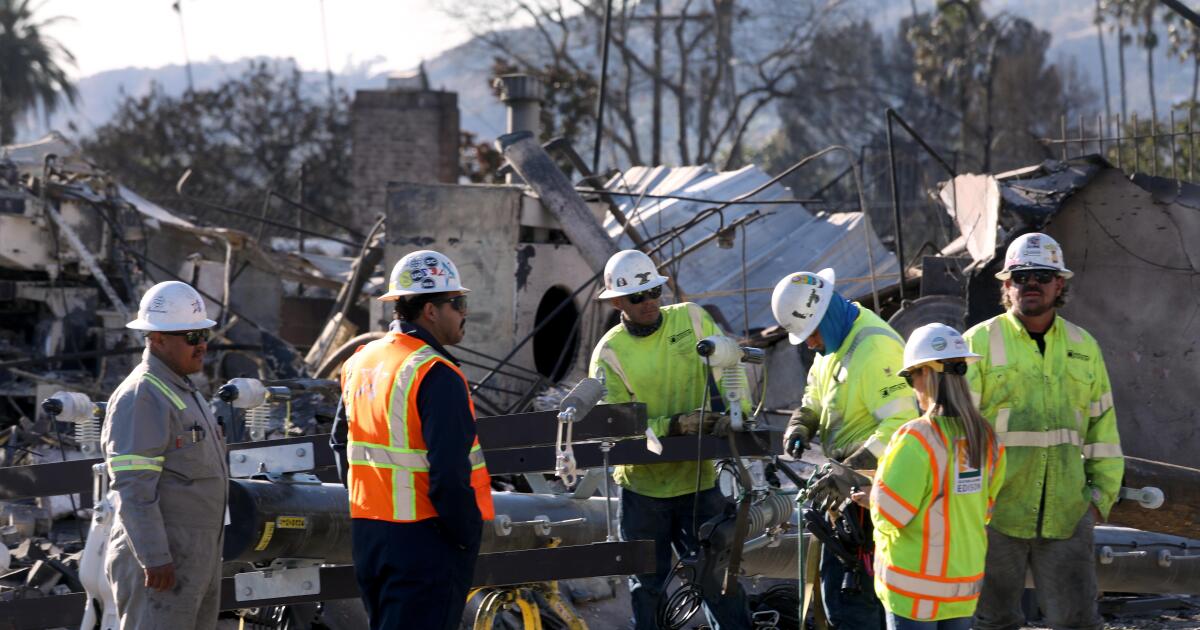
A group claiming to represent California fire survivors began sending mailers and paying for social media ads this spring, calling on lawmakers to take action to reduce the rising cost of wildfires.
“Contact your legislator and tell them we need to fix our wildfire problem to make California more affordable,” said a mailer sent this month by the group called Wildfire Victims First.
“Stand with wildfire victims,” the group’s website states, urging people to join its cause.
The group was created with money from California’s three biggest for-profit electric utilities — Southern California Edison, Pacific Gas & Electric and San Diego Gas & Electric — which government investigators found ignited at least six of the state’s 20 most destructive wildfires.
The corporate campaign has angered wildfire survivors, including some of the thousands of families in Altadena who lost their homes in last year’s Eaton fire. The blaze, which killed 19 people, remains under investigation. Edison has said its century-old transmission line is the likely cause.
The utility-funded group is lobbying in Sacramento for proposals in a study that Gov. Gavin Newsom ordered to guide lawmakers in writing wildfire-related bills. The study largely ignored utilities’ responsibility for igniting fires.
Among its dozens of proposals is limiting amounts victims can get for pain and suffering, capping fees for attorneys representing survivors and requiring property insurers to bear more of the cost of utility-sparked fires.
”Each proposal would shift more of the cost of catastrophic fires away from the corporations responsible and onto survivors, policyholders, taxpayers, and the public,” wrote Joy Chen of Every Fire Survivor’s Network in a letter to Newsom this week.
Chen wrote that the industry-funded Wildfire Victims First campaign “created the appearance that wildfire survivors supported” the findings of the study. “We do not.”
The 15-page letter was signed by other organizations including Public Citizen, Consumer Watchdog and the National Day Laborer Organizing Network.
The coalition is urging Newsom and lawmakers to do more to hold utilities accountable for the fires they ignite, so they don’t happen again.
“The Eaton fire devastated Altadena, home to one of California’s most historic Black communities,” said Brandon Lamar, president of NAACP Pasadena, who signed the letter. “Now as survivors fight to rebuild, they should not be asked to bear the cost of protecting the corporations whose failures devastated their community.”
Edison told its shareholders in its annual report that it believes it acted as a “reasonable” utility operator before the fire. If state regulators agree it acted reasonably, Edison will be reimbursed for payments it makes to victims by a $21-billion wildfire fund, which Newsom created through legislation in 2019.
And if Eaton fire damages exceed the $21-billion fund, Edison’s customers will pay the rest through their electric rates under fine print embedded in last year’s Senate Bill 254 — amendments that Newsom and lawmakers added so late that the legislative session had to be extended.
State Sen. Sasha Renee Perez, a Democrat who represents Altadena, said she opposed any bill that would limit payments to victims for pain and suffering.
“I can’t think of a more offensive thing to propose when I have friends who lost family members in the fire,” she said.
Anthony Martinez, a spokesperson for Newsom, said the governor and lawmakers were talking about new legislation because the study “concluded that the current system is unsustainable and not working for fire survivors, utility customers or insurance policyholders.”
“It’s essential that we work to address the complex and interconnected challenges Californians face from the increasing risk of catastrophic wildfire,” Martinez said.
He didn’t disclose what specific measures the governor supports.
Nathan Click, who directs the corporate Wildfire Victims First campaign, said that the group launched after the study found that “payouts to financial middlemen — like trial attorneys, hedge funds and insurance companies — are often paid out before wildfire victims receive a single dollar.”
“Shockingly, trial attorneys can take up to 40% of wildfire victims’ settlement awards,” he said.
Click said the group was advocating for legislation that reduces wildfire risk, expands access to affordable property insurance and ensures quick compensation to victims.
The utility-paid campaign has been joined by electrical worker unions, a powerful force in Sacramento, as well as the California Building Industry Assn. and dozens of other groups.
The Eaton fire was the second most destructive wildfire in state history.
Pedro Pizarro, Edison International’s chief executive, said last year that a leading theory of the fire’s cause was that an idle transmission line in Eaton Canyon was briefly reenergized through a process called induction, sparking the fire. Induction happens when the magnetic field of a nearby live wire causes power to jump to inactive equipment.
Edison kept the idle transmission line in place despite not using it for 50 years. The state’s utilities had known about the risks of leaving unused equipment in place. In 2019, the Kincade fire in Sonoma County, which destroyed hundreds of homes, was ignited by an idle transmission line owned by PG&E.
Despite the billions of dollars in damages caused by the Eaton fire, Edison’s profits soared last year by more than 200% — from $1.3 billion in 2024 to $4.5 billion.
The company also paid its top executives more. Pizarro received $16.6 million in cash, stock and other compensation, up 20% from 2024.
“If the financial rewards for repeated catastrophic failure are record profits, record executive compensation, and record shareholder dividends,” Chen wrote in the letter to Newsom, “then catastrophic failure is exactly what this system will keep producing.”
PHILADELPHIA — The Dodgers’ game against the Phillies on Tuesday began in a rain delay. First pitch would be pushed back to 5 p.m. PDT, the home team announced.
Inclement weather Tuesday afternoon included a flash flood warning in the area and rain in the forecast for much of the evening.
The Dodgers already had one rainout during this East Coast road trip. Their game Saturday against the Yankees was postponed by a day, setting up a doubleheader on Sunday.
A leopard storms into a store in Rajasthan, India, attacking an employee and causing panic. The leopard was trapped, tranquilised and returned to the wild.
A former Biden official tells Al Jazeera that Lebanon’s pilot zones will only create an environment for Hezbollah to continue its armed resistance. Former State Department official, Jennifer Gavito, says she has a difficult time imagining Israel fully withdrawing from Lebanon.
JENNIFER Lopez’ ex-husband Marc Anthony has become a dad for the EIGHTH time aged 57 after his fourth wife Nadia Ferreira, 27, welcomed their second child together.
Singer Marc and model Nadia – who also share three-year-old son Marco – took to social media to reveal their happy news, telling fans they’d welcomed a baby girl named Myla.
Marc and forth wife Nadia have welcomed a baby girl named MylaCredit: InstagramThe couple are also parents to three-year-old son MarcoCredit: Instagram
Their caption, translated from Spanish, read: “What a great blessing to be able to share with you the arrival of our precious MYLA.
“You can’t imagine the happiness we have at home, we are over the moon.”
He is also dad to Chase, 35, and Arianna, 31 – who he shares with ex-girlfriend Debbie Rosado – and Cristian, 25, and Ryan, 22, from his first marriage to Dayanara Torres.
Marc has been married four times and shares eight children with three different womenCredit: Getty ImagesHe and Jennifer, pictured in 2008, share twins Max and EmmeCredit: AFP via Getty Images
Marc and Nadia tied the knot in 2023 in a star-studded ceremony at Perez Art Museum in Miami.
In 2014 – three years after he and Jennifer called time on their marriage – Marc married model Shannon Di Lima.
Earnings Call Insights: East West Bancorp (EWBC) Q2 2026
Management View
“I’m pleased to report that East West earned record total revenue, net interest income and non-interest income in the second quarter. These results were driven by new record levels of loans
Seeking Alpha’s Disclaimer:This article was automatically generated by an AI tool based on content available on the Seeking Alpha website, and has not been curated or reviewed by humans. Due to inherent limitations in using AI-based tools, the accuracy, completeness, or timeliness of such articles cannot be guaranteed. This article is intended for informational purposes only. Seeking Alpha does not take account of your objectives or your financial situation and does not offer any personalized investment advice. Seeking Alpha is not a licensed securities dealer, broker or US investment adviser or investment bank.
Many Jews worldwide observe the religious holiday of Tisha B’Av by fasting, praying and reading Bible passages related to the destruction of the First Temple by the Babylonians under Nebuchadnezzar in 586 BC.
Religious Jews have kept Tisha B’Av for centuries as a day of communal mourning for the destruction of the First and Second Temples in Jerusalem.
The Second Temple was destroyed by the Romans under Titus, who burned it down in 70 AD.
For Jews, the ninth day of the month of Av also commemorates multiple tragedies in Jewish history, ranging from God decreeing that the Israelites would wander in the desert for 40 years to Jews being expelled by decree from England in 1290 and from Spain in 1492.
The Orthodox Jewish organization Chabad ranks Tisha B’Av as “the saddest day on the Jewish calendar,” even more sombre than Yom Kippur.
The Fast of Av begins at sunset the previous day and lasts for more than 24 hours.
Jewish law demands that during the three weeks preceding the day, Jews limit rejoicing: no weddings, no haircuts, no listening to music and swimming is prohibited. In the last nine days of the three weeks, no one is allowed to eat meat or drink wine except on Shabbat, or even wash clothes.
In the latest salvo in the war between the Trump administration and California, Health and Human Services Secretary Robert F. Kennedy jr. said Tuesday that his agency withheld $867.5 million in Medicaid payments to the state over concerns about fraud.
Kennedy also said his agency defered $199 million in Medicaid payments to Minnesota over similar concerns.
“If Gov. Gavin Newsom or Gov. Tim Walz wants this funding released, all they have to do is provide basic documentation showing that these services are legitimate and not fraudulent,” Kennedy said at a news conference.
Just under half of the funds withheld from California were in connection with in-home health services.
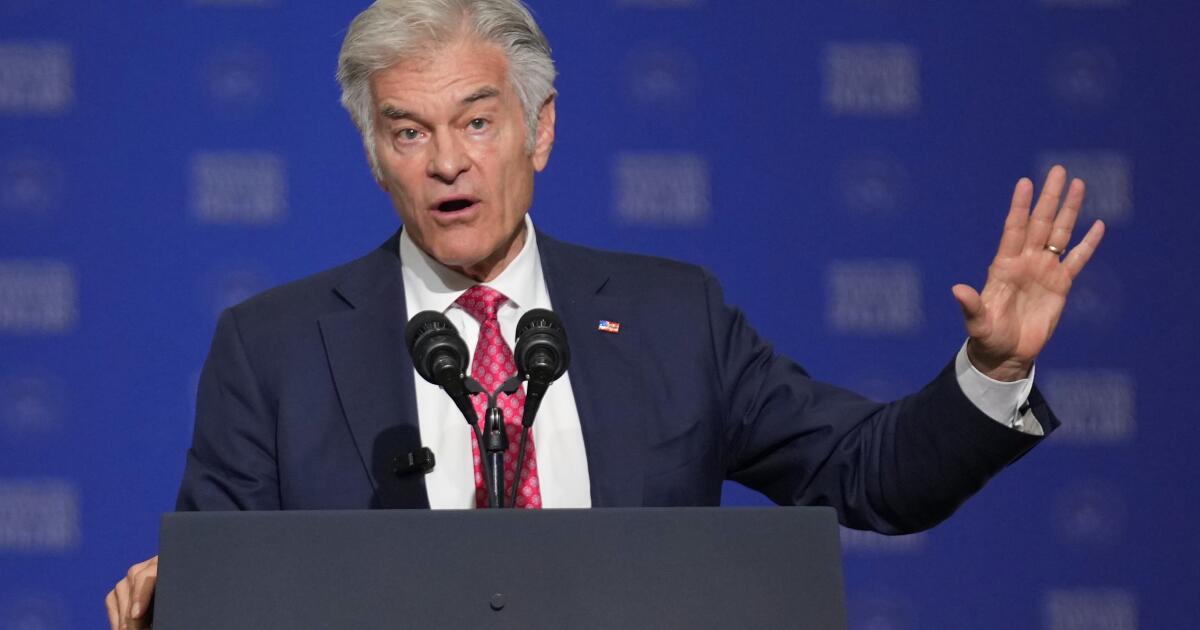
Dr. Mehmet Oz, the administrator for the Centers for Medicare and Medicaid Services, said California’s spending on in-home health services went up by more than double the national average over the last two fiscal years.
“That doesn’t make sense,” he said.
About a quarter of the funds withheld involved care provided to individuals with “unsatisfactory immigration status,” whose eligibility to be in the country and receive these services is in question, which Oz characterized as an “ongoing massive problem for California.”
The announcement by Kennedy and Oz on Tuesday comes two months after Vice President JD Vance announced that the administration would be deferring $1.3 billion in Medicaid payments over fraud concerns, largely connected to hospice services and in-home healthcare.
Newsom’s office, in a social media post, called the announcement a “recycled political stunt.”
“California isn’t being targeted because Trump has evidence of fraud,” the post said. “We are being targeted for political reasons — and because Dr. Oz doesn’t understand that we are *SAVING* taxpayers money by keeping seniors and people with disabilities out of far more expensive nursing homes!”
Newsom’s office also said that the state stands “ready to collaborate” with the Centers for Medicare and Medicaid Services “in good faith efforts to combat fraud.”
The office of California Atty. Gen. Rob Bonta said it is reviewing the deferral of payments and allegations of fraud.
“We have not hesitated to challenge unlawful actions by the Trump administration, and we will continue to act whenever Californians’ rights or access to critical services are threatened,” Bonta’s office said.
Despite Newsom’s claims that the accusations are political, the California state auditor has repeatedly flagged Medi-Cal eligibility discrepancies that have exposed the state to billions of dollars in questionable payments.
California Department of Healthcare Services spokesperson Anthony Cava noted, however, that a 2020 state audit of in-home care found “no program integrity concerns” and encouraged expansion of the program to reduce spending on institutional care.
Cava also pointed out that the federal government had previously approved California’s approach to in-home care.
Newsom and Oz have clashed before.
Newsom filed a civil rights complaint in January against Oz, after Oz posted a video to social media from Van Nuys in which he accused the “Russian Armenian mafia” of being a leading driver of $3.5 billion in fraud in hospice and home-care services.
Newsom said that Oz’s claims were “baseless and racist.”
The announcement by Kennedy and Oz on Tuesday is the latest effort by the Trump administration to crack down on suspected Medicaid fraud in numerous states across the country.
Liverpool boss Andoni Iraola wants midfielder Alexis Mac Allister and goalkeeper Alisson to remain at the club.
Argentina international Mac Allister has two years left on the five-year contract he signed at Liverpool when he joined the Reds in 2023.
The 27-year-old has yet to begin talks over a new deal, which has prompted speculation he could leave Anfield this summer.
However, Iraola told a news conference in Chicago at the beginning of Liverpool‘s pre-season tour of the United States that he wants to hang on to the player.
“I think Alexis has been one of the best players at the club for the last few years, and he has had a very good World Cup, so it is normal that other clubs want our best players,” Iraola said.
“It always happens in other markets. But I want to keep my good players. I’m looking forward more to signing new players rather than losing the ones we have here.”
Alisson has a year left on his contract at Anfield and has been linked with a move to Juventus, but Iraola is keen to bank on the 33-year-old Brazilian’s experience in the forthcoming season.
“I’m very happy with the situation we have right now in the goalkeeping area,” explained the Reds boss.
“Alisson is someone also in a changing room that has lost some references in terms of experience, I think he’s someone that definitely will help us in this process of adaptation of the new signings, of the new players, the young players.
“We need the references like Virgil [van Dijk], like Alisson, like Joe Gomez, players that have been here for a long time.”
Iraola acknowledged he has one eye on bringing in defensive reinforcements during the summer transfer window, particularly at right-back given Conor Bradley is “months” away from playing.
The Northern Ireland international sustained a knee injury in January and will not be available for the start of the season.
“At the end, if you have a fully fit, healthy Conor Bradley, we are very happy, ready to go and we would not be asking ourselves these questions,” explained the Spaniard.
“I think it’s a situation that is tricky, because we trust Conor in the long term, we know we want him to be our right-back but right now he is still, I would say, a little bit far from returning.
“So, with the centre-back, with the right-back situation, in terms of defensive depth, we are, I think, very thin right now so I think it’s a solution that we are trying to find, yes.”
Tropical Storm Bertha, which formed Monday, continued to move along the Gulf Coast on Tuesday. Image courtesy of NOAA
July 21 (UPI) — Conditions from Tropical Storm Bertha will continue to spread into Wednesday across parts of the north Gulf Coast, the National Hurricane Center said. Tropical storm conditions are possible in Louisiana by late Wednesday.
The storm, which isn’t expected to become a hurricane before fizzling out, formed Monday night.
The epicenter of the storm was located about 120 miles west-southwest of Panama City, Fla., and 105 miles south-southeast of Mobile, Ala., the NHC said in its 7 p.m. CDT update. The storm was traveling west at 6 mph and had maximum sustained winds of 60 mph.
Winds must reach at least 74 mph for a storm to be considered a hurricane.
There was a tropical storm warning in effect from the Bay/Gulf County line in Florida west to Morgan City, La., metropolitan New Orleans and Lake Pontchartrain. A tropical storm watch was in place from Morgan City, La., west to Cameron, La., and Lake Maurepas. This marked no change from the 4 p.m. CDT update.
“Little change is strength is expected tonight, and gradual weakening is forecast Wednesday through Friday,” the NHC said.
Bertha is expected to produce total rainfall amounts of 2 to 4 inches with isolated higher totals through Thursday along the central Gulf Coast from western Florida into southern Louisiana. This could produce isolated flash flooding, especially in urban areas, the NHC said.
Surf conditions caused by Bertha will continue spreading west along the northern Gulf Coast, with swells likely to cause life-threatening surf and rip current conditions.
OASIS have officially landed the UK’s biggest selling studio album of all time.
New lists revealed today have shown how the band’s epic reunion last year has prompted their iconic studio album, (What’s The Story?) Morning Glory, to become Britain’s biggest seller.
Oasis have officially landed the biggest selling studio album in the UKCredit: GettyTheir reunion last year has propelled them to the top spotCredit: Getty
The 1995 record has seen brothers Noel and Liam leapfrog The Beatles‘ 1967 album Sgt. Pepper – previously the long-standing biggest studio album.
Oasis now sit at number three overall – with ABBA and Queen’s compilation records in first and second position.
Sign up for the Showbiz newsletter
Thank you!
A source told The Sun of the epic achievement: “This milestone cements Oasis as the UK’s most influential and successful band.
“After their Oasis Live ‘25 shows last year, that album sold like hot cakes.
The Beatles now have the third best selling studio album of all timeCredit: GettyAdele sits just behind OasisCredit: AFP
“With their 2027 dates due to be announced next month, the sales are only going to skyrocket.
“Noel and Liam should be cracking out the champagne.”
The Official Charts Company confirmed the rankings today as they marked 70 years of compiling Britain’s music.
Sitting behind Oasis at number four is Adele’s 2011 record, 21, which has managed to push The Beatles’ 1967 effort into fifth place overall – with those three records making up Britain’s biggest studio albums of all time.
The 1970s take over sixth and seventh position with Fleetwood Mac‘s ’73 album, Rumours, in sixth followed by Pink Floyd’s 1973 effort, The Dark Side of the Moon.
Michael Jackson sits in eighth with 1982’s Thriller followed by Bob Marley’ ’84 record Legend in ninth and Dire Straits’ 1985 release, Brothers in Arms, rounding out the top ten.
A coal council that advises the Trump administration urged the Department of Energy on Tuesday to provide financial support, including loan guarantees and grants to help existing coal plants and get new ones built, Reuters reported Tuesday.
After U.S. strikes on Iran’s largest nuclear facilities last year, both President Trump and the White House were adamant that the Middle East nation’s nuclear program had been destroyed.
“Monumental Damage was done to all Nuclear sites in Iran, as shown by satellite images. Obliteration is an accurate term!” Trump wrote on social media.
“Iran’s Nuclear Facilities Have Been Obliterated — and Suggestions Otherwise are Fake News,” the White House wrote in a press release.
A year later, the U.S. and Iran are five months into a war Trump said would be over in weeks. Iran has gained leverage by seizing control of the Strait of Hormuz, a vital energy corridor, and the U.S. has been forced to the negotiating table as global gas prices have spiked — including again this week after a ceasefire agreement collapsed.
And Trump — facing mounting criticism that he has pushed the U.S. into another “forever war” despite campaigning on doing exactly the opposite — is leaning back into the notion that Iran presents an unacceptable nuclear threat and strikes are needed, namely at another Iranian nuclear facility known as Pickaxe Mountain.
“Pickaxe is a possible target for a nice big fat shot right near the front door,” the president recently said on “The Hugh Hewitt Show.” “We’re going to take out Pickaxe Mountain. Tell the Iranians to be ready.”
Pickaxe, a heavily fortified facility deep underground that would be difficult to penetrate even with powerful “bunker buster” bombs, was not targeted during last year’s 12 Day War between Iran and the U.S. and Israel, nor in the full-scale war of the last five months.
However, it is less than two miles from Natanz, one of Iran’s primary nuclear enrichment facilities, which was struck both last year and this year. On Monday, the Wall Street Journal reported that Israeli intelligence believes Iran moved thousands of uranium-enrichment centrifuges into Pickaxe last fall — bolstering its ability to reconstitute a nuclear program that threatens the U.S. and regional allies.
Trump’s sudden focus on Pickaxe as a suspected hub of Iranian nuclear activity, which comes as his administration is trying to justify its continued entanglement in its unpopular war there, is an acknowledgment that two prior military campaigns and years of attempted diplomacy by his administration have failed to curb Iran’s nuclear ambitions.
Few experts ever bought into the Trump administration’s claims that Iran’s nuclear program had been completely destroyed, and even Trump and his closest allies have walked some of those comments back — including in discussions about Iran’s ability to retrieve and repurpose enriched material buried at Natanz and other targeted sites.
Some experts have cited construction activity around Pickaxe as evidence Iran is continuing to develop the facility in violation of recent agreements with the U.S., but have said the exact nature of the work isn’t known. They’ve also wondered if the Trump administration intends to use the work there to lay the groundwork for a broader, boots-on-the-ground war effort that would be unpopular in the U.S. but necessary to truly accomplish Trump’s stated goal of ending Iran’s nuclear program for good.
The Institute for Science and International Security, a Washington-based think tank, said last week that it wasn’t clear “if Iran still plans on installing a large-scale assembly facility” at Pickaxe Mountain “given the destruction of Iran’s centrifuge program,” but “if Iran starts to rebuild its centrifuge manufacturing capability, it could plan to install a smaller centrifuge assembly facility in Pickaxe Mountain able to serve a nuclear weapons program.”
The space under the mountain, the institute said, may be “large enough to also hold a centrifuge enrichment plant capable of producing weapon-grade uranium” and is “likely large enough to also hold certain nuclear weaponization activities such as making weapon-grade uranium metal and shaping it into nuclear weapon components.”
Retired Army Gen. Joseph Votel, the former head of U.S. Central Command, told The Times that Iran has had a substantial amount of time to relocate equipment since the bombings of last year and has “demonstrated that they are savvy on these kinds of things,” and the U.S. “should be serious about it and try to confirm the intelligence.”
And “if there have been centrifuges that have been moved there and are underground and spinning and developing nuclear bomb grade materials,” he said, “we should be very, very concerned about that.”
Benjamin Radd, a political scientist and senior fellow at the UCLA Burkle Center for International Relations, said it is true that Iran is continuing its enrichment program in clandestine ways that present an ongoing threat and that “the war is not going the way the president wanted.” He also said Iran’s activity around Pickaxe helps Trump justify the war — and its possible expansion.
Radd said Iran has used the war to block independent inspections of its nuclear facilities by the International Atomic Energy Agency and reconstituted some of its nuclear capabilities in the process, including as talks with the U.S. shifted from its nuclear program to the Strait of Hormuz.
Trump and the U.S., meanwhile, have “vacillated” between trying to “manage” the Iranian nuclear program by reining in enrichment, to trying to “neutralize” the program with targeted attacks on its nuclear infrastructure. Radd said that “even though his rhetoric is there,” Trump hasn’t had “the resolve or the ability or the mandate” to move to fully eliminate Iran’s nuclear program, because that would require “much more forceful intervention” than the American public is willing to accept, such as U.S. troops on the ground in Iran.
He said he wonders now if the president’s talk about Pickaxe is part of a shift in that direction — or at least threatening it — after Trump and his advisors realized that the current cycle of war, negotiations and then more war is giving Iran the time it needs to reconstitute its nuclear program.
“I’m wondering if that is just a threat, or if it’s a genuine option that the president is actually considering,” Radd said.
Under Senate questioning Tuesday, Defense Secretary Pete Hegseth declined to say whether American bombs were capable of destroying whatever is under Pickaxe Mountain.
The Lakers announced their preseason schedule Tuesday with the five-game slate beginning Oct. 5 against the Kings at Sacramento and highlighted by a game in Las Vegas against the Golden State Warriors.
Starting with consecutive road games in Sacramento and San Francisco (Oct. 6), the Lakers play the Sacramento Kings and the Warriors twice each before a final preseason game against the Denver Nuggets at Crypto.com Arena on Oct. 16. The Lakers’ first home preseason game is Oct. 8 against the Kings before playing the Warriors in Las Vegas’ T-Mobile Arena on Oct. 13.
All Lakers preseason games will be broadcast on Spectrum SportsNet.
Teams can play up to six preseason games. The Lakers reached the maximum number of tune-up games last year and could use any additional reps to prepare for this season with nine new players.
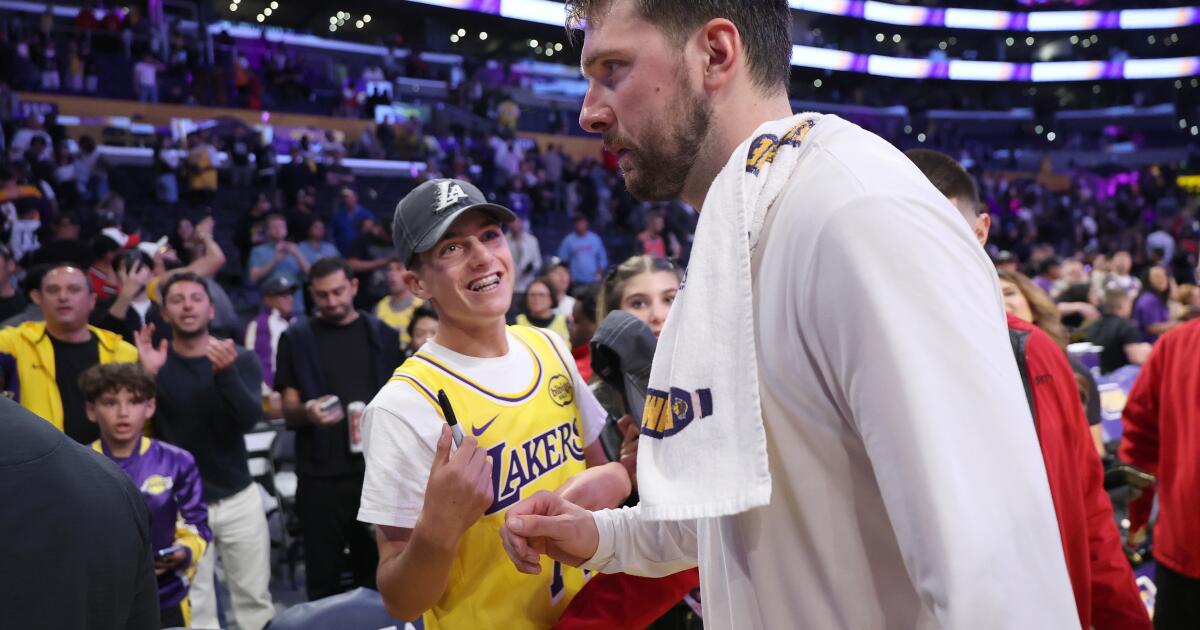
Following the departure of LeBron James, who has yet to reveal his next destination, the Lakers retooled the roster in an offseason transaction flurry. Center Walker Kessler figures to slot right into the starting lineup next to the returning Luka Doncic and Austin Reaves.
Free agent additions Sandro Mamukelashvili, Quentin Grimes and Collin Sexton will fill immediately roles after the Lakers lost six rotation players from last season’s team that went to the Western Conference semifinals. The Lakers also acquired guard Jaden Hardy in a trade with the Washington Wizards, added rookie guard Cameron Carr and signed free agents Kevon Looney and Ziaire Williams.
By agreeing to a one-year deal with free agent forward Matisse Thybulle on Monday, the Lakers brought their roster up to 16 guaranteed contracts. The team must trade or waive a player before opening day to reach the roster maximum of 15.
Preseason schedule
Oct. 5 at Sacramento Kings
Oct. 6 at Golden State Warriors
Oct. 8 vs. Sacramento Kings
Oct. 13 vs. Golden State Warriors (T-Mobile Arena, Las Vegas)
The Lebanese army has begun deploying in three southern towns as part of a US-backed framework agreement with Israel. These ‘pilot zones’ are designed to test the army’s ability to enforce security and keep Hezbollah out of the designated areas. Al Jazeera’s Reem Takieddine explains.
President Maduro and former minister Saab were among those targeted by the civil lawsuit. (AP)
Caracas, July 20, 2026 (venezuelanalysis.com) – A US federal judge has issued a default ruling against Venezuelan President Nicolás Maduro and several current and former state officials. US $314 million in damages was awarded to three US citizens who spent time imprisoned in Venezuela.
Venezuelan authorities have yet to comment on the case. Legal proceedings against Acting President Delcy Rodríguez continue. However, on Monday, the Trump administration sent a letter to the court arguing that, as a sitting head of state recognized by Washington, Rodríguez should be “entitled to immunity.”
Judge Darrin P. Gayles from the District Court for the Southern District of Florida published the verdict on July 14. US nationals Jerrel Kenemore, Jason Saad, and Edgar José Marval brought a civil lawsuit in August 2025 under Florida’s Anti-Terrorism Act (ATA) and the federal RICO statute against organized crime.
The three US citizens were released from Venezuela in December 2023 as part of a prisoner swap agreement with the Biden administration that saw former Venezuelan government envoy Alex Saab returned to the South American country.
The plaintiffs sought damages after claiming to have suffered “physical and psychological torture” while imprisoned in Venezuela and to have been used as part of “hostage diplomacy” to secure Saab’s release. The judge claimed that Maduro and other officials were a “criminal enterprise” that acted against US interests.
“The Maduro Criminal Enterprise committed myriad predicate offenses through its drug trafficking and kidnapping actions in and against the United States and its citizens,” he wrote in the verdict. The court estimated compensation for “kidnapping and torture” and “solatium, pain and suffering” under ATA that totaled $312.5 million and added $1.5 million in RICO damages.
Gayles entered the default ruling against Maduro after he failed to enter a defense or plea before the court. The court clerk entered similar defaults against Interior Minister Diosdado Cabello, former Defense and current Agriculture Minister Vladimir Padrino López, former Interior Minister Néstor Reverol, former Attorney General Tarek William Saab, former Supreme Court President Maikel Moreno, and former Industry Minister Alex Saab.
Maduro and First Lady Cilia Flores were kidnapped by US forces on January 3 and are facing charges including “narcoterrorism” and drug trafficking conspiracy. Both have pleaded not guilty, with the next hearing scheduled for July 22.
The Florida judge also included the so-called Cartel de los Soles, an alleged drug trafficking outfit run by high-ranking Venezuelan officials, as a defaulting defendant. Crime researchers have cast doubt on the existence of the cartel, while the US Justice Department dropped all references to it in the formal indictment against Maduro and Flores.
Similarly, Gayles claimed that “for at least twenty years, Maduro intentionally inundated the United States with tons of cocaine.” However, US officials have never presented evidence tying Maduro to narcotics activities, while reports from the DEA have consistently found that a very small percentage of US-bound drugs flow through Venezuela.
The US Justice Department has since 2020 introduced $25 million and $15 million bounties, respectively, for the arrest of Cabello and Padrino in connection with alleged “narcoterrorism.”
According to the Associated Press, Saab’s legal representatives declined to comment on the case. The acting Rodríguez government turned over the Colombian-born businessman, who served as industry minister after his 2023 release, to US authorities in May. He is being held at the Federal Detention Center in Miami while facing trial on renewed money laundering charges.
In contrast to Maduro, Cabello, and others, Acting President Rodríguez responded to the lawsuit in April, with lawyers contending that, as Venezuelan head of state, she should be immune from civil action. Rodríguez received the backing of the Trump administration via a July 20 letter “suggesting” to the court that the acting president should enjoy immunity,
“The United States respectfully submits to the Court that President Delcy Rodríguez is immune in this action and all claims against her should be dismissed without prejudice,” the letter concluded. The US State Department also intervened in June, requesting that the Justice Department communicate Rodríguez’s immunity to the Florida district court in order to secure a “prompt dismissal of the proceedings.”
Rodríguez’s brother, National Assembly President Jorge Rodríguez, filed a similar motion to set aside the lawsuit via a different legal team. The plaintiffs opposed the moves in another motion at the end of April.
The civil lawsuit likewise targeted state-owned companies Petróleos de Venezuela, SA (PDVSA) and Corporación Venezolana de Petróleo (CVP). The two firms have claimed immunity from civil litigation under the Foreign Sovereign Immunities Act.
The plaintiffs have not disclosed any strategy to collect the awarded damages. None of the defaulting defendants has any publicly known assets under US jurisdiction.
Edited by Lucas Koerner in Caracas.
[Updated on July 21 to include the Trump administration and State Department letters to the court endorsing immunity for Venezuelan Acting President Delcy Rodríguez.]
BBC sitcom The Power of Parker, which featured a cast made up of Conleth Hill, Sian Gibson and Benidrom star Sheila Reid, has been axed after two series on air
The Power of Parker has been axed after two series on air(Image: CREDIT LINE:BBC/Boffola Pictures)
The Power of Parker has been axed after two series on air. The sitcom starred Conleth Hill, best known for his role as Varys in Game of Thrones, as wannabe business guru Martin Parker, whose seemingly successful life is in fact all built on lies.
All set in Stockport in 1990, the programme also stars creator Sian Gibson, best known for her role in Peter Kay’s Car Share, and Sheila Reid, known to fans of Benidorm as Madge Harvey, in the cast.
The final episode of series two saw Martin bracing himself for arrest on a charge of attempted murder, and along with his mistress and his wife pushed business rival Sandy (Steve Pemberton) into the back of a bin wagon. But Sandy then turned back up with video evideoce and threatened to go to the police if they did not pay up. However, viewers will never get to see just what happened now that the show has been pulled.
A source said: “Losing any series will feel like a crime for its fans. But for the two million who watched The Power Of Parker, its axe with so many loose ends is a major felony.
Speaking to The Sun, the source added: “The ratings just didn’t deliver enough bang for buck and it was decided the series would be chopped to make way for new formats.”
Over the years, the BBC has been responsible for comedies such as Only Fools and Horses, The Vicar of Dibley and Fawlty Towers amongst a whole host of other sitcom staples.
A spokesperson said: “There are no plans for a third series of The Power Of Parker. We’d like to thank Paul Coleman, Sian Gibson and the team at Boffola Pictures for bringing the show to our screens.”
Whilst promoting what turned out to be the last series, which focused what happened after Martin after losing his electrical goods store over an affair with Kath (Sian Gibson) – the sister of his wife Diane (Rosie Cavaliero), Conleth revealed to presenters Alex Jones and Roman Kemp on The One Show that his character had experienced a “huge fall from grace” with things being exacerbated by Kath.
However, his co-star then chimed in and told fans that there would be plenty of “twists and turns” coming up as she said: “Kath makes everything worse but there’s lots of twists and turns and there’s a huge twist in one of the episodes which means that Kath and Diane, her sister, played by lovely Rose Cavaliero, and Martin all have to work together.”
Conleth previously explained that his family weren’t too impressed with the character when the first series aired. He said: “My older relatives didn’t like him because he was an adulterer,” he shares.
“I based him on a mate of mine back home who wears cowboy boots and suits. When he doesn’t, he looks like a dumpy middle-aged man but transforms in the suit and cowboy boots,” he admits. “It’s just something about the choice of ‘I’m going to give myself a couple more inches’ in the boots that I liked immediately.”


![The wreckage of a vehicle in Mali, where years of fighting have taken a heavy toll on communities and security forces [Azaward Liberation Front via AP]](https://i0.wp.com/www.aljazeera.com/wp-content/uploads/2026/07/AP26199686828320-1784634688.jpg?w=640&ssl=1)