Billboard demanding the release and return of Maduro and Flores. (AFP)
Caracas, July 23, 2026 (venezuelanalysis.com) – Venezuelan President Nicolás Maduro and First Lady Cilia Flores returned to court on Wednesday for a brief hearing in which Judge Alvin K. Hellerstein approved a schedule for proceedings that will see their trial begin on June 1, 2027.
The calendar was jointly proposed by US Justice Department prosecutors and the respective defense teams.
Under the agreed timetable, prosecutors are expected to complete the bulk of their disclosure of unclassified evidence by September 22, while classified evidence is scheduled to be turned over by November 15. A preliminary hearing to determine the admissibility of the evidence has been set for November 17.
Following this phase, and no later than March 11, 2027, Maduro’s legal team will formally file pretrial motions. Barry Pollack, one of Maduro’s attorneys, has disclosed plans to invoke immunity and seek a dismissal of charges against the Venezuelan leader. The approved procedural calendar also includes a second round of pretrial motions, which would address additional evidence.
The hearing marked the third court appearance since Maduro and Flores were kidnapped by US military forces in Caracas on January 3 and transferred to a federal detention center in Brooklyn.
During their arraignment on January 5, both pleaded not guilty to all charges, including narcoterrorism, drug trafficking conspiracy and weapons possession. At the time, Maduro stated in Spanish that he was Venezuela’s “constitutional president” and considered himself “a prisoner of war.”
The case was initially mired in controversy as Washington blocked Maduro and Flores from having their legal expenses covered by the Venezuelan government headed by Acting President Delcy Rodríguez. In April, the US Treasury Department granted a waiver to allow Caracas to pay the legal fees of the attorneys representing Maduro and Flores.
The latest hearing had originally been scheduled for June 30, but prosecutors requested a postponement, citing security concerns related to transporting the defendants and coordinating police operations in New York, as law enforcement resources had been heavily committed to the 2026 FIFA World Cup.
Wednesday’s hearing saw dozens of international solidarity activists gather outside the federal courthouse in New York to express solidarity with the Venezuelan president and first lady and demand their immediate release.
In Caracas, hundreds of supporters of the ruling United Socialist Party of Venezuela (PSUV), along with members of grassroots and communal organizations, gathered at Plaza Caracas for a rally led by Caracas Mayor Carmen Meléndez and Maduro’s son, National Assembly Deputy Nicolás Maduro Guerra.
“In the face of this unjust trial, the people have raised their voices (…) Today has been an emotional day—200 days without hugging my father, without seeing Cilia in person (…). This kidnapping has been extremely difficult for my family,” Maduro Guerra said.
He added that “despite Venezuela having been subjected to a military aggression, the country’s political leadership made the courageous, wise, and intelligent decision to resolve any conflict and any differences through politics and diplomacy.”
The Venezuelan government, including Acting President Rodríguez, have offered no comment in recent weeks concerning the US prosecution of Maduro and Flores.
In a June interview with Spanish journalist Javier Negre, Rodríguez said that Maduro remains Venezuela’s legitimate president but stopped short of demanding his liberation, instead claiming that he has the right to “demonstrate the truth” before the US justice system.
Washington and Caracas restored diplomatic and consular relations on March 5, ending a seven-year hiatus. Shortly afterward, the White House formally recognized Rodríguez as Venezuela’s “sole leader.”
The Trump administration recently stepped in and requested that a Florida court grant Rodríguez immunity from a civil action brought by three US citizens who spent time in prison in Venezuela. Judge Darrin Gayles entered a default ruling against Maduro and several other high-ranking current and former Venezuelan officials who did not respond to a lawsuit. He also awarded US $314 million in damages to the plaintiffs over alleged “torture” claims.
“I’VE got a statement drafted, I’m ending it,” Katie Price told me of her fledgling marriage to Lee Andrews.
That was on February 1st.
The Sun’s Clemmie Moodie is revealing her damning Lee Files after five monthsCredit: InstagramClemmie hopes that by exposing Lee, he’ll never be able to hurt another woman againCredit: Louis Wood
This statement, as we all now know, never materialised. Because that’s how conmen like Lee operate: over the resulting four months he lied, scammed, obfuscated and wormed his way back into her affections.
Time and time again he has dismissed the seemingly never-ending allegations against him as a scurrilous and damaging pack of lies.
Sign up for the Showbiz newsletter
Thank you!
Katie, in her misguided loyalty, has sucked it up, and let him back in. But today I am going to lay bare the damning Lee Files: past recordings, voice notes, messages and shameless untruths.
Unverified rumours of a gay affair, allegations of more people cheated of their hard-earned savings, a forthcoming appearance on Piers Morgan’s global YouTube show, horrific allegations of mental and physical abuse from former partners, mental health fakery and what really happened with the couple’s new dog, Dubaii: all shall be revealed.
My hope, in so doing, is to expose this man for the pathological liar he really is – and ensure he never, ever hurts another woman (or man) again.
Lee, a source tells me, has left Katie no choice but to consult a divorce lawyer.
She is also, I can confirm, refusing to return to Dubai. And with Lee locked-up, with travel ban, a reunion any time soon seems unlikely.
For Lee, literally and metaphorically, there is no coming back.
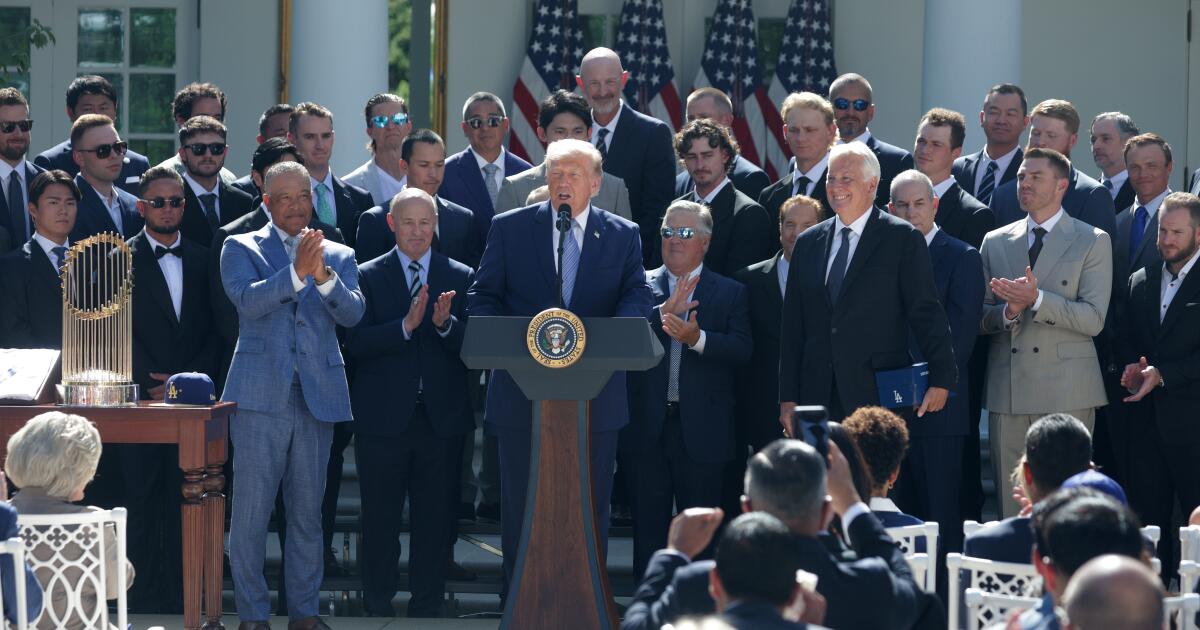
WASHINGTON — The Dodgers arrived at the White House on Thursday to celebrate their 2025 World Series championship following an invitation from President Trump.
The ceremony took place in the Rose Garden, with manager Dave Roberts selected to give a speech on behalf of the team.
It was the back-to-back champions’ second visit in as many years, but this trip came with scheduling complications. The timing for a visit didn’t work out when the Dodgers were in town to play the Nationals in April for a day-game laden series. So, they used their single off day on a three-city East Coast trip to make a pit stop in Washington, wedging the visit between games against the Phillies and Mets.
The decision to again visit the White House raised debate among Dodgers fans, who argue Trump’s anti-immigration policies have harmed many of the team’s supporters. But Roberts has continually tried to downplay the political messaging associated with the visit.
Mookie Betts and Kiké Hernández did not join the team for the visit, with Betts telling reporters he preferred to spend the day with his family and Hernandez saying he had a rehab assignment conflict but wouldn’t have joined the team if he was available. Hernández previously offered his support to fans affected by ICE raids in Los Angeles, while Betts said he didn’t want his decision to be viewed as political.
“This took a long time to get both sides together, and, honestly, like I’ve always said, my company line, my personal line is I hope that we get this invitation every year,” Roberts said when the trip was finalized this month. “Because that’s the goal: to win a championship, to get this invitation to the White House. And I’m not a politician, and I’m doing something that teams have done for decades. And so that’s where I stand, really. I’m a baseball coach. That’s what I do.”
The visit falls days after Bloomberg reported that two insurance companies controlled by Dodgers chairman Mark Walter, as well as Guggenheim Partners, where Walter is chief executive, are being investigated by federal prosecutors for potential financial improprieties.
No charges have been filed. Representatives from the parent company of the insurance firms as well as from TWC Global — the Walter business empire that controls his sporting investments, including the Dodgers and Lakers — have told reporters they are cooperating with the investigation.
Withdrawal is latest instance of government’s efforts to crack down on critical media facing setbacks in court.
Published On 23 Jul 202623 Jul 2026
Attorneys for the United States government have withdrawn subpoenas seeking to compel three New York Times reporters to testify about their sources for a story about an Air Force One jet gifted to US President Donald Trump by Qatar.
Judge Arun Subramanian slammed the government’s lawyers for what he deemed sloppy legal work in an exchange in court on Thursday.
Recommended Stories
list of 3 itemsend of list
“Subpoenas are not the first thing you do; they are the last thing you do,” an irritated Subramanian said.
“When you see something like this, if this were a civil proceeding, what I would normally do is ask the parties to show causes why sanctions should not be issued,” he added.
The Trump administration had sought to keep the proceedings secret as it pressured the reporters to reveal their sources for a story, a request that raised alarms for US press freedoms as the president and his allies continue to aggressively target critical media and political opponents.
Such efforts, however, have largely been rejected in court. The US government recently withdrew similar subpoenas that sought to compel testimony from reporters with the Washington Post and Wall Street Journal.
Lawyers for the New York Times challenged the legitimacy of the grand jury subpoenas along with subpoenas for the phone records of several journalists and their relatives. The paper’s managing editor and general counsel sat in the gallery during proceedings on Thursday.
The government has said that it is pursuing those who have leaked material to reporters for a story about Trump taking an older model Air Force One jet back from a summit in Turkiye, rather than the one gifted from Qatar.
The Secret Service reportedly advised that the new jet, which the government has spent $400m to retrofit and upgrade, lacks important security features such as antimissile capabilities.
“Reporters are not the targets; those leaking classified information are,” the Department of Justice said of the subpoena requests.
Obtaining information from government sources is a cornerstone of journalism, and national security reporting in particular and is considered essential to press freedom. Efforts by the US government under both Democratic and Republican administrations to compel reporters to disclose their sources have been viewed as an effort to weaken those protections.
Weekly insights and analysis on the latest developments in military technology, strategy, and foreign policy.
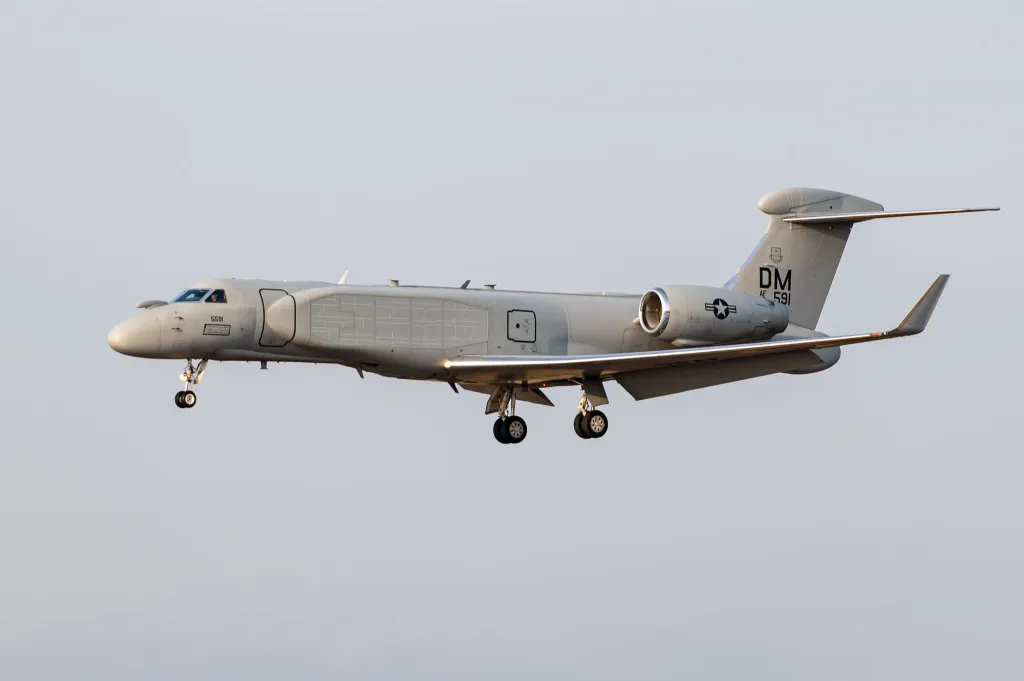
Iran on Thursday threatened RAF Fairford in the U.K. after claims emerged that U.S. Air Force B-1B Lancer bombers launched from there attacked the Islamic Republic on Tuesday. RAF Fairford is a major hub for U.S. military aircraft, with strategic assets, like the B-1s, being forward deployed to the base and tactical and other assets often using it as a pit stop during flights ‘across the pond.’ As an example, Iran’s threat came hours after two EA-37B Compass Call electronic warfare jets arrived at the base from the United States.
“The American aggressor army, which used to launch cruise missiles from its vessels in the Indian Ocean in its aggression after the official resumption of the war, with the end of the missile reserves of the aforementioned vessels, yesterday switched to using B1 planes flying from Fairford Air Base, England,” the Islamic Revolutionary Guard Corps (IRGC)-connected Tasnim news outlet claimed on Telegram. “As the officials of the Ministry of Foreign Affairs also stated, any base that is used to invade Iran’s territory is our legitimate goal.”
🔹Iran’s IRGC adds that the US enemy has turned to using B1 bombers flying from the Fairford airbase in Britain, warning the United Kingdom that as officials of Iran’s Foreign Ministry have also stated, any base used to aggress against Iranian territory is a legitimate target.
Asked about the threats, British officials told us that the country is prepared to defend itself.
“Our Armed Forces are ready to keep the United Kingdom safe from any kind of attacks, whether it’s on our soil or from abroad,” a government official told TWZ. “The UK stands ready 24/7 to defend itself. This includes through operating a layered approach to air and missile defense, provided by Royal Navy, British Army and Royal Air Force assets equipped with a range of advanced capabilities, working closely with our NATO allies.”
“In the Defense Investment Plan we have made air and missile defense a priority after years of underfunding, dedicating £790 million to enhance protection of the UK homeland and overseas bases from air, drone and missile threats,” the official added. “That is complemented by more than £2 billion of funding to deliver further air defense and counter-drone capabilities, and to upgrade and sustain our Typhoon fleet.”
Iranian officials did not specify how they would strike RAF Fairford, and it is unclear how they could. In March, Iran reportedly fired two missiles at Diego Garcia, a joint U.S.-U.K. base on an island in the Indian Ocean. That’s about 2,400 miles away, or about the same distance as Fairford is from Iran. However, one missile was reportedly shot down by a U.S. warship while the other failed in flight. Given that, whether Iran could actually launch a successful attack on Fairford using those weapons is questionable at the least. Far more likely, if Iran would actually even try anything at all, would be a near-field attack like Operation Spider Web launched by Ukraine in June 2025 against Russian bombers using short-range drones hidden in trucks near airfields. One-way attack drones launched from vessels at sea is another very real attack vector Iran has trained for and equipped itself to execute, a threat you can read all about here.
You can see video of one of those strikes below.
The threats came after Axios reported that B-1B bombers from the base took part in Tuesday’s strikes on Iran. TWZ cannot independently confirm that and CENTCOM declined comment. However, open-source trackers made that claim early Wednesday morning before the Axios story was published.
Overnight, B-1B “Lancer” bombers flying from RAF Fairford (EGVA) conducted strikes in Iran as the US ramps up operations again. Although 2 bombers launched, it appears it was pre-planned that only 1 of them would… pic.twitter.com/Q7Ic3Ahqk3
“U.S. Air Forces in Europe operating locations, including the 501st Combat Support Wing at RAF Fairford, routinely host transient U.S. military aircraft in accordance with access, basing, and overflight agreements with Allies and partners,” an Air Force spokesperson told us in response to our questions about the Compass Calls.
The EC-37s landed shortly after 7 a.m. British Summer Time (BST), or about 2 a.m. EDT, according to local aviation photographer Matt Belcher, who was kind enough to share photos he took of the aircraft.
The Compass Calls are heavily modified Gulfstream G550 business jets. They leverage the Conformal Airborne Early Warning (CAEW) configuration developed first for the Israel Defense Forces, which has large ‘cheek’ fairings on either side of the fuselage, among other distinctive features.
The Air Force is planning to procure 10 of these jets to replace the aging and decreasing fleet of turboprop EC-130H Compass Call planes, of which only four remain. The 43rd Electronic Combat Squadron flew the first training sortie for the EA-37B on May 2, 2025, and one made the type’s maiden voyage to Europe in January.
A U.S. Air Force EA-37B Compass Call aircraft assigned to the 55th Electronic Combat Group at Davis-Monthan Air Force Base, Arizona, is parked at Ramstein Air Base, Germany, as part of its first stop in the European theater for a scheduled road show, Jan. 26, 2026. (U.S. Air Force photo by Senior Airman Edgar Grimaldo) Senior Airman Edgar Grimaldo
Many of the EA-37B’s mission systems are directly ported over from the EC-130H, which is why the two very different aircraft share the same nickname. Both aircraft are designed to provide critical stand-off jamming support, including against enemy radars and communications systems. They also have a secondary intelligence, surveillance, and reconnaissance (ISR) function given their ability to spot, track, and geolocate various types of emitters.
An EC-130H Compass Call assigned to Davis-Monthan Air Force Base, Arizona, takes off for a Weapons School Integration mission at Nellis Air Force Base, Nevada, May 29, 2024. (U.S. Air Force photo by Senior Airman Jose Miguel T. Tamondong) Staff Sgt. Jose Miguel Tamondong
The EA-37B also offers new capabilities that go beyond what is found on the EC-130H. The Air Force has said in the past that the aircraft’s designation reflects its ability to not only attack, but also destroy certain targets, as you can read more about here.
The Compass Calls had previously been deployed to RAF Mildenhall in the early days of Operation Epic Fury. On April 1, CENTCOM announced for the first time that they had been used in combat as part of Epic Fury. The possibility that they are returning to the region, or adding additional electronic warfare capabilities to the total force deployed there, can be considered a potential indicator of what’s to come. These are often the last assets we see move into place ahead of major combat operations.
All this comes as the U.S. is building up forces amid increasing intensity of attacks on and by Iran and President Trump’s statement to Axios today that “I am considering a massive attack. Bigger than ever before. I am close to making a decision. We are all set for it.”
“I am considering a massive attack. Bigger than ever before. I am close to making a decision. We are all set for it”, Trump told me https://t.co/AZnZNyEPrP
Last week, we reported that at least 12 F-16 Fighting Falcons were deployed to Muwaffaq Salti Air Base in Jordan from Spangdahlem Air Base in Germany. Other aircraft have rotated into the CENTCOM area of operations as well.
Going for GOLD: 4 flts of 3x “SP” F-16CJ (TABOR11,21,31,41) are inbound to Muwaffaq Salti AB, Jordan (OJMS) from Spangdahlem AB, Germany (ETAD). 4x KC-135R/T “GOLD” team tankers are up to support the movement.
In addition, “special-operations forces have deployed to the region from their U.S. bases,” The Wall Street Journal reported, citing flight-tracking data and U.S. officials. “Squadrons of jet fighters have been staged across the Middle East, and bomber aircraft at bases in the U.S. and U.K. are on high alert to ramp up operations, according to one of the officials.”
Beyond aircraft, “more than 150 medics have arrived at the Landstuhl Regional Medical Center in Germany in recent days,” the Journal added. The hospital is the primary location for treating troops injured in combat in the Middle East.
The U.S. has been surging forces toward the Middle East, giving Trump options to expand the Iran war
Among the things moving/on alert: -fighter squadrons -special operations forces -medics -long-range bombers https://t.co/peSx70S85v w/ @laraseligman
Other assets have been rotated out, like the B-52 Stratofortress bombers that departed from Fairford earlier this month. The U.S. also returnedF-22 Raptors that were flying out of Ovda Air Base in Israel back to the United States. Other aircraft, such as A-10s and F-15Es, have also returned home from or have been replaced in the CENTCOM region. So clearly there is a lot of shifting of aviation assets taking place even amid current operations.
While adding new forces to Europe and the Middle East does not necessarily mean that Trump will dramatically escalate the conflict, it gives him options to do so. In addition, the public nature of some of these movements also has a messaging effect, letting Tehran and the Houthis know that Trump is ordering more assets to the region.
Regardless, the direct threat against RAF Fairford, no matter how nebulous, is new and will certainly be taken seriously by security officials at the installations and others in region.
Amy in a 2006 shoot for the NMECredit: CAMERA PRESS/Dean Chalkley / NMEFree spirit Amy on stage in Cambridge in 2007Credit: Geoff Robinson/Shutterstock
In my case, it was a music festival in Gateshead on the banks of the river Tyne.
The tragic news spread through the crowd like wildfire that balmy late Saturday afternoon.
Sign up for the Showbiz newsletter
Thank you!
The initial reaction was a combination of shock and dismay at the loss of Britain’s finest female singer.
But, for me and for those I spoke to that day, there was also an air of inevitability about Amy’s death at 27, joining an unwanted “club” with Jimi Hendrix, Janis Joplin, Jim Morrison and Kurt Cobain.
She was a shooting star, burning bright for a fleeting moment and then she was gone.
Fifteen years on from her passing, the love for Amy and her music only gets stronger and deeper.
She had the voice, the image, the songs, the wit, the heart and the soul — but the story she told through her music was also filled with pain.
Her second album Back To Black charted in unflinching detail her turbulent relationship with Blake Fielder-Civil as well as her persistent problems with alcohol.
Of course, it scored an emotional bullseye with her listeners, becoming a Grammy-grabbing chart-topping sensation.
Rehab, You Know I’m No Good, Love Is A Losing Game, Tears Dry On Their Own and the title track are all indelibly etched into our collective consciousness.
Though she drew comparisons with some of the greatest soul/jazz voices — Billie Holiday, Sarah Vaughan and Etta James — there has been nothing quite like Back To Black before or since.
With that rich expressive contralto, she could hold us in the palms of her outstretched hands.
Amy with Mark Ronson at the Brits in 2008Credit: UK Press via Getty ImagesAmy with her bassist and close friend Dale DavisCredit: supplied
In 2004, the year after she released her debut album Frank, Amy, then 20, was asked by Jonathan Ross if music industry types had told her to change the way she looked or spoke or behaved.
“Yeah, one of them tried to mould me into a big triangle shape,” she replied, laughing and forming a triangle with her fingers. “And I went, ‘Nooo’.
“I’ve got my own style and I write my own songs. If someone has so much of something already, there’s very little you can add.”
When she chatted to my SFTW colleague Jacqui Swift to mark Back To Black’s release, Amy, 23 by then, opened up about her inspirations while also displaying more of a fiercely independent nature.
She described reaching her lowest ebb and being begged by management to go into rehab, to which she famously responded “No, no, no!”
“Rehab is like Butlin’s — it’s a holiday camp,” she said. “It’s an everyday thing for some people, like going to Tesco’s.”
She elaborated further: “I was having a particularly nasty time with things and just drinking and drinking.
“My management decided to stop buying for me and said they were taking me to rehab. I asked my dad (Mitch) if he thought I needed to go. He said: ‘No, but give it a try.’
“So I did, for 15 minutes. I went in, said hello, and explained that I drink because I am in love and have f***ed up a relationship. Then I walked out. I didn’t need help because, if I can’t help myself, I can’t be helped.”
Five years after she aired those feelings, Amy lost her life at her house in Camden, North London, the coroner recording a verdict of “death by misadventure”, an unintended consequence of heavy drinking after a period of sobriety.
The tragedy led to acrimony and blame games around why she wasn’t given enough support.
Blake, her family and record company execs were all in the firing line at various times.
Some believed it was her own self-destructive nature — but it is Amy’s voice and songs that define her legacy.
Musically, she and legendary “Godmother Of Punk” Patti Smith had little in common apart from their raw, honest approach and unbridled spirit.
But soon after Amy died, Patti recorded a heartfelt tribute in the form of a poem set to music, beginning with the lines, “This is the girl for whom all tears fall”.
During a trip to London, she told me: “I’m heartbroken as a fan and as a human being.
“What Amy did was magnificent and I had been looking forward to see how she would evolve. It would have been wonderful to go through life hearing what Amy did next.”
Though Patti vividly remembered herself at Amy’s age, wild and impulsive, This Is The Girl came from a different perspective.
“I actually looked at Amy in a maternal way, she was a similar age to my kids,” she said. “I was very concerned about how things were managed around her.”
What to her, I asked, was so special about Amy’s music?
Singer Amy’s flame still burns as bright as everCredit: GettyAmy’s legacy is plain to witness through those who followed in her wakeCredit: Getty
“I loved Joan Baez when I was young and Darlene Love and all the R&B singers,” said Patti. “I really love Adele’s voice but Amy was a cut above us all I think.
“She had a gift you seldom hear. There was an authenticity to her voice. She understood R&B and jazz from the deepest part of her. It was organic.
“Not only did Amy have that thing from the Forties, Fifties and Sixties but she was modern. When she sang Rehab or Back To Black, she wasn’t stuck in the past or nostalgic.”
In 2026, Amy’s legacy is plain to witness through those who followed in her wake, including fellow BRIT School alumni Raye and current chart favourite Olivia Dean.
Just as she was breaking through, Olivia paid this tribute to her fellow Londoner: “I don’t think Amy had any interest in being a pop star — she just wanted to be herself.
“It was clear in her music that she was using it as a form of therapy and then we just so happened to be hearing it. It was so personal.”
Of Back To Black, she added: “My interpretation of the lyrics is that you can’t have all of her. Amy was a free spirit. We were very lucky to have her.”
Another BRIT School success story, Adele, had this to say: “Amy paved the way for artists like me. She made people excited about British music again.
“I don’t think she ever realised just how brilliant she was and how important she is.”
From the States, where Back To Black was equally huge, Lady Gaga gave a typically singular view: “I don’t believe what I do is very digestible and somehow Amy was the flu for pop music.
“Everybody got a little bit of the flu — and fell in love with Amy Winehouse. And now, when more flu comes along, it’s not so unbearable.”
Lana Del Rey, a singer like Amy known for her retro styling, said: “I believe in Amy Winehouse. I know she’s not with us any more but I believe in who she was, and, in that way, she got it right.”
As if to prove that Amy’s flame burns as bright as ever, the Rolling Stones recorded her You Know I’m No Good for their recent No1 album Foreign Tongues.
“Amy was such a jewel,” he told me last month. “A very lost jewel in a jewellery box but she was wonderful.”
Ronnie remembered how he had provided a shoulder to cry on “shortly before she died”.
“She was asking me, ‘Oh Ron, what am I going to do? And I was going, ‘Don’t worry because everyone knows you’ve got vodka in your water bottle. Just don’t hide it and try to go on stage tonight’.
“Amy needed a carer or else she went off the rails.”
But Ronnie also recognised her stellar talent and added: “She was like Billie Holiday. She had that once-in-a-lifetime deep blues.”
Back To Black co-producer Mark Ronson told SFTW: “Amy was an incredible singer. She had so much power in that tiny frame.
“I was so spoilt because everything she was coming out with was so spectacular.”
Salaam Remi, who worked on both of her studio albums, gave us a wonderful insight into Amy’s playful character.
He said: “She was one of those people who could make you cry with laughter — or say something deep. Her character was a big part of her talent.
“She cleaned my kitchen one time and it was better than any cleaning lady.
“It was three or four shades whiter when she’d finished. She said, ‘I’m meant to be a Jewish mum, of course it’s sparkling.’ ”
One of Amy’s final recordings was with the last of the legendary crooners, Tony Bennett.
She was so nervous that there were several false starts before they nailed the sultry jazz standard Body And Soul.
It was typical of Bennett’s kind manner that he was able to put his duet partner at ease.
He said afterwards: “People think that anyone can sing jazz, but it’s a spirit you’re born with . . . or not. Amy was born with that spirit.”
It’s also important to salute Amy’s striking image, developed during the Back To Black era in step with her Sixties girlband influences such as The Shangri-Las — her sky-high beehive, that winged cat-eye make-up and those daring halterneck minidresses.
She once said: “I’ve always had my own style. I’ve always been different.
“I don’t like to wear anything that anyone else is wearing because it’s very important for me to make a statement.”
In her short life Amy made a statement — and then some.
The last words are with Dale Davis, her bass guitarist and musical director who still leads The Amy Winehouse Band on its frequent tours.
He told me: “For a long time I was her favourite person to go anywhere with — then I was second after Blake. After they split up, I was back to being her favourite person.
“If she liked you, she really liked you. If she loved you, she loved you hard.
“She was a warm, beautiful, generous person who made me feel special right from the off.”
Dale estimated they played around 170 shows together, the last being a desperate performance at an outdoor venue in Belgrade in June 2011.
“That final one was my most difficult night on stage,” he said. “To this day, I can’t believe we played for an hour and 20 minutes.
“It was a funny thing with Amy because I thought she only needed to take one step to be happy, but that step was too difficult. She was never far from being OK.”
Amy and Dale’s final conversation took place by phone on the night she died at her Camden townhouse.
Clearly finding the memory painful, he recalled: “I talked to her at 11.30pm, three hours before she went to bed. She was on good form.
“She said, ‘Dale, I’ve just been watching myself on YouTube and I can sing, can’t I?’.
“I replied, ‘Of course you can sing. You’re the best’.”
The L.A. billboard magnate whose name hung over the entrance to USC’s practice football field for a quarter century is suing the school for building a new, $200 million facility over top of it.
Brian Kennedy, a former whose company Regency Outdoor Advertising owns billboards all over Los Angeles, claims in the lawsuit that USC breached its contract by demolishing the practice field to build the Bloom Football Performance Center, which is set to open early next month. The arrival of the state-of-the-art facility and erasure of a field that featured the name of Kennedy and one other donor, according to a complaint obtained by The Times, has caused him “reputational harm,” “embarrassment” and “humiliation.”
“For more than two decades,” the complaint states, “the Field stood as a visible acknowledgment of [Kennedy’s] extraordinary contributions to [USC] and the lasting relationship between [Kennedy] and the University.”
But his relationship as a big-time donor to Trojan athletics really began in 1998, when USC was desperate to build a new practice field for new football coach Paul Hackett.
Kennedy told The Times in 2023 that the school came to him after it had trouble finding another wealthy booster to foot the bill. To that point, he’d only made smaller contributions, primarily to the club hockey and golf teams. But eventually, the school convinced Kennedy to fork over $400,000 for the field, under the condition, he said, that he control all aspects of the construction. He also later paid to add turf and an electronic scoreboard to the field.
He also later paid to add turf and an electronic scoreboard to the field.
Kennedy and USC officially entered into an agreement to construct the field in April 1998. According to the complaint, the original agreement to name the field “and any expansion of it” after Kennedy was intended to remain in effect “for the life of the field.”
The original agreement, according to Kennedy, was for the terms of the agreement to remain “for a period of 50 years.” But that language, the complaint notes, was struck from the agreement before the final agreement was drafted a week later.
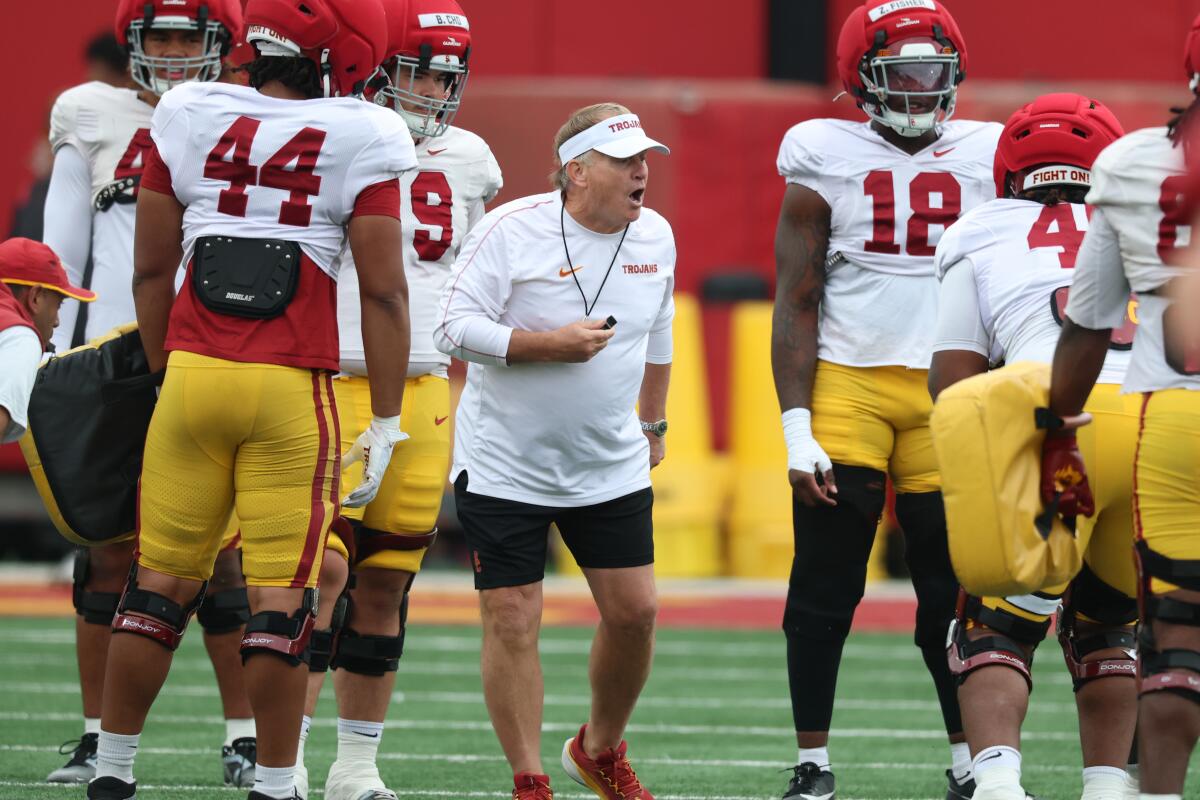
How the “life” of Howard Jones and Brian Kennedy Field is defined will be especially important to the case. USC has made changes to the practice field and reconfigured it since its original construction. A person familiar with the school’s thinking but not authorized to speak publicly told The Times that the school plans to argue the field had outlived its usefulness.
USC defensive coordinator Gary Patterson directs players during a practice at Howard Jones and Brian Kennedy Field on March 10.
(Robert Gauthier/Los Angeles Times)
Kennedy did meet with USC officials at one point to try to find a “a mutually acceptable means of preserving and honoring the recognition previously afforded and promised to [him].” But he ultimately felt that USC wasn’t offering “comparable recognition” to his original investment in building a field he saw as part of his legacy.
Now, he’s suing USC for promissory estoppel, fraud, breach of the covenant of good faith and fair dealing and negligent misrepresentation. Kennedy says in the filing that righting the wrong would mean “enforcement of USC’s promises” as well as “appropriate relief for the plaintiff.”
Even with the new facility opening, the plan at USC, according to a person familiar with the situation, had been to keep the west entrance to the practice field which bears Kennedy’s name, known as Goux’s Gate, untouched. The school also plans to add a plaque to the facility that denotes that it stands on the ground where Brian Kennedy Field once stood.
That wasn’t enough for Kennedy, who says the school has acted “willful, malicious, oppressive, fraudulent” and “despicable” as it planned its facility improvements.
During interviews with The Times in 2023 and 2024, Kennedy expressed a deep love and affection for his alma mater. But for more than a decade, his relationship with USC has been complicated, to say the least.
It first soured over a decade ago, during the tenure of athletic director Pat Haden. Where Kennedy was close to his predecessor, Mike Garrett, he did not get along with Haden. Kennedy was a major proponent of former Trojan assistant Ed Orgeron, who led USC on a magical, late-season run as interim coach in 2013 — and who was infamously passed over for the job in favor of Steve Sarkisian.
Kennedy told The Times he also clashed with Haden’s successor, Lynn Swann, over pledged funding for the Galen Center.
His complaint states that Kennedy, in total, has contributed over $4 million to USC.
Former USC athletic director Mike Bohn made inroads with Kennedy, meeting with him for lunch multiple times. But Kennedy told The Times he felt the same effort hadn’t been made by Bohn’s successor, Jennifer Cohen.
The practice field naming rights proved to be the last straw in what was already a fraught relationship with USC.
The announcement by the head of Yemen’s Presidential Leadership Council, Rashad al-Alimi, to resume oil exports starting July 20 following a halt that began in late 2022 has revived hope that the Yemeni government’s most important source of foreign currency will be restored. The government, struggling economically and facing continued Houthi rebel control over Yemen’s northwest, needs the money – and has pledged to direct the revenues towards paying salaries, improving services, and supporting economic stability.
However, the flow of oil from Yemen’s fields to global markets does not depend solely on a decision made by politicians; it requires creating a security environment, after years of war, that allows for the protection of facilities, pipelines and ports, in addition to restoring the confidence of shipping and insurance companies, as well as international buyers.
Recommended Stories
list of 4 itemsend of list
With Yemen’s war threatening to escalate after a four-year period of calm, the stability the country needs to resume oil exports may be elusive.
The export test
Yemen has proven oil reserves estimated at about three billion barrels, primarily concentrated in the Masila, Marib and Shabwa basins. While the United States Energy Information Administration (EIA) indicates that the country still holds sufficient resources for production and export, the security environment hinders their extraction and transport to global markets.
Yemen’s oil production reached a historical peak of about 439,000 barrels per day (bpd) at the beginning of the millennium, but it has gradually declined due to the depletion of some old fields. This decline accelerated with the outbreak of the war in 2014 and the targeting of oil infrastructure, settling at a level of 19,000bpd in 2024, according to the International Monetary Fund (IMF).
A report published by S&P Global estimated actual production, following the halt in exports, at about 7,000bpd to 10,000bpd in 2023 and 2024, almost all of which was for domestic use.
Yemeni Minister of Oil and Minerals Mohammed Bamqaa said that export revenues would be deposited in the Central Bank as part of a government directive to bolster the state’s financial resources, pointing out that there are oil stockpiles exceeding 1.7 million barrels ready for export.
Bamqaa added that total production will initially reach about 60,000bpd. He explained that the ministry has directed oil companies to prepare timelines to increase production and develop the fields, in a way that raises production capacity by up to 25 percent during the first month after exports resume.
Professor of financial economics at Hadramout University, Mohammed al-Kasadi, told Al Jazeera that while he expected oil production to meet the 60,000bpd figure mentioned by Bamqaa, the figure does not reflect the actual volume of exports, as the local market consumes about 20,000bpd to operate refineries and power plants, which makes the quantities available for export likely to hover at about 40,000bpd.
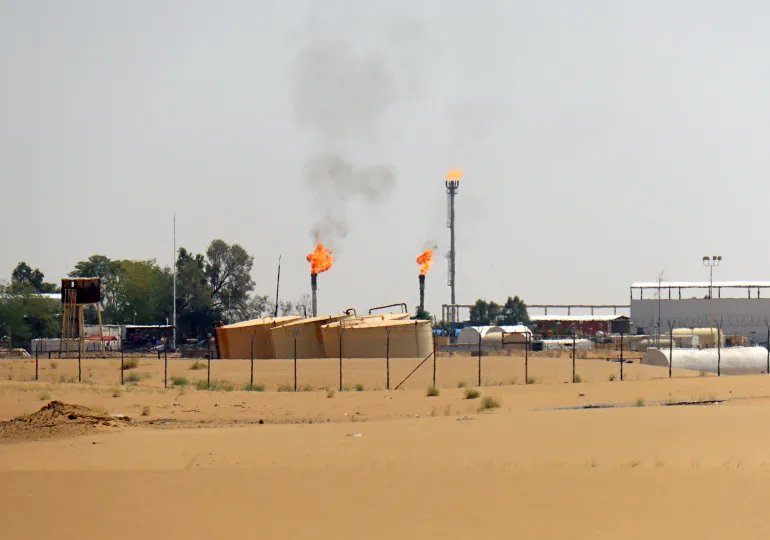
Hassan Mohammed Moghalis, an expert in Yemeni affairs, told Al Jazeera that most of the fields located in government-controlled areas remain capable of production. At the forefront of these are the Masila fields in Hadramout and the al-Uqla fields in Shabwa, which represent the fundamental base for any anticipated resumption. Moghalis explained that crude oil can be transported via pipelines to Arabian Sea ports.
However, Moghalis pointed out that resuming exports does not simply mean opening the valves, as some fields require maintenance and restoration after a long period of suspension. Additionally, pipelines and pumping stations require technical reviews to ensure their readiness before resuming regular operations.
A view of the Safer oil refinery in Marib, Yemen, in September 2020 [File: Ali Owidha/Reuters]
Market confidence
Despite the importance of restarting production at the oilfields, experts believe bigger obstacles await after the oil reaches Yemen’s ports. Houthi attacks targeting export ports in Hadramout and Shabwa in late 2022 made shipping and insurance companies more wary of handling Yemeni crude, pushing up insurance costs and weakening buyers’ willingness to enter into contracts.
The Houthis have conditioned the resumption of exports on them receiving a share of the revenues to cover public sector salaries.
Al-Kasadi, of Hadramout University, says that the government’s success in pumping oil to the port does not automatically guarantee a successful export process. Maritime transport and insurance companies primarily assess the level of security risks and the likelihood of ports or tankers facing renewed attacks – currently a particular concern in light of Houthi attacks on shipments tied to Saudi Arabia, which supports the Yemeni government.
Al-Kasadi added that the oil market relies heavily on trust and stability. Therefore, any export operation requires buyers to be convinced that shipments will depart safely and that export activities will not suddenly halt again.
Moghalis, the expert, believes that providing military protection for ports and pipelines is the first step, but not the only condition. It is also imperative to restore the confidence of insurance companies and international buyers, as oil does not reach markets solely through production, but rather via an interconnected system of transport, financing and insurance.
He added that any new attack on the ports, even if it does not cause significant material damage, could be enough to send the sector back to square one, given shipping companies’ sensitivity to risks in conflict zones.
But, as al-Kasadi pointed out, a resumption in exports is vital. He argued that the halt in exports was not merely an oil sector crisis, but rather developed into a comprehensive financial crisis. The government lost its most crucial source of foreign currency, which negatively impacted the Yemeni rial’s exchange rate and the state’s ability to finance basic services.
Economic pressure
Despite the importance of resuming exports, Yemeni affairs expert Abdul Karim al-Ansi warned against overstating its immediate impact on the Yemeni economy.
He told Al Jazeera that the resumption of exports will undoubtedly provide a vital source of foreign currency and afford the Central Bank greater leeway to support monetary stability. However, it will not be enough on its own to end the economic crisis, as the Yemeni economy faces broader challenges related to the division between government- and Houthi-controlled areas, weak non-oil revenues and declining economic activity.
Al-Ansi added that the extent to which Yemenis benefit from oil revenues will ultimately depend on how these funds are managed and the government’s ability to channel them into salaries and basic services, rather than solely on the volume of exports.
And while successful initial shipments could send a positive signal to markets and investors, al-Ansi stressed that the real test would be whether exports can be sustained. Yemen’s economy needs a steady flow of foreign currency, rather than sporadic shipments that stop whenever security conditions deteriorate.
The suspension of oil exports has not only deprived the government of its most important source of revenue, but also intensified pressure on the foreign exchange market. As dollar inflows from oil sales have dried up, demand for foreign currency has remained high to finance imports of essential goods, particularly food, fuel and medicine. The resulting shortage has weakened the Yemeni rial and contributed to rising inflation.
These pressures have been compounded by the monetary division between the Central Bank in Aden and the Houthis in Sanaa, which has created two separate financial systems and exchange rates. The split complicates monetary policy and limits the authorities’ ability to use oil revenues in a coordinated way to stabilise the economy.
Al-Kasadi said that Saudi financial support for the government had recently helped contain currency volatility in government-held areas. However, he stressed that such support was no substitute for a steady and sustainable flow of oil revenues – which needs a period of stability, something that may be difficult if the conflict escalates in Yemen, as it is currently threatening to do.
Mexican journalist Alejandro Leyva Aguilar was shot dead while eating at a street food stall in Oaxaca. He had spent years reporting on alleged corruption and criminal violence. His murder marks the fourth journalist killing in Mexico since June.
MODEL Jodie Kidd has hinted she could get behind the wheel again for the new Top Gear series.
Jodie, 47, set a lap time of one minute, 48 seconds in the “Star in a Reasonably Priced Car” segment in 2003.
Model Jodie Kidd has teased that she is eyeing up a TV returnCredit: GettyThe star could return to Top Gear for its show reboot – after her famous 2004 appearanceCredit: Getty
The BBC show is set to return, four years after Freddie Flintoff’shorror crash halted filming.
Asked if Top Gear bosses had approached her, Jodie told Biz on Sunday’s Emily at a fashion event at Silverstone: “I am not saying a word. That was big news.”
Jodie added: “I think it’s gonna be, it’s gonna be an interesting casting. It’s going to be tough casting. And yeah, I’m looking forward to seeing the outcome.”
Jodie Kidd in the pitlane at Silverstone Circuit alongside Made in Chelsea star Oliver Proudlock.Credit: SuppliedJodie Kidd is an M&S ambassador and supported the team at Silverstone Circuit.Credit: SuppliedJodie chatted with Biz on Sunday’s Emily WebberCredit: SuppliedThe model is known for her incredible styleCredit: Getty
Jodie is an ambassador for M&S which has partnered with Silverstone Circuit for the Formula 1 Pirelli British Grand Prix.
Earlier this month the British brand put on a pit lane fashion show at Silverstone Circuit where they showcased a range of stunning looks.
Of the partnership, she said: “They are totally iconic brands combining and being very British and running off that heritage.
“It is really quite extraordinary. My 13-year-old son wore a menswear Autograph outfit to Silverstone and he looks phenomenal.
“So you have me who is nearly 50, my son who is 13, my mum is 80 – the whole family will go and find something beautiful and that is a really tough thing to be able to do and M&S has nailed that.”
However Jodie, who is working towards her helicopter licence, struggled to choose between two M&S favourites – Percy Pig and Colin the Caterpillar.
She said: “That’s the hardest question. Percy. Percy has got me up many mountains.
“I’ve climbed and ridden around the UK on Percy’s. He will be in the helicopter.
“Every single massive endurance fundraisingcharity – it is Percy. Actually, the only sweet I’ll ever eat.”
AC Milan midfielder Luka Modric – who turns 41 in September – has signed a one-year contract extension.
The Croatian joined Milan last summer on a one-year deal with an option to extend after leaving Real Madrid.
After 13 years at the Bernabeu, Modric scored two goals in 37 appearances for Milan in a season when they finished fifth in Serie A and only reached the last-16 stage of the Coppa Italia.
“I am thrilled to stay at AC Milan, where you made me feel welcomed and loved from the very first day,” Modric said of his new deal.
“After a season below our expectations, the desire to bounce back is immense. A new season and a new challenge await us – a project I believe in and that motivates me.
“I’m ready to continue to give everything again for this shirt and I’m so proud to keep wearing these colours. Can’t wait to return to San Siro and feel your roar.”
Modric has just played in his fifth World Cup, in which Croatia were knocked out in the last 32 by Portugal.
Since Modric became national team captain in 2016, Croatia had previously been runners-up and finished third in the World Cup.
The 2018 Ballon d’Or winner won six Champions League titles and four La Liga titles at Real. Previously, he made 160 appearances for Tottenham Hotspur over four years in north London.
In a statement, Milan said: “A key figure in the Rossoneri midfield since his arrival, Luka has brought his experience and quality to the service of the team, both on and off the pitch, with humility and great passion.
“One of the finest and most iconic players in world football, the Croatian will continue his journey in the Rossoneri shirt with the ambition to reach new, important milestones.”
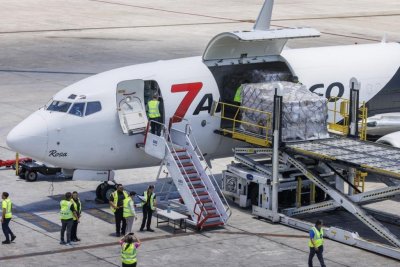
Workers load a cargo plane with humanitarian aid destined for Cuba at the 7 Air/World Freight Service Warehouse in the Miami International Airport in Florida on Tuesday. The United States launched the first humanitarian aid flight from Miami to Havana, delivering food and hygiene supplies as part of U.S. Secretary of State Marco Rubio’s $100 million assistance initiative for the Cuban people. Photo by Cristobal Herrera-Ulashkevich/EPA
July 23 (UPI) — The head of the U.S. mission in Cuba met with the Cáritas Cuba director Wednesday as the Catholic charity began distributing humanitarian aid sent by President Donald Trump‘s administration to vulnerable families in western Cuba, the U.S. Embassy in Havana said.
The meeting between Mike Hammer and Carmen María Nodal Martínez came a day after the first shipment from a $100 million humanitarian assistance package arrived in Havana. it was announced in May by Secretary of State Marco Rubio.
The shipment includes prepackaged food and hygiene kits for about 700 families, the U.S. State Department said. Catholic Relief Services is distributing the aid in coordination with the Catholic Church and Cáritas Cuba.
En la ocasión de la llegada ayer à La Habana de ayuda humanitaria procedente de la Administración Trump para los Cubanos mas necesitados, nuestro Jefe de Misión Mike Hammer se reunió con la Directora de Cáritas Cuba Carmen Maria Nodal Martinez. Hablaron sobre la entrega que se… pic.twitter.com/ABTKYg4cM2— Embajada de los Estados Unidos en Cuba (@USEmbCuba) July 22, 2026
The U.S. Embassy said Hammer and Nodal reviewed the distribution process through Catholic parishes and planned visits to volunteers and beneficiaries as the humanitarian program expands across the island.
The first deliveries began in the municipalities of Bejucal, in Mayabeque province, and Alquízar, in Artemisa province, targeting families previously identified by local communities as the most vulnerable.
Cáritas Cuba confirmed that volunteers from parish communities started to deliver the food and hygiene kits on Wednesday. The organization said the assistance is being distributed according to humanitarian vulnerability criteria, with an emphasis on transparency throughout the distribution process.
According to the State Department, the packages contain rice, beans, pasta, canned tuna and sardines, cooking oil, sugar and salt, along with soap, detergent, toothbrushes, sanitary pads, water purification tablets, solar lamps and other household supplies intended to meet a family’s basic needs for about 10 days.
Washington has said it is using Catholic Relief Services, Cáritas Cuba and the Catholic Church to ensure the aid reaches recipients directly without being diverted by the Cuban government. State Department officials said they will closely monitor the distribution process to prevent the assistance from being misappropriated.
Cuba authorized the shipment’s entry, but government officials criticized Washington for providing humanitarian assistance while maintaining sanctions and what Havana describes as a de facto oil embargo that has worsened the island’s economic crisis.
Cuba’s Ministry of Foreign Trade and Foreign Investment acknowledged receiving the shipment, while reiterating that U.S. restrictions continue to affect the country’s economy.
Several Democratic members of the U.S. House of Representatives who recently visited Cuba have also called on Washington to lift the restrictions, arguing they amount to collective punishment.
Rubio and other U.S. officials have rejected that criticism, arguing that Cuba’s ruling elite and the military-run conglomerate GAESA have diverted the country’s resources and prioritized scarce fuel supplies for the government and its security apparatus rather than the general population.
Ali al-Zaidi will hold talks with senior Iranian officials on bilateral cooperation, shared interests and security.
Published On 23 Jul 202623 Jul 2026
Iraqi Prime Minister Ali al-Zaidi is in Iran on his first official visit since assuming office in May.
The Iraqi News Agency (INA) on Thursday said al-Zaidi and Iranian President Masoud Pezeshkian oversaw the signing of several agreements and memoranda of understanding (MoUs) pertaining to foreign affairs, finance, the economy and energy in Tehran.
Recommended Stories
list of 4 itemsend of list
Speaking at a joint meeting of senior Iranian and Iraqi delegations in Tehran, al-Zaidi thanked Iran for helping Iraq in its fight against the ISIL (ISIS) group, and reaffirmed his country’s commitment to security cooperation with Tehran, saying that Iraq would not accept hostile action against Iran by any party.
“Iraq will never forget Iran’s support in the fight against the [ISIL/ISIL] terrorist group,” he said, according to Pezeshkian’s office.
Pezeshkian said a comprehensive strategic cooperation plan would serve as a roadmap for expanding relations between Tehran and Baghdad, stressing that the security of the two neighbouring countries was closely linked.
Over the course of the two-day visit, al-Zaidi will hold talks with other senior Iranian officials on bilateral cooperation, shared interests and regional security, he said on X.
“We will meet with senior officials of the Islamic Republic of Iran to discuss issues of mutual interest, bilateral cooperation, regional developments, and ongoing efforts to consolidate security and stability across the region,” he said.
“Iraq and Iran are bound by historic and civilizational ties, shared borders, and common interests. These enduring bonds call for continued engagement in a spirit of dialogue, cooperation, and mutual respect in a manner that promotes sustainable development and prosperity for the peoples of both countries, while contributing to security and stability at the regional and international levels.”
Iraq remains heavily reliant on Iranian natural gas and electricity, while bilateral trade exceeds $12bn annually, making it one of Iran’s largest trading partners.
A deep religious bond also exists between the two countries, as millions of Iranian Shia pilgrims cross the border to visit Iraq’s holy sites every year. During the week-long funeral held for Iran’s slain Supreme Leader Ayatollah Ali Khamenei earlier this month, the procession travelled through the Iraqi Shia pilgrimage cities of Najaf and Karbala.
The Iranian government has also cultivated close ties with influential Shia parties and armed groups in Iraq that form the backbone of Iraq’s security forces.
Political analyst Ghaleb Al-Daami told Al Jazeera that al-Zaidi’s visit came as Baghdad tries the difficult task of maintaining relations with both the warring parties, the United States and Iran.
Al-Daami said the main objectives of al-Zaidi’s visit were to tell Iran to stop its support for armed groups in Iraq and to deliver a message from the US, which has expressed support for Iraq acting as a mediator amid the US war on Iran.
“I’VE got a statement drafted, I’m ending it,” Katie Price told me of her fledgling marriage to Lee Andrews.
That was on February 1st.
Clemmie Moodie is finally revealing her Lee Andrews dossier including a gay affair rumours, bombshell texts and mental health liesCredit: mistraesthetics/InstagramClemmie hopes exposing Lee will protect other women from being hurt by himCredit: Louis Wood
This statement, as we all now know, never materialised. Because that’s how conmen like Lee operate: over the resulting four months he lied, scammed, obfuscated and wormed his way back into her affections.
Time and time again he has dismissed the seemingly never-ending allegations against him as a scurrilous and damaging pack of lies.
Katie, in her misguided loyalty, has sucked it up, and let him back in. But over the next 1,500 words I am going to lay bare the damning Lee Files: past recordings, voice notes, messages and shameless untruths.
Unverified rumours of a gay affair, allegations of more people cheated of their hard-earned savings, a forthcoming appearance on Piers Morgan’s global YouTube show, horrific allegations of mental and physical abuse from former partners, mental health fakery and what really happened with the couple’s new dog, Dubaii: all shall be revealed.
My hope, in so doing, is to expose this man for the pathological liar he really is – and ensure he never, ever hurts another woman (or man) again.
Lee, a source tells me, has left Katie no choice but to consult a divorce lawyer.
She is also, I can confirm, refusing to return to Dubai. And with Lee locked-up, with travel ban, a reunion any time soon seems unlikely.
For Lee, literally and metaphorically, there is no coming back.
So, where to begin?
Lee and I have history as anyone familiar with this sorry saga may remember.
The “multi-millionaire businessman” persuaded me to “invest” £1,000 in his latest (non existent) project, promising a £4,000 return. Needless to say those funds never arrived.
After my piece ran, and Lee first emerged from Al-Awir prison, he sent me a series of messages insisting the money was still on its way (LOL). I told him not to bother paying me back as my bank, HSBC, had refunded me.
Clemmie awoke with a flurry of messages from Lee after describing him as a ‘bad man’ and ‘sociopath’After Lee left Al Awir prison, he insisted the money Clemmie ‘invested’ was still on the way but HSBC had already refunded itCredit: AFP
Our early exchanges post-prison – to recap, I had earlier joined the model, 48, in trying to hunt down Lee in the UAE – were cautious.
We sent one another “disappearing messages” on WhatsApp, both nervous the other might release them.
When I filmed an Instagram video describing Lee as a “bad man” and a “sociopath”, I awoke to a flurry of seething messages from him saying: “Clems you are not allowed to discuss a persons case files publicly it comes with 3 years sentence and 200k fine (sic).
“The UAE authorities will arrest you for this. And the facts are wrong on this bill oh dear clemmie what have you done. I have to make a police case for this now.”
I am still awaiting that lawsuit.
In response to my disclosure that Lee had had a hair system fitted – aka a toupee – he added: “And you can’t discuss a person’s appearance online.”
From here, I clawed things back and we went on to start chatting again more regularly.
He sent me photos of his shackle marks and hand cuff ties – things people had mocked online in the wake of his claims he’d been taken at gun point to a black site – and said he’d had a hard time in jail.
Lee has left Katie no choice but to consult a divorce lawyerCredit: wesleeeandrews/instagramKatie is also refusing to return to Dubai so a reunion any time soon seems unlikelyCredit: Louis Wood
This I believe.
And on 15th July, unfortunately whilst I was having Botox shovelled into forehead, I missed two calls from Lee in Al Awir prison.
It was utterly bizarre. He left me a voice mail: “Obviously I think you know where I am. I want to run something past you.” He thanked me and signed off. To this day, I have no idea what he wanted.
Anyway, I honestly didn’t know if I would ever release this dossier, and even now, there is a part of me that feels enormous guilt.
Because Lee can be funny, charming, interested and interesting. It is hard not to like him, on a superficial level, and I can understand how and why so many women have fallen for his charms.
I have, though, since spoken to an anonymous account online, going under the name Chaos Corner, who claims to know someone personally conned by Lee.
They have posted several damning videos about his past behaviour, and much of the evidence stacks up. There is, after all, no smoke without fire.
I have also chatted at length to his brilliant ex-fiancee, Alana Percival. She is an incredibly courageous and powerful woman, and the first to come forward with allegations – and proof – concerning her ex’s treatment of her, and other women.
She has subsequently set up a support group for women who have been hurt by this man, using her voice for good, and gaining hundreds of thousands of supporters online in the process.
She tells me: “Based on my own experience, I believe Lee is a dangerous, sick and deeply harmful person. I believe he should be held accountable through the proper legal process.
“My hope is that no one else has to go through what I went through and that anyone who has experienced trauma through him or his actions, abuse or manipulation, feels able to find their voice when they’re ready.
“That’s why I don’t judge Katie at all. Unless you’ve lived through that kind of manipulation, it’s incredibly hard to explain the hold someone can have over you.”
Katie Price reunited with husband Lee Andrews in DubaiCredit: wesleeandrews/InstagramKatie Price and husband Andrew Lee AndrewsCredit: Instagram/@wesleeeandrews
Over the past five months we have witnessed, in real time, the car crash of this marriage. Like rubber-neckers, we haven’t been able to get enough.
But, as the love-loving mum of five has always reminded me, this is HER life we are all gawping at. And only she can call time on this marriage.
It is, though, a sorry state of affairs that has left Katie teetering on the brink of losing public support, something she should be basking in off the back of her recent hit four-part documentary.
But as she herself said in our interview earlier this year, “never underestimate The Pricey”.
Kate is canny. She has, I can reveal, ALL the receipts of Lee’s lies, and WILL deploy them in a court of law should she need to.
Lee may have hoped to take a pretty penny from this marriage – but I doubt he will get one.
She has also NEVER paid for his release from jail contrary to public opinion.
And whilst Lee has garnered something of a celebrity status himself – flogging personalised Cameo videos for around £30 a pop – no TV network would dare to platform him with so many serious allegations hanging over him.
Indeed, a few weeks ago he was in talks with Piers Morgan to undertake a lie detector test. Piers confirmed they were in talks, but on Wednesday told me he had pulled the plug, describing Lee as “dangerous to deal with”.
He is dangerous I fear – which is why I am now blocking him across all forms of communication. I do not wish for his wrath or recrimination.
Doubtless Lee will feel I have betrayed his trust. And, yes – I have.
Piers Morgan was in talks with Lee – but he pulled the plug and said he was ‘dangerous’Credit: InstagramLee with his dad Peter, who also recently enjoyed a jail stintCredit: wesleeeandrews/Instagram
But, then again, this is a fraudster, currently holed-up for the third time in 10 months, and someone who took to Instagram on June 2nd to tell his 150,000 followers that his mental health had taken a battering after being relentlessly trolled 24/7.
This, I can now reveal, is yet another blatant lie. And one, for me, that crosses a line.
“Obviously you know I am not depressed,” he told me in a voice note.
“That’s there to get my legal side up, to get my doctor to sign me off. Do not repeat that!”
Well, I’ve repeated it, because it makes a mockery of those kind, decent folk genuinely battling daily with mental health struggles.
Elsewhere, despite his endless wealth brags, a source tells me a brief £300million partnership he obtained with the UAE Royal Family Offices was terminated after representatives sent in accountants to check Lee’s financials.
He had pledged a bond of around £10million, but when they checked his accounts, it is claimed, found only 27 Dirhams sitting there.
Lee, naturally, will likely deny this – and given he is in prison I am unable to put this historic allegation to him.
But then again, he denies all allegations.
Including a slightly surreal one earlier this week, in a post by Chaos Corner which purported to show loving text messages between Lee and another younger man.
Screenshots of the WhatsApps, in which he promised to leave Katie to be with this anonymous chap – homosexuality is prohibited in Dubai – also showed a credit card with Lee telling the man to treat himself to something nice.
The owner of the account sent me the telephone number of Lee given to them – and it matches the one I have.
Screenshots of WhatsApp purported to show loving text messages between Lee and another younger manCredit: wesleeandrews/InstagramLee Andrews is a man who wouldn’t know the truth if it smacked him around the hair pieceCredit: wesleeandrews/Instagram
I can reveal Katie put this latest twist in the tail to her husband on the phone on Tuesday night – and he adamantly rejected them.
Another recent dispute came over ownership of the couple’s Pomski whom they rescued from a pet shop, and named Dubaii.
Katie paid for the seven month-old pup, but Lee assured her he had sorted care for the poor animal after he got banged-up once again.
When she couldn’t get hold of her best friend, Katie contacted Lee’s ex, Dina, who runs an animal rescue sanctuary, to take him in.
Lee also told Katie he had paid for Dubaii to be flown back to the UK.
Surprise, surprise, he had not.
More lies from a man who makes Pinocchio’s nose seem miniscule.
Even in own sister, Kelly, who has been a rare voice loyally supporting him, seems to have turned against him.
Family friend Becky Smith bravely posted on Facebook: “Kelly Andrews and I just want to take a moment to speak the truth.
“Recent information shared by Chaos Corner has brought forward evidence that has left us both shocked. We are the first to admit when we’re wrong and now that there is proof, we feel it’s important to acknowledge that. (It is) incredibly painful for the family.”
Latest unedifying accusations over a recorded video call – released on Chaos Corner, supposedly show Lee scamming an American man out his late mother’s inheritance. Again, Lee will presumably claim this is AI and untrue.
Lee’s litany of lies, should I detail them in full, would take me way over my word count.
But, in short, he’s bragged about a cameo on EastEnders (denied by the BBC), being arrested for espionage (reality: fraud), a sex tape (never filmed), arms dealer (he posed with a paintball marker), an interview by wife Katie on live stream on June 25th (been and gone), a boxing match in York on July 27th (he is still in prison and has a travel ban), returns to the UK (see: aforementioned travel ban), home ownership (rentals), gifts (a Ferrari “bought” for his wife who has a driving ban), adopting his wife’s five kids (he has not). And I will eat my mortar board if he has a PhD from Cambridge University.
In short, this is a man who wouldn’t know the truth if it smacked him around the hair piece.
He has hurt far too many people… must never be allowed to hurt again. Katie, if you’re reading this: get out. Now.
Last night Lee was unavailable for comment, and Katie declined to comment.
Escalating Middle East tensions are driving crude (USO) (BNO) prices sharply higher and triggering what Nomura’s Charlie McElligott calls a “vicious rate vol impulse”—creating treacherous conditions heading into next week’s Federal Reserve meeting.
McElligott is dismissing the buyside’s interpretation that
IF you love both quaint English pubs and period films, then a stay at the Pilsley Inn is a must.
Here is everything you need to know about a stay at the pub in Derbyshire.
The Pilsley Inn in the village of Peak DistrictCredit: SuppliedRooms feature a high four-poster bed and rich fabricsCredit: Supplied
Where is the Pilsley Inn?
In a sleepy Peak District village, this charming country pub and hotel is on the Duke of Devonshire’s Chatsworth Estate with its stunning house and 1,000 acres of woods and parkland just a five-minute drive away.
What is the hotel like?
Known as The Devonshire Arms until a year ago, the hotel has been renamed with the addition of five new barn conversion rooms, designed by Lady Burlington.
Sign up for the Travel newsletter
Thank you!
Staff were warm, friendly and helpful, offering us a selection of nearby walks to make the most of the stunning Derbyshire countryside.
Dogs are welcome in the pub and to stay in the farmhouse and family rooms and there is free on-site parking.
There are 18 individually designed bedrooms either in the main inn or the converted adjoining barn and farmhouse.
We stayed in one of the farmhouse rooms.
Most of these rustic yet stylish spaces feature high four-poster beds, rich fabrics and plush bathrooms and come with a flatscreen TV, fridge and hot drink facilities and wifi, plus Chatsworth biscuits and toiletries.
Ground floor rooms also have an outside area to sit and soak up the countryside views.
The Chatsworth Experience package, from £124pp, includes overnight stay, dinner and breakfast along with tickets to Chatsworth House.
The Pilsley Arms offers a Chatsworth Experience where guests can tour the set location of Pride and PrejudiceCredit: JEN AND SIM BENSON
What is there to eat and drink?
Definitely eat here – the cosy restaurant, with tables around the bar area, serves classic British fare with food locally sourced from the Chatsworth Estate.
Sat near a roaring fire, we enjoyed carrot and coconut soup, duck breast with sweet potato croquettes and cherry sauce and Derbyshire beef and ale pie, all of which was delicious and well presented.
For breakfast, which is served in the restaurant, there are a range of continental or cooked options.
What else is there?
Stunning Chatsworth House, famously used as a location for the 2005 Pride And Prejudice movie, is close by and well worth a visit.
From May to October, The Pilsley Inn offers a Chatsworth Experience package that includes a tour of the house, which was a big highlight of our visit as well as the garden, parkland and farmyard with free parking.
Is it family friendly?
Find designated Family Rooms on the ground floor with bunk beds for 2 children and a children’s menu that even fussy kids will love – definitely ticks the boxes for a family friendly stay.
Is there access for guests with disabilities?
There are Farmhouse Rooms located on the ground floor and the Hilltop room has a walk-in shower making it easily accessible.
The Chatsworth Escapes team are also happy to talk through any specific needs.
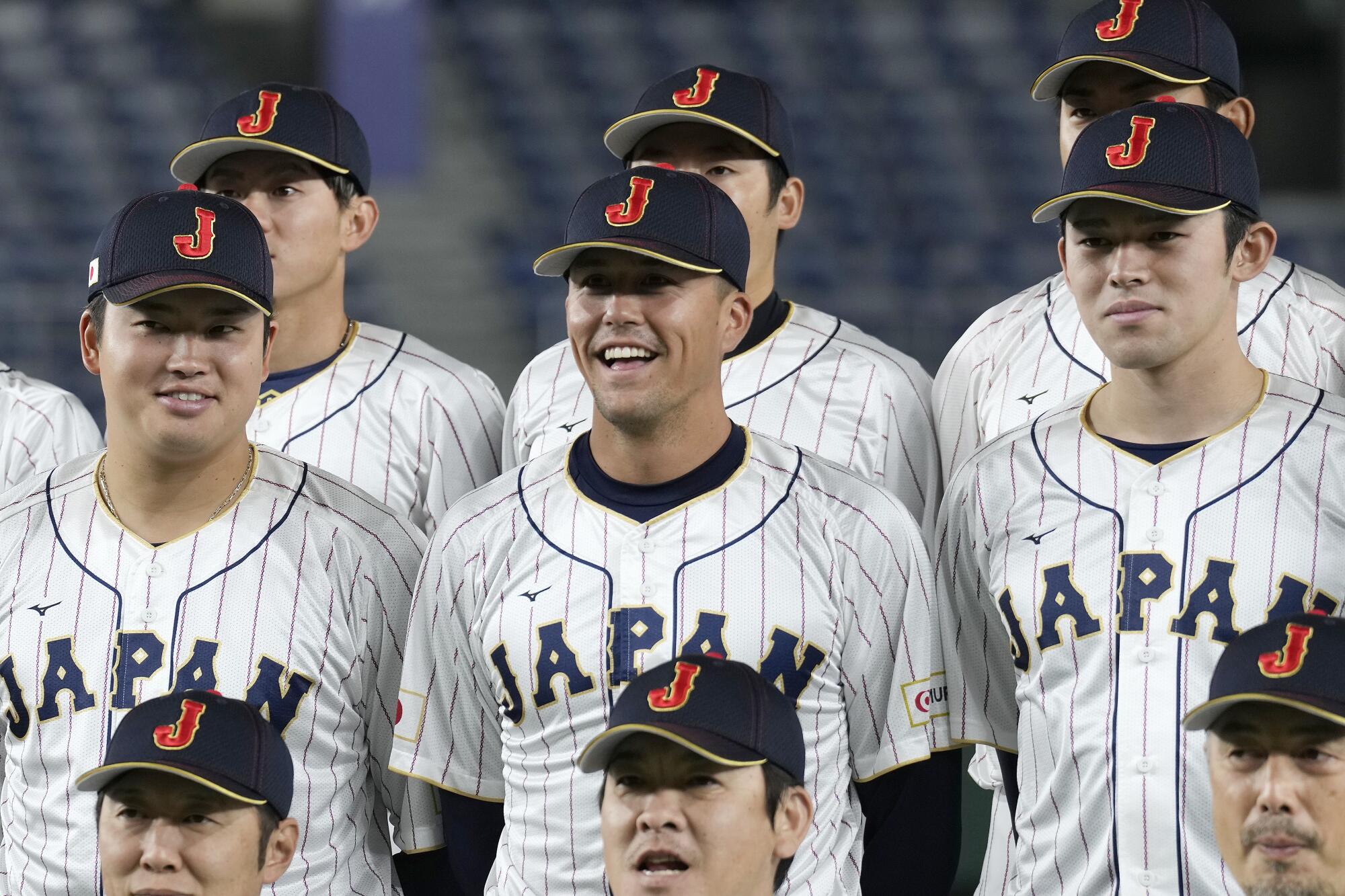
In Japan, fans come up with a song for each player and sing it happily and relentlessly. Nootbaar played in the major leagues, not in the Japanese league, so he was not sure he would get a song until he came up to bat.
“I don’t know how everybody in the stadium knew how to do it,” the St. Louis Cardinals outfielder said Wednesday at Angel Stadium. “Everybody was chanting it. It was pretty awesome.”
Japan’s Lars Nootbaar, center, played for Team Japan in the 2023 World Baseball Classic.
(Eugene Hoshiko / Associated Press)
In Japan, baseball games are nine innings of songs and chants, drums and noise sticks. No excessively caffeinated in-game hosts. No scolding video commands to make some noise. The joyful sounds are organic, and they come from the fans.
Nootbaar attended Yoshinobu Yamamoto’s last game in Japan and absolutely raved about the energy in the stadium. Does he believe that kind of fan experience would translate to an American ballpark?
“I don’t see why not,” Nootbaar said. “It would probably have to start small, but it would be cool to integrate that.”
We’re starting small, and soon. A minor league team plans to launch in Irvine next year, and the entrepreneur behind it is pitching it as a way to provide fans with a taste of Asian baseball.
“We’re going to really lean into some of the innovation in fan experience that you’ve seen in Korea and Japan,” said Paul Freedman, co-founder of Innovation Baseball Partners.
“We’ll be the first, to our knowledge, to bring that as the fan experience of an American baseball team.”
The team would play in the Pioneer League, the independent league in which Freedman and his partners previously launched teams in Oakland and Long Beach. In Oakland, the ballpark is a pop-up. In Long Beach, the team plays at 70-year-old Blair Field.
The defending champions of Korea’s league last year held spring training in Irvine. More Koreans live there than in any city in the United States besides New York or Los Angeles.
Asian food will be available at the games, as will hot dogs.
On Tuesday, the Irvine City Council is scheduled to consider a five-year contract with Innovation Baseball Partners, under which the team could sell naming rights to the Great Park stadium and would split the revenue with the city 50-50. The agreement also provides a framework for potential expansion of the stadium from 1,300 to 3,000 seats.
Don Wakamatsu, who runs baseball operations for Freedman’s teams, was the first Asian-American manager in major league history and managed Hall of Famer Ichiro Suzuki with the Seattle Mariners.
Ichiro won’t be playing in Irvine — the Pioneer League limits players to no more than two years of professional experience — but Wakamatsu plans to tap into his network to ensure the team has an Asian manager or coach and a nucleus of Asian players.
Wakamatsu described Freedman’s model of minor league teams as “somewhere between conventional baseball and the Savannah Bananas” and believes the Asian style could take hold in Irvine.
“If we can truly capture some of that excitement and fan interaction,” Wakamatsu said, “I think we’ll get a deeper connection with the players.”
To help launch the Irvine team, Freedman tapped two Korean-Americans: Martin Kim, a onetime interpreter to former Dodgers pitcher Hyun-jin Ryu and international business development executive with the Dodgers and Major League Baseball; and Yugina Yun, an Orange County-raised sports executive that said she “begged” to join the team as its operations director.
“The element that we’d really like to bring forth is the idea that fans in the stands can impact a team,” Yun said. “We want them to feel like they’re a part of the culture from the ground up.
“We’re not manufacturing the experience. They are.”
If you watched the World Baseball Classic, or for that matter the World Cup, you don’t have to be sold on this. On the night before the World Cup final, Argentinian fans took over Times Square, singing and chanting and waving banners.
A sign outside this year’s WBC finals in Miami listed 16 “permissible instruments” (bongos, cowbells and tambourines welcome) and eight “prohibited instruments” (no airhorns, please). In Tijuana, where Dodgers icon Justin Turner is playing this season, airhorns buzz constantly, and games feature skits between innings.
“I think there is a lot of attention to how different cultures have taken America’s pastime and created experiences around it that are different than we have here,” Freedman said. “We’re excited to bring some of that back home.”
After an 18-month closure prompted by the Palisades fire and subsequent damaging floods, Temescal Gateway Park reopened Friday, restoring access to beloved trails in the Santa Monica Mountains.
Hikers can walk along Temescal Creek, crossing a few charming wooden bridges, or take one of the steep ridge line trails to gape at the ocean as they gasp for air. But the popular Temescal Canyon Trail, which takes hikers to Temescal Falls, remains closed.
In this edition of The Wild, our weekly outdoors newsletter, I will quickly outline what you need to know about returning to Temescal Canyon. My visit Friday was actually my first, but given the serenity I found in this coastal alcove, I will absolutely return. (Note: As of this morning, Google Maps still showed the park was closed; that is inaccurate.)
The Michael J. B. Allen memorial bench sits on a nice overlook in Temescal Canyon.
From the park, you can hike into Topanga and Will Rogers state parks, although some state park trails remain closed. Those include:
People who frequented Temescal Canyon before the Palisades fire will notice the inevitable changes that come after a fire. Trail crews removed several fire-damaged trees, including multiple mature oaks, as dead trees can and do fall unexpectedly, according to the Mountains Recreation and Conservation Authority. The agency plans to continue reforestation projects in the park as money becomes available.
You can easily enter the park through its entrance off Sunset Boulevard. Upon entry, you’ll need to pay the $12 day-use fee at one of the machines stationed around the parking lot if you’re parking on the property. (And it’s not something to roll the dice on — I saw at least one couple get ticketed.)
A burned wayfinding sign on the Temescal Ridge Trail, which was left from the Palisades fire.
(Jaclyn Cosgrove / Los Angeles Times)
I parked under a large coast live oak and headed northwest onto the Temescal Ridge Trail, which is exposed and has minimal shade but offers multiple options for day hikes, including:
A quick out-and-back up Temescal Ridge Trail to one of the route’s popular lookout points.
A 3.1-mile lollipop loop, taking Temescal Ridge Trail about 1.4 miles north to Bienveneda Trail, which loops you back around to the Temescal Ridge Trail at 2.3 miles into your journey.
Or even farther up, as Temescal Ridge Trail leads to other longer trails in the Santa Monica Mountains.
A hiker heads up Tesmescal Ridge Trail in the Santa Monica Mountains.
(Jaclyn Cosgrove / Los Angeles Times)
I huffed up the trail and was pleased with how quickly I could see the ocean. Several burned trees and shrubs remain, but they’re surrounded by an abundance of plant life coming back, including cliff aster and laurel sumac.
Along the route, I was pleasantly surprised by the exuberance of my fellow hikers. Multiple people stopped me — a fun experience for a reporter — to just share how wonderful they felt being back in the park. “Isn’t this great?” one hiker shouted to me as she headed up the ridge line. A couple from Minnesota told me they’d flown in the day before and were eager to get back to Temescal Canyon, their favorite spot to hike in L.A.
A burned tree with native plants growing up and around it.
(Jaclyn Cosgrove / Los Angeles Times)
My next stop was along the Sunset Trail, a 0.4-mile trail that runs along Temescal Creek. While I marveled at the gnarled and twisted old oak trees along the trail, I met a 14-year-old Parson Russell terrier named Finnegan. She seemed just as happy to be back as the people I encountered, especially on this shady trail next to running water.
Workers have installed three wooden bridges that cross over the creek, giving this short jaunt a whimsical feel. It ends near the road, and I turned back north, taking the sidewalk past picnic tables and rock shelters in a sycamore grove.
The Sunset Trail along Temescal Creek.
(Jaclyn Cosgrove / Los Angeles Times)
I would have loved to visit the Temescal Canyon Trail to see Temescal Falls, but as I mentioned, that trail remains closed.
You are reading The Wild newsletter
Sign up to get expert tips on the best of Southern California’s beaches, trails, parks, deserts, forests and mountains in your inbox every Thursday
By continuing, you agree to our Terms of Service, which include arbitration and a class action waiver. You agree that we and our third-party vendors may collect and use your information, including through cookies, pixels and similar technologies, for the purposes set forth in our Privacy Policy such as personalizing your experience and ads.
Isabela Noriega, a project manager at the Mountains Recreation and Conservation Agency, said the agency will work with California State Parks officials to begin restoring the route, as only a portion of the trail is within the boundaries of Temescal Gateway Park and the rest is on state land.
“You’ll remember the fires happened Jan. 7, and then we got storms in February,” Noriega said. “So there was a lot of erosion [and] dirt debris that washed out the trails. [It’s] two disasters piling up on top of each other that we’re working to deal with.”
Instead, the third trail option you’ll have is the Rivas Canyon Trail, a fun jaunt up the hillside that features several sets of wooden stairs. You can access the trail at either of its trailheads (see map).
I started at its southern trailhead, which is behind a few buildings and near some machinery and felled trees. From there, I walked north along a wide path shaded by oak trees before taking the first set of stairs up.
One of multiple sets of stairs along the Rivas Canyon Trail.
(Jaclyn Cosgrove / Los Angeles Times)
You’ll continue up the stairs, the views of the ocean growing better as you gain elevation. I was able to spot four sailboats as I hiked.
Although the trail is well maintained, there was a short stretch that was thick enough with cliff asters to make me grateful I wore pants. There were also a few spots where I paused to lightly stomp because low-lying branches of native shrubs covered the trail. These shady sites are great nap spots for rattlesnakes, which are common to the area.
Burned trees surrounded by native plants growing back after the Palisades fire scorched the hillside.
(Jaclyn Cosgrove / Los Angeles Times)
About half a mile in, you’ll reach the Michael J. B. Allen memorial bench, built in honor of a UCLA professor and avid hiker. This is a nice spot to take a break and have a snack.
Right after this first bench, the trail is speckled with rocks that reminded me of dinosaur eggs or little bits of the moon. These moments always make me wish I’d paid far more attention in geology class, as I can generally only provide such riveting commentary as “Look at that pretty rock” or “Hey, is that a geode?” (It’s never a geode.)
Stairs lead to the overlook point where there’s a memorial bridge for local trail legends Rob and Mary Ann Webster.
(Jaclyn Cosgrove / Los Angeles Times)
I continued east to the second memorial bench, built in honor of Ron and Mary Ann Webster, two beloved advocates of the Santa Monica Mountains. It’s often said that, if you’ve hiked in the Santa Monicas, you’ve likely stepped foot on a trail Ron designed.
The view from Rivas Canyon Trail in Temescal Canyon.
(Jaclyn Cosgrove / Los Angeles Times)
I decided to end my day on the Websters’ bench. The self-care app I use had recommended I spend 15 minutes outside that day reading, and this felt like a fine spot to finish a fascinating piece about how to properly measure a mountain.
I paused, though, first to take in the view.
All around me, there were reminders of both the fire and its aftermath — burned-out trees and plants. But past the hillsides dotted with native plants returning in force, I saw the wooden frames of several houses being rebuilt. It was a reminder that this park’s reopening is another signal that nature, ourselves included, will continue onward.
3 things to do
A stargazer calibrates a telescope to look at the Orion Nebula during a star party hosted by the Los Angeles Astronomical Society in L.A.
(Carlin Stiehl / For The Times)
1. Savor s’mores and the stars in Chinatown Los Angeles State Historic Park, a 32-acre expanse of public land in Chinatown, will host a “Park After Dark” event with the L.A. Astronomical Society from 7 to 9 p.m. Friday. Telescopes will be set up, and park workers will help guests make s’mores around a community campfire at the park’s roundhouse bridge. Learn more at the park’s Instagram page.
2. Doddle along the dunes in Santa Monica The Santa Monica Helping Hub and the Coastal Alliance will co-host a dune walk from 9 to 11 a.m. Sunday in Santa Monica. Conservation biologist Ashley Oelsen, the alliance’s founder, will lead guests through the dunes and share why the stretch of beach is ecologically significant, serving as important habitat for threatened shorebirds and native coastal plants. Register at eventbrite.com.
3. Bend under the Buck Moon in L.A. We Explore Earth, a local outdoors nonprofit, will host a full-moon hiking experience from 6 to 8:30 p.m. Wednesday in Elysian Park. Attendees will start meeting at 5:45 p.m. before heading on the hike at 6:25 p.m. After taking the Elysian Park west trail, participants can continue the evening with yoga, live music and stargazing with telescopes. Free, but donations of $5 to $10 are appreciated. Register at eventbrite.com.
The must-read
Crowds hike their way up the Mist Trail, one of the more popular trails in Yosemite National Park.
(William Hale Irwin/For The Times)
I am seemingly always planning my next adventure, including frequently pondering how soon I can return to Yosemite National Park. I last went in August and swam in the Merced River, hiked to Taft Point, saw Tunnel View at sunset and even went skydiving. But this past summer, that itch has felt more like a siren’s call as, like many outdoors lovers, I’ve been saddened by reports of serious overcrowding at one of America’s crown jewels. Over the past few weeks, I spoke to park-goers who’ve been to Yosemite this season, and I asked them: “Is it possible to still have fun there?” The answer, as I wrote in this story, was essentially, “Yes, but only if you plan accordingly.” Thankfully, they shared some tips on how to do that.
Happy adventuring,
P.S.
A bald eagle believed to be Jackie, one half of the celebrity raptor couple in Big Bear, was taken to a wildlife rehabilitation center in Ojai after being rescued this past weekend. Times staff writer Lila Seidman reported that a team with the San Dimas Raptor Rescue arrived around 1:30 a.m. Saturday in Big Bear Lake and found a weak and tired eagle on the lake’s shoreline. The eagle was then transported to the Ojai Raptor Center, where the reason for her deterioration remains unknown. “Queen Jackie is in the best of care! And will be able to return soon!” one YouTube user wrote Tuesday evening in the livestream’s chat. “Sending all our love & prayers to her and the kiddos and her amazing hubby super Shadow holding it down!”
For more insider tips on Southern California’s beaches, trails and parks, check out past editions of The Wild. And to view this newsletter in your browser, click here.
United States President Donald Trump agreed to a 30-year nuclear deal with Saudi Arabia on Wednesday that would see Washington transfer nuclear technology to the Gulf kingdom.
This has drawn concerns that if the deal comes to fruition, it could spark a nuclear arms race across the Middle East amid reports that Riyadh would be able to enrich its own uranium, a necessary step in acquiring nuclear weapons.
Recommended Stories
list of 4 itemsend of list
US officials have stressed the proposed deal would serve civilian nuclear purposes, although exact details of the agreement have not been made public.
It has now been tabled in the US Congress for a review, but is expected to survive resistance from Democrats.
Here’s why some are concerned about the agreement:
The first fuel is loaded into Iran’s Bushehr nuclear power plant on August 21, 2010 [Photo by IIPA/Getty Images]
Could this spur a nuclear arms race in the region?
Analysts have raised concerns about whether the proposed deal could lead to Saudi Arabia seeking to develop military-grade uranium, which the US Energy Department has not yet confirmed.
Some analysts have warned this could open the door to spurring an arms race with other regional powers.
Saudi Arabia has long voiced its intention to use nuclear energy for power generation, but in 2018, de facto leader Mohammad bin Salman told CBS that Riyadh would “without a doubt” develop a nuclear weapon if Iran did the same.
US Secretary of State Marco Rubio insisted on Thursday that the deal would not lead to nuclear proliferation, as US contractors would handle the project, allowing Washington to monitor it. US nuclear reactor designer Westinghouse is believed to be a major contractor.
Former Israeli Defence Minister Avigdor Liberman said in a post on X on Wednesday that Israel must oppose the deal with “all our might.”
“We must all understand that Saudi Arabia’s civilian nuclear programme will end in nuclear weapons and lead to a mad arms race across the entire Middle East,” he posted.
Israel, which developed a nuclear arsenal in the 1960s, has long sought to stop Arab countries and other regional countries from gaining their own nuclear weapons.
Is there a risk of nuclear reactors being attacked in strikes?
Some others have also raised concerns over possible nuclear leaks amid the tensions in the Middle East.
None of these strikes hit the nuclear plants’ reactors, but analysts say allowing more such facilities in the Middle East when tensions are so high is a mistake.
Damage to a reactor’s core could release highly radioactive gases, causing immediate catastrophic damage within a 20- to 30-kilometre (12- to 18-mile) radius.
Nuclear accidents at Japan’s Fukushima nuclear plant in 2011 and Chornobyl in Ukraine in the former Soviet Union in 1986 are cautionary stories.
Could Saudi Arabia have access to sensitive material?
That’s unclear for now.
Highly enriched uranium and spent nuclear reactor fuel are key components of nuclear bombs.
According to US media, the agreement includes a clause providing for a “black box” uranium enrichment facility that would be situated in Saudi Arabia but run by US companies.
A joint study by the two countries, set to last two years, will determine whether such a facility is needed, or if Saudi Arabia should import commercial-grade low-enriched uranium.
“That’s really the concern,” Matthew Kroenig, a fellow with the Atlantic Council, told Al Jazeera, saying there’s been no such arrangement anywhere else in the world.
“What does the US really mean by a ‘black box’? So will the US bring its engineers there full time, forever? Realistically, the Saudis will be involved, they will learn the tech, and they could kick out the US in the future,” Kroenig said.
Washington could be seeking to model Moscow’s agreement with Turkiye and Egypt, where Russian contractors manage active nuclear power plants, including the needed uranium and the highly radioactive spent fuel from the reactors.
The difference, Kroenig pointed out, is that Russia does not enrich the uranium in those cases.
On the other hand, the UAE, which runs a civilian nuclear programme that has been held up as a gold standard for non-proliferation, imports all of its low-enriched uranium from France, the United Kingdom and Russia among other countries.
Kroenig suggested that the US could be using the two-year study as a negotiating tactic, noting that the same claims of impact studies have been used to stall South Korea’s requests to enrich its own uranium.
“The deal doesn’t immediately speak about uranium enrichment, so my hope is that this is a negotiating tactic and that after two years the US will say ‘oh no, this doesn’t make sense right now’”, he said.
Saudi Arabia’s de facto ruler, Crown Prince Mohammed bin Salman, told CBS News in 2018 that his own nation was not planning to acquire a nuclear weapon, but that “without a doubt if Iran developed a nuclear bomb, we will follow suit as soon as possible”.
Earlier US media reports suggested the deal could allow Saudi Arabia to enrich uranium in the future – which can be used as fuel for power plants, but also potentially to make nuclear bombs. However, Trump’s remarks appear to deny this.
Rosemary Kelanic, the director of the Middle East programme at the US-based Defense Priorities think tank, said it would be “quite shocking” if the US were to allow Saudi Arabia uranium enrichment facilities.
“The US has never done that before. We have never helped another country enrich on their own soil,” she said, adding that this was because “if you can produce your own nuclear fuel, you become a much bigger risk” for building nuclear weapons.
The agreement will now be sent to the US Congress for review.
Some lawmakers on both sides of the political aisle are expected to oppose the deal, though Trump’s Republican Party controls both the upper and lower chambers and opponents of the deal do not appear to have the votes needed to block it.
John starred as detective sergeant as Jim Bergerac in the original run of the British crime drama, which aired from 1981 to 1991. The much-loved series has now been rebooted, with Damien as DCI James ‘Jim’ Bergerac.
Asked if John had given the show his blessing, Damien told Radio Times they they had spoken about it and that he was “thrilled” with what the original Bergerac had to say.
He said: “We met and he said, ‘I’ve watched the first episode and I think it’s fantastic. It’s very different to what we did, it’s much darker – I loved it.’
“He didn’t need to say that, and I was thrilled that he did.”
The Bergerac reboot started in 2025, airing on U&Drama. It follows the police detective as he solves solves crimes in Jersey, while also dealing with issues in his own past.
Viewers have been enthusiastic about the new take on the series, with one posting on IMDB.com: “I have fond memories of the original with the gorgeous John Nettles, so there is always a bit of anxiety regarding a remake.
“However, this Bergerac, with the mesmerising Damien Molony is a different deal altogether. The general feel is much darker and less of a glossy travelogue for Jersey.. Have just binged this and can’t wait for the next season!”
Someone else said: “Like the reboot. Love the cast. Good plots and clever twists. The setting of the show is also an added bonus. I really like the actor playing the lead role, he is very likeable as this character.”
“I loved it,” one viewer posted on review site Rotten Tomatoes, although another added: “An entertaining reboot although not as good as the original.”
One reviewer commented: “Bergerac is not Superman, he is flawed and sometimes makes dumb decisions, and he wields the double-edged sword of obsessiveness, which leads to breakthroughs but can just as backfire.
“But he is very watchable, and Molony is able to persuasively carry Bergerac’s darkness and dynamism.”
PHILADELPHIA — Shohei Ohtani wrapped up long toss in the Citizens Bank Park outfield Wednesday afternoon, turned and headed for the two-story bullpen stairs.
Ohtani had initially been scheduled to take the mound for the Dodgers Wednesday against the Phillies. But, with the date of his next pitching start up in the air, his bullpen session still drew a lot of eyes.
Ohtani threw off a mound Wednesday for the first time since receiving an Orthovisc injection in his left knee to lubricate the joint. The side session of about 30 pitches, running through multiple pitch types, was similar to a normal between-starts bullpen, pitching coach Mark Prior said.
“It looked good,” Prior said. “Feels good. We’ll see where he’s at tomorrow.”
Asked if Ohtani said his knee was feeling 100%, Prior said they didn’t get into specifics.
“Just said, ‘How did you feel throwing?’ He said it felt great,” Prior said.
Ohtani, who was in the lineup Wednesday as the designated hitter, was not made available to comment before the game.
It’s still unclear when Ohtani will pick up pitching duties again. But manager Dave Roberts ruled out Ohtani starting on the mound this weekend against the Mets.
“It’s day by day with him,” Prior said. “We’re present today. He threw a bullpen, see where he comes in … Friday, since we’re off [Thursday]. We’ll make determinations after that.”
This bullpen session was a chance for Ohtani to test his knee, which before the injection seemed to be aggravated by pitching.
“It’s a big sign,” Roberts said. “Because the grass, the flat ground, all of that stuff is well and good, the arm is fine. So it’s more of getting down the slope, throwing over your front side. That’s kind of the big test. Usually the bullpens are right around 88 (mph), so we’ll see where he’s at.”
Ohtani has already been out long enough that the Dodgers will have to be mindful of his workload whenever he rejoins the rotation. His last start on the mound was July 3 against the Padres.
“I still think it hasn’t been so long that the equity that he’s built up with the pitch count is that much compromised,” Roberts said. “But with that, I can’t foresee him running out there and throwing 100 pitches his first outing.”
If he’s sidelined for too long, he could have to gradually build up with each start. But it’s hard to pinpoint where that delineation lies.
“I think the easy answer is to say every pitcher is different,” Roberts said.