Month: July 2026

Commonwealth Games 2026: Team Wales win two more swimming medals on dramatic night in Glasgow

With four fourth places in Birmingham in 2022, Richards was looking for his first Commonwealth medal to complete the set of Olympic, world and European podium positions.

Wales opted for an entirely different quartet in the pool in the final after Kieran Bird, Harry Milne, Medi Harris and Meghan Higgs had qualified fourth fastest in the heats.

Sutton and Taylor had qualified for their respective individual semi-finals in the 100m backstroke and 100m breaststroke, but both pulled out with a full focus on the relay.

The policy paid off and Taylor, 17, brought Wales back from fifth to third with a brilliant final leg.

Earlier, Rose Williams finished fourth in the women’s S14 200m freestyle final.

The S14 category covers swimmers who have an intellectual impairment, which typically leads to the athletes having difficulties with regard to pattern recognition, sequencing, and memory, or having a slower reaction time, which impact on sport performance in general.

Tyler Melbourne-Smith finished sixth in the 400m freestyle final, while Lewis Fraser qualified for the 100m butterfly final to be staged on Sunday evening.

Source link

India win second T20 in Zimbabwe to take series as Kishan and Varma shine | Cricket News

Ishan Kishan and Tilak Varma sets up 90-run win over Zimbabwe as India takes 2-0 lead in T20 series.

India ‌inflicted another heavy defeat on Zimbabwe when they ⁠won the ⁠second Twenty20 international at Harare Sports Club by 90 runs to secure their three-match ⁠series.

Ishan Kishan scored 81 and Tilak Varma an unbeaten 60 as India amassed a formidable total of ⁠219-5 after being put into bat before dismissing Zimbabwe cheaply for 129 to secure the victory on Saturday.

Recommended Stories

list of 4 itemsend of list

Kishan, whose runs came off 44 balls, and Tilak, who took 29 balls to get ‌to 60, accelerated the scoring in the middle overs, taking advantage of bowling that was often too full.

They put on 94 off 44 balls for the fourth wicket before Ishan was caught in the deep mistiming a slog at a wide delivery.

Zimbabwe faced ⁠a record run chase and, although ⁠opener Brian Bennett offered some early hope, they were always up against it and were dismissed in 17.5 overs.

Bennett played an array of ⁠strokes for 32 runs off 19 balls before falling to Yash Thakur, who ⁠finished with 2-30 on his T20 ⁠international debut.

Once Bennett had been dismissed, there was a steady fall of wickets, with the slow left-arm bowling of Abhishek Sharma producing the ‌best figures of 3-17.

India won the opening match of the three-game series at the Harare Sports Club by ‌seven ‌wickets with 40 balls to spare.

The last clash is on Sunday.

Source link

Head of Hamas-led police in northern Gaza killed by Israeli strike | Hamas News

Four other Palestinians were also killed by Israeli air strikes, and a policeman died from wounds sustained last week.

The head of the Hamas-led police force in northern Gaza has been killed by an Israeli air strike, while other attacks have claimed the lives of five more Palestinians, the Hamas-run interior ministry and medics said.

Brigadier-General Abdel-Nasser Al-Maqadma, who also served as governor of northern Gaza, was targeted in the Sheikh Radwan area north of Gaza City on Saturday. The Israeli military said he had also been a member of the military wing of Hamas.

Recommended Stories

list of 3 itemsend of list

Israeli strikes also killed a Palestinian medic in the Nuseirat refugee camp, and two people in a house in Khan Younis. Israel’s military said the house was attacked to target a member of the Islamic Jihad group

Later on Saturday, another air strike on Khan Younis killed high school student Khaled Al-Breim. Relatives said he was killed as he sought to bring ⁠sweets to distribute to relatives and friends who had flocked into his family home to offer their congratulations as he had just concluded high school and was preparing for university.

A sixth death was a policeman who was wounded by an Israeli strike last week and died from his injuries on Saturday.

In recent months, Israel has killed dozens of members of the Hamas-led police force, alleging that many were tied to Hamas’ armed wing and represented an active threat.

Hamas accuses Israel of deliberately targeting the force to destabilise the enclave, calling it a further breach of the US-brokered ceasefire reached in October.

The ceasefire deal has been mostly ignored by Israel. Since the truce agreement was signed, Israeli attacks have killed more than 1,180 Palestinians, mostly civilians, according to Gaza’s health ministry. Over the same period, four Israeli soldiers have been killed in attacks in Gaza.

Source link

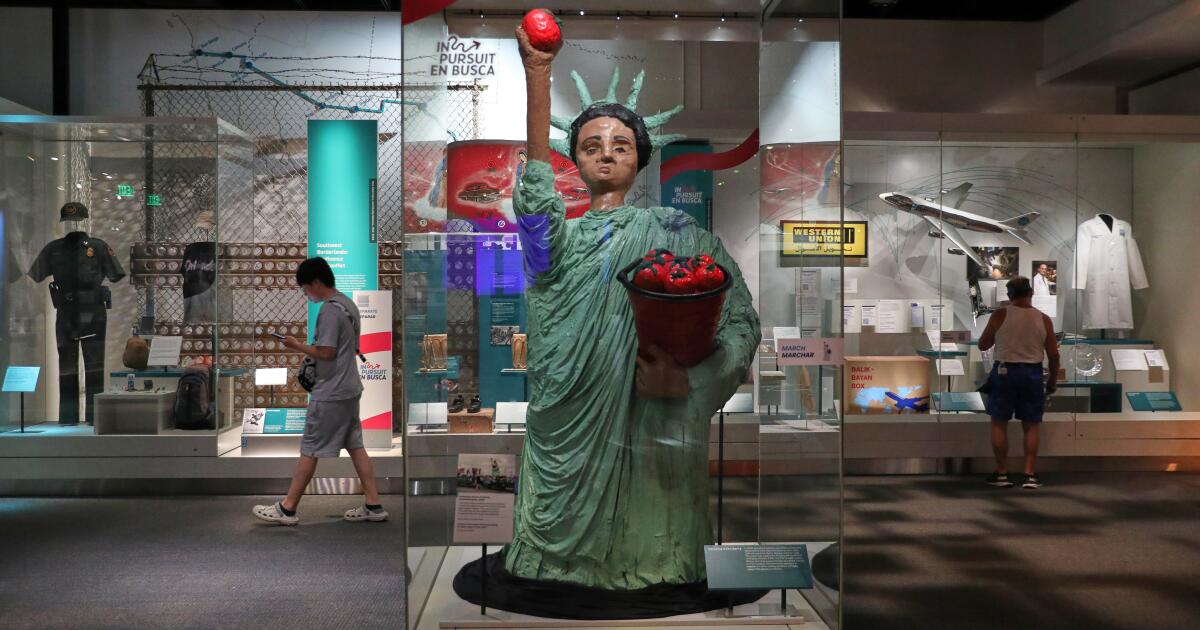
Trump orders new signs outside Smithsonian claiming some exhibits are inaccurate

President Trump ordered his administration Friday to install signs in front of the Smithsonian Institution’s U.S. history museum telling visitors that some of the exhibits are inaccurate, his latest move to reshape how the story of the United States is told.

Trump’s move follows a report released July 4 by his Domestic Policy Council saying leaders of the Smithsonian and its National Museum of American History don’t tell history “in a way that is inspiring, unifying, and worthy of our great republic.”

The president lacks authority to quickly fire the Smithsonian leadership or to order changes to exhibits, so his executive order targets the sidewalks out front, which are maintained by the National Park Service. The order calls for signs telling visitors about the White House report and directing them to resources for what he calls “accurate information regarding America’s history.” It also calls for a temporary exhibit that corrects information he deems inaccurate.

Smithsonian officials declined to comment on Trump’s order.

Anthea M. Hartig, director of the National Museum of American History, challenged the White House report during congressional hearings last week.

“As we continue to fact-check the report, we unwaveringly attest that it does not fairly or accurately characterize the full body of work at the museum,” she told lawmakers. “There is always room for improvement. But I also know the beauty and the inspiration and the expertise that lies in our collections, our exhibits, and our programming.”

The Smithsonian operates outside the executive branch, and museum directors report to Smithsonian Institution Secretary Lonnie Bunch, who is subject to oversight from its Board of Regents.

Trump’s escalating effort to force changes at the Smithsonian marks the president’s latest move to transform cultural pillars of society, such as universities and art, that he considers out of step with conservative sensibilities. Trump had himself installed as chairman of the John F. Kennedy Center for the Performing Arts with the aim of overhauling programming, and his handpicked board voted to add his name to the building, only for a federal judge to later order the signs to be removed.

Trump has also imposed changes on historical sites beyond Washington, including in Philadelphia, where the administration won a court ruling this month allowing it to reinstall interpretive panels that critics say whitewash the history of slavery at the site of President Washington’s home. Advocates, academics and officials have been concerned for months that the version that complies with Trump’s order could give a history that plays down the pain in the nation’s past in favor of a more triumphant view.

Trump in March revealed his intention to force changes at the Smithsonian Institution with an executive order that targeted funding for programs that advanced “divisive narratives” and “improper ideology.”

Cooper writes for the Associated Press.

Source link

Best type of staycation is crowned as school summer break gets underway ahead of scorching heatwave

Seven in 10 people asked said they loved camping, rising to 85% of those under 30

Camping is the pitch perfect way to spend a staycation, especially if you are younger, a survey suggests.

Seven in 10 people asked said they loved camping, rising to 85% of those under 30. The top spot is the National Trust’s campsite at Great Langdale beneath Langdale Pikes in the Lake District.

It took 28% of the votes from the 2,000 Brits asked in the poll, with Watermouth Valley in Devon second (19%), followed by Red Squirrel in Glencoe, Scotland, (18%) and Loch Lomond and The Trossachs National Park on 17%. The Duchess’s Meadow in the Peak District and Cloud Farm in Devon both got 14%.

Nearly a quarter believe Britain is the best place in the world to pitch a tent. The main attractions are reconnecting with nature (45%), spending more time in the UK (44%), enjoying time with family (37%), and saving money (33%).

Other draws include getting away from it all (31%), peace and quiet (29%), the great out-doors (23%), gazing at the stars (21%), and waking to the sound of birdsong (19%).

George Wallis, of Isuzu UK which commissioned the poll, said: “The findings have highlighted some wonderful places in the UK. The UK is one of the most beautiful countries in the world, it’s no surprise loading up and heading somewhere remote remains timeless.”

Source link

Democrats seize on AI data center backlash dividing rural Republicans

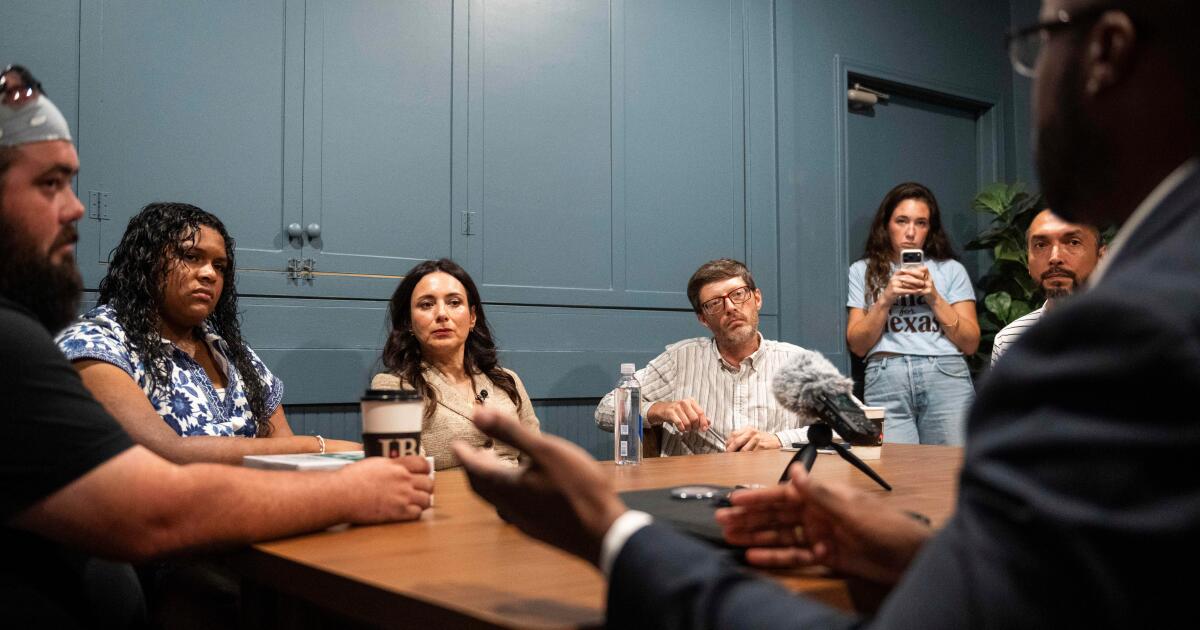
When Gina Hinojosa, the Democratic nominee for Texas governor, began her campaign last year, candidates weren’t talking about — or hearing about — data centers that power artificial intelligence.

But with barely three months until November’s contest, the perceived threat to rural life, ranchland and dwindling water supplies could become a defining issue for her long-shot challenge to Republican Gov. Greg Abbott, dividing conservative rural areas that have traditionally served as a counterweight to Democrats’ urban strongholds.

The backlash to energy-guzzling server warehouses is also shaping other statewide campaigns from Arizona to Ohio to New York, and even giving Democrats a glimmer of hope in Texas, where Republicans have dominated for three decades.

“There is this little issue that I recently started hearing about that I wanted to tell you about, in case you don’t know,” Hinojosa quipped to a Democratic Party-organized crowd of about 160 seated on fold-out chairs at an Amarillo social club in Texas’ panhandle. “It’s this issue of data centers.”

The crowd booed, and she went on: “They are owned by the richest men in the world. We’re all footing the bill. There are no rules. It is the wild west of data centers.”

The fast growth of massive data centers has already upended races for local offices across the country, often uniting conservatives and liberals in revolting against projects in their midst.

People don’t like the secrecy surrounding the projects or the prospect of air, noise, water and light pollution. They fear electric bills going up, wells going dry and losing open space, farmland or forest.

Now the ripple effects have spread to top-of-the-ticket races, where incumbents and challengers are trying to show that they hear an angry electorate.

In Ohio, Democratic nominee Sherrod Brown aired a television advertisement attacking Republican U.S. Sen. Jon Husted as the “face of data centers in Ohio” as people gather signatures for a statewide referendum to outright ban their construction.

In Wisconsin, a Democratic candidate for governor, Francesca Hong, is pledging to “tax the rich, fund our schools and stop AI data centers” as she campaigns for her party’s nomination in a crowded primary.

In Pennsylvania, Democratic Gov. Josh Shapiro is facing heat from some voters who feel like he’s been too welcoming to tech behemoths. Sam Burleigh, a Democrat whose rural community is fighting off data center projects, accused Shapiro of “allowing these data centers to come in and take over acres and acres of prime farmland.”

Texas is fertile ground for data centers

Any political unrest may be felt most acutely in Texas.

The state is poised to overtake northern Virginia as the largest global data center market by 2030, according to a report by commercial real estate giant JLL. It has lots of land, lots of energy and a friendly regulatory environment under Republican leadership.

In rural west Texas and its panhandle, gargantuan data centers are under construction, including one near Amarillo touted as the world’s largest. Some come with designs for natural gas-fired turbines to power them.

Rumors are flying about others popping up — Google, which is building four data centers in northwest Texas, sponsored moderated conversations with officials and business elite in Lubbock and Amarillo in recent weeks — and it is sowing an outcry across small cities, tiny towns and sprawling ranches where people vote overwhelmingly Republican.

Google says its investments are advancing American innovation, fortifying cybersecurity and boosting energy capacity, while President Trump has made data centers a top priority to help the U.S. compete against China for AI superiority.

But tech giants and developers can be secretive about their plans, making it impossible to know what will be built or what sort of pollution they’ll create, critics say. Some worry that data centers will destroy rural Texas’ low cost of living and sully sunsets and sweeping views that stretch toward the horizon.

Others say construction and an influx of workers are already causing havoc for ranchers and towns, driving up rents, snapping up farmland, illuminating the night sky, clogging roads and turning parts of rural Texas into industrial zones.

Opposition crosses partisan divide

Democrats are prominent among the data center critics, but so are Republicans, including Texas’ sitting agriculture commissioner, Sid Miller. They say there are many more Republicans who are quieter because they fear publicly opposing their governor and party.

“They’re upset with Greg Abbott,” said Suzanne Bellsnyder, a former Republican activist from Spearman who writes a syndicated column that advocates for rural Texas. “Whether that translates into voting against him, I don’t know.”

Abbott has aggressively advocated for big projects in Texas and, in November, he helped make Google’s announcement of a $40-billion investment there, saying, “Texas is the epicenter of AI development.”

Compounding that, Texas counties don’t have zoning authority — precisely the local land planning authority that communities around the country are increasingly using to fight off data centers.

Abbott seems to recognize that data centers are dividing his base. In recent weeks, he ordered regulators to take steps to ensure Texans weren’t paying higher electricity bills because of data centers and promised to push a legislative agenda next year to impose regulations on data centers.

At an East Texas campaign stop, Abbott said that includes taking away the state’s billion-dollar-plus-per-year tax break and preventing data centers from being built in “rural Texas neighborhoods.”

Hinojosa and others derided Abbott’s words about “rural Texas neighborhoods” as meaningless — “doublespeak that makes no sense to anyone,” Hinojosa said — and lacking urgency or seriousness.

“Now we have this gold rush of data centers in our communities,” Hinojosa said in an interview, adding that “people want a say, and I think that’s fair.”

As governor, she said she’d block a permit for a data center if it wasn’t a good deal for Texans or residents hadn’t gotten a say in the matter.

Abbott tries to soothe concerns

Abbott’s campaign season turnabout on data centers doesn’t seem to have soothed many.

Of great concern is the prospect that data centers will consume massive amounts of water and worsen drought conditions for ranchers and farmers in a state where water shortages already crippled the sugar cane industry.

“Oh, I guarantee you, it’s on everybody’s mind,” said Giles Dalby, a cattle rancher and a Republican county commissioner in west Texas.

Dalby, who raises Angus and Brangus cattle on ranchland that’s been in his family for 125 years, pointed to fast-growing cities where water authorities have had to go to greater lengths to procure water, including the “water wars” between San Antonio and ranchers several years ago.

Texas is increasingly steamrolling over landowner rights in the quest for public water, Dalby said, and that could mean that data centers get in line ahead of ranchers when shortages or rationing worsen.

Clayton Tucker, a rancher and the Democratic nominee for state agriculture commissioner, said his campaign events are consumed by talk of data centers. It doesn’t matter whether he’s meeting with Democrats or Republicans.

“This is the most cross-partisan issue I’ve ever seen in my life,” Tucker said.

Meanwhile, protest groups are springing up, including one in Lubbock that is led by Republicans. The founders, Stephen Sanders and Hallie Bertrand, like some other Republican opponents of data centers, say it’s possible or even certain they won’t vote for Abbott, although they may not necessarily vote for Hinojosa.

There is still time for Abbott to push through major legislation before the election and “be a hero,” Sanders said.

The big question is whether enough rural voters will turn against Abbott to give Hinojosa a shot. It’s hard to tell, Bertrand said, especially when some know nothing about the issue.

“They’ll just hit that button, Republican all the way down,” Bertrand said. “But I think it’s a step towards something that we have not seen in Texas in a long time, with people on the right switching to the left. Or scooting a little closer to the middle, maybe.”

Levy writes for the Associated Press.
Source link

At least 35 killed after two buses collide in eastern Syria | Newsfeed

NewsFeed

At least 35 people have been killed and dozens injured after two buses collided on a major highway linking eastern Syria to Damascus.

The crash comes amid wider concerns over road safety and deteriorating transport infrastructure following years of war.

Source link

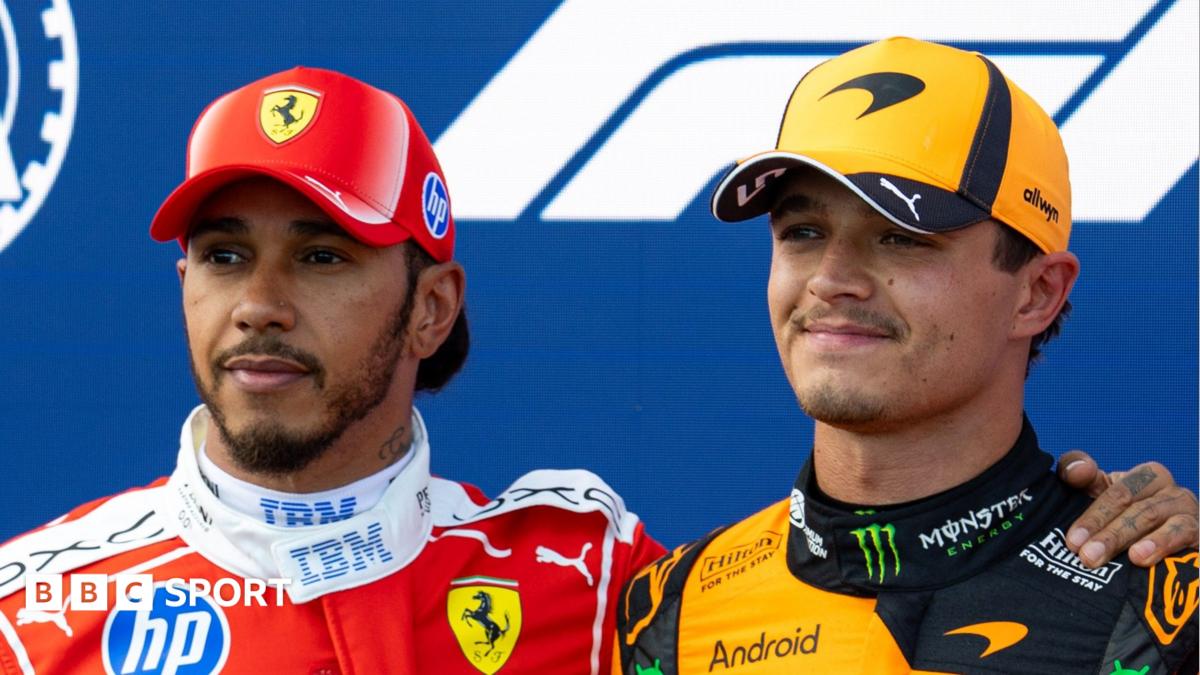
Hungarian Grand Prix: Lando Norris cautious despite pole as qualifying ‘falls apart’ for Lewis Hamilton

Lando Norris took his first pole position of the year in Hungary but is cautious about whether he can follow it up with his first victory as world champion.

Perhaps the McLaren driver was casting his mind back to Miami in early May, when he was leading towards the end of the first stint of the race, only for his team to make a strategic mis-step and allow Mercedes driver Kimi Antonelli to sneak in for a win.

“You can’t just rely on one good qualifying, so I need a good race tomorrow,” Norris said.

“Then we obviously have a nice summer break, but after that we need to try and repeat it several more times.

“We’ve been working hard. We know we’ve been on the back foot, but we’re making progress and today certainly shows that.”

Much of the attention at the Hungarian Grand Prix has been on the massive upgrade made by Aston Martin on their recalcitrant car, which has provided the troubled team with a major step forward and allowed Fernando Alonso to escape the first qualifying session for the first time all season.

That meant McLaren’s own upgrade went under the radar somewhat, but it has been effective.

Still, team principal Andrea Stella, while expressing his satisfaction that the upgrades had enabled them to engage in a fight for pole they did not expect, said Norris’ pole was an “overachievement”.

McLaren’s own good execution of qualifying was one factor, he said, in addition to an under-performance from Ferrari, and perhaps even Antonelli and Mercedes.

Ferrari came into Hungary as most people’s favourite, including McLaren’s, on the basis that their car is the fastest in the corners, but lacks engine performance, and this is one of the least power-sensitive tracks on the calendar.

Lewis Hamilton was fastest after the first runs in the final part of qualifying but did not improve on his final lap. Shortly after completing it, he blocked Norris’ team-mate Oscar Piastri and the stewards imposed a three-place grid penalty for impeding the Australian.

Ferrari boss Frederic Vasseur said the team took responsibility for that because they did not warn Hamilton in time.

The seven-time world champion later posted on Instagram:, external “Sometimes you just can’t catch a break. Another weekend when I’ve been feeling great throughout all the sessions, but then it just falls apart.”

Referencing penalties he had been given in the previous two races in Britain and Belgium, Hamilton added: “I always do my best to keep positive – sport is always about the highs and lows, but it’s also in the margins. Every point counts and you have to seize every opportunity. After three penalties in three weekends, it’s becoming difficult to hang on to that positivity.

“Still, I won’t let the setbacks take away from the progress we’ve been making as a team. With the pace we have, I’m hopeful we can get something out of the race tomorrow.”


Source link

Bonnie Tyler’s secret real name, 50-year romance and disaster that nearly ended her career

As a special tribute celebrates the extraordinary 50-year career of Bonnie Tyler, the Mirror takes a look at the Total Eclipse of the Heart icon’s wild life behind the scenes, including the accident that changed everything

With her unmistakable husky voice and theatrical music videos, there was nobody quite like Bonnie Tyler.

Her unexpected death earlier this month at the age of 75 came as a great sadness to those who’ve followed her distinctive work over the decades.

A legend of ’80s power ballads, many a fan has attempted a karaoke version of Holding Out for a Hero or Total Eclipse of the Heart. But few could hope to hold a candle to Bonnie’s signature rasp and melodramatic stage presence.

The Welsh singer’s extraordinary 50-year career will be celebrated this weekend in a special tribute compilation aired on BBC Two. And it will perhaps surprise no one that magnetic Bonnie’s personal life was every bit as explosive as her musical output.

Little-known real name

While the name Bonnie Tyler may adorn her Platinum-status records, it wasn’t actually the singer’s real name, and it took some time for her to find one that fit.

Britain’s First Lady of Rock was originally christened Gaynor Hopkins, a name she never much cared for as a budding star growing up in the sleepy village of Skewen, near Swansea.

In the early days of her career, young Bonnie began trying out the name Sherene Davies as a stage name, hoping to distinguish herself from the celebrated Welsh folk singer-songwriter, Mary Hopkin, who was just one year her senior.

Speaking with the Leicestershire Press in 2023, Bonnie revealed: “I never really liked my name, so it was a lovely opportunity to change it. My sister had a little girl called Sherene, and I loved that name – it was my name for seven years.”

It wasn’t to stick, however, and after being signed by RCA Records – Elvis Presley’s old label – Bonnie was told that Sherene just wouldn’t do, as it sounded, to their ears, “like a belly dancer”. A search began for a third moniker, with Bonnie taking a creative approach.

She remembered: “I bought two broadsheet newspapers, and I made a list of all the Christian names in one list and all the surnames in another list, and I matched them up until I came up with Bonnie Tyler. It’s been a great name for me, I reckon Steven Tyler must’ve been in the paper that day.”

Scream injury

She is often referred to as ‘the female Rod Stewart’, but the vocal similarities only became apparent after a grim post-surgery accident.

Speaking with the Mirror in 2023, the It’s a Heartache songstress shared how, as her star began to rise in the glitzy ’70s era, belting out ballads began to take a strain. And in 1977, she had to undergo surgery.

Bonnie said: “I started to get a sore throat because all the singing was taking its toll. A doctor discovered that I had nodules on my vocal cords. The only option was for them to be surgically removed. After the procedure, I was told by my surgeons not to talk, let alone sing, for six weeks.”

Unfortunately, after realising she’d forgotten to take strawberries to her brother, Lynn, who was hospitalised with a leg injury, Bonnie momentarily forgot about the doctor’s warning and let out a scream of frustration.

Detailing the incident in her 2023 memoir Straight from the Heart, Bonnie recalled: “I was so frustrated that I’d have to drive all the way back home, I let out an ‘Oh no!’ scream. When I went for a check-up with the specialist, he looked at me and said, ‘You could have done permanent damage’.”

While medics weren’t best pleased, Bonnie’s producer, David Mackay, was impressed by the gravelly sound her vocals produced, once healed. Bonnie said: “I’d always had quite a husky tone to my voice anyway, but as David joked, I now sounded like a female Rod Stewart!”

Marriage to Olympic athlete

Bonnie may have sung about doomed love affairs, but her marriage to a former Olympic judo athlete Robert Sullivan was a long and happy one. The couple first locked eyes back when Bonnie was still singing in Swansea nightclubs, and Robert was a nightclub manager. They tied the knot on July 4, 1973, with Bonnie officially becoming Mrs Gaynor Sullivan – her fourth name.

In a 2012 interview with The Guardian, Bonnie spoke fondly of those early days together, and it appeared the pair were just as smitten as they were as twentysomething newlyweds just starting out. She shared: “I married Robert, my first serious boyfriend, in 1973, when I was 22. I am still very much in love with him and he with me. We never fall out. He is very easy on the eye, which helps.”

And speaking to the Times about Robert, who went into property development after hanging up his judo belt, she said, “I think the secret to our success is that we met before I was famous.

“We don’t have children because we left it too late to stop taking precautions, and then I had a miscarriage when I was 40. I was unlucky, but I love all my nieces and nephews. Our house in Mumbles is like Paddington Station because everyone wants to come and visit Auntie Gaynor.”

Bonnie and Robert owned at least 25 properties together, including 22 homes across Berkshire and London, plus a sizeable farm in New Zealand. However, their seaside home in Mumbles and their villa in Albufeira proved to be their favourites, and it was between these two much-loved residences that they split their time.

Bonnie Tyler at the BBC airs July 25 at 8:30 pm on BBC Two.

Do you have a story to share? Email me at julia.banim@reachplc.com.

Join The Mirror’s WhatsApp Community or follow us on Google News , Flipboard , Apple News , TikTok , Snapchat , Instagram , X , Facebook , YouTube and Threads – or visit The Mirror homepage .


Source link

What Could Be the Institutional Path to Transition From August 1?

We know from statements issued by the 2015 National Assembly Delegated Commission, the 2026 National Assembly, and the State Department that August 1 was set as the launching date of a roadmap leading to a political transition in Venezuela.

The incentives for the various actors to accelerate or delay this political negotiation process are clear. The Venezuelan interim government (as the State Department statement refers to it) will have an interest in delaying the process as much as possible to prolong its time in power and preserve the current state of affairs. For the 2015 National Assembly Delegated Commission, it offers a window of opportunity to gain relevance and demonstrate its ability to accelerate the agenda that Dinorah Figuera announced before any other actor. The Trump administration will want this process to proceed at a pace that does not jeopardize its control of the country until the elections (and perhaps even after). It is in María Corina Machado’s best interest for the situation to develop in a way that allows her to gain control and create the conditions for her to be the opposition candidate in the upcoming presidential elections.

Other, less prominent actors will try to influence the process. We have already seen AD leader Henry Ramos Allup trying to position himself, for example, to defend Machado’s participation, as did Henrique Capriles, and other voices will surely emerge along those lines in the coming days. Those aspiring to a new National Assembly and new elections for governorships and mayoralties will certainly also try to influence the process.

But let’s turn to the most relevant conversation, with just under two weeks until August 1: what could be the institutional path to achieving this political transition through free elections?

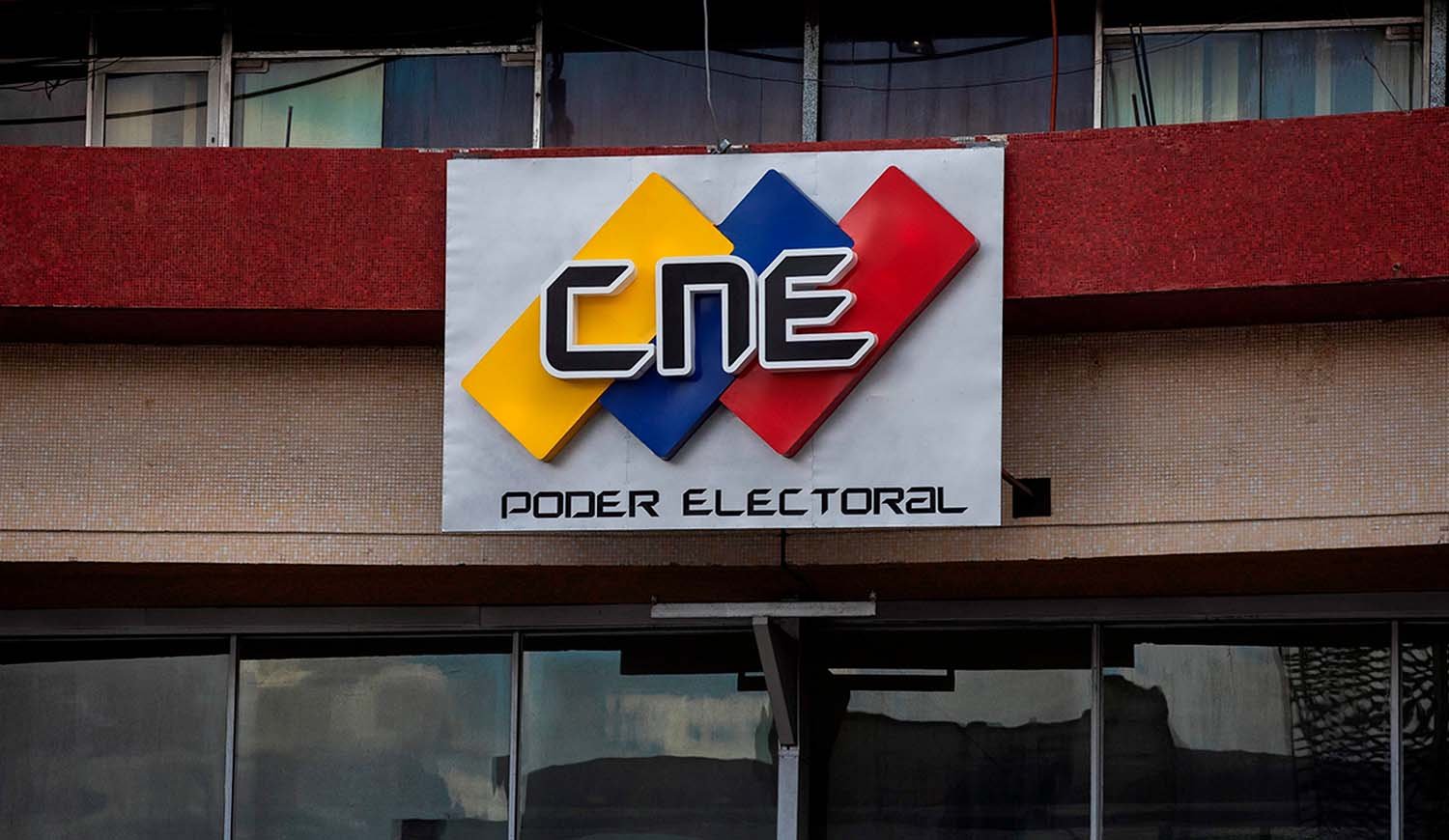
A new National Electoral Council (CNE)

Since the elections are administered by the National Electoral Council, it would seem that the first step should be, precisely, to elect a new CNE board.

Choosing a reliable one could be the first challenge. What has been offered previously is insufficient: a majority of three or four people close to or allied with the government and one or two “independents” or those close to the opposition. A board is needed that complies with Article 296 of the Constitution, composed of “five people not affiliated with political organizations.”

This CNE must begin with an essential task: the purging and updating of the Permanent Electoral Registry. It is crucial that Venezuelans abroad be allowed to vote and that the necessary logistical and diplomatic conditions be established to make this possible.

A new Supreme Court

Under the Venezuelan constitutional system, the decisions of the CNE can be subject to judicial review by the Supreme Court of Justice (TSJ). Directly by the Electoral Chamber. Indirectly by the Constitutional Chamber.

Therefore, the appointment of new justices to both the Electoral Chamber and the Constitutional Chamber is necessary at the outset of this process. Article 263 of the Constitution clearly outlines the requirements for becoming a Supreme Court Justice. In May of this year, the Supreme Court Law was amended to increase the number of justices from 20 to 32. The Constitutional Chamber (the most important chamber) is composed of seven justices. This increase means that 12 new justices must be elected. Furthermore, a significant number of the current 20 justices are of retirement age.

This, as with the CNE, is debated and decided in the National Assembly, whose majority is controlled by Jorge Rodríguez. It would have to be a decision by chavismo, or the result of a political rupture, for the political rights of the non-government-controlled population to be considered both when electing CNE board members and when appointing Supreme Court justices. This relates to the next point.

Restoring civil and political rights

For several years, Venezuela’s main political parties and actors were subjected to confiscation and persecution through various administrative measures, such as those issued by the Comptroller General of the Republic to disqualify candidates, and even judicial measures to replace the boards of directors of opposition parties like COPEI, Primero Justicia, and Acción Democrática. It is essential to compile a report detailing all these measures and establish an action plan to reverse them, allowing political parties and leaders to operate and return to Venezuela.

Then, reforms must be made to those laws and administrative regulations that, long before January 3rd, restricted freedom of expression and the conditions for holding elections, such as the Constitutional Law Against Hatred, the Simón Bolívar Law, and the Law of the Comptroller General of the Republic. The same must be done with respect to the resolutions of the CNE that have restricted political and civic participation in the electoral processes. Furthermore, cases where it has been argued that the 2026 Amnesty Law is inapplicable, such as that of María Corina Machado, must be reviewed.

Given that the incentives of the actors in this process are not and will not be aligned, as shown above, it is crucial to immediately establish timelines for the phases of the process, beginning August 1. This will allow us to gauge the level of commitment among the parties to move forward with the transition.

There are certainly conditions attached to this process that are not public, and that will shape its phases and pace. However, we must begin a public conversation about ideas for addressing this crucial phase of political life starting August 1.


Source link

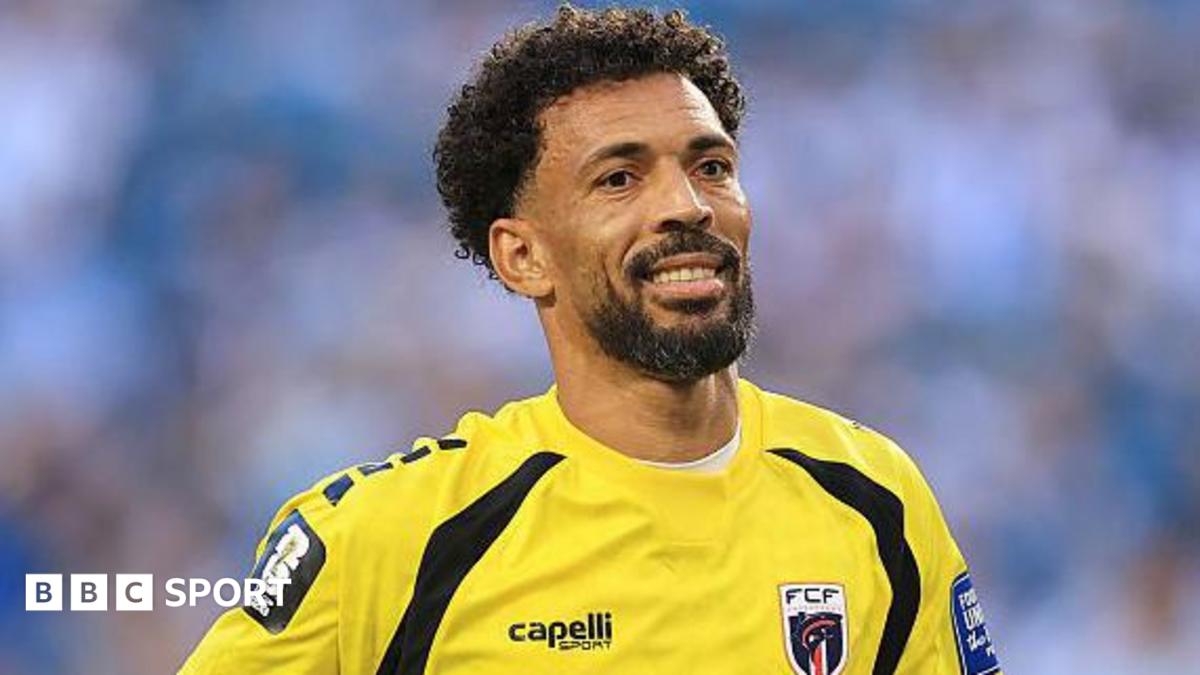
Vozinha: Cape Verde goalkeeper to join Chilean club Colo Colo after 2026 World Cup heroics

Vozinha, the Cape Verde goalkeeper who earned plaudits for his World Cup performances, is set to join Chilean side Colo Colo.

The 40-year-old headed to the World Cup without a club after his contract with Portuguese second division side Chaves expired, but he became an overnight sensation by starring in a goalless draw against eventual champions Spain.

He has now found a new club, according to Colo Colo president Anibal Mosa.

“Vozinha will be a Colo Colo player,” said Mosa.

“In the coming days he will travel to Chile, undergo the usual medical examinations and then be presented here at the Estadio Monumental.”

Mosa said Vozinha’s World Cup displays showed he deserved the move, acknowledging the signing also carried marketing appeal for Colo Colo.

The club, based in the Chilean capital of Santiago, sit top of Liga de Primera – the country’s top division.

Source link

How Netanyahu gov’t media reforms risk deepening Israeli press bias | Media News

Media freedom organisations and opposition lawmakers have criticised sweeping media reforms pushed through by Israel’s right-wing coalition as part of a legislative blitz before the parliament’s dissolution in advance of elections later this year.

The parliament, or Knesset, last week approved the bill that could give the government a far greater say in Israel’s news and broadcast sectors. The controversial measure strips away traditional oversight safeguards, eliminates requirements for minimum journalism standards and lifts longstanding limits on cross-ownership, among others.

Recommended Stories

list of 4 itemsend of list

Following the July 17 vote, watchdog groups, including the Union of Journalists in Israel, along with opposition parties, successfully petitioned the High Court of Justice to freeze parts of the legislation. They warned that some provisions that were set to take effect immediately, including the removal of limits on ownership of multiple media outlets and the stripping away of newsroom standards, could permanently distort the media landscape before the October 27 election, potentially influencing its outcome.

The government has until Sunday to respond, after which the court will decide whether to keep the freeze, widen it, or allow the provisions to take effect. Other, less contentious and immediate sections of the law were left to stand.

Israel’s Prime Minister Benjamin Netanyahu did not vote on the measure. He is currently bound by a 2020 conflict-of-interest agreement that bars him from participating in government decisions that could affect his ongoing corruption trial, where, among other charges, he stands accused of using his position to unduly influence media coverage of his administration.

Nevertheless, Communications Minister Shlomo Karhi thanked Netanyahu directly, saying: “Mr prime minister, I want to thank you and tell you that the mission you gave me four years ago – to deliver right-wing reform of the media – was today successfully completed.”

Israeli media reported that such a directive by Netanyahu could be a violation of his agreement. Neither the Prime Minister’s Office nor the Communications Ministry responded to Al Jazeera’s queries over whether Netanyahu’s role in the legislation’s passage represented a conflict of interest. However, Karhi subsequently claimed that he had secured a legal opinion determining that the prime minister was not in breach of the conflict-of-interest agreement.

“Prime Minister Benjamin Netanyahu and Communications Minister Shlomo Karhi have proven repeatedly that they are enemies of independent journalism in Israel,” Martin Roux, of the Reporters Without Borders media monitor, told Al Jazeera.

“This means they’re attacking every Israeli citizen’s right to reliable information from diverse sources. This has been true for years, and it is becoming more obvious every day as the legislative elections, set for the end of October, approach. It’s all about controlling the narrative,” he said.

In a social media post, Karhi claimed the new legislation would bring “more right-wing coverage and less regulation”.

“After a determined struggle against every possible element from the deep state, tycoons, attorneys, officials and fearmongering networks – we managed to pass the right-wing media reform.”

‘Boosting propaganda channels’

However, for many observers, there was little new in overhauling media that had grown used to toeing the government line, with critical coverage of the multiple wars that Israel has engaged in and the international outrage that many have caused typically relegated to the sidelines of the national conversation.

“The reforms are part of Netanyahu’s ongoing media overhaul – undermining the remains of critical reporting and journalistic independence in the country, while boosting Netanyahu’s propaganda channels,” London-based Israeli academic and media analyst Ayala Panievsky told Al Jazeera.

DAVOS, SWITZERLAND - JANUARY 22: U.S. President Donald Trump speaks after presenting the “Board of Peace” at the World Economic Forum (WEF) on January 22, 2026 in Davos, Switzerland. The annual meeting of political and business leaders comes amid rising tensions between the United States and Europe over a range of issues, including Trump's vow to acquire Greenland, a semi-autonomous Danish territory. (Photo by Chip Somodevilla/Getty Images)
Israel’s Channel 14 has consistently pushed the ‘big lie’, that Trump won the 2020 US elections, leading some to wonder if the channel would be prepared to do the same again in Israel later this year [Chip Somodevilla/Getty Images]

She cited the far-right Channel 14, which she said emboldened Israel’s war crimes and offered unflagging support to what she described as the most right-wing government in Israel’s history.

“In 2020, they amplified ‘the Big Lie’ in the US elections, claiming Trump won the election – they might therefore act similarly following the Israeli general elections in October, if Netanyahu’s coalition indeed loses,” said Panievsky, echoing similar concerns among academics and legal analysts sparked by accusations from lawmakers within Netanyahu’s Likud party that the acting head of the Central Elections Committee, Dean Livne, was “clearly politically biased”.

Analysts and observers from across Israel have long pointed to the strongly nationalist undertone of much of Israel’s current affairs coverage and the absence of space given to Palestinians and Palestinian suffering.

When the United Nations’ Independent International Commission of Inquiry concluded in September 2025 that Israel had committed genocide in Gaza, Israel’s Foreign Ministry dismissed the findings as “distorted and false“, a framing echoed across domestic outlets rather than scrutinised.

A subsequent Molad report found only 3 percent of Channel 12’s early war coverage referenced Gaza’s humanitarian crisis, with just two of 206 visuals showing Palestinian civilian casualties. Elsewhere, allegations of Israeli war crimes, including sexual abuse, are either omitted or given pro-government framing, observers told Al Jazeera.

Thick smoke rises following an Israeli airstrike on a residential area in the Al-Jalaa neighborhood despite the ceasefire in Gaza City, Gaza, Palestine, on July 23, 2026. Photojournalist:Saeed M. M. T. Jaras
Thick smoke rises following an Israeli air strike on a residential area in the Al-Jalaa neighbourhood despite the ‘ceasefire’ [Saeed MMT Jaras/Anadolu]

“The Israeli media just doesn’t feature Gaza. It’s not there,” political analyst Ori Goldberg said from outside Tel Aviv. “There’s no sense of solidarity with the journalists killed there, or those they don’t let in. They’re just not mentioned.”

Similarly, discussion panels on the various wars that the Netanyahu administration had embarked upon were typically staffed by ex-generals, who had no question with the need for war, only differences over its prosecution, said Goldberg.

However, even this relative compliance was not enough for a prime minister fighting an election that had come to rely on the appearance of forward momentum and paper enemies to sustain his political project.

“Netanyahu always needs to be seen to be pushing the envelope,” Goldberg added. “He needs a media that will give barely critical coverage of his every word, but one that he can still present as the enemy within.”

Source link

Ebola deaths in DRC surge past 1,300 as virus ‘spreading like a wildfire’ | Ebola News

Nairobi, Kenya – The death toll from the latest Ebola outbreak in the Democratic Republic of Congo has surged above 1,309, an extraordinary rise of more than 40 percent in just five days, government figures show, as a leading public health consultant says the virus is “spreading like a wildfire”.

Updated data released by the government on Saturday showed that as of Thursday, the total number of confirmed cases, including deaths, had climbed to 2,973. This was a 27 percent rise from the figure last Saturday.

Recommended Stories

list of 3 itemsend of list

The unprecedented rate at which cases are increasing and deaths are mounting has made the DRC epidemic the fastest-spreading Ebola outbreak ever documented.

Compounding the danger, the virus spreading in the DRC is Bundibugyo, which is the rarest of the four variants of Ebola known to affect humans and currently has no approved vaccines or treatments.

Abdulsalami Nasidi, a public health consultant who helped establish the Africa Centres for Disease Control and Prevention (Africa CDC), the African Union’s public health agency, told Al Jazeera the lack of a proven vaccine meant the virus was “spreading like a wildfire.”

Nasidi said the epidemic was unfolding in an area of active hostilities, compounding the shortage of public health resources common to African governments confronting outbreaks.

Scientists are racing to find a way to slow the epidemic, and the University of Oxford’s Oxford Vaccine Group said a volunteer had received the first dose of a rapidly developed experimental vaccine on Friday.

“This is an important milestone for the trial, and marks the next phase in our multinational collaborative journey to develop a Bundibugyo ebolavirus vaccine,” said the Oxford team’s chief investigator, Katrina Pollock.

The largest and deadliest Ebola outbreak in history killed more than 11,000 people out of at least 28,000 cases between 2013 and 2016, primarily in West Africa across Guinea, Liberia and Sierra Leone.

That outbreak took about eight months to reach the first 1,000 deaths. The latest epidemic in the DRC has done so in less than 10 weeks.

“We must act now,” Africa CDC Director-General Jean Kaseya wrote in a post on X last week. “If we do not stop it today, this will become the worst outbreak the world has ever documented.”

Al Jazeera’s Alain Uaykani, reporting from the DRC city of Goma, said the government’s response had lacked coordination and urgency, leaving medical personnel overstretched and working in poor conditions.

He said the death toll among health workers continued to climb on Saturday, with a doctor and a health worker among the latest victims.

More than 100 health workers have been infected since the outbreak was declared in May, and around 35 have died, a toll compounded by shortages of protective equipment and, in some communities, hostility from residents who question whether the disease is real.

An increasing number of healthcare workers at several medical facilities in the northeastern province of Ituri, the epicentre of the outbreak, have gone on strike over unpaid wages and unsafe working conditions.

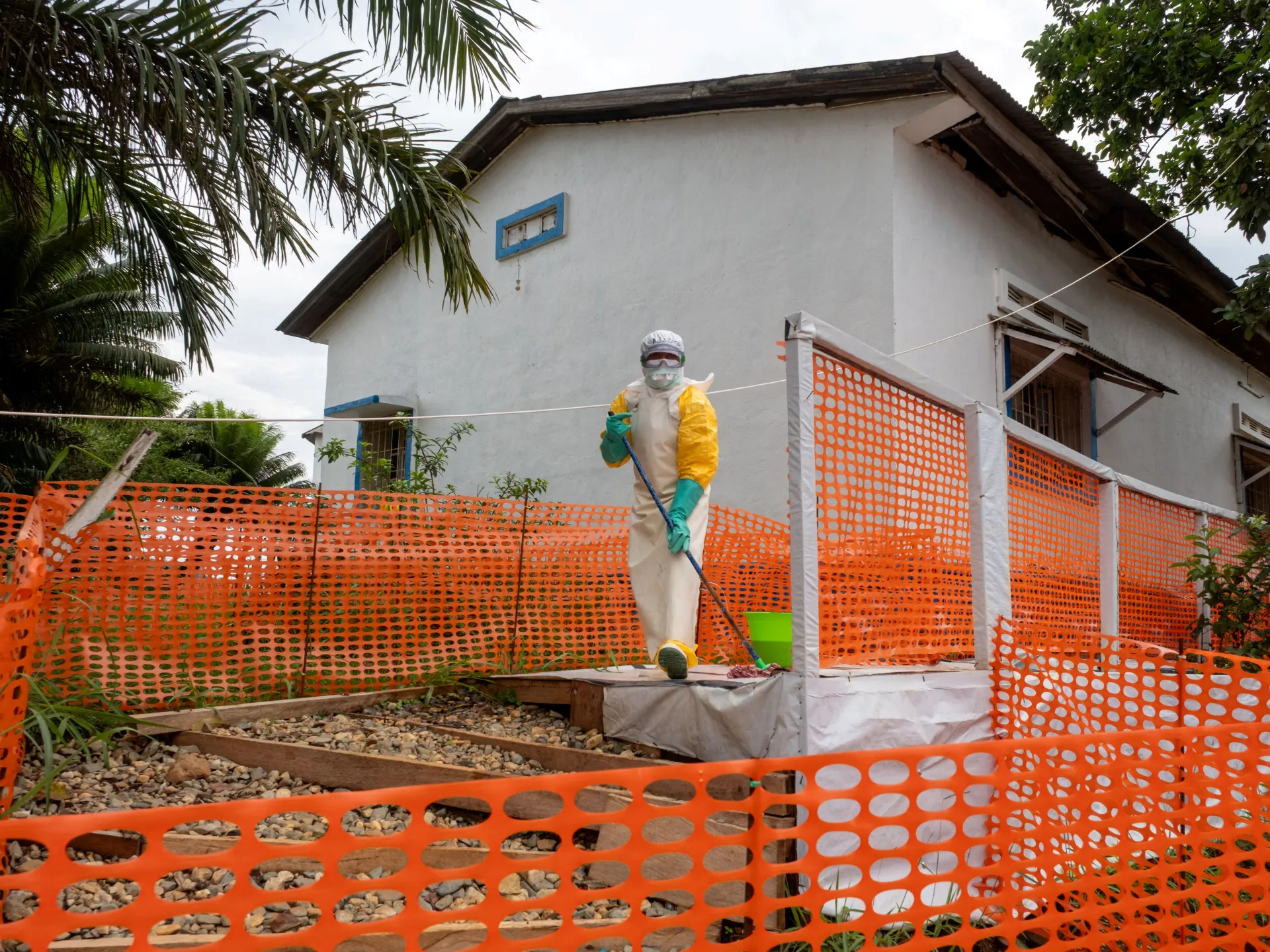
Last week, dozens of workers at Rwampara General Hospital near Bunia went on strike. The hospital operates a major Ebola treatment centre, parts of which were set ablaze in May by angry residents who also chased after health workers fleeing in trucks.

The latest strike began on Saturday at the Elikya Ebola Treatment Centre in the provincial capital of Bunia. Activities were largely paralysed as doctors, nurses and security staff stopped work.

Approximately 100 workers held a protest outside the centre, saying unpaid bonuses were undermining morale and disrupting patient care.

“We need to be paid, because in the meantime the disease is spreading at the treatment centre,” Martin Bolombi, one of the striking workers, told The Associated Press. “I’ve already had five people die who are still inside there. A solution must be found for us,”
WHO Director-General Tedros Adhanom Ghebreyesus has warned that the true number of cases could be more than double the official count, as insecurity continues to restrict access to affected communities.

Contact tracing now reaches roughly 80 percent of known contacts, he said, but response teams still cannot reach every village or deploy where they are needed most.

The United States and Canada have both restricted entry for travellers who have recently been in the DRC, measures that run counter to the WHO’s own guidance issued in May, when it declared the outbreak a global health emergency.

Tedros has called for a ceasefire in the conflict gripping eastern DRC, arguing that medical resources alone are not enough to tackle the crisis, and political action is needed to open up access for responders before the virus takes hold in provinces not yet affected.

Source link

I squared up to piece of s**t Diddy & told him I’ll f**k you up after J-Lo cheated on me with him, reveals first husband

JENNIFER Lopez’s first husband squared up to Sean “Diddy” Combs in a blazing row after the rapper had an affair with his wife, The Sun on Sunday can reveal.

In a world-exclusive interview, Ojani Noa — the original Mr J-Lo — claims he confronted the disgraced star in a terrifying Hollywood bust-up.

Jennifer Lopez’s first husband squared up to Sean ‘Diddy’ Combs in a blazing row, he has revealed Credit: Getty
J-Lo’s ex-husband Ojani Noa says he was not afraid to confront Diddy after learning about the affair Credit: Jeff Rayner/Coleman-Rayner

A defiant Ojani reveals: “She cheated on me with Diddy.

“I confronted him and told him I wasn’t scared of him.”

Ojani also tells for the first time how Diddy threatened superstar Jennifer — now 57 — and verbally abused the singer at her own home, leaving her “in fear for her life”.

Cuban-born Ojani married J-Lo in 1997, a little over a year after a passionate whirlwind meeting but they split 11 months later as Jennifer’s hunger for global fame took over.

READ MORE ON JENNIFER LOPEZ

RUB-A-DUB-DUB!

Why the bathtub snap is the new bikini pic after Dua Lipa’s honeymoon post


daddy cool

JLo’s ex Marc Anthony becomes a dad for the EIGHTH time aged 57 with wife, 27

Ojani claims Diddy threatened superstar Jennifer and verbally abused the singer at her own home Credit: Alamy
Ojani says he stepped in to protect his ex-wife from the Bad Boy Records founder Credit: Getty

Jennifer then started officially dating Diddy, now 56, in 1999 but the toxic couple finished their tumultuous relationship in 2001.

Now her relationship with Diddy has come into the spotlight again after he was accused of running a sex-trafficking ring and convicted last year of engaging in two counts of transportation of prostitution.

Ojani, a 52-year-old personal trainer living in Florida, today discloses for the first time the explosive moment he stepped in to protect his ex-wife from the Bad Boy Records founder.

He recalls: “It was the year she dumped him.

“We were still friends and we had decided to start over again.

“Everyone makes mistakes and deserves to be forgiven once.

“She had tried to dump Diddy before and he had threatened her and her family.

Ojani says J-Lo stepped in between him and Diddy to try to defuse the confrontation Credit: News Group Newspapers Ltd
Personal trainer Ojani, now 52, spoke exclusively to The Sun On Sunday’s Scarlet Howes Credit: Jeff Rayner/Coleman-Rayner

“He turned up to her assistant’s birthday party in Los Angeles — which Jennifer had thrown for her — and everyone was shocked.

“I went over to him and told him to leave and he told me to back off. He asked me who I was, to which I replied, ‘F*** you’. I told him he had slept with my wife.

“Jennifer got in between us. She said he would leave but he didn’t.

“I got upset with her and at the end of the night she got in his car and left.”

The dramatic showdown at the party was only the beginning of a terrifying campaign of intimidation.

Ojani says that a few weeks later Jennifer — who has always remained notoriously tight-lipped in public about her dark history with Diddy — called him, “terrified” after the rapper turned up at her Los Angeles home and began screaming her name.

He reveals: “She said she was scared and afraid so I instantly left work and came over.

“When I got there it was pitch black and I couldn’t see anyone, so he must have been hiding. As I drove in he started shouting and telling her he knew I was inside.

“That’s when I fronted him up. Jennifer was on the balcony and told me not to as she was worried.

“She told me he had guns but I told him that I would f* him up.

“She said she was going to call the cops but a neighbour must have called them as they turned up and Diddy ran away.

J-Lo went on to marry dancer Cris Judd, music icon Marc Anthony, and actor Ben Affleck – twice Credit: Getty
Ojani said that when J-Lo told millions of viewers on TV that she was ‘happily married’ it was the final straw Credit: Getty

“She had said to me before that he could do bad things. But I told him to his face that he was a coward.

“That’s why he was always with bodyguards with guns because anyone could take him one on one.”

Ojani arrived in the US illegally aged 15, after making the perilous 90-mile trip from his home in Cuba to Florida with six friends on a homemade raft.

Washing dishes at Latin pop singer Gloria Estefan’s Miami restaurant, Larios On The Beach, the ambitious 22-year-old worked his way up to become head waiter.

It was there that he first locked eyes with Jennifer, then 27. The pair hit it off immediately and Ojani packed up his life to move to Los Angeles to be with her.

He famously asked her to marry him with a diamond ring during the crowded wrap party for her breakout film Selena.

Lucrative offers came flooding in from every corner of the entertainment industry, including a multi-million-dollar record deal from Sony music mogul Tommy Mottola.

But that meteoric rise to the top was the moment things started to unravel between the newlyweds.

Ojani says: “Everything was great and we were so in love.

“I was in charge of launching a nightclub in LA called The Conga Room which was part-owned by Jen, while she went off to make her debut album — On The 6 — in New York and Miami. That was when Diddy was drafted in to help produce several tracks.

“They knew each other way before the media reported they did.

“She started hanging out with Diddy more and more, and I started seeing her less and less.

“Then the rumours started. I still had a lot of friends working in Miami hotels who would call to say they had seen them hanging out and leaving together.

“She would tell me it was just work. But then a picture appeared in the US magazines of her sitting on Diddy’s lap at the pool of Miami Beach Hotel. We started to fight really badly as I knew she was cheating on me.”

Ojani said that when J-Lo started hanging out with Diddy more and more, he started seeing her less and less Credit: Getty
Her ex said J-Lo was “terrified” after the rapper turned up at her Los Angeles home and began screaming her name Credit: AFP

Desperate for answers, Ojani took a six-hour flight from Los Angeles to Miami to sneak past security into Jennifer’s luxury hotel suite.

He waited for hours to challenge her face-to-face.

“She was on her own,” he said.

“But she was shocked I was there.

“I told her again she was cheating and we got into a massive fight.

“The next morning she went to the studio and I went back to Los Angeles. She rang me and said I couldn’t do that again.”

As the marriage crumbled, Jennifer’s public relations machine was working overtime to present a picture of domestic bliss to the world.

Ojani says an appearance on the Oprah Winfrey Show, where a beaming J-Lo told millions of viewers that she was “happily married”, was the final straw.

“We went to the Oscars and she was using me so she could pretend to everyone that everything was OK. It wasn’t. So we got divorced.”

It was the first of her four divorces. She went on to marry dancer Cris Judd, music icon Marc Anthony, and actor Ben Affleck.

  • Tomorrow: Read the truth about her marriage to Ben Affleck.

Additional copy: Graeme Culliford.

Source link

Trump’s crypto bonanza is biggest hurdle for digital asset bill

President Trump’s $1.4-billion crypto windfall has become the biggest obstacle to passing his sweeping digital-asset legislation as Democrats demand tougher language to prevent the president from profiting off an industry his administration regulates.

Senate Republicans released a proposal this week intended to break a months-long impasse over the bill, known as the Clarity Act. But Democrats and consumer watchdog groups dismissed the terms almost immediately, complaining the bill would not stop Trump or his family from continuing to profit from his meme coin and other crypto ventures.

Trump needs the support of at least seven Senate Democrats to pass the legislation, which would set rules for digital assets. Ethics has emerged as the biggest, though not the only, sticking point.

“It’s the linchpin,” said Sen. Angela Alsobrooks, a Maryland Democrat and key negotiator who has been supportive of the crypto industry.

A spokesperson for the White House didn’t immediately respond to a request for comment. The White House has consistently asserted Trump is not involved in managing the family’s crypto ventures and has denied conflicts of interest.

Democrats have specifically taken issue with a provision that would leave Trump’s Justice Department as the primary enforcer of the new ethics regulations, preventing state attorneys general from acting as an independent check.

Another Democratic negotiator, Sen. Ruben Gallego of Arizona, and Republican Sen. Thom Tillis of North Carolina said they’re working on a compromise ethics proposal to send to the White House but didn’t provide details.

Senators in both parties said they see the negotiations in the coming week as key to whether a bill reaches Trump’s desk this year. But after the chilly initial reception to the latest White House offer, Senate Majority Leader John Thune (R-S.C.) said he didn’t think the Clarity Act would pass the chamber before the month-long August recess.

“We’ll see where the votes are,” Thune said.

Alsobrooks, Gallego and other crypto-friendly Democrats are demanding changes to other pieces of the massive bill, including consumer protection and illicit finance measures.

The bill has other issues, including opposition from banks intent on tightening restrictions on stablecoin rewards. Tillis and several other Republicans said they are considering backing changes to reflect banks’ concerns that their deposits could shift to stablecoin accounts, crimping their profits and customers’ access to credit.

Tillis has floated adding “circuit-breaker” language empowering the Federal Deposit Insurance Corp. or other regulators to step in if bank deposits drop — an idea opposed by GOP Sen. Cynthia Lummis of Wyoming, the crypto industry’s biggest backer in the chamber.

Porous provisions

Critics said the draft’s ethics protections are porous. It would let Trump divest a large stake in his crypto venture or move it into a blind trust for the rest of his term, but stops short of requiring him to sell.

“It’s going to allow him to keep making money the way he has in the past,” said Scott Greytak, deputy executive director of Transparency International US, an anti-corruption advocacy group.

The restrictions also hinge on whether an official has a “direct interest” in a crypto asset — a threshold that may not apply to Trump.

The president is a significant owner of World Liberty Financial, the Trump family’s crypto venture, through an entity called DT Marks DEFI LLC, which holds about a 38% stake. Whether that counts as a direct interest “isn’t clear,” said Zach Everson, research director for Public Citizen’s Trump Accountability Project. “Does direct interest describe how he holds the crypto?”

Because the bill wouldn’t apply to the children of government officials, Donald Trump Jr. and Eric Trump could continue their own crypto business interests. And much of the family’s fortune has already been made: Trump and his affiliates have earned a huge windfall from meme coin and token ventures, income the legislation would not claw back.

Critics also decried a provision that would sunset the ethics requirements on Jan. 20, 2029, the day Trump’s successor would be inaugurated. That could prevent the next administration from holding Trump accountable.

The White House and Republicans argued that Trump had gone further in backing ethics restrictions in law than any previous president.

“History will remember this as the moment a president chose a higher standard of ethics than the law required of him,” Lummis, a key architect of the bill, said on X.

Democrats were skeptical even before the language was released. “Any meaningful ethics provision would be shot down by the White House,” Sen. Chris Murphy of Connecticut said.

The politics of crypto have long divided Democrats, and a bipartisan deal on the legislation risks provoking a backlash from progressives. Failure to reach a deal, however, could make the party the target of a torrent of crypto campaign cash.

Crypto group Fairshake and its two affiliated super PACs have raised $164 million for the midterm elections, Federal Election Commission filings show, and have spent $66.6 million so far.

It’s the kind of political arsenal that Senate Democratic leader Chuck Schumer of New York can ill afford to have aimed at his candidates as the party seeks to regain Senate control.

But others, like Murphy, have warned that blessing Trump’s big crypto bill would undermine Democrats’ midterm message.

A potential presidential candidate, Murphy said Wednesday while addressing the left-leaning Center for American Progress that the bill is before the Senate “because the industry paid for it” and urged Democrats to instead turn fighting crypto corruption into a potent campaign issue this fall.

Markets have grown less convinced a deal gets done. On Polymarket, the odds of the Clarity Act passing this year fell to about 1 chance in 3 earlier this week after Republicans released the new draft.

That’s about half the odds the prediction market gave passage after the Senate Banking Committee backed an earlier version of the bill on May 14.

Dennis and Patterson write for Bloomberg. Bloomberg writers Yash Roy, Lydia Beyoud, Aidan Williams, Bill Allison and Olga Kharif contributed to this report.

Source link

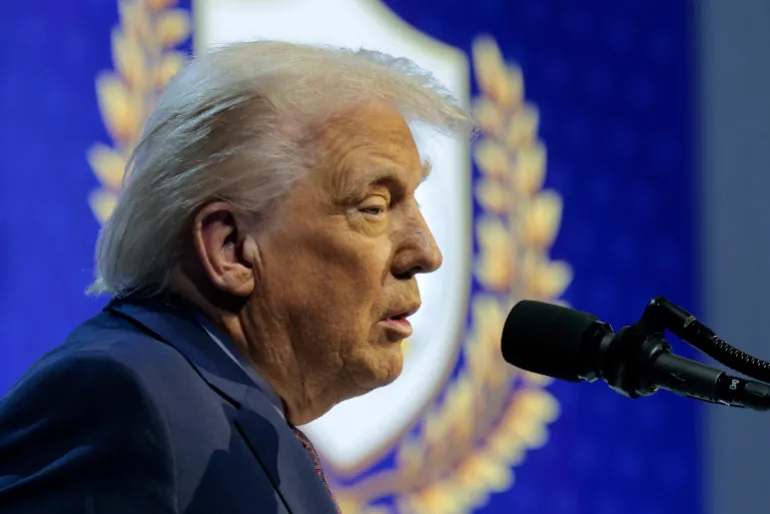
Trump considers escalating war; Iran says it’s ready for ground troops

July 25 (UPI) — President Donald Trump said Friday that he’s ready to continue talks with Iran or escalate fighting, but an Iranian general said it’s ready to fight.

Trump met with top advisors and cabinet members on Friday to make a decision on whether to escalate attacks on Iran, The New York Times reported. Friday night, no attacks on Iran from the United States or on U.S. military sites were reported after 13 straight nights of fighting.

The White House hasn’t said if the president decided what to do, but Trump said the military is ready for a heavier attack if Iran doesn’t want to resume talks.”Look, we’re locked and loaded,” Trump told reporters on Friday. “We’re ready to go, but we’re talking to them, so maybe there will be, maybe there won’t be a tipping point. Maybe they will cry uncle, or maybe they’ll just give up, or maybe they’ll just go into a cave and hide.”

He told reporters that Iran is getting more serious about talks to end the fighting.

“We are talking to them. I think they’re getting more and more serious as the days go by, for maybe the obvious reason, but we are talking to them right now,” Trump said Friday.

He said that Iran would “love to make a deal” but he didn’t “think they’re ready to.”

But an Iranian general pushed back Saturday, even suggesting that Tehran welcomed a ground invasion by American troops.

“Our war with the enemy is a war of attrition, one that will not end,” the official whom Iranian media named General Asadi said Saturday, CNN reported. “We ask God that the ground forces of the aggressor American army find themselves in a position where we can engage them on the ground.”

In an interview with Axios on Thursday, Trump said he was considering a “massive attack” on Iran.

“Bigger than ever before. I am close to making a decision. We are all set for it,” he said. But he said that decision would have consequences, and he hadn’t decided on it yet.

He told Axios that the Iranians “want to negotiate” but aren’t ready to make a deal.

“They haven’t received enough pain yet,” he said.

Two regional sources with knowledge of mediation efforts told Axios that Iranian leadership hasn’t accepted the latest proposal.

One of the sources said, “We are trying, but the Iranians are not being helpful.”

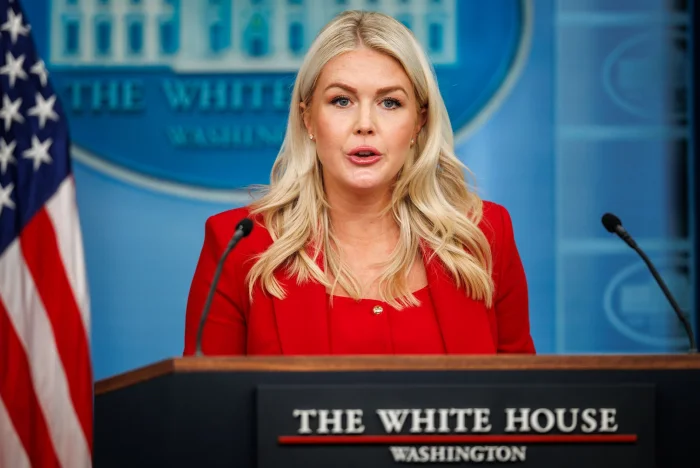
White House Press Secretary Karoline Leavitt speaks during a press briefing in the James S. Brady Press Briefing Room at the White House on Thursday. Photo by Samuel Corum/UPI | License Photo

Source link

Iran’s government spars with state TV as mediators push talks with US | US-Israel war on Iran News

Tehran, Iran – A public rift has emerged between Iran’s government and state television over how to portray the state of war and negotiations with the United States, as mediators try to nudge both countries towards diplomacy.

The Government Information Council on Friday accused state broadcaster IRIB of “censorship” after parts of a speech by President Masoud Pezeshkian earlier in the week were not shown to the public.

The broadcaster, whose head is appointed by the supreme leader, issued a response on Saturday rejecting the government’s “accusations and improper attributions”, and emphasised that it has a duty to prevent “an incorrect and unreal suggestion of duality in the country’s leadership pillars”.

In his speech, Pezeshkian had pointed out that after last year’s 12-day war with Israel, former Supreme Leader Ayatollah Ali Khamenei publicly said there would be no negotiations with Washington – but privately had given his approval.

“We went to the dear leader, explained the situation, and asked him what to do since he had said the ‘no war, no peace’ conditions are bad for the country,” the president said. “He ordered us to go negotiate. We started the talks based on his order.”

The government said in its statement the move to cut that section of the speech was part of a series of “unusual actions” taken by state television concerning recent comments made by the heads of the government, parliament and judiciary.

It pointed out that earlier this month, a part of the parliament speaker and chief negotiator Mohammad Bagher Ghalibaf’s interview with state television dealing with negotiations had also been cut. The government council added that a part of a speech earlier this week by judiciary head Gholam-Hossein Mohseni-Ejei was not aired either, in which he expressed backing for the president.

Foreign Minister Abbas Araghchi has also separately criticised IRIB, saying during an interview with a state-linked outlet released on Saturday that he “fought with a sword” in wartime interviews with US media such as Fox, CNN and others. The chief diplomat said he expected state television to show how Iran’s case was being strongly presented to US audiences and policymakers, but only one or two subtitles from the interviews ended up going on air.

Araghchi also rejected a notion raised by hardliners that the now-suspended memorandum of understanding signed with the US last month was “imposed” on new Supreme Leader Mojtaba Khamenei, as some hardliners have claimed. He characterised it as the best possible agreement under the circumstances.

In its own statement, the government blamed the actions on “a political faction within” state television, in an apparent reference to the Paydari Front of ultrahardliners, and said their actions could serve to undermine national security and social cohesion.

IRIB, in a statement published by its public relations department, countered that broadcasting the president’s segment would have propagated an appearance of division.

Both sides accused each other of undermining the decree issued last week by Mojtaba Khamenei to reach a “sacred unity” in face of military, economic and diplomatic pressure by the US.

Mohammad Mirzaei, a member of parliament and spokesperson of a committee tasked with exerting oversight on IRIB, said on Saturday that directors of the state broadcaster have been warned about the necessity to display different viewpoints and to act as a “sign of national unity”.

Conservative journalist Mohammad Mohajeri told local media that the broadcaster is now at its most expensive and least effective. Reformist activist Mohammad-Sadegh Javadi-Hesar described the deeper problem as “one government being installed and another government called IRIB operating against it”.

Reformist Entekhab news outlet reported, citing an unnamed source, that Pezeshkian sharply reprimanded IRIB chief Peyman Jebeli at a cabinet meeting after the row over the negotiations. Jebeli, who was appointed by Ali Khamenei in 2021, was media deputy at the Supreme National Security Council when Saeed Jalili, the only council member said to have voted against an interim deal with the US last month, was its secretary.

Hardline lawmaker Meysam Zohourian said the president has threatened to cut state television’s budget, but the administration has not confirmed this.

As the public sparring unfolded, mediators from Oman were in Tehran on Friday to discuss the management of the Strait of Hormuz, a vital waterway whose control has become a central point of contention between the US and Iran.

US President Donald Trump argued on Friday the war was going “extremely well” and that Israeli Prime Minister Benjamin Netanyahu will visit Washington in the coming days.

He said the two sides continued to talk through mediators, but that he did not expect any agreement soon.

The US president also refused to answer whether realising his threat of systematically attacking power plants and bridges in Iran in case of a war escalation would constitute war crimes.

Mohammad Bagher Zolghadr, the secretary of Iran’s Supreme National Security Council, on Saturday responded by saying missile and drone launches across the region will continue “until the full surrender of the enemy” and avenging the blood of civilians killed during the war.

Source link

Why Paramount’s Warner Bros. deal suddenly looks less certain

Tech scion David Ellison for months projected confidence that his blockbuster Hollywood merger was on a glide path to completion.

His media company Paramount Skydance’s pitch early this year was that its proposed $111-billion acquisition of rival Warner Bros. Discovery could easily clear regulatory hurdles — unlike Netflix’s competing bid.

Ellison has heavyweights in his corner: his billionaire father Larry Ellison, co-founder of software giant Oracle, is bankrolling the deal, and President Trump is eager for the Ellison family to own CNN and other Warner assets, including HBO and the Burbank film and TV studios behind “Batman,” Harry Potter, Wile E. Coyote, and “The Pitt.”

“We could technically close [the deal] tomorrow,” Ellison told business new channel CNBC during a March interview. “There is nothing in this transaction that trips anything that would create cause for concern.”

But Paramount made a dramatic retreat Friday after two weeks of legal setbacks. The firm had been aiming to close the deal by September but agreed to table its takeover — perhaps until next spring — to allow a fiercer than expected challenge from California Atty. General Rob Bonta and 11 other Democrat state attorneys general to advance to trial before an Oakland-based federal judge.

The state prosecutors allege Paramount’s proposed merger with Warner Bros. violates a century-old antitrust law by giving the combined company too much heft in theatrical movie distribution and cable television.

The delay could saddle Paramount, the smallest of the major media companies, with substantial legal fees and hundreds of millions of dollars in added deal costs. In February, Paramount offered Warner investors a sweetener, so-called “ticking fees,” to win the auction.

Those fees, which begin accruing in October, will cost Paramount an extra $7 million a day — until the purchase is finalized. And if Paramount fails to close the merger, it would owe Warner Bros. Discovery a $7-billion breakup fee.

“Anyone who thinks they know how this deal ends should think again,” Forrester Research analyst Mike Proulx said in a statement. “This deal may still close or it may not. … The path to either outcome just got longer, messier, and likely more expensive.”

Paramount now must strengthen its case for a high-stakes trial while fortifying Paramount’s existing businesses and holding together a coalition of financiers, which includes the royal families of Saudi Arabia, Abu Dhabi and Qatar which jointly agreed to contribute $24 billion for equity stakes in the combined company.

Paramount reversed course after U.S. District Judge Araceli Martínez-Olguín dealt the company a blow on Monday when she temporarily blocked Paramount from finalizing the acquisition until mid-August. Looming was a key Aug. 3 hearing for the judge to determine whether the moratorium should be extended.

Paramount was concerned the judge would block the deal for the foreseeable future.

“They saw the writing on the wall,” Bonta said in an interview.

Columbia Law School business professor Eric Talley added: “This doesn’t constitute Paramount Skydance coming out and waving a big white flag — but it is a small white flag of surrender.”

Paramount, in a statement, said heading straight to trial would prove advantageous.

“This is the fastest and clearest way to prove that this transaction is good for competition, good for consumers, and good for creators,” Paramount said. “We look forward to proving our case at trial.”

Last week, the Writers Guild of America separately filed a lawsuit seeking to stop the merger, alleging that writers would encounter less work and lower pay should Paramount buy Warner Bros.

Now the merger won’t close until after a resolution in the litigation or by June 1, 2027, whichever date comes first.

“This is what we’ve been asking for from the start,” Bonta said. “We just wanted the court to have sufficient time to review our case without the threat of the companies merging.”

Ellison, through a Paramount spokesperson, declined an interview request.

The delay brings a different set of challenges, Talley said, including pushing the date of the takeover until after November’s pivotal mid-term elections when control of Congress might change hands.

“That itself could be disruptive,” Talley said. “Suppose we get a flip of the House of Representatives or the Senate, then we may see testimony in Congress.”

Prominent Democrats, including Sens. Cory Booker (D-N.J.), Elizabeth Warren (D-Mass.) and Adam Schiff (D-Burbank) have expressed alarm over the potential consolidation, which would shrink the number of legacy film studios and bring CNN in addition to CBS News under Ellison control.

Attempts to get Ellison to testify in Congress have fallen short. The Paramount chief declined an invitation to appear before the Senate Judiciary Subcommittee on Antitrust, Competition Policy and Consumer Rights in February, as well as a subsequent request from Booker to appear during an April spotlight hearing.

“To what extent was the rush to get the deal done related to the midterms, and what press coverage was going to look like in the upcoming election season?” Talley asked. “CNN is not a huge money-making asset but it is a prominent asset of Warner Brothers Discovery.”

On Friday night, Trump extolled his friendship with the Ellison family during the White House Correspondents Assn. dinner while also criticizing prominent CNN anchors.

David Ellison is “going to make, I think, fantastic changes and keep some of the great stuff going,” Trump said.

CBS News has been roiled since shortly after the Ellisons acquired Paramount in August, and installed Bari Weiss as editor in chief of CBS News. She has overseen a series of controversial moves, including shaking up the evening news and sacking several “60 Minutes” correspondents.

Paramount scored one victory: the European Commission gave its blessing for the merger to go forward in the European countries it represents. The company now has gained clearances from more than 60 jurisdictions, including from the U.S. Justice Department, which found the merger would likely boost competition — not harm it.

Now, Paramount’s biggest obstacle is winning the case against Bonta and the other state attorneys general.

The states plan to request a trial in 2027, after the two sides conduct months of discovery to prepare their cases.

“We want to take depositions of employees. We want to take depositions of customers and competitors in these marketplaces that are impacted [and] we want documents,” Bonta said.

“We want to depose their experts and probe and test their experts’ opinions,” he said. “That all takes time.”

Bonta and the other state attorneys sidestepped the political landscape in making their lawsuit arguments.

“This is just a straight-up meat-and-potatoes antitrust case,” Bonta said. “The main point here is that antitrust enforcement is important because monopolies that lessen competition hurt everyday people.

“Once we have a trial, we’re going to win,” Bonta said. “So we think and we hope there will never be a merger.”

Source link