Month: July 2026

Huge UK water park with Oasis link left abandoned and full of ‘rotting slides’

Many might remember the days of visiting this water park that was renowned for its lagoon and dome ceiling, but today it paints a different picture as its left to rot away

When most of us are dreaming about cooling down in an outdoor lido or planning trips to the beach over the weekend amid the blistering UK heatwave, there’s one water park that lies eerily abandoned, without a visitor in sight.

Having opened in 1976, the Oasis Leisure Centre in Swindon, or known simply as Swindon Oasis, became a standout attraction as a swimming pool, sports complex and entertainment venue all rolled into one. The Grade II-listed indoor water park boasted a lagoon, a wave machine, and colourful waterslides underneath its domed roof, providing hours of fun for the kids.

The area was decorated with artificial rocks and foliage, with smaller slides for the little ones and even an Egyptian statue in one corner. It was once a colourful, vibrant space that has now become a haunting, neglected site.

But back in the day, for those eager for a night out, there was the concert hall that could seat up to 1,620 people, or hold around 3,000 people standing. It famously hosted the rock band Inspiral Carpets in the early 1990s and even inspired the name of the band Oasis.

Liam Gallagher is said to have latched onto the name Oasis after seeing the Swindon leisure centre listed as the venue on the Inspiral Carpets tour poster. Noel had worked with Inspiral Carpets and later joined the band Rain with his brother, Noel Gallagher, and they went on to call themselves Oasis. All thanks to the iconic dome attraction.

While Oasis never performed at the venue, Liam did appear at the Oasis Leisure Centre in 2011 with his band, Beady Eye. Alongside its high-profile links, the complex welcomed thousands of visitors during its heyday and was one of Wiltshire’s most beloved attractions.

Yet, all good things come to an end, and after 44 years, the Swindon Oasis closed its doors forever. Its permanent closure in October 2020 followed five months without visitors due to the 2020 lockdowns, which required leisure facilities to halt operations.

At the time, operator GLL said: “As a charitable social enterprise, we are not in a position to continue operating a facility that requires capital investment and is losing money, while accruing significant rent liabilities.”

Today, after five years left untouched, it remains eerily neglected. Photos released earlier this year show the inside of the water park rotting away, with its surfaces covered in grime and the remnants of shallow water a murky green.

With rotting slides, rusty rails and faded tiles, it’s hard to imagine that just over five years ago, it was the first port of call for families looking for a day out or a dip in its iconic lagoon pool.

In 2025, plans were made to replace the sports hall with 700 flats while keeping the swimming pool and dome. While the latter were approved, the council rejected plans for the flats. There were then hopes that it could reopen this year, but its future still remains uncertain.

Do you have a travel story to share? Email webtravel@reachplc.com

Source link

The missing capital market: Europe has €37tn in savings. Why isn’t more of it reaching businesses?

When Klarna chose New York over Europe for its stock market listing, it highlighted a challenge Brussels has been trying to solve for years: Europe’s fastest-growing companies often look across the Atlantic for deeper pools of capital.


ADVERTISEMENT


ADVERTISEMENT

As the EU seeks to build its own AI champions, strengthen its defence industry and keep more high-growth companies raising money at home, one question remains: why does a bloc with €37tn in household savings still struggle to finance its own fastest-growing businesses?

Now the European Union has stepped up efforts to reform its capital markets, aiming to make capital flow more freely across the bloc.

Policymakers are pursuing incremental reforms, including greater supervisory alignment, but a fully unified capital market is likely to take many years, as member states struggle to agree on key technical details, slowing the process.

The competitiveness challenge

The current speed of negotiations does not reflect the urgency being expressed by the EU’s political leadership: Europe needs more integrated capital markets to compete globally with major powers such as the US and China.

To do so, billions need to be invested in strategic sectors such as AI and defence, amid intense geopolitical uncertainty, including wars and trade tensions.

Lacking strategic industrial and technological leadership means sacrificing geopolitical power and economic resilience, especially in a global landscape where dominance, or even survival, depends on control over resources and expertise.

This narrative has been championed by leading EU politicians, including European Commission President Ursula von der Leyen, whose goal of making Europe more competitive on the global stage has become the North Star of her political mandate.

For this reason, von der Leyen tasked former European Central Bank President and Italian Prime Minister Mario Draghi with preparing a report on EU competitiveness, which identified capital markets reform as one of its central recommendations.

Presented in autumn 2024, the report says Europe needs €750bn-€800bn in investment each year, equivalent to up to 5% of GDP, to fulfil its competitiveness goals and remain globally competitive.

“It’s ‘Do this,’ or it’s a slow agony,” Draghi warned in one of his best-known remarks. Draghi describes this “agony” as a prolonged and cumulative erosion of Europe’s economic position, driven by structural weaknesses such as high energy costs and a fragmented single market, which together make the continent less conducive to investment and innovation.

The EU is focusing on two priorities to unlock the potential of its capital markets.

The first is convincing households to invest, mobilising a small percentage of the estimated €37tn in savings. The second is integrating national financial markets across the EU to reduce barriers within the single market, making it easier for businesses to raise funding and for investors to put their money to work.

For this to happen, households need better access to capital markets, along with a better understanding of how to invest and the potential benefits involved. For example, greater participation in financial markets can help individuals build their retirement savings.

At the same time, Brussels must advance the legislative framework — known as the Savings and Investments Union (SIU) — to enable these reforms to take place.

Why do businesses find it easier to seek funding in the US?

Capital markets are marketplaces where individuals, institutions and governments buy and sell long-term financial instruments, such as equities or debt.

They offer businesses a way to raise funds and support their growth. However, scaling up in Europe remains challenging. Cross-border operations can be costly, time-consuming and involve significant administrative burdens. This is because rules differ between member states, and even where they are the same, their implementation may differ.

These are among the reasons why firms in Europe obtain most of their financing through bank credit.

“What we need to develop is a more diversified funding source,” the head of the European Securities and Markets Authority (ESMA), Verena Ross, told Euronews in an exclusive interview with Euronews Business editor Angela Barnes.

Without enough diversification, businesses look for other markets where funding is more readily available, such as the US.

“The US capital market benefits from a more consolidated supervisory approach. There are fewer layers of bureaucracy and red tape because the US uses a single currency,” Rebecca Christie, senior fellow at Brussels-based think tank Bruegel, told Euronews.

Christie also said the US benefits from having a long-established federal system and from the dollar’s status as the world’s dominant reserve currency, both of which reduce barriers and increase its attractiveness.

“Anybody who needs financing has an incentive to go to US markets because that’s where the money is,” she said.

A less fragmented European capital market would have far-reaching implications, including making more capital available for strategic investments and strengthening the euro’s international role as a global currency — another major ambition of the current EU leadership amid the dollar’s declining role.

“We live in a global world and, particularly, capital markets are global by their nature. We also need to be attractive to overseas investors, whether they are American, Asian or from wherever they come, and make sure that Europe is a destination for that investment capital,” Ross told Euronews.

Why is a capital markets union so hard to achieve?

Despite broad agreement that capital markets need greater integration, there is still strong disagreement over how to make it happen.

The capital markets union legislation forms part of the Savings and Investments Union (SIU), a package of legislative proposals currently under negotiation.

One of the key pieces of legislation aimed at harmonising capital markets is the Market Integration and Supervision Package, known as MISP.

Despite the intensification of talks on MISP in recent months, member states have yet to reach a common position, particularly on how to harmonise capital markets supervision.

Last spring, the six largest European economies — Germany, France, Spain, Italy, Poland and the Netherlands — made a proposal setting out how to centralise supervisory powers.

In particular, they propose transferring some supervisory powers to ESMA, but there is no consensus on whether to proceed, an EU diplomat told Euronews on condition of anonymity. Even among those who agree, there are differing views on how and over what timeframe this should be implemented.

“The problem with the integration of capital markets is not even a political one; it is more a national issue,” Aurore Lalucq, chair of the European Parliament’s Committee on Economic and Monetary Affairs, who played an important role in the legislation, told Euronews.

“I think there will be progress in supervision, but there are a lot of details that will be tough to negotiate due to very different perspectives,” Lalucq added, referring to the fact that member states have very different capital market cultures.

Klarna’s decision to look across the Atlantic for deeper capital markets illustrates the challenge Europe faces. While there is broad agreement that the bloc needs to mobilise more private investment, national interests continue to slow progress towards a truly unified capital market.

Source link

For Sebastian Berhalter, shot with the U.S. team well worth the wait

Some kids grow up with video games and summer camp. Sebastian Berhalter grew up with the World Cup.

He was 13 months old when his father, Gregg, played in the tournament for the first time and 5 when his dad was called back. And four years ago, when Sebastian was already a professional in his own right, he went to Qatar to watch his father coach the U.S. to the round of 16.

Yet none of that prepared the younger Berhalter for his own World Cup debut earlier this month.

“It’s ridiculous,” Sebastian said. “Before the game, I just kept chuckling to myself, like, ‘What the hell is going on?’ Literally I couldn’t believe it. Playing for my country, it’s the best feeling in the world.

“I just can’t believe that happened.”

Nor could he believe what happened next. Because after making appearances off the bench in the team’s first two group-play games — both of which ended in U.S. victories — Berhalter started the third game. And with a goal and an assist in a loss to Turkey, he already has more World Cup goals and assists than his dad.

In fact, he’s the only American with a goal and assist in the same World Cup game in the last 96 years. Not bad for your first start in the tournament.

His father still has bragging rights in one category, however, since the 2002 team he played for is still the only American team to win a knockout game in a World Cup. Sebastian can match that Wednesday in Santa Clara when the U.S. plays Bosnia and Herzegovina in the round of 32 of this summer’s expanded tournament.

“They’re a good team,” Sebastian said of the Bosnians. “It’s a round of 32, so do or die. I think you play every game like it’s a knockout game. For us it’s, it’s keep doing what we’ve been doing.”

If Gregg provided the inspiration and the road map that guided his son to the World Cup team, the younger Berhalter had to wait for Mauricio Pochettino before he could take his first steps on that road. That came in the spring of 2025, about 11 months after his dad had been sacked as coach, when Pochettino, the new manager, gave the younger Berhalter his first national team call-up.

He’s gone on to make 16 appearances for the U.S., including three in the World Cup. And that’s something Gregg is convinced couldn’t have happened as long as he was coach.

“I think about it all the time,” he recently told ESPN. “I never could have picked him.”

The scrutiny would have been too fierce, he feared, the whispers of nepotism too loud. Sure, Michael Bradley played more than 50 internationals games for his father Bob, including four in the 2010 World Cup. But he was already on the team when his father took over from Bruce Arena, who gave Michael his first call-up.

So, Sebastian had to wait. He had to play for three MLS teams, win an MLS Cup and three Canadian Championships and become too good to ignore in order to get his first shot with the national team — one which came from Pochettino, not his father.

Neither Berhalter has regrets.

“What I know,” Gregg, now coach and sporting director of the Chicago Fire, told ESPN, “is that everything is in the place it’s supposed to be. This is how life is. It’s his turn. It’s his time now.”

And he’s playing as if there’s no time to waste.

After making his international debut in a friendly with Switzerland last May, Sebastian played five full games in the Gold Cup last summer, then scored his first international goal in a friendly with Uruguay less than three weeks before leading the Vancouver Whitecaps into the MLS Cup against Inter Miami.

So, when the time came for Pochettino to name his World Cup roster last month, it was clear Sebastian, 25, had earned a spot.

“He’s a monster. He’s a monster, in the way of how professional he is,” the coach said. “He’s the type of player who’s going to train, going to train, going to train. I mean, sometimes I have to say [to him], ‘Go inside, no?’“

After stumbling in the group-play final, which Turkey won with a goal deep in stoppage time, the U.S. will have no room for error in its first elimination game. It’s a game in which history may — or may not — be on the Americans’ side.

On one side, the U.S. is winless in its last 13 games against European opponents. On the other, its last win over a UEFA team came in December 2021, in California, over Bosnia and Herzegovina, a team to which it has never lost.

There’s an omen in there somewhere.

“Our goal is to win the World Cup,” Sebastian said. “That’s what we want to do. It’s always been our mission and we’re still taking it one game at a time.”

There’s also the family record book to think about. One more victory and Sebastian will have more World Cup wins than his dad. Two more and he’ll be in the tournament quarterfinals, which is as far as his father went in his first World Cup.

In Qatar, Sebastian was the one in stands, cheering on his dad. In this tournament, the roles have been reversed. And Gregg told his son he couldn’t be happier about or prouder of how things have worked out.

“Four years ago, I was waiting for him to come up in the stands. Now, he was waiting for me to come up in the stands,” Sebastian said. “That was special.

“When you hear words that your dad is proud of you, that’s a cool moment.”

Source link

Seoul mayor begins 5th term with promise of more opportunities for young people

Seoul Mayor Oh Se-hoon takes the oath of office during his inauguration ceremony at Seoul City Hall on Wednesday. Pool Photo by Yonhap

Seoul Mayor Oh Se-hoon promised Wednesday to provide more opportunities for the younger generation, who are facing severe economic threats, including drastic changes in the job market, as he began his fifth term at the helm of the city government.

Oh was reelected for a fifth term in the June 3 local elections — the first such case in South Korea’s political history. During his inauguration ceremony held at Seoul City Hall, he delivered five pledges, including providing Seoul’s youth with education and housing.

“Today’s youths are facing great pressure to survive more than ever before amid rapid job transformations, technological shifts and high housing prices,” the newly inaugurated mayor said.

Oh said he would ensure that every young citizen can learn and utilize artificial intelligence (AI) so that no one gets isolated from ongoing technological developments.

“I will make a Seoul where people can grow as much as they work and be recognized solely for their skills,” he emphasized.

Oh also promised to supply 310,000 newly built housing units by 2031 and complete urban railway projects to open an era where “a subway station is within a 10-minute walk of every home.”

He further pledged to create a city where residents can find a place to exercise within a 10-minute walk from their homes and vowed to revitalize local commercial districts by providing comprehensive support for small business owners.

“Making Seoul a global top three city is not just about raising its international ranking,” Oh said. “It means transforming it into a city where global citizens want to visit and where our residents want to live for a lifetime.”

Oh previously served his first two terms as the capital’s mayor from 2006 to 2011, when he voluntarily stepped down after losing a municipal referendum on a citywide free lunch program.

Following a decadelong hiatus from public office, Oh made a dramatic comeback by winning the 2021 mayoral by-election, stepping into his third term. After finishing his third term and winning reelection in 2022, he served his full fourth term until this year.

“I will work with the mindset that true achievements are only those felt by the citizens,” Oh said.

Copyright (c) Yonhap News Agency prohibits its content from being redistributed or reprinted without consent, and forbids the content from being learned and used by artificial intelligence systems.

Source link

Two major UK train stations to fully CLOSE for 22 days this month ahead of historic £20million upgrade

TWO London train stations will close to commuters and tourists for nearly three weeks over the summer.

The hubs will undergo a huge £20million renovation which will begin later this month.

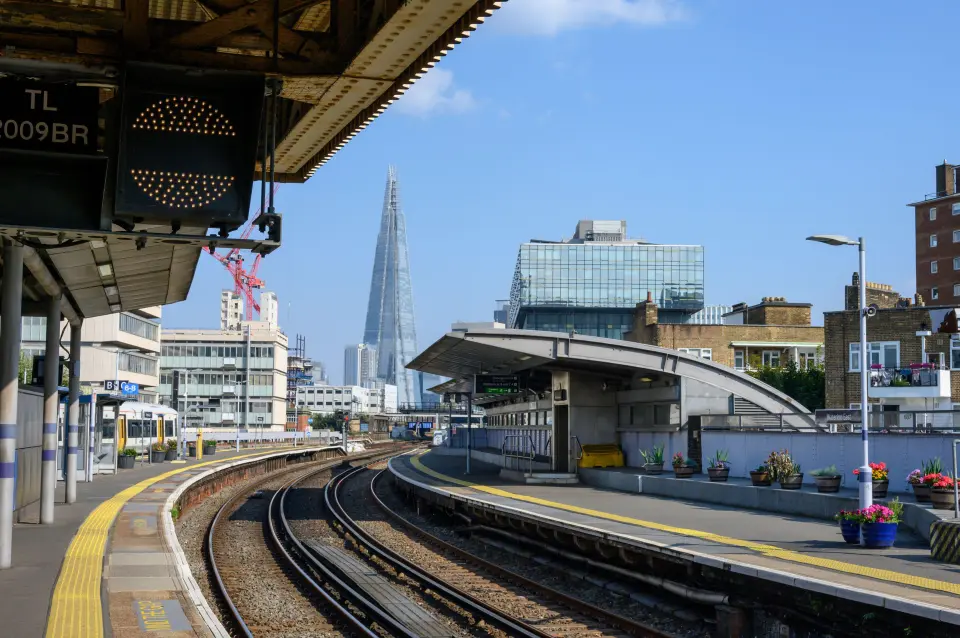
The Shard skyscraper in London seen from a platform at Waterloo East Station.
Two major London train stations will close for over £20million works this summer Credit: Alamy

Between July 26 and August 16, both Charing Cross and Waterloo East Station will be closed with absolutely no service.

Across the 22 days, Network Rail will conduct major improvements to both hubs like replacing the track that was last changed in the 1990s.

Other upgrades will be to the ‘country end of the platforms’ which will be rebuilt with new foundations and surfaces.

There will be structural repairs to the 175-year-old Hungerford Bridge too which takes the railway over the River Thames.

STAR BUY

Luxury holiday spots that are dirt cheap – with 5-star hotels for 3-star prices


BOOK IT

UK fairytale villages that look like children’s picture books with stays from £20

It’s also the pedestrian bridge between Waterloo East and London Waterloo.

Network Rail said that the improvements should reduce the number of recent faults which “have caused over 21,000 minutes (350 hours) of delays to customers.”

As well as the closures between July and August, the stations will also shut on June 7.

Then there will be two full weekend closures later on in the year.

These dates will be August 22 to August 23 – and again on both October 10 and October 11.

During the closure, Southeastern services that normally run into Charing Cross will be diverted to London Victoria, London Cannon Street, London Blackfriars or terminate at London Bridge.

Charing Cross Station, London, with Embankment Place, a post-modern block built in 1990 by architect Terry Farrell, visible above the platforms.
Charing Cross Station is a major hub but will close for three weeks Credit: Alamy

Passengers will be able to use their ticket an no extra cost on alternative rail routes as well as on the London Underground and buses.

Scott Brightwell, train services director at Southeastern Railway, said: “The £20 million investment we are delivering will see 1990s track and platforms upgraded to make journeys safer and more reliable, and Victorian era structures strengthened to remain fit for the future.  

“By consolidating the work into 22‑day closure, supported by preparation and follow‑up weekends, we can complete the work more quickly and with less disruption overall than the alternative options of 60 weekend closures or four to five 9-day closures.”

He added: “We have planned the closure for the summer, when passenger numbers are around 20 per cent lower and schools are closed, to help manage the impact on customers.”

And urged passengers to “plan ahead and check before they travel”.


Source link

Furious GMB fans issue same complaint after ‘ridiculous’ World Cup coverage

The hosts of Good Morning Britain turned their attention to England’s knockout match

Viewers of Good Morning Britain were not impressed during the latest live show.

Ranvir Singh and Ed Balls were back in the ITV studio on Wednesday (July 1) to deliver the day’s biggest headlines from across the UK and around the world.

All eyes will be on Atlanta later today as England take on the Democratic Republic of Congo in their round of 32 match at the FIFA World Cup. England came through Group L unbeaten, following wins against Croatia and Panama, and a goalless draw with Ghana, but have so far fallen short of the sort of performances needed if they are to progress deep into the competition.

Their opponents have reached the knockout stage for the first time in their history, sealing their spot with a 3-1 win against Uzbekistan, in which Newcastle United striker Yoane Wissa scored twice.

Ranvir and Ed hosted a tense debate on GMB, after some fans are calling for their employers to give them a half day so they can enjoy the match, which kicks off at 5pm UK time.

Lindi Glass, the founder and director of Explode Social Media, has given her staff a half day to watch the match, while construction business owner Claudia Hearne firmly disagrees.

“It only happens every four years. I’m not a huge fan, but everybody is when the World Cup’s on. When it comes to business, I don’t think it’s about just salary, it’s about feeling great, it’s about output,” Lindi began.

Claudia interrupted to say: “This only happens every four years, but the games are happening several times over the next few weeks. If we manage to get through, we’ve got another five matches! Is that five half days we’re getting off?”

She went on: “How do we think the country is going to fare economically, would we be paralysed, if the 32 million workers in the country take a half day for one football match that’s not a final?”

Lindi replied: “Claudia, you’re at risk of sounding like a blithering plutocrat… I feel [like] that is an incorrect statement.”

ITV viewers were not impressed with the debate, with many sharing complaints on X (formerly Twitter).

“Congo are going to park the bus, England will struggle to break them down and the game will be s****. I can’t see us getting near the final so I’ve lost interest tbf,” one person wrote, with another adding: “Love a bit of shouting over each other 1st thing in the morning.”

A third said: “This programme is more ridiculous than ever,” with someone else sharing: “Why do u need a half day to get home an hour early?”

Another frustrated fan commented: “Where does it end … good question …. it doesn’t as everyone needs to be included these days with all the whataboutery,” while another wrote: “An afternoon off to watch #England play the rubbish #football they’ve been playing? You’ve got to be kidding!”

A seventh fan echoed the sentiment, saying: “What a load of old s****.”

Oasis legend Liam Gallagher even shared his thoughts on the GMB debate, writing: “Did RANVIR on GMB just say England fans who are working should be allowed to f*** off home early or am I hearing things.”

Good Morning Britain airs weekdays on ITV1 and ITVX at 6am, while England’s World Cup knockout match will air from 4pm on BBC One on Wednesday (July 1)

Source link

JuJu Watkins is back on the practice court for USC

From Ryan Kartje: She’d been out for more than a year, her long, arduous recovery from a season-ending knee injury kept almost completely under wraps. But as JuJu Watkins took her place in front of a microphone for the first time since returning to practice this summer, the USC superstar barely could contain her gratitude.

Asked Monday what the best part about being back has been so far, a big smile crept across Watkins’ face.

“Honestly everything,” Watkins said. “Like I don’t even know, the smallest stuff just gets me excited.”

Watkins’ return is a momentous mile marker for a Trojans team that has serious national title aspirations this season. Her status remains uncertain, and reporters in attendance Monday were told not to inquire further about Watkins’ recovery timeline. But she did say she’s already been able to scrimmage during USC’s summer practice and that she’s “feeling back like myself.”

“It’s just been a long time coming,” Watkins said. “I’ve just been working out and grinding every day so that I could be in position, so to see all of that hard work pay off right now, it’s really fulfilling.”

Continue reading here

Go beyond the scoreboard

Get the latest on L.A.’s teams in the daily Sports Report newsletter.

Monday’s World Cup results

Round of 32
Brazil 2, Japan 1
Paraguay 1, Germany 1 (Paraguay wins on PK’s, 4-3)
Morocco 1, Netherlands 1 (Morocco wins on PK’s, 3-2)

Today’s World Cup TV schedule

All times Pacific
10 a.m., Ivory Coast vs. Norway, Fox, Telemundo
2 p.m., France vs. Sweden, Fox, Telemundo
6 p.m., Mexico vs. Ecuador, Fox, Telemundo

World Cup round of 32 schedule, results

Canada 1, South Africa 0
Brazil 2, Japan 1
Paraguay 1, Germany 1 (Paraguay wins on PK’s, 4-3)
Morocco 1, Netherlands 1 (Morocco wins on PK’s, 3-2)

All times Pacific
Tuesday
Ivory Coast vs. Norway, 10 a.m., Fox, Telemundo
France vs. Sweden, 2 p.m., Fox, Telemundo
Mexico vs. Ecuador, 6 p.m., Fox, Telemundo

Wednesday
England vs. Congo DR, 9 a.m., Fox, Telemundo
Belgium vs. Senegal, 1 p.m., FS1, Telemundo
U.S. vs. Bosnia-Herzegovina, 5 p.m., Fox, Telemundo

Thursday
Spain vs. Austria, noon, Fox, Telemundo
Portugal vs. Croatia, 4 p.m., Fox, Telemundo
Switzerland vs. Algeria, 8 p.m., FS1, Telemundo

Friday
Australia vs. Egypt, 11 a.m., Fox, Telemundo
Argentina vs. Cape Verde, 3 p.m., Fox, Telemundo
Colombia vs. Ghana, 6:30 p.m., Fox, Telemundo

Round of 16 schedule

Saturday
Canada vs. Morocco, 10 a.m., Fox, Telemundo
Paraguay vs. France or Sweden, 2 p.m., Fox, Telemundo

Sunday
Brazil vs. Norway or Ivory Coast, 1 p.m., Fox, Telemundo

Dodgers defeat the Athletics

From Bill Shaikin: Teoscar Hernández was back from a hamstring injury, and a little bit humble. He was about to play his first game in a month for the Dodgers.

“I don’t think they really need me in the lineup,” he said, with a hint of a smile.

Hernández hit 58 home runs over his first two seasons with the Dodgers, each of which ended in a World Series championship, so of course they need him. But, in his absence, the Dodgers had more than doubled their National League West lead.

Hernández is back, but Will Smith and Kiké Hernández still are out. So are Tyler Glasnow, Blake Snell and Edwin Díaz.

No matter: The Dodgers boosted their division lead to 11 games Monday with a 9-4 victory over the Athletics. Shohei Ohtani, Max Muncy and Andy Pages homered to highlight a 17-hit attack.

Continue reading here

Dodgers box score

MLB standings

Angels lose to Mariners

Cole Young hit two home runs to back eight strong innings from George Kirby as the Seattle Mariners came from behind to beat the Angels 6-2 on Monday night.

Dominic Canzone also went deep to help Seattle (43-43) get back to .500 and stay a half-game behind the first-place Texas Rangers in the American League West.

Zach Neto doubled to center field leading off the game against Kirby (7-7), and Denzer Guzman singled two pitches later for a 1-0 lead. Neto hit his 18th home run in the third — a two-out shot that made it 2-0.

Continue reading here

Angels box score

MLB standings

Who is coming back to the Lakers?

From Broderick Turner: As LeBron James dominated the news cycle regarding his future on the eve of NBA free agency, another member of the Lakers’ starting lineup returned.

Deandre Ayton is picking up his contract option for $8.1 million, according to people not authorized to publicly discuss the decision.

The 7-foot Ayton averaged career lows in points (12.5), rebounds (8.2) and minutes per game (27.2) in his first season with the Lakers, but played a career-high 72 games and shot a career-best 67.1% from the field. He averaged 10 points and 9.6 rebounds in the playoffs.

Lakers guard Marcus Smart declined his option of $5.9 million and will become an unrestricted free agent, according to people not authorized to publicly discuss the decision.

Smart is expected to have several teams pursue him in free agency, with the Houston Rockets reportedly among them.

He was the Lakers’ best defender and averaged 9.3 points and 3.0 assists last season, also his first with the team.

As for James, he’s an unrestricted free agent who earned $52.6 million last season. Lakers president of basketball operations Rob Pelinka said during his season-ending news conference in May that they would give James time with his family to decide his future.

Continue reading here

Former Lakers Malik Beasley and Ed Davis accused of illegal gambling, wire fraud and money laundering

This day in sports history

1909 — Jack Johnson fights Tony Ross to a no decision in 6 rounds at Duquesne Gardens, Pittsburgh, Pennsylvania to retain his heavyweight boxing title.

1916 — Amateur Chick Evans Jr. wins the U.S. Open with a record 286 total.

1929 — Bobby Jones beats Al Espinosa by 23 strokes in a 36-hole playoff to win the U.S. Open.

1962 — Murle Lindstrom wins the U.S. Women’s Open by two strokes over Jo Anne Prentice and Ruth Jessen.

1965 — The NFL grants Atlanta a franchise. Rankin Smith Sr., an Executive Vice President of Life Insurance Company of Georgia, pays $8.5 million for the franchise. It’s the highest price paid in league history at the time.

1975 — Muhammad Ali retains world heavyweight boxing crown by beating Englishman Joe Bugner by unanimous points decision in a re-match in Kuala Lumpur, Malaysia.

1991 — Wimbledon breaks 114 years of tradition by playing on the middle Sunday of the tournament, a move forced by a huge backlog of matches caused by rain earlier in the week.

1991 — Meg Mallon sinks a 10-foot birdie putt on the final hole to break a tie with Pat Bradley and Ayako Okamoto and win the LPGA Championship.

1993 — NBA Draft: Michigan center Chris Webber first pick by Orlando Magic (traded to Golden State).

1994 — Diego Maradona is kicked out of the World Cup by FIFA for failing a drug test after Argentina’s June 25 victory over Nigeria in Foxboro, Mass.

1994 — Tonya Harding is stripped of her national title and banned for life from the U.S. Figure Skating Assn. because of her role in an attack on Nancy Kerrigan.

1996 — UEFA European Championship Final, Wembley Stadium, London, England: Oliver Bierhoff scores his second goal in extra time as Germany beat Czech Republic, 2-1.

1999 — NBA Draft: Duke power forward Elton Brand first pick by Chicago Bulls.

2002 — Ronaldo scores both goals to lead Brazil to a 2-0 victory over Germany for the team’s record fifth World Cup title.

2012 — Yaroslava Shvedova of Kazakhstan becomes the first player in a Grand Slam tournament to win every point of a set on her way to beating French Open runner-up Sara Errani 6-0, 6-4 in the third round of Wimbledon.

2013 — Inbee Park wins the U.S. Women’s Open for her third straight major this year. Babe Zaharias is the last player to win three straight majors on the calendar, but that was in 1950 when that’s all there were.

2013 — NHL Draft: Halifax Mooseheads (QMJHL) center Nathan MacKinnon #1 pick by Colorado Avalanche.

2015 — The United States defeat Germany 2-0 in semifinals at Women’s World Cup. Carli Lloyd converts a penalty kick for Team USA and a 1-0 lead. Substitute Kelley O’Hara scores in the 84th minute off a Lloyd cross to seal the U.S. team’s 2-0 victory.

2018 — FIFA World Cup: Kylian Mbappé (19) becomes only 2nd teenager (Pelé 1st 1958) to score twice in a World Cup match as France eliminate Argentina 4-3 in Kazan.

2020 — FC Barcelona’ Argentine soccer player Lionel Messi scores his 700th career goal in a 2-2 draw with Atletico Madrid.

Compiled by the Associated Press

This day in baseball history

1908 — Cy Young of the Boston Red Sox pitched the third no-hitter of his career at age 41, an 8-0 win over the New York Highlanders.

1948 — Cleveland’s Bob Lemon pitched a 2-0 no-hitter against the Detroit Tigers for the first American League no-hitter at night.

1962 — Sandy Koufax of the Dodgers struck out 13 New York Mets en route to the first of four career no-hitters, a 5-0 victory at Dodger Stadium.

1970 — Riverfront Stadium in Cincinnati was dedicated, but Henry Aaron spoiled the show for the crowd of 51,050 with a first-inning homer off Jim McGlothlin to send Atlanta past the Reds 8-2.

1978 — Willie McCovey became the 12th player in major league history to hit 500 home runs. His shot off Atlanta’s Jamie Easterly wasn’t enough, with the Braves beating the visiting San Francisco Giants 10-5 in the second game of a doubleheader.

1986 — 1985 Heisman Trophy winner Bo Jackson makes his pro baseball debut with the Memphis Chicks of the double-A Southern League and goes 1 for 4 with two strikeouts.

1995 — Eddie Murray of the Cleveland Indians became the second switch-hitter and the 20th player in baseball history to reach 3,000 hits when he singled against the Minnesota Twins. Murray joined Pete Rose, the career hits leader with 4,256, as the only switch-hitters to get 3,000.

1997 — Bobby Witt of Texas hit the first home run by an American League pitcher in a regular-season game in almost 25 years, connecting off Ismael Valdes in the Rangers’ 3-2 interleague victory over the Dodgers.

1998 — Sammy Sosa hit his 20th home run in June, extending his major league record for most homers in a month with an eighth-inning shot for the Cubs against Arizona.

2005 — Chad Cordero earned his 15th save in June in the Washington Nationals’ 7-5 victory over the Pittsburgh Pirates. He tied a major league record set by Lee Smith in 1993 and matched by John Wetteland in 1996.

2006 — Adam Dunn hit a grand slam with two out in the bottom of the ninth inning off closer Bob Wickman to lead Cincinnati to a 9-8 victory over Cleveland.

2008 — Nick Swisher homered from both sides of the plate, hitting his second grand slam in four games and adding a solo shot to lead the Chicago White Sox past Cleveland, 9-7.

2009 — Nick Markakis hit a two-run double off Boston closer Jonathan Papelbon to complete the biggest comeback in Baltimore Orioles history for an 11-10 win. Baltimore trailed 10-1 before scoring five runs in the seventh inning and five more in the eighth.

2016 — Coastal Carolina capitalized on two errors on the same play for four unearned runs in the sixth inning, and the Chanticleers won their first national championship in any sport with a 4-3 victory over Arizona in Game 3 of the College World Series finals. The Chanticleers became the first school since Minnesota in 1956 to win the title in its first CWS appearance.

2020 — Minor League Baseball officially announces the cancellation of its season as Major League Baseball will keep a “taxi squad” of eligible players that can be added to the roster if needed.

2021 — Washington Nationals shortstop Trea Turner ties the major league record by hitting for the cycle for the third time in his career in a 15-6 victory over the Tampa Bay Rays.

Compiled by the Associated Press

Until next time…

That concludes today’s newsletter. If you have any feedback, ideas for improvement or things you’d like to see, email me at houston.mitchell@latimes.com. To get this newsletter in your inbox, click here.

Source link

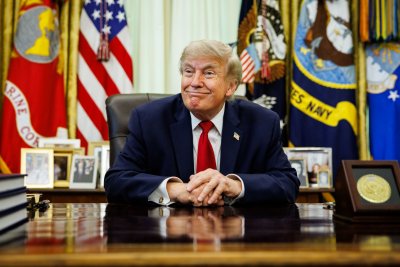
Trump says first-ever GOP midterm convention to be held in Texas

July 1 (UPI) — President Donald Trump has announced that the Republican Party will hold a midterm convention, an unprecedented development seemingly aimed at mobilizing the GOP base ahead of November’s midterm elections.

The convention highlights the importance Trump has placed on the midterms, framing Republican control as necessary to protecting his presidency and the implementation of his America First agenda. He has warned Republicans that if they lose the House, Democrats would seek to impeach him and use their investigative powers to probe him, his family and other GOP officials.

Trump announced the convention Tuesday on his Truth Social media platform, saying it will be held Sept. 9-10 in Dallas, Texas.

“It will be fantastic! It has never been done before, and will be a truly Historic Event,” he said, describing it as an opportunity to promote his administration’s purported accomplishments.

“We are going to celebrate the GREAT AMERICAN COMEBACK, and the incredible successes of the American People who transformed our Country through the America First Agenda.”

GOP Chairman Joe Gruters emphasized that the event will be centered on the president, calling it “Trumpapalooza” in an online statement.

“This historic midterm convention will highlight President Trump’s many accomplishments and unwavering commitment to restoring America!” Gruters said, adding that the event will “showcase the work Republicans have done to advance the America First agenda!”

The convention will be held in a solidly red state but comes as Trump’s approval sinks and a as November Senate race is competitive.

Democrat James Talarico is running against Texas Attorney General Ken Paxton in the Senate contest, and the convention may give draw attention to the GOP’s candidate.

Texas state Rep. Cassandra Garcia Hernandez, a Democrat, said the convention was proof that both the national and Texas Republican parties were worried about the Senate seat.

“They’re not only holding their first-ever midterm convention, they’re holding it right here in our state,” she said in an online statement.

“The battleground for our nation runs through Texas.”

Trump first said in September 2025 that the Republican Party would hold a midterm convention, saying it would “show the great things we have done since the Presidential Election of 2024.”

Democratic National Committee Executive Director Roger Lau responded to Trump’s September announcement by saying his party would be more reserved and precise with how it uses its resources.

“Republicans were baited into wasting time and money on a midterm convention that will sink their swing-seat candidates by tying them directly to Trump’s wildly unpopular policies,” Lau said in a statement.

Source link

Martin Lewis explains how to use your card abroad and avoid extra charges

Martin Lewis has shared his top holiday money saving tip, explaining whether you should pay in local currency or pounds on your card abroad – and how it could save you money on extra charges

Martin Lewis has finally settled the age-old holiday debate, revealing whether it’s better to pay in pounds or local currency when using your bank card overseas. Sharing his expert insight with BBC viewers, he cut through the confusion, offering clear guidance on the smartest way to spend abroad without losing out.

Martin advised: “When you go abroad and you pay on plastic [card] and the overseas cash machine or shop asks you: ‘Do you want to pay in Pounds or Euros?’ What do you do?

“Well, the correct answer is you should always pay in euros or whatever the local currency is. That means it’s your plastic that’s doing the exchange rate conversion, not the overseas shop or ATM.”

He stressed that this rule applies no matter where in the world you are. Social media users were quick to chip in with their own tips and experiences. One user suggested: “Just get Revolut or Monzo.”

Another declared: “I use Starling Bank it has no fees abroad and recommends paying in the local currency instead of Pounds. Something I saw online about dynamic exchange rate and it can cost you more otherwise.”

A third added: “Revolut has always been the best on doing this, can exchange right in the app as well, and when withdrawing it’ll just take it straight from that, half the time the only fee is the cash fee by the machine you use.”

Meanwhile, a recent holidaymaker shared their own experience: “Just back from Spain and not a single ATM did free cash withdrawals either, thankfully that’s all I was charged with my Chase account.”

One shrewd traveller commented: “I just get Euros before I go anywhere save all the hassle, and if I’m really stuck for cash go into an actual bank on holiday and withdraw money on my card.”

This handy tip comes on the heels of advice from a money-saving guru who stressed the importance of securing travel insurance ‘ASAB’.

During an appearance on This Morning, the financial whizz revealed: “My travel insurance rule is get it ASAB (as soon as you book). People do get a little confused about this, so let’s break it down.”

He continued to explain: “If you’re getting a single trip policy, so that is a policy to cover just one holiday, then what you do is as soon as you book, you go on one of the travel insurer’s website, you tell it your holiday dates and you buy the policy then.”

Martin Lewis made clear that if your holiday falls in August but you booked back in January, getting your insurance sorted in January is equally crucial.

“That means you have the travel insurance in place to covers that holiday,” he said, adding: “You don’t need to [cover yourself] for extra dates [in case there’s a delay at the airport] because you have your return date.

“If something delays you, so you weren’t back, that would still be covered because that delay is all part of the travel insurance.”

Source link

Africa can finally mine, beneficiate and industrialise on its own terms | Opinions

At the G7 summit in Evian-les-Bains, France, on June 17, Kenyan President William Ruto revealed that his country was nearing a critical minerals agreement with the United States. Far more significant was Kenya’s insistence that its rare earths, lithium, graphite, copper, nickel and niobium be refined and processed domestically rather than exported as raw materials. This was not simply another minerals deal; it was a signal that African governments are trying to rewrite the extractive bargain.

That demand, long voiced but rarely enforced, is beginning to reshape African resource governance. Namibia has prohibited exports of unprocessed lithium, cobalt, manganese, graphite and rare earths. Mali is constructing a 200-tonne-a-year gold refinery while requiring more local refining. Ghana will begin buying 30 percent of large-scale gold output from July 2026 to strengthen local refining and reserves. Across the continent, governments are increasingly requiring natural resources to create industries at home before generating profits abroad. The turn is not confined to critical minerals; it reflects a wider push to keep more value from natural resources at home.

Kenya’s move comes as the global race for critical minerals intensifies and Africa assumes greater strategic importance. Lithium consumption rose by almost 30 percent in 2024 as countries accelerated investment in electric vehicles, battery storage, renewable energy systems and advanced manufacturing. The International Energy Agency (IEA) projects lithium use will increase fivefold by 2040, with graphite and nickel requirements roughly doubling.

This commodity boom differs in one crucial respect: The supply of critical minerals cannot expand rapidly. New mines often take well more than a decade to move from discovery through permits and development to first production, even as global demand continues to accelerate. The IEA estimates that, under its Stated Policies Scenario, announced mining projects will leave lithium supply 40 percent short of projected demand by 2035. Countries seeking secure supplies therefore have greater incentives to invest where the minerals already exist, giving African governments more room to negotiate local value addition, technology transfer and industrial investment.

For generations, the continent’s economic role has been brutally simple: Dig, ship and buy back the finished product. The transition minerals boom offers a rare opportunity to reverse that relationship. But this will require reliable power, transport, finance and skills, not export bans alone.

Mining is only the first step. The greatest wealth is created further along the production chain, when minerals are refined, processed and assembled into products that command far higher prices than the ore that left the ground. United Nations data illustrates how rapidly export value rises along the lithium-ion supply chain. In 2022, global exports of lithium ore and brine were worth about $20bn. Battery materials generated $51bn, cell components and battery packs $106bn, and electric vehicles $135bn.

Africa’s challenge is to move further along that chain. Every additional stage completed on the continent captures more income, creates more skilled jobs and embeds more technology before a single battery reaches the market.

Refining minerals is not an end in itself. It is the first step towards building the productive capabilities that distinguish manufacturing economies from extractive ones. Around every refinery cluster, engineering companies, chemical producers, equipment manufacturers, laboratories and specialist suppliers can emerge. Taiwan’s experience offers a broader lesson: With sustained policy, skills and supplier networks, industrial capabilities built in one generation can create higher-value industries in the next.

Africa’s growing confidence reflects a profound shift in supply chain politics. In a market this concentrated, countries that combine mineral deposits with downstream ambition can negotiate stronger terms. What has changed is not simply demand, but dependency: China is the dominant refiner for 19 of the 20 strategic minerals tracked by the IEA. For copper, lithium, nickel, cobalt, graphite and rare earths, the top three refining countries control 86 percent of processed output. The continent should demand beneficiation, meaning the processing of raw materials into higher-value products before export, alongside technology transfer and industrial investment before those resources enter global supply chains.

History offers a cautionary lesson.

Gold, diamonds, copper and oil generated billions of dollars in exports across the continent, yet most resource-rich economies remained dependent on exporting raw commodities rather than manufacturing higher-value products.

The colonial economy was built around those outward flows. In what is now Zambia, copper from Nkana, Mufulira and Nchanga moved through Ndola and across the rail network to Beira, the Mozambican port that linked the Copperbelt to overseas smelters and factories. Across the Gold Coast, in present-day Ghana, cocoa from Kumasi travelled by rail to Sekondi and later Takoradi before entering Britain’s chocolate industry.

Today’s export restrictions, refining mandates and beneficiation policies seek to disrupt that flow. The prize is to capture the industries built around those minerals before they take root elsewhere.

The real wealth in Africa’s transition minerals boom will not be measured by what leaves its ports, but by what never has to. Every tonne of lithium refined, every battery precursor produced and every stage of manufacturing completed before export shifts more income, technology, investment and skilled employment onto the continent.

Research by Publish What You Pay suggests that expanding higher-value mineral processing across Africa could generate an additional $32bn in annual exports, add up to $24bn to the continent’s gross domestic product and create about 2.3 million jobs. More importantly, it would leave behind industries, technologies and expertise that outlast the minerals themselves.

Nigeria’s Dangote refinery provides Africa’s clearest demonstration of what beneficiation can achieve. Located in the Lekki Free Zone outside Lagos and built at a cost of about $20bn, the 650,000-barrel-a-day facility is Africa’s largest single-train refinery.

Since beginning production in early 2024, the refinery has helped transform Nigeria’s energy sector. For decades, the country imported much of its refined fuel, spending billions of dollars in foreign exchange. The refinery now supplies much of the domestic market while exporting petrol, diesel and jet fuel to Ghana, Cameroon, Togo, Burkina Faso and Ivory Coast.

Between February and March 2026, Nigeria’s clean petroleum exports more than doubled from about 100,000 barrels a day to 214,000 barrels, while helping anchor a new industrial ecosystem of marine infrastructure, storage terminals, petrochemical plants and fertiliser production.

Indonesia exemplifies the same principle.

After banning exports of unprocessed nickel ore on January 1, 2020, Indonesia became a leading producer and exporter of processed nickel products. The country targeted $21.3bn in foreign investment in mining and processing projects, while the value of its nickel product exports rose from less than $1bn in 2015 to nearly $20bn in 2022. New smelters, refineries, battery-material plants and electric vehicle manufacturing have expanded rapidly, though the boom has also brought environmental and labour concerns.

Africa’s transition minerals require the same strategic intent. If Zambia refines copper, Zimbabwe processes lithium, the Democratic Republic of the Congo produces battery precursors, and South Africa manufactures battery components, engineering firms will expand, chemical industries will grow, and skilled workers will find opportunities at home instead of abroad. Railways will carry higher-value products instead of raw ore, tax revenues will become more stable, and manufacturing will increasingly replace extraction as the main driver of long-term economic growth.

No African country needs to manufacture every component of an electric vehicle or every battery cell. Copper, cobalt, lithium, graphite and manganese are spread across different economies, making regional integration an economic necessity rather than a political aspiration. Shared power systems, transport corridors, research institutions, standards and integrated markets will determine whether Africa exports minerals or manufactures products.

That makes the African Continental Free Trade Area indispensable. Properly implemented, it can turn isolated mineral deposits into regional manufacturing systems by lowering trade barriers and allowing countries to specialise. Together, African economies can develop an integrated industrial base that none could achieve alone.

Africa has lived through too many extractive booms that enriched others first. Copper built industries across Europe and North America while Zambia remained dependent on raw exports. Cocoa supplied Britain’s chocolate manufacturers while Ghana captured only a fraction of the value added.

The global energy transition gives Africa its best opportunity in generations to rewrite that history.

Africa can finally mine, beneficiate and industrialise on its own terms.

The views expressed in this article are the author’s own and do not necessarily reflect Al Jazeera’s editorial policy.

Source link

Dame Penelope Keith, British sitcom star, dies at 86

Penelope Keith, a comic performer who shone as flinty but lovable upper-crust characters in British sitcoms “The Good Life,” which aired on PBS in the U.S. as “Good Neighbors,” and “To the Manor Born,” has died aged 86.

Keith’s family said Monday that she had been diagnosed with cancer and died at her home in Surrey, near London.

Keith began her acting career onstage and joined the Royal Shakespeare Company in 1963. But she found her greatest fame on television.

She won a BAFTA Award in 1977 for “The Good Life,” playing Margo Leadbetter, a snobbish suburbanite appalled by her back-to-the-land neighbors Tom and Barbara Good, played by Richard Briers and Felicity Kendal.

Kendal called Keith a “comic genius.”

“She was a joy to know and work with, and she will be much missed,” Kendal said.

Keith displayed a similar mix of imperiousness and deadpan wit in “To the Manor Born,” broadcast between 1979 and 1981 and brought back for a 2007 Christmas special. Keith played cash-strapped aristocratic widow Audrey fforbes-Hamilton, forced to sell her country estate to a nouveau millionaire, played by Peter Bowles, with whom she has a love-hate relationship.

Keith’s velvet tones featured on children’s show “Teletubbies” as the voice of the Bear With Brown Fuzzy Hair and in ads for everything from Pimm’s to Parker Pens. She also presented cozy documentary TV series, including “Penelope Keith’s Hidden Villages.”

Keith continued to perform in stage roles into her 80s. Theaters in London’s West End will dim their lights Wednesday evening in tribute to her.

In 2014 she was made a dame, the female equivalent of a knight, for services to the arts and to charity.

She is survived by her husband, Rodney Timson, and their two sons.

Source link

Angels’ bats are silenced by Bryan Woo in loss to Mariners

Julio Rodriguez had three hits and scored twice, Bryan Woo took a shutout into the seventh inning and the Seattle Mariners put together a five-run sixth Tuesday night to beat the Angels 8-3.

Rodriguez and Colt Emerson both had three of Seattle’s 13 hits. Randy Arozarena and Cole Young scored two runs apiece.

Woo (7-6) gave up just four hits and struck out five in 6 1/3 innings. The Angels’ first two runs in their three-run seventh were charged to him after he gave way to reliever Eduard Bazardo. That ended Woo’s streak of home shutout innings at 32 1/3, which stretched over a span of five games dating to May 6 against Atlanta.

Michael Rucker pitched a scoreless eighth for the Mariners, and Andrés Muñoz set the Angels down in order in the ninth.

The Mariners batted around in the sixth, with their first five hitters reaching base on four hits and one walk. Rodriguez and Josh Naylor singled, then Arozarena singled to score Rodriguez with the first run and chase Angels starter José Soriano (8-5).

Cal Raleigh walked to load the bases, and Young singled to right, scoring Naylor. Arozarena scored on a wild pitch. Raleigh and Young came home on Weston Wilson’s single to right.

The Angels rallied with three in the seventh, the last two of those scoring on Zach Neto’s single to right.

Seattle answered with three in the bottom of the seventh. Emerson’s single that floated just above the outstretched glove of Angels first baseman Nolan Schanuel drove in the first two.

Wade Meckler had two of the Angels’ six hits.

Source link

Democratic socialist Kiros defeats longtime incumbent in Colorado primary | Politics News

Former lawyer Melat Kiros, 29, has criticised the Democrats for their support of Israel during its genocidal war on Gaza.

Democratic ⁠socialist Melat Kiros has defeated 15-term United States Representative Diana DeGette in the Democratic primary in a Denver-area district in Colorado, according to US media projections, the latest victory of ‌a leftist over an establishment Democrat.

The race on Tuesday was called ⁠by multiple media outlets after 78 percent ⁠of the votes were counted and Kiros had a nearly 7,000-vote lead over DeGette.

Recommended Stories

list of 4 itemsend of list

Kiros, who moved to the US from Ethiopia as a ⁠baby, had faced controversy over her criticism of Democrats who support Israel and her alliance ⁠with socialist political commentator Hasan Piker.

She is now favoured to win November’s election in the overwhelmingly Democratic district.

Kiros, a 29-year-old former lawyer, was fired from her job after refusing to remove a post that criticised law firms for their stance on Israel and Palestine and has called Israel’s actions in Gaza genocide.

Kiros is ‌the latest democratic socialist to oust an incumbent Democrat this summer.

In New York City, three candidates with ties ‌to ‌the Democratic Socialists of America and endorsed by Mayor Zohran Mamdani won their primaries.

Also on Tuesday, Colorado ‌Attorney General Phil Weiser beat ⁠US ⁠Senator Michael Bennet for the Democratic nomination for governor, ⁠US media projected.

Weiser outraised and outspent Bennet in a race ⁠that was largely about who was best positioned to defend Colorado against President Donald Trump, who froze federal funds ‌to the state and vetoed a major drinking water project in Colorado, where voters have trended Democratic in elections over the past 20 years.

The attorney general argued that he ⁠stood up to ⁠the Trump administration in court, where he fought against the funding freeze and the president’s attempt to ⁠end birthright citizenship.

Weiser is expected to be elected ⁠governor in November.

State Representative Manny Rutinel ⁠also won the ⁠Democratic nomination to challenge Republican US Representative Gabe ⁠Evans in a battleground district that Democrats consider a top ⁠pickup opportunity in the November 3 midterm elections, according to projections.

Rutinel, a progressive candidate, defeated moderate former state Representative Shannon Bird in ‌a campaign that focused heavily on immigration. The district in Denver’s northern suburbs and nearby rural area is nearly 40 percent Latino.

Evans narrowly won his ‌seat in 2024 but has a significant cash advantage over Rutinel, ‌reporting $3.4m on hand in campaign funds to Rutinel’s $910,000.

Trump’s Republican Party now holds a slim majority in the US House of Representatives and Senate. Democrats need to net three ⁠seats to win control ⁠of the House in November and four to win the Senate.

Source link

Gripen E Fighters Officially Ordered By Ukraine

Swedish defense firm Saab announced today that it had signed a contract to provide 16 Gripen E fighters to Ukraine. Once they arrive in the country, the jets will likely provide Ukraine with its most capable combat aircraft, and the development comes after Stockholm agreed to donate up to 16 of the previous-generation Gripen C/Ds to Ukraine. Handover of the Gripen C/Ds in Ukraine is slated to take place in early 2027, while the Gripen Es are scheduled for delivery starting in 2029.

The deal was signed between Saab and the Swedish Defense Materiel Administration (FMV), the governmental procurement agency acting under the Swedish Ministry of Defense. The order is valued at around SEK 24.6 billion (approximately $2.5 billion) and will be booked in the third quarter of this year.

Saab is scheduled to deliver the new jets to the FMV between 2029 and 2030, after which they will be transferred to Ukraine.

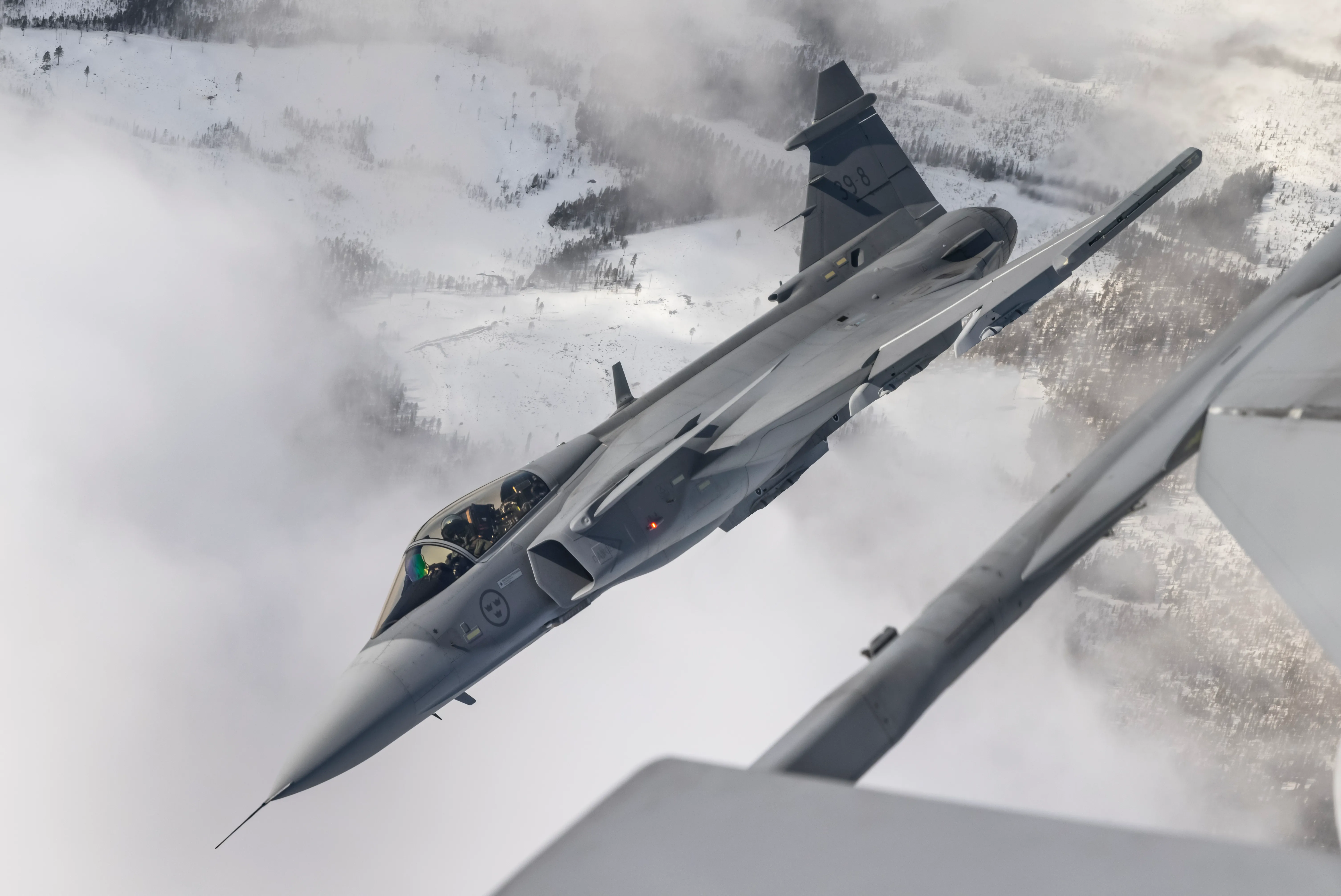
Gripen E in the northern part of Sweden.
A Gripen E in the northern part of Sweden. Saab “Jörgen Ericsson; Saab AB”

In addition to the 16 Gripen E fighters, the contract also includes spare parts and associated items and equipment.

“I am deeply proud that Sweden and Saab can now enable the provision of Gripen E to Ukraine, bringing a world-class fighter that will transform the Ukrainian Air Force’s capability. This will significantly strengthen Ukraine’s air defense and help ensure the nation can protect its people and safeguard its future,” said Micael Johansson, President and CEO of Saab, in a statement from the company.

The same statement also outlined particular features of the Gripen series that it says make it ideal for operations with the Ukrainian Air Force:

“Gripen is designed to address advanced threats in demanding environments. Operational flexibility and resilience enable operations from short stretches, temporary runways or roads, supporting dispersed operations and high availability. The software-based architecture facilitates continuous upgrades and adaptation to evolving operational requirements. With low maintenance requirements and fast turnaround, Gripen provides an advanced and cost-effective fighter capability that is easy to operate and maintain.”

Gripen E in Finland for the HX Challenge
A Gripen E during trials in Finland. Saab

These qualities, not restricted to, but notably baked into the Gripen design philosophy, are something we have explored as long ago as 2022, in the context of potential deliveries to Ukraine. In our previous coverage, we noted:

Designed during the Cold War to meet the Soviet threat, the Gripen was engineered for efficiency, durability, and ease of operation under wartime conditions. It was specifically designed to be serviced and rearmed by small teams — often including conscript personnel — while operating from dispersed locations such as roads and improvised airstrips instead of traditional air bases. The aircraft’s entire concept centers on maintaining combat operations in demanding environments, including prolonged cold-weather conditions.

Gripen - Always combat ready thumbnail

Gripen – Always combat ready


Even with its existing fighters, the Ukrainian Air Force has developed tactics and equipment to operate these jets from dispersed locations around the country. Prior to the current conflict, Ukrainian fighters were training to make use of highways as alternatives to traditional runways.

Already, the Gripen C/D represents a significant advance, but, as noted, these are previous-generation jets, and they are secondhand aircraft drawn from Swedish stocks to expedite delivery.

A Gripen C launches infrared countermeasures. Saab

Compared to the Gripen C/D, the Gripen E, as you can read about here, is a very different proposition, despite its superficially similar appearance.

In contrast to the older jet, the Gripen E has a bigger fuselage that accommodates approximately 30 percent more fuel and has a more powerful General Electric F414 engine, plus a total of 10 hardpoints for weapons and other stores. The cockpit is entirely revised, and the pilot is provided with a single Wide Area Display (WAD), replacing the three separate displays in the Gripen C/D.

The Gripen E can carry up to seven MBDA Meteor beyond-visual-range air-to-air missiles, weapons also compatible with the Gripen C/D, although in the new aircraft these are integrated with the Leonardo ES-05 Raven active electronically scanned array (AESA) radar, and the Leonardo Skyward G infrared search and track (IRST) sensor.

Gripen E fires Meteor
Gripen E fires Meteor. Saab

The ES-05 Raven is set to be the first AESA fighter radar for Ukraine. Arrays of this kind bring a significant boost to modern combat aircraft. In comparison with traditional mechanically scanned array technology, an AESA can find and track a target at a much greater range, more quickly, and with a greater degree of accuracy. This also applies to smaller threats, including those with limited radar signatures, or flying at very low levels, which older radars find much harder to detect. This makes it especially relevant to hunting drones and cruise missiles, which are small targets often encountered by Ukraine en masse.

One particular feature of the ES-05 Raven on the Gripen E is the fact that the radar is mounted on a rotating repositioner, also known as a swashplate. As you can read about here, this enables the electronically scanned antenna, which is normally fixed in a forward position on fighter aircraft, to be slewed to the left and to the right in order to increase its field of view.

As we have discussed in the past, the Meteor would provide Ukraine with a class of air-to-air weapon that it badly needs to redress the balance against Russian fighter jets.

The Meteor is among the most capable air-to-air missiles in operational service anywhere in the world. Thanks to its ramjet propulsion, which can be throttled during different phases of flight, the Meteor is generally considered to be effective against certain types of targets out to around 130 miles.

The Meteor also features an active radar seeker for the terminal phase and a two-way datalink that feeds it with in-flight updates as it flies out to its target and provides information to the pilot in the launch aircraft.

Meteor thumbnail

Meteor


All Gripens can also be armed with the AIM-120 Advanced Medium-Range Air-to-Air Missile (AMRAAM) that arms Ukraine’s F-16 fighters as well as several of its ground-based air defense systems.

The jet also includes a new Saab Electronic Warfare System (EWS), featuring a 360-degree spherical Missile Approach Warning System (MAWS).

Less obvious is the Gripen E’s avionics architecture, which is designed to enable the rapid insertion of new hardware and updated software applications to take on new missions. Customers are also able to design and develop their own software to introduce new technologies and systems to keep pace with ever-evolving threats.

A Gripen E seen from the cockpit of its wingman. Saab

Furthermore, Ukraine will be able to maximize the potential of its Gripens by operating them in conjunction with its two Saab 340 airborne early warning and control (AEW&C) aircraft equipped with Erieye radar that have been donated by Sweden.

The Saab 340 AEW&C can serve as an airborne fighter control platform by detecting and tracking Russian targets, prioritizing threats, and directing friendly fighters to intercept them. Using its datalink system, the aircraft can also provide mid-course guidance updates to missiles after launch. This allows fighter pilots to engage targets without necessarily activating their own radar. Instead, a missile can be assigned a target before launch, fired, and then receive continuous guidance updates from the AEW&C aircraft until it reaches the target. The Erieye radar is also notably effective when tracking ground and maritime targets.

Brazil was the first export customer for the Gripen E (also taking the two-seat Gripen F version), with its decision to buy the fighter influenced to a significant degree by the opportunity to establish a domestic production line. It was followed by Thailand, which secured a small batch of Gripen E/Fs to bolster its existing Gripen C/D fleet, and Colombia, which is also buying Gripen E/Fs. Meanwhile, Sweden has ordered 60 Gripen Es, the first of which was delivered to an operational unit last year.

A Brazilian Air Force Gripen E. Saab

Otherwise, the commonality between the aircraft will ensure that the Gripen E is easier for the Ukrainians to introduce.

According to Swedish officials, the training of Ukrainian pilots and technicians on the Gripen C/D is already underway and will be expanded this fall.

These Gripen Es could be just the start of a much bigger program.

The long-term ambition remains 100-150 Gripen aircraft. However, this transfer only exists as a statement of intent for now, as we have previously reported.

A similar letter of intent covers a plan for Kyiv to buy up to 100 Dassault Rafale F4 fighters from France over the next 10 years. These Rafales are at least as advanced as the Gripen Es, and superior in some respects, but there remain glaring questions about whether they can both be procured, especially in such numbers.

DA00052389_CCO_
A Standard F4 Rafale. Dassault Aviation/C. Cosmao © Dassault Aviation – C. Cosmao / © Dassault Aviation – C. Cosmao

The Gripen E is an even bigger deal for Ukraine than the Gripen C/D. The Ukrainian Air Force has already received Western-supplied F-16s and a smaller number of Mirage 2000s, but still relies heavily on its Soviet-era fighters. The MiG-29 Fulcrum, in particular, has been continually adapted to carry new weaponry, both Western-supplied and locally developed, but these are all aging jets and the fleet overall has been steadily reduced by attrition.

UNSPECIFIED, UKRAINE - AUGUST 4: The first General Dynamics F-16 Fighting Falcon received by Ukraine is seen on the Day of Ukrainian Air Force on August 4, 2024 in Unspecified, Ukraine. At the event for the Day of Ukrainian Air Force with the participation of President of Ukraine Volodymyr Zelenskyi, the first General Dynamics F-16 Fighting Falcons received by Ukraine were demonstrated. (Photo by Vitalii Nosach/Global Images Ukraine via Getty Images)
One of the first F-16s received by Ukraine is seen in August 2024. Photo by Vitalii Nosach/Global Images Ukraine via Getty Images VITALII NOSACH

Taken together, the Gripen C/D and Gripen E will provide Ukraine with a modern, networked fighter force unlike anything it has operated before. Combined with long-range Meteor missiles and Erieye AEW&C support, the aircraft will significantly enhance Ukraine’s ability to challenge Russian airpower and defend its airspace, and it will also be able to deliver precise attacks against surface targets.

Perhaps more importantly, these Swedish-made jets will bring the Ukrainian Air Force into a new era in which it is spearheaded by advanced, Western-made combat aircraft.

Contact the author: thomas@thewarzone.com

Thomas Newdick is a staff writer at TWZ, where he covers military aviation, defense technology, weapons systems, and international security. Based in Berlin, Germany, he reports on conflicts, military modernization efforts, and emerging aerospace technologies around the world, with a particular interest in airpower and its role in contemporary warfare. His reporting is informed by deep expertise in modern and historical airpower, particularly in Europe, with a focus on military aviation, air campaigns, and aerospace developments across the continent and beyond.



Source link

Dr Amir Khan asks does ‘anyone else have this’ after diagnosing himself

Dr Amir Khan has opened up about his own mental health, saying he has a “full-blown case”

A doctor has asked if “anyone else has this”, revealing he’s diagnosed himself with a form of anxiety. Doctor Amir Khan, who is known for his appearances on ITV, opened up about something called anticipatory anxiety.

In a video uploaded to social media platform Instagram, the medical professional shared more about his experience. Speaking to his more than one million followers, he said: “I’ve diagnosed myself with something called anticipatory anxiety and I need to know if anyone else has this.”

He explained how this phenomenon causes his brain to prepare for the “worst case scenario”, which in reality, doesn’t happen. “You know, when you’ve got like a meeting coming up or you’ve got an awkward conversation with someone you just don’t want to have,” Dr Amir said.

“It could be, I don’t know your boss at work, a friend, a family member, literally anyone – a meeting normally for me. Well then my brain decides we’re not just going to have one conversation in my head with these people, we’re gonna have 47, it just replays conversations in my head and what they’re going to go like.

Content cannot be displayed without consent

“I’ll imagine them saying something awful. So I prepare my perfect comeback, then they say something even worse in my head, so I then prepare for that.

“Then I imagine myself calmly standing my ground, walking away with dramatic dignity, probably to a soundtrack that only I can hear. By the time I’ve finished, I’ve won an argument that never actually happened.

“Then the real conversation comes along and they’re lovely, they’re polite, we agree on things. The meeting lasts like just six minutes, so then it’s just a chat. And I come away thinking, ‘Why on earth did I spend two days emotionally preparing for that?’

“Well, that is anticipatory anxiety, and I have a full-blown case of it all the time.” He said this occurs when your brain starts worrying about something before it’s happened and because your brain’s threat system is trying to protect you, it “often throws in a bit of catastrophizing as well”.

Dr Amir said: “It’s trying to help me it, believes that if it rehearses every possible disaster, I’ll be ready for anything. But in reality most of those disasters, just don’t happen.

“So all that’s really happened is I put myself through stress, once in my imagination and then once again in real life, except the real life version usually turns out absolutely fine.” He added: “Please tell me this isn’t just me.”

He was met by support in his comment section with one person saying: “Omg Amir this is me! I drive myself mad doing it. Glad I’m not alone. Thanks.”

Another commented: “Yes! Amir you most definitely are not alone, this is so me.” And one person replied: “I do this too, it can be exhausting.”

Anticipatory anxiety is a recognised form of anxiety. On its website, Anxiety UK says: “Anticipatory anxiety is where a person experiences increased levels of anxiety by thinking about an event or situation in the future.

“Rather than being a specific disorder in its own right, anticipatory anxiety is a symptom commonly found in a number of anxiety-related conditions, such as generalised anxiety. Anticipatory Anxiety can be extremely draining for people as it can last for months prior to an event.

“The worries people experience specifically focus on what they think might happen, often with catastrophic predictions about an event. The nature of negative predictions about the event will be the difference between an anxiety level that is incapacitating or merely uncomfortable.”

The NHS lists common symptoms of general anxiety as:

  • Feeling tired, restless or irritable
  • Feeling shaky or trembly, dizzy or sweating more
  • Being unable to concentrate or make decisions
  • Trouble sleeping
  • Worrying about the past or future, or thinking something bad will happen
  • Headaches, tummy aches or muscle pain
  • Dry mouth
  • Pins and needles
  • Noticing your heartbeat gets stronger, faster or irregular, or you get short of breath when you start feeling anxious

It says that if you cannot tell if shortness of breath is from anxiety or if you are worried about any other symptoms, you should see a GP.

Source link

Mexico ends World Cup knockout round drought, defeats Ecuador

Mexico once again enjoyed a night of celebration with its fans, this time after defeating an old nemesis — the knockout stage of the World Cup.

El Tri won its first knockout match at a World Cup since 1986, beating Ecuador 2-0 on Tuesday night at the majestic Azteca Stadium packed with 80,824 fans.

From 1994 to 2018, Mexico failed to win a World Cup knockout game and, in 2022, failed to advance past the group stage — its worst showing at a World Cup since 1978.

“Bringing joy to the fans is the best thing that can happen to us,” Mexico coach Javier Aguirre said after the win. “Our duty is to give it our all on the field. Our duty is to defend our crest and represent our country with dignity.”

Thanks to an expanded 48-team World Cup format with a knockout round of 32 teams and a formidable home-field advantage, Mexico achieved a goal that had seemed impossible.

Mexico players celebrate after the World Cup round of 32 win over Ecuador in Mexico City on Tuesday.

Mexico players celebrate after the World Cup round of 32 win over Ecuador in Mexico City on Tuesday.

(Fernando Llano / Associated Press)

Ecuador, which finished second in the South American World Cup qualifiers, put up a strong fight, bombarding the Mexican team with crosses, albeit without much organization.

Fans roared their approval for the Mexican national team, which took a lap of honor after the match, as the crowd sang “El Rey” and other songs to express their love for their team.

Julián Quiñones scored the first goal for Mexico in the 22nd minute on a counterattack, while Raúl Jiménez added the second in the 31st minute, in a match where El Tri had numerous scoring opportunities against an Ecuador side that did not appear to be well-organized defensively despite having advanced after defeating Germany in the group stage. The victory over Germany helped Ecuador become one of the third-place finishers to advance to the knockout round.

Mexico will play one more match in Mexico City, facing the winner of the England versus the Democratic Republic of Congo match to be played Wednesday in Atlanta. Mexico’s round of 16 game is scheduled for Sunday. The team is one step away from matching its best World Cup performance — a run to the quarterfinals it achieved in 1970 and 1986 when Mexico hosted both tournaments.

El Tri is now 4-0 in World Cup matches and has yet to concede a goal, both firsts for the Mexican national team.

Tuesday night’s showdown with Ecuador was delayed by an hour because of lightning.

The Ecuadorian team complained before the match that their fans had not received the tickets required by FIFA and that Mexican fans made noise all night outside the Ecuadorian team’s hotel — a common practice in Latin America designed to prevent the opponent from getting a good night’s sleep the night before a decisive match. Finally, Ecuador’s coach, Argentine Sebastián Beccacece, complained about the logistics of the trip to Mexico, claiming it involved long journeys that were an undue burden for his team.

Frustration flared up throughout the match, with both teams briefly crowding the sideline after a hard foul.

When Ecuador could not earn shots on target and time was running out during the second half, Piero Hincapié ran toward forward Santi Giménez and covered his mouth while speaking.

The referee saw the exchange and stopped play, calling for video review. Once he confirmed Hincapié’s action, the referee issued a red card and the Ecuador player became the second player this World Cup for violating FIFA’s restriction against players covering their mouths during heated exchanges. Since Ecuador lost, Hincapié will serve his red-card suspension during the team’s next international match.

FIFA established the new rule to prevent players from trying hide use of offensive language.

Paraguay’s Miguel Almirón was the first player to get a red card for the infraction against Turkey earlier in the World Cup.

Other players have covered their mouths while speaking to opponents during the World Cup, but a red card is only issued if the conversation occurs during a confrontation or heated exchange.

Source link

Supreme Court to consider challenge to semiautomatic weapon bans

Supreme Court Associate Justice Brett Kavanaugh, left, speaks with Chief Justice John Roberts in January 2025 in the U.S. Capitol in Washington, D.C. The Supreme Court on Tuesday announced that it will decide if states and cities can bar people from owning semiautomatic weapons, including AR-15-style rifles. File photo by Chip Somodevilla/UPI | License Photo

June 30 (UPI) — The U.S. Supreme Court on Tuesday announced that it will decide if states and cities can bar people from owning semiautomatic weapons, including AR-15-style rifles.

The court had previously declined to hear this challenge in 2025 and other times previously, CNN reported. It includes an appeal from two Illinois residents who want to buy AR-15 rifles but cannot because of a county ordinance making it illegal to buy or possess some assault weapon types. The case will be combined with one involving Connecticut residents who challenged the state’s ban on the weapons.

The high court’s current 6-3 conservative majority often backs gun rights, NBC News reported. When the court declined to hear a similar case last year, conservative Justice Brett Kavanaugh wrote in an opinion that the court “should and presumably will address the AR-15 issue soon,” CNN reported. He said most states do not ban the weapons and those that do are “something of an outlier.”

Fifteen states and the District of Columbia ban the weapons.

People have used assault weapons such as AR-15 rifles and other semiautomatic rifles in multiple mass shootings, including the 2012 shooting at Sandy Hook Elementary School in Connecticut. Twenty children and six adults died in that shooting, leading to the change in Connecticut’s laws to ban the weapons. Nineteen children and two adults died in a similar shooting involving semiautomatic weapons in 2022 at an elementary school in Uvalde, Texas.

The court will hear the challenge in its next term, which starts in October.

Source link

‘The landscape offers the same russet and ochre hues as the Bayeux tapestry’: walking the 1066 trail in East Sussex | Sussex holidays

‘Uh oh, look at these!” I call to my friends, Annie and Mike. “Ominous,” remarks Annie. Mike raises an eyebrow. We’re hiking the Pevensey Levels, marshland first drained in 772, home now to sheep and cattle, but also water spiders, living underwater in air-filled webs. The ground is pocked with endless impressions of horseshoes.

“It’s almost as if an army came this way,” I say.

And we laugh, but only because we missed that army by 959 years. Annie, Mike, Fflos the dog, and I are on our first day of following the 1066 Country Walk across East Sussex, beginning at Pevensey, ending in Rye. At the midpoint is the town of Battle, where we have rented an outbuilding conversion for three nights. Battle is known as the probable site of the Battle of Hastings: the brutal killing field where about 2,000 Normans, 4,000 Anglo-Saxons and 700 horses died one day in October 1066, according to various sources, leading to William the Conqueror defeating King Harold for the crown of England.

Battle Abbey. Photograph: Maciej Olszewski/Alamy

History commands an immediacy outdoors that it doesn’t in books. You ask different questions on foot. We were on the Levels at the same time of year, September, as the Normans: did they note the blackthorn heavy with sloes? Spot blackbirds feasting on blood-red hawthorn berries? Hear the wind in the rushes alongside the River Pevensey? Did they remark how faded yet abundant this land was on the cusp of autumn? Doubtful, but the contradictions of war-making in such a gentle place – gentle light, gentle breeze, birdsong and river currents – make an impression on us. We notice how the landscape offers the same russet, sage and ochre hues as the Bayeux tapestry.

The 1066 Walk covers 31 miles, and we’ve given it four days: Pevensey to Herstmonceux, 6 miles; Herstmonceux to Battle, 11; Battle to Icklesham, 9; and Icklesham to Rye, 5. Our second day is the longest and steepest, and yet my favourite, as it establishes a pattern that continues throughout. We pick up the well-signposted route in the green secrecy of Wartling Wood, carpeted in acorns, lined by blackberries, and follow it around sunny fields. We emerge into the neat village of Boreham Street, plunge down a holloway guarded by beeches, and roll out into more fields with windswept, distant horizons. The impression is of a settled, well-inhabited landscape – a feeling augmented by morning tea at the Ash Tree Inn in the hamlet of Brownbread Street – but another deeper, more enduring impression underlies it.

Perhaps because the route is designed to call the distant past to mind, with every shift of scene we experience a slippage of time. One moment we’re walking down a contemporary street being passed by speeding cars, then we slip through a small opening in a hedge and plunge not only into fields or woods, but out of the present into time immemorial. There’s a constant weaving in and out of darkness and light, wildness and cultivation, close-grown tunnels of greenery and wide-open, windy spaces, and with each shift comes a hurtling from present to past and back again. The effect is of a temporal quilt sewn with our own footsteps. We encounter few other walkers to break the spell.

Colour saturated … St Thomas church in Winchelsea. Photograph: Nelson Art/Alamy

Elasticity of time is most apparent on Tent Hill, where, as Mike puts it, “the reward to effort ratio is quite good”. Sources suggest one army or the other – no one knows which – camped here, hence the name. Instead of troops, we discover an ancient horse chestnut with branches so immense they have touched the ground and put down roots of their own, creating a family of trees around a living, central ancestor. Joining their company is occupying past and present at once.

Because Mike has had the good sense to rent accommodation at Abbey View Cottages – there is indeed a view of Battle Abbey’s towers – we set forth on day three from our own digs. Another plunge off a country lane lands us on a bridle path in Battle’s Great Wood, where Mike announces: “My fungi sense is twitching.” Soon he is giving a mushroom tutorial: fly agarics; edible boletes and parasols; great penny buns (“the Rolls-Royce of mushrooms,” Mike pronounces).

And then the temporal hopscotch continues. One minute we’re crossing a golf course, the next we’re in deep countryside with venerable oasthouses tucked into hill folds. Shortly before arriving at the welcoming Three Oaks pub, we come upon one of artist Keith Pettit’s 10 Bayeux tapestry-inspired sculptures on the route: six hollow, Celtic-carved oak pillars planted inside with hawthorn. Together they form a circle of growing, living wonder on a hillcrest.

skip past newsletter promotion


Rye: ‘A town of Henry James, antique shops and good food’. Photograph: Jenifoto/Getty Images

Our final hike brings us to medieval Winchelsea, rebuilt by Edward I in the 1280s after the original town was washed away. We have traversed apple orchards and spent the morning in mellowness reminiscent of Dutch landscape paintings. To our joy, the modern stained glass windows of Winchlesea’s St Thomas church, created by Douglas Strachan as memorials following the first world war, bloom on the route like colour-saturated rainbows.

From Winchelsea, we head to Rye across the silted-in, coastal lowland that would have been underwater in Edward’s day. With Rye in eyeshot, we depart from the official 1066 Country Walk to detour past the ruin of Camber Castle, pressed into the flatland by a big, heavy sky. Begun in 1512, finished in 1544 and demolished in the 1640s by parliamentary forces in the English civil war, it’s a reminder of vulnerability – the waves and threats of invasions this coast has seen – and hubris, simultaneously.

With a final shift of perspective – pastureland to townscape – we fetch up in pretty, comfortable Rye, town of Henry James, antique shops and good food. We are more energised than exhausted, and grateful we didn’t have to conquer this place with anything more than our imaginations.

The Bayeux tapestry is on display at the British Museum from 10 September to 11 July 2027tickets now on sale. Abbey View Cottages sleeps four, from £200 a night; rooms as the Ship Inn in Rye from £75.

Pamela Petro is the author of The Long Field, published by Little Toller (£14). To support the Guardian buy a copy at guardianbookshop.com. Delivery charges may apply.

Source link

China Stocks Gain on Strong Factory Data and Xi Growth pledge

Chinese stocks advanced after fresh manufacturing data pointed to sustained factory expansion and President Xi Jinping reaffirmed his commitment to promoting high-quality economic development. The upbeat market reaction reflected growing optimism over the resilience of China’s industrial sector and the continued strength of technology and innovation-driven industries.

However, investor sentiment remains tempered by concerns over uneven economic growth, with persistent weakness in consumer confidence, the labour market and the property sector continuing to weigh on the broader recovery.

Strong factory activity boosts market confidence

China’s manufacturing sector expanded for a seventh consecutive month, marking its strongest quarterly performance since late 2020. The data reinforced expectations that industrial production remains a key pillar of economic growth despite ongoing challenges in other parts of the economy.

Stay ahead of the geopolitical week.

MD Briefing delivers expert analysis across five global fronts — the Indo-Pacific, energy, geoeconomics, European security, and the Middle East — every Monday morning. Free.

The stronger-than-expected factory activity provided investors with reassurance that export-oriented manufacturing and industrial output continue to support China’s recovery.

Xi reiterates commitment to high-quality growth

President Xi Jinping renewed his pledge to pursue high-quality development, signalling that Beijing remains committed to an economic strategy centred on technological innovation, industrial upgrading and sustainable long-term growth.

The remarks reinforced expectations that policymakers will continue prioritising advanced manufacturing, strategic industries and innovation rather than relying solely on traditional stimulus measures to support the economy.

Technology sectors continue to outperform

Technology-related stocks led gains as investors increased exposure to sectors expected to benefit from China’s industrial and technological ambitions. Chipmaking equipment, biotechnology and software companies posted strong advances, reflecting continued confidence in industries viewed as central to China’s long-term economic transformation.

The rally highlights investors’ preference for sectors with stronger earnings potential and policy support.

Traditional sectors show signs of broader participation

Alongside technology stocks, gains also spread to agriculture and property-related shares, suggesting investor optimism is gradually broadening beyond high-growth industries.

Although these sectors continue to face structural challenges, their recovery indicates improving market sentiment and expectations that policy support could help stabilise weaker areas of the economy.

Economic recovery remains uneven

Despite encouraging manufacturing data, investors remain cautious about China’s broader economic outlook. Consumer spending continues to be constrained by weak confidence, labour market pressures and the prolonged downturn in the property sector, creating an uneven recovery across different parts of the economy.

The divergence between strong industrial performance and softer domestic demand continues to shape investment strategies and policy expectations.

Future Outlook

Chinese markets are likely to remain supported by resilient manufacturing activity, continued policy backing for innovation and expectations of further measures to sustain economic growth. However, the durability of the rally will depend on whether improvements in industrial production translate into stronger domestic consumption and broader economic recovery.

Investors will closely monitor upcoming economic data and government policy announcements for signs that Beijing can address persistent weaknesses in the property market, employment and consumer confidence while maintaining momentum in high-value manufacturing and technology sectors.

With information from Reuters.

Source link

Ne-Yo and Akon fans left furious after concert starts two hours late

NE-YO and Akon fans have been left feeling furious after their concert started two hours late – and the stage was still being built as they arrived.

The Grammy award-winning hitmakers are undertaking their global tour but some fans said it was past their bedtime before one of their gigs even began.

Ne-Yo and Akon fans have been left feeling furious after their concert started two hours late – and the stage was still being built as they arrived Credit: Getty
The Grammy award-winning hitmakers are currently undertaking their global tour but some fans said it was past their bedtime before one of their gigs even started Credit: TikTok/@vanessa.francone

The much anticpated Nights Like This concert in Calgary was advertised as starting at 8pm but at 10pm the organisers were still testing the equipment and setting up the stage.

Hundreds of ticket holders were not allowed into the lower floor while the organisers were lifting heavy speakers for health and safety reasons.

Posting to TikTok an audience member said: “The Ne-Yo and Akon concert is 2 hours late and they’re still setting up the stage. It’s currently 10pm.”

Fans flocked to comment and one wrote: “10pm, the full lights on, and still setting up? Oh absolutely not.”

KELLY ALLEN

Misse Beqiri confided Jake Hall heartbreak to me… one reaction disgusted me


WE HAD A BALL

Inside Akon and Ne-Yo’s wild UK tour as chart-topping singer opens up

The much anticpated Nights Like This concert was advertised as starting at 8pm but at 10pm the organisers were still testing the equipment and setting up the stage Credit: Getty
Hundreds of ticket holders were not allowed into the lower floor while the organisers were lifting heavy speakers for health and safety reasons Credit: Getty
Fans explained it was past their bedtime and they wanted to go home Credit: Getty
The show eventually started at 10:45 and ended at 12:45 in the morning Credit: Getty

Another added: “And their audience is definitely 30-45, we are going to bed.”

A third said: “Right it’s past my bedtime already. Lol.”

A fourth wrote: “I’d be going home.”

A fifth explained: “I’d ask for a refund!”

While a sixth exclaimed: “How disrespectful. You pay for a show to be at a specific time. I’d want a refund!”

A seventh wrote: “Ye-No I’m leaving.”

However, another fan posted an update shortly afterwards and explained that the show eventually started at 10:45 and ended at 12:45.

She said: “People were on the floors. 100s were not allowed to sit until the stage was completely set up (safety).”

A fan replied: “My best friend had surgery 2 weeks ago and was so sore from having to stand for so long.”

Another said: “Oh heck no, I would have raged having to wait that long to be let in! Would have left honestly.”

While a third said: “Yeah i was kind of p***ed cause i wasn’t allowed to my floor seat until 10:45!!! It was a good show.”

Source link