Breaking a six-month record, the investment banking giant capitalizes on a surging wave of global megadeals.
Goldman Sachs said it had advised on more than $1 trillion of announced global mergers and acquisitions so far this year, the fastest any investment bank has reached that milestone in a six-month period, citing data from capital markets data provider Dealogic.
The bank attributed the milestone to a string of marquee mandates, including serving as co-financial adviser to Dominion Energy on its roughly $67 billion sale to rival utility NextEra Energy, announced last month, along with other major transactions.
Rise of the Megadeal
Goldman reported that its investment banking fees rose 48%, to $2.8 billion in the first quarter. It’s a reflection of the “K-shaped” M&A market, where megadeals are the dominant force, but deal volumes are declining, and mid-market activity is subdued.
Data compiled by PwC revealed that the global M&A market is on track to reach $4 trillion in 2026, a 13% annual increase, with major sales estimated to account for 48% of deal value worldwide, a significant expansion from two years ago.
“Goldman has been the global leader in M&A advisory fees for more than 90 consecutive quarters. The fact that it’s reaping benefits from a moment of megadeal activity simply proves the strength of its franchise,” said Mark Narron, senior director at Fitch Ratings. “However, advisory revenues are generally a small share of total revenues. In 2021, which was Goldman’s record year for advisory, advisory revenues contributed only 10% of total revenues.”
Fitch says it’s difficult to forecast whether Goldman’s advisory revenues will continue to climb, given the cyclical nature of advisory fees and uneven regional M&A trends — with most deal activity still concentrated in the U.S.
Fitch expects M&A activity to be sensitive to market conditions, economic growth, geopolitical events, and interest rates. Global growth is estimated to decelerate to 2.8% this year, according to the latest OECD economic outlook report. Inflationary pressures are rising in advanced and emerging economies due to energy shocks from the Iran conflict. Prices in the G20 economies are expected to climb to 4% in 2026. In a “prolonged disruption” scenario, inflation could rise further, which may prompt hawkish interest rate responses from central banks.
Peter Taberner is a contributing writer based in the U.K.
The Major League Baseball draft is filled with unfamiliar names. Even the most knowledgeable fans have difficulty knowing much about the mostly anonymous high school and college players taken by the 30 teams through 20 rounds.
Every year, however, a handful of names ring a bell. This year’s draft, held the last two days in Philadelphia ahead of Tuesday’s All-Star Game, was no exception.
Bonds. Thome. Pettitte. Sabathia.
The accomplishments of the fathers or uncles of those draftees loom large. Other high picks hope to eclipse the accomplishments of relatives who had brief MLB or long minor league careers: No. 1 overall pick Roch Cholowsky out of UCLA is a prime example.
And draft picks whose relatives have ties to the Dodgers or Angels draw interest: Salmon, Ebel, Gasparino, Willits and Bard qualify.
No player wants to be branded as a “nepo pick” — taken as a favor to a relative. But even those can turn out to be brilliant. The Dodgers took Mike Piazza in the 62nd round of the 1988 draft largely because his father, Vince Piazza, was a childhood friend of manager Tommy Lasorda. Piazza, of course, became a Hall of Fame catcher with the Dodgers and New York Mets.
A brisk walk through this year’s picks with intriguing bloodlines:
— Roch Cholowsky, SS, UCLA. First overall pick by the Chicago White Sox. His father, Dan Cholowsky, was the 39th pick in 1991 by the St. Louis Cardinals and played eight minor league seasons. He’s now a scout for the Cincinnati Reds. To focus on baseball, Roch gave up a scholarship offer to play quarterback at Notre Dame. He is the Bruins’ first No. 1 pick since Gerrit Cole in 2011.
— Jacob Lombard, SS, Gulliver Prep (Fla.). No. 14 pick by the Miami Marlins His father, George Lombard, played parts of six seasons with four MLB teams from 1998 to 2006 and is the Detroit Tigers’ bench coach. Jacob’s brother, George Lombard Jr., was the 26th pick in the 2023 draft. Jacob was one of 11 shortstops taken in the first 40 picks this year.
— Trey Ebel, SS, Corona High. No. 25 pick by the Milwaukee Brewers Milwaukee made his brother, Brady, the No. 32 pick a year ago. Their father, Dino Ebel, has been the Dodgers’ third base coach since 2019 and spent the previous 13 years as a coach for the Angels. Strength and conditioning training with MW Athletix’s Keith Coury helped lift Trey into the first round.
Landon Thome, the 34th pick in the MLB draft, and his father, Hall of Famer Jim Thome.
(Nam Y. Huh/AP Photo/Nam Y. Huh)
— Landon Thome, 2B/3B, Nazareth Academy (Ill.). No. 34 pick by the White Sox. His father, Jim Thome, ranks eighth on the career home run list with 612 and was a first-ballot Hall of Famer in 2018. Like his dad, Landon is a left-handed hitter with a sweet swing. He also has something his dad lacked: speed. Landon stole 54 bases this spring.
— Gavin Grahovac, 1B, Texas A&M. No. 81 pick by the Angels. His cousin Garrett Mitchell was the No. 20 pick out of UCLA in 2020 and is in his fifth MLB season with the Brewers. His father, Mike Grahovac, was a fourth-round pick in 1989 but topped out in class A. Scouts project Gavin as having the potential to hit 30 homers a year.
— Peyton Bonds, OF, Rutgers. No. 90 pick by the San Francisco Giants. His uncle, Barry Bonds, is a seven-time MVP who holds the MLB record with 762 home runs. His grandfather Bobby Bonds hit 332 homers during a 14-year career that ended in 1981. And his father, Bobby Bonds Jr., played 11 seasons in the minor leagues. Peyton is a 6-foot-5, 230-pound center fielder with speed and improving power.
— Rylan Lujo, OF, Georgia. No. 109 pick by the Angels. His grandfather is Rennie Stennett, a versatile player whose nine seasons with the Pittsburgh Pirates were bracketed by World Series titles in his 1971 rookie season and 1979 finale. Lujo converted from the infield to center field at Georgia and has plus speed.
— Jaxon Willits, SS, Oklahoma. No. 141 pick by the Angels. His brother Eli was the first pick in last year’s draft, going to the Washington Nationals. Their father, Reggie, played parts of six seasons with the Angels and is now a coach at Oklahoma. Jaxon, 21, is older than Eli, who was the youngest player to go No. 1 overall at 17 years 216 days. Both are switch-hitters.
— Will Gasparino, OF, UCLA and Harvard-Westlake High. No. 161 overall to the Phillies. His father, Billy Gasparino, has been a Dodgers executive for 11 years. He is the vice president of baseball operations after being promoted in 2024 from vice president of amateur scouting. Will, a 6-6 right-handed power hitter, transferred from Texas to UCLA before the 2026 season.
— Luke Pettitte, RHP/DH, Dallas Baptist. No. 248 to the New York Yankees. His father, Andy Pettitte, won five World Series pitching for the Yankees. While Andy remains on the Hall of Fame ballot the next two years, his son will be working through the minor leagues, perhaps as a two-way player. Luke had Tommy John surgery after two years pitching for Dallas Baptist, then batted .337 with 16 home runs as a designated hitter last spring.
— Jack Salmon, OF, Nevada Las Vegas and Corona del Mar High. No. 559 by the Angels. His uncle Tim Salmon is an Angels legend, a key component of their 2002 World Series championship team who played his entire 14-year career in Anaheim. His father, Mike, had a short stint in the NFL with the San Francisco 49ers and played football at USC.
— Luke Bard, C, Houston Christian. No. 583 by the Dodgers. His father, Josh Bard, spent 10 seasons in the majors with five teams and is the Dodgers’ bullpen coach. Luke batted .345 last season at Houston Christian.
— Carsten Sabathia III, 1B, Houston. No. 611 by the Brewers. His father, CC Sabathia, was a first-ballot Hall of Famer last year who finished his 19-year career with 251 wins and 3,093 strikeouts. He spent one memorable half-season with the Brewers, going 11-2 with a 1.65 ERA to help them to the playoffs in 2008. Carsten played two years at Georgia Tech before transferring to Houston. He was the third-to-last pick in the draft.
Madrid, Spain – Badr Tmairi, 22, from Morocco, has spent six years living in Spain without legal status. He arrived at 16, alone, without his family. He held legal residency briefly after turning 18, but lost it when he failed to renew it in time.
“What I want is to get my papers back so I can work as a hairdresser and travel to visit my family in Morocco,” he said.
Recommended Stories
list of 4 itemsend of list
Tmairi is one of more than a million people who have now applied for regularisation under a new scheme that contrasts with a growing European trend against irregular immigration.
He has been homeless for the past year. Without documents, finding work and decent housing in Spain is difficult.
“It’s very encouraging to know that so many people submitted an application and are trying to regularise their situation, but that huge number is also proof that the state has failed in its duty to protect the most vulnerable,” Edith Espinola, president of the Active Domestic Workers’ Service Association (SEDOAC) and spokesperson for the Regularizacion Ya (Regularisation Now), told Al Jazeera.
Regularizacion Ya, a collective made up of migrants, has led the push for regularisation since 2020. The measure grew out of a broad social consensus and has been backed by civil society organisations, the Catholic Church, trade unions and business associations.
Living without legal status, Espinola said, condemns people to social exclusion, as it has for Tmairi. Without rights or protection from abuse, they are unaligned with most of the rest of the population.
The new initiative, Spain’s first regularisation process since 2005, began in April and closed on June 30. The government now has three months to resolve the vast majority of the applications submitted.
Of the 1,174,978 applications, according to the Ministry of Inclusion, Social Security and Migration, only 11,000 have received a favourable resolution so far. About 608,000 have been accepted for processing, granting provisional residency and work permits until a final resolution.
‘All I want is to work’
Rocio Neciosupe, 54, is a Peruvian migrant who has spent two years without legal status in Spain. “Regularisation isn’t a handout; all I want is to work. To work without fear and with rights, so that if I fall and I’m sick, I don’t have to go to work that day and can still get paid, like anyone else,” she said.
Neciosupe, a cleaner in private homes, is busy across six different buildings around Madrid. But she is currently recovering from a back injury sustained in a fall at work. Without documents or a contract, she has no right to sick leave.
Unable to afford to lose her income while she recovers, her husband accompanies her to work each day and helps her with tasks she cannot manage alone.
Rocio, her husband and their two daughters, aged 22 and 17, have all had their regularisation applications accepted for processing and are now awaiting a favourable resolution.
“I want to support the country I live in, and if the country grows, we grow too,” Neciosupe added.
It is precisely in the contribution and growth potential of people like her that the Spanish government has framed its case for the measure.
“By 2050, Spain’s GDP would be 19 percent lower, 90,000 bars would close, 50,000 classrooms would shut and 220,000 farms would disappear,” Prime Minister Pedro Sanchez said recently in a public address.
Gonzalo Fanjul, director of ISGlobal’s policy and development team and head of Research at the porCausa Foundation, said: “If you look at what’s happening in the United States, there are already estimates of the impact of the government’s violent, hostile anti-migration policies. Whole economic sectors are struggling to keep functioning.”
One of those sectors is care work. With an ageing population, Spain needs trained workers to fill positions in that sector, among others.
Josselyn Aguirre, originally from Ecuador, works as a carer for a family in Madrid [Courtesy of Josselyn Aguirre]
Josselyn Aguirre, 32, is one of those workers. A nursing assistant, she migrated from Ecuador to Spain in 2024. Her original plan had been to move to the United States, but her visa application was rejected.
“My goal is to stay and help older people. I really enjoy working with them,” she said.
“Here, in my country and in other countries around the world, this sector is collapsing due to a shortage of staff. That’s why I believe that being able to regularise your status and contribute as a professional benefits everyone,” she told Al Jazeera.
Migrants and refugees who applied for regularisation had already been living in Spain, working in the informal economy for years; 57 percent are men, most come from Latin American countries, and six out of 10 are below the age of 34.
So far, 159,097 additional people have registered with the Social Security system as a result of the regularisation process.
With this measure, “Spain has made a bet on growth. We’re going to be a country of 50 million people,” Fanjul said. “But it’s not enough.”
Amid a European political climate in which anti-migration rhetoric appears to be gaining ground, Spain’s approach shows another path is possible, though “regularisation is only the beginning”, Fanjul said.
“The system has been reset, but none of the underlying reasons that brought us to this point have been resolved.
“For the state to open up legal, safe and orderly channels for labour mobility is simply common sense,” he concluded.
Espinola is in no doubt.
Despite criticism from those opposed to the regularisation, she stressed, “We have come out stronger. The migrant community has once again shown its capacity for mutual support in difficult situations.”
The regularisation process is not yet over, she added: “We will remain vigilant to make sure the more than a million applications submitted are processed properly.”
Al Jazeera put nine leading AI models to the test to predict the 2026 FIFA Men’s World Cup champion.
Published On 14 Jul 202614 Jul 2026
As the 2026 FIFA Men’s World Cup enters its final stages, AJLabs asked nine leading AI models to predict the tournament’s final podium based on all available data for each team, including:
Team strength
Squad quality
Coaching
Historical performance
Team’s performance during the current tournament
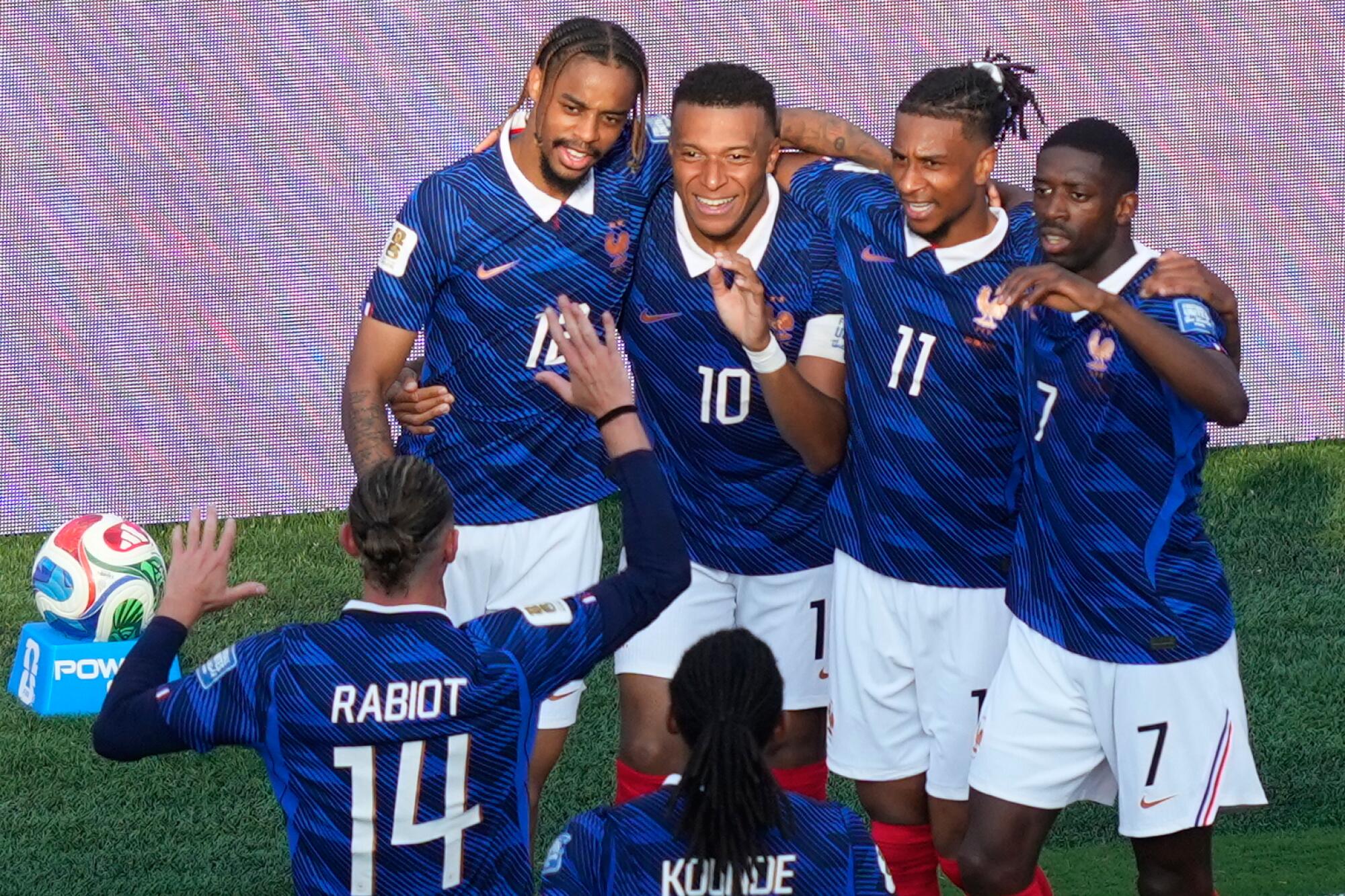
France emerged as the favourite to lift the trophy, receiving five (Gemini, Grock, DeepSeek, Le Chat and Qwen) of the nine champion votes.
Argentina, the defending world champions, received the remaining four votes (ChatGPT, Claude, Copilot and Meta AI).
France’s forward #10 Kylian Mbappe celebrates scoring his team’s first goal during the 2026 World Cup football tournament quarterfinal match between France and Morocco at Boston Stadium in Foxborough on July 9, 2026 [Odd Andersen/AFP]
Predictions for the runner-up were more divided: France and Argentina each received three votes, followed by England with two and Spain with one.
Spain was the clear favourite to finish third, receiving six of the nine third-place predictions, while England and France each received fewer votes.
Lamine Yamal celebrates after the match as Spain qualify for the semifinal stage of the World Cup [Gary Vasquez/Reuters]
The predictions reflect a broad AI consensus around the four remaining contenders, France, Argentina, Spain and England, but also highlight differences in how leading language models weigh recent performances, squad depth and tournament momentum.
The AI predictions come as the tournament reaches the semifinals. France will face Spain on July 14 at AT&T Stadium in Arlington, Texas, while England will meet Argentina on July 15 at Mercedes-Benz Stadium in Atlanta, Georgia.
The third-place playoff will be played on July 18, before the World Cup final on July 19 at MetLife Stadium in East Rutherford, New Jersey.
One of the two pilots onboard a commercial plane made a personal announcement over the tannoy ahead of a flight, which left people in tears and feeling overwhelmed with emotion
Passengers were greeting with an announcement from the pilot
Passengers who had just boarded their flight were in tears after the pilot of the plane made an announcement over the tannoy before take off. Once passengers on a Southwest Airlines flight found their assigned seats and got comfortable ahead of an upcoming flight, two pilots came out of the cockpit of the plane to make an announcement to all the passengers and crew.
The pilot, Captain Svein, explained how he was “very excited” ahead of the upcoming flight as it was a “very special day” for him personally. He turned around and then explained how he had a brand new pilot on board with him who had “just finished training”.
In the video, which was posted on social media by Southwest Airlines, the pilot said: “I’m very excited today is a very special day for me personally and I would like to use this moment to introduce to you our latest addition to Southwest Airlines pilot group.
“She is right behind me, she just finished training and today is her very first day flying for Southwest Airlines.
“Just one more thing, she is my daughter.”
The video, which has been viewed over half a million times on social media, showed the entire plane started clapping and cheering after the dad made the announcement.
Content cannot be displayed without consent
The dad continued: “I’m so glad you folks are coming with us today to enjoy this little party. Thank you so much for flying Southwest Airlines thank you folks thank you.”
Southwest Airlines a major U.S. low-cost carrier headquartered in Dallas that serves over 100 destinations across 10 countries.
People in the comments section of the video that appeared on Southwest Airline’s TikTok page were thrilled for the father-daughter duo on their first flight co-piloting together.
One person said: “The safest flight to be on, he has his most precious cargo at the helm with him.”
A second said: “Probably his proudest dad moment for him, no doubt about it.”
A third simply said: “You should not make us cry.”
A fourth added: “The father has passed his legacy wings to his daughter on her first flight. As a qualified aviator, she’ll make a fine captain of her own aircraft someday.”
Content cannot be displayed without consent
Southwest Airlines said: “Like father, like daughter! Hanna recently joined Southwest as a First Officer, following in the footsteps of her dad, Captain Svein.
“He inspired her to start flying at the age of 15, and she was immediately hooked. She made it her mission to one day fly alongside him!.
“Just 8 years later, she accomplished that mission serving as her dad’s First Officer on her very first Southwest flight. Welcome to the Southwest Family, Hanna!”
Before Paul Mescal became a blockbuster star in films like Gladiator II and Aftersun, he played a supporting role in a gripping Irish psychological thriller now streaming on Channel 5
The drama is streaming on Channel 5 now(Image: Channel 5)
Fans of the Heartthrob Irish actor, best known for his break out role in Normal People, should turn to this lesser known thriller for the perfect binge-watch.
Actor Paul Mescal who has since appeared in the likes of Gladiator II, Hamnet and Aftersun plays a supporting role in this TV series, portraying the character of Sean McKeogh, a local builder in Ireland and volunteer firefighter.
He serves as Ophelia, the protagonists’ confidant and the person she turns to for support as she attempts to uncover the truth behind a devastating death.
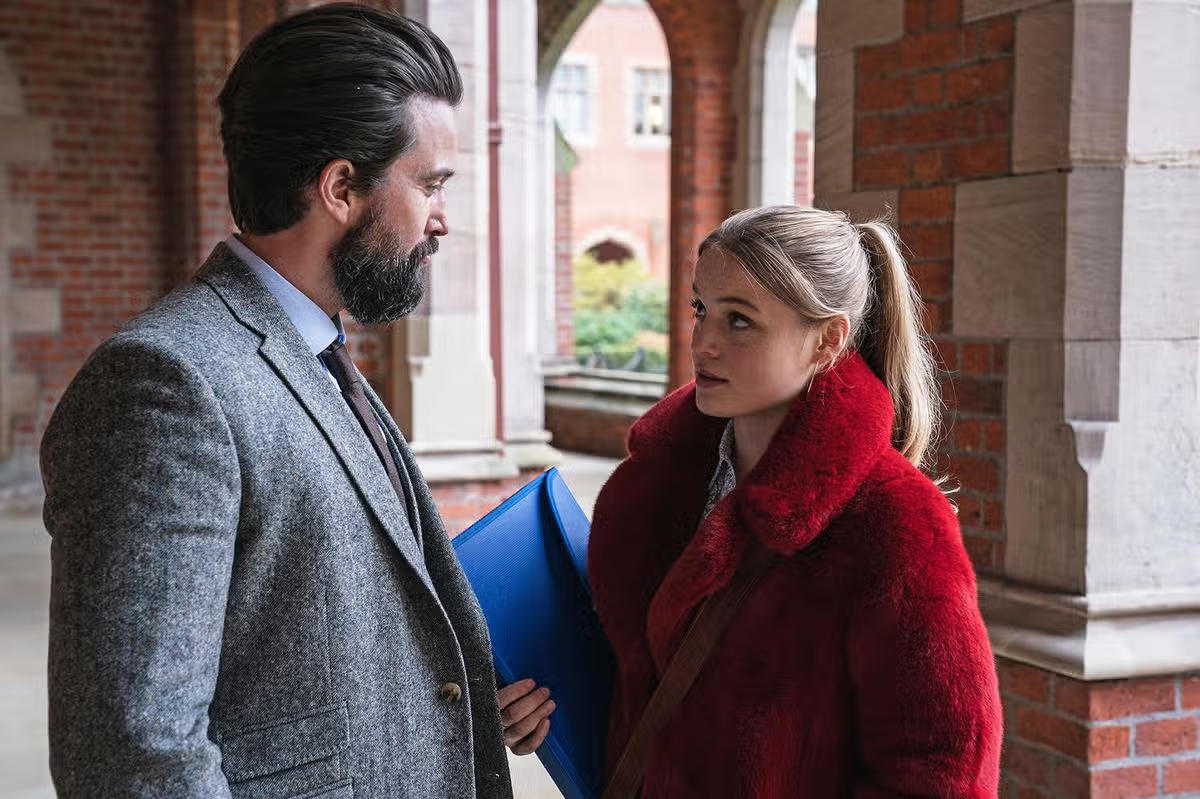
The Deceived, released in 2020, follows her time as a university student who becomes romantically entangled with her married lecturer Michael Callaghan, at Cambridge University. Although, her Irish lecturer is from the fictional village of Knockdara in County Donegal, where most of the show is set.
Inevitably, their affair spirals into tragedy, leaving her ensnared in an ever-growing web of deceit and gaslighting, caught up in a dangerous power struggle with her secret lover, and now, a murder case.
Written by the same writer behind the award-winning Irish television series Derry Girls, this show offers something entirely distinct, yet is every bit as deserving of a binge-watch session.
The Deceived is a 2020 mini-series that unfolds a psychological thriller across four episodes. Since its release, the Irish-British production has largely slipped under the radar, despite having a popular actor.
A review of the programme on IMDb compares the story to that of Rebecca, claiming that the show clearly draws on it as inspiration. They wrote: “This is a spooky thriller with obvious references to Rebecca by Daphne Du Maurier. I loved it.
“I don’t get the negative reviews. It had good twists and turns. I thought the acting was very good. I looked forward to each episode.
“It was rather unsettling at times, best watched in the company of someone else, not by yourself. If you like Rebecca you’ll love this. Loved the ending.”
Another reads: “This was a truly excellent four part drama, The Deceived is a smart, creepy, sinister series, which will have you gripped until its conclusion. I would agree with the comments about this having more than a hint of Rebecca about it, very much so, and despite being set in modern day, the story has a wonderful vintage feel to it, it could have been written in 1946.
“Very nicely produced, well made, very well acted indeed, Emmett J Scanlan gives a very good, captivating performance throughout.”
Joining Mescal in the cast are Emmet J Canlan as the lecturer and Emily Reid as the student, alongside Eleanor Methven, Catherine Walker and Ciara Berkeley. While critical reception has largely celebrated the performances of those involved, the majority of complaints appear to be directed at weaknesses in the script and storyline.
A critic points out: “The script is very underwhelming as some conversations are awkward and cut way too short with unanswered questions. It’s very unnatural and makes everyone seem odd and disconnected from each other.”
As a series that flew largely under the radar following its ill-timed release during the pandemic, it seems the show is still waiting to reach the wider audience it deserves. If nothing else, devoted Paul Mescal fans would do well to seek it out and witness one of his lesser-known early roles, before he rose to become the Hollywood heavyweight he is today.
All four episodes of The Deceived are available to stream now for free on Channel 5.
Tower Semiconductor (TSEM) said it plans to invest about $3B to expand its advanced semiconductor manufacturing capacity in Japan, backed by about $1B in grants from the Japanese government. The expansion is aimed at meeting rising demand from AI and data center
ARLINGTON, Texas — Before it could rise in the World Cup, France first had to fall.
And the fall was spectacular.
In 2010, four years after reaching the final for the second time in three World Cups, the players revolted against coach Raymond Domenech during the tournament. In response, the managing director of the country’s soccer federation resigned in disgust, and the team left South Africa winless after scoring just once in three games.
That matched France’s worst World Cup performance in 76 years. The team, outsiders agreed, had become impossible to coach.
Four years later France made the quarterfinals, beginning a streak in which it has reached the final eight in four consecutive World Cups for the first time. If France, ranked No. 1 in the world, beats Spain in the semifinals Tuesday — Bastille Day in France, a patriotic holiday that is the equivalent of the Fourth of July in the U.S. — it will advance to the final for a third straight time.
Only Brazil and Germany have done that.
France’s Kylian Mbappé (10) celebrates with teammates after scoring against Sweden.
(Yuki Iwamura / Associated Press)
The base for that success was laid a generation before the collapse in South Africa, when a series of poor performances led the French Football Federation to create a series of 16 government-subsidized academies known as Centres de Formation. The main training center opened in 1988 in Clairefontaine, about 30 miles southwest of Paris, and many players from the 1998 championship team — including Zinedine Zidane, Thierry Henry and Robert Pires — passed through its doors.
“What is true about French football is that they started building academies very early and structuring them very early,” said Rudi Garcia, who played 10 seasons in France before becoming a coach of the Belgium national team. “A lot of the good work that’s being done by French football in general is due to the academies.”
But if Clairefontaine set the foundation, Didier Deschamps, the coach who took over the “uncoachable” team in 2012, built much of what went on top.
“It’s not luck,” Henry said on Fox. “This guy is a serial winner. I can also tell you how hard it is to have a lot of alphas and make sure that only one will be the alpha.”
Deschamps was a lunch-bucket player, a hard-working defensive midfielder who excelled at winning back possession in a 16-year career that included captaining France to both a World Cup and European Championship before he retired to become a coach, guiding Monaco to the Champions League final in his first stop. If he has a super power, both as a captain and coach, it’s his ability to manage big egos and get them to buy into the team concept. He did that first as captain of the star-studded 1998 squad and has been even better at it as the coach.
“The collective spirit,” Deschamps said, “is our strength.”
France coach Didier Deschamps celebrates with William Saliba after a World Cup quarterfinal win over Morocco.
(Lars Baron / Getty Images)
“He’s got credit in the bank,” added former World Cup goalkeeper Kasper Schmeichel, another Fox analyst. “Who can question him? His record speaks for itself as a player and as a coach.”
About that record: Deschamps heads into Tuesday’s semifinal with 20 wins and just two losses in 25 matches as a World Cup coach. He has won more World Cup games and more knockout-stage games, 11, than any other manager. And he was unbeaten in the tournament as a player, going 6-0-1.
Add those wins together and Deschamps, 57, has been on the field or in the technical area for 26 of France’s 48 World Cup victories. Before him, France never had won a World Cup.
By Sunday, the French could be lifting the trophy for the third time in 28 years. Only Brazil has won that many titles in a shorter span. And this team could be France’s best.
All that is thanks in large part to the FFF and government investment in the Centres de Formation. France is now the greatest developer of elite soccer talent in the world. Of the 1,248 players chosen to play for the 48 teams in this World Cup, 99 — nearly 8% — were developed in France, according to Opta. At least 13 teams in this tournament had at least one French-born player, among them Spain and Cape Verde. No other country comes close.
There are several reasons for that. The Ile-de-France region, which includes Paris, is home to large communities of working-class immigrants from the country’s former colonies. Eleven of the 26 players on this French team came from these banlieues, as they are called, among them captain Kylian Mbappé, who has the most goals in the last two World Cups.
The talent pool there is so deep, France probably could have fielded a B team in this World Cup and made it to the quarterfinals. And because the competition to make the national team is great, it raises the level of play for everyone.
For those who fall short, their immigrant backgrounds allow them to play for other countries. For example Riyad Mahrez, a former African player of the year, was born in Clichy, France, but plays for Algeria, while Senegal’s Ibrahim Mbaye is from Trappes.
“It’s quite an incredible pool of talent in a relatively small area,” Hubert Fournier, technical director of the French Football Federation, told the New York Times. “There’s a high concentration of players with very well-structured clubs. And then everyone draws from this Ile-de-France pool because afterwards they go to other clubs; they don’t all stay in Ile-de-France.”
The energy and diversity of the banlieues also fuels the national team. Nine of the 11 starters in France’s win over Morocco either immigrated to France or are the children of immigrants from Madagascar, Lebanon, French Guiana and Cameroon, Guinea-Bissau and elsewhere.
And Deschamps, who grew up in modest circumstances in Basque country, is the one who has made all those disparate parts work together. If France wins its next two games, he’ll become the second man to coach two World Cup champions.
But when asked for the secret to his success after France’s quarterfinal win over Morocco, a team with six French natives, Deschamps praised the French team, one thought to be uncoachable when he took over.
“Having great, great players, excellent players. My credit goes to the players,” said Deschamps, whose team hasn’t given up a goal in its three knockout-stage wins. “But maybe I do my job well.
“The human aspect is of paramount importance. I am extremely happy on a personal level as well as seeing my players enjoy themselves.”
Swanage in Dorset is home to the fantastic Swanage Carnival, which takes place across two weekends in July and August and is about to return for its 2026 outing
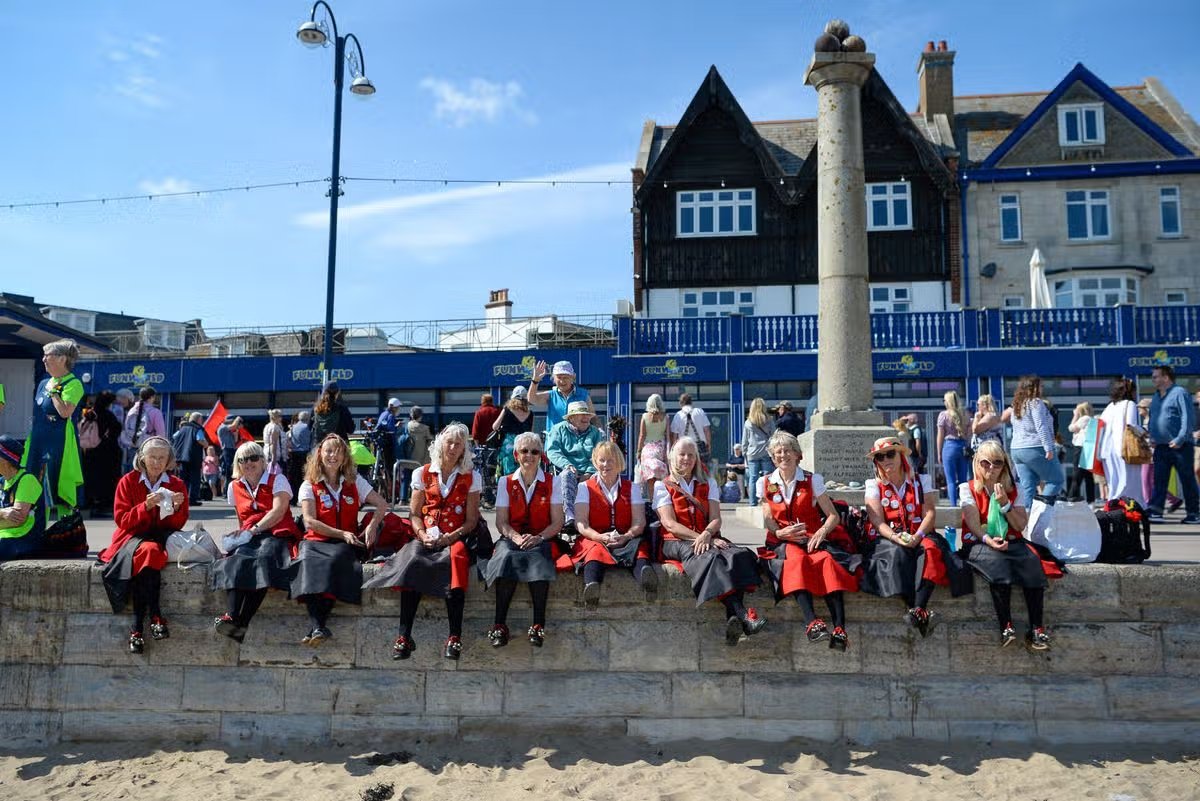
Swanage is also a morris dancing hub(Image: Getty Images)
It wouldn’t be a trip to the British seaside without a lorry-load of child stormtroopers appearing at some point.
Or at least, that seems to be the case in Swanage.
Last week, the seaside town was named the 14th best in the country by readers of Which?, who praised its fantastic scenery and beach. What the 5,320 readers did not mention in the rankings (which placed Bamburgh in Northumberland for a sixth year in a row), is Swanage’s weirder side.
I visited the Dorset town of 10,000 during a stay in the beautiful village of Kimmeridge, a little further down the Jurassic Coast. I was expecting more of the same: a pebbly beach, rugged headlands and a sense of peace and quiet that belies its location and quality.
I got nothing of the sort.
Swanage is home to one of the best and weirdest events you’ll find anywhere on the British coastline. The iconic Swanage Carnival.
The Swanage Regatta and Carnival, as it is formally known, has a history dating back to the mid 1800’s when the first sailing regatta was held in Swanage Bay. The carnival portion was added in the early 1900s and hit a real high point in the 1950s when Noddy and Famous Five author Enid Blyton became its president. She loved getting stuck in, even organising the closing firework display.
Today, the show remains one of the best points of the carnival. On warm evenings, people swim out into the sea to get a unique view of the rockets and roman candles exploding above.
What has changed quite a bit – and where Swanage’s strangeness lies – is in the carnival floats.
Content cannot be displayed without consent
When I visited, a lorry was loaded up with a primary school classroom’s worth of girls dressed as Star Wars stormtroopers, sporting blasters and shiny white helmets. A short while later, they were joined by Granny Tourismo, the world’s first (and only) shopping trolley dance display team. Look up to the sky, and you’d be treated to a genuinely breathtaking aerobatic wingwalking display team.
The year’s theme? ‘Swanage Goes Musical’, of course.
Last year, the dress code was ‘Cirque du Swanage’. Cue a floatload of 20 clowns in violently bright rainbow wigs and a traveling circus float, followed a short way after by a child in an electronic jeep, pulling a large giraffe toy.
Belly-dancers danced and majorettes twirled their batons, at the same time as a pair of orange-faced Oompa Loompas raced against the Undertaker and Hulk Hogan for glory in the ever-popular wheelbarrow race.
A woman dressed as a tiger could only watch on from her position on the back of a lorry, locked in a cage.
It’s all the kind of excellent, distinctly weird stuff that the south coast does particularly well. When viewed on a scorching hot summer’s day, sky blue and ice cream melting onto your hand, the effect is almost surreal.
And the good news is, the Swanage Carnival is about to begin again. For eight days from July 25, thousands of visitors will descend on the town to enjoy more than 100 events. This year’s theme is ‘A wacky western in Carnival Canyon’. Expect Stormtroopers in cowboy hats.
If all of that wasn’t enough, come September, the streets of Swanage are taken over by hundreds of members of Britain’s longest-running and most beloved cult, morris dancers.
TOP 30 SEASIDE TOWNS & VILLAGES
Bamburgh — 84%
Tynemouth — 82%
St Andrews — 81%
Aldeburgh — 80%
Crail — 80%
Frinton-on-Sea — 80%
Portmeirion — 80%
St Davids — 79%
Bude — 78%
Southwold — 78%
North Berwick — 77%
Plockton — 77%
St Ives — 77%
Swanage — 77%
Lyme Regis — 76%
Lytham St Annes — 76%
Portstewart — 76%
Conwy — 75%
Dornoch — 75%
Filey — 75%
Lynmouth — 75%
Sidmouth — 75%
St Mawes — 75%
Tenby — 75%
Tobermory — 75%
Wells-next-the-Sea — 75%
Whitley Bay — 75%
Broadstairs — 74%
Falmouth — 74%
Llandudno — 74%
BOTTOM 30 SEASIDE TOWNS & VILLAGES
Ilfracombe — 57%
Minehead — 57%
Bridlington — 56%
Cleethorpes — 56%
Fishguard — 56%
Seaton — 56%
Torquay — 56%
Abersoch — 55%
Colwyn Bay — 55%
Morecambe — 55%
Newquay — 55%
Barry Island — 54%
Skegness — 54%
Mablethorpe — 53%
Margate — 53%
Paignton — 53%
Southport — 53%
Herne Bay — 52%
Littlehampton — 51%
New Brighton — 51%
Weston-super-Mare — 50%
Burnham-on-Sea — 48%
Clacton-on-Sea — 48%
Southend-on-Sea — 47%
Bangor — 46%
Blackpool — 46%
Fleetwood — 46%
Great Yarmouth — 46%
Lowestoft — 46%
Bognor Regis — 41%
Results are based on an online survey conducted in January-February 2026 of 5,320 Which? Connect panel members who spoke about 11,999 experiences of visiting a UK seaside town for leisure purposes in the previous 12 months.
July 14 (UPI) — President Donald Trump has signed a pair of executive orders shrinking two southern Utah national monuments by more than a million acres each, sparking anger from environmentalists who say the moves will open the formerly protected lands to exploration.
The executive orders reduce the size of the Grand Staircase-Escalante National Monument from 1.87 million acres to about 181,500 acres and the Bears Ears National Monument from 1.36 million acres to 121,100 acres. Both are located in redrock country.
Trump signed the orders on Monday in the Oval Office while surrounded by Utah’s Republican leadership, including Gov. Spencer Cox, Sens. Mike Lee and John Curtis and several GOP House representatives.
“This is a big day for Utah,” Cox said.
The executive orders mark the latest development in the nearly decade-long tug-of-war over the size of the monuments, though Republicans have opposed Grand Staircase-Escalante National Monument and its 1.7-million-acre boundary since President Bill Clinton designated it in 1996. The Bears Ears National Monument was designated by President Barack Obama in late 2016.
During his first term, Trump shrunk both monuments — Bears Ears by 85% and Grand Staircase-Escalante by almost half — only for President Joe Biden to restore both of them to their previous boundaries in 2021.
Republicans, including Cox, argue that the monuments violate the Antiquities Act, which limits the designation to the smallest parcel of land necessary for the proper care and management of the objects to be protected. In a White House fact sheet on the executive orders, the Trump administration argues that the term “objects of historic or scientific interest” has been stretched to include landscapes and biodiversity.
“Now, we care. We definitely care about protecting these antiquities and will continue to do so. The problem is with these giant monument designations, there are resources that come with those,” Cox said at the White House press conference.
“We’re grateful that the president has made a determination that we need to rightsize these monuments.”
He added that this will not remove protections already in place, but will make “the monuments more manageable so that we have the resources necessary to continue to protect these antiquities.”
Trump criticized the size of the monuments, saying the designations prevented the public from using the land.
“You can’t go hunting. You can’t go fishing. You can’t do anything. You can virtually not even walk on it,” he said, though the Utah Division of Wildlife Resources states that people can hunt and fish in both monuments.
Environmental groups have been fighting to maintain the size of both monuments since Trump originally shrunk them, pointing to the fact that Grand Staircase-Escalante was designated due to its wide array of scientific and historic resources and Bears Ears was created following a proposal by five Tribal Nations.
Scott Braden, executive director of the Southern Utah Wilderness Alliance, said Monday’s executive orders make clear that Utah is the “epicenter of Republican efforts to dismantle and obliterate America’s system of public lands.”
“These two landscapes deserve to be protected for current and future generations of Utahns and Americans, not opened to exploitation,” Braden said in a statement, adding that the group would challenge the executive orders in court.
“We are confident that President Trump’s reckless and unlawful acts will be rejected and the monuments restored.”
According to the Center for Western Priorities, the executive orders may open the land formerly part of the monuments for sale or lease to oil, gas, mining and logging companies within 60 days.
“The people of Utah and the entire country have spoken with one voice: These lands belong to all of us, not Mike Lee, President Trump or the mining companies his kids are in business with,” CWP Executive Director Aaron Weiss said in a statement.
Islamabad, Pakistan – A wooden panelled bookshelf behind him, Pakistani Prime Minister Shehbaz Sharif signed the memorandum of understanding (MoU) between the United States and Iran, aimed at extending their ceasefire by creating a pathway towards long-term peace.
Sharif then held up the document for the cameras. That was June 17, the high point of a frenzied diplomatic effort led by Pakistan spanning weeks, which had culminated in the MoU that Sharif signed as a mediator.
Recommended Stories
list of 4 itemsend of list
Yet less than four weeks later, Pakistan’s Ministry of Foreign Affairs has, in just the past few days, issued two statements expressing “deep concern” over renewed US-Iran hostilities, with the MoU Islamabad had helped pull together seemingly in shreds.
On Monday morning, the US launched the latest in a series of attacks on Iran, which responded by firing missiles and drones at multiple Gulf and Arab nations that it blamed for hosting US military bases.
Hours later, Iranian Foreign Ministry spokesman Esmaeil Baghaei told reporters that mediators, including Pakistan, Qatar and Oman, remained engaged and were continuing their efforts, even as he warned that Iran would continue responding to what it viewed as US non-compliance with the MoU.
So far, those efforts have failed to slow down the fighting, even as Pakistan has pressed on with diplomatic outreach.
On Sunday, Deputy Prime Minister and Foreign Minister Ishaq Dar spoke by phone with Iranian Foreign Minister Abbas Araghchi, telling him that dialogue and diplomacy remained “the only viable path” to resolving the crisis.
Prime Minister Shehbaz Sharif also spoke to Iranian President Masoud Pezeshkian on Friday, warning that “hard-earned” peace gains were at risk, while Dar held a separate call on Saturday with Saudi Foreign Minister Prince Faisal bin Farhan Al Saud.
To many analysts, one question, above all, now stares at Pakistan and other mediators like Qatar: With the deep distrust between the US and Iran only further expanding following the new bout of fighting, can Islamabad or any other capital once again bring Washington and Tehran back to the negotiating table?
Repeated breakdowns
The renewed fighting marks at least the third occasion since the US-Iran ceasefire signed on April 8 appeared to have collapsed.
Days after that truce was agreed on, the breakdown of the first round of Islamabad talks led to the US imposing a naval blockade on Iranian ships in the Strait of Hormuz. The US and Iran both attacked ships in the days that followed.
Then, after the MoU was signed on June 17, Iran attacked several ships that it claimed were passing through the Strait of Hormuz without its permission, prompting another escalation with Washington.
But the Iranian tanker strikes last week appear to have raised tensions to new heights.
US attacks on Iran since then have hit at least 10 provinces, killing a soldier, several fishermen in the southern province of Hormozgan, and a firefighter in Sistan and Baluchestan, according to Iranian authorities.
A railway bridge on a trade corridor linking Iran with Central Asia and China was also struck, along with a bridge near Mashhad used by mourners travelling to former Supreme Leader Ayatollah Ali Khamenei’s funeral.
The renewed hostilities have also pulled Qatar, a fellow mediator alongside Pakistan, more directly into the conflict. On Sunday, Iranian missiles and drones hit the Gulf state, with debris from interceptions injuring three people, including a child, according to Qatar’s Ministry of Interior.
Iran’s Ministry of Foreign Affairs has accused Washington of violating “nearly all parts” of the June agreement within 25 days of its signing, citing attacks on transport infrastructure and fishing vessels.
Baghaei said on Monday that Iran had “acted in good faith” throughout, but that “each time the other party has failed to meet its obligations, we did not uphold ours, and we will continue to act in this manner.”
Since the war began on February 28, Islamabad has played the role of mediator.
It hosted talks in April, the first time in four decades that US and Iranian officials sat in a room together.
Its army chief and interior minister have travelled to Tehran several times. In late March, Pakistan also helped secure a Chinese-backed peace framework alongside its own diplomatic efforts.
In June, it helped produce the MoU signed by Pezeshkian and US President Donald Trump, along with Pakistani Prime Minister Shehbaz Sharif, which was then discussed at the Burgenstock summit in Switzerland.
Yet analysts say Pakistan lacks the means to enforce the agreements it helps broker.
Javad Heiran-Nia, director of the Persian Gulf Studies Group at the Center for Scientific Research and Middle East Strategic Studies in Tehran, said the MoU was never intended to resolve the underlying dispute.
“The MoU deferred key and substantive issues to future negotiations and functioned primarily as a tactical instrument to halt hostilities and reopen the Strait of Hormuz to international shipping,” he told Al Jazeera.
Iran, he said, sees control of the waterway as “a strategic asset; not merely a coercive lever, but a deterrent tool”, and appears “prepared to accept the risk of war to preserve this strategic advantage”.
Mediators, he added, lack the instruments to resolve the dispute “unless a shift in the balance of power between Iran and the United States emerges as a result of limited military engagements”, pointing to a potential US naval blockade as one of the few developments that could alter the strategic calculus.
Dania Thafer, executive director of the Gulf International Forum in Doha, said Pakistan’s room for manoeuvre had narrowed as both sides hardened their positions over the strait.
“Pakistan is in a situation where it is highly dependent on both parties, as it always has been, but right now, Iran is bent on establishing its control over the Strait of Hormuz,” she told Al Jazeera.
According to Thafer, there is little Pakistan can do to de-escalate while both Washington and Tehran remain in “an escalatory phase”.
“Once they feel they have reached a point where the balance tips in favour of one side or the other, then perhaps they will return to the negotiating table,” she added.
But Qamar Cheema, head of the Islamabad-based Sanober Institute, pushed back on the idea that Pakistan is operating without real tools.
He pointed to US Vice President JD Vance’s recent remarks, where he credited Pakistani Field Marshal Asim Munir’s role in the process, as evidence that Islamabad’s military-diplomatic channel carries real weight in Washington.
Access itself, he argued, is the instrument.
“Pakistan enjoys trust, and that’s why both sides pick up the phone and call Pakistani leadership any time to remove a stumbling block,” Cheema told Al Jazeera.
Crowded diplomacy, narrowing options
But Pakistan has not been the only diplomatic channel, and according to Heiran-Nia, the dispute over the strait was never really Islamabad’s to mediate.
“Iran had previously removed the Strait of Hormuz issue from Pakistan’s mediation agenda, as the matter was essentially bilateral between Tehran and Muscat,” he said.
Tehran, he explained, did not want the issue to be “defined within a broader negotiation package under Pakistani auspices, which would have afforded Washington room for political manoeuvre”.
Direct Iran-Oman talks followed, but “US military pressure and economic sanctions threats against Oman have placed Muscat under considerable strain, preventing meaningful progress,” according to the Tehran-based analyst.
Meanwhile, he cautioned that Sunday’s attacks on Qatar “could have adverse effects on Qatar’s mediatory role”, although Doha “does not currently appear inclined to withdraw”, adding that “Iran should not assume that Doha’s patience is limitless.”
Mustafa Hyder Sayed, executive director of the Pakistan-China Institute in Islamabad, described the GCC states as caught in an uncomfortable position.
“The GCC countries are caught between the devil and the deep blue sea. They want a functional relationship with Iran while not openly declining the use of their bases and territory by the United States, because they understand they cannot choose their neighbours,” he told Al Jazeera.
Meanwhile, Israel, which is not a party to the MoU, has continued military operations in Lebanon, which Tehran cites as an ongoing violation of the agreement.
Israeli Defence Minister Israel Katz said on Saturday that southern Lebanon “would become Gaza”, raising the prospect of further regional escalation.
Who blinks first?
Despite a week of escalating attacks, the core dispute remains unchanged.
Pakistani army chief Field Marshal Asim Munir meets the president of Iran, Masoud Pezeshkian, in Rawalpindi, Pakistan, June 23, 2026 [Handout/Inter-Services Public Relations via Reuters]
Washington and Tehran remain divided over the same issue that stalled negotiations even before the latest round of fighting: Who controls passage through the Strait of Hormuz, and under what conditions?
Iran insists the MoU gave it authority over transit through the waterway. The US disputes that.
On Monday, Trump announced that the US was reinstating a naval blockade of Iranian ships and would charge a 20 percent tariff on all other ships trying to pass through the strait.
Yet, earlier, a possible compromise had briefly emerged.
Heiran-Nia said the parties explored a formula under which commercial vessels would coordinate passage with both Iran and a designated Arab Gulf state, allowing “both parties [to] claim a degree of victory”.
The talks stalled before reaching a conclusion, however, interrupted by the funeral of Iran’s former Supreme Leader Ayatollah Khamenei, who was killed on the first day of the war in joint US-Israeli air strikes.
The conflict has since moved in the opposite direction, with military action aimed at shifting the balance of power rather than reviving negotiations.
“The prevailing trajectory now is the continuation of military strikes in an effort to shift the balance of power. Yet, there remains a risk that strategic calculations on either side could spiral beyond control,” Heiran-Nia said.
Thafer believes that, despite the violence, neither side has formally abandoned the MoU.
“Iran is framing this current round of escalation as a violation of the MoU rather than a reason to exit it, which means there could still be light at the end of the tunnel,” she said.
In her assessment, both sides bear responsibility for violating the agreement, from Iran’s attacks on shipping to Washington’s revocation of Iran’s oil sale licence and the military attacks. Yet the agreement remains, at least formally, in place.
Its future, she said, depends on which side ultimately gives ground over the strait. Iran retains what Thafer described as a “snapback capability” to disrupt shipping whenever it chooses.
“It is, militarily, very difficult to fully neutralise that Iranian capability. We will have to wait and see where the leverage finally sits,” she said.
Cheema, for his part, argued that Iran’s own conduct, more than any mediator’s diplomacy, is what will decide how this settles.
“Iranian authorities seem ambitious and aggressive, and are looking to take risks to project power, which makes it less likely that any agreement will reach a final conclusion. That means interventions from mediators will keep coming.”
Laura Horton on holiday in Greece(Image: Laura Horton/SWNS)
A woman was bitten by a bat on holiday and ended up seeking rabies treatment thanks to AI.
Laura Horton, 53, was on a two-week birthday trip to Lesbos, Greece, in May 2026 when she found a bat drowning in the swimming pool at the apartment complex where she was visiting a friend. She grabbed the animal from the water and let it sit in her hand for 10 minutes to “dry off” – unaware it had bitten her before flying away.
Laura wanted to know what type of bat she had rescued, so she uploaded a photo of it sitting in the palm of her hand to Google Lens. As well as identifying it as a pipistrelle bat, the AI programme alerted her to seek medical treatment immediately due to the risk of contracting rabies from handling the animal.
She also claimed Google Lens warned her that she would be unable to feel a bat bite as their teeth are too small, and on closer inspection, Laura noticed two tiny pin-prick bite marks. According to the NHS website, rabies is a rare but serious infection that is usually caught from an infected animal’s bite or scratch, and it is almost always fatal once symptoms appear.
Laura went to the Hospital of Mytilene, Lesbos, the following day, May 8, where she started a course of preventative rabies post-exposure vaccines. She had a total of three jabs in Greece, followed by her fourth and final jab when she returned to the UK on June 1 at the School of Tropical Medicine, Liverpool.
Laura, a personal trainer from Mossley Hill, Liverpool, who spoke to Talk to the Press, said: “I had no idea you could catch rabies from a bat. I grabbed it from the water on instinct because it was drowning – I had no idea of the risks.
“It sat on my hand for about 10 minutes, drying off. We all thought it looked cute, so I took a photo of it.”
After uploading the image to Google Lens to determine the species of bat, Laura was met with a series of questions from the AI tool.
She said: “It started asking questions like, ‘are those your hands?’ and ‘have you washed your hands for 15 minutes after handling it?’ It warned me of the risk of rabies and said I wouldn’t feel a bite, as their teeth are too small.
“I thought it was all a bit dramatic. But when I took a photo of my hand, I saw two tiny bite marks.”
Laura was four days into her two-week holiday in Petra, a village on the Greek island of Lesbos, with friends when she was bitten. She rang her insurance company the following day, May 8, which confirmed she should seek medical attention.
She needed to undergo a course of rabies post-exposure prophylaxis (PEP) – a life-saving treatment given immediately after a potential bite or scratch from a rabid animal. Later that day, Laura went to the hospital, but claims a language barrier nearly prevented her from getting the correct treatment.
“At first, they tried to send me away with antibiotics,” she said. “I’m not sure they understood what happened.
“I was sent to a travel clinic and a nurse was furious I hadn’t been given the first dose yet. I went back to the hospital and found the infectious diseases department – they were brilliant.”
She returned on May 11 and May 15 for two more jabs while in Greece and had a fourth when she returned to the UK on June 1.
She said: “My GP didn’t actually know what to do. Luckily, we have the School of Tropical Medicine in Liverpool and I was able to get my fourth injection arranged with them very easily.
“I later found out there is a dedicated rabies hotline in the UK that would have delivered it to my doctor’s surgery. It was lucky Google Lens told me to go to hospital – who knows what might have happened.
“I read the tragic case about the boy in Canada who died after a bat landed on his face. A lot of people aren’t aware of the dangers of these wild animals and the risks. Hopefully I can help raise awareness.”
Theo Burrell, an “Antiques Roadshow” star and cancer research advocate, has died. She was 39.
A family member announced Burrell’s death on Instagram on Saturday, writing, “It is with great sadness that I share the news that Theo passed away peacefully surrounded by her family on Wednesday afternoon. Neither she nor her medical team foresaw this happening quite so quickly.
“She was an incredible person who fought hard for her family, friends and raising awareness of this cruel disease,” the post continued. “She saw life events like her son’s first day at school and her wedding that a little over 4 years ago we thought she’d never see.”
Burrell, born Theodora Helen Burrell on Sept. 1, 1986, was a ceramics and decorative arts specialist on the BBC’s “Antiques Roadshow,” a reality series that features antiques experts appraising family heirlooms, garage sale gems and more. Off screen, she worked as a specialist and auctioneer at Lyon & Turnbull, the oldest auction house in Scotland.
“One of the things I love about antiques is that they have survived so many years, witnessing life changing events such as coronations & world wars,” Burrell wrote in the caption of an 1840s-era white marble bust.
In June 2022, Burrell was diagnosed with an incurable, aggressive Grade 4 brain tumor, and was told she had a year to a year and a half to live. She subsequently underwent brain surgery, radiotherapy and chemotherapy in an effort to keep the cancer at bay. In June 2023, she organized a star-studded auction to raise money for the British cancer research nonprofit the Brain Tumour Charity and raised the equivalent of about $93,500. She also became a patron of the charity Brain Tumour Research.
“We are heartbroken that we have lost the phenomenal, determined and truly inspiring Theo to this devastating disease,” Dan Knowles, chief executive of Brain Tumour Research, said on Instagram. “She constantly inspired us with how big her heart was and we will continue on our mission, driven by everything she taught us. Our thoughts are with her family, her friends and with all those who had the privilege of knowing her.”
During a January 2024 BBC “Morning Live” appearance, Burrell said that six months before she was diagnosed, she started to get unusual symptoms including headaches, nausea, feelings of pressure in her head and issues with her vision. After multiple trips to various physicians and a CT scan, doctors found an about 2-inch-diameter brain tumor in the right side of her brain.
She spoke candidly about her battle in the media and across social platforms, telling BBC, “I really felt that with a small public profile which I had from the ‘Roadshow’ that if I could do something good with that, then I should. And I have watched other people, such as Tom Parker, who sadly lost his life to a glioblastoma, really work so incredibly hard when he was so ill to try and make a difference for people like me.”
Burrell’s family said in the statement announcing the antiques enthusiast’s death that the cancer community provided “so much comfort and strength to her in her darkest moments.”
“But most of all it provided hope and I think what she would want most of all is for other people to find hope in her story. Hope that the statistics aren’t gospel and that one day they’ll be very different.”
The price of Brent crude climbed to just over $84 a barrel after soaring nearly 10% on Monday. US benchmark crude was up 1.4% at $79.20 a barrel.
ADVERTISEMENT
ADVERTISEMENT
Oil prices are still below their wartime peak of nearly $120 a barrel, but uncertainty over the future stability of supplies deepened as the US and Iran each asserted they controlled the Strait of Hormuz.
US share futures were down 0.3% as the U.S. launched more strikes on Iran after President Donald Trump said Washington was “reinstating” a blockade on Iran in the strait.
Fighting in the region has kept oil tankers from using the waterway to deliver crude to customers from the Persian Gulf, driving up fuel prices worldwide.
Asia-Pacific shares slip overnight
In Asian trading, Tokyo’s Nikkei 225 lost 1% to 66,574.96 and the Kospi in South Korea declined 3.2% to 6,589.37.
The Shanghai Composite index lost 0.8% to 3,884.32, even though the government reported that China’s exports jumped 27% in June from a year earlier as adoption of artificial intelligence drove strong demand for computer chips and other technology.
Hong Kong’s Hang Seng edged 0.1% higher, to 24,230.46, while in Australia, the S&P/ASX 200 shed 0.5% to 8,767.00.
Monday on Wall Street, the S&P 500 fell 0.8%, coming off its fourth winning week in the last five. The Dow Jones Industrial Average dropped 0.3%, and the Nasdaq composite sank 1.6%.
Chip stocks like Micron Technology helped lead the way lower. Micron fell 4.4%, eating into what had been a stellar rise of 243.1% for the year so far.
Worries are rising that stock prices have shot too high and that the demand may not be sustainable if AI doesn’t deliver as much profit and productivity as expected.
Nvidia fell 3.5%. Because it’s the largest stock on Wall Street by value thanks to the euphoria around AI, it was the single heaviest weight on the S&P 500.
Investors turn to earnings
Much of Wall Street’s attention this week will be on profit reports from companies saying how much they earned during the spring. On Tuesday alone, Bank of America, Citigroup, JPMorgan Chase, Goldman Sachs and Wells Fargo are all releasing their latest quarterly results.
Analysts are forecasting that companies in the S&P 500 index will deliver overall growth of 23.6% from a year earlier, according to FactSet. If they’re right, it would be the second straight quarter of growth better than 20%.
Companies across industries will need to deliver strong growth to justify the big moves their stock prices have made. Indexes are near records despite their sharp recent swings due to worries around AI stocks.
More costly oil would push inflation higher, potentially leading the Federal Reserve and other central banks to raise interest rates. Higher rates can keep a lid on inflation, but they also slow the economy and hurt prices for all kinds of investments.
In other dealings early Tuesday, the US dollar slipped to 162.34 Japanese yen from 162.35 yen. The euro rose to $1.1391 from $1.1381.
PHILADELPHIA — Jordan Walker silenced Philadelphia’s boo birds by homering on his last six swings, chasing down Phillies slugger Kyle Schwarber in the final round and becoming the first St. Louis Cardinal to win the MLB All-Star Home Run Derby on Monday night.
Schwarber hit 11 homers during his 15-swing turn in the final round. Philadelphia, fans, who loudly booed everyone but Schwarber and Bryce Harper throughout the night, quietly headed to the exits when Walker’s winning shot soared over the left field wall.
“I was once told you don’t boo nobodies,” Walker said. “So it feels pretty good.”
Schwarber advanced out of the first round and then beat Boston’s Willson Contreras in a head-to-head matchup in the second round to face off against Walker, a 24-year-old who beat Tampa Bay’s Junior Caminero in Round 2.
Schwarber, the major league home run leader, had fans roaring on every swing.
Swinging away with the top button on his Cardinals jersey undone, the 24-year-old Walker seemed nonplussed by the jeers and the massive stage during All-Star festivities.
“He earned it,” Schwarber said.
Walker chewed a big wad of bubble gum and wore his cap backward just like Hall of Famer and derby great Ken Griffey Jr. He celebrated with his family immediately on the field, while his father rejoiced in recalling how Walker started hitting long home runs when he was 6 years old.
He fulfilled this childhood dream in dramatic fashion. Walker hit his seventh homer with two swings remaining and his eighth on the next swing to earn bonus swings. Needing to hit four straight homers to win, the right-handed-hitting Jordan knocked one off the top of the center field fence 401 feet away. He reached 10 homers, and Philadelphia fans booed with all their might, only for Jordan to finish the sensational surge and celebrate as fireworks shot off around him.
“That was impressive,” said Schwarber, a runner-up for the second time.
Walker is a first-time All-Star for the Cardinals having a breakout season. He has a career high 22 homers after struggling with a combined 11 over the previous two years.
Those final six in Philadelphia are now stamped on the derby highlight reel.
Revamped Derby format delivers drama
MLB ditched its timed clock and returned to a swing format, with each hitter continuing to swing if he went deep on his final one.
The extra time between swings gave hitters time to track their home runs — and Philadelphia a smidge more time to unleash those throaty boos at Contreras and Walker.
Each player had 20 swings in the first round and the top four advanced. Hitters were seeded for the second round, where No. 1 faces 4 and 2 meets 3.
Each player got 15 swings in the second round, with batters homering on their final swings continuing until they fell short.
Lamine Yamal insists he would take no fear into Spain’s World Cup semifinal against France when both sides meet after he celebrated his 19th birthday.
The Barcelona prodigy raised eyebrows following Spain’s 2-1 quarterfinal defeat of Belgium last week after being quoted as saying that France rather than Spain ought to be “afraid” given recent defeats against La Roja.
A relaxed-looking Yamal addressed those comments as he spoke to reporters on Monday at a press conference.
“I was asked if I was afraid of France, and I said no,” Yamal explained. “We are European champions. It’s simply football,” the teenager explained.
Yamal said he had marked his 19th birthday by buying a chunky jewel-encrusted necklace he wore to his press conference. The real birthday present, though, would be a place in Sunday’s World Cup final.
“I haven’t received many gifts yet. The best gift would be a win on Tuesday and a trip to New York,” he said.
While other stars at this World Cup have been in blistering goal-scoring form, Yamal so far has only found the net once during the tournament – but is ready to add to his tally against France.
“I don’t focus on goals, but it’s always special to score in a match like this. I accept the challenge. That’s why I came here,” Yamal said, promising a “beautiful match for the spectators”.
“It’s the game everyone was waiting for,” he added.
While acknowledging the momentous nature of Tuesday’s game, Yamal remained laid-back in his approach.
“There are far more difficult situations in life than a football match, so I’m calm,” he said. “I don’t feel any extra pressure; I’ll go out and play like always and give my all for the team.”
Spain’s players formed a guard of honour for Yamal to celebrate his birthday [Maurio Pimentel/AFP]
‘We’ve known each other for a while’
Spain coach Luis de la Fuente says his team plan to go on the “front foot” against tournament favourites France when they face off in a heavyweight semifinal showdown.
De la Fuente’s Spain will attempt to impose their possession-based game on France in what is shaping up as a gripping clash of styles.
While France coach Didier Deschamps insists Spain remain favourites for the World Cup, betting markets overwhelmingly back France to clinch a second title in three attempts.
Les Bleus have powered into the last four with a scintillating brand of attacking football based around such talents as Kylian Mbappe, Michael Olise and Ousmane Dembele.
But De la Fuente, whose team have beaten France in their last two meetings, is quietly plotting another ambush at the AT&T Stadium in Arlington, Texas on Tuesday.
“We’ve already analysed France in great detail; we’ve known each other for a while now,” De la Fuente said.
“We faced each other for a few years now, and they have great players, but so do we. We have to put all of our virtues on the table and try to counteract the strengths of the opponent.
“And that’s what football is about – the team that strikes a better balance is usually closer to getting the victory.
“We’ll have to think about their players. We’ll try to win those duels and will try to be on the front foot during the game, imposing our style.”
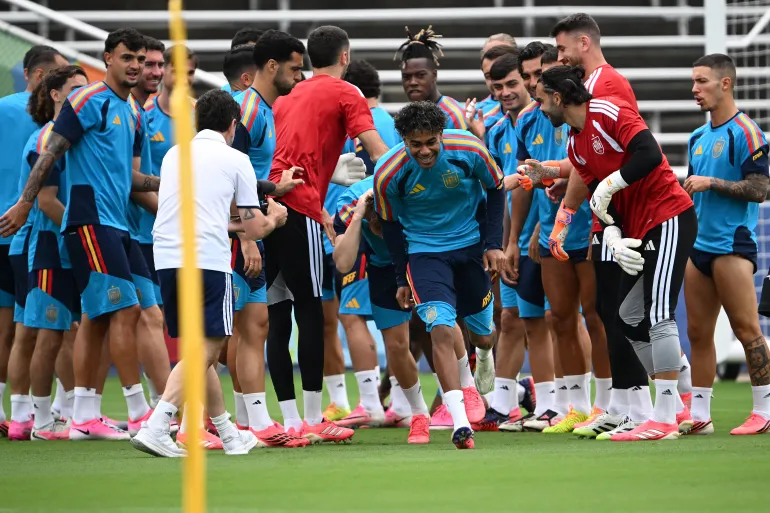
Spain’s players train at Cotton Bowl Stadium, in Dallas, Texas, US on July 13, 2026 [Albert Gea/Reuters]
France ‘far better’
De la Fuente, though, is under no illusions about the difficulty of the task facing his side.
France, he said, have improved significantly since Spain defeated them 5-4 in a hectic UEFA Nations League semifinal in Stuttgart last year, when the Spaniards led 5-1 before a late French rally. That encounter would bear no resemblance to Tuesday’s game, De la Fuente said.
“We’re talking about two very different matches,” he admitted.
“Tomorrow is another semifinal. I will just try to repeat the positive scenarios, but there were other details where things weren’t that positive.
“We were winning 5-1, and in a few minutes they managed to make it 5-4. So we’re trying to repeat what we did well and the opposite of what we didn’t do well.
“We need to try and impose our game. We have completely antagonistic playing styles, so we’ll try to be on the front foot and take the initiative.”
De la Fuente also believes a maturing France squad will be a tougher proposition.
“I think they are a better team, far better, because those players have grown, and what they are doing now is better than what they were doing then,” he said.
“So they’ve improved their skills in the past two years, and that’s the reality.”
While controlling possession and tempo will be key, De la Fuente will also tell his players to savour the challenge. Asked what his final message to his team would be, he replied: “Let’s get out there and enjoy it.
“We are in a unique setting. Who knows whether we will come back? We must be the team that we know that we can be. We must be strong and try to counter the strength of the opponent.”
France – the best player and the most frightening attack.
Argentina – the best idea: doing more with less than anyone else.
England – two world-class players on form.
All four semi-finalists have what is needed to win the tournament.
If Spain take the ball off France and stop their counters – plus if they are more efficient than they have been – they have a very good chance of making it to the final.
But they have to play the perfect game, with the perfect (or a very good) Lamine Yamal.
Argentina will try to make the game against England uneventful, and then wait for a moment of brilliance from Lionel Messi or Julian Alvarez. But they have been playing with fire.
England are still trying to find their identity but they have a huge amount of personality and two world-class stars.
A final of Spain v England would be incredible. And in a way a win-win for me, but I would like England to win a World Cup soon. This could be the summer.
Spanish fans in the United States:
Lionel: France will be tough but I think we can beat them and, if we do, we have a strong chance. We are strong in attack and strong in defence. The only downside is Pedri hasn’t played at this top level yet.
Jack: Argentina are looking strong but England can’t be ruled out. They have Harry Kane, who is one of the most difficult strikers in the world.
Michel: Spain will win the tournament, I have no doubt. No one is giving us a chance against France but we will control the match and beat them. The winners of that game will win the tournament.
“I’m not going to wake her up,” I hiss at my 12-year-old son who’s standing half naked in a dark corridor of a Victorian house. “Please, Mum. She said we could come at any time! I don’t want to get Lyme disease,” he begs.
This is not the kind of drama I was expecting when I signed up to a family walking holiday in Exmoor. A few meltdowns about an extra mile or a blister perhaps, but not a night mission to one of the guides to request a tick removal.
The door opens and Jill comes out brandishing her tweezers. “Have you found another one?” she says cheerily as she whips out the bug that’s buried its head in my son’s torso.
As we trot back to our room, I feel as though I’ve walked into one of the Enid Blyton boarding school books I devoured as a child, returning from a visit to matron with the warm fuzzy feeling of being safe and looked after. Everything about this HF Holidays trip, based at Holnicote House, near Selworthy, feels as though I’ve stepped into a little piece of British history. From the morning briefings in the boot room to pre-dinner hula-hooping on the lawn, we could easily have time travelled to 1956.
The company – a cooperative – has been around since 1913, when Lancashire pastor Thomas Arthur Leonard founded the Holiday Fellowship to give working people access to countryside walking holidays. More than a century later, much of that original spirit survives: communal dining tables, organised walks, evening entertainment and the feeling that everyone has collectively agreed to leave behind modern life for a few days.
The holiday is based at Holnicote House. Photograph: Andrew Hasson/Alamy
I’ve come with my two daughters, 10 and 14, and my son in the hope that one of them might turn into a new walking buddy. Since marrying my husband 18 years ago, holidays have tended towards the accessible – he has partial paralysis – and long hikes, ridge walks and muddy scrambles are things I associate with a previous version of myself. This time I’ve left him at home and have four days (and four walks) to turn the kids on to the pleasures of the great outdoors. We share two rooms with Victorian sash windows and built-in cupboards, simple but spacious. The house has been an HF Holidays property since 1952 and has 32 rooms (14 are singles), sleeping up to 50. This week, there are about 40 of us.
Over scones and cream at the arrival briefing, the kids scour the room for children their age, while I clock other solo parents and grandparents along with a couple of multigenerational family groups. Each day, we can choose from four walks graded in difficulty from level one (about 3 miles), to level four (about 10 miles and with the steepest ascent).
We quickly find our stride: ticking boxes to order packed lunches; attending evening briefings to choose the next day’s walk; joining in organised nightly activities. It’s an introduction for my children to a particular brand of Britishness – one of tea in the drawing room and snacks in brown paper bags, of camaraderie and can-do. And although they are the only mixed-race children here, they easily fold into the tribe of HF Holidays repeaters. Their presence speaks to the history of this country mansion, which during the second world war became Britain’s first mixed-race orphanage, established for children born to Black American GIs and white British mothers at a time when many faced open hostility and rejection.
Two of the writer’s children. Photograph: Antonia Windsor
My children’s initial resistance to the idea of a walking holiday turns to enthusiasm when they realise we’re all in it together and friends made out on the lawn are also on the walks with them. Each day, we’re out for five or six hours. The walks are so brilliantly paced with snack stops, paddle stops, tree climbing stops and the promise of ice-cream at the end, that even my youngest, the most reluctant, happily keeps pace and asks questions about trees and flowers. Mary, our guide, was a geography teacher and imparts her encyclopaedic knowledge engagingly, getting us to count rings on felled trees to determine their age or to guess which leaves come from which tree. We’ve borrowed some binoculars and enjoy identifying the white feathers of a buzzard’s belly and working out the name of a cargo ship far away in the Bristol Channel.
The walks, which are largely circular, cover varied landscapes: fields of buttercups and noisy sheep, pine forests and cliff paths. A particular favourite is a walk that starts by travelling two stops on the steam train of the West Somerset Railway and ends with a visit to Dunster Castle, which emerges fairytale-like from a deer-filled field.
Panorama view of Dunster castle in England. Photograph: Pavel Dudek/Alamy
As a solo parent I’m never lonely. Long conversations on walks lead to shared meals and drinks. The children bag “kids tables” at dinner, forcing us adults to mingle. I share one meal with a father who’s with his youngest while the older children are home revising, another with a woman who’s brought her grandchildren (up to three under-11s stay for free with a paying adult). Nearly everyone has been on an HF Holiday before; many came themselves as children. The food is surprisingly good with nightly three-course dinners; my son loves the soups, my eldest the salads and the youngest feels too grown up for the kids menu of burgers and nuggets and opts instead for fish and couscous, or chicken and potato gratin.
The holiday ends with dancing to a live ceilidh band. The final song has Sally walking down an alley and meeting a man from Tennessee. I think of those young English girls and their GI lovers, and for all the old-fashioned fun of the past few days I feel grateful I’ve had my children in a different era. Watching my daughters line dance with pensioners, I vow that this is where I, too, will bring my grandchildren, if I’m lucky enough to have them. But until then, I will bring my son, who tells me on the drive home that he preferred this holiday to any beach holiday we’ve had – despite the ticks. I think I may just have found myself a new walking buddy.
The trip was provided by HF Holidays. The next four-night Exmoor Family Walking Adventuresare on 17 and 24 August, £909pp (under-11s free), including full board and daily guided walks. Book now for discounts of up to £172pp for Easter, August and October 2027
New Coronation Street spoilers for next week’s episodes have teased murder secrets are exposed, with exits hinted at and there’s an update on Betsy Swain’s health
There’s some huge moments ahead on Coronation Street next week(Image: ITV)
There’s some huge moments ahead on Coronation Street next week, new spoilers have revealed.
Sarah has nowhere left to hide as her killer secret is exposed. Kit tries to quiz McLaughlin about Theo’s murder case, but McLaughlin gives nothing away.
Sarah is worried about her outfit from the night Theo died, which is with forensics, while Kit thinks Gary will be arrested. As the evidence all points to Sarah, she is arrested.
Sarah feigns innocence at the station, while Lisa warns Kit that he too is under suspicion. Warning him to stop protecting Sarah, Lisa tells Kit they are going to charge Sarah with murder.
Back on the street, Maria confides in Gary that she’s worried sick the police will release Sarah and come after him instead. She’s left even more concerned when at the salon, Maria clocks Sally’s screensaver which is a picture from Carla’s wedding.
Maria notices Gary is in the background, before telling Gary it will prove he was lying about being at the builder’s yard all evening. Kit tries to get Sarah to confess to Gary’s involvement, before Kit lashes out at Gary for playing happy families while Sarah rots in a cell.
Adam offers to help Kit look after Harry, while Maria is conflicted about her future with Gary, so she goes to visit Sarah. As the week draws to a close, Sarah finally confesses to killing Theo.
Sarah tells Kit it was Jodie who attacked her, leaving him stunned. Brody rounds on Dylan for spreading lies about him, while Ryan tells Dylan some home truths which make him question his part in what happened to Betsy. Dylan visits Betsy and tells her that he accepts that he’s responsible for what happened to her.
When a police officer arrives, what will Betsy tell them? Christina is forced to admit to Todd that she’s still not got a grip on her spending, so Todd covers for her to George.
Summer warns Todd that covering for Christina will end in disaster. Todd confides in James that he plans to give Theo’s life insurance away, only for Christina to believe Todd is planning on giving George some money.
Lauren’s left saddened when Ollie reveals he’s been offered a job in Brighton. Soon, Leanne offers Ollie the job of chef at Speed Daal and he gratefully accepts.
So it’s safe to say it’s another big week with twists ahead on the cobbles. Stay tuned for much more as there’s lots to come.
The rules are simple. Each day there’s a new footballer and the challenge is to guess who they are in as few attempts as possible.
After each wrong guess you unlock a new clue. Guess the answer after as few clues as possible to score more points.
Three is a good score, four or five points is exceptional.
So take part and return for more tomorrow.
Today’s player and clues set by BBC Sport’s Joe Rindl.
After more quizzes? Go to our dedicated Football Quizzes and Sports Quizzes pages and sign up for notifications to get the latest quizzes sent straight to your device.
US President Donald Trump is threatening to attack a heavily-fortified underground nuclear facility in Iran known as ‘Pickaxe Mountain’. It followed a third night of US strikes and a demand the US be paid 20% of the value of all cargo passing through the Strait of Hormuz.
A US trade expert says the US, Mexico, and Canada need to hold trilateral talks to get a cross-border trade deal signed. Ex-lead US international trade negotiator Harry Broadman says the longer it takes Trump to get a trade deal with his neighbours, the weaker he looks to China.

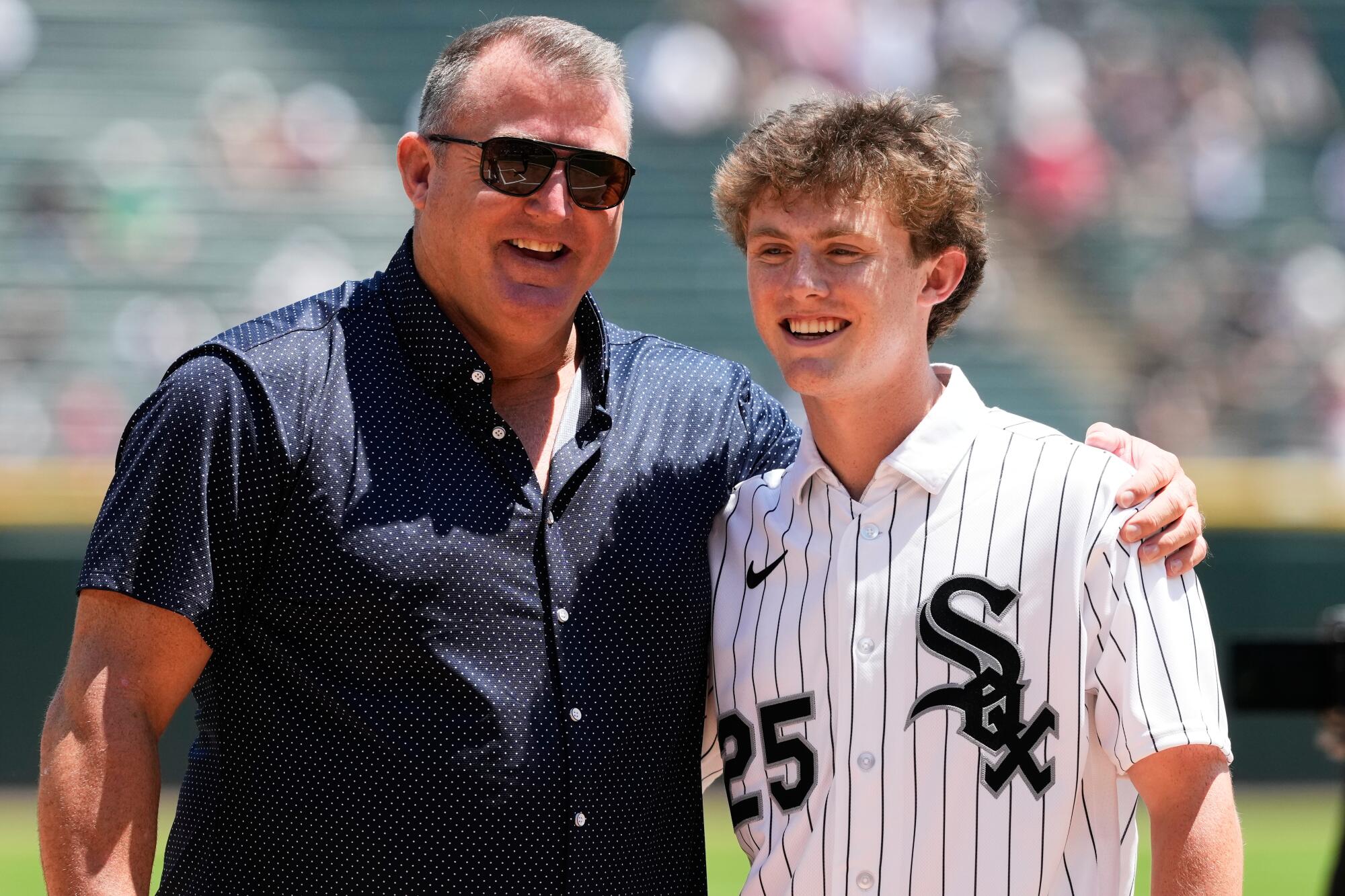

![Josselyn Aguirre, originally from Ecuador, works as a carer for a family in Madrid [Courtesy of Josselyn Aguirre]](https://i0.wp.com/occasionaldigest.com/wp-content/uploads/2026/07/Josselyn-Aguirre-originally-from-Ecuador-works-as-a-carer-for-a-family-in-Madrid-2-1783945381.jpg?w=640&ssl=1)