Andy Burnham (L) was set to get the keys to No. 10 Downing Street just 28 days after being sworn in as a Member of Parliament after winning the Makerfield by-election, a seat the sitting lawmaker vacated specifically to enable Burnham to make a run for the prime ministership.File photo by House of Commons/EPA
July 14 (UPI) — Newly elected Labour Member of Parliament Andy Burnham was set to become British prime minister uncontested at the beginning of next week after securing unassailable backing from fellow lawmakers.
On Tuesday, with two days of the nomination period for the leadership of the party still to run, the former Mayor of Greater Manchester had the support of 349 Labour MPs, making it a mathematical impossibility for another candidate to overtake him.
Candidates need the backing of 81 Labour MPs minimum to be nominated — equivalent to 20% of the party’s 403 lawmakers — but the level of support Burnham has means insufficient numbers of uncommitted MPs remain to nominate another candidate.
Endorsements he needs from three other affiliated groups, including two trade unions, were expected to be rubber-stamped.
As the lone candidate to replace Keir Starmer, who resigned on June 22 after six years at the helm and two years as prime minister, Burnham, 56, will formally take over as party leader on Friday and become prime minister on Monday.
Burnham increased his support tally from 322 MPs to beyond the threshold at which he could still be challenged after hustings to answer questions from Labour MPs on Monday night with the proceedings held in private.
The former MP and government minister, who quit Westminster politics in 2017 after two failed bids for the leadership of the party while it was in opposition, succeeded at his third attempt, staged via a parliamentary by-election in Manchester just three-and-a-half weeks ago, which he won easily.
Burnham has promised a drastic transfer of power to the regions and to build an efficient state with a “laser-like focus on growth and regeneration,” but has said little else, in part because, with no mandate from the electorate, he is hemmed in by the manifesto that brought Starmer to power in a landslide general election in July 2024.
Starmer was forced out amid falling approval ratings and losses at the ballot box in successive local and by-elections, as well as rebellions by his own MPs forcing policy U-turns, and the debacle over his appointment of Peter Mandelson as ambassador to the United States.
The final straw was a disastrous defeat to Reform UK in “mid-term” local elections in May, prompting defections from his cabinet and growing numbers of MPs calling on him to give way to Burnham, said to be one of the country’s most popular political figures.
Astronaut Buzz Aldrin walks on the surface of the Moon during the Apollo 11 mission on July 20, 1969. Photo by NASA/UPI | License Photo
The Ukrainian government has dismissed allegations that it is backing the M23 rebels in the fight against the Democratic Republic of Congo. Heorhii Tykhyi, spokesperson for the Ukrainian Ministry of Foreign Affairs, described the accusations as “Kremlin disinformation.”
During his visit to Bujumbura, the capital of Burundi, Russian Foreign Minister Sergei Lavrov claimed that Ukraine is one of the external supporters of the M23 rebellion, which controls significant territories in the North Kivu and South Kivu provinces of the DRC. In a statement on Saturday, July 11, the Ukrainian Foreign Ministry’s spokesperson said the Russian accusations have no concrete element of truth, noting that his country does not support the M23 rebels.
“The affirmations by Lavrov according to which Ukraine supports the M23 in the Eastern DR Congo belong to Kremlin disinformation and are devoid of all foundations. We refute and officially reject these accusations,” Heorhi said.
He stressed that his country does not intervene in African conflicts and that Russia is implementing a policy of interference on the African continent while accusing other nations of similar actions. “Ukraine does not interfere in African conflicts. Russia, on the contrary, does so: it arms groups in violation of sanctions, fuels instability and recruits citizens of African countries to fight in its war against Ukraine. Moscow accuses others of what it does itself: there is nothing new,” he reiterated.
The Ukrainian official said these accusations form part of a broader political strategy by Moscow to distract people from its actions and undermine current diplomatic efforts in the Great Lakes region. “The Russian objective is clear: weaken the American mediation efforts in the Great Lakes region and divert attention from its destructive actions which hinder the peace process,” he said.
The situation remains fluid, even in light of the Washington Accord and several evaluation meetings. The security and humanitarian conditions in eastern DRC have worsened. Tensions persist between the DRC and Rwanda, with each side interpreting the Washington Accord differently. This has complicated matters one year after the accord was signed.
It’s the same issue with the Qatar-facilitated peace accord in Doha. Despite multiple rounds of discussions, the Congolese government and the M23 are struggling to reach an agreement on their key points of disagreement. The Montreux meeting in Switzerland, intended to reinvigorate the process, has not yielded the anticipated results. Commitments made during this phase of negotiations have not been fully honoured, and the worsening security situation in the Middle East has further sidelined this issue, delaying mediation efforts. In light of the current situation, regional and international bodies have urged all parties to honour their commitments from the peace initiatives.
One former Omaze winner has decided to let out their Cornish property, and if you’ve got a group of friends or family who want to take a break, you can enjoy it from just £35-a-night each
Kew House in Cornwall is the perfect place for a group getaway(Image: Lizzie Churchill)
If you regularly enter the Omaze draw, you may have plans for if your number comes up. Some winners choose to live in their home, others sell it quickly, and one property has been turned into a holiday home for the ultimate weekend break.
Set in the beautiful coastal village of St Agnes in Cornwall, Kew House was valued at over £3 million when it was put up for an Omaze draw in 2024. The five-bedroom, four-bathroom house is in the heart of the village and its elevated position means it enjoys stunning countryside views, as well as being just a short distance from the north Cornwall coast.
But you don’t need a winning ticket to enjoy this modern home. Luxury holiday letting company Perfect Stays is now offering both short breaks and longer stays at the property for groups of up to ten.
Week-long breaks at this country retreat start at £2,450, which works out at just £35-a-night when split among ten people. There are also three-night breaks available starting at £2,050. Guests will enjoy spacious accommodation, including an open-plan kitchen and dining room for entertaining, with seaside-inspired cosy neutral décor.
Outside, there are also landscaped gardens with a sunken hot tub, and the price includes bed linen, a welcome hamper, and concierge service. And if your loved ones have pets, up to two dogs can be brought along to your gathering.
The charming village of St Agnes is perfect for those seeking a peaceful Cornish escape, and you’ll find independent coffee shops, bakeries, and restaurants right on your doorstep.
Follow the sloping roads down to the coast, and you can visit Trevaunance Cove, where wild, rugged cliffs overlook a sandy bay that leads to the crystal clear waters. At low tide, there are rockpools full of marine life to explore, or you can hire a surfboard and hit the waves with an instructor in this idylic cove.
You can also visit the charming St Agnes Museum, where you’ll find exhibits on local natural history, Cornish mining, and the village’s maritime past. Walk along the South West Coastal Path and you’ll spot the Cow and Calf islands offshore, two tiny islands that are nesting spots for seabirds and a popular place for boats and divers to visit.
A short drive away, Chapel Porth Beach is popular with families, and you’ll often see kids bodyboarding off the coast in its clear waters. Its high cliffs keep it sheltered from the wind, and it’s accessed through narrow footpaths that make it feel like you’re exploring somewhere secluded and off the beaten track.
While at high tide it may seem like just a small pebbly beach, at low tide the ocean rolls back to reveal plenty of golden sands, although be careful when laying down your towel as the waves can be unpredictable.
Have a story you want to share? Email us at webtravel@reachplc.com
Major changes are set to impact British holidaymakers entering a European hotspot, and it’s good news, with the plans aimed at making travel smoother and quicker for Brits
British holidaymakers will benefit from easier travel to this European hotspot (Image: Getty Images)
A beautiful European hotspot is set to make travel easier for Brits by relaxing its entry rules.
British holidaymakers have been facing significant disruptions when travelling to Europe, partly due to the new European Union (EU) Entry/Exit System (EES), which was rolled out on 10 April 2026, and the increased demand for short-haul getaways, particularly during peak periods. In a bid to offer a smoother journey for Brits, without relentless delays and lengthy queues, Switzerland has eased some of its restrictions.
Under a new agreement between the UK and Switzerland, Brits will be allowed to use the Swiss e-gates at airports, providing a smoother experience at passport control. British tourists and business travellers visiting the country, known for its snow-capped, dramatic peaks, will also be able to benefit from scrapped roaming charges.
Mark Tanzer, ABTA chief executive, said: “We want travel to be as easy and smooth as possible, so this announcement includes great outcomes for British holidaymakers and business travellers. Removing roaming charges would give people one less thing to think about before their trip and should make it cheaper to stay in touch, too.
“Plus, giving UK visitors access to Swiss e-gates will make going through the airport smoother and quicker for tourists and business travellers alike.
“We know it’s not something that can just happen overnight, but it is encouraging to see that Switzerland has a plan in place to make it happen. Removing travel frictions like these with major European partners is so important for UK tourism and exports.”
Initial plans, set to be in place by the end of 2026, will allow Brits to enter through the e-gates at Zurich Airport, the country’s largest international airport. There are also plans to introduce this at the airports in Zurich, Geneva, and Basel.
The significant changes were announced following a new Free Trade Agreement (FTA), which could ultimately offer an estimated £5.2 billion a year in additional UK services exports to Switzerland. Meanwhile, news that thousands of British holidaymakers and business travellers could use the Swiss e-gates was confirmed outside of the FTA.
Prime Minister Keir Starmer commented: “Whether you’re growing a business or travelling for work, this agreement is about making life easier and creating more opportunity for people across the UK. It means British firms will find it easier to sell their expertise in one of our most important markets in Europe, supporting jobs and investment here at home.
“British people will also be able to enjoy using their mobile in Switzerland without extra roaming charges, and alongside the FTA, they will soon also have quicker trips through Swiss airports.”
UK holidaymakers keen to visit Switzerland do not need a visa to enter the Schengen area, and can travel for up to 90 days in any 180-day period. Meanwhile, for UK services professionals, the changes will also introduce visa-free travel to Switzerland for up to 90 days a year.
The government website outlined: “UK businesses will be able to transfer people to work in Switzerland for up to 5 years, without being subject to stringent economic needs tests, making it easier to secure Swiss work permits for UK graduates in areas like finance, insurance and consultancy.”
Trade Secretary Peter Kyle said: “This is the most significant services trade deal the UK has ever negotiated. It will bring huge benefits to British business and consumers and comes after a slew of deals with the US, Europe, the Gulf, South Korea and India.
“This deal will mean faster journeys through the border, cheaper phone use for families and business travellers to Switzerland, and new opportunities for British firms selling their world-class services overseas.”
Do you have a travel story to share? Email webtravel@reachplc.com
SAT in the BBC studio chatting about the World Cup, Wayne Rooney looked like half the man he was just a few months ago.
And as the coverage continues, whispers of fat jabs being behind his transformation are growing louder by the day. Here, insiders reveal what’s really going on with the former footballer – and the part played by his wife Coleen.
Wayne Rooney has wowed fans with his appearance in recent weeks while covering the World CupCredit: BBCIn 2024, Wayne looked rather different as he reached a cross roads in his careerCredit: RexThe ex-United striker looked svelte and stylish as he appeared on the BBC’s World Cup coverage alongside Joe HartCredit: BBCViewers have been distracted by his appearance, with many questioning what his secret isCredit: BBC
The Sun understands that the 40-year-old’s new look was masterminded by Coleen ahead of his big punditry gig.
Our insider explained: “Coleen knew Wayne wasn’t happy with the way he looked and how important this gig was for him, so she put him on a diet and exercise regime before he flew out to the US. He’s 40 now, so it felt like now or never.
“She has been encouraging him to work out with her in their home gym. They also have a PT who has been round to help him.
“Then there has been facials and various other treatments to make sure he’s looking his best and, of course, they went on a big shopping spree to make sure he looked super smart.”
It’s paid off – World Cup viewers have been very distracted by his appearance, with many questioning what his secret is.
One person asked: “Has Wayne Rooney been on the jabs lol .”
Another joked: “He’s on the jabs, he’s on the jabs, Wayne Rooney is shredding the fat!”
Someone else added: “Rooney suddenly looks like a 30 year old.”
It’s thought Wayne has in fact been following the macro diet, which involves tracking the intake of three essential macronutrients – proteins, fats, and carbohydrates.
It’s certainly a stark contrast from the old Wayne, who famously had a McDonald’s before his Premier League debut for Everton and even took Ronaldo for a drive-thru when he arrived in Manchester.
He was also known for his love of his favourite Chinese – Wings in Manchester – which he has visited for decades.
During his stint managing Plymouth Argyle we’re told he loved a local pasty.
In 2013, Coleen – who was just 19 and new to Wag life – raised eyebrows when she insisted he had a healthy diet.
“They all think Wayne’s a big fat person and eats burgers every day, which he’s not, and I don’t know where they get it from,” she said.
“It does my head in because people really believe that. His favourite food is lettuce. He loves salad.”
It’s not just food that has changed for Wayne now though, he has cut down on booze.
Wayne has been very open about his struggles with alcohol in the past – at times drinking for two days straight.
Coleen is said to have helped Wayne get World Cup readyCredit: InstagramWayne has been following the macro diet and has cut down on boozeCredit: Getty
He has said: “I’ve had many challenges, both on and off the pitch, and my escape was alcohol.”
He credits Coleen, his wife of 18 years, for saving him thanks to supporting him throughout it all.
“I honestly believe if she weren’t there I’d be dead,” he told the Rio Ferdinand Presents podcast. “I’ve made mistakes in the past which are well documented and whatever but I’m a little bit different at times and she keeps me on that path and she’s done it for 20-odd years.
“I wanted to go out and enjoy my time with my friends and have a night out. It got to a point where I went too far – that was a moment in my life where I was struggling massively with alcohol. I didn’t think I could turn to anyone. I didn’t really want to because I didn’t want to put that burden on anyone.
Coleen has always loved exercise – particularly pilatesCredit: instagram/coleen_rooneyColeen shared this photo of the pair last monthCredit: Instagram
“I just drank for two days straight. Come training and at the weekend I’d score two goals and then I’d go back and go and drink for two days straight again. She’s helped me control that massively. She’s managed me because I needed managing.”
Coleen has definitely put a shift in over the years with Wayne – aside from the troubling infidelity rumours, public booze battle and tumultuous career on the pitch, but we’re told the couple have actually never been happier.
Ever since I’m A Celebrity, Coleen has become the main breadwinner and the family have landed a 10-part Disney show – and it’s had a huge positive impact on Wayne.
Our insider added: “Coleen can’t get enough of the new Wayne. She’s really proud of him and it’s reignited a flame. She fancies him more than ever.”
When Kylian Mbappé and Lamine Yamal lead their sides out at AT&T Stadium in Arlington, Texas, on Tuesday evening, they will be doing more than chasing a place in Sunday’s final, they will be fronting the priciest collection of talent ever assembled for a men’s World Cup semi-final.
ADVERTISEMENT
ADVERTISEMENT
Transfermarkt’s latest figures value France’s squad at roughly $1.78 billion (€1.56bn) and Spain’s at $1.43 billion (€1.25bn), a combined total of around $3.2 billion (€2.8bn), which outstrips any previous last-four meeting in the tournament’s history.
Much of that financial weight is concentrated in a handful of individuals.
Barcelona’s Yamal, who turned 19 the day before kick-off, is the most expensive player left in the competition at around $234 million (€205m), with Mbappé close behind at roughly $211 million (€185m).
Michael Olise and Pedri follow, both valued at around $176 million (€154m).
Between them, the quartet accounts for four of the five costliest footballers in the world, with the fifth being Norway’s Erling Haaland, whose side did not reach this stage after losing to England.
France’s edge is starkest in attack, where forwards including Ousmane Dembélé and Désiré Doué push the unit’s combined worth to roughly $878 million (€770m), well ahead of Spain’s $489 million (€428m) attacking line, even with Yamal in its ranks.
France also lead in defence, valued at $473 million (€414m) to Spain’s $337 million (€295m), while Spain have the edge in goal, their goalkeepers are worth a combined $113 million (€99m), against France’s $67 million (€58m).
Market value has not dictated ticket demand
Market value has seemingly has not dictated demand for tickets at World Cup matches.
Resale prices for Wednesday’s second semi-final between England and Argentina in Atlanta have been running around $1,000 higher on average than for Tuesday’s tie, even though that fixture’s combined squad value, at roughly $2.5 billion (€2.2bn), trails France and Spain’s total.
Demand there is being driven largely by Lionel Messi’s possible farewell World Cup appearance.
As for the match itself, recent history offers Spain some reassurance against what the figures suggest.
La Roja have won six of the last 10 meetings between the sides, including victories at Euro 2024 and in last year’s Nations League, both by narrow margins.
Kick-off is at 2pm local time, 8pm in the UK and 9pm in Paris and Madrid, with the match falling, fittingly for the French camp, on Bastille Day.
They came to this country without papers as teenagers. Lack of legal status didn’t stop them from building beautiful lives — a wife, a home, a loving dog. A blue-collar job that paid the bills, weekend carne asadas with friends and family, children who followed their father’s example of hard work.
The Lorenzos enjoyed the fruits of their labor in their adopted land, even as they battled to become American citizens while politicians demonized immigrants as invaders and worse.
Lorenzo Arellano arrived in the United States in 1968 and didn’t get his citizenship until nearly 30 years later. Back then, the path to naturalization was far easier.
Lorenzo Salgado Araujo arrived in the early 1990s, when those opportunities were becoming severely limited.
Lorenzo Salgado Araujo, 52, who ran his own construction crew, was on his way to a job with his brother and two other men when an Immigration and Customs Enforcement agent shot him dead on July 7 in Houston.
When I see a photo of Salgado Araujo beaming in front of a cake with the number 52 on it at the well-kept home he built with his own hands, I’m reminded that we’ll be celebrating my father’s 75th birthday next month. When I see video of Salgado Araujo’s feet twitching on the ground with two ICE agents next to him as he bleeds out and moans for help, I weep.
Only geography, age and Donald Trump separated the Lorenzos. Even their children — he had three boys, while my father had two boys and two girls — are similar. The Salgado Araujos, like the Arellanos, are college-educated. The eldest son, Ronaldo, is a teacher like my sisters. He wears glasses like me and is now telling the story of his father to the nation, as I have for decades.
I write about my Papi as the puckish personification of immigrant America.
Ronaldo is eulogizing his dad way too soon.
“He wanted nothing else in life but to provide for his wife and see his sons become great people,” Ronaldo said proudly at a news conference the day after his father’s death — words I’ve always said about my Papi. “He did not deserve to be reduced to a headline of ‘Mexican man shot and killed by ICE’” — words I hope to never utter but can sadly see as a possibility given la migra’s unapologetic shoot-first approach and indiscriminate targeting of anyone brown.
Salgado Araujo’s killing came as part of the Trump administration’s newest deportation surge — the New York Times reported that the feds have arrested nearly 2,000 people a day since the end of June. The rate is higher than ICE’s campaign of terror last summer, yet it hasn’t drawn the same attention, fulfilling the promise of newish Homeland Security Secretary Markwayne Mullin that la migra would operate far more quietly and efficiently than under his reckless predecessor, Kristi Noem.
Those quiet times are over.
Ronaldo Salgado, son of Lorenzo Salgado Araujo, dries his tears while talking at a news conference on July 8 in Houston. His father was shot and killed by ICE agents the day before.
(David J. Phillip / Associated Press)
Vigils are popping up across the country in Salgado Araujo’s name. Stories about his life and death have replaced those about Mexico’s World Cup run on my social media timelines. They are heartbreaking, infuriating and a baleful reminder for Mexican Americans that these last five weeks of soccer, as joyful as they were, didn’t change our precarious status in this country under President Trump.
“He deserved to live a quiet life as a husband, a father and a job creator for dozens of men who also wanted the American dream,” Ronaldo said at the news conference through tears as his younger brother, Lorenzo Jr., comforted him. That their father never will — that the Department of Homeland Security is now smearing his name by claiming he “weaponized” his van by trying to run over an agent, even though video evidence proves no such thing — is the latest indictment against the Trump administration’s cruelty toward the undocumented.
Salgado Araujo wasn’t even the target of ICE’s operation. His family said he had applied for a work permit and was on his way toward finally obtaining legal status.
We should heed Ronaldo’s words about his father. As people protest and seek justice, we should also hail the life of Lorenzo Salgado Araujo the way we one day will hail the life of Lorenzo Arellano — as Mexicans who made it, challenges be damned. And we should continue to fight for immigrants who remain in legal limbo, afraid for their lives more than ever.
I called my father to ask how he felt about a tocayo — someone with the same first name — losing his life to la migra.
“I put myself in his place and lament that ese [that] Lorenzo couldn’t get the citizenship that I could,” Papi said in Spanish.
He remembered how immigration agents “did it with respect” when they caught him living in this country illegally in the 1970s and 1980s.
“They asked you for your papers, and if you didn’t have them, they put handcuffs on you, you got deported and that was that. None of these beatings or shootings that are happening now under Trump,” he said. The worst it ever got was when he said he was going to Los Angeles, and an agent snapped that he was going to L.A. but now had to return to Mexico.
Papi asked me what justification ICE has offered for killing Salgado Araujo.
“I hope they put those people who killed him in prison for many years,” he said with disgust. “Will they?”
I replied that probably wasn’t going to happen. ICE has shot and killed 11 people during Trump’s second term, both citizens and noncitizens, and scores more have died in immigration detention. No agents have faced charges for any of these deaths. The agents involved in Salgado Araujo’s killing didn’t even have dashboard cameras or body cameras, a convenient oversight that a Department of Homeland Security spokesperson blamed on “multiple government shutdowns.”
“Pues, Dios sabe que todo se paga en la vida,” my dad responded. Well, God knows you reap what you sow.
Ronaldo Salgado and Lorenzo Jr., sons of Lorenzo Salgado Araujo, hold a photograph of their father during a news conference July 8 in Houston.
(David J. Phillip / Associated Press)
Nothing can bring Lorenzo Salgado Araujo back to his loved ones. But I hope they find solace in his namesake, St. Lawrence. Tradition has it that Roman authorities roasted the Spanish deacon to death after Emperor Valerian demanded that he turn over the treasures of the Church. Instead, Lawrence presented the emperor with the city’s poor and maligned, insisting that he confront the oppression he had forced on them.
May we remember Lorenzo Salgado Araujo as a modern-day martyr, killed because our government refused to give him and so many others a chance at living in this country without fear.
May his name resonate through the ages as embodying the promise and tragedy of the American dream.
Wigan Warriors prop Mary Coleman has earned her first England call-up for the mid-season Test in France later this month.
The 28-year-old switched to rugby league four years ago, having previously played union for Preston Grasshoppers.
In the 15-a-side code, Coleman also played three times at Twickenham for Cambridge University in the Varsity match – in 2016, 2017 and 2018 – and has represented Kent, her home county, at both union and athletics.
She helped Wigan beat St Helens 54-6 at Wembley on 30 May to win the Women’s Challenge Cup.
England face France in a one-off Test at Stade Ernest Wallon in Toulouse on Saturday, 25 July (18:00 BST). The match will be staged as part of a double-header with Toulouse’s men’s Super League match against Catalan Dragons (21:00 BST).
Head coach Stuart Barrow has not selected any Australia-based players, as the NRLW is in the middle of its season.
The match will provide Barrow’s side with a warm-up before the Women’s World Cup in Australia, New Zealand and Papua New Guinea this October and November.
England – who will play all of their World Cup matches in Australia – begin their campaign against Wales in Perth on Saturday, 17 October.
Barrow said: “While our immediate focus is on delivering a strong performance in France, every training session and camp over the coming months will help shape where we need to be when the World Cup begins.”
England squad: Mia-Jayne Atherton (Wigan Warriors), Keara Bennett (Leeds Rhinos), Ruby Bruce (Leeds Rhinos), Mary Coleman (Wigan Warriors), Evie Cousins (Leeds Rhinos), Jodie Cunningham (St Helens), Anna Davies (Wigan Warriors), Ellise Derbyshire (Wigan Warriors), Ella Donnelly (Leeds Rhinos), Jenna Foubister (Wigan Warriors), Shona Hoyle-Holdsworth (St Helens), Eva Hunter (Wigan Warriors), Katie Mottershead (St Helens), Lucy Murray (Leeds Rhinos), Tamzin Renouf (York Valkyrie), Isabel Rowe (Wigan Warriors), Vicky Whitfield (St Helens), Megan Williams (Wigan Warriors), Georgia Wilson (Wigan Warriors).
It comes as the £100million attraction in the often overlooked town created new designs that needed approval from Lancaster City Council.
Sign up for the Travel newsletter
Thank you!
As for the attraction itself, everything will be centred around the Realm of the Sun, Realm of the Moon and an area called Metronome.
In the Realm of the Sun, visitors can expect a tropical landscape that adapts to both hot and cold seasons, with vertical plants, hanging mini gardens, a multi-sensory area and a waterfall.
Then in the Realm of the Moon, the space will be darker with a “hyper-real rock pool” that has sped-up cycles of tides.
Outside, there will be a number of landscaped gardens and an arena to explore too.
And of course, there will be shops and restaurants for the visitors as well.
In the most recent announcement, there will be a £4.5million immersive experience called The Elder Tree.
The attraction is set to cost £100millionCredit: Eden ProjectIt will feature two domes – one themed around the sun and the other around the moonCredit: Lancashire County Council
The tree will stretch nearly 20 metres and take visitors on a journey from its roots to its hollows.
The attraction is expected to get around 585,000 visitors a year, with a capacity of up to 740,000.
Outside, in the arena, the capacity will be 6,000 people.
Parts of the attraction are expected to open in 2027, with other parts opening at a later date.
Plans originally approved in 2022 included four domes, but in the most recent plans this was reduced to two domes.
South Korea revised its 2026 growth projection to 3 percent based on strong exports and a semiconductor boom, officials said Tuesday. This July 1 photo shows containers stacked at a port in Pyeongtaek. File Photo by Yonhap
The South Korean government on Tuesday revised up its economic growth projection for 2026 to 3 percent, up 1 percentage point from its previous outlook, citing a semiconductor supercycle and easing uncertainties surrounding the Middle East.
The Ministry of Finance and Economy released its economic policy plan for the second half of 2026, presenting a forecast above the 2.6 percent estimates issued by the International Monetary Fund (IMF), the Organization for Economic Cooperation and Development (OECD) and the Asian Development Bank (ADB).
“This is the first year in which the Lee Jae Myung administration is taking full responsibility for the country’s economic management,” First Vice Finance Minister Lee Hyoung-il said during a press conference held in the central city of Sejong.
“On the back of the government’s prompt response to the Middle East war and robust export performance, the economy is maintaining a stable growth trend,” the first vice finance minister said, adding that the revised 3 percent growth forecast reflects those developments.
Lee said the revised growth forecast, which is significantly higher than those presented by major international institutions, remains achievable because it reflects the latest data.
“I think the outlooks from other organizations were based on data from March and April,” Lee said. “We made our assessment based on the latest data, with the major changes including stronger exports driven by the semiconductor boom. Tensions in the Middle East have eased further since then.”
“We believe such developments will exert downward pressure on consumer prices and inflation, positively affecting both exports and consumption,” he added.
In the report, the finance ministry said the policy vision for the remainder of 2026 is to mark the first year of a major economic leap toward establishing an “irreplaceable Republic of Korea,” referring to South Korea’s official name.
Seoul also unveiled the so-called 3-4-5 vision, under which the country will seek to achieve a potential growth rate of 3 percent, become one of the world’s top four exporters, and raise gross national income (GNI) per capita to US$50,000. The GNI per capita came to US$36,850 in 2025.
The finance ministry said the growth momentum, which began to expand in the second half of 2025, is expected to further accelerate this year on the back of the continuing semiconductor boom, along with policy measures, including an extra budget aimed at shielding the country from the impact of the Middle East war.
The country will also seek to successfully implement three mega projects aimed at fostering the semiconductor, AI data center and physical AI industries, the report said.
South Korea will additionally focus on maintaining an unwavering supply chain based on lessons learned from the Middle East war, including offering tax benefits for the domestic production of strategically important items.
On exports, the finance ministry said South Korea’s outbound shipments are expected to jump a whopping 40 percent on-year in 2026 on the back of the global artificial intelligence (AI) boom.
Non-IT products, such as ships, biohealth and secondary batteries, are also expected to remain robust, it added.
South Korea’s monthly exports reached a record $102.25 billion in June, surpassing the $100 billion mark for the first time after jumping 70.9 percent on-year.
The current account for 2026 was expected to reach a $290 billion surplus, marking a record high, buoyed by the surge in overseas demand and an increase in the number of foreign tourists.
In 2027, however, the current account surplus was expected to narrow to $245 billion following a rise in imports on the back of increasing domestic consumption.
Facility investment for 2026 could expand 5 percent on-year due to the robust performance of semiconductor manufacturing equipment, although growth will be limited by sluggish machinery and petrochemical sectors.
The policy report also projected inflation of 2.6 percent in 2026, up from the previous 2.1 percent estimate, citing the lingering impact of the Middle East war, which led to higher petroleum prices.
Core inflation, which excludes volatile food and energy prices, is expected to remain at around 2 percent.
“In the second half of 2026, as tensions surrounding the Middle East war ease and global crude oil prices decline, consumer price growth is expected to slow,” the ministry said.
“However, uncertainties also linger amid the progress of Middle East war negotiations and weather conditions, which could lead to volatility in energy and agricultural product prices,” it added.
Looking ahead to 2027, the ministry projected annual inflation to reach 2.2 percent despite lower global crude oil prices due to demand-led inflationary pressure.
The government said it will continue to focus on rolling out a post-Middle East war strategy by pursuing stable macroeconomic policies while maintaining a stable supply chain.
“In response to the changing economic environment, we plan to establish a comprehensive response system to maintain market stability across the macroeconomy, financial markets, the foreign exchange market and the real estate market,” the first vice finance minister said. “Based on favorable tax revenue conditions, we will continue active fiscal management.”
Copyright (c) Yonhap News Agency prohibits its content from being redistributed or reprinted without consent, and forbids the content from being learned and used by artificial intelligence systems.
Alexander, who signed a two-way deal with the Jazz last week. was injured in game against Chicago Bulls.
Published On 14 Jul 202614 Jul 2026
Utah Jazz guard Trey Alexander was taken from the court on a stretcher after appearing to injure his side on a drive to the basket in an NBA Summer League game against the Chicago Bulls.
Alexander, who signed a two-way deal with Utah last week, made contact with the Bulls’ Caleb Wilson during Monday night’s match while driving towards the basket. After tossing the ball towards the hoop, he went behind the basket, clutching his side or abdomen. He then dropped to the ground, appearing to be in great pain.
Recommended Stories
list of 4 itemsend of list
The 23-year-old was taken from the Thomas & Mack Center court on a stretcher. The incident occurred with just more than two minutes left in the fourth quarter.
There was no immediate word from the Jazz on Alexander’s injury.
Alexander played three seasons at Creighton University and skipped his final year of eligibility to turn pro. The rookie of the year in the G League, the NBA’s minor league, for the 2024-2025 season played 24 games for the Denver Nuggets that same season and nine games for the New Orleans Pelicans last season.
Under his current contract, Alexander is to play for the Jazz and its G League affiliate, the Salt Lake City Stars.
BRIT comedian Alex Kealy and his wife Mhairi Beveridge have announced the arrival of their baby girl.
He took to Instagram to share the news with his fans as he unveiled the first pictures of the little bundle of joy.
Comedian Alex Kealy has announced the birth of his baby girlCredit: Instagram/@alexkealy/@mhairibeveridgeHe and his little girl twinned in matching England topsCredit: Instagram/@alexkealy/@mhairibeveridge
In one video, she could be seen fast asleep as her little chest moved up and down slowly.
The stand-up star also shared pictures of himself and Mhairi posing with their baby daughter.
Sign up for the Showbiz newsletter
Thank you!
In one snap, Alex and the baby twinned in matching England tops as he tuned into a match.
Revealing her name, he captioned the post: “She’s here and she’s huge!
“Our daughter Ada Robyn Kealy arrived last week weighing 9lb3oz. We love our pig.”
His fans flocked to the comments section to congratulate the pair as one gushed: “Congratulations she’s beautiful.”
Another person enthused: “She’s gorgeous!!! Look at her hair! A princess! Biggest congratulations to you both Alex!!!”
Somebody else commented: “What a cutie pie.”
Alex’s wife Mhairi posed with her little girlCredit: Instagram/@alexkealy/@mhairibeveridgeFans and well-wishers flocked to the comments section to congratulate the coupleCredit: Instagram/@alexkealy/@mhairibeveridge
Yet another penned: “She is gorgeous! Look at that hair!!!”
While a fifth added: “Congratulations mate! Very happy for you.”
Alex rose to prominence as a comedian after reaching the final of the prestigious So You Think You’re Funny? competition.
He debuted his first show at the Edinburgh Festival Fringe in 2016.
Alex is a writer and regular contributor for BBC Two’s Mock The Week.
The performer and his wife Mhairi tied the knot in June 2024 as he revealed the news on Instagram a few weeks later.
He shared snaps of them from their big day as he told his fans: “Belated “I got married last month and it was the best day of my life”
“Post: snaps from ceremony and speeches (Mhairi’s was so good it led to panicked last minute rewrites from those who had to follow her).”
Alex has previously revealed that the pair met on on X, formerly known as Twitter.
During his Edinburgh Festival Fringe show The Fear in 2024, he joked that he now sees X as “a dating app where people should create an account, get a wife, and then leave.”
Overlooking one item in particular could ignite some travel disruption which is not ideal for holidaymakers
Packing this could land you in some serious trouble(Image: Getty Images)
Packing for a holiday often means working your way through a seemingly never-ending checklist. From remembering your passport and boarding pass to making sure you’ve packed enough clothes, there’s also the important task of checking your bags for items that could cause problems before you even board your flight.
The warning applies to anyone flying with major airlines, including Ryanair, Jet2, TUI, easyJet and British Airways, among others. While each carrier has its own baggage policies, dangerous goods rules are governed by international aviation regulations and enforced during airport security checks.
Non-safety matches, for example, can cost as little as 60p in supermarkets, but packing them could end up costing you precious holiday time. Although they may seem harmless, they are classed as dangerous goods and are prohibited in both hand luggage and checked baggage under aviation safety rules.
This could spell bad news for anyone heading off on a camping holiday, planning to light birthday candles abroad or travelling with matches tucked away in a backpack without giving them a second thought. Even if they were packed by mistake, finding them during screening could trigger additional inspections and slow your journey through the terminal.
According to the UK Civil Aviation Authority, non-safety matches are not permitted on commercial flights because they present a fire risk. If they’re discovered during baggage screening, they may be confiscated and your luggage could be held back while officers carry out further checks.
Depending on when they’re found, this could mean anything from a manual bag search at the checkpoint to checked luggage being removed from the aircraft before departure. While procedures vary between airports, prohibited items are routinely removed to ensure flights comply with aviation safety rules.
There is, however, one important exception. The Civil Aviation Authority says passengers are generally allowed to carry one small packet of safety matches on their person for personal use, but they must not be packed inside either hand luggage or checked baggage. “Strike anywhere” matches and all non-safety matches remain prohibited.
Before travelling, it’s worth taking a few moments to check coat pockets, backpacks and suitcases for forgotten items.
A 60p box of matches might seem insignificant, but packing the wrong type could leave you facing unnecessary delays before your holiday has even begun.
Oakland is a town often misunderstood. As someone who’s lived in the city and still spends a ton of time there, I’ve seen the good, the bad and the ugly.
And yet, there’s no place like it.
People who know the real Oakland — the ones who’ve explored neighborhoods from Chinatown to Fruitvale to Temescal, who’ve caught sunsets over the entire Bay from the Oakland hills, who’ve admired art in downtown and watched films at the historic Grand Lake Theater — will tell you there’s so much more to “The Town” than it gets credit for. During her post-Olympics homecoming at Frank Ogawa Plaza, figure skating gold medalist Alysa Liu summed up Oakland with one word: “Soul.” Locals beamed. With her unapologetically funky style, zen-like confidence and YOLO mentality, this athlete had clearly been shaped by the city.
Located on the eastern shore of the San Francisco Bay, Oakland is a midsized city with an outsized reputation, having long served as a pressure cooker for grassroots activism. The Black Panther Party, the hyphy subgenre of hip-hop, official U.S. wildlife refuges — they all started in Oakland. Visit the city and you’ll find that it’s slower-paced than San Francisco but has all the cultural diversity. Its food scene is endlessly innovative — try the handcrafted zaru soba at Soba Ichi or some of the best Indigenous food on the West Coast at Wahpepah’s Kitchen. And for those wanting to explore the outdoors, there’s Lake Merritt in the center of town and redwood forests in the hills.
Oakland is far from perfect; while crime is reportedly down, it’s important to be street smart (or as locals say, to “keep your head on a swivel”). But I’ve seen many changes to the town over the years and have a renewed appreciation for its vibrancy. Here’s just a sampling of ways you can enjoy the cultural bounty from this city by the Bay.
ALWAYS dreamed of turning left as you board the aeroplane, but don’t have the cash to splash on business class flights?
Airlines will rarely dish out a swish upgrade for birthdays or weddings nowadays, but there are some clever ways of bagging one without spending a penny.
These hacks will save you buckets of cash and hopefully see you bumped up to the luxe seatsCredit: GettyTravel reporter Sophie uses a shopping trick to bag cheap dealsCredit: Supplied
Or if you do have a little cash to spare, there are more affordable ways of doing it.
The below hacks have been tried and tested by regular travellers, including myself – and anyone can give them a go.
I’ve been collecting Avios for a couple of years now and I’ve accumulated enough points to upgrade on every one of my upcoming flights to both short and long haul destinations.
Once you start incorporating points collection into your daily routine, you’ll be raking them in in a matter of months.
When it comes to Avios upgrades, you can only bump yourself up one cabin class (so if you’re flying economy, you can move up to premium) and not all flights can be upgraded.
There has to be availability, too. So if the flight is looking chocka block, you may not get the chance.
You won’t have to pay any cash for the actual upgrade, but you will have to pay the difference in taxes as it costs the airline more in mandatory charges to fly passengers in upper class cabins.
Birthdays and weddings rarely get you far these days, says SophieCredit: Getty
2. ALWAYS BOOK PREMIUM ECONOMY
If you have the money to book a premium economy seat, this massively boosts your chances of moving up.
“And if you hold airline status or a credit card linked to the airline then you are typically the one that gets the operational bump up.”
The leap in price from premium economy to business can be pretty hefty if you’re paying for it outright at the beginning of the booking.
But by comparison, the price jump from economy up to premium economy is much smaller, so it’s certainly a more affordable way of doing it if you can spare that extra cash.
If you’re travelling solo, this only boosts your chances for logistical reasons. Airlines won’t just upgrade one member of a party.
If the flight is overbooked and there is only one seat left in business, the person travelling on their own is most likely to get the bump if several travellers have status.
It’s the easiest and most simple solution for the airline.
Spending a little bit more on premium can pay offCredit: Getty
3. PLAY UPGRADE CHICKEN
Sometimes it pays to play the risk game, but it is a gamble.
If you’ve got a bit of spare cash and the flight is relatively empty, it might be worth leaving your upgrade until the last possible moment.
Regular traveller and boss of PR firm Florence & Fable, Florence Bate tried this hack when flying from Bermuda to London Gatwick with British Airways – and it paid off.
She said: “It was about four or five years ago. I asked to upgrade at the check-in desk when I first arrived at the airport.
“I think I remember it being around £200 at that time.
“Then I waited until the gate, just before boarding the plane, and it was £60. I upgraded there and then to premium economy, nothing fancy.
“I just think if you never ask, you’ll never know. Ask at all check-in points and hope for the best!”
Avios upgrades can be a very easy way to do itCredit: Supplied
4. FLY AT QUIET TIMES OR BE FLEXIBLE
Having some movement to your travel plans, or intentionally selecting a less popular time to fly or month to visit that destination can sometimes pay off.
“It might not necessarily get you the full upgrade but it does regularly get you perks.
“My family does this a lot and we often get a free glass of bubbly or special treatment.”
One Sun reader reports to have actually bagged the upgrade, but only after doing some extensive digging.
They said: “I found out which crew were on board the plane and had gotten some advice from a friend.
“This friend does work at the airline I was flying with, so I’d had a tip off that one particular staff member liked those Tony’s chocolate bars.
“I asked for them my name when I stepped on board and handed them the chocolate, next thing I know I was being whisked to the front of the plane. It was only a very short flight, but it still felt glam.”
The United States carried out attacks against Iran for a third consecutive night late on Monday.
Iran has continued to hit targets in the Gulf in several waves of retaliatory strikes on Tuesday, including UAE‑flagged oil tankers in the Strait of Hormuz and US military facilities in Bahrain and Kuwait.
Here is a recap of what has happened on Monday night and Tuesday, and what each side has said.
Where did the US attack Iran?
US Central Command, the military’s regional command known as CENTCOM, said its latest strikes began at 4:45pm ET (20:45 GMT) on Monday and were aimed at degrading Iran’s capacity to attack “innocent civilians and commercial shipping” in the strait.
CENTCOM later announced the conclusion of its strikes and said the latest round of attacks on Iran lasted five hours. It added that US forces “successfully struck military targets across Iran including Bushehr, Chah Bahar, Jask, Konarak, Abu Musa, and Bandar Abbas”.
Iranian state television and semi-official news agencies reported explosions throughout the night across the country’s southern coast, including the port city of Bandar Abbas, and on Kish and Qeshm islands, as well as the town of Jam in Bushehr province.
A projectile that struck western Bandar Abbas caused no casualties, the Fars news agency reported, citing the regional governor’s office.
What areas did Iran target?
For its part, Iran’s Islamic Revolutionary Guard Corps (IRGC) said it had launched a wider retaliatory campaign against US allies and interests across the Gulf.
Iran’s Tasnim news agency reported that Iranian forces had struck several “violating” vessels in the strait, and that a US-made drone had been shot down near Bandar Abbas.
The UAE: The UAE said two of its oil tankers had been hit by Iranian cruise missiles in Omani waters in the Strait of Hormuz. The UAE added that one Indian national crew member had been killed on one of the tankers, and eight other people were wounded.
Iran’s Tasnim news agency said the IRGC hit two “offending” oil supertankers, citing an IRGC statement – apparently referring to the two UAE tankers.
Kuwait: The Iranian army said on Monday that it had carried out a drone attack on US military targets in Kuwait. In a statement posted by state broadcaster IRIB, the army said it launched drones at a US Patriot missile system, fuel tanks, a watchtower, an ammunition depot and communication systems.
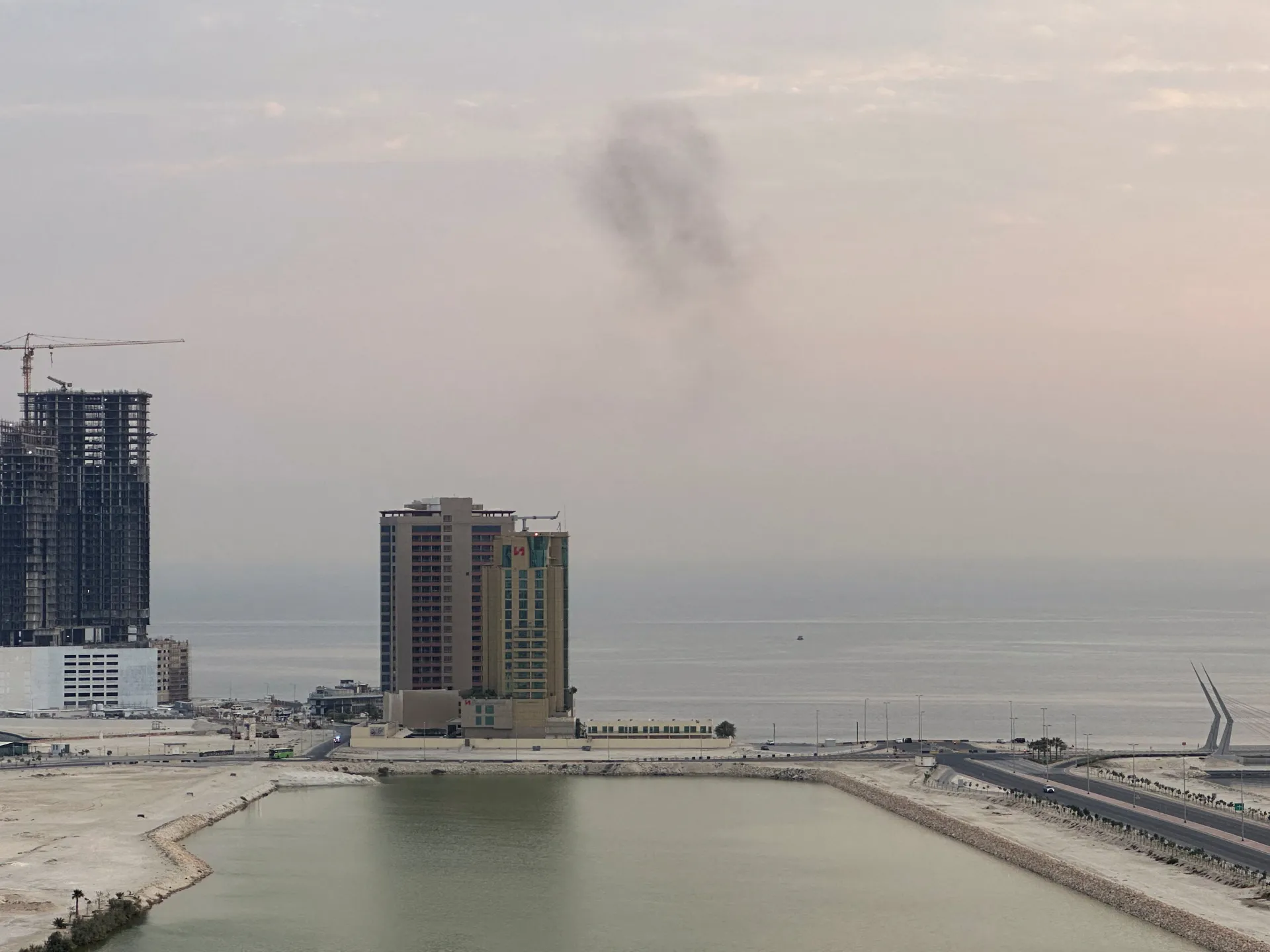
Bahrain: The IRGC said it targeted “several weapons storage depots, a satellite communications centre, and a building housing US forces” at al-Juffair Base in Bahrain. It also said it had hit the US Fifth Fleet in Bahrain with missiles and drones.
Air sirens have been heard four times in Bahrain on Tuesday so far.
Jordan: Jordan’s army said it shot down four missiles in Jordanian airspace that were fired from Iran, according to the official Petra news agency. After this, the IRGC said it launched ballistic missiles at US forces and key facilities at an airbase in Jordan.
In a message addressed directly to Jordanians, the IRGC insisted that the operation was aimed at the US military presence in the country rather than at Jordan or its citizens. “You know that we hold no animosity toward your country. On the contrary, we deeply love you, the noble people. You understand the pain and suffering of the Palestinian people better than any other nation, and you are aware of the crimes of the Zionist regime in the massacre of 70,000 Palestinians, including 20,000 children in Gaza, carried out with the direct involvement of the United States,” it said.
What have the US and Iran said?
US President Donald Trump formally notified Congress on July 10 that fighting with Iran had resumed on July 7, invoking his authority to keep US forces in combat for another 60 days without lawmakers’ approval.
At a news conference on Monday, Trump said Iran’s offensive capabilities were being dismantled, but he still thinks a “deal is possible” despite the return to open fighting.
Trump also repeated an earlier demand that Gulf nations help cover the cost of protecting shipping, saying Washington was “protecting a very rich portion of the world” and expected to be paid for it.
On Monday, Trump also threatened to “take out” Kuh-e Kolang Gaz La, also known as Pickaxe Mountain, a suspected nuclear site near the Natanz uranium enrichment facility in central Iran.
Meanwhile, the US blockade on Iran, confirmed by the US Navy-led Joint Maritime Information Centre (JMIC), is due to begin at 20:00 GMT on Tuesday.
The US’s blockade covers Iran’s ports and terminals along the entire southern coastline, according to JMIC.
Ebrahim Azizi, the head of the Iranian Parliament’s National Security Committee, has warned that Iran remains steadfast in defending its red lines, following the formal introduction of a bill to manage the Strait of Hormuz.
In an X post on Tuesday, Azizi wrote: “Last night, coinciding with the downing of US drones, the ‘Strategic Action for the Security and Sustainable Progress of the Strait of Hormuz and the Persian Gulf’ bill was formally introduced in Iran’s Parliament. We remain steadfast in defending our red lines, particularly regarding the management of the Strait of Hormuz.”
What is happening to shipping in Hormuz?
Oil prices rose more than 9 percent on Monday, with Brent crude climbing to about $81 a barrel, its highest level since mid-June.
Kpler, the ship-tracking firm, said crossings through the strait fell by about 52 percent between July 10 and July 12, compared with the previous week.
Weekly insights and analysis on the latest developments in military technology, strategy, and foreign policy.
The U.S. Army has announced that its future fleet of ME-11B High Accuracy Detection and Exploitation System (HADES) aircraft will be based at Fort Hood in Texas. The service says it will also establish a first-of-its-kind operational drone battalion at this base as part of a larger consolidation of aerial intelligence, surveillance, and reconnaissance (ISR) assets. This all follows the Army’s retirement of the last of its turboprop ISR planes last year.
The Army shared the ME-11B basing plans in the context of the relocation of the 116th Military Intelligence Brigade, headquartered at Fort Gordon in Georgia, to Fort Hood. That process is now underway. The most recent iteration of the 116th has been serving as the Army’s main aerial ISR formation since 2014. Over the past 12 years, the brigade has also overseen units at several other bases across the country, including ones already at Fort Hood.
The Army is currently expecting to take delivery of the first ME-11B prototype before the end of the year. The service is also in the process of acquiring two additional prototypes. The Army plans to buy at least six production examples, but this number could grow in the future. The HADES jets are being converted from Bombardier Global 6500 business jets.
A look at the first Bombardier Global 6500 business jet set to become an ME-11B High Accuracy Detection and Exploitation System (HADES) aircraft. Bombardier
“The move, authorized on March 3, 2026, by then-Chief of Staff of the Army General Randy George, positions the brigade to lead the deployment of the Army’s High Accuracy Detection and Exploitation System (HADES) marking a pivotal step in the modernization of the nation’s global aerial intelligence, reconnaissance, and surveillance (AISR) capabilities,” according to an Army release today. “This relocation consolidates and redesigns the Army’s only fixed-wing AISR brigade to better support multi-domain and large-scale combat operations globally.”
Fort Hood is one of the largest Army facilities anywhere globally. It has its own airstrip, Robert Gray Army Airfield, which is collocated with Killeen Regional Airport. Signs that the ME-11Bs would be based there had already emerged last month with a contracting notice regarding planned work on hangars at this airfield, specifically to accommodate the new jets.
A satellite image of Robert Gray Army Airfield, situated at the southern end of Fort Hood, and collocated with Killeen Regional Airport. Google Earth
The Army sees HADES as a critical part of a broader paradigm shift in how it will provide aerial ISR support going forward. The ME-11Bs fly higher, faster, and farther, than any of the now-retired turboprop types the Army previously operated. As such, the HADES aircraft will be able to get to and from operating areas faster, and stay on station longer. Compared to their predecessors, the jets’ onboard sensors and datalinks will have better lines of sight from their perches, too. That higher operating ceiling allows the aircraft to use a slant angle to peer deeper into denied areas while still flying in international airspace and further away from potential threats.
The RC-12X Guardrail Common Sensor (GRCS) seen here is one of the turboprop platforms the Army retired last year as part of its larger aerial ISR modernization efforts. US Army An RC-12X Guardrail Common Sensor aircraft. U.S. Army
The concepts of operations for HADES, as the Army has described them publicly so far, also envision the planes launching extremely long-range drones. With ranges of around 620 miles (1,000 kilometers) or more, the idea is that the drones will dramatically extend the sensor reach of their launch platforms, and keep them further away from hostile air defenses. The service says the air-launched drone capability will offer a way to provide a penetrating intelligence-gathering capacity able to support future high-end operations without the need for a very stealthy or otherwise extremely costly platform.
“In 70 or 80 years, there would be 0.1% of the time when you wouldn’t be able to fly ISR [intelligence, surveillance, and reconnaissance missions] because you would be afraid of the threat, potentially, or the threat would be too high to fly,” Andrew Evans, Director of Strategy and Transformation with the Office of the Deputy Chief of Staff of the Army, or G-2, explained to TWZ and other outlets at the Army Aviation Association of America’s (AAAA) 2026 Warfighting Summit in April. “That means that 99.9% of the time of a life of the system, it is a useful system for deterrence, for building pattern of life, target development, and so on and so forth. So we’re building a system that can be used for 99.9% of the useful life of the system.”
“There will be nothing in the world that we can’t touch with a combined range of HADES and what we can launch off of this thing,” Evans added. “I don’t think anybody’s safe in the future from a sensing perspective.”
Evans offered additional details about plans for HADES, and hinted at additional advanced capabilities planned for the jets down the line. Each jet will have two hardpoints under each wing for external stores, which could include pods with additional sensors or other systems. You can read more about all of this here.
A rendering of a HADES jet showing it carrying stores under its wings. US Army
Significant questions about the Army’s HADES plans do still exist, including when it comes to filling capacity gaps left by the retirement of dozens of turboprop ISR aircraft. As noted, the service currently plans to acquire just six production HADES jets on top of the three prototypes. This is down from the original expected fleet size, which was still just a dozen aircraft.
The Army does envision a future aerial ISR ecosystem that includes other assets, including high-altitude balloons. Those lighter-than-air platforms could take on other missions, as well, and even be able to deploy swarms of uncrewed aerial systems. The service has also been at least been experimenting with high-altitude, extreme-endurance drones. Space-based ISR assets are set to play an ever-more-important role across the U.S. military, too.
A graphic the Army previously released showing a notional “operational view” for how a future ISR ecosystem that includes crewed fixed-wing aircraft and other assets might be employed in conjunction with other forces. US Army
The potential for new drone developments brings us back to the Army’s additional plan to stand up what it is currently calling simply the Unmanned Aircraft System (UAS) Battalion at Fort Hood.
“The companies merging to form the UAS Battalion are currently engaged in global operations, and their consolidation will enhance the brigade’s agility, deployability, and lethality,” the Army’s release today says. “The 116th MIB (AI) remains the Army’s sole unit deploying small, tailored forward elements to launch UAS remotely operated from home station, significantly reducing sustainment and mobility costs.”
The 224th Military Intelligence Battalion, currently based at Hunter Army Airfield, which is part of Fort Stewart in Georgia, will at least form the core of the new drone formation.
“Following the divestment of its manned fleet, the 224th Military Intelligence Battalion strategically pivoted to focus entirely on unmanned aerial intelligence. This transition aligns with the U.S. Army’s new force structure, under which the 224th is designated to become the first unmanned aerial system battalion in the Army,” according to the unit’s official website at the time of writing. “This new chapter includes a change of station from Hunter Army Airfield, Georgia, to Fort Hood, Texas, scheduled for completion by 2027. The move will consolidate the entire 116th Military Intelligence Brigade in a single location, enhancing its operational capabilities.”
“The newly formed battalion will consist of a Headquarters and Headquarters Company, two [MQ-1C] Gray Eagle companies, and one processing, exploitation, and dissemination (PED) company,” the 224th’s official page adds. “These strategic initiatives position the 224th at the forefront of the future of Army aerial intelligence.”
A stock image of a US Army MQ-1C Gray Eagle drone. US Army
However, it is unclear from the details in the Army’s release today whether personnel or assets from other existing units might be part of the “merging” that forms the new UAS Battalion. The formation could grow further in the future. The service says the overall consolidation of the 116th Intelligence Brigade is set to bring 1,228 additional personnel to Fort Hood from Fort Gordon, Fort Stewart, and Fort Bliss (also in Texas), between now and Fiscal Year 2028.
The Army’s aerial ISR ecosystem is certainly in the midst of a major watershed moment, with HADES being just one part of the future equation. Fort Hood is also now set to be the focal point for those plans as they continue to evolve.
“The key to the future of Aerial ISR is the consolidation at Fort Hood of the mighty 116th!” Army Maj. Gen. Timothy Brown, head of the service’s Intelligence and Security Command (INSCOM), said in a statement per the release today.
Central to that consolidation effort, and the broader future of Army aerial ISR, will be the arrival of new HADES jets at the base in Texas.
Wizz Air is launching new flights to MoldovaCredit: Alamy
The route will operate year-round, four times a week on Mondays, Wednesdays, Fridays and Sundays.
Flights will take off on October 25 and cost from £36.99.
Sign up for the Travel newsletter
Thank you!
Yvonne Moynihan, Managing Director at Wizz Air UK, said: “We’re delighted to give our UK customers another opportunity to discover Chișinău with the launch of our new service from London Gatwick.
“Moldova is one of Europe’s emerging destinations, offering everything from fascinating history and vibrant culture to some of the world’s oldest wine regions.
Sun reporter Felix Naylor Marlow visited the country last year and here are his thoughts:
“Despite sharing a continent, Chisinau feels a world away from the UK with its stark Soviet design
“Once there, pretty much every local I met was shocked to see a tourist doing a spot of sightseeing.
The flights will launch from London Gatwick on October 25Credit: AlamyThey will the operate year-round, four times a weekCredit: Alamy
“Their confusion was understandable though, as the largely forgotten country of Moldova – squeezed between Ukraine and Romania – holds the title of ‘least visited country in Europe’.
“Chisinau is a city that has been through a lot – a mind-boggling 70 per cent of it was destroyed in wars across the twentieth century.
“During my stay in the city in early March, as the UK was seeing temperatures of 6C, I was wandering around the city in a T-shirt thanks to highs of 24C.
“I spent a very pleasant evening ordering several martinis in the bar’s cute cocktail garden, enjoying the unseasonably warm weather.
“If you fancy somewhere completely different, cheap as chips, and where people are genuinely pleased to see you, book a flight.”
Josh Grisetti, the Broadway actor who charmed audiences with roles in “Something Rotten!” and TV’s “The Marvelous Mrs. Maisel,” has died, a family member confirmed to The Times on Monday. He was 44.
Grisetti died by suicide Friday, his “Something Rotten!” co-star Rob McClure first announced Sunday on Instagram, adding he is heartbroken and “not ready to even attempt to understand.” McClure also expressed his condolences to Grisetti’s wife and family. The Instagram post included photos of Grisetti and McClure over the years, including at Grisetti’s wedding. The actor married Mackenzie Perpich in 2020.
“Communities around the world will never be the same without him. We love you Josh,” McClure wrote in his caption. “Just a cataclysmic loss.”
On Broadway, Grisetti was best known for starring as Bottom brother Nigel alongside McClure’s Nick. The play follows the pair of brothers as they strive for success in the theatrical world amid William Shakespeare’s unstoppable rise. Grisetti portrayed Nigel Bottom from 2017 to 2018 for the show’s national tour. Grisetti also starred in musical comedies “It Shoulda Been You” and “Broadway Bound.” He appeared in award-winning off-Broadway productions including “Rent,” “Peter and the Starcatcher” and “Enter Laughing,” among others.
Grisetti’s regional credits also include “Spamalot” in Las Vegas, “How to Succeed in Business Without Really Trying” at the Reprise Theatre, “Beauty & the Beast” and “Peter Pan Goes Wrong” in La Mirada.
“Thank you, Josh, for sharing your beautiful energy and immense talent with us,” the La Mirada Theatre said on Instagram.
The actor, in what would be his final Instagram post, announced he departed a production of “Legally Blonde” at the Trentino Music Festival for “personal reasons” before the show’s opening.
The festival also mourned Grisetti in an Instagram post Monday: “Josh was a loving and caring person who was deeply dedicated to his friends, his students, and his colleagues. He was beloved by all who knew him, and he will be deeply missed by our students, faculty, and staff.”
Grisetti, born in December 1981 in Roanoke, Va., acted throughout childhood and performed in a variety of productions, including a kindergarten production of “Peter Rabbit” and high school productions of “Anything Goes” and “Flowers for Algernon.” He officially earned his Actors’ Equity card in 2004 for a production of “Where’s Charley?” at the Goodspeed Opera House, he told Playbill in 2009.
He also pursued a career in TV and film, most notably appearing in the Emmy-winning series “The Marvelous Mrs. Maisel.” He appeared as comedy writer Ralph Emerson in the series’ fifth season. He also had roles in shows “The Knights of Prosperity,” “Nurse Jackie” and “The Good Fight.”
He appeared in the film adaptation of Jhumpa Lahiri’s “The Namesake,” “The Immigrant,” “The Revolutionary Road” and “Men in Black 3,” among other movies, according to IMDb.
Grisetti, who also directed various musical productions, notably brought his talent and experience to Cal State Fullerton and Loyola Marymount University, teaching acting, musical theater and business. He also authored “God in My Head” in 2016, an “irreverent spiritual memoir” that details his accidental meeting with God through a “hallucinogenic journey.”
During his time on “Price of Broadway” in 2015, Grisetti reflected on luck and breaking into the industry. “Luck is required to kind of spark some things in this business a lot of the time, but then talent is what keeps you there,” he told Playbill.
“You start making your own luck, you start forging your own connections and making it happen.”
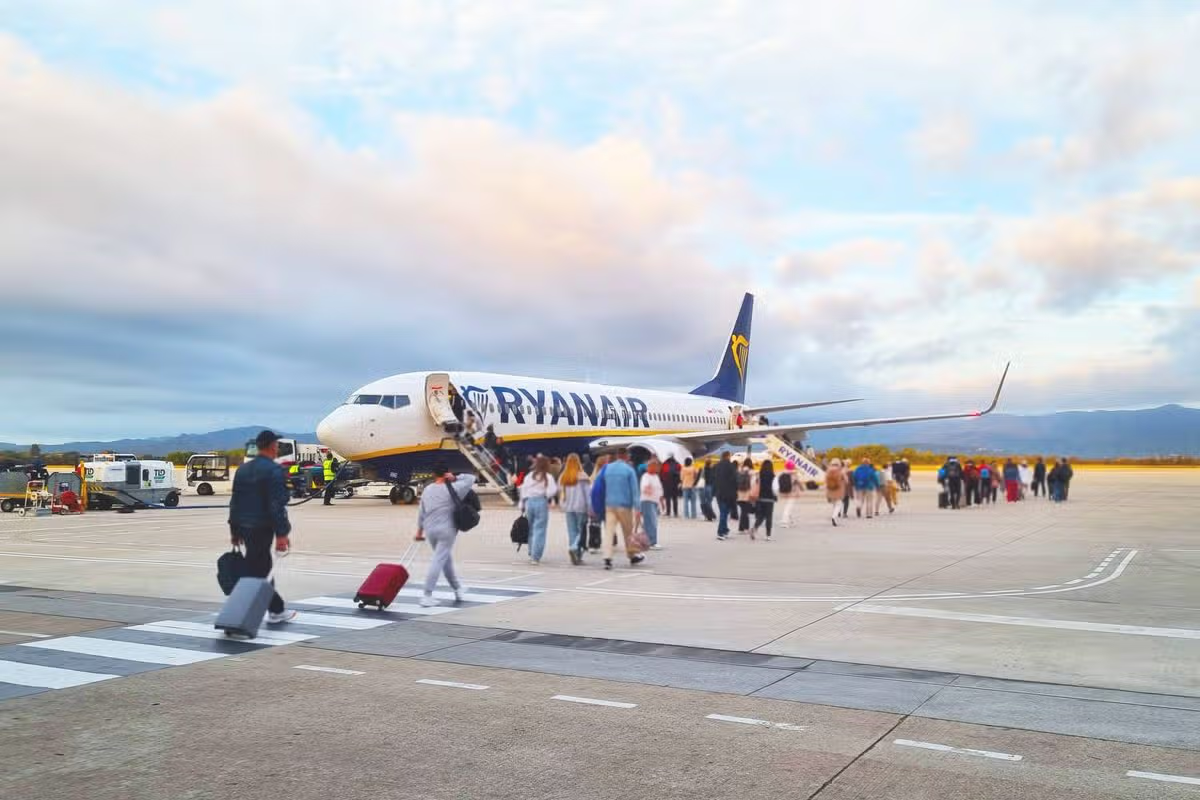
Budget airline Ryanair has shared an ‘important’ announcement on Facebook telling people to stop wearing jeans on flights – and passengers have plenty to say about it
Ryanair has issued an ‘important’ announcement for passengers travelling in jeans (stock image)(Image: Getty Images)
Ryanair has issued an ‘important’ message to passengers who choose to wear jeans on their flights, having previously threatened to introduce a ‘denim fee’ for travellers not adhering to this guidance.
Staying warm and comfortable during a flight can prove more challenging than expected, especially when you’re confined to your seat with limited movement for hours at a time. Fortunately, selecting the appropriate travel attire could dramatically improve your comfort levels while in the air.
For many, this means tracksuit bottoms or leggings, while others continue to wear less comfortable garments, such as jeans, on their journeys.
But now, Irish budget airline Ryanair has posted an announcement on its Facebook page addressing all passengers regarding their clothing choices on flights.
“Important Travel Announcement,” the company posted, accompanied by three images of a Ryanair aircraft in the sky, zoomed in to reveal various details.
The first two images showed a Ryanair plane soaring through the air, with a brilliant blue sky visible in the background. However, the third image displayed a banner trailing from the rear of the aircraft.
The message was short and sweet. It read: “Stop travelling in jeans.”
While there’s no real cause for concern here, the joke simply comes from most travellers preferring to dress comfortably on flights, as jeans are well known for being rather restrictive when sitting for extended periods of time.
But this didn’t deter passengers from joining in with the banter. Scores of people quickly headed to the comments section to share their views, with many insisting they had no intention of ditching their beloved denim on flights.
“I’m always flying in jeans because they are 200g heavier than sweats and you would just love to charge me for those 200g in my suitcase,” one person said. Another went on to say: “It’s how many layers we have under our jeans that you should be worrying about.”
“Noted. I’ll fly in pyjamas… unless that’s a €12 add-on too,” a third person said.
Someone else wondered: “What, should I just travel in a t-shirt and my pants to save weight?”
Another person went on to share the safety reasoning of flying in jeans, explaining: “Better jeans than shorts… much safer in case of an emergency evacuation (same applies to closed shoes vs flip flop by the way).”