June 19 (UPI) — A Boeing 747-200 made its last flight as Air Force One after it brought President Donald Trump home from Europe this week.
“Well done, good and faithful servant,” White House Communications Director Steven Cheung posted Thursday on X. “The Last Ride.”
White House Deputy Chief of Staff Dan Scavino also posted a tribute with a video on X.
“I have been fortunate to fly around the world on this iconic plane for 5½ years – of the 35 years it has been serving the U.S. Presidents…THANK YOU… .”
There are two 747-200s working as Air Force One, designated VC-25A by the Air Force. The two have tail numbers 28000 and 29000. The latter is retiring.
The plane has been in operation since 1990, with President George H.W. Bush as its first presidential passenger.
“The VC-25B Bridge aircraft will soon join the active executive airlift fleet alongside the VC-25A and C-32,” an Air Force spokesperson said.
Three 747-800s are being prepared to step in, including the luxury jet donated by the Qatari government. Officials have said it should be ready for use this summer and that the Air Force had finished its modifications and testing of the craft.
Gen. Dale White, the Department of Defense’s direct reporting portfolio manager for critical major weapons systems, said in a May statement that the Qatari plane will “relieve pressure on the aging VC-25A fleet.”
“Ultimately, the Bridge aircraft fulfills a critical short-term requirement, guaranteeing the Air Force continues to execute its no-fail mission for the commander in chief while laying a rock-solid foundation for the future,” the release said.
The new planes will have Trump’s preferred color scheme of red, white, gold and dark blue. He proposed the change while in office for his first term, but President Joe Biden reversed the plan back to the traditional colors. When Trump was re-elected, the new color scheme was once again adopted.
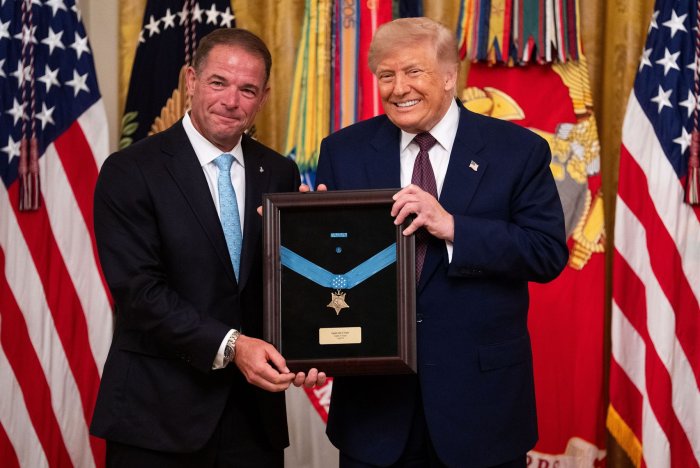
President Donald Trump presents a Medal of Honor to Tom Ripley on behalf of his father, John W. Ripley, during a Medal of Honor award ceremony in the East Room of the White House on Thursday. Photo by Aaron Schwartz/UPI | License Photo
Aid cuts and poor sanitation are deepening fears that Ebola is spreading through displacement camps.
Published On 19 Jun 202619 Jun 2026
Seventeen medics have died from Ebola in the Democratic Republic of the Congo (DRC) as the death toll surpasses 200 in an outbreak tearing through a health system already weakened by years of conflict, displacement and chronic underfunding.
A senior World Health Organization (WHO) official confirmed the death toll on Friday and said that 75 healthcare workers had contracted the virus since Congolese authorities declared the outbreak on May 15 .
Recommended Stories
list of 3 itemsend of list
“The outbreak remains serious” and is “evolving so fast”, said WHO emergency director Marie Roseline Belizaire.
“It is a really high price that the system, the healthcare system, is paying, because we don’t have enough of healthcare workers in DRC,” she told reporters by video link from the outbreak epicentre in eastern DRC.
Health officials believe the rare Bundibugyo strain of Ebola had been spreading for months before the government formally announced the outbreak, leaving doctors, nurses and other medical staff exposed before they knew the virus was present.
Even now, basic protective equipment remains in short supply, with some facilities struggling to secure gloves, masks and other essentials needed to limit infection.
The DRC has one of the world’s lowest ratios of healthcare workers to population, with about 11 health workers for every 10,000 people, according to WHO data. Belizaire said China and Uganda were sending medical teams to support the response.
She added that the WHO was providing psychological support to medics who feared treating patients after seeing colleagues fall sick.
“When they are explaining to you how they live it, how they were infected … [it] can break your heart.”
Outbreak yet to reach its peak
Congolese authorities said on Thursday that the outbreak has killed 232 people and infected 896 others across 31 health zones in the country.
African Union member states have pledged nearly $1bn to respond to the emergency in eastern DRC and neighbouring Uganda, which has confirmed 19 cases and two deaths.
Health officials warn that the outbreak has not yet reached its peak.
The crisis is also raising alarm in camps for displaced people, where overcrowding, poor sanitation and resistance to testing could allow the virus to spread undetected.
At least 30 people have died since early May in Kigonze camp in Bunia in Ituri province, the epicentre of the outbreak. Camp officials described the death rate as unprecedented.
Authorities could not confirm the causes of death because patients and relatives had refused testing of both the living and the dead until Thursday, according to a camp spokesperson and aid organisation Caritas.
But witnesses and aid sources told Reuters that the dead had symptoms linked to Ebola, including headaches, fever and vomiting.
“People didn’t just die like this before,” camp spokesperson Desire Grodya Bapi told Reuters.
Kigonze is home to more than 15,000 people. The rising number of deaths there has increased fears that Ebola may be spreading among the more than five million displaced people in eastern DRC.
Aid workers say funding cuts have made the emergency more dangerous. Donors, including the United States under President Donald Trump, have reduced support for water, hygiene, and sanitation programmes, which are vital in fighting the disease spread through bodily fluids.
UN data shows funding for toilets and handwashing stations in DRC more than halved between 2024 and 2025, falling to about $38m. This year’s $80m appeal is only 21 percent funded.
DRC has hundreds of displacement camps, some housing up to 100,000 people. Ebola deaths have already been recorded in another camp in Ituri province, which accounts for more than 90 percent of nearly 900 confirmed cases.
Hello! I’m Mark Olsen. Welcome to another edition of your regular field guide to a world of Only Good Movies.
Recently, I don’t exactly know why, I was overtaken by a concern that because of the impending merger of Paramount and Warner Bros., Olivier Assayas’ 2022 series adaption of his own film “Irma Vep” would be removed from the HBO Max streaming platform. With no official physical release, the series — starring Alicia Vikander as a Hollywood movie star making a project in Paris — could be effectively vanished from existence.
This is sadly inevitable, though some superfans have gone to extra-legal measures to ensure otherwise (not that we would ever endorse this). Most famously it’s happened with the original “Star Wars” trilogy. Billed as the “Grindhouse Edition,” these are discs of the first three “Star Wars” films sourced from scans of original film prints before the digital fixes and polish of the more recent official releases. Reengaging with these works in this way, scratches and all, is (I’m told) a strong reminder of why they hit so hard in the first place, similar to how it might be to reread a text in the original language instead of a more recent translation.
‘Indiana Jones’ marathon
Harrison Ford and Karen Allen on the set of 1981’s “Raiders of the Lost Ark.”
(Lucasfilm Ltd.)
The same deep understanding of genre filmmaking that went into the original “Star Wars” also went into “Raiders of the Lost Ark,” the first adventure of the character of Indiana Jones. Directed by Steven Spielberg from a script by Lawrence Kasdan and story by George Lucas and Philip Kaufman, the film is playful, thrilling and self-aware. It is made with such care, attention to detail and sense of fun that I remember how disappointed I was to discover not all movies would be like this.
There have of course been diminishing returns with the more recent run of Indiana Jones sequels, but the first three installments all have a real spark. And so the Secret Movie Club will present “Raiders,” 1984’s “Indiana Jones and the Temple of Doom” and 1989’s “Indiana Jones and the Last Crusade,” all on 35mm at the Million Dollar Theater in DTLA on Sunday in celebration of Father’s Day.
In her original review of the first film, Sheila Benson described that while watching it, she felt “a rush of gratitude which almost brought tears of contagious joy and — not to be corny about this — the strength of the film’s positive vision. If this is an era in which the heroic is lacking and the mediocre threatens us from every side, then ‘Raiders,’ which has no pretensions to importance, which is unabashedly wide-eyed and exaggerated and true blue but somehow cherishes the best in life and filmmaking — is a high-water mark.”
Plenty of jokes could be made about the movies having settled into what might be thought of as part of the dadcore canon: action-adventure movies that play well on TV and maybe you can take a short nap and not miss anything. So be it.
From one master to another
Cary Grant and Eva Marie Saint in Alfred Hitchcock’s 1959 thriller “North by Northwest.”
(Sunset Boulevard / Corbis via Getty Images)
Filmmaker Guillermo del Toro has been making waves of late for his strong public stance against the use of AI in feature filmmaking. But it is worth remembering that he is also a deep and incisive thinker about older movies, a true fan, which makes his upcoming appearances at the Academy Museum a special occasion.
Del Toro will present five films by Alfred Hitchcock — 1946’s “Notorious,” 1943’s ‘Shadow of a Doubt,” 1959’s “North by Northwest,” 1953’s “I Confess” and 1972’s “Frenzy” — along with delivering a lecture on each of them. To see one great filmmaker reflect with such depth into the work of another is just remarkable. This is some genuine only-in-L.A. type stuff.
Comedy + politics = good fun
A scene from the 1976 movie “Car Wash.”
(Margaret Herrick Library / Academy of Motion Picture Arts and Sciences)
A raucous comedy set around the location of the title, “Car Wash” is also a sharp, politically minded satire about labor and money. Directed by Michael Schultz from a screenplay by Joel Schumacher, the film has an extended ensemble cast that includes Richard Pryor, Franklyn Ajaye, George Carlin and many others.
In his original review Charles Champlin compared “Car Wash” to films such as “American Graffiti” and “Nashville” and called it “light but not foolish. … The experience is exhilarating.”
A 50th anniversary screening at the Academy Museum on Saturday of a new 4K restoration will include a panel with Schultz and actors Bill Duke, Antonio Fargas, Melanie Mayron, Garrett Morris and Pepe Serna.
Collision report
James Spader in the 1996 movie “Crash,” directed by David Cronenberg.
(Jonathan Wenk / Fine Line Features)
The controversy that surrounded David Cronenberg’s “Crash” when it premiered at Cannes in 1996 and received a U.S. release in 1997 tended to overwhelm the actual movie. Shockingly explicit, the film is about a secret underground world of people who create a sexual fetish out of car crashes. An adaptation of the novel by J.G. Ballard, Cronenberg’s movie explores the cinematic obsession with sex and violence.
Over time, “Crash” has been evolving from a seemingly cursed object dogged by scandal into something that audiences can come to appreciate and admire — even if it is not a movie you can ever exactly fully understand. Part of Cronenberg’s brilliance is how enigmatic and unknowable his work can be: strange, inviting and enveloping while refusing easy or direct analysis.
The movie is playing twice locally this week, on Saturday at Vidiots in partnership with the Cinegogue, with special giveaways and exclusive merch, and again on Monday at the Academy Museum in 4K. Who will be brave (or perverse) enough to go twice?
A different view of Rio
Milton Gonçalves, center, in the 1974 movie “The Devil Queen.”
(Kino Lorber)
A drag queen (Milton Gonçalves) rules the criminal underworld of Rio de Janeiro in Antonio Carlos da Fontoura’s 1974 gangster drama “The Devil Queen,” an unlikely mix of camp aesthetics and gritty violence. Among the film’s many fans is Kleber Mendonça Filho, the filmmaker behind the recent Brazilian hit “The Secret Agent,” who referred to “The Devil Queen” as “bloody, nasty and full of personality.”
The movie is playing in a new 4K restoration at the Lumiere Cinema in Beverly Hills.
A musical melodrama returns
Raul Julia, left, and Teri Garr in Francis Ford Coppola’s 1981 movie “One From the Heart.”
(Rialto Pictures / American Zoetrope)
We have talked before about Francis Ford Coppola’s “One From the Heart,” a movie of such delirious audacity that it nearly ruined the filmmaker‘s career. A throwback musical about two lovers who break up in search of more excitement, the film stars Teri Garr, Frederic Forrest, Nastassja Kinski and Raul Julia.
On Saturday the film will screen at the American Cinematheque’s Aero Theater in a 70mm print for the first time in L.A. since 1990. The event is being dedicated to Dean Tavoularis, Coppola’s longtime production designer, who died in April. For “One From the Heart,” Tavoularis re-created the Las Vegas Strip on a studio back lot.
New this week
Amy Nicholson is not a fan of the new “Toy Story 5,” writing in her review, “Pixar has continued adding shades to the same plot outline like a child with a box of 128 crayons (or a company clinging to its billion-dollar idea).”
Glenn Whipp cast back into the “Toy Story” universe for a highly personal ranking of his 10 favorite “Toy Story” toys.
Two gay teenage boys attempt to survive a supernatural entity and conversion therapy in Adrian Chiarella’s debut feature “Leviticus.” Jen Yamato spoke to the filmmaking team.
I spoke to writer-director Michael Sarnoski about his new “The Death of Robin Hood,” starring Hugh Jackman in a subversively revisionist telling of the last days of the medieval bandit.
As Colombia comes down from the ecstasy-filled high of its recent win in their 2026 World Cup opener, a sadder, and much darker reality is beginning to set. On June 21st, 2026, Colombians will vote in a historic runoff election that will not only hurt Colombia but will have serious effects on the future of Venezuela.
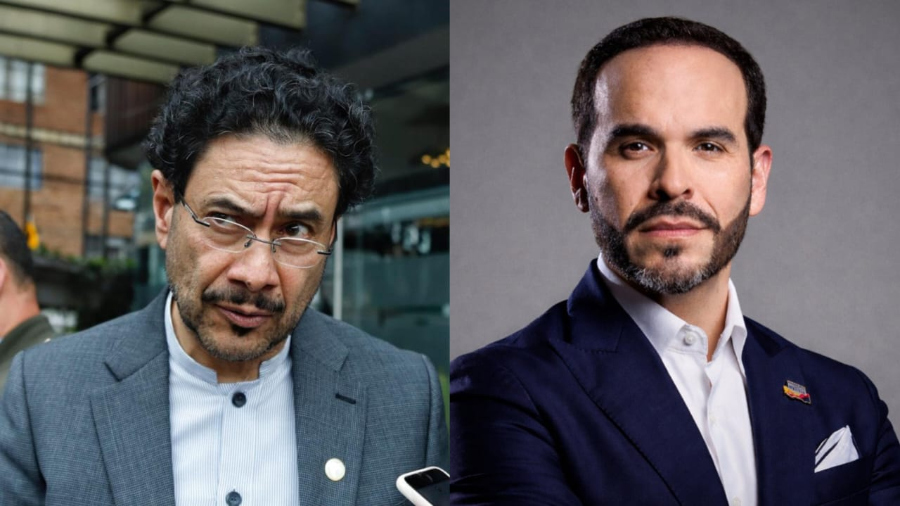
No matter the outcome, Colombia will be worse off, as both Iván Cepeda and Abelardo De la Espriella are a study on how a democracy can offer voters a choice between two particular brands of terrible.
The first-round of the election provides a clear insight into the current state of Colombian civil society. Like many presidential systems, Colombia structures its presidential elections in a two-round system. If no candidate surpasses 50% of the vote in the first round, as happened on May 31st, a second runoff election is called between the first and second placed candidates. That runoff is this Sunday, June 21st. Moderate and moderate right-wing candidates Sergio Fajardo and Paloma Valencia achieved historic electoral lows for centrists with 4% and 6% of the vote respectively, whilst the radical extremes of the political scale rejoiced in victory.
The biggest surprise was undoubtedly Abelardo de la Espriella´s first round victory, with the self-anointed “Tiger” garnering 43.7% of the vote to first round favourite Iván Cepeda´s 40.9%. With a mere 600,000 votes separating the candidates and about 3 million votes being contested, both can win the election.
Cepeda, who is President Gustavo Petro’s hand-picked heir, initially questioned the results alongside the controversial president, and only accepted them on June 7th, a week after the election. With his institutional backing, that delay matters. All in all, Colombians ran to the extremes, which provided a clear data-backed picture of just how polarized Colombian civil society is.
Whoever gets sworn in Bogotá on August 7th2026, will have more operational influence over Venezuelan affairs than any other head of state in the hemisphere, apart from Trump.
Regardless of the result in the June 21st runoff, the Colombian elections will have a lasting effect on the future of Venezuela and could be the catalyst for very different answers to the question of the country´s political future.
First and foremost, Colombia is the country that has received the largest number of Venezuelan migrants, with approximately 3 million Venezuelans calling the country home. Since January 2025, Colombia has been hosting the diaspora without US funding and support. Furthermore, part of the the 2,219 kilometre-long border between both countries is controlled by the Colombian Guerrilla ELN (Ejército de Liberación Nacional), who lost key ally and facilitator Nicolás Maduro on January 3rd and is currently massing on the Colombian side.
Bogotá’s diplomatic influence and posture is one of the few international players that can have significant effects on whether interim dictator Delcy Rodríguez will eventually push for elections in Venezuela.
All in all, whoever gets sworn in Bogotá on August 7th 2026, will have more operational influence over Venezuelan affairs than any other head of state in the hemisphere, apart from the self-proclaimed most popular man in Venezuela, Donald Trump.
Now, it’s time to get down to brass tacks, the who is who. Inside trash can number one we find Iván Cepeda. Cepeda’s personal arc is worryingly similar to that of the Rodríguez siblings in Venezuela. His father was a radical Left politician murdered by far Right paramilitary groups. That fuelled Cepeda’s deep hatred towards the Colombian political system and institutions. A career senator and politician, Cepeda is probably the smartest mind in Colombia’s hard Left. He is also an admirer of Hugo Chávez, and strong critic of former president and kingmaker Álvaro Úribe. Cepeda’s followers will frame him as a left-wing moderate, but he is not. He is Petro without the cocaine, prostitutes and charisma, running on continuing the Total Peace framework that has seen record numbers of cocaine production in the country, and bolstered the rearming of the ELN. His commitment to governmental continuity will no doubt hurt Colombia, starting with the fact that current policies have driven down Foreign Direct Investment in Colombia by 30% from a 2023 peak.
De la Espriella is a one-man band who won the first round through violent speeches, AI anthropomorphic videos of himself as a tiger, and evangelical networks.
Furthermore, his delay in recognizing the electoral results provides an interesting insight on how Cepeda could interact with institutions that he finds inconvenient. A man who questions clean elections certified by international observers has no business rewriting constitutions, a key pillar on his first-round electoral campaign, which he recently dropped in a pathetic attempt to attract centrists and moderates. Cepeda’s rhetoric and language is extremely divisive. He frames every political opponent as an oligarch, every private enterprise as an exploiter, every security operation as state violence whilst analysing the deep social gaps and concerns the country must navigate. Rather than seeking to solve them, Cepeda weaponizes them to further divide the Colombian population.
But Cepeda’s rottenness is not counterbalanced by a knight in shining armour, but by a different but equally foul-smelling individual. We find Abelardo “The Tiger” de la Espriella inside trash can number two. The part-time attorney, part-time rum maker, aspiring opera singer, fashionista with terrible taste is one of the most questionable figures in the Colombian public sphere. A criminal defence attorney, who became famous for being the lawyer and fixer for chavista allies like Alex Saab and paramilitary leaders, has found a new “passion project” in his expanding list of questionable side hustles: becoming the president of Colombia. De la Espriella comes in as a true outsider who has no congressional or political backing. He is a one-man band who won the first round through violent speeches, AI anthropomorphic videos of himself as a tiger, and evangelical networks.
Abelardo’s rhetoric only serves to perpetrate a never-ending cycle of violence. The anti-democratic claims that he will literally “gut leftists,” his active endorsements of states of exception and support for arbitrary concentrations of power within the presidency, his promise to open ten CECOT-style mega prisons, and his constant disregard and attacks against human rights are problematic.
His “security agenda” is not offering any coherent security policy. On the contrary, he’s seeking to create a permission structure for state-sponsored political violence, dressed as law and order. His policy against the ELN of all-out war has no institutional backing, and risks triggering considerable escalation. Events like the April 25th bombing can serve as a prelude of what an empowered ELN can look like.
De la Espriella’s polarization is of a different flavour to Cepeda’s, but equally problematic. Instead of using social and class divides, the Tiger weaponizes the us-versus-them mentality along the lines of patriots and enemies. In a country with such a tragic and saddening history of political violence, that rhetoric has a body count attached to it.
Cepeda’s attitude will likely be lukewarm and soft on Venezuela, dragging his feet on any meaningful action such as Venezuelan migrants in Colombia or elections in our country.
At the end of the day, either candidate will face serious problems to govern, and will bring a myriad of conundrums for Colombia, but how do their stances translate into the Venezuelan question? On one hand, Iván Cepeda has constantly framed the operation to extract Nicolás Maduro as violation of sovereignty, a position which lacks any diplomatic nuance, and at the same time provides strong insights into how Cepeda will behave towards Venezuela and how much pressure he´ll exert on Venezuela to call for elections. The Total Peace Framework will provide the ELN with the political umbrella to consolidate in the border region, stacking an unpredictable situation on top of an already volatile powder-keg in Venezuela. Calling Cepeda a “friend” of Maduro or Delcy is not accurate, but he is the regime’s useful neighbour. His attitude will most likely be lukewarm and soft on Venezuela, dragging his feet on any meaningful action like his predecessor Gustavo Petro such as Venezuelan migrants in Colombia or elections in our country.
On the other hand, analysing Abelardo’s impact on Venezuela must begin with the fact that he was the leading defence attorney for Alex Saab between 2013 and 2018, the same years Saab ran Maduro’s sanction-busting operation. Although his divisive rhetoric claims forceful actions, his personal history and contacts in his rolodex prove that rather than full force, there is a clear entanglement with the chavista operation. De la Espriella also has no real plan for the domestic situation with refugees, and his ultra-nationalist stance could cause serious problems for foreign populations in Colombia. Furthermore, his full force campaign against the guerrillas can drive the ELN back over the Venezuelan border.
A small “silver lining” does exist. On one hand, Cepeda has stated that he will try to push for regularization mechanisms in Colombia. On the other, Abelardo’s ties to the International Right and Donald Trump can transform him into a key figure to push for a decisive presidential election and as a source of pressure on Delcy.
Colombia’s role as a key interlocutor with Venezuela is undeniably at risk regardless of who wins the presidency. Because the region and Venezuela needed a Colombian president that could be a genuine bridge between Washington and Caracas, between the Venezuelan diaspora and integration, between the ELN and disarmament, and for the ever-divided poles of the Colombian population. But rather, on June 21, the country was forced to choose between ideological blindness dressed in progressive language, and maximum pressure dressed over an obvious conflict of interest. Venezuela might again pay the price for someone else’s terrible choices.
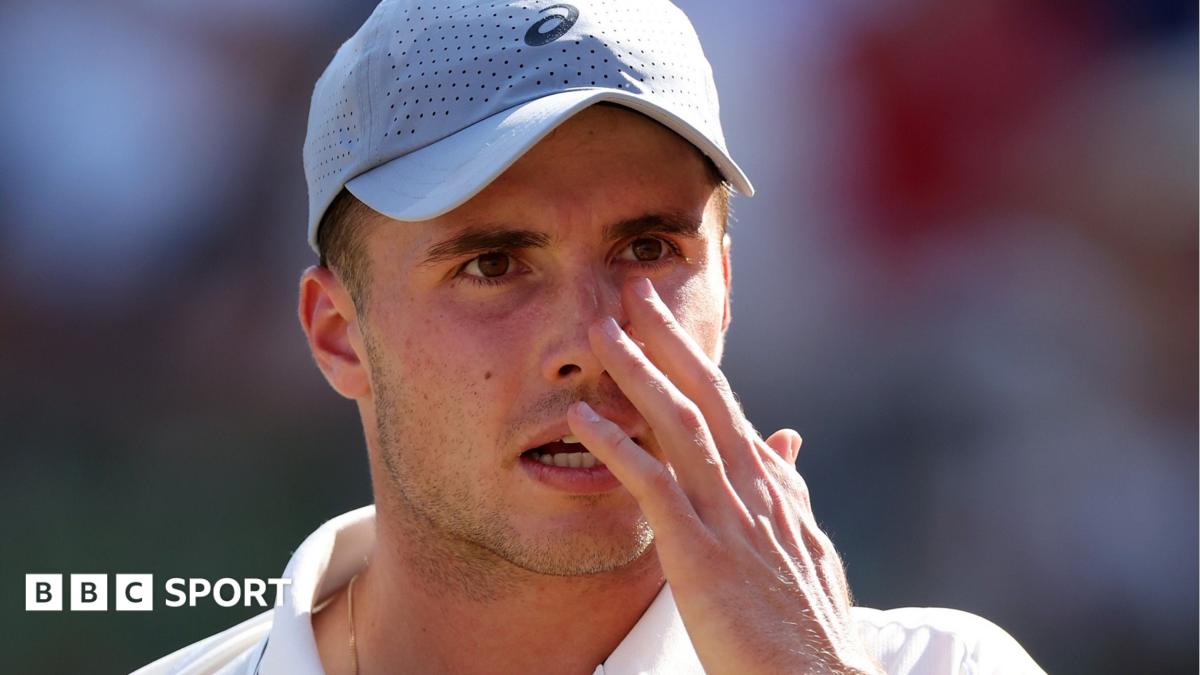
Fery may not be well-known outside of British tennis circles but sport is a huge part of his family life – his mother, Olivia, was a professional player, while father Loic owns Ligue 1 football club Lorient.
As a teenager, Fery opted to go on a scholarship to Stanford University in California and also played collegiate tennis.
He lost just two games in his opening-round win over compatriot Toby Samuel at Queen’s, before recording what he described as the “best result” of his career against veteran Frenchman Mannarino.
He and Cerundolo both made nervous starts, with numerous break point opportunities, but Fery broke to serve for the set at 5-4.
However, Cerundolo won the next three games and dominated the tie-break, with the only point Fery won in it coming from a double fault from his opponent.
Cerundolo broke to start the second set but took a painful hit at the net when Fery accidentally sent a volley straight into his throat.
The Argentine fell to the floor, with Fery hopping over the net to check on him – and the pair shared a wry smile as on the next point, Cerundolo came close to hitting Fery with a passing winner.
But from that moment on, Cerundolo’s serve disappeared, and Fery restored parity before breaking to serve for the set.
A lovely serve and volley from Fery to force the deciding set established the tone, and a horrible double fault from Cerundolo handed the Briton the early initiative.
Cerundolo’s experience showed, though, as he put enough pressure on his opponents’ forehand to first break back and then secure victory on Fery’s serve.
The Italian prime minister has accused Trump of making up a story that she ‘begged’ him for a photo at the G7 summit in France.
Published On 19 Jun 202619 Jun 2026
A diplomatic row between United States President Donald Trump and Italian Prime Minister Giorgia Meloni has escalated, with Italy’s top diplomat cancelling an upcoming visit to the US.
At issue is Trump’s claim that Meloni “begged” him for a photograph during the Group of Seven (G7) meeting in France earlier in the week.
Recommended Stories
list of 3 itemsend of list
“She’s probably happy I talked to her. I didn’t have to talk to her,” Trump reportedly told the Italian La7 network. The broadcaster only published a dubbed Italian version of the interview, not the original English version.
“She begged me to take a picture with her. She wanted a picture with me so badly. I wouldn’t have taken it, but I felt sorry for her.”
On Friday, Meloni posted a video answering Trump’s statement, saying that “certain things deserve an immediate response”.
“Donald Trump’s statements are completely fabricated. I am frankly stunned,” she said. “I don’t know why the president of the United States behaves this way toward his own allies. After all, this isn’t the first time this has happened.”
The head of a far-right party who campaigned on an anti-immigrant platform, Meloni had long been seen as one of Trump’s most supportive counterparts in Europe.
She had met with Trump at his Mar-a-Lago estate following his 2024 election victory and attended his inauguration in January 2025.
However, the pair have diverged during Trump’s second term over several issues, including support for Ukraine amid Russia’s invasion, the US-Israeli war with Iran, Trump’s threats to seize the Danish territory of Greenland and his criticism of Pope Leo.
In her video, Meloni said it was a “shame” Trump did not show “the same resolve toward the enemies of the West, toward the enemies of the United States” as he did in his statements against her.
She accused the US president of being “much more accommodating” to foes than allies.
“But there’s one thing he must remember: Italy and I do not beg,” she said.
Shortly after Meloni posted the video, Italian Foreign Minister Antonio Tajani said he was cancelling a weekend trip to the US, where he was scheduled to attend a business forum in Miami, Florida and meet with US Secretary of State Marco Rubio.
He called Trump’s reported statements “serious and offensive”. Several other government officials also weighed in.
Justice Minister Carlo Nordio suggested Trump’s remarks besmirched the legacy of the US soldiers who died during World War II.
“The thousands of crosses marking the graves of American soldiers who died to free us from Nazi-Fascist dictatorship did not deserve such a painful blow to our fraternal ties,” Nordio posted on X.
Defence Minister Guido Crosetto said he did not believe Meloni would ever beg for a photo, “not even under threat”.
“Jokes of this kind do no good to anyone: neither to the USA, nor to Italy, nor to the alliance,” he said.
The White House did not immediately respond to Meloni’s comments.
Things seem to be taking their toll on Amanda Owen as she admits to feeling rather ‘stressed’ during an episode of Our Farm Next Door
17:31, 19 Jun 2026Updated 17:32, 19 Jun 2026
Our Farm Next Door returns in trailer for new series
Our Farm Next Door star Amanda Owen appears to feel the heat as she makes a frank admission moments into the show.
In a repeat episode from series three of Our Farm Next Door: Amanda, Clive and Kids, which airs tonight (Friday 19 June), work continues on the farmhouse renovation as builder Richard starts plastering the interior walls and joiner Dan delivers and fits the custom-made doors.
As the project progresses, Amanda begins to feel the strain of the ambitious build, particularly when it comes to making key design choices for the kitchen, which proves to be one of the most challenging parts of the renovation.
Balancing modern practicality with strict historical preservation, Amanda expressed her confusion, admitting she was unsure where things would go.
When asked where she would like a certain socket to be placed, the mother of nine put her hands on her and said: “I don’t know, I’m beginning to start feeling really stressed about this.”
Talking directly to the camera, she then said: “I don’t want to start throwing impossible ideas around. I mean the whole project looked impossible from a start off so I think I’ve done well!”
Broadcast on Channel 4, the spin-off series from Our Yorkshire Farm sees the Owen family undertake the ambitious restoration of a long-abandoned farmhouse in the Yorkshire Dales. The project centres on a centuries-old property known locally as Anty John’s, which has fallen into disrepair after years of neglect.
Set high above Swaledale, the historic building holds a special place in the area’s heritage, and the Owen family is determined to bring it back to life.
Throughout the programme, viewers follow the extensive renovation as builders, family members and local tradespeople work to restore the structure while preserving its original character. From rebuilding walls and repairing roofs to installing modern amenities, the project proves to be both demanding and rewarding.
The show also explores the history of the property itself, with Amanda researching the people who once lived there and uncovering stories that shed light on life in the Dales across generations.
However, away from the building site, the programme continues to document life on the family’s nearby farm, Ravenseat. As ever, farming remains a full-time commitment, with the cameras capturing everything from lambing season to the day-to-day challenges of caring for livestock.
The show arrives as the Owen family enters a new phase, with their children taking on greater responsibilities and becoming more involved in both farming and the renovation project.
Our Farm Next Door: Amanda, Clive and Kids airs tonight at 8pm on More4.
PHILADELPHIA — The Trump administration can replace a slavery exhibit at George Washington’s home in Philadelphia, a federal appeals court panel said Thursday, striking down a lower court’s injunction that required the National Park Service to reinstall the interpretive panels.
The unanimous ruling by the three-judge panel of the 3rd U.S. Circuit Court of Appeals said a lower court judge wrongly interpreted Philadelphia’s contract claims involving Independence National Historical Park, saying the city merely having standing to sue did not mean its arguments had merit. The panel also praised the plans for the replacement installation, writing that they were “full of historical context,” despite objections from historians and city officials that the content appears whitewashed.
The ruling comes a week after a Massachusetts federal judge ordered the Trump administration to restore sites changed under an executive order calling for the nation’s museums, parks and landmarks to not display elements that “inappropriately disparage Americans past or living.” The federal government has asked for a stay on that ruling while it appeals.
It was unclear how the Massachusetts ruling would affect the restoration or replacement of the panels at the President’s House Site. About half the large panels at the outdoor exhibit had been restored before a February pause in the work.
Messages to spokespeople for the Department of Interior and the National Park Service were not returned.
In a statement on Instagram late Thursday, Philadelphia Mayor Cherelle Parker vowed to pursue legal avenues to reverse the decision.
“We cannot and WILL not rest until the full story of American history – including the existence of Slavery at the President’s House here in Philadelphia – is told, for our Nation and the World to see,” she wrote.
Dawn Chavous, a volunteer for Avenging the Ancestors Coalition, one of the advocacy groups that helped develop the site in the 2000s, said they are disappointed with the decision but are speaking to their attorneys and considering options.
“For decades, ATAC has worked to ensure that the stories of the enslaved African descendants who lived and labored at the President’s House are not erased, overlooked, or misrepresented,” the group said in an emailed statement. “That commitment remains unwavering. We believe that historical truth matters, and we will continue to advocate for the protection, preservation, and accurate interpretation of this important chapter of American history.”
The city of Philadelphia sued in January after the National Park Service, in response to President Trump’s executive order, removed the explanatory panels from the President’s House Site, where George and Martha Washington lived with nine of their slaves in the 1790s, when Philadelphia was briefly the nation’s capital.
The city had worked in tandem with the federal government, historians and private partners to create the exhibit in the early 2000s — as part of a longstanding cooperation agreement over the downtown historical park — and contributed $1.5 million toward its creation.
The city argued that the federal government must consult with the city before making changes to the President’s House Site. Justice Department lawyers argued the administration alone can decide what stories are told at National Park Service properties.
In its ruling Thursday, the appeals panel said the maintenance portion of the contract between the city and the federal government could not be interpreted to mean the site would remain as it was when it was completed.
“The duty to ‘maintain’ is better understood as a general management obligation that accompanies ownership, not a promise that the exhibits will forever remain in place regardless of the owner’s wishes,” the opinion said.
Casey and Lauer write for the Associated Press. Casey contributed to this report from Boston.
ATLANTA — Bina Ramroop broke down in tears when she realized she wasn’t going to get the World Cup tickets she had bought for her grandson’s 13th birthday.
As thousands poured into Atlanta Stadium on Monday to see Spain face Cape Verde in what turned out to be a remarkable scoreless draw, Ramroop stood outside, increasingly stressed as she went back and forth for hours between StubHub representatives on the phone and FIFA representatives in the ticket booth. Each blamed the other.
No one could figure out why the tickets Ramroop bought months ago on StubHub for $485 apiece couldn’t be transferred from the original seller to the FIFA ticketing app. StubHub offered her a refund and, as Ramroop heard the crowd roar for the start of the match, she knew she had no choice but to give up and take the offer.
“I didn’t want a refund, I didn’t want my money back,” Ramroop said. “I wanted to go to the game.”
The World Cup has delivered thrills on the pitch, but fans have flooded social media with complaints about tickets that never arrived, orders that were canceled at the last minute and hours they spent trying to sort out problems between FIFA’s ticketing system and outside resale platforms.
The vast majority seem to be about industry titan StubHub, but people who bought through competitors such as SeatGeek and Vivid Seats have also reported issues. Interviews with fans and industry experts show that some cases stem from technical glitches in the transfer process, while others could involve sellers who never had tickets to deliver in the first place, though StubHub denies such sales happen on its platform.
A grandmother’s disappointment
FIFA has urged fans to buy resale tickets through its own marketplace, where it slaps a 30% surcharge on every resold ticket — 15% each from the buyer and seller. But many fans bought through other resale sites, either out of habit or because those sites have lower prices or are easier to navigate.
Ramroop didn’t realize she was taking a risk when she bought through StubHub, which she had used in the past without issues.
As she and her grandson Elijah Gomes took the long, lonely train ride back to the Atlanta suburbs, Elijah followed the score on his phone. The match had ended scoreless, and he tried to cheer up his devastated grandmother by telling her they hadn’t missed much after all (Cape Verdeans would beg to differ ).
“He’s telling me, ‘Grandma, it’s OK, Grandma.’ And he’s trying to console me,” Ramroop said the next day.
She was hardly alone. An Associated Press journalist witnessed more than a dozen frustrated fans at the match who said they were stuck in similar situations.
StubHub blamed FIFA for the transfer problems that buyers like Ramroop have experienced. In a statement, it said FIFA has “poor technology infrastructure,” enacted last-minute transfer restrictions and didn’t launch its new ticketing app until a few weeks before the tournament. The company also called out organizers that “take anti-competitive actions” that limit where fans can buy and sell tickets.
Asked about the technical issues, FIFA on Wednesday reiterated that sales through its official site are guaranteed to go through.
An industry’s longstanding problem
Industry observers say the problems appear to stem from more than one cause. For some, it may indeed be technical glitches — an issue that StubHub says is “very, very rare” and one that it is hard at work to solve. For others, they say it’s likely a more longstanding scourge: speculative sellers.
Scott Friedman, an industry veteran and co-founder of a consultancy called the Ticket Talk Network, said some sellers list tickets before they actually have them, betting that prices will fall closer to the event so they can buy the tickets at a better price later. But because World Cup ticket prices have surged since the tournament began, those sellers have been forced to either buy expensive tickets to fulfill their orders or cancel and accept penalties from resale platforms. StubHub’s penalties are typically 200% of the ticket price, Friedman said.
“This is not new at all,” said Friedman, pointing to other high-profile events where frustrated fans were left empty-handed, including Taylor Swift’s Eras tour. “This has been going on, but it’s making global news because it’s the World Cup.”
StubHub says it requires sellers to prove they have tickets before they list them.
But regardless of the reason for the canceled sales, Friedman said “StubHub should fill every single order to make sure fans get in the biggest global sporting event that happens every four years.”
That’s what many fans say they expected when they purchased through StubHub.
StubHub’s FanProtect Guarantee promises replacement tickets or a refund if tickets fail to arrive. But the policy repeatedly says those remedies are provided at StubHub’s “sole discretion,” meaning the company can choose a refund instead of securing replacement seats.
“That is pretty explicit language,” said Michael McCann, a sports law expert at the University of New Hampshire. McCann noted that a buyer could try to challenge the language under state consumer protection laws, but it would be an uphill battle.
A father’s regrets
Pape Ndaw is crestfallen that the high school graduation gift he got for his son — tickets for them to see the Netherlands and Japan near their home city of Dallas — never arrived.
He bought the tickets for about $550 apiece in December. Then, two days before the June 14 match, he received an email from StubHub telling him, “The seller can’t deliver your original tickets.”
Ndaw accepted store credit rather than a refund, thinking he would use the funds to quickly get replacements, only to then realize that the cheapest last-minute tickets were going for more than $1,500 each. Not only were they not going to get to go to the game, but Ndaw said StubHub rejected his belated request for a refund instead of store credit.
Breaking the news to his soccer-obsessed son was brutal, Ndaw said.
“It was a disastrous thing,” he said. “He had told all his friends that he was going to that game. He literally cried. I mean, he is a 17-year-old kid, but he cried.”
A family’s attempt to make the best of it
Others fared somewhat better.
Patrick O’Neil of Pittsboro, North Carolina, traveled to Atlanta with his wife, son and relatives after purchasing five tickets through StubHub for the Spain-Cape Verde match. Two tickets transferred successfully, but three never arrived.
O’Neil’s 15-year-old son and his uncle ended up using the two tickets, while O’Neil, his wife and another relative watched from a nearby bar.
After local media caught wind of their ordeal, O’Neil said StubHub contacted the family and offered tickets to another game. Since the family had already bought tickets to one, though, he and his wife asked the company to instead give the seats to local nonprofit Soccer in the Streets so they could go to people who otherwise might not be able to attend a match.
“StubHub is not evil, but they’re part of the whole system that makes it really hard for just normal kids and people who might want to see a match get to go,” O’Neil said.
On Thursday, a StubHub representative confirmed to the AP that the company would honor the O’Neils’ request and send tickets to the nonprofit.
June 19 (UPI) — Global oil prices have fluctuated slightly on Friday, briefly reaching back above the $80 per barrel mark for Brent crude, as the United States and Iran called off further talks in Switzerland.
A stall in talks between the United States and Iran have cast doubt over the preliminary peace agreement reached earlier this week. The oil market has begun reflecting that uncertainty early Friday.
Vice President JD Vance was set to travel to Switzerland to continue into the next phase of negotiations with Iran. Vance’s trip has been postponed while Israel has opened up more strikes on Lebanon.
Part of the agreement between the United States and Iran included an end to military operations in Lebanon.
The Swiss foreign ministry said talks between the United States and Iran will no longer take place on Friday as previously planned. The White House confirmed that Vance will not be traveling to Switzerland, citing logistical issues involving negotiations.
Vance said during a press conference Thursday that Iran will not receive “a single penny from the United States.” He added that Iran will not receive any of the benefits from the preliminary agreement unless “they comply fully and change their behavior.”
Overall oil prices are heading toward a second consecutive week of falling prices. August Brent crude oil, the international benchmark, traded at about $80.23 per barrel on Friday morning. July West Texas Intermediate futures, the U.S. benchmark, traded for about $75.96 per barrel.
Altogether, benchmark crude oil is on pace to be down in price by about 8% for the week.
After falling below $4 per gallon on Thursday, the U.S. national average for premium gas edged down to $3.97 per gallon on Friday. The price of gas remains higher than prior to the start of the Iran war. A year ago, the average price of gas was $3.20 per gallon on average, AAA reports.
President Donald Trump presents a Medal of Honor to Tom Ripley on behalf of his father, John W. Ripley, during a Medal of Honor award ceremony in the East Room of the White House on Thursday. Photo by Aaron Schwartz/UPI | License Photo
Artificial intelligence education now starts at the age of six in China. The Ministry of Education has rolled out new guidelines to teach AI at every grade level. For President Xi Jinping, AI is a priority. Will the toddlers of today be the tech titans of the future?
This is a story from the archives. This originally aired on September 18, 2025. None of the dates, titles or other references from that time have been changed.
Episode credits: This episode was produced by Amy Walters, Sonia Bhagat, Sarí el-Khalili, and Tamara Khandaker, with Phillip Lanos, Spencer Cline, Melanie Marich, Kisaa Zehra, Farhan Rafid, and our host, Malika Bilal. It was edited by Kylene Kiang.
Our sound designer is Alex Roldan. Our video editors are Hisham Abu Salah and Mohannad al-Melhem. Alexandra Locke is The Take’s executive producer.
JUST two weeks ago, Tina O’Brien was waxing lyrical about going on her first solo holiday as she embraced single life for the first time in years.
It turned out to be rather short-lived, though, as yesterday the Corrie star was spotted kissing a hunky new man in the street. Now, insiders tell us why her latest fling – with Irish TikToker Rory Martin – has sparked concern amongst her inner circle, who fear her new beau might have an ulterior motive.
Pals are concerned about the intentions of Tina O’Brien’s new manCredit: Eamonn & James ClarkeRory Martin is thought to have dated Una Healey last yearCredit: Instagram
Our insider said: “Tina was genuinely trying to enjoy some time on her own after her recent split, but she has really fallen for Rory’s Irish charm.
“Rory is no stranger to hanging out with famous women – he was linked to Una Healey last year and has gained a bit of a reputation for being a ladies’ man.
“He loves TikTok fame and will really be enjoying the attention he’ll be getting off the back of dating Tina.
“It’s worrying for her friends, because they don’t want to feel like she is being used.
“Tina is someone who loves love and enjoys being caught up in the whirlwind of it all, and they just don’t want her to rush into anything.”
While her last ex, Adam Fadle, disliked the limelight, Rory, in contrast, is said to be very taken with her high profile.
We’re told Tina now lives in a very well-known area where paps often frequent, so it’s unlikely to have come as a surprise to her that they were photographed.
It’s thought Tina, 42, actually met Rory, 30, through her daughter, 17-year-old Scarlett, who she shares with ex Ryan Thomas.
They are said to have connected through the music world. Rory also dabbles in singing and guitar playing, as well as doing social media.
He also works for the ambulance service – but is believed to be in the call centre rather than working as a paramedic, as his social media would suggest.
Our source continued: “People think Rory is some kind of sexy paramedic, but the reality is much less glamorous.
“He really plays up to it in his social media because he knows his thirst traps in his uniform attract both women and men to him.”
Last June, Rory surprised fans by posting a video of him singing with Saturday’s star Una in a kitchen.
We’re told the pair were casually dating for some time and really enjoyed making music together.
Tina’s new romance comes seven months on from her splitting from her millionaire boyfriend Adam Fadle, whom she met in Cheshire following her move there.
Rory is a rising star and is said to enjoy the limelightCredit: InstagramIt’s thought Tina met Rory through her daughter ScarlettCredit: Getty
The actress, who is known for playing Sarah Platt on the Cobbles, is thought to have been single since her split from millionaire businessman Adam.
At the time, we revealed that it was interior designer Adam who ended things with the star. Rather than being taken with her glam life in the public eye, we’re told it ended up being a huge turn-off for him.
Our insider said: “He was the one who wanted out and ended it. In a brutal swipe, he said it ended up being like something out of a Coronation Street storyline.”
That relationship was hot on the heels of the end of her marriage to personal trainer Adam Crofts. They got together just four months after it ended.
Tina and Adam Crofts were married for six years and share a son, Beau, together.
Tina also, of course, has her daughter from her relationship with her former Corrie co-star Ryan Thomas.
Her romance with Ryan lasted from 2003 to 2009, with the pair’s very public split fraught and involving a number of public spats.
Tina’s marriage to Adam Crofts came to an end in March 2025Credit: SplashShe started dating Adam Fadle just months after splitting from Adam CCredit: Instagram
Most recently, the pair have been navigating their daughter’s burgeoning singing and social media career together.
While Ryan has fully embraced that world, Tina’s had a love-hate relationship with social media over the years, vowing to take a break from Instagram in 2020 after calling the site “toxic” and admitting she felt like a “fraud” trying to present a “filtered version” of her life to gain validation.
But six years on, things are completely different, and she has big plans for the future after signing up to an agency – Alpha Talent Group – which will be helping her land a series of brand partnerships.
While Tina is set to branch out on socials, fans shouldn’t expect to see her all over TikTok, like Scarlett and her dad Ryan and his brothers Adam and Scott Thomas are.
Our source previously explained: “She won’t be doing cringe TikTok trends, but there are some exciting brand deals on the horizon.
“And don’t be surprised if she steps out of her comfort zone and does some reality TV – she did Strictly over a decade ago and feels like she wants the public to see her personality.”
And dating another social media star, who has half a million followers on TikTok, is probably not a bad place to start.
A MEGA new museum all about one major city is opening in the UK later this year.
Having been developed over the past decade, the London Museum will open in Smithfield, London, on November 28.
Sign up for the Travel newsletter
Thank you!
London Museum will open on November 28Credit: PAInside the museum will have three main galleries documenting the past 10,000 years of LondonCredit: PA
The £437million museum – which will be housed in Smithfield’s General Market – will become the world’s largest city museum.
There will be a total of three different spaces documenting the past 10,000 years of the capital with over seven million objects on display.
The first space, called ‘Real Time’, will be a covered street where visitors enter with real time data displayed around them about different parts of London.
Underneath the former market’s domed roof, visitors will then enter the ‘Our Time’ space, which will be the central area of the museum with events and activities including immersive theatre.
Exhibits will include a recent artwork by BanksyCredit: PA
The area will have 13 installations about London, a restaurant and a bookshop, with festivals and markets planned for the future too.
Other activities at the museum will include dinner clubs and after-hours DJ sessions on Fridays and Saturdays.
And finally, the main permanent gallery, which will be known as ‘Past Time’, will be underground and take visitors through London’s history.
Most of the objects will be found on this floor and will range massively, including the recent ‘Piranhas’ artwork by Banksy on show as well as older pieces such as Charles I’s execution vest.
And there will be a unique feature on the lower floor where you can watch trains fly pastCredit: London Museum
Other objects that will go on display include swimming trunks worn by Tom Daley for the 2012 London Olympics, loads of Elizabethan jewellery and Paul Simonon from The Clash’s bass guitar, which he smashed on stage.
A coffee stand – Syd’s Coffee Stall – that stood in Shoreditch for over a century will be in the museum as well, serving hot drinks as part of a Tuesday Tea Club at the museum.
There will be a unique feature on the lower level of the museum too, where visitors can look through a giant six-metre tall window to see Thameslink trains pass by the museum.
General Market opened back in 1883 as a meat market but has stood abandoned for the past three decades.
In 2028, the Poultry Market – which is next door – will also become part of the museum and will be home to exhibition spaces, a learning centre and collections store.
The museum will also host events such as after-dark DJ sessionsCredit: londonmuseum/Secchi Smith
The spaces in the Poultry Market will be called ‘Temporary Time’, ‘Imagined Time’ and ‘Deep Time’.
The Mayor of London, Sadiq Khan, said: “The opening of the new London Museum will be a hugely significant moment both for London and internationally.
“Backed by one of the largest ever cultural investments in our capital, London Museum will attract millions of visitors and Londoners and reinforce our status as the cultural capital of the world.
“London Museum celebrates the past, creates opportunities in the present and will inspire future generations, as we continue to build a better London for everyone.”
Research has named the best place in the UK to raise a child, thanks to a number of factors from the variety of countryside spaces to lower than average house prices
16:39, 19 Jun 2026Updated 16:41, 19 Jun 2026
The city was praised for its large outdoor green spaces(Image: Katy Blackwood/NurPhoto/Shutterstock)
Raising a child in the modern world is a demanding task, and there are lots of big decisions parents-to-be need to make to give their offspring the best chance in life.
One of the most important factors is where to live, and parents will be seeking somewhere with a balance between safety, education quality, childcare costs, plus outdoor spaces to raise free-range kids.
To give parents a hand when making this life-changing choice, Outdoor Toys has created an index of the best places to raise a child in the UK for 2026, and its research looked at a huge number of factors. These included the number of child-friendly attractions, crime rates, and the percentage of schools with a good or outstanding OFSTED rating. This gave each town and city a child raise-ability score out of ten, and the overall winner scored an impressive 7.32.
Sheffield in South Yorkshire took the top spot thanks to offering double the average amount of green space per person . It also has relatively affordable childcare costs of £918.33 per month, which is below the UK average of £1,128 per child without government support.
Housing is also a major factor for growing families, and according to the Office of National Statistics (ONS), the average house price in Sheffield stands at £222,000. This is below the UK wide average of £270,080, and far below areas such as the south east at £379,000.
Green spaces that can be enjoyed around the city include the Sheffield Botanical Gardens, which includes colourful flowers and plants from around the world, some of them kept in huge Victorian greenhouses. Outside, kids can wander the endless trails, spotting statues, fountains, and other pretty features.
Graves Park is another spot that’s much-loved by families. It has two playgrounds, woodlands, lakes, and much more to explore, while Kelham Island Museum is a fun day out where kids can learn all about the area’s industrial heritage in an interactive environment.
Second place in the rankings was Milton Keynes, its score boosted by the fact it offered the widest range of child-friendly attractions. MK residents enjoy 31 kid-friendly attractions per 100,000 people, 11 more than the study’s average, meaning families who live in the city certainly won’t get bored.
While Milton Keynes lost some ground due to its costly childcare – an average of £1,416 per month – it offered large amounts of green space per person as well as a high percentage of schools OFSTED graded as good or outstanding.
Swindon came in third place, in part due to having the lowest crime rate in the study at 68 per 1,000 people. It also offered average childcare costs of £900, below the UK average, while two-thirds of its schools had good or higher OFSTED ratings.
Have a story you want to share? Email us at webtravel@reachplc.com
The first at the clubhouse is on June 25 and features an Open Water Masterclass with Olympian Katy Sexton.
There’s a spot to grab a bite to eat by the pool as well with breakfast dishes including mushroom and avocado flatbread (£11) and build-your-own-lunch bowls from £11.
Sea Lanes Canary Wharf is a ‘floating’ lido that is 50 metres longCredit: PA
The pool will be open from 6am to 9pm Monday to Friday and from 7am to 7pm at the weekends.
Make sure to check the website before you visit as well, for the latest details about the weather and water temp.
With this weekend’s weather expected to hit highs of 30C, the current 16.4C water makes for a refreshing dip.
There are a number of different memberships available including the Swim and Sauna membership, which gives unlimited access to the pool and saunas all year round.
It costs £90 per month.
Alternatively, visitors can pay-per-swim, which will cost £10 for a swim session, £10 for a sauna session or £18 for both.
There’s also two saunas onsite and a place to grab a bite to eat and something to drinkCredit: PA
If visitors want to rent a wetsuit, they can do so at a small store too.
The first visitor at the pool today said: “First one in the water on opening day.
“What a fantastic facility in the middle of Canary Wharf!
“The pool was the perfect temperature for swimming without wetsuit.
“The changing facilities were bright and clean with lovely hot showers, hairdryers and lockers.
“Love the two saunas with whole wall picture windows facing the pool.
“From the chats with other swimmers, I can picture a wonderful community developing here.”
WASHINGTON — Most Americans continue to disapprove of how President Trump is handling Iran, while his overall presidential approval holds steady, according to a new AP-NORC poll that was conducted as he suggested a deal with Iran had been reached.
The poll points to just how unpopular the war, which began Feb. 28, has been with Americans even as the Republican president turned abruptly from threatening Iran to reopening negotiations. Support for his handling of the war remains lopsidedly partisan. About two-thirds, 65%, of U.S. adults disapprove of how Trump is handling issues with Iran. But while the vast majority of Democrats and independents view Trump’s actions negatively, only 28% of Republicans are unhappy.
The new survey was conducted June 11-17, just after Trump called off threats to escalate the war with Iran. The poll was fielded as Trump announced a deal with Iran and authorized an end to the U.S. naval blockade in the Strait of Hormuz, concluding just before the deal was signed Wednesday.
Approval of Trump’s actions on Iran has been low over the past few months. But in interviews, some Republicans also weren’t pleased with the outcome of this week’s agreement, which gives Iran an immediate benefit, allowing it to sell its oil freely again.
The deal also reopens the strait without tolls for two months, restarts talks between the U.S. and Iran over Tehran’s nuclear program and calls for Tehran to dilute its stockpile of highly enriched uranium.
David Farrington, a 79-year-old Republican-leaning independent in Fort Worth, Texas, “doesn’t have any love lost” for Iran, but he’s frustrated the agreement focused on the strait and didn’t deliver more on the country’s nuclear weapons program.
“Any agreement regarding the strait is hardly what I would consider a recognizable concession on the part of Iran,” Farrington said. “So, I consider that some fluff that attempts to make this agreement look better when it’s not.”
Trump’s approval on Iran remains flat
Only about one-third of U.S. adults approve of how Trump is handling Iran in the new poll, in line with May.
Donald McBride, a 28-year-old independent in Plano, Texas, is frustrated that Trump has not maintained his campaign promise to keep America out of foreign wars. McBride voted for Trump but he opposed going to war with Iran.
“I would like the war to end,” he said. “The original objective of the war was to end the Iranian regime, and that’s just not possible. I don’t really know why we’d continue fighting.”
The poll suggests most Americans want action in Iran to wrap up. Even with an agreement on the horizon, 53% of U.S. adults said American military action against Iran had “gone too far,” only a slight decline from 59% in March.
About 4 in 10 Republicans, though, said in the latest poll that action has been “about right,” and 37% said it had not gone far enough.
Joan Jones, a 64-year-old independent in northwest Florida, believes the United States’ actions in Iran have been necessary to address the threat Iran posed.
“Those attacks are ultimately to protect us from nuclear attacks,” Jones said. “I think we have to go through that … and eliminate that worry so we don’t have that hovering over us.”
Few approve of Trump’s approach on Israel
About one-third, 34%, of U.S. adults approve of how Trump is handling Israel.
Tensions have been rising between Israeli Prime Minister Benjamin Netanyahu and Trump as the president criticizes recent Israeli attacks in Lebanon, which jeopardized negotiations between Washington and Tehran.
James Huffman, a 69-year-old Republican in Medway, Ohio, thinks Trump is taking the wrong strategy when it comes to Netanyahu.
“Netanyahu is not going to do everything Trump wants. He’s going to do what he wants,” Huffman said. “I just don’t think it’s effective.”
Only about one-third approve on the economy
About one-third of U.S. adults approve of Trump’s approach to the economy. That’s in line with last month, and continues a challenging stretch for Trump on the issue.
Jones, the Florida independent, is more optimistic than most. She said she can hardly leave the house some hours without getting stuck in the traffic of tourists headed to the beach on vacation. She also spots lines around the block for Starbucks, McDonalds and Chick-fil-A in her community — all signs to her that the economy is doing well overall.
“I think President Trump’s policies are contributing to a better economy,” Jones said.
Other Republicans are more skeptical, a troubling sign for a president who prides himself on his business acumen. Only 69% of Republicans approve of how he’s handling the economy, slightly lower than the 78% who approve of how he’s handling the presidency overall.
Patricia Bailey, a 42-year-old Republican in Parkersburg, West Virginia, sees an economy where prices have gotten out of control. “I just said the other night, ordering pizza is for rich people,” she said. Bailey voted for Trump but added, “He’s kind of let me down a little bit.”
Even if high prices preceded Trump, Bailey doesn’t think he’s lived up to his pledge to improve the economy.
“I think he got so distracted with the war that he forgot some old promises,” she said.
Sanders and Thomson-Deveaux write for the Associated Press.
The AP-NORC poll of 3,040 adults was conducted June 11-17 using a sample drawn from NORC’s probability-based AmeriSpeak Panel, which is designed to be representative of the U.S. population. The margin of sampling error for adults overall is plus or minus 2.8 percentage points.
SEATTLE — Cristian Roldan and Haji Wright grew up less than three years and 30 miles apart, Roldan in Pico Rivera and Wright in Culver City. The odds that they would go on to become teammates on not one, but two, U.S. World Cup teams seem astronomical.
Yet despite starting at the same time and place and arriving together at the same destination, the two players followed completely different paths to get there.
Wright joined the Galaxy’s academy at 14 and signed with Schalke of the top tier German Bundesliga days after his 18th birthday. Roldan was still playing for El Rancho, when he was 17, making him the only member of the U.S. World Cup team to play four years at a public high school.
“I might be the last one,” Roldan said. “I hope not.”
Crescenta Valley’s Salar Hajimirsadeghi and El Rancho’s Cristian Roldan meet in unison for a header.
(Tim Berger / Glendale News Press)
High school soccer was once the foundation of the sport in the U.S. Eighteen players on the 2002 World Cup team, the only American team to reach the tournament quarterfinals, played for their high school teams. By 2022, the only man on the roster who played four years for a public school was Roldan.
“I don’t wish my story, or how I ended up here, was any different,” Roldan said. “What I will say was it made it more difficult to be here, play[ing] four years in high school. But it makes my story special.”
His story becomes even more special with this World Cup, which opened for the U.S. in Inglewood, a 45-minute drive from his boyhood home, and will continue when the Americans face Australia on Friday in Seattle, where Roldan played two years at the University of Washington and 12 seasons as an all-star midfielder with the Sounders, winning two MLS titles.
“When we talk about people’s paths, Cristian’s is not the standard right now,” said older brother Cesar, an athletic trainer with the Galaxy. “Cristian did it mostly to be around his friends. He wanted to play with his buddies.
“That is not a standard way to make it into MLS. And forget about making [it] all the way to the national team.”
“Yeah, it’s different,” Cristian said with a smile. “Being able to play in your backyard, have friends and family there. It’s a celebration.”
And it may never be repeated.
Roldan, 31, is the third-oldest player on the U.S. team, so the MLS academy system was just getting started when he enrolled at El Rancho in 2010. But as the academy system and the Elite Club National League became larger and more powerful, they began to throw their weight around.
Academy and elite club teams essentially robbed prep soccer of its best players by forcing them to choose between their high school teams and elite club programs, demanding a year-round commitment and banning participation in other sports. When top players began opting for the academies, others had no choice but to follow if they wanted to be seen and scouted.
That also robbed U.S. soccer of one of the few advantages it has over European and South American countries, most of whom have nothing to rival the high school and college sports infrastructure where kids can play and develop for free.
Cristian Roldan sprints during a training session Tuesday in Irvine ahead of the United States’ World Cup match against Australia on Friday.
(Andre Penner / Associated Press)
“That’s not available in Germany or England, or whatever,” said Brian Schmetzer, Roldan’s coach with the Sounders. “I like the fact that the United States is a big enough country where we can give kids opportunities to continue playing.”
Especially since the academy and elite club pathways aren’t open to everybody. Moving from a free neighborhood high school team to an academy can be expensive, erecting a “pay-to-play” barrier that often restricts those programs to wealthier families. Travel to games and practices can also be an issue. Since many high school-age players can’t drive, a parent has to accept the responsibility of toting them back and forth to team activities.
That leaves little time for work, which can pose an additional financial burden.
“My parents would have done whatever for us. So they would have made things happen,” Cesar Roldan said of Cristian. “But he really didn’t have any of those options. There was just not the opportunity.”
Paul Caliguiri, who played in two World Cups before retiring as the second-most-capped player in U.S. Soccer history, said the slow strangulation of high school soccer will ensure some talented players will be overlooked.
“There are a lot more qualified players that choose the path of high school soccer rather than the full-time academies,” he said. “The issue is that many of those players that don’t go to full-time academies when the opportunity presents is likely due to transportation.
“We need to have more full-time training offered to players without increasing the ‘pay to play’ cost.”
Dominic Picon, who coached all three Roldan brothers at El Rancho, agrees.
“We’re losing a ton of kids who never get seen,” he said. “There’s a lot of kids that just get lost in the shuffle simply because we have a very limited scope of how we find players. If you look at our three main sports — baseball, basketball and football — virtually all of them play high school sports. They all come through that pipeline.”
Roldan, the son of a Guatemalan immigrant father and a Salvadoran-born mother, said he never really considered any of those issues when he decided to play with the neighborhood kids in high school, just as his older brother Cesar had done.
“I looked up to my brother and I wanted to share a similar path as he did,” he said. “And I wanted to win a trophy for the city of Pico Rivera, which only has one high school.”
U.S. midfielder Cristian Roldan defends the ball from Senegal forward Habib Diarra during an international friendly match on May 31.
(Scott Kinser / Associated Press)
He made good on that last pledge in his senior season. Playing with younger brother Alex, who was a junior, Roldan scored 54 goals and had 31 assists — what Picon calls “video-game numbers” — to lead El Rancho to 29 wins and a CIF Southern Section title. Individually, he was named the Gatorade national player of the year.
Alex would go on to play alongside Cristian with the Sounders and captain the Salvadoran national team. Picon said he knew the brothers were good. But he didn’t know how good.
“When you’re coaching them, they’re in high school,” he said. “You never look at them and say, ‘You know, these guys are going to be in the World Cup someday.’”
In fact, there was some doubt both would even play in college. Alex was headed to a junior college in Arizona before receiving a last-minute offer from Seattle University. And Cristian, despite his award-winning senior season, had very few firm offers from top schools, in part because he insisted on playing high school soccer and in part because he was small at 5-foot-7.
“What hurt him is playing at a public school,” Picon said. “His rise was improbable because of where he came from, but also when he did play in front of [college] coaches, I think his size was something that dissuaded coaches.”
Contrast that with Wright, whose exposure at the academy level helped him get stamped as one of the country’s top youth players, opening up professional opportunities before he was old enough to vote.
In the end, it wasn’t Roldan’s talent that got him a scholarship as much as it was the boldness of his mother Ana. When Washington coach Jamie Clark inadvertently sat down next to her at the Surf Cup showcase in San Diego, she urged him to have a look at her son.
He did, then called Picon the next week.
“He’s a legit player,” Picon remembers telling Clark. “He’s better than 99% of the academy players out there. It’s just because of where he plays, the city that he’s from.”
Cristian Roldan speaks to reporters during a team training session in Seattle on Thursday.
(Soobum Im / Getty Images)
Picon was right. In his first season at Washington, Roldan was the Pac-12 freshman of the year and after his sophomore season he turned pro. MLS stardom and two World Cup selections were on the horizon. And there was luck in that, the coach says.
But that good fortune started at home with parents who put their faith in public schools, then saw that faith rewarded.
“It’s the quintessential American story, right?” Picon offered. “You have immigrant parents. They come here and they put a lot of trust in the public school system. At the elementary level, the teachers were tasked with making sure they have a grasp of English. They did that.
“At middle school, they were tasked with getting them prepared for high school and they did that. All three were accepted into a four-year [college], their kids.
“Where Cristian and his brothers lucked out is having the parents that they did. They were the type of parents that any coach, high school or club, would want to have.”
Getting to the World Cup, then, isn’t always determined by the path you take. Sometimes the most important factors are how and where you started.
Maine Gov. Janet Mills addresses her counterparts during a convening of the northeastern Governors and Canadian Premiers at the Massachusetts State House to discuss the impacts of President Trump’s tariffs in Boston, on June 16, 2025. Mills has endorsed Democrat Hannah Pingree to succeed her in the governor’s office. File Photo by CJ Gunther/EPA
June 19 (UPI) — Maine election officials announced the results of its ranked-choice primary runoffs Friday, confirming Democrat Hannah Pingree and Republican Bobby Charles as the candidates for the gubernatorial election in November.
Democrat Matt Dunlap, Maine’s state auditor and former secretary of state, advanced to the midterm elections, seeking the 2nd District seat held by Democrat Rep. Jared Golden. Republican and former Gov. Paul LePage will be his opponent.
The 2nd District congressional race has been targeted by the Republican Party as one it believes it could flip in November. President Donald Trump had a 10% edge in the district in the 2024 election.
Maine is one of two states in the United States to do ranked-choice voting for statewide elections. The other is Alaska. Ranked-choice voting is also used in municipalities across the country.
Gov. Janet Mills, a Democrat who has reached her term limit in the office, endorsed Pingree, the Democratic nominee, to succeed her. Former Vice President Kamala Harris won Maine by 7% in 2024.
Pingree is a former speaker of the House in Maine’s state legislature.
Pingree’s opponent, Charles, is a former naval intelligence officer and was the assistant secretary of state for the Bureau of International Narcotics and Law Enforcement Affairs under President George W. Bush. He also served in the White House under the Reagan administration from 1981 to 1983.
President Donald Trump presents a Medal of Honor to Tom Ripley on behalf of his father, John W. Ripley, during a Medal of Honor award ceremony in the East Room of the White House on Thursday. Photo by Aaron Schwartz/UPI | License Photo
Israel and Hezbollah agreed to a ceasefire in Lebanon after escalating violence threatened to derail potential peace talks regarding the ongoing war in Iran. This ceasefire was announced just before 4 p.m. Lebanon time, with a U. S. official confirming that negotiations, facilitated by the U. S. and Qatar with assistance from Iran, had led to this agreement. Both sides indicated they would uphold the ceasefire, with an Israeli official stating that Israel would remain in southern Lebanon but would not engage in conflict unless attacked.
The recent conflict included intense airstrikes that resulted in 18 deaths and injuries to 33 others in Lebanon. Four Israeli soldiers were also killed by Hezbollah. This violence could complicate U. S.-Iran negotiations, as establishing peace in Lebanon is key to a broader agreement. The recent memorandum signed by the presidents of the U. S. and Iran postponed discussions on critical issues like Iran’s nuclear program, granting parties 60 days to agree on a lasting solution or extend the current deal.
Technical talks were planned in Switzerland but were postponed, and officials from both the U. S. and Iran indicated that their respective negotiators would not be attending. Hezbollah lawmakers suggested that further discussions hinge on a complete ceasefire and urged the Lebanese government to reject any negotiations with Israel as long as hostilities continued.
The interim agreement seeks an end to military operations in various regions, including Lebanon, but Israel maintains that it is not a part of these deliberations. The fighting began when Hezbollah fired at Israel, prompting Israeli military responses, including strikes targeting Hezbollah’s positions.
Lebanon’s health ministry confirmed the heavy toll from recent airstrikes, and its President condemned Israel’s actions while emphasizing the commitment to achieve a comprehensive ceasefire. The broader conflict, which originated on February 28 with U. S. and Israeli attacks on Iran, has reportedly resulted in at least 7,000 deaths, primarily in Iran and Lebanon.
Despite the conflict’s impact on oil prices, which had risen due to concerns over regional stability, the signing of the interim deal resulted in a drop in prices as shipping through the Strait of Hormuz resumed. Under the terms of the agreement, Iran will receive economic relief and unfreezing of assets, with negotiators tasked with addressing the status of Iran’s nuclear program and establishing a reconstruction fund within the next 60 days.
In the face of criticism in the U. S., former President Trump defended the deal, arguing that the war had weakened Iran and affirming that the terms would lead to significant concessions from Iran without offering direct financial support.
Did Ben Kingsley in “Gandhi” cross your mind? Probably not.
The 82-year-old Oscar winner thinks it should.
I’m Glenn Whipp, columnist for the Los Angeles Times and host of The Envelope newsletter. Don Logan or Mahatma Gandhi? The answer isn’t as plain as you might think.
Sign up for The Envelope
Get exclusive awards season news, in-depth interviews and columnist Glenn Whipp’s must-read analysis straight to your inbox.
By continuing, you agree to our Terms of Service, which include arbitration and a class action waiver. You agree that we and our third-party vendors may collect and use your information, including through cookies, pixels and similar technologies, for the purposes set forth in our Privacy Policy such as personalizing your experience and ads.
Not long ago, I spoke with Kingsley just before an Emmy FYC event for “Wonder Man,” the enjoyable new Marvel TV series that finds him revisiting Trevor Slattery, the washed-up, drug-addled actor he first played in 2013’s “Iron Man 3.”
“Wonder Man” follows struggling actor Simon Williams (Yahya Abdul-Mateen II), trying to land a big break in Hollywood while keeping his superpowers hidden. Trevor befriends Simon. Initially he has ulterior motives, but soon becomes Simon’s mentor, turning the series into a look at the indignities that actors face while pursuing their profession.
Taking notes while watching the show’s eight episodes, I wrote, “Ben Kingsley’s seething anger is everything.”
You may remember Kingsley’s bullying and badgering and swaggering menace playing the underworld sociopath in Jonathan Glazer’s 2000 crime-thriller “Sexy Beast,” still my favorite Kingsley performance, one that earned him a supporting actor Oscar nomination. (He lost to Jim Broadbent in “Iris.”)
Is that kind of boiling rage as fun to play as it is to watch?
“If the expression of rage or indignation is completely dramatically justified and that expression of indignation is of enormous benefit to the tribe, yes,” Kingsley answers.
(Larsen&Talbert / For The Times)
Kingsley says Itzhak Stern, Oskar Schindler’s loyal aide and factory manager in “Schindler’s List,” was, “bless him,” all about “contained rage.”
“And a colleague of mine who saw ‘Gandhi’ said, ‘That’s the angriest performance I’ve ever seen on screen,’” Kingsley continues. “That righteous indignation propelled him, and it can be expressed in many ways. Sometimes the safety valve is efficient enough to allow it to come through language and gesture, and sometimes the safety valve can’t hold it.
“That was Don Logan in ‘Sexy Beast.’ No safety valve.”
Let’s circle back to that thought of how rage can help the “tribe.” In “Wonder Man,” Trevor proclaims that “acting is not a job. It’s a calling, the single most consequential thing anyone could ever do with their life.”
“I would broaden the definition and refine it back to its origins,” Kingsley says when I ask if he shares Trevor’s view on acting. “There are images, thoughts and threads that I find nourishing and sustaining, and I treasure them. The tribal storyteller is a very consequential figure in the tribe, and if the mantle of the tribal storyteller falls upon that person’s shoulders, that is the single most consequential thing that person can do in their lives.”
“Trevor expresses it quite differently, and that’s fine,” Kingsley says. “That’s in the script. I honor the lines. But for me personally, as a rather convoluted answer, the tribal storyteller is the hand I hold and the baton I want passed on to me. Maybe it has. I hope I’m worthy, but it’s …” Kingsley widens his eyes and whispers, “Wow.”
“It is the single most consequential thing I can do with my life.”
WHILE theme parks across the UK are opening back up for the summer, a popular attraction in Japan remains shut after two decades.
The once popular Wild West land closed its gates for the last time in 2007, remaining frozen in time ever since.
Sign up for the Travel newsletter
Thank you!
Western Village in Nikko, Japan has been abandoned for almost 20 yearsCredit: SWNSThe Wild West-themed attraction featured an arcade and entertainment parkCredit: SWNS
Located in Nikko, around two hours drive from Tokyo, Western Village was once home to a bustling arcade and entertainment park, designed to resemble the American Frontier.
However, the once-buzzing family establishment is now only visited by urban explorers.
The park first opened its doors in 1973 as a small attraction called Kinugawa Family Ranch, offering guests a range of outdoor activities including fishing and horse riding.
Just two years later, the site was rebranded as Western Village, attracting tourists from all over the world with its impressive recreating of a 19th Century frontier town.
The theme park features a one third scale of Mount RushmoreCredit: SWNSMost of the rides at the park have remained untouched since 2007Credit: SWNS
The attraction included an old-timey bank, barber shop, sheriff’s office and general store, as well as arcades and animatronic displays.
Live stunt shows also took place at the park, with actors reenacting gunfights between cowboys and outlaws.
There was also a train that took visitors around the park which was often subject to a staged robbery by the park’s resident outlaws.
In 1995, the park added a £20million replica of Mount Rushmore, which measured one-third of the real thing and was even carved into the landscape.
Despite the park’s initial success, it eventually began to lose out to larger, better located competitors such as Universal Studios Japan and Tokyo Disneyland.
In 2007, Western Village shut its doors for the last time, with many sections remaining untouched in the years since.
From arcade machines and eerie animatronics covered in dust to bottles still sitting on tables, the entire park has a creepy abandoned feel to it.
The park has remained a source of fascination for those visiting the area, particularly urban explorers.
According to the website Offbeat Japan, the replica Rushmore is still attracting visitors in 2026.
The outlet reported that tourists “have to come back to check it isn’t a hallucination”, adding that what remains of the park is “now being demolished little by little”.