Month: June 2026

Beautiful Greek island becomes ‘one long toilet line’ at 7am and overrun by tourists

The overcrowding one of the most popular tourist islands in Europe has sparked comparisons to a ‘long toilet line’ – with large crowds gathering as early as 7am

Holidaymakers have been warned a beautiful Greek island and one of the most popular sunshine resorts in Europe has descended into “one long toilet line”.

Travel content creator Mambo Italiano took to X to share footage of the scene recorded at 7am – with dozens of men, women and children tourists queuing into the streets at a photo spot. “Social media trends have turned the world’s most beautiful places into endless bathroom lines at a concert, where everyone waits for hours just to take the same photo to show to people who couldn’t care less,” she ranted in a caption.

“Nothing captures the shallow decay of our time better than this.”

Content cannot be displayed without consent

The clip in question was recorded in Oia on the island of Santorini, which is located in the southern Aegean Sea – around 120 miles from the Greek mainland.

Mambo Italiano’s video followed the queue around several corners to reach its end – a lookout point over the crystal-blue sea overlooking Santorini’s famous blue-domed Greek Orthodox churches from an excellent vantage point.

“Oia is an over touristed,” one X user exclaimed in response. “One of the worst places I’ve been. Other parts of Santorini are lovely.”

A second person concurred: “I have to agree – there are much better areas on the island. Oia is good for photos and that’s about it.”

While a third explained: “People are no longer visiting places to see and enjoy. They want to visit and photograph themselves on those places, so then they can post them social media for likes and attention, with the only intent of saying, ‘oh look at me, I was here and you not’ and ‘look how special I am’ etc etc etc.

“That’s the only reason for those long queues, it is not to see and enjoy, it’s only to show off.”

And a fourth X user agreed: “Everything has turned into an influencers Instagram photo shoot. Beautiful places are ruined by main character syndrome narcissists.

“Every new eatery has a grass wall outside the entrance, loud music and serves high priced s*** on a plate.”

According to Greek Trip Planner figures from INSETE and municipal data show approximately 3.4 million visitors reach Santorini through a combination of air arrivals, cruise ship tenders, and inter-island ferries each year.

“The 3.4 million annual visitors produce a ratio of approximately 220 tourists for every resident per year – or, expressed differently, 107.8 tourists per 100 inhabitants at any given time during peak season,” they added.

“This density figure, documented in a 2018 European Commission study, placed Santorini beyond the measurable limits of standard overtourism indicators.”

Source link

MLB’s Pride Night cap condemnation is not an anti-Christian crackdown

Amid the first days of grief after Alex Vesia and his wife lost their newborn daughter last fall, Vesia noticed something as he watched the World Series on television. He paused the broadcast, then checked the video, then texted another player to make sure.

51.

Dodgers teammates wore his number on their caps. So did players from the Toronto Blue Jays.

“It was awesome,” Vesia said. “It was a very heartwarming moment.”

Moving.

Touching.

And, under baseball’s rules, illegal.

Who knew, really, until this week? Three pitchers from the San Francisco Giants wrote the name of a Bible verse on their Pride Night caps and, amid an uproar, Major League Baseball said it had warned the players that “writing of any kind, with any message” on any playing apparel is not permitted. The issue, the league said in a statement, was not what they wrote on their caps but simply that they wrote on them at all.

Said MLB in the statement: “We have given the same warning numerous times in the past to players for messages such as ‘Dad’, ‘Happy Mother’s Day, I Love Mom’ and names of family members.”

To its credit, the league did not enforce the rule when Vesia’s number started appearing on caps in the World Series. But, if you’re going to draw a line on enforcement, where should you draw it?

In San Francisco, the actions of the Giants’ pitchers were widely condemned.

“They were in for a rude awakening with the response, and it wasn’t just from the gay community,” Giants broadcaster and former pitcher Mike Krukow told KNBR, the team’s flagship radio station. “It was from the Northern California community that supports the gay community.”

In response to media inquiries, and as first reported by Outsports, MLB confirmed it had warned the three players. I asked the league whether warnings had been issued in two other instances in which players had written on their caps, including Clayton Kershaw last year writing the same Bible verse on his Pride Night cap that the Giants’ pitchers wrote this year. MLB declined to comment.

“I got chastised by the league when I put Charlie [Kirk]’s name on my hat last year, because a man was murdered in cold blood,” Dodgers pitcher Blake Treinen told me, “and now these gentlemen who are relievers in San Francisco are getting chastised by the league for putting a Bible verse on their hat. It’s crazy to me.”

Treinen said league officials had told him the rule is strictly enforced.

“I straight up asked Clayton last year, ‘Did they call you when you put that on your hat?’” Treinen said. “He said, ‘No.’”

The Pride caps feature team logos decorated in the colors of the rainbow, a symbol long associated with the gay community. In the Bible verse cited by the pitchers (Genesis 9:12-16), the rainbow represents “the everlasting covenant between God and all living creatures.”

That the league would warn players against writing a Bible verse on their caps ignited a wave of conservative outrage, from Vice President JD Vance to Texas Gov. Greg Abbott.

Missouri Sen. Josh Hawley fired off a letter to MLB commissioner Rob Manfred, alleging apparent discrimination “against baseball players who profess their Christian faith” and threatening the league’s antitrust exemption. Assistant U.S. Atty. Gen. Harmeet Dhillon said on national television that players might be able to file a claim for employment discrimination.

That is complete nonsense. This is what you want: When employees raise an issue to their employer, the employer listens and addresses their concerns.

In 2023, the year after five Tampa Bay Rays players declined to wear rainbow logos for Pride Night, Manfred said the league would no longer compel players to do so.

“We have told teams, in terms of actual uniforms, hats, bases that we don’t think putting logos on them is a good idea just because of the desire to protect players: not putting them in a position of doing something that may make them uncomfortable because of their personal views,” Manfred said then.

Dodgers teammates congratulate Freddie Freeman after his walk-off home run.

Teammates congratulate Freddie Freeman after his walk-off home run gave the Dodgers a 1-0 win on June 5, when the Dodgers held their annual Pride Night. Blake Treinen, the winning pitcher that night, elected to wear his regular Dodgers cap instead of the Pride version.

(Katelyn Mulcahy / Getty Images)

Manfred said the Pride Night celebrations could go on, however a team wished to stage them — or not, in the case of the Texas Rangers, the only one of the 30 MLB teams that declines to hold a Pride Night. And the league still sells Pride gear on its website for all teams, including the Rangers.

In the cases of the Giants and Dodgers, MLB grandfathered each team’s long-running use of a rainbow logo on the cap, with this accommodation to players: If you don’t feel comfortable wearing the Pride cap, just wear your regular cap.

That is what Treinen and outfielder Alex Call did when the Dodgers celebrated Pride Night. That is also what a fourth Giants pitcher did.

“My job is to abide by the rules,” Treinen said. “Ultimately, the only rule we have is to wear our team-issued uniform. So that’s what I chose to do.”

To Treinen, the decision over whether to wear a Pride cap is not about passing judgment on anyone else but about what he sees as the push “to force something on people that you know that is controversial to their faith — and, in fact, straight up against their faith.”

He expressed his support for the Giants pitchers.

“Kudos to those men over there who are standing strong in their faith,” he said. “It’s a sad thing to corner someone and try to make them feel bad about their convictions.”

I respect Treinen for explaining his viewpoint. To me, wearing a Pride cap for one night does not diminish your faith at all. It might sharpen your convictions. More important, it signals a welcome to everyone in the community that buys the tickets and broadcast subscriptions that help pay your salary.

“I think a few people made it about themselves and not about the community,” San Francisco Mayor Daniel Lurie told the Bay Area Reporter.

We always proclaim the life lessons of sports. One of them: Sometimes you have to put the team’s interests ahead of your own.

Source link

KHNP chief visits Czech Republic to review $18 billion nuclear project

Korea Hydro & Nuclear Power CEO Kim Hoe-chun (R4) inspects facilities at Doosan Skoda Power in Plzen on Thursday. He visited the Czech Republic to review progress on a project to build two nuclear reactors in the European country. Photo by KHNP

June 19 (UPI) — Korea Hydro & Nuclear Power, or KHNP, said Thursday that its CEO Kim Hoe-chun has traveled to the Czech Republic to review progress on the construction of two nuclear reactors in the European country.

The state-backed utility noted that Kim took part in a meeting of the Dukovany Steering Committee in Prague alongside South Korea’s Minister of Trade, Industry and Resources Kim Jung-kwan and Czech Deputy Prime Minister Karel Havlicek.

Kim’s visit is timed with the first anniversary of the signing of an $18 billion contract to build two 1,000-megawatt reactors in Dukovany, located around 120 miles southeast of the Czech capital.

Groundbreaking is targeted for 2029, with commercial completion expected by 2037. The South Korean consortium includes such industrial partners as Daewoo E&C and Doosan Enerbility.

The two sides also discussed ways to strengthen bilateral nuclear cooperation, while companies from the two countries signed an engineering support agreement related to the project, according to KHNP.

Kim also toured the manufacturing facilities of Doosan Skoda Power in Plzen, situated roughly 55 miles west of Prague. The Czech turbine manufacturer owned by the Doosan Group is expected to play a key role in the Dukovany program.

“The Dukovany project is a monumental endeavor that symbolizes the strategic partnership between South Korea and the Czech Republic,” Kim said in a statement.

“We will work closely with the Czech government, the project owner, local communities, and Czech companies to make this project a model for the safest and most successful nuclear power plant construction in the world,” he added.

Source link

MQ-9 Getting Airborne Early Warning Radar Is A Huge Deal

The MQ-9 Reaper and its associated Predator-B family of drones are in an interesting spot these days. On one hand, they are receiving new, highly relevant capabilities and missions at an accelerating pace. They also just proved to be an absolutely star asset for hunting and killing key targets, such as missile launchers and air defenses, deep inside Iran. On the other hand, their vulnerability to air defenses, not even modern ones, is glaring, with major losses in Iran and Yemen. Yet the USAF’s chronic lack of commitment to replace the MQ-9 has left it with dwindling stocks and nothing better to do the job.

Within this jumbled and often misunderstood narrative, one new capability stands out from the rest that would give the MQ-9 extreme value today and for years to come. This is turning the MQ-9 into a radar-toting airborne early warning (AEW) platform for detecting and tracking aircraft, drones, and missiles. A Reaper in this exact configuration just flew for the first time recently.

MQ-9 outfitted with a STOL kit and AEW pods for shipboard fleet defense. (General Atomics)

The MQ-9 sortie in question was the product of a partnership between General Atomics and Saab, with Saab, already a leader in AEW systems, providing the podded radar system named LoyalEye. This initial test flight took place on May 19th, and a full demonstration of the pairing’s capabilities is planned for next year.

GA-ASI President David R. Alexander stated the following about the MQ-9 AEW capability:

“AEW for MQ-9B will offer critical aloft sensing to defend against tactical air munitions, guided missiles, drones, fighter and bomber aircraft, and other threats. Operational availability for a medium-altitude, long-endurance UAS is the highest of any military aircraft, and as an unmanned platform, its aircrews are not put into harm’s way.”

General Atomics is giving the MQ-9 reaper airborne early radar capability, which could have a big impact on the market.
MQ-9 AEW configured aircraft taking to the air for the first time. (General Atomics) General Atomics

For many years now, I have discussed how the most glaring new mission set for a medium altitude, long-endurance drone is AEW. The idea is relatively simple in concept. Take a cost-effective drone that can fly at medium altitudes for long periods and bolt on some radar pods capable of air moving-target indicator (AMTI) functionality. Then configure the datalinks (both line-of-sight and beyond line-of-sight) aboard the aircraft to send the information the pods collect back to controllers, who also remotely operate the drone and the pods from the ground. Such an unmanned aircraft could fly its missions at relatively low cost, and operate in a distributed manner, near where its surveillance capabilities are needed most. Above all else, it would be able to persist for very long periods of time — think of loitering over its launch location for the better part of a day or more — providing persistent long-range look-down radar surveillance, which has never been more important than it is today.

One-way attack munitions, also known as long-range kamikaze drones, are a massive threat to confront on many levels. These unmanned aerial systems blur the definition between cruise missiles and drones. In this case, cruise missiles are also part of the same problem set. While the question of how to shoot down relatively cheap one-way attack drones cost-effectively gets a lot of attention, just spotting them in order to engage them at all, especially at a distance, is also a challenge. Their small signatures and low-altitude flight profiles, as well as their slow speed, can make it so ground-based sensors don’t detect them until it’s almost too late, and aging airborne sensors also have limitations in doing so.

This is where an advanced look-down airborne radar is critical. It can spot these objects from above at long distances and separate them from the ground clutter. The problem is that airborne early warning and control (AEW&C) manned platforms are hugely expensive, resource intensive, and are the very definition of high-value, low-density assets. Many of them can only operate from longer runways, meaning they can only be based far away from where the threats are. Even then, they are top targets, as we saw earlier this year in Saudi Arabia, and their airfields are prime targets too, which can leave them trapped or destroyed on the ground.

The USAF has a dwindling number of geriatric E-3 Sentry Airborne Warning and Control System (AWACS) aircraft, which, despite upgrades, are not the best at spotting low-flying drones. The USAF is now moving begrudgingly forward with stalled E-7 procurement, but these aircraft are also very complex, expensive, and labor-intensive platforms that need long runways to operate from. The Navy has the E-2D Hawkeye, which is more modern and capable in some regards, and less in others, but is also not available in vast numbers as they have other critical taskings, especially to support carrier air wings. These aircraft are better suited to operate from remote forward airfields, and having a smaller logistical and crew footprint, but still require far more support than an MQ-9. Overall, these crewed aircraft are also increasingly vulnerable to long-range air defenses, and, while their sensor range is generous, it is still limited, making their utility questionable in a peer state conflict.

E-7 is seen as a partial, interim replacement for the aging E-3 fleet. (USAF)

For higher-end missions, where command and control is a major part of what AEW&C platforms will be called upon to do, directing air wars and coordinating defenses, while also supplying networking support, a pod-equipped MQ-9 cannot replace an E-7 or E-2. For providing critical surveillance, especially in areas where there are gaps in crewed AEW&C coverage, or in places that just don’t require that level of support, the AEW-capable MQ-9 is a very attractive solution. Even pushing these uncrewed sensor nodes forward, into higher-threat areas, under certain circumstances, to provide high-fidelity radar coverage where no crewed platform would ever be risked, is a real use case. An MQ-9 is far more expendable than a manned AEW&C asset from human life, cost, and recovery operation requirements (combat search and rescue) perspectives.

The truth of the matter is that even if the E-7 replaces all 15 remaining E-3s, and even if the Navy adds E-2 Hawkeyes, in a future distributed conflict, there is no way these aircraft can give all the coverage needed, persistently, day and night, while providing surveillance for all threatened locales. Not even close. This is especially true as relatively cheap one-way attack drones, such as the Shahed-136, can travel over a thousand miles, drastically expanding potential threat areas at a very low cost to the enemy.

This is where the podded MQ-9 can shine, with a detachment of a few of these aircraft providing persistent coverage (“orbits”) over key areas 24/7 while retaining a small logistical footprint. This would also directly support the USAF’s Agile Combat Employment (ACE) combat doctrine, where small groups of tactical aircraft will move quickly from one forward location to another in hopes of staying ahead of an enemy’s targeting cycle. While that may be the goal, these traveling road-shows of airpower will still need persistent look-down coverage, especially if they are positioned deeply within the enemy’s striking range. AEW&C aircraft will not be able to provide this coverage persistently (if at all). AEW MQ-9s could, and they could drastically increase the situational awareness, range, and overall effectiveness of other key defensive capabilities, such as surface-to-air missile systems and fighter aircraft, with the targeting data they provide.

General Atomics is also turning the MQ-9 family into drone killers themselves with the addition of laser-guided rockets. This could result in ‘hunter-killer’ teaming, where the AEW MQ-9 spots the threat and the laser-guided rocket-equipped MQ-9 intercepts and destroys it. Just the AEW MQ-9 on its own can also use its powerful MTS electro-optical sensor turret to visually identify potential enemy aircraft once they get close enough, allowing for a non-cooperative friend or foe identification capability.

Mojave STOL: Real. Rugged. Ready Today. thumbnail

Mojave STOL: Real. Rugged. Ready Today.


You can even look to the recent fighting in the Middle East, which saw Iran barrage allied bases on the Arabian Peninsula with one-way attack munitions and low-end cruise missiles. Reapers with LoyalEye pods could have provided persistent look-down radar coverage over threatened areas, especially as the USAF’s dwindling and rickety AEW&C fleet was overtasked. They could have also created a radar picket line across the Persian Gulf, Gulf of Oman, and eastern Iraq, providing high-fidelity look-down radar coverage and a true early warning screen for Iranian weapons heading towards their target areas, all without putting a crew at risk.

Now, it’s worth noting that the USAF envisions a future where AEW and general AMTI sensing is largely migrated to an orbital layer of satellites, and they are actively working to realize this capability, which would be absolutely revolutionary if fully realized. Yet, as of now, it’s still an if, and it will take years to fully come to fruition. Even then, relying on a space layer alone for this absolutely critical capability would be a huge vulnerability. Backing it up with a lower-end, flexible airborne solution will likely remain critical for a long time to come. AEW MQ-9s can help efficiently fill out a high-low AEW/airborne moving target indicator mix. This is especially true as the platform itself, the MQ-9, can be reconfigured for a huge range of other missions when AEW capabilities are not in high demand, so the USAF isn’t left with a single mission asset.

An MQ-9 seen operating out of Puerto Rico on a counter-narcotics maritime interdiction mission equipped for multi-int collection and kinetic strikes. (Miguel J. Rodriguez Carrillo / AFP via Getty Images)

The AEW MQ-9s can also provide their capabilities here at home. America is dealing with a tough future when it comes to defending the homeland, and providing look-down radar capabilities is a major part of adapting to this reality. Outside of tethered aerostats, which have not proven to be a large-scale workable solution yet, AEW MQ-9s would provide flexible, efficient and persistent capabilities in areas where it may be needed, especially in times of heightened defense, like major public events and during a crisis.

The AEW MQ-9s can also provide their services during large force employment training exercises, including going some way to emulate more capable crewed AEW&C platforms, at least with target track generation, when those manned AEW&C assets are not available. They could also be very valuable in an opposition forces ‘red air’ role, which has historically been sorely lacking in AEW, especially as AEW capabilities proliferate around the globe, particularly with America’s primary pacing threat, China.

China has invested very heavily in modern AEW platforms. (Chinese Military via Chinesemilitaryreview.com)

The naval side of this is a big deal too. The fact that General Atomics is modifying the MQ-9 family to operate from large deck amphibious assault ships and carriers presents another huge opportunity. It could provide LHA/LHDs with a truly organic fixed-wing AEW asset for the first time — one that doesn’t require large flight crews and that can loiter above the amphibious strike group for very long periods of time. This is becoming more important as enemy missile and drone technology evolves. Having to rely on surface combatants and a small contingent of fighter aircraft, if any at all, for air defense is limiting and can impart extra risk at inopportune times, especially in littoral environments. During a major conflict, these ships could operate too far out to sea to make land-based AEW support plausible and those assets will be over-tasked as it is. AEW MQ-9 seems like a relatively glaring off-the-shelf solution to this problem. It’s also worth noting that the USMC already operates the MQ-9 and integrating it into the shipboard Air Combat Element (ACE) of a Marine Air-Ground Task Force should be relatively straightforward.

Introducing MQ-9B STOL thumbnail

Introducing MQ-9B STOL


AEW configured examples could also be extremely useful for the Marines’ Expeditionary Advanced Base Operations (EABO) concept, which mirrors elements of the USAF’s ACE doctrine, but goes beyond just the aerial fight. Marines deployed forward in the enemy’s ring of fire under EABO will need look down protection more than pretty much anyone else, which the AEW MQ-9 could provide at low risk. The MQ-9 family is already capable of short field operations and that is only being enhanced with new STOL (short-takeoff-and-landing) members of the MQ-9 family, meaning they can fly from small, austere airstrips and could maintain sortie rates even if those airstrips receive partial damage.

For supercarriers, the AEW MQ-9 could augment the E-2D, providing constant look down radar coverage for the entire carrier strike group when E-2s are not up. This would deeply benefit the CSG’s entire air warfare mission, providing critical sensor data to Aegis warships, fighters, and the carrier. They could also augment E-2D coverage during high-threat periods of vulnerability, including putting additional sensor coverage farther away from the CSG over high-risk vectors of attack. We discussed in detail how an AEW capable version of the Navy’s MQ-25 Stingray could also serve in this general capacity.

Rendering of an AEW MQ-9 equipped with a STOL wing kit landing on an amphibious assault ship. (General Atomics)

All of this is from a very American point of view, but the AEW MQ-9 concept may be most attractive to foreign air arms that currently have no dedicated AEW capabilities at all, or are looking to augment the limited capacity they do have. Fielding a traditional AEW&C force is very expensive, even for a small cadre of crewed platforms, limiting the realistic application of such a force even if the country can afford it to begin with. AEW MQ-9 could help ‘democratize’ AEW and allow many allies to field such a capability, which a coalition force during multi-national operations could also benefit from, including the U.S. In this way, AEW MQ-9 could be a huge win not just for countries in need of this kind of capability at a lower price point, but also for the U.S., as this kind of sensor information will become far more widespread, putting less pressure on its own organic AEW force. This could be leveraged both in peacetime for surveillance and monitoring, but especially in a crisis.

Just look at what’s happening with the drone threat to Europe for instance. MQ-9s with the radar pods could provide sustainable airborne surveillance for NATO countries. Think of the AEW MQ-9 as the F-5 Freedom Fighter of AEW capabilities. And once again, these allies would be able to use the MQ-9s in many different ways when not configured for the AEW mission, including peacetime monitoring and patrols not related to airborne moving target tracking.

As it sits now, Japan has already expressed interest in the AEW MQ-9 and many other nations are sure to follow.

Finally, it’s worth noting that the idea of AEW functionality on an uncrewed platform isn’t exactly new. It has been experimented with before and China is thought to have added some of this functionality to its far more advanced high-altitude, long-endurance drones. But providing a robust, off-the-shelf solution for the more accessible and flexible medium-altitude, long-endurance drone class, and especially the most proven of all types in this class on the planet, the MQ-9 family, makes glaring sense for an extremely wide set of potential users, including the United States.

Contact the author: Tyler@twz.com

Tyler’s passion is the study of military technology, strategy, as well as foreign policy, and he has fostered a dominant voice on those topics in the defense and national security space. Tyler was the creator of the hugely popular defense site Foxtrot Alpha before developing TWZ, which he continues to lead as the Editor-In-Chief to this day.


Source link

I Will Find You ending explained: Who took Matthew?

I Will Find You ending explained: Who took Matthew? – The Mirror


reach logo

At Reach and across our entities we and our partners use information collected through cookies and other identifiers from your device to improve experience on our site, analyse how it is used and to show personalised advertising. You can opt out of the sale or sharing of your data, at any time clicking the “Do Not Sell or Share my Data” button at the bottom of the webpage. Please note that your preferences are browser specific. Use of our website and any of our services represents your acceptance of the use of cookies and consent to the practices described in our Privacy Notice and Terms and Conditions.

Source link

African seaside town that’s the ‘cheaper St Tropez’ but looks like Greece to get first Jet2 flights in a decade

FANCY a seaside holiday that’s cheaper than St Tropez and looks like Greece? Look no further.

Jet2 has announced that they are launching new flights to a coastal African destination from a number of UK airports.

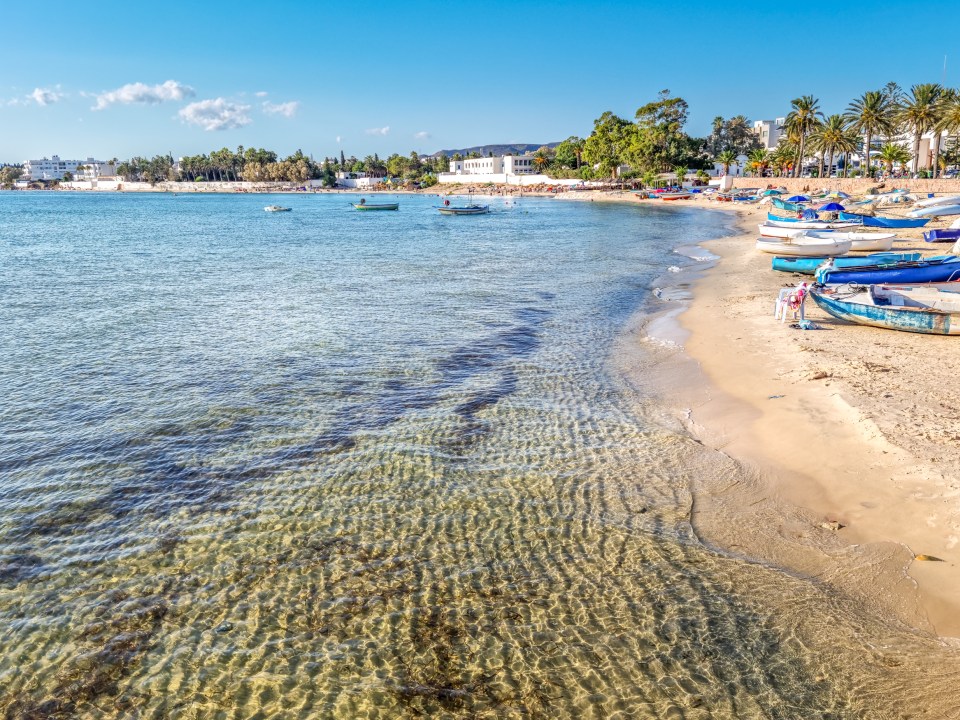
View of the beach in Hammamet, Tunisia.
From Enfidha, travellers can head to Hammamet around 30 minutes away Credit: Getty

The flights will head to Enfidha in Tunisia, with two flights a week from Birmingham, Manchester and London Stansted from May 1, 2027 to October 31, 2027.

And then there will also be weekly flights to the destination from Leeds Bradford and East Midlands airports as well.

From Enfidha, visitors will easily be able to visit Hammamet which is just 30 minutes away .

Also known as the ‘Tunisian Riviera’, it costs just 35 per cent the price of a holiday to the French Riviera where you’ll find St Tropez.

Read more on travel inspo

CHEAP BREAKS

UK’s best 100 cheap stays – our pick of the top hotels, holiday parks and pubs


ALL IN

I found the best value all inclusive London hotel… just £55pp with free food & booze

The Sun’s Digital Sports Reporter, Etienne Fermie, recently visited.

She said: “In May sunshine, the glorious blue sky pops off the glistening white walls of the stunning coastal town of Sidi Bou Said in northern Tunisia.

“All the buildings are decked out in white and blue, providing a gorgeous visual as the perfect sky kisses the crystal clear, calm Mediterranean sea.

“Sidi Bou Said is reminiscent of Santorini and symbolic of the blend of cultures that modern-day Tunisia infuses.”

Ancient Muslim cemetery in Hammamet, Tunisia, with white tombstones and a view of the sea under a blue sky.
And an hour from Hammamet is Sibi Bou Said, which is like Santorini Credit: Getty

Other destinations travellers can reach from Enfidha Airport include Port el Kantaoui, Skanes, Mahdia and Sousse.

Jet2 used to fly to Tunisia in 2015 from East Midlands, Glasgow, Leeds Bradford, Manchester and Newcastle airports but the route was suspended not long after it launched.

Steve Heapy, Jet2 Chief Executive, said: “With year-round sunshine, rich culture and fantastic scenery, Tunisia has something for everyone and we know how immensely popular it will be.

Fakhri Khalsi, Acting UK Director at the Tunisian National Tourist Office, said: “This announcement represents a significant milestone in our efforts to strengthen Tunisia’s position as a leading Mediterranean destination and reflects the growing confidence of major travel operators in our tourism offering.

“As one of the UK’s most respected and influential travel companies, Jet2’s entry into the Tunisian market will provide British travellers with even greater access to our country’s rich cultural heritage, beautiful coastline, authentic experiences, and renowned hospitality.”


Source link

The huge £585million indoor water resort with 18 slides and 20 pools

An image collage containing 3 images, Image 1 shows Illustration of people enjoying a large indoor waterpark with palm trees, water slides, and multiple swimming pools, Image 2 shows Illustration of the Therme Singapore facility, a large, multi-story building with a wavy roof design and extensive glass walls, surrounded by lush green landscapes and palm trees, with a pool and people relaxing outdoors, Image 3 shows Illustration of Therme Singapore's wellness sanctuary with thermal pools, art, and coastal nature, featuring people relaxing and walking in a green park

A MASSIVE indoor water resort the size of nine football pitches is set to open – and a similar one is coming to the UK.

Therme Singapore has confirmed that it will be opening in 2030, with works set to start.

Therme Singapore is opening in 2030 – and is similar to one coming to the UK Credit: Therme Singapore

The 720,000sqft attraction will be set across seven levels, with a range of activities based around water and wellness.

Set to cost S$1billion (£584million), inside will be 20 swmming pools, 18 waterslides and 70 treatment rooms for health and wellness.

There will be three zones – Play, Relax and Restore.

Play will be home to the water slides, as well as kids pools and a wave pool while Relax will have mineral and hydrotherapy pools.

SPLASH OUT

Mega £500m waterpark gets underway & will be UK’s ‘biggest paid-for attraction’


SPLASH OUT

Huge £500million indoor water resort to be ‘UK’s biggest paid-for attraction’

Restore will be the wellness area, with everything from steam rooms and saunas to cold punges and massage rooms.

Not only will there be hundreds of thousands of plants inside, but it will remain at around 30C all year round.

Inside will also be a huge dining area with restaurants and food spaces.

When it opens, it hopes to eventually welcome up to two million visitors.

It will have three themed zones as well as pools and waterslides Credit: Therme Singapore
It will be the size of nine football pitches Credit: Therme Singapore

But if Singapore is a bit too far for you, you can get excited by these images as a similar one is opening in the UK.

Therme Manchester is also opening in 2030, and claims it will be the biggest paid for attraction in the UK with three million tourists a year.

The £500million indoor water resort will be across 28 aces, with similar Play, Restore and Relax zones like the one in Singapore.

This will include a indoor beach, year-round 33C temperatures as well as pools and slides.

David Russell, CEO of Therme UK said: “There won’t be anywhere in this country that has the facilities we have.”

Other sides include Therme Bucharest in Romania and Therme Erdin in Germany.

The Singapore resort is set to cost £586million – more than the one in the UK Credit: Therme Singapore

Source link

2026 World Cup guide: Full TV schedule, game previews, results, standings

The 2026 FIFA World Cup is well into the second run of group play, with every team still eager to post wins as they look to secure a place in the knockout stage.

Here’s everything you need to know about matches being played on Friday, Saturday and Sunday in the 48-team tournament across the U.S., Mexico and Canada (all times Pacific).

Friday’s Group C matchups:

Scotland vs. Morocco

Morocco's Soufiane Rahimi controls the ball during a World Cup match against Brazil on June 13.

Morocco’s Soufiane Rahimi controls the ball during a World Cup match against Brazil on June 13.

(Kevin C. Cox / Getty Images)

Where: Gillette Stadium, Foxborough, Mass.
Time: 3 p.m. PDT
TV: Fox, Telemundo

The buzz: Scotland opened its World Cup with a win over Haiti — its first in 10 tournament games against teams from the Americas — on John McGinn’s goal midway through the first half. A win or draw here will probably be enough to send the Scots on to the knockout stage for the first time. Morocco came away from its first match with a well-earned point in a 1-1 draw with Brazil. That game was nearly as equal statistically as it was on the scoreboard. Morocco’s score came from Ismael Saibari in the 21st minute.

Brazil vs. Haiti

Vinicius Junior celebrates after scoring against Morocco in the World Cup on June 13.

Vinicius Junior celebrates after scoring against Morocco in the World Cup on June 13.

(Adam Hunger / Associated Press)

Where: Lincoln Financial Field, Philadelphia
Time: 5:30 p.m. PDT
TV: Fox, Telemundo

The buzz: Haiti outpossessed and outshot Scotland in its opening loss but it couldn’t score, leaving it needing at least a point here to keep its hopes of advancing alive. Brazil got a 32nd-minute goal from Vinícius Júnior in its opener.

Friday’s Group D matchups:

United States vs. Australia

U.S. midfielder Gio Reyna celebrates with defender Chris Richards after a 4-1 win over Paraguay.

U.S. midfielder Gio Reyna celebrates with defender Chris Richards after a 4-1 win over Paraguay at the World Cup on June 12.

(Robert Gauthier / Los Angeles Times)

Where: Lumen Field, Seattle
Time: Noon PDT
TV: Fox, Telemundo

The buzz: The only time the U.S. won two games in the group stage was 1930; the Americans can equal that with a win here after thrashing Paraguay in its opener. Folarin Balogun’s two goals in that game equaled another record from 1930, which was the last time a U.S. player had multiple goals in a World Cup game. Australia opened with a 2-0 win over Turkey. A win or draw here will likely send the Socceroos to the next round for a second straight World Cup.

Paraguay vs. Turkey

Paraguay head coach Gustavo Alfaro talks with his players during a training session on Thursday.

Paraguay head coach Gustavo Alfaro talks with his players during a training session on Thursday.

(Eugene Hoshiko / Associated Press)

Where: Levi’s Stadium, Santa Clara, Calif.
Time: 8 p.m. PDT
TV: FS1, Telemundo

The buzz: Neither team can afford a loss if they hope to advance. Turkey dominated its opener, outshooting Australia 30-9, taking 51 touches in the penalty area and completing 90% of its 635 passes. But it had nothing to show for it in a 2-0 loss. Paraguay was never in its opener, falling behind the U.S. 3-0 in the first half of a 4-1 loss.

Saturday’s Group E matches:

Germany vs. Ivory Coast

Ivory Coast's Yan Diomande celebrates a goal against Ecuador in the World Cup on June 14.

Ivory Coast’s Yan Diomande celebrates a goal against Ecuador in the World Cup on June 14.

(Petr David Josek / Associated Press)

Where: BMO Field, Toronto
Time: 1 p.m. PDT
TV: Fox, Telemundo

The buzz: Germany pounded tiny Curaçao 7-1 in its opener. The last time Germany won 7-1 in a World Cup was in 2014 when it routed Brazil en route to its fourth title. The Ivory Coast started its tournament with a 1-0 upset of Ecuador on substitute Amad Diallo’s goal in the 90th minute. Ivory Coast limited the South Americans to just one shot on goal.

Ecuador vs. Curaçao

Curaçao's Livano Comenencia shoots against Germany during a World Cup match on June 14.

Curaçao’s Livano Comenencia shoots against Germany during a World Cup match on June 14.

(Eric Gay / Associated Press)

Where: Arrowhead Stadium, Kansas City, Mo.
Time: 5 p.m. PDT
TV: FS1, Telemundo

The buzz: Neither team can afford another loss after falling in their openers, but Curaçao has the bigger hill to climb after surrendering 26 shots — 12 on target — in a one-sided loss to Germany. The only bright spot was Livano Comenencia scoring Curaçao’s first-ever World Cup goal. Ecuador had few scoring changes in its loss to Ivory Coast. It will need to do better if it hopes to get out of the group stage for just the second time.

Saturday’s Group F matchups:

Netherlands vs. Sweden

Sweden's Yasin Ayari (18) celebrates with teammates after scoring against Tunisia in the World Cup on June 14.

Sweden’s Yasin Ayari (18) celebrates with teammates after scoring against Tunisia in the World Cup on June 14.

(Matias Delacroix / Associated Press)

Where: NRG Stadium, Houston
Time: 10 a.m. PDT
TV: Fox, Telemundo

The buzz: Yasin Ayari scored the first and last of Sweden’s goals in the 5-1 win over Tunisia last week. The Netherlands twice lost leads in its 2-2 draw with Japan. The Dutch haven’t been eliminated in the first round of a World Cup since 1938, but a loss here could put that streak in jeopardy.

Tunisia vs. Japan

Japan's Daichi Kamada controls the ball in front of the Netherlands' Teun Koopmeiners during a World Cup match.

Japan’s Daichi Kamada controls the ball in front of the Netherlands’ Teun Koopmeiners during a World Cup match on June 14.

(Jessica Tobias / Associated Press)

Where: Estadio BBVA, Guadalupe, Mexico
Time: 9 p.m. PDT
TV: FS1, Telemundo

The buzz: Tunisia will play its first game under interim coach Hervé Renard, who managed the team from 2019-22. He replaces Sabri Lamouchi, who was fired after Tunisia’s listless loss to Sweden. Japan earned a point in its opener, twice rallying from deficits to draw the Netherlands on Daichi Kamada’s goal in the 88th minute.

Sunday’s Group G matchups:

Belgium vs. Iran

Belgium's Romelu Lukaku, right, is challenged by Egypt's Ramy Rabia during a World Cup Group G match on June 15.

Belgium’s Romelu Lukaku, right, is challenged by Egypt’s Ramy Rabia during a World Cup Group G match on June 15.

(Alex Grimm / Getty Images)

Where: SoFi Stadium, Inglewood

Time: noon PDT

TV: FS1, Telemundo

The buzz: Iran twice rallied from deficits to draw New Zealand in its first game while Belgium, outplayed by Egypt in its opener, was lucky to escape with a point on an own goal early in the second half. Belgium’s aging golden generation of Romelu Lukaku, Kevin DeBruyne, Thibaut Courtois, Thomas Meunier and Axel Witsel are going to need to do much better if they hope to avoid another early World Cup exit.

New Zealand vs. Egypt

New Zealand's Callan Elliot, left, and Iran's Mehdi Ghayedi battle for the ball during a World Cup Group G match.

New Zealand’s Callan Elliot, left, and Iran’s Mehdi Ghayedi battle for the ball during a World Cup Group G match on June 15.

(Andre Penner / Associated Press)

Where: BC Place, Vancouver, Canada
Time: 6 p.m. PDT
TV: FS1, Telemundo

The buzz: One of these teams could make history since neither has ever won a World Cup game. New Zealand earned its first point in three World Cup appearances with a draw against Iran. Egypt’s tie with Belgium was its third draw in eight games. And there could be an added bonus to that history since a victory likely sends the winner on to the next round.

Sunday’s Group H matchups:

Spain vs. Saudi Arabia

Spain's Mikel Oyarzabal, top, challenges for the ball during a draw with Cape Verde on June 15.

Spain’s Mikel Oyarzabal, top, challenges for the ball during a draw with Cape Verde on June 15.

(Mattia Ozbot / Getty Images)

Where: Mercedes-Benz Stadium, Atlanta
Time: 9 a.m. PDT
TV: Fox, Telemundo

The buzz: Both teams opened the World Cup with surprising results. Third-ranked Spain was unable to score against No. 64 Cape Verde in a game that ended in a draw. Saudi Arabia was 10 minutes away from upsetting Uruguay, only to settle for a tie. Spain desperately needs a win to get its World Cup back on track while another good performance from Saudi Arabia — unbeaten in its last three games — would have the Arabian Falcons dreaming of a spot in the knockout stage.

Uruguay vs. Cape Verde

Cape Verde goalkeeper Vozinha holds the nation's flag after a draw with Spain on June 15.

Cape Verde goalkeeper Vozinha holds the nation’s flag after a draw with Spain on June 15.

(Buda Mendes / Getty Images)

Where: Hard Rock Stadium, Miami Gardens, Fla.
Time: 3 p.m. PDT
TV: FS1, Telemundo

The buzz: With all four teams playing to draws in their openers, the group is wide open. That creates a rare opportunity for tournament debutante Cape Verde, the second-smallest country to qualify for a World Cup. Vozinha, Cape Verde’s goalkeeper, made seven saves to shut out Spain. If he can frustrate Uruguay the same way, Cape Verde could be through to the round of 32.

Source link

Our best seaside towns that feel like stepping back in time

IS there anything better than a traditional British seaside summer holiday when the sun shines?

Buckets and spades, Cadbury Flakes jammed into Mr. Whippy ice creams, rounds of seafront mini golf and travelling home with a stick of rock as a souvenir.

The harbour town of Whitby remains largely unchanged, overlooked by the 13th century abbey Credit: Getty
Aldeburgh in Suffolk sees streets lined with pretty pastel-coloured houses Credit: Alamy

But let’s face it – some of our favourite resorts have become built up over the years with flashy neon arcades and attractions.

Over the years, our Travel team have visited seaside towns all over the UK, and a few stick out as traditional favourites that have remained nearly unchanged.

Not only this, but there’s heaps of history to be explored in these historic seaside towns, too.

From one of Britain’s best-preserved Medieval walls lined with gunports and stone towers, to 1950’s-style gelato bars serving up a retro knickerbocker glory, here’s Sun Travel’s favourite seaside towns that feel like stepping back in time.

Broadstairs, Kent

Deputy Travel Editor, Kara Godfrey

Broadstairs is lined with colourful beach huts and sees a merry-go-round visit in summer months Credit: Alamy

The coastline of Broadstairs really does feel like you’re stepping back in time, from the retro huts lining the beach to the vintage merry go round that pops up in summer.

Forget the chaotic arcades and bustle – there’s just a small arcade on the top of the cliff, and most of the busy cafes and bars are further up from the sand.

Of course, expect it to be busy in the peak summer months, but visit in shoulder season and you’ll have most of the beach to yourself.

Morelli’s is an institution and a must – the retro 1950s gelato bar will satisfy that itch for a towering knickerblocker glory.

For the best chippy, The Mermaid is the go-to of locals, while the Charles Dickens’ pub (named after the famous author who once raved about Broadstairs) is the popular spot for a pint.

Personally, my favourite spot is the slightly trendier Bar Ingo, with basque tapas inspired small plates that have led to its multiple awards.

Want to make a weekend of it? Stay at Smith’s Townhouse, a recently opened boutique hotel that has some of the best coffee in town. Rooms from £160 a night. See smithstownhouse.co.uk.

Or opt for the Canterbury Bell by Marston’s Inns, which offers double rooms from £52 per night.

Portreath, Cornwall

Head of Travel, Lisa Minot

Head of Travel Lisa Minot visited the quaint Cornish village of Portreath with her family Credit: Lisa Minot

The pretty Cornish fishing village of Portreath has escaped the modern makeover of many of its neighbouring coastal resorts.

Its layout is still dictated by its 18th century industrial past with its historic harbour built to ship copper ore to Wales.

You can still walk or cycle the old Great Flat Lode tramways that once carried the minerals.

Set at the bottom of a steep-sided valley, the village is flanked by towering, rugged cliffs that look exactly the same as they did centuries ago.

You won’t find chain stores, amusement arcades or sprawling hotels here, the seafront and village streets are lined with traditional granite cottages alongside independent local cafes like the Pod Cafe overlooking the beach.

There are also a couple of very traditional Cornish pubs including the Portreath Arms and Basset Arms.

The beach is perfect for long walks with the dogs with the Atlantic swells crashing against its shores.

Stay at the Gwel An Mor Resort above the village with a woodland path to the beach.

This lovely resort of eco-chic pine lodges also features a restaurant, indoor pool and spa as well as tennis courts and indoor soft play and adventure course.

Stays start from £167 per night in June. See argyllholidays.com.

If you prefer holiday park breaks, book a stay at Parkdean Resorts’ Crantock Beach.

The beachfront holiday park offers four night stays for four people in a Bronze caravan from £119, or £7.44pp per night.

Great Yarmouth, Norfolk

Travel Reporter, Jenna Stevens

Great Yarmouth in Norfolk has a popular seafront promenade plus historical backstreets to explore Credit: Alamy

Families have been flocking to the fairgrounds of Great Yarmouth for hundreds of years – and it still very much remains a popular seaside resort today.

Great Yarmouth saw a particularly big boom in holidaymakers in 1844 when the seaside railway opened, which transported visitors from the Midlands straight to the beach.

Today, Brits visit from all across the UK to try out top attractions like the rollercoasters of Pleasure Beach and watch the eye-catching shows of the Hippodrome Circus.

While these modern attractions are absolutely worth visiting, there’s plenty of historical sites here that go under the radar.

You might not expect it, but Great Yarmouth has the second-best preserved medieval town wall in England (following York).

You can still walk alongside the mile-long wall and see its massive flint towers and gunports, a scenic and historic walk away from the busier streets.

For some maritime history, head to The Time and Tide Museum.

Here you can discover the town’s fishing heritage through hands-on family activities and transport back in time to the 1950’s quayside. Adult tickets cost £7.74 and child tickets (aged 4 – 17) cost £6.57.

For somewhere to stay, the Knights Court Hotel has rooms from £90 per night and sits directly on the seafront.

Or go for a stay at the award-winning Seashore Holiday Park, with Haven Hideaway offers from £49 for four people for four nights – which works out to £3.06pp per night.

Aldeburgh, Suffolk

Travel Reporter, Alice Penwill

Travel Reporter Alice Penwill recommends a visit to Aldeburgh in Suffolk Credit: Alice Penwill

Counties like Norfolk and Essex are filled with noisy, arcade-filled seaside resorts.

But I recently discovered that those dotted along the Suffolk coastline are very different, especially when I found myself in Aldeburgh on a quiet spring weekend.

The promenade is protected so it means there can be no sellers or souvenir shops on the front, so it still maintains its feel of being a Victorian seaside town.

There’s nothing but towering pastel coloured merchant houses, fisherman’s cottages and of course, its long shingle beach.

The town is consistently referred to as being one of the prettiest (and might I add, poshest) in the country.

Behind Crag Path promenade is where you’ll find classic English bakeries, ice cream parlours, fish and chip shops, and pubs.

I popped into the White Hart, perched on the corner. It’s a small 18th century building filled with wooden furniture and nautical memorabilia – and serves up Adnams on draught – brewed up the road in Southwold.

Make sure to pop into Aldeburgh Fish & Chip Shop across the street too, it’s the oldest in the town and first opened in 1967.

Stay at the Brudenell Hotel right on the seafront from £74.50pp/pn. See
thehotelfolk.co.uk/hotels/brudenell-hotel.

Or opt for a stay at Parkdean Resorts Kessingland Beach, where you can book four nights in a chalet for 2 for £99. That’s £12.38pp per night.

Babbacome, Devon

Travel Reporter, Cyann Fielding

Beautiful Babbacombe Beach in Devon sits between Oddicombe and Maidencombe Credit: Getty

Nestled within the coastline between Dawlish and Torquay, you’ll find Babbacombe – an unspoilt town with heaps of history.

The town dates back to the 16th century when it was a fishing village and much of the original charm can still be seen today.

You can head to Babbacombe Beach, which is made up of shingle and sits below the towering red cliffs that form Babbacombe Downs.

Or you can visit Oddicombe Beach, by the historic funicular which has been operating for a century and travels the 200 metres down to the beach.

If you’re wanting somewhere special to eat, head to Babbacombe Bay Cafe, which serves freshly made toasties with salad.

About a three-minute walk away from the Downs, you’ll reach the high street where you can explore Bygones – a museum with a full-scale replica Victorian street (£13.95 per adult/£9.75 per child).

Another great attraction is Babbacombe Model Village, where you can feel like a giant as you explore hundreds of model scenes depicting British life (£21.95 per adult/£17.95 per child).

As for somewhere to stay, head to the Cary Arms Hotel and Spa where stays start from £195 per night.

There are also four night stays available at Parkdean Resorts Torquay Holiday Park for £99, or £12.38pp per night.

Whitby, Yorkshire

Travel Reporter, Jenna Stevens

Walk the 199 steps in Whitby that feature in Bram Stoker’s famous novel, Dracula Credit: Alamy

Whitby offers everything you’d want in a trip to the seaside: award-winning fish and chips, amusements, tasty ice creams at every corner – but it stands out thanks to its connection to some famous historical figures.

Famous explorer Captain Cook trained for his global voyages in Whitby. Here you can visit the Captain Cook Memorial Museum, known as the House on the Harbour.

Inside, have a nosy around the 17th-century rooms where a 17-year-old James Cook lived as an apprentice in 1746.

Outdoors, you can hop on a Captain Cook boat tour which dives right into the life of the famous voyager, packed with plenty of sea shanties to sing along to.

Horror and literature fans alike will love the town’s connection to Dracula. You can see the grand Gothic ruins of Whitby Abbey from across the harbour, which keeps watch over the town from its creepy clifftop perch.

Author Bram Stoker visited Whitby in 1890 and was struck by the landmark looming over the pretty resort. After reading up on folklore in the local library, the writer penned his famous text.

This town takes its vampire fame seriously. To celebrate 125 years since the novel’s publication, English Heritage broke a Guinness World Record by hosting the world’s largest gathering of vampires, with 1,369 caped fans showing up.

To follow in the count’s footsteps, you can climb the famous 199 stone steps. In the book, a sinister black dog dashes up this staircase to announce Dracula’s arrival.

Luckily, daytime climbs offer gorgeous views of tiered red-roofed cottages rather than scares.

Stay on theme at the nautical Smugglers Rest bed and breakfast from £95 per night.

Or bag yourself a four night stay at Parkdean Resorts Cayton Bay in a Bronze Caravan, which sleeps eight, from £136 – which works out to £4.25pp per night in a full caravan.

Cockington, Torquay

Head of Travel, Lisa Minot

The Sun’s Head of Travel Lisa Minot recommends a visit to Cockington, one mile from Torquay Credit: Lisa Minot

Tucked away in a hidden valley just a mile from the bustling seafront of Torquay, the quintessential Devon village of Cockington is unchanged.

While the English Riviera expanded over the centuries to accommodate the boom in tourism, Cockington has stood frozen in time.

The village is made up of striking 16th and 17th century cottages complete with whitewashed cob walls, timber beams and thick, thatched roofs.

And the reason the village has been unchanged for centuries is Cockington Court, A manor house dating back to the Domesday Book, the estate and country are protected against any development by a registered charity.

Legendary crime writer, Agatha Christie, was a frequent visitor to Cockington Court in her youth and even took part in amateur theatre on the manor house’s lawns.

The village’s narrow lanes wind past three tranquil mill ponds, ancient orchards and wooded walks and to this day, one of the most popular ways to arrive here to get around is via traditional horse drawn carriages.

Quench your thirst at the local pub, The Drum Inn, designed in 1936 by the architect Sir Edwin Lutyens to seamlessly blend in with the ancient surroundings or visit the original Forge, which has been operating on the same site since the 14th century.

Stay at the Hotel Indigo Torquay which sits on the seafront close to Cockington Country Park. Double rooms start at £61 per night in June. See ihg.com.

Book a four night stay at Park Holidays’ Dawlish Sands from £249 total, or £15.56pp per night.

Source link

Navy Finally Seeking To Dispose Of USS Long Beach, The World’s First Nuclear-Powered Cruiser

More than three decades after decommissioning the USS Long Beach, the Navy is finally preparing to dispose of what’s left of the world’s first nuclear-powered surface combatant. The cruiser – which already had its distinctive boxy superstructure as well as its bow and stern sections removed – has been moored at Puget Sound Naval Shipyard and Intermediate Maintenance Facility since being decommissioned in 1995.

After a long process to determine what to do with Long Beach, the Navy on Wednesday put out a call for companies willing and able to perform the extremely complex and lengthy operation to transport, dismantle, de-militarize, and dispose of what was once a 721-foot-long ship that displaced 15,540 tons, including its two defueled reactor plants. Long Beach was launched in 1959 and commissioned two years later.

You can read more about the ship, its unique character, armaments and exploits in our two-part interview with a master chief who served on Long Beach here and here.

The USS Long Beach, world’s first nuclear-powered surface combatant, under construction. (USN)

This marks just the second time the Navy has opted to select a commercial yard to dismantle a nuclear-powered warship. The first was the ex-USS Enterprise, the world’s first nuclear-powered aircraft carrier from the same era as Long Beach. It is vastly more complex and expensive to dispose of nuclear-powered vessels than conventionally powered ones because of all the radiological concerns, even long after the reactors have been defueled.

We’ll get into more details about how difficult, time-consuming and costly a process this could be later in this story when we examine the pitfalls of the Enterprise situation, admittedly a much more complex undertaking for various reasons we will explain. However, first we need to understand how Long Beach got to this point.

USS Long Beach. (USN)

The decision to go forward with the Long Beach dismantling process came after a Naval Vessel Historical Evaluation (NVHE) in April determined that the ship was ineligible for listing in the National Register of Historic Places (NRHP) despite its history as the first surface combatant ever to have nuclear propulsion and combat service that ranged from the Vietnam War to Operation Desert Storm.

USS Long Beach (CGN-9) thumbnail

USS Long Beach (CGN-9)


“The ship was deactivated in 1994 and towed to Newport News Shipbuilding where the entire superstructure was removed and the reactors were defueled,” according to the NVHE. “After this work was completed in the winter of 1995, the hull was towed through the Panama Canal to Puget Sound where it has been waiting to be recycled.”

In 2012, the ship was sold for scrap.

“Long Beach had 10,000 tons of steel, 300 miles of electrical cable and 450 tons of aluminum, earning it the voice radio call sign ‘Alcoa’ after the aluminum maker of the same name,” Reuters reported at the time.

“More than a dozen scrap dealers have expressed interest in taking part in sealed online bidding for the hull, with more than 7.35 million pounds (3.33 million kg) of steel, aluminum and copper wiring, galley equipment, tables, chairs, lockers and bunks,” Government Liquidation president Tom Burton told the news outlet.

“It’s a two-year process but it could take 18 to 26 months,” Burton said. “What’s left is an inert hull.”

USS Long Beach CGN-9 thumbnail

USS Long Beach CGN-9


It remains unclear what happened to that scrap sale. We reached out to the Navy for answers.

The Puget Sound Naval Shipyard subsequently completed a limited-scope hull preservation availability in 2015 that resulted in the removal of the bow and stern, according to the NVHE records. It was ultimately decided not to save the ship by placing it on the NRHP because “major alterations have been made in design that do not maintain the historic design of the vessel (loss of the superstructure and major hull elements),” the review found. “Character defining features of USN warship have been lost, such as main armament, superstructure, bow, and stern. Does not evoke the aesthetic of a 20th Century USN warship.”

What’s left of the USS Long Beach. (Google Earth)

Moreover, a 60-day period for stakeholders to comment expired earlier this month with no responses.

USN

With all the hurdles to ultimate destruction now out of the way, the Navy will host an Industry Day meeting on June 24 and 25 in Washington, D.C. for companies interested in learning more about what is involved in the final dismantling of the USS Long Beach.

Screenshot

Whoever gets the job will first have to transport it from Puget Sound to the shipbreaking yard by “dry transport via semi-submersible barge, deck barge, or semi-submersible heavy lift vessel” because the ship’s “current structural condition precludes an open ocean tow,” according to the RFI.

“Dismantling and disposing of ex-Long Beach is necessary in order to comply with Navy policy for inactive nuclear-powered ships stricken from the Naval Vessel Register, and Naval Nuclear Propulsion Program (NNPP) statutory responsibilities,” the RFI explains. “The requirement for disposal includes dismantling, demilitarizing, and recycling the remnant hull sections at an authorized commercial facility in accordance with applicable federal, state, and local laws, and removing and packaging the reactor plant components for transportation and disposal as low‑level radioactive waste (LLRW) at an authorized radioactive waste facility or facilities.”

There are no timelines or cost estimates associated with the RFI, nor is there any guarantee that a request for proposal will be issued. We’ve reached out to the Navy for more details.

Our past reporting offers some insights into the tremendous time and money it takes to dismantle a nuclear-powered warship, as evidenced by the saga of the aforementioned Enterprise. However, it should be noted that there are some big differences between that vessel and Long Beach. The carrier is far larger and more complex, had eight reactors compared to two, and had less prep work done in advance.

Tugs move the USS Enterprise into Newport News Shipbuilding’s yards in 2013. USN

In 2019, the Government Accountability Office found that it could cost the Navy more than $1.5 billion to fully dispose of Enterprise.

The GAO report also stated that a complete process could take more than 15 years to finish.

A trio of nuclear-powered Navy surface warships sail together in 1964. From left to right, the aircraft carrier USS Enterprise, the cruiser USS Long Beach, and the frigate USS Bainbridge. USN

From our previous story about the dismantling of the ship known as the Big E: 

“The Navy officially decommissioned Enterprise, also known by its hull number CVN-65, in February 2017, after more than five decades of service. The ship had already effectively been in mothballs since 2012 and Newport News Shipbuilding completed a lengthy ‘inactivation’ process, which included removing nuclear fuel, mission systems, and other items from the ship, in April 2018.

‘At approximately 76,000 tons, CVN-65 will require an unprecedented level of work to dismantle and dispose of as compared to previous ships,’ GAO’s review, which the congressional office published on Aug. 2, 2018, said. ‘Regardless of the approach the Navy chooses, CVN-65 will set precedents for the processes, costs, and oversight that may be used to dismantle and dispose of nuclear-powered aircraft carriers in the future, such as the Nimitz-class carriers which the Navy will begin to retire in the mid-2020s.’”

An SH-60 Blackhawk helicopter assigned to Helicopter Anti-Submarine Squadron Seven (HS-7) hovers off the bow of the aircraft carrier USS Enterprise CVN 65. The Enterprise and HS-7 are engaged in Composite Training Unit Exercise (COMPTUEX) in the Puerto Rico operating area. (DoD photo by Petty Officer 3rd Class Timothy Smith. (Released))
An SH-60 Blackhawk helicopter assigned to Helicopter Anti-Submarine Squadron Seven (HS-7) hovers off the bow of the aircraft carrier USS Enterprise CVN 65. (DoD photo by Petty Officer 3rd Class Timothy Smith.) Cpl. Madisyn Paschal

The first of those, the USS Nimitz, the Navy’s oldest operational carrier, is scheduled to be inactivated in 2027, the Navy told us.

On March 13, the Navy signed a $95.7 million contract with Huntington Ingalls Inc. “for advance planning and long-lead-time material procurement to prepare and make ready for the accomplishment of the inactivation and defueling of USS Nimitz (CVN 68). Work will be performed in Newport News, Virginia, and is expected to be completed by March 2027.”

The aircraft carrier USS Nimitz underway. (USN)

Meanwhile, the Navy originally projected that it would cost somewhere between $500 and $750 million to scrap the Enterprise, but by 2013, this figure had grown to over $1 billion. The difficulties involved forced the service to push back the start of the process more than once.

The regulatory and logistical picture was equally tangled. The Navy and the NRC disagreed on what standards should apply if a private company did the work, and NRC only has direct authority in 13 states, potentially limiting where the job could even be done. Conducting the work at Puget Sound Naval Shipyard — the Navy’s proven approach — risked worsening an already serious maintenance backlog for active ships. The commercial route could be faster and cheaper, but no private yard had ever handled military nuclear reactors at this scale, and the highly classified nature of U.S. naval reactor design added another layer of complexity. 

You can read more about the challenges involved with breaking up a nuclear behemoth in our deep dive into the problems with the Enterprise effort here.

The Decommissioning Of The USS Enterprise thumbnail

The Decommissioning Of The USS Enterprise


The challenges of disposing of Enterprise, however, continued even after a final decision was made about what to do with the vessel.

On May 30, 2025, the Navy awarded a $536.7 million contract to dismantle the ship to NorthStar Maritime Dismantlement Services, LLC, of Vernon, Vermont, according to Pentagon records. The work was initially expected to be completed in November 2029.

“It was the first time a U.S. nuclear-powered warship will be dismantled through a commercial effort, representing a significant milestone in responsibly and safely closing out the legacy of one of the most iconic nuclear-powered warships,” the Navy noted at the time, according to USNI.

However, the effort unraveled over a legal battle over how the Navy handled final bid submissions, ultimately resulting in the service being “ordered to pause the project and reassess bids, while the appeal now puts the future of the contract back in question,” according to NBC15 News. “The Navy is expected to re-award the contract by June 2026.”

We have reached out to the Navy to find out the status of that contract as well.

USS Enterprise to be dismantled in Alabama thumbnail

USS Enterprise to be dismantled in Alabama


Even as the Navy is working to dispose of its first nuclear-powered surface combatant, it is planning for the newest one. The Navy says its proposed Trump class battleships will be nuclear-powered as well.

It remains to be seen how the complications the Navy has faced trying to dismantle Enterprise will affect the disposal of Long Beach and what lessons will be applied, if any. The answers to some of those questions should come into sharper focus next week when interested parties get to ask the Navy for themselves at the Industry Day.

Contact the author: howard@twz.com

Howard is a Senior Staff Writer for TWZ. He writes frequently about conflict, focusing heavily on the Middle East and Ukraine, and interviews with military and intelligence officials and industry leaders from around the globe. He lives near Tampa, Florida, home of U.S. Central Command, U.S. Special Operations Command.


Source link

How to have the best Sunday in L.A., according to Patton Oswalt

Patton Oswalt is an avid reader. When he thinks about his ideal Sunday in the Valley, where he has lived for more than a decade, bookstores come up more than a few times, particularly ones like the neighborhood staple the Iliad, which encourages patrons to sit and read for hours.

Currently, the 57-year-old comedian says he is rereading Mo Daviau’s 2016 time-travel/rock-nerd novel “Every Anxious Wave,” the plot to which he “truly can’t describe,” adding: “It’s about, especially for me, how does Gen X grow old? And how do they try to dodge growing old? It’s pretty f— brilliant. Imagine a day just killing two or three hours in the Iliad just reading it. Oh, it’s the best.”

In Sunday Funday, L.A. people give us a play-by-play of their ideal Sunday around town. Find ideas and inspiration on where to go, what to eat and how to enjoy life on the weekends.

Not that Oswalt always has time to sprawl out with a novel. Like any touring comedian of his caliber, he admits that his schedule is constantly in flux. Not only did he spend last summer and fall promoting his 10th stand-up hour, “Black Coffee and Ice Water” (out now on Audible), but he is constantly at work on new material. On June 9, he’s launching “Tea & Scotch” on YouTube, which delves into more observational comedy subjects such as ghost-seeing cats, AI paranoia and parenting a teenager. (Oswalt tells The Times that his daughter usually does her own thing on weekends, but sometimes they’ll journey to Burbank and hit the vintage shops on Magnolia, followed by poke for lunch.)

When he’s not earmarking time in his perfect Sunday for reading, Oswalt also delights in frequenting Valley small businesses that fully embrace the indie and oddball. “I like where the Valley’s going. I like how its residents are aging,” says Oswalt. “Because they’re aging into weirdness rather than safety, which is what I will always go for. Instead of just, ‘I want the nice, reliable chain restaurant, the nice, big book chain,’ I prefer smaller shops that take risks. They’re more quirky, an actual person works here, and the imperfections are what makes it amazing.”

Below, Oswalt shares his ideal Sunday in L.A., which sometimes begins later than he’d like it to.

7 a.m.: Enjoy a quiet breakfast at home

I try to be an early riser. Today I got up at 8:30, but a great day for me is getting up at 7, because I have that hour of quiet to have my breakfast, sip some tea, do some reading, and then start my day.

But it’s hard to have a lot of those mornings in a row, because unfortunately, I also have those nights where I’m just, like, lying awake thinking. I have those crash-out days where I’m like, “Sleep until noon today! Need it! Gotta catch up.” Anyone who says that they consistently wake up at 7 a.m., for the most part, they’re probably lying.

9 a.m.: Morning coffee with a side of people watching

What’s critical about the Valley, especially Studio City, is a lot of hipsters who have aged out of Los Feliz and Silver Lake have all moved here, and they brought the good sushi, the good bookstores and the good coffee with them. So, my perfect Sunday starts at the Studio City Farmers Market. You do this kind of roaming breakfast. Where they do the farmers market, there’s an amazing tamale stand that does these chicken and green chile tamales. You get one of those, and then you go over to Joan’s on Third, and you get yourself a really strong cup of coffee, because Joan’s is right there, part of the farmers market.

It’s almost like Joan’s is the motor on a sailboat. If you can’t find the food that you like roaming around the farmers market, you can hop into Joan’s and grab something, but that’s where the good coffee is. Then you get a thing of berries from one of the sellers, and you sit. There are musicians everywhere, and it is a really good opportunity to not start your day looking at a screen and instead actually look at beautiful and flawed and imperfect and awesome people moving around and interacting. For a comedian or writer, that is gold.

11 a.m.: Worm into a book

From there, I would go up to the Last Bookstore, which just opened a location on Lankershim Boulevard in NoHo. It’s a work in progress; you can see the beginnings of the cool building that they’re doing on the interior. It’s almost like when you watch the Talking Heads’ “Stop Making Sense” and you see them assemble the stage as the concert goes on. It’s kind of amazing. So I always drop by there and spend way too much money on a book.

1 p.m.: Catch a matinee (and a matcha)

One of my favorite things is to see a movie in the afternoon. The Laemmle NoHo 7 on Lankershim is my little ’90s throwback Sunset 5, but in the Valley. They show very cool first-run indie movies, and then they will just randomly throw in [a classic], “Oh yeah, we’re showing ‘Jules and Jim.’” I just check my Fandango, to see what they’re showing in the afternoon, then I go see a movie.

I don’t really eat lunch these days, but across the street from the NoHo 7 is a place called Horror Vibes Coffee. It’s all based around horror movies. It’s weirdly popular. All these goth kids go in there, and they make really good matchas. So I’ll go in there, I’ll get a matcha, and then take that into the movie theater, see a flick. The Laemmle NoHo 7 does make really good chicken nuggets, and they do make a really, really bad for you — but delicious — bagel dog. Listen, a bagel dog with a recent indie movie? That’s mwah. [Gestures a chef’s kiss.]

4 p.m.: Head back to the bookstore

When I’m done at the movies, I will take whatever book I’ve gotten and go back down to the Last Bookstore and just sit and read. Or if you really want to go goblin-mode reading, you go to the Iliad Bookshop on Cahuenga. They encourage you just to go in there, sit, read. There are store cats everywhere that are hanging around, and the store kitties are very friendly. The Iliad has these big, overstuffed couches and chairs with blown springs. You are encouraged to sit and lounge and read. They have no problem with you doing that. A big thing for me now is having two to three uninterrupted hours of just reading. No phone, no nothing. Don’t gotta go anywhere. Don’t do anything. [Editor’s note: The Iliad is closed Sundays.]

6 p.m.: Sit down for some sushi

I’m very spoiled living in the Valley, because I live near amazing sushi. If I really want to splurge out and have what I think is the best sushi in the Valley, then I visit Sushi Tomoki, which is on Cahuenga. I just cannot rave about this place enough. They have a black cod sushi, and the black cod is slightly seared. It’s not cold, but it’s not totally cooked. There is something about cold rice and then this slightly seared, slightly burned black cod. The flavor is so perfect, I love it.

Right now, in the Valley, I’m kind of spoiled for good restaurants. There’s OyBar on Moorpark that I could go to. I go there right at 5. Otherwise there’s a line. I go right when they open. And then there’s a place called Wood & Water, further up Ventura, kind of closer to Sherman Oaks. That place is just solid, good. Everything on the menu is great, great wine list, you know. But the word is out — it’s getting crowded. Not to be a snot rag, but I go to Wood & Water so much that they kind of know me there, and they can usually get me a table. Not that I’m a big celeb, it’s just I go there a lot because their food is so good.

Once you’re my age, when I hear, “You gotta wait in line”… like, that’s why I’ve never been to Sqirl. Because I know I can’t do that, man. If I’m gonna stand in line, I’m gonna go to All Time, but I’ll just get there when they open. I can’t do lines anymore. You can do it when you’re 20, but I just want my g— breakfast.

8 p.m.: Take an outdoor stroll, then return to your book

After dinner, if it’s summertime in the Valley, I just walk through my neighborhood. There’s really good hills and stuff to go for, like, a nice nighttime walk after dinner. Or, because I’m such a freaking bookworm, I go home and sit on my big, comfy couch and just read some more until I fall asleep. There’s nothing wrong with double-dipping — you don’t have to read just once during the day. You can go back and forth.

Source link

How to smoothly move on from a failed attempt at sexting to discussing the weather

TRIED to spice things up with dirty texts and been rebuffed? Here’s how to move onto a much safer topic: the British weather.

Tell your partner they misunderstood

When you asked if she was wet, what you meant was ‘due to the downpour we just had’. If you requested shower pics, you meant her in a charming mac caught in an April shower. Sadly you have now condemned yourself to receiving and commenting on ‘adorable’ pictures of her whenever she gets caught in the rain. Get ready with those ‘likes’.

Show concern

You only wanted to know what he was wearing to make sure it was climate-appropriate. The same with telling him he was ‘hot’. You just were trying to persuade him to wear a sun hat and cooling lightweight clothing. How could you worrying about heatstroke and dehydration be misconstrued as sexual? Shore up this gaslighting by asking if he’s ever been treated for sex addiction.

Blame the seasons and your allergies

Alright, you were a bit forward, but it’s the weather. The warmer temperatures have caused the flowers to bloom and release pollen and it’s made you delirious with hayfever. So let’s talk about that and not that dick pic you sent. Admitted this is the first case of hayfever to have the same effects as malaria, but you don’t have many options. Maybe you can convince her you accidentally dropped your phone down your trousers? No, that’s just as bad.

Turn your dirty talk into a weather report

For example: ‘After a warm front, things have turned rather chilly. There’s been a sharp drop in enthusiasm and earlier projections of heavy activity have now been downgraded to light drizzle at best. Conditions are tense but stable. Expect a long dry spell ahead.’ See, this is like a spoof weather report on a comedy show! Ha ha ha! Is he laughing? No, he’s thinking about dating someone less weird.

Never speak of what happened again

Like a sunny spell, your attempt at being sexy came and went and now you’re back to gloom and small talk. Both of you should bury this awkward memory and only talk about the weather from now on. It’s the British way.

Mexico gets important World Cup victory

World Cup: Mexico defeats South Korea

From Eduard Cauich: Three and a half years after its biggest failure on the World Cup stage in half a century, the Mexican national team needed only two games to advance to the knockout round of this year’s tournament as winner of Group A.

Mexico’s defense held off a spirited final push by South Korea, earning a 1-0 win on Thursday night at Guadalajara Stadium in front of a fiery announced sellout crowd of 45,522.

Goalkeeper Kim Seung-gyu made a mistake in the 50th minute, failing to stop what appeared to be a simple cross and bobbling the ball. That allowed Mexico’s Luis Romo to easily tap the ball into the net and claim a 1-0 lead.

South Korea put pressure on the Mexican team throughout the game. Late in the scoreless first half, Jae-sung Lee came close to giving South Korea the lead. Mexico coach Javier Aguirre hoped his team would shake off nerves following the emotional opener at Azteca Stadium and show more bite in its second game against South Korea, but his team didn’t have much power behind its attack during the game’s first 45 minutes.

The crowd in Guadalajara grew frustrated and began booing the Mexican national team’s performance at the end of the first half.

Mexico, however, won back their cheers when it capitalized on South Korea’s costly mistake and converted it into a goal.

El Tri earned a win without any other goals thanks, in part, to a great night by goalkeeper Raúl Rangel, who stopped a header by Cho Gue-sung in the 87th minute. Captain Edson Álvarez helped turn away South Korea’s attack late, holding up relatively well despite having left ankle surgery during the past year.

Continue reading here

Why this World Cup could do for Canada what 1994 did for soccer in the U.S.

Swanson: From poker pro to World Cup coach: Sergej Barbarez all in with Bosnia-Herzegovina

Click here for complete TV schedule, groups and players to watch

Go beyond the scoreboard

Get the latest on L.A.’s teams in the daily Sports Report newsletter.

Christian Pulisic uncertain for today’s game

From Kevin Baxter: Christian Pulisic’s status for the United States’ second World Cup match Friday in Seattle is uncertain a week after he aggravated a left calf injury.

“Tonight, we have a meeting with our medical staff. We will assess the whole group,” U.S. coach Mauricio Pochettino told reporters Thursday. “He’s evolving and much better from Friday. We will see.

“If [he’s] not available tomorrow, he’ll be back for Turkey.”

The U.S. faces Australia with a chance to lock down first in Group D with a win coupled with a loss or draw by Turkey in its game Friday with Paraguay. But that task will be much more difficult without Pulisic, who set up the first two goals in the Americans’ tournament-opening win over Paraguay last week.

Pulisic left that game at halftime after being kicked in his left calf. He said he had been hit in that same spot in training before the World Cup began. When Pulisic spoke with reporters after that game, he was walking without a limp and said he didn’t believe the injury was serious.

Continue reading here

Wednesday’s World Cup results

Group A
Mexico 1, South Korea 0
Czechia 1, South Africa 1

Group B
Switzerland 4, Bosnia-Herzegovina 1
Canada 6, Qatar 0

Today’s World Cup TV schedule

All times Pacific
Noon, U.S. vs. Australia, Fox, Telemundo
3 p.m., Scotland vs. Morocco, Fox, Telemundo
5:30 p.m., Brazil vs. Haiti, Fox, Telemundo
8 p.m., Turkiye vs. Paraguay, FS1, Telemundo

World Cup Group standings

Group A
Country, W-D-L, Goal Differential, Points
Mexico, 2-0-0, +3, 6
South Korea, 1-0-1, 0, 3
Czechia, 0-1-1, -1, 1
South Africa, 0-1-1, -2, 1

Group B
Canada, 1-1-0, +6, 4
Switzerland, 1-1-0, +3, 4
Bosnia-Herzegovina, 0-1-1, -3, 1
Qatar, 0-1-1, -6, 1

Group C
Scotland, 1-0-0, +1, 3
Morocco, 0-1-0, 0, 1
Brazil, 0-1-0, 0, 1
Haiti, 0-0-1, -1, 0

Group D
United States, 1-0-0, +3, 3
Australia, 1-0-0, +2, 3
Turkiye, 0-0-1, -2, 0
Paraguay, 0-0-1, -3, 0

Group E
Germany, 1-0-0, +6, 3
Ivory Coast, 1-0-0, +1, 3
Ecuador, 0-0-1, -1, 0
Curacao, 0-0-1, -6, 0

Group F
Sweden, 1-0-0. +4, 3
Japan, 0-1-0, 0, 1
Netherlands, 0-1-0, 0, 1
Tunisia, 0-0-1, -4, 0

Group G
Belgium, 0-1-0, 0, 1
Egypt, 0-1-0, 0, 1
Iran, 0-1-0, 0, 1
New Zealand, 0-1-0, 0, 1

Group H
Spain, 0-1-0, 0, 1
Cape Verde, 0-1-0, 0, 1
Saudi Arabia, 0-1-0, 0, 1
Uruguay, 0-1-0, 0, 1

Group I
Norway, 1-0-0, +3, 3
France, 1-0-0, +2, 3
Senegal, 0-0-1, -2, 0
Iraq, 0-0-1, -3, 0

Group J
Argentina, 1-0-0, +3, 3
Austria, 1-0-0, +2, 3
Jordan, 0-0-1, -2, 0
Algeria, 0-0-1, -3, 0

Group K
Colombia, 1-0-0, +2, 3
Portugal, 0-1-0, 0, 1
Congo DR, 0-1-0, 0, 1
Uzbekistan, 0-0-1, -2, 0

Group L
England, 1-0-0, +2, 3
Ghana, 1-0-0, +1, 3
Panama, 0-0-1, -1, 0
Croatia, 0-0-1, -2, 0

The top two teams in each group plus the next eight best third-place teams advance to the next round.

Angels put Mike Trout on IL, then lose

Angels outfielder Mike Trout is back on the injured list.

The team announced before Thursday night’s 5-0 loss to the Athletics that the 11-time All-Star was put on the 10-day IL due to a right hamstring strain. The Angels recalled infielder Christian Moore from Triple-A Salt Lake among a flurry of moves.

Injuries have hindered Trout for much of this decade. Since winning his third AL MVP award in 2019, Trout has played more than 82 games in a season just twice — 119 in 2022 and 130 in 2025.

The 34-year-old Trout had played in 74 of 75 games this year in a resurgent season. He’s batting .234 with an .866 OPS, 17 homers, 36 RBIs and seven steals.

He entered Thursday with an AL-leading 54 runs, a total that was tied for second in the majors behind Washington’s James Wood. Trout’s 66 walks also ranked second in the big leagues, behind the Athletics’ Nick Kurtz.

Continue reading here

Shaikin: An Anaheim vision: The Anaheim Angels in a new stadium, next to a youth sports complex

Angels box score

MLB standings

Ducks’ Troy Terry has hip surgery

Anaheim Ducks forward Troy Terry is expected to recover from hip surgery in five to six months, the team announced Thursday.

Terry had surgery on June 9 “to address hip impingement and a labral tear,” the Ducks said in a statement, and he has begun the rehabilitation process.

The 28-year-old Terry had 19 goals and 38 assists during the regular season before getting the first playoff experience of his nine-year NHL career last spring. He had three goals and eight assists in 12 games while Anaheim reached the second round, but the team announced after the season ended that Terry needed surgery for a chronic hip impingement.

Continue reading here

Angel City fires coach

Angel City FC fired coach Alex Straus on Wednesday after a little more than a year on the job.

Angel City opened the season 4-6-1 and is in 12th place in the National Women’s Soccer League standings. The NWSL is on a summer break for the men’s World Cup and resumes regular-season play July 3.

Angel City assistant coach Leif Gunnar Smerud will lead the club in the interim while a search is conducted for a new head coach.

Continue reading here

Sam Stevens has a bewitching first round to lead U.S. Open

Shinnecock Hills has never looked like this for a U.S. Open, not with such receptive greens and putting surfaces slow enough to keep shots from rolling off the edges and down the slopes.

About the only familiarity Thursday was the scoring, kept in check by a strong wind that finally shooed away the fog and gave Scottie Scheffler, Rory McIlroy and the rest all they could handle.

Sam Stevens overcame a double bogey to start his round — a hole that took him over two hours to play because of the fog — and strung together six birdies that carried him to a two-under-par 68, making him one of only six players from the early starters to beat par.

McIlroy saved par on a wild ride along the fourth hole, hit a pitching wedge within 12 feet of the pin on the downwind par-five fifth hole for eagle, closed with two bogeys and was more than happy with a 69, particularly considering it was 11 shots better than the start he had at Shinnecock in 2018.

Also at 69 were Ludvig Aberg, 2023 British Open champion Brian Harman, Max Greyserman and Ben James, the college star in his second week as a pro.

Continue reading here

U.S. Open leaderboard

This day in sports history

1867 — Ruthless, ridden by J. Gilpatrick, wins the inaugural Belmont Stakes at Jerome Park in the Bronx. The filly earns $1,850 for her victory.

1914 — Harry Vardon wins his sixth and final British Open by shooting a 306, three strokes ahead of J.H. Taylor at Prestwick Club.

1936 — German heavyweight boxer Max Schmeling knocks out previously unbeaten Joe Louis in the 12th round. Schmeling’s victory sets off a propaganda war between the Nazi regime and the United States on the eve of World War II.

1938 — FIFA World Cup Final, Stade Olympique de Colombes, Paris, France: Luigi Colausig & Silvio Piola each score 2 goals as Italy beats Hungary, 4-1.

1954 — Ed Furgol edges Gene Littler by one stroke to win the U.S. Open, the first golf tournament to be televised nationally.

1955 — Jack Fleck beats Ben Hogan by three strokes in a playoff round to win the U.S. Open.

1977 — Hubert Green wins the U.S. Open by one stroke over Lou Graham.

1986 — Len Bias, the second pick in the NBA draft made by the Boston Celtics two days before, dies of a heart attack induced by cocaine use.

1992 — Evander Holyfield wins a unanimous decision over Larry Holmes to remain unbeaten and retain the undisputed heavyweight title.

1992 — Charlie Whittingham becomes the second trainer in history, behind D. Wayne Lukas, to top $100 million in purse earnings when Little by Little finishes second in the sixth race at Hollywood Park.

1999 — Dallas wins its first Stanley Cup, as Brett Hull’s controversial goal at 14:51 of the third overtime gives the Stars a 2-1 victory over the Buffalo Sabres in Game 6.

2000 — NBA Finals: Lakers beat Indiana Pacers, 116-111 in Game 6 to win the franchise’s first title in 12 years; MVP: Shaquille O’Neal.

2005 — Michael Campbell answers every challenge Tiger Woods throws his way for a two-shot victory in the U.S. Open. Retief Goosen, the two-time U.S. Open champion, turns in a collapse that ranks among the greatest in major championship history. He loses his three-shot lead in three holes and closes with an 81 to tie for 11th at 8 over.

2006 — Cam Ward stops nearly everything giving the Carolina Hurricanes their first Stanley Cup title with a 3-1 victory over Edmonton in Game 7.

2011 — Rory McIlroy runs away with the U.S. Open title, winning by eight shots and breaking the tournament scoring record by a whopping four strokes. McIlroy shoots a 2-under 69 to close the four days at Congressional in Bethesda, Md., at 16-under 268.

2016 — Dustin Johnson atones for his past mishaps in the majors winning the U.S. Open by three shots. Shane Lowry, who began the final round with a four-shot lead, Jim Furyk and Scott Piercy finish tied for second.

2016 — LeBron James and his relentless Cavaliers pulls off an improbable NBA Finals comeback to give the city of Cleveland its first title since 1964. James delivers on a promise from two years ago to bring a championship to his native northeast Ohio, and he and the Cavs become the first team to rally from a 3-1 finals deficit by beating the defending champion Golden State Warriors 93-89.

Compiled by the Associated Press

This day in baseball history

1927 — Jack Scott of the Philadelphia Phillies pitched two complete games in a doubleheader. Scott beat the Cincinnati Reds 3-1 and lost 3-0 in the second game. Scott was the last pitcher in major league history to complete two games on the same day.

1938 — Cincinnati pitcher Johnny Vander Meer coming off two straight no-hitters, extended his string of hitless innings to 21 2/3 against the Boston Bees. Vander Meer gave up a single to Debs Garms in the fourth inning. The Reds won 14-1 behind Vander Meer’s four-hitter.

1941 — En route to 56, Joe DiMaggio hit in his 32nd consecutive game, going 3-for-3, including a home run, against the Chicago White Sox.

1942 — Paul Waner got hit number 3,000 — a single off Rip Sewell — but the Boston Braves lost to the Pittsburgh Pirates 7-6.

1952 — Brooklyn Dodger Carl Erskine pitched a 5-0 no-hitter against the Chicago Cubs at Ebbets Field.

1961 — Roger Maris’ ninth-inning homer off Kansas City’s Jim Archer was his 25th of the year, putting him seven games ahead of Babe Ruth’s pace in 1927.

1973 — Pete Rose of the Cincinnati Reds and Willie Davis of the Dodgers both collect their 2,000th hits. It is a single for Rose against the San Francisco Giants and a home run for Davis against the Atlanta Braves.

1974 — Steve Busby of the Kansas City Royals hurled his second no-hitter in 14 months and gave up just one walk in beating the Brewers 2-0 at Milwaukee.

1977 — The Boston Red Sox hit five home runs in an 11-1 triumph over the New York Yankees. The five homers gave the Red Sox a major league record 16 in three games. Boston hit six homers on the 17th and five on the 18th, also against the Yankees. In the series the Yankees had no homers.

1990 — Gary Carter plays in his 1,862nd career game as a catcher to break the National League mark set by Al Lopez.

1994 — John Smoltz became the 14th major league pitcher to give up four homers in an inning when he was tagged by Cincinnati. The Reds set a team record for home runs in an inning, connecting four times in the first inning. Hal Morris, Kevin Mitchell, Jeff Branson and Eddie Taubensee homered. Smoltz allowed 20 total bases in the first inning, the most given up in the NL since 1900.

2015 — Alex Rodriguez homered for his 3,000th career hit as the New York Yankees beat the Detroit Tigers 7-2.

2017 — Dodgers rookie Cody Bellinger launched two more home runs, setting a major league record with his powerful start, and Clayton Kershaw became the first 10-game winner in the National League despite giving up a career-high four long balls as Los Angeles held on for a 10-6 victory over the New York Mets. Bellinger reached 21 homers in 51 career games — faster than any other player in big league history.

2019 — One day after fouling a bunted ball in his face during batting practice and breaking his nose, Max Scherzer takes the mound for the Nationals against the Phillies sporting a prominent black eye. He still stymies the opposition with 7 scoreless innings in a 2-0 win. “Trust me, this thing looks a lot worse than it actually feels,” he explains to journalists.

Compiled by the Associated Press

Until next time…

That concludes today’s newsletter. If you have any feedback, ideas for improvement or things you’d like to see, email me at houston.mitchell@latimes.com. To get this newsletter in your inbox, click here.

Source link

Voters hand Andy Burnham bye to challenge Starmer for premiership

Andy Burnham, the new Labour Member of Parliament for Makerfield surrounded by supporters on Friday as he celebrates winning the seat in Greater Manchester. Burnham, who has served as the region’s mayor since 2017, beat Reform UK candidate Robert Kenyon by more than 9,000 votes. Photo by Adam Vaughan/EPA

June 19 (UPI) — Greater Manchester Mayor Andy Burnham scored a convincing victory for the ruling Labour Party in a by-election for the parliamentary seat of Makerfield on Friday, winning more seats than all the other parties combined.

The two-time former nominee for the leadership of the party saw off Reform UK in Thursday’s poll with 24,927 votes — 55% of the vote — against Reform’s 15,696, with the official opposition Conservative’s candidate pushed into a distant fourth place with only 997 votes.

Burnham’s return to parliament to mount an anticipated bid to oust Prime Minister Keir Starmer with Burnham’s supporters saying the scale of his win confirmed he was the best person to lead the party — and by extension — the country.

In his victory speech in the early hours in the constituency, 20 miles west of Manchester and on the outskirts of Wigan, Burnham said the win could be a “turning point” for Britain.

“Everyone knows that politics isn’t working. Everyone can feel that the country isn’t where it should be. Tonight could, just could, be the turning point. From here on, I will give everything I have got to make it so. To ensure that the name Makerfield is forever synonymous with bringing about the change this country needs,” said Burnham.

Starmer congratulated Burnham, saying voters had chosen the party’s vision of “hope and optimism over division and hate” but vowed he would not “walk away” from the leadership.

He stressed that there was no contest for the leadership of the party currently and that he didn’t think it was a good idea because it would “plunge the country into chaos — but said that if Burnham initiated a challenge after he returns to Parliament next week, he would fight.

“If there is a contest, then yes. I will run. I will stand. I’m not going to walk away from that.”

Any challenger needs the backing of a quarter of MPs — around 81 — but the incumbent gets a bye and is automatically entered into the contest, should they wish to participate.

Former Health Secretary Wes Streeting, who quit the cabinet on May 14 — the same day the sitting Makerfield MP stood down to make way for Burnham — is also tipped to enter the race.

Other candidates such as former Defense Secretary Jon Healey could also emerge in the interim.

It is understood Burnham will not move against Starmer immediately and his preference, along with others in the party who no longer back Starmer, is that given some breathing space he will stand aside without a fight.

Starmer’s problems began in summer 2025, less than a year into his government’s five-year term following a landslide election victory, after a poor showing in local elections and losing a by-election in the “safe” Labour seat of Runcorn and Helsby.

Rebellions by his own MPs forcing policy U-turns, the Peter Mandelson debacle, and more losses at the ballot box, culminating in a cataclysmic defeat to Reform UK in “mid-term” local elections in May, saw growing numbers of MPs call for him to quit and defections from his cabinet.

First elected as an MP representing the Greater Manchester seat of Leigh in 2001, Burnham unsuccessfully fought two contests for the Labour leadership when the party was in opposition, losing to Ed Miliband in 2010 and Jeremy Corbyn in 2015, before quitting the House of Commons in 2017.

He currently has two years still to run of his four-year term as mayor of Greater Manchester. His resignation to take up his seat in Parliament triggers a mayoral election in Britain’s second largest metro area after London scheduled for July 30.

Troops in landing craft approach Omaha Beach on D-Day in Normandy, France, on June 6, 1944. D-Day was the largest seaborne invasion in history and turned the tide of World War II. Photo by UPI | License Photo

Source link

Calls for Justice Heighten Over Police Killing in South South Nigeria

“Officer, abeg! I go tell you everything. Na my friend na him deceive me. E de Sapele, I go carry you go the place. I no know anything concern. Officer!”

These were the last words of 28-year-old Oghenemine Ogidi before he was shot at close range by Usman Nuhu, an Assistant Superintendent of Police (ASP), on April 26, 2026, in Effurun, Delta State, South South Nigeria. Oghenemine died instantly from the gunshot. 

A disturbing video had captured him speaking Nigerian Pidgin while begging for mercy from the police officer with his hands and legs tied. He was said to have visited the Effurun Main Park along the Warri-Sapele Expressway to collect a waybill for a friend. However, transport union workers intercepted the parcel, which allegedly contained a Beretta pistol and ammunition. The transport workers informed the Uvwie Area Police Command.

At the park, the police, led by ASP Usman, a former member of the disbanded Special Anti-Robbery Squad (SARS), arrived in a 2010 Toyota Sienna with other officers, supposedly to intervene and arrest the suspect, who had already been restrained by the transport unionists. The police whisked him away from the scene and took him to the front of the Ekpan Police Station in the state, where Usman allegedly shot him three times, while the other officers watched. 

The horrific incident triggered a cascade of criticism against the police on the internet, with many condemning the extrajudicial operations of ASP Usman and other officers in the country. Before his death, Oghenemine was an up-and-coming musical artist and the second child in the family to have been killed by the police. The mother of the slain artist said his elder brother was also killed in 2022 by a high-handed police officer.

Human rights defenders and lawyers have condemned the incident, stressing that it betrayed Nigeria’s judicial system. Abba Hikima, a human rights lawyer, told HumAngle that it is unjust for a police officer to execute the most severe form of criminal justice without a fair trial or proper judicial process in any case. He emphasised the need for swift justice for the victim.

“If someone is found culpable or liable for the allegations against him and a judgment of a death sentence is passed, even the court has to hand that out to the executors of the judgment, which is a department of its own; even the judge cannot do that. It is the sheriffs of the court and the executors that execute the judgment of the court,” Abba said, noting that Usman’s job was to arrest, investigate, and charge the suspect in court so that justice could be administered accordingly.

Oghenemine’s murder forms a part of the troubling pattern of extrajudicial killings that have plagued Nigeria for decades, eroding public trust in law enforcement and fuelling cycles of protest and repression.  

A disturbing pattern

Many civilian lives have been lost to police extrajudicial killings, ill-treatment, and abuse of power. Oghenemine only fell victim to a policing system enmeshed in impunity and brutality. Far worse cases have occurred in the past, and disturbing incidents of police officers unleashing cruelty against civilians continue to disrupt Nigeria’s civic spaces. 

In 2005, for instance, six young traders were killed by some police officers during a supposed anti-robbery patrol. The traders were said to be returning from a nightclub in Abuja, North Central Nigeria. One of them, Augustina, had allegedly rejected the advances of a senior police officer, Danjuma Ibrahim, leading to a bitter confrontation. The angry Danjuma then told officers at a nearby police checkpoint that armed robbers were approaching. When the group arrived in their car, the police blocked them and opened fire. Four died instantly, while two survivors were taken away and left to die. The police had reportedly planted weapons on their bodies to frame them as criminals.

The killings sparked outrage across Nigeria, with widespread condemnation of police brutality and impunity. Then-President Olusegun Obasanjo ordered a panel of inquiry, which confirmed that the victims were innocent traders and not armed robbers. Findings from the panel revealed the deliberate framing of the victims and exposed the systemic abuse of power within the police force. The case became emblematic of the dangers of unchecked authority and the lack of accountability in Nigeria’s law enforcement system.

Collage of six individual portraits, showing varied expressions and poses against different backgrounds.
Image of ‘Apo six’ killed by police in 2005. Photo: Family members.

It took more than 11 years for justice to be partially served. In 2017, two of the six policemen involved, Ezekiel Acheneje and Baba Emmanuel, were sentenced to death for their roles in the killings, while others were discharged. 

The Apo Six case remains a relevant example of extrajudicial killings in Nigeria, projecting a system that harbours police misconduct and the long struggle for justice faced by victims’ families. Between 2020 and 2023 alone, 848 Nigerians were victims of extrajudicial killings, according to Global Rights’ Mass Atrocities Tracker.

During the #EndBadGovernance protests in 2024, several protesters were killed in Kano, Jigawa, Katsina, and Kaduna, with experts raising concerns over growing police brutality. In Oghenemine’s case, however, the Nigerian Police Force seems to have moved swiftly to dismiss the officers involved and hand them over for prosecution. 

“The Force does not shield officers who violate the law. No rank, no position, and no circumstance will be permitted to place any officer above accountability,” DCP Anthony Placid, the Police spokesperson, said in a statement at the time. 

On June 1, a High Court in Delta State ordered the detention of five police officers over the alleged killing. The officers – ASP Usman Nuhu, ASP Onoloko Dauroupamo, ASP Okoh Kelechi, Inspector Goodluck Kingsley, and Inspector Omonigho Ahweyevu – were arraigned before Justice Marshal Onome Umukoro under Suit No. THC/ASB/CR/M/66C/2026. The court directed that they be remanded at the Ogwashi‑Uku Correctional Centre pending legal advice from the Directorate of Public Prosecutions (DPP) and adjourned the matter until June 15, 2026, for further proceedings. 

On the scheduled hearing date, Harrison Gwamnishu, a human rights activist who has closely followed the case and was present at the High Court in Asaba, revealed that the DPP had filed the necessary information before the court. He noted that the matter is now awaiting legal advice before proceedings can continue.

Court document from Delta State, Nigeria charging multiple individuals with murder and negligent acts causing harm.
The court document. Photo: Harrison Gwamnishu. 

“The burial date has not yet been fixed, pending the conclusion of the trial,” he noted. 

The activist emphasised that the murder of Oghenemine symbolises Nigeria’s ongoing challenges with police reform, noting that this incident shows the critical need for reform, accountability, and the protection of human rights. He added that moving forward, the Nigerian police should begin to use body cameras, as they will help reduce the incidents of extrajudicial killings of suspects who are supposed to be charged in court in the country.

“Even though Nigeria stands at a crossroads, I believe that justice will be served, and the judge has ordered that some of the hearings be delivered online to avoid technicalities, even right from the correctional centre. When there is accountability, justice is possible,” the activist said.

‘Police your friend’

Nigeria’s policing system has long been associated with excessive use of force. SARS, for example, was established in 1992 as a branch of the police under the Criminal Investigation Department (CID) and was designed to find a lasting solution to violent crimes, specifically armed robbery, kidnapping, and carjacking across the country. However, it became notorious for torture, extortion, and unlawful killings. 

Despite repeated promises of reform, the culture of impunity persisted. Amnesty International, a global human rights organisation, described the promises of Nigerian leaders to reform the police as “ineffective”. In its 2016 investigation, the organisation painted a damning portrait of SARS, exposing how the unit had strayed far from its original mission of tackling violent crime. SARS officers were accused of turning torture and extortion into a profitable enterprise, routinely brutalising detainees to extract confessions or money. 

The report documented harrowing abuses, including beatings, shootings, starvation, and mock executions. Detainees were held in notorious centres such as the “Abattoir” in Abuja, where overcrowding and inhumane conditions compounded the suffering. Despite clear evidence, officers implicated in torture were rarely suspended or prosecuted; instead, they were transferred to other stations, perpetuating a cycle of impunity.

Beyond violent crimes, SARS extended its reach into civil disputes and business disagreements, exploiting its power to intimidate and extort. Victims reported theft of property, raiding of homes, and confiscation of valuables, with families describing how officers stole cars, emptied bank accounts, and looted homes during arrests. 

The #EndSARS protests of October 2020 were a watershed moment in Nigeria’s struggle against police brutality. Sparked by years of abuses by SARS officers, the protests drew thousands of young Nigerians into the streets, demanding an end to extrajudicial killings, torture, and extortion.  The movement culminated in the Lekki Toll Gate massacre, where security forces opened fire on peaceful demonstrators, killing and injuring dozens. According to Amnesty International, the government’s denial and lack of accountability deepened public mistrust. 

“These shootings clearly amount to extrajudicial executions. There must be an immediate investigation, and suspected perpetrators must be held accountable through fair trials. Authorities must ensure access to justice and effective remedies for the victims and their families,” Osai Ojigho, former country director for Amnesty International in Nigeria, said. 

The death of Oghenemine highlights the same issues that triggered the EndSARS protests: unchecked police violence, lack of accountability, and the erosion of public trust. However, extrajudicial killings are not confined to SARS alone. Regular police units, military detachments, and other security agencies have been implicated in unlawful killings during routine patrols, protests, and even minor disputes. 

For instance, in April 2026, Abdulsamad Jamiu, a youth corps member, was shot in Abuja by Guards Brigade personnel. A similar incident occurred elsewhere on January 1, when Timothy Daniel, a 13-year-old boy, was killed by a soldier in Akwa Ibom. In May 2025, Japhet Njoku, a security guard, died in police detention at Tiger Base, Imo State, after severe beatings. Experts say this systemic problem reflects weak accountability structures, inadequate training, and a justice system that rarely prosecutes officers for abuses.  

“If the lives of human beings can be taken by security personnel, whether or not they have been found guilty of any crime or not and no matter how harsh that crime is, someday somewhere, somebody may be framed for a similar offence, and his life will also be taken unjustifiably,” human rights lawyer Abba warned.

Source link

A tool or or a human replacement: How Hollywood deals with AI

When Brian Grazer has an idea for a movie, he now starts with a chatbot. The co-founder of Imagine Entertainment — the company behind “A Beautiful Mind,” “Apollo 13” and “Liar Liar” — said he sits down with Anthropic’s AI assistant, Claude, to rough out a story before handing it to a writer.

“You can build the whole thing into an outline. You still need a screenwriter. I always believe you need a screenwriter,” Grazer said during a keynote at UCLA’s Entertainment Symposium on Thursday. What once could have taken up to a year, he said, now takes him about a week — but the human writer stays.

That balance — AI as an accelerant rather than a replacement — captures where much of Hollywood has landed in practice. Amazon MGM, Lionsgate, Netflix and Disney have all made major investments in the technology. The sharper question at the symposium, which drew many of the industry’s top lawyers and dealmakers to the Westwood campus, was not whether to use AI but how: who authorizes it, how far it goes and who gets paid.

For the companies building the tools, the answer increasingly comes from the client. Studios, production companies and distributors regularly approach Promise, a generative AI company, to bring AI into their productions, and each arrives with its own usage guidelines, said the company’s president, Jamie Byrne. Those rules govern which AI models Promise may use and what protections apply — effectively letting each client decide how heavily AI figures into the work.

“It comes down to a risk appetite,” Byrne said during a panel on AI. “We know that there’s talent that are staunchly against it. We know that there are many who are okay with it.”

He framed adoption as a competitive necessity: “Every time there’s a technology change, certain studios or production companies rise. Others fall, and it’s usually the ones that are not leaning into the new tool.”

Ron Howard, also of Imagine Entertainment, argued the limits will ultimately be set elsewhere — by viewers. “Sure, it’s about efficiencies and budgets, but more than anything, audiences are going to tell us where those restrictions are,” he said. He expects AI-generated content to settle into its own subgenre over time, with audiences signaling what they will accept.

The most contested ground is labor, where consent has become the dividing line. The emergence of synthetic performers such as Tilly Norwood has made AI a central issue in SAG-AFTRA’s contract. The union’s most recent agreement draws a clear line between authorized digital replicas, which use a performer’s likeness with their consent, and fully synthetic creations.

Talent agencies are organizing around the same principle. In recent years, Creative Artists Agency began digitally scanning clients into what it calls the CAA Vault, building a replica of a client’s image, likeness and voice while leaving the talent in complete control of how it is used.

That control is beginning to carry real value, said Tammy Brandt, CAA’s deputy general counsel, who said she is seeing more deals that involve digital likeness. Hollywood has been slow to work out how to monetize these replicas, she said, but once it does, audiences will start to encounter them more often.

“You have to lean into the technology and understand what it can do, and honestly, how you can make money, work with talent and with creative assets in a way that the user is interested in,” Brandt said. “There’s a little bit of trial and error as you go with that.”

Source link

TUI launches new flights to country ‘like a budget Maldives’

Package holiday provider TUI is launching a new direct flight from London Gatwick to a sunshine island in the Indian Ocean that has been likened to a cheaper Maldives or Mauritius

TUI is launching a new non-stop flight to a sun-drenched archipelago likened to the Maldives.

From July 2, sunseekers will be able to get their hands on the package holiday provider’s latest offering – direct flights to Zanzibar in Tanzania.

The new route will depart from London Gatwick twice weekly, operating on Wednesdays and Sundays from 3 November 2027, with the last outbound flight of the season on 22 March 2028, giving customers four months to check out the Indian Ocean winter-sun destination.

Known as the ‘Spice Island’ thanks to its farming industry history, Zanzibar offers a mix of white-sand beaches, thick green forests, mangroves and flat grasslands – all within an hour’s drive of each other. The UNESCO World Heritage Site of Stone Town in Zanzibar City adds a rich culture, helping the island blend relaxation with discovery.

Year-round temperatures of 23°C to 32°C make the destination a brilliant winter sun option for both families and couples alike. It also offers a more affordable alternative to Indian Ocean favourites like the Maldives and Mauritius.

The cost is one of the major draw factors of Zanzibar.

Visitors typically spend between £21 and £109 per day per person, with an average of around £50, covering accommodation, sightseeing, food, and local transport, according to Budget Your Trip.

This compares well to the Maldives, where a typical traveller spends around £265 per day and a one-week trip for two averages about £3,800, Budget Your Trip notes. Typically, meals cost about twice as much in the Maldives as in Zanzibar.

The Maldives earns its premium through private-island resorts, overwater bungalows, and a more exclusive feel, but if you want stunning beaches and turquoise water on a more modest budget, Zanzibar is a great bet.

TUI has paired up its new breaks on Zanzibar with a safari. The experience begins with a short flight from the island to neighbouring national parks Nyerere and Serengeti. From there, holidaymakers can head out in search of elephants, lions, and giraffes.

TUI Musement also offers its own National Park and Spice Farm Tour, where customers can spot rare red colobus monkeys, visit a local upcycling centre and discover more about Zanzibar’s history as ‘The Spice Island’ through guided visits and a traditional lunch at a community-run spice farm.

The holiday company owns a number of properties across the island, including TUI BLUE Bahari Zanzibar, , known for its beachside setting on the north-east coast, and The Mora Zanzibar, which is a five-star resort. It boasts private pools and family rooms that sleep up to five guests.

How much does it cost?

All-inclusive package holidays to Zanzibar departing on 17 November 2027, including direct TUI flights, transfers and a seven-night stay at TUI BLUE Bahari Zanzibar start from £2,085 per person, based on two adults sharing.

All-inclusive package holidays staying at the Zanzibar Bay Resort departing on 1 December 2027, including direct TUI flights, transfers and a seven-night stay start from £1,615 per person, based on two adults sharing.

TUI is not the only operator on the island.

The Lost and Found Hostel sits on the east coast and offers very cheap accommodation for those who don’t mind forgoing a little luxury. It has beds for just £16 a night.

Makofi Zanzibar costs roughly double that, but is a little fancier. It is a standout budget pick for the beach. One minute walk to the sea, dorms and private rooms, reliable electricity, and a good restaurant on site.

Several major carriers fly from the UK to Zanzibar, including Ethiopian Airlines, Turkish Airlines, Emirates, and Qatar Airways. All current routes require one or two layovers, with the average journey taking about 12 to 17 hours.

Source link

JPMorgan Names Aiyengar as Head of Investment Banking

A veteran dealmaker takes the helm as large-cap M&A shows signs of a selective recovery.

JPMorgan Chase, the global leader in investment banking revenue, has named Anu Aiyengar global chair of Investment Banking and M&A, signaling a renewed emphasis on dealmaking as a pillar of its investment banking strategy.

As part of a broader divisional shift, the bank also named Dorothee Blessing, Kevin Foley, and Jared Kaye as co-heads of Global Investment Banking, while Charles Bouckaert succeeds Aiyengar as global head of M&A.

The changes come as deal activity shows signs of recovery after nearly two years of sluggish momentum. Dealogic estimates that global deal announcements reached nearly $2 trillion by May 11. That’s a 33% increase from the same period last year.

Still, observers note that the current cycle is far from a repeat of the free-flowing deal market of 2021. Higher financing costs have made boards more disciplined about price and timing, while closer regulatory scrutiny from antitrust watchdogs in both the U.S. and Europe has raised the financial and reputational cost of getting large transactions wrong.

A Selective, Large-Cap Rally

“This has not been a full-spectrum, feel-good rally. It has been a highly selective one, skewed toward strategic, large-cap deals,” said Marc Cooper, CEO of Solomon Partners. “Deals valued at $5 billion and up accounted for more than half of all volumes. That distinction matters.”

Against this backdrop, Aiyengar’s appointment suggests JPMorgan sees senior dealmaking expertise as a defining advantage in the current market. The firm expects the dealmaking veteran to work closely with senior clients as boards decide whether to move forward with transactions or wait for better conditions.

Since joining JPMorgan in 1999, Aiyengar has advised on more than $1 trillion in transactions. She became sole head of the bank’s global M&A franchise in 2023, making her the only woman leading M&A at a major Wall Street house at the time.

Her move also carries symbolic weight in an industry where senior dealmaking roles remain dominated by men. In 2025, Business Insider named her the top U.S. M&A banker on its Rainmakers list, making her the first woman to hold the No. 1 position.

This article appears in the June 2026 issue of Global Finance Magazine.

Source link

Primark’s £25 ‘super slim’ suitcase that ‘fits under Ryanair seat’

The wheels can come off too

A holiday expert has posted a video testing a £25 suitcase from Primark against Ryanair cabin size rules – which have just been updated.

Not only is the suitcase a great price, but its wheels can be removed to help it meet the requirements. Ryanair is one of the most popular airlines in the UK, offering cheap flights to a number of destinations. Its bag rules state: “All fares include one small personal bag (40 x 30 x 20 cm) that must fit under the seat.”

Talking about the free bag, it adds that the small personal bag “such as a handbag or laptop bag” must adhere to its measurements and “fit under the seat in front of you. If you need additional baggage allowance, there are various options available to you.”

Content cannot be displayed without consent

It adds: “Additional options include Priority boarding with a second 10kg cabin bag, checked bags of 10kg, 20kg (up to 3), or 23kg (1 allowed). Infants have no cabin allowance but may bring a 5kg baby bag and two baby equipment items free.”

Focusing on the small personal bag size, and creating five TikTok videos on the bag alone, Chelsea Dickenson, who has appeared on shows like This Morning to share her tips, said she loves the suitcase and is “genuinely impressed with the quality for something that’s fairly affordable.”

Trying to fit the case into the bag size checker, she showed that it didn’t fit. That was until she took off the wheels.

It also remained below the red line, suggesting it met the airline’s standards, and thankfully, she got through security with no issues. Not only does it meet pre-boarding size requirements, but she also demonstrates that it fits neatly under the seat, describing it as “super slim.”

And if you’re wondering where you pop the wheels, she reveals: “It comes with a cloth bag that you can pop the wheels into. These are best put in your pocket – so remember to wear something with pockets big enough! Otherwise, you could pop it back in the suitcase.”

But be careful. In one of her videos on the £25 bag, she says she ended up losing a wheel and advises others to ensure the wheels click securely back into place when reattaching them.

What happens at the boarding gate if my cabin bags are bigger than my allowance?

Ryanair state: “You must adhere strictly to the baggage allowance on your booking. If your small bag or 10kg cabin bag does not fit in the baggage sizers, it will be refused at the boarding gate, or where available, placed in the hold of the aircraft for a fee at the level set out in our Regulations.

“You will be required to leave your bags at the aircraft steps, in the gate bag trolley, or as directed by Ryanair agents, for stowage in the hold.”

READ MORE: Ryanair cabin bag rules to change and it’s good news for passengers


Source link

Cheapest holiday destinations in July 2026 with return flights from £76

According to the Skyscanner comparison site holidaymakers can jet off on a summer break for less than £80 – and they shared the cheapest day to travel

Millions of people across the UK have already booked their summer holidays, but there are still plenty of options for those yet to make plans. While travel can be costly, a trip abroad can cost less than £80 for the flights.

According to Skyscanner, UK travellers could find return flights for under £80 next month. Skyscanner is a travel comparison website that lets users search and compare flights from hundreds of airlines and travel providers. It also offers tools such as price alerts, flexible date searches, and its “Everywhere” feature, which helps travellers find the cheapest destinations.

The company says Dublin, Milan and Prague are among the cheapest places to visit in June. And for those holding out for a summer getaway in July and wanting a little extra time to save, these are the 10 destinations worth considering for a last-minute holiday.

Top 10 cheapest destinations in July 2026

  1. Dublin, Ireland: Average return is £76 and the cheapest day to fly out is Tuesday
  2. Milan, Italy: Average return is £103 and the cheapest day to fly out is Tuesday
  3. Palma, Spain: Average return is £111 and the cheapest day to fly out is Tuesday
  4. Ibiza, Spain: Average return is £137 and the cheapest day to fly out is Tuesday
  5. Rome, Italy: Average return is £137 and the cheapest day to fly out is Tuesday
  6. Alicante, Spain: Average return is £150 and the cheapest day to fly out is Tuesday
  7. Budapest, Hungary: Average return is £162 and the cheapest day to fly out is Sunday
  8. Faro, Portugal: Average return is £171 and the cheapest day to fly out is Monday
  9. Marrakech, Morocco: Average return is £177 and the cheapest day to fly out is Tuesday
  10. Valletta, Malta: Average return is £183 and the cheapest day to fly out is Tuesday

The comparison experts say the prices are based on the median cost of economy return flights booked through Skyscanner for travel in 2025 on the selected route and month, including taxes and fees.

Don’t make this holiday mistake

Brits heading abroad this summer are being advised to make one quick check before they travel, as the peak holiday season gets underway. Experts at Compare the Market recommend taking out travel insurance and cover for electronic devices. However, travellers are warned not to assume every policy offers the same level of protection.

Experts say many people assume their travel insurance automatically covers phones, tablets and other gadgets. But policies vary, so it’s worth checking the small print before you travel to avoid unexpected costs.

It notes: “Not all travel insurance policies include gadget cover. And travel insurance payouts for valuables are often low – as little as £200 for one item or £500 in total.”

Source link

‘I love America!’: With the World Cup, Inglewood becomes an international hub

Daiki Kaneko had only 24 hours before his World Cup journey took him to Dallas, where his home country’s squad will take on Sweden.

The Japanese soccer fan was making the most of it on Tuesday in Inglewood, snapping pictures of SoFi Stadium before taking in a different kind of monument: a space-age, two-story branch of the chicken chain Raising Cane’s, complete with a 308-square-foot screen, a mirrored dog sculpture and a massive halo hovering around the exterior.

For Kaneko, 25, who lives in the Tokyo suburbs, it was the perfect encapsulation of American grandeur.

“All this for chicken,” he said. “I love America.”

Inglewood is already diverse — most residents are Latino or Black, and nearly a third are immigrants. But during the World Cup, it’s looking more like the United Nations. English, Japanese, Swiss, Iranians, Paraguayans, Bosnians, Belgians and others are flocking to the city of about 102,000, where eight matches are being played at SoFi Stadium.

Though visitors from abroad may not have heard of Inglewood until now, they’re soaking up the vibes of a city that has long been a major sports and entertainment hub, home to venues such as the Kia Forum and Intuit Dome, and a crucible of Black culture, immortalized in hip-hop songs by artists such as Tupac Shakur and Dr. Dre.

“We’re an international city now,” Mayor James Butts said.

Butts said locals were already proud of what the city has become, but the World Cup has put the celebratory feelings over the top.

“We have people from so many different countries migrating to Inglewood, and there’s an explosive sense of community pride,” he said.

Bartender Elijah Gonzalez, left, mixes a drink at the Nile Bar while customers watch World Cup soccer preview.

Bartender Elijah Gonzalez, left, mixes a drink at the Nile Bar in Inglewood while customers watch a World Cup soccer preview.

(Allen J. Schaben / Los Angeles Times)

City officials are doing everything they can to embrace the spirit of the tournament, including speeding up permits so small businesses and neighborhoods can hold World Cup gatherings and watch parties, Butts said. During the U.S.’s opening match against Paraguay on June 12, the city hosted the Wood Cup, a block party on Market Street that brought in more than 5,000 people.

Businesses across the city are embracing the tournament as well, vying for a piece of the roughly $17 million the city expects to haul in. For a few weeks, concerns about skyrocketing housing costs and gentrification, brought on by the city’s increasing popularity as a place to settle down, are taking a back seat to the sheer fun of international soccer.

The supersized Raising Cane’s had its grand opening on June 11, the first day of the tournament. During the USMNT’s opening match, Cinepolis, a luxury movie theater down the road from SoFi Stadium, turned into a global sports hub, according to CEO Luis Olloqui.

Maddy Daversa, a bartender at the Meeting Spot, a restaurant near the stadium, said 2,000 people poured in when the Americans played Paraguay.

“I was selling beers for five hours straight,” she said. “It was crazy.”

Daversa said the restaurant is usually closed on Mondays but opened in hopes of getting some spillover fans from the Iran-New Zealand game at SoFi.

“Every table was full,” she said. “We’re taking advantage.”

Tuesday was an off day for Inglewood, with no games at SoFi. But the energy was still palpable, with locals sporting soccer jerseys and tourists popping up across the city.

“I just want to be where the fans are,” said David Meier, a Swiss fan in town for his home country’s match against Bosnia-Herzegovina on Thursday.

Meier, 45, plans to explore L.A. via bars, restaurants and watch parties, taking in every game that his schedule will allow before heading north of the border to Vancouver, where Switzerland will face Canada on June 24.

“Everyone has been so kind,” he said. “Soccer and beer turns strangers into friends.”

Flags from a variety of countries competing in the World Cup are on display

Flags from countries competing in the World Cup are on display at Manchester Boulevard and South Market Street in Inglewood.

(Allen J. Schaben / Los Angeles Times)

The energy carried over to Market Street, a historic shopping district about a mile from SoFi Stadium. Businesses set up signs, posters and international flags to lure locals and tourists alike, while the Miracle Theater hosted a watch party for the match between France and Senegal.

Owen Smith, who co-owns the theater with his wife, Mariana, said a Senegalese friend who grew up in France asked if he would be willing to show the game on the big screen. A day later, fans of both teams assembled inside, snapping photos in front of a giant inflatable World Cup trophy in the lobby.

“The Miracle is a cultural event theater. It’s about accommodating the community,” Smith said.

Benyam Woldegiorgis, who co-owns the Nile Bar on Market Street, is showing every single World Cup match — all 104 of them.

“It brings in business,” he said. “Usually it’s just football, basketball and baseball, but now we’re adding soccer to the mix.”

Dionte Johnson, owner of the streetwear store Kingsrowe, partnered with Adidas to hold a watch party for the U.S. team’s opener and said the turnout was massive, bringing in loads of Mexico fans who are local residents, even though their team had already won their opener the day before.

“The downside of the World Cup is that tickets are so expensive, so a lot of locals can’t go check out the games themselves. That’s why we’re hosting events,” Johnson said. “The games are in our backyard, so this is something people have had on their calendar for a long time.”

Homeowners are cashing in as well, with some renting out their places on Airbnb for a small fortune, figuring that crashing on a friend’s couch or booking a hotel room elsewhere is well worth the lofty payouts brought by World Cup demand.

Across L.A., hotel demand lagged compared with initial expectations, but short-term rental prices still jumped 56% compared with typical rates, and more than 70% of rentals were booked by December 2025.

In Inglewood — especially for rentals walkable to SoFi Stadium — prices became dizzying.

David (pictured) and Peggy Orenstein, run an Airbnb across the street from SoFi Stadium.

David Orenstein and his wife, Peggy, run an Airbnb across the street from SoFi Stadium. It usually rents for $400 per night, but for the U.S. team’s opening game, it went for $3,000.

(Robert Gauthier / Los Angeles Times)

Peggy Orenstein and her husband, David, own a home steps from the stadium that typically rents for $400 a night on Airbnb. For the U.S. team’s opener, the nightly rate shot up to $3,000.

For other matches, the four-bedroom house is going for $1,200 to $1,500 a night. Orenstein said the high demand and international crowds are a teaser for what’s to come.

“Next up is the Olympics,” she said. “This is a great learning lesson for what we can expect.”

Source link