ONE of the world’s most iconic mountain resorts is set to close its airport for months.
Attracting millions of ski enthusiasts and keen hikers every year, it’s a place loved by A-listers, with the likes of Goldie Hawn and Mariah Carey boasting luxury homes in the stunning area.
Sign up for the Travel newsletter
Thank you!
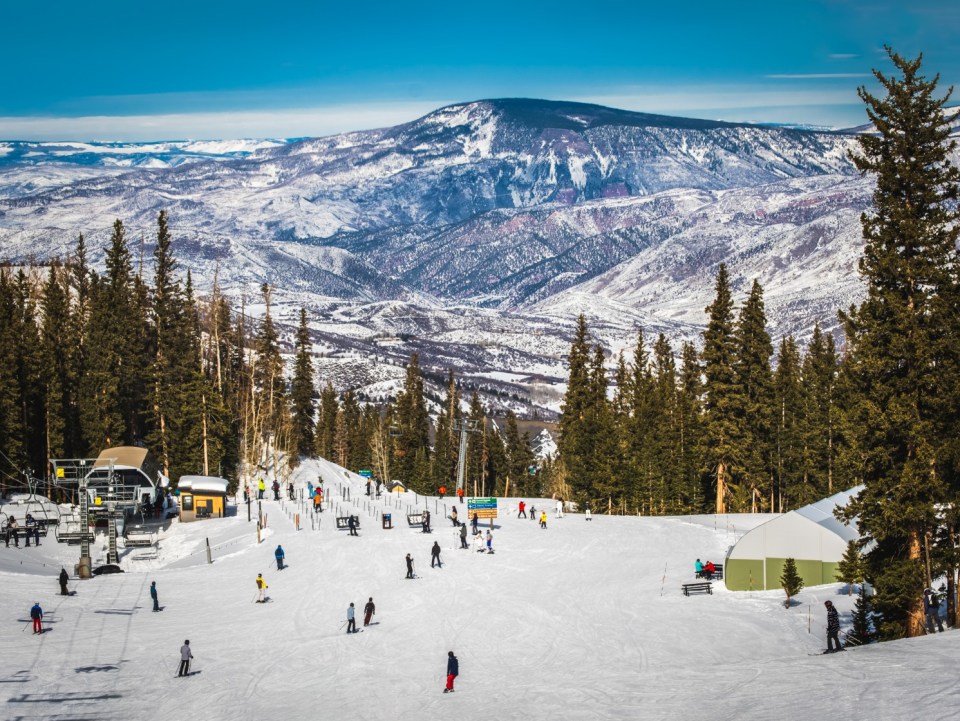
Aspen is a popular ski resort visited by millions every yearCredit: Lana2011The town’s airport is being given a $575million revamp while it stops flightsCredit: John M. Chase
But those wanting to jet off to Aspen, Colorado, next year are set to have their plans hindered.
Located in the Rocky Mountains, the outdoor haven, frequented by the Kardashians, can ordinarily be reached via flights to Aspen/Pitkin County Airport (ASE).
However, the travel hub has now confirmed that flights will stop and the airport will close its doors for seven months from next spring.
As of April 4, 2027, the airport will grind to a halt for a staggering 229 days.
The closure will allow for a major airport regeneration to take place, with runway reconstructions planned.
Neither commercial nor private aircrafts will be permitted to use the airport while the project is going on.
Flights will not resume until November 19, 2027, but the works are not expected to be completed fully until 2029.
The airport usually connects major US cities like LA, Dallas, Chicago, Atlanta and Denver to the ski hotspot.
The renovation project, which is predicted to cost a hefty $575million, will allow the airport’s decades-old terminal building to be modernised.
Aspen/Pitkin County Airport director Diane Jackson said: “Our team is committed to coordinating with federal partners, airlines, general aviation partners, and the broader community as we prepare for this important project and the future of the airport.
“This project is a long-term investment in the safety, reliability, and future of Aspen/Pitkin County Airport, and we will continue to engage with our community every step of the way,” her statement continued.
THE UK’s warm weather might seem like a thing of the past, but the rain doesn’t don’t mean you have to miss out on theme parks and amusement attractions.
And as the weather takes a turn for the worse across the UK the rest of this week and into the weekend, what better way to spend it than heading to one of these spots?
Sign up for the Travel newsletter
Thank you!
Babylon Park in Camden is an indoor theme park and even has a rollercoasterCredit: Babylon Park
The UK is home to several, with most catering to the different age groups – even adults – so here are some of the best to check out.
Babylon Park in Camden, London
Theme parks are a lot of fun, but when it is rainy and all the rides are outside it can quickly become less fun.
However in Camden, London, you can head to Babylon Park which is a space-themed indoor amusement park with its own indoor rollercoaster.
Across different levels, there are a number of rides including a drop tower and there is also a soft play area from smaller kids.
There are several retro arcade games too including dance challenge machines and you can have a go at hooking a duck – though it is actually a hybrid unicorn-duck.
For adults, there’s a restaurant and bar to grab a drink in while the kids play.
The attraction is free to enter, but you will need to buy a £1 Babylon Card to pay for the attractions.
You then load credit onto the card via an app or at the attraction’s kiosk.
For reference, £15 will get you around 144 game coins and the attractions cost different amounts of game coins – for example, the rollercoaster costs 48 game coins.
Gravity Max in Liverpool, Cardiff and London
At Gravity Max, kids can get competitive with e-kartingCredit: Gravity MAX
For kids who love adrenaline and competitive fun, take them to Gravity Max either in Liverpool, Cardiff or a couple spots in London.
The parks feature e-karting across huge tracks that leave visitors feeling as if they have stepped into a real lifeMario Kart game.
The venues also have augmented reality bowling and immersive gaming zones.
Fancy a tipple? Don’t worry they have a bar as well.
Adult karting (visitors aged 14 or older) costs from £16 per person and junior karting (kids aged eight or older) costs from £15.25.
The Playhive, Stockeld Park in North Yorkshire
The Playhive in North Yorkshire is one of the biggest indoor playgrounds in the UKCredit: Refer to Source
The Playhive in North Yorkshire is thought to be one of the biggest indoor playgrounds in the UK with a “journey through four interconnected worlds of space, air, the jungle, and sea”, according to the attraction’s website.
Inside visitors will find spaceships, planes and submarines, which are all different play structures.
There are even jungle-themed climbing walls for kids to let out their inner Tarzan.
Toddlers get their own areas too with smaller climbing features and swings.
Parents who feel like chilling can hang out in the Playhive Pizzeria, where a variety of snacks, pizzas and drinks are served.
Sessions at the attraction allow visitors an hour-and-a-half of play time costing from £13.50.
Woodlands Family Theme Park, Devon
Woodlands theme park in Devon has a huge indoor soft playCredit: Alamy
Woodlands theme park in Devon is home to the county’s largest soft play area with drop slides, ball pits, climbing frames and obstacle course sections.
Dedicated to children over 90cm tall, it’s the ideal place to let your kids run around and burn some energy for hours on end.
There are two other areas for smaller kids – one for toddlers under 95cm and another for children up to 125cm tall.
And if that wasn’t enough, the Circus Dome Zone has more soft play and in another area – Big Top Soft Play – you’ll find stacking cubes and games for younger children.
Travel Reporter Cyann Fielding grew up nearby and visited many times – she said: “Woodlands is a great day out, especially when the weather takes a turn.
“After stepping foot inside the play area, my family knew they wouldn’t see me for hours on end and they only time they would is when I was worn out or wanting a drink after running around.”
Tickets to Woodlands cost from £23.31 per person.
Play Factore, Manchester
Play Factore in Manchester claims to be the biggest indoor family entertainment arena in the UKCredit: Play Factore
Claiming to be the biggest indoor family entertainment arena in the UK, Play Factore boasts the tallest standing indoor slide in the UK as well as a huge laser tag arena.
Little ones aren’t left out though, as there are two floors for kids under five-ears-old which include a soft play area and obstacle courses.
There’s even a football pitch and basketball court inside as well.
For six to 11-month-olds, it costs £3.95 each and then for one to four-year-old’s, it’s £12.95 each.
Kids aged between five and 16 years old cost £13.95 each and parents cost £5.25 each.
Riverside Hub, Northampton
Riverside Hub in Northampton has a number of different zones for different age groupsCredit: facbook
In Northampton, you could head to the Riverside Hub which has a number of zones including Role Play Villages where kids can explore an imaginary world with its own cafe, shop, witch’s house and tooth fairy dentist.
Older kids on the other hand can venture on a number of climbing activities, including a 10-metre beanstalk.
Toddlers can also test out a number of ball pits and activity walls.
And if that wasn’t enough, there’s also a giant play frame with slides, games and even a football pitch.
There is even a fake mini village for kids to role play iCredit: facbook
Travel writer Catherine Lofthouse said: “There’s so much to do here that it’s a struggle to fit it into the two and a half hours that each session is allocated.
“We could have happily spent the whole day and still have gone back for more.
“With three boys aged between five and 12, it can sometimes be difficult to find somewhere that has enough to keep all ages happy as the older two are getting a bit big for soft play, but that certainly wasn’t a problem here.”
Tickets cost £8.50 per adult, £14.50 per child aged one to three-ears-old and £17.50 for kids between four and 17-years-old
Flip Out, various locations
Flip Out has a number of venues across the UKCredit: Flipout
Flip Out has several locations across the UK including Bradford, Doncaster, Chichester and Coventry.
Each Flip Out boasts an indoor adventure and trampoline park, where visitors can bounce into foam pits and off of stunt walls.
In some of the more recent venues, such as Flip Out Canary Wharf, you can also have a go at laser quest or bumper cars.
And for football fans, some venues have interactive football.
Travel writer Catherine Lofthouse headed to Flip Out Coventry with her three children.
Inside each, there are usually slides, trampolines and a number of obstaclesCredit: Supplied
She said: “The dark space and graffiti vibe of the upper floor really appealed to my 11-year-old and 13-year-old, feeling a bit more grown-up than the bright lights and primary colours of soft plays aimed at younger children.
“But there was still lots to love for primary aged children here too – my six-year-old enjoyed the inflatables, roller rink and football zone.
“For little ones, there’s a dedicated toddler soft play next to the cafe area, so they can play in safety while tired parents have a rest nearby, hot drink in hand.”
Prices vary depending on destination and session length.
I got inspired to become a woodworker by Vince Skelly’s tree trunk bookshelves. On exhibit earlier this year at Craft Contemporary near LACMA, these are tree trunks with one slot precisely carved out to fit a select stack of exhibit catalogs perfectly. Seeing them felt like Cupid had just shot an arrow into my art heart.
The very next day I returned to Craft Contemporary, where Skelly was participating in a makers panel. At the reception, I asked him for advice on how, as a complete beginner, I might get started on making tree trunk bookshelves. He cordially shared practical advice, emphasizing safety. I followed this advice and the result came out looking like little chunks of nothingness. That’s how I knew I needed further guidance.
About This Guide
Our journalists independently visited every spot recommended in this guide. We do not accept free meals or experiences. What should we check out next? Send ideas to guides@latimes.com.
“Start small” is the advice I got next, from Eric Clem, co-founder of LA Woodshop. Aspiring woodworkers get discouraged when they try to build the Gamble House themselves with no training. It’s also very dangerous, Clem warned me.
I followed this advice too, scaling back my first woodworking goal to making my own drumsticks. The pursuit of this doable dream led me into an exploration of L.A. woodworking resources for beginners who feel inspiration ranging from “I want to make something out of wood” to “I want to make woodworking part of my life.”
The path to becoming a woodworker in L.A. extends from taking a one-day introductory class to borrowing tools to enrolling at community college. My exploration has been fulfilling, guided by cheerful people who have exhausted all of their friends and family with obsessive talk of woodworking and would like nothing more than to share their passion with you.
To apply the existing cannabis business tax to unlicensed cannabis businesses.
Los Angeles Measure TC
To apply the transient occupancy tax to online and other travel companies.
Los Angeles Measure TT
To increase the transient occupancy tax to fund general city services.
Bell Measure BB
To establish a sales tax to fund city services such as emergency services, prevent crime, maintain streets and after-school and anti-gang programs.
Bell Gardens Measure BG
To raise sales tax to fund city services such as police and emergency response, street repairs, park maintainence and youth and senior programs.
Beverly Hills City Treasurer
Beverly Hills City Council
Carson Measure FW
To allow the sale of “safe and sane” fireworks from up to 12 permitted temporary stands within the city around Fourth of July.
Commerce Measure PC
To enact a sales tax to fund police services, 911, youth and senior programs, library services, parks, streets and infrastructure.
Compton City Council, District 2
Compton City Council, District 3
Covina City Council, District 1
Covina City Council, District 3
Covina City Council, District 5
Covina Measure CC
To enact a sales tax to fund emergency services, clean up encampments, address homelessness, improve parks, repair streets and provide senior and youth programs.
Gardena Measure GG
To enact a sales tax to fund city services such as emergency response, hiring police officers, keeping parks clean, repairing streets and maintaining after-school and senior services.
Inglewood Measure I
To repeal the city’s ban on the public’s use of “safe and sane” fireworks, permit their sale under a regulated framework and establish rules and penalties for violations.
La Cañada Flintridge City Council
La Puente Measure LP
To raise the sales tax to fund public safety, street and sidewalk maintenance, park maintenance, youth and senior programs and other services.
Lakewood City Council, District 2
Lomita Measure LW
To enact a sales tax to fund services such as emergency response, property crime prevention, maintain parks, repair streets and sewers, maintain gang prevention efforts and address homelessness.
Long Beach City Council, District 1
Long Beach City Council, District 3
Long Beach City Council, District 5
Long Beach City Council, District 7
Long Beach City Council, District 9
Monterey Park Measure NDC
To prohibit data centers in the city.
Palos Verdes Estates Measure PF
To extend the parcel tax for 10 years to fund emergency services and prepare for wildfires.
Pasadena City Council, District 3
Pasadena City Council, District 5
Pasadena City Council, District 7
Pasadena Glen Community Services District Measure B
To enact an special parcel tax to maintain and improve roads and culverts within the district.
Pomona City Council, District 2
Pomona City Council, District 3
Pomona City Council, District 5
Pomona Measure Z
To restructure funding for the Pomona Children and Youth Fund using city sales tax rather than the general fund.
San Fernando City Council
San Marino Measure S
To enact a transaction and use tax to fund street and infrastructure repairs, improve public safety, provide youth and senior programs and library and parks maintenance.
Sierra Madre Measure GL
To increase the city’s spending limit to fund general governmental services for four years.
Snowboarding made its Winter Olympics debut in Nagano 1998 with halfpipe and giant slalom.
Riders competed against the clock before the head-to-head parallel giant slalom version on identical, side-by-side courses was introduced four years later in Salt Lake City.
Three-time Winter Olympian Alex Payer said: “PGS is one of the only formats where everything is truly equal – same course, same conditions, same start, same chance. That fairness is rare in sport.
“If you take it out of the Olympic programme, you take away one of the purest expressions of competition we have.”
Among the sports bidding to replace them in the programme for the Games, which are scheduled for 1-17 February 2030, are freeriding and ice climbing.
Freeriding allows skiers and snowboarders to choose their own off-piste course from top to bottom and also perform tricks as they descend.
They are judged on elements of their descent including the difficulty of the course, jumps and performance.
In ice climbing, competitors climb up a frozen waterfall or glaciers with a speed version favourite for inclusion.
There had been speculation that cyclo-cross would be also be aiming for inclusion but last month IOC president Kirsty Coventry said that “no summer sports and no seasonal crossover events” would be part of the programme.
1 of 2 | Florida is suing OpenAI and its CEO and founder Sam Altman over safety and design concerns about ChatGPT. File photo by Wu Hao/EPA-EFE
June 1 (UPI) — Florida’s attorney general announced Monday that the state is suing OpenAI and its founder and CEO, Sam Altman, saying the company chose “profits over public safety” in creating a dangerous product in the form of ChatGPT. It is the first state to sue the company over these design and safety concerns.
“The rise of OpenAI is attributable to a web of deceit and the exploitation of users (including Floridians), leveraging their data and safety to boost OpenAI’s market value at unacceptable costs,” the complaint filed by Attorney General James Uthmeier said, NBC News reported.
The lawsuit claims that OpenAI violated Florida’s rules on deceptive business practices and knew that its chatbot could be dangerous to children and others through actions such as providing “harmful information such as tips on eating disorders, self-harm and mass murder,” The New York Times reported. It says OpenAI presents “a great danger of addiction, cognitive decline, suicide, violence and related harms.”
The civil suit is separate from Florida’s ongoing criminal investigation into OpenAI, which Uthmeier openedin April. It includes multiple counts of deceptive and unfair trade practices, negligence, violations of product liability laws, fraudulent misrepresentation and causing a public nuisance.
OpenAI representatives have not yet commented on this lawsuit. Representatives have said in response to past claims that the company designs its systems with safety in mind and that there are “safeguards in placeto help people, especially teens, when conversations turn sensitive.”
“We continue improving ChatGPT’s training to recognize and respond to signs of mental and emotional distress, de-escalate conversations and guide people toward real-world support,” the company said in a prior statement.
The lawsuits also mentions OpenAI’s connections to a mass shooting at Florida State University and killings at the University of South Florida. In both cases, suspects asked ChatGPT for information connected to the attacks.
Kuwait and Bahrain have condemned an Iranian missile and drone attack, which Tehran says targeted US military facilities in the Gulf. A strike hit Kuwait’s airport, causing at least one death, dozens of injuries and flight suspensions. Tehran says the strikes are retaliation for US attacks on Iran.
Universal’s highly-anticipated UK theme park will include themed lands, new rides and plenty more surprises – and the Universal United Kingdom Resort just celebrated a big milestone
The new park seems set to bring Universal Studios’ blockbuster magic to the UK
Theme park fans, rejoice; we’re one step closer to Universal opening its new resort in the UK.
For a start, we now officially have a name for the highly-anticipated attraction in Bedfordshire; Universal United Kingdom Resort. Meanwhile, today a series of government officials including Chancellor of the Exchequer Rachel Reeves attended a milestone moment for the resort, breaking ground to pave the way for construction to begin.
When it does open its doors, it’s sure to be a huge hit for thrill-seekers. Concept imagery of the new attraction shows at least six themed lands and three huge rollercoasters, although Universal has remained tight-lipped about exactly what those lands will include.
The theme park is expected to bring in millions of visitors each year, including over a million from overseas.
We take a look at everything we know so far…
The lands and rides
Universal hasn’t given much away about exactly what the lands and rides will entail, but has previously promised that the theme park will be “unlike anything that exists in the UK”. Its USA-based theme parks in Florida and California both boast theming around the likes of Jurassic World, Shrek, How to Train Your Dragon, the Minions and more, so there will no doubt be plenty to play around with for us Brits too. Whatever will be on offer, the resort is set to offer “immersive storytelling, thrilling attractions and hospitality”.
Concept imagery for the resort was released last year and already had theme park fans excited, as it looks like there’s going to be huge rollercoasters too. In fact on the artist’s rendering at least three mega-coasters are visible, as well as plenty of other rides and attractions.
It seems that the entrance will lead you into a large plaza area similar to the ‘CityWalk’ area of Universal Orlando. The plaza and venues will be open to the general public even if they haven’t bought a ticket to the park itself.
For those who do pay for a ticket, once they’re through a large archway, they’ll walk through a long promenade-style street – no doubt also offering a variety of shops and restaurants – before heading into the themed lands with “adrenaline-pumping coaster”, “mind-blowing spectaculars” and “incredible creatures, heroes and villains”.
The opening date
Construction is expected to begin soon on the huge project, with an opening date planned for May 2031. Comcast NBCUniversal has committed to invest over £5bn in the entertainment resort complex during the expected 5 years of construction, as well as an additional £1bn in capital investment over the first 10 years. According to the UK government, this represents “one of the largest ever investments in the UK tourism sector”.
The location
Universal United Kingdom Resort will be located in Bedfordshire. It’s believed that approximately 80% of employees will come from Bedfordshire and the surrounding regions. The Department for Transport is also going ahead with plans to upgrade the surrounding road and rail network, on the A421 and at Wixams station, to make travel to the resort easier.
Mark Woodbury, Chairman and CEO of Universal Destinations & Experiences, said: “Today marks a significant milestone on our journey to bring Universal United Kingdom Resort, featuring immersive storytelling, thrilling attractions and unparalleled creativity and innovation to the UK. This new theme park and resort will create so many new opportunities for the people of Bedford and beyond and allow us to share our distinct experiences with guests from around the world.”
Chancellor of the Exchequer Rachel Reeves said: “This landmark investment in the heart of the Oxford to Cambridge Growth Corridor will unlock nearly £50 billion of economic growth and create tens of thousands of jobs across Bedfordshire in construction, hospitality, creative and technology sectors.
“Our own investment in transport and infrastructure means that local people will benefit — improving connectivity, backing our creative industries, and bringing millions of visitors to the UK from across the world. We have the right economic plan — working with global investors and local leaders so we can deliver jobs, opportunity and long‑term prosperity for Britain.”
What do you think is currently the best theme park in the UK? Email us at webtravel@reachplc.com
One Emmerdale theory suggested a shock death could be looming for Laurel Thomas as her secret fling faces being exposed on the ITV soap, but not all fans are convinced
14:16, 03 Jun 2026Updated 14:19, 03 Jun 2026
One Emmerdale theory suggested a shock death could be looming for Laurel Thomas(Image: ITV)
One new Emmerdale theory has teased a shock death for a long-serving character.
Laurel Thomas is currently at the centre of a new romance plot with Ross Barton, with a secret fling underway. Laurel’s stepdaughter Gabby Thomas was rejected by Ross who instead wants to be with Laurel.
Amid this storyline ongoing, it’s been teased Laurel is just having a bit of fun. But with recent reports suggesting that three different characters have been axed from the show, some fans wondered what the future might hold for other village residents.
There’s rumours Jimmy King will be killed off later this year, and now a new theory suggests Laurel could meet a grim fate. While the fan who started off the theory claimed they were initially joking, they admitted they could not help but wonder if there was truth to it given the soap’s history.
They wondered how the storyline with Ross and Laurel may end, even predicting a twist involving Gabby. They predicted that Laurel would become hated by villagers, and might end up being killed off.
Hilariously, fans shared their thoughts on the theory, admitting that with it being soap land, anything was possible. The original post read: “I thought of this as a joke at first, but knowing the writers, maybe it will end up being true.
“Who wants to bet that Ross will end up dating Gabby and then secretly have an affair with Laurel. Bonus points if they get engaged/married and the affair is found out at the wedding and/or Gabby has a child to him during the relationship (or she goes Eva from Corrie style and fakes a pregnancy).
“And since it’s Emmerdale, let’s also predict that Jai will start seeing Laurel behind Kerry’s back and both affair reveals will happen in the same week. Leading to Laurel becoming the most hated person in the village and then mysteriously dying, prompting a months-long whodunnit.”
The idea wasn’t completely shut down by fans, as some joked along with it while others questioned how likely it was given recent storylines. A fan replied: “You are HIRED!!!!! That storyline I would watch!”
Another said: “You’ve given the scriptwriters much food for thought if they read your post but you and I know that anything is possible in soap land. And I mean anything.”
A final comment read: “I mean if there’s already rumours around about other long-term characters being killed off then Laurel could be just as at risk surely. As people have said it’s soap after all.”
As it stands there has been nothing to suggest Laurel is leaving the show, let alone that she will be killed off. It’s not currently the way the plot is going, but fans are not wrong by saying anything can happen.
Comcast NBCUniversal will be investing £5billion into the project, as well as an additional £1billion in capital investment over the first 10 years of operation and £1.3billion from the UK government to support local infrastructure.
It expects to boost the UK economy by as much as £50billion by 2055, and create 28,000 jobs.
Once open, the theme park is set to become the country’s most popular tourist attraction.
Mark Woodbury, Chairman and CEO of Universal Destinations & Experiences, said: “Today marks a significant milestone on our journey to bring Universal United Kingdom Resort, featuring immersive storytelling, thrilling attractions and unparalleled creativity and innovation to the UK.
“This new theme park and resort will create so many new opportunities for the people of Bedford and beyond and allow us to share our distinct experiences with guests from around the world.”
This was echoed by Brian Roberts, Chairman of Comcast Corporation, who said: “This historic partnership is a special moment for our company as we bring our first Universal theme park and resort to Europe.”
As for what kind of themed lands and rides would open at the UK Universal, very little is known.
But there are rumours suggesting that some could be based on James Bond, Paddington, Lord of the Rings, Minions, Jurassic World, and Back to the Future.
It is unlikely to includeHarry Potterdue to licensing rules and that nearby is the Wizarding World ofHarry Potterattraction.
What is known is that across 662 acres, there will be four ‘zones’ – the Core Zone, Lake Zone, West Gateway Zone and the East Gateway Zone.
More accommodation and business hotels will be at the Lake Zone, as well as an entertainment complex and a convention centre.
West Gateway Zone and the East Gateway Zone will be where guests arrive by train and car, with restaurants and hotels.
This is also likely to be where the Entry Plaza area will be, as well as parking and a 500-room hotel.
The Entry Plaza is expected to be the free-to-visit area where tickets aren’t required, similar to Universal’s CityWalk in Orlando.
The UK theme park will be called ‘Universal United Kingdom Resort’Credit: Cover Images
What does the new Universal theme park mean for the rest of the UK?
Outside of the theme park, Universal has committed to creating new training opportunities with apprenticeships and internships.
This is alongside the multi-billion Oxford-Cambridge Growth Corridor which will see Bedford become an “innovation hub”.
Along with the £1.3 billion investment, the government will provide a grant of £400million through the exceptional Regional Growth Fund.
The Department for Culture, Media and Sport will provide a grant of £438million to invest in new community infrastructure, both paid when the park is open.
The Department for Transport is also going ahead with plans to upgrade the strategic road and rail network, on the A421 and at Wixams station at an expected cost of £474million.
Chancellor of the Exchequer Rachel Reeves said: “This landmark investment in the heart of the Oxford to Cambridge Growth Corridor will unlock nearly £50billion of economic growth and create tens of thousands of jobs across Bedfordshire in construction, hospitality, creative and technology sectors.
“Our own investment in transport and infrastructure means that local people will benefit — improving connectivity, backing our creative industries, and bringing millions of visitors to the UK from across the world.
“We have the right economic plan — working with global investors and local leaders so we can deliver jobs, opportunity and long‑term prosperity for Britain.”
The park could even stay open all year round and have longer opening hours than other UK theme parks.
Previous suggestions included opening hours from 7am to 11pm.
Included in the theme park plans is a new train stationwhich is being incorporatedto cope with demand.
A $50 billion refinery valuation tests liquidity across African capital markets.
Dangote Refinery’s initial public offering is shaping up to be one of the most historic capital markets events for the continent—a referendum on whether Africa can mobilize the liquidity and investor confidence required to finance a globally competitive industry.
Chinenyem Anyanwu, CEO of Lagos-based Dependable Securities, said the offering is attracting both institutional investors and first-time investors, including Nigerians in the diaspora.
“The expectation is very high among the investing public,” Anyanwu tells Global Finance. “Some are Nigerians outside the country, while others are foreign investors looking for exposure to a strategic African industrial asset.” Aliko Dangote, chairman of the Dangote Group, disclosed that requests for private placement had surpassed $2 billion.
Speaking during a visit by executives from First HoldCo, the parent company of First Bank of Nigeria, Dangote said the company would be unable to meet all requests. He added that the response demonstrates investors’ confidence in the project.
Interest has also come from prominent Nigerian investors. Femi Otedola, chairman of First HoldCo, has said he plans to invest $100 million in a private placement ahead of the IPO, with proceeds from the sale of his stake in Geregu Power.
Although early market estimates put the refinery at about $50 billion, Dangote has said advisers are still determining the final valuation. Despite plans to offer only 10% of the equity to the public, the IPO would still be unprecedented for African exchanges.
“Ten percent of the refinery is still a substantial offering,” Anyanwu said. “It is larger than the market capitalization of many companies currently listed on the Nigerian Exchange, so demand is unlikely to be a problem.”
The refinery, which began operations in 2024, has already begun reshaping Nigeria’s energy trade by reducing reliance on imported fuel and positioning the country as an exporter of refined petroleum products. Built at an estimated cost of $20 billion, the 650,000-barrels-per-day facility in Lagos, where Dangote Group is headquartered, is expected to expand capacity in the coming years.
This article appears in the June 2026 issue of Global Finance Magazine.
One in five holidaymakers say they are less likely to visit a destination if they cannot pronounce its name correctly – here’s some of the ones people often get wrong
This article contains affiliate links, we will receive a commission on any sales we generate from it. Learn more
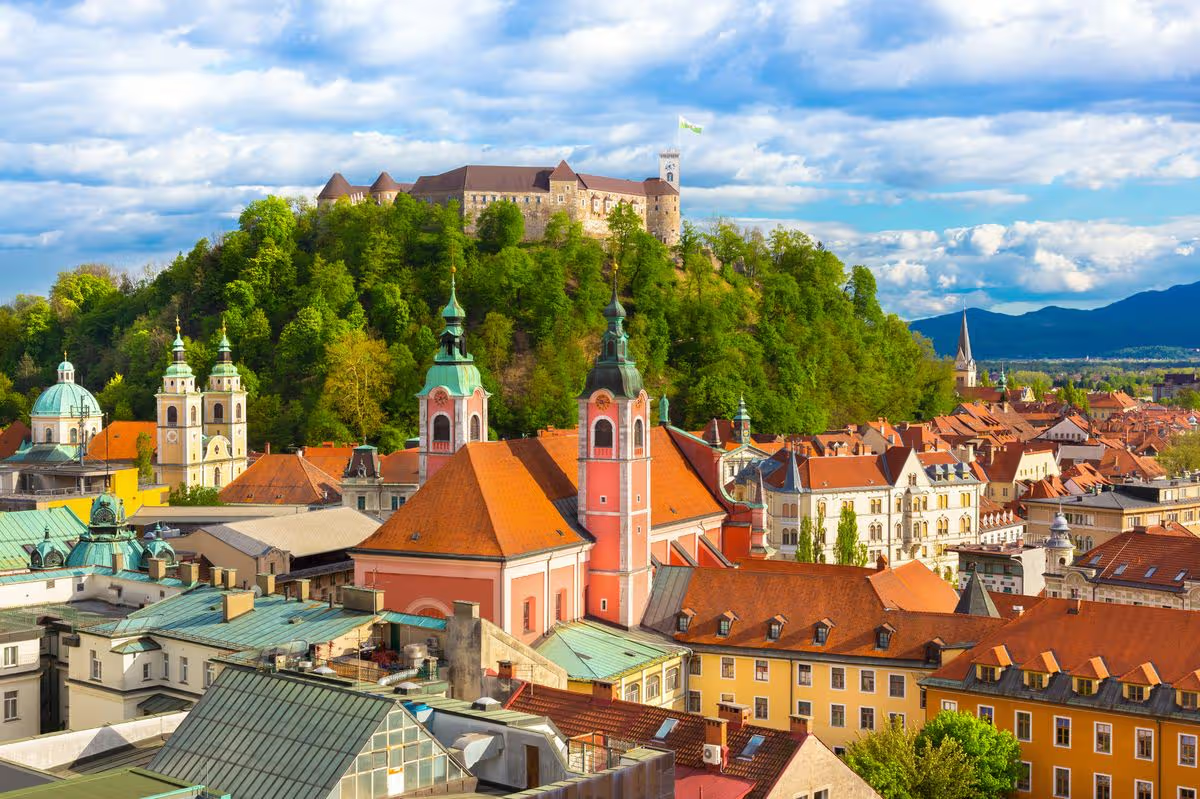
The Slovenian capital Ljubljana is one of the hardest names to pronounce(Image: Getty Images/iStockphoto)
Millions of British travellers are limiting where they go on holiday due to a surprisingly simple barrier – not knowing how to pronounce the destination.
One in five holidaymakers (22%) are less likely to visit destinations like Ljubljana and Reykjavik because they are afraid of getting their names wrong while 23% avoid booking the trip altogether.
One in three meanwhile, are worried about sounding rude when they mispronounce a foreign destination, while 26% said they are embarrassed, according to multi-modal travel booking platform Omio.
From Ljubljana (lyoo-BLYAH-nah) to Reykjavik (RAKE-yah-vik) and Montjuïc (mon-zhwEEK), many of the world’s most culturally rich locations are being overlooked.
Anxiety about language barriers goes beyond place names. Half (48%) of British travellers admit they avoid ordering dishes they can’t confidently pronounce while travelling, often missing out on tasty dishes such as bouillabaisse, tzatziki and mille-feuille and açai.
Omio has partnered with language expert and polyglot Alex Rawlings to launch a pronunciation guide to help British travellers travel abroad with confidence.
From understanding how certain letters and sounds change across languages to focusing on using tools like AI and pronunciation apps, the guide highlights easy ways to improve communication while travelling.
Alex said: “Pronunciation can feel like a barrier, but it doesn’t need to be perfect. The key is to focus on the sounds rather than trying to replicate every letter exactly.
“Breaking words into smaller parts and practising them slowly can make a big difference. Even a small effort is often appreciated by locals and can help travellers feel far more confident when exploring a new destination”.
Veronica Diquattro, president B2C Europe at Omio, added: “At Omio, we believe travel should feel exciting and accessible, not intimidating. With so many incredible destinations reachable by train, bus, ferry or plane, we want to give people the confidence to explore beyond the obvious.
“We know that even small barriers, like unfamiliar place names, can make travel feel daunting, so pairing up with Alex to produce the guide will help keen travellers to discover new destinations with ease.”
Tips for mastering hard-to-pronounce place names
Tip 1: Don’t read it like your own language Even when languages use the same alphabet, letters often sound completely different. In German, Dutch, Scandinavian and many Eastern European languages, “j” is pronounced like a “y”, while in French, Portuguese and Catalan it becomes a soft “zh” sound.
Tip 2: Use technology to help If you can’t ask a local, use tools like AI or Google Translate’s listen function to hear pronunciations and identify unfamiliar sounds or stress patterns.
Tip 3: Focus on the stress Getting the emphasis on the right syllable is often more important than perfect pronunciation. Think about the word Birmingham – people are far more likely to understand “BIR-ming-ham” than “bir-MING-ham”, even if the individual sounds aren’t perfect.
Tip 4: Learn the pattern Many languages follow consistent pronunciation rules, meaning once you learn one pattern, you can apply it to lots of other place names too. In French, Spanish, Italian, Portuguese and Catalan, for example, the letter “c” is pronounced like a “k” before “o”, “a” or “u”, but changes sound before “i” or “e” – becoming “ch” in Italian, “th” in Spain, and “s” in French and Portuguese.
Tip 5: Some letters are silent French is famous for silent letters, especially at the ends of words. That’s why places like Calais and Bordeaux are pronounced much more simply than they look. As a rule of thumb: if you’re in France and not sure whether you should pronounce the letter at the end of a word, you probably shouldn’t.
Tip 6: Don’t let language put you off Some of the world’s most exciting destinations – from Poland to Thailand – can also be the hardest to pronounce. Don’t let unfamiliar names stop you from exploring somewhere new.
Tip 7: Don’t be afraid to get it wrong Nobody expects perfect pronunciation – locals usually appreciate the effort more than accuracy. You might make a few mistakes, and you might earn yourself a few knowing smiles. But give it a go and see for yourself what worlds you might unlock!
The pronunciation guides are available to download now via Omio.
Jess and Anthony, not their real names, have just bought a house outright aged 25. Can you work out the clever way they did it besides trivial money ‘hacks’?
‘Getting on the property ladder is easy if you do one thing: stop your wasteful spending. Because not eating 70p avocados is definitely how you raise the best part of 300 grand.
‘It’s all about making sacrifices, and sadly too many young people today won’t do that. Luckily my parents brought me up to be careful with money. “Cut your coat according to your cloth,” is what my frugal corporate lawyer mum and hedge fund manager dad always told me.
‘And so Josh and I devised a strict money-saving plan. Making meals at home instead of eating out. Buying items on discount and cutting out non-essentials. You’d be surprised how often you don’t need new headphones or a top, much like when I was a child and my parents said I didn’t need two ponies.
‘We stopped wasting money on £4.50 lattes and a £12.99 Netflix subscription we barely watched. We both loved foreign holidays, but we agreed we’d tighten our belts and just stay in Ant’s parents’ villa in Gran Canaria.
‘I’m a terrible clothesaholic, but you can get perfectly good outfits secondhand. “Can I have all those Jigsaw dresses you never wear, and actually those Jimmy Choos?” I asked my mum. A deal was struck, and I agreed to cook dinner that evening.
‘But I think the hack that really helped us buy a house was checking our finances daily. If there was money owed on my credit card, I’d immediately say “Daddy, can you pay my card off for me again?” That way I avoided paying interest completely.
‘And now, after taking control of our spending and some careful budgeting, we own our home, and my parents are delighted. “Pay back the £285,000 any time,” they said.’
According to Abs Mechial, there is a specific minute every day in which holidays can be booked for cheaper on average – but you may need to set your alarm to take advantage of it
A financial adviser has revealed the best time to book your 2026 holiday (stock)(Image: Ralf Hahn via Getty Images)
If you are yet to book a getaway this year and are wondering when the ideal moment might be to do so, a financial expert has identified precisely when you should – and shouldn’t – make your move. Abs Mechial turned to TikTok to reveal that not only are certain days preferable for booking, but specific times of day matter too.
“When is the worst time to book a holiday and when is it actually cheapest? he asked his followers in a video. Surprisingly, according to research, Abs claimed there is a one-hour window in each day when holidays can cost you significantly more money to book.” he asked his followers.
Content cannot be displayed without consent
“According to the data, the most expensive time to book is between 9am and 10am,” he explained. “Bookings in that window came in around 30 per cent more than the cheapest time of the day – so no more booking holidays as soon as you log in for the day.”
As for the most economical time of day, Abs warned that you might need to set your alarm. “Early… and I mean really early,” he said. “Between 4am and 5am – and the logic does make sense.”
Abs highlighted that overnight, demand “drops off” and consequently prices “reset” to their baseline.
He elaborated: “Then as the day goes on, the more searches and more clicks result in prices starting to creep back up again.”
For those reluctant to wake up before sunrise, however, Abs provided guidance for anyone wanting to book during “more realistic hours”.
“Late evening, around 8pm to 10pm tends to be noticeably cheaper than the morning rush,” he enthused. “But if you want to go even further and want the exact moment – not just the hour, but the minute – according to the data, the single cheapest minute to book a holiday is 2:48am.”
Surprisingly, bookings made at that precise time worked out up to 60 per cent cheaper on average, according to Abs.
He concluded with a word of caution, however: “Now, definitely take that with a pinch of salt – booking at 2:48am isn’t going to make every holiday 60 per cent cheaper, but the pattern is clear – if you want to save money, avoid peak booking hours because timing, just like everything else with money, makes a massive difference.”
Responding in the comments, one TikTok user offered their own unverified tip: “Best to search in private browser so prices do not increase if you are searching for same destinations. Prices increase with demand so private searching will prevent this.”
A second person added: “I usually book mine within 72 hours of departure… like 50% cheaper! I find the hotels I want and then I wait for them to deal them off.”
A third exclaimed: “Wow that’s crazy how the time of day can cost you!”
While a fourth TikTok user pointed out: “Doesn’t change if you want a certain resort at a certain time of year.”
The Times’ results pages reveal how Californians voted for governor, U.S. House seats and in local city, school board and ballot measure races.
Every registered voter in the state receives a ballot by mail. Polls close at 8 p.m. on June 2, and mailed ballots need to be postmarked on or before that day. Winners may not be known on election night due to the high volume of mail-in ballots arriving after election day.
The vote counts on these pages update periodically as results are reported by the Associated Press and the L.A. County registrar. On election day, those results include in-person voting as well as any mail-in ballots already received. In the days and weeks following, votes will be reported approximately once a day, as they are processed by county registrars. Voters can track their own cast ballot here.
The Associated Press surveys the numbers posted by local election officials. The AP projects the winner for all statewide and federal races using vote returns and other data. A race may be called before all expected votes are in. Results can change as more ballots are counted.
These pages will update until the secretary of state certifies results on July 10.
Reaching the summit is a dream. But staying there? That’s an altogether different challenge.
Maja Stark has a special appreciation for that now, a year after winning the U.S. Women’s Open at Erin Hills and feeling the hefty weight of expectation that came along with it.
For her, the aftermath of that victory brought heightened anxiety, and searing criticism from outsiders when the Swedish professional’s play took a dip.
“You get comments and stuff saying, ‘What happened? You just won a major; why do you suck all of a sudden?‘” Stark said at the Chevron Championship in April. “That does take some energy and just makes you focus on the wrong things. Then I got even more stressed and anxious.”
Maja Stark plays a shot from a bunker on the 17th hole during the third round of the Chevron Championship on April 25.
(Alex Slitz / Getty Images)
Stark said she sought professional help in the form of a mental coach, sports psychologist and therapist and now believes she’s better able to withstand the scrutiny that comes with winning at the highest tier.
That career-shaping pressure will be on display again this week when the USGA brings the U.S. Women’s Open to Riviera Country Club for the first time, merging the game’s most prestigious women’s championship with a historic venue celebrating its centennial year. The tournament takes place Thursday through Sunday.
Riviera is a theater, sitting low beneath high hillsides that almost serve as balconies. Players have described the course as a stage because it can feel as if you’re being watched even when you’re alone.
“I think there’s something very nostalgic about the facility,” said Jim Richerson, Riviera’s general manager. “The golf course has never had any major renovations or changes. The clubhouse is the exact same footprint today as it was when it was built in the 1920s.”
The U.S. Women’s Open is the oldest of the LPGA Tour’s five majors, and has long served as the standard by which women’s golf measures itself. It’s open to professionals and elite amateurs through a qualifying process, and the tournament is known for identifying the player who can withstand the most pressure under the most demanding conditions.
NBC will televise the championship and although Mike Tirico will not call the event, he knows the significance of holding it at Riviera.
“Without there being a Masters for women’s golf, that tournament really is the crown jewel of the sport,” Tirico said. “It has become the event people dream of winning. … It’s just appropriate that it’s contested at a place like Riviera that for so many generations has come to define a great championship test of golf.”
A look at some of the players to watch:
Nelly Korda
Nelly Korda celebrates after winning the Chevron Championship on April 26.
(David J. Phillip / Associated Press)
The world’s No. 1 player is a major needle mover for women’s golf and is a significant source of ratings when she’s in contention. She had a record five consecutive victories last season and seven overall. Her missing major is the U.S. Women’s Open. She finished in a runner-up spot last year and left Erin Hills firmly believing a win was within reach.
Jeeno Thitikul
Jeeno Thitikul plays a shot from the fairway during the first round of the Queen City Championship on May 14.
(Jeff Dean / Associated Press)
The former World No. 1 is still in pursuit of her first major championship. She’s a big question mark in the field.
Lydia Ko
Lydia Ko hits from the fairway during the second round of the LPGA Honda Thailand on Feb. 22.
(Kittinun Rodsupan / Associated Press)
This Hall of Fame player is the only golfer in modern Olympic history to win a complete set of medals — gold, silver and bronze — across three different Olympic Games. She’s still looking for her first U.S. Women’s Open win.
Charley Hull
Charley Hull hits off the 16th tee during the first round of the Mizuho Americas Open on May 7.
(Seth Wenig / Associated Press)
A colorful character who went viral during the 2024 Open for smoking a cigarette while signing autographs and playing. She was among a cluster who finished second in that tournament. She has three victories on the LPGA Tour but has yet to win a major.
Rose Zhang
Rose Zhang hits from the ninth tee during the final round of the Queen City Championship on May 17.
(Dylan Buell / Getty Images)
Zhang, who has been splitting time between Stanford and the LPGA, amassed a remarkable collection of victories as an amateur and three years ago, became the first player in 72 years to win an LPGA Tour event in her professional debut.
Minjee Lee
Minjee Lee prepares to putt during the third round of the Chevron Championship on April 25.
(Sarah Stier / Getty Images)
Lee, an Australian star, has won three majors including the U.S. Women’s Open in 2022. Her younger brother, Min Woo, won the 2016 U.S. Junior Amateur, making them the first brother-sister tandem to win the USGA’s junior championships.
Yuka Saso
Yuka Saso lines up a putt during the first round of the Mizuho Americas Open on May 7.
(Seth Wenig / Associated Press)
She is the anomaly of anomalies, with zero wins on the LPGA Tour with the exception of two U.S. Women’s Open victories. She won the first of those at 19 years, 11 months and seven days — astoundingly tying her for the youngest player to win the Open with Inbee Park, who was precisely that old when she won in 2008.
Lilia Vu
Lilia Vu watches her shot from the seventh tee during the third round of the Queen City Championship on May 16.
(Dylan Buell / Getty Images)
Vu grew up in Fountain Valley and was a standout at UCLA. She won two majors in 2023 but lately has been battling back problems.
Michelle Wie West
Michelle Wie West of the United States hits from the third tee during the first round of the Mizuho Americas Open on May 7.
(Sarah Stier / Getty Images)
Wie West retired three years ago after the Open at Pebble Beach, but is coming out of retirement to use her last year of exemption to play at Riviera. Her husband, Jonnie West, son of late NBA icon Jerry West, will be caddying for her.
Teachers in north-eastern Nigeria held protests, demanding stronger protection for learning institutions.
The outcry comes after the abduction of dozens of school children in Borno State last month. Al Jazeera’s Felix Niwara explains.
FLIGHTS to New York could eventually take the same amount of time as it does to fly to Tenerife – and passengers might be onboard sooner than you think.
X-59 QueSST, nicknamed the “Son of Concorde” has been developed by NASA to travel as much as 300mph faster than current commercial flights.
Sign up for the Travel newsletter
Thank you!
NASA aircraft X-59 could take passengers from London to New York in under four hoursCredit: SWNSThe stunning plane has been dubbed the Son of ConcordeCredit: NASA / SWNSThe Quesst and legendary Concorde comparedCredit: Sun graphics
At the speed of over 900mph, the aircraft could travel from London to New York in 3hr45 – far less than it does to get to some of the Spanish islands.
Currently, flights from the UK to New York take around 7hr30, on average.
With the jet it could be under four hours which is even quicker than a flight to Tenerife at 4hr30.
Most commercial flights currently operate at around 600mph but the aircraft is set to conduct test flights where it will reach supersonic speeds of 630mph at 43,000ft for the first time.
The Quesst shares remarkable similarities with the legendary Anglo-British Concorde airlinerCredit: Dan ChungNasa’s X-59 will break the sound barrierCredit: NASA Armstrong / SWNS
Up until now, NASA has been conducting tests in wind tunnels or in the skies but at slower speeds.
The jet is dubbed the ‘Son of Concorde’ as Concorde was the world’s very first supersonic airliner that first flew passengers in 1976.
Concorde’s fastest recorded flight was on February 7, 1996, when British Airways flew Concorde from New York’s JFK airport to London Heathrow in two hours, 52 minutes, and 59 seconds.
Around 20 Concordes were created, but the fleet was grounded in 2003.
This was three years after the crash of an Air France flight, in which all passengers and crew were killed.
Low passenger numbers and high costs were also cited as reasons for the ending of Concorde.
When Concordes were flying they would often break the sound barrier, causing the shaking of windows and creating a loud noise that replicated thunder when passing overhead.
Fancy seeing a real Concorde plane? You can see retired ones at Manchester Airport, Aerospace Bristol or Brooklands Museum in Surrey.
There is a field, roughly 22 kilometres southwest of Sokoto, between the Dange Shuni and Bodinga local government areas in North West Nigeria, that carries no particular weight to the eye. Grass grows there. Wind moves through trees at predictable intervals. The surrounding bush is in full silence, neither mourning nor celebrating. Nothing marks what happened here, and that, of course, is precisely the point.
The place is called Satiru. Or was called Satiru. The grammar is slippery, because the British, when they finished with it in the spring of 1906, did not simply defeat it. They made sure to erase it – razing buildings, enslaving survivors, most of whom were women and children, and stripping the site with the cleansing method of an administration that understood that a crushed rebellion, left with a location, becomes a shrine. And shrines become consciousness and arguments. Better to leave nothing. Better to leave nowhere.
And then the Sultan of Sokoto, Muhammad Attahiru II, the Muslim ruler (Sarkin Musulmi) whose fighters helped carry out the slaughter, reportedly pronounced a curse on anyone who would rebuild or farm on the ground. As the British Resident Burdon telegraphed proudly to High Commissioner Frederick Lugard: “All Sokoto went out yesterday to inspect [the] battlefield and raze Satiru to the ground. No wall or tree left standing.” The scholars Paul Lovejoy and J.S. Hogendorn, writing in the Journal of African History, note that “the deserted site of Satiru is on the edge of a forest reserve. It has not been inhabited since its destruction and the official curse.” More than a century later, that is still true.
This is what erasure looks like when it succeeds. For 120 years, the ruins of Satiru have remained untouched, a vanished town erased by British colonial forces after a 1906 uprising led by poor clerics, fugitive slaves, and peasants challenging both imperial taxation and the aristocratic order of the Sokoto Caliphate.
But this story is not only about a massacre buried in colonial archives. It is about how modern Nigeria inherited the use of overwhelming force to suppress communities marked as threats.
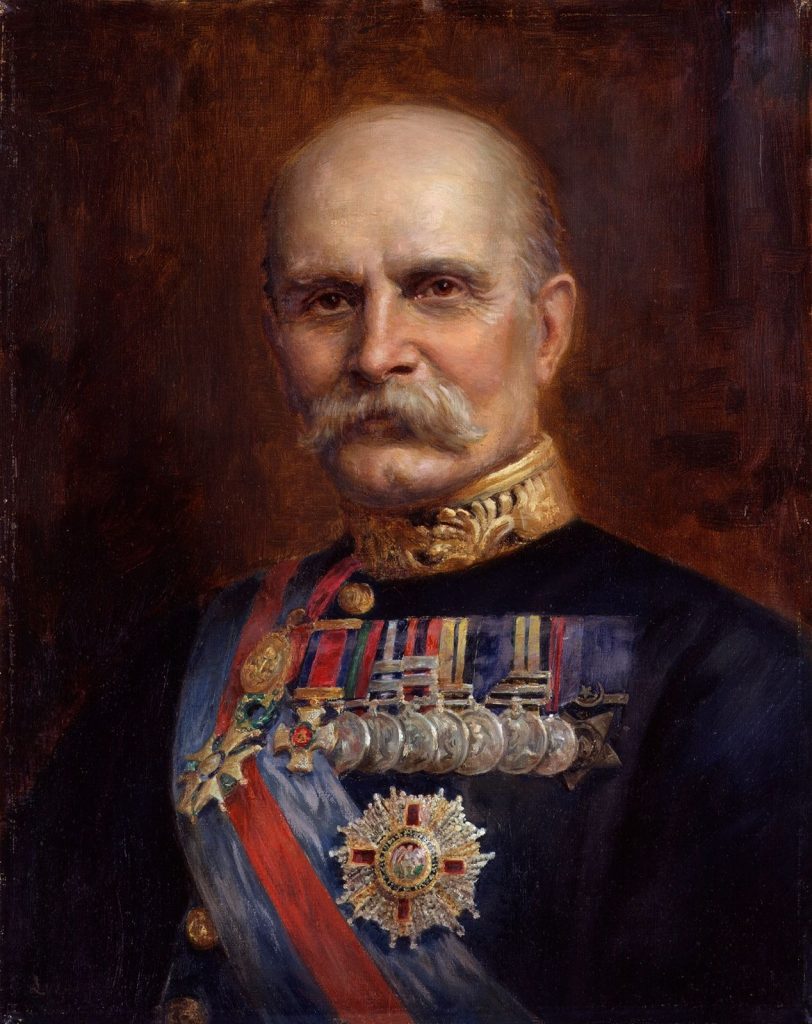
File: Portrait of Frederick Lugard in the National Portrait Gallery, London. Photo: Encyclopedia Britannica.
The thing Satiru was
Before it became a problem requiring artillery, Satiru was an answer to a different problem. To understand it, you need to understand the particular moral atmosphere of the Sokoto Caliphate in its late decline – the spiritual hangover, you might call it, of a revolution that had once been genuine.
Usman Dan Fodio launched his jihad in 1804 with an argument that was partly political and partly theological, but entirely serious: that the Hausa rulers of the time had corrupted Islam, that the ordinary people – the talakawa, the poor commoners – were being ground down by a system that dressed itself in religious language while behaving in wholly irreligious ways. Dan Fodio and his followers built the caliphate on the promise that this would change. That Islamic governance would be just. That scholars who held power would be answerable to something beyond their own appetites.
By the end of the nineteenth century, that promise had curdled into something its founders would not have recognised. The Fulani aristocracy that administered the caliphate had made a comfortable accommodation with power. Tribute collectors arrived in the villages. The talakawa paid. Palace scholars – the senior ulama (religious scholars), with their elaborate networks of family and commerce – found, in the more elastic corners of Islamic jurisprudence, reasons why this was all acceptable. The poor continued to be poor. The aristocracy continued to wear piety as a garment while extracting what they could.
The scholars of Satiru – humble men, as Lovejoy and Hogendorn describe them, “poor Muslim scholars engaged in farming and teaching,” with origins far outside the Fulani elite – found different reasons. Malam Siba, who founded the Satiru settlement in approximately 1894, was of Nupe origin. A second key figure, Maikaho, came from Gobir, the country that Uthman Dan Fodio himself had subjugated. A third, Malam Bawa, was from Zamfara, which had revolted against Sokoto on several occasions across the nineteenth century. What distinguished these men from the mainstream was not their learning – they were, by caliphate standards, minor figures – but their refusal to make the peace that more successful scholars had made with power. As Lovejoy and Hogendorn paraphrase the alleged statement of Malam Siba himself: he “was fed up with the exactions of the ruling class and was not going to obey the instructions of anyone anymore… [but instead] was going to set up a new great regime.”
What grew at Satiru, on the frontier of four fiefdoms – Danchadi, Dange, Shuni, and Bodinga – was something the caliphate’s administration regarded as an irritant and then, gradually, as something worse. The community refused to pay taxes. It refused to provide unpaid labour. It attracted, in growing numbers, fugitive slaves fleeing from the plantations and estates of the aristocracy. This last detail matters enormously. By 1906, British Resident Burdon would report that the adherents of the Satiru cause were “nearly all run away slaves.” Local tradition in Satiru itself held, as recorded by A.S. Mohammad in his foundational social history of the revolt, that “the leaders of Satiru abolished slavery and as a consequence… slaves flocked to them. The freedom of these fugitives was effectively and strenuously guarded.”
This was, in other words, not an uprising of the godless. It was an uprising of the structurally abandoned — poor clerics, dispossessed peasants, and fugitive slaves – against the two interlocking systems that were destroying them simultaneously: the late-caliphate aristocracy that extracted their labour, and the British colonial administration that had, since 1903, added new demands of jizya (poll tax) and jangali (livestock tax) to communities that had never before paid such taxes to Sokoto. As a Sokoto citizen wrote bitterly at the time, and as quoted in Lovejoy and Hogendorn’s account: “We have been conquered. We have been asked to pay poll tax and cattle tax. We have been made to do various things, and now they want us to fight their wars for them.”
The movement Satiru had built was, in the framework laid out by Lovejoy and Hogendorn, a form of revolutionary Mahdism – distinct from all the other currents of Mahdist thought that ran through the caliphate at the time. It drew its support from peasants, fugitive slaves, and subject populations. It had no aristocratic supporters, no wealthy merchants, and no members of the established ulama. It was ethnically diverse in a way that the aristocracy was not: Hausa from various origins, Zamfarawa, Gobirawa, Gimbanawa, Kabawa, and Azbinawa – but, strikingly, no Fulani. The battle lines, as Lovejoy and Hogendorn note, mapped onto class so precisely that “the ethnic dimension… reflected the class division.” On the day of the final battle, “all the faces on the battlefield had Gobir, Kebbi, Zanfara, Katsina and other such tribal marks. Not a single Fulani talaka [commoner] joined them.”
What Satiru wanted, ultimately, was the recovery of the original promise – the caliphate that Dan Fodio had said was coming, and that had not arrived. You can call this politics, or you can call it theology. At Satiru, they did not distinguish between the two.
The spark and the suppression
The movement had been building for years, connected by threads of correspondence and travelling clerics to similar currents of dissatisfaction across both the British and French colonial zones in are now Nigeria and Niger Republic. On the French side of the boundary, a blind Zarma cleric named Saybu Dan Makafo had been the central animating figure – charismatic, mystically inclined, and reportedly possessing gifts of ventriloquism that contributed to his reputation as a waliyyi, a saint.
In December 1905, violence broke out at Kobkitanda, 150 kilometres south of Niamey, in French territory in today’s Niger Republic. Saybu and his followers killed two gardes-cercles (colonial police) from Dosso. The French responded, the Mahdists absorbed losses, and Saybu fled east – eventually arriving at Satiru, where the local community had already been living in a state of armed readiness and messianic expectation.
The revolt was supposed to begin on the Eid El-Kabir (Babbar Sallah), February 5, 1906. It was postponed – there was an internal dispute about the recognition of Isa, the village head of Satiru, as the messianic successor figure who would accompany the Mahdi. The Satirawa (people of Satiru) resolved the question on February 13, when they attacked the neighbouring village of Tsomau. Fourteen people died.
The British response was swift and catastrophically misjudged. Acting Resident H.R. Preston-Hillary moved immediately with a column of about seventy mounted infantry under Major Francis Blackwood, armed with a single Maxim gun. He appears to have been entirely unaware that the rising at Satiru was connected to the weeks of violence that had already convulsed French territory. He rode toward the village with the assumption of a man who believed the gap between his weapons and his opponents’ was so vast that the details of the situation hardly mattered.
He was wrong.
The Mahdists attacked the British column. Hillary and Blackwood were killed, along with three other white officers and 25 African soldiers. The West African Frontier Force (WAFF) suffered such heavy losses that it was “forced to retreat in disarray.” It was, as Lugard would later acknowledge, “the first serious reverse suffered by the West African Frontier Force since it was raised in 1898.”
Get our in-depth, creative coverage of conflict and development delivered to you every weekend.
Subscribe now to our newsletter!
The Satiru Mahdists were also severely wounded — their leader, Malam Isa, was struck during the initial encounter and would die two days later, on the morning he was supposed to unfurl the green flag and declare the jihad formally. He did not live to see what his movement had achieved: a genuine military victory over the empire. For a brief, burning moment, the talakawa had won.
The British did not pause to understand what had happened. They regrouped.
The reckoning
Illustration by Akila Jibrin/HumAngle.
On March 10, 1906, a combined force of the British-run West African Frontier Force (WAFF) troops and Sokoto fighters approached Satiru. The Satirawa had dug trenches. But they did not stay behind them. They charged, repeatedly, in massed formation, against troops equipped with Maxim guns firing destructive volleys. Historian Richard Dusgate would later call what followed “the most bloodthirsty expedition in the history of British military operations in Northern Nigeria.” Margery Perham, in her biography of Lugard, noted that subsequent reports – kept secret at the time – found that the “killing was very free, not to say slaughter,” that the soldiers “killed every living thing before them,” and that “the fields were running with blood.”
At least 2,000 Satirawa were killed. An estimated 3,000 women and children were herded to Sokoto, many distributed among the aristocracy as effective slaves – a thinly disguised reassertion of the master-slave relationship that the very people of Satiru had staked their lives on dismantling.
Saybu Dan Makafo, blind and wounded, survived. He was captured and brought to Sokoto, where he was tried. His boy guide, according to a story collected by H.A.F. Johnston, reportedly shouted at the trial that if Saybu was given water, he would vanish into thin air – an indication of the extraordinary tension surrounding the proceedings. The public executioner decapitated him on March 22. His head was mounted on a stake in the market. Four subordinates suffered the same fate.
The political accounting that followed the massacre revealed what the British understood the suppression to mean and to communicate. The Colonial Office initially received dispatches that accurately attributed the uprising partly to the fugitive slave crisis – Lugard’s own initial cable described the rebels as “outlaw fugitive slaves.” A marginal note in the Colonial Office files, as documented by Lovejoy and Hogendorn, captures the official response with bracing economy: “Better say nothing of slaves.” By May 9, Lugard had incorporated a sanitised version of events into his official reports. The slave dimension was quietly removed from the record. The most dangerous thing about Satiru – that it had articulated a class argument, that it had offered sanctuary to the enslaved, that it had made the connection between colonial taxation and pre-colonial extraction explicit – was the thing the British were most determined to forget.
The Sokoto aristocracy was rewarded for its loyalty. Marafa Muhammadu Maiturare, the Sokoto official who had commanded the local levies and whose authority was partly credited with preventing a general rising, eventually became Sarkin Musulmi in 1915. Hassan, the sarki of Dange, the fief nearest to Satiru, who had greeted Burdon warmly in the hours after the Mahdist victory, would become Sarkin Musulmi in 1931. The collaboration was not forgotten. It was promoted.
What the grammar inherited
Nearly a century and two decades later, an eight-year-old boy named Sa’id watched through a crack in the wall of his grandmother’s hut as the men of his family were dragged outside and shot.
His village, Kajen Shuwa, sat in Marte Local Government Area of Borno State, northeastern Nigeria, a Shuwa Arab community of cattle herders and storytellers, ethnically and linguistically distinct from the dominant groups of the region. Between 2014 and 2015, at the height of the military’s campaign against Boko Haram, soldiers arrived looking for a Boko Haram cell in a village called Kajen Kanuri. The names were similar enough. No interpreter had been brought. No local guide accompanied the unit.
More than 40 men died.
“They had the wrong village,” Imam Abdulkarim, now living with displaced survivors at the Garin Shuwa IDP camp in Bauchi, told HumAngle. “It was later we realised they were sent to Kajen Kanuri.”
One of the survivors told HumAngle in 2026 how the events unfolded as he watched from where he had hidden himself in a tree. He said he was watching when the men were gathered and ordered to produce Boko Haram members. The people apparently did not even understand what was being said to them, so the soldiers simply lined all the men up in a place resembling a ditch and shot every single one of them. Just like that. No trial. No evidence. Nothing. Everyone was killed.
Sa’id is nineteen now. He teaches Quran to children at the displacement camp — children who have their own mornings they cannot stop replaying. He speaks slowly. He flinches at loud sounds. When he told his story to HumAngle, tears came before words, and other residents of the camp stepped in to complete the parts his voice could not carry. They knew the story. They had assembled it over the years, in the way that displaced communities assemble the things they are not allowed to say publicly – from fragments, from the accounts of those who were in different parts of the village when it happened, from the silence of those who were not there to tell anything.
“The families of the killed couldn’t even raise their voices,” Abdulkarim said. “Everyone was afraid that he might be targeted too.”
No soldier was prosecuted. No investigation was publicly announced. No family received notification, compensation, or the minimum of official acknowledgement that their men had been killed by mistake.
What happened to Kajen Shuwa is not exceptional in the region’s chronicle of the last decade. Amnesty International’s 2015 report documented execution-style killings, torture in detention, and mass graves of individuals who had never been charged, tried, or formally arrested — people killed not for what they did, but for who they resembled, where they lived, what language they spoke when soldiers arrived. The Nigerian military’s response to that report was not to open investigations. It was to call Amnesty International a liar.
And then the world moved on, as it always does – to the next atrocity, the next set of statistics that briefly animated international concern before fading into the background noise of a continent the world has learned to observe without fully attending to.
Zaria massacre
If Kajen Shuwa happened in the shadows – a remote village, an Arabic-speaking minority, a story reaching the press years after the fact — then what occurred in Zaria, Kaduna State, in the country’s North West, in December 2015 happened in full view, and still went unanswered.
The Islamic Movement in Nigeria (IMN), led by Sheikh Ibrahim El-Zakzaky, was a Shia organisation with roots deep in Zaria’s social fabric. It ran schools and clinics. It was also an organisation that had long attracted the suspicion of the Nigerian state – not because it was violent, but because it was organised, independent, and loyal to a leadership structure that fell outside the state’s system of control.
On Dec. 12, 2015, an IMN procession blocked a road, delaying a military convoy carrying the then Chief of Army Staff. What followed, as documented in meticulous detail by both Amnesty International and the Kaduna State Government’s own commission of inquiry, was a massacre. Soldiers attacked IMN members across multiple locations. The Hussainiyya Islamic Centre was demolished. El-Zakzaky’s residence was destroyed. Three of his sons were killed. El-Zakzaky himself, elderly and partially blind – the parallel to the blind Saybu Dan Makafo feels almost too pointed – was arrested. He and his wife would remain in detention for years, their release ordered repeatedly by courts and resisted repeatedly by the government.
The Kaduna State commission produced a report of unusual honesty. It confirmed that at least 347 IMN members had been buried in a mass grave at Mando. It found the military’s response disproportionate. It recommended the prosecution of specific officers, and it named the mass grave by location. But not one recommendation was implemented.
The IMN was formally proscribed in 2019, an organisation that had existed for four decades and operated schools and hospitals, banned by the government that had killed hundreds of its members, as though the banning were the logical conclusion of the killing rather than an additional punishment for surviving it.
The grammar of impunity
There is a grammar to this. Lovejoy and Hogendorn identified it in the colonial records of 1906 in three steps: a community marked as dangerous, the deployment of force that is “excessive by design,” and the systematic management of the record.
At Satiru, the British made the decision consciously – the marginal note that said “better say nothing of slaves” was an administrative instruction to suppress an inconvenient truth. The communities targeted after them have had to live inside the silence that administrative instruction created.
But this never worked permanently. What the scholars Godwin Odeh and Williams Efe argue, in their analysis of the Satiru uprising’s historiography, is that the episode was not merely a military or religious event but a demonstration of “the impossibility of subjugating a group permanently without facing a crisis of cultural relevance.” They invoke Amilcar Cabral’s formulation: that culture “is a means by which people assert their opposition to domination… one of the fundamental tools of struggle for emancipation.” The argument is that Satiru never fully ended – that its logic persisted, became available, got taken up again in different forms by different communities facing different versions of the same problem.
The circumstances were different, the enemies differently named, and the legal justifications modernised, but the underlying grammar remained recognisable.
This is not a metaphor. What the British established in 1906 and what successive Nigerian governments have absorbed so completely is a particular relationship between the state and the communities it finds inconvenient. The relationship has a fixed sequence: a community is marked; disproportionate force arrives; the record is managed; and then, reliably, comes the silence. The silence is not passive. It is constructed and maintained by the same institutions that produced the violence – maintained through the denial of accountability, the obstruction of independent investigation, and the prosecution of those who speak too loudly about what they witnessed.
The families of Kajen Shuwa could not grieve publicly because grief, in that context, was dangerous. The IMN, after Zaria, could not even gather to mourn without risk of further confrontation with the same security forces that had killed their members.
In the debut episode of “The De Los Podcast,” hosts Fidel Martinez and Suzy Exposito spoke with the Latin Grammy-nominated singer and actor Leslie Grace about her long-awaited new music — plus some of the highlights and pain points throughout her film career.
Released in May, Grace’s bilingual record “Amor, ¿Quién Eres?” is the first album she’s released in over a decade. Suffused with what Exposito described as “tropical eleganza,” the album is a far cry from the Christian music Grace recorded in her teen years — and a marked shift from the Latin Grammy-nominated self-titled project she released in 2013. She touched on some of the personal developments required to reach the more sensual sonic landscape she explored in her latest release.
“The biggest learning has been how to protect my creative space, while I grow it and discover at the same time,” she told De Los.
The 31-year-old also discussed her work in the 2021 movie musical “In the Heights” — and the online backlash the film received due to the lack of other Afro-Latinos in the cast.
“The lack of representation within film [and] diversity within the Latin community is a conversation we haven’t touched on as much,” she said. “Only so many films [are] given a shot. There [are] certain ways that Latinos are portrayed that are very narrowed down in film. I think it’s a worthwhile conversation at any time. I’m glad that people started to talk about that, so [we] can get more stories.”
Reflecting further on her filmography, Grace talked about the canceled release of “Batgirl,” in which she played the titular role. The film, which was originally for a late 2022 debut on the HBO Max streaming service, was axed by its studio Warner Bros. for financial reasons.
“It was disappointing because we knew the film that we were making,” Grace said of the movie, which was in postproduction when it was scrapped. “I knew that it wasn’t a reflection of our work, because this is something that happens. But I think because of the context of the conversation around representation, and the way that films can be discarded, after a lot of work and time and money has gone into something … the creative community really felt for me.”
During that period, Grace said the support from other creatives helped her move forward. She has since starred in more independent films in recent years — including “In the Summers,” which won a grand jury prize at the Sundance Film Festival in 2024 — and the 2026 features “Stages” and “Campeón Gabacho,” which premiered at this year’s edition of South By Southwest.
“I really am grateful for every person that reached out to me and was like: ‘Hey, I’ve got you, whatever you need,’ or ‘This is wrong,’” Grace said. “When something happens to me, I focus on my experience and what I gained from it, that no one could really take away.”
Venezuela holds the largest proven oil reserves on earth. It has lithium. It has agriculture, a coastline three hours away from Miami, and—for the first time in a generation a political window. The reconstruction investment case is real. So is the obstacle for every actor, across every ideology, that wants Venezuelan assets to perform.
The obstacle is not the oil price. It is not the OFAC sanctions framework, which has been substantially liberalized since January 2026. It is not even the absence of functioning institutions, though that is the proximate problem every investor will encounter. The obstacle has a nucleus with name, a title, and an active intelligence apparatus. And his continued presence in power is not merely a moral affront.
This is not a story about mismanagement. Mismanagement leaves a paper trail.
What happened across Venezuela’s infrastructure ministries between 2002 and 2012 lest almost none, deliberately. Over $150 billion in documented railway, housing, and infrastructure contracts were disbursed across that decade. The projects largely do not exist. The documentation largely does not exist. The Tinaco-Anaco railway, a $7.5 billion contract signed with China Railway Engineering Corporation, produced looted campsites and empty concrete columns. The National Railway Plan, budgeted at $150 billion, produced less than one percent of its projected track.
One of the ministers who oversaw that disbursement period of the infrastructure that is so dire, and who preserved an influence only surpassed by Hugo Chávez and Nicolás Maduro, today is the Interior Minister of Venezuela. He controls the national intelligence apparatus, the police, and the armed colectivos. He is Diosdado Cabello, your competing General Partner that has acted without impunity. He carries a live indictment from a New York court on narco-trafficking charges. He is sanctioned by the US Treasury. He hosts a television program that airs every Wednesday evening.
By 2011, the beneficial ownership architecture built by Venezuela’s ruling network spanned more than forty trustees across multiple jurisdictions: a parallel private equity structure embedded inside a sovereign state.
The distinction that every institutional investor must internalize is this: a mismanaged State is recoverable. A State whose productive apparatus was deliberately extracted (not ruined by incompetence but hollowed out because extraction was more profitable than production) presents a categorically different investment problem. The destruction was not the side effect of the governance model. It was the point of it. Cabello remains an icon of that governance model.
The counterparty problem
Conventional private equity rests on a foundational assumption: your counterparty has an interest in the underlying asset performing. Returns depend on it. Exit depends on it. The entire structure of an LP agreement, a term sheet, a co-investment right, all of it assumes a counterparty whose incentive is aligned with asset value.
In Venezuela, the sophisticated actor on the other side of the table for two decades was running a competing structure. One with no limited partners, no fiduciary duty, no quarterly reporting, and a sovereign intelligence apparatus for compliance. That structure had a single mandate: maximum extraction, minimum documentation, zero accountability. It executed that mandate with precision.
By 2011, the beneficial ownership architecture built by Venezuela’s ruling network spanned more than forty trustees across multiple jurisdictions. This is not a warlord’s operation. This is a parallel private equity structure embedded inside a sovereign state.
That sophistication is precisely what makes the residual presence of these networks so consequential for reconstruction capital. They did not disappear with the January 2026 transition. They repositioned. The structures that governed Venezuela’s extraction apparatus are experts at corporate layering: shell companies, nominee directors, off-channel financial instruments designed to distance beneficial owners from the assets they control.
This is the counterparty environment that reconstruction capital is walking into. Not a post-conflict landscape with residual corruption. An active, sophisticated, multi-jurisdictional extraction network that has spent 25 years perfecting its operational security
These are not improvised operations, they are multi-jurisdictional corporate architectures spanning Switzerland, Brazil, Spain, the Caribbean, and more recently Turkey and the Middle East. Each node chosen for its specific regulatory gap or enforcement lag. The $5.2 billion in gold shipped to Switzerland between 2013 and 2016, the Alex Saab procurement network running through Turkey and Cape Verde, the Zapatero indictment revealing consulting structures designed to siphon money from China, Venezuela, and Spain simultaneously these are documented examples of the same operational capability.
These networks retain the best advisors money can pay. Former heads of state, international law firms, financial intermediaries operating across jurisdictions. The Zapatero case is not the exception, it is the template. And they operate with the enforcement discipline of a cartel: strategic asset moves backed by the implicit and sometimes explicit willingness to use coercion when commercial pressure is insufficient. The SDNY indictments against senior regime figures on narco-trafficking charges are not separate from the financial architecture. They are evidence that the same command structure manages both.
This is the counterparty environment that reconstruction capital is walking into. Not a post-conflict landscape with residual corruption. An active, sophisticated, multi-jurisdictional extraction network that has spent 25 years perfecting its operational security, asset acquisitions by “patriotic”expropriations to serve their drug-logistic hubs and is now repositioning for the reconstruction window.
Why China doesn’t actually want this
China’s position in Venezuela is widely misread as unconditional support. The reality is more commercially specific. China has over $60 billion in loan-for-oil exposure through CNPC and the China Development Bank. Those loans require one thing: barrels flowing. Barrels require functional production infrastructure. Functional production infrastructure requires institutional stability, contract enforcement, and (critically) a counterparty with an interest in assets performing.
Beijing understands this better than any outside observer because its own institutions have investigated the damage. Xi Jinping’s Central Commission for Discipline Inspection placed a CITIC Group vice president under investigation for serious disciplinary violations, the same CITIC that embedded confidentiality clauses in Venezuelan housing contracts barring the Venezuelan government from accessing financial information about its own projects. An Andorran court documented $100 million in bribes paid by CAMC Engineering to Venezuelan officials. China did not need backchannel meetings to understand the corruption. Its own companies were defendants in it.
China also enforces its own code of conduct internally. The CCP’s anti-corruption apparatus, operating through the Central Commission for Discipline Inspection, has a long reach, including over state enterprise executives who participated in overseas schemes that damaged China’s institutional reputation. Chinese firms implicated in Venezuelan bribery networks in Andorra for payments to PDVSA lobbyists related to Venezuela’s electricity system did not operate without consequence within their own system. Beijing does not publicize these accountability mechanisms, but they exist. The party does not tolerate reputational exposure that undermines its economic diplomacy, regardless of the geography.
Every dollar that disappears into the extraction apparatus is a dollar that does not produce the barrel that services the Chinese loans.
The Trump-Xi summit concluded in Beijing on May 15, 2026, the same day Lamargas exploded on Lake Maracaibo, a facility operated by China Concord Resources Corp under a PDVSA joint venture contract. At the moment, the US and Chinese governments are navigating toward economic stabilization and a framework for managed competition, building on their South Korea thaw. That G2 stabilization has direct implications for Venezuela: a China that is repositioning toward US capital markets, Boeing purchases, and agricultural commitments is a China with diminishing strategic incentive to backstop a Venezuelan network that embarrasses it commercially.
The Chevron model—US-anchored, internationally governed, with Chinese off-take embedded through structured contracts—is precisely the kind of framework that serves Beijing’s debt recovery needs without requiring it to defend the indefensible.
A ministry based in a kleptocracy whose financial architecture is premised on assets not performing for the state is structurally incompatible with Chinese debt recovery. Beijing is not sentimental about this. It is calculating.
China’s $50-60 billion in loan-for-oil exposure to Venezuela requires one thing above all else: barrels flowing. Barrels require functional production infrastructure. Functional production infrastructure requires institutional stability, contract enforcement, and a counterparty whose economic interest is aligned with assets performing. When the ministry overseeing oil production is the same apparatus that systematically extracted value from every sector it touched, railways that produced concrete columns and nothing else, housing programs with $76 billion in unaccounted deficits, power plants that were paid for and never built, you can see that the problem for Beijing is not political. Every dollar that disappears into the extraction apparatus is a dollar that does not produce the barrel that services the loans.
China tried to correct this internally before abandoning the effort. In 2018, Margaret Myers at the Inter-American Dialogue pointed out that Beijing “tried over the past couple of years to guide decision-making in Caracas by providing advice or by tying loans to production capacity projects in the oil sector, in order to try to help Venezuela right itself economically. That has not proven successful.”
By 2016, China stopped issuing new loans entirely. That is not a diplomatic signal. That is a credit committee decision. The same kind of decision any institutional lender makes when the counterparty’s governance structure has made repayment structurally unlikely.
The Brazilian vector
Brazil’s relationship to Venezuela’s reconstruction is complicated by a paper trail that runs through the largest corruption scandal in Latin American history. Odebrecht paid the highest figure of any country outside Brazil itself. Venezuela’s own former prosecutor general, Luisa Ortega Díaz, formally linked those payments to senior Socialist Party figures including Diosdado Cabello after being removed from office and forced to flee the country. The investigation was halted by Venezuela’s highest court. The Swiss banking system was asked to provide a list of Venezuelan recipients. Neither process was allowed to reach its conclusion.
In Brazil, the Odebrecht network reached the highest levels of political life. Federal prosecutors investigated Lula for allegedly lobbying foreign governments on Odebrecht’s behalf after leaving the presidency, and for his role in directing state development bank BNDES financing toward Odebrecht projects abroad. The contracts that linked Odebrecht to Venezuela were not arm’s-length commercial transactions. They were, by Odebrecht’s own admission in its US Department of Justice plea agreement, instruments of a coordinated bribery architecture that spanned twelve countries and operated through a dedicated internal division (the Division of Structured Operations) whose sole purpose was managing political payments.
What does not yet exist is the decision—by US institutional capital—to arrive with a governance structure that the extraction network cannot penetrate.
Brazil has significant commercial interests in Venezuela’s reconstruction, across energy, agriculture, and infrastructure. Those interests are legitimate and Brazilian private capital is a natural reconstruction partner. The complication is not Brazil. It is the specific political-commercial network that governed Brazil’s prior engagement with Venezuela. Odebrecht did not select its Venezuelan counterparties through competitive markets. Contracts were directed through political relationships — between heads of state, with BNDES as the financing instrument, and with the Odebrecht Division of Structured Operations managing the payments in between.
Political networks have institutional memory. The preferred partners that flow through certain diplomatic channels into Venezuela’s reconstruction window carry relationships forged in that prior architecture. A governance framework serious about reconstruction cannot simply exclude Odebrecht, the legal entity. It must screen for the network that Odebrecht served. That screening is structural, not political. It is the difference between Brazilian capital that competes on merit and Brazilian capital that arrives pre-selected by the same diplomatic infrastructure that enabled the extraction.
The structure that worked and the decision that remains
One Venezuelan asset survived twenty-six years of chavismo with its value intact. One. CITGO Petroleum, incorporated in Delaware, governed under US fiduciary law, with its governance architecture anchored entirely outside Venezuelan legal jurisdiction. It survived not because of political protection but because of structural protection. US law held when every Venezuelan institution around it failed. That is not a coincidence. It is the blueprint.
Venezuela sits very close to Miami. Capital will flow in. The question is whether it arrives with a governance structure equal to the threat, or whether it arrives the way it always has in captured states: trusting counterparties who already demonstrated, at extraordinary scale, that trust was the wrong instrument.
The SDNY indicted the man who sits in the Interior Ministry. The US Treasury sanctioned him. He is still in the building. Turkish construction conglomerates, Asian commodity traders, and European energy juniors are already positioning—without FCPA compliance costs, without fiduciary obligations, without LP reporting requirements. They will move faster. They will price lower. This is what happened in Iraq after 2003. It is what happened in Libya.
The architecture to do this differently exists. Human capital exists in the diaspora: eight million Venezuelans left and within them there are over a million that hold verifiable credentials embedded in US and European institutions, carrying the technical and legal knowledge to rebuild what was taken. The OFAC licensing framework exists. The proof of concept exists in CITGO’s survival. What does not yet exist is the decision—by US institutional capital—to arrive with a governance structure that the extraction network cannot penetrate. That decision is the only thing standing between reconstruction and a second extraction with better letterhead.
When it comes to jetting away after long months of hard work and parenting, the idea of flopping down on a sunlounger in between trips to the all-inclusive buffet or bar is undeniably tempting
All-inclusive hotels and resorts are slowly killing one of the best parts about going away on holiday.
When it comes to jetting away after long months of hard work and parenting, the idea of flopping down on a sunlounger in between trips to the all-inclusive buffet or bar is undeniably tempting.
However, it’s this very action that is threatening something we all love. Food.
A recent poll of 2,000 holidaymakers found that cuisine is the main reason for choosing a holiday destination for 19 percent, with 25 percent even returning to the same place because of it. Nearly four in 10 always research restaurants and dining experiences, and 17 per cent will put together a wish list of foods they want to try.
But according to the responsible travel firm Intrepid, local delicacies, bars and restaurants are under threat because holidaymakers are increasingly staying in all-inclusive resorts run by large multinational companies, rather than exploring and spreading their cash around.
A survey of 2,000 Brits conducted on behalf of Intrepid by Censuswide found:
51% won’t travel beyond their accommodation to find authentic food
25% eat at a global fast-food chain within 48 hours of arrival
55% of Gen Z say they find comfort in familiar brands like McDonald’s and Starbucks when travelling
Over two-thirds of Brits (67%) admit to packing food from home, with tea bags (32%), the most commonly packed item
Award-winning author, food and travel writer, Yasmin Khan, who collaborated on the research, told the Mirror what we risk losing if we stick to the hotel buffet.
“When a traditional dish disappears, we don’t just lose a recipe; we lose a piece of history and heritage,” she said.
Yamin believes that travellers have a responsibility to support the food cultures that make places distinctive and that “when we choose the safety of the familiar over food rooted in local tradition, we can inadvertently contribute to the loss of irreplaceable flavours, techniques and ingredients.”
“As someone who is a tired mum of a toddler, all-inclusives have their place. But I would push back on this idea that they’re the most affordable way to experience a holiday. While some have good food, the majority of the time you’re divorced from where you’re visiting. It could be anywhere. You feel disconnected,” she continued.
“So many of the local bakeries, or the lovely cake shops, the lovely tapas bars, if people aren’t leaving the hotels, they’re under threat. Some of my favourite meals abroad have been some of the spontaneous ones, you’ve eaten something you’ve not heard of before. I also make a point of asking for local recommendations.”
Intrepid has also partnered with Time Out to launch a series of immersive cookery workshops in London, giving people the chance to cook and experience a selection of the ‘endangered dishes’ firsthand. Tickets are on sale now.
Dan Saladino, author of Eating to Extinction, is concerned that less well-known dishes are being wiped out, in part due to the habits of holidaymakers.
“The research identified three primary threats including environmental loss from climate change, cultural dilution due to overtourism, and the disappearance of traditional artisanal skills. We chose dishes like the New York bagel and sushi from Japan because they are, in culinary terms, global icons, yet most people don’t realise the authentic versions of these are actually on the brink of vanishing due to modern shortcuts and mass-market pressures,” he said.
“Food is the most profound link we have to our history, our land, and our identity, yet we are currently witnessing a global collapse of culinary diversity.”
Noel Josephides, the chairman of family‑owned tour operator Sunvil, believes that all-inclusive hotels don’t just threaten food culture, but the very foundations of the sunny destinations loved by Brits.
Herefuses to work with all‑inclusives “on principle” and argues that they suck money out of local communities and funnel it towards large multi‑nationals. Local, independent business owners simply can’t compete with the buying power of the big chains, which encourage holidaymakers to stay on‑site rather than going out into the community to spend their cash.
This is not only a major cause of resentment among locals, but it keeps holidaymakers from truly experiencing the destination they’re in, Mr Josephides argues.
“It’s a product that doesn’t really encourage access to local facilities. We know in places like Cyprus and Greece, restaurants have shut down because of all‑inclusives,” he told the Mirror.
“It is not the way to see a country like Greece, but it is perfect for mass‑market tourism from the company’s perspective. In Corfu, there’s a village called Dassia, which has a big all‑inclusive. If you go to that village, it’s dead. Small hoteliers in Paphos have told me, hundreds of restaurants have closed. It is not the right way to do tourism.”
Brian Carrigan has been travelling to sunny destinations such as Menorca, Grand Canaria, and Marjoca each year for the past quarter of a century. In his mind, the biggest problem is the rise of all‑inclusives.
“They starve the local economy of holiday spending. We have never done all‑inclusive due to the fact that the food is substandard and not as good as a locally prepared meal in a nice restaurant,” Brian said.
When I visited Rhodes in 2023 to see how the island was recovering from wildfires that had evacuated thousands of holidaymakers, a number of independent hoteliers and restaurateurs told me how hard times had come in the past decade. While they cited numerous factors, the biggest one in their minds was the arrival of several large all‑inclusive hotels.
The history of the wrap‑around holiday type stretches back to the 1950s, when Belgian sportsman Gerard Blitz pioneered the concept by using army surplus tents to house visitors in Majorca. He was the founder of Club Med, now one of the biggest travel brands in Europe.
The all‑inclusives of today are much more complex and provide so much more to guests than Mr Blitz’s straw hut village that opened in 1952 in Corfu. When I visited Club Med Tignes, I was amazed by not just the ski‑in, ski‑out nature of the property, but the staff on hand to get kids dressed and ready for a day on the slopes, and the incredible buffet on offer three times a day. We’re not just talking chips and pizza, we’re in the world of raclette, fresh fish, and omelets made to order as you watch on.
While Club Med may no longer be a bargain option, many brands offer such good deals that it’d be financially mad not to go all‑inclusive. At least, from the holidaymaker’s perspective.
According to Responsible Travel, all‑inclusive resorts are “usually owned by an overseas company,” and they “sequester most of the tourists’ cash, leaving little behind in the local community, which is impacted by the presence of the resorts.”
“Holidaymakers also use vast quantities of energy and water (significantly more per person than local people) and create large amounts of waste, which some feel is a high price to pay for little commercial return.”
Harold Goodwin, professor of Responsible Tourism at Manchester Metropolitan University, believes all‑inclusives can be forces for good, so long as they work alongside independents, rather than against them. That means building a loyal and skilled local workforce, reducing energy costs and waste, sourcing fresh local produce, and offering an exciting range of sensitively planned excursions.
“An impressive all-inclusive resort can provide employment for local people with a genuine chance of progression – with the right support and training – into managerial roles that are better paid. Indeed, an all-inclusive resort in a developing country could employ far more people locally than several ecolodges ever could,” he told Responsible Travel.
“Notorious for not sourcing locally, there is no reason why a responsible, sustainable all‑inclusive resort cannot support an ‘adopt a farmer’ scheme, or similar – sourcing delicious, fresh, quality produce for its catering needs at a local level.”