Until now, Trump has acted in Venezuela with no congressional involvement. The administration decided to work in tandem with Delcy Rodríguez, secure the oil, and run a negotiation between the old remnants of an opposition-controlled National Assembly and the regime. This framework won’t be renegotiated if the Democrats win the House of Representatives on November 3, a goal they will likely achieve. But a new Congress can exert real legislative pressure to potentially change how it moves forward.
What the Democrats have done since Maduro’s ousting
Since January, the Dems’ first efforts were two resolutions, sponsored by Tim Kaine in the Senate and Jim McGovern in the House, about war powers and who may authorize force, not about what the Venezuelan process should become. Both were supported by a few Republican leaders and failed to pass.
On February 25, Rep. Jared Moskowitz introduced the Venezuela Democratic Transition Strategy Act. It required the Secretary of State to deliver a strategy within 180 days, covering the release of political prisoners, foreign influence and assistance, followed by annual reports. Democrat Jeanne Shaheen and Republican Ted Cruz also introduced a bipartisan resolution in the Senate regarding the transition in Venezuela.
None of Trump’s numerous executive actions have required a vote, ratification, or budget allocation in the Capitol.
The initiatives by Democratic lawmakers have not aimed to reverse what happened on January 3rd, because the US cannot backtrack from the military incursion which meant, at least, Nicolás Maduro’s removal from power. What they are seeking, however, is the establishment of a plan that will lead to free elections and, in the long term, a genuine democratic transition. What is the Democrats’ position? They have maintained a stance of recognizing Edmundo González as president-elect and María Corina Machado as the leader of the opposition.
Besides, the impact of ICE and Border Patrol going after the Venezuelan community in the US has been repeatedly underlined by voices such as Rep. Debbie Wasserman-Schultz and Rep. Darren Soto, who filed a discharge petition on March 19th to force a vote on the Venezuela TPS Act.
What won’t change?
The broader US policy.
The oil agreement allegedly signed by the Trump administration, the company Nabep, and the Rodríguez regime is a 25-year project across 17 fields. That deal will not be undone by letters or congressional hearings. Not even Democrats attacking Trump’s dealings with Rodríguez have offered legislation to end them so far. A Democratic House will not be able to reinstate TPS without the Senate and a presidential signature.
The administration has shown it can take action on Venezuela without congressional involvement. That’s what it did with the military incursion on January 3rd, the deportations after invoking the Alien Enemies Act, the termination of TPS and the humanitarian parole, the formal recognition of Delcy Rodríguez as interim president, the lifting of sanctions on Delcy and sectors of the economy, the opening of the Venezuelan market to US companies, the removal of Venezuela from the list of countries that have failed to cooperate in combating drug trafficking, and the informal meeting with Rodríguez in New York. None of those executive actions required a vote, ratification, or budget allocation in the Capitol.
The only formal check Congress has is the War Powers Resolution, which has already failed twice, and Trump has promised to veto it if it ever reaches his desk. Should he do so, even with a Democratic majority in Congress, at least two-thirds of the vote is required to override a presidential veto. That threshold remains very difficult to reach.
Oversight already began
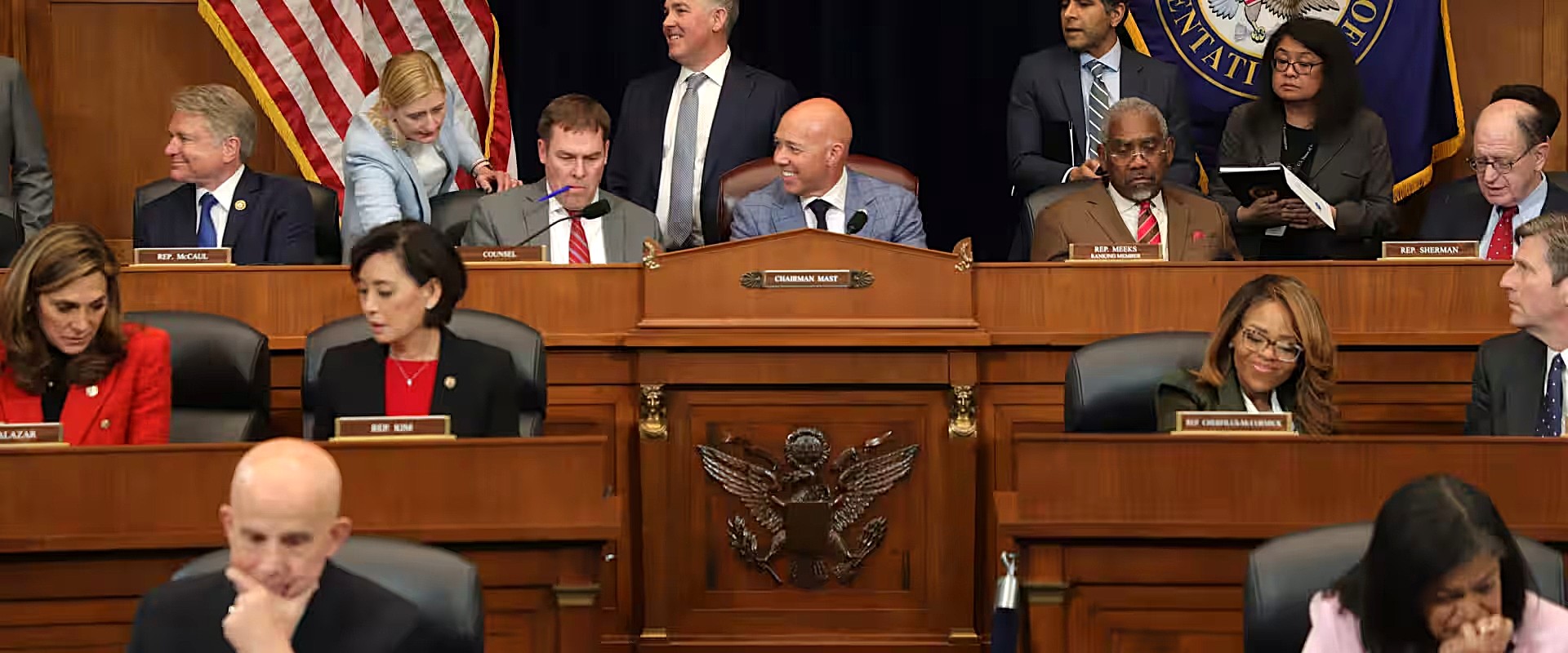
The clearest preview of what the midterm election can change came this month. Reps. Robert Garcia, Gregory Meeks and Jared Huffman, the ranking Democrats on Oversight, Foreign Affairs and Natural Resources, wrote to Secretary Rubio and Attorney General Blanche regarding the oil deal. They question why Alejandro Betancourt, who has faced investigations into alleged PDVSA money laundering, is treated as a business partner. They also say the administration has given Congress scarce details on the management of at least $13 billion in Venezuelan oil revenues.
The only thing that might change with a majority in Congress is the ability to obtain information, because those who are currently in the minority on the committees would become their chairs.
This issue is important if we expect a shift in the Legislative Oversight Committee on Venezuela. García has been the leading Democratic representative in the Oversight Committee since June 2025 and is well-positioned to chair the committee and exercise subpoena power if the Democrats win in November. Although his plans do not explicitly mention Venezuela as a priority, nor does the issue appear on the legislative agenda of Hakeem Jeffries (House Minority Leader), the agreements being negotiated and signed with Venezuela, as well as the management of oil resources, could fit perfectly with the demand for accountability and transparency that are indeed part of his priorities.
What’s happening in Florida?
We can’t talk about what we expect in November without discussing what’s happening in Florida. Although the Venezuelan vote isn’t decisive for the state, the Latino vote does carry significant weight and, in this case, naturalized US citizens or their descendants will consider immigration policies, as well as their economic impact, and abuses by ICE when they cast their vote.
The changes to electoral maps pushed by Republicans could have unexpected consequences. Moskowitz is seeking reelection and is in a competitive but winnable race. Wasserman-Schultz is in a better position in CD 20. Meanwhile, Angie Nixon, the Democratic Senate candidate, has been outspoken in her criticism of Trump’s immigration policies, demanding an end to deportations and the reinstatement of TPS.
If we want to see results regarding Venezuela that benefit Venezuelans, we have to look at the situation from an American perspective.
On the other side of the aisle, Maria Elvira Salazar’s recent announcement came as a surprise to many this week. In it, the Republican congresswoman tells Trump that his immigration control measures have gone “too far,” noting that half of the people detained by ICE in July had no criminal record. In June, she urged Trump to halt deportations to Venezuela following the earthquakes. Her actions appear to be driven more by the latest polls than by a commitment to defending immigrants’ rights.
How could a Democratic majority help the Venezuelan people?
To be honest, the only thing that might change with a majority in Congress is the ability to obtain information, because those who are currently in the minority on the committees would become their chairs. “Who negotiated the agreement? Where will the revenue go? What is the strategy behind the negotiation?” These are some of the questions that might carry more weight in the Oversight Committee or the Foreign Affairs Committee if they were headed by a Democrat rather than someone from the ruling party.
Venezuela is neither the center of the world nor a priority for the Democratic Party. One might think that it would be “easier” for chavismo to deal with the Democrats. If we want to see results regarding Venezuela that benefit Venezuelans, we have to look at the situation from an American perspective. The military intervention by the US has already happened, and if the US controls much of Venezuelan politics, that isn’t going to change because of a shift in Congress.
Americans don’t necessarily care about Venezuela’s specific situation, but they do care that the president doesn’t have “superpowers.” In my opinion, this makes it possible for Democrats to use the Venezuela issue as a mechanism for congressional oversight and to seek alliances with non-“MAGA” Republicans to place limits on Trump.