Before the holiday begins, observant Jews will remove and discard all food with leavening (called chametz) from their households, doing a thorough job, so that not even a crumb remains. This tradition is called bedikat chametz.
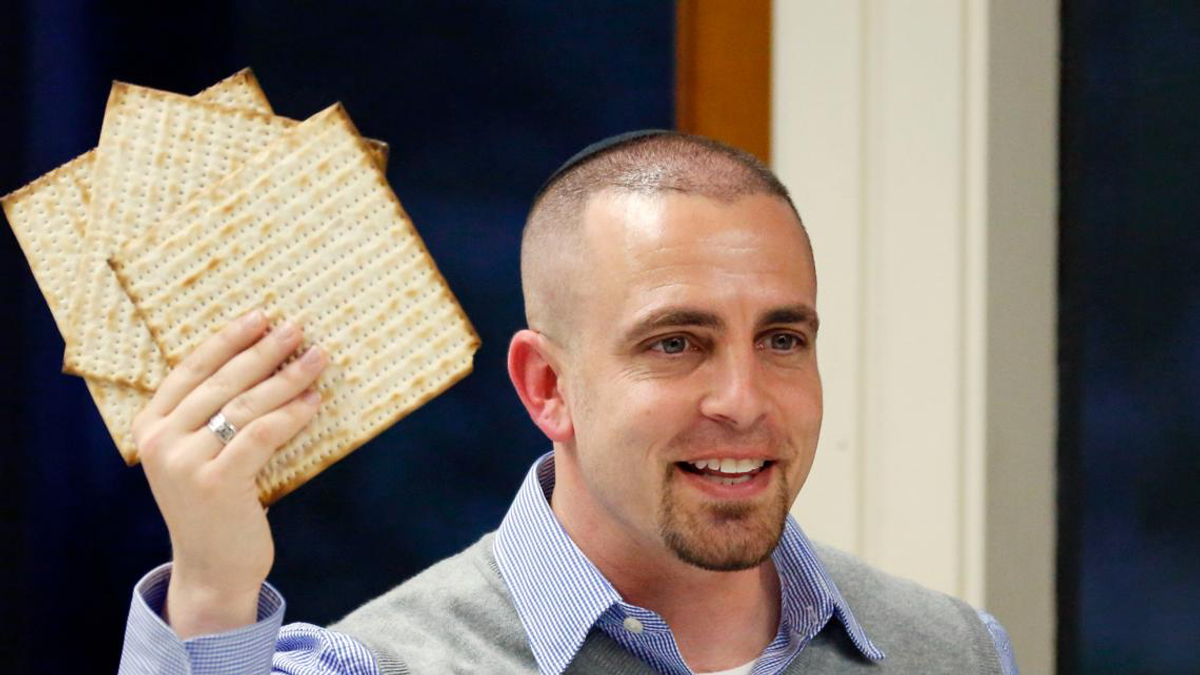
In the absence of leaven, Jews will eat specially prepared unleavened bread, or matzah, on Passover. Many Jews will also eat products made with matzah “flour” – unleavened bread that has been finely ground. Matzah dates back to the Exodus, where the Jews, not having had time to wait for the dough to rise before leaving Egypt, journeyed into the desert with unleavened bread.
Passover is a family holiday and a happy one. The first night is the most important, followed by the second night. It is traditional for a Jewish family to gather on both these nights for a special dinner called a seder (literally translating as “order”, due to the very specific order of the ceremony) where the reading of the story of the Exodus from Egypt, the Haggadah retells the story of the Israelite exodus from Egypt.
At the seder, three matzohs are used. During the seder, the middle matzoh is broken in half. The smaller piece is returned to the set of matzohs while the larger piece is designated as the Afikomen, or the dessert matzoh. Two distinct customs have arisen regarding the afikomen, both of which involve the afikomen being hidden as a means of keeping the children interested in the proceedings. In one custom, a child “steals” it and the parent has to find it. If the parent can’t find it, the child is given a reward for the return of the afikomen. In the other custom the parents hide the afikomen and the children look for it at the end of the meal. If the children find it, they receive the reward.