Occasional Digest

Monday 24 August Independence Day in Ukraine

The start of the 1990s saw the collapse of the Soviet Union. On July 16th 1990, the Ukrainian government had declared state sovereignty. July 16th was celebrated as Independence Day one year later.

In August 1991, there was a failed coup to restore the communist rule in the Soviet Union. As a result of the attempted coup and increasing fears about a return to Soviet rule, the people’s deputies brought the Ukrainian flag into the session hall of the Verkhovna Rada. 

On August 24th, the Act of Independence of Ukraine was adopted by the Ukrainian parliament, and a yellow and blue flag appeared on the building of the Verkhovna Rada.

The blue-yellow colour of the Ukrainian flag has a deep historical tradition. During the 20th century, it became the national flag of the Ukrainian People’s Republic between 1917 and 1920. It was banned under the Soviet regime it was banned becoming a symbol of the independence movement.

A condition of the declaration was that a national referendum should take place on December 1st 1991. Despite outside concerns that Ukraine could split into east and west, the turnout was over 80% and the result of the referendum was that over 92% voted in favour of their independence.

In June 1992, Parliament voted for an amendment to the legislative framework, according to which July 16th was officially replaced by August 24th as Ukraine’s Independence Day.

For some, the referendum of December 1st is seen as a more important date than the declaration of independence as it showed Ukraine’s unity in wanting independence.

Six good reasons why the hot girl at a gig won’t talk to you

STRUGGLING to start a conversation with the hot girl who has blessed a gig with her presence? These are the sound reasons she is ignoring you.

She doesn’t have to talk to you

You may be the main character in your own life, but to everyone else you’re practically part of the scenery. Nobody is under any obligation to talk to you, outside of curt pleasantries if they happen to be serving you in a shop. A hot girl at a gig is well within her rights to tell you to f**k off if you so much as breathe near her.

80 per cent of men are creeps

And that’s a conservative estimate. For all she knows you’re a disgusting weirdo who’d take photos of her feet to sell on the internet at the first opportunity. Trying to convince her otherwise by staring in her direction and shooting a nervous smile will not help your case. Plus her boyfriend might be present and he’d beat you up.

You’re old

You’ve come to see a band that’s got heavy airplay on Radio 6 because you’re middle-aged. She’s in the crowd because they remind her of her dad and the tickets were on offer. You are not the same. Even if she asked you where the toilets were, you wouldn’t be able to hear her dulcet tones over your tinnitus.

Social rules are in play

This is a gig, not a speed dating night. Your role as an audience member is to face the front and clap after every song, not try to strike up a conversation over deafening music. Besides, if a woman is at a gig alone it signals she has a level of confidence which puts her well out of your league.

She’s trying to listen to the band

Hearing the band play their songs is kind of the whole point of going to a gig. By talking over them you’re not only ruining an experience that required a lot of planning, you’re also creating a core memory in another person which portrays you as an annoying prick. Nobody is getting rinsed by Ticketmaster for that experience.

You don’t have anything interesting to say

If you were incredibly handsome and she was desperate, there’s a slim chance she might talk to you if you charm her with some witty repartee. Sadly all you can muster are some tedious stats about the band’s highest ever chart position and anecdotes she already knows about the lead singer. If you have to say anything, stick with a safe ‘sorry for bothering you’.

Sunday 23 August National Sponge Cake Day USA

History can be a little bit tricky. What we mean by that is that sometimes it’s difficult to find out what happened only a few years ago, but it can be easy to determine what happened hundreds of years ago. Take this holiday, for instance. We don’t know who created this holiday or when they created it, but we do know the history of sponge cake quite well. So, what we’re going to do for this holiday is talk about sponge cake’s storied history.

During the 15th century, Medieval bakers came up with food items known as biscuits. What do these have to do with sponge cake? Well, they were more like sponge cake in texture than they were in texture to modern biscuits. So many food historians consider them to be the forefathers of sponge cake. Between the 1420s and 1615, these “biscuits” would become refined until the first true sponge cake recipe was released in England in 1615. Even though the first recipe for a sponge cake was printed in England, many food historians believe that these cakes actually came from Spain during the Renaissance.

People who snore are just being shits, say experts

RESEARCH into regular snorers has found they do it because they are horrible people.

A two-year study was carried out to discover how someone can breathe normally throughout the day but then start making noises like a wild pig being violated by a hillbilly the moment their head hits the pillow.

Sleep specialist Dr Donna Sheridan said: “Ultimately there was only one conclusion – they are sick, vile bastards.

“Our research found that snorers are fundamentally bad people who lack the integrity to express their malevolence during their normal waking lives, which makes them even worse.

“What better way to ruin others’ lives than by spending all night snorking like a f**king walrus then coming down to breakfast looking rested and full of energy and asking ‘Sorry, was I snoring last night?’”

Study subject Nikki Hollis said: “Frankly I get off on driving my boyfriend Alan to the brink of insanity. The fact that he’s a kind and decent person who always says it’s not my fault just increases my sadistic pleasure.

“Obviously I could choose not to snore – all snorers can, just by thinking ‘don’t snore’ before we go to sleep. It’s that easy.

“But unfortunately we live to torment people. There is absolutely no reason for it. We’re like the psychopathic thrill killers in The Strangers, but more annoying.”

Saturday 22 August Martyrdom of Imam Hassan Asgari in Iran

Hassan Agari was born in Medina on 8th of Rabi-ul-Akhar 232 AH His father was Ali Naqi, the 10th Shia Imam. Imam Ali Naqi lived under house arrest in a Samarra, a garrison town about 60 miles north of Baghdad. Hassan’s title became known as Asgari, meaning “the one who lived all his life in a garrison town.”

Even from an early age, Asgari was known for his divine knowledge and he became the 11th Shia Imam on the death of his father in 254 AH at the age of 22.

Becoming the 11th Imam was a big deal. In both the Sunni and Shia branches of Islam, it is believed that the 12th Imam would be the final Imam who would be the ‘Mahdi’ or ‘Guide’ for humanity until the Day of Judgement.

According to Shia tradition, Askari died aged 28 on 8th Rabi’ al-Awwal 260 AH (January 4th 874 AD) after being poisoned on the orders of the Abbasid caliph Al-Mu’tamid and was buried in Samarra, a town some 60 miles north of Baghdad.

In Shia tradition, Asgari did give birth to a son, Muhammad. who would be destined to be the final Imam, but Asgari kept Muhammad’s existence a secret in fear of Al-Mu’tamid finding out and wanting to kill his son.

Aged five, Muhammad al-Mahdi, disappeared on the same day that his father died.

Shias believe that Imam Mahdi will reappear alongside Jesus to be the saviours of the planet in the final judgement days. Sunni Muslims didn’t follow the Shia Imam lineage and most believe that the Mahdi has been born yet.

How to write a prompt, and other nonsense teenagers will learn in AI classes

THERE are plans to add ‘AI’ to the secondary school curriculum, but you’re probably wondering what exactly pupils will learn. Most likely these things:

How to write a prompt

Clumsily hammering a basic command into ChatGPT definitely isn’t piss-easy and requires its own academic subject. Students will learn important prompts such as ‘Do my work for me because I’m too f**king lazy’, and by the end of the course they’ll be skilled enough to get AI to write their prompts for them.

How to create terrible art

Unlike actual art requiring skill, being an AI artist is currently a viable career path. There’s no shortage of small businesses that need terrible flyers to promote their services, and with minimal guidance students will be able to churn out slop in seconds. This will free them up to do more exciting things like smoking and getting drunk, just like real artists.

How to go along with the latest tech fad

The AI bubble could burst at any second, consigning the likes of Gemini to a handy but unexciting role like tumble dryers. A new tech fad is always just around the corner though, and blindly fawning over AI will give teens the transferable skills they need to worship it when it arrives. Make sure to pass GCSE Working On Elon’s Mars Colony, kids. It’s definitely happening next year.

How to outsource the most basic thinking

Until now, teens have been forced to grapple with obvious thoughts like ‘Do I need to take an umbrella if it’s raining?’ and ‘If I’m hungry does that mean I need to eat?’ With proper AI training, these dilemmas will be handled by a sycophantic computer instead. This surely won’t herald the end of intelligent life as we know it.

How to ignore the environmental impact

Young people’s brains are more elastic and open to learning. This means it will be easier for them to tune out the environmentally devastating amounts of water and energy needed to power data centres. Upon graduation they’ll be trained to recite bulletproof counterarguments such as ‘AI’s already here so get used to it’. Not from memory, obviously, they’ll need to ask ChatGPT.

Friday 21 August Day of Memory in Czech Republic

The full name of this holiday is the “Day of Memory of the Victims of the 1968 Invasion and subsequent occupation of Czechoslovakia by Warsaw Pact troops.”

According to the drafters of the legislation, the night of August 20th -21st 1968, was one of the most tragic dates of modern Czechoslovak history.

In 1968, Alexander Dubček was appointed to the key post of First Secretary of the Czechoslovak Communist Party. Dubček made changes that liberalised the nation, a period known as the Prague Spring. In response, after failing to persuade the Czechoslovak leaders to change course, five other members of the Warsaw Pact invaded, with Soviet tanks rolling into Czechoslovakia on the night of August 20th 1968.

The invasion put an end to the democratisation and the humanist efforts at reform of the Communist system in Czechoslovakia and it also caused the death of many innocent civilians, they added.

This holiday is to commemorate the memory of the victims of the invasion.

The Czech Senate approved the state holiday in December 2019.

Thursday 20 August Isese Day in Nigeria

Isese (the Yorùbá word for Tradition) Day celebrates the Yorùbá traditions and religion in a display of culture and spirituality with parties, festivals, parades, lectures and display of other traditional apparels to attract tourists from other parts of the world.

As well as in South-West Nigeria, Isese day is celebrated by Yorùbá diaspora communities around the world.

Yoruba people are a large ethno-linguistic group or ethnic nation in Africa, and the majority of them speak the Yoruba language. The Yoruba constitute approximately 35% of Nigeria’s total population, and around 40 million individuals throughout the region of West Africa.

The Yorubas are the main ethnic group in the states of Ekiti, Lagos, Ogun, Ondo, Osun, and Oyo, which are subdivisions of Nigeria; they also constitute a sizable proportion of Kwara and Kogi States as well as Edo State.

While the majority of the Yoruba live in western Nigeria, there are also substantial indigenous Yoruba communities in Benin, Ghana, Togo and the Caribbean.

The appropriate greeting for Isese Day is “Isese l’agba” and the response is “Isese l’agba gbogbo wa”.

Gran pressing remote buttons with the force of a thousand Hulks

A GRANDMOTHER is operating her TV remote as if she intends to crush it into oblivion.

Mary, not her real name, changes channels and adjusts the volume by applying pressure to the buttons more usually associated with super-strong Marvel character the Hulk in ‘rage mode’.

She explained: “It’s like a manual typewriter, isn’t it? If you don’t hit the keys hard enough it won’t do anything.

“I also like to go right up to the set when I press the button to increase the chances of it working. You can’t expect a remote control to work from halfway across a normal-sized room. It’s not magic.

“I know what I’m talking about because I worked all my life as a medical secretary. It’s a shame they don’t make these gadgets like the old typewriters. Cheap foreign rubbish, they break every five minutes.”

Her daughter Hannah, not her real name, said: “Mum’s a nightmare with her remotes. She cracks it through sheer force so I get her a new one, and a week later, here we go again.

“It’s certainly fair to say she’s applying Hulk-like strength that could easily snap the neck of Thanos, but I won’t be mentioning it as her only cultural reference points are Antiques Road Trip, The Repair Shop and Corrie.  

“I hide my iPhone when I visit because f**k knows what she’d do to that. Touchscreen make Hulk angry.”

Wednesday 19 August Independence Day in Afghanistan

Afghanistan is an Islamic state in Central Asia.  With its strategic position between India, Persia and the Silk Road, Afghanistan has been a region coveted by foreign empires since the dawn of civilisation. 

The country we recognise today as Afghanistan emerged in 1747, when Ahmad Shah Durrani unified the Pashtun tribes.

In the context of this holiday, our story begins with the arrival of the British in the early nineteenth century.

Threatened by the growth of the Russian Empire, Britain moved into Afghanistan to secure it as a buffer between Russia and the so-called ‘Jewel in the Crown’ of the British Empire, India. This led to the first Anglo-Afghan War when British forces invaded, installed King Shah Shujah, who was assassinated in 1842 and the war ended abruptly with the massacre of the entire British invading force by Afghan forces in the city of Jalalabad.

In 1878, the British returned and the Second Anglo-Afghan War resulted in victory for Britain over the Afghan army in Kandahar and a treaty that gave Britain control of Afghan foreign affairs in exchange for protection and a subsidy.

In 1919, the brief Third Anglo-Afghan War brought British control of any aspect of Afghanistan to an end. 

Afghanistan signed the Treaty of Rawalpindi (or Anglo-Afghan Treaty) on August 8th 1919, when Britain formally recognised the sovereignty and independence of Afghanistan and ensured neutral relations between Afghanistan and Britain.

On August 19th 1919, Emir Amanullah Khan declared independence from British influence. Note that it wasn’t independence from Britain, as Afghanistan was never part of the British Empire.

Tuesday 18 August National Pinot Noir Day USA

Pinot Noir has a storied history that dates back to the Middle Ages. It’s believed to have originated in Burgundy, France, going back to the Roman Empire. Over the past few hundred years, the grape variety used to make this wine has spread from France to other regions of the world as well. Now, this wine is made everywhere from Australia to New Zealand, as well as all across the United Statesand Europe.

Unfortunately, the history of National Pinot Noir Day is not as clear as the history of the wine it represents. No one really knows who created this holiday or when, but if we were forced to venture a guess, we would probably say that it was likely created by some wine association. Of course, that would only be a guess.

Monday 17 August San Martin’s Day in Argentina

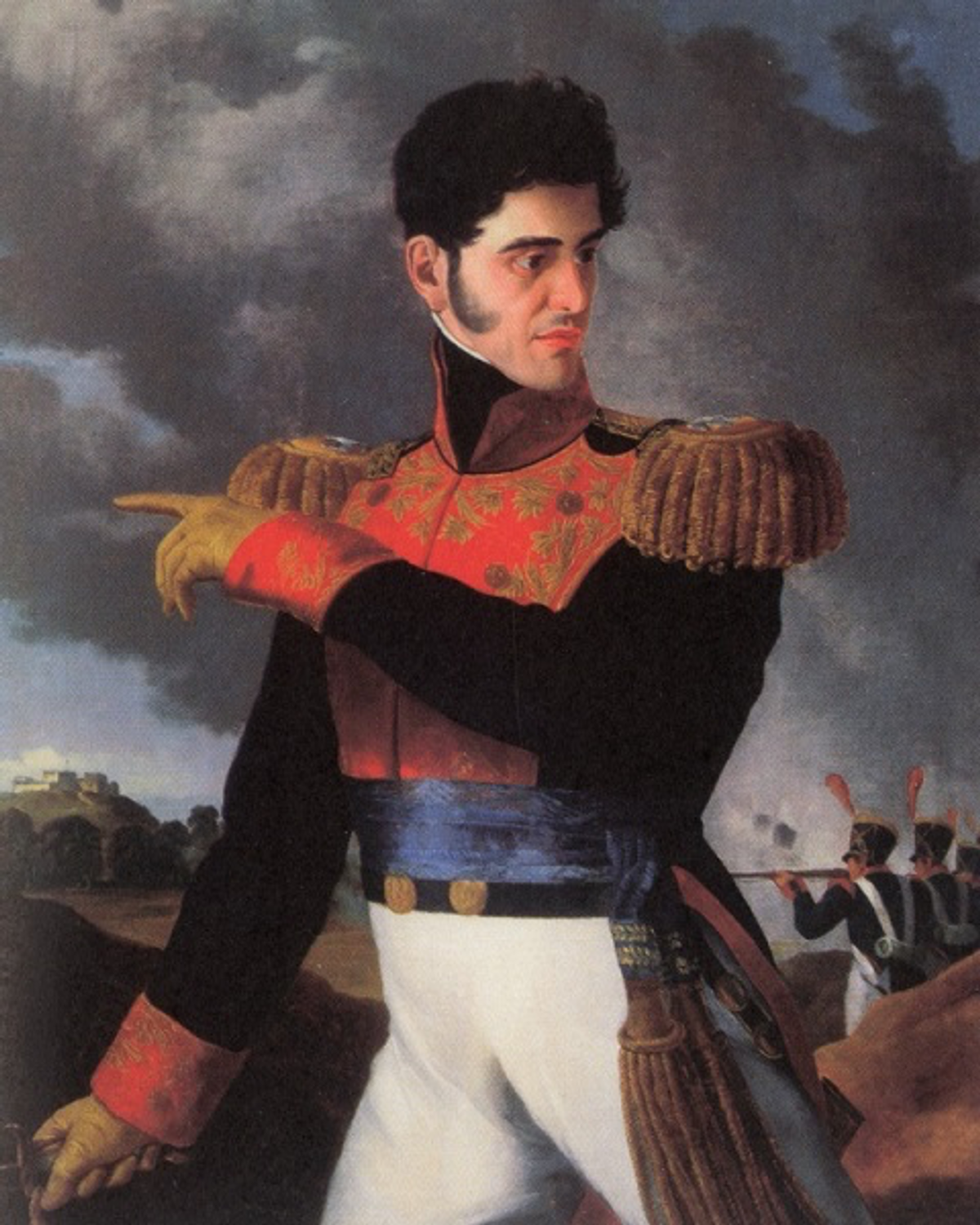
San Martin is regarded as the most important Argentinian founding father, who liberated not only a part of Argentina but also helped liberate Chile and Peru along with O’Higgins and Bolívar.

José Francisco de San Martín y Matorras (February 25th 1778 – August 17th 1850) was an Argentine general and the principal leader of the successful struggle for independence from Spain by the southern nations of South America.

Together with Simón Bolívar in the north, San Martín is regarded as one of the Liberators of Spanish South America.

He is regarded as a national hero in Argentina, Chile and Peru. San Martin’s exploits earned him a series of honorific names. In Argentina he is remembered as the “Padre de la Patria”, (Father of our Country). In Peru, he is known as, “Fundador de la Libertad del Peru”, (founder of the freedom of Peru), “Protector de Peru” (protector of Peru) and “Fundador de la República” y “Generalísimo de las Armas” ( founder of the Republic and supreme commander of weapons). In Chile, he is called simply “Captain General”.

In Argentina, historical figures such as San Martín are remembered on the anniversary of their death, rather than their birth.

The Order of the Liberator General San Martin, named in his honour, is the highest decoration in Argentina.

Girlfriend helps with funny anecdote by correcting inaccuracies

A MAN’S girlfriend kept helpfully interjecting while he was telling a funny story to ensure it was an accurate account of events.

In the pub with friends, Jack, not his real name, began relating an anecdote about himself and girlfriend Grace Wood-Morris visiting a restaurant during their recent holiday in Greece.

Hannah, not her real name, said: “Jack’s story was about our meal being ruined when a band turned up and serenaded a woman at the next table for her birthday. Luckily I was able to do a live fact-check.

“Jack gave the impression it was a whole mariachi-style band playing deafening instruments. It really wasn’t, it was the restaurant owner with a guitar and a couple of waiters singing. So obviously I had to clear that up.

“Jack was insisting they were absolutely terrible and went on for 20 minutes. It wasn’t anything like that. It was three minutes at most. I remember looking at my watch just then. And they weren’t terrible, they were quite good. I enjoyed the brief diversion.

“Obviously all these corrections broke the flow of the story and Katrina, Pete and Emma all stopped laughing and just looked at Jack suspiciously. But I know Jack wouldn’t want to give a distorted version of the facts.”

Jack said: “She did this with my funny story about my old car. From now on my anecdotes will be ones where this bloody Emily Maitlis cow wasn’t there.”

Sunday 16 August Independence Day Holiday in Gabon

The first Europeans to visit Gabon were the Portuguese in the late fifteenth century when Diego Cam explored the region. They gave Gabon its name when they named the mouth of the Como River as gabão, Portuguese for “cloak”, after the shape of the estuary.

The French arrived in the region in the early nineteenth attracted by the slave trade. In 1839, local rulers in the coastal region signed away sovereignty to the French. The French explorer Pierre Savorgnan de Brazza led his first mission to the Gabon-Congo area in 1875 increasing French control and founded the town of Franceville in 1880. France officially occupied Gabon in 1885 and in 1910, Gabon became one of the four colonies of French Equatorial Africa. 

During the Fourth French Republic (1946–58), Gabon became an overseas territory with its own assembly and representation in the French Parliament. In 1958 Gabon voted to become an autonomous republic within the French Community. 

On August 17th 1960, Gabon gained its independence and became an independent republic joining the other three territories of the French Equatorial Union who also gained their independence in the same month.

The first president of Gabon, elected in 1961, was Léon M’ba.

After the nation gained independence, France established a new dynamic with Gabon partly motivated by the West African nation’s uranium wealth which was key to France’s nuclear programme.

Six painful responsibilities for the man in a new

MEN are self-contained creatures, so being in a relationship can be a terrifying experience. These are the daunting new responsibilities they face.

Being nice

Being cheerful and pleasant all the time is an effort for men, who are naturally deep and introspective. But they try, and even manage to do things like visiting clothes shops without weeping with boredom, or being a tolerably competent lover to their girlfriend but not her friends or sister. These are remarkable achievements men should should be lavished with praise for.

Remembering things

Men are very logical, so they like to focus on clear, pressing goals such as getting pissed at the weekend. Therefore expecting him to remember your GP appointment a week on Friday is asking too much. Men also have an enormous capacity for pointless facts and trivia, so it’s unfair to expect him to store yet more data like your birthday or surname. In fact forgetting your name entirely is why you are referred to as darling, hun, babe and love.

Doing things

Girlfriends are weird and enjoy doing pointless things: going for a walk without it ending in a pub; pottering around a charming local market; going to parties to socialise rather than in the vague hope of finding someone to shag. This last one is particularly baffling – isn’t the whole point of a relationship being able to watch TV every night and still get regular sex?

Sharing

Relationships require a degree of sharing, whether it’s time, feelings or chips. However men and women’s concept of sharing is different. For him, ‘sharing’ means ‘one crisp’. She will assume that items of clothing her boyfriend is allowed to purchase will become her loungewear or nightwear after their first use. The sooner men learn the rule ‘What’s yours is mine and what’s mine’s my own’ the stronger your relationship will be.

Repressing urges

A single man is free to burp, fart and scratch his balls, but in a relationship these things give a partner ‘the ick’ and are strictly forbidden. In fact a ridiculous number of perfectly normal, healthy urges are verboten: eating a girlfriend’s chocolate, feigning illness when you’re due to visit in-laws, rubbing one out the second you are alone. It’s unnatural, but see the earlier ‘regular sex’ point.

Being husband material

Girlfriends often see boyfriends as a potential life partner, after obvious modifications. As a result they must ditch the sweat-stained gig t-shirts and cease childish hobbies such as assembling a vast army of tiny Space Marines. Girlfriends don’t live in a fantasy world like this. They need a boyfriend to become a responsible father to the adorable imaginary children they have already named and invented eligible partners for.

Saturday 15 August Victory of the Islamic Emirate in Afghanistan

In 2021 the Taliban met little resistance from Afghan forces as they gradually took control of the country and eventually captured the capital, Kabul.

President Ashraf Ghani fled the country on August 15th 2021, when the Taliban had already seized virtually the capitals of all provinces except Panjshir and had advanced to the Kabul gates.

The Taliban swept into Kabul and seized the presidential palace as Ghani’s escape became common knowledge.

The Taliban were to enter Kabul following a political settlement, but they crossed the Kabul gates saying that since the previous government head and security officials fled the country, they entered to provide security.

After the Taliban took over Kabul, an international military evacuation operation took place, in which Germany also took part. Dramatic scenes took place at the capital’s airport when tens of thousands of Afghans attempted to flee the country.

A year after the Taliban entered Kabul to overthrow the US-backed government, the Taliban Ministry of Labor and Social Affairs declared August 15 as a public holiday in Afghanistan to mark one year since the Islamist militant group conquered Kabul during the chaotic withdrawal of US-led NATO forces.

The Taliban have changed the country’s calendar to include 24 Asad (August 15th) as a public holiday while eliminating cultural and traditional holidays such as Nowruz and the holiday commemorating the 10th of Muharram (Ashura).

Man chooses sunburn over having back touched by another male

A MAN has opted for agonising sunburn after concluding that a male friend applying sun cream would be gay.

Jon, 27, not his real name, was on holiday in Torremolinos when he realised he could not apply sun cream to the whole of his back himself, necessitating a shameful homoerotic experience with one of his mates.

He said: “We’re lads, I can’t let one of them give me an intimate rub-down. I just had to suck it up and get painful burns that increase my risk of skin cancer. There was no other option.

“It’s not just about looking gay, although that’s bad enough. What if I actually enjoyed it? Frankly that’s a door I don’t want to open.

“You think you’re normal, then a man touches you and before you know it you’re having promiscuous gay sex on Hampstead Heath and joining Stonewall. It happens all the time.”

Friend Martin, not his real name, said he would have reluctantly applied the cream, on the condition that Jon allowed him to buy him a pint afterwards, thus rendering the act fully heterosexual.

Jon’s lads’ holiday also included comparing penises in a hotel room, streaking through the lobby and a full-contact wrestling match that ended with him pinned naked to a sun lounger squealing with excitement.

However Jon maintained all of this was “just a laugh”.

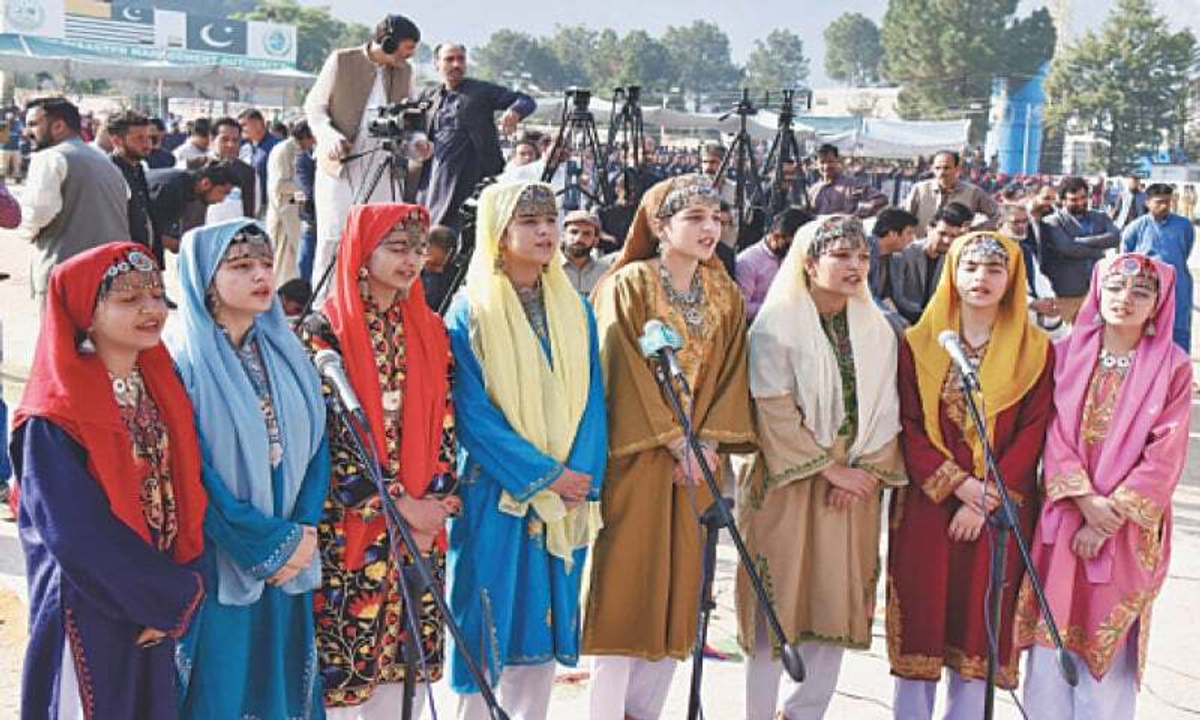
Friday 14 August Independence Day in Pakistan

Pakistan had been part of the colony of India since the 18th century, firstly as part of the East India Company and then as part of the British Indian Empire.

In 1947, the act of independence created the ‘Dominion of Pakistan’ which covered two different geographic areas known as East and West Pakistan. In 1971 following the Bangladesh Liberation War, East Pakistan parted from West Pakistan and became Bangladesh.

The name Pakistan is a conjunction of two words ‘Pak’ meaning ‘Pure’ in Urdu and Persian, and ‘Stan’ meaning ‘Land’. The name was also promoted in a pamphlet produced by the Muslim movement in 1933 – “ Punjab, North-West Frontier Province (Afghan Province), Kashmir, Sind and Baluchistan”. The ‘i’ was added to aid pronunciation.

Independence happened at midnight between August 14th and August 15th 1947, which is why the tradition in Pakistan has been to celebrate the August 14th whereas August 15th is Independence Day in India.

Thursday 13 August Independence Day in Central African Republic

CAR is a state in the heart of the African continent with a territory of about 622,400 square km and a population of 4.6 million people.

According to the UN, the republic is among the least developed countries in Africa in socio-economic terms, however, the country has rich deposits of uranium, oil, gold and diamonds.

This country’s inland location meant that it didn’t have the first wave of contact with Europeans as they rounded the coast of Africa looking for a passageway to India.

The isolation ended with the arrival of the slave trade with some local tribes becoming suppliers to the Europeans and Arab traders. The slave trade depopulated large parts of the region and shattered the sophisticated societies that had developed. To compound the chaos, at the end of the 19th century, the region couldn’t escape the so-called ‘Scramble for Africa’ as France, Germany, and Belgium all vied for control of the land.

Already controlling large swathes of surrounding Africa, the French won out and in 1894, set up a dependency called Ubangi-Shari. In 1910, Ubangi-Shari became part of the Federation of French Equatorial Africa.

The history of Ubangi-Shari then runs along similar lines to the other French colonies with the French imposing and abusing harsh labour laws to exact the cost of maintaining their expensive overseas colonies

Government to raise minimum age for choosing own haircut to 21

UNDER 21s are to be legally prevented from selecting their own haircut before they develop a sense of style.

A new regulation will protect young people from their own godawful taste and the influence of broccoli-haired TikTokers by making everyone show proof of age when going for a trim.

A government spokesperson said: “Bad haircuts don’t go away when they grow out, thanks to school photos and driving licenses they’re an embarrassment that follows you into adulthood.

“Young people’s brains aren’t mature enough for that level of responsibility. As evidenced by all the curtains and mullets they’re voluntarily sporting without a hint of shame or irony.

“Future generations will wonder why we didn’t step in on their behalf sooner. It’s similar to how we look back at smoking indoors and the popularity of Jim Davidson as archaic and deeply puzzling.

“Youngsters shouldn’t fret though. Just because we’ve taken away porn, social media and now haircuts, there are plenty of other fun things they can do. Like unpaid apprenticeships.”

Kelly Howard, 36, said: “I wish this law was around when I was young. It would have saved me from having white girl cornrows every summer between 1996 and 2001.”

Wednesday 12 August Ekka People’s Day in Queensland Australia

The Royal Queensland Show (Ekka) is the largest and most loved annual event in Queensland, attracting on average 400,000 people to the Brisbane Showgrounds over the 10 days of the show.

The show celebrates agriculture in the region and features competitions for animals from cows to cats and for prize vegetables and traditional skills like wood chopping. There is also a popular fun fair with a Ferris wheel. Visitors can be seen snacking on Dagwood Dogs, a corn dog or buying bags of candies and treats called showbags.

The show began back in 1876, which was a public holiday,  and has taken place each year since with the exception of 1919 (Spanish Flu) and 1942 (World War II).

The first ‘Royal’ Show took place in 1921 after the Royal National Agricultural and Industrial Association of Queensland was granted the Royal prefix under a warrant from His Majesty King George V.

The name ‘Ekka’ is a shortened version of the Queensland pronunciation of ‘Exhibition’.

The public holiday always takes place on a Wednesday. This is at the request of the RNA who organise the Show Day.

Tuesday 11 August Independence Day in Chad

At the end of the nineteenth century, a Sudanese adventurer called Rabih al-Zubayr had conquered the kingdoms of Ouadai, Baguirmi and Kanem-Bornu, situated in modern-day Chad, a landlocked region in north-central Africa.

The region had come under the gaze of France as part of the so-called ‘Scramble for Africa’ when the European colonial powers raced to claim as much of the African continent as they could.

With French military support, Rabih was overthrown in 1900, and the traditional Kanembu dynasty was re-established under French protection by the creation of the Territoire Militaire des Pays et Protectorats du Tchad.

Rabih al-Zubayr fought back against the French invasion and it wasn’t until 1913 until all resistance was quashed. In 1920, Chad became part of French Equatorial Africa.

As with other French possessions in Africa, the end of the second world war brought a change in approach with Chad becoming an overseas French territory in 1946, with its own territorial parliament and representation in the French National Assembly.

In November 1958 Chad’s status changed to an autonomous republic within the French Community.

On August 11th 1960, Chad gained full independence and Francois Tombalbaye, a Christian from the southern part of Chad who had been instrumental in the push for independence, became the country’s first president.

Independence brought freedom from colonial rule, but religious and ethnic tensions that had been born when France arbitrarily defined the borders of this country during their conquest, led quickly to a period of civil war and unrest that lasted three decades.