In 1995, issue 34 of Revista Bigott, a Venezuelan publication dedicated to anthropology and popular culture, discussed a resurgence of national sentiment after the 1992 coup attempts. One of its articles argued that a certain “llanero emboldening” of the coup leader, his decision to assume responsibility for what had happened, and the evocation of Simón Bolívar and the tricolor armband had restored appeal to a deeply rooted idea of national identity. The government at the time tried to capitalize on this momentum to save the system, which, in light of what happened afterward, also amounted to saving democracy. But the country was already exhausted. It was burdened by the discrediting of political parties, the hangover from the “Saudi Venezuela” era, the depression that followed the 1983 devaluation known as Black Friday, widespread corruption, low oil prices, and an institutional framework that failed to modernize.
As the reader knows, Hugo Chávez ended up winning the election in 1998, and the joropo, the flags, and the constant singing of the national anthem were reborn, transcending the political debate. Everything then became known as Bolivarian, from the schools to the republic itself. Each campaign was presented as a patriotic epic, a battle, or a slogan borrowed from popular sayings. But with Chávez, the national identity was fractured. The country, the idea of nationhood, and its symbols were hijacked. They belonged solely to his supporters. Just as an attempt was made to create a parallel institutional framework, something similar happened with the symbols: two flags, two coats of arms, and two ways of referring to everything. While the struggle against U.S. imperialism was presented as a heroic feat, the country was mortgaged to other powers and groups in exchange for political favors. Sovereignty was lost, both in terms of territory and the capacity to maintain a functional State serving its citizens.
These parallel structures (one crumbling, the other with feet of clay but relentless in its repression) blurred the boundaries of the republic. The country drowned in corruption and the disappearance of its shared identities. What could it defend? What could a country that expelled millions of its inhabitants and squandered its demographic dividend sound, smell, or taste like? Amid political violence, insecurity, and abuses, the economy shrank by more than half and came to be governed by the law of the strongest or the most connected, while individualism intensified. The country and its virtues became a source of nostalgia for better times or a promise of an uncertain future. The present, meanwhile, faded with bitterness.
Chavismo, in its eagerness to cling to power, also hijacked popular sovereignty. The excuse was that, although the opposition represented the majority, it should not be recognized because it was subservient and unpatriotic. After the theft of the 2024 elections and the US intervention of January 3, it became clear that the only sovereignty that truly matters to Chavismo is that which guarantees its own survival.
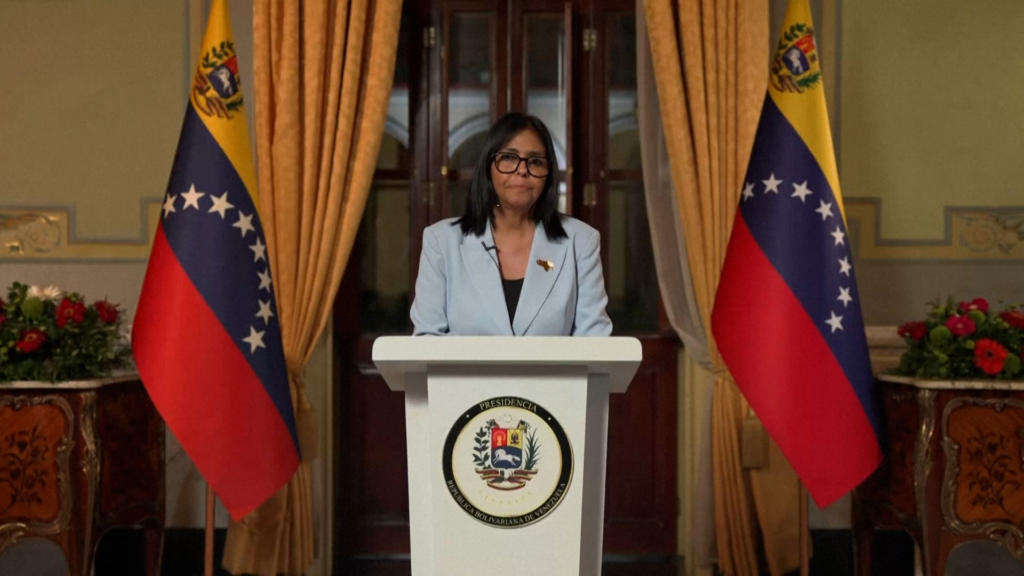
With the country dismantled, its people divided, and mired in neglect and impoverishment, Venezuela became the perfect prey for whoever is currently in power. One conclusion emerges from the “mega-agreement” announced by US President Donald Trump and vaguely explained by Delcy Rodríguez: details do matter. As presented, it appears to be a cruel and sad surrender of sovereignty, decided in the dead of night, like so many of the measures announced in recent decades.
The winner and his tyrant take everything—resources and concessions—as if it were a contemporary version of the handover of the Congo to Leopold II. A forced and macabre gift.
But having access to reserves is one thing; knowing how those barrels will be extracted is quite another. The question is what guarantees investors will have and, above all, what the country will receive in return.
Between what has been announced and its implementation, a vast gap still exists, marked by illegalities and profound incompetence. There is also the risk that Venezuela will continue to replicate the “bolichicos” model, increasingly similar to that of Russia in the late 1990s: a small class of millionaires facing a country mired in impoverishment.
It will be up to oil experts and economists to study the implications of what has been announced, and to historians to review the precedents of similar agreements: the Rojas-Pereire Protocol of 1879, the concessions granted under Gómez, the Rockefeller Plan, or the concessions granted by the Pérez Jiménez dictatorship in 1956. For now, all we know is that the US administration is determined to embody everything its harshest critics have always held against it. Chavismo, for its part, is determined to become everything it claimed the opposition would be, whose rise to power it said it would prevent to “protect” Venezuela, even at the cost of violating human rights and disregarding popular sovereignty.
The situation compels us to reach agreements as a society, promote genuine democratization, and reclaim our sovereignty, understood as the collective exercise of autonomy and freedoms. If we fail to do so, we will remain subject to the circumstances and interests of others, instead of acting in accordance with our own interests.
The outlook is not promising, but two questions remain: What future validity will any agreement signed with the regime currently governing Venezuela have? And what will the state of the planet be when Trump’s term ends on January 20, 2029?