year

Kelsey Plum, Sparks leaders convinced free agents they can win now

The Sparks worked on building their 2026 roster long before the WNBA’s compressed free agency period tipped off.

Teams have had a little more than a week to prepare their training camp rosters between free agency, the league’s primary draft and an expansion draft. The Sparks have one of the more notable roster transformations in the league, adding Nneka Ogwumike, Erica Wheeler and Ariel Atkins.

On Sunday at the start of training camp in San Diego, Wheeler said Sparks returning guard Kelsey Plum sold her on the vision of the organization, and Ogwumike’s signing cemented it.

“KP played a big role in having me here,” she said, describing a lunch last season when Plum told Wheeler she wanted her to sign with the Sparks. “I think Nneka just was like the tip of the iceberg, like it was a no brainer. Once Nneka decides she wants to come here, because, as you know, president [of the WNBPA], life is always easier around her.

“We want to win the championship.”

Ogwumike’s return to Los Angeles was just one indicator that the Sparks are, as Wheeler put it, “going for gold.”

This year’s Sparks roster looks a lot more intentional than a couple of years ago. General manager Raegan Pebley said Atkins’ addition helps establish a deeper offense, while Rae Burrell playing at the three gives them more versatility.

There are still question marks. They don’t have a ton of ball-handling depth or much true-center play after Cameron Brink.

But Ogwumike has seen the changes internally and from afar, and she thinks the Sparks are ready to compete now.

“I didn’t actually want to leave, but I felt like I needed to, considering the growth that we wanted to see further in the organization, and I really wanted to come back,” she said. “… The timeline of a lot of things [in the offseason] accelerated, me narrowing down certain organizations, but L.A. was in the mix not because, not just because of the time that I’ve had here, but because of the amazing progress that I’ve seen in just the two years in my absence.”

Ogwumike said part of that was the investment in a practice facility, set to debut in 2027, and that the front office, led by Pebley, had a plan to build a winning team.

But the most important thing in bringing in the veteran trio was that the Sparks had a plan on the court, too.

“It’s really exciting when you can be in a place where everybody has the main thing being the main thing,” Atkins said. “And that’s not to say it wasn’t like that in the past, but it’s different when you have older players and vets around you that have done it before, because the way that they walk in, the way that they talk, there’s no uncertainty there, right? It’s like, this is how we need to get through, this is what we need to do, get it done so it really just be on us.”

Wheeler has only played in the WNBA postseason a handful of times between Indiana and Seattle and at 36 years old, she joined the Sparks led by coach Lynne Roberts with the intention of playing for a winner.

“I tell people all the time, I’m a businesswoman,” she said. “I have money. … So money don’t move me, [there] was a lot more money out there for me to go after. But I felt like Lynne is building a championship rock, and I want to be a part of that.”

Atkins was traded from Chicago for Rickea Jackson, a controversial move that shipped one of the best young players in the game away from the Sparks. On draft night, Pebley said the move helped them win games now and she reiterated that on Sunday.

“We were really aware of is that we were missing another counter punch with KP, she needed some support in terms of somebody that can take some pressure off of her, to have to score it, or to have to create for someone else to score it, that was a big reason of why Ariel, we feel, is a great fit,” she said. “And then Erica Wheeler is just a winner, and she’s going to bring some toughness and leadership there. So I think with those three at the one-two spot, we’re super excited about that.”

Atkins adds a defensive layer alongside Ogwumike for a team that was dead last in the WNBA in defensive points per game last season, and that’s one of those intentional, win-now kind of moves that has everyone in the organization excited.

The Sparks finished just two games out of a playoff spot last season. This year, expectations are far more than just finishing as a playoff team, and that messaging brought in one of the most cohesive rosters in the WNBA.

“I always say that the killer combination is investment and engagement, and so I’m seeing both at very high levels, and it permeates every aspect of the organization,” Ogwumike said. “Whether it’s basketball ops, front office, player experience, practice facility, it’s just something that I’ve always believed was our standard, and not only have we matched what our expectations were, but we’re now exceeding it in a timeline that I think is much faster than I ever expected.”

Source link

Quick final pit stop helps Alex Palou win Long Beach Grand Prix

For two thirds of Sunday’s Acura Long Beach Grand Prix, Alex Palou bided his time… waiting for the one break he needed.

It came in the form of a caution on the 58th lap, allowing him to overtake front-runner Felix Rosenqvist exiting pit lane and hold the lead the rest of the way, taking the checkered flag by 3.96 seconds for his third triumph in five IndyCar Series races this season and his first at Long Beach.

Right after being showered with applause and confetti at victory lane, the 29-year-old Spaniard thanked his crew, whose quick work on the last pit stop proved to be the difference.

“Everyone was coming in on that yellow and they did an incredible job,” he said. “We were either going to win it or not win right there.”

Rosenqvist settled for second and Scott Dixon, Palou’s Chip Ganassi Racing teammate, was third.

It was the 11th win over the last 22 races dating back to 2024 for the Barcelona native and the 22nd win of his career, tying him with Tony Bettenhausen and Emerson Fittipaldi. It also vaulted him to the top of the Series standings as he chases his fourth Series championship in a row and fifth overall. Palou won the opener March 1 in St. Petersburg (also a street course) and the fourth race March 29 in Alabama.

Palou led for only 32 of the 90 laps Sunday and acknowledged it would have been difficult to catch Enqvist if not for the stoppage.

“I wasn’t giving up but it would’ve been tough to get him today,” Palou admitted. “He was already three seconds ahead. I was happy with my car but I was struggling more on the soft tires than the hards so I’d say my chances were low. The feeling was great seeing all the open space coming out of pit lane because when you spend 60 laps behind a car it disturbs you. I tried to match him on soft tires but it wasn’t working.”

Alex Palou speeds through a curve of the track.

Alex Palou speeds through a curve of the track.

(Ronaldo Bolaños / Los Angeles Times)

In six starts at Long Beach, Palou has never finished lower than fifth.

There is little room to maneuver on the 1.968-mile course with 11 tight turns, but after starting in the third position next to defending champion Kyle Kirkwood, Palou managed to sneak past Pato O’Ward into second place heading into the first turn on Lap 2.

“Making that move on the straightaway was big because I knew it was one of our only chances to get a pass on Pato,” Palou said. “I got that good run on that last corner and he didn’t expect it.”

This year marked the 51st edition of the longest-running major street race in North America, which started in 1975 as part of the Formula 5000 Series, switched to the CART/Champ Car World Series in 1984 and joined the IndyCar Series in 2009.

The top four qualifiers started on softer, high-grip “alternate” tires to establish position while the rest of the grid started on harder, more durable “primaries” to manage degradation on the 110-degree track surface. Of the 25 starters, 24 completed the 177.12 miles.

“We were going to make the two-stop strategy work but didn’t know if it would be doable or not,” Palou added. “As soon as I saw I couldn’t get Felix it was all about patience, fuel and waiting for the right time. I owe this win to my team. Without that pit stop I probably wouldn’t be sitting here now. It only takes one mistake to go from second to seventh but they’re great under pressure.”

Cars make their way down a straightaway during Long Beach Grand Prix.

Cars make their way down a straightaway during Long Beach Grand Prix.

(Ronaldo Bolaños / Los Angeles Times)

Past winners Will Power and Josef Newgarden moved into the top two positions after Rosenqvist pitted but the Swede regained the lead when Newgarden pitted for the first time on Lap 37 and dropped back to 14th.

The first 45 laps were caution-free as Rosenqvist, Palou, Kirkwood, David Malukas and O’Ward held the top five spots. Newgarden fell out of contention when a flat spot on his left front tire dropped him back to 14th.

Rosenqvist’s three-second lead was erased when debris on the track exiting the Aquarium Fountain drew the only yellow flag all afternoon and narrowed the gap. Capitalizing on favorable pit position, Palou emerged from the lane just ahead of Rosenqvist.

After earning the pole position with a lap time of 1 minute, 7.4625 seconds in qualifying, the runner-up had mixed emotions after leading for 51 laps with no win to show for it.

“You want to win when you have an opportunity but I’m proud of today,” Rosenqvist said. “We weren’t as good as Alex on the blacks… the last pit cycle was the defining moment. We had to come around 14, he had more of an opening and his crew nailed it. That happens.”

Kirkwood, who was vying for his third win in four years, finished right where he started in fourth.

“I had a good cushion and figured even with a bad stop I’d probably stay ahead but I knew there’d probably be a yellow at some point and there it came,” Rosenqvist lamented. “Considering Alex had primary [tires] also I think we would’ve been able to hold him off. It’s definitely disappointing when you can’t wrap it up.”

Dixon, who started in the position, earned his first podium this season and the 136th of his career.

Fans watch with two laps left in the race.

Fans watch with two laps left in the race.

(Ronaldo Bolaños / Los Angeles Times)

“The race itself was a bit blah — I sat in the same position for most of it,” Dixon said. “Luckily for us we had it easy out of that last stop.”

Al Unser Jr. holds the record for most wins at Long Beach, chalking up six in eight years, including an unmatched four in a row from 1988 to 1991.

Tom Sargent is becoming a fan of street circuits after two wins this weekend. Driving the Porsche 911 Cup for GMG Racing in the Mobil Pro Class, the 22-year-old Australian led from start to finish in Race 1 of the Carrera Cup North America on Saturday. In Race 2 on Sunday morning, he again started from the pole and claimed a 0.965-second victory over Aaron Jeansonne to complete the double.

In his last bid at Long Beach three years ago, he hit the wall on Lap 2 but still finished second.

“Momentum in sports is critical and the past few weeks have been really cool for me,” Sargent said. “I didn’t do any street circuit racing before I came to the States. Maybe it fits my driving style.”

Source link

‘Shrinking’ Season 3 finale explained: Jason Segel on being ‘Jimmy-ed’

The third season of Apple TV’s “Shrinking” concludes with Jimmy (Jason Segel) being, well, “Jimmy-ed.”

For three seasons, Jimmy, a therapist grieving the loss of his wife, has used unconventional methods —think taking someone with aggression issues to a boxing ring — to get through to his patients. In the last moments of “And That’s Our Time,” Jimmy’s mentor and fellow therapist Paul (Harrison Ford) turns that approach on its namesake, flying across the country to give Jimmy a much needed push to move forward with his life. “Jimmy needed permission and encouragement from someone to say, ‘All right, it’s time,’” Segel says. “This is the end of this story and it’s time to start a new one.”

In the scene, Paul finally tells Jimmy he’s like a son to him. “I found ourselves writing a conversation that if we were lucky enough to have a conversation like that with our own fathers, we’d be grateful,” executive producer Bill Lawrence says. “A lot of my shows have an element of mentorship in them. To see Jimmy’s mentor come through for him in the way that I would always hope he would meant a lot to me.”

Lawrence had always envisioned the three-season arc for Jimmy ending this way. But when they found out the comedy would be returning for a fourth season, he and his fellow executive producers were faced with a dilemma: End the season the way they would have the series or push their original ending out for one more season. After much discussion, they decided to stick the landing.

“It still felt right,” Lawrence says. “This particular story with these characters has been told and you should feel, in a good way, like it’s gonna be OK for Jimmy. Jason is so good at it, watching him play the agony of trying to get through it all and come out on the other side was my favorite kind of journey on the whole show.”

Segel spoke to The Envelope about filming this pivotal scene and bringing the third season to a close.

What did filming this final scene mean to you? To play this part of Jimmy’s journey coming to an end?

I’m always really interested in, “What is the dirty underneath? If we go one level deeper, what is the thing that the person is not saying?” This arc with Jimmy over the three seasons had been building up to Jimmy finally saying the actual thing, which is some version of, “Who’s gonna want me now?”

Paul answers that question by telling Jimmy that his scars are “evidence of a life welllived.”

I had a therapist I was talking to about having to show up somewhere with people I knew from 25 years ago. I remember having a little bit of apprehension because I’ve had a twisty-turny life. I thought, “God, there’s so much to catch up on and I’m showing up covered in scars.” And this therapist said to me, just matter of fact, “What a shame it would be to show up anywhere at 45 years old not covered in scars.” And I went straight to Bill and [executive producer] Neil [Goldman], this is a year ago, and I said, “This is what Harrison says to Jimmy at the end of this arc.” And we worked it in.

What was the actual day of filming the scene like for you?

It was a difficult day. It was loud that day. There was a little bit of discombobulation on the street. There was construction and they couldn’t hold the cars right. It wasn’t the ideal environment for a scene like this where you would love to hear a pin drop. People were coming into the restaurant asking, “Are you guys open?” It almost felt like we were making a student film. And Harrison and I took a minute and we walked away from the set and we started running the scene, walking up and down the busy street to kind of acclimate ourselves. And I’m walking up and down the street with this man who I idolize and we are at that moment like equals and teammates. We have to go build this scene together. It is a real honor to have that dynamic with him.

Do you think it was important to have such a pivotal scene outdoors?

They’re a good reminder that the show takes place in the real world and that you’re like a representative of reality almost. I think that there’s something vulnerable about all that taking place outside. … There’s other patrons there. It’s surrounded by people, surrounded by life, and Paul is showing up and telling Jimmy, “It’s time to step into it. Look, it’s all around you.”

This season we met Jimmy’s father (played by Jeff Daniels), who never really connected with his son and, in a heartbreaking moment, chooses a fishing trip with his buddies over staying for Alice’s (Lukita Maxwell) high school graduation.

One of the things this show does really well is handle these situations honestly. Whether it’s Parkinson’s or loss or a complicated relationship with a family member. It’s not gonna magically change. None of it. And so the show is very much true to, “How do we get through it with each other?” That’s really the theme of the show. These issues are gonna be there. What are we gonna do with the realities of life? I think the reason they brought Jeff Daniels in is to highlight why Jimmy so desperately wants Paul’s affection. Where is this coming from? Bill is a genius in terms of setting something up in a previous episode so that there’s a payoff in the finale. I think that we understand suddenly how desperate Jimmy is to have somebody say, “You’re my son and I love you.” And he finally gets that at the end from Paul.

The other major event that happens in the finale is that Alice leaves for college.

To me, [Jimmy’s relationship with Alice] has been the heart of the show and the most important storyline. The show started out with Alice parenting a troubled child in her father. And that dynamic slowly, slowly, slowly shifted to being the right direction. Until finally he is able to see her off to college and she feels safe to leave him behind. He is the parent and she is the child and everything is the right size again. I think watching Lukita as an actor and a human being grow up over these past four years, it’s been really the joy of my career. When I met her, she called me Mr. Segel. I realized she grew up with my “Muppet” movie. I have the real honor of being more of a mentor than a contemporary to Lukita. To get to the point where I am being surprised and challenged and blown away and moved to tears in scenes with Lukita is like the coolest thing in the world.

A woman and a man seated outside at a cafe.

Cobie Smulders and Jason Segel in “Shrinking.”

(Apple TV)

We see Jimmy sit down at the restaurant with his potential love interest Sofi (Cobie Smulders), but we don’t hear their conversation.

It originally ended with a hard cut to black. Then then they did this beautiful cinematic pullback. I think the most important line is, “Hello.”

As the scene ends, Paul tells Jimmy that he can either “stay stuck” or “go make new scars.” Paul advises Jimmy to “choose wisely” and then winks at Jimmy. It’s a subtle nod to the famous “choose wisely” scene from “Indiana Jones and the Last Crusade.”

Harrison is not so secretly one of the funnier people I know. He always knows exactly what he’s doing and we’ve had a few of those throughout the season, some little nods to Harrison’s body of work. It was a perfect way to end that scene. Paul slash Harrison is always just a little smarter than you. One of the great qualities that they have is they’re just a little bit ahead of you, which a great mentor should be, right?

Have you thought about how it will be to play Jimmy in the show’s fourth season now that this particular story arc has come to an end?

I think an equally interesting and complicated and fun area is someone deciding they’re ready to be happy. Because God knows it’s one thing in your house alone in front of the mirror [to say], “Now I’m gonna be happy.” And then you go out and in practice, it’s its own set of complications, right? And so, I’m actually really excited about that idea of someone saying, “OK, I’m ready to take it for a spin.” And then seeing that’s its own thing.

Source link

After 55 years as a broadcaster in L.A., Randy Rosenbloom is leaving town

It’s time to reveal memories, laughs and crazy times from Randy Rosenbloom’s 55 years as a TV/radio broadcaster in Los Angeles. He’s hopping in a car next Sunday with his wife, saying goodbye to a North Hollywood house that’s been in his family since 1952 and driving 3,300 miles to his new home in Greenville, S.C.

“When I walk out, I’ll probably break down,” he said.

He graduated from North Hollywood High in 1969. He got his first paid job in 1971 calling Hart basketball games for NBC Cable Newhall for $10 a game. It began an adventure of a lifetime.

“I never knew if I overachieved or underachieved. I just did what I loved,” he said.

Randy Rosenbloom (left) used to work with former UCLA coach John Wooden for TV games.

Randy Rosenbloom (left) used to work with former UCLA coach John Wooden for TV games.

(Randy Rosenbloom)

John Wooden, Jerry Tarkanian and Jim Harrick were among his expert commentators when he did play by play for college basketball games. He called volleyball at the 1992 and 1996 Olympic Games for NBC and rowing in 2004. He’s worked more than 100 championship high school events. He did play by play for the first and only Reebok Bowl at Angel Stadium in 1994 won by Bishop Amat over Sylmar, 35-14.

“There were about 5,000, 6,000 people there and I remember thinking nobody watched the game. We ended up with a 5.7 TV rating on Channel 13 in Los Angeles, which is higher than most Lakers games.”

He conducted interviews with NFL Hall of Famers Gale Sayers and Johnny Unitas and boxing greats Robert Duran, Thomas Hearn and Sugar Ray Leonard. He’s worked with baseball greats Steve Garvey and Doug DeCinces. He called games with former USC coach Rod Dedeaux. He was in the radio booth for Bret Saberhagen’s 1982 no-hitter in the City Section championship game at Dodger Stadium. He was a nightly sportscaster for KADY in Ventura.

Randy Rosenbloom, left, with his volleyball broadcast partners, Kirk Kilgour and Bill Walton.

Randy Rosenbloom, left, with his volleyball broadcast partners, Kirk Kilgour and Bill Walton.

(Randy Rosenbloom)

He was the voice of Fresno State football and basketball. He also did Nevada Las Vegas football and basketball games. He called bowl games and Little League games. He was a public address announcer for basketball at the 1984 Olympic Games with Michael Jordan the star and did the P.A. for Toluca Little League.

Nothing was too small or too big for him.

“I loved everything,” he said.

He called at least 10 East L.A. Classic football games between Garfield and Roosevelt. He was there when Narbonne and San Pedro tied 21-21 in the 2008 City championship game at the Coliseum on a San Pedro touchdown with one second left.

Probably his most notable tale came when he was doing radio play-by-play at a 1998 college bowl game in Montgomery, Ala.

“I look down and a giant tarantula is crawling up my pants,” he said. “My color man took all the press notes, wadded them up and hit the tarantula like swinging a bat.”

Did Rosenbloom tell the audience what was happening?

“I stayed calm,” he said.

Then there was the time he was in the press box at Sam Boyd Stadium and a bat flew in and attached itself to the wooden press box right next to him before flying away after he said, “UNLV wins.”

Recently, he’s been putting together high school TV packages for LA36 and calling travel ball basketball games. He’ll still keep doing a radio gambling show from his new home, but he’s cutting ties to Los Angeles to move closer to grandchildren.

“I’m retiring from Los Angeles. I’m leaving the market,” he said.

Hopefully he’ll continue via Zoom to do a weekly podcast with me for The Times.

He’s a true professional who’s versatility and work ethic made him a reliable hire from the age of 18 through his current age of 74.

He’s a member of the City Section Hall of Fame and the Southern California Jewish Sports Hall of Fame. He once threw the shot put 51 feet, 7 1/2 inches, which is his claim to fame at North Hollywood High.

One time an ESPN graphic before a show spelled his name “Rosenbloom” then changed it to “Rosenblum” for postgame. It was worth a good laugh.

He always adjusts, improvises and ad-libs. He expects to enjoy his time in South Carolina, but he better watch out for tarantulas. They seem to like him.

Source link

Karol G at Coachella was a global hit. Yet other foreign acts fear touring the U.S.

On the first Sunday night of Coachella, headliner Karol G told her American fans, and her global audience, to keep fighting.

“This is for my Latinos that have been struggling in this country lately,” the Colombian superstar told the tens of thousands watching her in person, and many more on the fest’s livestream. She’d recently criticized ICE in a Playboy interview, but this set was about her fans’ resolve. “We want everyone to feel welcome to our culture, so I want everyone to feel proud of where you come from. Don’t feel fear — feel pride!” she said.

Any artist would be proud to play that caliber of headline slot. But right now, many foreign acts also feel fear — or at least wariness — about booking substantial tours in the United States. A year of brutal ICE raids, tensions at border crossings and policed political speech, coupled with sky-high prices for expedited visas, fuel and other touring logistics, could push international acts away from the U.S.

“The fears that ICE would raid shows didn’t really materialize, but there is a chilling effect,” said Andy Gensler, editor of the touring-biz trade bible Pollstar. “Trump’s only been back in office a year, so we haven’t fully seen the effects, but it does send a message that if you’re a political artist you won’t get a visa. With the economic shock of gas prices and tourism way down, the signifiers are out there.”

The music economy is still thriving in SoCal. Coachella sold out with record spending from fans, and fears that ICE might show up for a prominent Latin headliner proved unfounded. (The agency did not respond to a request for comment on Coachella, and Lt. Deirdre Vickers of the Riverside County Sheriff’s office said that their office “does not participate in immigration enforcement operations.”)

But in smaller venues featuring emerging and mid-tier global acts, some see trouble ahead.

Pollstar’s Gensler estimates that the total number of concerts in the U.S. they tracked for the first quarter of 2026 was down about 17% from last year. That could be due to many economic factors — but slower international touring could be contributing.

“The U.S. is still incredibly lucrative market, the arena and stadium level buildings are vast and you can make more money here than any market in the world,” Gensler said. “But I’ve heard anecdotally that fewer people are going to South by Southwest, and tourism from Canada is way down, and that includes music tourism to California. As barriers go up, and the economic shock of gas prices impacts touring, it’s hard to know how that will all shake out.”

Talent firms who specialize in bringing young acts to the U.S. began noticing pullback before this year’s festival season. Adam Lewis is the head of Planetary Group, a marketing agency that produces and promoting musician showcases in the U.S., with a significant roster of artists from abroad. He said that performers who ordinarily would leap at the chance to play U.S. festivals are taking hard looks at the payoffs and risks.

“Artists are thinking twice, based on what the government is doing right now,” Lewis said. “You can look at the economics — the fees are cost prohibitive to get a visa. People are scared, at the bottom line. Artists and industry people are afraid to come to the U.S. for any music event. The money is going elsewhere.”

South by Southwest, the March Texas confab for music, film and tech, was among the first festivals to feel a pinch this year. Several sources said they saw fewer foreign showcases and acts amid a broader culling of music. In 2025, Canada canceled its popular annual showcase, after deciding that hostile policies made the risks not worth the rewards. Many still pulled off successful events, but acknowledged the mood has shifted.

“The perception of how hard it’s gotten has taken root, and that has meant that not as many acts will take the chance on the threat of being turned away or risking future entry,” said Angela Dorgan, the director of Music From Ireland, the Irish Music Export office (which is funded by Culture Ireland). That organization has helped break acts like CMAT (a hit at Coachella this year) and Fontaines DC in the U.S.

“Artists want to continue to come here in spite of the trouble and not stay away because of it. There’s a unique pull to America for all Irish people, so we don’t want to see you hurting,” Dorgan said. ”Irish artists feel that their U.S. fans need music more than ever now and want to continue to connect with and support their fans.”

Takafumi Sugahara, the organizer of “Tokyo Calling X Inspired By Tokyo,” a Japanese showcase at South by Southwest, agreed: “Bringing artists to the United States has always been challenging when it comes to obtaining visas, but it feels like the process has become even more difficult than before — perhaps due to the current political climate under the current administration.”

Fans hold up phones during a set at Coachella.

Fans watch Karol G perform at the Coachella stage last weekend. “We want everyone to feel welcome to our culture, so I want everyone to feel proud of where you come from. Don’t feel fear — feel pride!” the Colombian superstar said.

(Christina House / Los Angeles Times)

After high-profile incidents of tourist detainments and fear of reprisals for political speech, those worries and long-dreaded expenses may shift their priorities. “From my point of view, the impact of global conflicts or wars does not seem to be affecting artists’ decisions very strongly for now,” they said. “However, if the current situation were to worsen, it’s possible that we could begin to see that change.”

Coachella usually hits a few visa snafus every year (this year, the English electronic artist Tourist had to cancel. Last year, it was FKA Twigs). Yet the Grammy-winning Malian Algerian group Tinariwen had to cancel a major tour this year, after the Trump administration placed severe new travel restrictions on 19 countries, including Mali. Folk legend Cat Stevens scotched a book tour after visa problems. Outspoken acts like the U.K.’s Bob Vylan have been denied U.S. visas for criticizing Israel, and the Irish rap group Kneecap faced hurdles after their visa sponsor, Independent Artist Group, dropped them for similar reasons last year.

The Times spoke to one European band (who asked not to be named, for fear of reprisals from the U.S. government) who had a substantial tour of U.S. theaters booked last year, before their visas were denied just days before the tour was due to begin. They were forced to cancel those dates and reschedule for spring 2026, losing tens of thousands of dollars in up-front costs and non-refundable fees. (A performance visa routinely costs $6,000 with now-necessary expedited processing.)

“Our manager said, ‘This has never happened before, but even though you paid lot of money and the check cleared, you won’t have visas,’” the band said. They wondered if their pro-Palestinian advocacy might have played a role, but now believe it was due to changes in their application forms.

That small discrepancy “meant we lost tens of thousands of [dollars], which for a mid-tier band with a loyal cult following, was quite ruinous,” they said. “We had to put on fundraising shows to get to zero, then re-apply for visas, and paid four grand extra to expedite them. We took out a loan to pay it. We felt relentlessly fleeced,” they said. “We love the U.S., but now there is a reality in which we have to cut our losses and stop coming. A lot of bands are giving up on the U.S., for sure.”

“It’s a different feeling now where the U.S. government can do anything to us, and we just have to take it,” they added. “They’re moving the goalposts the whole time. It’s scary.”

That fate can befall even major acts, particularly those from Latin America.

Last year, superstar Mexican singer Julión Álvarez canceled his concert for a planned 50,000 fans in Arlington, Texas, when his touring visa was revoked. Grupo Firme faced a similar fate at the La Onda festival in Napa Valley. Los Alegres del Barranco saw their visas canceled after they projected an image of drug kingpin “El Mencho” during a concert.

“That was a moment where people realize how serious or scary it can get for promoters with this administration when comes to the visa situation, how quickly things can change and you can lose millions,” said Oscar Aréliz, a Latin music expert at Pollstar.

An act the caliber of Karol G might not face quite the same risks, though she told Playboy that “If you say the thing, maybe the next day you’ll get a call: ‘Hey, we are taking your visa away.’ You become bait, because some people want to show their power.”

If it can happen to a stadium-filler like Álvarez, it can happen to anyone. That might make some Latin acts prioritize other regions.

Bad Bunny demurred on touring the continental U.S. for fear of ICE raids at his shows, opting for a lengthy residence in his home territory of Puerto Rico instead.

Local Latin music hubs like Santa Fe Springs and Pico Rivera have suffered greatly under recent ICE raids and have seen fans retreat in fear. Las Vegas is a major touring destination for acts during Mexican independence celebrations in September, but now “it feels different,” Aréliz said. He expects the city — typically boisterous with Latin acts then — to lose a big chunk of music tourism from the north and south.

“Vegas’ top tourist countries are Canada and Mexico, so we’re going to see other countries benefit from this. If acts struggle to tour here because of the visa situation, they’re going to tour Mexico and Latin America instead,” he added.

Tours typically book a year in advance, so the full effects of the visa issues and ICE fears may not be felt until later in 2026 or 2027. The results of the midterm elections may change global perception of America’s safety. The country is still an incredibly valuable touring market for acts that can make it work.

But the world’s music community now looks at the U.S. like an old friend going through a rough patch: They’ll be happy to see us once we pull it together.

“Certainly over the last number of years in the U.S., we have been thinking of where we could find these new audiences for Irish music,” Dorgan said. “The unofficial theme of our at home showcase Ireland Music Week was, ‘America. We are not breaking up with you, but we are seeing other people.’”

Source link

Prep talk: Five receive scholarships after learning to caddy

Imagine getting a scholarship to attend college by learning how to caddy?

It’s happened to five Los Angeles-area high school students awarded the Evans Scholarship, a full housing and tuition grant offered to golf caddies.

This year’s recipients include Amaia Diaz and Marley Gomez from St. Mary’s Academy, Joel Arriaga Lopez and Sara Mejia from Compton Early College High and Cesar Sierra from Salesian.

The Western Golf Assn. Caddie Academy trains the students and supports the scholarship program.

A record 1,260 caddies in the program are enrolled at 27 universities. More than 12,000 caddies have graduated as Evans Scholars since the program began in 1930.

To qualify for the Evans Scholarship, students must meet the program’s four selection criteria demonstrating a strong caddie record, outstanding academics, financial need and exceptional character.

“Caddying taught me discipline, patience and responsibility,” Sierra said.

All five students caddied in Illinois during summer training. The Evans Scholarship is valued at more than $125,000 over four years.

This is a daily look at the positive happenings in high school sports. To submit any news, please email eric.sondheimer@latimes.com.

Source link

Ordered free, still locked up: Judges fume over ICE detentions

Judge Troy Nunley was fed up.

Federal immigration officials had once again flouted his authority by keeping a man locked up in a California City detention center after Nunley ordered him released. When he was finally set free, the man was booted onto the street with no passport, driver’s license or other personal effects. The judge’s demand that the items be returned were met with silence.

And so on Tuesday, Nunley, the chief judge of the Eastern District of California, slapped Department of Justice attorney Jonathan Yu with an official sanction and a $250 fine.

In a scathing order, Nunley laid out why he was compelled to take such a rare step. The fine may have been less than some traffic tickets, but it’s nearly unheard for a judge to formally admonish a government lawyer.

By Yu’s own admission, he was drowning in work. In his order, Nunley recounted the attorney’s claim he’d been assigned more than 300 nearly identical cases in the last three months, all of immigrants in detention who argued they were being held without cause.

Court filings show many California cases involve longtime U.S. residents unexpectedly hauled off to jail after routine check-ins with immigration officials. One was an Afghan who’d helped the American war effort. Another a Cambodian grandmother of eight who fled Pol Pot’s killing fields as a girl nearly 50 years ago.

Until last year, most would have fought deportation on bond after a brief hearing with an immigration judge. Now, their only hope of release is to file a petition for writ of habeas corpus — a legal maneuver once typically reserved for death row inmates and suspected terrorists — inundating the country’s busiest federal courts with thousands of emergency suits.

The Trump administration attorney said he was trying to “triage” the situation, but Nunley found he repeatedly failed to comply, leaving people with the right to walk free stuck behind bars.

“The Court is not persuaded,” he wrote, issuing the sanctions.

The order came days after Nunley took the unusual step of announcing a “judicial emergency” in the district, which covers nearly half of California, stretching from the Oregon border to the Mojave Desert in the inland part of the state, including Fresno, Bakersfield and Sacramento.

In the last year, the Eastern District has received more petitions from immigration detainees than almost any other jurisdiction in the United States: More than 2,700 since January, compared to fewer than 500 last year and just 18 in 2024. Similar crises are playing out elsewhere, with federal courts in Minnesota briefly paralyzed amid the Trump administration’s enforcement blitz there last winter.

People detained are seen behind fences

People detained are seen behind fences at an ICE detention facility in Adelanto, California on July 10, 2025.

(Patrick T. Fallon/AFP via Getty Images)

In an interview with The Times, Nunley said dealing with the surge of activity since last summer has been “like being hit over the head with a bat.”

“We’re up all night doing these cases,” he said.

So far this year, the Eastern District’s six active judges have ordered almost people 2,000 freed.

“The majority of the cases that we see are cases where people should not be detained,” Nunley said. “They should be receiving hearings to determine whether or not they are to remain in this country, and until they receive those hearings, they should be free.”

Since last July, the Department of Homeland Security has ordered that all immigrants it arrests are subject to “mandatory detention” — a policy that had previously only applied to those caught at the border.

The change came four days after President Trump signed a spending bill that earmarked $45 billion to expand the federal network of immigrant lockups.

“This has been a sea change in the way the government has read the law,” said My Khanh Ngo, a senior staff attorney at the ACLU Immigrants’ Rights Project. “Almost every judge who has looked at this has agreed these people should get bond, and yet thousands of people are still sitting in detention.”

high school students protest immigration raids

Elizabeth Vega, 15, right, and Darlene Rumualdo, 15, from Torres High School join labor organizers, clergy leaders and immigrant rights groups to protest immigration raids nationwide at La Placita Olvera in downtown Los Angeles on January 23, 2026.

(Genaro Molina/Los Angeles Times)

Longtime U.S. residents who might once have fought removal from home — where they can more easily gather evidence to support their case and confer with lawyers — are instead being held indefinitely.

Many have no criminal record. Some have been in the U.S. so long that the countries they came from no longer exist.

“People are locked up in the same facilities as people accused of crimes, people who’ve been convicted of crimes … and then you’re telling people, you have no shot of getting out,” Ngo said. “Detaining people and not giving them the chance to get out of detention is a way of coercing people to give up their claims.”

The habeas process can take weeks or months depending on the judge and the district.

“When the immigration cases dropped on our district, we got hit harder than any other outside West Texas,” Nunley said. “Initially we had more cases than anyone else.”

Today, data compiled by ProPublica and legal activist groups including the Immigration Justice Transparency Initiative show almost a quarter of the roughly 30,000 active habeas petitions in the United States are in California courts. Nunley’s own tabulations show half the California cases are in his district, where a perfect storm of stepped-up enforcement, a large population of immigrant workers and a concentration of detention centers produced a flash flood of habeas petitions.

The cases rely on the Constitution’s guarantee of due process before being deprived of life, liberty or property. But according to court filings, in some instances the government has argued “the Fifth Amendment does not apply” to detained immigrants.

DOJ lawyers responding to the bids for freedom now regularly complain they’re being crushed under paperwork.

Judges accustomed to having government lawyers comply with their orders have been left fuming.

In California’s Central District, which includes L.A. and surrounding areas, Judge Sunshine Sykes wrote a fiery decision earlier this year that said the Trump administration is inflicting “terror against noncitizens.”

Sykes is one of several federal judges across the country that have tried to compel the government to resume bond hearings. The 9th U.S. Circuit Court of Appeals blocked that decision in March, leaving the habeas system in place for now. But with challenges or recent decisions across multiple circuits, experts say the fight is fated for the Supreme Court.

“ICE has the law and the facts on its side, and it adheres to all court decisions until it ultimately gets them shot down by the highest court in the land,” a Homeland Security spokesperson said in an email to The Times.

A woman holds a "ICE not welcome here!" sign at a vigil in San Pedro in January.

A woman holds a “ICE not welcome here!” sign at a vigil in San Pedro in January.

(Gina Ferazzi/Los Angeles Times)

The lawyers fighting to free those jailed under the Trump administration’s mandatory detention policy say they were not initially equipped for these legal battles because they used to be exceedingly rare.

Most federal judges had only seen a handful of habeas petitions before last summer — then suddenly they had hundreds of requests for urgent relief, according to Jean Reisz, co-director of the USC Immigration Clinic.

Reisz said there are efforts to get pro bono law groups trained on how to effectively argue habeas cases, “but it takes a while to get up to speed.”

A Federal agent asks residents to move back at the scene of a shooting

A federal agent asks residents to move back after a shooting during an immigration enforcement operation in Willowbrook on January 21, 2026.

(Genaro Molina/Los Angeles Times)

At the same time, Reisz said, lawyers are pushing judges who oversee the cases to act swiftly, since interminable procedural delays ensure people remain incarcerated.

“Most of the habeas petitions include a motion for temporary restraining orders, and that requires emergency decisions from the courts, which requires the courts to act very fast,” Reisz said.

In California’s federal district courts, the backlog remains thousands deep. Nunley said the system is struggling to keep up with the crush of cases.

“There’s nothing that says that noncitizens should not be entitled to due process,” Nunley said. “These are our people, they reside in our district. They’re entitled to the same due process that you and I are entitled to.”

Source link

How Alex Palou found IndyCar fame — and why he rejected F1

Alex Palou’s 2025 season was the best for an IndyCar driver in nearly 20 years.

He won a career-high eight races, including the Indianapolis 500. He won his third straight series title and his fourth championship overall. He made the podium 13 times in 17 races.

Yet if you ask Palou, he’ll tell you he’s going into Saturday’s qualifying for Sunday’s Grand Prix of Long Beach needing to prove himself all over again.

“Who cares about what we did last year?” he said. “It’s cool to have four championships, but the only important year is 2026. Everybody started with zero points on the board and we need to do it all over again.”
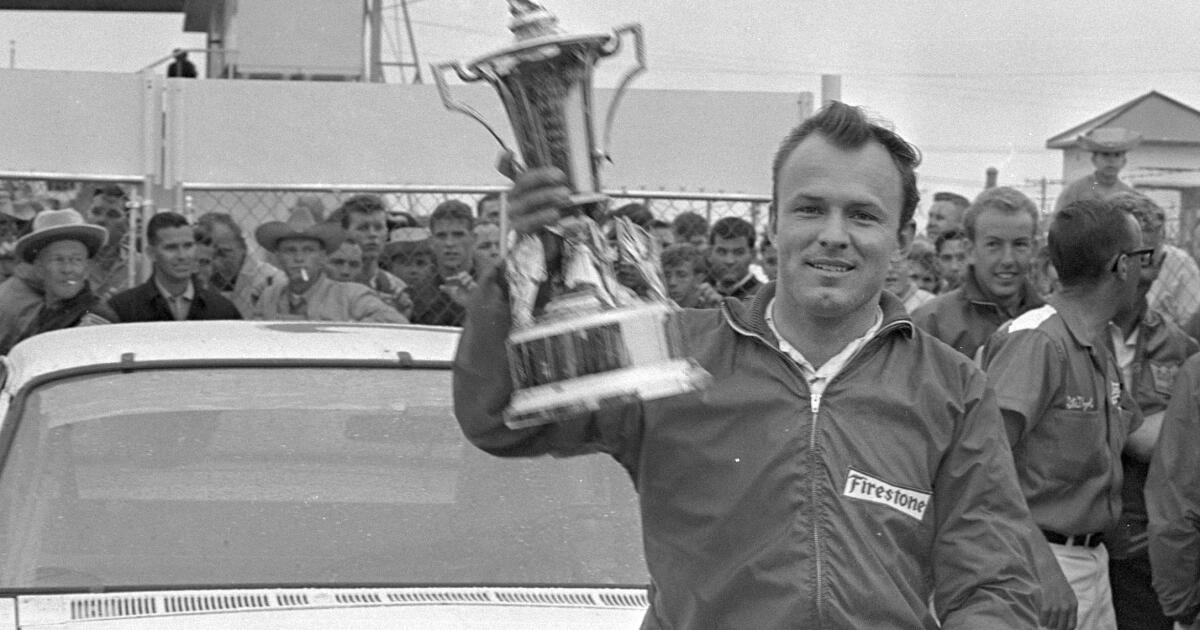
That’s far easier said than done, although Palou is off to a fast start in his quest for a fifth championship having won two of the first four races on the IndyCar schedule to stand second in the driver standings, two points behind defending Long Beach champion Kyle Kirkwood.

“Last year was magical,” said Palou, who has captured 10 of the last 21 checkered flags, dating to 2024. “As an athlete you always want to keep on improving, but I need to be realistic and understand that to win eight races in IndyCar in the same year, it’s pretty tough to beat.

“So although I want to achieve that, we just need to take 2026 separately and just try our best, try to win as many races as possible and then obviously fight for the [Indy] 500 and the championship.”

Winning Long Beach, one of the few prizes on the IndyCar circuit that has eluded him, would be a big step in that drive for five. But that won’t be easy since passing on the tight 1.968-mile street course, with its 11 turns, is difficult. That makes track position important, putting a premium on Saturday’s qualifying and on pit stops in Sunday’s race.

“It’s always super tough to be competitive there,” Palou said of Long Beach, where he finished second last April, giving him three straight podium finishes. “One of the only bad things about street racing [is] that it’s really tough for us to overtake with how tight the tracks are and all the bumps.

“It just makes it super challenging.”

Alex Palou competes during the Grand Prix of St. Petersburg in Florida on March 1.

Alex Palou competes during the Grand Prix of St. Petersburg in Florida on March 1.

(David Jensen / Getty Images)

Not as challenging as the race Palou, the most successful Spanish driver in IndyCar history, had to run just to get into a race car.

As a boy growing up in the tiny Catalan village of Sant Antoni de Vilamajor, Palou started kart racing about the same time he started grade school. He was 15 when he finished second in the 2012 European karting championship yet he didn’t see much of a future beyond that.

Lewis Hamilton had finished in the same spot 13 years earlier, then went on to become the most successful Formula One driver in history. But England has a long-established history with open-wheel racing and Spain did not.

“He came from nothing, showing up at a carting track and then having these big dreams and aspirations. And here he is,” said Barry Wanser, the senior manager of IndyCar operations for Chip Ganassi Racing.

“I know he’s very proud he’s the first Spaniard to win the Indianapolis 500. That’s just absolutely incredible.”

But that was never the goal.

“Honestly,” Palou said, “my goal was just to have fun. When we started, I never wanted to be a race car driver for a living. I never thought that it would be possible.”

Before Palou, Fernando Alonso, a two-time F1 champion, was Spain’s most successful open-wheel driver. After Alonso is Carlos Sainz Jr., who has won four F1 races; Pedro de la Rosa, who made more than 100 F1 starts but climbed the podium just once; and Oriol Servià, who ran 79 IndyCar races in nine years but never placed higher than fourth before retiring in 2019, one year before Palou made his debut in the series.

Aside from Alonso, those drivers were good but not great, leaving the road from Spain to success in open-wheel racing a narrow one. That’s a path Palou is now widening.

“I would say that for sure it’s helping future generations that I’m here and that I had success,” he said, “just because they can know that with a normal European background you can come to the U.S. and fight for wins and championships.”

Alex Palou celebrates after winning the Grand Prix of St. Petersburg on March 1.

Alex Palou celebrates after winning the Grand Prix of St. Petersburg on March 1.

(David Jensen / Getty Images)

Wanser said what makes Palou so good is his feel for both the car and the track and his ability to communicate with his team.

“He has a very unique ability to understand what he needs the car to do to maximize performance on the tires,” said Wanser, the race strategist for Ganassi’s No. 10 car who has sometimes been called Palou’s indispensable partner. “You’re talking about road courses, street courses, for the primary [tires] — the hards and the softs — and understanding what he needs for qualifying and also what the car needs for reducing tire deg[redation] during the race.”

For now Palou, who turned 29 earlier this month, appears content with mastering those skills in IndyCar rather that following the natural progression into an F1 ride.

He said he went “all in” to win an F1 seat following his first IndyCar title in 2021, but doubts about whether he’d be given a competitive car led him to back out. Rumors linking him to Red Bull’s F1 team surfaced after last year’s Indy 500, but Palou shot those down too, saying he was staying with Ganassi.

Wanser, obviously, is happy with that decision and hopes it will pay off Sunday in Long Beach.

“Alex is very young, right?” he said. “IndyCar is so competitive that we could never, ever think about being complacent. If we start heading down that road, we will get beat and get beat often.

“It’s nonstop trying to constantly improve, knowing every weekend we show up to the racetrack it’s going to be difficult to win.”

Source link

How Jazmin Gamble plans to rebuild Hawthorne High football

Football can teach many life lessons and no one knows that better than Jazmin Gamble, the new varsity head coach at Hawthorne High.

As a woman in a male-dominated profession, one could define her as a trailblazer — and that would be accurate — but while she acknowledges the historical significance of what she is doing, Gamble is not letting it distract her from the task at hand — turning around a program that has fallen on hard times.

“It’s less about proving a point and more about giving all these boys a better experience,” Gamble said. “I’m not downplaying the impact of it, rather I want to leverage the attention in a way that benefits the players and opens doors for them. I’m elated and honored that the district saw my vision and said ‘this girl can do that.’ I have to ask myself how I can use this opportunity to spotlight our team.”

Gamble, who turns 36 in June, is a running back and linebacker for the Los Angeles Legends in the Women’s National Football Conference, a full-contact professional league consisting of 16 franchises across the United States.

Gamble was selected defensive player of the year in 2024 and offensive player of the year in 2025 when she gained a league-leading 549 yards rushing (averaging 11.9 yards per carry) while scoring three touchdowns.

“I tore my ACL my first season and was on injured reserve, but I came back in 2022 and have been playing ever since,” she said. “We made the playoffs last season but lost in the first round. We’re 2-1 right now with three games left. We played our first home game at Long Beach Poly, so the boys got to see their coach in action. We won 23-0 and I scored a touchdown, but it got called back due to holding.”

Hawthorne High football coach Jazmin Gamble holds her right hand up as she calls for her players to huddle at practice.

Hawthorne High football coach Jazmin Gamble calls for her players to huddle during a recent practice.

(Steve Galluzzo / For The Times)

The Legends’ next home game is April 25 against the Utah Falconz at St. Anthony Sports Complex in Lakewood.

“This is my last year playing, but I’ve been wanting to transition more into coaching,” said Gamble, a certified personal trainer and fitness instructor who started a business 10 years ago called the Jazz Standard. “I first heard about the job through my coaching network and it sounded very appealing. I applied, I interviewed and I got it. Football takes up so much of your time and energy. I’ve done enough in this sport. This is a good time for me to stop, and although this is my first crack as a football head coach I’ve been coaching athletes for six or seven years, including some of my teammates, and they got better.”

A Bakersfield native, Gamble was an exceptional all-around athlete. Growing up she was a gymnast and a cheerleader. She played club volleyball, ran track and played basketball while attending four high schools, two in Bakersfield and two in the Bay Area, and graduated from Mt. Diablo High in Concord.

Upon moving to Los Angeles 13 years ago, she was in survival mode.

“I was homeless and slept in the back seat of my car for a couple of months until I got a job in human resources,” she recalled. “I started training and working in the fitness field and after struggling to make it for a few years I decided I wanted to be a business owner and things took off from there. Now I have 33 active clients that I see two to four times a week and even train the No. 2 rusher in the WNFC.”

Gamble lives in Inglewood but her business is in Gardena near Serra High, where she got involved behind the scenes with the flag football team before the sport was officially sanctioned by the CIF in 2023.

“A few of those girls trained with me and I learned to adopt a different schematic approach. Boys are playing football as early as 5 or 6 years old, whereas women are starting at 20 or even their early 30s and their bodies aren’t prepared for it. I didn’t start playing tackle until I was 31.”

Gamble is still assembling a staff but one of her assistants will be her brother, Kenneth Davis, a former receiver at Liberty High in Bakersfield.

Hawthorne does not have a junior varsity team. There were 29 players on the roster last year and nine graduated.

“On Day 1, I had 22 come to the weight room,” Gamble said. “Some players are in track right now, but in May I’ll have ‘em all. My strong suit is development so I’m ready for this. Right now, we’re at ground zero. We’ve only had a handful of practices, mainly conditioning. The boys have been super receptive. I’m just going to be me!”

Hawthorne went 2-8 last season, finishing fourth in the Ocean League and being outscored by 281 points. The Cougars were shut out three times.

“Jazmin’s a breath of fresh air,” said athletic director Mario Romero, who was involved in the hiring process. “She’s brought enthusiasm across the entire school community and I’m excited about where her leadership is going to take us.”

Hawthorne High football coach Jazmin Gamble shows her players how to run a drill during practice.

Hawthorne High football coach Jazmin Gamble shows her players how to run a drill during practice.

(Steve Galluzzo / For The Times)

Fifteen players showed up for a one-hour workout Wednesday at HalCap Field. One of them was quarterback Anthony Green, who played in the last two games as a sophomore last year after transferring from King/Drew and is the projected starter next season.

“She made a good impression,” he said. “I like the workouts — they’re very intense — and I like the competition. Coach expects a lot and she pushes us.”

Gamble put her players through a series of drills to test their stamina, quickness and technique. The penalty for walking was push-ups.

“Everything out here is earned … may the best man win!’ she shouted.

“Her practices are intense — she knows what she’s doing,” added junior linebacker Adrian Lopez, who was an All-League first teamer last fall. “She has a home game coming up and I think I’ll go out and watch. My goal for us is to have at least a .500 season and make the playoffs.”

Gamble is not the first female to coach varsity football at Hawthorne. Monique Boone was the varsity defensive line and assistant offensive line coach in 2021 under previous head coach Corey Thedford. However, overseeing the entire program puts Gamble in rarefied air.

What convinced Romero that Gamble was the right person for the job?

“Her background, her skill set and also the fact that she plays the sport herself at a high level,” he said.

Source link

L.A. Times Festival of Books kicks off with packed panels at USC

Tens of thousands of readers of all ages, from toddlers clutching picture books to longtime fans carrying armfuls of paperbacks, fanned out across the USC campus Saturday for the opening day of the 31st Los Angeles Times Festival of Books, packing panels and lining up to see favorite authors and celebrity guests.

It was too early to know how many people attended the first day of the event, billed as the country’s largest literary festival, though organizers said they expect between 150,000 and 155,000 attendees over the weekend. By late morning, the campus was already bustling, with strong turnout expected for appearances by author T.C. Boyle and actors Sarah Jessica Parker and David Duchovny, among others.

Founded in 1996 and spread across eight outdoor stages and 12 indoor venues, the festival has become a fixture on Los Angeles’ cultural calendar, bringing together more than 550 storytellers for panels, author interviews, book signings, performances and screenings spanning a wide range of genres, from children’s story times to cooking demonstrations.

This year’s lineup features a broad mix of writers, performers and public figures, including comedian Larry David, musician Lionel Richie, multihyphenate businesswoman (and Beyoncé’s mother) Tina Knowles, author and social critic Roxane Gay and scholar Reza Aslan.

Under sunny skies, actor and reality TV personality Lisa Rinna brought humor and a bit of bite to a 10:30 a.m. conversation on the festival’s main stage. The “Real Housewives of Beverly Hills” alum released her second memoir, “You Better Believe I’m Gonna Talk About It,” in February, chronicling her time on the show and her recent turn on Season 4 of Peacock’s reality competition series “The Traitors.”

Reflecting on her approach to “Traitors,” Rinna said she wanted to strip away the conflict-driven persona she had cultivated on “Real Housewives” and present a more unfiltered version of herself. “I was like, ‘Self, listen. You’re gonna go in there and just be you. No housewife s—, none of that reactionary stuff.’ ”

In conversation with Times senior television writer Yvonne Villarreal, Rinna also spoke candidly about the loss of her mother, Lois Rinna, in 2021 and how her grief manifested in a feeling of rage while she was filming Season 12 of “Real Housewives.”

“It really took me by surprise,” she said. “And you have to give space for it because you can’t make it go away. … They always say time heals, but time makes everything just a little less intense.”

At a noon panel titled “Fire Escape: Wildfires and the Changing Geography of Southern California,” moderated by Times climate and energy reporter Blanca Begert, author and former wildland firefighter Jordan Thomas said the scale and frequency of California wildfires have shifted dramatically in recent decades.

“The vast majority of the largest wildfires in California’s recorded history have happened just in the past 20 years,” said Thomas, author of last year’s National Book Award finalist “When It All Burns: Fighting Fire in a Transformed World.” “While I was a hotshot, there were three of those fires burning simultaneously, including a million-acre fire — more than used to burn across the entire American West over the course of a decade.”

In the early afternoon, former Georgia Rep. Stacey Abrams spoke with moderator Leigh Haber about artificial intelligence and voter suppression in front of an enthusiastic, packed crowd at USC’s Bovard Auditorium.

Abrams’ latest Avery Keene novel, “Coded Justice,” came out last year and explores the role of artificial intelligence in the healthcare industry. AI has already become enmeshed in everyday life, she said, asking audience members to raise their hands if they had used TSA PreCheck or a streaming service.

“AI is a tool … but it is created by someone, it is programmed by someone, it is controlled by someone,” she said. “Regulation is not about slowing down progress. It is about asking questions and saying that in the absence of answers, we’re going to put on reasonable restraints that we can revisit.”

Abrams also revealed that her next book, the fourth in her Avery Keene thriller series, will focus on prediction markets.

“I write Avery Keene novels to tell stories about social justice, but I put it in a form that’s accessible to people who don’t think that they are social justice people,” Abrams said. “I want to meet people where they are, not where I want them to be.”

She also encouraged audience members to push back against voter suppression and defend democracy by volunteering at polling places — even in reliably blue districts — warning that she believes masked paramilitary groups will be allowed to patrol voting locations and target people of color in the upcoming midterm elections.

The festival kicked off Friday evening with the 46th Los Angeles Times Book Prizes ceremony at Bovard Auditorium, emceed by Times columnist LZ Granderson, recognizing both emerging voices and established writers.

Winners were announced in 13 categories for works published last year. Find a full list of winners here.

Oakland-born novelist Amy Tan, whose work often explores identity and the Chinese American immigrant experience, received the Robert Kirsch Award for lifetime achievement, and the literary nonprofit We Need Diverse Books received the Innovator’s Award for its work promoting diversity in publishing.

Accepting her award, Tan, author of the 1989 bestseller “The Joy Luck Club,” said that as a birthright citizen, she had never questioned her place in the country until recent debates over citizenship and belonging led her to reconsider whether she is, in fact, a “political writer.”

“My birthright and that of millions of others is now being argued before the Supreme Court, and no matter what the outcome is, it’s been a kick in the gut to know that those in the highest echelons of government and those who support them believe that we don’t belong.”

Tan said that as an author, “I imagine the lives of the people I write about,” and that act of compassion “reflects our politics and our beliefs. And so yes, I am a political writer.”

Addressing the attendees, Times Executive Editor Terry Tang pointed to the breadth of the weekend’s programming as an opportunity for connection and discovery. “If you take in just a fraction of these events, it will expand your mind,” she said. “This weekend gives all of us a chance to celebrate a sense of unity, purpose and support.”

The festival runs through Sunday. More information, including a schedule of events, can be found on the festival’s website.

Source link

Welcome to Bass’ virtual State of the City (Part II)

Good morning, and welcome to L.A. on the Record — our City Hall newsletter. It’s Noah Goldberg, with an assist from David Zahniser, Sandra McDonald and Alene Tchekmedyian, giving you the latest on city and county government.

Mayor Karen Bass is planning to give her second State of the City address of the year on Monday, with a digital twist from years past.

Traditionally the speech is given — in person — before City Council members and other machers at City Hall or another location. This year’s speech will be delivered by video.

Of course, Bass already did one State of the City speech this year, holding forth on the Olympics, the World Cup and Palisades fire rebuilding in a February address at Exposition Park.

The video State of the City will probably be more about the city budget, which also will be released Monday. The city is facing a budget gap of a few hundred million, according to Matt Szabo, the city administrative officer.

“Mayor Bass will update L.A. on the State of our City through a video that anyone can watch, anytime, anywhere,” said Paige Sterling, a spokesperson for Bass. “From Day One through today, Mayor Bass’ focus is changing the direction of L.A. by reversing long-standing [and long ignored] trends on homelessness, housing, public safety and infrastructure.”

You’re reading the L.A. on the Record newsletter

Sign up to make sense of the often unexplained world of L.A. politics.

Parisian payback

The city controller released information this week that showed how much L.A. paid for flights to Paris for L.A.’s delegation to the 2024 Summer Olympics.

One purchase stuck out: $22,000 for a first-class ticket for Bass to fly to Paris and back. It was purchased March 6, the same day Bass boarded the flight to the City of Light, according to the city, which released the information in response to a public records act request.

One reason for the high cost was the last-minute purchase, the mayor’s office said, which it said was the consequence of a packed mayoral schedule that makes advance planning difficult.

Secondly, the city was transferring over its travel booking platform to a company called Concur, and the only flights available for the mayor to purchase to arrive in Paris in time on the platform were first-class seats.

The mayor then reimbursed the city for $12,270, with half coming from her personal bank account, while the other half came from her Karen Bass For Mayor 2022 account, according to checks. That left the city on the hook for $10,000.

“Mayor Bass voluntarily paid for the majority of the ticket herself. City rules didn’t require her to, but she did it anyways. This was the only flight that would get her there on time, and this was the only ticket available,” said Kolby Lee, a spokesperson for the mayor.

Bass and a council delegation, including Councilmember Katy Yaroslavsky, were in Paris that March to “see behind the curtain” about how a city prepares to host the Games, Bass said at the time.

Yaroslavsky’s round trip cost the city $1,600.

Raman out of council leadership

Sometimes the drama at City Hall comes in the fine print. Last Friday, the City Council released its agenda for its April 14 meeting. Casual observers would be forgiven for missing a small change on the first page.

Under Council President Marqueece Harris-Dawson’s name, and under the name of President Pro Tempore Bob Blumenfield, there was a third name: Assistant President Pro Tempore John S. Lee.

That makes Lee No. 3 in council leadership, appointed to the position by Harris-Dawson. For all intents and purposes, the largely ceremonial position means he gets to sit on the dais and preside over council if Harris-Dawson and Blumenfield can’t make it.

But on the fourth floor of City Hall, where council offices are, the move had staffers chattering.

Lee replaces Councilmember Nithya Raman, who threw her hat in the ring to run for mayor against Bass — an ally of Harris-Dawson.

Bass had previously thrown her weight behind Raman during the council member’s tough 2024 reelection campaign.

Some thought Harris-Dawson was punishing Raman for her surprise bid against Bass, but Raman said that wasn’t the case.

“When I first announced my candidacy for Mayor, I told the Council President that I would step back from all of my appointed roles. One change has now been made. I remain focused on serving my district and the City of Los Angeles,” Raman said in a statement.

Harris-Dawson didn’t immediately respond to a request for comment.

There’s a long tradition of council members stepping down from leadership positions or getting the ax when they run for higher office.

In 2021, then Councilmember Joe Buscaino was voted out as president pro tempore after making disparaging remarks about numerous council members (including Raman) while he was running for mayor.

In 2011, then-Councilmember Eric Garcetti stepped down from his role as council president during his run for mayor.

Spotlight on Soto

Los Angeles City Atty. Hydee Feldstein Soto, who is seeking reelection in the June 2 primary, is taking heat from challenger Marissa Roy for her appearance last weekend at the Hope Fest LA rally at the L.A. Coliseum.

The event was put on by Hope California, which is led by evangelical pastor Ché Ahn, a supporter of President Trump and a write-in candidate for California governor. Ahn spoke at a Stop the Steal rally in Washington, D.C., the day before the Jan. 6, 2021, storming of the Capitol, and has repeated the unfounded claim that Joe Biden stole the election from Trump. (“I don’t have facts. I don’t have proof. That’s just my own personal opinion,” Ahn, who also opposes abortion, told The Times.)

Feldstein Soto is pro-choice and anti-Trump, and the speakers immediately preceding her expressed anti-gay and anti-trans views.

Roy said the positions expressed at the rally were wildly out of step with those of Los Angeles voters, and criticized the city attorney’s appearance at the rally as “disturbing.”

“Los Angeles is overdue for a City Attorney who fights for the people,” Roy said in a statement.

At the rally, Feldstein Soto spoke about the scourge of human sex trafficking, including of children along the Figueroa corridor in Los Angeles. She had been invited to the event by a human trafficking survivor to speak about their shared commitment to the issue, spokesperson Naomi Goldman said.

“The primary purpose of the City Attorney’s attendance was to shine a light on the exploitation of women and girls, and to stand in solidarity with those affected. She stayed at the event briefly to deliver her remarks and then departed,” Goldman said.

State of play

— THE KIDS ARE ALRIGHT: A strike that would have shut down schools for nearly 400,000 students was averted at the eleventh hour early Tuesday after the Los Angeles Unified School District reached a tentative agreement with the union that represents workers including custodians, bus drivers and cafeteria workers. Mayor Bass stepped into negotiations at the last minute to help avert a disruptive work stoppage.

— LA USD$: The price of the union deal will be nearly $1.2 billion in annual contract costs, and questions remain about whether the district can afford it.

— ONE AND DONE?: Mayoral candidate Spencer Pratt went on the Joe Rogan Experience this week and told the podcaster that Angelenos are fed up with their leadership. He explained the rules of the city’s June 2 primary to Rogan, saying that there would be no runoff — as most analysts expect — if a candidate wins 51% of the vote. “I think I become mayor June 2 and it won’t even go to November,” Pratt said.

COUNTY BUDGET: The county unveiled its nearly $50-billion budget plan Monday, proposing $2.7 million invested to beef up the team of people investigating fraud within a deluge of recent sex abuse lawsuits, suggesting a broadening probe at the district attorney’s office. The supervisors must now review, then vote on the budget.

— HAHN AND OFF: L.A. County Supervisor Janice Hahn was booed by her neighbors in San Pedro at a Tuesday night town hall meeting after she spoke in support of a proposed substance abuse rehabilitation center in the South Shores neighborhood. “There will be a difference of opinion on this project, but let’s not tear each other apart,” Hahn urged residents, who picketed last weekend at the site of the proposed project.

— E-HIKE: A Los Angeles City Council panel is pushing to ban electric bikes from most city recreational trails, saying the machines pose a threat to hikers and equestrians. The council’s Arts, Parks, Libraries, and Community Enrichment Committee voted 3 to 0 in favor of the measure, which now goes to the council’s Transportation Committee before potentially advancing to the full City Council, which would have to approve the ban before it takes effect.

QUICK HITS

  • Where is Inside Safe? The mayor’s signature program moved more than 25 people off the street and inside in Koreatown this week.
  • On the docket next week: The mayor will release her budget on Monday, along with her second State of the City. She is planning to hold a news conference on the budget Monday.

Stay in touch

That’s it for this week! Send your questions, comments and gossip to LAontheRecord@latimes.com. Did a friend forward you this email? Sign up here to get it in your inbox every Saturday morning.

Source link

Letters to Sports: Clippers were oh so close, yet so far

p]:text-cms-story-body-color-text clearfix”>

The Clippers’ season has come to an end but better than anyone expected. No consolation but a great job by head coach Tyronn Lue for guiding the Clippers from a disastrous 6-21 start and finishing with more than 40 wins.

Coach Lue led the team, overcoming major obstacles throughout the season with a player investigation, injuries, internal strife and major roster changes at the trade deadline. As usual for Clipper fans, wait till next year.

Wayne Muramatsu
Cerritos


The Clippers are the NBA’s version of Stealers Wheel’s “Stuck in the Middle With You.” Yes, they have had 15 straight seasons of playing .500 or better, and owner Steve Ballmer has brought them respectability, but for their entire 56-year existence — which has contained many clowns and jokers — they still have never [attained] their goal of winning (or even reaching) the NBA Finals.

Ken Feldman
Tarzana

Source link

Dodgers Dugout: Readers show their love for Charley Steiner

Hi, and welcome to another edition of Dodgers Dugout. My name is Houston Mitchell, and the Dodgers keep rolling. When will the first bad stretch of games begin?

Are you a true-blue fan?

Get our Dodgers Dugout newsletter for insights, news and much more.

Last week, I asked you to show some support for Dodgers broadcaster Charley Steiner, who battled cancer and has been heard infrequently on broadcasts since 2024.

And boy did you respond. We received over 1,000 emails from people who wanted to pass along best wishes. Obviously, we can’t run all 1,000 emails, but here are a selected few.

John Peterson of Pleasant Hill: I had the great fortune of meeting Charley Steiner in Las Vegas in the early ‘90s. At the time, I was an assistant athletic director at UNLV, and our men’s basketball team had played in three Final Fours (1987, 1990, 1991), so tickets to home games were super scarce in those days. Charley was in town to call a boxing match for ESPN, so he and Rich Rose, former president of Caesars World Sports, were desperate enough to sit in my staff seats (at least they weren’t in the balcony!). I was in total awe of those two giants of the sports entertainment landscape. We even took a photo together. I was already a huge Charley Steiner fan, but after meeting him in person, I became a fanboy for life, so when he became a Dodger announcer, I was over the moon. I will always remember how gracious he was — like any other fan who wanted to see for himself what all the fuss was about the Runnin’ Rebels. Have cherished the memory ever since.

Tara Elkinton: My husband and I are huge Dodger fans and it’s been said I Bleed Blue. We always enjoyed listening to Charley and Rick. Charley’s commentary was always honest, interesting, personal and made you feel like you were at the game. We love and miss him.

Steven Booth: Charley, thank you for bringing peace, love and happiness into our lives. Hearing you call games is like having a coffee or beer with your friend at the ballpark. We love you and are praying for you.

Darin Axel-Adams of Pendleton, Ind.: I was a teenager when he started at ESPN and always enjoyed watching him on SportsCenter. I was a budding high school radio broadcaster and Charley was one of the ESPN anchors I attempted (not very successfully!) to mimic. I also thought he had some of the funniest “This is SportsCenter” promos … it was pretty obvious that he didn’t take himself or his profession too seriously. Living in the Midwest, I haven’t been able to enjoy much of Charley’s time with the Dodgers, but when I do, I am reminded again of what a truly gifted broadcaster he is!

Kim Haack: My father was a Dodger fan for more than 50 years. He is the reason I’m a Dodger fan today. He died three weeks before the Dodgers won the World Series in 2020. We often listened to the radio in the car and enjoyed listening to Charley and Mo. The radio call from Charley at Game 6 of the 2020 World Series when the Dodgers won was absolutely amazing. Of course, I was sobbing when they won, thinking of my father. It was a balm to hear Charley’s familiar voice and I think he spoke for all of us when he said, “In a year like no other, when joy has been so hard to come by, tonight tears of joy, let ‘em flow …” Charley’s call of that game is something I will never forget for the rest of my life. Whenever I see that clip and hear Charley’s voice, I tear up remembering how much I appreciated his familiar voice when facing a bittersweet time in my life.

Kirk Stitt: Charley, I’m a 76-year-old Dodger fan since 1958. I know you value your privacy, I get that. You need to know that thousands of Dodgers fans everywhere are thinking of you and wishing you the best and hoping to hear you.

Donald Golightly of Russell, Ky.: Being an old Brooklyn Dodger fan myself, I can relate to Charley. While I don’t feel the connection to the new Dodgers, in recent years I really enjoyed listening to Charley and Rick on the internet. So here’s wishing Charley the best now and always! Keep your head up and keep smiling!

Philip Nelson: The absolute best ESPN SportsCenter commercial is the Y2K commercial. Near the end Steiner is wearing his tie around his head like a bandana. War paint as if he is in The Lord of the Flies and says, “Follow me. Follow me to freedom!” (Note: You can watch that commercial here.)

Jim Carlisle: I have “followed you to freedom” for years and have greatly appreciated your integrity, personality, accuracy and humor on the air. It was so great to hear you on the air on opening day with Rick Monday. It was like having a reunion with an old friend. I’m hoping you’ll be able to return to the booth whenever you feel up to it. You have many fans who are hoping the same thing.

Stephen Knight: I’ve enjoyed your calls since, like, forever. As a cancer survivor myself with what I like to call unremission, the choice of how you deal with it is a personal one and is yours, and your family’s. And I just want to thank you for putting me inside the park for all of those Dodger games. You made me feel so alive, so connected with each call of every strike, ball, hit or miss.

Jimie Murray of Redondo Beach: One of my favorite memories was a totally random call about 10 years ago. A Dodgers runner slid into second base head first and got up after time was called to shake his belt and pants. Charley said, (Runner) is getting the dirt out of all the places dirt shouldn’t be.” It just made me laugh and now any time a player slides head first, I repeat it for my wife.

Tom Schulz: I’ve always been a Dodger fan, initially (and continuing so) because of Jackie Robinson. But I really became a fan in 2020 while living in Arkansas (now thankfully in California), and Charley and Rick helped me preserve my sanity during COVID. In the midst of that bizarre and unsettling year, Charley and Rick were voices of normalcy. Since then, I have caught at least part of every Dodgers radio broadcast. Charley and Rick became my friends.

Eliza Rubenstein: I’m a third-generation Cardinals fan living in SoCal, and it takes a LOT to get me to say nice things about the Dodgers. But I spent years listening to Dodger games on the radio in large part because I found Charley Steiner to be so completely and consistently delightful. His intelligence, his dry wit, his charming habit of saying “he’s been struck out” rather than “he struck out” … his rhythm and diction and humor have always spoken directly to my baseball-obsessed heart, and considering that I grew up with Jack Buck in my ear and high standards in my soul, that’s saying a lot.

Nancy Shattuck: Thank you for voicing joy and Dodger blue to this grateful fan.

Lydia Valenzuela: You’ve been missed. It was so nice to hear you on opening day. I’m sure I speak for all the fans when I say we can’t wait until you’re back again on the radio. I love to hear the banter between you and Rick. You both always bring a smile to my face. That warm soothing voice of yours is missed. Hope to hear from you again soon.

Howard Hancock: Thank you for being such a terrific part of my sports enjoyment for so many years. I greatly hope to hear you call many more innings in the future.

Scott Snyder: You have been the most underrated voice in my 55 years of loving baseball. Best of wishes to you.

Linda Seidman: We fans miss you and your calling the games so very much! Nobody calls a game like you, especially the home runs. The games just aren’t as good or as fun or as exciting without your calls, so please get back in the booth whenever you can!

Larry Oppenheim: What I love most about Charley Steiner is the sheer joy he brings to announcing the Dodgers. And his joy is contagious. A friend and I would text back and forth while listening to Dodgers games. I would say ‘did you hear what Charley just said’ and I would write it down in my text. Thankfully, I found these messages. Delving into my old text messages has brought back so many joyful memories. Charley, I miss you terribly.

Samuel Contreras of Chino Hills: Charley, we haven’t forgotten you at all. Dodger fans miss you and look forward to your return to the broadcast booth on a regular basis. My family’s life has been affected by multiple myeloma as my wife was diagnosed in October 2024. Thankfully, she’s doing well and I wish the same for you. Please know that Dodger broadcasts are not the same without you.

Keith Putirka: Charley Steiner is one of my all-time favorite baseball announcers and when I heard he was headed to L.A. to cover the Dodgers, I was thrilled. I grew up listening to Vin Scully and was clearly very spoiled. Until I moved to New York in the early 1990s, I had no idea how much of a gap there was between Vin and everyone else. But I still loved listening to baseball games, especially on ESPN, and I first heard Charley on the radio when he called the 1997 World Series on ESPN radio. He was terrific. He made the games come to life, conveying the environment, the stories and the excitement, in his own inimitable style. After that, I would always tune in to any ESPN-broadcast game so that I could hear Charley Steiner call the games. I’m 63 and I’ve been listening to and watching baseball for a very long time. Growing up in L.A. I heard a lot of great announcers, but my list for the top three announcers in baseball is an easy choice; it is in order, Vin Scully, Charley Steiner and Jon Miller. Thank you, Mr. Steiner, for making a great sport even greater to listen to.

Hoyt Adams: I used to work at the Genius Bar at the Apple Store in Santa Monica, and one day I helped Charley. He was so easygoing, funny and genuinely delighted to talk baseball with a stranger who was helping him with his computer.

When I told him the hard drive on his laptop was failing, he said in that wonderful radio voice, “So that’s your story and you’re sticking to it.” But he immediately lit up when we started talking baseball again. For one reason or another, I brought up how much I loved players like Jamey Carroll, who was getting a lot of time at shortstop that season. When I was driving home from work that night, I turned on the game, and Jamey Carroll just so happened to be having a killer night. Charley talked about him and even mentioned several beats from our conversation — it absolutely made my season.

Patrick Hennes of Corona: I have “worshipped” Vin Scully since I was one of millions of young fans that had my transistor radio under my pillow listening to my Dodgers, beginning in the early 1960s. No one could ever be better. But for this one night, I think Charley surpassed the GOAT. It’s always a good time to go back to this incredible game, when the Dodgers hit four straight home runs in the bottom of the ninth to tie San Diego. And to appreciate Charley Steiner as a fantastic announcer. (Note: You can watch and listen here.)

George Martin of Virginia: Listening to Charley Steiner call a game is like a warm blanket on a cold and rainy day. Whatever your troubles, hearing him brings security, relief and joy.

Jason Hashmi: The line, “we’ll find out together” is the classic Steiner phrase for me. Will Freeman’s ankle heal in time for the World Series and will he be a liability on the bases if he does return? “We’ll find out together.” I’ve adopted the phrase myself, and often for things unrelated to baseball. I always give a wink to Steiner in my mind when I do. I wish him health and peace.

Kathy Pratt: In 2014 my husband and I drove up from Tucson to see a spring training game. As we were walking into Camelback Ranch Stadium we looked up and there was Charley Steiner. My husband asked if he could take a picture of him and his wife. Charlie’s reply was, “I always love to have my picture taken with a beautiful woman!” Charley’s kindness was so appreciated and it made our day.

Candi Hersch: I miss hearing you on the radio. You are much younger than my father, but listening to the game with you is like hanging out with my dear departed dad. It’s comforting and you always have great insight.

Doug Weber of Carlsbad: For every note you receive, please know that there are thousands more who wish you all the best. Thank you for everything and we’ll look forward to hearing from you soon.

Bill Walsh of Oceanside: I miss Charley’s voice on the radio. While working I always had the Dodger radio broadcasts playing behind my desk. Charley and Rick became my daily companions. I miss you greatly Charley.

Andrew Mounts of Clovis: You’re part of this wonderful thing we call the Dodger family. Your enthusiasm and love for this crazy game and the Dodgers is greatly appreciated and very sorely missed. Never forget your voice paints a picture of this game that we love so much. You and Mo put us in the ballpark when we couldn’t be there. Thank you so very much. Get well Dodger friend and may God bless you and your family.

Geoff King of Bakersfield: The Dodgers have been blessed with the best radio and TV broadcast personalities ever, with Vin Scully at the top of the list. But Charley was a great addition to the Dodger broadcast crew years ago. His demeanor, stories and mannerisms calling the game were like Scully. We went several years without TV because of the Direct TV dispute so we would listen to the games on the radio. Charley was a lifesaver of Dodger baseball for us.

Rich Mortimer: My family and I have enjoyed your Dodger coverage for many years. I am 73 and have been a Dodger fan my whole life and Charley’s reporting has made our viewing and listening so much more enjoyable. Thank you Charley. Please know that there are thousands of Dodger fans, Charley Steiner fans, who are praying for your recovery.

John Sotos of Leesburg, Va.: I have always been a Charley Steiner fan, from his days at ESPN to his time broadcasting Dodgers games. That ESPN commercial — no, not “follow me to freedom!” — but the one in which he has to hide under his desk while an angry Evander Holyfield, having been told that Charley disparaged his boxing, prowls the ESPN spaces shouting “Charley Steiner! Come out and get your whoopin’!” Still one of my favorites. (Note: You can watch that ad here.)

Ohtani out of the batting lineup

Much concern was raised when Shohei Ohtani wasn’t in the hitting lineup Wednesday when he was the starting pitcher against the Mets. Nothing to worry about. Ohtani was hit in the right shoulder by a pitch Monday, and the Dodgers were just being cautious. As Maddie Lee reported:

“If it weren’t for the hit by pitch [Monday], he would’ve been DHing and pitching tonight,” Dave Roberts said before Wednesday’s game.

“Just feeling what gives him the best chance to stay loose during the outing, feel good,” Roberts said. “There’s still some soreness in there. When he’s hitting, there’s a component that he’s in the cage getting ready to hit, and if we can take that off his plate and just focus on one thing tonight, we felt — training staff, pitching coaches, myself — we just felt it was the best thing for him. So, once I told him, he completely understood.”

Up next

Friday: Dodgers (Tyler Glasnow, 1-0, 4.00 ERA) at Colorado (Ryan Feltner, 1-1, 7.30 ERA), 5:40 p.m., Sportsnet LA, AM 570, KTNQ 1020

Saturday: Dodgers (Emmet Sheehan, 2-0, 6.60 ERA) at Colorado (TBD), 5:10 p.m., Sportsnet LA, AM 570, KTNQ 1020

Sunday: Dodgers (Roki Sasaki, 0-2, 6.23 ERA) at Colorado (Michael Lorenzen, 1-2, 8.10 ERA), 12:10 p.m., Sportsnet LA, AM 570, KTNQ 1020

Monday: Dodgers (*-Justin Wrobleski, 2-0, 2.12 ERA) at Colorado (*-Jose Quintana, 0-0, 4.15 ERA), 5:40 p.m., Sportsnet LA, AM 570, KTNQ 1020

*-left-handed

And finally

Charley Steiner on the 30th anniversary of his famous Carl Lewis call. Watch and listen here.

Until next time….

Have a comment or something you’d like to see in a future Dodgers newsletter? Email me at houston.mitchell@latimes.com. To get this newsletter in your inbox, click here.

Source link

LIV Golf CEO confirms Saudi funding commitment is only through 2026

LIV Golf appears to be dying on the vine but doesn’t want to say so.

Amid several reports that the Saudi-backed Public Investment Fund will cease its abundant funding of LIV Golf after the 2026 season, officials with the four-year-old PGA Tour competitor chose to focus on the fact that the show will go on — at least through August.

During a broadcast interview from the LIV tournament in Mexico City, LIV Chief Executive Scott O’Neil would not say if the league has a funding commitment from the Public Investment Fund, or PIF, beyond this year.

O’Neil responded to a question about golfer Sergio Garcia saying this week that LIV Golf Chairman Yasir Al-Rumayyan “told us at the beginning of the year that he is behind us, that they have a project of many years.”

“It’s just not the way the world works,” O’Neil said. “We have commitments to have this … the reality is you’re funded through the season and then you work like crazy as a business to create a business and a business plan to keep us going.

“But that’s not different from any other private equity-funded business in the history of mankind.”

The interview was pulled from the internet shortly after it was posted.

PIF announced a new five-year strategy Wednesday that will reduce international investments from 30% to 18-20% of the portfolio and place greater emphasis on Saudi domestic initiatives to promote sports. LIV Golf does not fit into that category and was not mentioned.

“PIF will continue to support Saudi Vision 2030 objectives by delivering competitive domestic ecosystems,” Al-Rumayyan said in the announcement. “The 2026-2030 strategy is a natural next step in PIF’s growth journey.”

PIF approved more than $250 million in additional funding for LIV Golf this year, hiking the total investment to more than $5.3 billion since the league was launched four years ago. Documented losses are more than $1 billion from 2022 to 2024, according to Forbes.

LIV Golf executives were rushed from various corners of the planet to a meeting this week in New York where the future of the operation was discussed in private and decisions were made.

A few flew in from Mexico City, where this week’s tournament began Thursday at the Club de Golf Chapultepec. It is one of the highest-altitude golf courses in North America, and LIV golfers took deep breaths before answering press questions about reports that the organization was on the verge of collapse.

“For me, it didn’t make sense to think about it or waste time thinking about,” superstar golfer Jon Rahm said after shooting a first-round 65. “Since everything happened so suddenly and so quickly, I wasn’t very worried about it because normally, before the rumors start, we already know something — there’s always someone within the league who knows something.”

Communication at the tournament was spotty. A power outage at the course Tuesday caused interviews to be canceled, and streaming of the first round Thursday was down for about two hours because of what were described as technical difficulties.

Yet nothing could stop the speculation and growing unease about the future of LIV Golf. Money continues to hemorrhage, as does the roster of big-name golfers.

LIV Golf purses each week are $30 million — 50% more than PGA Tour purses. Enormous signing bonuses were doled out to secure the services of superstar golfers Phil Mickelson, Dustin Johnson, Cameron Smith, Bryson DeChambeau and Rahm. All received bonuses of at least $100 million to defect from the PGA Tour, and Rahm, a relative latecomer to LIV Golf, received a reported $300- to $500-million bonus.

Yet original LIV Golf members Brooks Koepka and Patrick Reed recently returned to the PGA Tour. Others are bound to follow.

Former PGA standout Greg Norman was the LIV Golf chief executive until resigning in August, citing exhaustion. His comments upon exiting might have foreshadowed the current difficulties.

“I knew there were going to be a lot of headwinds,” he told the Australian Golf Digest. “I didn’t anticipate the magnitude of those headwinds because … as time went by, those headwinds were created by misperceptions.”

Norman was replaced by O’Neil, whose internal message to the LIV staff Wednesday attempted to quiet concerns about PIF pulling the plug. He urged the golfers to focus on the season that is already underway.

“We are heading into the heart of our 2026 schedule with the full energy of an organization that is bigger, louder and more influential than ever before,” O’Neil wrote in the message obtained by Sports Illustrated. “The life of a startup movement is often defined by these moments of pressure. We signed up for this because we believe in disrupting the status quo.

“We have faced headwinds since the jump, and we’ve answered every time with resilience and grace. Now we answer by doing what we do best: putting on the most compelling show in sports.”

One of those headwinds is that “a compelling show” can be a relative term. LIV Golf has been popular in golf-starved locales such as Australia and South Africa, but TV ratings are low everywhere and interest in events held in the United States is tepid.

PIF — worth an estimated $1.15 trillion — launched LIV Golf as part of a strategy to transform Saudi Arabia into a global sports hub, using its vast oil revenue to drive economic diversification, create jobs and boost tourism. Initiatives include massive investments in soccer, tennis and esports in addition to golf.

The PGA Tour countered by increasing prize money and creating a series of limited-field “signature events” for top players. Rory McIlroy and Tiger Woods are among the sport’s top stars to steadfastly remain loyal to the PGA Tour, with Woods turning down an offer from LIV Golf of $800 million in 2022.

Mexico City is the sixth stop in the LIV Golf 14-tournament season that concludes in August. The Individual Championship finale is scheduled for Indianapolis from Aug 20–23.

Source link

Civil case against Alec Baldwin, ‘Rust’ movie producers advances toward a trial

Nearly two years after actor Alec Baldwin was cleared of criminal charges in the “Rust” movie shooting death, a long simmering civil negligence case is inching toward a trial this fall.

On Friday, a Los Angeles Superior Court judge denied a summary judgment motion requested by the film producers Rust Movie Productions LLC, as well as actor-producer Baldwin and his firm El Dorado Pictures to dismiss the case.

During a hearing, Superior Court Judge Maurice Leiter set an Oct. 12 trial date.

The negligence suit was brought more than four years ago by Serge Svetnoy, who served as the chief lighting technician on the problem-plagued western film. Svetnoy was close friends with cinematographer Halyna Hutchins and held her in his arms as she lay dying on the floor of the New Mexico movie set. Baldwin’s firearm had discharged, launching a .45 caliber bullet, which struck and killed her.

An aerial shot of an old, wooden church building surrounded by people, equipment and trucks

The Bonanza Creek Ranch in Santa Fe, N.M. in 2021.

(Jae C. Hong / Associated Press)

Svetnoy was the first crew member of the ill-fated western to bring a lawsuit against the producers, alleging they were negligent in Hutchins’ October 2021 death. He maintains he has suffered trauma in the years since. In addition to negligence, his lawsuit also accuses the producers of intentional infliction of emotional distress.

Prosecutors dropped criminal charges against Baldwin, who has long maintained he was not responsible for Hutchins’ death.

“We are pleased with the Court’s decision denying the motions for summary judgment filed by Rust Movie Productions and Mr. Baldwin,” lawyers Gary Dordick and John Upton, who represent Svetnoy, said in a statement following the hearing. “He looks forward to finally having his day in court on this long-pending matter.”

The judge denied the defendants’ request to dismiss the negligence, emotional distress and punitive damages claims. One count directed at Baldwin, alleging assault, was dropped.

Svetnoy has said the bullet whizzed past his head and “narrowly missed him,” according to the gaffer’s suit.

Attorneys representing Baldwin and the producers were not immediately available for comment.

Svetnoy and Hutchins had been friends for more than five years and worked together on nine film productions. Both were immigrants from Ukraine, and they spent holidays together with their families.

On Oct. 21, 2021, he was helping prepare for an afternoon of filming in a wooden church on Bonanza Creek Ranch. Hutchins was conversing with Baldwin to set up a camera angle that Hutchins wanted to depict: a close-up image of the barrel of Baldwin’s revolver.

The day had been chaotic because Hutchins’ union camera crew had walked off the set to protest the lack of nearby housing and previous alleged safety violations with the firearms on the set.

Instead of postponing filming to resolve the labor dispute, producers pushed forward, crew members alleged.

New Mexico prosecutors prevailed in a criminal case against the armorer, Hannah Gutierrez, in March 2024. She served more than a year in a state women’s prison for her involuntary manslaughter conviction before being released last year.

Baldwin faced a similar charge, but the case against him unraveled spectacularly.

On the second day of his July 2024 trial, his criminal defense attorneys — Luke Nikas and Alex Spiro — presented evidence that prosecutors and sheriff’s deputies withheld evidence that may have helped his defense . The judge was furious, setting Baldwin free.

Variety first reported on Friday’s court action.

Source link

EasyJet announces major update for passengers starting this year

The budget airline made the announcement saying the move was a ‘milestone’

Passengers travelling on easyJet have been told a major change will improve their choice.

The budget airline has announced it will start offering six new routes to travellers. This includes two connections between the UK and Morocco. This month, easyJet officially opened its new three-aircraft base in Marrakech, Morocco, a development expected to generate approximately 100 new jobs. This coincided with the unveiling of six new routes to Morocco for next winter.

These include Newcastle to Marrakech, launching in November, and Birmingham to Agadir. The additions bring the total number of routes to Morocco to 58, including 30 to Marrakech.

Kenton Jarvis, CEO of easyJet, said: “We couldn’t be happier to launch our base in Morocco for our 20th year of operations in the country and to mark the milestone of 20 million passengers flown over that time.

“This is a milestone for our development in the region, providing more travel opportunities than ever before for our airline and holidays [for] customers, while contributing to the local economy through tourism and the jobs we are creating.”

New winter routes now on sale

  • Prague – Marrakech, will be operated from 25 October, two times a week (Wednesday and Sunday)
  • Newcastle – Marrakech, will be operated from 3 November 2026, two times a week (Tuesday and Saturday)
  • Zurich –Marrakech, will be operated from 28 October 2026, two times a week (Wednesday and Saturday)

READ MORE: easyJet gives key update with ‘uncertainty’ over fuelREAD MORE: Airline files for bankruptcy as flights cancelled – but vital firm may be saved

New winter routes coming on sale later this spring

  • Nantes –Essaouira
  • Bordeaux – Agadir
  • Birmingham – Agadir

READ MORE: I live in a major UK city and most tourists never visit its breathtaking beachREAD MORE: Foreign Office warns tourist spot on islands loved by Brits can be ‘fatal’

New routes launching this summer

  • Hamburg–Marrakech launches 1 May 2026, twice a week (Tuesday and Friday), extended year-round with two flights per week during winter
  • Lille–Marrakech will be operated from 3 May 2026, twice a week (Wednesday and Sunday)
  • Strasbourg–Marrakech will be operated from 3 May 2026, twice a week (Thursday and Sunday)
  • Geneva–Tangier will be operated from 30 March 2026, twice a week (Monday and Thursday)

For more information, visit the easyJet website here.

Source link

If Padres can sell for $3.9 billion, are we closer to an Angels sale?

I’d heard Arte Moreno had told people recently that he thought the Angels could command $4 billion. He might sell the team. He might not. But the figure seemed ambitious, since no major league team ever had sold for even $3 billion.

Until Friday, that is, when the Wall Street Journal first reported the San Diego Padres were about to be sold for $3.9 billion.

The new owners: a group led by Jose Feliciano of Santa Monica-based Clearlake Capital, which manages more than $90 billion in assets, and his wife, Kwanza Jones. In 2022, Feliciano and Dodgers co-owner Todd Boehly led the investment group that bought Chelsea of the Premier League for $5.2 billion.

The new money should enable the Padres to build upon the legacy of late owner Peter Seidler, who simply disregarded the fact that San Diego ranks as one of the smallest media markets in the major leagues. He spent to win, and the Padres have made the playoffs four times in the past six years — after making the playoffs five times in their first 51 years.

The fans rewarded him, packing Petco Park. As of Friday, the Padres had the second-best record and second-highest attendance in the major leagues. The Dodgers, of course, had the best record and the highest attendance.

The party most immediately interested in the Padres’ sale price? The players’ union, since Commissioner Rob Manfred has cited sluggish appreciation in sale prices as one reason to pursue cost controls on player salaries, whether through a salary cap or some other restriction. In recent years, the owners of the Angels, Minnesota Twins and Washington Nationals all have put their teams on the market without completing a sale.

But Moreno should be interested, too. He turns 80 this summer.

The comparison with the Padres only goes so far. In San Diego, in a city without a team in the NFL, NBA or NHL, the Padres are virtually unchallenged for dollars from fans and corporate sponsors.

And, in San Diego, the Padres play in Southern California’s best ballpark, one the team has turned into a year-round events center, with major concerts in the stadium itself and smaller ones within a delightful park beyond center field.

Could Moreno get $4 billion without a resolution to the long-running ballpark stalemate in Anaheim? It sounds borderline insane to consider that the only available team in America’s second-largest market might not be worth as much as the team that just sold in America’s 30th-largest market.

In Anaheim, however, two deals that would have anchored the Angels there for decades collapsed, and the 60-year-old stadium is in serious need of renovation or replacement. A buyer likely would have to account for the billion-dollar cost of a new ballpark and might ask for a credit against the purchase price, effectively lowering how much profit Moreno could make on the sale.

Any potential buyer should be keeping a close eye on a bill slowly winding its way through the state legislature this year. That bill, if enacted into law, would give the city the ability to loosen development restrictions on the stadium property for a team owner willing to call the team the Anaheim Angels.

Still, even without that legal assist, there should be no shortage of parties interested in acquiring two rarely available assets in one transaction: an MLB team in the Los Angeles market, and a 150-acre site perfect for the mixed-use development coveted by owners in every sport these days.

Golden State Warriors owner Joe Lacob, who once worked as a peanut vendor at Angel Stadium, lost out in the Padres’ bidding and could take another run at the Angels.

Rams owner Stan Kroenke, who lost out in the Dodgers’ bidding in 2012, surrounded the Rams’ Inglewood stadium and Woodland Hills training site with major development and could consider replicating those successes in Anaheim.

Ducks owner Henry Samueli has denied interest in the Angels, but he could consider extending and complementing his OC Vibe development across the 57 Freeway — and his hockey team already wears the Anaheim name.

That assumes, of course, that Moreno opts to sell. He enjoys owning a team and, in a season in which the Angels are one-half game out of first place entering Friday in what appears to be a weak American League West, there is no hurry.

It is considered more likely that Moreno waits until after a new collective bargaining agreement is reached next year to determine whether to sell. All I can tell you for sure Friday is what one baseball official texted me when I asked for reaction to the Padres’ sale: “Great news for the Angels.”

Source link

Inside LACMA’s David Geffen Galleries lavish opening gala

Finding a revolutionary artist during cocktail hour at the opening gala of Los Angeles County Museum of Art’s new David Geffen Galleries was like shooting fish in a barrel.

Gaze over the rim of your glass to notice Jeff Koons and Ed Ruscha talking closely beside the DJ booth. Mark Bradford strides by with a beneficent smile — towering over everyone, including AI art maker Refik Anadol. Todd Gray, whose 27-foot-long photo sculpture “Octavia’s Gaze” graces the hallway near the building’s south entrance, chats with Wim Wenders, who is making a documentary about architect Peter Zumthor’s controversial new $724 million concrete behemoth. Zumthor is there too — in bright red sneakers — talking to LACMA director and chief executive Michael Govan before Govan turns to take a selfie with immersive installation artist Do Ho Suh.

Jeff Koons talks with Ed Ruscha.

Jeff Koons, left, talks with Ed Ruscha at the opening gala for LACMA’s new David Geffen Galleries on Thursday.

(Jessica Gelt / Los Angeles Times)

Lauren Halsey walks by in her distinctive white shirt, long shorts and ball cap, beset on all sides by friends and admirers.

“It’s beautiful, it’s fantastic,” she said of Zumthor’s creation.

It’s an artist’s world on this breezy evening, as the sun sets golden over the looming gray concrete of the building, and the lights that gird the structure’s underbelly flicker on and twinkle like stars overhead. In this milieu, Hollywood A-listers like Will Ferrell and Sharon Stone, who occupy separate cliques nearby, pale in comparison to the mingling artistic luminaries.

Peter Zumthor and Michael Govan chat.

Architect Peter Zumthor, left, and Michael Govan attend LACMA’s opening gala for the David Geffen Galleries. Govan said he hopes the building lasts 500 years.

(Gina Ferazzi / Los Angeles Times)

“It’s ready for us,” Bradford said of the building. “It’s ready for artists. I walked in and I was overwhelmed with a space that was made for us, and I can’t wait for everything I can do.”

“Snazzy. Does the job,” said Ruscha, looking bemused and speaking in short bursts of headline-style phrases like one of his famous paintings.

Gray said he was glad to see his art during “magic hour,” noting how the setting sun shone warm through the building’s glass windows — diffused by textile designer Reiko Sudo’s chromium spattered curtains — to imbue his photo installation with a distinctive warmth.

“I’ve never seen it at dusk,” Gray said with a smile. “It was a totally different experience to see it at that time of day. And [the light was] actually yellow, so the piece changed … and the concrete warmed up because of that warmer light. It was a lovely chromatic experience, which is wonderful because then you’re aware that you’re experiencing something in a very particular space and time.”

James Goldstein, the owner of architect John Lautner’s famed Sheats-Goldstein Residence, which he promised as a gift to LACMA in 2016, agreed with Gray that the gloaming light was lovely.

“If it were up to me the curtains wouldn’t be closed,” Goldstein said, noting that the curtains in his home — which is also made of concrete and glass — are never closed, and that the views from the Geffen Galleries are extraordinary and worth leaning into.

Koons said the building, and the moment in time that defines its unveiling, has the potential to bring the world together.

“It’s an amazing evening for all these people that love and believe in the value of art and humanity to be together and to celebrate architecture,” said Koons, noting that he looks forward to showing his art inside the new galleries. “LACMA is a place that’s here for future generations and Peter’s building is amazing.”

Will Ferrell and Viveca Paulin pose in front of a building.

Will Ferrell and Viveca Paulin were among the major Hollywood stars at the gala.

(Gina Ferazzi / Los Angeles Times)

Chatter about the building could be heard in every cluster of guests. One group talked about how striking it was to see ancient Greek sculptures juxtaposed against the rush of traffic along Wilshire Boulevard; another discussed their hope for more landscaping, noting that the concrete ground and concrete building begged for some lush greenery.

Govan basked in the limelight nearby, shaking hands and doling out hugs and back pats. His vision for the building has been 20 years in the making, and he’s faced an enormous amount of pushback, but the structure is here and his enthusiasm for it has not waned.

“I’ve just always imagined people in the building — it’s for people,” Govan said. “And I want it to last 500 years, I want those little drill marks to accumulate, I want change. I want this to be something that generations will care for.”

Zumthor also seemed deeply pleased with the moment, saying, “I’ve always been happy,” and emphasized that working in L.A. taught him to embrace a certain frontier-like lack of refinement.

LACMA’s staff was elated, especially those who have been watching the project develop for decades and absorbing the large amounts of criticism that have accompanied its manifestation.

Stephanie Barron, LACMA’s senior curator and modern art department head, said, “This is the first night with our art world colleagues and donors, and it’s thrilling to see how they are responding, and how they are a little confused, at first, about where to go. Then they realize, that’s the point of this — and they are just going with the flow and they are smiling and happy and looking at the art. It’s a game changer.”

“I’ve been here nearly 20 years and seeing this going from concept to reality has been the greatest thing,” said Tiffany August, associate vice president of LACMA’s people and culture department, which oversees human resources. “So much soul and heart and effort went into this.”

Arun Mathai, budget officer and head of finance, has also been with the museum for 20 years and said it’s exciting to finally be on the other side of the project. “To see it happen in such a beautiful way is very gratifying. The notion of no hierarchy, of wandering around and seeing art from all over the world, from all time periods beautifully juxtaposed, it’s just so enlightening,” Mathai said.

A group pf people talk and smile.

Michael Govan, left, Peter Zumthor, Holly J. Mitchell and Mayor Karen Bass attend the opening gala.

(Gina Ferazzi / Los Angeles Times)

Later, during a four-course meal of broiled oysters, tuna tostadas, braised Wagyu short ribs and berry meringue, various LACMA supporters, including board co-chair Tony Ressler; life trustee and major donor Lynda Resnick; and L.A. County Supervisor Holly J. Mitchell, whose district houses LACMA, took to the stage in a tent set up west of the new building to sing the praises of the Geffen Galleries — and to note that the evening’s dinner raised a record-setting $11.5 million. (The Geffen Galleries’ ongoing fundraising campaign now stands at $869 million.)

“This is a great, great example of what can be achieved when government and philanthropy work hand in hand for the public good,” Ressler said before thanking Govan for “taking bold risks.” “Your legacy is now permanently etched in the stunning galleries that will open to the public very soon.”

Mitchell was full of praise for Govan and Zumthor.

“The Geffen Galleries didn’t come to fruition overnight. And frankly, nothing that changes the status quo ever does,” Mitchell said. “To Michael, Peter, David [Geffen] and our dear Elaine [Wynn], thank you for your patience, because visionaries like yourselves often have to wait for the rest of the world to catch up with you.”

Resnick got a big laugh when she described her first meeting with Govan and his wife 21 years ago.

“An exquisite couple walked into [vice chair of the board] Bobby Kotick’s house. There was Michael Govan, a true intellectual, Zen thinker, movie star handsome, and under consideration to run LACMA. By the end of the evening, I was sitting on his lap feeding him peeled grapes.”

She concluded on a more serious note, calling the Geffen Galleries a “masterpiece of public art.” “Only one person in the world could have done all this with the signature elegance and his provocative style,” she said of Govan. “Generations will cross that bridge and watch the cars stream below, and feel the power of being embraced by art above all the gorgeous chaos of our city.”

After a standing ovation, Govan introduced musicians Sean Watkins, Gabe Witcher and T Bone Burnett, who sang — quite fittingly — “The Times They Are A-Changin.’”

Source link

Trump’s lawyers are in talks with the IRS to resolve president’s $10-billion lawsuit

Lawyers for President Trump are engaged in talks with the IRS to resolve a $10-billion lawsuit the president filed against his own tax collection agency over the leak of his tax information to news outlets between 2018 and 2020.

In a federal court filing Friday, Trump asks a judge to pause the case for 90 days while the two sides work to reach a settlement or resolution.

“This limited pause will neither prejudice the parties nor delay ultimate resolution,” the filing says. “Rather, the extension will promote judicial economy and allow the Parties to explore avenues that could narrow or resolve the issues efficiently.”

Tax and ethics experts say the lawsuit raises a plethora of legal and ethical questions, including the propriety of the leader of the executive branch pursuing scorched-earth litigation against the very government he oversees.

Earlier this year, Trump filed a lawsuit in a Florida federal court, alleging that a previous leak of his and the Trump Organization’s confidential tax records caused “reputational and financial harm, public embarrassment, unfairly tarnished their business reputations, portrayed them in a false light, and negatively affected President Trump, and the other Plaintiffs’ public standing.”

The president’s sons, Donald Trump Jr. and Eric Trump, are also plaintiffs in the suit.

In 2024, former IRS contractor Charles Edward Littlejohn, of Washington — who worked for Booz Allen Hamilton, a defense and national security tech firm — was sentenced to five years in prison after pleading guilty to leaking tax information about President Trump and others to two news outlets between 2018 and 2020.

The outlets were not named in the charging documents, but the description and time frame align with stories about Trump’s tax returns in the New York Times and reporting about wealthy Americans’ taxes in the nonprofit investigative journalism organization ProPublica. The 2020 New York Times report found Trump paid $750 in federal income tax the year he first entered the White House, and no income tax at all some years, thanks to reported colossal losses.

When asked in February how he would handle any potential damages from the case, Trump said, “I think what we’ll do is do something for charity.”

“We could make it a substantial amount,” he said at the time. “Nobody would care because it’s going to go to numerous very good charities.”

Several ethics watchdog groups have filed friend-of-the-court briefs challenging the president’s lawsuit.

The watchdog group Democracy Forward’s February filing states that the case is “extraordinary because the President controls both sides of the litigation, which raises the prospect of collusive litigation tactics,” and “the conflicts of interest make it uncertain whether the Department of Justice will zealously defend the public fisc in the same way that it has against other plaintiffs claiming damages for related events.”

Hussein writes for the Associated Press.

Source link

Natalie Portman is pregnant with her third child, her first with Tepr

Natalie Portman is going to have another baby.

The actor is pregnant with her third child, the first with partner Tanguy Destable. The Oscar winner told Harper’s Bazaar that she and Destable, a French music producer who goes by the stage name Tepr, are “very excited.”

“I’m just very grateful,” she told the outlet. “I know it’s such a privilege and a miracle.”

Portman, 44, said that she grew up hearing about how difficult it can be to become pregnant. As the child of a fertility doctor, the actor said she has many loved ones who’ve struggled in their journey and she wants to be considerate and respectful. “I know how lucky it is,” she continued. “I’m very aware, and I’m very grateful. I have deep appreciation and gratitude.”

The “Black Swan” actor has two children from her marriage to ex-husband Benjamin Millepied — a son Aleph, 14, and daughter Amalia, 9 — and told Harper’s that knowing this is “probably the last time,” she is cherishing every moment.

The actor also said she’s been enjoying the spring weather in Paris, where she has lived on and off for years. One other perk of being pregnant in Paris? “In France, they consider full term to be 41 weeks rather than 40, so I guess I get an extra week to be pregnant this time around.”

Portman split from Millepied in 2024 after more than a decade of marriage. The two met on the set of Darren Aronofsky’s 2010 film “Black Swan.” Millepied — a former principal dancer with the New York City Ballet — served as a choreographer on the movie. In 2023, French outlet Voici claimed Millepied had an extramarital affair with a climate activist. Shortly after, Portman quietly filed for divorce in Paris, where the two lived.

Last year, she told Jimmy Fallon during an appearance on “The Tonight Show” that an unexpected encounter with Rihanna at Paris Fashion Week in 2024 helped get her through the split.

“I think every woman going through a divorce should get to have Rihanna say to her that she’s a bad b—,” she joked to Fallon. “It was exactly what I needed.”

Fallon played a clip of the actor’s exchange with the “Diamonds” hitmaker in which Rihanna hugs Portman and says, “You are one of the hottest b— in Hollywood forever.”

Portman replies, “Excuse me? I’m going to faint.”

Portman has been romantically linked to Destable since March 2025.

Source link

ICE went on a hiring spree. Sterling credentials were not required, AP investigation finds

Their backgrounds stand out. And not in a good way.

Two bankruptcies and six law enforcement jobs in three years. An allegation of lying in a police report to justify a felony charge against an innocent woman — an incident that led to a $75,000 settlement and criticism of his integrity. A third job candidate once failed to graduate from a police academy, then lasted only three weeks in his only job as a police officer.

Their common bond: All were hired recently by U.S. Immigration and Customs Enforcement during an unprecedented hiring spree — 12,000 new officers and special agents to double its force — after the agency received a $75-billion windfall from Congress to enact President Trump’s mass deportation campaign.

The president put a premium on swift action, and for ICE that meant rapid-fire recruitment and hiring, which in turn led to new employees with questionable qualifications. Their backgrounds and training have come under scrutiny after numerous high-profile incidents in which ICE agents used excessive force.

“If vetting is not done well and it’s done too quickly, you have higher risk of increased liability to the agency because of bad actions, abuse of power and the lack of ability to properly carry out the mission because people don’t know what they are doing,” said Claire Trickler-McNulty, who served as an ICE official during the Obama, first Trump and Biden administrations.

The agency has said the majority of new hires are police and military veterans. But evidence is mounting that applicants with questionable histories were either not fully vetted before they were brought on or were hired in spite of their past, an investigation by the Associated Press found.

ICE’s acting director, Todd Lyons, said during a congressional hearing in February that he was proud of the hiring campaign, which drew more than 220,000 applications. “This expansion of a well-trained and well-vetted workforce will help further ICE’s ability to execute the president’s and secretary’s bold agenda,” he said.

Unlike many local law enforcement agencies, ICE said it shields the identity of employees to protect them from harassment, making a full accounting of the new hires impossible.

The AP focused on more than 40 officers who recently made public their new jobs as ICE officers on LinkedIn pages, using public records to check their backgrounds. All but one were male.

While most of them had conventional qualifications as former correctional officers, security guards, military veterans and police officers, it’s unclear how many should have potentially been disqualified because AP did not have access to their full personnel files. But several had histories of unpaid debts that resulted in legal action, two had filed for bankruptcy and three others had faced lawsuits that alleged misconduct in prior law enforcement jobs, the AP found.

Marshall Jones, an expert on police recruiting at the Florida Institute of Technology, said it’s hard to get a full picture of ICE’s new employee pool without more data. But he said ICE has likely hired some “less than ideal candidates” who meet minimum requirements but would be passed over in a normal hiring cycle.

“If you’re hiring hundreds or thousands of people, even with the best of background processes, there are going to be outliers,” he said. “The question is, are these normal outliers from human beings doing things, or is there a systemic challenge in properly vetting folks if there are issues?”

DHS says ‘vetting is an ongoing process’

The Department of Homeland Security, ICE’s parent agency, did not answer questions about specific hiring decisions. But it acknowledged some applicants received “tentative selection letters” and offers to begin working on a temporary status before they had been subjected to full background checks.

“ICE is committed to ensuring its law enforcement personnel are held to the highest standards and rigorously vets them throughout the hiring process,” the department said. “Vetting is an ongoing process, not a one-time occurrence.”

The process includes reviewing their criminal histories and credit scores and conducting background investigations that include interviewing prior employers and other associates, which can take weeks. But the deluge of hires has strained the agency, which promised signing bonuses of up to $50,000 and advertised that college degrees were not required.

An internal memo, first reported by Reuters in February, told ICE supervisors that if they receive “derogatory information about a newly hired employee’s conduct” they should refer the allegations to an internal affairs unit for investigation. Such information could include the employees’ termination or forced resignations, the memo said.

Two bankruptcies, six jobs before ICE hired him

Among the new hires is Carmine Gurliacci, 46, who resigned as a police officer in Richmond Hill, Ga., to join ICE in Atlanta in December, according to a resignation letter obtained by AP.

He filed for bankruptcy in 2022, saying he had no income and had been unemployed for two years after moving from New York to Georgia, court filings show. He said he was living with a friend and doing chores in exchange for housing, listing tens of thousands of dollars of unpaid loans, bills, child support and other debts. He also had filed for bankruptcy in 2013 in New York, when he listed $95,000 in liabilities, records show.

Serious financial problems are “a pretty big red flag” because they might make employees susceptible to bribes or extortion, which have been problems at ICE, Trickler-McNulty said.

After his 2022 bankruptcy petition was approved, Gurliacci rejoined the work force, hopping to six Georgia law enforcement agencies within three years, each time resigning before moving on, records obtained by AP show.

He left one campus security job in 2023, citing “unforeseen personal issues that render me unable to fulfill my duties,” a resignation letter shows. But he then began working for the Butts County Sheriff’s Office soon after.

He lasted months there before moving to the Chatham County Sheriff’s Office, where he quit after two months on the job, records show. The federal government recently obtained his Chatham County personnel file as part of a background check, two months after he started at ICE.

Reached by phone, Gurliacci told a reporter he would call back. He never did and did not respond to follow-up messages.

Critic says new ICE hire ‘abuses his power’

Another new hire is Andrew Penland, 29, who joined ICE after resigning in December as a sheriff’s deputy in Greenwood County, Kansas.

Penland had spent most of his career as a deputy in Bourbon County, Kansas, but left last year after facing a lawsuit alleging he arrested a woman on false allegations in 2022. The county’s insurer paid $75,000 to settle the case, the agreement shows.

The woman, June Bench, recounted in an interview what happened. One of her neighbors, a county official, claimed Bench had purposely made a wide turn and nearly hit him with her car.

Penland responded to the property. Body camera video shows he urged the neighbor to press charges and told the man Bench would go to jail but he would not have to testify in court because it would get resolved through a plea.

Bench denied the allegation and said it was part of a personal dispute. But Penland arrested her on a felony assault charge, took her to jail and seized her car. Penland wrote in a report that he watched surveillance video showing her neighbor jumping out of the way of her speeding car.

It took a week for Bench to get out of jail and more than a year to defeat the charge, which was dismissed for lack of evidence. When she obtained the video Penland cited as proof, it showed her car appearing to make a routine turn and no near-collision with the neighbor.

Bench said she was outraged to learn Penland had been hired by ICE.

“That’s scary to me. He abuses his power,” she said.

After being reached for comment, Penland deactivated his LinkedIn account and alerted ICE to the inquiry but did not respond to AP.

New hire struggled at police academy

A third new ICE hire, Antonio Barrett, initially failed to graduate from a Colorado law enforcement academy in 2020, one of two students who did not “complete portions of the academy” and received “an incomplete grade,” an email obtained by AP shows.

He finished the program after a community college arranged a special one-day training and test for him, and landed a job at the police department in La Junta, Colo., in July 2020. But he worked only three weeks before resigning and never worked in local policing again.

Previously, Barrett worked as a corrections officer at a Colorado prison.

He was accused in a lawsuit of excessive force for inflicting pain on a handcuffed inmate when he and another colleague forcibly removed the man from a wheelchair in 2017. But state officials argued their actions were not excessive and a court agreed, dismissing the case.

Barrett didn’t respond to a message seeking comment.

Ex-ICE instructor says training is inadequate

ICE has denied removing any training requirements, saying new recruits receive 56 days of training and 28 days of on-the-job training. The agency said that most of the new officers have already completed law enforcement academies.

But former ICE academy instructor Ryan Schwank testified in February that agency leaders cut training on the use of force, firearms safety and the rights of protesters. He said the new recruits include some as young as 18 who lack college degrees and whose primary language is not English.

“We’re not giving them the training to know when they’re being asked to do something that they’re not supposed to do, something illegal or wrong,” he said.

Foley writes for the Associated Press.

Source link

Democratic Senate hopefuls put California cash in the bank

Democrats who once saw retaking the U.S. Senate as a long shot in 2026 have newfound hope thanks to an unpopular president and a California donor machine that has snapped into action.

Californians provided the most out-of-state cash to Democrats in nearly every hotly contested race, and in several cases gave more than in-state donors, according to a Times analysis of campaign finance filings covering the first three months of 2026.

Sen. Jon Ossoff of Georgia, who took in more than $14 million overall, received nearly as much from California backers as from supporters in his home state among donors who contributed at least $200 and whose identities were disclosed.

James Talarico, a Democratic Senate candidate in Texas, has raised a staggering $27 million so far this year, with California donors contributing just under $1.2 million to back his campaign — second only to Texas supporters among those donors whose names were disclosed.

Donors who give less than $200 are not required to be identified in campaign finance reports and made up a significant share of the donors to Ossoff’s and Talarico’s campaigns.

Republicans currently have control of the Senate with 53 of the chamber’s 100 seats. This year 35 seats are at play, including special elections in Florida and Ohio.

GOP still winning a key cash race

While more of the seats up for grabs are in Republican hands, polling showing the potential for tight races in several of them has given Democrats hope that they might be able to shrink or reverse their deficit in November.

Top Democratic candidates have out-raised their GOP rivals in the most competitive Senate races, but Republicans are winning the cash race among big-money committees that can accept checks far larger than the $7,000 cap on donations to candidate committees.

Those Democratic candidates have continued a tradition of relying on donors in the country’s most populous state to bankroll their campaigns.

“California has been a rich gold mine for many a candidate and continues to be that,” said Michael Beckel, director of money in politics reform at Issue One, a bipartisan advocacy group.

Democratic Senate candidates in a few races raised more from California donors than from donors in their home states, according to campaign finance reports filed Wednesday.

Democratic former Rep. Mary Peltola of Alaska, who is challenging incumbent Republican Sen. Dan Sullivan, brought in nearly $900,000 from California donors who had contributed at least $200. Alaska donors contributed just over $520,000 to Peltola in the same time period.

Two of the three leading Democratic hopefuls in Michigan’s open Senate race, Rep. Haley Stevens and physician Abdul El-Sayed, reported taking in more from California donors than from donors in Michigan. California was the second biggest bank of support for the other top Democratic contender, state Sen. Mallory McMorrow.

And in Nebraska, independent Dan Osborn, who is challenging incumbent Republican Sen. Pete Ricketts, took in $80,000 more from disclosed California donors than from Nebraskans.

Dozens of California donors gave to at least five Senate candidates across the country, according to The Times’ analysis of the filing data.

Burbank playwright and screenwriter Winnie Holzman has donated to Democratic candidates in nine key races and said she has been inspired to give to them — and other candidates and political groups — because of concerns about the policies of President Trump’s administration and what she sees as its violation of the law.

“This isn’t just about who is in the Senate,” said Holzman, who wrote the script for the play “Wicked” and co-wrote its movie adaptations. “But if enough Democrats were in the Senate right now, there would be a lot more ability to push back on this.”

The impressive fundraising hauls by Democrats come with a significant caveat.

The two most prominent political committees that support Republican Senate candidates — the party-affiliated National Republican Senatorial Committee and the Senate Leadership Fund super PAC, have both outraised rival Democratic groups by a significant margin this cycle.

For the NRSC, an $11.5-million fundraising advantage since the start of 2025 has translated to a modest $2-million advantage in cash in the bank through the end of February compared with the Democratic Senatorial Campaign Committee.

But the Senate Leadership Fund, which can accept unlimited amounts of cash from donors, had $91.6 million more to spend at the end of March than the Democratic rival Senate Majority PAC.

And the pro-Trump super PAC MAGA Inc. had a stunning $312 million in the bank at the end of February.

Money raised by candidate campaign committees does, however, bring some advantages over money raised by other committees. Most significantly, candidates are able to buy advertising at cheaper rates than other political committees.

That is an important distinction in a year when advertising spending in Senate races is expected to top $2.8 billion.

The Senate map

While political analysts expect that Democrats will likely perform well in congressional races — with early signs pointing to a strong possibility that the party regains control of the House — winning control of the Senate would be a much taller order.

“The Senate is going to be won or lost in red states,” said Kyle Kondik, managing editor of Sabato’s Crystal Ball at the University of Virginia’s Center for Politics.

Even in the best-case scenario for Democrats, to retake control of the chamber they would probably need to win in at least two states such as Iowa, Alaska, Ohio or Texas, all of which went to Trump in the 2024 presidential election by double-digit margins.

With the vast sums likely to be raised — and spent — by both sides, Kondik said that fundraising can reach a point of diminishing returns.

“You’d rather have more than less, obviously, but the actual effect is pretty debatable,” he said.

And history shows that fundraising prowess doesn’t necessarily translate to electoral success in November.

Take the example of Texas Democrat Beto O’Rourke.

In his 2018 challenge of incumbent Republican Ted Cruz, O’Rourke brought in more than $80 million, more than double Cruz’s fundraising haul of $35 million.

But it wasn’t enough to put the then-congressman from El Paso over the top.

O’Rourke lost the race by about 2.5 percentage points.

Source link