1 of 2 | The National Museum of Korea’s “Our Table” exhibition explores about 3,000 years of Korean food culture through archaeological objects, paintings and historical documents. Photo by Asia Today
June 30 (Asia Today) — “Have you eaten?”
The National Museum of Korea’s new special exhibition, “Our Table,” begins with a familiar Korean greeting that reflects the central role food plays in everyday life and personal relationships.
The exhibition invites visitors to consider how an ordinary meal represents a record of culture and daily life stretching back about 3,000 years. Archaeological objects, historical documents, paintings and folk materials trace how Koreans have grown, prepared and shared food over the centuries.
“Our Table,” which opens Wednesday and runs through Oct. 25, is the museum’s first special exhibition offering a comprehensive examination of Korean food culture.
Fifty-one institutions and private collectors contributed 684 objects grouped into 488 entries. The display includes five state-designated Treasures and two items recognized as National Folklore Cultural Heritage.
The exhibition is divided into two sections: “Our Table Through Life” and “Our Table Shaped by Nature.”
Visitors first encounter charred rice grains excavated from Heunam-ri in Yeoju, a Bronze Age site southeast of Seoul. The grains provide evidence of early rice cultivation on the Korean Peninsula and serve as a starting point for understanding the development of Korea’s rice-centered food culture.
The exhibition continues with a spoon and chopsticks excavated from the tomb of Baekje King Muryeong, a late 19th-century diagram explaining traditional table-setting rules and cookbooks from several historical periods.
One display places a wooden cutting board excavated from a third- or fourth-century site in Gochon-ri, Busan, beside Park Soo-keun’s 1952 painting “Dried Yellow Corvina on a Cutting Board.”
By presenting objects separated by about 1,700 years, the exhibition illustrates the continuity of everyday work involved in preparing a meal.
Genre paintings offer another view of Korean dining customs.
In Kim Hong-do’s “Tavern,” a traveler wearing a traditional horsehair hat raises a bowl and scrapes up the final grains of rice. Kim’s “Midday Snack” and Kim Deuk-sin’s “Gathering to Eat and Drink by the River” portray people sharing food in fields and along a river during the Joseon Dynasty.
Seong Hyeop’s “Grilling Meat” depicts diners gathered around an iron griddle, presenting a scene that resembles modern Korean group dinners.
The second section examines how Korea’s seasons and natural environment shaped its cuisine.
Heo Gyun’s 17th-century book Domundaejak, written while he was in exile, records regional delicacies from across the country.
Other exhibits include a jar containing seafood excavated from the Seobongchong tomb in Gyeongju, bird eggs discovered at the Cheonmachong tomb and Byeon Sang-byeok’s painting “Hen and Chicks.” Together, the pieces document the history of seafood, meat and foods traditionally consumed for nourishment and health.
Charred soybean clusters dating from the third to fifth centuries are presented as possible early forms of meju, the fermented soybean blocks used to make soybean paste and soy sauce.
Charred perilla seeds from the Bronze Age and a Goryeo Dynasty celadon maebyeong vase that once contained honey further illustrate the long history of fermentation, seasonings and sweeteners in Korean cuisine.
The museum uses sounds of rice cooking, food-preparation videos and Korean words that imitate sounds and movements to create a multisensory exhibition without serving actual food.
Audio commentary by actor Ryu Soo-young and video interviews with food culture specialists are also available.
“Choosing the dining table as a museum exhibition subject is an invitation to reconsider both the roots of K-food and the scene closest to our everyday lives, which we have often taken for granted,” museum Director Yoo Hong-jun said.
“I hope the exhibition helps visitors recognize that our table was created through the natural environment of this land and the efforts of earlier generations who regarded food as something as precious as heaven,” Yoo said.
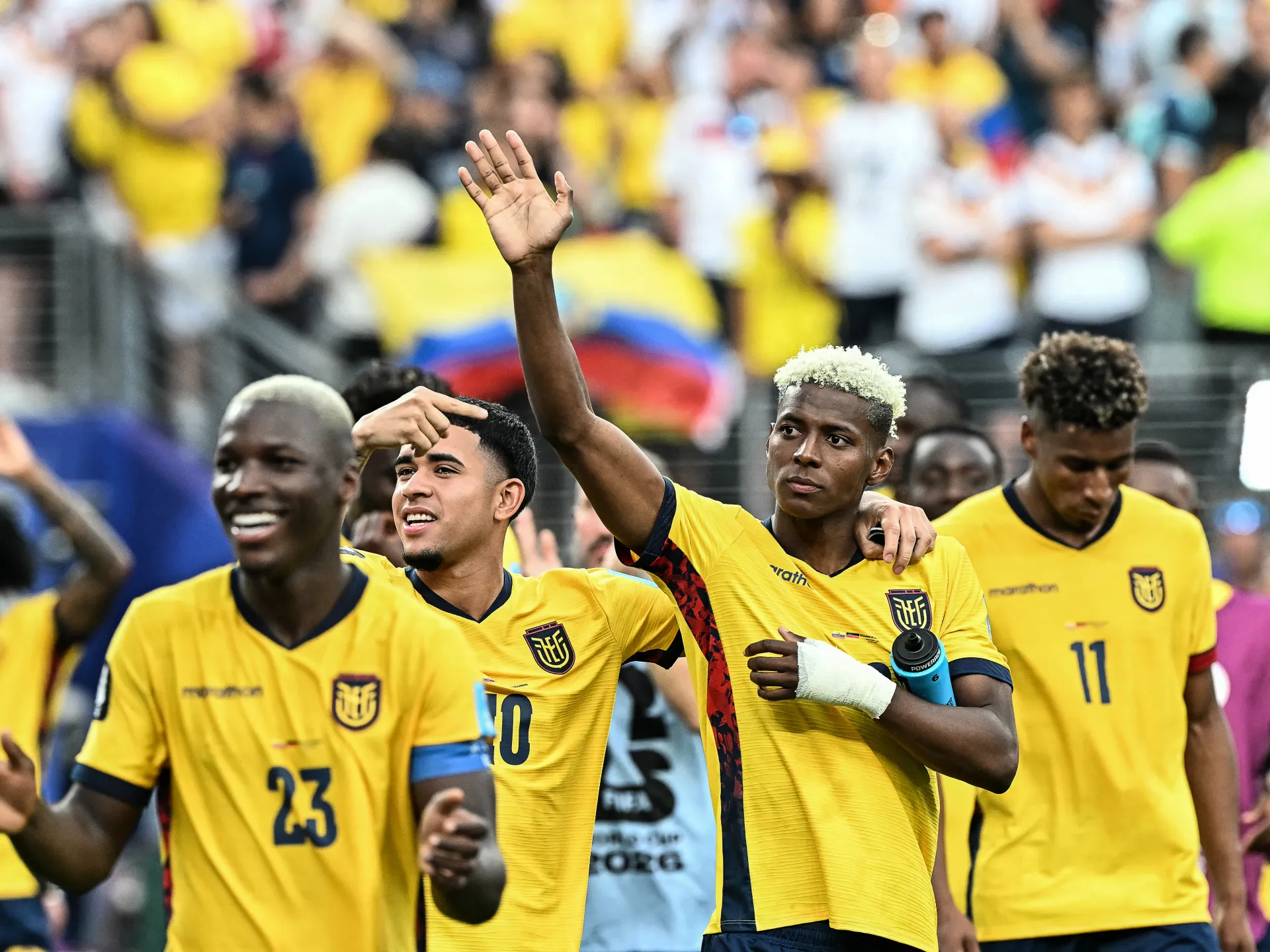
Mexican fans gathered outside Ecuador’s team hotel using loudspeakers, horns and motorcycles to disturb their rest, ahead of their round of 32 knockout match. The Ecuadorian soccer federation said it has filed a formal complaint with organizers.
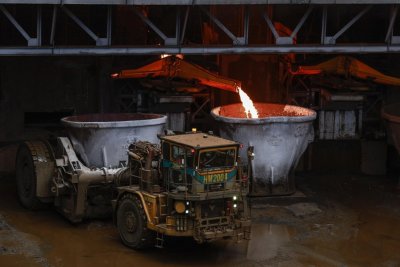
Dump trucks transport nickel slag at a nickel processing plant operated by PT Vale Indonesia in Sorowako, South Sulawesi, Indonesia. Photo by MAST IRHAM / EPA
June 30 (Asia Today) — South Korean battery materials producer EcoPro Group is expanding its investment in an Indonesian nickel smelter to more than double its access to the critical mineral used in electric vehicle batteries.
EcoPro and its subsidiary EcoPro BM plan to increase their combined stake in the Bahodopi Nickel Smelting Indonesia project to 39%, becoming major shareholders and taking a leading role in its development. The smelter is under construction at the International Green Industrial Park on the Indonesian island of Sulawesi.
The total investment is estimated at about 1.5 trillion won, or $967 million, based on an exchange rate of 1,550.77 won per dollar.
EcoPro completed the first phase of its Indonesian investment over the past four years, securing rights to about 29,000 metric tons of nickel. Once the second phase is completed, the group expects its total nickel supply rights to reach about 65,000 metric tons.
The group also plans to increase the BNSI smelter’s annual production capacity from the originally planned 66,000 metric tons to 90,000 metric tons. EcoPro said that would be enough nickel for batteries used in about 2 million electric vehicles.
The investment is part of EcoPro’s effort to secure raw materials directly and reduce the cost of nickel-rich cathode materials used in nickel-cobalt-manganese batteries.
EcoPro said it intends to establish an integrated supply chain covering nickel, precursors and cathode materials. The company said the structure is designed to meet U.S. requirements limiting reliance on prohibited foreign entities in clean-energy supply chains. U.S. tax rules restrict access to certain clean-energy credits when components or critical minerals receive material assistance from such entities.
EcoPro expects greater control over raw-material procurement to improve its cost competitiveness and strengthen its ability to win orders from global battery-cell manufacturers and automakers.
EcoPro BM will finance the investments through a 1.2 trillion won, or about $774 million, rights offering. Its board approved the issuance of 9,900,990 new common shares Tuesday.
Of the proceeds, 915 billion won, or about $590 million, will be used to acquire the BNSI stake and complete remaining investments in EcoPro BM’s Hungarian subsidiary.
An additional 135 billion won, or about $87 million, will be used as operating capital, including purchases of raw materials. The remaining 150 billion won, or about $97 million, will finance production facilities.
EcoPro, the group’s holding company, plans to subscribe for more than 120% of the shares allocated to it. The company said the decision demonstrated confidence in the Indonesian mineral business and a commitment to minimizing concerns about the dilution of shareholder value.
“This rights offering is a strategic decision to establish an early position in the global nickel market and improve our competitiveness in nickel-cobalt-manganese cathode materials,” EcoPro BM Chief Executive Officer Choi Moon-ho said.
“By combining EcoPro’s high-nickel technology with a decisive cost advantage, we will work to secure leadership in the global market for nickel-based batteries,” Choi said. EcoPro BM’s official English-language materials identify its chief executive as Choi Moon-ho.
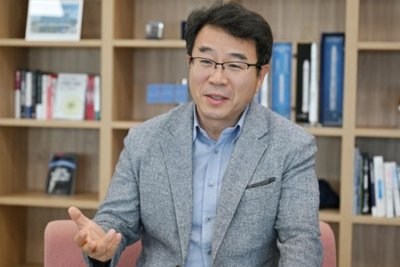
Hyunjoon Kwon, director general for aerospace policy at the Korea AeroSpace Administration, speaks during an interview with Asia Today on Friday. Photo by Asia Today
June 30 (Asia Today) — South Korea is seeking to connect the growth of its commercial space industry with stronger national security capabilities as emerging technologies blur the boundaries between the private and public sectors.
The expansion of security concerns into space, drones and artificial intelligence has increased the importance of the Korea AeroSpace Administration, which is responsible for developing the country’s aerospace industry.
The agency is working with the National Intelligence Service and other government organizations on satellite cybersecurity and broader aerospace security policies.
Hyunjoon Kwon, director general for aerospace policy at the agency, told Asia Today in an interview Friday that space is no longer solely a scientific field.
“Space has moved beyond science to become a domain that can affect both security and industry,” Kwon said. “We need a mutually reinforcing relationship between the market and the public sector.”
Asked how the global space security environment is changing, Kwon said competition is no longer limited to the number of satellites a country possesses.
“The key question is how reliably a country can use and protect satellite communications and satellite imagery,” he said.
Space-based services have been used directly in military operations and critical national infrastructure since the start of the Russia-Ukraine war, Kwon said.
Countries also face increasingly complex threats, including GPS jamming and spoofing, disruptions to satellite communications, cyberattacks and the collision or uncontrolled reentry of objects in space.
Kwon said the agency is developing a national space situational awareness system to strengthen South Korea’s ability to monitor and predict space-related risks.
It is also preparing a cybersecurity response framework to protect space-based services used by the private sector, government and military.
South Korea has rapidly accumulated capabilities in launch vehicles, satellite development and satellite data applications, Kwon said. Its military space capabilities have also expanded.
However, the country still needs to strengthen its domestic production of critical materials, components and software, he said.
Other areas requiring improvement include space situational awareness, satellite cybersecurity and the creation of a sustainable commercial market for space services.
“That is why the growth of private space companies and greater independence in core technologies are becoming even more important,” Kwon said.
Cooperation among the private sector, government and military has entered a stage of institutional development since the establishment of the Korea AeroSpace Administration, he said.
The cooperative channels include a future defense science and technology policy council with the Defense Ministry, an aerospace project memorandum with the Defense Acquisition Program Administration and a satellite cybersecurity consultative body with the National Intelligence Service.
Kwon said the cooperation now extends beyond individual projects to include policy, technology and security.
The agency is seeking to create a structure in which private-sector technology is connected to government and national security requirements, while public and defense demand supports the growth of commercial companies.
Kwon also discussed the government’s recently announced strategy to foster innovative companies in emerging security industries.
“Aerospace is a strategic field that influences both security and industry, extending beyond the boundaries of science and technology,” he said.
Satellite communications, satellite data, unmanned aircraft and space materials and components have significant commercial growth potential while also meeting direct security needs, Kwon said.
The agency plans to focus on establishing a cycle in which the creation of new industries strengthens national security capabilities and security demand encourages further technological innovation.
The plans include developing core technologies for a space data center under the K-Moonshot initiative and building a national platform that will make satellite information available for broader use.
The agency also plans to develop artificial intelligence-powered unmanned aircraft and electric or hybrid vertical takeoff and landing aircraft.
Mexican football fans did their best to give Ecuador a sleepless night ahead of their World Cup match in the round of 32 in Mexico City.
From midnight until the early hours of the morning, dozens of fans gathered outside the Westin Hotel in Santa Fe, an upscale area on the outskirts of the capital, using loudspeakers, horns, and motorcycles to disturb the visiting team’s rest.
Recommended Stories
list of 4 itemsend of list
Team hotel serenades are a deeply entrenched, highly polarising tradition in Latin American football. While they began as a passionate way for fans to rally behind the home team, they have increasingly evolved into a psychological weapon designed to rob visiting players of a good night’s sleep.
After the incidents in Mexico City, the Ecuadorian football federation said on Tuesday it had filed a formal complaint with organisers.
“Such conduct stands in stark contrast to the principles of fair play, equity, and unity that a World Cup should embody,” the federation, known as FEF, said in a statement.
“The FEF respectfully calls upon the competent authorities to pay greater attention to these events and to adopt the necessary measures to safeguard the safety of our players, coaching staff, and fans.”
The fan ambush, organised on social media, added to a chaotic arrival for Ecuador. The disruption capped off a gruelling logistical nightmare for the South American team, which had deliberately planned a last-minute Monday night arrival to mitigate the effects of Mexico City’s 2,200-metre (7,300-foot) altitude.
To combat the physiological toll of thin air, sports scientists generally recommend two contrasting approaches: an extended acclimatisation period of at least two weeks, or the “fly-in, fly-out” method — arriving as close to kick-off as possible before acute symptoms set in.
That is the route that teams from the major sports leagues in the United States use when they come to play in Mexico City.
But Ecuador’s journey from Columbus, Ohio, was plagued by delays from the start. Ecuador coach Sebastián Beccacece complained that their flight was delayed by more than three hours, though he did not specify whether he had factored in the two-hour time difference between the cities.
“A flight delay, then the transfer to the hotel — it ended up being a nine-hour journey; we took three hours longer than scheduled,” Beccacece said. “But the team is doing well and is excited — obviously facing an opponent that posted good results in the group stage.”
Additionally, the team landed at Felipe Ángeles International Airport, located 65 kilometres from their hotel. The squad was forced to navigate the trek to Santa Fe through Mexico City’s notoriously heavy traffic, which was further paralysed on Monday by heavy night rain.
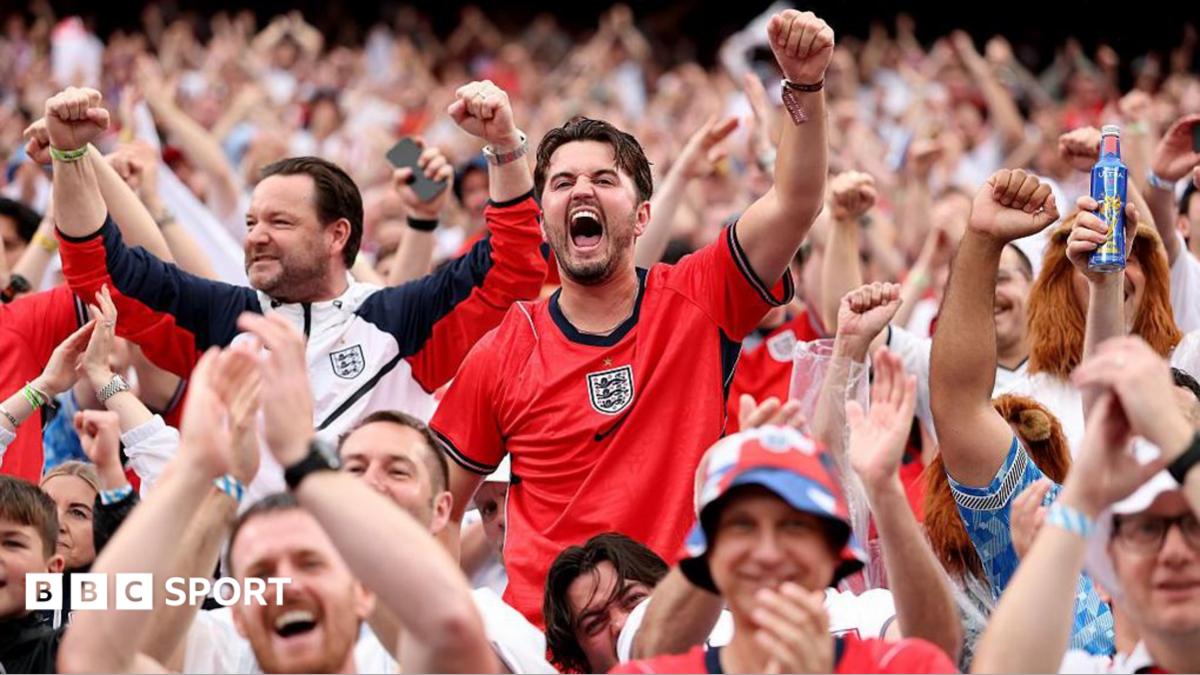
England supporters in the United States have been praised by police for their “excellent” behaviour during the group stage of the World Cup, but domestic incidents are up on recent tournaments.
The UK Football Policing Unit (UKFPU) says there have been no reports of any violence or disorder involving England supporters in America, with just two of five arrests coming at a World Cup match.
But there have been 463 football-related incidents in England and Wales – significantly higher than this stage in Euro 2024 (304) and the 2022 World Cup (291).
The behaviour of Scotland fans in the States has also been praised, though their figures are not included in this report.
“The behaviour of England fans – and of course the Scots – has been excellent throughout the group stages of the World Cup,” chief constable Mark Roberts, head of the UKFPU, said.
“In our pre-briefs we stressed to local law enforcement the positive record of our fans at recent World Cups, and it is great to see that continuing and the fans being policed according to their behaviour, not an outdated reputation.”
All five England supporters arrested have been released by American authorities and referred to the UKFPU.
Of the 463 football-related incidents, 162 have been in licensed premises, while 109 are classed as domestic incidents, often involving family members over the age of 16.
Eighty-eight people have been arrested, which is again up on Euro 2024 (66) and the 2022 World Cup (56).
Many football-related arrests in the UK come under the Public Order Act, including a wide variety of anti-social behaviour, such as swearing, shouting, intimidation and violence.
Before the World Cup began, 1,958 football supporters subject to football banning orders were required to surrender their passports to stop them heading to the World Cup.
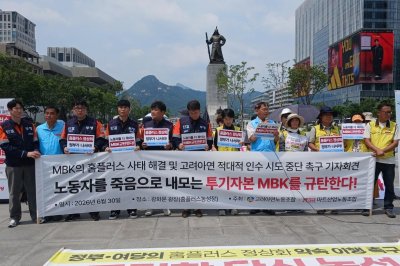
Union members of Korea Zinc and Home Plus hold a joint press conference in Seoul on Tuesday to criticize MBK Partners’ management of Home Plus and its takeover bid for Korea Zinc. Photo by Tae-gyu Kim/UPI
SEOUL, June 30 (UPI) — The labor unions of Home Plus and Korea Zinc on Tuesday blasted MBK Partners, one of Asia’s leading private equity funds, over its troubled ownership of the former and the attempt to take over the latter.
“Although we are workers from different workplaces, we are all suffering in the face of the same capital greed. Korea Zinc and Home Plus are no different,” Home Plus union leader Ahn Soo-yong told a joint press conference in Seoul.
“Home Plus has now entered rehabilitation proceedings and stands on the brink of liquidation. But throughout this entire process, MBK, which should be held accountable, is evading responsibility,” she added.
MBK Partners acquired Home Plus from Tesco in a $5 billion deal in 2015. However, the discount chain entered a court-led rehabilitation program in early 2025 after years of mounting losses. MBK tried to sell Home Plus for more than a year with little success.
Against this backdrop, Home Plus has steadily reduced its store network in recent years. The retailer operated more than 140 hypermarkets across the country at its peak in the mid-2010s, but now has just 67 remaining.
“The hardship facing Home Plus is by no means a problem unique to Home Plus,” Korea Zinc union head Lee Eun-seon said.
“If MBK succeeds in taking control of Korea Zinc, the job insecurity and workplace destruction now being experienced by Home Plus workers will inevitably become the grim reality for Korea Zinc employees as well,” he said.
Korea Zinc has been locked in a prolonged control battle with MBK, which teamed up with zinc manufacturer Young Poong early last year to pursue a takeover bid. The two sides clashed at shareholders’ meetings in 2025 and 2026 in a series of heated proxy battles.
The share price of Korea Zinc fell 4% on the Seoul bourse on Tuesday, while the broad KOSPI rose 0.97%. Neither MBK nor Home Plus is publicly listed.
This picturesque English gem boasts rich history, stunning stone houses and scenic nature walks that keep drawing visitors from around the globe
The village is located in Wiltshire and boasts Somerset as its neighbour(Image: Getty)
When it comes to getting away, sometimes a staycation is the ideal choice. Not only do you avoid the hassle of travelling to and from the airport, sidestep delays and save a small fortune on parking fees, but the UK really is quite remarkable.
One English village has previously been named among the finest in the world. In 2021, FBM Holidays named Castle Combe in Wiltshire as the prettiest place in the UK.
Meanwhile, property experts handpicked the location as part of The Daily Mail’s list of 24 villages to live in 2025.
Castle Combe boasts a fascinating history and is utterly charming thanks to its stone cottages and scenic countryside walks.
The village itself sits on the borders of Gloucestershire, Berkshire, Dorset to the south and Somerset, so you can expect to be immersed in breathtaking scenery.
Castle Combe is not only beautiful but has also appeared in numerous films, including The Wolf Man, Stardust and War Horse. Not to mention it featured in the original Dr Doolittle film and featured in popular TV show Downton Abbey.
Things to do in Castle Combe, Wiltshire
St Andrew’s church is among the must-see attractions, with the building dating back to the 13th century.
It features a faceless clock which ranks as one of the oldest functioning clocks in Britain. The church holds a Google rating of 4.6 online, with one visitor commenting: “Very picturesque church from the outside. We had a wander around inside.
“It’s free to get in but with a suggested £1 donation which is reasonable. There’s a faceless clock inside which I’ve never seen before!”
Another wrote: “Was not able to go inside but nice to walk around outside. A typical English village church in a very nice setting.”
A third simply commented: “St Andrews Church is set in the beautiful village of Castle Combe.”
Another historic landmark in Castle Combe is The Market Cross, which dates back to the 14th century.
Visitors flocking to the site have awarded it an impressive 4.4 Google rating, with one traveller writing: “Nice historical place. Really preserved well and very scenic.”
Another commented: “Great when you finally get to take a photo with no people sitting all around it.”
A third said: “Scenic, dreamy, beautiful place, almost hidden away. We had a great experience, visited on a weekday, it was decently crowded. It could be difficult to find a parking spot especially, on weekends. Nevertheless, I recommend this place.”
Zulu community members in Durban participate in a national day of protest on Tuesday demanding the repatriation of undocumented immigrants to their home countries with marches also held in Johannesburg and other major cities. Photo by Stringer/EPA
June 30 (UPI) — Security forces across South Africa were braced Tuesday for demonstrations coinciding with anti-immigrant and vigilante groups’ self-declared deadline for undocumented migrants to leave the country, amid fears that the protests could turn violent.
Tuesday’s events follow weeks of rallies that have been blamed for inciting violence against migrants in the country, both illegally and legally, by people who believe they are taking jobs from South Africans, carrying out criminal offenses and overburdening schools, hospitals and other essential services.
March and March, one of the anti-migrant organizations, had used the threat of the protests to try to force the “immediate massive deportation of all illegal foreigners currently in the country” by June 30.
However, President Cyril Ramaphosa’s direct appeals for cool heads and for demonstrators not to engage in “intimidation, threats or ultimatums” appeared to have been heard with the Police Ministry reporting that, apart from some looting, the protests went off mostly without incident.
In Johannesburg, five people were arrested for allegedly looting a foreign-owned store in Soweto township while windows of apartments in Yeoville, home to many migrants from other African countries, were smashed by brick-hurling protesters, police said.
Five people were also arrested in Hammarsdale in KwaZulu-Natal province after they allegedly broke into a shop there.
Ramaphosa met leaders of the protests on Monday, ordering them not to resort to violence while acknowledging that the immigration system needed fixing.
“Some foreign nationals who live in South Africa are here lawfully. They work, study, raise families, invest in our economy and contribute positively to our society. They too are entitled to the protection of our laws and our Constitution. The right to protest and freedom of expression does not allow people to threaten or intimidate others, or to engage in acts of vandalism or violence,” he wrote in his weekly blog.
Ramaphosa’s intervention came too late for many immigrants, frightened into leaving by the violence and anti-migrant sentiment in the country.
At least three foreign nationals have been killed in violent attacks in the past month: two Mozambicans when a mob razed a shanty settlement in the Western Cape and a Malawian man at another encampment near Durban during a march against undocumented immigrants that forced hundreds of migrants to flee to the safety of churches and mosques.
Nigeria evacuated 269 of its citizens on Monday — taking the number it has flown home to date to about 600 — with more flights planned over the next few days.
Gardener Kauga Nyirenda told CNN two men turned up at his home threatening to kill him if he didn’t go back to his native Malawi.
“They asked me: ‘When are you going to leave the country? We want to fix our country. If you don’t leave now, you’re going to leave in a coffin because we don’t need anyone after 30th of June,'” said Nyirenda.
In the run-up to Tuesday, about 25,000 others have been sent back to their home countries, mostly elsewhere in Africa, with about 50,000 people detained as illegal migrants since January, according to government agencies, with many of those in temporary camps for their own safety, pending repatriation processing.
Malawi has repatriated about 7,000 of its citizens. Ghana, Mozambique and Zimbabwe have also been laying on air and road repatriation transport for their nationals.
Official figures show there are at least three million documented foreign nationals in South Africa.
Troops in landing craft approach Omaha Beach on D-Day in Normandy, France, on June 6, 1944. D-Day was the largest seaborne invasion in history and turned the tide of World War II. Photo by UPI | License Photo
June 30 (UPI) — Britain is challenging Apple and Google for not allowing developers to pull users away from their app stores.
The Competition and Markets Authority said Tuesday that Google and Apple have an “effective duopoly” on mobile phones by not allowing developers to engage with users or make purchases outside of the app stores.
The CMA said at least 90% of mobile devices in the United Kingdom are running on Apple or Google platforms. It said allowing “steering” away from the platforms by developers would increase market competition.
Both companies now charge a commission of up to 30% on in-app purchases. Google said it has already made the changes.
CMA Executive Director Will Hayter said choice is important for competition and consumers.
“We think it is important to give both app developers and users more choice about how they communicate and how they transact,” Hayter said in a statement. “This is not only because choice is inherently valuable but also because we see this as the best way to introduce some competitive pressure in a vital part of the mobile ecosystem that is otherwise sorely lacking such pressure.”
Hayter said the CMA isn’t trying to take away fees altogether.
“While it is only fair for Apple and Google to be compensated for the services they provide, any fees they charge must be justified through a robust, evidence-led framework involving due reference to both cost and value,” he said.
Apple responded that steering will make users less protected from scams.
“When users are directed away from Apple’s trusted payment infrastructure, they lose the protections they rely on Apple to provide. We will continue to make our concerns clear in our ongoing dialogue with the CMA,” an Apple spokesperson told The Guardian.
Troops in landing craft approach Omaha Beach on D-Day in Normandy, France, on June 6, 1944. D-Day was the largest seaborne invasion in history and turned the tide of World War II. Photo by UPI | License Photo
The Round of 32 has already delivered shocks, shootouts and scenes that will live long in World Cup memory.
After Paraguay stunned Germany and Morocco sent the Netherlands home on penalties, Tuesday brings three more games, with France, Norway and co-hosts Mexico all looking to avoid becoming the next big casualty.
Recommended Stories
list of 4 itemsend of list
Ivory Coast face Norway, France meet Sweden and Mexico take on Ecuador as three more places in the last 16 are decided.
Here is what we know:
What is Tuesday’s schedule?
Ivory Coast vs Norway (noon/17:00 GMT) at Dallas Stadium, Texas, in the US
France vs Sweden (5pm/21:00 GMT) at New York/New Jersey Stadium in the US
Mexico vs Ecuador (7pm/02:00 GMT on Wednesday) at Mexico City Stadium in Mexico
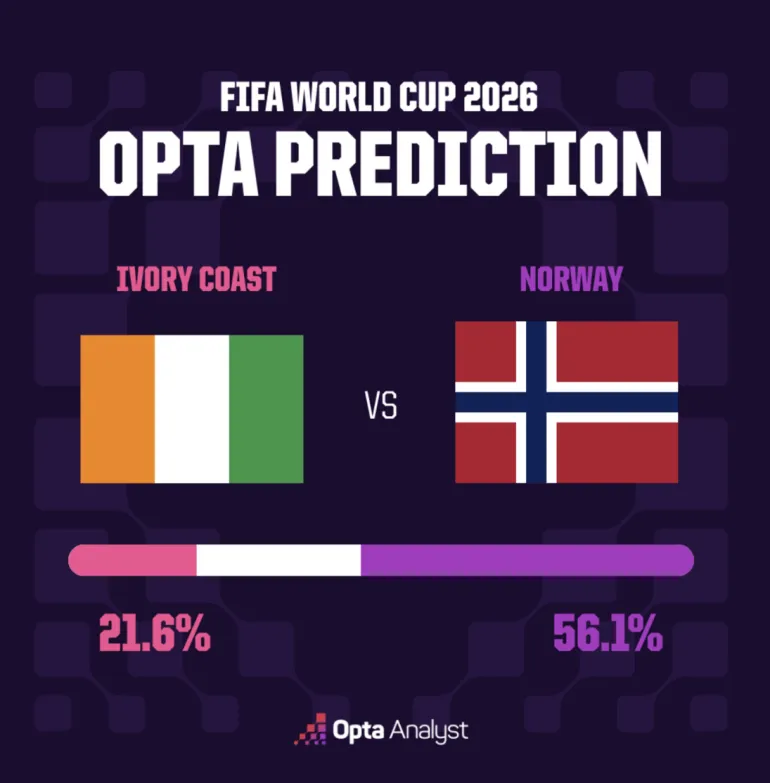
Ivory Coast have found European opposition difficult at the World Cup while Norway have traditionally fared well against African teams. They have lost only two of their 19 meetings with CAF nations across all competitions.
The Opta supercomputer calculates Norway as the clear favourites to progress.
Across 25,000 pre-match simulations, Norway won in normal time 56.1 percent of the time, while Ivory Coast claimed victory in 21.6 percent. A draw after 90 minutes, sending the tie to extra time, occurred in 22.3 percent of simulations.
Norway are also strongly backed to reach the Round of 16 and equal their best-ever World Cup finish, while Ivory Coast will need to produce one of the tournament’s biggest upsets to keep their campaign alive.
What is the prediction for France vs Sweden?
France and Sweden are familiar opponents, having met 23 times across all competitions. France hold the advantage with 12 wins to Sweden’s six, while five matches have ended level.
Despite that long history, this will be their first-ever meeting at a FIFA World Cup.
The Opta supercomputer gives France a commanding edge heading into the Round of 32.
Across 25,000 pre-match simulations, France won in normal time 75.1 percent of the time, underlining their status as one of the tournament favourites. Sweden were victorious in just 9.5 percent of simulations, while 15.4 percent of matches were level after 90 minutes and required extra time or penalties.
What is the prediction for Mexico vs Ecuador?
Mexico and Ecuador have met only once before at the FIFA World Cup, with El Tri claiming a 2-1 victory during the group stage of the 2002 tournament.
Recent meetings have been far more evenly matched. The sides are unbeaten against each other in their last three encounters, with all three ending in draws, raising the possibility that this Round of 32 tie could be decided beyond 90 minutes.
The Opta supercomputer gives the tournament co-hosts the edge but expects a competitive contest.
Across 25,000 pre-match simulations, Mexico won in normal time 47.1 percent of the time, compared with 23.7 percent for Ecuador. A draw after 90 minutes occurred in 29.2 percent of simulations, making extra time a realistic possibility.
Factoring in extra time and penalties, Mexico’s chances of reaching the Round of 16 rise to 61 percent, while Ecuador are given a 38.9 percent probability of progressing.
Which teams have advanced to the Round of 16 and who has been eliminated?
The tournament has now moved into the Round of 32. So far, these teams have advanced to the Round of 16:
Canada (defeated South Africa 1-0)
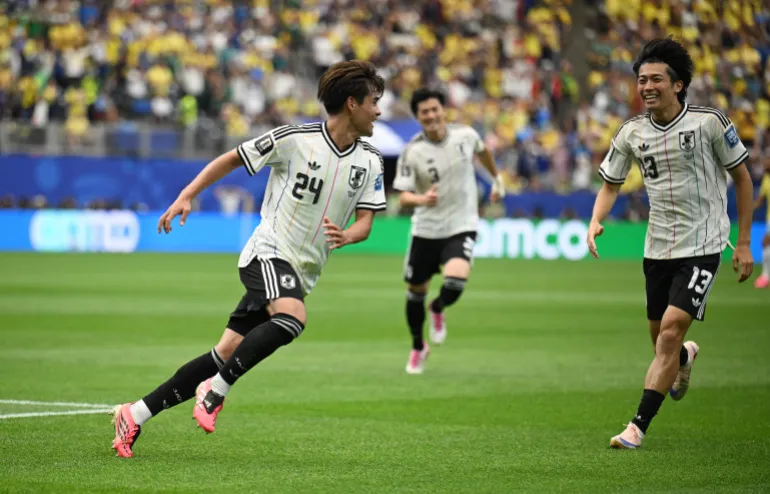
Brazil (defeated Japan 2-1)
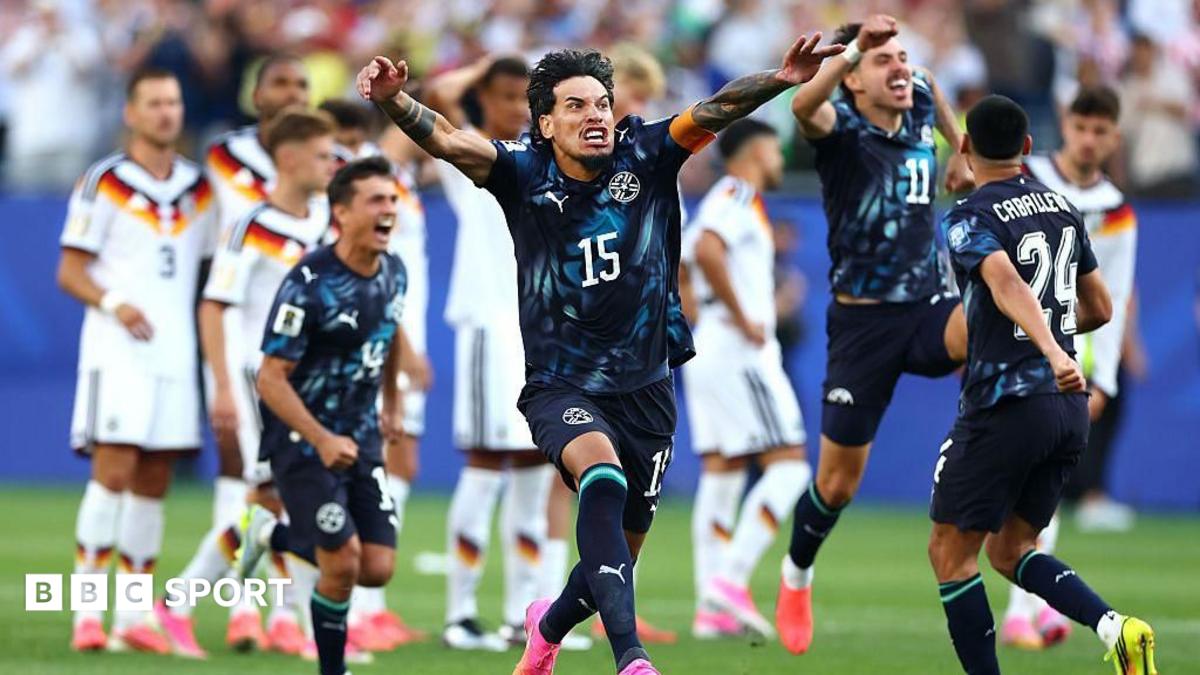
Paraguay (defeated Germany on penalties after a 1-1 draw)
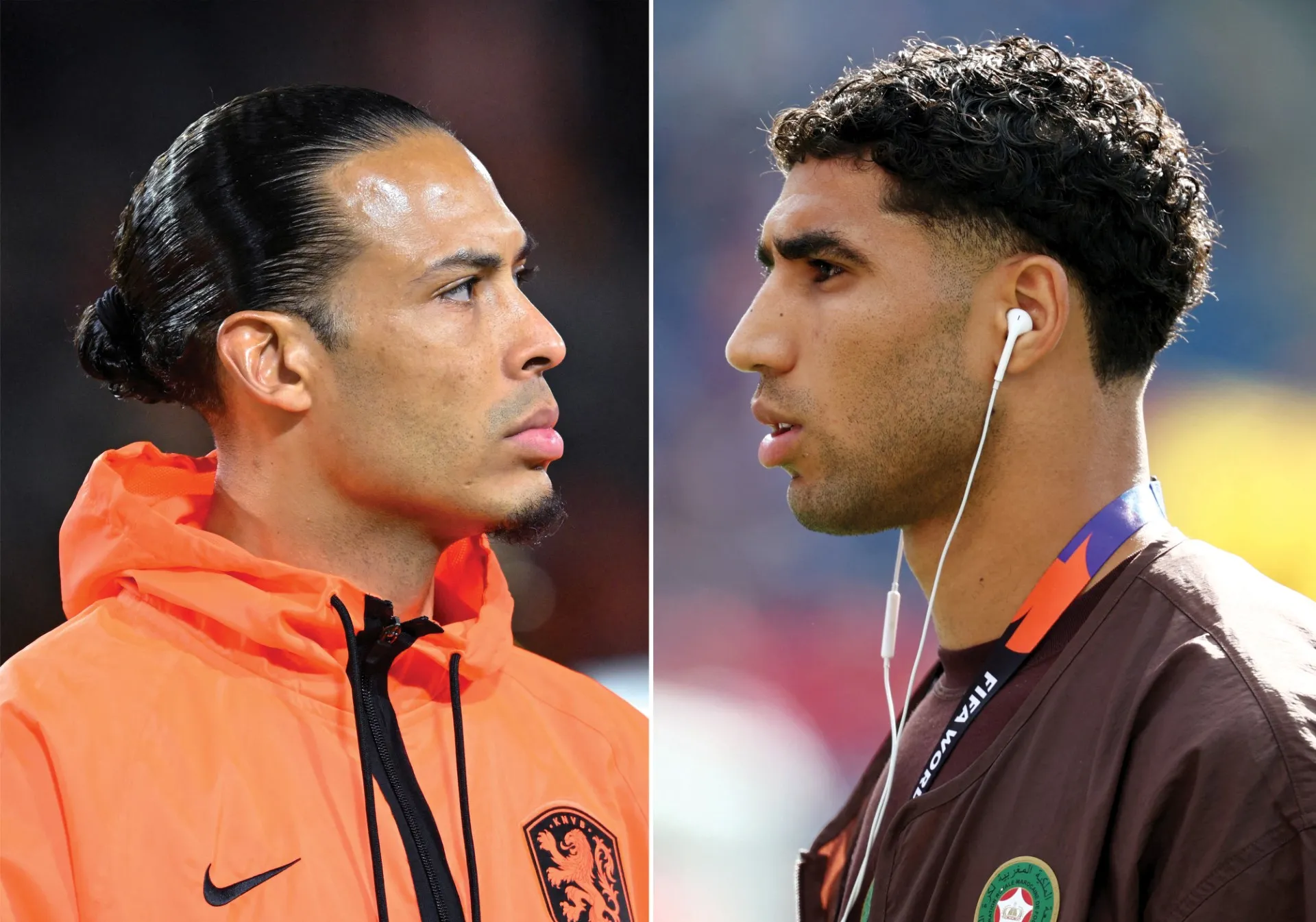
Morocco (defeated the Netherlands on penalties after a 1-1 draw)
What else is happening?
Morocco stuns Netherlands on penalties
Morocco beat the Netherlands 3-2 in a penalty shootout to reach the FIFA World Cup last 16 after a dramatic 1-1 draw following extra time in Monterrey.
Goalkeeper Yassine Bounou was the hero, saving Crysencio Summerville’s penalty before Ismael Saibari fired home the decisive spot-kick to send Morocco through.
Morocco will now face Canada in the Round of 16 in Houston on Saturday.
The match appeared to be heading for a Dutch victory after Cody Gakpo, playing just days after he and his partner announced the loss of their unborn child, put the Netherlands ahead midway through the second half.
Gakpo’s emotional World Cup goal
Cody Gakpo broke down in tears after scoring for the Netherlands against Morocco, just two days after he and his partner announced the loss of their unborn child.
The forward chose to remain with the squad despite the tragedy and received a standing ovation from Dutch fans when he was substituted in extra time.
Netherlands’ Cody Gakpo, kneeling, is congratulated by teammates after scoring his team’s first goal during the World Cup round of 32 soccer match between the Netherlands and Morocco [Ricardo Mazalan/AP]
Saibari celebrates with his mum
A heartwarming moment goes viral as Ismael Saibari, who scored the decisive penalty kick against Netherlands, celebrates Morocco’s big win with his mother on the pitch.
Germany suffers shock early exit
Germany’s campaign came to a stunning end on Monday as Paraguay pulled off one of the greatest upsets in tournament history, winning a dramatic Round of 32 tie on penalties.
Paraguay took a deserved 1-0 lead into half-time after Julio Enciso headed home from Matias Galarza’s cross in the 42nd minute.
Germany responded eight minutes into the second half when Kai Havertz glanced in Florian Wirtz’s cross to level the match at 1-1.
With neither side able to find a winner in extra time, the tie went to penalties. Havertz missed Germany’s opening spot-kick and the Germans failed to convert three of their five attempts, allowing Paraguay to seal a famous 4-3 shootout victory and book their place in the last 16.
Paraguay declares national holiday after stunning Germany
Paraguay President Santiago Pena declared Tuesday a national holiday after the country’s shock penalty shootout victory over Germany secured a place in the FIFA World Cup last 16.
Paraguay stunned the four-time world champions 4-3 on penalties after a 1-1 draw following extra time on Monday, pulling off one of the biggest upsets in World Cup history.
Paraguay became the second South American nation to declare a national holiday after a surprise World Cup victory over Germany. Ecuador was the first, doing so after its 2-1 group-stage win over the four-time champions.
Translation: Giant Paraguay! Today, an entire country celebrates. It celebrates the victory of a team that represents the deepest part of our identity: the grit, the faith, and the strength of a people who never give up. Thank you, Albirroja, for gifting us this immense joy and for once again uniting millions of Paraguayans under the same flag. Decree No. 6280: the best things are worth the wait. Let’s go Paraguay!
US homeland security chief celebrates Iran’s exit
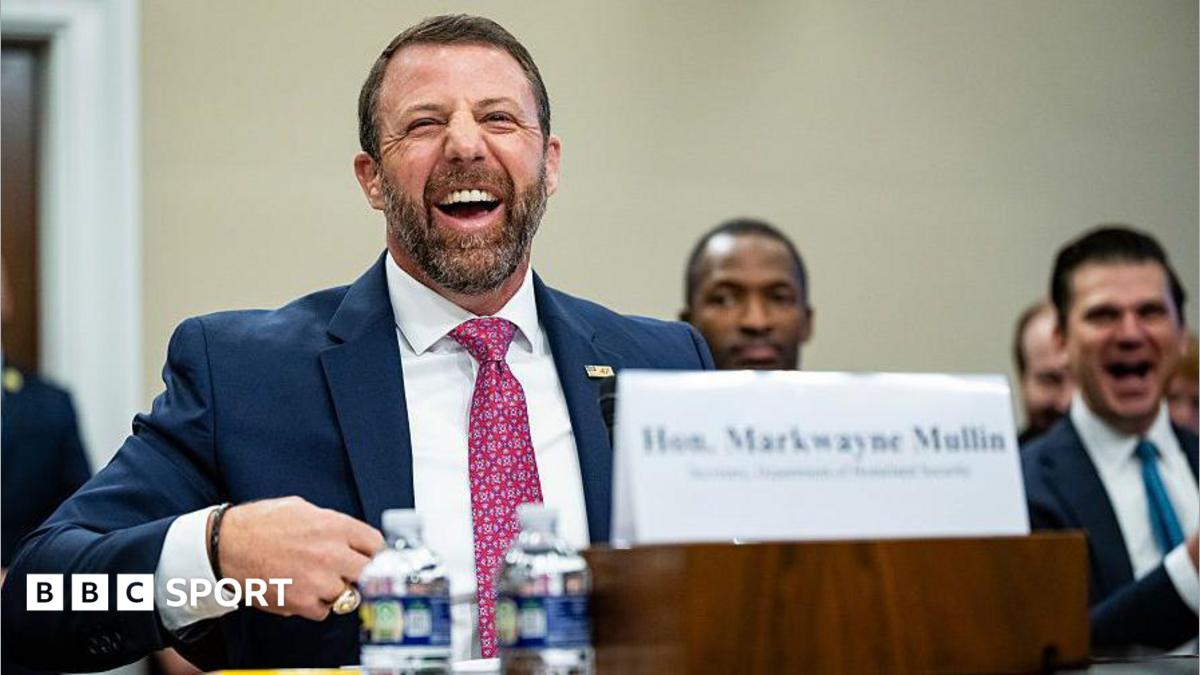
US Homeland Security Secretary Markwayne Mullin said he “danced a happy dance” after Iran were eliminated from the World Cup.
Iran missed out on the Round of 32 on goal difference after a stoppage-time winner against Egypt was ruled out for offside, with their elimination confirmed when Algeria and Austria drew 3-3 on Sunday.
Speaking during a World Cup briefing on Monday, Mullin said he was “glad they’re done, and they’re not coming back”, adding he was happy when Iran’s visas were revoked and the team left US soil. He also said Iran had required more attention from US authorities than any other team at the tournament.
The comments add to Mullin’s public dispute with the Iranian team. Earlier in the tournament, he alleged members of Iran’s travelling delegation had attempted to bring someone with ties to the Islamic Revolutionary Guard Corps into the United States, an accusation the Iran Football Federation dismissed as “false, fabricated and entirely baseless.”
A promotional poster announces the 36th Gospel Unification Conference, scheduled from 1:30 p.m. Monday through noon Friday at the Osanri Choi Jasil Memorial Fasting Prayer Mountain in Paju, Gyeonggi Province. Capture from Esther Prayer Movement website.
June 29 (Asia Today) — The Esther Prayer Movement began a five-day fasting prayer conference Monday in Paju, Gyeonggi Province, to pray for the salvation of North Koreans and what organizers call “gospel unification.”
The 36th Gospel Unification Conference, also called the Fasting Prayer Assembly for North Korea’s Salvation, will continue through Friday at the Osanri Choi Jasil Memorial Fasting Prayer Mountain.
Organizers use “gospel unification” to refer to reunification accompanied by religious freedom and the spread of Christianity in North Korea.
The interdenominational gathering brings Christians together to pray for what the organization describes as “a holy South Korea,” the salvation of North Koreans and gospel-based reunification.
The fasting prayer gathering began in January 2009 and has since been held twice a year, during the second week of January and the first week of July. The conferences run for five days and are livestreamed on YouTube for viewers in South Korea and abroad.
At its 35th conference in January, the organization announced a 40-day fasting prayer campaign for the country during 2026.
About 600 pastors and church members registered for the campaign, which is continuing throughout the year, organizers said. Members also participated in a 150-day special overnight prayer campaign from Jan. 17 through June 14.
The organization said the latest gathering is intended to draw attention to North Koreans living under the rule of the Kim family.
It said North Koreans are subjected to the state-sponsored deification of the ruling family and compelled to show reverence to statues and portraits of former leaders Kim Il Sung and Kim Jong Il.
Lee Yong-hee, head of the Esther Prayer Movement, cited Hebrews 13:3, which calls on Christians to remember prisoners and people who are mistreated.
He also cited 1 Timothy 5:8, which says believers should care for their relatives and immediate families.
“The Korean church should fulfill its responsibility toward fellow Koreans,” Lee said.
Lee said he had recently heard accounts that North Korean Christians who fasted and prayed during the gatherings experienced what they described as divine grace, including speaking in tongues.
“Let the underground church in North Korea, Korean churches overseas and churches around the world unite and do their utmost in fasting and prayer to bring forward the day of gospel unification,” Lee said.
He said Christians should make every effort if greater participation in fasting and prayer could hasten that day.
“I was so happy when we were able to pull their visas and said they could leave the US soil, and I might’ve sung a song or two or maybe even danced a happy dance.”
He added: “There wasn’t a single team that we had to spend more time dealing with than Iran.”
Iran were only permitted to enter the US the day before their first two matches and had to leave on the same day as the game, under the terms of their visas.
Those restrictions were eased for their final group game in Seattle, allowing them to arrive two days early, but they again had to return to Tijuana after Saturday’s match.
Iran coach Ghalenoei said that the US, co-hosts of the World Cup with Canada and Mexico, had “treated us very unfairly” and that his squad had been given “less than half” the training window it needed to prepare.
Iran captain Mehdi Taremi added: “This kind of tension undermines the joy of the World Cup. I felt the tension from the first moment we arrived.”
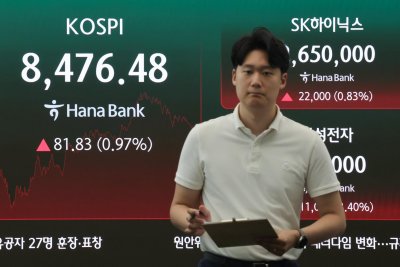
This photo, taken Tuesday, shows the trading room of Hana Bank in Seoul as South Korean stocks rose by almost one percent as investors watched for a resumption of U.S.-Iran talks. Photo by Yonhap
South Korean stocks ended nearly 1 percent higher Tuesday, led by gains in technology shares, as investors watched for a possible resumption of U.S.-Iran talks in Qatar aimed at easing tensions in the Strait of Hormuz. The Korean won weakened against the U.S. dollar.
The benchmark Korea Composite Stock Price Index (KOSPI) gained 81.83 points, or 0.97 percent, to close at 8,476.47.
Investor sentiment improved after the United States and Iran were set to resume talks in Qatar aimed at easing tensions in the Strait of Hormuz, alleviating concerns over a prolonged disruption to global oil supplies.
Overnight, Wall Street rebounded sharply as investors returned to tech stocks.
The Dow Jones Industrial Average gained 0.59 percent to close at a record high, while the Nasdaq composite jumped 2.07 percent and the S&P 500 advanced 1.18 percent.
Crude prices rose modestly as investors monitored implementation of the U.S.-Iran peace framework.
Trade volume was moderate at 444.61 million shares worth 41.08 trillion won (US$26.51 billion), with losers outnumbering losers 621 to 261
Institutions and individuals bought a net 2.93 trillion won and 833.45 billion won worth of shares, respectively, while foreigners sold a net 3.79 trillion won.
“Investors scooped up semiconductor shares following recent losses, while IT infrastructure and electricity stocks rose on hopes for major investment in semiconductor infrastructure in the southwestern region announced by the government and chipmakers,” said Lee Kyoung-min, an analyst at Daishin Securities.
Tech shares lifted the overall market.
Market bellwether Samsung Electronics rose 3.41 percent to 334,000 won, and chip giant SK hynix gained 0.84 percent to 1.65 million won. SK Square, the parent of SK hynix, advanced 3.48 percent to 1.69 million won.
Chip components maker Samsung Electro-Mechanics jumped 7.16 percent to 1.18 million won after announcing a 454 billion-won supply deal for multilayer ceramic capacitors (MLCCs) for artificial intelligence servers to a U.S.-based customer.
Battery shares retreated on profit-taking after sharp gains the previous session.
LG Energy Solution plunged 9.61 percent to 362,000 won, and its smaller rival Samsung SDI sank 4.88 percent to 487,000 won.
The Korean won was quoted at 1,549.4 won per U.S. dollar as of 3:30 p.m., down 4.2 won from the previous session.
Copyright (c) Yonhap News Agency prohibits its content from being redistributed or reprinted without consent, and forbids the content from being learned and used by artificial intelligence systems.
South American football expert Tim Vickery felt a typical Paraguayan spirit shone through on the day.
“Paraguay love adversity,” he said.
“If you’re looking for someone to relate to in this World Cup, look for Paraguay. That Welsh word ‘hwyl’, that grit and drive, when it gets difficult, that’s when they come alive.
“They’ve come through adversity to knock out a giant of European football. It’s not always pretty, they play within their limitations, but what drama, what a story.
“The objective in this tournament was to make Paraguay feel represented and they’ve done that in full.”
Paraguay now play either two-time champions France or Sweden iin Philadelphia on Saturday (22:00 BST).
Paraguay’s president Santiago Pena had already declared a public holiday after they had sealed World Cup qualification with a game to spare.
Now, with a place in the last 16 secured, attention turns to what he might have in store next for the celebrations.
Head coach Alfaro said he spoken to the president yesterday.
“He might declare another national holiday,” he joked.
“I want all of Paraguay to enjoy this. We may have our defects, but we have a heart that never gives up, and that’s what keeps us alive.”
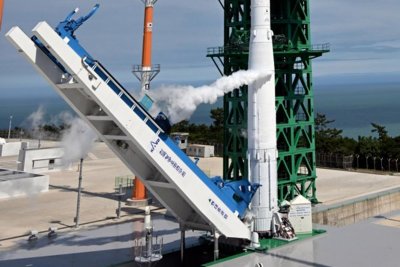
The erector is lowered from the Korea Space Launch Vehicle-II (KSLV-II), also called Nuri, on the launch pad at Naro Space Center in Goheung, South Jeolla Province, southwestern South Korea. Photo by YONHAP / EPA
June 29 (Asia Today) — South Korea’s space agency released guidelines Monday for private companies seeking to use the Naro Space Center, beginning preparations for the country’s first dedicated commercial launch facilities.
The Korea AeroSpace Administration said the guidelines outline a four-stage consultation and approval process, methods for calculating fees and safety and security requirements.
They also establish procedures and fee standards for private companies seeking to use testing facilities at the space center in Goheung, South Jeolla Province.
The government plans to open the commercial launch site in two stages, beginning in the third quarter of 2027 and expanding it in the first quarter of 2031.
The first stage will include a mobile launch platform, propellant supply systems and launch control equipment.
The second stage will add an assembly and testing facility where companies can prepare launch vehicles and test payloads.
The expanded infrastructure is expected to accommodate commercial launch vehicles and eventually support reusable launch systems.
Companies seeking to conduct a launch at Naro must apply at least four months before their proposed launch date.
They will then undergo four stages: preliminary consultation, review and authorization, launch operations and post-launch procedures.
The guidelines also establish a system for calculating usage fees based on each company’s launch requirements and the facilities and services it uses.
An agency official said the guidelines were prepared to help private companies use the center systematically before the commercial launch site opens and South Korea continues launches of its domestically developed Nuri rocket.
The official said the government will seek to simplify procedures based on companies’ needs and establish reasonable usage fees.
South Korean launch companies have relied on overseas spaceports and sea-based platforms because the country has lacked a land-based commercial launch site available to private operators.
Opening the Naro facilities could allow companies to conduct more of the development process in South Korea, from ground testing to commercial launches.
“Opening the Naro Space Center to private use goes beyond simply granting access to a government facility,” said Taeseog Oh, administrator of the Korea AeroSpace Administration.
“It is meaningful because it strengthens the support system for private companies in the space industry,” Oh said. “We will continue providing support so a private-sector-led commercial space ecosystem can take root in a stable manner.”
The Naro Space Center has primarily supported government launch programs, including the Naro rocket and Nuri, South Korea’s first domestically developed space launch vehicle.
Nuri’s fourth launch took place in November 2025, with private company Hanwha Aerospace assuming a larger role in rocket production and assembly under a government technology-transfer program.
The opening of the commercial facilities is expected to further shift South Korea’s space industry from a government-led model toward one in which private companies develop and operate launch services.
The guidelines released Monday are scheduled to be submitted to the Korea Aerospace Research Institute’s board for approval on July 8 before being registered as internal operating rules.
Gabriel Martinelli scored the winner late in injury time to give five-time champions Brazil a 2-1 win over Japan in the World Cup round of 32 in Houston.
Martinelli, who had come on as a second-half substitute, scored in the sixth minute of stoppage time as the match on Monday appeared to be heading to extra time.
Brazil will next face either the Ivory Coast or Norway on Sunday in East Rutherford, New Jersey, in the round of 16.
Casemiro had earlier equalised with a header in the 56th minute off an assist from Gabriel Magalhaes after just missing another chance two minutes earlier. The shot sailed just out of reach of the outstretched hand of Japan goalkeeper Zion Suzuki and into the net.
Kaishu Sano stole a misplaced pass in midfield before his right-footed shot from above the half-circle put Japan ahead after 29 minutes.
Kaishu Sano celebrates scoring the first goal [Annegret Hilse/Reuters]
Vinicius Junior, who has scored four goals so far in the tournament, had a chance to put Brazil on top in the 58th minute, but his shot from the left was deflected by goalkeeper Suzuki and went past the far post.
Brazil had two chances to even the score early in the second half before breaking through late on. First, Suzuki blocked a header from Bruno Guimaraes in the 52nd minute. Soon after, Casemiro’s header bounced off a defender’s head and Suzuki’s face.
Japan have never won a World Cup knockout match.
The win was Brazil’s 12th in 15 games against Japan. The teams have also played to two draws, while Japan got their first win in the series in a friendly in Tokyo in October.
This was a match-up between two countries with deep ties, Brazil being home to about 2.7 million Japanese descendants, which is the largest Japanese population outside of Japan.
Those ties extend to football, where Brazil superstar Zico moved to Japan in 1991 to play for Kashima Antlers and help build Japan’s professional football network. He coached the Japan national team from 2002–06, leading the team to the World Cup in 2006.
That team lost to Brazil 4-1 in the only previous meeting between the teams at the World Cup.
Brazil won Group C after a draw with Morocco and victories over Haiti and Scotland.
Monday’s victory came on the anniversary of their first World Cup championship in Sweden in 1958, when a 17-year-old Pele scored two goals in the final against the host country.
Japan reached the round of 32 as runner-up in Group F after draws with the Netherlands and Sweden and a win over Tunisia. The loss snaps a 10-game unbeaten streak dating back to a 2-0 defeat to the United States in September.
Brazil players celebrate after the match [Annegret Hilse/Reuters]
Failure in Group A brought fan anger to boiling point.
It started with a promising 2-1 win over the Czech Republic but then a team containing Son Heung-min, Lee Kang-in of Paris St-Germain and Bayern Munich’s Kim Min-jae lost 1-0 to Mexico. It left the Taeguk Warriors needing a point against South Africa to secure second.
Hong, who also led the team to a group-stage exit at the 2014 World Cup, left captain and talisman Son on the bench and the team slumped to defeat, with former Tottenham Hotspur defender Lee Young-pyo describing it on television as “the worst match by a Korean football team in the 21st century”.
After the game, a reporter asked Hong if there had been an outbreak of food poisoning in the camp or something similar, as there could be no explanation for such a performance. To make matters worse, South Korea had to wait more than three days in their training camp to discover whether they would squeeze through into the last 32 as one of the best third-placed finishers or go home.
The camp had not been an especially happy place as earlier in June, media personnel were overheard on camera mocking Son’s military record. The former Tottenham star won exemption from the country’s 21-month mandatory military service by being part of the team that took gold at the 2018 Asian Games. In return, the players boycotted domestic media duties for a number of days.
Son turns 34 in July and it would not be a surprise if he soon calls time on his international career. There will be no public return to South Korea as the welcome ceremony planned at Incheon International Airport was cancelled. The captain and the players have, however, escaped most of the public ire with the focus on how the sport is governed in the country.
Industry Minister Kim Jung-kwan announces semiconductor investment projects during an investment briefing meeting chaired by President Lee Jae Myung at Cheong Wa Dae in Seoul on Monday. Pool photo by Yonhap
South Korea plans to develop a new semiconductor production base in the country’s southwestern region through 800 trillion won (US$517.9 billion) in corporate investments that will create four memory chip fabrication plants, Industry Minister Kim Jung-kwan said Monday.
Kim unveiled the investment plan to transform the Gwangju and Jeolla regions into the nation’s second major semiconductor cluster, alongside the existing hub in the Seoul metropolitan area, during a national investment briefing chaired by President Lee Jae Myung at Cheong Wa Dae.
“Relying on a single production base in the Seoul metropolitan area is no longer sufficient to meet surging semiconductor demand,” Kim said, noting that constraints on power and water resources limit further expansion under existing plans.
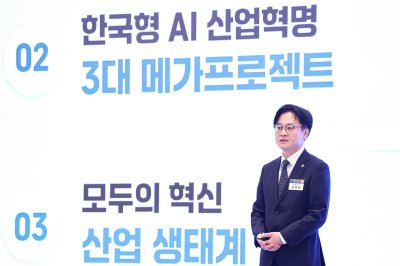
The semiconductor investment is part of the government’s “three mega projects” initiative, which calls for large-scale investments by chip giants Samsung Electronics Co. and SK hynix Inc., as well as other companies, in semiconductors, physical artificial intelligence (AI) and AI data centers.
Kim said the Chungcheong region will be developed into an advanced semiconductor packaging hub through 81 trillion won in investment to meet growing packaging demand as chip production expands, while the Daegu and North Gyeongsang regions will be fostered as innovation hubs for semiconductor materials, components and equipment.
He added that the government will help companies accelerate semiconductor investment by bringing forward the construction schedule for new fabrication plants by as much as 12 years, from the mid-to-late 2040s to the mid-2030s.
To support the expansion, the government vowed to streamline permits and construction procedures while investing in critical infrastructure, including electricity and industrial water supplies.
At the meeting, attended by Samsung Electronics Chairman Lee Jae-yong and SK Group Chairman Chey Tae-won, Kim outlined a government-industry plan to invest 30 trillion won over the next 15 years to support the entire semiconductor value chain, from research and development and chip design to testing and manufacturing.
The ambitious industrial blueprint is aimed at transforming the country from a global manufacturing powerhouse into a leader in the artificial intelligence era, anchoring its strategy on semiconductors, AI infrastructure and physical AI.
For the robotics sector, Kim said the government will foster an AI-powered robotics industry to strengthen South Korea’s manufacturing competitiveness in the intensifying global competition.
Kim warned that China has already begun mass-producing humanoid robots through regional manufacturing hubs, underscoring the need for South Korea to accelerate the commercialization and mass production of its own humanoid robots.
“We must accelerate the foundation for mass production,” Kim said, adding that the government plans to create early domestic demand by procuring humanoid robots for education, defense and disaster response.
The initiative aims to raise South Korea’s share of the global humanoid robot market from just 1 percent last year to 20 percent over the long term.
As the third pillar of the strategy, Minister of Science and ICT Bae Kyung-hoon outlined a plan to expand the nation’s AI data center infrastructure, emphasizing that ample data is important for South Korea to secure a leading position in the global physical AI race.
“The next three years will be the golden time to become No. 1 in the area of physical AI,” Bae said. “The government will lead the physical AI sector, by designating it as a national strategic industry.”
Under the plan, an initial investment of 550 trillion won will be spent to build 8.4 gigawatts (GW) of AI data centers by 2029. The ministry will gradually expand the infrastructure by 10 GW until 2035, Bae said.
To support the initiative, the government pledged to ensure adequate supplies of electricity and industrial water, and strengthen power infrastructure around existing semiconductor clusters.
Once the data infrastructure is in place, the science ministry plans to develop a general-purpose foundation model for physical AI in the next three years, based on a world model, or AI tools that understand the dynamics of the real world.
Copyright (c) Yonhap News Agency prohibits its content from being redistributed or reprinted without consent, and forbids the content from being learned and used by artificial intelligence systems.
The international order is falling apart, happening visibly, rapidly, and in ways that no longer surprise even the most committed defenders of the post-1945 liberal framework. The United Nations Security Council has not been able to do anything about the problems in Gaza and Ukraine. The group of countries known as BRICS is getting bigger. Now has nine members. Some countries in the Gulf are thinking about using a currency to price oil instead of using the US dollar. All of these things are putting a lot of pressure on the system that the United States has been in charge of.
Many people in the Global South think this is a thing. They do not think the United States has been fair in the way it has enforced the rules. They think the United States has only looked out for its interests and the interests of its friends. This is not a thing to say. The United States has been inconsistent in the way it has applied the rules about weapons, sanctions, and international crime.
The problem is that just because the old system is falling apart, it does not mean that something better will take its place. The question is not whether the United States is losing its power because it is clear that this is happening. The question is what will happen next. Will the new system be fair, more stable, and better at dealing with global problems?
The Architecture of Decline
Stay ahead of the geopolitical week.
MD Briefing delivers expert analysis across five global fronts — the Indo-Pacific, energy, geoeconomics, European security, and the Middle East — every Monday morning. Free.
The truth is that the United States has been losing its power for a time, but this has happened much faster since 2022. When Russia invaded Ukraine, it showed that big countries can still go to war with each other. It also showed that the United States and its friends cannot stop this from happening. The war in Ukraine has led to the use of financial sanctions in history, with over $300 billion in Russian assets being frozen.
This has made other countries want to reduce their dependence on the US dollar. They are afraid that if they rely much on the United States, they will be vulnerable to its power. According to International Monetary Fund estimates, the group of countries known as BRICS has expanded to include Saudi Arabia, the United Arab Emirates, Iran, Ethiopia, and Egypt. This group now accounts for over 40 percent of the economy. The Shanghai Cooperation Organisation has also gotten bigger. Now includes Pakistan, India, and Iran in addition to Russia and China. This organization is now the regional security group in the world. These changes are not just symbolic; they show a shift in where power is concentrated in the world.
New Poles, Old Problems
The problem with a world is that it does not necessarily mean that things will be more fair or more stable. In the century Europe had a multipolar system, but it still had many wars. The same thing happened in the 20th century. Just because there are powerful countries does not mean that they will behave in a certain way.
The problem with a world is that it does not necessarily mean that things will be more fair or more stable. In the century Europe had a multipolar system, but it still had many wars. The same thing happened in the 20th century. Just because there are powerful countries does not mean that they will behave in a certain way.
The Institutional Vacuum
The biggest risk of the situation is that the international institutions that we have will become useless. The United Nations Security Council has not been able to do anything about the security crises of the past few years. The World Trade Organization is also not working properly.
When powerful countries use these institutions for their purposes, it undermines their legitimacy. This is a problem because it means that smaller countries will suffer the most. The rules of law are only useful if they are applied equally to everyone.
The Global South’s Strategic Dilemma
For countries in the Global South, the transition to a world is a double-edged sword. On the one hand, it gives them space to maneuver and more access to financing for infrastructure projects. On the other hand, it also means that they will have to navigate a more complex and uncertain world.
The best way forward is to try to shape the transition to a world in a way that preserves the international institutions that we have. This means reforming the United Nations Security Council to make it more representative of the world. It also means strengthening the courts and the World Trade Organization.
Towards a Legitimate Multipolarity
This will not be easy. It is necessary. If we do not do this, we risk creating a world where might makes right. There is no shared set of rules to govern the behavior of states. This would be a disaster for everyone, for the smallest and weakest countries.
The multipolar world may signal the end of the order, but it does not have to mean the end of order itself. We have to work to create a system that is fairer, more stable, and more just.