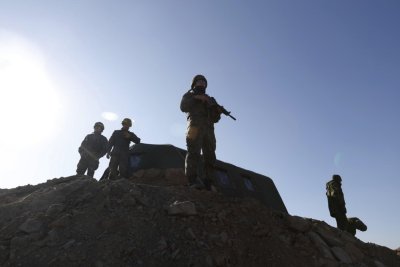
South Korean soldiers stand guard at a destroyed South Korean guard post during a mutual on-site verification of the withdrawal of guard posts along the Demilitarized Zone (DMZ) in northern Gangwon-do, South Korea. Photo by JEON HEON-KYUN / EPA
July 30 (Asia Today) — South Korea’s military began inspecting front-line Army units Thursday after a corps changed its guard procedures and stopped loading live ammunition into heavy weapons deployed near the border with North Korea.
The review follows concerns that the change could weaken the military’s ability to respond quickly during an emergency.
The Joint Chiefs of Staff said the Army Ground Operations Command began an on-site inspection of the 1st Corps on Thursday and plans to examine other front-line corps under its command.
Military officials will consider additional measures after completing the inspections.
The Ground Operations Command oversees five regional corps – the Capital, 1st, 2nd, 3rd and 5th corps – as well as the 7th Maneuver Corps. The inspections will cover front-line units in some of the five regional corps.
The 1st Corps, which is responsible for the western section of the inter-Korean border, reportedly changed its procedures during the first half of this year.
Under the revised procedures, soldiers at guard posts and general outposts did not load live ammunition into crew-served weapons, including K6 heavy machine guns and K4 automatic grenade launchers.
The ammunition was instead stored in ammunition boxes near the weapons.
South Korean front-line units are generally required to keep live ammunition loaded in weapons used for guard operations. The 1st Corps reportedly made an exception under the authority of its commander, Lt. Gen. Han Ki-sung.
The measure was reportedly intended to prevent accidental discharges, but critics said it could delay the military’s response to a North Korean attack or other emergency in the heavily fortified border area.
Questions have also been raised about whether Han’s decision was influenced by an accidental discharge that occurred while he commanded the Army’s 25th Infantry Division last year.
During that incident, a K6 machine gun round was accidentally fired toward North Korea while soldiers at a general outpost were inspecting the weapon.
A military official said inspectors would examine whether it was appropriate for a commander to change ammunition-loading procedures at his discretion, along with other operational issues.
“The use of firearms at front-line guard posts and general outposts is based on the principle that live ammunition must be loaded,” the Joint Chiefs of Staff said.
The military said it would take necessary action after examining units operating under exceptions to that rule.
Detailed information cannot be disclosed because of operational security, it said.
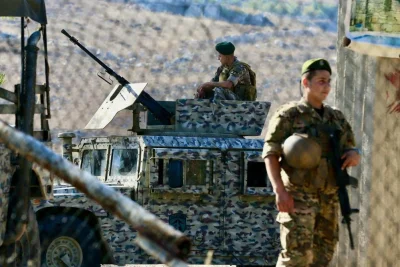
Lebanese soldiers stand guard as the Army deploys to Zawtar al-Gharbiya in southern Lebanon on July 23. Lebanon sent troops to take control of so-called pilot zones in southern Lebanon from which Israeli troops are to withdraw. Photo by EPA
BEIRUT, Lebanon, July 30 (UPI) — The widespread destruction left behind by Israeli forces in Zawtar al-Gharbieh — the first U.S.-backed “pilot zone” in southern Lebanon — was beyond anything its returning displaced residents could have imagined, providing a glimpse of the devastation across the southern region and the extensive reconstruction needs ahead.
Situated in the central sector of southern Lebanon near the strategic Litani River, Zawtar al-Gharbieh represents the testing ground for the success of the pilot zones — the cornerstone of the U.S.-brokered framework agreement reached between Lebanon and Israel on June 26.
It was the first village designated by Israel to begin withdrawing its troops, allowing for the deployment of the Lebanese Army and return of displaced residents. Yet, it reveals the significant and complex challenges facing the process.
The residents rushed back to the village when the Lebanese Army moved in July 21, returning each morning and waiting at the entrance for five days before they were finally allowed to enter and inspect their homes and properties.
The army was carrying out security inspections of all homes and removing missiles and unexploded ordnance remaining from the Israeli military presence.
“We were shocked by the scale of the destruction. It was much, much more than we had expected,” Mayor Abed Ezzedine told UPI.
Ezzedine said Israeli forces “spared nothing,” destroying or damaging everything in their path — from homes and schools to places of worship, shops and the municipality building.
He said the water infrastructure was torn up, the electricity networks blown up and burned, and the village’s only water well destroyed.
“In this life, everything has limits. Even war should have limits,” he added. “They changed the face of the village beyond recognition.”
Some 250 housing units — representing up to 80% of the village’s homes — have been destroyed, while the remaining houses have suffered severe damage and are no longer habitable.
Several of Zawtar al-Gharbieh’s 4,500 to 5,000 residents were killed, including entire families, while others were injured as they fled Israeli attacks and advancing troops three months ago, according to Ezzedine, who said “they showed no mercy to anyone.”
Although Israel stopped targeting the village after the Lebanese Army deployment, he said its drones never left the sky, hoovering at very low altitude “over our heads.”
“What kind of cease-fire or arrangement this is?” Ezzedine asked rhetoically.
Very few residents were able to stay — those who were fortunate enough to still have one room in their homes standing and safe. However, they lacked the basic necessities to continue living, including water, electricity and even Internet access.
The vast majority, meanwhile, spent their days in the village and returned at night to their shelters.
Ezzedine struggled to locate his home among the rubble — one of 25 houses in his neighborhood that had been reduced to ruins.
The rapid reconstruction of Zawtar al-Gharbieh will be a key factor in determining the success of the pilot zones, easing residents’ suffering, restoring confidence in the Lebanese state and reducing the likelihood of them turning again to Hezbollah.
“We want to see action on the ground. This is a test of good faith,” Ezzedine said.
According to a Lebanese official source, the main obstacle is the lack of necessary funding.
The source emphasized that rebuilding the village is an important step in supporting Lebanon’s diplomatic approach and consolidating the success of the pilot zones.
He told UPI that the government faces two options: organizing a reconstruction conference for southern Lebanon, which would require considerable time, or quickly rallying support from friendly states such as Saudi Arabia and Qatar to rebuild the first pilot village.
However, success also largely depends on Israel, which has insisted that it will not withdraw from parts of southern Lebanon it is occupying — specifically its self-declared “yellow zone” — or from Gaza and Syria.
Lebanese and Israeli negotiating teams are scheduled to meet Aug. 4 to 5 to evaluate progress on the pilot zones, the U.S.-led verification mechanism and the withdrawal of Israeli forces from additional occupied Lebanese territories.
The official source told UPI that the United States, which does not want to have boots on the ground in southern Lebanon, would have to “find an acceptable formula for all parties” for the verification process, potentially involving countries such as Italy, France or Spain — proposals reportedly rejected by Israel — or others to carry out the mission.
The source confirmed Lebanon’s commitment to the framework deal, saying, “We will not back out of it,” despite knowing that Israeli Prime Minister Benjamin Netanyahu is not prepared to withdraw from southern Lebanon at this stage, ahead of the October 17 Israeli elections.
Netanyahu remained firm that the disarmament of Hezbollah is a precondition for Israel’s complete withdrawal from southern Lebanon.
A well-informed source expects “tough negotiations” at next week’s Rome talks over the establishment of additional pilot zones, as Israel continues “its aggressions, infiltrations and systematic house demolitions” in violation of the framework agreement.
The Lebanese Army warned this week that Israeli aggressions are hindering completion of its deployment, delaying the return of displaced residents to their villages and undermining efforts to consolidate stability in southern Lebanon.
The source told UPI that the U.S. is exerting pressure on Israel, but “not enough,” adding that Israel “is trying to find an excuse” to withdraw from the framework agreement, which aims to end the nearly three-year war between Israel and Hezbollah and pave the way for peaceful relations between Lebanon and Israel.
Hearts’ players were on the brink of history and immortality. It was nine minutes away.
Four decades of Old Firm dominance was that close to toppling. The season-long league leaders were drawing with holders Celtic in Glasgow as the game crept into the 87th minute.
It looked like they were just about to hold until Daizen Maeda struck to trigger bedlam in Paradise.
Ugly scenes followed Celtic’s third deep into injury time as Hearts headed straight for the team bus, eventually reemerging outside Tynecastle with tears spilling from their faces.
Since then, the backbone of that team has been deconstructed. Boss Derek McInnes has departed for Tynecastle, taking with him captain and talisman Lawrence Shankland, as well as midfield controller Cammy Devlin.
Wouter Vrancken has arrived from Sint-Truiden and the Belgian has suffered a tumultuous start.
A 6-0 hiding from Sturm Graz sent Hearts tumbling out of Champions League qualifying, with the Tynecastle support looking at the club’s analytical approach to signings to somehow hoist them back to the lofty heights they hit last term.
“Hearts just look as if it’s just a new squad flung in together, with the manager too, trying to find their way,” said former striker Ryan Stevenson.
“You don’t get time in football, it’s game after game after game.
“If you don’t get results, we all know what Tynecastle is like. It can be electric, but can they deal with the stadium turning? Are they big enough characters to deal with that?
“If they don’t play well, I would give it to mid-September, and it would not be nice.”
Uefa’s 55 member associations have voted to boycott the World Cup if Fifa proceeds with its plan to sell stakes in its competitions to private investors.
The decision was made at an emergency meeting on Thursday to discuss the proposals announced by Fifa – world football’s governing body – on Tuesday.
Uefa, which governs European football, had made its opposition clear by releasing two damning statements about the plans – and that strength of feeling has now been reaffirmed.
The boycott would cover all Fifa competitions, including the men’s and women’s World Cups and Club World Cup and be triggered if Fifa president Gianni Infantino’s proposals are voted through by member associations.
The first time this stance will be tested is October, when the Women’s World Cup play-offs are due to be held.
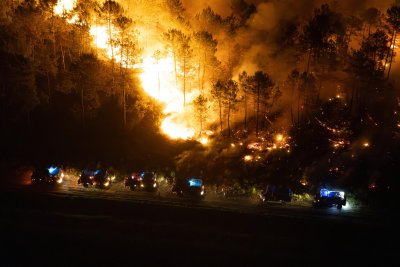
A handout photo made available by the Fire and Rescue Departmental Service 33 shows firefighters crew battling a fire near Le Porge, in southwestern France on Wednesday as a wildfire rages through the forest in Gironde. Photo by EPA
July 30 (UPI) — Tens of thousands of residents in Spain and France are returning home Thursday after being evacuated from wildfires that have torn through Europe.
Firefighters have contained wildfires near Madrid in Spain and in France’s Bordeaux region for the moment. However, authorities in both countries warn that there is still work to be done while Europe withstands conditions that are conducive to the fires spreading again.
Spanish Prime Minister Pedro Sánchez said Wednesday that firefighters were making progress, focusing on hot spots to prevent the fires from regaining momentum. Authorities later began lifting some evacuation orders.
France lifted evacuation orders for about 84,000 residents in the southwest region of the country Thursday. In total, about two-thirds of evacuees have been given the go-ahead to return to their homes.
While progress is being made in the fight, the heatwave in Europe continues. It has been one of Europe’s hottest summers ever recorded. Fires are still raging from Spain to Turkey. Northern Africa has also been battling wildfires for more than a week.
France is bracing for weather conditions Thursday that Sophie Brocas, prefect of the French department of Gironde, has called “unfavorable.” High winds, falling humidity and a chance of thunderstorms have increased the chances of renewed intensity.
Bordeaux received some rainfall Thursday.
In Spain and France alone, more than 300,000 acres have burned.
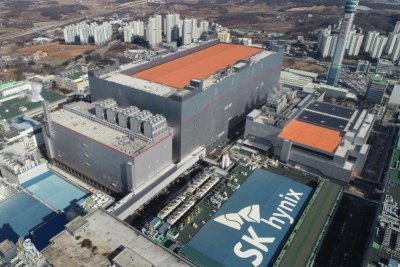
Memory chip facilities operated by SK hynix in South Korea. The company’s share price has plunged over the past month despite posting record earnings. Photo by SK hynix
SEOUL, July 30 (UPI) — South Korea’s SK hynix posted record earnings in the second quarter of this year amid the AI boom. However, shares of the world’s No. 2 memory chipmaker have continued to plunge on the Seoul bourse.
The company noted Wednesday that it logged sales of $55.1 billion and operating profit of $42.1 billion during the April-June period. Revenue more than tripled from a year ago, while profit increased more than sixfold.
“Driven by sustained demand growth from expanding AI infrastructure investments, high-performance products for AI servers led price increases, enabling the company to surpass its previous record set in the prior quarter,” SK hynix said in a statement.
“With major tech companies increasing their AI infrastructure investments, additional supply requests continue to mount. As these investments are supported by revenue generated from AI services, the momentum in memory demand is expected to persist,” it added.
Despite the stellar performance and solid outlook, its shares have struggled to find their footing on the Korea Exchange. They fell 14.65% on Monday before dropping another 9.61% on Wednesday and 5.64% on Thursday.
Since reaching a record high in late June, SK hynix’s market capitalization has fallen by more than half in just over a month. This came after its shares had surged more than tenfold in the year through late June.
Observers attribute the bearish run to a combination of factors, including lower-than-expected earnings, concerns over the sustainability of the AI boom and the emergence of Chinese competitors such as recently listed CXMT.
Although SK hynix chalked up a record bottom line in the previous three months, the figure came in about 5% lower than the market consensus. There are also questions over whether SK hynix has secured sufficient long-term agreements, or LTAs, with customers to reduce uncertainty about future earnings.
“The market remains skeptical about LTAs, so we believe it will take time for confidence to build,” NH Investment & Securities analyst Ryu Young-ho said in a report, reducing his target price for SK hynix by 17.1%.
Other brokerage houses, including Shinhan Securities, Hanwha Investment & Securities, and Samsung Securities, also followed suit.
“We revised down our operating profit estimates for SK hynix for 2026 and 2027 by 7% and 9%, respectively, to reflect a more conservative price outlook,” Shinhan Securities analyst Kim Hyung-tae said in a report, cutting his target price by 35.7%.
However, some experts remained optimistic, raising their target prices on expectations that SK hynix shares will eventually rebound.
“The main reason second-quarter operating profit fell short of the market consensus was that DRAM price growth was weaker than expected,” Korea Investment & Securities analyst Chae Min-sook said.
“However, this was caused not by slowing demand, but by the postponement of some shipments, which should instead contribute to improved earnings in the third quarter,” Chae added, raising the target price by 24%.
DB Securities came up with a similar view.
Leveraged ETFs tied to memory chipmakers
Also at the center of controversy are leveraged exchange-traded funds, or ETFs, linked to individual stocks. They debuted in late May and are tied to the shares of the country’s two blue-chip companies, Samsung Electronics and SK hynix.
Investors have complained of heavy losses. Samsung, the world’s top memory chipmaker, has also seen its share price plummet in recent weeks.
Against this backdrop, critics argue that the new products have amplified market volatility by encouraging short-term speculative trading. Over the past two months, KOSPI circuit breakers have been triggered repeatedly by sharp market swings.
Because these products magnify both gains and losses, they tend to attract retail investors seeking quick profits, potentially leading to larger price swings during periods of market uncertainty, according to experts.
During a parliamentary session on Wednesday, lawmakers summoned top financial officials to criticized the leveraged products and the market slump.
“The government has encouraged people to sell their real estate and invest in stocks. But after the stock market crashed, retail investors ended up suffering heavy losses,” Rep. Park Jun-tae from the main opposition People Power Party said.
In response, Financial Services Commission Chairman Lee Eog-weon promised to do everything possible to minimize market-related volatility but failed to present specific measures.
“South Korean equities have been buoyed by the strong performances of memory chipmakers. But the rally overshot because of a few factors, including the debut of the single-stock 2x leveraged ETFs,” economic commentator Kim Kyeong-joon, formerly vice chairman at Deloitte Consulting Korea, told UPI.
“Once market sentiment turned bearish, the leveraged ETFs accelerated the market’s decline. The problem is that the products cannot simply be abolished because doing so would create even greater market disruption,” he added.
1 of 3 | Captain Gordon McArhtur looks out from the State of Maine’s bridge with two students. Photo courtesy of Maine Maritime Academy
CASTINE, Maine, July 30 (UPI) — The new State of Maine has arrived in historic Castine, where Revolutionary War history and maritime tradition converge on the shores of Penobscot Bay, bringing advanced technology to the Maine Maritime Academy as it trains the next generation of merchant mariners.
The $330 million, 525-foot ship is the third of five National Security Multi-Mission Vessels built for the U.S. Maritime Administration. to prepare the next generation of merchant mariners. The ship accommodates up to 600 cadets and features advanced navigation and engineering systems, classrooms and modern diesel propulsion.
Constructed at the Hanwha Philly Shipyard in Philadelphia by more than 2,000 American shipbuilders, engineers and apprentices, the vessel also reflects renewed investment in the U.S. shipbuilding industry. The shipyard was acquired by South Korea’s Hanwha Group in late 2024 for $100 million, bringing advanced automation and digital manufacturing technology there.
The South Korean shipbuilding conglomerate is betting $5 billion on a dramatic revival of American shipbuilding, planning to turn its Philadelphia yard into a high-volume production hub.
The investment would increase annual output from fewer than two vessels to as many as 20, pairing advanced Korean manufacturing technology with expanded U.S. capacity to build commercial ships and naval vessels.
For Maine Maritime Academy, the new ship represents a dramatic leap from the wooden schooners and comparatively simple navigation instruments that once defined maritime training along the Maine coast.
Its bridge features sophisticated navigation and communications systems, digital charts and advanced ship-control technology designed to prepare cadets for an increasingly automated global maritime industry.
Despite the technology, the fundamentals of seamanship have changed little. Cadets must still read weather and sea conditions, work as a crew and make decisions under pressure.
“We start with the basics,” said the academy’s Captain Gordon “Mac” McArthur, 56. “Rowing in an eight-person lifeboat is a large part of the fall semester freshman year. We build from tying knots and turning a wrench to the more complicated things. We are training problem-solvers and critical thinkers. The technology-based things don’t matter if you don’t have those fundamentals.”
The training ship’s arrival underscores the community’s enduring maritime identity, where centuries-old seafaring traditions meet the technology shaping the future of global shipping.
Nowhere is that contrast more evident than at Maine Maritime Academy, where the state-of-the-art ship shares the waterfront with Bowdoin, the academy’s 1921 National Historic Landmark schooner — a living symbol of the evolution from wind-powered seamanship to the digital age of navigation.
Yet, both are classrooms for learning many of the same fundamental lessons about life at sea.
The academy’s new flagship reflects Castine’s balance of maritime tradition and the future of seafaring. While Maine Maritime Academy trains the next generation of mariners for a high-tech global industry, the town is fighting to preserve the working-waterfront traditions that shaped its identity.
Just down the harbor, Eaton’s Boatyard — where wooden boats have been built and repaired since 1931 — remains a living workshop of Maine craftsmanship, proving that even in the digital age, some skills are still best learned by hand.
Eaton’s Boatyard preserves a cornerstone of Castine’s maritime heritage as the birthplace of the 18-foot wooden Castine Class sloop, designed by Mace Eaton in 1951. On July 18, 13 of the one-design racing sailboats, including two originals still owned by descendants of their first owners, competed in Castine Harbor, continuing a nearly 70-year racing tradition on Penobscot Bay.
David Biggs, honorary chairman of the 27th annual Castine-to-Camden Yacht Race, said the Downeast harbor’s maritime traditions continue to thrive as new generations embrace sailing.
“It’s still exciting to see these beautiful boats in our harbor, especially our own Castine Class Caroline B,” Biggs, 93, who has lived there with his wife, Marian, for more than 50 years, told UPI.
Though Castine has evolved from a working fishing and shipbuilding port into an upscale summer village, its identity remains firmly tied to the sea through Maine Maritime Academy, one of the nation’s leading schools for merchant mariners.
“It’s become a college town with a deep maritime soul,” Biggs said.
Kenny Eaton, 81, Mace Eaton’s grandson and the third generation of the boatbuilding family, has watched Castine’s waterfront change from a working harbor toward one increasingly shared with recreational boats and seasonal residents.
“You can’t stop change,” Eaton said. “But you hope the next generation understands that Castine wasn’t built just because it had a beautiful view of the water. It was built because people worked on it.”
That maritime connection continues among a new generation at Maine Maritime Academy.
That sense of maritime tradition also runs through families. Marin Griffin, 18, of Bangor, Maine, recently completed her freshman year at the academy and is following a path already taken by two generations before her.
“I’m the third generation in my family to attend Maine Maritime,” Griffin told UPI.
A harbor shaped by history
Castine’s ties to the sea run deep. Once a strategic outpost and later a bustling center of fishing, shipbuilding and coastal trade on Penobscot Bay, the town has evolved into a quiet Downeast harbor, while Maine Maritime Academy has carried its seafaring legacy into the modern era, training generations of merchant mariners and maritime professionals.
The State of Maine’s Captain Craig ‘Mac’ McArthur said Castine’s centuries-old connection to the Atlantic world continues to define both the school and the town.
“I’ve run into Maine Maritime alumni in Korea, Malaysia, Brazil, Dubai and other places around the world. Most don’t talk about their time at Maine Maritime,” McArthur said. “They talk about their time ‘in Castine.’ There is something about the remoteness of this place that prepares you for world travel.”
The academy’s legacy endures in the careers of graduates who credit its seamanship training for their success. Jon Parsons, 59, spent 23 years with Polar Tankers, transporting oil from Valdez, Alaska, while Tip Macdonald, 70, served as a ship pilot at the Port of Baltimore.
“I was a successful ship pilot at the Port of Baltimore for thirty years,” Macdonald told UPI. Both men say the academy’s rigorous instruction remains as strong today as when they attended, and that Castine continues to preserve the maritime traditions that have shaped generations of mariners.
An industry under pressure
Across coastal Maine, maritime trades are being reshaped by rising costs, technological change and a changing marine environment. Fishing remains dependent on generations of accumulated knowledge, but boats, engines, electronics, fuel and regulatory uncertainty have made entering the industry increasingly expensive.
A warming, rapidly changing Gulf of Maine is reshaping life on the water. Veteran tuna fisherman Justin McCarthy said Atlantic bluefin catches have declined and prices have fallen sharply, squeezing a fishery that once yielded five-figure paydays.
Yet, he sees hope in the next generation: his son, Mac, graduated from Maine Maritime Academy and returned home aboard the State of Maine, extending the family’s seafaring tradition.
Today’s merchant marine cadets are entering a maritime industry transformed by satellite navigation, electronic charts, automation and digital communications. Built for that environment, the State of Maine provides hands-on training with modern shipboard technology, preparing future deck officers and engineers to operate increasingly sophisticated commercial vessels.
Retired Navy Capt. Justin Cooper II, Maine Maritime Academy’s commandant of midshipmen, brings decades of naval experience to Castine. A former fighter pilot, Cooper served aboard the aircraft carriers USS Enterprise, USS Abraham Lincoln and USS Nimitz.
“We are training these young men and women to take their place in the maritime community,” Cooper told UPI. “We want them to be good leaders and to prepare them to enter the global maritime industry.”
Founded during World War II, Maine Maritime Academy still instills the discipline and seamanship demanded by U.S. Coast Guard standards. While most graduates now head into the commercial maritime industry rather than military service, the academy’s mission remains the same: preparing mariners to lead when conditions at sea turn unforgiving.
That emphasis on fundamental seamanship is reinforced by another academy vessel.
The Bowdoin, a 1921 Arctic exploration schooner, comes from an era when sailors depended on wind, weather, charts and celestial observation. Berthed alongside the State of Maine, the two vessels bridge more than a century of maritime education, reflecting both the evolution of seafaring and the enduring maritime heritage that has defined this coastal community for generations.
Lionel Messi returns to Inter Miami after Argentina’s World Cup final defeat by Spain, which led to retirement rumours.
Published On 30 Jul 202630 Jul 2026
Football superstar Lionel Messi has returned to practice for Inter Miami, 10 days after Argentina’s World Cup run ended with a 1-0 extra-time loss to Spain in the final earlier this month.
The two-time defending MLS MVP missed Miami’s first two matches after the World Cup break against Chicago and Montreal, both of which the team still won, extending its winning streak to six matches.
Recommended Stories
list of 4 itemsend of list
The 39-year-old also chose not to participate in Wednesday night’s MLS against Liga MX All-Star Game in Charlotte, instead taking some time off to visit his father, Jorge, who the Messi family announced during the World Cup is battling an undisclosed illness.
Messi concluded this year’s World Cup, his record sixth, with eight goals and four assists, coming one win away from leading Argentina to be the first team to win consecutive World Cups since Brazil in 1958 and 1962.
He was the first player to break Miroslav Klose’s record for career World Cup goals with his 17th in Argentina’s second match, but French sensation Kylian Mbappe finished the World Cup one goal ahead of Messi, 22 to 21.
Inter Miami (11-2-4, 37 points) is two points behind Nashville SC atop the Eastern Conference standings. It is not yet known if Messi’s return will come in Saturday’s home match against the Columbus Crew.
There had been some speculation that Messi would not only conclude his international career following the World Cup, but that he may also call time on his playing days at club level.
The former Barcelona and Paris Saint-Germain forward has won eight Ballon d’Or titles, the annual award for the player voted the best in the world that year.
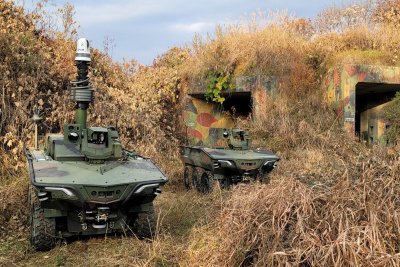
July 29 (Asia Today) — Hanwha Aerospace said Wednesday it was formally selected to supply its Arion-SMET multipurpose unmanned ground vehicle to the South Korean military.
The Defense Acquisition Program Administration notified Hanwha of its selection for the 49.6 billion won ($33.6 million) program, the company said.
Hanwha Aerospace and Hyundai Rotem reportedly competed for the contract.
The Arion-SMET can carry a payload of about 990 pounds and is equipped with day-and-night surveillance systems that help distinguish friendly forces from potential threats. It is also designed for extended continuous operations.
The arms procurement agency’s defense project management committee previously reviewed and approved the Arion-SMET as the vehicle for the military’s multipurpose unmanned ground vehicle program.
The vehicle is considered a key component of Army TIGER 4.0, South Korea’s program to modernize Army units through artificial intelligence, unmanned systems and networked combat capabilities.
Hanwha Aerospace is also involved in projects to develop and deploy unmanned reconnaissance vehicles, explosive ordnance detection and disposal robots and manned-unmanned chemical, biological and radiological reconnaissance vehicles.
The company plans to sign a mass-production contract with the procurement agency as early as August.
“As South Korea’s leading UGV platform company, we will continue building a comprehensive manned-unmanned teaming portfolio that combines unmanned systems with existing platforms such as the K9 self-propelled howitzer and infantry fighting vehicles,” a Hanwha Aerospace official said.
The official said the company would rapidly begin mass-production procedures to minimize any gap in military capabilities.
New U.S. Ambassador to South Korea Michelle Steel (C) will arrive in Seoul on Thursday, sources said Wednesday. In this photo, she speaks to South Korean Trade Minister Kim Jung-kwan (L) and Ambassador to the U.S.
Kang Kyung-wha at an event in Washington on July 23. Photo by Yonhap
New U.S. Ambassador to South Korea Michelle Steel is set to arrive in Seoul on Thursday, becoming the first U.S. envoy to assume the post since President Donald Trump returned to office, sources said.
Steel is expected to arrive at Incheon International Airport, west of Seoul, at around 3:20 p.m. from Los Angeles, according to the sources. She was nominated by Trump in April and confirmed by the U.S. Senate last month.
The ambassadorial post has been vacant since Philip Goldberg left South Korea in January last year.
The submission of copies of her credentials is expected to take place as early as next week, as Foreign Minister Cho Hyun and the foreign ministry’s chief of protocol are currently accompanying President Lee Jae Myung on his trip to South America and are scheduled to return early next week, the sources added.
Before formally beginning their duties, newly appointed foreign ambassadors are required to present copies of their credentials to the chief of protocol at the foreign ministry. U.S. ambassadors also traditionally pay a courtesy call on the foreign minister on that occasion.
A Korean American Republican politician, Steel was born in Seoul in 1955 and immigrated to the United States in the mid-1970s. She served two terms in the U.S. House of Representatives representing California from 2020 to 2024.
Steel is the second Korean American to serve as the top U.S. envoy to South Korea, following Sung Kim, who served in Seoul from 2011 to 2014.
Responding to a question from Yonhap News Agency in Washington last week, Steel described strengthening the South Korea-U.S. alliance as her “top priority.”
Her arrival comes as Seoul and Washington face a series of pending security and economic issues, including South Korean investment in the U.S., civilian nuclear cooperation, Seoul’s push to build nuclear-powered submarines and ongoing efforts to modernize the decades-old alliance.
Steel’s nomination had drawn criticism from some progressive civic groups here, which view her as a conservative figure.
South Korean government officials, however, said she has a firm understanding of the importance of the South Korea-U.S. alliance and is committed to cooperating with the Seoul government.
“South Korea and the U.S. have a wide range of issues to work on together amid the rapidly evolving security and economic landscape,” a foreign ministry official said. “We welcome Ambassador Steel’s arrival and hope it will help advance discussions on those issues.”
Copyright (c) Yonhap News Agency prohibits its content from being redistributed or reprinted without consent, and forbids the content from being learned and used by artificial intelligence systems.
This week FIFA announced plans to form a new subsidiary company to run part of the World Cup and offer a 20% stake to private investors, worth over $4B. Jared Kushner’s brother’s investment firm Thrive Eternal has been named a likely buyer. Al Jazeera’s Mohammad Saleh explains.
Palestinians inspect a destroyed mosque following an Israeli air strike in Gaza, Tuesday. The Palestinian Ministry of Health said at least four people were killed in Israeli attacks across the territory on Tuesday. Photo by Mohammed Saber/EPA
July 29 (UPI) — The Israeli military on Wednesday accused Hamas of storing weapons inside a mosque it bombed in northern Gaza on Tuesday, an allegation Palestinian sources called false.
The mosque was “another example of terror organizations using civilian infrastructure for terror purposes,” The Times of Israel reported, citing the Israeli military.
Israel said the weapons were to be used in attacks on Israeli troops in Gaza and Israeli civilians, and the sites were hit “to remove the threat.”
The Hamas government said the allegations were “entirely false” and that Israel used the claim “to justify its attacks on mosques,” The New York Times reported. There were no reports of deaths from the mosque attack, but there were four deaths from attacks in Gaza, the Palestinian Ministry of Health reported.
The Israeli military said it gave advance warning of the attack to civilians “to mitigate the risk of harm to them.”
“It was a terrifying sound,” Riyad al-Masri, 31, who lives near the mosque, told The New York Times. “It shook the ground.”
Despite a cease-fire signed in October, Israel has increased its attacks on Gaza in recent weeks.
More than 1,200 people have been killed in Gaza since the cease-fire, on top of more than 73,000 killed during the war, according to the Gaza health ministry. Its list does not distinguish between combatants and civilians, The New York Times reported.
Under the 20-point peace plan for Gaza negotiated by the United States, Hamas was required to disarm. The group has agreed to give up administrative control of Gaza, but it has not yet agreed to disarm.
IDF Deputy Chief of Staff Maj. Gen. Tamir Yadai said earlier this month that Israel would continue strikes in Gaza if Hamas doesn’t disarm, The New York Times reported.
“At the end of the day, this place will be demilitarized, and there will be no Hamas,” he said in remarks published by Channel 14, a right-wing Israeli TV station.
Disruptions across Strait of Hormuz, Bab al-Mandeb and the Black Sea threaten supplies and raise costs for consumers.
Shipping through the Strait of Hormuz remains in effect halted. Tankers are now avoiding another critical waterway – Bab al-Mandeb – as Yemen’s Houthi forces threaten Saudi-linked vessels. Ukrainian strikes have hit Russian export infrastructure. Three major routes are now disrupted at once: the Gulf, the Red Sea and the Black Sea.
Together, they threaten trade flows equivalent to nearly a quarter of global oil supplies just as reserves sit at multiyear lows. Goldman Sachs says oil could rise above $120 a barrel by the fourth quarter if disruptions in the Strait of Hormuz alone persist. Economies worldwide are bracing for another energy shock.
FIFA’s president lobbies for latest proposal for investment in football’s governing body, which has met with criticism.
Published On 29 Jul 202629 Jul 2026
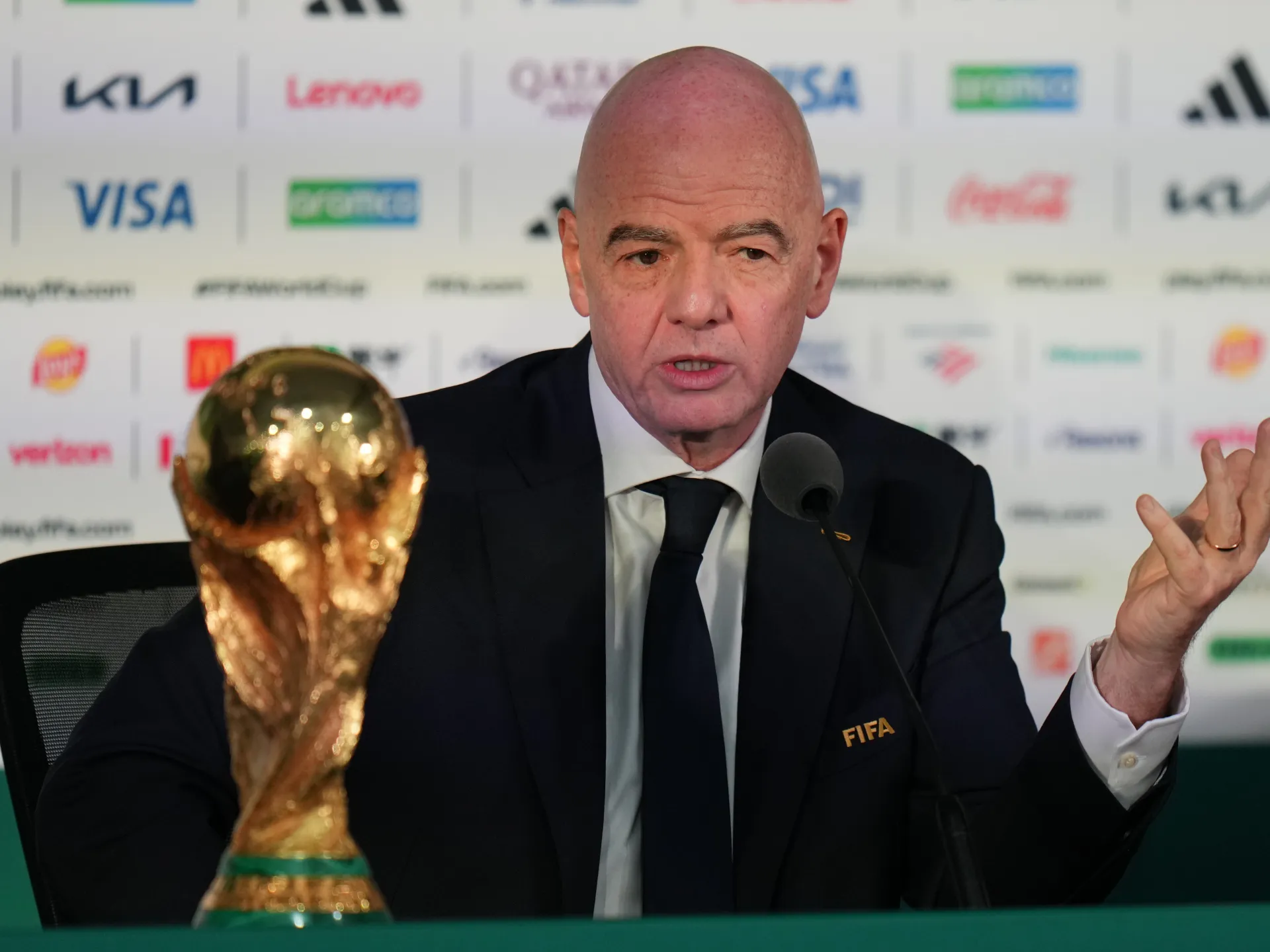
FIFA President Gianni Infantino has set a September 19 deadline for the 211 member federations to accept a one-off $20m offer to each underwritten by the investment firm of Jared Kushner’s brother as part of a project to sell stakes in the World Cup.
Infantino set out the “singular and unique funding opportunity” in a letter detailing why he wants to create a $20bn FIFA subsidiary that would be 20 percent owned by private investors and would run the football body’s competitions and events like World Cups and Club World Cups.
Recommended Stories
list of 4 itemsend of list
“It is my duty and responsibility as FIFA president to present such game-changing opportunities to you, our members,” Infantino wrote on Wednesday in the letter seen by The Associated Press news agency.
The proposal, revealed on Tuesday and backed by Joshua Kushner’s investment firm Thrive Capital, was met with immediate fury by Infantino’s former colleagues at the European football body UEFA, which said the World Cup “is not FIFA’s to sell”.
UEFA is expected to call its 55 member federations to an emergency online meeting, likely on Thursday.
Joshua Kushner’s brother, Jared Kushner, is a son-in-law of United States President Donald Trump.
FIFA’s private equity plan is the latest ambitious project proposed during Infantino’s 11-year presidency, during which he has increasingly seemed to be an executive leader acting without consulting football’s major stakeholders.
Previous plans include creating a FIFA Peace Prize and trying to reorganise football’s calendar with World Cups every two years instead of four.
Concerns about the previously secret plan were aired on Wednesday by the continental football bodies for Asia and the North American, Central American and Caribbean region, known as CONCACAF.
“We are deeply concerned by the lack of due process,” CONCACAF said in a statement.
The Kuala Lumpur-based Asian Football Confederation said it was “disappointed that a matter of such significance entered the public domain before the AFC family had been afforded the opportunity to examine and discuss it.”
Continental bodies that organise their own international club and national team competitions – such as the Champions League, European Championship and Copa America – likely will see threats to those events from FIFA wanting to increase revenue and value for investors by playing World Cups and Club World Cups for men and women more often.
If the FIFA Forward Enterprise subsidiary is approved by a majority of the 211 members, they are each promised $20m in funding from the four-year commercial cycle tied to the men’s 2030 World Cup.
That would lead, Infantino wrote, to “a pool of diverse international investors” joining Joshua Kushner’s Thrive as the anchor investor. “This process will be led by J.P. Morgan,” his letter said.
If Infantino’s plan is rejected, those members will get their previously promised $10m over the next four years, the letter stated.
FIFA’s plan met quick opposition from British Prime Minister Andy Burnham, whose government is preparing to support hosting the 2035 Women’s World Cup in England, Scotland, Wales and Ireland. FIFA is to confirm that lone bid for 2035 at an online meeting in November.
“Football does not belong to investors,” Burnham, a longtime football fan, said in a video message on Instagram. “Once you have sold a piece of [the World Cup], you have sold out. Football belongs to the fans. It always has, and it always will.”
Resistance by British lawmakers – including threats of legislation by then-Prime Minister Boris Johnson in 2021 – previously helped stop the divisive European Super League project that was criticised as an existential threat to UEFA’s Champions League and which Infantino had discreetly supported.
July 29 (UPI) — The United States announced a ban on imports of humanoid robots from China and other countries, citing “unacceptable risks” to national security and the safety of Americans.
The advanced robots ban, including humanoid, four-legged robots and bipeds, was part of a Federal Communications Commission update on Tuesday to a list of equipment and services “deemed to pose an unacceptable risk to the national security of the United States or the security and safety of U.S. persons” under the 2020 Secure Networks Act.
Power inverters that convert DC electricity to the AC electricity that flows across the country’s power grid were also banned.
The bans come after government agencies with “appropriate national security expertise” convened by President Donald Trump to look at the issue designated both technologies as national security threats.
“The networked capabilities of advanced robotic systems create extensive vulnerabilities and vectors for attacks that can manipulate the data and physical operation of the advanced robotic system. Relying on foreign-produced advanced robotic devices presents unacceptable supply chain and cybersecurity vulnerabilities,” the group said in its National Security Determination.
“Advanced robotic devices collect data that could be leveraged by malign actors to surveil Americans, enhance the capabilities of foreign intelligence services, or to remotely commandeer the robots,” it added.
China is the world’s largest producer of humanoid robots, with the United States its largest market.
Power-inverters, a critical kit which converts DC electricity from solar panels, batteries and other alternate energy sources into AC electricity enabling it to be fed into the U.S. energy grid, were also banned over fears overseas supplies could be manipulated or disrupted, compromising the United States’ electricity supply.
Any threat to electricity supply constituted a threat to the economy and national security, the FCC said, adding that in addition to supply chain vulnerabilities it was concerned increasingly networked inverters posed cybersecurity risks, including the possibility they could be switched off or used to harvest data as well as “facilitating remote access and surveillance by foreign government actors.”
Both bans only apply to new models and exempt overseas manufacturers with existing conditional waivers from the Public Safety and Homeland Security Bureau or, in the case of robots, the Defense Department, with the FCC saying it encouraged suppliers to apply for “conditional approval.”
FCC Chairman Brendan Carr said he welcomed the measures from the White House.
“I am pleased that the FCC has now added foreign produced advanced robotics and power inverters to the FCC’s Covered List. Following President Trump’s leadership, the FCC will continue to do our part to secure America’s critical supply chains and, with today’s action, the FCC is acting in lock step with our national security agencies to do just that,” said Carr.
China criticized the move, accusing the United States of overreach and erecting trade barriers.
“China firmly opposes the U.S. overstretching the concept of national security and going after Chinese companies. Protectionism does not make the U.S. more competitive and will only hurt the interests of U.S. companies and consumers,” Foreign Ministry spokeswoman Mao Ning told a news conference in Beijing on Wednesday.
“China will continue to do what is necessary to firmly defend the legitimate and lawful rights and interests of Chinese companies,” she added.
China’s Commerce Ministry called for the global community to combine forces to develop technologies “for the positive and for good,” saying Beijing resolutely stood against the “politicizing” of trade issues and the use of “groundless pretexts” to justify sanctions.
“China urges the United States to heed the objective and rational voices of the business communities in both countries, abandon its hegemonic mindset, and stop smearing Chinese companies and threatening them with sanctions,” a spokesperson for the ministry said.
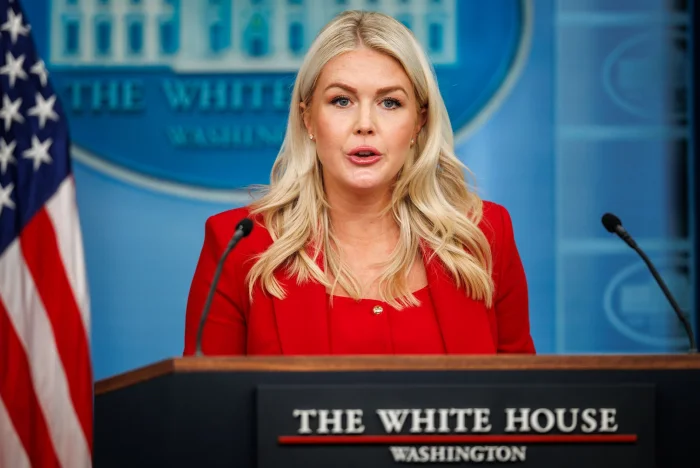
White House Press Secretary Karoline Leavitt speaks during a press briefing in the James S. Brady Press Briefing Room at the White House on Thursday. Photo by Samuel Corum/UPI | License Photo
The dust has barely settled on the expanded 48-team FIFA World Cup 2026, yet further development of the competition’s future has already been mooted, as well as struck by a fierce backlash.
The shine on the trophy, now held by Spain after their defeat of Argentina in the final, still glitters brightly, but there were tarnishes to this year’s event.
Recommended Stories
list of 3 itemsend of list
Now, the game’s global governing body, FIFA, and its president, Gianni Infantino, face yet more criticism after a plan was released to sell stakes in future World Cups and other events to private investors.
From European football’s governing body, UEFA, to the United Kingdom’s new prime minister, Andy Burnham, FIFA’s plan has been slammed. There has even been a suggestion of a boycott by UEFA.
Al Jazeera Sport takes a look at what the latest proposals on FIFA’s desk mean.
What are Gianni Infantino and FIFA’s new World Cup plans?
FIFA announced plans on Tuesday to sell stakes in future World Cups and other events to private investors in a bid to maximise revenue for the sport.
The proposal is to create a $20bn subsidiary to run the World Cup and other events.
FIFA says it would retain the majority share of a newly created FIFA Forward Enterprise (FFE) scheme, meaning it would still preside over football governance, competitions, match calendars and regulatory and sporting decisions.
Minority stakes, however, would be sold to external investors to raise up to $4.2bn as part of the new proposal.
Why do Infantino and FIFA want to sell stakes in the World Cup?
Debate raged for months in the build-up to World Cup 2026 that FIFA’s ticket pricing was pushing fans out of “the people’s game”, as it has long been regarded.
FIFA’s defence was that the World Cup is their main source of income to support the game around the globe – from the sport’s grassroots to the administration of the major international events.
This latest proposal is FIFA’s attempt to stretch that revenue potential even further.
How would the new plan for the FIFA World Cup work?
Billions of dollars are already raised by FIFA tournaments, largely from broadcasting rights, sponsorship and other commercial deals.
This new commercial subsidiary, the FFE, would extend beyond traditional means of raising funds and would be akin to the franchise model that many sports have now turned to.
The Indian Premier League (IPL), a T20 cricket tournament, was one of the first competitions to fully exploit the potential of franchise models, selling stakes in teams in a newly formed competition.
Teams in that competition are owned by majority investors, who therefore hold significant sway in how it is run.
Other models, including The Hundred of the England and Wales Cricket Board (ECB) – an attempt to rival the IPL – have sold minority ownership of the teams.
ECB, as a result, retains control of the competition, and this is what FIFA is proposing for the share of the World Cup and its events that it intends to sell privately.
Nonetheless, a share is a share and new investors, be it in cricket’s The Hundred or in the FIFA World Cup, will expect at the very least to be heard when it comes to decision-making.
This is where concerns are being raised about the proposals.
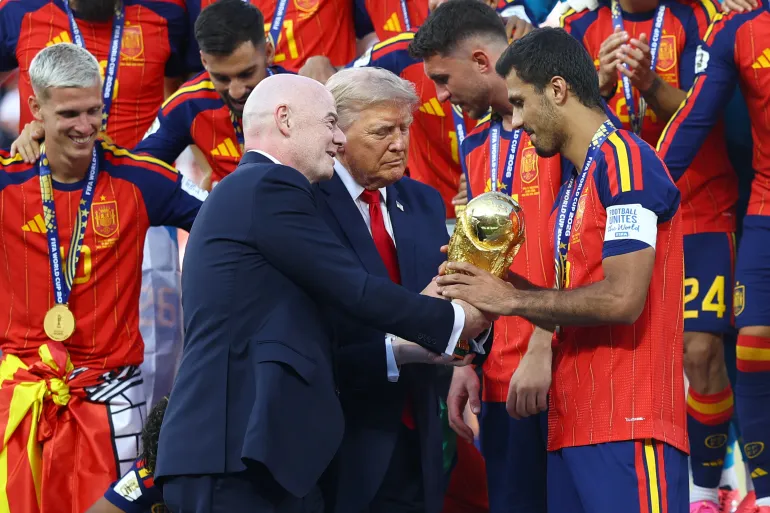
US President Donald Trump and FIFA President Gianni Infantino, left, hand the World Cup trophy to Spain’s Rodri before the 2026 trophy lift [Hannah Mckay/Reuters]
Who are the potential investors in the World Cup and other FIFA events?
Thrive Eternal, a United States venture capital firm, has been put forward to lead the proposed investor group, FIFA said.
The vehicle was founded by Joshua Kushner, the brother of US President Donald Trump’s son-in-law, Jared Kushner.
Any potential investors would thereafter buy into the FIFA events via Thrive Eternal.
What benefits are FIFA claiming if the World Cup and events plan succeeds?
FIFA has said all net benefits will be reinvested in football, and that all countries should benefit from the ever-increasing profitability of the sport.
“Football is the world’s most popular sport,” FIFA President Gianni Infantino said in a statement.
“Parts of the game have turned that popularity into remarkable commercial value – and we celebrate that success and want it to continue, because it lifts the whole game.
“Our job is to make sure the rest of football grows with it: FIFA exists to support sustainable, inclusive development in every corner of the world.”
‘It is not FIFA’s to sell’: UEFA and UK PM reaction to Infantino’s World Cup plan?
FIFA has already clashed with domestic and continental governing bodies during World Cup 2026. The European powerhouse, UEFA, was the first to speak out against the new proposals.
“This crosses a line that football’s governing institutions should never cross,” UEFA said.
“UEFA takes it extremely seriously. So should every National Football Association. So should every stakeholder who cares about the future of the game.
“The soul and governance of football are not assets to trade – especially with zero transparency as to who gains financially. None of us are the owners of football. It is not FIFA’s to sell.”
Andy Burnham, who only replaced Keir Starmer as the United Kingdom’s prime minister last week, wrote on X: “Let me say this very directly. Football does not belong to investors. It belongs to the people who fill the stands and who stand on the touchline week in, week out, rain or shine.
“The World Cup is not a product. It is the greatest competition in world sport, and it was never anyone’s to sell. Dress the deal up however you like. Once you have sold a piece of it, you have sold out.
“Football belongs to the fans. It always has, and it always will,” he added.
The Confederation of North, Central America and Caribbean Association Football (CONCACAF) said on Wednesday that it had not been informed of FIFA’s proposed sale of equity to outside investors and was “deeply concerned” over a lack of due process.
What will happen next for FIFA’s World Cup plans, and will UEFA boycott?
Any change will need to be voted through by FIFA’s 211-country membership.
Of that number, 55 nations fall within UEFA’s governance.
The European body will hold an emergency meeting later this week to discuss the proposals.
Were FIFA to implement such a plan, one possible response UEFA could take would include a boycott of FIFA competitions.
Although at just above a quarter of FIFA membership, Europe has produced the winner of six of the last eight World Cups.
Argentina and Brazil are the only teams to prevent a clean sweep by the Europeans in that time, and, indeed, are the only nations outside Europe to win the World Cup since fellow South Americans Uruguay won their second and last title in 1950.
What were the main criticisms of FIFA World Cup 2026?
The main criticism going into the 2026 World Cup, held in the US, Canada and Mexico, was pricing. From tickets to transport links, it was felt that football fans on median salaries around the world were being priced out of the game.
During the World Cup, the decision to suspend a red card shown to USA striker Folarin Balogun “undermined the game’s integrity and credibility,” according to UEFA.
US President Donald Trump said he called Infantino about the ban that Balogun faced – the forward lined up for USA in their next match against Belgium.
FIFA also faced a backlash over hydration breaks that were introduced midway through each half of those matches. Critics said the breaks functioned primarily as commercial opportunities for broadcasters and disrupted the traditional flow of football matches at the tournament.
Argentina superstar Lionel Messi, right, during a hydration break at the World Cup [Lee Smith/Reuters]
Uganda on Tuesday declared itself Ebola-free on Tuesday as the virus spreads through the Democratic Republic of Congo. File Photo Marie Jeanne Munyerenkana/EPA
July 29 (UPI) — Uganda has declared itself Ebola-free, as the virus continues to spread in neighboring the Democratic Republic of Congo.
Uganda’s Foreign Ministry made the declaration Tuesday, saying Uganda discharged its last confirmed Ebola patient on June 16.
“The declaration follows the successful completion of all outbreak response measures and confirms that there has been no further transmission of the virus,” the ministry said in a statement.
Uganda declared an Ebola outbreak on May 15, after infected individuals crossed into Uganda from the DRC.
A total of 20 people were infected in Uganda’s outbreak, including 15 Congolese nationals and five Ugandans — four health workers and a driver. Two patients died from the virus, according to ministry statistics.
Despite the declaration, the ministry said the risk of Ebola importation remains high due to the ongoing outbreak in the DRC.
Minister Chris Baryomunsi urged residents online to remain alert and continue to observe health measures.
“We shall continue to support our brothers and sisters in DRC to contain the Ebola disease there,” he said.
The outbreak that affected Uganda and remains ongoing in the DRC is caused by the Bundibugyo virus, with the first suspected case reported involving a DRC health worker on April 24. The health worker later died.
There is no approved vaccine for the Bundibugyo virus.
According to the World Health Organization, there were 3,262 cases and 1,437 deaths to the outbreak, making it the largest outbreak caused by the Bundibugyo virus to date.
The United Nations health agency said the outbreak in the DRC continued to “intensify” with sustained transmission, increasing mortality and ongoing geographic spread within the country.
“Although no new cases have been reported outside the Democratic Republic of the Congo, persistent transmission in areas connected by major national and cross-border mobility corridors continues to sustain a high risk of regional spread,” the WHO said earlier this week.
Spain defender Marc Cucurella has kept his promise to get a tattoo of World Cup-winning coach Luis de la Fuente.
Cucurella helped Spain win the World Cup this month as they beat Argentina 1-0 in the final.
Cucurella, who joined Real Madrid from Chelsea for £52m in June, revealed the tattoo – a portrait of De la Fuente holding the World Cup in front of a number 26 – on social media., external
“Promise kept,” Cucurella wrote alongside pictures and video of him having the tattoo done.
After the final De la Fuente said he expected Cucurella to stick to his word.
“I’ve already told them, ‘did you make a mistake?” he joked in his post-match news conference. “They did, but they’ll enjoy it.
“I’m not so terribly ugly that they will need to put it somewhere nobody can see it. But it makes me laugh and I am proud they keep their promises.”
Cucurella carried his wife’s pyjama top with him as a lucky charm during the World Cup, and recently said he has his trademark long, curly hair so his child can easily keep track of him during matches.
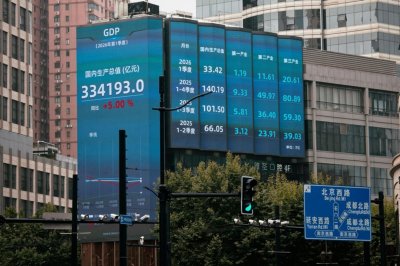
A large screen shows the latest stock exchange and economy data in Shanghai, China, 15 June 2026. Photo by ALEX PLAVEVSKI / EPA
July 28 (Asia Today) — China’s successful stock market debut of its largest DRAM manufacturer has fueled expectations that the company could challenge the three global leaders in memory chips, though Chinese media acknowledged that a significant technological gap remains.
ChangXin Memory Technologies, commonly known as CXMT, became the most valuable company in China’s domestic A-share market after its shares surged 465.82% during their first day of trading on Shanghai’s technology-focused STAR Market on Monday.
The shares closed at 49 yuan ($7.24), compared with an initial public offering price of 8.66 yuan ($1.28).
The closing price gave CXMT a market capitalization of about 3.28 trillion yuan ($484.5 billion), surpassing the Industrial and Commercial Bank of China, previously the country’s most valuable domestically listed company.
The shares lost some momentum Tuesday, closing at 47 yuan ($6.94). CXMT’s market value declined to about 3.14 trillion yuan ($463.8 billion), but it remained the largest company in the A-share market.
The listing followed Asia’s largest initial public offering of 2026. CXMT raised about $8.6 billion, nearly twice the amount initially sought, reflecting strong investor demand for Chinese semiconductor companies.
State media celebrates semiconductor advance
Chinese state-affiliated media described the listing as a milestone in Beijing’s drive for technological self-sufficiency.
The Global Times said the market response demonstrated growing investor confidence in China’s semiconductor industry as the country accelerates efforts to reduce its dependence on foreign technology.
The Chinese-language Global Times described memory chips as the “rice of the digital age” and said CXMT had broken the longstanding foreign dominance of large-scale DRAM production.
It said the company had built its design and manufacturing capabilities from virtually nothing over approximately a decade.
CXMT was founded in 2016 and produces DRAM chips used in smartphones, personal computers, tablets and servers. It is widely regarded as the world’s fourth-largest DRAM manufacturer after Samsung Electronics, SK hynix and Micron Technology.
China’s state media said the funds raised through the listing would be used to upgrade memory wafer production lines, expand DRAM research and development and pursue next-generation memory technologies.
Chinese analysts expressed hope that the investment could eventually weaken the dominance of Samsung Electronics, SK hynix and Micron in the global DRAM market.
CXMT’s progress has already heightened investor concern over increasing Chinese competition. Its market debut contributed to declines in several global semiconductor stocks, including shares of South Korean memory manufacturers.
Technology gap remains
Despite the celebratory tone, Chinese media cautioned that CXMT continues to trail South Korean and U.S. memory manufacturers in advanced production processes.
The company is estimated to remain two to three years behind leading foreign manufacturers in some advanced technologies and faces restrictions on access to sophisticated overseas chipmaking equipment.
CXMT’s roughly 8% share of the global DRAM market also remains well below the combined position of Samsung Electronics, SK hynix and Micron.
The memory chip industry is highly cyclical, meaning the current surge in prices and demand associated with artificial intelligence may not continue indefinitely.
Rapid capacity expansion by CXMT and other manufacturers could also increase supplies and place downward pressure on global memory prices.
Chinese state media urged investors and the semiconductor industry not to allow the listing’s success to create excessive confidence.
The debut nevertheless represents a major symbolic and financial achievement for Beijing’s semiconductor strategy. CXMT now has access to substantial capital that could accelerate research, manufacturing expansion and efforts to compete in higher-end memory products.
The militaries of the United States and Saudi Arabia attacked Iran proxies in Iraq on Wednesday. File Photo by U.S. Central Command/Department of Defense
July 28 (UPI) — The United States and Saudi Arabia attacked Iran-backed proxies in Iraq on Wednesday after Saudi air defense systems intercepted days of attacks launched from Iraq against the kingdom’s petroleum facilities.
U.S. Central Command said in a statement that it struck logistics and weapons sites across eastern Iraq, describing the joint attack as a “strong response” to the more than 30 drone strikes directed at Saudi Arabia’s energy infrastructure over the last 72 hours.
The joint attack was the first U.S. military operation during a five-day pause in direct strikes on Iran intended to allow diplomacy to resume. The pause followed 13 consecutive nights of CENTCOM strikes on Iran.
Saudi Arabia’s Defense Ministry confirmed the joint strikes, describing them as “precise and targeted strikes.”
It was unclear if any of the Iraq-launched drones hit their intended targets, though Saudi Arabia said several drones targeting its petroleum facilities in the Eastern Province and Riyadh region had been intercepted and destroyed.
According to CENTCOM, more than 600 “attempted attacks” targeting U.S. assets in the region were launched by Iranian proxies in Iraq between the start of the war in late February and the announcement of the now-collapsed cease-fire in April.
“The unwarranted attacks against U.S. forces were not successful,” it said.
The United States and Iran have been at war since late February, though fighting halted under a fragile cease-fire reached in April. The cease-fire collapsed earlier this month, leading to nearly a fortnight of nightly U.S. attacks against Iran.
Football’s world governing body announces plans to sell stakes of up to 20 percent in the World Cup and other events.
Published On 29 Jul 202629 Jul 2026
FIFA has proposed a plan to sell stakes in the World Cup and other events to private investors, provoking a furious response from the European football governing body, UEFA.
Under the plans announced by FIFA on Tuesday, a $20bn subsidiary would be created to run the World Cup and other events.
Recommended Stories
list of 4 itemsend of list
World football’s governing body said it would retain a majority share in the new FIFA Forward Enterprise, offering minority stakes to external investment to raise up to $4.2bn.
The plan still needs to be voted on by FIFA’s 211 member nations.
If successful, the proposed investor group is expected to be led by a vehicle founded by Joshua Kushner, the brother of US President Donald Trump’s son-in-law, Jared Kushner, FIFA said.
UEFA said the proposal “crosses a line that football’s governing institutions should never cross”.
Reinvested in the game
FIFA has just held a 48-team World Cup across the United States, Canada and Mexico – the biggest in the tournament’s history.
It is one of the world’s wealthiest sporting organisations, generating billions of dollars, largely from broadcasting rights, sponsorship and other commercial deals linked to the World Cup.
But it says this proposal can increase funds to widen access to the sport and strengthen global participation, with all net benefits to be reinvested in football.
“Football is the world’s most popular sport,” FIFA President Gianni Infantino said in a statement.
“Parts of the game have turned that popularity into remarkable commercial value – and we celebrate that success and want it to continue, because it lifts the whole game.
“Our job is to make sure the rest of football grows with it: FIFA exists to support sustainable, inclusive development in every corner of the world.”
FIFA said that in addition to retaining sole control of the subsidiary, it would retain authority over football governance, competitions, match calendars and regulatory and sporting decisions.
‘World Cup is not a product’
The proposal deepens the divide between FIFA and UEFA, with Europe positioning itself as football’s custodian, while FIFA, a not-for-profit organisation, says it is focused on broadening access with financial largesse.
In a statement, UEFA said it takes the new proposals “extremely seriously”.
“So should every National Football Association. So should every stakeholder: leagues, clubs, players, supporters, governments and everyone who cares about the future of the game.
“The soul and governance of football are not assets to trade – especially with zero transparency as to who gains financially. None of us are the owners of football. It is not FIFA’s to sell.”
The United Kingdom’s new prime minister, Andy Burnham, joined critics, saying on social media that the sport does not belong to investors.
“The World Cup is not a product. It is the greatest competition in world sport, and it was never anyone’s to sell,” Burnham wrote on X.
“Dress the deal up however you like. Once you have sold a piece of it, you have sold out.”
Hundreds of mourners have paid their respects to the late Senator Lindsey Graham of South Carolina.
The Republican lawmaker and key ally of President Donald Trump unexpectedly died on July 11.
Graham was elected to the US Senate in 2002 and was re-elected in 2008, 2014 and 2020. In 1994, he was elected to the US House of Representatives, the lower house of the US Congress, for South Carolina’s third congressional district. He recently served as chairman of the Senate Budget Committee. Graham also served as a member of the Senate Committee on Appropriations, the Senate Judiciary Committee and the Senate Committee on Environment and Public Works.
He was a strong supporter of the 2003 US invasion of Iraq and had long pushed for military action against Iran.
Graham was a longtime backer of Israel and supported Trump’s ongoing war on Iran. In a planned documentary, Graham told the filmmakers he “almost cried” after the US and Israel began strikes on Iran in February.
He also vocally supported Ukraine after Russia invaded the country in 2022.
Israeli Prime Minister Benjamin Netanyahu, Ukrainian President Volodymyr Zelenskyy and several other world leaders attended Graham’s funeral service on Tuesday afternoon at the Washington National Cathedral in Washington, DC.
Trump gave remarks, calling Graham a force in the world and US politics. He called Graham “a beloved friend” and said that he “died doing the work he was born to do”.
“For more than 30 years, nothing of consequence happened in this capital without Lindsey Graham knowing about it. Nothing of significance happened anywhere in the world without Lindsey Graham having a view on it,” Trump said. “And no bill became law in the most exceptional republic in human history without Lindsey Graham having a say in it.”
He added: “He was a man who gave America the full measure of his good and mighty heart until that heart itself just gave out.”